ADME Principles in Modern Drug Development: From Foundational Concepts to AI-Driven Applications
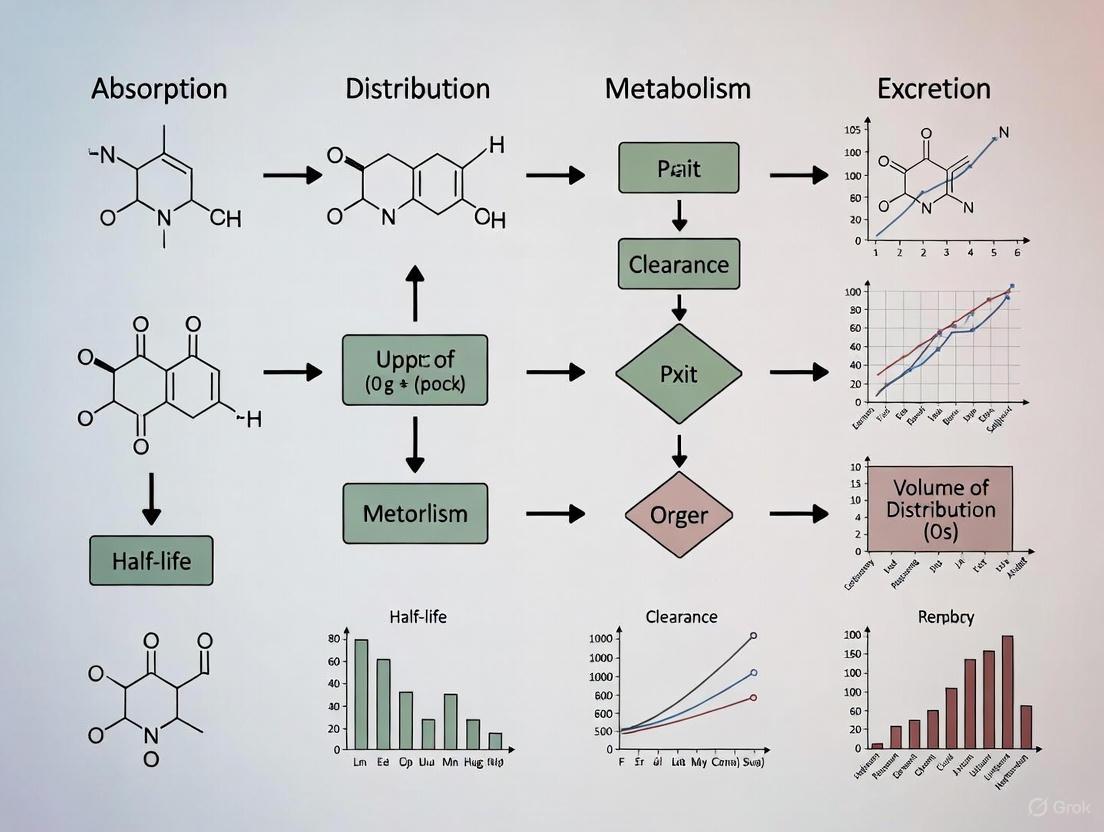
This article provides a comprehensive exploration of pharmacokinetic (PK) principles—Absorption, Distribution, Metabolism, and Excretion (ADME)—for researchers and drug development professionals.
ADME Principles in Modern Drug Development: From Foundational Concepts to AI-Driven Applications
Abstract
This article provides a comprehensive exploration of pharmacokinetic (PK) principles—Absorption, Distribution, Metabolism, and Excretion (ADME)—for researchers and drug development professionals. It establishes the critical foundation of ADME processes and their parameters, then progresses to advanced methodological applications including Physiologically Based Pharmacokinetic (PBPK) modeling and Machine Learning approaches. The content addresses key challenges in predicting inter-individual variability and optimizing drug candidates, while highlighting validation strategies and comparative analyses of modern computational techniques. By synthesizing traditional knowledge with cutting-edge computational advancements, this resource aims to equip scientists with the integrated understanding needed to accelerate and de-risk the drug development pipeline.
The ADME Foundation: Core Principles Governing Drug Disposition
Pharmacokinetics (PK) is the discipline that applies kinetic principles and mathematical processing to quantify the dynamic processes a drug undergoes after administration, encompassing its Absorption, Distribution, Metabolism, and Excretion (ADME). For drug development professionals and researchers, a deep understanding of PK is essential for predicting human drug disposition, optimizing candidate compounds, and designing safe and effective dosing regimens [1] [2]. This whitepaper provides an in-depth technical guide to the core principles of pharmacokinetics, detailing fundamental parameters, advanced prediction methodologies like Physiologically-Based Pharmacokinetic (PBPK) modeling, and essential experimental protocols. By framing these concepts within modern model-informed drug development (MIDD) paradigms, this document serves as a resource for advancing research in drug absorption, distribution, metabolism, and excretion.
Pharmacokinetics describes the temporal journey of a drug through the body. The four fundamental processes—ADME—collectively determine the drug concentration at its site of action, which in turn dictates the onset, intensity, and duration of its pharmacological effect [1] [3]. Non-Compartmental Analysis (NCA) and compartmental modeling are the primary methodologies used to calculate PK parameters from observed concentration-time data [4] [2]. These parameters are the cornerstone for making critical decisions in drug development and clinical therapy, from lead optimization to the design of individualized dosing regimens [3].
Fundamental Pharmacokinetic Parameters and Their Significance
The following parameters are routinely used to characterize the pharmacokinetic profile of a drug.
Table 1: Key Pharmacokinetic Parameters and Their Interpretations
| Parameter | Symbol | Definition | Clinical/Research Significance |
|---|---|---|---|
| Area Under the Curve | AUC | The integral of the drug concentration-time curve from zero to infinity [4]. | Represents total drug exposure; a key metric for bioavailability and bioequivalence [4] [3]. |
| Maximum Concentration | C~max~ | The peak observed drug concentration after administration [4]. | Indicates the intensity of exposure; critical for assessing efficacy and safety. |
| Time to Maximum Concentration | T~max~ | The time taken to reach C~max~ [4]. | Reflects the rate of absorption. |
| Elimination Half-Life | t~1/2~ | The time for plasma drug concentration to reduce by 50% in the terminal phase [4]. | Determines the dosing frequency; calculated as ln(2)/λ~z~, where λ~z~ is the elimination rate constant [4] [3]. |
| Clearance | CL | The volume of plasma cleared of the drug per unit time [4]. | Represents the efficiency of elimination organs; for intravenous drugs, CL = Dose / AUC [3]. |
| Volume of Distribution | V~d~ | The apparent volume required to account for the total amount of drug in the body if it were uniformly distributed at the concentration observed in plasma. | Indicates the extent of tissue distribution; a high V~d~ suggests extensive tissue penetration [3]. |
| Bioavailability | F | The fraction of an administered dose that reaches the systemic circulation unchanged. | Governs the dosing for non-intravenous routes; determined by comparing AUC values after extravascular and intravenous dosing. |
These parameters are derived from drug concentration-time data, which can be visualized to intuitively understand a drug's PK properties. For instance, the elimination rate constant (k) and half-life (t~1/2~) are determined from the slope of the terminal phase of a semi-logarithmic concentration-time plot [3].
Methodologies for Predicting Human Pharmacokinetics
Accurately predicting a drug's behavior in humans from pre-clinical data is a critical goal in drug development. Several established and emerging methodologies are employed.
In Vitro-In Vivo Extrapolation (IVIVE)
IVIVE uses data from in vitro assays to predict in vivo PK parameters. A key application is predicting metabolic clearance using human liver microsomes or hepatocytes. The well-stirred model is a foundational IVIVE approach for estimating hepatic clearance (CL~h~) [1]:
CLh = (Qh × fu(b) × CLint(liver)) / (Qh + (fu(b) × CLint(liver) / fu(inc)))
Where Q~h~ is liver blood flow, f~u~(b) is the blood free fraction, CL~int~(liver) is the intrinsic clearance, and f~u~(inc) is the free fraction in the incubation [1]. For compounds with high protein binding or low clearance, more sophisticated mechanistic IVIVE models that account for pH gradients and ion interactions have been developed to improve prediction accuracy [1].
Allometric Scaling
Allometric scaling is a technique used to predict human PK parameters by extrapolating data from animal species based on differences in body weight. The fundamental equation for simple allometric scaling is [1]:
CL = a × (BW)^b
Where CL is the clearance, BW is body weight, and a and b are the allometric coefficient and exponent, respectively [1]. To improve accuracy, various refined methods have been developed, including scaling corrected for species' maximum life-span potential (MLP) or brain weight (BrW), and methods incorporating plasma free fraction (f~up~) [1].
Table 2: Methods for Predicting Human Clearance via Allometric Scaling [1]
| Method | Description | Formula |
|---|---|---|
| SAS (N≥2) | Simple Allometric Scaling using at least two species. | CL = a × (BW)^b |
| ROE (N≥2) | Rule of Exponents method using at least two species. | If 0.71 < b ≤ 1, CL × MLP = a × (BW)^bIf 1 < b ≤ 1.3, CL × BrW = a × (BW)^b |
| FCIM~R~ | Free fraction corrected intercept method using rat data. | CL~human~ = 33.35 × (a / R~fu~)^0.770~, R~fu~= f~up,rat~/f~up,human~ |
| TS~R,D~ | Two-species scaling using rat and dog data. | CL~human~ = a~(rat-dog)~ × (BW~human~)^0.628~ |
Physiologically-Based Pharmacokinetic (PBPK) Modeling
PBPK models represent the body as a network of anatomically meaningful compartments, each defined by tissue volume, blood flow, and drug partitioning characteristics [1] [5]. These mechanistic models are particularly powerful for incorporating the role of drug transporters (e.g., OATP1B1, MRP2) in hepatic uptake and biliary excretion, which is crucial for accurately predicting the disposition of drugs like pravastatin [5]. PBPK modeling facilitates the prediction of drug-drug interactions and the impact of organ dysfunction or patient demographics on PK, thereby supporting model-informed drug development (MIDD) [1].
Essential Experimental Protocols in Pharmacokinetics
Protocol: Non-Compartmental Analysis (NCA) of Plasma Concentration-Time Data
NCA is a standard method for determining fundamental PK parameters without assuming a specific compartmental model [4] [2].
Primary Materials:
Methodology:
- Data Collection: Administer the drug and collect serial blood samples at pre-defined time points. Process samples to obtain plasma [6].
- Bioanalysis: Analyze plasma samples using a validated LC-MS/MS method to generate concentration-time data [6].
- Parameter Calculation:
- Terminal Elimination Rate Constant (λ~z~): Determined as the negative slope of the linear regression of log-transformed concentration-time data during the terminal phase [4].
- AUC Calculation: AUC~0-last~ is calculated using the linear trapezoidal rule. AUC~0-∞~ is the sum of AUC~0-last~ and C~last~/λ~z~, where C~last~ is the last measurable concentration [4].
- Other Parameters: C~max~ and T~max~ are observed values. Half-life (t~1/2~) is calculated as ln(2)/λ~z~. Clearance (CL) for intravenous administration is Dose/AUC~0-∞~ [4] [3].
Protocol: Assessing the Impact of Altered Physiology on PK
This protocol examines how specific physiological conditions, such as高原低氧 (high-altitude hypoxia), change a drug's PK.
Primary Materials:
Methodology:
- Grouping: Randomize subjects (e.g., rats) into control (normoxic) and experimental (hypoxic) groups [6].
- Dosing and Sampling: Administer the drug (e.g., 50 mg/kg phenytoin sodium orally). Collect serial blood samples and, at designated time points, tissues (e.g., brain, liver) [6].
- Bioanalysis and PK Analysis: Determine drug concentration in plasma and tissues using LC-MS/MS. Calculate PK parameters via NCA with software like WinNonlin [6].
- Mechanistic Investigation: Analyze tissue samples via Western blot to quantify changes in enzyme/transporter expression (e.g., increased CYP2C9 and P-gp in the hypoxic group), providing a mechanistic explanation for observed PK changes (e.g., increased clearance, reduced brain distribution) [6].
Computational and Modeling Tools
Quantitative pharmacology heavily relies on modeling and simulation. The following tools are critical for modern PK analysis.
- NONMEM: The industry "gold standard" for nonlinear mixed-effects modeling, particularly for population PK (PopPK) analysis [7] [8].
- PsN (Perl-speaks-NONMEM): An open-source toolkit that automates and facilitates tasks around NONMEM, such as data preparation, model diagnostics, and bootstrapping [8].
- PBPK Software: Platforms such as GastroPlus and others enable the construction of mechanistic PBPK models [1].
- Cloud-Based Platforms (e.g., CPhaMAS): Emerging cloud solutions integrate NCA, bioequivalence, compartmental, and PopPK analyses, offering high-performance computing, ease of use, and enhanced data security without local installation [2]. High-performance computing (HPC) clusters on cloud services like AWS can dramatically reduce computation time for intensive tasks like bootstrap analysis, cutting down weeks of work to mere hours [8].
Diagram 1: Population PK/PD Model Development Workflow. This iterative process involves building a structural model, quantifying variability, identifying covariate relationships, and rigorously evaluating the model before application for simulation [7].
Diagram 2: PBPK Concept: Hepatic Disposition with Transporters. This diagram illustrates a liver compartment in a PBPK model, showing how drug uptake by influx transporters, metabolism by enzymes, and excretion by efflux transporters are integrated to predict hepatobiliary clearance [5].
The Scientist's Toolkit: Essential Research Reagents and Materials
Table 3: Key Reagents and Tools for Pharmacokinetic Research
| Tool/Reagent | Function in PK Research |
|---|---|
| Caco-2 Cells | An in vitro cell model used to assess a drug's intestinal permeability and predict its absorption potential in humans [1]. |
| Human Liver Microsomes (HLM) / Hepatocytes | Subcellular fractions or cells containing a full complement of drug-metabolizing enzymes; used in IVIVE to predict metabolic clearance [1] [5]. |
| Specific Protein Assays (e.g., CYP2C9, P-gp) | Techniques like Western blotting to quantify the expression levels of key metabolizing enzymes and transporters, elucidating mechanisms behind PK changes [6]. |
| LC-MS/MS System | The gold-standard analytical platform for the sensitive, specific, and quantitative measurement of drugs and their metabolites in complex biological matrices like plasma and tissue homogenates [6]. |
| Stable Isotope-Labeled Analogs | Used as internal standards in LC-MS/MS analysis to correct for matrix effects and variability in sample preparation, ensuring quantitative accuracy [6]. |
| Phoenix WinNonlin | A widely adopted software platform for performing non-compartmental analysis, compartmental modeling, and bioequivalence testing [4] [2]. |
| NONMEM with PsN | The benchmark software for population PK/PD analysis, coupled with a toolkit for automation and advanced statistical methods [7] [8]. |
| Cloud PK Platforms (e.g., CPhaMAS) | Integrated web-based platforms providing access to NCA, BE, and PopPK modeling tools with high-performance computing resources [2]. |
A rigorous grasp of pharmacokinetics—what the body does to a drug—is fundamental to every stage of drug development and therapeutic application. From fundamental parameters derived via NCA to sophisticated, mechanistic PBPK models and population analyses, the tools for quantifying ADME processes are powerful and evolving. The integration of in vitro and in vivo data through IVIVE and allometric scaling, enhanced by an understanding of transporter and enzyme biology, allows for more accurate human predictions. Furthermore, the advent of cloud-based computational platforms and HPC solutions is democratizing access to advanced modeling capabilities, accelerating research and fostering innovation in the principles of pharmacokinetics.
The LADME framework is the foundational paradigm in pharmacokinetics, systematically describing the dynamic processes a pharmaceutical substance undergoes from administration to elimination within an organism. This acronym represents the core sequence of Liberation, Absorption, Distribution, Metabolism, and Excretion [9] [10]. As a scientific model, LADME provides a structured approach to understanding how the body affects a drug over time, enabling researchers and drug development professionals to predict drug behavior, optimize dosage forms, and individualize therapeutic regimens [11] [12].
The framework's utility extends beyond descriptive purposes; it offers a quantitative basis for interpreting the time-course of drug concentrations in biological fluids and tissues. Pharmacokinetics, with LADME at its core, integrates principles from chemistry, biology, and mathematics to model the complex interplay between drug properties and physiological systems [13]. This integration is critical in drug discovery and development, where understanding LADME processes has significantly reduced late-stage attrition due to pharmacokinetic issues [14]. By dissecting a drug's journey into these discrete yet interconnected phases, scientists can more effectively address challenges related to bioavailability, tissue targeting, metabolic stability, and elimination kinetics.
The LADME Components: A Detailed Analysis
Liberation
Liberation is the initial phase where the active pharmaceutical ingredient (API) is released from its dosage form into the surrounding biological fluids [9] [10]. This process is prerequisite to absorption and is critically influenced by the formulation's physicochemical properties and design. For oral dosage forms, liberation typically involves disintegration and dissolution in gastrointestinal fluids, with kinetics governed by factors such as excipient composition, particle size, crystalline form, and solubility [12].
Modern pharmaceutical development employs various strategies to modulate liberation, ranging from immediate-release formulations designed for rapid dissolution to sophisticated controlled-release systems that maintain therapeutic concentrations over extended periods. For instance, immediate-release tablets often incorporate superdisintegrants like crospovidone (2-5%) or croscarmellose sodium (1-3%) to promote rapid breakdown via capillary action and swelling [12]. Conversely, sustained-release formulations may utilize hydrophilic matrices (e.g., HPMC K100M at 10-40%) to create gel barriers that control drug diffusion over 12-24 hours [12]. The liberation process has evolved beyond traditional dosage forms to include advanced delivery systems such as nanoparticles, liposomes, and 3D-printed tablets with programmable release kinetics [14] [12].
Absorption
Absorption encompasses the movement of liberated drug molecules across biological membranes into systemic circulation [9] [15]. The rate and extent of absorption determine key pharmacokinetic parameters including onset of action, peak concentration (Cmax), and time to reach peak concentration (Tmax) [13]. Absorption occurs through multiple mechanisms: passive diffusion (driven by concentration gradients), carrier-mediated transport (facilitated diffusion or active transport), paracellular transport (between cells), and endocytosis (for macromolecules) [12].
Bioavailability (denoted as 'f') quantitatively represents the fraction of administered drug that reaches systemic circulation intact and is a direct reflection of absorption efficiency [13] [11]. Intravenous administration provides 100% bioavailability as the drug is introduced directly into circulation, while extravascular routes (especially oral) typically result in reduced bioavailability due to physiological barriers [13] [16]. A critical consideration for orally administered drugs is the first-pass effect, where drugs absorbed from the gastrointestinal tract must first pass through the liver via the portal circulation, potentially undergoing significant metabolic deactivation before reaching systemic circulation [15] [13]. This phenomenon substantially reduces the bioavailability of many drugs and represents a key consideration in dosage form design and route selection.
Distribution
Once a drug enters systemic circulation, it undergoes distribution throughout the body, dispersing into various tissues and fluids [9] [15]. The pattern and extent of distribution are governed by factors including drug lipophilicity, molecular size, protein binding, and tissue perfusion rates [13] [16]. The volume of distribution (Vd) is a key pharmacokinetic parameter that quantifies the apparent theoretical volume required to account for the total amount of drug in the body if it were uniformly distributed at the observed plasma concentration [13] [11].
Distribution is significantly influenced by protein binding, as drugs can bind reversibly to plasma proteins (primarily albumin for acidic drugs and α₁-acid glycoprotein for basic drugs) [13] [12]. Only the unbound (free) drug fraction can cross biological membranes, interact with pharmacological targets, and undergo elimination [13]. Physiological barriers, most notably the blood-brain barrier, selectively restrict drug distribution to protected anatomical sites based on molecular characteristics such as lipophilicity, size, and charge [16]. Drugs with high lipophilicity, small molecular size, and neutral charge more readily cross such barriers [16]. Understanding distribution patterns is essential for predicting both therapeutic effects and potential tissue-specific toxicity.
Metabolism
Metabolism (biotransformation) describes the enzymatic conversion of drug molecules into metabolites, typically enhancing their hydrophilicity to facilitate elimination [9] [13]. While metabolism generally inactivates drugs and promotes excretion, some transformations produce active metabolites (as with codeine conversion to morphine) or toxic intermediates (as with acetaminophen conversion to NAPQI) [13] [16].
Most drug metabolism occurs in the liver through phase I (functionalization) and phase II (conjugation) reactions [13] [12]. Phase I reactions, primarily mediated by the cytochrome P450 (CYP450) enzyme family (including CYP3A4, CYP2D6, and CYP2C9), introduce or unmask functional groups through oxidation, reduction, or hydrolysis [16] [12]. Phase II reactions, facilitated by transferase enzymes (UGTs, SULTs), conjugate drugs or their phase I metabolites with endogenous substrates like glucuronic acid or sulfate, significantly increasing water solubility [12]. Individual metabolic capacity varies substantially due to genetic polymorphisms (pharmacogenetics), drug interactions, age, and disease states, leading to significant interindividual variability in drug exposure and response [15] [16].
Excretion
Excretion represents the final elimination of drugs and their metabolites from the body, primarily via renal (urinary) and biliary (fecal) routes, with minor contributions from pulmonary, dermal, and other pathways [9] [13]. Renal excretion involves glomerular filtration, active tubular secretion, and potentially passive tubular reabsorption, with the net effect determining the fraction of drug eliminated unchanged in urine [13] [10].
Clearance (CL) is the fundamental pharmacokinetic parameter describing the efficiency of drug elimination, defined as the volume of plasma cleared of drug per unit time [13] [11]. Elimination half-life (t½) represents the time required for drug concentration in plasma to decrease by 50% and is a critical determinant of dosing frequency [13]. For most drugs following first-order elimination kinetics, approximately 94-97% of the drug is eliminated after 4-5 half-lives [13]. Impaired excretion, particularly in renal or hepatic dysfunction, can significantly prolong half-life and increase accumulation risk, necessitating dose adjustments [13] [16].
Table 1: Key Pharmacokinetic Parameters in the LADME Framework
| Parameter | Symbol | Unit | Definition | Formula |
|---|---|---|---|---|
| Bioavailability | f | Unitless | Fraction of administered dose reaching systemic circulation | AUC~po~×D~iv~/(AUC~iv~×D~po~) |
| Volume of Distribution | V~d~ | L or L/kg | Apparent volume into which a drug distributes | Amount of drug in body / Plasma drug concentration |
| Clearance | CL | L/h or L/h/kg | Volume of plasma cleared of drug per unit time | Elimination rate / Plasma drug concentration |
| Elimination Half-Life | t~½~ | h | Time for plasma concentration to reduce by 50% | 0.693 × V~d~ / CL |
| Area Under Curve | AUC | h×μg/mL | Total drug exposure over time | ∫~0~^∞^ C dt |
Table 2: Primary Metabolic Enzymes and Their Drug Substrates
| Enzyme System | Representative Enzymes | Example Substrates | Reaction Type |
|---|---|---|---|
| Phase I (CYP450) | CYP3A4, CYP2D6, CYP2C9 | Codeine, warfarin, many others | Oxidation, Reduction, Hydrolysis |
| Phase II (Transferases) | UGTs, SULTs, GSTs | Acetaminophen, morphine | Glucuronidation, Sulfation, Glutathione conjugation |
Experimental Methodologies for LADME Investigation
In Vitro Liberation and Absorption Studies
Liberation Assessment: Modern dissolution testing employs biorelevant media that simulate gastrointestinal fluids (FaSSIF/FeSSIF for fasted and fed states, respectively) to better predict in vivo performance [12]. Advanced systems including microfluidic chips and USP apparatus I/II (basket/paddle methods) simulate GI hydrodynamics, while in vitro-in vivo correlation (IVIVC) models establish quantitative relationships between dissolution profiles and human plasma concentrations [12].
Absorption Screening: Caco-2 cell monolayers, derived from human colon adenocarcinoma, serve as a standardized model for predicting intestinal permeability through measurement of apparent permeability coefficients (P~app~) [14]. Parallel artificial membrane permeability assay (PAMPA) provides a high-throughput, cell-free system for assessing passive transcellular permeability by quantifying drug flux across artificial phospholipid membranes [14]. These methodologies enable rank-ordering of compound absorption potential during early discovery phases.
Distribution and Metabolism Assays
Protein Binding Determination: Equilibrium dialysis represents the gold standard method, where drug is placed in one chamber separated from a drug-free buffer by a semi-permeable membrane; after equilibrium, concentrations in both chambers are quantified to determine the free fraction [14]. Ultracentrifugation and ultrafiltration provide alternative approaches for rapid assessment of protein binding [14].
Metabolic Stability Screening: Hepatic microsomes (containing CYP450 enzymes) and hepatocytes (intact liver cells) from human and preclinical species are incubated with test compounds to quantify metabolite formation and intrinsic clearance [14]. Recombinant cytochrome P450 enzymes enable reaction phenotyping to identify specific isoforms responsible for drug metabolism [14]. These assays typically employ liquid chromatography-mass spectrometry (LC-MS/MS) for sensitive quantification of parent drug depletion and metabolite formation.
Excretion and In Vivo Studies
Transporter Assays: Membrane vesicles overexpressing specific transporters (e.g., P-glycoprotein, OATPs, OATs) assess potential for active uptake or efflux, which influences both distribution and elimination pathways [14].
In Vivo Pharmacokinetic Studies: Controlled studies in laboratory animals and human volunteers provide comprehensive ADME profiles through serial blood sampling and analysis of plasma concentration-time data [13] [12]. These studies characterize all LADME parameters simultaneously and establish correlations between in vitro assays and in vivo outcomes. Additional mass balance studies using radiolabeled compounds provide complete accounting of drug and metabolite excretion routes [14].
Visualization of LADME Processes
LADME System Overview: This diagram illustrates the sequential yet overlapping processes comprising the LADME framework, showing the journey of a drug from administration to elimination.
Drug Absorption Pathways
Drug Absorption Pathways: This diagram illustrates the primary mechanisms by which drugs cross biological membranes to enter systemic circulation.
The Scientist's Toolkit: Essential Research Reagents and Materials
Table 3: Essential Research Reagents for LADME Studies
| Reagent/Material | Function in LADME Research | Specific Applications |
|---|---|---|
| Caco-2 Cell Lines | Model human intestinal epithelium for permeability prediction | Absorption screening, transport mechanism studies |
| Hepatocytes & Microsomes | Metabolic stability assessment and metabolite identification | Intrinsic clearance determination, reaction phenotyping |
| Biorelevant Media (FaSSIF/FeSSIF) | Simulate gastrointestinal fluids for dissolution testing | In vitro liberation studies under physiologically relevant conditions |
| LC-MS/MS Systems | Sensitive quantification of drugs and metabolites in biological matrices | Bioanalysis in pharmacokinetic studies, metabolite profiling |
| Artificial Membranes (PAMPA) | High-throughput passive permeability screening | Early absorption potential ranking during discovery |
| Human Plasma/Serum | Protein binding determination | Free fraction assessment, plasma stability studies |
| Recombinant CYP Enzymes | Identification of specific metabolic pathways | Reaction phenotyping, enzyme inhibition studies |
| Transfected Cell Systems | Transporter interaction assessment | Uptake/efflux transport studies, DDI potential evaluation |
The LADME framework provides an indispensable systematic approach for understanding and quantifying the complex journey of drugs through biological systems. By dissecting this journey into its fundamental components—liberation from dosage forms, absorption into circulation, distribution to tissues, metabolic transformation, and ultimate excretion—researchers can rationally design drug candidates with favorable pharmacokinetic profiles and optimize therapeutic outcomes. The continued refinement of experimental methodologies, from high-throughput in vitro screening to sophisticated in vivo studies, has positioned LADME evaluation as a critical component in modern drug discovery and development pipelines. As pharmaceutical science advances, the LADME paradigm continues to evolve, incorporating novel delivery strategies, personalized medicine approaches based on metabolic genetics, and innovative modeling techniques that collectively enhance our ability to deliver medications safely and effectively to patients.
This technical guide provides an in-depth examination of the four fundamental pharmacokinetic (PK) parameters essential for drug development: bioavailability, volume of distribution, clearance, and half-life. Framed within the broader context of Absorption, Distribution, Metabolism, and Excretion (ADME) research, this whitepaper explores the theoretical foundations, clinical significance, and experimental methodologies for these core parameters. Designed for researchers and drug development professionals, the document integrates structured quantitative data, detailed experimental protocols, and visual workflows to support the optimization of therapeutic regimens and the advancement of drug candidates through clinical development.
Pharmacokinetics (PK) is the quantitative study of "what the body does to a drug," describing the time course of its absorption, distribution, metabolism, and excretion (ADME) [13] [17]. These processes collectively determine the drug concentration at the site of action, thereby influencing the onset, intensity, and duration of its pharmacological effect [17]. Understanding PK is indispensable in drug development for establishing dosing regimens that maximize therapeutic benefit while minimizing adverse reactions [13].
The ADME framework forms the cornerstone of all pharmacokinetic analysis:
- Absorption: The process by which a drug moves from its site of administration into the systemic circulation. The rate and extent of absorption are critical for achieving effective drug concentrations [18].
- Distribution: The reversible transfer of a drug between the systemic circulation and various tissues and fluids of the body. Distribution determines access to the target site and other tissues [13] [19].
- Metabolism: The biochemical modification of the drug, typically into more hydrophilic compounds, facilitating its elimination. Most metabolism occurs in the liver via Phase I and Phase II reactions [13].
- Excretion: The process of removing the drug and its metabolites from the body, primarily via the kidneys or bile [13].
This guide focuses on the key parameters that quantitatively describe these processes, enabling scientists to predict and optimize drug behavior in humans and special populations.
Core Pharmacokinetic Parameters
Bioavailability (F)
Bioavailability (F) is defined as the fraction of an administered dose of a drug that reaches the systemic circulation unchanged and is, therefore, available to act at its target site [13] [20]. It is a direct reflection of a drug's absorption efficiency and the impact of first-pass metabolism.
- Theoretical Foundation: Intravenous (IV) administration provides a bioavailability of 100%, as the entire dose is delivered directly into the systemic circulation [13]. For other routes, especially oral, bioavailability is typically less than 100% due to incomplete absorption and pre-systemic metabolism in the gut wall and liver [13] [20]. The systemic oral availability (F) is the product of the absorbed fraction (fa) and the fraction that escapes hepatic metabolism (fh) [20].
- Clinical Significance: Bioavailability is crucial for determining the equivalent dose between different routes of administration. A drug with low oral bioavailability may require a higher oral dose than an IV dose to achieve the same therapeutic effect or may necessitate a different route of administration altogether [13].
- Quantitative Calculation:
- Absolute Bioavailability: Compares systemic exposure from a non-IV route to IV administration. It is calculated as
F = (AUC_oral * Dose_IV) / (AUC_IV * Dose_oral) * 100%, where AUC is the Area Under the plasma concentration-time curve [18]. - Relative Bioavailability: Compares the systemic exposure from a new formulation or route to a standard formulation [18].
- Absolute Bioavailability: Compares systemic exposure from a non-IV route to IV administration. It is calculated as
Volume of Distribution (Vd)
The Volume of Distribution (Vd) is a proportionality constant that relates the total amount of drug in the body to its plasma concentration at a given time [13] [19]. It is a theoretical volume that indicates a drug's propensity to distribute from the plasma into the tissues.
- Theoretical Foundation: Vd is not a physiological volume but an apparent one. A low Vd indicates that the drug is largely confined to the plasma compartment, often due to high plasma protein binding or high molecular weight. A high Vd suggests extensive tissue distribution, often seen with lipophilic drugs [19]. The Vd is calculated as
Vd = Amount of drug in the body / Plasma drug concentration[13]. - Clinical Significance: Vd is the primary determinant of the loading dose required to rapidly achieve a desired plasma concentration. A drug with a high Vd requires a larger loading dose [13] [19]. It also helps predict whether a drug can be effectively removed via dialysis—drugs with a large Vd are not easily dialyzed [19].
- Factors Influencing Vd: Drug-specific factors include lipophilicity (increases Vd), molecular size, and acid-base characteristics (basic drugs often have higher Vd) [19]. Patient-specific factors include body composition, fluid status, and plasma protein levels [19].
Clearance (CL)
Clearance (CL) is defined as the volume of plasma from which a drug is completely removed per unit of time [13] [21]. It is the measure of the body's efficiency in eliminating a drug.
- Theoretical Foundation: Clearance is an independent pharmacokinetic parameter that quantifies irreversible drug removal, primarily by the liver (metabolism) and kidneys (excretion) [13] [21]. Total body clearance is the sum of all individual organ clearances. For most drugs, clearance remains constant and follows first-order kinetics, where a constant fraction of the drug is eliminated per unit time [13] [20].
- Clinical Significance: Clearance is the primary determinant of the maintenance dose rate required to maintain a target steady-state concentration. The maintenance dose rate is calculated as
Dose rate = (Target Concentration * CL) / F[13] [19]. Changes in organ function (e.g., renal or hepatic impairment) directly alter clearance and necessitate dose adjustments [20] [17]. - Calculation: Clearance can be calculated from Vd and the elimination rate constant (k):
CL = Vd * k[21]. It can also be determined from a single IV dose usingCL = Dose_IV / AUC_IV[21].
Half-Life (t½)
The Half-Life (t½) is the time required for the plasma drug concentration to decrease by 50% [13] [20]. It is a derived parameter dependent on both Vd and CL.
- Theoretical Foundation: The half-life is governed by the equation
t½ = (0.693 * Vd) / CL[13] [19]. This relationship shows that half-life increases with a larger Vd and decreases with a higher clearance. Most drugs follow first-order elimination kinetics, where the half-life is constant regardless of concentration [13]. - Clinical Significance: Half-life is critically important for determining:
- The time to reach steady-state concentration during continuous or repeated dosing (reached in ~3-5 half-lives) [13] [20].
- The dosing frequency; a short half-life typically requires more frequent dosing [20].
- The time for a drug to be effectively eliminated from the body after dosing ceases (~3-5 half-lives) [13].
Table 1: Summary of Core Pharmacokinetic Parameters
| Parameter | Definition | Clinical Utility | Governing Equation |
|---|---|---|---|
| Bioavailability (F) | Fraction of administered dose reaching systemic circulation unchanged | Determines equivalent dosing between routes; reflects absorption efficiency | F = (AUC_oral * Dose_IV) / (AUC_IV * Dose_oral) |
| Volume of Distribution (Vd) | Theoretical volume relating drug amount in body to plasma concentration | Determines loading dose; indicates extent of tissue distribution | Vd = Dose / C₀ (IV); Loading Dose = (C_desired * Vd) / F |
| Clearance (CL) | Volume of plasma cleared of drug per unit time | Determines maintenance dose rate; reflects elimination efficiency | CL = Dose_IV / AUC_IV; Maintenance Dose = (C_desired * CL) / F |
| Half-Life (t½) | Time for plasma drug concentration to decrease by 50% | Determines dosing frequency & time to steady-state/elimination | t½ = (0.693 * Vd) / CL |
Interrelationship of PK Parameters
The four core parameters are not independent; they are interconnected in determining a drug's overall pharmacokinetic profile. The most critical relationship is between Vd, CL, and t½, as expressed by the equation t½ = (0.693 * Vd) / CL [13] [19]. This means a drug can have a long half-life either because it is widely distributed in the tissues (high Vd) or because it is cleared slowly from the body (low CL), or a combination of both.
Furthermore, bioavailability (F) modulates the effective dose that enters systemic circulation, which in turn influences the amount of drug available for distribution (Vd) and elimination (CL) [13] [20]. In clinical practice, the loading dose is calculated using Vd, while the maintenance dose regimen (both dose and interval) is determined by CL and t½ [19]. Understanding these interrelationships is essential for predicting the impact of patient factors (e.g., renal impairment, age, drug interactions) on drug exposure and for making rational dosage adjustments.
Diagram 1: Interrelationship of key PK parameters and their clinical applications. Half-life is a dependent parameter determined by Vd and CL.
Experimental Protocols for Parameter Determination
Human Absorption, Distribution, Metabolism, and Excretion (hADME) Studies
The human ADME study is a critical clinical pharmacology investigation for small-molecule drugs, designed to fully characterize the PK profile and metabolic fate of a drug in humans [22] [23].
- Objective: To identify all circulating drug-related materials (parent drug and metabolites), quantify the routes and rates of elimination, and determine the total recovery of the administered dose [22] [23].
- Study Designs:
- Conventional hADME: Healthy volunteers receive a single dose of the drug containing a radioactive tracer (typically ¹⁴C). The study involves intensive collection of blood, plasma, urine, and feces over a period sufficient to ensure near-complete recovery of the radioactivity (often 7-10 days or longer). Radiometric analysis is used to track the drug and its metabolites [22].
- Microtracer hADME: This approach combines an IV microtracer dose (containing ¹⁴C) with a therapeutic non-radiolabeled oral dose. The IV dose is administered at the anticipated Tmax of the oral dose. The use of a microdose (≤1/100th of the therapeutic dose) of radiolabeled compound can exempt the study from certain regulatory prerequisites for radiolabeled materials. Sensitive accelerator mass spectrometry (AMS) is used for detection due to the low levels of radioactivity [22] [23].
- Methodology Selection: The choice between conventional and microtracer approaches depends on factors such as the need for quantitative mass balance, the availability of GMP-grade radiolabeled drug, cost, and ethical considerations related to radioactive exposure [22].
Table 2: Comparison of hADME Study Types
| Feature | Conventional hADME | Microtracer hADME |
|---|---|---|
| Radiolabeled Dose | Therapeutic dose, high radioactivity | Sub-therapeutic microdose (≤1/100th), low radioactivity |
| Labeled Material | Requires GMP-grade [23]C-drug | Non-GMP [23]C-drug often sufficient |
| Key Analytical Tool | Liquid Scintillation Counting (LSC) | Accelerator Mass Spectrometry (AMS) |
| Primary Advantage | Ease and flexibility of radiometric analysis; direct mass balance | Exemption from full radiotoxicology packages; safer |
| Primary Disadvantage | High cost of GMP radiolabeled material; significant radioactive exposure | Complex data interpretation from different doses; less direct mass balance |
| Best For | Definitive mass balance and quantitative excretion pathways | Early human PK insight, especially when GMP material is unavailable |
Protocol for Determining Absolute Bioavailability and Clearance
A standard clinical study design to determine absolute bioavailability and clearance involves a crossover study comparing intravenous and extravascular (e.g., oral) administration [13] [24].
- Study Population: Healthy volunteers or patients (n= typically 8-24), after providing informed consent.
- Study Design: Randomized, two-period crossover with a sufficient washout period (≥5 half-lives of the drug).
- Dosing:
- Period A: Administration of a single IV dose (e.g., intravenous bolus or short infusion).
- Period B: Administration of a single oral dose (solution or solid formulation).
- Sample Collection: Serial blood samples are collected at pre-dose and at multiple time points post-dose (e.g., 0.25, 0.5, 1, 2, 4, 8, 12, 24, 48 hours) to adequately characterize the concentration-time profile for both routes.
- Bioanalysis: Plasma is harvested from blood samples, and drug concentrations are quantified using a validated analytical method, such as LC-MS/MS [24].
- Data Analysis:
- Non-Compartmental Analysis (NCA) is performed on the concentration-time data for each route.
- AUC is calculated using the linear trapezoidal rule.
- Absolute Bioavailability:
F = (AUC_oral * Dose_IV) / (AUC_IV * Dose_oral). - Clearance (CL):
CL = Dose_IV / AUC_IV. - Volume of Distribution (Vss): Calculated using statistical moment theory from the IV data.
- Half-Life (t½): Determined from the terminal slope of the ln(concentration)-time curve.
The Scientist's Toolkit: Essential Research Reagents and Materials
Table 3: Key Reagents and Materials for PK Studies
| Reagent / Material | Function in PK Studies |
|---|---|
| ¹⁴C-labeled Drug Substance | Radiolabeled tracer enabling quantitative tracking of the drug and its metabolites in mass balance and hADME studies [22] [23]. |
| Stable Isotope-labeled Internal Standards (e.g., ¹³C, ²H) | Used in LC-MS/MS bioanalysis to correct for variability in sample preparation and ionization, ensuring accurate and precise quantification of drug concentrations [24]. |
| LC-MS/MS System | The core analytical platform for sensitive, specific, and high-throughput quantification of drugs and metabolites in complex biological matrices (plasma, urine) [24]. |
| Accelerator Mass Spectrometry (AMS) | Ultra-sensitive detection method used in microtracer studies to measure extremely low levels of radiolabeled compounds (e.g., from a ¹⁴C microdose) [22] [23]. |
| Specific Enzyme Inhibitors (e.g., CYP450 inhibitors) | Pharmacological tools used in vitro (e.g., in human liver microsomes) to identify the specific enzymes responsible for metabolizing the drug [13]. |
| Human Plasma (for protein binding studies) | Used in experiments (e.g., equilibrium dialysis) to determine the fraction of drug that is protein-bound vs. unbound, which influences Vd and clearance [13] [20]. |
| Phoenix WinNonlin Software | The industry-standard software for performing non-compartmental (NCA) and compartmental pharmacokinetic analysis of concentration-time data [24]. |
Diagram 2: Experimental workflow for determining absolute bioavailability and other key PK parameters.
The quartet of bioavailability, volume of distribution, clearance, and half-life provides a robust quantitative framework for understanding a drug's in vivo journey. These parameters are indispensable for translating preclinical findings into human dosing paradigms, optimizing therapy for individual patients, and guiding drug development decisions from first-in-human studies through post-marketing surveillance. A deep understanding of their definitions, interrelationships, and the methodologies used to determine them empowers researchers and clinicians to ensure that novel therapeutics are both effective and safe. As drug modalities continue to evolve beyond small molecules, the fundamental principles of pharmacokinetics remain a critical anchor for rational drug development.
The principles of Absorption, Distribution, Metabolism, and Excretion (ADME) constitute the cornerstone of pharmacokinetics research, determining the time course of a drug's concentration at its site of action and consequently, its therapeutic efficacy and safety profile [18]. A mechanistic understanding of the factors governing ADME processes is therefore indispensable for rational drug design and development. These influencing factors can be broadly categorized into two interconnected domains: the physicochemical properties inherent to the drug molecule itself and the physiological barriers presented by the biological system [25] [26]. The interplay between a drug's solubility, lipophilicity, and size, and the formidable barriers of the gastrointestinal tract, cell membranes, and specialized tissue interfaces dictates the success or failure of a potential therapeutic agent [27] [28]. This whitepaper provides an in-depth technical analysis of these critical factors, framed within the context of modern pharmacokinetics research, to guide researchers and drug development professionals in optimizing candidate compounds and predicting their in vivo behavior.
Physicochemical Properties Governing Drug Absorption
The absorption of a drug from its site of administration into the systemic circulation is profoundly influenced by its intrinsic physicochemical characteristics. These properties determine the drug's ability to dissolve in biological fluids and cross cellular membranes.
Solubility and Dissolution Rate
For a drug to be absorbed, it must first be in solution [27]. The rate-limiting step for hydrophobic and poorly water-soluble drugs is often dissolution, the process by which a solid drug particle enters into a solution. This relationship is described by the Noyes-Whitney equation, which establishes that the dissolution rate (dC/dt) is proportional to the surface area (A) available for dissolution and the concentration gradient (Cs - C), where Cs is the saturation solubility and C is the concentration in the bulk solution [29]. For oral administration, a drug should ideally possess a minimum aqueous solubility of 1% to avoid bioavailability issues [29]. The hierarchy of absorption rates across dosage forms generally follows: Solution > Suspension > Capsule > Compressed Tablet > Coated Tablet [29].
Particle Size and Surface Area
Reducing particle size increases the effective surface area, which in turn enhances the dissolution rate, particularly for poorly soluble drugs [29]. This principle is leveraged through micronization, which can significantly improve absorption, as demonstrated by drugs like griseofulvin and spironolactone, whose doses were substantially reduced following particle size reduction [29]. However, for hydrophobic drugs, micronization can sometimes lead to problematic air entrapment and poor wettability, counterintuitively reducing the effective surface area. This challenge can be mitigated by formulating with surfactants (e.g., to displace absorbed air) or hydrophilic diluents like PEG or PVP that coat the drug particles [29].
Polymorphism and Amorphism
Many drugs can exist in multiple solid-state forms, known as polymorphs, which share identical chemical composition but differ in their crystal packing and internal structure [29]. These variations can lead to significant differences in key properties such as solubility, dissolution rate, and stability. The amorphous form of a drug, lacking a crystalline structure, represents the highest energy state and typically exhibits the greatest aqueous solubility. For instance, the amorphous form of novobiocin is ten times more soluble than its crystalline counterpart [29]. The general order of solubility for solid forms is: Amorphous > Metastable Polymorph > Stable Polymorph [29]. Pseudopolymorphism, where solvent molecules are incorporated into the crystal lattice (forming hydrates if the solvent is water), also significantly alters solubility profiles [29].
Lipophilicity, pKa, and pH-Partition Hypothesis
The pH-partition hypothesis provides a fundamental framework for understanding the absorption of ionizable drugs, which constitute the majority of pharmaceuticals [27] [29]. It states that absorption is governed by: 1) the drug's dissociation constant (pKa), 2) the lipid solubility of the un-ionized form, and 3) the pH at the absorption site [29]. The un-ionized form of a drug is typically lipophilic and diffuses readily across cell membranes, while the ionized form is hydrophilic and generally impermeable [27].
The fraction of drug in its un-ionized form is calculated using the Henderson-Hasselbalch equation [29]:
- For weak acids:
pH = pKa + log([ionized]/[un-ionized]) - For weak bases:
pH = pKa + log([un-ionized]/[ionized])
This relationship explains why weakly acidic drugs (e.g., aspirin) are predominantly un-ionized and more readily absorbed in the acidic stomach, while weakly basic drugs are better absorbed in the more alkaline small intestine [27]. Despite this, the small intestine remains the primary site of absorption for most drugs due to its immense surface area created by villi and microvilli, which more than compensates for a less favorable ionization state for some compounds [27].
Table 1: Key Physicochemical Properties and Their Impact on Drug Absorption
| Property | Impact on Absorption | Experimental Consideration |
|---|---|---|
| Aqueous Solubility | Determines the amount of drug available for absorption; a minimum of 1% is generally required [29]. | Assessed in buffers of varying pH; simulated gastric/intestinal fluids [30]. |
| Dissolution Rate | Rate-limiting step for hydrophobic, poorly soluble drugs (e.g., Griseofulvin) [29]. | Measured using USP dissolution apparatus; influenced by particle size and polymorphism. |
| Lipophilicity (Log P) | Governs passive diffusion through lipid membranes; optimal Log P is required for a balance between solubility and permeability [18]. | Determined by shake-flask or chromatographic methods (e.g., HPLC). |
| pKa | Dictates the degree of ionization at a given GI pH, influencing passive diffusion [27] [29]. | Determined by potentiometric titration; used with Henderson-Hasselbalch equations. |
| Particle Size & Surface Area | Smaller particle size increases surface area and dissolution rate for hydrophilic drugs [29]. | Controlled by milling (micronization); may require surfactants for hydrophobic drugs. |
| Solid-State Form (Polymorph) | Amorphous forms typically have higher solubility and dissolution rates than crystalline forms [29]. | Characterized by DSC, PXRD, and TGA; stability of metastable forms must be monitored. |
Figure 1: The Interplay of Key Physicochemical Properties in Drug Absorption. The pathway from a solid drug substance to a dissolved molecule ready for absorption is governed by interconnected properties. Particle size and solid-state form directly impact the dissolution rate, which is the critical step for lipophilic drugs. Simultaneously, lipophilicity and ionization state govern the subsequent permeability step, which is critical for hydrophilic drugs [29].
Physiological Barriers to Drug Disposition
Beyond physicochemical properties, drugs must navigate a series of sophisticated physiological barriers designed to protect the body from foreign substances. These barriers control the passage of drugs into various tissues and compartments.
The Gastrointestinal Barrier
For orally administered drugs, the journey begins with the GI barrier. Key physiological factors influencing absorption here include:
- GI Transit Time: Gastric emptying is often the rate-limiting step for drug absorption, as the primary site for absorption is the small intestine [27]. Food, particularly fatty meals, can slow gastric emptying, thereby delaying the absorption of some drugs [27].
- Surface Area: The small intestine, with its villi and microvilli, provides a massive surface area for absorption (~80 cm² cm⁻¹), making it the most important site for absorption of most orally administered drugs [26].
- GI pH: The pH gradient from the stomach (pH ~1.4) to the small intestine (pH 4-8) dramatically affects the ionization and thus absorption of weak acids and bases according to the pH-partition hypothesis [27] [29].
- Metabolic Enzymes & Efflux Transporters: The gut wall contains metabolizing enzymes (e.g., CYP450 isoforms) and efflux transporters like P-glycoprotein (P-gp), which can significantly reduce the systemic exposure of a drug before it even reaches the portal circulation—a phenomenon known as first-pass metabolism [18] [27].
The Cell Membrane Barrier
The plasma membrane of cells is a bimolecular lipid bilayer that acts as a semi-permeable barrier [27]. Drugs can cross this barrier via several mechanisms:
- Passive Diffusion: The most common pathway for most drugs. Driven by the concentration gradient, it favors small, lipophilic, un-ionized molecules [18] [27].
- Carrier-Mediated Transport: This includes active transport (energy-dependent, can move against a concentration gradient) and facilitated diffusion (carrier-mediated but follows a concentration gradient). These systems are specific for nutrients or drugs that mimic endogenous substances [18] [27].
- Pinocytosis: A minor pathway for drug transport where the cell membrane engulfs fluid or particles, which may be relevant for some protein drugs [27].
Specialized Physiological Barriers
Several tissues in the body possess highly specialized barriers that tightly regulate the passage of substances from the blood into the tissue.
- The Blood-Brain Barrier (BBB): Comprised of capillary endothelial cells in the brain that are joined by continuous tight junctions, the BBB is highly impervious to most hydrophilic substances [28]. It effectively excludes many drugs from the central nervous system, allowing access only to lipophilic molecules or those with specific active transport systems [28].
- The Blood-Placental Barrier: This barrier separates maternal and fetal circulation. While it offers some protection, it is less effective than the BBB and allows lipophilic drugs (< 1000 Daltons) to pass via passive diffusion, potentially exposing the fetus to teratogens [28].
- The Blood-CSF Barrier and Blood-Testis Barrier: Similar to the BBB, these barriers utilize tight junctions to protect the cerebrospinal fluid and the developing sperm cells, respectively, from many substances in the blood [28].
Table 2: Key Physiological Barriers and Their Characteristics in Drug Disposition
| Barrier | Primary Cellular Structure | Permeability Characteristics | Functional Consequence |
|---|---|---|---|
| GI Mucosa | Single layer of enterocytes with tight junctions; villi and microvilli [27]. | Varies with region (stomach vs. intestine); permeability to un-ionized, lipophilic drugs is high [27]. | Major site of absorption and pre-systemic metabolism; extensive surface area in the intestine maximizes absorption [27]. |
| Cell Membrane | Lipid bilayer with embedded proteins [27]. | Freely permeable to lipophilic, un-ionized drugs via passive diffusion; carriers needed for hydrophilic/ionic drugs [18] [27]. | Main barrier for drug entry into cells; dictates intracellular drug concentrations. |
| Blood-Brain Barrier (BBB) | Capillary endothelial cells with continuous tight junctions [28]. | Highly impermeable to hydrophilic substances; permeable to lipophilic molecules and those with specific active transporters [28]. | Protects CNS from xenobiotics; significant challenge for CNS drug delivery. |
| Blood-Placental Barrier | Multiple layers of trophoblast cells [28]. | Less effective than BBB; allows passive diffusion of lipophilic molecules (<1000 Da) [28]. | Incomplete protection of fetus; drug use during pregnancy requires caution due to teratogenic risk. |
| Vascular Endothelium | Continuous (most tissues) vs. fenestrated (e.g., liver, kidneys) capillaries. | The most porous barrier; allows passage of small ionized/un-ionized drugs and lipophilic molecules (<600 Da) [28]. | Facilitates drug distribution from blood to interstitial fluid in most tissues. |
Figure 2: Drug Permeability Across Key Physiological Barriers. Drugs in the systemic circulation must cross a series of physiological barriers to reach their target sites. The vascular endothelium is relatively porous, while the cell membrane presents a significant lipid barrier. Specialized barriers like the Blood-Brain and Blood-Placental barriers selectively control access to the CNS and fetus, respectively [28] [27].
Experimental Methodologies for ADME Evaluation
Robust experimental models are critical for characterizing ADME properties and predicting human pharmacokinetics. The following methodologies are standard in industrial practice.
In Vitro Absorption and Permeability Assays
Table 3: Key In Vitro Assays for Evaluating Absorption and Distribution
| Assay Type | Brief Protocol | Key Outputs & Interpretation |
|---|---|---|
| Caco-2 Permeability | Culture human colon adenocarcinoma cells (Caco-2) on semi-permeable filters until they differentiate into enterocyte-like cells. Apply drug to the apical (A) compartment and sample from the basolateral (B) compartment over time. [30] | Apparent Permeability (Papp): Papp > 1x10⁻⁶ cm/s suggests high absorption potential. Identifies substrates for efflux transporters like P-gp. |
| PAMPA | The Parallel Artificial Membrane Permeability Assay (PAMPA) uses a filter coated with a lipid-infused solvent to mimic the phospholipid membrane. Drug solution is added to the donor well and permeability is measured by its appearance in the acceptor well. [30] | Pe (Effective Permeability): A high-throughput screen for passive transcellular permeability. Less biologically complex than cell-based models. |
| Plasma Protein Binding | Use equilibrium dialysis to separate free (unbound) drug from protein-bound drug. Place plasma containing the drug on one side of a semi-permeable membrane and buffer on the other. After equilibrium, measure drug concentration in both chambers. [30] | Fraction Unbound (fu): fu = Cbuffer / Cplasma. Only the unbound fraction is considered pharmacologically active and available for distribution/metabolism. |
| Transporter Assays | Use transfected cell lines (e.g., MDCK, HEK293) overexpressing a single human transporter (e.g., P-gp, BCRP, OATP1B1). Compare drug accumulation or permeability with and without a specific transporter inhibitor. [30] | Efflux Ratio (ER): ER = Papp(B-A)/Papp(A-B). ER > 2 suggests active efflux. Identifies potential for transporter-mediated Drug-Drug Interactions (DDIs). |
In Vitro Metabolism and DDI Assays
- Metabolic Stability in Hepatic Models: This assay evaluates the intrinsic clearance of a drug. The protocol involves incubating the drug with liver fractions (e.g., human liver microsomes or hepatocytes) and measuring the parent drug depletion over time. The half-life (t₁/₂) and intrinsic clearance (CL_int) are calculated from the disappearance curve. This data is critical for predicting in vivo hepatic clearance and human dose [30].
- Cytochrome P450 (CYP) Inhibition: To assess a drug's potential to cause pharmacokinetic drug-drug interactions (DDIs). The protocol involves incubating human liver microsomes with a CYP-specific probe substrate (e.g., Phenacetin for CYP1A2) and the drug candidate. The formation of the specific metabolite is measured with and without the test drug. The IC₅₀ value (concentration that inhibits 50% of enzyme activity) is determined and used for regulatory decision-making according to guidelines like ICH M12 [31] [30].
- Metabolite Identification (Met-ID): This is used to identify the structures of metabolites formed. The protocol involves incubating the drug with a metabolically active system (hepatocytes, microsomes). Samples are analyzed using high-resolution Liquid Chromatography-Mass Spectrometry (LC-MS/MS). The MS data is mined for ions corresponding to potential metabolites (e.g., +16 for oxidation, -14 for demethylation), and their structures are elucidated via MS/MS fragmentation [31].
The Scientist's Toolkit: Key Research Reagents and Platforms
Table 4: Essential Reagents and Tools for In Vitro ADME Studies
| Reagent / Platform | Function in ADME Studies |
|---|---|
| Caco-2 Cells | A human cell line that, upon differentiation, forms a monolayer with tight junctions and expresses various transporters, used as an in vitro model of human intestinal permeability [30]. |
| Human Liver Microsomes (HLM) | Subcellular fractions containing membrane-bound drug-metabolizing enzymes (e.g., CYP450s, UGTs); used for high-throughput assessment of metabolic stability and CYP inhibition [30]. |
| Cryopreserved Hepatocytes | Intact human liver cells containing the full complement of hepatic enzymes and transporters; considered a more physiologically relevant system for studying metabolism and transporter uptake than HLMs [30]. |
| Transfected Cell Systems | Cell lines (e.g., MDCK, HEK293) engineered to overexpress a single human transporter (e.g., P-gp, OATP1B1) or CYP enzyme; used for mechanistic studies of transporter-mediated flux or enzyme-specific metabolism [30]. |
| Accelerator Mass Spectrometry (AMS) | An ultrasensitive analytical technique used in human ADME studies to quantify radiolabeled drug (e.g., ¹⁴C) and its metabolites at very low doses (microdosing), providing detailed disposition data with minimal radioactive exposure [31]. |
| PBPK Modeling Software | Physiologically-Based Pharmacokinetic (PBPK) platforms (e.g., GastroPlus, Simcyp) that integrate in vitro ADME data to simulate and predict human PK, absorption, and DDIs, bridging drug discovery and development [31]. |
The ADME profile of a drug candidate is a complex resultant of its inherent physicochemical properties and its dynamic interactions with the body's physiological barriers. A deep and predictive understanding of how molecular characteristics like solubility, lipophilicity, and solid-state form dictate passive diffusion and carrier-mediated transport—and how these processes are constrained by the GI barrier, cell membranes, and specialized interfaces like the BBB—is fundamental to modern pharmacokinetics research. The continued refinement of in vitro tools, from advanced cellular models and high-resolution analytics to integrative PBPK modeling, empowers scientists to deconstruct this complexity. By systematically applying this knowledge early in the drug development pipeline, researchers can more effectively optimize lead compounds, anticipate clinical outcomes, and ultimately increase the probability of success in delivering safe and effective medicines to patients.
Interplay Between Pharmacokinetics and Pharmacodynamics (PK/PD)
Pharmacokinetics (PK) and pharmacodynamics (PD) represent two fundamental disciplines that describe the comprehensive relationship between a drug and the human body. Pharmacokinetics is defined as the study of how the body processes an administered substance, encompassing the processes of absorption, distribution, metabolism, and excretion (ADME) [13]. Conversely, pharmacodynamics examines the biochemical and physiological effects of drugs on the body, including the mechanism of action and the relationship between drug concentration and pharmacologic response [32]. The interplay between PK and PD provides a systematic framework for understanding the complete time course of drug effects, enabling researchers to quantify exposure-response relationships that are critical for designing safe and effective therapeutic regimens [33] [34] [35].
The integration of PK and PD modeling has emerged as a cornerstone of modern drug development, allowing for the separation of drug-specific parameters from system-specific parameters [33]. This integration is not merely a technical advancement but a strategic necessity that informs decision-making from early molecular design through clinical trial optimization and into personalized medicine [34]. By mathematically describing the relationship between drug administration, systemic exposure, and subsequent pharmacological effects, PK/PD modeling provides a powerful tool for predicting drug behavior across different patient populations and optimizing dosing strategies for maximal therapeutic benefit [33] [35].
Core Pharmacokinetic Concepts (What the Body Does to the Drug)
The ADME Process
The journey of a drug through the body is characterized by four primary processes collectively known as ADME: Absorption, Distribution, Metabolism, and Excretion [13] [36].
Absorption refers to the process that brings a drug from its site of administration into the systemic circulation. The rate and extent of absorption vary significantly based on the administration route (e.g., oral, intravenous, intramuscular, transdermal), each with distinct absorption characteristics [13]. Bioavailability, defined as the fraction of the originally administered drug that arrives in systemic circulation, is a key parameter for understanding absorption. Intravenous administration provides 100% bioavailability, while oral medications often have reduced bioavailability due to first-pass metabolism in the liver and gut wall [13].
Distribution describes how a drug disseminates throughout the body after entering the bloodstream. This process is influenced by the drug's biochemical properties (polarity, size, binding abilities) and patient physiology (fluid status, protein concentrations, body habitus) [13]. The volume of distribution (Vd) quantifies this dissemination, representing the apparent volume in which a drug distributes [13].
Metabolism involves the biochemical transformation of drugs into more water-soluble compounds that can be readily eliminated. This process primarily occurs in the liver through Phase I (e.g., CYP450 enzymes) and Phase II (e.g., UGT enzymes) reactions, typically converting drugs into inactive metabolites, though some prodrugs require metabolism to become active [13].
Excretion is the process by which drugs and their metabolites are eliminated from the body, predominantly through the kidneys, though some drugs may be excreted via the bile, lungs, or skin [13].
Key Pharmacokinetic Parameters
Table 1: Fundamental Pharmacokinetic Parameters and Their Clinical Significance
| Parameter | Definition | Clinical Significance |
|---|---|---|
| Bioavailability (F) | Fraction of administered dose that reaches systemic circulation | Determines dosing requirements for different administration routes; IV bioavailability is 100% [13] |
| Volume of Distribution (Vd) | Apparent volume in which a drug distributes | Predicts loading dose requirements; high Vd indicates extensive tissue distribution [13] |
| Clearance (CL) | Rate of drug elimination relative to plasma concentration | Determines maintenance dosing rate; directly proportional to dosing rate [13] |
| Half-life (t½) | Time required for plasma concentration to decrease by 50% | Determines dosing frequency; ~4-5 half-lives to reach steady state or complete elimination [13] |
| Area Under the Curve (AUC) | Integral of drug concentration-time curve | Measures total drug exposure; used for bioavailability calculations [13] |
The mathematical relationship between these parameters is crucial for dosing regimen design. The half-life is defined by the equation t½ = (0.693 × Vd)/Clearance, demonstrating its direct proportionality to volume of distribution and inverse proportionality to clearance [13]. Loading doses are calculated as (Vd × desired concentration)/F, while maintenance doses are calculated as (Clearance × desired concentration)/F [13].
Drug kinetics generally follow first-order kinetics, where a constant fraction of drug is eliminated per unit time, resulting in a constant half-life. However, some drugs like alcohol and phenytoin follow zero-order kinetics at therapeutic doses, where a constant amount of drug is eliminated per unit time, leading to a variable half-life [13].
Core Pharmacodynamic Concepts (What the Drug Does to the Body)
Mechanisms of Drug Action
Pharmacodynamics encompasses the molecular, biochemical, and physiological effects of drugs on the body, focusing primarily on drug-receptor interactions and the subsequent biological responses [32]. Drugs primarily exert their effects through binding to specific receptor sites, which can result in either activation (agonism) or blockade (antagonism) of physiological pathways [32].
The therapeutic index is a critical safety parameter that represents the ratio between the toxic dose and the therapeutic dose of a drug. A high therapeutic index indicates a wide margin of safety, while a low therapeutic index necessitates careful therapeutic drug monitoring to avoid toxicity [32]. Drug selectivity refers to a drug's ability to preferentially interact with one specific receptor type over others, minimizing off-target effects and associated adverse reactions [32].
Key Pharmacodynamic Parameters
Table 2: Fundamental Pharmacodynamic Parameters and Their Significance
| Parameter | Definition | Significance in Drug Development |
|---|---|---|
| Efficacy | Maximum therapeutic effect a drug can produce | Determines the clinical usefulness and potential superiority over existing treatments [32] |
| Potency | Amount of drug required to produce a given effect | Influences dosing requirements and formulation design; less critical than efficacy [32] |
| Receptor Binding | Affinity and kinetics of drug-receptor interaction | Determines specificity, duration of action, and potential for drug interactions [32] |
| Therapeutic Index | Ratio between toxic and therapeutic doses | Primary safety indicator; drugs with narrow TI require therapeutic monitoring [32] |
| Selectivity | Ability to interact with one target over others | Predicts side effect profile; high selectivity is generally desirable [32] |
The relationship between drug concentration at the receptor site and the magnitude of the pharmacological response is fundamental to pharmacodynamics. This relationship can be described by various models, including the Emax model, which defines the maximum effect achievable, and the EC50, which represents the drug concentration that produces 50% of the maximal effect [33].
Integrated PK/PD Modeling and Analysis
Mathematical Foundations of PK/PD
PK/PD modeling provides a mathematical framework to link pharmacokinetic profiles to pharmacodynamic responses through a series of differential equations that describe the system's behavior over time [33]. For a basic one-compartment model with first-order absorption, the system can be described by the following equations:
Absorption Phase: dA1/dt = -ka × A1 [33]
Systemic Circulation: dA2/dt = ka × A1 - (CL/V) × A2 [33]
Plasma Concentration: Cp = A2/V [33]
Where A1 is the mass of drug at the administration site, ka is the absorption rate constant, A2 is the mass of drug in the body, CL is clearance, V is volume of distribution, and Cp is plasma drug concentration.
The solution to these differential equations yields the drug concentration over time: Cp = (F × ka × Dose)/[V × (ka - CL/V)] × (e^(-CL/V × t) - e^(-ka × t)) [33]
These fundamental equations can be expanded to incorporate more complex PK/PD relationships, including indirect response models, signal transduction models, and target-mediated drug disposition (TMDD) models for biologics [33].
Visualization of PK/PD Relationships
Diagram 1: PK/PD Relationship Framework. This diagram illustrates the sequential processes linking drug administration to clinical outcome, highlighting the distinction between PK processes (what the body does to the drug) and PD processes (what the drug does to the body).
Applications in Drug Discovery and Development
Model-Informed Drug Development (MIDD)
PK/PD modeling has become an indispensable component of modern drug development, supporting decision-making from early discovery through clinical development and regulatory submission [34] [35]. The application of Model-Informed Drug Development (MIDD) approaches allows researchers to optimize molecular design, predict human pharmacokinetics, select first-in-human doses, and design optimal dosing regimens [34] [35].
In early discovery, PK/PD modeling helps select drug candidates with favorable PK properties and target engagement characteristics [34]. For instance, studies on bispecific antibodies have demonstrated how mathematical models can predict the impact of binding affinity on trimeric complex formation and patient outcomes, enabling data-driven affinity optimization [34]. During preclinical development, PK/PD modeling facilitates the translation of findings from animal models to humans, de-risking the transition to clinical trials [37].
In clinical development, population PK/PD models quantify the impact of intrinsic factors (e.g., age, weight, organ function) and extrinsic factors (e.g., drug-drug interactions) on drug exposure and response, enabling personalized dosing recommendations [34] [38]. This is particularly valuable for special populations, such as pediatrics or patients with renal/hepatic impairment, where traditional clinical trials may be limited [34].
PBPK/PD Modeling in Drug Development
Physiologically-based pharmacokinetic/pharmacodynamic (PBPK/PD) modeling represents a more mechanistic approach that incorporates anatomical, physiological, and biochemical parameters to predict drug disposition and effects [34] [37]. These models integrate system-specific data with drug-specific properties to simulate drug behavior across different populations and disease states.
Diagram 2: PBPK/PD Modeling Workflow. This diagram outlines the integrated approach of PBPK/PD modeling, combining in vitro data and physiological parameters to predict pharmacokinetics and pharmacodynamics, ultimately informing clinical trial design and dosing optimization.
PBPK/PD modeling has proven particularly valuable for predicting drug-drug interactions (DDIs), especially for investigational drugs that may be victims or perpetrators of enzyme inhibition or induction [38]. These models help optimize the design of clinical DDI studies and can in some cases serve as alternatives to dedicated clinical trials [38].
Experimental Methodologies and Technical Approaches
Research Reagent Solutions and Essential Materials
Table 3: Essential Research Materials for PK/PD Studies
| Reagent/Material | Function in PK/PD Research | Application Context |
|---|---|---|
| Human Liver Microsomes | Contain CYP450 and other drug-metabolizing enzymes | In vitro metabolism studies, reaction phenotyping, DDI potential assessment [38] |
| Transfected Cell Systems | Express specific human transporters or enzymes | Transporter substrate/inhibition assays, enzyme activity studies [38] |
| Clinical Probe Cocktails | Multiple CYP-specific substrates administered together | Clinical DDI studies to assess investigational drug as perpetrator [38] |
| Stable Isotope-Labeled Drugs | Track drug and metabolites without altering chemical properties | Human mass balance studies, absolute bioavailability assessment [38] |
| PBPK Software Platforms | Integrated physiological modeling and simulation | Prediction of human PK, DDI risk assessment, special population dosing [37] |
Key Experimental Protocols
Clinical Drug-Drug Interaction Studies
The evaluation of DDIs is a critical component of drug development. Clinical victim DDI studies typically employ a randomized crossover design where healthy volunteers receive the investigational drug alone and in combination with an index inhibitor (e.g., ketoconazole for CYP3A4) or inducer [38]. Key study design considerations include:
- Dosing Strategy: The inhibitor/inducer should be dosed to steady-state prior to and during administration of the investigational drug
- Timing of PK Sampling: Intensive sampling should capture the complete PK profile of the investigational drug
- Sample Size: Typically 12-24 subjects to provide adequate power for geometric mean ratio comparisons
- Endpoint Assessment: Primary endpoints generally include AUC0-∞ and Cmax of the investigational drug with and without the interacting drug [38]
Absorption Kinetics Studies
Characterizing drug absorption is fundamental to PK/PD modeling. For oral drugs, this typically involves:
- Bioavailability Studies: Comparison of systemic exposure after oral and intravenous administration
- Food Effect Studies: Assessment of the impact of fed vs. fasted conditions on absorption
- Formulation Comparison Studies: Evaluation of different release profiles (immediate-release vs. modified-release) [13] [36]
The absorption process can be modeled using various approaches, including first-order absorption (dA1/dt = -ka × A1) for most conventional formulations or zero-order absorption (dA2/dt = K0 - (CL/V) × A2) for controlled-release formulations where K0 represents the zero-order input rate [33]. When the absorption process is much slower than elimination, flip-flop kinetics may occur, where the apparent half-life is determined by the absorption rate rather than elimination rate [33].
Emerging Trends and Future Perspectives
The field of PK/PD modeling continues to evolve with several emerging trends shaping its future application. The integration of artificial intelligence and machine learning enhances model development through improved pattern recognition in complex datasets and automation of model evaluation processes [35]. These technologies accelerate data simulation and can link algorithms in quantitative systems pharmacology (QSP) models to clinical endpoints, allowing prediction of clinical efficacy ahead of actual trials [35].
The growing complexity of therapeutic modalities, including biologics, cell therapies, and gene therapies, presents both challenges and opportunities for PK/PD modeling [35]. These complex molecules often exhibit non-linear pharmacokinetics and intricate mechanisms of action that require advanced modeling approaches such as QSP and target-mediated drug disposition (TMDD) models [35]. The application of PK/PD modeling in these areas helps unravel their complex pharmacokinetics and pharmacodynamics, supporting their successful translation into clinical use [33] [35].
There is also increasing emphasis on model-based drug development in regulatory submissions, with agencies like the FDA and EMA encouraging the use of modeling and simulation to support dosing recommendations, particularly in special populations [35]. This regulatory acceptance, combined with advancing computational capabilities and increased integration of systems biology approaches, positions PK/PD modeling as an increasingly central discipline in pharmaceutical research and development [34] [35].
Translating Theory to Practice: Methodological Approaches in PK Analysis
Pharmacokinetic (PK) modeling is a fundamental scientific discipline that uses mathematical models to describe and quantify the journey of a drug through a living organism. Its primary aim is to summarize extensive experimental data into a handful of parameters that accurately describe the entire dataset, enabling the prediction of a drug's behavior under various physiological and pathological conditions [39]. These models are indispensable tools in drug development, providing a predictive framework to simulate how a drug behaves across different populations, dosing regimens, and in the presence of co-administered medications [40]. By elucidating the processes of Absorption, Distribution, Metabolism, and Excretion (ADME), PK models underpin critical decisions from early drug discovery through clinical development and regulatory submission, ultimately guiding dosage selection and optimizing clinical trial designs [40].
The evolution of PK modeling reflects a continuous strive for greater accuracy and mechanistic insight. The field has progressed from empirical, data-driven models to increasingly sophisticated approaches that incorporate detailed physiology and anatomy. This article delineates the core principles, methodologies, and applications of the three primary PK modeling frameworks—Empirical (Non-Compartmental Analysis), Traditional Compartmental, and modern Physiologically Based Pharmacokinetic (PBPK) modeling—situating them within the broader context of pharmacokinetics and ADME research for an audience of researchers, scientists, and drug development professionals.
The Foundations of ADME
All pharmacokinetic models are built upon the four pillars of ADME, which describe the fundamental stages of a drug's interaction with the body [15] [16].
Absorption: This is the process by which a drug moves from its site of administration into the systemic circulation. The rate and extent of absorption are influenced by factors such as the route of administration (e.g., oral, intravenous, transdermal), the drug's formulation, and its chemical properties. A key consideration for orally administered drugs is the first-pass effect, where a drug is metabolized in the gut wall or liver before it reaches systemic circulation, significantly reducing its bioavailability [15] [16].
Distribution: Once in the bloodstream, the drug is distributed to tissues throughout the body. Distribution is affected by blood flow, the drug's lipophilicity and molecular size, and its binding to plasma proteins. The concept of apparent volume of distribution (Vd) is a key parameter that relates the amount of drug in the body to its concentration in the blood [16].
Metabolism: This is the process of biotransformation, typically converting the drug into more water-soluble metabolites for easier excretion. Metabolism primarily occurs in the liver, with the Cytochrome P450 (CYP450) enzyme family being responsible for metabolizing 70-80% of all clinical drugs. Factors such as genetics, age, and drug-drug interactions can significantly alter metabolic rates [16].
Excretion: This is the process of removing the drug and its metabolites from the body. The kidneys are the primary organs of excretion, though biliary excretion also occurs. Renal dysfunction can prolong a drug's half-life and necessitate dose adjustments [16].
Table 1: Key Factors Influencing Each ADME Process
| ADME Process | Key Influencing Factors |
|---|---|
| Absorption | Route of administration, drug formulation, solubility, first-pass metabolism, gastric pH, gastric emptying time [15] [16] |
| Distribution | Blood flow, tissue permeability, plasma protein binding, lipophilicity, molecular size [16] |
| Metabolism | Genetic polymorphisms (e.g., CYP450 variants), age, liver function, enzyme induction or inhibition [16] |
| Excretion | Renal function, age, urine pH, pathologies affecting renal blood flow (e.g., heart failure) [16] |
Empirical Approaches: Non-Compartmental Analysis (NCA)
Core Principles and Methodology
Non-Compartmental Analysis represents the most straightforward approach to pharmacokinetics. As a model-independent method, NCA does not assume a specific compartmental structure for the body [41] [40]. Instead, it calculates PK parameters directly from observed plasma drug concentration-time data, relying on statistical moments theory. The most critical parameters derived from NCA are the Area Under the concentration-time Curve (AUC), which reflects total drug exposure, and the maximum concentration (Cmax) [42] [40]. The methodology requires no historical knowledge of the drug's specific absorption or elimination rates, making it a relatively simple and cost-efficient initial step in PK analysis [41].
Applications and Limitations
NCA is widely used for its simplicity and minimal assumptions, making it ideal for initial pharmacokinetic studies and bioequivalence assessments where a direct comparison of AUC and Cmax between formulations is sufficient [40]. Its primary value lies in providing a direct, unbiased description of the data from a specific study. However, this simplicity is also its major limitation. NCA provides less mechanistic insight into the underlying biological processes governing drug distribution and elimination [40]. Furthermore, its predictive power is limited; it cannot easily extrapolate to different dosing regimens, predict drug-drug interactions, or account for patient-specific covariates like renal impairment or age [41] [40]. It is a descriptive, rather than predictive, tool.
Traditional Modeling: Compartmental Analysis
Core Principles and Methodology
Compartmental modeling is a model-based method that simplifies the complex human body into one or more hypothetical compartments [41]. A compartment does not represent a specific anatomical tissue but rather a tissue or group of tissues that have similar blood flow and drug affinity [39]. Within each compartment, the drug is assumed to be rapidly and uniformly distributed ("well-stirred") [39]. The movement of drugs between these compartments is described using differential equations, typically assuming first-order kinetics where the rate of drug transfer is proportional to its concentration [41] [40].
- One-Compartment Model: This is the simplest form, which views the body as a single, homogeneous unit (like a single bucket). It assumes the drug is instantaneously and evenly distributed throughout the body. While simple, this model is often inadequate for drugs that exhibit complex distribution patterns [41].
- Two-Compartment Model: This model provides a more realistic representation by dividing the body into a central compartment (plasma and highly perfused tissues like liver and kidneys) and a peripheral compartment (poorly perfused tissues like muscle and fat). The drug is administered into and eliminated from the central compartment [41].
- Three-Compartment Model: For drugs with even more complex distribution, a third compartment may be added to separate deeply distributed tissues, such as bone or fat, which have very slow equilibrium times [41].
Diagram 1: Evolution of Compartmental Model Structures
Applications, Limitations, and Model Building
Compartmental models are versatile and provide more detailed insight into a drug's distribution and elimination processes than NCA. They are particularly useful for predicting concentration-time profiles under different dosing regimens and for understanding how patient-specific covariates (e.g., weight, renal function) affect drug disposition in a population PK (PopPK) analysis [41]. A key advantage is their ability to be parameterized as volumes and clearances (e.g., V1, CL, V2, Q12), which can be directly compared to physiological blood flows and have more tangible biological meaning [42].
However, the compartments are still hypothetical and may not accurately reflect true physiological or anatomical reality [40]. The model-building process itself is iterative, as outlined in Table 2 [39]. A critical step is comparing competing models using criteria like the Akaike Information Criterion (AIC) or Bayesian Information Criterion (BIC), which balance goodness-of-fit with model complexity to prevent overfitting [42].
Table 2: General Procedure for Developing a Pharmacokinetic Model [39]
| Step | Activity |
|---|---|
| 1 | Design an experiment and collect data. |
| 2 | Develop a model based on the observed characteristics of the data (e.g., number of exponential phases on a log-concentration vs. time plot). |
| 3 | Express the model mathematically using differential equations. |
| 4 | Analyze the data in terms of the model to estimate parameters. |
| 5 | Evaluate the fit of the data to the model using diagnostic plots and statistical tests. |
| 6 | If necessary, revise the model to eliminate inconsistencies and repeat the process until a satisfactory description of the data is achieved. |
Modern Mechanistic Modeling: Physiologically Based Pharmacokinetics (PBPK)
Core Principles and Methodology
Physiologically Based Pharmacokinetic modeling represents the most sophisticated and mechanistic approach. Unlike compartmental models, PBPK models incorporate detailed physiological and anatomical data, representing the body as a network of realistic compartments, each corresponding to a specific organ or tissue (e.g., liver, brain, fat) [41] [43]. These compartments are interconnected by the circulating blood flow, with flow rates based on actual human physiology [44] [43]. The model describes drug distribution into each tissue using factors like tissue volume (VT), tissue blood flow (QT), and the tissue-to-plasma partition coefficient (KPT), which is a measure of the drug's affinity for that specific tissue [43].
A key strength of PBPK is its ability to integrate the physicochemical properties of the drug (e.g., solubility, lipophilicity, protein binding) with the physiological properties of the organism [44] [43]. This allows for highly predictive simulations of drug concentration in plasma and specific tissues under a wide range of conditions, including different ages, disease states, and genetic backgrounds.
Applications and a Case Study in Nanomedicine
PBPK models have a wide range of applications, from first-in-human dose prediction and drug-drug interaction (DDI) studies to extrapolating from adults to pediatric populations [41] [45]. Their mechanistic nature makes them particularly valuable in emerging fields like nanomedicine, where traditional models fail.
A seminal 2022 study by Lin et al. systematically evaluated PBPK models for Gold Nanoparticles (AuNPs) in rats, highlighting a critical limitation of traditional modeling [46] [44]. For small molecules, a "route-to-route extrapolation" approach is often used, where data from one route of administration (e.g., intravenous) is used to predict PK for another route (e.g., oral). However, the study hypothesized that this approach is inappropriate for nanoparticles because, upon contact with different body fluids (e.g., GI fluid vs. blood), NPs absorb different proteins, forming unique "biomolecular coronas" that drastically alter their biodistribution and cellular uptake patterns [44].
The researchers developed a multi-route PBPK model for AuNPs of different sizes (1.4-200 nm) using two approaches: the traditional route-to-route extrapolation and a new, route-specific approach. The results confirmed that the model using route-specific data had superior performance, demonstrating that multi-route PBPK models for NPs cannot rely on traditional small-molecule assumptions and must be developed using route-specific data [46] [44]. The final model was rigorously optimized using a Bayesian hierarchical approach with Markov Chain Monte Carlo (MCMC) simulation and was converted into a user-friendly web-based interface, "Nano-iPBPK," to facilitate risk assessment and clinical translation [44].
Diagram 2: PBPK Workflow for Gold Nanoparticles [44]
Comparative Analysis and Strategic Selection
Direct Comparison of Modeling Approaches
Choosing the right PK model is a critical strategic decision in drug development, dependent on the stage of development, the questions being asked, and the properties of the drug itself [40]. The following table provides a consolidated comparison to guide this selection.
Table 3: Strategic Comparison of Pharmacokinetic Modeling Approaches
| Feature | Non-Compartmental Analysis (NCA) | Compartmental Models | Physiologically Based (PBPK) Models |
|---|---|---|---|
| Core Philosophy | Empirical, model-independent [41] [40] | Based on hypothetical compartments with kinetic homogeneity [39] | Mechanistic, based on real anatomy and physiology [41] [43] |
| Underlying Assumptions | Minimal assumptions; direct data analysis [40] | Body acts as 1-3 homogeneous, well-stirred compartments [41] [39] | Organs/tissues are interconnected by physiological blood flows; distribution depends on tissue affinity [43] |
| Data Requirements | Plasma concentration-time data [42] | Rich or sparse plasma concentration-time data [42] | Extensive data: drug physicochemical properties, in vitro assay results, and human physiology [40] [43] |
| Primary Outputs | AUC, Cmax, half-life [40] | Rate constants, volumes of distribution, clearances [42] | Drug concentration in any specific organ/tissue over time [43] |
| Key Advantages | Simple, fast, minimal assumptions, standard for bioequivalence [41] [40] | More predictive than NCA; useful for simulating new dosing regimens and PopPK [41] [40] | Highly predictive and customizable; can simulate specific populations and DDIs; can extrapolate across routes and species [44] [40] |
| Key Limitations | No mechanistic insight; limited predictive/ extrapolative power [41] [40] | Compartments lack physiological reality; limited ability to predict tissue-specific exposure [40] [43] | Computationally intensive; requires very large and varied data sets; complex to develop and validate [40] [43] |
| Ideal Use Cases | Initial PK screening, bioequivalence studies [40] | Dose regimen planning, population PK analysis, characterizing multi-phasic elimination [41] [40] | First-in-human dose prediction, DDI assessment, pediatric/ organ impairment extrapolation, complex formulations (e.g., NPs) [41] [44] [45] |
Compatibility and Unification of Approaches
It is important to note that these modeling approaches are not mutually exclusive. In fact, studies have demonstrated a strong theoretical and practical compatibility between them. Research has shown that a complex PBPK model can be mathematically "lumped" into a simpler compartmental model by grouping tissues and organs with similar kinetic behaviors [43]. For 85% of the drugs studied (17 out of 20), key PK parameters like AUC and clearance were similar between the full PBPK model and the lumped model within a 2-fold range, confirming that a properly constructed compartmental model can effectively represent a more complex physiological reality [43]. Furthermore, both PBPK and population PK (PopPK) models have been shown to achieve similar predictive accuracy for clinical outcomes, as demonstrated in a study selecting pediatric doses for gepotidacin, though they may differ in predictions for very specific subpopulations like infants under 3 months [45].
Table 4: Key Research Reagent Solutions for PK Modeling
| Tool / Reagent | Function in PK Modeling |
|---|---|
| Well-Characterized Model Compounds (e.g., 20 approved drugs used in compatibility studies [43]) | Serve as benchmarks for developing, testing, and validating new PK models and model-reduction techniques. |
| Gold Nanoparticles (AuNPs) of varying sizes (1.4-200 nm) and surface chemistries [46] [44] | Critical for investigating the unique PK of nanomaterials and building route-specific PBPK models to understand the role of physicochemical properties. |
| In vitro Metabolic Systems (e.g., CYP450 enzymes, hepatocytes) [16] | Provide essential data on metabolic clearance pathways and rates, which are key inputs for PBPK and compartmental models. |
| Bayesian-MCMC Analysis [44] | A statistical computational method used for robust model parameter optimization and uncertainty quantification, especially in complex PBPK models. |
| R Shiny / Berkeley Madonna / Simcyp Simulator / mrgsolve [44] [45] [43] | Software platforms for model development, simulation, calibration (Berkeley Madonna), optimization (R/mrgsolve), and application (Shiny), or as integrated PBPK simulators (Simcyp). |
The landscape of pharmacokinetic modeling is a continuum from descriptive empiricism to predictive mechanistic understanding. Non-Compartmental Analysis provides a essential, unbiased snapshot of observed data. Traditional Compartmental Modeling adds a layer of prediction and allows for the incorporation of inter-individual variability, making it a powerful tool for clinical dose optimization. Finally, Physiologically Based Pharmacokinetic Modeling represents the current state-of-the-art, integrating fundamental chemistry, biology, and anatomy to create a virtual human platform for simulation.
The choice of model is not a matter of identifying the "best" one in absolute terms, but rather the most appropriate tool for a specific research or development goal. As demonstrated by the evolution of models for nanoparticles, modern challenges in drug development—such as complex biologics, targeted nanomedicines, and highly specific patient populations—increasingly demand the mechanistic and predictive power of PBPK modeling. Understanding the principles, capabilities, and limitations of each approach enables researchers to strategically advance drug candidates with greater confidence and scientific rigor.
Physiologically Based Pharmacokinetic (PBPK) modeling represents a paradigm shift in pharmacokinetics, moving from classical empirical models to mechanistic, biology-driven frameworks that simulate drug concentration-time profiles in biological systems. Unlike traditional compartmental models that conceptualize the body as abstract mathematical compartments with parameters lacking direct physiological referents, PBPK models strive to be mechanistic by mathematically transcribing anatomical, physiological, physical, and chemical descriptions of the phenomena involved in complex absorption, distribution, metabolism, and excretion (ADME) processes [47] [48]. This fundamental difference provides PBPK models with an extended domain of applicability, allowing researchers to obtain quantitative characterization of concentration-time profiles not only in plasma but also at the site of action, which may be difficult or impossible to measure experimentally [49].
The historical foundation of PBPK modeling dates back to 1937 when Teorell introduced the first pharmacokinetic model, which was essentially a PBPK model [47] [50]. However, the computational intractability of these complex models at that time led the field to focus on simpler models with analytical solutions. The availability of computers and numerical integration algorithms in the early 1970s marked a renewed interest in physiological models, with research continuing due to the insufficiency of simple models for substances with complex kinetics or when inter-species extrapolations were required [47] [51]. By 2010, hundreds of scientific publications had described and used PBPK models, and today, this approach has become integral to drug development and regulatory review processes [47] [48].
Fundamental Principles and Model Structure
Core Components of PBPK Models
PBPK models integrate three distinct parameter classes to create a mechanistic representation of drug behavior in the body, forming the essential building blocks for reliable simulations [49] [52]:
Organism Parameters: System-specific physiological parameters including organ volumes, organ compositions, blood flow rates, surface areas, and expression levels of enzymes and transporters. These parameters are species- and population-specific, with comprehensive data available for different demographic groups and disease states [49] [52].
Drug Parameters: Fundamental physicochemical properties of the drug substance that are fully independent of organism physiology, including molecular weight, lipophilicity (logP, logD), solubility, and pKa values [49] [52].
Drug-Biological Properties: Parameters arising from the interaction between the drug and biological system, such as fraction of drug unbound in plasma (fu), tissue-plasma partition coefficients (Kp), and parameters for active processes like metabolism and transport [49] [52].
Structural Organization of PBPK Models
A whole-body PBPK model contains an explicit representation of the organs most relevant to drug ADME processes. The typical structural framework includes heart, lung, brain, stomach, spleen, pancreas, gut, liver, kidney, gonads, thymus, adipose tissue, muscle, bone, and skin [49]. These tissues are linked by arterial and venous blood compartments, with each organ characterized by an associated blood-flow rate, volume, tissue-partition coefficient, and permeability [49].
The mathematical foundation of PBPK modeling relies on mass balance differential equations for each compartment. For perfusion rate-limited tissues, the differential equation for the quantity of drug (Qi) in a generic compartment i is expressed as:
dQi/dt = Fi(Cart - Qi/PiVi)
Where Fi is blood flow, Cart is incoming arterial blood concentration, Pi is the tissue over blood partition coefficient, and Vi is the volume of compartment i [47]. A complete PBPK model consists of a system of these interdependent differential equations that are solved numerically during simulation [53].
Figure 1: PBPK Modeling Framework - This diagram illustrates the core components, structure, and outputs of a physiologically based pharmacokinetic model, highlighting the integration of organism, drug, and drug-biological parameters into a mechanistic mathematical framework that generates predictive concentration-time profiles and pharmacokinetic parameters.
Comparative Analysis: PBPK vs. Traditional Pharmacokinetic Models
The distinction between PBPK modeling and traditional pharmacokinetic approaches is fundamental to understanding its value in drug development. The table below summarizes the key differences:
Table 1: Comparison Between PBPK and Traditional Pharmacokinetic Modeling Approaches
| Feature | Traditional PK Models | PBPK Models |
|---|---|---|
| Approach | Empirical, "top-down" | Mechanistic, "bottom-up" |
| Structure | Abstract compartments (central, peripheral) | Physiological compartments (organs, tissues) |
| Parameters | Estimated from data, lack physiological meaning | Physiological and drug-specific parameters |
| Extrapolation | Limited to interpolations within observed data | Capable of extrapolation to new scenarios |
| Tissue Concentrations | Limited to plasma concentrations | Predicts concentrations at site of action |
| Population Predictions | Requires extensive clinical data | Incorporates physiological variability |
Traditional compartmental PK models typically have a central compartment representing plasma that is linked to one or two peripheral compartments via rate constants, with model parameters that do not generally have any physiological meaning but can be transformed to provide interpretable PK descriptors like clearance and volume of distribution [51]. In contrast, PBPK models are parameterized using known physiology and consist of a larger number of compartments corresponding to different organs or tissues in the body, connected by flow rates that parallel the circulating blood system [51].
This mechanistic foundation provides PBPK modeling with remarkable extrapolation capability that traditional models lack. For instance, in modeling absorption, PBPK models can integrate parameters such as pH, permeability, and metabolic enzyme/transporter expression levels across different gastrointestinal segments to precisely simulate complex oral absorption behaviors [48]. Regarding tissue distribution, they can estimate drug concentrations at target sites or potential organs of toxicity by defining tissue-specific partition coefficients, which is challenging to achieve with traditional approaches [48].
Parameterization and Distribution Mechanisms
Successful PBPK model development requires careful parameterization from multiple sources:
Table 2: Essential Parameters for PBPK Modeling and Their Sources
| Parameter Category | Specific Parameters | Typical Sources |
|---|---|---|
| Physicochemical Properties | Molecular weight, logP/logD, pKa, solubility | Experimental measurement, in silico prediction |
| Physiological Parameters | Organ volumes, blood flows, tissue composition | Physiological databases, literature compilations |
| Drug-Biological Interaction | Plasma protein binding, blood-to-plasma ratio | In vitro assays, QSAR predictions |
| Distribution Parameters | Tissue-plasma partition coefficients (Kp) | In vitro measurements, prediction methods (Poulin & Theil, Rodgers & Rowland) |
| Clearance Parameters | Metabolic clearance, transporter kinetics | In vitro-in vivo extrapolation (IVIVE), enzyme/transporter expression data |
Distribution Models and Mechanisms
Drug distribution into tissues can be rate-limited by either perfusion or permeability [47]. Perfusion-rate-limited kinetics apply when tissue membranes present no barrier to diffusion, making blood flow the limiting factor for distribution. This is typically true for small lipophilic drugs [47] [51]. Under perfusion limitation, the instantaneous rate of entry for the drug quantity in a compartment is simply equal to the blood volumetric flow rate through the organ times the incoming blood concentration [47].
Permeability rate-limited kinetics occurs for larger polar molecules where permeability across the cell membrane becomes the limiting process [51]. In this case, the tissue is divided into two compartments representing the intracellular and extracellular spaces, separated by a cell membrane that acts as a diffusional barrier [51].
The basic passive processes determining substance behavior in an organ include mass transport via blood flow, permeation from vascular space into organ tissue, and partitioning between blood plasma and organ tissue [53]. The level of detail used for describing these processes can vary significantly, with the relative contribution of different processes depending on the type of molecule [53].
Implementation Workflow and Experimental Protocols
PBPK Model Development Workflow
The development and application of PBPK models follow a systematic workflow that can be divided into distinct phases [52] [54]:
Problem Formulation: Define the purpose and scope of the model, including specific questions to be addressed and the required level of model complexity.
Model Conceptualization: Design the model structure based on the problem formulation, knowledge of physiological and biokinetic mechanisms, and available data. Translate the schematic structure into mathematical equations.
Model Parameterization: Collect and integrate three sets of parameters - physiological/anatomical parameters, biokinetic/ADME properties, and physicochemical parameters - from appropriate sources.
Computer Implementation: Select appropriate software platforms and implement the mathematical model using suitable programming languages or specialized software tools.
Model Verification and Validation: Evaluate model performance by comparing predictions with observed clinical or experimental data, adjusting parameters as necessary.
Model Application and Reporting: Use the validated model for simulation and prediction purposes, documenting and disseminating the model in a transparent and FAIR (Findable, Accessible, Interoperable, Reusable) manner.
Figure 2: PBPK Model Development Workflow - This diagram outlines the systematic approach to developing and implementing PBPK models, from initial problem formulation through parameterization, validation, and final application, highlighting the multiple sources of parameters required for model construction.
Case Study: QSAR-PBPK Modeling for Fentanyl Analogs
A recent innovative application demonstrates the integration of Quantitative Structure-Activity Relationship (QSAR) methodologies with PBPK modeling to address the challenge of predicting pharmacokinetics for emerging fentanyl analogs with limited experimental data [55]. The experimental protocol included:
Objective: To develop and validate a QSAR-integrated PBPK framework for predicting human pharmacokinetics of 34 fentanyl analogs without relying on time-consuming in vitro experiments or error-prone interspecies extrapolation.
Methodology:
- QSAR Prediction: Molecular structures of fentanyl analogs were obtained from PubChem, and physicochemical and pharmacokinetic properties were predicted using ADMET Predictor software.
- PBPK Model Development: PBPK modeling and simulations were established using GastroPlus software, with tissue/blood partition coefficients (Kp) predicted using the Lukacova method.
- Model Validation: The framework was validated via intravenous β-hydroxythiofentanyl administration in Sprague-Dawley rats, comparing QSAR-predicted parameters with experimental measurements.
- Human PK Prediction: The validated model was used to predict plasma and tissue distribution (including brain and heart) for 34 human fentanyl analogs.
Key Results:
- For β-hydroxythiofentanyl, all predicted rat PK parameters (AUC0-t, Vss, T1/2) fell within 2-fold of experimental values
- QSAR-predicted Kp values improved accuracy compared to interspecies extrapolation (Vss error reduced from >3-fold to <1.5-fold)
- Among 34 analogs, eight compounds showed brain/plasma ratio >1.2 (compared to fentanyl's 1.0), indicating higher CNS penetration and abuse risk
This case study demonstrates how QSAR-PBPK integration enables rapid prediction of human pharmacokinetics for understudied analogs, filling critical data gaps for hazard assessment and providing a scalable modeling strategy for other new psychoactive substances [55].
Software Platforms for PBPK Modeling
The implementation of complex PBPK models has been facilitated by the development of specialized software platforms that integrate physiological databases and modeling approaches [49] [52]:
Table 3: Commercial PBPK Modeling Platforms and Their Applications
| Software | Developer | Key Features | Typical Applications |
|---|---|---|---|
| Simcyp Simulator | Certara | Extensive physiological libraries, DDI prediction, pediatric modeling, virtual population modeling | Human PK prediction, DDI assessment, pediatric and special population modeling |
| GastroPlus | Simulations Plus | Physiology-based biopharmaceutics modeling, oral absorption and dissolution prediction | Formulation development, absorption modeling, bioequivalence assessment |
| PK-Sim | Open Systems Pharmacology | Open-source platform, whole-body PBPK modeling across species | Academic research, cross-species extrapolation, quantitative systems pharmacology |
| MoBi | Bayer Technology Services | Multiscale modeling, modular approach for complex biological systems | Systems biology integration, quantitative systems toxicology |
Laboratory Tools and Research Reagents
Successful PBPK modeling requires integration of data from various experimental sources. Key research reagents and tools include:
- In Vitro Metabolism Systems: Human liver microsomes, hepatocytes, and recombinant enzyme systems for measuring metabolic stability and enzyme kinetics [56]
- Protein Binding Assays: Equilibrium dialysis and ultrafiltration systems for determining fraction unbound in plasma and tissues [51]
- Permeability Assessment Tools: Caco-2 cell models, PAMPA systems, and MDCK cell lines for measuring intestinal permeability and blood-brain barrier penetration [56]
- Transporter Assays: Systems for evaluating uptake and efflux transporter kinetics using overexpressed cell lines or membrane vesicles [51]
- Analytical Instrumentation: LC-MS/MS systems for quantitative bioanalysis of drugs and metabolites in biological matrices [55]
Regulatory Applications and Current Trends
PBPK in Regulatory Decision-Making
PBPK modeling has gained significant traction in regulatory submissions, with growing acceptance by agencies including the FDA and EMA. Between 2020 and 2024, among 245 FDA-approved new drugs, 65 NDAs/BLAs (26.5%) submitted PBPK models as pivotal evidence [48]. The distribution of these submissions across therapeutic areas reveals oncology has the highest representation (42%), followed by rare diseases (12%), and central nervous system disorders (11%) [48].
Analysis of application domains shows that quantitative prediction of drug-drug interactions (DDI) constitutes the predominant regulatory application, representing 81.9% of all instances [48]. A detailed breakdown of DDI mechanisms reveals that enzyme-mediated interactions (primarily CYP3A4) account for the majority (53.4%), followed by transporter-mediated interactions (e.g., P-gp, 25.9%) [48]. Other significant applications include guiding dosing in patients with organ impairment (7.0%), pediatric population dosing prediction (2.6%), and food-effect evaluation [48].
Emerging Applications and Future Directions
Beyond traditional small molecules, PBPK modeling is expanding into novel areas:
Dietary Phytochemicals: PBPK modeling is particularly well-suited for natural products characterized by intricate material composition and limited clinical data. The approach can simulate complex mixture interactions and predict pharmacokinetics for bioactive phytochemicals with low oral bioavailability [52].
Forensic Science: PBPK models are emerging as valuable tools for forensic toxicology, helping interpret post-mortem data by establishing concentration-time profiles in blood and different tissues to address challenges like post-mortem redistribution phenomena [54].
Special Populations: PBPK models are increasingly used to predict pharmacokinetics in vulnerable populations where clinical trials are ethically challenging, including pregnant women, organ transplant patients, and bariatric surgery patients [50].
The future evolution of PBPK modeling will likely involve greater integration with artificial intelligence and multi-omics data to enhance predictive accuracy, providing critical insights for precision medicine and global regulatory strategies [48]. As these models become more sophisticated and widely adopted, they will continue to transform the landscape of drug development and regulatory science.
PBPK modeling represents a fundamental advancement in pharmacokinetics, providing a mechanistic framework that integrates physiological, physicochemical, and biochemical principles to predict drug behavior in humans. The rise of this approach has shifted the paradigm from empirical data fitting to biology-driven simulation, enabling more informed decision-making throughout drug development. With demonstrated applications spanning from lead optimization to regulatory submissions and special population dosing, PBPK modeling has established itself as an indispensable tool in modern pharmaceutical sciences. As the field continues to evolve with integrations of QSAR, AI, and multi-omics data, PBPK approaches will play an increasingly vital role in accelerating drug development, optimizing therapy, and ensuring patient safety across diverse populations.
Integrating QSAR Predictions into PBPK Models for Data-Poor Compounds
The principles of pharmacokinetics—Absorption, Distribution, Metabolism, and Excretion (ADME)—form the cornerstone of drug development and chemical safety assessment. For data-poor compounds, traditional experimental approaches for characterizing these properties are often resource-intensive and time-consuming. The integration of Quantitative Structure-Activity Relationship (QSAR) predictions with Physiologically Based Pharmacokinetic (PBPK) modeling has emerged as a powerful framework to address this challenge, enabling high-throughput toxicokinetic screening and informed risk assessment for compounds with limited experimental data [57] [58]. This approach aligns with the evolving paradigm of toxicity testing and risk assessment that emphasizes animal-free methods and efficient prioritization of chemicals [57].
PBPK models represent the body as a series of physiologically relevant compartments connected by blood flow, using mathematical equations to simulate the time course of drug concentrations in tissues and plasma [58]. These models require a substantial number of chemical-specific input parameters, which traditionally necessitate extensive in vivo or in vitro experimentation. QSAR models, which establish mathematical relationships between molecular structure and physicochemical or biological properties, can provide these critical inputs a priori from molecular structure alone [59] [60]. This integrated QSAR-PBPK approach allows researchers to simulate the pharmacokinetic behavior of data-poor compounds, guiding targeted experimentation and enabling early-stage decision-making in drug discovery and environmental risk assessment [57] [60].
Theoretical Foundations: Integrating QSAR with PBPK Modeling
Fundamental Concepts and Terminology
Quantitative Structure-Activity Relationships (QSAR) and its more generic form Quantitative Structure-Property Relationships (QSPR) represent empirical modeling techniques that correlate molecular descriptors or structural features with biological activities or physicochemical properties [61] [62]. These models are built using statistical or machine learning methods on existing experimental data, then applied to predict properties for new compounds based on their structural similarities to the training set compounds.
Physiologically Based Pharmacokinetic (PBPK) models are mechanistic representations that describe the absorption, distribution, metabolism, and excretion of chemicals in organisms using mass-balance differential equations parameterized with physiological, species-specific data [58] [63]. These models facilitate in vitro-in vivo extrapolation (IVIVE) by integrating data from in vitro assays to predict in vivo pharmacokinetics [59].
The integration of these two approaches creates a powerful synergy: QSAR models provide the chemical-specific input parameters required by PBPK models, while PBPK models provide the physiological context to translate these parameters into predictions of internal dose metrics [57]. This is particularly valuable for high-throughput risk assessment of data-poor environmental chemicals [57] and early drug discovery for novel chemical entities [60].
The Integrated Workflow
The general workflow for integrating QSAR predictions into PBPK models involves several interconnected steps, from data collection to model application as shown in Figure 1.
Figure 1: Integrated QSAR-PBPK Modeling Workflow
Critical PBPK Parameters and QSAR Prediction Methodologies
Partition Coefficients
Partition coefficients describe the distribution of a compound between different tissues and blood, representing critical inputs for PBPK models. These include blood:air (Pba), tissue:air (Pta), and tissue:blood (Ptb) partition coefficients [57]. QSAR models for predicting these parameters have been developed using various molecular descriptors and modeling techniques.
Kamgang et al. developed multilinear additive QSPR models for rat blood:air (P(b)) and fat:air (P(f)) partition coefficients based on molecular fragments in volatile organic compounds (VOCs) including CH₃, CH₂, CH, C, C=C, H, benzene ring, and H in benzene ring structures [59]. The models showed mean estimated/experimental ratios of 1.0 (±0.04) for log P(f) and 1.08 (±0.26) for log P(b) [59]. Similarly, Peyret and Krishnan developed a unified algorithm for predicting partition coefficients for PBPK modeling of drugs and environmental chemicals [57].
Table 1: QSAR Models for Partition Coefficients in PBPK Modeling
| Parameter | Chemical Space | QSAR Methodology | Performance | Key Descriptors | Reference |
|---|---|---|---|---|---|
| Fat:air (P(f)) | C₅-C₁₀ VOCs | Multilinear additive QSPR | Mean est/exp ratio: 1.0 (±0.04) | Molecular fragments (CH₃, CH₂, C=C, benzene ring) | [59] |
| Blood:air (P(b)) | C₅-C₁₀ VOCs | Multilinear additive QSPR | Mean est/exp ratio: 1.08 (±0.26) | Molecular fragments (CH₃, CH₂, C=C, benzene ring) | [59] |
| Tissue:blood (Ptb) | Organic chemicals | QPPR | Predictions within factor of 1.36-2.36 of experimental values | Log Pow, chemical class | [57] |
| Liver:air & Muscle:air | VOCs | Derived from P(f) | Adequate prediction for most compounds | Lipid content differences | [59] |
Metabolic Parameters
Metabolic clearance parameters are often the most critical and challenging to predict for PBPK models. For volatile organic compounds, intrinsic clearance (CLint) has been successfully modeled using QSAR approaches. A screening-level Quantitative Property-Property Relationship (QPPR) for CLint was developed using stepwise linear regression analysis based on in vivo rat data [63]. The model demonstrated good performance (R² = 0.8; leave-one-out cross-validation Q² = 0.75) for CLint normalized to the phospholipid affinity of VOCs [63].
The metabolism parameters can be predicted from molecular structure using descriptors such as log Pow (octanol-water partition coefficient), log blood:water partition coefficient, and ionization potential [63]. The group contribution method, where chemicals are decomposed into different structural fragments whose contributions are obtained by regression analysis, has also been successfully employed for predicting metabolic rates for PBPK models [63].
Table 2: QSAR Models for Metabolic Parameters in PBPK Modeling
| Parameter | Chemical Space | QSAR Methodology | Performance | Key Descriptors | Reference |
|---|---|---|---|---|---|
| Intrinsic Clearance (CLint) | 26 VOCs | Stepwise linear regression (QPPR) | R² = 0.8; Q² = 0.75 | log Pow, log blood:water PC, ionization potential | [63] |
| CLint | C₅-C₁₀ VOCs | Multilinear additive QSPR | Mean est/exp ratio: 1.07 (±0.21) | Molecular fragments (CH₃, CH₂, C=C, benzene ring) | [59] |
| Hepatic Clearance | Pharmaceuticals | QSPR with chemical series | Varies by chemical series | Chemical class-specific descriptors | [60] |
| Vmax and Km | Limited chemicals (n=29) | Artificial neural network | Limited applicability | Abraham's solvation parameters | [57] |
Additional ADME Parameters
Beyond partition coefficients and metabolic parameters, QSAR models can predict various other ADME properties relevant to PBPK modeling:
- Solubility and Permeability: Critical for predicting oral absorption, these parameters determine a compound's Biopharmaceutics Classification System (BCS) class, which influences the approach to PBPK modeling [60]
- Plasma Protein Binding: Affects the volume of distribution and clearance predictions [60]
- Blood-to-Plasma Ratio: Influences tissue binding and volume of distribution at steady state (Vss) [60]
For these parameters, the integration of QSPR-predicted values into PBPK models allows for early simulations that identify gaps and major sensitivities, enabling targeted experimentation to support model development [60].
Implementation Protocols: A Step-by-Step Guide
QSAR Model Development and Validation
Building reliable QSAR models requires careful data curation, descriptor calculation, model training, and validation. The following protocol outlines the key steps:
Step 1: Data Collection and Curation
- Collect experimental values for the target property from reliable sources
- Curate the chemical structures, standardizing representation and removing duplicates
- Address data quality issues such as outliers and experimental variability
- For metabolic parameters, normalize values for relevant factors (e.g., phospholipid affinity for CLint) [63]
Step 2: Molecular Descriptor Calculation
- Calculate molecular descriptors or fingerprints using tools like RDKit or Mordred [62]
- Common descriptors include:
- Molecular fingerprints (Daylight, atom-pair, topological torsion, Morgan, MACCS keys)
- Physicochemical descriptors (log Pow, molecular weight, hydrogen bond donors/acceptors)
- Quantum chemical descriptors (ionization potential, energy levels)
- Apply feature selection to reduce dimensionality and avoid overfitting
Step 3: Model Training
- Split data into training and test sets (typically 70-80% for training)
- Select appropriate machine learning algorithms (e.g., random forest, support vector machines, neural networks) [61] [62]
- Perform hyperparameter optimization using methods like Tree of Parzen Estimators [62]
- Train multiple models and select the best performer based on cross-validation metrics
Step 4: Model Validation
- Validate models using external test sets not used in training
- Apply applicability domain assessment to identify compounds for which predictions are reliable [57]
- Use appropriate validation metrics: R², Q², mean squared error for regression models; accuracy, precision, recall for classification models
Modern open-source tools like QSPRpred and QSPRmodeler can streamline this workflow, providing integrated environments for data preprocessing, descriptor calculation, model training, and validation [61] [62].
PBPK Model Development and QSAR Integration
Step 1: Problem Formulation
- Define the purpose of the PBPK model (e.g., predicting human pharmacokinetics, risk assessment)
- Identify the key outputs of interest (e.g., Cmax, AUC, tissue concentrations)
- Determine the appropriate level of model complexity based on the application [58]
Step 2: Model Parameterization
- Collect species-specific physiological parameters (e.g., tissue volumes, blood flow rates) from literature
- Obtain chemical-specific parameters:
- For critical parameters, consider using uncertainty bounds from QSAR predictions (e.g., 95% confidence intervals) [63]
Step 3: Model Implementation
- Implement the model in suitable software platforms:
- Open-source options: R, MATLAB, Berkeley Madonna, IndusChemFate, httk-r package, PK-Sim
- Commercial platforms: GastroPlus, SimCyp [58]
- Translate the model structure into mathematical equations (mass-balance differential equations)
- Select appropriate numerical solvers for model execution
Step 4: Model Verification and Validation
- Verify the model by checking mass balance and numerical accuracy
- Validate against in vivo data when available [58]
- For data-poor compounds, use alternative validation approaches:
- Compare with similar compounds with known pharmacokinetics
- Validate in preclinical species and extrapolate to humans [60]
- Conduct sensitivity analysis to identify parameters with the greatest influence on model outputs [60]
Step 5: Model Application and Refinement
- Apply the validated model to predict pharmacokinetics in the target species/scenario
- Incorporate additional data as they become available to refine the model
- Document the model thoroughly, including all assumptions and limitations [58]
QSAR Modeling Tools
Several software tools are available for developing QSAR models, ranging from open-source packages to commercial platforms:
QSPRpred is a flexible open-source Python toolkit for QSAR modeling that provides a modular API for building reliable and robust models [61]. It supports the entire workflow from data preparation and analysis to model creation and deployment, with extensive documentation and tutorials [61]. A key feature is its comprehensive serialization scheme, which ensures reproducibility and transferability of models by saving them with all required data pre-processing steps [61].
QSPRmodeler is another open-source application for molecular predictive analytics implemented in Python [62]. It supports the complete workflow of molecular data processing, starting from raw data preparation through molecular descriptor creation to machine learning model training [62]. The software integrates popular cheminformatics and machine learning libraries like RDKit and Scikit-learn, and provides multiple machine learning methodologies including XGBoost, neural networks, and support vector machines [62].
Commercial options include ADMETPredictor from Simulations-Plus, Deep AutoQSAR from Schrödinger Suite, and other platforms that offer QSAR modeling capabilities with user-friendly interfaces [62].
PBPK Modeling Platforms
Various platforms are available for PBPK model development, offering different levels of flexibility and user support:
Open-source platforms include IndusChemFate, High-Throughput Toxicokinetics (httk)-r package, MEGEN-RVis, PLETHEM, MERLIN-EXPO, and PK-Sim [58]. These platforms provide tools that allow users with varying degrees of expertise to develop and run PBPK simulations.
Commercial platforms such as GastroPlus and SimCyp offer comprehensive environments for PBPK modeling with extensive support and documentation [58]. These platforms often include built-in physiological parameters for different species and tools for specific applications like drug-drug interaction prediction.
Custom implementation using programming languages like R, MATLAB, or Berkeley Madonna provides maximum flexibility for developing customized PBPK models tailored to specific needs [58].
Table 3: Essential Research Tools for QSAR-PBPK Modeling
| Tool Category | Specific Tools | Key Features | Application in Workflow | |
|---|---|---|---|---|
| QSAR Modeling | QSPRpred (open-source) | Modular Python API, comprehensive serialization, supports multi-task modeling | Data curation, descriptor calculation, model training and deployment | [61] |
| QSAR Modeling | QSPRmodeler (open-source) | Integration of RDKit and Scikit-learn, hyperparameter optimization with Hyperopt | Molecular feature calculation, machine learning model development | [62] |
| QSAR Modeling | ADMETPredictor (commercial) | QSPR models for ADME properties, integration with GastroPlus | Prediction of physicochemical and ADME properties | [60] |
| PBPK Modeling | GastroPlus (commercial) | ACAT model for absorption, PBPK for distribution, IVIVE capability | Whole-body PBPK model development and simulation | [60] |
| PBPK Modeling | httk-r package (open-source) | High-throughput toxicokinetics, ready-to-use models | Rapid screening of chemical toxicokinetics | [58] |
| PBPK Modeling | PK-Sim (open-source) | Whole-body PBPK, population variability | Development of tailored PBPK models | [58] |
| Descriptor Calculation | RDKit (open-source) | Cheminformatics functionality, multiple fingerprint types | Calculation of molecular descriptors and fingerprints | [62] |
| Descriptor Calculation | Mordred (open-source) | 1825 molecular descriptors implementation | Comprehensive molecular descriptor calculation | [62] |
Case Studies and Experimental Validation
Volatile Organic Compounds (VOCs) in Rats
Kamgang et al. demonstrated the integrated QSAR-PBPK approach for predicting the inhalation pharmacokinetics of C₅-C₁₀ volatile organic compounds in rats [59]. They developed multilinear additive QSPR models for partition coefficients (blood:air and fat:air) and intrinsic clearance based on molecular fragments [59]. These QSPR models were then integrated within a rat PBPK model to simulate inhalation pharmacokinetics for several VOCs based solely on molecular structure [59].
The QSPR models showed excellent performance for log Pf (mean estimated/experimental ratio of 1.0 ± 0.04) and reasonable performance for log Pb (1.08 ± 0.26) and CLint (1.07 ± 0.21) [59]. By accounting for differences in neutral lipid content in various tissues, the researchers were also able to adequately predict liver:air and muscle:air partition coefficients from Pf for most compounds [59].
High-Throughput Prediction of Internal Dose in Humans
A generic QPPR-PBPK modeling framework was developed for high-throughput prediction of internal doses of organic chemicals in humans [57]. This approach involved identifying QPPRs for model parameterization, predicting molecular structure-based internal dose, and evaluating the reliability of the model outputs [57].
For the evaluation dataset, the QPPR-based predictions of tissue:blood partition coefficients were, on average, within a factor of 1.36-2.36 of experimentally derived values [57]. At least 70% of chemicals had predicted values within a factor of 2 of experimental data, demonstrating the utility of the approach for screening-level assessments [57].
First-in-Human Predictions for Pharmaceutical Compounds
PBPK modeling has been successfully applied for first-in-human predictions of pharmaceutical compounds, with verification of predictive performance first performed in preclinical species [60]. The quality of these predictions is greatly improved when measured inputs are available for the most critical parameters, but QSPR predictions can be used to guide early experimentation and identify potential challenges [60].
Linking QSPR models with PBPK modeling is described as a "powerful emerging technique" that is already being employed during early drug discovery [60]. Combined with parameter sensitivity analyses, this approach can identify the compound properties most influencing systemic exposure and thus guide lead optimization [60].
Uncertainty, Limitations, and Best Practices
Addressing Uncertainty in QSAR-PBPK Modeling
The integration of QSAR predictions into PBPK models introduces several sources of uncertainty that must be considered when interpreting results:
QSAR Prediction Uncertainty: QSAR models inherently have prediction errors that propagate through PBPK simulations. One approach to address this is to use confidence intervals from QSAR predictions rather than point estimates [63]. For example, a QPPR for intrinsic clearance of VOCs was used to predict lower and upper bounds of the 95% mean confidence intervals, which were then incorporated into PBPK models to evaluate the impact of prediction uncertainty on pharmacokinetic simulations [63].
Applicability Domain Limitations: QSAR models are only reliable for compounds within their applicability domain, defined by the chemical space of the training data [57]. Applying models outside this domain can lead to unreliable predictions. The limited chemical space of existing QSAR models for metabolic parameters, particularly for environmental chemicals, remains a significant challenge [57] [63].
Parameter Sensitivity: The impact of uncertainty in QSAR-predicted parameters depends on their sensitivity in the PBPK model. Parameters with high sensitivity have a greater influence on model outputs and require more accurate prediction or experimental measurement [60].
Best Practices for Reliable Modeling
To maximize the reliability of integrated QSAR-PBPK models for data-poor compounds, several best practices should be followed:
Conduct Sensitivity Analysis: Identify parameters with the greatest influence on model outputs to prioritize experimental verification or more refined QSAR predictions [60]. This helps focus resources on the most critical parameters.
Verify Preclinical Species: When possible, verify PBPK model predictions in preclinical species before extrapolating to humans [60]. This builds confidence in the model structure and parameterization.
Evaluate Multiple Algorithms: For critical parameters, consider using multiple QSAR models or estimation algorithms to evaluate prediction consistency [64]. The choice of algorithms demonstrating good estimation results may depend on factors such as model structure and the parameters being estimated [64].
Incorporate Progressive Refinement: As compounds advance through development, progressively replace QSAR predictions with experimental data for the most sensitive parameters [60]. This ensures increasingly accurate predictions as resources allow.
Document Assumptions and Limitations: Transparently document all assumptions, data sources, and model limitations to enable proper interpretation of results [58]. This is particularly important for regulatory applications.
The integration of QSAR predictions into PBPK models represents a powerful approach for predicting the pharmacokinetic behavior of data-poor compounds. This methodology enables high-throughput toxicokinetic screening and informed decision-making in both pharmaceutical development and chemical risk assessment. By leveraging molecular structure to predict critical ADME parameters, researchers can simulate internal dose metrics for compounds with limited experimental data, guiding targeted experimentation and priority-setting.
While challenges remain—particularly in predicting metabolic parameters for diverse chemical classes—ongoing advances in QSAR methodologies and PBPK modeling platforms continue to enhance the reliability and applicability of this integrated approach. As the scientific and regulatory landscape increasingly emphasizes animal-free methods and efficient assessment of data-poor chemicals, the strategic integration of QSAR and PBPK modeling will play an increasingly important role in pharmacokinetics research and ADME science.
The integration of Machine Learning (ML) into the prediction of Absorption, Distribution, Metabolism, and Excretion (ADME) properties represents a paradigm shift in pharmacokinetics (PK) research. Traditionally, ADME properties were characterized using resource-intensive in vitro and in vivo experimental assays, creating a significant bottleneck in the drug discovery pipeline [65]. The application of ML, leveraging both molecular structure and diverse experimental datasets, now enables the accurate, high-throughput prediction of compound behavior, from fundamental physicochemical properties to complex, system-level pharmacokinetic profiles [66] [67]. This technical guide examines the core methodologies, experimental protocols, and emerging applications of ML that are refining the principles of pharmacokinetic research and accelerating the development of safe, effective therapeutics.
Core Machine Learning Frameworks in ADME Prediction
The successful application of ML in ADME prediction hinges on the selection of appropriate algorithms, thoughtful feature engineering, and the strategic use of multi-task learning frameworks.
Machine Learning Algorithms and Workflows
ML models in ADME prediction are broadly categorized into supervised and unsupervised learning, with supervised methods being predominantly used for property prediction [66] [65]. The development of a robust ML model follows a systematic workflow to ensure predictive accuracy and generalizability.
- Supervised Learning: Used to predict labeled ADMET endpoints. Common algorithms include Random Forests, Support Vector Machines, and neural networks. These models are trained on datasets where the molecular structures (inputs) are paired with experimentally determined ADME properties (outputs) [65].
- Unsupervised Learning: Employed to explore and cluster data without pre-defined labels, useful for identifying inherent patterns or subgroups within compound libraries [66].
- Deep Learning: Graph-based neural networks have achieved unprecedented accuracy by representing molecules as graphs (atoms as nodes, bonds as edges), allowing the model to learn task-specific features directly from the molecular structure [65].
The standard workflow begins with data collection from public or proprietary databases, followed by crucial data preprocessing (cleaning, normalization) and feature selection to improve data quality. The dataset is then split into training and testing sets. After model training, hyperparameter optimization and cross-validation (e.g., k-fold) are performed to enhance model accuracy and prevent overfitting. The final model is evaluated on an independent test set using metrics such as root mean square error (RMSE) and the coefficient of determination (R²) [65] [67].
Feature Engineering and Molecular Descriptors
Feature engineering is critical for transforming raw molecular structures into a numerical format that ML models can process. The quality and relevance of features are often more important than the quantity for achieving high predictive accuracy [65].
- Molecular Descriptors: These are numerical representations that encode the structural and physicochemical attributes of a compound. Software tools like RDKit can calculate thousands of descriptors, ranging from simple 1D descriptors (e.g., molecular weight) to complex 2D and 3D descriptors [65] [67].
- Molecular Fingerprints: These are bit-vector representations that encode the presence or absence of specific substructures or patterns within a molecule. Morgan fingerprints (also known as circular fingerprints) are commonly used for this purpose [67].
- Feature Selection Methods:
- Filter Methods: Use statistical measures to select features independently of the ML algorithm, efficiently removing redundant features [65].
- Wrapper Methods: Iteratively train the algorithm with different feature subsets to find the optimal set, though they are computationally more intensive [65].
- Embedded Methods: Integrate feature selection into the model training process itself, offering a balance of speed and accuracy (e.g., LASSO regression) [65].
The Power of Multi-Task Learning
Multi-task learning (MTL) has emerged as a powerful paradigm, particularly within industrial drug discovery settings. MTL involves training a single model on multiple related tasks simultaneously, which can lead to improved performance compared to training separate, single-task models for each endpoint.
A seminal industrial study conducted by Boehringer Ingelheim demonstrated the clear advantage of multi-task graph-based neural networks over single-task models. The performance benefit was most pronounced in two realistic scenarios:
- At the compound design stage, where no experimental data for the test compound is available.
- At the testing stage, when experimental data from earlier-conducted assays (e.g., metabolic stability) can be incorporated as input features for predicting more complex endpoints (e.g., in vivo PK) [68] [69].
The study found that endpoints with large volumes of data, such as physicochemical properties and clearance in microsomes, were instrumental in boosting the predictivity of the MTL model for more complex ADME and PK endpoints. This suggests that MTL effectively leverages shared information across related tasks, acting as a form of implicit regularization and data enrichment [68].
From Molecular Structure to PK Parameters: Experimental Protocols and Applications
A primary application of ML in pharmacokinetics is the prediction of fundamental ADME properties and in vivo PK parameters directly from molecular structure, effectively creating in silico proxies for early-stage experimental assays.
Predicting Fundamental ADME Properties
ML models are routinely used to predict a wide array of ADME properties. These predictions help in triaging compound libraries and guiding lead optimization. The table below summarizes key properties and the performance of modern ML approaches.
Table 1: Machine Learning Applications in Fundamental ADME Property Prediction
| ADME Property | ML Application | Impact/Performance |
|---|---|---|
| Metabolic Stability | Prediction of intrinsic clearance in liver microsomes and hepatocytes [70]. | Identifies compounds with high metabolic turnover early; key for half-life estimation [65]. |
| Solubility & Permeability | Prediction of aqueous solubility, lipophilicity (LogP), and membrane permeability (e.g., Caco-2, P-gp substrate) [70]. | Informs on oral absorption potential; models often outperform traditional QSAR [65]. |
| Toxicity Endpoints | Classification models for Ames mutagenicity and drug-induced liver injury (DILI) [70]. | Enables early safety de-risking; one model achieved 89% accuracy in predicting DILI [66]. |
| Plasma Protein Binding | Prediction of fraction unbound in plasma (fu) [71] [70]. | Critical for understanding volume of distribution and effective drug concentration [67]. |
Protocol: PredictingIn VivoPharmacokinetic Parameters
The following methodology outlines the process for predicting key in vivo PK parameters, such as volume of distribution (VDss) and clearance (CL), which are vital for estimating human dose and dosing frequency [71] [67].
Data Curation:
- Source: Collect a dataset of chemical structures (represented as SMILES strings) with their corresponding experimentally derived in vivo PK parameters. For example, the open-source model PKSmart was trained on 1,283 unique compounds with human PK data [71].
- Preprocessing: SMILES strings are standardized through salt stripping, converted to canonical forms, and neutralized [67].
Feature Generation:
Model Training and Validation:
- Algorithm Selection: Train a model such as Random Forest on the generated features. The PKSmart model used animal PK predictions combined with molecular descriptors to predict human VDss and CL [71].
- Validation: Use rigorous validation schemes like nested cross-validation and an external test set. The PKSmart model achieved an R² of 0.39 for VDss and 0.46 for CL on an external validation set, performance on par with proprietary industry models [71].
Protocol: Predicting Full Pharmacokinetic Profiles
Going beyond single parameters, a novel ML framework aims to predict the entire concentration-time profile (PK profile) following a specific dose, providing a more comprehensive view of a drug's in vivo behavior [67].
Input Data Preparation:
- Gather a dataset of compound structures and their corresponding in vivo PK profiles (concentration vs. time data). A cited study used 397 rat PK profiles after a 1 mg/kg intravenous dose [67].
- Split the data into a training set (e.g., 85% of compounds) and a test set (15%). A t-SNE plot can be used to confirm the test set compounds are well-distributed within the chemical space of the training set [67].
Two-Stage Modeling Framework:
- Stage 1: Train ML models to predict key PK parameters (CL and VDss) from molecular structure (SMILES strings and their derived features) [67].
- Stage 2: Use the predicted CL and VDss values, along with a time point, as input to a second ML model (e.g., XGBoost or Random Forest) that outputs a predicted plasma concentration for that time point. This is repeated for all time points to generate a full profile [67].
Model Evaluation:
- Compare the predicted PK profiles to the observed data using metrics like Mean Absolute Percentage Error (MAPE) and R². One study reported a MAPE of less than 150% for compounds with high structural similarity (Tanimoto score > 0.5) to the training set [67].
Diagram 1: ML workflow for predicting full PK profiles from molecular structure.
Advanced Applications and Integrated Tools
The field is rapidly advancing beyond single-endpoint prediction towards integrated systems that support decision-making across the drug discovery pipeline.
Integrated AI/ML Platforms and Open-Source Tools
Commercially available software platforms and open-source tools are making advanced ML capabilities accessible to researchers.
- ADMET Predictor: A flagship AI/ML platform that predicts over 175 ADMET properties. It integrates metabolite prediction, toxicity assessment, and even high-throughput PBPK simulations to predict systemic PK endpoints. Its "ADMET Risk" score provides a consolidated view of a compound's developability [70].
- PKSmart: An open-source, web-accessible suite of models for predicting human PK parameters. Its performance is comparable to industry-standard proprietary models, demonstrating the maturity of publicly available resources [71].
Application to Novel Therapeutic Modalities
ML models are being adapted and refined to address the unique DMPK challenges presented by novel therapeutic modalities.
- Oligonucleotides & Peptides: Strategies focus on predicting metabolic pathways, bioanalytical complexities, and delivery system interactions [72].
- PROTACs: Models are being developed to tackle challenges such as improving oral bioavailability and de-risking drug-drug interaction potential [72].
- Antibody-Drug Conjugates (ADCs): ML can aid in predicting DMPK characteristics, biotransformation, and the stability of the drug-to-antibody ratio [72].
Table 2: Essential Computational Tools for ML-Driven ADME Research
| Tool/Resource | Type | Primary Function |
|---|---|---|
| RDKit [67] | Open-source Software | Cheminformatics and descriptor calculation from molecular structures. |
| ADMET Predictor [70] | Commercial Platform | Integrated suite for predicting over 175 ADMET and PK properties. |
| PKSmart [71] | Open-source Web Tool | Predicting human PK parameters (VDss, CL) using open models. |
| Morgan Fingerprints [67] | Molecular Representation | A type of circular fingerprint used to represent molecular structure for ML models. |
| t-SNE/Chemplot [67] | Data Visualization | Visualizing the chemical space and distribution of training/test datasets. |
Visualization and Workflow Diagrams
The following diagram illustrates the logical structure and information flow of a multi-task learning approach, which has been shown to significantly enhance prediction performance for complex ADME endpoints.
Diagram 2: Multi-task learning model leveraging shared representations.
The integration of machine learning into ADME prediction has fundamentally expanded the toolbox of pharmacokinetics researchers. By enabling accurate prediction of properties and profiles directly from molecular structure, ML facilitates earlier, data-driven decision-making in drug discovery. The emergence of multi-task learning, open-source models with industrial-level performance, and frameworks for predicting full PK profiles signifies a mature and rapidly evolving field. As datasets grow larger and algorithms become more sophisticated, the synergy between computational prediction and experimental pharmacology will continue to streamline the path from chemical design to viable drug candidate, ultimately reducing late-stage attrition and accelerating the delivery of new medicines.
Translating nonclinical findings into safe and effective first-in-human (FIH) clinical trials represents a critical milestone in drug development. This process relies on comprehensive pharmacokinetic (PK) and pharmacodynamic (PD) data generated during lead optimization and subsequent candidate characterization. The primary objective at this juncture is to select a starting dose that minimizes risk to human subjects while providing potential for therapeutic benefit. Recent regulatory guidelines, particularly for high-risk compounds such as biologics, emphasize a more mechanistic approach to dose selection, moving beyond traditional methods to incorporate pharmacokinetic-pharmacodynamic (PK–PD) modeling and simulation [73] [74]. This technical guide delineates the core principles and methodologies for applying nonclinical absorption, distribution, metabolism, and excretion (ADME) research to lead optimization and the determination of the FIH dose, situating these activities within the broader framework of pharmacokinetic science.
Fundamental Principles of FIH Dose Selection
The establishment of a maximum recommended starting dose (MRSD) for FIH trials is predicated on two foundational categories of approaches: model-independent and model-based methods [75]. Each offers distinct advantages and is suitable for different development scenarios.
Model-Independent Approaches utilize nonclinical data, typically without sophisticated mathematical models, to determine a human equivalent dose (HED). The three commonly used measures are:
- No Adverse Effect Level (NOAEL): The highest dose in the most sensitive toxicological test species that does not produce adverse effects, which is then converted to a HED using allometric scaling with an added safety factor [73] [75].
- Minimal Anticipated Biological Effect Level (MABEL): The lowest dose level with anticipated pharmacological activity, identified by integrating in vitro and in vivo pharmacology data (e.g., receptor occupancy). This approach is particularly critical for biologics with high-potency or novel mechanisms of action [73].
- Pharmacologically Active Dose (PAD): A dose that produces a predefined level of pharmacological response in relevant animal models [75].
Model-Based Approaches employ mathematical models constructed from nonclinical data to enable cross-species extrapolation. These include:
- PK Models: Extrapolated across species using allometric scaling exponents applied to key PK parameters like clearance and volume of distribution [75].
- Physiologically Based Pharmacokinetic (PBPK) Models: These incorporate species-specific physiological descriptions (e.g., blood flows, organ volumes) to simulate drug disposition, offering a more mechanistic basis for prediction, especially for compounds with complex kinetics [75] [76] [77].
Table 1: Comparison of Model-Independent and Model-Based Approaches for FIH Dose Selection
| Feature | Model-Independent Approaches | Model-Based Approaches |
|---|---|---|
| Basis | Allometric scaling of observed effect levels (NOAEL, MABEL, PAD) [75] | Mathematical models (e.g., PK, PBPK) extrapolated using physiological and drug-specific parameters [75] [77] |
| Complexity | Low; straightforward calculations [75] | High; requires sophisticated modeling expertise [75] [76] |
| Key Inputs | In vivo NOAEL, in vitro PD data (e.g., receptor occupancy) [73] [75] | In vitro metabolism data, physicochemical properties, physiological parameters [76] [77] |
| Advantages | Operational simplicity, regulatory endorsement [75] | Mechanistic insight, ability to simulate various clinical scenarios, less reliance on body size scaling alone [75] [76] |
| Limitations | Heavy reliance on allometric scaling, which may not be appropriate for all drugs (e.g., those with transporter-mediated clearance) [75] | Higher resource and time investment; validation can be challenging without human data [75] |
PK/PD Modeling and the MABEL Approach for High-Risk Biologics
The 2006 TGN1412 incident, where a CD28 agonist antibody caused severe adverse events in a FIH trial, underscored the limitations of traditional dose-calculation methods for certain biologics [73]. This led to updated regulatory guidance from the European Medicines Agency (EMA) advocating for the MABEL approach, which uses PK-PD modeling to integrate all available preclinical data to select a starting dose that results in minimal biological activity [73].
Key Considerations for Biologics
The pharmacology of biologics, particularly monoclonal antibodies (MABs), presents unique challenges:
- High Affinity and Slow Kinetics: MABs often have very high affinity for their targets and slow on/off rates, meaning simple equilibrium calculations of receptor occupancy (RO) based on affinity may not be applicable in vivo [73].
- Target-Mediated Drug Disposition (TMDD): Binding to the target can influence the drug's own pharmacokinetics, leading to complex, non-linear exposure profiles [73] [75].
- Tissue Distribution: Due to their size and slow distribution, unbound MAB concentrations at the site of action (biophase) can be significantly lower than in plasma [73].
- Exaggerated Pharmacology: Toxicity is often an extension of the intended pharmacological effect, making a deep understanding of the PK-PD relationship critical for safety prediction [73].
Workflow for MABEL Dose Selection
A rational, stepwise methodology for applying the MABEL principle is outlined below.
Diagram 1: MABEL Dose Selection Workflow
Step 1: Obtain Predicted Human Dose-Response for All Measured Biological Effects [73] The first step involves scaling all relevant preclinical biological effects to predict the human dose-response relationship. This includes:
- Pharmacological Effects: Receptor occupancy, biomarker changes (both target and mechanism), and efficacy in disease models.
- Toxicological Effects: Data from general toxicity studies, safety pharmacology, and specialized assays (e.g., cytokine release).
Mechanistic PK-PD models are used to account for interspecies differences in target affinity, abundance, and turnover. For instance, predicting human RO from preclinical data requires a model that incorporates these factors, rather than relying solely on in vitro affinity (Kd) [73].
Step 2: Select the MABEL Dose From the set of predicted human dose-response curves, the "left-most" curve—representing the most sensitive biological effect—is identified. The MABEL dose is a dose expected to produce a minimal response on this curve. For many antagonist biologics, this is often the RO curve, and a dose corresponding to a low RO (e.g., 10%) might be selected [73]. However, this is not universal. For agonist biologics, maximum effect can occur at submaximal RO. For antibodies acting through effector functions like antibody-dependent cell-mediated cytotoxicity (ADCC), the cytotoxic effect may correlate better with the number of cell-bound antibodies than with simple soluble target RO [73].
Experimental Protocols and Modeling in Lead Optimization
The selection of a drug candidate and the prediction of its human PK profile are founded on rigorous, standardized experimental protocols.
Core ADME Assays
The following table details essential reagents and assays used in nonclinical profiling.
Table 2: Research Reagent Solutions for Nonclinical ADME Studies
| Research Reagent / Assay | Function in Lead Optimization & FIH Dose Selection |
|---|---|
| Caco-2 Cell Model | Assesses intestinal permeability and potential for oral absorption; identifies substrates for efflux transporters like P-glycoprotein (P-gp) [78]. |
| Human Hepatocytes & Liver Microsomes | Determines intrinsic clearance (CL~int~), identifies metabolic enzymes involved (e.g., Cytochrome P450 isoforms), and predicts in vivo hepatic metabolic clearance and potential for drug-drug interactions [76]. |
| Plasma Protein Binding Assays | Quantifies the fraction of drug bound to plasma proteins (e.g., albumin, α1-acid glycoprotein), which influences volume of distribution and free (active) drug concentration [74]. |
| hERG Channel Inhibition Assay | A key in vitro safety pharmacology assay to evaluate the potential for QT interval prolongation and cardiac arrhythmia risk [74]. |
| Cytokine Release Assay | Especially for biologics; assesses the potential of a therapeutic to cause release of cytokines from human immune cells, an important safety risk assessment [73]. |
| Radiolabeled Drug (^14^C, ^3^H) | Used in mass balance studies to track the full disposition of the drug and identify all metabolites, crucial for designing human ADME studies [23] [22]. |
Protocol: Mechanistic ADME and PBPK Modeling
The application of camizestrant, an oral selective estrogen receptor degrader (SERD), demonstrates the utility of a mechanistic ADME and PBPK approach to de-risk FIH trials [76].
Objective: To predict human pharmacokinetics and select a starting dose, despite observing complex, dose-dependent bioavailability in dogs [76].
Methodology:
- Mechanistic In Vitro Studies: Conducted comprehensive in vitro assays including:
- Metabolic stability in hepatocytes from rat, dog, and human to determine species-specific intrinsic clearance (CL~int~).
- Enzyme phenotyping to identify dominant cytochrome P450 isoforms responsible for metabolism (CYP3A4/5 in humans vs. CYP2D15 in dogs).
- Determination of Michaelis-Menten constants (K~m~) in liver microsomes to understand metabolic kinetics [76].
- PBPK Model Development: A PBPK model was built and validated using the integrated mechanistic data. The model incorporated:
- Drug-specific parameters (e.g., solubility, permeability, protein binding).
- In vitro metabolism data from human systems.
- Species-specific physiological parameters for dog and human [76].
- Human PK Simulation and FIH Dose Selection: The validated model, now parameterized with human physiology and in vitro human data, was used to simulate human exposure profiles. The model successfully hypothesized that the nonlinear PK in dogs was due to concentration-dependent metabolism and predicted broadly linear PK in humans at pharmacologically relevant doses. This gave the confidence to progress camizestrant into clinical trials [76].
Diagram 2: PBPK Modeling for FIH
Protocol: Modeling Long-Acting Injectable Formulations
Modeling the complex, multiphasic PK of long-acting injectable (LAI) formulations requires specialized approaches, as illustrated by a semi-mechanical muscle compartment model for paliperidone palmitate [77].
Objective: To predict drug concentrations in humans for a long-acting injectable suspension for ~100 days [77].
Methodology:
- Particle Size Segmentation: Nanocrystalline particles from the LAI formulation were subdivided into 12 distinct size bins (Time-1 to Time-12) based on particle size distribution measured by laser diffraction (e.g., Malvern Mastersizer) [77].
- Determination of Lag Times in Animals: A PK study following intramuscular (IM) injection in beagle dogs was conducted. A model was developed to back-calculate the "lag time" (the delay from injection to entry into systemic circulation) for each particle size bin, based on the overall PK profile [77].
- Human Model Building: A human muscle compartment model was established by integrating:
- The lag times for each particle size segment.
- Human-specific PK parameters (clearance, volume of distribution) obtained from allometric scaling or literature.
- Physicochemical parameters of the drug, such as solubility (determined by shake-flask method) and diffusion coefficient [77].
- Prediction and Validation: The final model was used to simulate the long-term (90-100 day) release profile and plasma concentrations of paliperidone in humans, facilitating LAI formulation development and dose regimen planning [77].
Integrated Strategies for FIH Trial Design
Successfully advancing a candidate into humans requires integrating the outputs of nonclinical studies into a robust FIH trial design.
Addressing Uncertainty: A 10-fold safety factor is typically applied to the calculated MRSD to account for interspecies uncertainty. For first-in-class mechanisms or biologics, an additional safety factor may be warranted. Estimating the FIH dose using multiple methods (e.g., both NOAEL and MABEL) provides a more robust picture and helps manage uncertainty [75].
Dose Escalation and Study Population: The FIH starting dose is not an endpoint but a commencement. The dose escalation scheme must be carefully planned, considering the predicted PK profile and the mechanism of action. While healthy volunteers are often preferred for initial studies, oncology trials typically enroll patients with the disease, using designs like the 3+3 design or more efficient model-assisted designs (e.g., BOIN, mTPI) to identify the maximum tolerated dose (MTD) [79] [74].
Regulatory Alignment: FIH trials are preceded by regulatory submissions (e.g., IND in the United States). Sponsors must prepare a comprehensive package that includes all pharmacology, toxicology, PK, and manufacturing data. Adherence to ICH guidelines (e.g., M3(R2) for nonclinical safety studies, S6(R1) for biologics, S9 for oncology) is essential [74].
The journey from lead optimization to FIH trials is guided by the systematic application of pharmacokinetic and pharmacodynamic principles. The evolution from traditional, algorithm-based methods towards more mechanistic, model-informed approaches has enhanced the rationality and safety of initial human dose selection. The MABEL paradigm for high-risk biologics, and the growing use of PBPK and advanced PK-PD models, exemplify this progress. By rigorously characterizing a candidate's ADME properties and pharmacological effects in preclinical models, and by creatively leveraging this data through computational modeling, scientists can de-risk the critical transition into human testing. This not only safeguards trial participants but also increases the likelihood of clinical success by ensuring the FIH study is informative and efficiently identifies a therapeutically relevant dose range for future development.
Navigating Complexities: Troubleshooting ADME Challenges and Optimizing Drug Properties
Pharmacokinetic (PK) variability, defined as the inter- and intra-individual differences in drug disposition, presents a fundamental challenge in therapeutic medicine. This variability arises from complex interactions between multiple factors including age, disease states, genetic makeup, and organ function. Understanding these sources of variation is crucial for researchers and drug development professionals aiming to design effective and safe medications, particularly for vulnerable populations. The processes of absorption, distribution, metabolism, and excretion (ADME) are influenced by a multitude of physiological and pathological factors that can alter drug exposure and response [80]. In older adults, for instance, significant interindividual variability in comorbidity patterns, homeostatic capacity, and frailty status complicates therapeutic decisions and increases the risk of inappropriate polypharmacy, drug-drug interactions, and drug-disease interactions [80]. Similarly, critically ill patients exhibit complex and diverse disease-related physiological changes that can markedly alter antimicrobial disposition [81]. This technical guide examines the key factors contributing to PK variability and explores methodological approaches for its investigation within the broader context of ADME research.
Impact of Age on Pharmacokinetics
Physiological Changes with Aging
The aging process involves a gradual reduction in functional units across organ systems and disruption of regulatory processes that ensure functional integration between cells and organs. This reduces the ability to maintain homeostasis under physiological stress, decreasing viability and increasing vulnerability [82]. Aging is characterized by both functional decline and anatomical changes that can cause system decompensation when they surpass a certain threshold. The most significant aspect is the loss of functional units over time, such as nephrons in the kidneys, alveoli in the lungs, or neurons in the brain [82]. These changes have profound implications for drug disposition and response.
Table 1: Age-Related Physiological Changes and Their Pharmacokinetic Consequences
| Physiological Parameter | Change with Aging | Impact on PK Parameters | Therapeutic Implications |
|---|---|---|---|
| Total body water | Decreased by 10-15% [82] | Reduced Vd for hydrophilic drugs [82] | Higher plasma concentrations of drugs like digoxin, lithium [82] |
| Body fat | Increased by 20-40% [82] | Increased Vd for lipophilic drugs [82] | Prolonged elimination half-life for diazepam, amiodarone [82] |
| Lean body mass | Decreased by 10-15% [82] | Reduced Vd for some drugs | Potential need for dose adjustments |
| Gastric acidity | Variable (often decreased) [82] | Altered absorption for pH-dependent drugs | Reduced absorption of ketoconazole [82] |
| Hepatic mass and blood flow | Decreased [83] | Reduced phase I metabolism | Decreased clearance of CYP450 substrates [84] |
| Renal function | Declined GFR [82] | Reduced renal clearance | Decreased elimination of renally excreted drugs [82] |
| Serum albumin | Slight decrease | Increased free fraction of acidic drugs | Potential for increased pharmacologic effects |
Age-Associated Alterations in ADME Processes
Drug Absorption: While aging does not typically cause clinically significant reductions in overall drug absorption, several age-related gastrointestinal changes can influence this process. These include decreased gastric acidity, delayed gastric emptying, reduced splanchnic blood flow, and decreased intestinal mucosal surface area [82]. The absorption of drugs relying on active transport mechanisms (e.g., iron and vitamin B) may be reduced, while most drugs absorbed via passive diffusion show minimal changes [82]. An important exception is levodopa, which shows increased absorption in older adults likely due to reduced gastric mucosal dopa-decarboxylase activity [82].
Drug Distribution: Age-related changes in body composition significantly impact drug distribution. The increase in body fat (20-40%) and decrease in lean body mass and total body water (10-15%) alter the volume of distribution (Vd) for many drugs [82]. Lipophilic drugs (e.g., chlordiazepoxide, morphine, amiodarone) have an increased Vd, creating a larger reservoir within the body and prolonging elimination half-life. Conversely, hydrophilic drugs (e.g., digoxin, lithium, ethanol) have a reduced Vd, leading to higher plasma concentrations and potentially necessitating smaller loading doses [82].
Drug Metabolism: Hepatic metabolism generally declines with age, though with significant interindividual variability. Cytochrome P450 (CYP) enzymes, particularly CYP3A4, show decreased activity in older adults [84]. Research using GTEx v10 RNA-seq data has revealed that CYP enzymes exhibit a general decline of approximately 28% in older tissues [84]. Interestingly, UGT enzymes (e.g., UGT1A9) in the digestive and immune systems show significant increases with age, creating a complex metabolic landscape [84]. This differential aging effect on metabolic pathways must be considered in drug development for older populations.
Drug Excretion: Renal function declines with age due to reduced glomerular filtration rate (GFR), renal blood flow, and tubular secretion [82]. This decrease in renal clearance significantly impacts drugs eliminated primarily by the kidneys (e.g., aminoglycosides, vancomycin, lithium). The Cockcroft-Gault equation and other estimation methods often fail to fully capture the extent of renal impairment in elderly patients, potentially leading to overdosing [82] [83].
Disease-Related PK Variability
Critical Illness and Systemic Inflammation
Critical illness introduces profound pathophysiological changes that significantly alter drug pharmacokinetics. The systemic inflammatory response syndrome (SIRS) prevalent in sepsis and other critical conditions is characterized by elevated inflammatory markers including C-reactive protein (CRP), tumor necrosis factor-alpha (TNF-α), and interleukin-6 (IL-6) [81]. This inflammatory state impacts multiple PK processes through various mechanisms.
Inflammation increases vascular permeability through damage to the glycocalyx and endothelial cells, promoting extracellular fluid leakage. This leads to an increased volume of distribution for hydrophilic antimicrobials such as amikacin [81]. Additionally, inflammatory cytokines downregulate metabolic enzyme activities, particularly CYP3A and CYP2C19, reducing clearance of their substrates [81]. This effect has been demonstrated with voriconazole, where CRP levels show positive correlation with drug exposure, metabolic ratio, clearance, and dose-normalized trough concentration [81].
Table 2: Disease-Related Factors Altering Antimicrobial Pharmacokinetics in Critically Ill Patients
| Factor | Pathophysiological Change | Impact on PK Parameters | Affected Drug Classes |
|---|---|---|---|
| Systemic Inflammation | Increased vascular permeability | Increased Vd for hydrophilic drugs [81] | Aminoglycosides, β-lactams [81] |
| Systemic Inflammation | Downregulation of metabolic enzymes | Reduced non-renal clearance [81] | Voriconazole, CYP450 substrates [81] |
| Hypoalbuminemia | Reduced plasma protein binding | Increased Vd and clearance of highly protein-bound drugs [81] | Ceftriaxone, ertapenem, teicoplanin [81] |
| Augmented Renal Clearance (ARC) | Elevated creatinine clearance (>130 mL/min/1.73 m²) [81] | Enhanced renal clearance | β-lactams, glycopeptides [81] |
| Acute Kidney Injury (AKI) | Impaired renal function | Reduced renal clearance | Aminoglycosides, vancomycin [81] |
| Extracorporeal Circuits (CRRT, ECMO) | Variable effects on drug sequestration and clearance | Unpredictable Vd and clearance [81] | Multiple hydrophilic and lipophilic drugs [81] |
Organ Dysfunction and Special Populations
Augmented Renal Clearance (ARC): ARC is observed in 20-65% of critically ill patients, with prevalence as high as 74% in neurocritical care populations [81] [85]. This state of renal hyperfiltration, defined as measured creatinine clearance exceeding 130 mL/min/1.73 m², significantly enhances elimination of renally excreted medications, potentially leading to subtherapeutic concentrations [85]. Risk factors include younger age, male sex, sepsis, burns, trauma, and febrile neutropenia [81]. Standard estimation equations such as Cockcroft-Gault often underestimate ARC occurrence, contributing to its frequent oversight in clinical practice [85].
Neurocritical Care Considerations: Patients with neurological injuries exhibit unique PK alterations due to disruptions in blood-brain barrier integrity, autonomic dysfunction, and systemic inflammation [85]. These changes affect drug penetration to the central nervous system and alter organ function. The Neuro-CPK Pharmaco-variability Wheel illustrates the multifactorial nature of these influences, encompassing comorbid conditions, drug interactions, practice variations, patient characteristics, pharmacogenomics, and co-interventions [85].
Hepatic Impairment: Liver disease alters drug metabolism through multiple mechanisms including reduced hepatic blood flow, decreased enzyme activity, and impaired biliary excretion. While commonly used markers like Child-Pugh scores provide general guidance, they often fail to accurately predict PK changes for specific drugs, necessitating careful therapeutic drug monitoring in this population.
Genetic Influences on Pharmacokinetics
Pharmacogenomics of Drug Metabolism
Genetic polymorphisms in drug-metabolizing enzymes significantly contribute to interindividual variability in pharmacokinetics. These variations influence enzyme transcription and function, potentially altering drug clearance, dose requirements, and clinical outcomes [86]. The field of pharmacogenomics aims to identify these genetic determinants to enable personalized dosing strategies.
Propofol Case Study: A systematic review of 16 studies involving 1,779 patients receiving propofol-based total intravenous anesthesia demonstrated that genetic polymorphisms in UGT1A9 significantly influence propofol pharmacokinetics [86] [87]. Specifically, CT heterozygotes of rs72551330 (98T>C) exhibit lower propofol clearance, reduced dose requirements, and prolonged emergence times, while CC homozygotes of rs2741045 (-440C>T) show higher propofol clearance with faster emergence [86]. Interestingly, CYP2B6 and CYP2C9 genotypes did not demonstrate significant influence on propofol pharmacokinetics despite their involvement in its metabolism [86].
ADME Gene Expression Patterns: Comprehensive analysis of GTEx v10 RNA-seq data has revealed extensive variability in ADME gene expression across 52 human tissues, with significant sex and age effects [84]. The liver demonstrates the highest metabolic capacity (17.2 points), followed by the small intestinal terminal ileum (10.5 points) and renal cortex (10.1 points) [84]. Researchers identified 117 genes with sex-dependent expression patterns, with digestive system showing the most pronounced differences (45 genes). Females generally exhibit higher expression of UGT enzymes and transport proteins, with CYP3A4 expression 1.4-fold higher than in males [84].
Transporter and Enzyme Polymorphisms
Genetic variations extend beyond metabolic enzymes to include drug transporters such as P-glycoprotein (ABCB1), organic anion transporting polypeptides (OATPs), and breast cancer resistance protein (BCRP). These polymorphisms can significantly affect drug absorption, distribution, and elimination, contributing to the unpredictable pharmacokinetics observed across diverse populations.
Methodological Approaches for Investigating PK Variability
Experimental Designs and Protocols
Population Pharmacokinetic Modeling: Population PK approaches utilize sparse sampling designs to characterize drug disposition in target populations while accounting for covariates such as age, organ function, and genetic factors. These models identify significant sources of variability and enable simulation of alternative dosing regimens. The methodology involves:
Study Design: Prospective enrollment of representative patient populations with structured data collection on demographic characteristics, clinical laboratory values, comorbidities, and concurrent medications [81] [85].
Blood Sampling: Strategic timing of limited blood samples (typically 2-8 per subject) during therapeutic drug monitoring to estimate individual PK parameters [81].
Bioanalytical Methods: Validated liquid chromatography-tandem mass spectrometry (LC-MS/MS) assays for precise drug quantification in biological matrices [86].
Model Development: Nonlinear mixed-effects modeling (NONMEM) to estimate population parameters and identify influential covariates through stepwise covariate model building [81].
Model Validation: Internal (bootstrap, visual predictive checks) and external validation to ensure model robustness and predictive performance [81].
Therapeutic Drug Monitoring (TDM) Protocols: TDM represents a practical approach to address PK variability in clinical settings. For antimicrobials, TDM is proactively recommended for vancomycin, teicoplanin, aminoglycosides, voriconazole, β-lactams, and linezolid in critically ill patients [81]. The standard protocol includes:
Trough Concentration Monitoring: Blood sampling immediately before next dose for time-dependent antimicrobials [81].
Peak Concentration Monitoring: Sampling 30 minutes after infusion completion for concentration-dependent antimicrobials [81].
Bayesian Forecasting: Using limited samples to estimate individual PK parameters and optimize dosing regimens [81].
Emerging Technologies and Approaches
Model-Informed Precision Dosing (MIPD): MIPD integrates population PK models with Bayesian estimation to individualize dosing regimens, particularly for drugs with narrow therapeutic indices [81]. This approach is increasingly valuable in critically ill patients where standard dosing often proves inadequate.
Genotype-Guided Dosing: As evidence accumulates regarding the impact of genetic polymorphisms on drug disposition, pharmacogenomic testing is being incorporated into clinical practice for specific drug-gene pairs [86]. This approach shows promise for optimizing therapy with various medications including propofol, voriconazole, and numerous anticancer agents.
Microbiome Considerations: Emerging research indicates that gut microbiota significantly influence drug metabolism through enzymatic biotransformation [88]. For instance, gut microbial communities can metabolize environmental carcinogens like nitrosamines to reactive metabolites that cause distal tumors [88]. This represents a novel dimension of PK variability that requires further investigation.
Research Reagents and Methodological Tools
Table 3: Essential Research Reagents and Platforms for Investigating PK Variability
| Reagent/Platform | Category | Research Application | Key Features |
|---|---|---|---|
| GTEx v10 RNA-seq Data | Genomic Database | Analysis of ADME gene expression across tissues [84] | 52 human tissues, 19,788 post-mortem donor samples [84] |
| LC-MS/MS Systems | Bioanalytical Instrument | Drug quantification in biological matrices [81] | High sensitivity and specificity for drug monitoring |
| NONMEM Software | Modeling Platform | Population pharmacokinetic analysis [81] | Handles sparse, unbalanced data from diverse populations |
| Human Hepatocytes | In Vitro System | Prediction of hepatic metabolic clearance | Retain enzyme and transporter activities |
| Recombinant CYP Enzymes | In Vitro Tool | Reaction phenotyping and metabolic pathway identification | Isoform-specific metabolism assessment |
| Transfected Cell Systems | In Vitro Model | Transporter function and drug-drug interaction studies | Overexpression of specific uptake/efflux transporters |
| CRISPR-Cas9 System | Gene Editing | Functional validation of genetic polymorphisms | Precise modification of ADME genes in cell lines |
| Physiologically-Based PK (PBPK) Software | Modeling Platform | Prediction of age- and disease-related PK changes | Incorporates physiological parameters and in vitro data |
Pharmacokinetic variability remains a significant challenge in drug development and clinical therapeutics. The complex interplay between age, disease states, genetic makeup, and organ function creates substantial interindividual variation in drug exposure and response. Addressing this variability requires sophisticated methodological approaches including population pharmacokinetic modeling, therapeutic drug monitoring, and emerging strategies like model-informed precision dosing and pharmacogenomic-guided therapy. Future research should focus on expanding our understanding of ADME processes in understudied populations, particularly the oldest old and those with multimorbidity. Additionally, integrating novel biomarkers including genomic, transcriptomic, and gut microbiome data may enhance our ability to predict and manage PK variability. As precision medicine advances, the development of sophisticated tools to individualize drug therapy will be essential for optimizing efficacy and minimizing toxicity across diverse patient populations.
Pharmacogenomics (PGx) is the study of genetic differences that influence the variability in drug response, playing an important role in maximizing patient treatment outcomes and reducing adverse events by providing individualized care [89]. A major component of this variability arises from polymorphisms in genes responsible for the Absorption, Distribution, Metabolism, and Excretion (ADME) of drugs, which collectively determine the pharmacokinetic behavior of medications within the body [89] [90]. These polymorphisms can affect drug absorption via variations in transporters, drug metabolism through cytochrome P450 (CYP) enzymes and other metabolic pathways, and ultimately alter therapeutic outcomes or cause adverse effects [89]. The knowledge of PGx affords an overall decrease in the cost of health care by optimizing patient therapy outcomes and improving medication alternatives [89].
The clinical significance of ADME pharmacogenomics is profound, with an estimated 50% of patients experiencing a lack of efficacy or adverse drug reactions (ADRs) [91]. Genetic variability in ADME genes and drug targets explains approximately 20–30% of inter-individual phenotypic differences in drug response [91]. Understanding these genetic influences enables the transition from a "one drug fits all" model to a personalized medicine approach characterized by "the right drug for the right patient at the right dose and time" [90].
Fundamental Mechanisms: How ADME Gene Polymorphisms Influence Drug Disposition
Polymorphism Types and Functional Consequences
Genetic polymorphisms in ADME genes manifest through multiple molecular mechanisms that ultimately affect protein function, expression, or regulation. These variations can be categorized as follows:
Single Nucleotide Variants (SNVs): These point mutations represent the most extensively studied polymorphisms in pharmacogenomics [91]. They can result in amino acid substitutions that alter enzyme activity, stability, or substrate specificity. For example, in CYP2C9, the *2 and *3 variants are associated with increased anticoagulation effects and bleeding risk with warfarin therapy [89].
Structural Variations (SVs): Defined as genomic deletions, duplications, insertions, inversions, and complex rearrangements affecting >50 bp, SVs have been substantially less studied than SNVs but affect 3.4 times more nucleotides in both coding and non-coding genomic regions [91]. Each individual harbors on average 10.3 SVs with putative functional effects affecting ADME gene coding regions [91].
Copy Number Variations (CNVs): These duplications or deletions of gene regions can significantly alter gene dosage and consequent enzyme activity. For instance, CYP2D6 duplication results in an ultrarapid metabolizer phenotype (18.8% duplication frequency), while deletions in GSTM1 (84.5% deletion frequency), GSTT1 (71.8%), and UGT2B17 (56%) create loss-of-function phenotypes [91].
Non-coding Regulatory Variants: Recent research has identified that >85% of all pharmacogenomic structural variation occurs in non-coding regions [91]. These variants can overlap with transcription factor binding sites and gene regulatory elements, potentially affecting gene expression levels without altering the coding sequence itself.
Table 1: Common ADME Gene Polymorphisms with Clinical Implications
| Gene | Polymorphism Examples | Functional Effect | Clinical Impact |
|---|---|---|---|
| CYP2D6 | *4 (rs3892097), gene duplication | Poor vs. ultrarapid metabolism | Codeine efficacy/toxicity; tamoxifen activation |
| CYP2C19 | *2 (rs4244285), *17 (rs12248560) | Poor vs. rapid metabolism | Clopidogrel efficacy; voriconazole levels |
| DPYD | *2A (rs3918290) | Decreased enzyme activity | Fluorouracil/capecitabine toxicity |
| TPMT | *2 (rs1800462), *3A (rs1800460, rs1142345) | Reduced enzyme activity | Thiopurine toxicity (azathioprine, mercaptopurine) |
| UGT1A1 | *28 (rs3064744) | Reduced glucuronidation | Irinotecan-induced neutropenia |
| SLCO1B1 | 521T>C (rs4149056) | Reduced transporter function | Simvastatin-induced myopathy |
ADME Gene Categories and Their Pharmacogenetic Significance
ADME genes encompass several functional categories, each with distinct roles in drug disposition and characteristic patterns of genetic variability:
Phase I Metabolizing Enzymes: Primarily composed of the cytochrome P450 (CYP) superfamily, these enzymes perform oxidation, reduction, hydrolysis, cyclization, or dealkylation reactions that typically introduce or expose functional groups on drug molecules [89] [92]. The CYP2D6 gene demonstrates extensive polymorphism with over 100 identified variants and represents the most prevalent ADME gene in FDA PGx labeling [89]. CYP2C9 and CYP2C19 also show significant polymorphism with direct clinical implications for drugs including warfarin, phenytoin, clopidogrel, and various proton pump inhibitors [93].
Phase II Metabolizing Enzymes: These enzymes catalyze conjugation reactions (e.g., glucuronidation, sulfation, acetylation, methylation) that typically increase drug hydrophilicity and facilitate excretion [89]. Important polymorphic phase II enzymes include UGT1A1 (irinotecan metabolism), TPMT (thiopurine metabolism), and NAT2 (isoniazid metabolism) [89] [93].
Drug Transporters: Membrane proteins that facilitate drug movement across biological barriers significantly influence drug absorption and distribution. The solute carrier (SLC) transporters mediate cellular drug uptake, while ATP-binding cassette (ABC) transporters typically function as efflux pumps [89] [94]. SLCO1B1, which transports statins into hepatocytes, demonstrates clinically relevant polymorphism (rs4149056) associated with simvastatin-induced myopathy [93].
Modifiers and Regulatory Elements: This category includes nuclear receptors and transcription factors that regulate the expression of ADME genes. While not directly involved in drug transport or metabolism, their genetic variation can indirectly influence ADME processes through transcriptional regulation [95].
Quantitative Analysis of ADME Gene Variation Across Populations
The distribution and frequency of ADME gene polymorphisms demonstrate substantial geographic and ethnic variation, with important implications for drug dosing and safety across different populations.
Table 2: Population Frequency Differences in Key ADME Polymorphisms
| Polymorphism | Functional Effect | African Frequency | European Frequency | East Asian Frequency | Clinical Impact |
|---|---|---|---|---|---|
| CYP2D6*4 (rs3892097) | Non-functional enzyme | 1-5% | 12-21% | 1% | Poor metabolizer: reduced codeine activation |
| CYP2C19*2 (rs4244285) | Non-functional enzyme | 15-18% | 15% | 29-35% | Poor metabolizer: reduced clopidogrel efficacy |
| CYP2C19*17 (rs12248560) | Increased transcription | 16-18% | 18-22% | 2-4% | Ultrarapid metabolizer: voriconazole toxicity risk |
| TPMT*3A (rs1800460) | Reduced enzyme activity | <1% | 3-5% | 1-2% | Thiopurine toxicity risk |
| UGT1A1*28 (rs3064744) | Reduced glucuronidation | 10-12% | 26-31% | 9-15% | Irinotecan-induced neutropenia |
| SLCO1B1 521T>C (rs4149056) | Reduced transporter function | 1-6% | 15-20% | 9-15% | Simvastatin-induced myopathy |
Recent comprehensive studies have revealed that African populations demonstrate particularly high genetic diversity in ADME genes. Analysis of 458 high-coverage whole genome sequences from sub-Saharan African populations identified 930 potential high-impact coding variants, with most discrete to a single African population cluster [95]. Large frequency differences (>10%) were observed in common high-impact variants between different African population clusters, with the Southern African population cluster being most distinct from far West African populations [95]. This substantial variation underscores that PGx strategies based predominantly on European variants have limited applicability in African populations [95].
Similarly, studies of Amazonian Amerindian populations have revealed significantly different allelic frequencies and genotype distributions in many ADME markers compared with African, European, American, and Asian populations [96]. Based on FST values (a measure of population differentiation), the Amerindian population demonstrated the most distinct genetic profile (mean FST = 0.09917) [96]. Research in the Kazakh population of Central Asia further emphasizes the geographic patterning of ADME variation, with comparative analyses showing a high percentage of population differentiation compared to other global populations [97].
Research Methodologies for ADME Pharmacogenomics
Genotyping Technologies and Platforms
Contemporary ADME pharmacogenomics research employs sophisticated high-throughput genotyping platforms that enable comprehensive variant detection:
TaqMan OpenArray Genotyping: This technology utilizes allele-specific discrimination with customized assay sets run in real-time PCR systems such as the QuantStudio 12K Flex [96] [97]. The method provides reliable genotype calling for predefined SNP panels and has been widely used in population studies of ADME variation [96] [97].
PharmacoScan Array Platform: This specialized microarray platform is designed specifically for pharmacogenetic research, providing broad coverage of ADME-related variants [98]. The platform involves DNA amplification through multiplex PCR, followed by fragmentation, pooling, resuspension, and hybridization to the array [98]. Processed arrays are scanned on the GeneTitan Multi-Channel instrument, with data analysis performed using specialized software such as the Applied Biosystems Axiom Analysis Suite [98].
Whole Genome Sequencing (WGS): High-coverage WGS provides the most comprehensive assessment of ADME variation, enabling detection of novel variants, structural variations, and copy number variations beyond predefined SNP panels [91] [95]. WGS approaches have revealed that each individual harbors on average 10.3 SVs with putative functional effects affecting ADME gene coding regions [91].
Analytical Approaches for Functional Interpretation
The interpretation of ADME genetic variability requires sophisticated bioinformatic and statistical approaches:
Population Structure Analysis: Principal component analysis (PCA) and structure analysis are employed to characterize population substructure and genetic relationships, which are essential for understanding the population distribution of ADME variants [96] [95].
Functional Prediction of Non-coding Variants: Cross-referencing pharmacogenomic SVs with experimentally determined transcription factor binding data across multiple cell types enables identification of non-coding SVs that overlap gene regulatory elements [91]. This approach has revealed that non-coding structural variants may account for 22% of genetically encoded pharmacogenomic variability [91].
Linkage Disequilibrium and Haplotype Analysis: Software such as Haploview facilitates the identification of haplotype blocks and patterns of linkage disequilibrium, which are crucial for understanding the inheritance patterns of ADME variants and for imputing non-genotyped variants [97].
Pharmacokinetic Study Designs
Population pharmacokinetic (PopPK) modeling approaches represent a key methodology for quantifying the functional impact of ADME genetic variants:
Study Population: Patients receiving the drug of interest under standardized conditions, with careful documentation of covariates including age, sex, organ function, and concomitant medications [98].
Pharmacokinetic Sampling: Both intensive sampling (multiple timepoints from individual patients) and sparse sampling (limited timepoints from many patients) approaches are employed to characterize drug disposition [98]. For docetaxel, intensive sampling involved 13 timepoints while sparse sampling utilized 6 timepoints per patient [98].
Analytical Methods: Drug concentrations are typically quantified using validated chromatographic methods such as HPLC with sensitivity appropriate for the therapeutic range (e.g., 50-5000 ng/mL for docetaxel) [98].
Population PK Modeling: Non-linear mixed-effects modeling programs such as NONMEM are used to develop structural PK models and quantify the influence of genetic covariates on key PK parameters such as clearance and volume of distribution [98].
Regulatory Frameworks and Clinical Implementation
FDA PGx Labeling and Clinical Guidelines
Regulatory agencies have developed systematic approaches for incorporating pharmacogenomic information into drug labels and clinical practice:
The FDA PGx labeling system classifies pharmacogenomic information into several categories that reflect clinical utility and actionability [89]. Analysis of ADME gene-drug pairs revealed that among those with FDA PGx labeling, 74% were classified as "actionable," 15% as "informative," 9% as "testing recommended," and 2% as "testing required" [89]. CYP2D6 was identified as the most prevalent ADME gene in FDA PGx labeling [89].
The Clinical Pharmacogenetics Implementation Consortium (CPIC) provides clinical practice guidelines that translate genetic test results into actionable prescribing decisions [89]. CPIC assigns evidence levels (A-D) to gene-drug pairs based on clinical evidence, with Level A representing the highest level of evidence supporting clinical implementation [89]. Significant overlap exists between FDA PGx labeling and CPIC classification, although many ADME gene-drug pairs have CPIC evidence levels but lack FDA classification [89].
Table 3: Classification Systems for Clinical Pharmacogenomics
| Classification System | Categories | Definition | Examples |
|---|---|---|---|
| FDA PGx Labeling | Actionable (74%) | Package insert contains information on altered drug action/dose due to genetics; may contain contraindications | Codeine (CYP2D6), Clopidogrel (CYP2C19) |
| Informative (15%) | Gene-related details affect dosage/metabolism/toxicity but not clinically significant | Omeprazole (CYP2C19) | |
| Testing Recommended (9%) | Genetic testing highly encouraged but not mandatory | Irinotecan (UGT1A1) | |
| Testing Required (2%) | Genetic testing must be conducted before drug administration | Abacavir (HLA-B*5701) | |
| CPIC Evidence Level | Level A | High level of evidence supporting clinical implementation | TPMT/thiopurines, CYP2C19/clopidogrel |
| Level B | Moderate evidence supporting implementation | CYP2D6/tricyclic antidepressants | |
| Level C | Weak evidence for implementation | CYP2C9/NSAIDs | |
| Level D | Evidence does not support implementation or indicates no association | - |
Industry Practices in Drug Development
Systematic surveys conducted by the Industry Pharmacogenomics Working Group (I-PWG) have documented evolving practices in the incorporation of ADME PGx during drug development [93]. The majority of pharmaceutical companies now routinely collect DNA samples in Phase 1 studies for ADME genotyping, with a higher percentage consistently collecting DNA in first-in-human studies compared to previous years (33% vs 14-23% historically) [93]. DNA collection occurs less frequently in later-phase patient trials (Phase 2 and 3), reflecting the particular value of ADME PGx data for interpreting pharmacokinetic variability in early development [93].
The Scientist's Toolkit: Essential Research Reagents and Platforms
Table 4: Essential Research Reagents and Platforms for ADME Pharmacogenomics
| Reagent/Platform | Manufacturer/Provider | Function | Application Example |
|---|---|---|---|
| PharmacoScan Array | Thermo Fisher Scientific | Comprehensive genotyping of pharmacogenetic variants | Screening for polymorphisms in ADME genes [98] |
| TaqMan OpenArray PGx Panel | Thermo Fisher Scientific | Medium-throughput SNP genotyping based on PharmaADME core list | Population studies of ADME variation [97] |
| QiAmp DNA Isolation Kit | Qiagen | High-quality genomic DNA extraction from blood samples | DNA preparation for pharmacogenetic studies [98] |
| NONMEM Software | Icon Development Solutions | Population pharmacokinetic modeling and simulation | Quantifying effect of genetic variants on drug clearance [98] |
| Haploview Software | Broad Institute | Linkage disequilibrium and haplotype analysis | Identifying haplotype blocks in ADME genes [97] |
| PharmaADME Core Gene List | PharmaADME Consortium | Standardized set of 32 core ADME genes for screening | Clinical trial screening and pharmacogenetic study design [95] [97] |
Future Directions and Clinical Translation
The field of ADME pharmacogenomics continues to evolve with several emerging trends shaping future research and clinical application:
Structural Variation Characterization: While SNVs have been extensively studied, comprehensive analyses of structural variations in pharmacogenes have only recently become feasible [91]. Future research will increasingly focus on the functional interpretation of non-coding SVs that affect gene regulatory elements, which may account for a substantial portion (approximately 22%) of pharmacogenomic variability [91].
Multi-omics Integration: Combining genomic data with transcriptomic, epigenomic, and proteomic measurements will provide more comprehensive insights into the molecular mechanisms underlying variable drug response [90] [94]. Recent studies have demonstrated sex- and age-related differences in ADME gene expression, with females showing higher expression of clinically important genes including CYP3A4, CES1, CYP2C19, and various UGT enzymes [94].
Population-Inclusive Research: The substantial genetic diversity in understudied populations, particularly those of African ancestry, necessitates expanded research efforts in these groups [96] [95]. Future PGx strategies must account for the full spectrum of genetic variation across diverse populations to ensure equitable implementation of precision medicine approaches [95].
Novel In Vitro Systems: Microphysiological systems (MPS) and micropatterned cocultures (MPCC) represent advanced in vitro tools that better recapitulate in vivo ADME processes, enabling improved prediction of human drug disposition and response [92].
In conclusion, polymorphisms in ADME genes significantly alter drug response through diverse mechanisms affecting protein function, expression, and regulation. The comprehensive characterization of this variability across diverse populations, coupled with advancing technologies for variant detection and functional interpretation, continues to enhance our ability to implement pharmacogenomics in clinical practice. This progress supports the ongoing transition from population-based to individualized drug therapy, ultimately improving drug efficacy and safety through genetically-informed treatment decisions.
Overcoming Poor Solubility, Permeability, and First-Pass Metabolism
The journey of an orally administered drug from ingestion to systemic circulation is fraught with challenges, with poor solubility, limited permeability, and extensive first-pass metabolism representing a critical triad that often compromises bioavailability. Bioavailability—defined as the fraction of an administered dose that reaches systemic circulation—serves as a critical determinant of a drug's therapeutic efficacy, safety profile, and commercial viability [99]. For small-molecule drugs, which constitute over 90% of FDA-approved therapeutics, poor oral bioavailability remains a major hurdle in drug development, contributing significantly to high attrition rates in clinical trials [99].
The Biopharmaceutics Classification System (BCS) provides a foundational framework for categorizing drugs based on their solubility and permeability characteristics, helping predict rate-limiting steps in drug absorption [99]. According to this system, Class II drugs (low solubility, high permeability) and Class IV drugs (low solubility, low permeability) present the most formidable development challenges [100] [101]. Current estimates indicate that approximately 40% of commercially available pharmaceuticals and a significant majority of investigational drugs struggle with low solubility, with 70% of novel medications presenting low aqueous solubility [100] [101]. This review examines advanced strategies to overcome these interconnected barriers within the context of modern pharmacokinetics and ADME research.
The Solubility Barrier: Fundamental Principles and Enhancement Strategies
Physicochemical Foundations of Drug Solubility
Drug solubility is defined as the maximum concentration of a substance that can be completely dissolved in a given solvent at a certain temperature and pressure level [102]. It is a fundamental property that controls the dissolution rate at which a drug molecule enters solution, particularly when dissolution time is limited [100]. According to the Noyes-Whitney equation, dissolution rate is influenced by multiple factors including effective surface area, diffusion coefficient, diffusion layer thickness, saturation solubility, and volume of dissolution medium [101].
Several key factors govern drug solubility:
- pH and pKa: The distribution of weak electrolytes across membranes results from the pH gradient across the membrane and the drug's pKa. Weakly acidic drugs are more readily absorbed from an acid medium (stomach), while weakly basic drugs are absorbed better in higher pH environments (small intestine) [18] [27].
- Polarity: Lipid-soluble substances contain non-ionized molecules, while hydrophilic substances contain ionized molecules. The more lipid-soluble a drug is, the greater its absorption potential [102].
- Particle Size: Solubility is directly related to particle size, with larger particles typically being less soluble. Reducing particle size increases surface area and dissolution rate [18] [102].
- Polymorphism: Different crystalline forms of the same drug can vary significantly in their solubility characteristics. For example, chloramphenicol palmitate has three polymorphic forms (A, B, and C), with form B exhibiting the highest absorption and bioavailability [18].
Advanced Solubility Enhancement Technologies
Table 1: Formulation Technologies for Solubility Enhancement
| Technology | Mechanism of Action | Representative Drugs | Key Excipients/Components |
|---|---|---|---|
| Nanonization | Particle size reduction to increase surface area | Griseofulvin (GRIS-PEG) | PEG [100] |
| Solid Dispersions | Creating amorphous drug forms in polymer matrix | Itraconazole (Sporanox), Tacrolimus (PROGRAF) | HPMC, PVP, HPMCAS [100] |
| Lipid-Based Systems | Solubilization in lipid aggregates | Ritonavir (NORVIR) | Lipids, surfactants, oils [103] |
| Salt Formation | Improving aqueous solubility through ionizable groups | Multiple APIs | Counterions (NaOH, TBPOH) [100] |
| Complexation | Molecular encapsulation | Rebamipide | Cyclodextrins, counter ions [100] |
| Co-crystals | Altering crystal packing | Ongoing research | Pharmaceutical coformers [99] |
Experimental Protocols for Solubility Enhancement
Nanoparticle Production via Bottom-Up and Top-Down Approaches The preparation of drug nanoparticles can be achieved through bottom-up (e.g., Evaporative Precipitation of Nanosuspension - EPN) or top-down approaches (e.g., high-pressure homogenization and bead milling) [100]. For the hydrophobic drug quercetin, these techniques have successfully enhanced solubility and bioavailability. The general protocol involves: (1) Preparing a drug solution in appropriate solvent; (2) Precipitation through antisolvent addition or solvent evaporation; (3) Stabilization with suitable surfactants or polymers; (4) Characterization of particle size, size distribution, and crystallinity [100] [101].
Amorphous Solid Dispersion Preparation Amorphous solid dispersions can be prepared using several methods, with spray drying and hot-melt extrusion being most common. The standard protocol includes: (1) Selecting appropriate polymer carriers (HPMC, HPMCAS, PVP-VA); (2) Creating homogeneous drug-polymer mixtures; (3) Processing via spray drying (solution/suspension spraying with rapid solvent evaporation) or hot-melt extrusion (heating and mixing above glass transition temperature); (4) Characterizing the amorphous nature through DSC and XRD; (5) Conducting dissolution testing under physiologically relevant conditions [100] [102].
Self-Emulsifying Drug Delivery Systems (SEDDS) SEDDS formulation involves: (1) Screening drugs for lipid solubility; (2) Selecting lipid, surfactant, and co-surfactant components; (3) Constructing pseudo-ternary phase diagrams to identify self-emulsification regions; (4) Evaluating emulsion droplet size, zeta potential, and stability; (5) Conducting in vitro dissolution studies and in vivo pharmacokinetic evaluations [103]. For rebamipide, a BCS Class IV drug, complexation with counter ions like tetra-butyl phosphonium hydroxide (TBPOH) prior to SEDDS incorporation has shown enhanced solubility and absorption in both in vitro and in vivo studies [100].
The Permeability Challenge: Crossing Biological Barriers
Mechanisms of Drug Absorption
Drug permeability across biological membranes represents the second critical hurdle for oral bioavailability. Several distinct mechanisms facilitate drug transport:
- Passive Diffusion: The most common mechanism where drugs diffuse across cell membranes from regions of high concentration to low concentration. Diffusion rate is proportional to the concentration gradient and depends on the molecule's lipid solubility, size, and degree of ionization [18] [27]. The un-ionized, lipophilic form of drugs diffuses most readily across lipoid cell membranes.
- Carrier-Mediated Membrane Transport: Includes active transport (energy-dependent, can move against concentration gradients) and facilitated diffusion (carrier-mediated but not energy-dependent) [18]. These systems are specific for drugs structurally similar to endogenous substances like ions, vitamins, sugars, and amino acids [27].
- Paracellular Transport: Passive movement of small, hydrophilic molecules through tight junctions between epithelial cells [104].
- Transporter-Influenced Absorption: Membrane proteins such as P-glycoprotein (P-gp) effectively impede drug absorption through active efflux, while uptake transporters can enhance absorption of specific drug classes [18].
Permeability Enhancement Strategies
Table 2: Permeability Enhancement Approaches
| Approach | Mechanism | Applicability | Limitations |
|---|---|---|---|
| Permeation Enhancers | Transiently disrupt membrane integrity | BCS Class III/IV drugs | Potential toxicity concerns |
| Prodrug Design | Increase lipophilicity for membrane passage | Drugs with specific functional groups | Metabolic activation required |
| Lymphatic Transport | Bypass hepatic portal system | High logP (>5) drugs | Limited to highly lipophilic compounds |
| Nanocarriers | Facilitate endocytic uptake | Macromolecules, poorly permeable drugs | Complex manufacturing |
| Mucoadhesive Systems | Prolong residence time at absorption site | Various drug classes | Variable effectiveness |
Experimental Protocols for Permeability Assessment
Caco-2 Cell Monolayer Permeability Assay The Caco-2 cell model remains the gold standard for predicting intestinal permeability. The standard protocol includes: (1) Culturing Caco-2 cells on semi-permeable membranes for 21-25 days to allow differentiation; (2) Verifying monolayer integrity by measuring transepithelial electrical resistance (TEER); (3) Adding drug solution to the donor compartment (apical for A-B transport, basolateral for B-A transport); (4) Sampling from the receiver compartment at predetermined time points; (5) Analyzing drug concentration using HPLC or LC-MS/MS; (6) Calculating apparent permeability (Papp) coefficients [99].
Parallel Artificial Membrane Permeability Assay (PAMPA) PAMPA provides a high-throughput, cell-free model for passive permeability screening: (1) Preparing artificial membrane by coating filters with lipid solution (e.g., lecithin in dodecane); (2) Adding drug solution to the donor compartment; (3) Collecting samples from the acceptor compartment at specified times; (4) Quantifying drug concentrations and calculating permeability [99].
In Situ Intestinal Perfusion Studies This technique offers more physiologically relevant permeability data: (1) Anesthetizing animals and exposing intestinal segments; (2) Cannulating and perfusing intestinal segments with drug solution; (3) Monitoring drug disappearance from perfusate over time; (4) Calculating effective permeability based on concentration changes; (5) Comparing different intestinal regions (duodenum, jejunum, ileum) when possible [99].
First-Pass Metabolism: Bypassing the Metabolic Gatekeepers
Understanding First-Pass Effects
First-pass metabolism refers to the metabolic degradation of drugs before they reach systemic circulation, occurring primarily in the gut wall and liver [18]. This phenomenon remains one of the main impediments for enhancing absorption and bioavailability of many drugs [103]. The liver's extensive metabolic capacity, particularly through cytochrome P450 enzymes (especially CYP3A4), can significantly reduce bioavailability of susceptible compounds before they ever reach their therapeutic targets.
Strategies to Circumvent First-Pass Metabolism
Lymphatic Drug Transport
The intestinal lymphatic system provides an alternative pathway that bypasses hepatic first-pass metabolism [103]. This route is particularly advantageous for highly lipophilic drugs (logP > 5) and involves: (1) Association with lipoproteins and chylomicrons; (2) Absorption into enterocytes; (3) Transport to systemic circulation via the thoracic duct [103]. Approaches to enhance lymphatic transport include:
- Postprandial Administration: Co-administration with high-fat meals increases chylomicron production and lymphatic uptake. For example, the antimalarial drug halofantrine showed 54% lymphatic uptake when administered with food compared to only 1.3% in fasted state [103].
- Lipid Conjugates: Covalent linkage of drugs with lipid moieties (long-chain fatty acids, glycerides, phospholipids) enhances association with chylomicrons. Valproic acid conjugated with phospholipids shows greater association with chylomicrons and higher bioavailability compared to short-chain lipids [103].
- Lipid-Based Formulations: Self-emulsifying drug delivery systems (SEDDS) and other lipid nanoparticles promote lymphatic transport. For instance, liposomal cefotaxime showed higher concentrations in lymph and plasma compared to solution formulation [103].
Chemical Approaches to Reduce Metabolism
Prodrug Design Prodrug strategies involve chemical modification to create derivatives that overcome first-pass metabolism: (1) Identifying metabolic soft spots; (2) Designing prodrugs resistant to first-pass enzymes; (3) Ensuring efficient conversion to active drug in systemic circulation. For example, testosterone undecanoate significantly improves oral bioavailability through lymphatic transport with >95% contribution from the lymphatic system [103].
Enzyme Inhibition Co-administration with selective enzyme inhibitors can reduce first-pass extraction: (1) Identifying major metabolic enzymes through phenotyping studies; (2) Selecting appropriate inhibitors with acceptable safety profiles; (3) Timing administration to maximize inhibitory effects during drug absorption. Grapefruit juice, for instance, inhibits cytochrome P450 3A4 (CYP3A4), enhancing bioavailability of susceptible drugs [104].
Integrated Methodologies in Modern ADME Research
Advanced Experimental Models
Human Absorption, Distribution, Metabolism, and Excretion (hADME) Studies hADME studies provide essential clinical pharmacology data for small-molecule drugs, offering insights into circulating drug-related materials and elimination pathways [22]. Two primary approaches exist: conventional hADME studies and microtracer hADME studies. Conventional studies offer ease, low cost, and flexibility of radiometric sample analysis, while microtracer studies provide advantages including exemption from prerequisite studies and use of non-good manufacturing practice 14C-labeled materials [22].
Mechanistic ADME and Physiologically-Based Pharmacokinetic (PBPK) Modeling PBPK modeling integrates mechanistic absorption, distribution, metabolism and excretion data to predict human pharmacokinetics. The development of camizestrant (AZD9833), an oral selective estrogen receptor degrader, exemplifies this approach: (1) Determining in vitro hepatic metabolic intrinsic clearance across species; (2) Conducting cytochrome P450 phenotyping studies; (3) Developing and validating PBPK models based on integrated mechanistic data; (4) Simulating human exposures using human-specific parameters [76]. This approach successfully predicted human pharmacokinetics despite nonlinear kinetics observed in dogs, enabling confident progression to clinical trials [76].
The Scientist's Toolkit: Essential Research Reagents and Materials
Table 3: Key Research Reagents for Bioavailability Enhancement Studies
| Reagent Category | Specific Examples | Function/Application | Considerations |
|---|---|---|---|
| Polymer Carriers | HPMC, HPMCAS, PVP, PVP-VA, PEG | Solid dispersions, matrix systems | Drug-polymer compatibility, stability |
| Lipid Excipients | Medium-chain triglycerides, phospholipids, mono/diglycerides | Lipid-based formulations, SEDDS/SMEDDS | Digestibility, emulsification efficiency |
| Surfactants | Polysorbates (Tween), Sodium Lauryl Sulfate (SLS), bile salts | Solubilization, wetting, emulsion formation | Cytotoxicity potential, concentration limits |
| Permeation Enhancers | Sodium caprate, labrasol, chitosan derivatives | Transiently increase mucosal permeability | Safety profile, mechanism of action |
| Metabolic Inhibitors | Ketoconazole (CYP3A4), quinidine (CYP2D6) | Enzyme phenotyping, first-pass reduction | Specificity, clinical relevance |
| CYP Isozymes | Recombinant CYP450 enzymes, pooled human liver microsomes | Metabolic stability assessment, reaction phenotyping | Interindividual variability |
| Cell Models | Caco-2, MDCK, HT-29, 3D organoids | Permeability screening, transport studies | Culture conditions, differentiation time |
Overcoming the challenges of poor solubility, limited permeability, and extensive first-pass metabolism requires integrated strategies spanning molecular design, advanced formulations, and thorough mechanistic understanding. The field continues to evolve with emerging technologies including artificial intelligence for predictive ADME modeling, CRISPR-Cas9-mediated personalization approaches, and advanced nanocarrier systems [99]. As pharmaceutical scientists address increasingly complex drug targets, the innovative integration of physicochemical optimization, targeted delivery approaches, and predictive modeling will be crucial for developing effective oral therapeutics with optimal bioavailability profiles.
The successful development of camizestrant demonstrates how mechanistic understanding and PBPK modeling can overcome bioavailability challenges even when animal models show complex pharmacokinetics [76]. Similarly, the strategic application of lipid-based delivery systems to exploit lymphatic transport highlights how understanding physiological pathways can transform drug delivery paradigms [103]. As we advance, the continued elucidation of the complex interplay between drug properties, formulation approaches, and biological barriers will remain essential for optimizing oral drug absorption and achieving therapeutic success.
Predicting and Mitigating Drug-Drug Interactions (DDIs)
Drug-drug interactions (DDIs) present a significant and intricate challenge in clinical pharmacotherapy, particularly with the aging global population and rising rates of chronic multimorbidity necessitating polypharmacy [105]. These interactions occur when two or more drugs administered together influence each other's pharmacokinetic (PK) or pharmacodynamic (PD) properties, potentially leading to reduced therapeutic effectiveness, unexpected side effects, or severe, life-threatening consequences [105]. Pharmacokinetics, fundamentally describing "what the body does to a drug," encompasses the processes of absorption, distribution, metabolism, and excretion (ADME) that determine a drug's time course in the body [13] [17]. Understanding these ADME principles provides the essential framework for predicting and mitigating DDIs, as interactions typically manifest through alterations in one or more of these key processes [38].
The clinical significance of DDIs is substantial, with approximately 30% of adverse drug reactions (ADRs) associated with DDIs, many of which remain unrecognized in clinical practice [105]. A recent study suggests that 40% of patients admitted to the hospital experienced at least one drug interaction and had a longer length of stay compared to those with no drug interactions [38]. This underscores the critical need for proactive DDI risk assessment and management strategies throughout the drug development lifecycle and clinical practice.
Mechanistic Foundations of DDIs in Pharmacokinetics
ADME-Based DDI Mechanisms
DDIs primarily arise through pharmacokinetic mechanisms that alter the ADME processes of one or both drugs involved. Understanding these mechanistic pathways is crucial for systematic DDI prediction and risk assessment.
Absorption Interactions: Drug absorption can be significantly affected by DDIs, particularly through changes in gastrointestinal pH, complexation, or altered transporter function [106]. pH-mediated DDIs represent a prevalent challenge, especially for weak base compounds with highly pH-dependent solubility [106]. When acid-reducing agents (ARAs) like proton pump inhibitors or H2-receptor antagonists are co-administered, the increased gastric pH can dramatically reduce the dissolution and subsequent absorption of these weak base drugs, compromising their bioavailability [106]. Other absorption interactions include drug complexation (e.g., tetracyclines with calcium or iron supplements) and alterations in gastrointestinal transit time [15].
Distribution Interactions: During the distribution phase, drugs are transported throughout the body via systemic circulation [13]. A key distribution-related DDI mechanism involves competition for plasma protein binding sites [107]. When a drug is highly protein-bound (>90%), displacement by another drug with higher binding affinity can significantly increase the free (active) fraction of the first drug, potentially amplifying its therapeutic and toxic effects [107]. For example, aspirin can displace warfarin from albumin binding sites, increasing the risk of bleeding complications [107]. The volume of distribution (Vd), a theoretical measure of drug dissemination throughout the body, also influences DDI potential, with drugs exhibiting large Vd values being less susceptible to interactions affecting plasma concentrations [13].
Metabolism Interactions: Metabolic interactions represent the most common and clinically significant DDIs, primarily mediated through the cytochrome P450 (CYP) enzyme system [38]. Drugs can act as enzyme inhibitors (reducing metabolic activity) or inducers (increasing metabolic activity) for co-administered drugs [38]. Enzyme inhibition typically has a rapid onset and can dramatically increase the exposure of victim drugs, potentially leading to toxicity [38]. In contrast, enzyme induction generally develops over days to weeks and can reduce victim drug concentrations to subtherapeutic levels [38]. The CYP3A4 isoenzyme, responsible for metabolizing approximately 50% of marketed drugs, is particularly prone to such interactions [38].
Excretion Interactions: Renal and biliary excretion processes can also be affected by DDIs [13]. In the kidneys, drugs may compete for active secretion transporters like organic anion transporters (OATs) and organic cation transporters (OCTs) [38]. For instance, probenecid inhibits the renal secretion of penicillin, a interaction that has been therapeutically exploited to prolong penicillin's half-life [38]. Drugs that alter urinary pH can also affect the reabsorption of drugs that exist in ionizable forms [13].
Victim and Perpetrator Paradigm
A fundamental framework in DDI assessment classifies drugs as either "victims" or "perpetrators" [38]. A victim drug is one whose pharmacokinetics are affected by concomitant medications, typically being a substrate for metabolic enzymes or transporters that are inhibited or induced [38]. A perpetrator drug is one that causes changes in the pharmacokinetics of concomitant medications, typically acting as an inhibitor or inducer of metabolic enzymes or transporters [38]. This distinction guides the systematic evaluation of DDI potential during drug development and clinical use [38].
Table 1: Classification and Examples of Major Metabolic DDIs
| Interaction Type | Mechanism | Perpetrator Example | Victim Example | Clinical Consequence |
|---|---|---|---|---|
| Enzyme Inhibition | Reduced metabolic clearance of victim drug | Ketoconazole (CYP3A4 inhibitor) | Simvastatin (CYP3A4 substrate) | Increased simvastatin exposure → elevated risk of myopathy |
| Enzyme Induction | Enhanced metabolic clearance of victim drug | Rifampin (CYP3A4 inducer) | Oral contraceptives (CYP3A4 substrate) | Reduced contraceptive exposure → potential contraceptive failure |
| Transporter Inhibition | Reduced efflux or uptake transport | Cyclosporine (P-gp inhibitor) | Digoxin (P-gp substrate) | Increased digoxin exposure → potential toxicity |
Figure 1: Key Pharmacokinetic Mechanisms of Drug-Drug Interactions
Methodological Approaches for DDI Prediction
Traditional and Regulatory-Recommended Approaches
Traditional DDI assessment follows a tiered approach integrating in vitro studies, modeling, and clinical evaluations as outlined in regulatory guidance documents like the International Council for Harmonisation (ICH) M12 [38].
In Vitro Studies: Initial DDI risk assessment begins with comprehensive in vitro characterization of an investigational drug's metabolic profile and transporter interactions [38]. Enzyme phenotyping studies identify which specific CYP enzymes metabolize the drug, while inhibition and induction assays determine its potential to affect the metabolism of co-administered drugs [38]. Similarly, transporter studies assess whether the drug is a substrate or inhibitor of key uptake or efflux transporters like P-glycoprotein (P-gp) or OATP1B1 [38]. For pH-dependent DDIs, biorelevant dissolution testing under different pH conditions provides critical initial data on absorption interaction potential [106].
Clinical DDI Studies: Based on in vitro results, clinical DDI studies are designed to quantify the interaction magnitude in humans [38]. Standard study designs include randomized crossover, sequential, or parallel-group approaches [38]. These studies typically use index inhibitors/inducers (e.g., ketoconazole for CYP3A4 inhibition, rifampin for CYP3A4 induction) or sensitive substrate cocktails to comprehensively evaluate DDI potential [38]. Clinical studies remain the gold standard for confirming DDI risks identified through non-clinical methods [38].
Advanced Computational Approaches
Physiologically-Based Pharmacokinetic (PBPK) Modeling: PBPK modeling has emerged as a powerful tool for DDI prediction, integrating physiological, population, drug-specific, and trial design parameters to simulate drug behavior in virtual populations [38]. These advanced computational models combine in vitro data with physiological parameters to predict ADME processes and their perturbations by DDIs [38]. Key elements for successful PBPK modeling include platform qualification, drug model validation, parameter sensitivity analysis, and rigorous assessment of prediction uncertainties [38]. Well-validated PBPK models can sometimes support regulatory submissions and potentially waive dedicated clinical DDI studies [106].
Machine Learning and Artificial Intelligence: Recent advances in artificial intelligence (AI) and machine learning (ML) have transformed DDI prediction capabilities [105] [108]. These computational methods analyze complex patterns in drug-related data (e.g., chemical structures, protein targets, genomic information) to identify potential interactions that might be missed by traditional approaches [108]. Graph neural networks (GNNs) have demonstrated particular promise by representing drugs and their relationships as complex networks, enabling the prediction of novel interactions [105] [109]. For instance, the MDG-DDI framework integrates multiple drug features including semantic information from molecular sequences and structural properties from molecular graphs to achieve robust DDI prediction, especially for interactions involving unseen drugs [109].
Table 2: Comparison of Major DDI Prediction Methodologies
| Methodology | Key Features | Applications | Strengths | Limitations |
|---|---|---|---|---|
| In Vitro Studies | Enzyme inhibition/induction assays; Transporter studies | Early risk identification; Regulatory requirement | High-throughput; Cost-effective; Mechanistic insight | Limited predictability for complex interactions; Extrapolation to humans uncertain |
| Clinical Studies | Crossover/sequential designs in healthy volunteers or patients | Gold standard confirmation; Regulatory submission | Direct human evidence; Quantitative DDI magnitude | Costly and time-consuming; Ethical constraints; Limited number of combinations testable |
| PBPK Modeling | Integrates physiology, drug properties, and population variability | DDI prediction; Clinical study waiver; Special populations | Can simulate various scenarios; Integrates multiple mechanisms | Dependent on quality of input parameters; Resource-intensive development |
| AI/ML Approaches | Graph neural networks; Deep learning; Multi-feature integration | Novel DDI prediction; Drug development; Clinical decision support | High predictive power for new drugs; Identifies complex patterns | Limited explainability; Data quality dependent; Black box concerns |
Figure 2: Integrated Workflow for DDI Prediction in Drug Development
Experimental Protocols for Key DDI Assessments
Clinical Victim DDI Study Protocol
Objective: To evaluate the effect of a strong cytochrome P450 inhibitor on the pharmacokinetics of an investigational drug (victim).
Study Design:
- Design: Open-label, fixed-sequence, two-period study [38]
- Population: Healthy volunteers (n=12-24, based on power calculation)
- Period 1: Single dose of investigational drug administered alone
- Washout: Sufficient based on investigational drug half-life (typically ≥5 half-lives)
- Period 2: Pre-treatment with strong inhibitor (e.g., ketoconazole 400 mg once daily for 5 days) with single dose of investigational drug co-administered on Day 4 [38]
Key Procedures:
- Pharmacokinetic Sampling: Intensive blood sampling pre-dose and at 0.5, 1, 2, 3, 4, 6, 8, 12, 16, 24, 48, and 72 hours post-dose in both periods
- Sample Analysis: Validated LC-MS/MS method for investigational drug and major metabolites
- Safety Monitoring: Vital signs, clinical laboratory tests, physical examinations, and adverse event monitoring throughout the study
Endpoint Analysis:
- Primary Endpoints: AUC~0-inf~ (area under the concentration-time curve from time zero to infinity) and C~max~ (maximum concentration) of investigational drug with and without inhibitor
- Statistical Analysis: Geometric mean ratios (GMR) and 90% confidence intervals for AUC and C~max~; no-effect boundary typically 0.8-1.25 [38]
pH-Mediated DDI Assessment Protocol
Objective: To evaluate the effect of acid-reducing agents (ARAs) on the pharmacokinetics of a weakly basic investigational drug with pH-dependent solubility.
Study Design:
- Design: Randomized, open-label, crossover study [106]
- Population: Healthy volunteers (n=12-20)
- Sequence 1: Single dose of investigational drug under fasted conditions
- Sequence 2: Single dose of investigational drug after pre-treatment with potent ARA (e.g., 40 mg omeprazole once daily for 5 days) under fasted conditions [106]
- Washout: ≥7 days between treatments
Key Procedures:
- ARA Administration: Omeprazole 40 mg once daily for 5 days, with investigational drug co-administered on Day 5
- Dosing Conditions: Standardized fasting conditions (overnight fast ≥10 hours, continued fasting for 4 hours post-dose)
- PK Sampling: Pre-dose and at 0.5, 1, 2, 3, 4, 6, 8, 12, 16, 24, 48 hours post-dose
Endpoint Analysis:
- Primary Endpoints: AUC~0-inf~ and C~max~ of investigational drug with and without ARA pre-treatment
- Food Effect Arm: Optional additional arm to assess food effect if formulation strategies are considered for mitigation [106]
Risk Management and Mitigation Strategies
Comprehensive DDI Risk Management Plan
Effective DDI risk management requires a systematic approach throughout the drug development lifecycle and post-marketing phase [110]. Key components include:
Risk Identification and Classification:
- Classify the drug's metabolic pathways, focusing on enzymes and transporters involved in its ADME profile [110]
- Identify potential interactions based on enzyme inhibition/induction potential [110]
- Use drug interaction databases to identify drugs likely to be co-prescribed with the target drug [110]
- Classify interactions based on clinical relevance (minor, moderate, major) [110]
Risk Mitigation Strategies:
- Contraindications: For interactions with potentially life-threatening consequences [110]
- Dose Adjustments: Based on the magnitude of interaction and therapeutic window [110]
- Therapeutic Monitoring: Clinical or laboratory monitoring to detect interaction effects [110]
- Formulation Approaches: For pH-mediated DDIs, formulation strategies such as acidified formulations or enteric coatings can mitigate interactions [106]
Post-Marketing Surveillance:
- Implement pharmacovigilance programs to monitor real-world DDI occurrences [110]
- Continuously update risk management plans based on emerging evidence [110]
Table 3: Key Research Reagents and Tools for DDI Assessment
| Tool/Reagent | Function in DDI Assessment | Application Context | Key Examples |
|---|---|---|---|
| CYP Enzyme Assays | Evaluate drug metabolism pathways and enzyme inhibition potential | In vitro screening | CYP3A4, CYP2D6, CYP2C9, CYP2C19 isoform-specific assays |
| Transporter Assays | Assess substrate or inhibition potential for key transporters | In vitro screening | P-gp, BCRP, OATP1B1, OAT3, OCT2 transporter systems |
| Index Inhibitors/Inducers | Clinical DDI studies with established perpetrator drugs | Clinical studies | Ketoconazole (CYP3A4 inhibitor), Rifampin (CYP3A4 inducer) |
| Sensitive Substrate Cocktails | Simultaneous assessment of multiple enzyme activities | Clinical studies | "Pittsburgh cocktail" (caffeine + debrisoquine + etc.) |
| PBPK Software Platforms | Simulate and predict DDI magnitude using physiological models | Computational modeling | GastroPlus, Simcyp, PK-Sim |
| DDI Databases | Compile known interactions and support risk identification | Literature/ knowledge mining | DrugBank, DRKG, KEGG, TWOSIDES [109] |
| Bioanalytical Instruments | Quantify drug and metabolite concentrations in biological samples | All experimental phases | LC-MS/MS systems, HPLC-UV |
The field of DDI prediction continues to evolve with emerging technologies and methodologies. Key future directions include enhanced integration of pharmacogenomics to enable personalized DDI risk assessment, addressing the unique metabolic profiles of individual patients [105]. Advanced AI and ML approaches, particularly graph neural networks and multi-feature learning frameworks like MDG-DDI, show promise in predicting interactions for new molecular entities and identifying previously unknown interaction mechanisms [105] [109]. Additionally, regulatory science continues to advance with updated guidance on model-informed drug development approaches, including PBPK modeling for DDI prediction and potential clinical study waivers [38] [106].
The convergence of traditional pharmacokinetic principles with cutting-edge computational technologies represents a paradigm shift in DDI management. By integrating fundamental ADME knowledge with AI-driven insights and sophisticated modeling approaches, researchers and clinicians can more effectively predict, prevent, and manage drug interactions throughout the therapeutic lifecycle. This multidisciplinary approach promises to enhance patient safety, optimize therapeutic outcomes, and support the development of safer medication regimens in an era of increasing polypharmacy and complex therapeutic needs.
Strategies for Optimizing Half-Life and Tissue Distribution for Therapeutic Goals
Within the framework of Absorption, Distribution, Metabolism, and Excretion (ADME) research, the optimization of pharmacokinetic properties is paramount for transforming lead compounds into viable therapeutics. Pharmacokinetics describes the study of drug absorption, distribution, metabolism, excretion, and how the body affects the drug [18]. Among these parameters, half-life and tissue distribution are particularly critical as they directly influence dosing frequency, therapeutic efficacy, and safety profiles [111] [112]. Half-life determines the duration a drug remains active within the body, while tissue distribution dictates the drug's availability at its site of action versus off-target tissues [107]. The strategic optimization of these properties ensures that a drug candidate achieves and maintains sufficient concentrations at the target site to produce the desired therapeutic effect while minimizing potential toxicity, thereby aligning with the fundamental principles of rational drug design in modern pharmaceutical development [113] [114].
Core Principles: Half-Life, Tissue Distribution, and Their Determinants
Understanding Half-Life
The elimination half-life of a drug is the time required for its plasma concentration to reduce by half [107]. It is a derived parameter determined by two fundamental physiological properties: clearance (CL), which represents the efficiency of the body in eliminating the drug, and volume of distribution (Vd), which describes the apparent theoretical volume in which the drug is distributed [111] [107]. The relationship is given by the equation: ( t_{1/2} = \frac{0.693 \times Vd}{CL} ). A long half-life can thus result from a large volume of distribution, low clearance, or a combination of both [111]. From a therapeutic perspective, half-life directly determines the dosing interval; a longer half-life enables less frequent dosing (e.g., once-daily or once-weekly), which improves patient compliance and maintains more stable plasma concentrations, avoiding high peak-to-trough ratios associated with adverse effects [111].
Understanding Tissue Distribution
Tissue distribution refers to the reversible transfer of a drug from the systemic circulation into various tissues and organs [112] [107]. It is a critical determinant of whether a drug will reach its intended site of action. The extent of distribution is influenced by factors such as:
- Blood flow to the tissue
- Permeability across tissue membranes
- Binding to plasma proteins (e.g., albumin) versus binding to tissue components [107]
The volume of distribution (Vd) is a key pharmacokinetic parameter used to quantify this distribution. A high Vd generally indicates extensive tissue distribution, often due to high lipophilicity and favorable tissue binding, while a low Vd suggests that the drug is largely confined to the plasma compartment [107]. Understanding distribution is essential, as the limited capacity to predict tissue concentrations from plasma levels remains a significant challenge in drug development [112].
Strategic Approaches for Half-Life Optimization
Optimizing half-life is a primary goal in lead candidate identification. The following table summarizes key strategies and their underlying principles.
Table 1: Strategic Approaches for Optimizing Drug Half-Life
| Strategy | Mechanistic Basis | Experimental Evidence |
|---|---|---|
| Structural Modification to Increase Lipophilicity | Increases nonspecific tissue binding, thereby increasing the volume of distribution (Vd) [111]. | Sequential addition of fluorine atoms to molecules statistically significantly increased half-life, presumed due to increased tissue binding [111]. |
| Reducing Unbound Clearance | Directly improves half-life by decreasing the elimination rate constant [111] [113]. | Optimizing intrinsic metabolic stability through structure-activity relationships (SAR) to reduce metabolism by cytochrome P450 enzymes [113]. |
| Molecular Design to Favor Tissue Uptake | Aims to increase tissue binding to a greater extent than plasma protein binding upon increasing lipophilicity [111]. | Matched molecular pair analysis showed fluorine analogs had longer half-lives than hydrogen analogs, while COOH analogs had shorter half-lives [111]. |
The impact of half-life extension on the predicted human dose is profoundly nonlinear, especially for compounds with short half-lives. Even modest improvements for short half-life compounds can dramatically lower the projected efficacious dose [111]. For instance, extending the rat half-life from 0.5 to 2 hours (a 4-fold improvement) can lower the BID dose by about 30-fold when unbound clearance is held constant. This sensitivity is most pronounced when half-lives are shorter than 2 hours [111].
Strategic Approaches for Tissue Distribution Optimization
Optimizing tissue distribution involves guiding a drug to its target organ while limiting accumulation in sites of potential toxicity.
Table 2: Strategic Approaches for Optimizing Tissue Distribution
| Strategy | Mechanistic Basis | Experimental Evidence |
|---|---|---|
| Prodrug Design | Use of inert precursors that are converted to active drugs at the target site, enhancing specificity [112]. | A strategy used in antiretroviral and antitumoral gene therapies to increase selectivity [112]. |
| Carrier System Utilization | Employs liposomes, nanoparticles, or antibody-drug conjugates to promote targeted delivery [112]. | Improves drug concentration in specific organs or tissues, optimizing the therapeutic response [112]. |
| Modulating Physicochemical Properties | Adjusting lipophilicity, molecular size, and pKa to influence membrane permeability and tissue penetration [18]. | Ginsenoside Rh3 showed high distribution in the intestine, stomach, and liver, and crossed the blood-brain barrier [115]. |
The use of Physiologically Based Pharmacokinetic (PBPK) modeling has become a powerful tool for predicting tissue distribution. These models integrate anatomical, physiological, and drug-specific parameters to simulate concentration-time profiles in different tissues, overcoming the limitations of traditional methods [112] [116]. For example, a PBPK model for aztreonam revealed high distribution in the kidneys (tissue-to-plasma partition coefficient Kp = 2.0–3.0), consistent with its renal excretion pathway [116].
Essential Experimental Methods and Protocols
A robust toolkit of experimental methods is required to characterize and optimize half-life and tissue distribution.
In Vitro ADME Assays
Metabolic Stability in Hepatic Preparations:
- Purpose: To estimate the intrinsic metabolic clearance of a compound.
- Protocol: Incubate the drug (e.g., at 3 µM) at 37°C with liver microsomes or hepatocytes (e.g., 1.0 mg/mL microsomal protein) in a phosphate buffer (pH 7.4). Initiate the reaction with NADPH (1.0 mM). Take aliquots at 5-7 time points (e.g., 0, 2, 5, 10, 20, 30, 60 min). Stop the reaction with methanol or acetonitrile and analyze the parent drug disappearance using LC-MS [114].
- Data Analysis: The rate of drug disappearance is used to calculate in vitro half-life and intrinsic clearance, which can be scaled to predict in vivo hepatic clearance [114].
In Vivo Pharmacokinetic Studies
Protocol for Rodent PK and Tissue Distribution Study:
- Dosing: Administer the drug to animals (e.g., rats) intravenously (IV) and/or orally (PO). The IV route provides absolute bioavailability.
- Serial Blood Sampling: Collect blood plasma at predetermined time points (e.g., 0.083, 0.25, 0.5, 1, 2, 4, 6, 8, 12, 24, 48, 72 h) post-dose [115] [117].
- Tissue Collection: At specific times (e.g., at Tmax, the time of peak concentration), euthanize animals, perfuse with saline to remove blood, and dissect target tissues (e.g., liver, kidney, brain, intestine) [115]. Homogenize tissues in buffer for analysis.
- Bioanalysis: Quantify drug concentrations in plasma and tissue homogenates using a validated LC-MS/MS method [115] [117] [116].
- Data Modeling: Use non-compartmental analysis to calculate PK parameters: AUC (area under the curve), Cmax (maximum concentration), t½ (half-life), Vd (volume of distribution), and CL (clearance) [115].
Advanced Imaging and Modeling Techniques
- Molecular Imaging (e.g., PET, MS Imaging): Non-invasive techniques allowing real-time visualization of a drug's spatial and temporal distribution in the body, crucial for understanding target engagement in specific tissues [114] [112].
- Cassette Dosing (n-in-1 Dosing): An efficient screening method where a mixture of several compounds is administered to a single animal, and concentrations of each are quantified using selective LC-MS/MS. This approach accelerates the early PK ranking of candidates, though potential drug-drug interactions must be considered [114].
The Scientist's Toolkit: Key Research Reagent Solutions
Table 3: Essential Reagents and Resources for ADME Studies
| Reagent / Resource | Function in Research | Specific Application Example |
|---|---|---|
| Liver Microsomes / Hepatocytes | In vitro system to study metabolic stability and identify metabolites [114]. | Predicting intrinsic clearance and metabolic soft spots during lead optimization [114]. |
| LC-MS/MS System | Highly sensitive and specific quantitative analysis of drugs and metabolites in complex biological matrices [115] [117] [116]. | Validated bioanalysis of drug concentrations in plasma, serum, and tissue homogenates for PK studies [115] [116]. |
| Stable Isotope-Labeled Drugs | Act as internal standards for mass spectrometry, improving quantification accuracy [114]. | Used in LC-MS/MS methods to correct for matrix effects and recovery variations [114] [117]. |
| PBPK Modeling Software (e.g., GastroPlus) | Predicts absorption and tissue distribution using mechanistic models [116]. | Predicting human PK and tissue Kp values from preclinical data to inform clinical trial design [116]. |
| Validated Bioanalytical Method | A rigorously tested protocol ensuring precision, accuracy, and reliability of concentration measurements [115] [117]. | Required for GLP-compliant PK and tissue distribution studies; includes calibration curves, QC samples, and stability tests [115]. |
The strategic optimization of half-life and tissue distribution is a cornerstone of successful drug discovery, directly impacting the therapeutic index, dosing regimen, and ultimate clinical viability of a candidate. A deep understanding of the interplay between a drug's physicochemical properties and its pharmacokinetic behavior is essential. By leveraging a combination of strategic molecular design, robust experimental protocols—from in vitro assays to in vivo PK/PD studies—and advanced predictive tools like PBPK modeling, researchers can systematically engineer improved drug candidates. This integrated approach ensures that promising in vitro efficacy translates into safe and effective in vivo therapeutics, aligning with the core principles of ADME research to deliver better medicines for patients.
Benchmarking Success: Validation Frameworks and Comparative Analysis of PK Models
The high failure rates in drug development have increasingly been linked to a critical translational gap between preclinical animal studies and human clinical outcomes [118]. Despite modest improvements, attrition rates within the pharmaceutical industry remain prohibitively high, with the lack of predictivity of animal models of disease touted as a critical factor [118]. This challenge is particularly acute in pharmacokinetics and pharmacodynamics (PK/PD) research, where understanding the complex interplay between a drug's absorption, distribution, metabolism, and excretion (ADME) properties and its physiological effects is essential for predicting clinical success [119].
Reports of a reproducibility crisis have put animal research increasingly under scrutiny, with many researchers and the general public questioning whether there is still a justification for conducting animal studies [118]. While criticism of the current modus operandi in preclinical research is certainly warranted, the data on which these discussions are based are often unreliable due to major design flaws in preclinical studies, including low statistical power and irrelevant endpoints [118]. To address these challenges, the field requires robust validation paradigms that can effectively bridge the translational gap from animal data to clinical application.
This whitepaper examines contemporary model validation frameworks designed to enhance the predictive value of preclinical research, with particular emphasis on their application within PK/PD research. We explore standardized validation frameworks, quantitative assessment methodologies, data standardization approaches, and emerging reverse translation strategies that collectively offer a pathway toward more reliable and clinically relevant preclinical research.
Standardized Frameworks for Animal Model Validation
The Framework to Identify Models of Disease (FIMD)
The Framework to Identify Models of Disease (FIMD) represents a systematic approach to standardizing the assessment, validation, and comparison of disease models [118]. Traditional validation of animal models has relied on generic concepts of face, construct, and predictive validity, which are highly prone to user interpretation and complicate objective comparison between models [118]. FIMD addresses this limitation through a multidimensional appraisal of animal models across eight critical domains:
- Epidemiology: Assesses the model's ability to simulate disease in relevant sexes and age groups
- Symptomatology and Natural History: Evaluates replication of symptoms, comorbidities, and disease progression patterns
- Genetics: Examines orthologous genes/proteins and their expression similarity to human conditions
- Biochemistry: Analyzes pharmacodynamic biomarkers and their behavior relative to human pathophysiology
- Aetiology: Investigates causative factors and triggering events
- Histology: Assesses tissue-level changes and pathological correlates
- Pharmacology: Evaluates drug response profiles and therapeutic interventions
- Endpoints: Examines relevant clinical and surrogate endpoints
The weighting and scoring system initially weighs all domains equally, with the final score visualized in a radar plot that facilitates high-level comparison of disease models [118]. However, the framework allows for domain prioritization based on specific disease contexts—for instance, the genetic domain carries higher weight in genetic disorders like Duchenne Muscular Dystrophy, while environmental factors may be more significant in conditions like type 2 diabetes [118].
Table 1: FIMD Validation Domains and Assessment Criteria
| Domain | Key Assessment Criteria | Weighting Flexibility |
|---|---|---|
| Epidemiological Validation | Simulation in relevant sexes and age groups | Fixed (12.5%) |
| Symptomatology and Natural History | Symptoms replication, disease progression, severity | Fixed (12.5%) |
| Genetic Validation | Orthologous genes, mutations, expression patterns | Increased for genetic disorders |
| Biochemical Validation | PD biomarkers presence and behavior | Fixed (12.5%) |
| Aetiological Validation | Causative factors and triggering events | Variable by disease mechanism |
| Histological Validation | Tissue-level pathological changes | Fixed (12.5%) |
| Pharmacological Validation | Drug response profiles | Increased for pharmacotherapy focus |
| Endpoint Validation | Clinical and surrogate endpoint relevance | Fixed (12.5%) |
Systematic Reviews and Meta-Analyses for Quantitative Discrimination
Beyond qualitative frameworks, systematic reviews and meta-analyses provide a powerful quantitative strategy to discriminate between disease models [118]. These methodologies enable researchers to:
- Aggregate evidence across multiple studies to assess model performance consistency
- Identify sources of heterogeneity in model outcomes and methodology
- Quantify effect sizes for specific interventions across different model systems
- Evaluate publication bias and other factors that may distort model predictivity
The integration of systematic review methodologies with framework-based assessments creates a robust foundation for selecting optimal animal models that are more likely to predict human response, potentially preventing the advancement of clinical trials based on unreliable preclinical data [118].
Methodologies for Assessing Translational Validity
Experimental Protocols for Model Validation
Protocol 1: Comprehensive FIMD Assessment
Objective: To systematically evaluate an animal disease model across the eight FIMD domains to determine its translational relevance for specific human disease contexts.
Materials:
- Animal model specimens (minimum n=10 per experimental group)
- Species-appropriate housing and environmental enrichment
- Equipment for behavioral, physiological, and biochemical assessments
- Histopathology equipment including tissue processing, staining, and imaging systems
- Molecular biology tools for genetic and protein analysis
- Validated endpoints relevant to human disease
Procedure:
- Epidemiological Profiling: Characterize disease presentation across sex and age dimensions using appropriate sample sizes and statistical power.
- Symptomatology Documentation: Record clinical signs, behavioral changes, and functional impairments using standardized scoring systems.
- Genetic Alignment Verification: Sequence relevant genes and quantify expression patterns compared to human orthologs.
- Biomarker Correlation: Measure established and novel biomarkers at multiple disease stages.
- Histopathological Examination: Conduct blinded analysis of tissue samples using standardized scoring systems.
- Pharmacological Responsiveness: Test response to standard-of-care and experimental therapeutics.
- Endpoint Validation: Corrogate preclinical endpoints with clinically relevant outcomes.
Validation Metrics: Quantitative scoring within each domain, overall translatability index, and specific domain-weighted scores based on disease context.
Protocol 2: Systematic Review and Meta-Analysis of Model Performance
Objective: To quantitatively synthesize evidence from multiple studies to evaluate the predictive value of specific animal models for human translation.
Materials:
- Comprehensive search strategy across multiple databases (PubMed, Embase, Scopus)
- Standardized data extraction forms
- Statistical software for meta-analysis (e.g., R, Stata, RevMan)
- Quality assessment tools (e.g., SYRCLE's risk of bias tool for animal studies)
Procedure:
- Protocol Registration: Register the systematic review protocol in PROSPERO or similar database.
- Comprehensive Search: Execute search strategy without language or date restrictions.
- Study Selection: Apply predefined inclusion/exclusion criteria using dual independent screening.
- Data Extraction: Extract data on study characteristics, model parameters, outcomes, and risk of bias.
- Quality Assessment: Evaluate methodological quality using appropriate tools.
- Data Synthesis: Perform meta-analysis where appropriate, calculating pooled effect sizes and heterogeneity metrics.
- Subgroup Analysis: Explore sources of heterogeneity based on model characteristics, study quality, and experimental design.
Validation Metrics: Pooled effect sizes, prediction intervals, measures of heterogeneity, and assessment of publication bias.
Data Standardization and Integration Frameworks
The transition toward robust model validation requires standardized data collection and reporting frameworks. The Clinical Data Interchange Standards Consortium (CDISC) has established industry-wide standards for organizing clinical research data, which can be extended to preclinical pharmacokinetic data [120]. The integration of PK data within this framework involves:
- Case Report Form (CRF) Data: Collection of dates and times of each sample, participant demographics, drug exposure, and protocol-specific data [120]
- Bioanalytical Lab Data: Analysis of PK samples (blood, urine, plasma) to generate drug concentration values [120]
- SDTM and ADaM Datasets: Organization of data into standardized formats for regulatory submission and analysis [120]
The creation of specialized domains including the Pharmacokinetic Concentrations (PC) domain and Pharmacokinetic Parameters (PP) domain enables traceable and reproducible PK/PD analysis [120]. This standardization is particularly crucial for cross-species comparisons and for building confidence in translational predictions.
Diagram 1: Integrated Framework for Model Validation and Data Analysis
Quantitative Assessment and Data Presentation
Performance Metrics for Model Validation
Table 2: Quantitative Metrics for Animal Model Validation
| Validation Dimension | Key Performance Indicators | Acceptance Threshold | Clinical Correlation Measure |
|---|---|---|---|
| Genetic Alignment | Orthology score, Expression pattern correlation | >80% sequence similarity | Genetic variant pathogenicity concordance |
| Biomarker Performance | Sensitivity, Specificity, AUC | AUC >0.8 | Biomarker response trajectory similarity |
| Pharmacological Response | EC50, Emax, Therapeutic index | <5-fold difference in EC50 | Clinical dose prediction accuracy |
| Disease Progression | Time-to-onset, Stage duration variance | <30% coefficient of variation | Natural history alignment |
| Endpoint Correlation | Surrogate endpoint validity, Effect size ratio | Correlation r>0.7 | Clinical outcome prediction accuracy |
Pharmacokinetic Parameters for Cross-Species Translation
Table 3: Critical PK/PD Parameters for Translational Prediction
| Parameter | Animal Model Data | Human Prediction | Translation Accuracy | Key Influencing Factors |
|---|---|---|---|---|
| Bioavailability (F) | Species-specific measurement | Allometric scaling + first-pass adjustment | ±30% for small molecules | Metabolic enzyme differences, GI physiology |
| Volume of Distribution (Vd) | Measured in multiple tissues | Allometric scaling with protein binding | ±50% for most compounds | Tissue composition, protein binding, blood flow |
| Clearance (CL) | IV administration data | Allometric scaling with microsome data | ±40% for hepatic clearance | Enzyme activity, blood flow, transporter expression |
| Half-life (t½) | Calculated from Vd and CL | Derived from predicted Vd and CL | ±50% for most compounds | Combined accuracy of Vd and CL predictions |
| Protein Binding | Measured in species plasma | Direct extrapolation with caution | High for qualitative trends | Plasma protein levels, binding affinity |
The quantitative assessment of these parameters enables the construction of physiologically based pharmacokinetic (PBPK) models that can simulate drug behavior across species and help bridge the translational gap [119]. These models incorporate anatomical and physiological data to provide mechanistic insights into drug ADME processes, reducing reliance on animal testing and enhancing translational success [119].
Advanced Integration: Reverse Translation and PK/PD Modeling
Reverse Translation Paradigms
Reverse translation has emerged as a promising approach to increase the clinical success of immunotherapies and other complex therapeutics [121]. This paradigm works backward from human clinical observations to uncover evolutionarily conserved mechanisms and validate them in appropriate animal models [121]. The reverse translation process involves three critical steps:
- Generation of human patient 'big data' integrated with clinical response variables to create a comprehensive picture of the human 'immunome' for a particular disease [121]
- Multi-dimensional computational approaches to bridge the evolutionary gap between humans and animal models [121]
- Tailoring of these approaches to appropriate animal models that closely mimic the context of human disease-immune cross-talk [121]
This cyclical approach allows each new human observation to stimulate testable concepts that inform the next innovative therapy for forward translation into clinical trials [121].
PK/PD Modeling in Drug Discovery
The integration of pharmacokinetic and pharmacodynamic modeling has become a cornerstone of modern drug development [119]. PK/PD modeling provides a systematic framework for understanding the complex interplay between drug efficacy and safety, enabling informed decision-making at every stage from molecular design to clinical trials [119]. Key applications include:
- Molecular Design Optimization: Using mathematical models to predict how binding affinity impacts complex formation and patient outcomes [119]
- Clinical Development Acceleration: Leveraging population pharmacokinetic analyses to optimize dosing regimens and trial designs [119]
- Special Population Dosing: Addressing therapeutic challenges in pediatrics, geriatrics, and organ impairment populations [119]
- Personalized Medicine: Predicting patient-specific responses based on individual characteristics and biomarkers [119]
Diagram 2: Reverse Translation Workflow for Model Validation
The Scientist's Toolkit: Essential Research Reagents and Materials
Table 4: Key Research Reagent Solutions for Model Validation Studies
| Reagent/Material | Function in Validation | Application Examples | Technical Considerations |
|---|---|---|---|
| Species-Specific Protein Assays | Quantification of protein binding differences | Plasma protein binding studies, Tissue distribution | Cross-reactivity validation, Standard curve optimization |
| Metabolite Standards | Identification and quantification of drug metabolites | Metabolic pathway comparison, Active metabolite tracking | Stability in matrices, Extraction efficiency |
| CYP450 Enzyme Assays | Evaluation of metabolic clearance mechanisms | Drug-drug interaction studies, Metabolic stability | Enzyme activity normalization, Incubation conditions |
| Transfected Cell Systems | Expression of human transporters and receptors | Uptake/efflux studies, Target engagement assays | Expression level validation, Functional characterization |
| Immunocompetent Model Systems | Maintenance of intact immune responses | Immunotherapy testing, Immune-mediated toxicity | Genetic background control, Microenvironment preservation |
| Bioanalytical Standards | Calibration and quality control for PK assays | LC-MS/MS method development, Cross-species quantification | Stability testing, Matrix effect evaluation |
| Organ-on-a-Chip Systems | Recreation of human tissue microenvironment | Barrier function studies, Metabolic competence assessment | Media optimization, Functional endpoint validation |
| Multi-omics Platforms | Comprehensive molecular profiling | Biomarker discovery, Mechanism of action studies | Data integration methods, Batch effect correction |
The evolving landscape of model validation demands integrated approaches that address both internal validity through improved study design and reporting standards, and external validity through systematic assessment of translatability [118]. The frameworks and methodologies discussed—from FIMD and systematic reviews to reverse translation and PK/PD modeling—collectively offer a pathway toward more predictive and clinically relevant preclinical research.
Successful implementation of these paradigms requires cultural and operational shifts within the research community, including widespread adoption of standardized reporting guidelines like ARRIVE and PREPARE, commitment to data sharing initiatives, and investment in computational infrastructure [118]. As these validation approaches mature and gain broader adoption, they promise to enhance the efficiency of drug development, improve patient safety, and ultimately increase the success rate of translating preclinical findings into clinical benefits.
The future of model validation lies in the continued integration of human clinical data with refined animal models through reverse translational approaches, creating a cyclical process of refinement that progressively narrows the translational gap. By embracing these sophisticated validation paradigms, researchers can maximize the scientific value of animal studies while working toward the ultimate goal of more effective and safer therapies for human patients.
The accurate prediction of pharmacokinetic (PK) properties is a critical challenge in drug discovery and development. This whitepaper provides a comparative analysis of three prominent computational approaches for PK prediction: physiologically-based pharmacokinetic (PBPK) modeling, compartmental modeling, and pure machine learning (ML). Based on current literature, we demonstrate that integrated methodologies, particularly hybrid ML-mechanistic models, are emerging as powerful tools that combine the interpretability of traditional models with the predictive power of ML. Quantitative comparisons reveal that advanced ML-based approaches can predict PK profiles with less than 3-fold error, while ML-PBPK hybrids demonstrate up to 65% accuracy in predicting AUC within a 2-fold range. This analysis underscores the transformative potential of these integrated approaches in enhancing the efficiency and accuracy of drug development pipelines.
Pharmacokinetics, the study of how drugs are absorbed, distributed, metabolized, and excreted (ADME) by the body, forms a cornerstone of pharmaceutical research and development. Accurate prediction of PK properties is essential for ensuring drug efficacy and safety, yet remains challenging due to the complex interplay between drug physicochemical properties and biological systems. Traditional approaches to PK prediction have relied heavily on mechanistic modeling founded on physiological and biochemical principles [122]. However, the advent of sophisticated artificial intelligence and machine learning algorithms has introduced powerful data-driven alternatives that can identify complex patterns from historical data [123].
This technical analysis examines three distinct computational frameworks for PK prediction: (1) Physiologically-based pharmacokinetic (PBPK) modeling, which employs a bottom-up approach incorporating anatomical, physiological, and drug-specific parameters; (2) Compartmental modeling, which uses a top-down mathematical framework to describe drug disposition through abstract compartments; and (3) Pure machine learning approaches, which leverage algorithms to directly predict PK parameters or concentration-time profiles from chemical structure or in vitro data [124] [125]. Understanding the relative strengths, limitations, and appropriate applications of each approach is crucial for optimizing their use across different stages of drug discovery and development.
Quantitative Comparison of Performance Metrics
Table 1: Comparative Performance of PK Prediction Approaches
| Approach | Key Performance Metrics | Accuracy | Dataset Size | Key Advantages |
|---|---|---|---|---|
| Pure ML | Geometric Mean Fold Error (GMFE) for full PK profile | Median GMFE < 3-fold [125] | ~8,000 compounds [125] | Robust performance, especially at later time points; no need for mechanistic assumptions |
| Compartmental-ML | GMFE for PK profile | Median GMFE < 3-fold [125] | ~8,000 compounds [125] | Provides interpretable parameters; balances performance and mechanistic insight |
| PBPK-ML | GMFE for PK profile; % of AUC predictions within 2-fold | Median GMFE < 3-fold [125]; 65.0% of AUC within 2-fold [126] | 2292-6083 compounds [126] | Mechanistic insight; ability to simulate various physiological conditions |
| Traditional PBPK (with in vitro inputs) | % of AUC predictions within 2-fold | 47.5% of AUC within 2-fold [126] | 40 test compounds [126] | Based on first principles; well-established regulatory acceptance |
| Baseline-ML (CL/Vss prediction) | GMFE for PK profile | Median GMFE of 4.39-fold [125] | ~8,000 compounds [125] | Simple implementation; minimal data requirements |
Table 2: Characteristics and Application Domains
| Approach | Data Requirements | Interpretability | Computational Cost | Ideal Application Context |
|---|---|---|---|---|
| PBPK Modeling | Extensive physiological and drug-specific parameters [122] | High - based on physiological principles [123] | High - requires solving complex differential equations [127] | DDI prediction, special populations, formulation optimization [123] [122] |
| Compartmental Modeling | In vivo PK profiles for parameter estimation [128] | Moderate - mathematical abstraction of physiology [124] | Moderate - fewer differential equations than PBPK [129] | Population PK analysis, clinical dose optimization [128] |
| Pure ML | Large datasets of chemical structures and PK parameters [124] [125] | Low - "black box" nature [125] | Low for prediction, high for training [130] | Early screening of large compound libraries [124] [125] |
| Hybrid ML-PBPK | Chemical structures and/or historical PK data [126] [127] | Moderate - ML generates inputs for interpretable PBPK model [126] | Moderate - ML prediction + PBPK simulation [126] | Early discovery when experimental ADME data is limited [126] [131] |
Methodological Approaches and Workflows
PBPK Modeling Approach
PBPK modeling represents the most physiologically realistic approach among the three methodologies. These models incorporate anatomical and physiological parameters (e.g., organ sizes, blood flow rates) combined with drug-specific properties (e.g., solubility, permeability, metabolic clearance) to predict drug concentrations in various tissues over time [122]. The fundamental structure divides the body into a series of compartments representing specific organs or tissue groups, interconnected by the circulatory system.
The PBPK workflow typically involves:
- Model Structure Definition: Selecting appropriate tissue compartments and interconnections based on the drug's properties and research questions
- Parameter Estimation: Incorporating physiological parameters (often from literature) and drug-specific parameters (from in vitro experiments or prediction tools)
- Model Simulation: Solving systems of differential equations to predict drug concentrations in blood and tissues over time
- Model Verification: Comparing simulations against observed data and refining parameters as needed [122] [127]
A key challenge for PBPK modeling in early drug discovery is the extensive data requirement for model parameterization, which has prompted the development of ML-PBPK hybrid models that use machine learning to predict necessary input parameters directly from chemical structure [126] [127].
Compartmental Modeling Approach
Compartmental models use a more abstract mathematical representation of the body, grouping tissues with similar perfusion and drug affinity characteristics into compartments [124]. These models are described by systems of ordinary differential equations that capture the rates of drug transfer between compartments and elimination from the body.
The typical compartmental model workflow includes:
- Model Structure Selection: Determining the number of compartments (typically 1-3) and their interconnections
- Parameter Estimation: Using curve-fitting techniques to estimate rate constants between compartments from observed PK data
- Model Evaluation: Assessing goodness-of-fit using statistical criteria and diagnostic plots
- Model Application: Using the fitted model to simulate drug concentrations under different dosing scenarios [128] [129]
Recent advances have introduced compartmental-ML hybrid approaches where machine learning algorithms predict the parameters of compartmental models directly from chemical structure, enabling PK prediction prior to compound synthesis [124] [125].
Pure Machine Learning Approach
Pure ML approaches bypass explicit physiological or mathematical modeling in favor of directly predicting PK parameters or concentration-time profiles using statistical patterns learned from historical data [124] [125]. These methods use chemical descriptors or structural fingerprints as inputs to predict various PK endpoints.
The pure ML workflow typically involves:
- Feature Generation: Calculating chemical descriptors or fingerprints from compound structures
- Model Training: Using algorithms (e.g., random forests, gradient boosting, neural networks) to learn relationships between features and PK parameters
- Model Validation: Assessing predictive performance on held-out test sets using cross-validation
- Prediction Application: Using the trained model to predict PK behavior for new chemical entities [127] [125]
These approaches excel at rapid screening of large compound libraries but provide limited mechanistic insight into the physiological factors governing drug disposition [125].
Experimental Protocols and Case Studies
ML-PBPK Hybrid Platform Development
A 2024 study developed a comprehensive ML-PBPK platform that integrates machine learning with whole-body PBPK modeling to predict human PK parameters without requiring in vitro experiments [126]. The methodology proceeded as follows:
Data Collection and Curation
- Collected three distinct datasets for key ADME parameters: plasma protein fraction unbound (fup, 2292 compounds), Caco-2 cell permeability (6083 compounds), and total plasma clearance (CLt, 1215 compounds)
- Removed duplicates and compounds with invalid SMILES or molecular weight >900 Da
- Curated data from Watanabe and Votano studies, resolving conflicts where values differed by >2-fold
Machine Learning Model Development
- Trained separate ML models for fup, Caco-2 permeability, and CLt using chemical structure inputs
- Implemented models within a whole-body PBPK framework encompassing 14 tissues
- Employed a "bottom-up" PBPK modeling approach using ML-predicted inputs
Validation and Performance Assessment
- Evaluated platform accuracy using 40 compounds with known human PK data
- Compared ML-PBPK predictions against traditional PBPK using in vitro inputs
- Digitized PK data from literature using WebPlotDigitizer for quantitative comparison
The results demonstrated that the ML-PBPK platform achieved 65.0% accuracy in predicting AUC within a 2-fold range, significantly outperforming traditional PBPK with in vitro inputs (47.5% accuracy) [126]. This highlights the potential of ML-derived parameters to enhance PBPK prediction accuracy while reducing experimental burden.
Comparative ML Approach Evaluation
A 2025 systematic comparison evaluated four distinct ML approaches for predicting intravenous PK profiles in rats [124] [125]:
Experimental Design
- Dataset: ~8,000 small molecules from internal preclinical data
- Temporal split: Training on older compounds, testing on newer compounds to mimic real-world discovery workflow
- Compared four methodologies:
- Baseline-ML: Predicting CL and Vss for one-compartment model
- Pure-ML: Directly predicting concentration-time profiles
- Compartmental-ML: Using ML to estimate parameters for 1- or 2-compartment models
- PBPK-ML: Predicting inputs for PBPK models
Evaluation Metrics
- Primary metric: Geometric mean fold error (GMFE) across entire PK profile
- Additional assessment: Interpretability, computational requirements, and utility for compound prioritization
Key Findings
- Pure-ML, Compartmental-ML, and PBPK-ML all showed comparable accuracy with median GMFE <3-fold
- All three advanced approaches significantly outperformed Baseline-ML (GMFE 4.39-fold)
- Pure-ML showed particularly strong performance at later time points
- Compartmental-ML and PBPK-ML offered superior interpretability despite similar predictive accuracy [125]
Automated Population PK Modeling
A 2025 study developed an automated approach for population PK (PopPK) model development using machine learning optimization [128]:
Methodology
- Defined a generic model search space for drugs with extravascular administration containing >12,000 unique PopPK model structures
- Implemented a penalty function to discourage over-parameterization while ensuring biologically plausible parameter values
- Employed Bayesian optimization with random forest surrogate combined with exhaustive local search
- Evaluated approach on one synthetic and four clinical datasets
Implementation Framework
- Optimization algorithms implemented using pyDarwin library
- Model evaluation using NONMEM software
- Environment: 40-CPU, 40 GB computing resource
Results and Performance
- Reliably identified model structures comparable to manually developed expert models
- Average runtime under 48 hours, evaluating fewer than 2.6% of models in search space
- For synthetic dataset, identified exact true data-generation model
- For clinical data, generated structures matching or closely approximating manually developed models
- Demonstrated that a single penalty function and model space could generalize across diverse drugs [128]
Table 3: Key Research Reagents and Computational Tools
| Resource Category | Specific Tools/Platforms | Function/Application | Key Features |
|---|---|---|---|
| PBPK Software | GastroPlus, Simcyp, GNU MCSim | PBPK model development and simulation | Incorporate physiological and drug-specific parameters; simulate various populations and conditions [127] [131] |
| Population PK Tools | NONMEM, pyDarwin, Pirana | PopPK model development and automation | NLME modeling; automated model selection; covariate analysis [128] [130] |
| Machine Learning Libraries | scikit-learn, DeepXDE, TensorFlow/PyTorch | Implementing ML algorithms for PK prediction | Regression models, neural networks, physics-informed neural networks [127] [129] |
| ADMET Prediction Platforms | SwissADME, pkCSM, ADMETlab 3.0 | Predicting ADMET properties from chemical structure | Web-based; efficient screening; easy interpretation for chemists [131] |
| Specialized PK/PD Tools | B2O Simulator | Integrated AI-PBPK-PD modeling | Combines ML with PBPK for PK/PD prediction from structure [131] |
| Data Processing Utilities | WebPlotDigitizer | Extracting numerical data from published plots | Enables digitization of historical PK data for model development [126] |
The comparative analysis of PBPK, compartmental, and pure ML approaches for PK prediction reveals a rapidly evolving landscape where hybrid methodologies are demonstrating significant advantages over individual approaches. Quantitative assessments show that ML-enhanced methods can achieve median prediction errors below 3-fold, substantially outperforming traditional empirical approaches [125]. Furthermore, ML-PBPK integration has demonstrated 65% accuracy in predicting human AUC within 2-fold error, surpassing traditional PBPK with experimental inputs (47.5% accuracy) [126].
The choice of optimal approach depends heavily on the specific context and requirements of the research question. Pure ML approaches offer superior computational efficiency for high-throughput screening but provide limited mechanistic insight. Traditional PBPK models deliver high interpretability and regulatory acceptance but require extensive parameterization. Compartmental models strike a balance between mathematical tractability and physiological relevance. Emerging hybrid approaches that combine ML with mechanistic models represent a promising direction, leveraging the strengths of both paradigms while mitigating their individual limitations [126] [127] [125].
As these technologies continue to mature, increased adoption of automated workflow platforms and standardization of validation protocols will be essential for translating methodological advances into improved drug development outcomes. The integration of these computational approaches into unified platforms represents the future of PK prediction, potentially transforming early drug discovery by enabling more accurate in silico prioritization of candidate compounds with desirable PK properties before synthesis [124] [128].
The rapid proliferation of illicit fentanyl analogs presents a significant public health threat and a substantial challenge for traditional, experimental-based pharmacokinetic (PK) assessment. This case study details the development and validation of a QSAR-integrated PBPK framework that enables the rapid prediction of human PK parameters for emerging fentanyl analogs without relying on scarce experimental data. The framework was validated against experimental rat data for β-hydroxythiofentanyl, where all predicted PK parameters fell within a 2-fold error range. Application to 34 human fentanyl analogs identified eight compounds with elevated brain/plasma ratios (>1.2), suggesting higher central nervous system penetration and abuse potential. This computational toxicology approach provides a scalable, mechanistic strategy for the hazard and risk assessment of new psychoactive substances within a Model-Informed Drug Development (MIDD) paradigm, directly supporting the principles of absorption, distribution, metabolism, and excretion (ADME) research.
Fentanyl and its analogs, as emerging new psychoactive substances (NPS), constitute a global public health threat characterized by widespread abuse, high toxicity, and frequent overdose fatalities [132] [55]. The core challenge in risk assessment lies in the structural diversity of these analogs and the profound scarcity of experimental pharmacokinetic data, which hinders evidence-based hazard evaluation [133]. Conventional physiologically based pharmacokinetic (PBPK) modeling for these compounds is often limited by its reliance on time-consuming in vitro experiments or error-prone interspecies extrapolation for critical parameters like the tissue-to-blood partition coefficient (Kp) [132] [55].
The integration of Quantitative Structure-Activity Relationship (QSAR) models with PBPK modeling offers a promising in silico solution. This integrated QSAR-PBPK framework leverages the molecular structure of a compound to predict essential physicochemical and PK parameters, thereby facilitating the simulation of ADME processes in a physiological context [55] [134]. This case study validates a specific QSAR-PBPK framework for predicting the human pharmacokinetics of fentanyl analogs, framing the workflow within the broader principles of pharmacokinetic research and its application to illicit substances.
Methodologies and Experimental Protocols
Integrated QSAR-PBPK Workflow
The overall strategy involved a sequential workflow from data acquisition to model application, ensuring rigorous validation at each stage. The protocol is designed to be fit-for-purpose for the rapid screening of understudied compounds.
Key Experimental Protocols
Protocol 1: QSAR Prediction of Critical Input Parameters
The first critical step involved using QSAR models to predict parameters essential for informing the PBPK model.
- Software and Data Source: Molecular structures of 34 fentanyl analogs were obtained from the PubChem database. All QSAR predictions were performed using ADMET Predictor software (v.10.4) [55] [133].
- Predicted Parameters: Key parameters included the lipophilicity (logD), acid dissociation constant (pKa), fraction unbound in plasma (Fup), and the tissue-to-blood partition coefficient (Kp) [55].
- Prediction Method for Kp: The Lukacova method, a structure-driven QSAR approach embedded within the GastroPlus software, was used to predict Kp values based solely on the compound's molecular structure [55] [133]. This method is widely applied for estimating tissue partition coefficients of small molecules.
Protocol 2:In VivoRat Study for Model Validation
To empirically validate the framework, a PK study of β-hydroxythiofentanyl was conducted in rats.
- Animal Model: Male Sprague-Dawley rats (6-8 weeks old) were used [55] [133].
- Dosing and Sampling: Rats received a single 7 μg/kg intravenous dose of β-hydroxythiofentanyl. Blood samples were collected at eight time points up to 240 minutes post-dosing [55].
- Bioanalysis: Plasma samples were analyzed using LC-MS/MS to determine the drug concentration-time profile. Phoenix WinNonlin software (v.8.3) was used for non-compartmental analysis to estimate experimental PK parameters (AUC~0-t~, V~ss~, T~1/2~) [55].
Protocol 3: PBPK Model Development and Application
The core of the framework involved building and executing the PBPK model.
- Software: PBPK modeling and simulations were established using GastroPlus software (v.9.8.3) [55] [133].
- Model Parameterization: The rat and human PBPK models for fentanyl and its analogs were built using the QSAR-predicted parameters (logD, pKa, Fup, Kp) as primary inputs. For the validation model, systemic clearance was initially informed by the in vivo rat data [133].
- Model Application: The validated human model was used to simulate plasma and tissue concentration-time profiles for 34 fentanyl analogs. Key PK parameters and the brain-to-plasma concentration ratio were calculated for each analog to assess distribution and abuse risk [132].
Results and Data Analysis
Framework Validation and Performance
The QSAR-PBPK framework was rigorously validated against experimental data to ensure predictive accuracy.
Table 1: Validation of the QSAR-PBPK Model for β-Hydroxythiofentanyl in Rats [55] [133]
| Pharmacokinetic Parameter | Experimental Value | QSAR-PBPK Prediction | Fold Error |
|---|---|---|---|
| AUC0-t (ng·h/mL) | Reported Study Value | Predicted Value | < 2.0 |
| Vss (L/kg) | Reported Study Value | Predicted Value | < 2.0 |
| T1/2 (h) | Reported Study Value | Predicted Value | < 2.0 |
A direct comparison of model performance demonstrated the superiority of the QSAR approach over traditional interspecies extrapolation for predicting human volume of distribution (V~ss~). The QSAR-predicted Kp values resulted in a V~ss~ error of less than 1.5-fold, whereas the extrapolation method yielded an error greater than 3-fold [132] [55].
Prediction of Human Pharmacokinetics and Abuse Risk
The validated framework was applied to predict the PK profiles of 34 fentanyl analogs in humans. A key finding was the identification of analogs with enhanced brain distribution.
Table 2: Predicted Human Pharmacokinetic Parameters and Brain Distribution of Selected Fentanyl Analogs [132] [55] [133]
| Fentanyl Analog | Predicted T1/2 (h) | Predicted Vss (L/kg) | Predicted Brain/Plasma Ratio |
|---|---|---|---|
| Fentanyl | Baseline | Baseline | 1.0 (Reference) |
| p-Fluorofentanyl | Value Reported | Value Reported | > 1.2 |
| Sufentanil | Within 1.3-1.7 fold of clinical data | Within 1.3-1.7 fold of clinical data | Data Reported |
| Alfentanil | Within 1.3-1.7 fold of clinical data | Within 1.3-1.7 fold of clinical data | Data Reported |
| Other Analogs (8 total) | Data Reported | Data Reported | > 1.2 |
The elevated brain/plasma ratio (>1.2) for eight analogs, including p-fluorofentanyl, indicates a higher potential for central nervous system (CNS) penetration compared to the reference fentanyl, which is a critical determinant of a compound's abuse potential and overdose risk [132] [133].
The Scientist's Toolkit: Essential Research Reagents and Solutions
The experimental and computational workflow relies on several key software tools and reagents.
Table 3: Key Research Reagents and Software Solutions
| Item Name | Type | Function in the Workflow | Source/Provider |
|---|---|---|---|
| ADMET Predictor | Software | QSAR-based prediction of critical physicochemical and PK parameters (logD, pKa, Fup). | Simulations Plus, Inc. [55] [133] |
| GastroPlus | Software | Platform for PBPK model development, simulation, and parameter estimation (e.g., using Lukacova method for Kp). | Simulations Plus, Inc. [55] [133] |
| Phoenix WinNonlin | Software | Industry standard for non-compartmental PK analysis of experimental concentration-time data. | Certara [55] |
| LC-MS/MS System | Instrument | High-sensitivity bioanalytical quantification of drug concentrations in biological matrices like plasma. | AB SCIEX [55] |
| PubChem Database | Online Database | Primary source for canonical molecular structures of fentanyl analogs used for QSAR input. | National Library of Medicine [55] |
Discussion and Risk Assessment Logic
The successful validation and application of this QSAR-PBPK framework underscore its utility as a fit-for-purpose modeling tool in MIDD, particularly for addressing data gaps for illicit substances [134]. The framework's logic for abuse risk assessment, based on predicted tissue distribution, is outlined below.
The case study demonstrates that a mechanistic PK approach is vital for modern toxicology. By simulating ADME processes, the model provides insights into the differential tissue distribution among analogs, a factor that simple structure-activity relationship models might overlook. For instance, the identification of specific analogs with enhanced brain penetration offers a data-driven hypothesis for their prevalence in the illicit drug market and can inform public health warnings and regulatory control efforts [132] [55].
This in silico strategy is not without limitations. Its accuracy is contingent on the performance of the underlying QSAR models and the physiological relevance of the PBPK model structure. Furthermore, while the framework excels at predicting PK, the final pharmacological effect (PD) also depends on receptor binding affinity, which may require separate assessment. Future work should focus on integrating PK predictions with dynamic PD models of respiratory depression to more directly quantify overdose risk.
This case study validates a QSAR-integrated PBPK framework as a powerful tool for the rapid pharmacokinetic prediction and abuse risk assessment of fentanyl analogs. The methodology successfully bridges a critical data gap for these hazardous substances by leveraging in silico predictions in lieu of hard-to-obtain experimental data. The framework's ability to identify analogs with potentially higher CNS penetration provides actionable insights for public health and regulatory science. Furthermore, this scalable modeling strategy is directly applicable to the pharmacokinetic evaluation of other emerging illicit drugs and new psychoactive substances, advancing the principles of model-informed risk assessment.
Within pharmacokinetics (PK)/pharmacodynamics (PD) research, the accurate prediction of a drug's journey through the body—defined by its absorption, distribution, metabolism, and excretion (ADME)—is paramount to developing safe and effective therapeutic regimens [15] [16] [21]. This whitepaper provides an in-depth examination of the core metrics and methodologies used to evaluate the predictive accuracy of pharmacokinetic models, with a particular focus on the Geometric Mean Fold Error (GMFE). We detail experimental protocols for model validation, present a comparative analysis of accuracy metrics, and illustrate a structured workflow for assessing model performance, providing drug development professionals with a rigorous framework for quantifying predictive success in PK/PD research.
Pharmacokinetics describes the temporal course of a drug's journey through the body, encompassing the four critical phases of ADME [16] [21].
- Absorption: The process by which a drug moves from its site of administration into the systemic circulation. Factors such as route of administration and first-pass metabolism significantly influence drug bioavailability, defined as the fraction of the active drug that reaches circulation [15] [16].
- Distribution: The reversible transfer of a drug between the bloodstream and various tissues throughout the body. Distribution is influenced by factors such as blood flow, tissue permeability, and plasma protein binding, and is quantified by the apparent volume of distribution (Vd) [21].
- Metabolism: The biochemical transformation of a drug into metabolites, primarily occurring in the liver via enzymes such as Cytochrome P450 (CYP450). Metabolism typically inactivifies a drug, but can also activate prodrugs [16].
- Excretion: The removal of the drug and its metabolites from the body, predominantly through the kidneys [16].
The goal of pharmacokinetic modeling is to use mathematical models to describe these ADME processes, thereby enabling the prediction of drug concentration-time profiles in plasma and tissues [21]. The predictive performance of these models must be rigorously assessed using robust statistical metrics to ensure they generate reliable, accurate, and actionable insights for dose selection and individualization, especially in critical populations such as critically ill patients [135] [136].
Core Metrics for Assessing Predictive Accuracy
Evaluating the agreement between observed data and model-predicted values is a fundamental step in model development and validation. The following metrics are routinely employed in pharmacokinetics and related fields.
Geometric Mean Fold Error (GMFE)
The GMFE is a central metric for comparing observed and predicted PK parameters, such as clearance (CL), volume of distribution (Vd), and area under the curve (AUC) [137] [136]. It is calculated as follows:
Formula: $$GMFE = 10^{\frac{1}{n} \sum \left| \log_{10} \left( \frac{Predicted}{Observed} \right) \right|}$$
Where $n$ denotes the number of observations, and i is the ith observation and corresponding model prediction [137]. The GMFE is a measure of precision that quantifies the average fold error of prediction, giving equal weight to under- and over-predictions on a logarithmic scale. A GMFE below 2 is generally indicative of a good prediction of the PK parameters [137]. In some studies, a more stringent threshold of 1.25 (a 1.25-fold error) is applied for model acceptance [136].
Mean Fold Error (MFE)
The MFE is another common metric used to assess the bias, or directionality, of a model's predictions [136].
Formula: $$MFE = \frac{1}{n} \sum \frac{Simulated}{Observed}$$
Unlike the GMFE, the MFE does not use absolute values, allowing it to distinguish between under- and over-prediction. An MFE value of 1 indicates no average bias, while values greater than 1 suggest systematic over-prediction, and values less than 1 suggest systematic under-prediction [136].
Mean Squared Error (MSE) and Related Metrics
The MSE is a ubiquitous metric for measuring the average squared difference between observed values and model predictions [138].
Formula: $$MSE = \frac{1}{n} \sum (yi - f(xi))^2$$
Where:
- $n$: Total number of observations
- $y_i$: The response value of the ith observation
- $f(x_i)$: The predicted response value of the ith observation [138]
A smaller MSE indicates better model performance, as it reflects predictions that are closer, on average, to the observed data. The square root of the MSE (RMSE) is often reported to return the error to the original units of measurement.
Table 1: Summary of Key Predictive Accuracy Metrics
| Metric | Formula | Assesses | Interpretation |
|---|---|---|---|
| Geometric Mean Fold Error (GMFE) | $GMFE = 10^{\frac{1}{n} \sum \left| \log_{10} \left( \frac{Predicted}{Observed} \right) \right|}$ [137] | Precision | A value < 2 indicates good prediction [137]. |
| Mean Fold Error (MFE) | $MFE = \frac{1}{n} \sum \frac{Simulated}{Observed}$ [136] | Bias (Accuracy) | A value of 1 indicates no bias; >1 over-prediction; <1 under-prediction. |
| Mean Squared Error (MSE) | $MSE = \frac{1}{n} \sum (yi - f(xi))^2$ [138] | Overall Accuracy | Smaller values indicate better model performance. |
The Rationale for Using Fold Error and Geometric Means
The use of fold error and geometric means offers significant advantages in pharmacokinetics, where parameters and concentration data are often log-normally distributed [139]. The geometric mean serves as a more appropriate measure of central tendency for such positive, log-normal data compared to the arithmetic mean [139]. Furthermore, methods based on the geometric mean or median are more robust against violations of equal variances or dissimilar group distributions, making them superior to arithmetic mean-based methods for fold-change calculations [139].
Experimental Protocols for Model Validation
The following sections outline established methodologies for validating the predictive performance of pharmacokinetic models.
Protocol for GMFE-Based PK Model Validation
This protocol is adapted from studies evaluating population pharmacokinetic models and Physiologically-Based Pharmacokinetic (PBPK) models [137] [135] [136].
- Model Development: Develop a population PK or PBPK model using a dedicated software platform (e.g., PK-Sim, NONMEM) [136]. The model structure, including the number of compartments and covariate relationships, should be defined based on prior knowledge and the drug's properties.
- Data Collection for Validation: Collect a separate, external dataset not used for model building. This dataset should include observed drug concentrations and corresponding patient demographic and clinical information (e.g., weight, renal function) from the target population [135].
- Generate Predictions: Use the developed model to predict PK parameters (e.g., CL, Vd, AUC) or concentration-time profiles for the individuals in the validation cohort, based on their demographic and dosing data [135].
- Calculate GMFE and MFE: For each individual and PK parameter of interest, compute the fold error ($FE = Predicted / Observed$). Use these values to calculate the overall GMFE and MFE for the validation cohort according to the formulas in Section 2 [136].
- Model Acceptance: Determine if the model's predictive performance is acceptable. A GMFE below 2 for PK parameters is a common benchmark for a good prediction [137]. Some applications may require a tighter threshold, such as a GMFE below 1.25 [136].
Protocol for K-Fold Cross-Validation
K-fold cross-validation is a fundamental technique for evaluating model performance and mitigating overfitting, particularly during model development and hyperparameter tuning [138] [140].
- Data Splitting: Randomly partition the entire dataset into k mutually exclusive subsets (folds) of approximately equal size [138] [140].
- Iterative Training and Validation: For each of the k folds:
- Holdout Set Designation: Designate the current fold as the validation (test) set.
- Model Training: Fit the model using the data from the remaining k-1 folds.
- Prediction and Error Calculation: Use the trained model to make predictions on the holdout fold. Calculate the chosen error metric (e.g., MSE) for these predictions [138].
- Performance Aggregation: After completing k iterations, compute the overall test MSE (or other metrics) as the average of the k individual test MSEs: $Test\;MSE = \frac{1}{k} \sum MSE_i$ [138].
- Model Selection and Tuning: This process can be repeated for different model types or hyperparameter values. The model configuration with the best overall cross-validation performance (lowest average error) is typically selected.
Table 2: Essential Research Reagent Solutions for PK/PD Model Validation
| Item / Reagent | Function in Experiment |
|---|---|
| PK/PD Modeling Software (e.g., R, PK-Sim, NONMEM) | Platform for building mathematical models, simulating drug disposition, and performing statistical analysis [135] [136]. |
| HPLC-MS/MS System | High-performance liquid chromatography-tandem mass spectrometry for precise and accurate quantification of drug concentrations in biological samples (e.g., plasma) [136]. |
| Validated Bioanalytical Assay | A method with established precision, accuracy, and sensitivity for measuring drug concentrations. Essential for generating reliable observed data [135]. |
| Clinical Dataset | Demographics, dosing records, and laboratory values (e.g., serum creatinine) from patients or a virtual population. Used as input for model development and validation [135] [136]. |
| Monte Carlo Simulation Engine | Tool within software to simulate a large virtual population, accounting for variability and uncertainty. Used for calculating Probability of Target Attainment (PTA) [136]. |
Workflow and Application in Drug Development
The process of validating a pharmacokinetic model integrates the metrics and protocols described above into a logical sequence, from model creation to its final application in dose selection.
Model Validation and Application Workflow
Case Study: Meropenem in Critically Ill Patients
A 2015 study compared the predictive performance of eight published population pharmacokinetic models for meropenem against observed concentrations from 56 critically ill patients [135]. The results highlighted significant variability in model accuracy:
- Bias and Precision: The absolute bias (mean percent difference) in predicting unbound meropenem concentrations ranged from -108.5% to 19.9% across the eight models. Absolute precision (95% limits of agreement) ranged even more widely, from -249.1% to 175.0% [135].
- Clinical Implications: When evaluated against a target concentration (100% fT>MIC for a MIC of 2 mg/L), the model predictions would have led to a dose change requirement in 44% to 64% of the concentration results, underscoring the critical impact of predictive accuracy on clinical decision-making [135].
A more recent 2024 study successfully developed a PBPK model for meropenem in critically ill patients [136]. This study demonstrated the robust application of GMFE, where the model's predictions for key PK parameters (C~max~, AUC~0-∞~, CL) all fell within a 1.25-fold error range (GMFE ≤ 1.25). The model was further validated with patient plasma samples, showing a 77.17% consistency between observed and simulated values [136].
The rigorous assessment of predictive accuracy is non-negotiable in pharmacokinetic research. Metrics like the Geometric Mean Fold Error provide standardized, robust means to quantify model performance, distinguishing between precise, biased, and inaccurate predictions. As demonstrated in the case of meropenem, the choice of model and its validation have direct consequences for clinical outcomes. By adhering to detailed experimental protocols, such as external validation with GMFE and cross-validation, and by employing a structured workflow for model evaluation, researchers and drug developers can enhance the reliability of their PK/PD models, thereby de-risking the drug development process and ultimately contributing to more effective and personalized patient therapies.
The Role of Regulatory Guidelines (FDA, EMA, ICH) in PK Model Validation and Submission
The development and regulatory evaluation of pharmacokinetic (PK) models have become increasingly sophisticated, with regulatory agencies providing detailed frameworks to ensure these models produce reliable, actionable evidence for drug development and approval. Model-Informed Drug Development (MIDD) approaches, particularly physiologically based pharmacokinetic (PBPK) modeling, represent a paradigm shift in how pharmacokinetic data are generated and utilized throughout the drug development lifecycle [141]. These quantitative frameworks integrate biopharmaceutical properties, (patho)physiological processes, and population characteristics to predict drug absorption, distribution, metabolism, and excretion (ADME) [142].
Regulatory guidelines from the U.S. Food and Drug Administration (FDA), European Medicines Agency (EMA), and International Council for Harmonisation (ICH) establish crucial standards for model validation, submission format, and appropriate contexts of use. These frameworks ensure that the models submitted in support of investigational new drug applications (INDs), new drug applications (NDAs), and biologics license applications (BLAs) meet rigorous scientific standards for regulatory decision-making [143]. The increasing regulatory acceptance of these models is evidenced by the growing number of submissions, with CBER reporting 26 regulatory submissions and interactions involving PBPK modeling from 2018-2024, supporting applications from 17 sponsors for 18 products, 11 of which targeted rare diseases [141].
Regulatory Guidelines for PK Model Validation
Foundational Validation Principles
Regulatory guidelines emphasize a risk-based credibility assessment for PK models, particularly for PBPK and other mechanistic models where the intended use directly impacts regulatory decisions. The FDA has published a comprehensive framework outlining a credibility assessment process that evaluates both the model's scientific plausibility and its demonstrated predictive performance [141]. This framework is now being incorporated into the broader ICH M15 guideline on "General Principles for Model-Informed Drug Development" [144]. The validation process requires quantification of uncertainty, rigorous model evaluation techniques, and demonstration of predictive accuracy through appropriate verification and validation steps [144].
For PBPK models specifically, the FDA recommends that sponsors establish model credibility through a multifaceted approach including:
- Verification of the mathematical implementation and coding
- Qualification of the model structure and system parameters
- Validation against observed clinical data not used in model development
- Sensitivity analysis to identify critical parameters influencing model outputs
- Uncertainty quantification for both model parameters and predictions [143]
EMA's Validation Framework for Mechanistic Models
The EMA is currently developing an enhanced guideline specifically addressing the assessment and reporting of mechanistic models used in MIDD contexts [144]. This new guideline will expand upon the existing "Guideline on the reporting of physiologically based pharmacokinetic (PBPK) modelling and simulation" adopted in 2018 [144]. Key validation topics addressed in the emerging EMA framework include:
- Model structure and identifiability assessments
- Regulatory requirements for data quality and relevance
- Best practices for model development and evaluation
- Virtual population generation and simulation scenarios
- Uncertainty quantification methodologies [144]
The EMA's approach aligns with the FDA's risk-based framework, recognizing that the level of validation required should be commensurate with the model's intended use in regulatory decision-making, particularly when used to support dosing recommendations, pediatric extrapolations, or drug-drug interaction assessments [144].
Submission Requirements for PK Models
FDA Submission Format and Content
The FDA's 2018 guidance "Physiologically Based Pharmacokinetic Analyses — Format and Content" provides detailed recommendations for organizing PBPK analysis submissions to support regulatory applications [143]. The FDA recommends including six comprehensive sections in a PBPK study report to enable efficient and consistent review:
- Executive Summary: A high-level overview of the model, its intended purpose, key findings, and regulatory implications.
- Introduction: Context for the model development, including scientific rationale, regulatory questions addressed, and model objectives.
- Materials and Methods: Comprehensive description of the model structure, parameters, data sources, software, and simulation methodologies.
- Results: Presentation of model verification, validation, sensitivity analyses, and simulation outputs.
- Discussion: Interpretation of results, model limitations, and conclusions regarding the regulatory questions.
- Appendices: Technical details, datasets, code, and additional supporting information [143].
This structured approach ensures that regulators have access to all necessary information to evaluate the model's appropriateness for the intended regulatory context. The guidance emphasizes that the decision to accept PBPK analysis results in lieu of clinical PK data is made on a case-by-case basis, considering the intended use, along with the quality, relevance, and reliability of the modeling results [143].
Technical and Data Standards
For study data submissions, the FDA provides specific technical standards and validator rules to ensure data are standards-compliant and support meaningful regulatory review and analysis [145]. The FDA's Business Rules (v1.5) and Validator Rules (v1.6) provide the technical framework for ensuring that submitted study data are compliant, useful, and will support meaningful review and analysis [145]. These rules apply to Study Data Tabulation Model (SDTM) formatted clinical studies and Standard for Exchange of Nonclinical Data (SEND) formatted non-clinical studies.
The FDA is also evaluating modern data exchange standards, with CDER and CBER conducting testing of CDISC's Dataset JSON standard as a potential replacement for the traditional XPT v5 format [145]. This initiative reflects the ongoing evolution of technical standards to accommodate increasingly complex PK modeling data.
Experimental Protocols for PK Model Validation
PBPK Model Development and Verification Protocol
The development of a regulatory-ready PBPK model follows a systematic protocol to establish credibility and predictive performance:
- System Parameters Definition: Compile physiological parameters (organ volumes, blood flows, enzyme abundances) from literature, accounting for demographic factors, disease states, and population variability [141].
- Drug Parameters Determination: Incorporate experimentally measured physicochemical properties (pKa, log P, solubility), binding properties (plasma protein binding), and in vitro metabolism data (CLint, fu) [141].
- Model Structure Specification: Implement mathematical representation of ADME processes using appropriate compartmental structures, such as minimal PBPK models for monoclonal antibodies or full whole-body PBPK structures [141].
- Software Verification: Confirm proper implementation through unit testing, mass balance checks, and comparison with analytical solutions for simplified cases [143].
- Sensitivity Analysis: Conduct local and global sensitivity analyses to identify critical parameters requiring precise estimation [141].
Model Evaluation and Validation Protocol
Rigorous validation against experimental data is essential for regulatory acceptance:
- Internal Validation: Compare model predictions with data used for model development using goodness-of-fit diagnostics, including visual predictive checks, residual analysis, and comparison of predicted versus observed concentrations [141].
- External Validation: Test model predictions against completely independent datasets not used in model development, assessing prediction accuracy for key PK parameters (AUC, Cmax, clearance) [141].
- Prediction Error Assessment: Quantify model performance using predefined acceptance criteria, typically with prediction errors within ±25% for AUC and Cmax for validated models [141].
- Virtual Population Evaluation: Verify that virtual populations used for simulation adequately represent the target clinical population in terms of demographic, physiological, and genetic characteristics [144].
Table 1: Validation Results from a PBPK Model for Fc-Containing Therapeutic Proteins [141]
| Population | Age (years) | Drug | Dose (IU/kg) | Cmax (ng/mL) | AUC (ng·h/mL) | ||||
|---|---|---|---|---|---|---|---|---|---|
| Observed | Predicted | %Error | Observed | Predicted | %Error | ||||
| Adult | 23-61 | ELOCTATE | 25 | 140 | 105 | -25 | 3,009 | 2,671 | -11 |
| Adult | 23-61 | ELOCTATE | 65 | 345 | 272 | -21 | 7,794 | 6,944 | -11 |
| Adult | 19-63 | ALTUVIIIO | 25 | 282 | 288 | 2 | 14,950 | 13,726 | -8 |
| Adult | 19-63 | ALTUVIIIO | 65 | 735 | 749 | 2 | 43,300 | 35,687 | -18 |
Case Study: PBPK Model for Pediatric Dose Selection
Regulatory Context and Model Application
A compelling case study illustrating regulatory application of PBPK modeling involves the development of ALTUVIIIO, a recombinant antihemophilic factor Fc-VWF-XTEN fusion protein for hemophilia A [141]. The PBPK model was primarily developed to support dose selection for pediatric patients under 12 years of age, where clinical data were limited. The model incorporated FcRn recycling pathways, age-dependent physiological parameters, and prior knowledge from similar products (ELOCTATE) to predict PK parameters in pediatric populations [141].
The model aimed to maintain FVIII activity >40 IU/dL for optimal bleeding risk reduction, with >20 IU/dL considered minimally sufficient. Simulations predicted that in children under 12, FVIII activity remained above 40 IU/dL for 35-43% of the dosing interval but remained above 20 IU/dL for the majority of the interval, suggesting adequate bleeding prevention [141].
Model Validation and Regulatory Acceptance
The PBPK model was first developed and evaluated using clinical data from ELOCTATE, an FDA-approved Fc fusion protein with similar clearance mechanisms involving FcRn recycling [141]. For pediatric patients, the effects of age on FcRn abundance and vascular reflection coefficient were optimized using clinical PK data from ELOCTATE [141]. The validated model demonstrated prediction errors for Cmax and AUC within ±25% for both adult and pediatric populations, establishing its credibility for regulatory decision-making [141].
This case exemplifies how PBPK modeling can provide supportive evidence for pediatric dosing when clinical data are limited, particularly for rare diseases where pediatric trials are challenging. The model enabled extrapolation from adult data and similar products, incorporating developmental physiology to inform dosing recommendations.
The Scientist's Toolkit: Essential Research Reagent Solutions
Table 2: Key Research Reagent Solutions for PBPK Model Development and Validation
| Research Reagent | Function in PK Model Development |
|---|---|
| In vitro metabolism systems (e.g., hepatocytes, microsomes) | Provide intrinsic clearance data for predicting in vivo metabolic clearance [141]. |
| Plasma protein binding assays | Determine fraction unbound for correlation with in vivo distribution [141]. |
| Transporter expression systems | Characterize transporter-mediated uptake and efflux for distribution models [141]. |
| Tissue homogenates | Provide partition coefficients for tissue distribution predictions [141]. |
| Recombinant enzymes | Identify specific metabolic pathways and enzyme kinetics [141]. |
| Physiological fluid analogs | Assess solubility and dissolution for biopharmaceutics modeling [142]. |
| AAV capsid libraries | For gene therapy PBPK models, understand tissue tropism and distribution [141]. |
| FcRn binding assays | Quantify Fc-containing therapeutic protein recycling and half-life extension [141]. |
Emerging Regulatory Trends and Future Directions
The regulatory landscape for PK models continues to evolve, with several significant developments shaping future applications:
- ICH M15 Guideline Implementation: The draft ICH M15 guideline on "General Principles for Model-Informed Drug Development" will provide a harmonized international framework for MIDD approaches, including PBPK modeling [144].
- Expanded Mechanistic Model Guidelines: EMA is developing a new guideline specifically addressing the assessment and reporting of mechanistic models beyond PBPK, including Quantitative Systems Pharmacology (QSP) and Physiologically Based Biopharmaceutics (PBBM) models [142] [144].
- Reduced Animal Testing Initiatives: The FDA's 2025 roadmap outlines opportunities to reduce animal testing through New Approach Methodologies (NAMs), specifically mentioning PBPK and QSP models to leverage existing data for predicting safety, immunogenicity, and pharmacokinetics [141].
- Advanced Data Standards: Ongoing evaluation of modern data exchange standards like CDISC's Dataset JSON reflects efforts to accommodate increasingly complex modeling data and enhance regulatory review efficiency [145].
These developments signal a continued shift toward more integrative, mechanistic modeling approaches in regulatory science, with increasing acceptance of in vitro-in vivo extrapolations and computational methods to supplement or potentially replace certain clinical studies.
Regulatory guidelines from the FDA, EMA, and ICH provide a comprehensive framework for developing, validating, and submitting pharmacokinetic models to support drug development and regulatory decision-making. These guidelines establish standardized approaches for model credibility assessment, structured submission formats, and context-dependent validation requirements that align with the model's intended use. The case study of ALTUVIIIO demonstrates how PBPK modeling, when developed and validated according to regulatory standards, can provide crucial evidence for dose selection in challenging populations like pediatric patients.
As the field advances, the ongoing development of guidelines for broader mechanistic model types and international harmonization through ICH M15 will further solidify the role of MIDD in modern drug development. Researchers and drug developers should maintain awareness of these evolving regulatory expectations to ensure their PK modeling approaches meet the rigorous standards required for regulatory acceptance.
Visualizations
Regulatory Submission Workflow for PK Models
PBPK Model Credibility Assessment Framework
Conclusion
The field of pharmacokinetics has evolved from descriptive science to a predictive, quantitative discipline integral to modern drug development. Mastering the foundational principles of ADME remains crucial, but the future lies in the sophisticated integration of PBPK modeling, machine learning, and pharmacogenomics. These advanced approaches enable a more mechanistic understanding of drug behavior, allow for de-risking candidate selection prior to synthesis, and facilitate the prediction of human PK from preclinical data with increasing accuracy. The convergence of these computational methodologies is paving the way for truly model-informed drug development, reducing reliance on animal testing and accelerating the path to clinical trials. Looking forward, the continued refinement of these tools, particularly through multi-omics data integration and explainable AI, promises to further personalize therapeutics, optimize dosing for special populations, and ultimately deliver safer and more effective medicines to patients.
References
- 1. 小分子化合物人体药代动力学参数预测的方法及应用 [https://dmpkservice.wuxiapptec.com/cn/blogs/456-id/]
- 2. CPhaMAS: The first pharmacokinetic analysis cloud platform ... [https://pmc.ncbi.nlm.nih.gov/articles/PMC11628230/]
- 3. 静脉篇:走进数据、图形、PK参数的“三角”关系 [https://unionclin.com/News/185.html?page=5]
- 4. PK统计分析——非房室模型的PK参数解读 [https://accurantbio.com/learning-detail/140]
- 5. 视频: 生理药代动力学模型:结合肝脏转运蛋白介导的清除 [https://www.jove.com/cn/science-education/v/16590/physiological-pharmacokinetic-models-incorporating-hepatic]
- 6. 高原低氧对癫痫大鼠体内苯妥英钠药代动力学及脑分布的影响 [https://pmc.ncbi.nlm.nih.gov/articles/PMC12439657/]
- 7. Population pharmacokinetics/pharmacodynamics analysis ... [https://www.frontiersin.org/journals/pharmacology/articles/10.3389/fphar.2025.1631034/full]
- 8. 基于NONMEM、PsN 和Amazon ParallelCluster 服务构建 ... [https://aws.amazon.com/cn/blogs/china/building-cloud-based-pk-pd-modelling-and-data-analysis-process-with-nonmem-psn-and-amazon-parallelcluster/]
- 9. Section 1 - LADME Scheme [https://www.rxkinetics.com/pktutorial/1_2.html]
- 10. Pharmacokinetics [https://www.news-medical.net/health/Pharmacokinetics.aspx]
- 11. Pharmacokinetics [https://en.wikipedia.org/wiki/Pharmacokinetics]
- 12. Biopharmaceutics and Pharmacokinetic Processes (LADME) [https://www.slideshare.net/slideshow/biopharmaceutics-and-pharmacokinetic-processes-ladme/283953093]
- 13. Pharmacokinetics - StatPearls - NCBI Bookshelf - NIH [https://www.ncbi.nlm.nih.gov/books/NBK557744/]
- 14. Reviews Pharmacokinetics in Drug Discovery [https://www.sciencedirect.com/science/article/abs/pii/S0022354916324832]
- 15. Chapter 1 Pharmacokinetics & Pharmacodynamics - NCBI - NIH [https://www.ncbi.nlm.nih.gov/books/NBK595006/]
- 16. Introduction to Pharmacokinetics: Four Steps in a Drug's ... [https://genomind.com/providers/introduction-to-pharmacokinetics-four-steps-in-a-drugs-journey-through-the-body/]
- 17. Overview of Pharmacokinetics - Clinical Pharmacology [https://www.merckmanuals.com/professional/clinical-pharmacology/pharmacokinetics/overview-of-pharmacokinetics]
- 18. Drug Absorption - StatPearls - NCBI Bookshelf - NIH [https://www.ncbi.nlm.nih.gov/books/NBK557405/]
- 19. Volume of Distribution - StatPearls - NCBI Bookshelf - NIH [https://www.ncbi.nlm.nih.gov/books/NBK545280/]
- 20. What Parameters Are Acquired from a PK Study? [https://www.bioagilytix.com/blog/what-parameters-are-acquired-from-a-pk-study/]
- 21. Pharmacokinetics - Pharmacology [https://www.merckvetmanual.com/pharmacology/pharmacology-introduction/pharmacokinetics]
- 22. Human absorption, distribution, metabolism, and excretion ... [https://pubmed.ncbi.nlm.nih.gov/40198958/]
- 23. Human absorption, distribution, metabolism, and excretion ... [https://www.sciencedirect.com/science/article/pii/S0090955625090762]
- 24. Key Parameters And Applications in Drug Development [https://www.prisysbiotech.com/news/pharmacokinetics-pk-key-parameters-85001870.html]
- 25. What are the factors affecting the ADME process? [https://synapse.patsnap.com/article/what-are-the-factors-affecting-the-adme-process]
- 26. Physiologic Factors Related to Drug Absorption [https://www.sciencedirect.com/science/article/abs/pii/B9780128144237000046]
- 27. Drug Absorption - Clinical Pharmacology [https://www.merckmanuals.com/professional/clinical-pharmacology/pharmacokinetics/drug-absorption]
- 28. Video: Physiological Barriers [https://www.jove.com/science-education/v/15008/physiological-barriers]
- 29. Physicochemical Properties effect on Absorption of Drugs [https://www.slideshare.net/slideshow/physicochemical-properties-effect-on-absorption-of-drugs/39280471]
- 30. A Guide to In Vitro ADME Testing in Drug Development [https://labtesting.wuxiapptec.com/2022/06/23/in-vitro-adme-testing-in-drug-developmenta-short-guide/]
- 31. ADME Optimisation 2025 | Accelerate Drug Development [https://www.pharmaron.com/pharmaron-stories/adme-optimisation-2025/]
- 32. Understanding Pharmacokinetics & Pharmacodynamics [https://alimentiv.com/pharmacokinetics-vs-pharmacodynamics/]
- 33. Application of Pharmacokinetic-Pharmacodynamic Modeling ... [https://pmc.ncbi.nlm.nih.gov/articles/PMC7348046/]
- 34. Editorial: Application of PKPD modeling in drug discovery ... [https://www.frontiersin.org/journals/pharmacology/articles/10.3389/fphar.2025.1614689/full]
- 35. Modeling Approaches for Determination of ... [https://www.biopharminternational.com/view/modeling-approaches-for-determination-of-pharmacokinetics-pharmacodynamics]
- 36. Pharmacokinetics: Definition & Use in Drug Development [https://www.allucent.com/resources/blog/what-pharmacokinetics-and-adme]
- 37. Translational PBPK/PD modeling in drug discovery: A CRO ... [https://www.sciencedirect.com/science/article/abs/pii/S1359644625001400]
- 38. Navigating Drug–Drug Interactions in Clinical Drug ... [https://pmc.ncbi.nlm.nih.gov/articles/PMC12454681/]
- 39. Pharmacokinetic Modeling - an overview [https://www.sciencedirect.com/topics/pharmacology-toxicology-and-pharmaceutical-science/pharmacokinetic-modeling]
- 40. Choosing the Right PK Model in Drug Development [https://www.biopharmaservices.com/blog/pharmacokinetic-modelling-choosing-the-right-pk-model-in-drug-development/]
- 41. Pharmacokinetics & Compartmental Modeling [https://www.allucent.com/resources/blog/compartmental-modeling-pharmacokinetics]
- 42. Introduction to Pharmacokinetic Modeling Methods - PMC [https://pmc.ncbi.nlm.nih.gov/articles/PMC3636497/]
- 43. A compatibility evaluation between the physiologically ... [https://www.frontiersin.org/journals/pharmacology/articles/10.3389/fphar.2022.964049/full]
- 44. Development of a multi-route physiologically based pharmacokinetic (PBPK) model for nanomaterials: a comparison between a traditional versus a new route-specific approach using gold nanoparticles in rats | Particle and Fibre Toxicology | Full Text [https://particleandfibretoxicology.biomedcentral.com/articles/10.1186/s12989-022-00489-4]
- 45. Comparison between physiologically based pharmacokinetic and population pharmacokinetic modelling to select paediatric doses of gepotidacin in plague - PubMed [https://pubmed.ncbi.nlm.nih.gov/34289143/]
- 46. Development of a multi-route physiologically based pharmacokinetic (PBPK) model for nanomaterials: a comparison between a traditional versus a new route-specific approach using gold nanoparticles in rats - PubMed [https://pubmed.ncbi.nlm.nih.gov/35804418/]
- 47. Physiologically based pharmacokinetic modelling [https://en.wikipedia.org/wiki/Physiologically_based_pharmacokinetic_modelling]
- 48. The Evolution and Future Directions of PBPK Modeling in ... [https://www.mdpi.com/1999-4923/17/11/1413]
- 49. Applied Concepts in PBPK Modeling: How to Build a PBPK ... [https://pmc.ncbi.nlm.nih.gov/articles/PMC5080648/]
- 50. PBPK Modeling & Simulation in Drug Development [https://www.allucent.com/resources/blog/pbpk-modeling-and-simulation-drug-development]
- 51. Basic Concepts in Physiologically Based Pharmacokinetic ... [https://pmc.ncbi.nlm.nih.gov/articles/PMC3828005/]
- 52. Application of Physiologically-Based Pharmacokinetic (PBPK ... [https://pmc.ncbi.nlm.nih.gov/articles/PMC12334468/]
- 53. Principles of PBPK Modeling [https://docs.open-systems-pharmacology.org/v9/mechanistic-modeling-of-pharmacokinetics-and-dynamics/modeling-concepts/principles-of-pbpk-modeling]
- 54. An Overview of Physiologically-Based Pharmacokinetic ... [https://www.mdpi.com/2305-6304/11/2/126]
- 55. model validation, human pharmacokinetic prediction and ... [https://www.frontiersin.org/journals/pharmacology/articles/10.3389/fphar.2025.1692293/full]
- 56. Real-world application of physiologically based ... [https://www.sciencedirect.com/science/article/abs/pii/S0090955624148556]
- 57. A framework for application of quantitative property ... [https://www.sciencedirect.com/science/article/abs/pii/S0045653518318952]
- 58. An Overview of Physiologically-Based Pharmacokinetic ... [https://pmc.ncbi.nlm.nih.gov/articles/PMC9964742/]
- 59. An integrated QSPR-PBPK modelling approach for in vitro- ... [https://pubmed.ncbi.nlm.nih.gov/19061083/]
- 60. Physiologically Based Pharmacokinetic Modelling for First- ... [https://link.springer.com/article/10.1007/s40262-019-00741-9]
- 61. QSPRpred: a Flexible Open-Source Quantitative Structure ... [https://jcheminf.biomedcentral.com/articles/10.1186/s13321-024-00908-y]
- 62. QSPRmodeler - An open source application for molecular ... [https://www.frontiersin.org/journals/bioinformatics/articles/10.3389/fbinf.2024.1441024/full]
- 63. PMC [https://pmc.ncbi.nlm.nih.gov/articles/PMC3364689/]
- 64. A deep dive into parameter estimation for advanced PBPK ... [https://www.sciencedirect.com/science/article/pii/S134743672400017X]
- 65. Leveraging machine learning models in evaluating ADMET properties for drug discovery and development - PMC [https://pmc.ncbi.nlm.nih.gov/articles/PMC12205928/]
- 66. Artificial intelligence in pharmacology research and practice [https://pmc.ncbi.nlm.nih.gov/articles/PMC9841296/]
- 67. Machine learning framework to predict pharmacokinetic profile of small molecule drugs based on chemical structure - PMC [https://pmc.ncbi.nlm.nih.gov/articles/PMC11097621/]
- 68. Multi-Task ADME/PK prediction at industrial scale: leveraging large and diverse experimental datasets - PubMed [https://pubmed.ncbi.nlm.nih.gov/38973777/]
- 69. Multi-task ADME/PK Prediction at Industrial Scale: Leveraging Large and Diverse Experimental Datasets | Theoretical and Computational Chemistry | ChemRxiv | Cambridge Open Engage [https://chemrxiv.org/engage/chemrxiv/article-details/659d3878e9ebbb4db9c3088f]
- 70. ADMET Predictor® - Simulations Plus - Machine Learning- ADMET property prediction [https://www.simulations-plus.com/software/admetpredictor/]
- 71. PKSmart: an open-source computational model to predict ... [https://pubmed.ncbi.nlm.nih.gov/41013647/]
- 72. Drug Metabolism and Pharmacokinetics [https://labtesting.wuxiapptec.com/2025/08/19/wuxi-apptec-launches-research-book-decoding-dmpk-frontiers-for-novel-therapeutics/]
- 73. pharmacodynamic modelling for starting dose selection in ... [https://pmc.ncbi.nlm.nih.gov/articles/PMC2670372/]
- 74. Design and Conduct Considerations for First‐in‐Human Trials [https://pmc.ncbi.nlm.nih.gov/articles/PMC6342261/]
- 75. Determining First-in-Human Dose for Clinical Trials [https://www.allucent.com/resources/blog/determining-first-human-fih-dose-clinical-studies]
- 76. The application of mechanistic absorption, distribution ... [https://pubmed.ncbi.nlm.nih.gov/40700858/]
- 77. Prediction of drug concentrations in humans for long-acting ... [https://www.frontiersin.org/journals/pharmacology/articles/10.3389/fphar.2025.1507828/full]
- 78. Absorption to Excretion: The Aging Body's Take on Drugs – ... [https://link.springer.com/article/10.1007/s40495-025-00425-y]
- 79. From Dose-Finding to Dose-Optimization in Early-Phase ... [https://www.sciencedirect.com/science/article/abs/pii/S0305737225000283]
- 80. Pharmacokinetic and pharmacodynamic alterations in ... [https://pubmed.ncbi.nlm.nih.gov/40338211/]
- 81. Pharmacokinetic variability and significance of therapeutic ... [https://pmc.ncbi.nlm.nih.gov/articles/PMC11912797/]
- 82. Influence of Ageing on the Pharmacodynamics and ... [https://link.springer.com/article/10.1007/s40262-024-01466-0]
- 83. Age‐Related Changes in Pharmacokinetics: Predictability ... [https://www.sciencedirect.com/science/chapter/bookseries/abs/pii/S0074774206810111]
- 84. 多组织解析ADME基因表达谱:跨人体器官系统的性别与年龄 ... [https://www.ebiotrade.com/newsf/2025-9/20250915081922771.htm]
- 85. Pharmacotherapy variability and precision medicine in ... [https://www.frontiersin.org/journals/neurology/articles/10.3389/fneur.2025.1630163/full]
- 86. Impact of genetic variations on the pharmacokinetics, dose ... [https://pubmed.ncbi.nlm.nih.gov/40769841/]
- 87. Impact of genetic variations on the pharmacokinetics, dose ... [https://www.sciencedirect.com/science/article/abs/pii/S0007091225003502]
- 88. 2024-2025肠道与代谢30篇必读论文和中国十大研究 [https://www.chinagut.cn/articles/ss/a0a80dd1a91842e58de6f16d24998802]
- 89. ADME Gene-Related Pharmacogenomic Labeling of FDA ... [https://pmc.ncbi.nlm.nih.gov/articles/PMC10972161/]
- 90. Pharmacogenomics: A Genetic Approach to Drug ... [https://pmc.ncbi.nlm.nih.gov/articles/PMC11279827/]
- 91. Structural variation of the coding and non-coding human ... [https://www.nature.com/articles/s41525-023-00371-y]
- 92. Individualized Pharmacotherapy Utilizing Genetic ... [https://www.sciencedirect.com/science/article/pii/S0090955624006858]
- 93. The role of ADME pharmacogenomics in early clinical trials [https://pmc.ncbi.nlm.nih.gov/articles/PMC5558530/]
- 94. Multi-tissue Analysis of ADME Gene Expression: Sex and ... [https://www.sciencedirect.com/science/article/pii/S0090955625094711]
- 95. The Extent and Impact of Variation in ADME Genes in Sub ... [https://www.frontiersin.org/journals/pharmacology/articles/10.3389/fphar.2021.634016/full]
- 96. Polymorphisms of ADME-related genes and their ... [https://www.nature.com/articles/s41598-019-43610-y]
- 97. Polymorphisms in genes involved in the absorption ... [https://bmcgenomdata.biomedcentral.com/articles/10.1186/s12863-016-0329-x]
- 98. ADME gene polymorphisms do not influence the ... [https://pmc.ncbi.nlm.nih.gov/articles/PMC8290241/]
- 99. Overcoming Challenges in Small-Molecule Drug ... [https://www.mdpi.com/1422-0067/25/23/13121]
- 100. Bioavailability Enhancement Techniques for Poorly Aqueous ... [https://pmc.ncbi.nlm.nih.gov/articles/PMC9495787/]
- 101. Advances in Nanotechnology for Enhancing the Solubility and ... [https://pmc.ncbi.nlm.nih.gov/articles/PMC11070169/]
- 102. 4 Factors Affecting Solubility of Drugs [https://ascendiacdmo.com/newsroom/2021/07/05/factors-affecting-drug-solubility]
- 103. An Understanding of Drug Oral Absorption & Food Effect [https://drug-dev.com/formulation-forum-lymphatic-versus-portal-drug-delivery-an-understanding-of-drug-oral-absorption-food-effect/]
- 104. Advances in Oral Drug Delivery [https://www.frontiersin.org/journals/pharmacology/articles/10.3389/fphar.2021.618411/full]
- 105. Advancing drug-drug interactions research: integrating AI ... [https://pmc.ncbi.nlm.nih.gov/articles/PMC12380558/]
- 106. Assessing and mitigating pH-mediated DDI risks in drug ... [https://pubmed.ncbi.nlm.nih.gov/38700278/]
- 107. Pharmacology, Part 2: Introduction to Pharmacokinetics [https://tech.snmjournals.org/content/46/3/221]
- 108. Machine learning-based drug-drug interaction prediction [https://pmc.ncbi.nlm.nih.gov/articles/PMC12344460/]
- 109. MDG-DDI: multi-feature drug graph for drug-drug interaction ... [https://bmcbioinformatics.biomedcentral.com/articles/10.1186/s12859-025-06288-w]
- 110. Drug-Drug Interaction (DDI) Risk Management [https://umbrex.com/resources/industry-analyses/how-to-analyze-a-pharmaceutical-company/drug-drug-interaction-ddi-risk-management/]
- 111. Strategy for Extending Half-life in Drug Design and Its ... [https://pmc.ncbi.nlm.nih.gov/articles/PMC6004573/]
- 112. Drug tissue distribution: study methods and therapeutic ... [https://pubmed.ncbi.nlm.nih.gov/16305514/]
- 113. Strategies to optimize drug half-life in lead candidate ... [https://pubmed.ncbi.nlm.nih.gov/30675823/]
- 114. Absorption Distribution Metabolism Excretion - an overview [https://www.sciencedirect.com/topics/medicine-and-dentistry/absorption-distribution-metabolism-excretion]
- 115. Pharmacokinetics and tissue distribution analysis of ... [https://pmc.ncbi.nlm.nih.gov/articles/PMC12287611/]
- 116. Tissue Distribution and Pharmacokinetic Characteristics of ... [https://www.mdpi.com/1999-4923/17/6/748]
- 117. Pharmacokinetics, bioavailability and tissue distribution of ... [https://bioresourcesbioprocessing.springeropen.com/articles/10.1186/s40643-022-00500-y]
- 118. Levelling the Translational Gap for Animal to Human ... [https://pmc.ncbi.nlm.nih.gov/articles/PMC7401509/]
- 119. Editorial: Application of PKPD modeling in drug discovery ... [https://pmc.ncbi.nlm.nih.gov/articles/PMC12242177/]
- 120. Integrating Pharmacokinetic Data with CDISC Standards [https://www.allucent.com/resources/blog/understanding-how-pk-data-and-cdisc-work-together]
- 121. the key to increasing the clinical success of immunotherapy? [https://www.nature.com/articles/s41435-023-00217-8]
- 122. Opportunities for machine learning and artificial ... [https://pmc.ncbi.nlm.nih.gov/articles/PMC12573771/]
- 123. Comparing the applications of machine learning, PBPK ... - PMC [https://pmc.ncbi.nlm.nih.gov/articles/PMC9755922/]
- 124. Predicting Pharmacokinetics in Rats Using Machine Learning [https://pubmed.ncbi.nlm.nih.gov/40091606/]
- 125. Machine Learning Models for Predicting PK Profiles in Rats [https://news.pharmacometrics.ai/post.php?post=7&title=Machine%20Learning%20Models%20for%20Predicting%20PK%20Profiles%20in%20Rats]
- 126. A Combination of Machine Learning and PBPK Modeling ... [https://pmc.ncbi.nlm.nih.gov/articles/PMC11534847/]
- 127. Adapting physiologically-based pharmacokinetic models ... [https://www.nature.com/articles/s41598-023-42165-3]
- 128. A machine learning approach to population ... [https://www.nature.com/articles/s43856-025-01054-8]
- 129. Machine learning-based prediction of pharmacokinetic ... [https://link.springer.com/article/10.1007/s41870-024-02314-x]
- 130. Machine Learning for PK/PD Modeling in Drug Development [https://www.certara.com/blog/machine-learning-for-pk-pd-modeling-in-drug-development/]
- 131. Prediction of pharmacokinetic/pharmacodynamic ... [https://www.frontiersin.org/journals/pharmacology/articles/10.3389/fphar.2025.1578117/full]
- 132. model validation, human pharmacokinetic prediction and ... [https://pubmed.ncbi.nlm.nih.gov/41181589/]
- 133. QSAR-based physiologically based pharmacokinetic (PBPK ... [https://pmc.ncbi.nlm.nih.gov/articles/PMC12575352/]
- 134. Advancing drug development with "Fit-for-Purpose" ... [https://pubmed.ncbi.nlm.nih.gov/40952534/]
- 135. Comparison of the Accuracy and Precision of Pharmacokinetic ... [https://pmc.ncbi.nlm.nih.gov/articles/PMC4325820/]
- 136. Physiologically-based pharmacokinetic/pharmacodynamic ... [https://pmc.ncbi.nlm.nih.gov/articles/PMC11335869/]
- 137. Geometric mean fold error (GMFE) [https://bio-protocol.org/exchange/minidetail?id=10028560&type=30]
- 138. An Easy Guide to K-Fold Cross-Validation [https://www.statology.org/k-fold-cross-validation/]
- 139. Revisiting Fold-Change Calculation: Preference for Median ... [https://www.mdpi.com/2227-9059/12/8/1639]
- 140. K-Fold Cross Validation Technique and its Essentials [https://www.analyticsvidhya.com/blog/2022/02/k-fold-cross-validation-technique-and-its-essentials/]
- 141. Physiologically Based Pharmacokinetic Modeling and ... [https://pmc.ncbi.nlm.nih.gov/articles/PMC12541349/]
- 142. Guideline on assessment and reporting of mechanistic models ... [https://www.ema.europa.eu/en/guideline-assessment-reporting-mechanistic-models-used-context-model-informed-drug-development]
- 143. Physiologically Based Pharmacokinetic Analyses [https://www.fda.gov/regulatory-information/search-fda-guidance-documents/physiologically-based-pharmacokinetic-analyses-format-and-content-guidance-industry]
- 144. EMA Concept Paper on Model Informed Drug Development [https://www.gmp-compliance.org/gmp-news/ema-concept-paper-on-model-informed-drug-development]
- 145. Study Data Standards Resources [https://www.fda.gov/industry/fda-data-standards-advisory-board/study-data-standards-resources]