Navigating ADME Challenges: A Strategic Guide to Natural Compound Optimization in Modern Drug Discovery
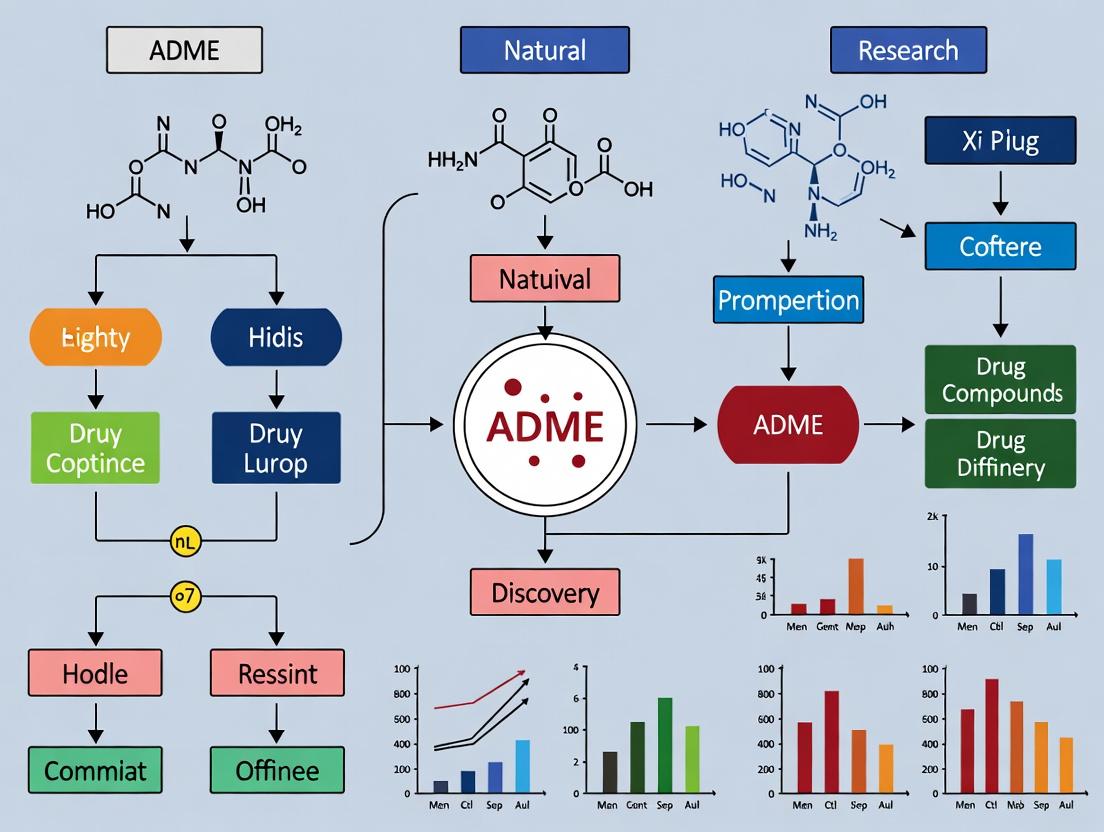
Natural compounds offer immense therapeutic potential but face significant hurdles in Absorption, Distribution, Metabolism, and Excretion (ADME) properties, often leading to high attrition rates in drug development.
Navigating ADME Challenges: A Strategic Guide to Natural Compound Optimization in Modern Drug Discovery
Abstract
Natural compounds offer immense therapeutic potential but face significant hurdles in Absorption, Distribution, Metabolism, and Excretion (ADME) properties, often leading to high attrition rates in drug development. This comprehensive article addresses the critical needs of researchers and drug development professionals by exploring the unique ADME profiles of natural products, from foundational chemical principles to advanced predictive methodologies. It details modern in vitro and in silico strategies for assessing and improving bioavailability, tackles common pitfalls in solubility and metabolic stability, and validates approaches through comparative case studies. By synthesizing current trends and technologies, this guide provides a strategic framework for successfully translating promising natural compounds into viable drug candidates.
Understanding the ADME Landscape: Core Principles and Unique Challenges of Natural Compounds
This technical guide explores the core principles of Absorption, Distribution, Metabolism, and Excretion (ADME) as the fundamental pillars of pharmacokinetics. The content is framed within a broader research thesis investigating the ADME properties of natural compounds—such as polyphenols, alkaloids, and terpenoids—in drug discovery. These compounds present unique challenges and opportunities due to their complex chemical structures, inherent promiscuity for multiple biological targets, and frequent poor bioavailability. Optimizing their ADME profile is critical to translating promising in vitro bioactivity into effective and safe in vivo therapeutics.
The Four Pillars: In-Depth Technical Analysis
Absorption
Absorption defines the rate and extent to which a compound enters the systemic circulation from its site of administration (typically oral). For natural compounds, challenges include poor solubility, instability in gastrointestinal fluids, and efflux by transporters like P-glycoprotein.
Key Experimental Protocol: Caco-2 Permeability Assay
- Objective: To predict human intestinal absorption.
- Methodology:
- Culture human colon adenocarcinoma Caco-2 cells on porous membrane inserts until fully differentiated (21-28 days), forming tight junctions.
- Add the test natural compound to the apical (donor) compartment (simulating intestinal lumen).
- Incubate at 37°C, pH 7.4, for a set time (e.g., 2 hours).
- Sample from the basolateral (receiver) compartment at intervals.
- Quantify compound concentration using LC-MS/MS.
- Calculate Apparent Permeability (Papp): Papp = (dQ/dt) / (A * C0), where dQ/dt is the transport rate, A is the membrane area, and C0 is the initial donor concentration.
Distribution
Distribution describes the reversible transfer of a compound from systemic circulation into tissues and organs, quantified by the volume of distribution (Vd). Key determinants include plasma protein binding, tissue permeability, and affinity for tissue components. Many natural compounds exhibit high plasma protein binding, limiting free fraction.
Key Experimental Protocol: Plasma Protein Binding (Ultrafiltration)
- Incubate the natural compound with human plasma (or a solution of human serum albumin) at 37°C for equilibrium.
- Place the mixture in an ultrafiltration device with a molecular weight cutoff membrane (e.g., 10 kDa).
- Centrifuge under controlled conditions (e.g., 37°C, 2000-3000 x g).
- Analyze the concentration of the unbound compound in the filtrate ([C]free) and the total concentration in the initial plasma ([C]total) via HPLC or LC-MS.
- Calculate percent bound: % Bound = (1 - [C]free / [C]total) * 100.
Metabolism
Metabolism involves the enzymatic conversion of the parent compound into metabolites, primarily via hepatic cytochrome P450 (CYP) enzymes and Phase II conjugation enzymes (e.g., UGTs, SULTs). Natural compounds can be substrates, inhibitors, or inducers of these enzymes, leading to complex drug-drug interaction potentials.
Key Experimental Protocol: Microsomal Metabolic Stability
- Incubate the natural compound with pooled human liver microsomes (HLM) in phosphate buffer (pH 7.4) containing NADPH regenerating system (for Phase I).
- Maintain incubation at 37°C.
- Aliquot samples at multiple time points (e.g., 0, 5, 15, 30, 60 min).
- Stop the reaction by adding cold acetonitrile.
- Analyze remaining parent compound concentration via LC-MS/MS.
- Calculate in vitro half-life (t1/2) and intrinsic clearance (CLint).
Excretion
Excretion is the process by which the compound and its metabolites are eliminated from the body, primarily via renal (urine) or biliary (feces) routes. Renal clearance depends on glomerular filtration, active secretion, and reabsorption.
Key Experimental Protocol: Biliary Excretion Study (Using Sandwich-Cultured Hepatocytes)
- Culture primary hepatocytes between two layers of collagen to maintain polarity and canalicular networks.
- Pre-incubate cells with Ca2+-containing buffer (to maintain tight junctions) or Ca2+-free buffer (to disrupt junctions).
- Dose cells with the test compound for a set period.
- Collect media (representing sinusoidal excretion) and cell lysates (representing total accumulation).
- For bile-accumulated compound, measure the difference in cell-associated compound between Ca2+-containing and Ca2+-free conditions.
- Quantify using LC-MS/MS.
Table 1: Representative ADME Parameters for Selected Natural Compound Classes
| Compound Class (Example) | Caco-2 Papp (10⁻⁶ cm/s) | Human Plasma Protein Binding (%) | Human Microsomal Clint (µL/min/mg) | Predicted Human Vd (L/kg) | Primary Route of Elimination |
|---|---|---|---|---|---|
| Flavonoids (Quercetin) | 1 - 5 (Low) | > 85 | < 20 | 0.8 - 1.5 | Metabolism, Biliary |
| Alkaloids (Berberine) | 0.5 - 2 (Very Low) | > 90 | 10 - 30 | 20 - 40 (High) | Metabolism, Biliary |
| Terpenoids (Withaferin A) | 5 - 15 (Moderate) | 70 - 80 | 30 - 60 | 2 - 4 | Metabolism |
| Saponins (Ginsenoside Rb1) | < 1 (Very Low) | < 50 | < 10 | 0.2 - 0.5 (Low) | Biliary, Renal |
Table 2: Key CYP450 Enzyme Interactions of Common Natural Compounds
| Natural Compound | Major CYP450 Inhibited (IC50 µM) | Major CYP450 Induced | Risk of Clinical DDI |
|---|---|---|---|
| Curcumin | CYP3A4 (>10), CYP2C9 (>10) | - | Low |
| Resveratrol | CYP3A4 (~5), CYP2C9 (~15) | - | Moderate |
| Piperine | CYP3A4 (<5), CYP2D6 (<10) | - | High |
| Hyperforin (St. John's Wort) | - | CYP3A4, CYP2C9 | High |
Visualizing ADME Pathways and Workflows
Diagram Title: ADME Pillars & Natural Compound Journey
Diagram Title: Caco-2 Assay Experimental Workflow
Diagram Title: Primary Metabolic Pathways for Natural Compounds
The Scientist's Toolkit: Key Research Reagent Solutions
Table 3: Essential Reagents and Materials for ADME Studies of Natural Compounds
| Item | Function in ADME Research | Key Considerations for Natural Compounds |
|---|---|---|
| Pooled Human Liver Microsomes (HLM) | Source of major CYP450 and UGT enzymes for metabolic stability and reaction phenotyping studies. | Ensure lot-to-lot consistency; some natural compounds may metabolize via non-microsomal enzymes. |
| Caco-2 Cell Line | Model for predicting human intestinal permeability and efflux transporter (P-gp, BCRP) effects. | Use low passage numbers; validate monolayer integrity with TEER and Lucifer Yellow permeability. |
| Human Plasma (or Serum Albumin) | For determining plasma protein binding via equilibrium dialysis or ultrafiltration. | Natural compounds may bind to other plasma proteins (e.g., α1-acid glycoprotein). |
| Recombinant CYP450 Enzymes | For identifying specific CYP isoforms involved in metabolite formation. | Useful for deconvoluting complex metabolism of promiscuous natural scaffolds. |
| Cryopreserved Human Hepatocytes | Gold-standard in vitro system for integrated metabolism, clearance, and biliary excretion (sandwich culture). | Donor variability is critical; use pooled donors for screening. |
| Transfected Cell Systems (e.g., MDCK-II, HEK293) | Overexpressing human transporters (P-gp, BCRP, OATP) to study uptake/efflux kinetics. | Confirm transporter expression levels and functionality. |
| LC-MS/MS System | Quantitative and qualitative analysis of parent compounds and metabolites in complex biological matrices. | Requires optimization for diverse and often polar natural compound structures. |
| NADPH Regenerating System | Essential cofactor for Phase I oxidative metabolism in microsomal and hepatocyte assays. | Include in all Phase I incubation buffers. |
| Alamethicin | Pore-forming agent used in microsomal incubations to expose latent UGT enzyme activity. | Critical for accurate assessment of Phase II glucuronidation in HLM. |
| Specific Chemical Inhibitors (e.g., Ketoconazole for CYP3A4) | Used in reaction phenotyping to assess contribution of specific enzymes to total clearance. | Verify inhibitor specificity and use at appropriate concentrations. |
Within the paradigm of modern drug discovery, the ADME (Absorption, Distribution, Metabolism, and Excretion) profile of a compound is a critical determinant of its clinical success. Natural compounds, derived from plants, microorganisms, and marine organisms, present a unique and chemically diverse starting point for therapeutic discovery. However, their inherent physicochemical properties—particularly their pronounced structural complexity, distinct distribution of lipophilicity (LogP), and specific molecular weight (MW) ranges—profoundly differentiate them from synthetic libraries and traditional small-molecule drugs. This whitepaper provides an in-depth technical analysis of these key differentiating factors, framing them within the context of ADME optimization challenges and opportunities in natural product-based discovery research.
Structural Complexity: A Quantitative Analysis
Structural complexity is a multifaceted descriptor encompassing chiral centers, aromaticity, stereochemical density, and scaffold rigidity. Natural products often exhibit high complexity, which influences their target specificity and metabolic stability.
Table 1: Quantitative Comparison of Structural Complexity Descriptors
| Descriptor | Typical Synthetic Library | Natural Compound Library | Impact on ADME |
|---|---|---|---|
| Mean Chiral Centers | 0.2 - 0.5 | 3 - 6 | Increased metabolic sites, potential for stereoselective metabolism. |
| Stereochemical Density | Low | High | Influences 3D shape complementarity to target, affecting potency and off-target effects. |
| Fraction of sp³-Hybridized Carbons (Fsp³) | ~0.35 | 0.45 - 0.80 | Correlates with improved solubility and reduced crystallization tendency. |
| Ring Systems per Molecule | 1 - 2 | 3 - 5 | Increases rigidity, affecting conformational flexibility and membrane permeability. |
Experimental Protocol: Assessing Complexity via Fragment Analysis
- Method: Computational Fragment Decomposition (e.g., BRICS fragmentation).
- Procedure:
- Input: Curated datasets of approved drugs, synthetic screening compounds, and natural products.
- Fragmentation: Apply the BRICS algorithm to cleave molecules at retrosynthetically interesting bonds, generating a set of molecular fragments for each library.
- Descriptor Calculation: For each parent molecule, calculate metrics such as the number of unique fragments, the synthetic accessibility score (SAscore), and the fraction of complex ring systems.
- Statistical Analysis: Perform principal component analysis (PCA) on the fragment occurrence matrix to visualize the chemical space occupied by each compound class.
Lipophilicity (LogP) Distributions and Implications
LogP (partition coefficient) is a primary driver of passive membrane permeability and solubility. Natural compounds often occupy a distinct, and sometimes challenging, region of LogP space.
Table 2: LogP Distribution and Associated ADME Properties
| Compound Class | Typical LogP Range | Primary ADME Implication | Common Experimental Method |
|---|---|---|---|
| Oral Drugs (Rule of 5 Compliant) | 0 - 3 | Optimized for passive intestinal absorption. | Shake-flask HPLC/UV. |
| Natural Products (Aggregated) | 1 - 6 | Bimodal distribution; high LogP leads to solubility and bioavailability issues. | Chromatographic (RP-HPLC) derivation. |
| Macrocyclic Natural Products | 3 - 8 | High LogP but often exhibit cell permeability due to intramolecular H-bond masking. | Experimental determination is critical; computational prediction often fails. |
Experimental Protocol: Determination of LogP via Reversed-Phase HPLC
- Principle: The retention time of a compound on a non-polar stationary phase correlates with its hydrophobicity.
- Materials:
- C18 reversed-phase HPLC column.
- Mobile Phase A: Water with 0.1% Formic Acid.
- Mobile Phase B: Acetonitrile with 0.1% Formic Acid.
- Standard compounds with known LogP (e.g., benzene, acetophenone, nitrobenzene).
- Procedure:
- Run a gradient (e.g., 5-95% B over 20 min) for a set of standards to establish a calibration curve of log(k') vs. known LogP.
- Under identical conditions, inject the natural product sample.
- Calculate the capacity factor (k') and use the calibration curve to derive the chromatographic LogP (ClogP).
Molecular Weight Considerations and Beyond Rule of 5 (bRo5) Space
While many natural products violate Lipinski's Rule of Five, particularly in MW, they often achieve cellular uptake via non-passive mechanisms.
Table 3: Molecular Weight and Property Comparisons
| Parameter | Traditional Small Molecule | Natural Product (bRo5) | Consequence for Discovery |
|---|---|---|---|
| Molecular Weight (Da) | < 500 | 500 - 1200 | May limit oral bioavailability but enables high-affinity, selective binding to complex targets (e.g., protein-protein interfaces). |
| Polar Surface Area (PSA) | < 140 Ų | Often > 140 Ų | Reduces passive permeability but can be offset by intramolecular H-bonding and flexible structures. |
| H-Bond Donors/Acceptors | ≤ 5/10 | Often > 5/10 | Impacts solubility and permeability; requires careful formulation or prodrug strategies. |
Experimental Protocol: Assessing Membrane Permeability (PAMPA)
- Method: Parallel Artificial Membrane Permeability Assay (PAMPA).
- Procedure:
- Membrane Formation: A lipid solution (e.g., lecithin in dodecane) is applied to a hydrophobic filter, creating an artificial membrane separating donor and acceptor plates.
- Sample Loading: The natural compound (100 µM in pH 7.4 buffer) is added to the donor well. The acceptor well contains blank buffer.
- Incubation: The assay plate is sealed and incubated for 4-6 hours at room temperature.
- Quantification: Samples from donor and acceptor wells are analyzed by LC-MS/MS.
- Calculation: Permeability (Pe in cm/s) is calculated from the compound appearance rate in the acceptor compartment. Results are compared to high (e.g., metoprolol) and low (e.g., ranitidine) permeability standards.
Pathway Visualization: ADME Profiling Workflow for Natural Compounds
Title: Natural Compound ADME Profiling Workflow
The Scientist's Toolkit: Key Research Reagent Solutions
Table 4: Essential Materials for Natural Product ADME Research
| Reagent/Kit | Function & Application | Key Consideration |
|---|---|---|
| Human Liver Microsomes (HLM) | In vitro study of Phase I oxidative metabolism (CYP450). | Pooled donors essential for representing population enzyme variability. |
| Recombinant CYP Isozymes | Identification of specific CYP enzymes responsible for metabolite formation. | Used in reaction phenotyping studies. |
| Caco-2 Cell Line | Model for predicting intestinal absorption and efflux transporter effects (P-gp, BCRP). | Requires 21-day culture to fully differentiate. |
| PAMPA Plate Assay | High-throughput assessment of passive transcellular permeability. | Lacks active transporters; useful for initial screening. |
| Human Plasma | Determination of plasma protein binding via equilibrium dialysis or ultrafiltration. | Use fresh or properly stored plasma to maintain protein integrity. |
| Stable Isotope-Labeled Standards | Internal standards for accurate LC-MS/MS quantification in pharmacokinetic studies. | Critical for overcoming matrix effects in complex biological samples. |
| HEK293 Cells Overexpressing OATP1B1/1B3 | To assess hepatic uptake transporter-mediated clearance, a key route for many acidic natural products. | Controls required to isolate transporter-specific uptake. |
Natural compounds inhabit a distinct region of chemical space characterized by elevated structural complexity, wider LogP distributions, and higher molecular weights compared to synthetic drug-like libraries. These properties create a unique ADME profile that necessitates tailored experimental and computational strategies. Success in natural product-based discovery research hinges on moving beyond traditional Rule of 5 dogma, embracing mechanistic permeability studies, and employing advanced in vitro models that capture transporter interactions and metabolic pathways relevant to these complex molecules. A deep understanding of these differentiating factors enables researchers to strategically navigate the challenges and leverage the unparalleled therapeutic potential of natural architectures.
Within the context of natural compound drug discovery research, the evaluation of Absorption, Distribution, Metabolism, and Excretion (ADME) properties is critical for translating lead molecules into viable therapeutics. Natural products often present complex chemical scaffolds that, while biologically active, are frequently hampered by poor aqueous solubility, rapid enzymatic degradation, and consequent low oral bioavailability. This whitepaper serves as an in-depth technical guide to these core ADME pitfalls, providing current methodologies for identification and mitigation, specifically framed within natural product research.
Poor Solubility
Aqueous solubility is a primary determinant for drug absorption. Many natural compounds, such as flavonoids, terpenoids, and alkaloids, possess high lipophilicity and crystalline lattice energy, leading to poor dissolution.
Key Quantitative Data on Solubility Classification:
| Solubility Classification | USP Definition | Typical Dose Number (D0) | Common in Natural Product Classes |
|---|---|---|---|
| High Solubility | ≥ 1 mg/mL in pH 1-7.5 | D0 < 1 | Some polar glycosides, saponins |
| Moderate Solubility | 0.1 - 1 mg/mL | D0 1-10 | Certain alkaloids |
| Low Solubility | < 0.1 mg/mL | D0 > 10 | Flavonoids (e.g., Quercetin), Terpenoids, Curcumin |
Experimental Protocol: Kinetic Solubility Assay (High-Throughput)
- Stock Solution: Prepare a 10 mM DMSO stock solution of the natural compound.
- Dilution: Using a liquid handler, dilute the stock 1:100 into pre-warmed (25°C) phosphate-buffered saline (PBS, pH 7.4) or relevant biorelevant media (FaSSIF/FeSSIF) in a 96-well plate. Final DMSO concentration is 1%.
- Incubation: Shake the plate at 300 rpm for 1 hour at 25°C.
- Filtration: Transfer an aliquot from each well to a 96-well filter plate (e.g., 0.45 µm hydrophobic PVDF membrane) and apply vacuum.
- Quantification: Analyze the filtrate via UV/Vis plate reader using a compound-specific wavelength or via LC-MS/MS. Compare to a standard curve prepared in the same buffer/1% DMSO.
- Data Analysis: Calculate solubility as the concentration in the filtrate. Results are reported as "kinetic solubility" (µg/mL or µM).
Research Reagent Solutions for Solubility Enhancement:
| Reagent / Material | Function |
|---|---|
| Hydroxypropyl-β-cyclodextrin (HP-β-CD) | Forms water-soluble inclusion complexes with lipophilic molecules. |
| TPGS (D-α-Tocopherol polyethylene glycol succinate) | Non-ionic surfactant that enhances wetting and micellar solubilization. |
| Poloxamer 407 (Pluronic F127) | Block copolymer surfactant used to formulate micelles and nanosuspensions. |
| Soluplus | Polyvinyl caprolactam-polyvinyl acetate-PEG graft copolymer for solid dispersions. |
| FaSSIF/FeSSIF Powder | Biorelevant media simulating intestinal fluids for predictive dissolution. |
Diagram: Solubility Assessment and Mitigation Workflow
Rapid Metabolism
Natural compounds often undergo extensive Phase I (e.g., CYP450) and Phase II (e.g., UGT, SULT) metabolism, leading to rapid clearance and short half-lives.
Key Quantitative Data on Metabolic Stability:
| Metabolic Stability in Liver Microsomes | % Parent Remaining (30 min) | Predicted Hepatic Clearance | Action Required |
|---|---|---|---|
| High | > 70% | Low | Proceed to further ADME studies |
| Moderate | 30% - 70% | Moderate | Consider structural modification |
| Low | < 30% | High | Likely requires lead optimization |
Experimental Protocol: Metabolic Stability in Liver Microsomes
- Reagent Preparation: Thaw human or species-specific liver microsomes on ice. Prepare cofactor solution: 1 mM NADP⁺, 5 mM glucose-6-phosphate, 1 U/mL glucose-6-phosphate dehydrogenase, and 5 mM MgCl₂ in 100 mM potassium phosphate buffer (pH 7.4).
- Incubation: In a 96-well plate, combine test compound (1 µM final), liver microsomes (0.5 mg protein/mL final), and cofactor solution. Pre-incubate for 5 min at 37°C.
- Initiation & Quenching: Start the reaction by adding the NADP⁺ regenerating system. At designated time points (0, 5, 10, 20, 30 min), remove an aliquot and quench with 2 volumes of ice-cold acetonitrile containing an internal standard.
- Sample Processing: Centrifuge quenched samples at 4000xg for 15 min to pellet proteins. Transfer supernatant for LC-MS/MS analysis.
- Data Analysis: Quantify the peak area of the parent compound relative to time zero. Plot Ln(% remaining) vs. time. The slope is the elimination rate constant (k), used to calculate intrinsic clearance (CLᵢₙₜ = k / microsomal protein concentration).
Research Reagent Solutions for Metabolism Studies:
| Reagent / Material | Function |
|---|---|
| Pooled Human Liver Microsomes (HLM) | Gold standard for in vitro Phase I metabolic stability screening. |
| Recombinant CYP450 Isozymes | Identify specific cytochrome P450 enzymes responsible for metabolism. |
| CYP450 Isozyme-Specific Inhibitors | Chemical inhibitors (e.g., Ketoconazole for CYP3A4) to confirm enzyme involvement. |
| UDP-Glucuronic Acid (UDPGA) | Cofactor for UDP-glucuronosyltransferase (UGT) Phase II metabolism assays. |
| S9 Fraction | Contains both microsomal and cytosolic enzymes for comprehensive metabolism. |
Diagram: Phase I and II Metabolism Leading to Rapid Clearance
Low Oral Bioavailability (F)
Oral bioavailability (F) is the fraction of an orally administered dose that reaches systemic circulation. It is a product of solubility, dissolution, intestinal permeability, and first-pass metabolism (gut and liver).
Key Quantitative Data Influencing Oral Bioavailability:
| Parameter | Ideal Range for Good Oral F | Measurement Tool | Impact on F |
|---|---|---|---|
| Apparent Permeability (Papp) | > 1 x 10⁻⁶ cm/s (Caco-2) | Caco-2, MDCK, PAMPA assay | Direct: Low permeability reduces F |
| Efflux Ratio (ER) | ER < 2 | Bidirectional Caco-2 assay | High ER (P-gp/BCRP substrate) reduces F |
| First-Pass Extraction | Low | Liver microsome stability + Portal vein models | High extraction drastically reduces F |
| Fa * Fg | Fa (Fraction absorbed) ~1, Fg (gut wall pass) ~1 | In silico and in vitro models | Combined product determines upper limit of F |
Experimental Protocol: Bidirectional Caco-2 Permeability and Efflux Assay
- Cell Culture: Seed Caco-2 cells at high density on collagen-coated, semi-permeable membrane inserts (e.g., 0.4 µm pore size) in a 24-well plate. Culture for 21-28 days, changing media every 2-3 days, until tight monolayers form (TEER > 300 Ω·cm²).
- Dosing Solutions: Prepare test compound at 10 µM in Hanks' Balanced Salt Solution (HBSS) with 10 mM HEPES (pH 7.4). Include a low (1 µM) and high (50 µM) concentration of a known P-gp inhibitor (e.g., GF120918) in separate wells to assess efflux inhibition.
- Transport Study:
- A-to-B (Apical to Basolateral): Add dosing solution to the apical chamber and fresh HBSS to the basolateral chamber.
- B-to-A (Basolateral to Apical): Add dosing solution to the basolateral chamber and fresh HBSS to the apical chamber.
- Incubation & Sampling: Incubate at 37°C with gentle shaking. Sample from the receiver compartment at 30, 60, and 120 minutes, replacing with fresh pre-warmed HBSS.
- Analysis: Quantify compound concentration in samples by LC-MS/MS.
- Calculations:
- Apparent Permeability: Papp = (dQ/dt) / (A * C₀), where dQ/dt is transport rate, A is membrane area, C₀ is initial donor concentration.
- Efflux Ratio (ER) = Papp (B-to-A) / Papp (A-to-B).
Diagram: Sequential Hurdles Determining Oral Bioavailability (F)
Overcoming ADME pitfalls in natural product development requires an integrated, multi-parametric approach early in the discovery pipeline. Prioritizing compounds with balanced solubility and metabolic stability is key. Strategies such as prodrug design, formulation engineering (nanocarriers, amorphous solid dispersions), and structural modification to block metabolic soft spots must be employed while preserving pharmacophoric elements. Systematic screening using the protocols and tools outlined herein enables researchers to derisk natural compound candidates and improve the probability of developing orally bioavailable therapeutics.
Key Natural Compound Classes and Their Typical ADME Profiles (Flavonoids, Alkaloids, Terpenoids)
Within the broader thesis on the Absorption, Distribution, Metabolism, and Excretion (ADME) properties of natural compounds in discovery research, understanding the fundamental classes is paramount. Natural products remain a cornerstone of drug discovery, but their often complex and varied ADME profiles present significant challenges. This technical guide provides an in-depth examination of the three major classes—flavonoids, alkaloids, and terpenoids—focusing on their core chemical characteristics, typical in vitro and in vivo ADME behaviors, and experimental approaches for their evaluation. Data is derived from recent literature and standardized assays to inform researchers and drug development professionals.
Flavonoids
Chemical & Pharmacological Overview: Flavonoids are polyphenolic secondary metabolites with a C6-C3-C6 skeleton (two aromatic rings linked by a three-carbon bridge). Ubiquitous in plants, they exhibit antioxidant, anti-inflammatory, and anticancer activities. Their ADME is heavily influenced by extensive phase II metabolism.
Typical ADME Profile:
- Absorption: Variable, often limited by poor aqueous solubility and efflux by P-glycoprotein (P-gp). Glycosylation generally reduces passive diffusion; aglycones are better absorbed. Active transport via SGLT1 may facilitate some glycoside uptake in the gut.
- Distribution: Moderate to low volume of distribution due to high plasma protein binding (particularly to albumin) and polarity. Limited BBB penetration for most.
- Metabolism: Extensive and rapid phase II conjugation is the hallmark. Glucuronidation (UGT1A1, UGT1A9) and sulfation (SULT1A1, SULT1E1) are predominant, often occurring in the intestine (first-pass) and liver. Methylation by COMT also occurs. Limited Phase I (CYP450) metabolism.
- Excretion: Primarily renal excretion of conjugated metabolites. Some enterohepatic recirculation of glucuronides after bacterial deglucuronidation in the gut is common.
Table 1: Representative Flavonoid ADME Parameters
| Compound (Class) | Solubility (Log S) | Caco-2 Papp (×10-6 cm/s) | Plasma Protein Binding (%) | Major Metabolic Reaction | Primary Excretion Route | Oral Bioavailability (%) |
|---|---|---|---|---|---|---|
| Quercetin (Flavonol) | -3.5 | 1.2 - 2.5 | >98% | Glucuronidation/Sulfation | Renal | 1 - 5 |
| (-)-Epigallocatechin-3-gallate (Flavan-3-ol) | -3.1 | 0.5 - 1.5 | ~95% | Methylation/Glucuronidation | Fecal | <1 |
| Naringenin (Flavanone) | -3.8 | 8.0 - 15.0 | ~90% | Glucuronidation | Renal | ~5 |
| Genistein (Isoflavone) | -4.0 | 5.0 - 10.0 | ~95% | Glucuronidation/Sulfation | Renal | ~10 |
Experimental Protocol: Assessing Intestinal Metabolism & Transport
- Objective: To determine the apparent permeability (Papp) and efflux ratio of a flavonoid using the Caco-2 monolayer model, and to identify metabolites formed during transit.
- Methodology:
- Cell Culture: Grow Caco-2 cells on Transwell inserts for 21-25 days to form fully differentiated, polarized monolayers. Validate monolayer integrity via transepithelial electrical resistance (TEER > 300 Ω·cm²) and Lucifer Yellow permeability.
- Transport Assay: Prepare flavonoid (e.g., 10 µM) in HBSS buffer (pH 7.4). Apply to the donor compartment (apical for A→B, basolateral for B→A). Incubate at 37°C.
- Sampling: Collect samples from the receiver compartment at scheduled times (e.g., 30, 60, 90, 120 min). Analyze donor samples at time 0 and 120 min for mass balance.
- LC-MS/MS Analysis: Quantify parent compound in all samples using a validated LC-MS/MS method. Calculate Papp and Efflux Ratio (Papp(B→A)/Papp(A→B)).
- Metabolite Identification: Pool receiver and donor samples. Use high-resolution LC-MS (e.g., Q-TOF) in negative ion mode to screen for glucuronide (M+176), sulfate (M+80), and methylated (M+14) metabolites.
Diagram: Key Flavonoid ADME Pathways
Title: Flavonoid Absorption and Conjugation Pathway
Alkaloids
Chemical & Pharmacological Overview: Alkaloids are nitrogen-containing, often basic compounds, derived from amino acids. They exhibit a wide range of potent pharmacological effects (e.g., morphine-analgesic, quinidine-antiarrhythmic, vinblastine-anticancer). Their ADME is dominated by their basicity, which influences tissue distribution and interaction with metabolic enzymes.
Typical ADME Profile:
- Absorption: Good absorption for many due to lipophilicity and basic nature, which promotes solubility in the acidic stomach. However, compounds with quaternary ammonium groups (e.g., tubocurarine) are poorly absorbed.
- Distribution: Often extensive, with high volume of distribution. Basic alkaloids sequester in acidic lysosomes (lysosomotropism) and accumulate in tissues like liver, lung, and spleen. Variable BBB penetration.
- Metabolism: Primarily Phase I oxidation via Cytochrome P450 enzymes (CYP2D6, CYP3A4 are common). Demethylation, hydroxylation, and N-oxidation are frequent. Some undergo Phase II conjugation.
- Excretion: Renal excretion is primary, influenced by urinary pH (ion-trapping of basic compounds in acidic urine can enhance elimination). Biliary excretion can be significant for higher molecular weight alkaloids.
Table 2: Representative Alkaloid ADME Parameters
| Compound (Class) | pKa | Log P | Vdss (L/kg) | Major CYP Enzyme | Plasma t1/2 (h) | Primary Excretion Route |
|---|---|---|---|---|---|---|
| Quinine (Quinoline) | 8.5, 4.3 | 3.4 | ~2.5 | CYP3A4 | ~11 | Renal (acid pH dependent) |
| Nicotine (Pyridine) | 8.0, 3.1 | 1.2 | ~1.0 | CYP2A6 (>>80%) | ~2 | Renal |
| Berberine (Isoquinoline) | 11.3 (Quaternary) | -1.5 | ~20.0 | Minimal (Phase II) | ~24 | Fecal / Biliary |
| Vinblastine (Indole) | 7.4, 5.4 | 3.7 | ~8.0 | CYP3A4 | ~24 | Biliary / Fecal |
Experimental Protocol: Determination of Hepatic Microsomal Metabolic Stability
- Objective: To determine the in vitro half-life (t1/2) and intrinsic clearance (CLint) of an alkaloid using pooled human liver microsomes (HLM).
- Methodology:
- Incubation: Prepare incubation mixture (final volume 200 µL) containing 0.5 mg/mL HLM protein, 1 mM NADPH regenerating system, and the test alkaloid (1 µM) in 0.1 M phosphate buffer (pH 7.4). Pre-incubate for 5 min at 37°C.
- Reaction Initiation & Sampling: Start the reaction by adding NADPH. Aliquot 25 µL of the reaction mixture into a pre-chilled quenching solution (e.g., acetonitrile with internal standard) at time points 0, 5, 15, 30, and 60 minutes.
- Sample Processing: Vortex quenched samples, centrifuge at high speed (e.g., 14,000 rpm, 10 min, 4°C) to precipitate protein. Transfer supernatant for analysis.
- LC-MS/MS Analysis: Analyze supernatant for parent compound concentration using LC-MS/MS. Plot natural log of percent remaining versus time.
- Calculations: Calculate the in vitro t1/2 = 0.693 / k (slope of linear regression). Calculate CLint = (0.693 / t1/2) * (Incubation Volume / Microsomal Protein).
Diagram: Alkaloid Distribution and Metabolic Clearance
Title: Ion Trapping and Metabolism of Basic Alkaloids
Terpenoids
Chemical & Pharmacological Overview: Terpenoids (isoprenoids) are built from isoprene (C5) units. They range from volatile monoterpenes (C10) to large triterpenes (C30) and tetraterpenes (C40, carotenoids). They have diverse bioactivities (e.g., artemisinin-antimalarial, paclitaxel-anticancer, ginkgolides-PAF antagonism). Their ADME is heavily dictated by high lipophilicity.
Typical ADME Profile:
- Absorption: Variable. Low molecular weight, non-polar monoterpenes are well absorbed. Larger, polycyclic terpenoids (e.g., paclitaxel) suffer from very poor aqueous solubility and are often formulated with solubilizers (e.g., Cremophor EL). P-gp efflux is a major barrier for many.
- Distribution: High volume of distribution for lipophilic compounds, accumulating in adipose tissue and membranes. Extensive binding to lipoproteins in plasma.
- Metabolism: Major route is Phase I oxidation by CYP450 enzymes (notably CYP3A4, CYP2C). Hydroxylation and epoxidation are common. Some undergo Phase II conjugation post-oxidation. Autoinduction (e.g., hyperforin from St. John's wort) is a notable issue for some.
- Excretion: Primarily fecal via biliary excretion, especially for higher molecular weight (>500 Da) compounds. Renal excretion is minimal for lipophilic parent drugs.
Table 3: Representative Terpenoid ADME Parameters
| Compound (Class) | Molecular Weight (Da) | Log P | Aqueous Solubility (µg/mL) | Major CYP Enzyme | Biliary Excretion | Notable ADME Challenge |
|---|---|---|---|---|---|---|
| Artemisinin (Sesquiterpene) | 282.3 | 2.9 | ~50 | CYP2B6, CYP3A4 | Moderate | Short half-life, autoinduction |
| Paclitaxel (Diterpene) | 853.9 | 3.2 | <0.3 | CYP3A4, CYP2C8 | High | Poor solubility, P-gp efflux |
| Digoxin (Cardiac Glycoside) | 780.9 | 1.3 | ~300 | Minimal (Renal clearance) | Low | P-gp substrate, narrow therapeutic index |
| Δ9-Tetrahydrocannabinol (Meroterpenoid) | 314.5 | 7.0 | <1 | CYP2C9, CYP3A4 | High | High lipophilicity, complex distribution |
Experimental Protocol: Biliary Excretion Assessment Using Sandwich-Cultured Hepatocytes
- Objective: To assess the biliary excretion index (BEI) and in vitro biliary clearance of a terpenoid.
- Methodology:
- Cell Model: Use primary rat or human hepatocytes cultured in a collagen sandwich configuration for 5-7 days to form functional bile canaliculi networks.
- Accumulation Study: Wash cells with standard buffer (containing Ca²⁺/Mg²⁺ to maintain tight junctions). Incubate with test compound (e.g., 2 µM) for 10-30 min at 37°C.
- Sampling (Standard Buffer): Collect buffer. Lyse cells with 0.5% Triton X-100 to release total cellular content (cells + bile).
- Sampling (Ca²⁺/Mg²⁺-free Buffer): In parallel, wash and incubate cells with Ca²⁺/Mg²⁺-free buffer to disrupt tight junctions and drain canaliculi. Collect buffer (represents cellular content only).
- LC-MS/MS Analysis: Quantify compound in all samples.
- Calculations: Calculate BEI = [1 - (Amount in Ca²⁺-free cells / Amount in Standard cells)] * 100%. Calculate in vitro biliary clearance.
Diagram: Terpenoid Hepatobiliary Disposition
Title: Hepatobiliary Handling of Lipophilic Terpenoids
The Scientist's Toolkit: Key Research Reagent Solutions
Table 4: Essential Materials for ADME Studies of Natural Products
| Reagent / Material | Function in ADME Studies | Example Vendor/Product |
|---|---|---|
| Caco-2 Cell Line | Model for predicting intestinal permeability and efflux transport. | ATCC HTB-37 |
| Pooled Human Liver Microsomes (HLM) | Source of CYP450 and UGT enzymes for metabolic stability and reaction phenotyping studies. | Corning Gentest, Xenotech |
| Recombinant Human CYP450 Isozymes | Identify specific CYP enzymes responsible for metabolite formation. | BD Biosciences Supersomes |
| MDCKII or LLC-PK1 cells transfected with human transporters (e.g., MDR1) | Specific assessment of P-glycoprotein (P-gp) mediated transport and inhibition. | Solvo Biotechnology |
| Sandwich-Cultured Primary Hepatocytes | Gold-standard in vitro model for hepatic uptake, metabolism, and biliary excretion. | BioIVT, Lonza |
| NADPH Regenerating System | Essential cofactor for CYP450 activity in microsomal incubations. | Promega, Sigma-Aldrich |
| Specific Chemical Inhibitors (e.g., Ketoconazole for CYP3A4) | Phenotyping of metabolic pathways and identifying DDI potential. | Sigma-Aldrich, Cayman Chemical |
| Stable Isotope-Labeled Internal Standards | Ensures accuracy and precision in quantitative LC-MS/MS bioanalysis. | Santa Cruz Biotechnology, Toronto Research Chemicals |
| Simulated Intestinal Fluids (FaSSIF/FeSSIF) | Assess solubility and dissolution under biorelevant conditions. | biorelevant.com |
The Role of Natural Product Chemistry in Predicting Initial ADME Behavior
Within the broader thesis on the ADME (Absorption, Distribution, Metabolism, and Excretion) properties of natural compounds in drug discovery, the unique chemical features of natural products (NPs) present both opportunities and challenges. Their inherent structural complexity, diverse stereochemistry, and specific functional group patterns necessitate specialized approaches for early ADME prediction. This guide details the methodologies and rational frameworks for leveraging NP chemistry to forecast initial ADME behavior, accelerating the identification of viable lead candidates.
Chemical Descriptors and ADME Property Correlation
Key molecular descriptors derived from NP structures provide quantitative relationships with ADME outcomes. The following table summarizes critical descriptors and their predictive impact.
Table 1: Key NP Chemical Descriptors and Correlated ADME Properties
| Descriptor | Definition / Calculation | Primary ADME Correlation | Typical NP Range (vs. Synthetics) | Predictive Power (R² range*) |
|---|---|---|---|---|
| Lipophilicity (LogP/D) | Partition coefficient (octanol/water). Calculated via fragment-based methods (e.g., XLogP3). | Absorption, membrane permeability, volume of distribution. | Often higher, broader distribution. | 0.60-0.85 |
| Topological Polar Surface Area (TPSA) | Sum of surface areas of polar atoms (O, N, attached H). Calculated from 2D structure. | Passive intestinal absorption, blood-brain barrier (BBB) penetration. | Generally larger due to glycosylation/polyols. | 0.70-0.90 |
| Molecular Weight (MW) | Mass of the molecule (Da). | Absorption, distribution (Rule of Five). | Often >500 Da (esp. glycosides, peptides). | 0.50-0.75 |
| Rotatable Bond Count (NRot) | Number of non-ring, single bonds. | Oral bioavailability, conformational flexibility. | Variable; often lower in polycyclic cores. | 0.40-0.65 |
| Hydrogen Bond Donors/Acceptors (HBD/HBA) | Count of OH/NH and O/N atoms. | Absorption, permeability, solubility. | Often higher (polyhydroxylated, glycosidic). | 0.65-0.80 |
| Glycoside Presence | Binary descriptor (0/1) for sugar attachment. | Solubility, absorption (often negative), metabolism. | Prevalent in flavonoids, saponins, cardenolides. | N/A (Categorical) |
| Number of Aromatic Rings | Count of benzene or heteroaromatic rings. | Protein binding, metabolic stability. | Often moderate (flavonoids, alkaloids). | 0.30-0.55 |
*R² range indicative of published QSAR models for specific endpoints (e.g., Caco-2 permeability, human oral bioavailability).
Experimental Protocols for Key ADME Assays
Integrating in silico predictions with medium-throughput experimental validation is crucial.
Parallel Artificial Membrane Permeability Assay (PAMPA)
Purpose: Predicts passive transcellular absorption potential. Protocol Summary:
- Membrane Preparation: Create a lipid-infused artificial membrane by coating a hydrophobic filter with a solution of lecithin (e.g., 2% w/v phosphatidylcholine in dodecane) in a 96-well plate system.
- Compound Incubation: Add a 100 µM solution of the NP (in DMSO/PBS, final DMSO <1%) to the donor plate. Fill acceptor plate with pH 7.4 PBS buffer.
- Assemble & Incubate: Sandwich the coated filter between donor and acceptor plates. Incubate for 4-16 hours at 25°C without agitation.
- Analysis: Quantify compound concentration in both compartments using UV spectroscopy or LC-MS/MS. Calculate effective permeability (Pe, cm/s). Key Reagent: Phosphatidylcholine (from egg or soy), simulating gut membrane.
Microsomal Metabolic Stability Assay
Purpose: Evaluates Phase I metabolic turnover. Protocol Summary:
- Incubation Setup: In a 96-well plate, combine:
- 0.1 M phosphate buffer (pH 7.4): 78 µL
- Human or rat liver microsomes (0.5 mg protein/mL final): 10 µL
- NP substrate (5 µM final from DMSO stock): 2 µL
- Pre-incubate at 37°C for 5 min.
- Reaction Initiation: Start reaction by adding 10 µL of NADPH regenerating system (1.3 mM NADP⁺, 3.3 mM glucose-6-phosphate, 0.4 U/mL G6PDH, 3.3 mM MgCl₂).
- Time Course Sampling: Aliquot 20 µL at t = 0, 5, 15, 30, 45, 60 min into a stop solution (80 µL acetonitrile with internal standard).
- Analysis: Centrifuge, analyze supernatant by LC-MS/MS. Plot remaining parent compound (%) vs. time. Determine in vitro half-life (t₁/₂) and intrinsic clearance (CLint).
Caco-2 Cell Monolayer Transport Assay
Purpose: Models intestinal epithelial permeability and efflux. Protocol Summary:
- Cell Culture: Grow Caco-2 cells to confluence on collagen-coated transwell inserts (e.g., 0.4 µm pore, 12-well format) for 21-25 days, monitoring transepithelial electrical resistance (TEER > 300 Ω·cm²).
- Dosing: Add NP (10 µM in HBSS-HEPES, pH 7.4) to apical (A) or basolateral (B) chamber for absorptive (A→B) or secretory (B→A) studies. Include control for P-glycoprotein (P-gp) efflux (e.g., with inhibitor verapamil).
- Incubation & Sampling: Incubate at 37°C, 5% CO₂. Sample from receiver compartment at 30, 60, 120 min.
- Quantification: Analyze samples by LC-MS/MS. Calculate Apparent Permeability (Papp) and Efflux Ratio (ER = Papp(B→A)/Papp(A→B)).
Workflow and Pathway Visualizations
Title: NP ADME Prediction Workflow
Title: Key ADME Pathways for Oral NPs
The Scientist's Toolkit: Research Reagent Solutions
Table 2: Essential Materials for NP ADME Studies
| Item | Function in NP ADME Context | Key Considerations for Natural Products |
|---|---|---|
| Liver Microsomes (Human/Rat) | Source of CYP450 enzymes for metabolic stability assays. | NPs may induce/ inhibit CYPs uniquely; species differences critical. |
| Caco-2 Cell Line | Model for intestinal permeability and efflux transport. | Monitor NP cytotoxicity; some NPs may affect tight junctions. |
| PAMPA Lipid Solutions | Form artificial membrane for passive permeability screening. | Lecithin composition can be tailored to mimic different barriers (e.g., BBB). |
| NADPH Regenerating System | Provides cofactors for oxidative metabolism in microsomal assays. | Essential for Phase I; for Phase II (glucuronidation), add UDPGA. |
| Specific Chemical Inhibitors (e.g., Verapamil, Ketoconazole) | Probe involvement of specific transporters (P-gp) or CYP enzymes. | NPs often have multi-target effects; use inhibitor cocktails cautiously. |
| LC-MS/MS System | Quantify NPs and metabolites in complex biological matrices. | Must handle diverse, often novel, chemical structures without prior standards. |
| Physiologically Relevant Buffers (FaSSIF/FeSSIF) | Simulate intestinal fluids for solubility and dissolution testing. | Crucial for poorly soluble NPs (e.g., flavonoids, terpenes). |
| Recombinant CYP/UGT Enzymes | Identify specific enzymes responsible for NP metabolism. | Helps deconvolute metabolism of complex NPs with multiple sites. |
Predicting the initial ADME behavior of natural products requires a tailored integration of chemically intelligent descriptor analysis, robust in silico models calibrated for NP-like chemical space, and strategically selected experimental validation. By systematically applying this framework, researchers can more effectively triage NPs in early discovery, focusing resources on compounds with viable pharmacokinetic profiles and de-risking their development path.
From Prediction to Practice: Cutting-Edge Tools and Strategies for ADME Assessment
This technical guide is framed within a broader thesis investigating the Absorption, Distribution, Metabolism, and Excretion (ADME) properties of natural compounds in discovery research. The inherent chemical diversity and complexity of natural products present a significant challenge for traditional experimental ADME profiling, which is low-throughput, expensive, and resource-intensive. This document details the in silico methodologies—specifically Quantitative Structure-Activity Relationship (QSAR) models and advanced Artificial Intelligence/Machine Learning (AI/ML) techniques—that serve as front-runners for early, rapid, and cost-effective prediction of ADME properties. Their integration into the natural compound discovery pipeline accelerates the identification of lead candidates with favorable pharmacokinetic profiles.
Core Predictive Modeling Paradigms: QSAR & AI/ML
Quantitative Structure-Activity Relationship (QSAR) Modeling
QSAR models establish a mathematical relationship between a compound's molecular descriptors (quantitative representations of its structure) and a specific biological activity or property (e.g., permeability, metabolic stability).
Detailed Protocol for Developing a QSAR Model for Caco-2 Permeability Prediction:
- Data Curation: Compile a dataset of natural compounds with experimentally measured apparent permeability (Papp) in the Caco-2 cell monolayer assay. Data can be sourced from public databases (e.g., ChEMBL, PubChem) or proprietary research.
- Descriptor Calculation: For each compound in the dataset, compute a wide array of molecular descriptors using software like RDKit, PaDEL-Descriptor, or Dragon. These include:
- 1D/2D Descriptors: Molecular weight, logP (octanol-water partition coefficient), topological polar surface area (TPSA), hydrogen bond donors/acceptors, rotatable bonds.
- 3D Descriptors: Molecular volume, surface area, principal moments of inertia (require energy-minimized 3D structures).
- Data Preprocessing & Splitting:
- Handle missing values and normalize/scale descriptor values.
- Remove highly correlated descriptors to reduce dimensionality (e.g., correlation coefficient > 0.95).
- Split the dataset into a training set (70-80%), a validation set (10-15%), and a hold-out test set (10-15%) using techniques like Kennard-Stone or stratified random sampling.
- Feature Selection: Apply algorithms like Genetic Algorithms, Stepwise Regression, or LASSO to select the most relevant subset of descriptors that contribute significantly to the permeability endpoint.
- Model Building: Apply regression algorithms (e.g., Partial Least Squares Regression, Support Vector Regression) to the training set using the selected features.
- Model Validation & Assessment:
- Internal Validation: Use 5- or 10-fold cross-validation on the training set to assess robustness. Report Q2 (cross-validated R2).
- External Validation: Use the hold-out test set, never seen during training, to evaluate predictive performance. Key metrics: R2, Root Mean Square Error (RMSE), and Mean Absolute Error (MAE).
Artificial Intelligence & Machine Learning (AI/ML) Models
AI/ML models, particularly deep learning, can automatically learn complex, non-linear relationships and hierarchical features directly from molecular structures (e.g., SMILES strings or graphs), often surpassing traditional QSAR.
Detailed Protocol for Developing a Graph Neural Network (GNN) for Hepatic Clearance Prediction:
- Data Preparation: Assemble a dataset of compounds with in vitro intrinsic clearance data (e.g., from human liver microsomes) or in vivo hepatic clearance.
- Molecular Representation: Represent each molecule as a graph ( G = (V, E) ), where atoms are nodes (V) and bonds are edges (E). Node features include atom type, hybridization, charge. Edge features include bond type and conjugation.
- Model Architecture:
- Input Layer: Takes the molecular graph.
- Graph Convolution Layers (2-4): Layers (e.g., Message Passing Neural Networks) aggregate information from a node's neighbors, updating node embeddings to capture the local chemical environment.
- Global Pooling Layer: Aggregates all node embeddings into a single, fixed-size molecular fingerprint (e.g., using sum, mean, or attention-based pooling).
- Fully Connected (Dense) Layers: The pooled fingerprint is passed through 2-3 dense layers with activation functions (ReLU) and dropout for regularization.
- Output Layer: A single neuron for regression (clearance value) or multiple for classification (e.g., high/medium/low clearance).
- Training: Use the Adam optimizer with a mean squared error loss function. Train for a fixed number of epochs (e.g., 200) with early stopping based on the validation set performance.
- Validation: As per QSAR protocol, use k-fold cross-validation and a strict external test set.
Key ADME Endpoints & Predictive Performance
Recent literature (2023-2024) highlights the performance of integrated AI/ML platforms and specific models on critical ADME endpoints relevant to natural compounds.
Table 1: Performance Metrics of Contemporary AI/ML Models for Key ADME Predictions
| ADME Endpoint | Model Type | Dataset Size (Compounds) | Key Performance Metric | Value | Reference/Platform Context |
|---|---|---|---|---|---|
| Human Intestinal Absorption (HIA) | Ensemble (GNN, Transformer) | ~1,200 | Balanced Accuracy (External Test) | 92% | Recent benchmark study on natural product-like libraries |
| Caco-2 Permeability | Deep Neural Network (DNN) | ~800 | Concordance (Q3) | 88% | Integrated in ADMET Predictor software (v. 10.5) |
| P-glycoprotein Substrate | Support Vector Machine (SVM) | ~1,500 | AUC-ROC | 0.94 | Study on flavonoid and terpenoid derivatives |
| Cytochrome P450 3A4 Inhibition | Graph Attention Network (GAT) | ~12,000 | Precision (External Set) | 87% | Meta-analysis of public data (2023) |
| Human Liver Microsomal Stability | Multitask Deep Learning | ~5,500 | RMSE (t1/2 in min) | 0.38 log units | Proprietary model cited in recent review |
| Plasma Protein Binding (PPB) | Gradient Boosting (XGBoost) | ~2,800 | R² (External Test) | 0.72 | Open-source model implementation (GitHub, 2024) |
| hERG Channel Inhibition | 3D-CNN on Molecular Surfaces | ~9,000 | Sensitivity (External) | 85% | Novel structure-based approach for cardiotoxicity |
Integrated In Silico ADME Prediction Workflow
The application of these models follows a logical, tiered workflow to prioritize natural compound candidates.
Diagram Title: Integrated AI-Driven ADME Screening for Natural Products
Research Reagent & In Silico Toolkit
Table 2: Essential Research Reagent Solutions & In Silico Tools for ADME Prediction
| Item Name | Type (Wet/Dry) | Primary Function in Context |
|---|---|---|
| Caco-2 Cell Line | Wet Lab | In vitro gold-standard for assessing intestinal permeability; used to generate training data for predictive models. |
| Human Liver Microsomes (HLM) | Wet Lab | Critical reagent for in vitro metabolism (CYP450) and stability assays; provides experimental endpoints for ML models. |
| Recombinant CYP450 Enzymes | Wet Lab | Used to identify specific CYP isoforms involved in compound metabolism, informing more precise metabolism predictions. |
| RDKit | In Silico | Open-source cheminformatics toolkit for descriptor calculation, fingerprint generation, and molecular preprocessing. |
| KNIME Analytics Platform | In Silico | Visual workflow tool for integrating data processing, descriptor calculation, and model building (e.g., with Python/R). |
| ADMET Predictor (Simulations Plus) | In Silico | Commercial software providing robust, proprietary QSAR and AI models for a comprehensive suite of ADMET endpoints. |
| Schrödinger Suite (QikProp) | In Silico | Provides fast predictions of key physicochemical and ADME properties, useful for initial filtering of large NP libraries. |
| PyTorch Geometric / DGL | In Silico | Specialized Python libraries for building and training Graph Neural Network (GNN) models directly on molecular graphs. |
Pathway Visualization: Primary ADME Processes Affecting Natural Compounds
Diagram Title: Key ADME Pathways for Orally Administered Natural Products
Within the context of discovering novel therapeutics from natural products, the evaluation of Absorption, Distribution, Metabolism, and Excretion (ADME) properties is a critical, early-stage hurdle. Natural compounds often possess complex chemical scaffolds that, while biologically active, may present suboptimal pharmacokinetic profiles. This technical guide details three cornerstone in vitro high-throughput assays—Caco-2 permeability, Parallel Artificial Membrane Permeability Assay (PAMPA), and microsomal stability screening—that are indispensable for profiling the intestinal absorption and metabolic liability of natural compound libraries in discovery research.
Core Assay Principles and Applications
Caco-2 Cell Monolayer Permeability Assay
The Caco-2 assay utilizes a human colon adenocarcinoma cell line that, upon differentiation, exhibits morphological and functional characteristics of small intestinal enterocytes. It is the gold standard for predicting passive and active intestinal drug absorption, including efflux by transporters like P-glycoprotein (P-gp).
Parallel Artificial Membrane Permeability Assay (PAMPA)
PAMPA is a non-cell-based, high-throughput model that uses an artificial lipid membrane immobilized on a filter support to assess passive transcellular permeability. It is rapid, cost-effective, and ideal for early-stage, rank-ordering of natural compound libraries based on their inherent permeability.
Microsomal Stability Screening
This assay incubates test compounds with liver microsomes (typically from human, rat, or mouse), which are rich in cytochrome P450 (CYP) enzymes and other phase I metabolizing systems. It provides a crucial estimate of hepatic metabolic clearance and intrinsic metabolic stability.
Table 1: Comparative Overview of Key ADME Screening Assays
| Assay | Primary ADME Property Measured | Throughput | Cost | Key Strengths | Key Limitations |
|---|---|---|---|---|---|
| Caco-2 | Intestinal Permeability & Efflux | Medium | High | Biologically relevant, detects active transport/efflux | Long cell culture time (21 days), variable expression of transporters |
| PAMPA | Passive Transcellular Permeability | Very High | Low | Rapid, robust, high-throughput, no cell culture | Does not account for active transport or metabolism |
| Microsomal Stability | Hepatic Metabolic Clearance (Phase I) | High | Medium | Predictive of first-pass metabolism, identifies rapidly metabolized compounds | Lacks full cellular context (e.g., Phase II enzymes, uptake transporters) |
Detailed Experimental Protocols
Caco-2 Permeability Assay Protocol
Key Materials: Caco-2 cells (ATCC HTB-37), Transwell inserts (e.g., 0.4 μm pore, 12-well format), DMEM with 10% FBS, Hanks' Balanced Salt Solution (HBSS) with 10 mM HEPES, Lucifer Yellow (integrity marker), reference compounds (e.g., Propranolol, Atenolol, Digoxin). Procedure:
- Cell Seeding & Differentiation: Seed Caco-2 cells at high density (~100,000 cells/cm²) on collagen-coated polycarbonate Transwell filters. Culture for 21-28 days, changing media every 2-3 days. Monitor transepithelial electrical resistance (TEER) until >300 Ω·cm².
- Assay Preparation: Pre-warm HBSS-HEPES (transport buffer). Wash monolayers twice with buffer. Add Lucifer Yellow to the donor compartment to confirm monolayer integrity post-assay.
- Bidirectional Transport Study:
- A-B (Apical to Basolateral): Add test/reference compound in buffer to apical (A) chamber. Sample from basolateral (B) chamber at intervals (e.g., 30, 60, 90, 120 min).
- B-A (Basolateral to Apical): Add compound to basolateral chamber. Sample from apical chamber at same intervals.
- Sample Analysis: Quantify compound concentration in samples using LC-MS/MS. Measure Lucifer Yellow fluorescence to ensure integrity (<1% transport per hour).
- Data Calculation:
- Calculate Apparent Permeability: ( P{app} = (dQ/dt) / (A \times C0) ) where ( dQ/dt ) is transport rate, ( A ) is filter area, ( C_0 ) is initial donor concentration.
- Calculate Efflux Ratio: ( ER = P{app}(B-A) / P{app}(A-B) ). An ER > 2 suggests active efflux.
PAMPA Protocol
Key Materials: PAMPA plate system (e.g., Millipore MultiScreen), artificial lipid solution (e.g., 2% lecithin in dodecane), PBS (pH 5.5, 6.5, 7.4), acceptor sink buffer (e.g., PBS pH 7.4 with 5% DMSO). Procedure:
- Membrane Formation: Pipette 5 μL of lipid solution onto the filter of each donor well. Incubate for 30 minutes to allow solvent evaporation and membrane formation.
- Plate Assembly: Fill acceptor plate wells with 300 μL of acceptor sink buffer. Carefully place the donor plate on top, ensuring no air bubbles.
- Compound Addition: Add 150 μL of test compound solution (50-100 μM in PBS at desired pH) to the donor wells. The standard pH for predicting intestinal absorption is pH 6.5 (donor) / 7.4 (acceptor).
- Incubation & Sampling: Cover plate and incubate at 25°C (room temp) for 4-6 hours. Avoid agitation to prevent membrane disruption. After incubation, separate the plates.
- Analysis: Quantify compound in both donor and acceptor compartments using UV plate reader or LC-MS.
- Data Calculation:
- Calculate ( P{app} ) (cm/s): ( P{app} = { -ln[1 - CA(t) / C{equilibrium}] } / [A \times (1/VD + 1/VA) \times t] ) where ( CA(t) ) is acceptor concentration at time ( t ), ( A ) is membrane area, ( VD ) and ( VA ) are donor/acceptor volumes, and ( C{equilibrium} ) is theoretical concentration at equilibrium.
Microsomal Stability Assay Protocol
Key Materials: Pooled human/rodent liver microsomes (0.5-1 mg/mL final), NADPH regenerating system (e.g., 1 mM NADP⁺, 5 mM G6P, 1 U/mL G6PDH), Potassium phosphate buffer (100 mM, pH 7.4), positive control (e.g., Verapamil, Testosterone). Procedure:
- Incubation Setup: Pre-incubate microsomes with test compound (1 μM typical) in phosphate buffer at 37°C for 5 minutes.
- Reaction Initiation: Start the reaction by adding the NADPH regenerating system. Final incubation volume is typically 100-200 μL.
- Time Course Sampling: Aliquot equal volumes (e.g., 20 μL) from the incubation mixture at multiple time points (e.g., 0, 5, 15, 30, 45, 60 minutes) into a quenching solution (e.g., acetonitrile with internal standard) to stop the reaction.
- Sample Processing: Vortex, centrifuge (≥3000g, 10 min) to pellet proteins. Transfer supernatant for LC-MS/MS analysis.
- Data Analysis: Plot natural log of remaining parent compound percentage vs. time. The slope (( k )) is the elimination rate constant.
- Calculate in vitro half-life: ( t_{1/2} = ln(2) / k )
- Calculate in vitro intrinsic clearance: ( CL{int, in\ vitro} = (ln(2) / t{1/2}) \times (Incubation\ Volume / Microsomal\ Protein) )
Table 2: Typical Data Interpretation Benchmarks
| Assay | Parameter | High | Moderate | Low | Interpretation for Natural Compounds |
|---|---|---|---|---|---|
| Caco-2 ( P_{app} ) (x10⁻⁶ cm/s) | > 20 | 2 - 20 | < 2 | High values suggest good passive intestinal absorption. | |
| Caco-2 Efflux Ratio | > 2.5 | 1.5 - 2.5 | < 1.5 | ER > 2.5 indicates potential P-gp efflux, limiting absorption. | |
| PAMPA ( P_{app} ) (x10⁻⁶ cm/s) | > 10 | 1 - 10 | < 1 | High values indicate strong passive transcellular permeability. | |
| Microsomal ( t_{1/2} ) (min) | > 60 | 15 - 60 | < 15 | Short ( t_{1/2} ) indicates high metabolic liability, a common issue for natural phenolics/flavonoids. | |
| Hepatic Extraction Ratio (Predicted) | > 0.7 | 0.3 - 0.7 | < 0.3 | High ratio suggests significant first-pass metabolism. |
Visualization of Workflows and Pathways
Diagram 1: Caco-2 Cell Assay Workflow
Diagram 2: PAMPA Assay Workflow
Diagram 3: Microsomal Metabolic Pathways
The Scientist's Toolkit: Key Research Reagent Solutions
Table 3: Essential Materials for High-Throughput ADME Screening
| Reagent/Material | Supplier Examples | Critical Function in Assays |
|---|---|---|
| Caco-2 Cells (HTB-37) | ATCC, ECACC | Provides the biological model for predicting human intestinal permeability and efflux. |
| Transwell Permeable Supports | Corning, Greiner Bio-One | Polycarbonate membrane inserts for culturing differentiated cell monolayers for transport studies. |
| Pooled Human Liver Microsomes | Corning Life Sciences, Xenotech | Contains a representative mix of human CYP450 and other enzymes for predicting hepatic metabolic stability. |
| NADPH Regenerating System | Sigma-Aldrich, Promega | Supplies constant NADPH, the essential cofactor for CYP450-mediated oxidative metabolism. |
| PAMPA Plate Systems | Millipore (MultiScreen), pION | Pre-formatted multi-well plates designed for efficient, high-throughput artificial membrane assays. |
| Artificial Lipid (e.g., Lecithin in Dodecane) | Avanti Polar Lipids, Sigma-Aldrich | Forms the critical artificial membrane barrier that mimics the intestinal epithelial cell membrane. |
| LC-MS/MS System | Sciex, Agilent, Waters | Gold-standard analytical platform for sensitive and specific quantification of compounds and metabolites in complex biological matrices. |
| HTS-Compatible Liquid Handlers | Hamilton, Tecan, Beckman Coulter | Enables automated, precise, and rapid plating, incubation, and sampling, essential for screening large natural product libraries. |
| Reference Compounds (Propranolol, Atenolol, Verapamil) | Sigma-Aldrich, Tocris | High/low permeability and stable/labile controls to validate assay performance and system suitability. |
1. Introduction Within the critical pathway of natural product drug discovery, elucidating Absorption, Distribution, Metabolism, and Excretion (ADME) properties is paramount. The inherent structural complexity and diversity of natural compounds pose significant analytical challenges. Liquid Chromatography coupled with tandem Mass Spectrometry (LC-MS/MS) has emerged as the cornerstone technique for metabolite identification and profiling, enabling researchers to deconstruct metabolic fate with unparalleled sensitivity and specificity. This technical guide details the application of LC-MS/MS in the context of natural compound ADME research.
2. Core LC-MS/MS Components and Workflow for Metabolite ID The process integrates high-resolution separation with sophisticated mass analysis.
2.1. Liquid Chromatography (LC)
- Function: Separates the parent compound and its metabolites from biological matrices (plasma, urine, bile, microsomal incubates).
- Key Phases: Reversed-phase (C18) chromatography is standard. Hydrophilic Interaction Liquid Chromatography (HILIC) is crucial for polar metabolite retention.
- Protocol (Typical Gradient for Reversed-Phase):
- Column: C18 (2.1 x 100 mm, 1.7-1.8 µm particle size).
- Mobile Phase A: Water with 0.1% Formic Acid.
- Mobile Phase B: Acetonitrile with 0.1% Formic Acid.
- Gradient: 5% B to 95% B over 10-15 minutes.
- Flow Rate: 0.3-0.4 mL/min.
- Temperature: 40°C.
2.2. Tandem Mass Spectrometry (MS/MS)
- Function: Provides accurate mass measurement and structural elucidation through fragmentation.
- Key Steps:
- Full Scan (MS1): Detects all ions; identifies potential metabolites via mass shifts from the parent.
- Data-Dependent Acquisition (DDA): Automatically selects precursor ions from MS1 for fragmentation.
- Product Ion Scan (MS2): Fragments selected ions to generate structural fingerprints.
2.3. Data Acquisition Strategies Table 1: Common MS/MS Data Acquisition Modes for Metabolite Profiling
| Mode | Precursor Selection | Fragmentation | Primary Use |
|---|---|---|---|
| Data-Dependent Acquisition (DDA) | Top N most intense ions from MS1 | CID or HCD | Untargeted metabolite discovery. |
| Data-Independent Acquisition (DIA) | All ions in sequential isolation windows (e.g., SWATH) | CID or HCD | Comprehensive, reproducible profiling. |
| Neutral Loss/Precursor Ion Scan | Specific mass or fragment loss | CID | Targeted screening for specific biotransformations. |
Diagram Title: LC-MS/MS Metabolite ID Workflow
3. Experimental Protocols for ADME Studies
3.1. In Vitro Microsomal Incubation for Metabolic Stability
- Objective: Assess compound metabolic stability and generate preliminary metabolites.
- Protocol:
- Incubation Mix (100 µL total):
- Potassium phosphate buffer (50 mM, pH 7.4): 78 µL
- Liver microsomes (human/rat): 0.5 mg/mL final concentration
- Test compound: 1-10 µM final concentration (from stock in DMSO, <1% v/v)
- MgCl₂: 5 mM final concentration
- Pre-incubate at 37°C for 5 min.
- Initiate reaction by adding NADPH (1 mM final concentration).
- Incubate at 37°C for 0, 5, 15, 30, 60 min.
- Terminate reaction with 100 µL ice-cold acetonitrile.
- Vortex, centrifuge (13,000 x g, 10 min), and analyze supernatant by LC-MS/MS.
- Incubation Mix (100 µL total):
3.2. Metabolite Identification Data Processing Workflow
Diagram Title: Metabolite ID Data Processing Steps
4. The Scientist's Toolkit: Key Research Reagent Solutions Table 2: Essential Materials for LC-MS/MS Metabolite ID Studies
| Reagent/Material | Function & Rationale |
|---|---|
| Pooled Human Liver Microsomes (pHLM) | Contains phase I (CYP450) and phase II (UGT) enzymes for in vitro metabolism simulation. |
| NADPH Regenerating System | Provides essential cofactor for CYP450-mediated oxidations; sustains metabolic reactions. |
| β-Glucuronidase/Sulfatase | Enzymes to hydrolyze phase II conjugates, confirming glucuronide/sulfate metabolites. |
| Stable Isotope-Labeled Parent Compound (e.g., ¹³C, ²H) | Aids in distinguishing metabolite peaks from matrix ions and facilitates fragmentation tracking. |
| High-Purity Solvents (LC-MS Grade) | Minimizes background noise and ion suppression; essential for sensitive detection. |
| Quality Control Samples (Pooled Study Samples) | Monitors instrument performance and reproducibility throughout analytical batches. |
5. Data Interpretation and Biotransformation Pathways Interpretation hinges on recognizing characteristic mass shifts and fragmentation patterns corresponding to common biotransformations.
Table 3: Common Biotransformations and Their LC-MS/MS Signatures
| Biotransformation | Mass Shift (Da) | Neutral Loss / Diagnostic Ion | Typical Metabolite Polarity |
|---|---|---|---|
| Oxidation (Hydroxylation) | +15.9949 | Loss of H₂O (-18.0106) | More polar |
| N-/O-Dealkylation | Variable (-14, -28, -42) | Aldehyde/ketone fragment | More polar |
| Glucuronidation | +176.0321 | Loss of 176.0321 (glucuronic acid) | Much more polar |
| Sulfation | +79.9568 | Loss of 79.9568 (SO₃) | More polar |
| Reduction | +2.0157 | - | More polar |
| Methylation | +14.0157 | - | Less polar |
6. Conclusion LC-MS/MS is an indispensable platform for mapping the metabolic landscape of natural compounds. Its integration into early ADME screening accelerates the identification of labile metabolic soft spots, potentially toxic metabolites, and active circulating species. Mastery of the techniques and data interpretation strategies outlined herein empowers discovery researchers to make informed decisions on the progression and optimization of natural product-based drug candidates.
The drug discovery landscape for natural compounds is rich with bioactive molecules exhibiting promising therapeutic potential. However, their clinical translation is frequently hampered by poor Absorption, Distribution, Metabolism, and Excretion (ADME) properties, particularly low oral bioavailability. This technical guide examines three cornerstone strategies—prodrug design, formulation technologies, and structural modification—to overcome these ADME limitations, thereby transforming potent natural leads into viable drug candidates.
Prodrug Design: A Chemical Trojan Horse
Prodrug design involves the chemical modification of an active compound into an inert or less active form that undergoes enzymatic or chemical transformation in vivo to release the parent drug. This strategy primarily targets enhancement of solubility, membrane permeability, and metabolic stability.
Common Prodrug Linkages and Applications
Table 1: Prodrug Linkages and Their Impact on Bioavailability Parameters
| Linkage Type | Activation Mechanism | Primary Bioavailability Target | Common Use Cases with Natural Compounds |
|---|---|---|---|
| Ester | Hydrolysis by esterases | Solubility, permeability, taste masking | Polyphenols (e.g., resveratrol hemisuccinate), flavonoids |
| Phosphate/Sulfate | Hydrolysis by phosphatases/sulfatases | Aqueous solubility for parenteral or improved dissolution | Curcumin phosphate, anticancer lignans |
| Peptide | Cleavage by specific peptidases | Targeted release, reduced first-pass metabolism | Opioid peptide prodrugs |
| Glycoside | Hydrolysis by glycosidases (e.g., in colon) | Colon-specific delivery, stability | Anthracycline glycoside analogs |
| Amino Acid | Hydrolysis by proteases/esterases | Improved permeability via transporter targeting | NSAID-amino acid conjugates |
Experimental Protocol:In VitroProdrug Activation Kinetics
Objective: To evaluate the enzymatic conversion rate of a candidate prodrug to its active parent compound.
- Preparation: Dissolve the prodrug in suitable buffer (e.g., PBS, pH 7.4) to a final concentration of 10-100 µM.
- Enzyme Source: Add relevant enzyme preparation (e.g., liver S9 fraction, intestinal homogenate, specific esterase) at a standardized protein concentration (e.g., 1 mg/mL).
- Incubation: Maintain reaction mixture at 37°C with gentle agitation. Aliquot samples (e.g., 100 µL) at predetermined time points (0, 5, 15, 30, 60, 120 min).
- Reaction Quench: Immediately mix aliquots with an equal volume of ice-cold acetonitrile containing an internal standard to precipitate proteins and stop the reaction.
- Analysis: Centrifuge quenched samples (e.g., 13,000 rpm, 10 min). Analyze supernatant via HPLC-MS/MS to quantify the decreasing prodrug and increasing parent drug concentrations.
- Data Analysis: Plot concentration vs. time. Calculate activation half-life (t½) and reaction velocity (Vmax, Km if using multiple substrate concentrations).
Formulation Technologies: Engineering Delivery Systems
Advanced formulations physically encapsulate or complex with the drug to protect it from degradation and control its release.
Key Formulation Platforms
Table 2: Formulation Technologies for Bioavailability Enhancement
| Technology | Typical Size Range | Mechanism of Action | Bioavailability Gain (Reported Examples) |
|---|---|---|---|
| Liposomes | 50-200 nm | Phospholipid bilayer encapsulation; enhances solubility, alters PK, passive targeting (EPR). | Doxorubicin liposome: Altered distribution, reduced cardiotoxicity. |
| Solid Lipid Nanoparticles (SLNs) | 50-500 nm | Solid lipid core for controlled release; protects labile compounds from degradation. | Curcumin SLNs: ~4-5 fold increase in oral AUC vs. free curcumin. |
| Nanoemulsions | 20-200 nm | Oil-in-water droplets; enhances solubility and lymphatic uptake. | Paclitaxel nanoemulsion: Improved oral absorption. |
| Cyclodextrin Complexation | Molecular | Hydrophobic cavity inclusion complex; dramatically increases aqueous solubility. | Resveratrol-HP-β-CD: Solubility increased by >1000-fold. |
| Self-Emulsifying Drug Delivery Systems (SEDDS) | 20-250 nm (upon dispersion) | Pre-concentrate of oil, surfactant, co-surfactant; forms fine emulsion in situ in GI tract. | Silymarin SEDDS: ~3-fold increase in oral bioavailability. |
Experimental Protocol: Preparation and Characterization of SLNs
Objective: To prepare and characterize Solid Lipid Nanoparticles for a hydrophobic natural compound (e.g., curcumin).
- Hot Melt Homogenization:
- Melt the solid lipid (e.g., glyceryl monostearate, 1.0 g) and the drug (curcumin, 50 mg) together at 70°C (5-10°C above lipid melting point).
- Heat an aqueous surfactant solution (e.g., 2% w/v Poloxamer 188, 10 mL) to the same temperature.
- Add the hot aqueous phase to the hot lipid phase under high-speed stirring (Ultra-Turrax, 10,000 rpm, 1 min) to form a coarse pre-emulsion.
- Immediately process the pre-emulsion using a high-pressure homogenizer (e.g., 3 cycles at 500-1000 bar) or a probe sonicator (e.g., 70% amplitude, 5 min pulses with cooling) while hot.
- Characterization:
- Particle Size & PDI: Analyze diluted SLN dispersion by Dynamic Light Scattering (DLS). Target: <200 nm, PDI <0.3.
- Zeta Potential: Measure using Laser Doppler Micro-electrophoresis. Target magnitude: |>30| mV for electrostatic stability.
- Encapsulation Efficiency (EE): Separate free drug by ultracentrifugation (e.g., 40,000 rpm, 30 min) or size-exclusion chromatography. Analyze drug content in the supernatant vs. the total. EE% = (Total drug - Free drug) / Total drug * 100.
- In Vitro Release: Use dialysis bag method in sink conditions (PBS with 1% w/v SLS). Sample receiver medium at intervals and analyze via HPLC.
Structural Modification: Rational Medicinal Chemistry
Direct, purposeful alteration of the natural compound's chemical structure to improve its physicochemical properties without abolishing pharmacodynamic activity.
Strategic Modifications and Their Effects
Table 3: Structural Modifications Targeting Specific ADME Deficiencies
| ADME Deficit | Modification Strategy | Chemical Example | Intended Outcome |
|---|---|---|---|
| Poor Solubility | Introduce ionizable group (e.g., amine for salt formation). | Morphine -> Morphine sulfate | Increased dissolution rate. |
| Poor Permeability | Reduce hydrogen bond donors/acceptors (Lipinski's Rule of 5). | EGCG -> Peracetylated EGCG | Increased logP, passive diffusion. |
| Rapid Phase II Metabolism (Glucuronidation/Sulfation) | Block vulnerable phenolic -OH groups with methyl or other small alkyl groups. | Resveratrol -> Pterostilbene (dimethoxy analog) | Reduced clearance, longer half-life. |
| Substrate for Efflux Pumps (e.g., P-gp) | Modify structure to reduce recognition by efflux transporters. | Epicatechin gallate analogs | Increased intestinal absorption, reduced efflux. |
| Chemical Instability | Steric hindrance or isosteric replacement of labile moieties. | Prosthetic group addition | Improved shelf-life and in vivo stability. |
Experimental Protocol: Parallel Artificial Membrane Permeability Assay (PAMPA)
Objective: To rapidly assess passive transcellular permeability of native vs. structurally modified compounds.
- Plate Preparation: Coat the filter of a 96-well acceptor plate with a PAMPA membrane solution (e.g., 2% w/v lecithin in dodecane). Evaporate solvent to form a thin lipid layer.
- Assay Setup: Fill the acceptor wells with PBS at pH 7.4 (or other relevant buffer). Add a donor solution containing the test compound (e.g., 100 µM in PBS pH 6.5 to simulate intestinal pH) to the donor plate.
- Incubation: Carefully place the donor plate on top of the acceptor plate to form a sandwich. Incubate at 25°C for a set time (e.g., 4-16 hours) without agitation.
- Quantification: After incubation, separate the plates. Analyze the concentration of the compound in both donor and acceptor wells using a UV plate reader or LC-MS.
- Data Analysis: Calculate the apparent permeability coefficient: Papp (cm/s) = -ln(1 - [Drug]acceptor/[Drug]equilibrium) / (A * (1/Vdonor + 1/Vacceptor) * t), where A is filter area, V is volume, and t is time. Compare Papp values of analogs.
Visualization: Pathways and Workflows
Diagram: Prodrug Activation Pathways
Title: Prodrug Activation and Drug Action Pathway
Diagram: Integrated Bioavailability Enhancement Workflow
Title: Integrated Strategy Selection Workflow
The Scientist's Toolkit: Key Research Reagent Solutions
Table 4: Essential Reagents and Materials for Bioavailability Enhancement Studies
| Reagent/Material | Supplier Examples | Primary Function in Experiments |
|---|---|---|
| Caco-2 Cell Line | ATCC, ECACC | Gold-standard in vitro model for predicting intestinal permeability and active transport/efflux. |
| Liver Microsomes/S9 Fractions (Human & preclinical species) | Corning, Xenotech | Essential for studying Phase I metabolic stability and enzyme kinetic studies (CYP450). |
| Recombinant Human Enzymes (e.g., UGTs, SULTs, CES) | Sigma-Aldrich, Supersomes | To identify specific enzymes involved in Phase II metabolism or prodrug activation. |
| PAMPA Plate System | pION, Corning | High-throughput screening tool for assessing passive transcellular permeability. |
| Lipoid (e.g., Phospholipon 90G) | Lipoid GmbH | High-purity phospholipids for creating liposomes, SLNs, and artificial membranes. |
| Cyclodextrins (HP-β-CD, SBE-β-CD) | Cyclolab, Sigma-Aldrich | Complexing agents to dramatically increase aqueous solubility of hydrophobic compounds. |
| Biorelevant Dissolution Media (FaSSIF, FeSSIF) | Biorelevant.com | Simulates intestinal fluids for more predictive in vitro dissolution and precipitation studies. |
| LC-MS/MS System with UPLC | Waters, Agilent, Sciex | Quantification of drugs, metabolites, and prodrugs in complex biological matrices with high sensitivity. |
Integrating ADME Data into the Natural Product Lead Optimization Workflow
Within the broader thesis on the ADME properties of natural compounds in discovery research, a critical challenge is the systematic incorporation of pharmacokinetic data into the lead optimization cycle. Natural products (NPs) possess high chemical diversity but often suffer from poor drug-like properties. This guide details a technical framework for embedding ADME profiling early in NP optimization to enhance the probability of clinical success.
Core ADME Assays for Natural Product Profiling
Integrating these assays into iterative design-synthesize-test-analyze cycles is paramount.
Table 1: Essential In Vitro ADME Assays for NP Lead Optimization
| Assay | Key Measured Parameter(s) | Target Threshold (Typical) | Primary Goal |
|---|---|---|---|
| Metabolic Stability | Intrinsic Clearance (Clint) in human liver microsomes (HLM) / hepatocytes | Clint < 15 µL/min/mg (HLM) | Predict in vivo clearance and half-life. |
| Permeability | Apparent Permeability (Papp) in Caco-2 or MDCK cell monolayers | Papp (A-B) > 10 × 10⁻⁶ cm/s (high) | Assess intestinal absorption and blood-brain barrier potential. |
| Solubility | Thermodynamic solubility in PBS at pH 6.5/7.4 | > 100 µM (for oral dosing) | Ensure sufficient dissolution for absorption. |
| Plasma Protein Binding | Fraction unbound (fu) in human plasma | fu > 0.05 (not highly restrictive) | Estimate free drug concentration for efficacy. |
| CYP Inhibition | IC50 for key CYP isoforms (3A4, 2D6, 2C9, etc.) | IC50 > 10 µM (low risk) | Identify potential for drug-drug interactions. |
| hERG Inhibition | Patch-clamp or binding assay IC50 | IC50 > 30 µM (safety margin) | Flag early cardiac toxicity risk. |
Detailed Experimental Protocols
Protocol 1: Metabolic Stability in Human Liver Microsomes (HLM)
Objective: Determine the intrinsic clearance (Clint) of a NP lead. Materials:
- Test compound (10 mM DMSO stock)
- Pooled human liver microsomes (0.5 mg/mL final protein)
- NADPH regeneration system (Solution A: NADP⁺, Solution B: Glucose-6-phosphate, Glucose-6-phosphate dehydrogenase)
- Potassium phosphate buffer (100 mM, pH 7.4)
- MgCl₂ (5 mM final)
- Acetonitrile (with internal standard) for quenching
Method:
- Incubation: Pre-incubate HLM in buffer with MgCl₂ at 37°C for 5 min. Add compound (1 µM final). Initiate reaction by adding NADPH regeneration system.
- Time Points: Aliquot reaction mixture at T = 0, 5, 15, 30, and 60 minutes into pre-chilled acetonitrile to quench.
- Sample Processing: Vortex, centrifuge (4000xg, 15 min, 4°C). Analyze supernatant via LC-MS/MS.
- Data Analysis: Plot natural log of remaining parent compound percentage vs. time. Calculate slope (k, min⁻¹). Clint (µL/min/mg protein) = (k / microsomal protein concentration) * 1000.
Protocol 2: Parallel Artificial Membrane Permeability Assay (PAMPA)
Objective: High-throughput assessment of passive transcellular permeability. Materials:
- PAMPA plate system (donor and acceptor plates)
- Artificial membrane lipid (e.g., lecithin in dodecane)
- Test compound in PBS (pH 7.4) or universal buffer (pH gradient)
- Prisma HT buffer (pH 7.4) for acceptor plate
- UV plate reader or LC-MS for quantification
Method:
- Membrane Formation: Add lipid solution to filter on donor plate.
- Assay Setup: Fill donor wells with compound solution. Fill acceptor plate with buffer. Assemble sandwich and incubate undisturbed (e.g., 4 hours, 25°C).
- Quantification: Measure compound concentration in donor and acceptor wells at endpoint.
- Data Analysis: Calculate effective permeability: Pe (10⁻⁶ cm/s) = -VD * VA / ((VD+VA) * A * t) * ln(1 - [Drug]Acceptor/[Drug]Equilibrium), where V=volume, A=filter area, t=time.
Visualizing the Integrated Workflow
Title: Integrated NP Lead Optimization with ADME Feedback
Title: ADME Property Relationships Impacting Exposure
The Scientist's Toolkit: Research Reagent Solutions
Table 2: Essential Reagents & Kits for NP ADME Profiling
| Reagent/Kits | Function & Application |
|---|---|
| Pooled Human Liver Microsomes (HLM) & Hepatocytes | Gold-standard systems for predicting phase I/II metabolic clearance and metabolite identification. |
| Caco-2 Cell Line | Human colon adenocarcinoma cells forming polarized monolayers; model for intestinal permeability and efflux (P-gp) transport. |
| PAMPA Plate Kits | Non-cell-based, high-throughput tool for assessing passive transcellular permeability. |
| Rapid Equilibrium Dialysis (RED) Device | Efficient plate-based system for determining plasma protein binding (fraction unbound). |
| CYP450 Inhibition Assay Kits (Fluorogenic/LC-MS) | Standardized assays to measure inhibition potential against major cytochrome P450 enzymes. |
| Biomimetic Chromatography Columns (IAM, HSA) | Immobilized Artificial Membrane (IAM) for permeability prediction; Human Serum Albumin (HSA) columns for protein binding estimation. |
| Supersomes (Expressed CYP Enzymes) | Recombinant CYP isoforms for reaction phenotyping to identify enzymes responsible for NP metabolism. |
| Stable Isotopically Labeled Internal Standards | Critical for accurate and precise LC-MS/MS quantification in complex biological matrices. |
Overcoming Hurdles: Practical Solutions for Poor Solubility, Metabolism, and Toxicity
Within natural product drug discovery, promising bioactive molecules often fail to translate into viable drug candidates due to poor aqueous solubility, a critical Absorption, Distribution, Metabolism, and Excretion (ADME) property. Compounds like flavonoids (e.g., quercetin), curcuminoids, and various alkaloids exhibit low bioavailability primarily due to limited dissolution in gastrointestinal fluids. This whitepaper provides a technical guide to three primary strategies—salt formation, nanoformulations, and co-crystals—to diagnose and remedy these solubility challenges, thereby enhancing the developmental potential of natural compounds.
Technical Strategies for Solubility Enhancement
Salt Formation
Salt formation is the most established method, applicable to ionizable compounds. It involves reacting an acidic or basic drug with a suitable counterion to form a crystalline salt with improved solubility and dissolution rate.
- Applicability: Requires a pKa difference of at least 2-3 between the API and the counterion.
- Key Considerations: Selection of GRAS (Generally Recognized as Safe) counterions is paramount. Hygroscopicity and chemical stability of the formed salt must be assessed.
Nanoformulations
Nanoformulations enhance solubility and dissolution kinetics by reducing particle size to the nanoscale (typically 1-1000 nm), dramatically increasing surface area. This approach is especially suitable for non-ionizable, highly lipophilic natural compounds.
- Common Techniques: Include nanoemulsions, nanosuspensions, solid lipid nanoparticles (SLNs), and polymeric nanoparticles.
- Mechanism: The increased surface area according to the Noyes-Whitney equation drives faster dissolution. Nanosystems can also facilitate lymphatic uptake, bypassing first-pass metabolism.
Pharmaceutical Co-crystals
Co-crystals are crystalline materials comprising an API and a coformer in a definite stoichiometric ratio, bound by non-ionic interactions (e.g., hydrogen bonds). They can modify solid-state properties without altering covalent structure.
- Advantage: Applicable to non-ionizable compounds where salt formation is impossible.
- Design: Relies on supramolecular synthon theory for rational selection of coformers (e.g., carboxylic acids, amides).
Quantitative Comparison of Strategies
Table 1: Comparative Analysis of Solubility Enhancement Strategies
| Feature | Salt Formation | Nanoformulations (Nanosuspension) | Pharmaceutical Co-crystal |
|---|---|---|---|
| Primary Mechanism | Ionic bond formation, lattice energy alteration | Increased surface area & saturation solubility | Altered crystal lattice & hydrogen bonding |
| Applicable API Class | Ionizable acids/bases (pKa suitable) | Primarily non-ionizable, lipophilic compounds | Both ionizable and non-ionizable |
| Typical Solubility Increase | 10-1000 fold | 5-50 fold | 2-100 fold |
| Key Stability Concerns | pH-dependent disproportionation, hygroscopicity | Ostwald ripening, particle aggregation | Dissociation in solution, hydrate formation |
| Development Timeline | Relatively fast (established protocols) | Moderate to long (complex process optimization) | Moderate (screening intensive) |
| Regulatory Pathway | Well-defined (ICH guidelines) | Emerging guidelines, more complex | Evolving, case-by-case (US FDA) |
Table 2: Reported Solubility Enhancement for Selected Natural Compounds (Recent Data)
| Natural Compound (Class) | Strategy | Co-former/Counterion/Nano-system | Aqueous Solubility Increase (Fold) | Reference Year* |
|---|---|---|---|---|
| Quercetin (Flavonoid) | Co-crystal | Isonicotinamide | 4.5 | 2023 |
| Curcumin (Polyphenol) | Nanoformulation | PLGA Nanoparticles | ~40 | 2024 |
| Berberine (Alkaloid) | Salt | Hydrochloride | >100 | Classic |
| Ellagic Acid (Polyphenol) | Co-crystal | Nicotinamide | 18 | 2022 |
| Resveratrol (Stilbene) | Nanoformulation | Solid Lipid Nanoparticles (SLN) | 22 | 2023 |
| Artemisinin (Sesquiterpene) | Co-crystal | 4,4'-Bipyridine | 6 | 2021 |
*Data synthesized from recent literature searches.
Detailed Experimental Protocols
Protocol: High-Throughput Screening for Salt/Cocrystal Formation
Objective: To rapidly identify promising solid forms via solvent-drop grinding. Materials: API, library of GRAS coformers/counterions, ball mill, organic solvents (ethanol, acetonitrile). Procedure:
- Weigh 50 mg of API and an equimolar amount of coformer into individual grinding jars.
- Add 20 µL of a bridging solvent (e.g., ethanol).
- Mill the mixtures at 30 Hz for 30 minutes using a vibrational ball mill.
- Collect the resulting solids and analyze by Powder X-Ray Diffraction (PXRD) to detect new crystalline phases.
- Characterize hits by Differential Scanning Calorimetry (DSC) and Fourier-Transform Infrared Spectroscopy (FTIR) for confirmation.
Protocol: Anti-Solvent Precipitation for Nanosuspension
Objective: To produce a stable nanosuspension of a lipophilic natural compound. Materials: API, stabilizer (e.g., HPMC, PVP, poloxamer 407), probe sonicator, magnetic stirrer. Procedure:
- Dissolve the API in a water-miscible organic solvent (e.g., acetone) to form the organic phase.
- Dissolve the stabilizer (1-5% w/v) in purified water to form the aqueous phase.
- Under rapid magnetic stirring (1000 rpm), inject the organic phase into the aqueous phase at a 1:10 volume ratio.
- Immediately subject the mixture to probe sonication (e.g., 70% amplitude, 5 min, pulse cycle 5s on/2s off) while stirring.
- Evaporate the organic solvent under reduced pressure. Characterize particle size (DLS, PSD), zeta potential, and saturation solubility.
Visualization of Pathways and Workflows
Decision Workflow for Solubility Enhancement
Nanosuspension Production & Analysis
The Scientist's Toolkit: Research Reagent Solutions
Table 3: Essential Materials for Solubility Enhancement Studies
| Item/Category | Function & Rationale |
|---|---|
| GRAS Counterion Library | A curated set of pharmaceutically acceptable acids (e.g., HCl, citric, tartaric) and bases (e.g., sodium, meglumine) for salt screening. |
| Coformer Screening Kit | A library of safe coformers (e.g., nicotinamide, succinic acid, caffeine) for cocrystal formation via hydrogen bonding. |
| Polymeric Stabilizers | Polymers like Hydroxypropyl Methylcellulose (HPMC) and Polyvinylpyrrolidone (PVP) to inhibit Ostwald ripening in nanosuspensions. |
| Surfactants (Poloxamers) | Non-ionic surfactants (e.g., Poloxamer 407) for stabilizing nanoemulsions and nanosuspensions via steric hindrance. |
| Solid Lipid Matrices | Lipids like Glyceryl Monostearate (GMS) and Compritol 888 ATO for formulating Solid Lipid Nanoparticles (SLNs). |
| Crystallization Plates | 96-well or 24-well plates designed for high-throughput evaporative or cooling crystallization trials. |
| Milling Media (Zirconia Beads) | For top-down nano-milling approaches to achieve particle size reduction in nanosuspensions. |
Within drug discovery, natural compounds serve as invaluable lead structures due to their structural diversity and potent biological activities. However, a significant impediment to their clinical translation is their often-poor pharmacokinetic profile, specifically their rapid metabolism. A core thesis in modern natural product-based drug discovery posits that optimizing the Absorption, Distribution, Metabolism, and Excretion (ADME) properties—particularly metabolic stability—is as critical as optimizing target potency. This whitepaper provides a technical guide for researchers to systematically identify metabolic soft spots (specific sites of metabolism, SOMs) and implement strategic chemical modifications to block unstable motifs, thereby mitigating rapid Phase I oxidative and Phase II conjugative metabolism.
Phase I Metabolism: Cytochrome P450-Mediated Soft Spots
Phase I metabolism, primarily mediated by Cytochrome P450 (CYP) enzymes, introduces polar functional groups. Common metabolic soft spots in natural scaffolds include:
- Benzyllic and Allylic Carbons: Susceptible to hydroxylation.
- Aromatic Rings: Epoxidation and subsequent hydroxylation.
- N-, O-, S-Dealkylation Sites: Alpha-carbons to heteroatoms.
- Aliphatic Chains: Terminal or sub-terminal hydroxylation (ω- and ω-1 oxidation).
Table 1: Common Unstable Motifs and Predominant CYP Reactions
| Unstable Motif | Example Structure (Common in) | Predominant CYP Reaction | Typical Metabolite |
|---|---|---|---|
| Benzyllic C-H | Flavonoids, Lignans | Hydroxylation | Benzyl alcohol |
| Allylic C-H | Terpenoids, Alkaloids | Hydroxylation | Allylic alcohol |
| O-Methyl Aromatic | Curcuminoids, Catechols | O-Demethylation | Phenol/Catechol |
| N-Methyl Aliphatic | Many Alkaloids | N-Demethylation | Secondary amine |
| Aromatic Ring | Polycyclic Natural Products | Epoxidation/Hydroxylation | Arene oxide/Phenol |
Experimental Protocol 1: In Vitro Microsomal Incubation for SOM Identification
- Objective: Identify primary sites of Phase I metabolism.
- Reagents: Test compound (10 µM), human liver microsomes (HLM, 0.5 mg protein/mL), NADPH regeneration system, phosphate buffer (pH 7.4).
- Procedure: Pre-incubate HLM and compound at 37°C for 5 min. Initiate reaction by adding NADPH. Aliquot at T=0, 5, 15, 30, 60 min. Quench with cold acetonitrile containing internal standard. Centrifuge, analyze supernatant via LC-HRMS/MS.
- Data Analysis: Monitor depletion of parent compound. Identify metabolites by mass shift (e.g., +16 for hydroxylation, -14 for demethylation). Use MS/MS fragmentation to pinpoint exact SOM.
Phase II Metabolism: Conjugative Soft Spots
Phase II conjugation often targets functional groups exposed or created by Phase I metabolism, leading to rapid clearance.
- Glucuronidation: Phenols, alcohols, carboxylic acids.
- Sulfation: Phenols, alcohols.
- Glutathione (GSH) Conjugation: Electrophilic motifs (e.g., Michael acceptors, epoxides).
Table 2: Phase II Conjugation Hotspots and Enzymes
| Conjugation Type | Target Functional Group | Key Enzyme(s) | Natural Compound Example |
|---|---|---|---|
| Glucuronidation | Phenol, Aliphatic OH, COOH | UGT1A1, UGT1A9, UGT2B7 | Resveratrol (phenolic) |
| Sulfation | Phenol, Aliphatic OH | SULT1A1, SULT1E1 | Quercetin (catechol) |
| GSH Conjugation | Michael Acceptor, Epoxide | GSTs, Spontaneous | Curcumin (α,β-unsaturated ketone) |
Experimental Protocol 2: Recombinant Enzyme Assay for Conjugation Specificity
- Objective: Determine which specific UGT or SULT isoform is responsible for metabolism.
- Reagents: Test compound (10 µM), recombinant human UGT or SULT isoform, cofactor (UDPGA for UGT, PAPS for SULT), alamethicin (for UGT activation), buffer.
- Procedure: Incubate enzyme with alamethicin on ice for 15 min. Add compound and cofactor. Incubate at 37°C for 60 min. Terminate reaction as in Protocol 1. Analyze for conjugated metabolites via LC-MS (characteristic mass shifts: +176 for glucuronide, +80 for sulfate).
- Data Analysis: Compare metabolite formation rates across isoforms to identify the high-risk enzyme.
Strategic Blocking of Unstable Motifs
Once soft spots are identified, strategic structural modifications can be employed.
Table 3: Mitigation Strategies for Common Unstable Motifs
| Metabolic Soft Spot | Mitigation Strategy | Rationale & Potential Impact |
|---|---|---|
| Benzyllic/Allylic C-H | Deuterium Installation (C-H → C-D) | Kinetic Isotope Effect (KIE) slows C-H bond cleavage. |
| Aromatic OH (Glucuronidation) | Bioisosteric Replacement (e.g., with pyrazole) | Removes phenolic OH while maintaining H-bonding potential. |
| O-/N-Dealkylation Site | Cyclization or Replacement of labile group | Blocks access to the vulnerable α-carbon. |
| Michael Acceptor | Reduce double bond or replace β-carbon | Eliminates electrophilicity, preventing GSH conjugation. |
Experimental Protocol 3: Assessing Metabolic Stability (Intrinsic Clearance, CLint)
- Objective: Quantitatively compare metabolic stability of lead vs. modified analog.
- Reagents: Parent and analog compounds (1 µM), HLM (0.25 mg/mL), NADPH.
- Procedure: Perform in vitro microsomal incubation (Protocol 1) with frequent time points (0-45 min). Use a low microsomal protein concentration to ensure linear depletion.
- Data Analysis: Plot natural log of compound remaining vs. time. Slope = -k (depletion rate constant). Calculate in vitro CLint = k / [microsomal protein]. Compare CLint values; a lower value for the analog indicates successful mitigation.
The Scientist's Toolkit: Key Research Reagent Solutions
| Reagent / Material | Function & Application |
|---|---|
| Human Liver Microsomes (HLM) | Pooled in vitro system containing membrane-bound CYP and UGT enzymes for Phase I/II stability screening. |
| Recombinant CYP/UGT/SULT Enzymes | Isoform-specific enzymes used to identify the precise enzyme responsible for metabolizing a soft spot. |
| NADPH Regeneration System | Supplies continuous reducing equivalents (NADPH) essential for CYP450 catalytic activity in incubations. |
| UDPGA & PAPS Cofactors | Essential cosubstrates for UGT-mediated glucuronidation and SULT-mediated sulfation reactions, respectively. |
| Alamethicin | Pore-forming peptide used to activate latent UGT activity in microsomal preparations by relieving access constraints. |
| Chemical Inhibitors (e.g., 1-ABT, Ketoconazole) | Broad or specific CYP inhibitors used in reaction phenotyping to confirm enzyme contribution. |
| LC-HRMS/MS System | High-resolution mass spectrometry for accurate identification of metabolites and precise localization of SOMs. |
| SIL/Deuterated Analogs | Stable-isotope labeled internal standards for quantitative LC-MS; deuterated analogs for KIE studies. |
Visualization of Workflows and Pathways
Title: Natural Product Metabolic Stability Optimization Workflow
Title: Key CYP450 Catalytic Cycle for Hydroxylation
The integration of natural compounds into modern drug discovery pipelines presents a unique ADME (Absorption, Distribution, Metabolism, Excretion) landscape. While their structural diversity offers vast therapeutic potential, it also introduces complex and unpredictable toxicity profiles. Early and parallel assessment of three key toxicity endpoints—Cytochrome P450 (CYP) modulation, human Ether-à-go-go-Related Gene (hERG) channel blockade, and reactive metabolite formation—is critical to de-risk candidates. This technical guide details contemporary methodologies and strategies for evaluating this "toxicity triad" within the specific context of natural product discovery research.
Cytochrome P450 (CYP) Inhibition and Induction
CYP enzymes are pivotal in drug metabolism. Unintended inhibition or induction can lead to severe drug-drug interactions (DDIs), altering the pharmacokinetics of co-administered drugs.
2.1 Experimental Protocols
CYP Inhibition (Reversible): A standard fluorescence- or LC-MS/MS-based assay uses human liver microsomes (HLM), a probe substrate specific to the CYP isoform (e.g., phenacetin for CYP1A2), and an NADPH-generating system. The test compound is incubated, and metabolite formation is measured.
- Protocol: Pre-incubate HLM with test compound (1-10 µM) and probe substrate. Initiate reaction with NADPH. Stop reaction at timed intervals (e.g., 5, 10, 15 min) with acetonitrile. Quantify metabolite via LC-MS/MS. Calculate IC₅₀. CYP Induction: Utilize fresh or cryopreserved human hepatocytes. The test compound is incubated over 48-72 hours, followed by measurement of CYP mRNA (qRT-PCR) or enzyme activity.
- Protocol: Plate primary human hepatocytes. Treat with test compound (three concentrations) and positive controls (e.g., rifampin for CYP3A4) for 48-72h. Harvest cells for RNA extraction and subsequent cDNA synthesis for qRT-PCR analysis of CYP mRNA levels.
2.2 Key Data & Interpretation Table 1: CYP Inhibition Risk Stratification
| IC₅₀ Value (µM) | Inhibition Potency | DDI Risk Level | Recommended Action |
|---|---|---|---|
| < 1 | High | Severe | Likely terminate; requires extensive in vivo DDI studies. |
| 1 - 10 | Moderate | Moderate | Proceed with caution; requires mechanistic studies & in vivo evaluation. |
| > 10 | Low | Low | Generally acceptable for early development. |
hERG Channel Liability
Blockade of the hERG potassium channel is a primary cause of drug-induced Long QT Syndrome (LQTS), a potentially fatal cardiac arrhythmia.
3.1 Experimental Protocol (Patch-Clamp Electrophysiology) The gold standard is the whole-cell patch-clamp assay using mammalian cells (e.g., HEK293) stably expressing the hERG channel.
- Protocol: Maintain hERG-HEK293 cells. Achieve whole-cell configuration. Hold cell at -80 mV, then step to +40 mV for 2 sec to activate channels, then step to -50 mV for 2 sec to elicit tail current. Apply test compound cumulatively (e.g., 0.1, 1, 10 µM) and measure the reduction in tail current amplitude (IhERG). Plot concentration-response curve to determine IC₅₀.
3.2 Key Data & Interpretation Table 2: hERG Liability Assessment
| hERG IC₅₀ (µM) | Safety Margin (Cmax,free/IC₅₀) | Cardiac Risk | Recommendation |
|---|---|---|---|
| < 1 | < 30x | High | High priority for structural modification. |
| 1 - 10 | 30 - 100x | Moderate | Requires in vivo ECG evaluation (e.g., in guinea pig). |
| > 10 | > 100x | Low | Proceed with standard monitoring. |
Reactive Metabolite Screening
Reactive metabolites can covalently bind to proteins, causing idiosyncratic toxicity. Screening aims to identify compounds that form such species.
4.1 Experimental Protocol (Glutathione (GSH) Trapping Assay) This assay detects soft electrophiles formed during metabolism by capturing them with nucleophilic GSH.
- Protocol: Incubate test compound (10-50 µM) with HLM or recombinant CYP, NADPH, and GSH (5 mM) for 60 min. Terminate with cold acetonitrile. Analyze via LC-MS/MS in positive ion mode scanning for neutral losses of 129 Da (pyroglutamate) and 307 Da (dehydrated γ-glutamate-cysteine), indicative of GSH adducts.
4.2 Key Data & Interpretation A positive signal for a GSH adduct indicates the formation of a reactive intermediate. The relative abundance (peak area) provides a semi-quantitative risk estimate. Compounds forming significant adducts require structural alert analysis and may necessitate radiolabeled covalent binding studies.
Integrated Screening Workflow & Pathways
Title: Integrated Toxicity Screening Workflow for Natural Compounds
Title: hERG Blockade Leads to Cardiac Arrhythmia Risk
The Scientist's Toolkit: Key Research Reagent Solutions
Table 3: Essential Reagents for Toxicity Screening Assays
| Reagent / Material | Function / Application | Key Provider Examples |
|---|---|---|
| Pooled Human Liver Microsomes (HLM) | Source of major CYP enzymes for inhibition and metabolic stability assays. | Corning, XenoTech, BioIVT |
| Cryopreserved Human Hepatocytes | Gold standard system for studying CYP enzyme induction and complex metabolism. | Lonza, BioIVT, Thermo Fisher |
| Recombinant CYP Isozymes | Individual human CYP enzymes for reaction phenotyping and specific inhibition studies. | Corning, Sigma-Aldrich |
| hERG-HEK293 Cell Line | Stably transfected cells for reliable high-throughput hERG patch-clamp screening. | Eurofins, ChanTest, ATCC |
| GSH & Stable Isotope-labeled GSH | Nucleophilic trapping agent for detecting reactive metabolites formed in vitro. | Sigma-Aldrich, Cambridge Isotopes |
| LC-MS/MS System | Essential platform for quantitative analysis of metabolites, CYP probe substrates, and GSH adducts. | Sciex, Waters, Agilent |
| Automated Patch-Clamp System | Enables higher throughput, reproducible electrophysiology screening for hERG and other ion channels. | Sophion, Nanion, Molecular Devices |
Improving Membrane Permeability and P-glycoprotein (P-gp) Efflux Challenges
Thesis Context: Within the scope of modern discovery research, the ADME (Absorption, Distribution, Metabolism, Excretion) properties of natural compounds present a unique set of challenges and opportunities. Their complex scaffolds often exhibit poor membrane permeability and are frequent substrates for efflux transporters like P-glycoprotein (P-gp), leading to suboptimal bioavailability and efficacy. This whitepaper provides an in-depth technical guide on strategies to overcome these critical barriers.
Fundamentals of Membrane Permeability & P-gp Efflux
Membrane permeability is governed by transcellular passive diffusion, paracellular transport, and carrier-mediated processes. Key physicochemical properties influencing passive diffusion include lipophilicity (Log P/D), molecular weight (MW), hydrogen bond donors/acceptors (HBD/HBA), and polar surface area (TPSA). P-glycoprotein (P-gp), an ATP-binding cassette (ABC) transporter expressed on apical surfaces of intestinal enterocytes, hepatocytes, and the blood-brain barrier, actively effluxes a wide range of xenobiotics, significantly limiting their intracellular concentration and tissue penetration.
Table 1: Physicochemical Property Guidelines for Optimal Permeability and Reduced P-gp Efflux
| Property | Target for High Passive Permeability | Typical Range for P-gp Substrates | Optimization Strategy |
|---|---|---|---|
| Log P/D | 1-3 (Optimal) | Often >3 (highly lipophilic) | Aim for Log D~2-3; reduce excessive lipophilicity |
| Molecular Weight (Da) | <500 | Often >400 | Use prodrugs or strategic deconstruction |
| Topological Polar Surface Area (Ų) | <140 (<100 for BBB) | Variable, often high | Reduce HBD/HBA count; mask polar groups |
| Hydrogen Bond Donors | ≤5 | Often ≥4 | Methylation, bioisosteric replacement |
| Hydrogen Bond Acceptors | ≤10 | Often ≥8 | Reduce or shield heteroatoms |
| Rotatable Bonds | ≤10 | Often high | Introduce conformational constraints |
Experimental Protocols for Assessment
Parallel Artificial Membrane Permeability Assay (PAMPA)
Purpose: High-throughput screening of passive transcellular permeability. Protocol:
- Membrane Preparation: Prepare a lipid solution (e.g., 2% w/v phosphatidylcholine in dodecane). Add 5 µL to a 96-well filter plate (PVDF membrane) to form the artificial lipid bilayer.
- Compound Incubation: Add test compound (50-100 µM in PBS at pH 7.4 or other physiologically relevant buffer) to the donor plate.
- Assembling & Incubation: Place the acceptor plate (containing PBS pH 7.4) underneath the donor plate. Seal the cassette and incubate at 25°C for 4-6 hours without agitation.
- Analysis: Quantify compound concentration in both donor and acceptor compartments using UV spectroscopy or LC-MS/MS.
- Calculation: Determine the effective permeability (Pe) using the equation accounting for membrane area, incubation time, and concentration gradient.
Caco-2 Cell Monolayer Transport Assay
Purpose: Assess both passive permeability and active efflux (including P-gp) in a cellular model. Protocol:
- Cell Culture: Seed Caco-2 cells at high density (~100,000 cells/cm²) on transwell inserts (0.4 µm pore size). Culture for 21-28 days, changing media every 2-3 days, until transepithelial electrical resistance (TEER) > 300 Ω·cm².
- Transport Experiment: Wash monolayers with transport buffer (HBSS-HEPES, pH 7.4). Add test compound (10 µM) to the donor compartment (apical for A-to-B, basolateral for B-to-A). Include a known P-gp substrate (e.g., digoxin) and inhibitor (e.g., verapamil) as controls.
- Incubation & Sampling: Incubate at 37°C with mild agitation. Sample from the acceptor compartment at 30, 60, 90, and 120 minutes, replacing with fresh buffer.
- LC-MS/MS Analysis: Quantify compound in all samples.
- Data Analysis: Calculate Apparent Permeability (Papp). The efflux ratio (ER) = Papp (B-to-A) / Papp (A-to-B). An ER > 2 suggests active efflux. Confirm P-gp involvement by co-incubation with a selective inhibitor and observing a reduced ER.
ATPase Assay for P-gp Interaction
Purpose: Determine if a compound stimulates or inhibits P-gp ATPase activity. Protocol:
- Membrane Preparation: Use recombinant P-gp expressed in insect cell membranes (e.g., baculovirus system).
- Reaction Setup: In a 96-well plate, mix membrane vesicles (50 µg protein) with test compound (at various concentrations) in ATPase assay buffer (e.g., 50 mM Tris-MES, 2 mM DTT, 2 mM EGTA, 50 mM KCl, 5 mM sodium azide, pH 6.8). Include controls: basal activity (no compound), stimulated activity (with 100 µM verapamil), and inhibited activity (with 100 µM ortho-vanadate).
- Initiation & Termination: Start the reaction by adding 5 mM MgATP. Incubate at 37°C for 30 minutes. Stop the reaction with 3% SDS solution.
- Phosphate Detection: Add detection reagent (e.g., 8.1% ascorbic acid, 0.42% ammonium molybdate). Incubate for 20 minutes at 37°C and measure absorbance at 800 nm. Calculate liberated inorganic phosphate (Pi) from a standard curve.
Diagram 1: P-gp ATP-Dependent Efflux Mechanism
Diagram 2: Integrated Permeability & Efflux Screening Workflow
Strategic Approaches to Overcome Challenges
Structural Modification of Natural Compound Scaffolds
- Prodrug Design: Temporarily mask polar groups (e.g., phosphates, esters) to increase lipophilicity and passive permeability. Enzymatic cleavage in vivo releases the active parent compound.
- Bioisosteric Replacement: Swap hydrogen bond donors/acceptors with isosteric groups (e.g., -OH to -F, -CONH2 to -CN) to reduce polarity while maintaining activity.
- Lead Deconstruction/Simplification: Identify the core pharmacophore and remove non-essential, polarity-contributing fragments to reduce MW and TPSA.
Formulation-Based Strategies (for Discovery-stageIn VivoStudies)
- Lipid-Based Drug Delivery Systems (LBDDS): Formulations (e.g., self-emulsifying drug delivery systems - SEDDS) that solubilize compounds and promote lymphatic transport, bypassing first-pass metabolism and P-gp efflux.
- Nanoparticles & Liposomes: Encapsulate the compound, shielding it from efflux transporters and enabling alternative uptake pathways (e.g., endocytosis).
- P-gp Inhibitors in Co-Administration: Use selective third-generation P-gp inhibitors (e.g., tariquidar, elacridar) in preclinical studies to validate the role of P-gp and boost exposure. Note: Clinical use is limited due to systemic toxicity concerns.
Table 2: Common Research Reagent Solutions for P-gp Studies
| Reagent / Material | Function / Purpose | Example Product/Source |
|---|---|---|
| Caco-2 Cell Line | Human colon adenocarcinoma cell line; gold-standard in vitro model for intestinal permeability & efflux studies. | ATCC HTB-37 |
| Recombinant P-gp Membranes | Insect cell membranes expressing human P-gp; used for ATPase assays and binding studies. | Solvo Biotechnology (Baculosomes) |
| Verapamil HCl | First-generation P-gp inhibitor; used as a positive control inhibitor in Caco-2 and ATPase assays. | Sigma-Aldrich, V4629 |
| Digoxin | Classic high-affinity P-gp substrate; positive control for efflux transport studies. | Sigma-Aldrich, D6003 |
| Elacridar (GF120918) | Potent, specific third-generation P-gp inhibitor; used for mechanistic validation. | MedChemExpress, HY-50910 |
| PAMPA Plate System | Multi-well plates designed for artificial membrane permeability assays. | Corning Gentest Pre-coated PAMPA Plate System |
| LC-MS/MS System | Essential for sensitive and specific quantification of compounds and metabolites in biological matrices. | Various vendors (e.g., Sciex, Agilent, Waters) |
| Transepithelial Electrical Resistance (TEER) Meter | To validate the integrity and confluence of Caco-2 cell monolayers. | Millicell ERS-2 Volt-Ohm Meter |
Case Study: Flavonoid Analog Optimization
A common natural product scaffold, flavonoids, often exhibit poor permeability and P-gp substrate activity due to multiple phenolic -OH groups.
Initial Compound (Naringenin): Log P ~2.5, MW 272, HBD=3, TPSA ~87 Ų, P-gp Substrate: Yes (ER=4.2 in Caco-2). Action: Methylation of the 7-OH group. Resulting Analog: Log P ~3.0, MW 286, HBD=2, TPSA ~77 Ų, P-gp Substrate: No (ER=1.3). Passive Papp increased 2.5-fold.
The investigation of natural compounds, particularly flavonoids, presents a significant opportunity in discovery research. However, their therapeutic potential is frequently constrained by suboptimal Absorption, Distribution, Metabolism, and Excretion (ADME) properties. This case study exemplifies the systematic, chemistry-driven approach required to overcome these barriers, using a hypothetical but representative flavonoid lead, Flavonoid X (FLAV-X), which exhibits potent in vitro activity against a kinase target but suffers from poor oral bioavailability (<5% in preclinical models). The journey from lead to candidate underscores the central thesis that ADME optimization is not a downstream hurdle but an integral, parallel component of modern natural product-based drug discovery.
Initial ADME Profile and Problem Identification
Table 1: Initial Physicochemical and ADME Profile of FLAV-X
| Parameter | Value for FLAV-X | Ideal Range (Oral Drug) | Issue Identified |
|---|---|---|---|
| Molecular Weight | 454 Da | <500 Da | Slightly high |
| clogP | 5.2 | 1-3 | Too lipophilic |
| TPSA | 90 Ų | 60-120 Ų | Acceptable |
| Aqueous Solubility | 2 µg/mL (<5 µM) | >50 µM | Very poor |
| Microsomal Stability (Human, Clint) | 250 µL/min/mg | <50 µL/min/mg | High clearance |
| P-gp Substrate | Yes (Efflux Ratio = 8) | No (Efflux Ratio <2) | Significant efflux |
| Caco-2 Permeability (Papp, A-B) | 0.8 x 10⁻⁶ cm/s | >5 x 10⁻⁶ cm/s | Low permeability |
| Oral Bioavailability (Rat) | 4% | >20% | Unacceptably low |
Primary Issues: Poor solubility and high lipophilicity limit dissolution and passive permeability. Rapid Phase I/II metabolism and P-glycoprotein efflux further reduce systemic exposure.
Strategic Optimization Plan & Experimental Protocols
Strategy 1: Improve Solubility and Reduce Lipophilicity via Pro-drug Synthesis
- Objective: Temporarily mask hydroxyl groups to increase solubility and bypass first-pass metabolism.
- Protocol: Synthesis of Phosphate Pro-drug
- Reaction: Dissolve 100 mg FLAV-X in 5 mL anhydrous pyridine under argon. Cool to 0°C.
- Phosphorylation: Add 1.2 equivalents of phosphorus oxychloride (POCI3) dropwise. Stir at 0°C for 1 hour, then at room temperature for 4 hours.
- Quenching & Hydrolysis: Pour reaction mixture into 50 mL of ice-cold water. Adjust pH to 7.0 using 1M NaOH.
- Purification: Lyophilize the solution. Purify the crude pro-drug via reversed-phase HPLC (C18 column, water/acetonitrile gradient).
- Characterization: Confirm structure via LC-MS and ¹H/³¹P NMR. Assess solubility in phosphate buffer (pH 6.8).
Strategy 2: Block Metabolic Hotspots via Medicinal Chemistry
- Objective: Identify and protect sites of rapid glucuronidation.
- Protocol: In Vitro Metabolite Identification using Human Liver Microsomes (HLM)
- Incubation: Prepare 500 µL incubation containing: 5 µM FLAV-X, 0.5 mg/mL HLM, 5 mM UDPGA (cofactor), 50 mM Tris-HCl buffer (pH 7.4). Incubate at 37°C for 60 min.
- Termination: Stop reaction with 1 mL ice-cold acetonitrile. Vortex and centrifuge at 14,000 rpm for 10 min.
- Analysis: Inject supernatant onto UPLC-QTOF-MS system (BEH C18 column). Use negative ionization mode.
- Data Processing: Use metabolomics software (e.g., Metabolynx) to identify glucuronide conjugates by characteristic mass shifts (+176.0321 Da). The major site is identified at the 7-OH position.
Strategy 3: Enhance Permeability via Structural Modification
- Objective: Reduce molecular planarity and introduce favorable interactions.
- Protocol: Parallel Synthesis of Analogues
- Design: Create a library focusing on: a) Methylation of the 7-OH, b) Introduction of a small amine at the C4' position to increase TPSA and reduce planarity.
- Synthesis (Example for C4' amine analog): Use Buchwald-Hartwig coupling. Mix FLAV-X bromide derivative (1 eq), morpholine (1.5 eq), Pd2(dba)3 (2 mol%), XPhos (4 mol%), and Cs2CO3 (2 eq) in dioxane. Heat at 100°C under argon for 12h.
- Purification: Filter through celite, concentrate, purify via flash chromatography.
Results & Optimized Compound Profile
Table 2: Comparative Profile of FLAV-X and Optimized Lead Candidate (FLAV-O1)
| Parameter | FLAV-X (Parent) | FLAV-O1 (Optimized) | Improvement Rationale |
|---|---|---|---|
| Modification | -- | 7-O-methyl, C4'-N-morpholine | Block metabolism, reduce planarity |
| clogP | 5.2 | 3.8 | Improved lipophilicity |
| Solubility (pH 6.8) | 2 µg/mL | 45 µg/mL | >20-fold increase |
| Microsomal Stability (Clint) | 250 µL/min/mg | 35 µL/min/mg | ~7-fold improvement |
| P-gp Efflux Ratio | 8 | 2.5 | Reduced efflux liability |
| Caco-2 Papp (A-B) | 0.8 x 10⁻⁶ cm/s | 8.5 x 10⁻⁶ cm/s | >10-fold increase |
| In Vitro IC₅₀ (Target) | 10 nM | 15 nM | Potency largely retained |
| Oral Bioavailability (Rat) | 4% | 42% | >10-fold improvement |
Visualizing the Optimization Workflow & Key Pathways
Title: Flavonoid Lead Optimization Strategy Workflow
Title: Key ADME Barriers Limiting Flavonoid Bioavailability
The Scientist's Toolkit: Key Research Reagent Solutions
Table 3: Essential Reagents and Materials for Flavonoid ADME Optimization
| Reagent/Material | Provider Examples | Function in Optimization |
|---|---|---|
| Human Liver Microsomes (HLM) | Corning, XenoTech, BioIVT | In vitro system to study Phase I (CYP) metabolism and intrinsic clearance. |
| Caco-2 Cell Line | ATCC, Sigma-Aldrich | Model for predicting intestinal permeability and P-glycoprotein efflux. |
| UDPGA (Uridine 5'-diphosphoglucuronic acid) | Sigma-Aldrich, Carbosynth | Essential cofactor for conducting in vitro UGT glucuronidation studies. |
| Recombinant Human UGT Enzymes | Sigma-Aldrich, Supersomes (Corning) | Identify specific UGT isoforms responsible for metabolite formation. |
| P-gp Inhibitor (e.g., GF120918) | Tocris, Sigma-Aldrich | Used in transport assays to confirm and quantify P-gp-mediated efflux. |
| Simulated Intestinal Fluids (FaSSIF/FeSSIF) | biorelevant.com | Biorelevant media for accurate solubility and dissolution testing. |
| LC-MS/MS System (QTOF or Triple Quad) | Waters, Sciex, Agilent | Critical for metabolite identification, quantification, and bioanalysis. |
| Parallel Synthesis Equipment | ChemGlass, Unchained Labs | Enables rapid library synthesis of flavonoid analogs for SAR/SPR. |
Benchmarking Success: Validating ADME Profiles and Comparative Analysis with Synthetic Drugs
Within the burgeoning field of natural compound drug discovery, a significant bottleneck lies in accurately translating promising in vitro activity to viable in vivo candidates. The broader thesis framing this work posits that the systematic evaluation of Absorption, Distribution, Metabolism, and Excretion (ADME) properties of natural compounds is paramount for de-risking discovery pipelines. This guide details the critical transition from in silico and in vitro ADME predictions to definitive validation through well-designed in vivo pharmacokinetic (PK) studies.
The Predictive Bench:In SilicoandIn VitroADME Models
Before committing to costly in vivo studies, initial predictions are generated.
Key In Vitro Assays & Protocols:
- Metabolic Stability (Microsomal/Hepatocyte Incubation):
- Protocol: Incubate test compound (1-10 µM) with liver microsomes (0.5 mg/mL) or cryopreserved hepatocytes (0.5-1 million cells/mL) in potassium phosphate buffer (pH 7.4) with NADPH regenerating system. Aliquots are taken at 0, 5, 15, 30, and 60 minutes, reactions quenched with acetonitrile, and analyzed via LC-MS/MS. The percentage of parent compound remaining over time is used to calculate intrinsic clearance.
- Data Output: In vitro half-life (T1/2) and intrinsic clearance (Clint).
Permeability (Caco-2 or PAMPA):
- Protocol (Caco-2): Grow Caco-2 cells on transwell inserts for 21-28 days to form confluent, differentiated monolayers. Apply compound (e.g., 10 µM) to the apical (A) or basolateral (B) chamber. Sample from the opposite chamber at 30, 60, 90, and 120 minutes. Measure apparent permeability (Papp) and calculate efflux ratio (Papp(B-A)/Papp(A-B)).
- Data Output: Papp (×10-6 cm/s) and Efflux Ratio.
Plasma Protein Binding (Equilibrium Dialysis):
- Protocol: Load compound-spiked plasma (e.g., 5 µM) into one side of a semi-permeable membrane chamber and buffer into the other. Incubate at 37°C for 4-6 hours with gentle agitation. Post-incubation, quantify compound concentration in both chambers via LC-MS/MS. Calculate fraction unbound (fu).
- Data Output: Fraction unbound in plasma (fu).
Table 1: Example In Vitro ADME Data for Hypothetical Natural Compounds
| Compound (Class) | Microsomal T1/2 (min) | Caco-2 Papp (A-B, ×10-6 cm/s) | Efflux Ratio | Plasma fu |
|---|---|---|---|---|
| Flavonoid A | 45 | 12 | 1.1 | 0.15 |
| Alkaloid B | 8 | 25 | 0.8 | 0.08 |
| Terpenoid C | 120 | 2 | 5.5 | 0.02 |
The Preclinical Bridge: Designing theIn VivoPK Study
A successful in vivo PK study validates and contextualizes in vitro predictions.
Core Experimental Protocol: Rodent Pharmacokinetics Study
- Animals: Sprague-Dawley rats or CD-1 mice (n=3-4 per time point, male/female).
- Formulation: Prepare compound in a suitable vehicle (e.g., 5% DMSO, 10% Solutol HS-15, 85% saline for IV; 0.5% methylcellulose for PO).
- Dosing & Sampling:
- IV Bolus (for absolute bioavailability): Administer via tail vein at 1 mg/kg. Collect serial blood samples (e.g., 0.083, 0.25, 0.5, 1, 2, 4, 6, 8, 24h) into EDTA tubes.
- Oral Gavage (for absorption assessment): Administer via gavage at 5 mg/kg. Collect serial blood samples as above.
- Sample Analysis: Centrifuge blood to obtain plasma. Perform protein precipitation or liquid-liquid extraction. Analyze samples using a validated bioanalytical LC-MS/MS method.
- Data Analysis: Use non-compartmental analysis (NCA) with software like Phoenix WinNonlin to calculate PK parameters.
Table 2: Key In Vivo PK Parameters and Their Interpretation
| Parameter | Symbol | Unit | Interpretation & Link to ADME |
|---|---|---|---|
| Area Under the Curve | AUC0-∞ | ng·h/mL | Total systemic exposure; relates to dose, clearance, and bioavailability. |
| Clearance | CL | mL/min/kg | Volume of plasma cleared of drug per unit time; validates in vitro metabolic stability predictions. |
| Volume of Distribution | Vd | L/kg | Indicator of tissue penetration; influenced by lipophilicity and protein binding. |
| Half-life | t1/2 | h | Determines dosing frequency; function of CL and Vd. |
| Oral Bioavailability | F | % | Fraction of oral dose reaching systemic circulation; integrates absorption and first-pass metabolism. |
| Maximum Concentration | Cmax | ng/mL | Peak exposure; relates to dose, absorption rate, and clearance. |
| Time to Cmax | Tmax | h | Indicator of absorption rate. |
Workflow Diagram: From Bench to Preclinical PK
The Scientist's Toolkit: Research Reagent Solutions
Table 3: Essential Reagents & Materials for PK Studies
| Item | Function & Application | Example/Note |
|---|---|---|
| Cryopreserved Hepatocytes | In vitro metabolic stability and metabolite identification; species-specific (human, rat, mouse). | Consider metabolic competence (CYP activity) and viability upon thawing. |
| Pooled Liver Microsomes | Cost-effective system for Phase I metabolic stability and inhibition studies. | Human, rat, dog, etc. Requires NADPH cofactor. |
| Caco-2 Cell Line | Gold standard in vitro model for predicting intestinal permeability and efflux transporter effects. | Requires 21+ day culture for full differentiation. |
| LC-MS/MS System | High-sensitivity, selective quantification of drugs and metabolites in biological matrices. | Triple quadrupole systems are standard for bioanalysis. |
| NADPH Regenerating System | Provides essential cofactor for CYP450 enzymes in microsomal/hepatocyte incubations. | Typically includes glucose-6-phosphate, NADP+, and dehydrogenase. |
| Equilibrium Dialysis Kit | Determines fraction unbound (fu) for plasma protein binding assessment. | Uses semi-permeable membranes; minimizes volume shift artifacts. |
| Stable Isotope-Labeled Internal Standards | Essential for accurate LC-MS/MS quantitation, correcting for matrix effects and recovery variability. | e.g., [²H]-, [¹³C]-labeled analog of the analyte. |
| Pharmacokinetic Software | Non-compartmental analysis (NCA) and compartmental modeling of concentration-time data. | Phoenix WinNonlin, PK Solutions. |
| Animal Formulation Vehicles | Enable safe and effective administration of poorly soluble natural compounds in vivo. | Solutol HS-15, PEG400, Captisol, methylcellulose suspensions. |
The journey from bench-based predictions to preclinical validation is a decisive phase in natural product drug discovery. By rigorously correlating in vitro ADME properties with in vivo pharmacokinetic outcomes, researchers can prioritize lead compounds with a higher probability of success, transforming nature's chemical diversity into viable therapeutic candidates. This integrated approach directly addresses the core thesis, building a robust framework for understanding and optimizing the ADME properties of natural compounds.
Within the broader thesis that optimizing the Absorption, Distribution, Metabolism, and Excretion (ADME) properties of natural compounds is a pivotal, yet often rate-limiting, stage in discovery research, success stories serve as critical roadmaps. Many natural products possess potent pharmacodynamic (PD) activity but fail as drug candidates due to poor ADME profiles. Strategic chemical modification, informed by a deep understanding of structure-ADME relationships, can transform these active natural scaffolds into world-class medicines. This whitepaper provides an in-depth technical analysis of two paradigm-setting successes: Metformin (derived from Galega officinalis) and Artemisinin-based Combination Therapies (ACTs). We dissect the ADME challenges of their progenitor compounds and the experimental methodologies that led to optimized analogs, presenting a guide for modern drug development.
Case Study 1: From Galegine to Metformin
ADME Profile of the Natural Lead: Galegine
Galegine, a guanidine derivative from goat's rue (Galega officinalis), demonstrated potent blood glucose-lowering effects. However, its clinical utility was limited by significant ADME-toxicity issues:
- Absorption: Good oral bioavailability due to its hydrophilic nature.
- Metabolism & Toxicity: Extensive metabolism with hepatotoxic and gastrointestinal side effects. The methyl-isothiurea moiety was linked to significant toxicity.
- Excretion: Rapid renal elimination.
Rational Optimization Strategy
The optimization goal was to retain the potent antihyperglycemic activity while eliminating the toxic metabolic pathway. The strategy involved synthesizing a series of biguanides, simplifying the structure while removing the metabolically labile and toxic side chain.
Key Experimental Protocols for ADME Profiling of Biguanides
Protocol 2.3.1: In Vitro Metabolic Stability Assay (Liver Microsomes)
- Incubation: Prepare a 1 µM solution of the test biguanide (e.g., galegine, metformin, phenformin) in 0.1 M phosphate buffer (pH 7.4). Add human or rat liver microsomes (0.5 mg protein/mL) and pre-incubate at 37°C for 5 min.
- Reaction Initiation: Start the reaction by adding NADPH regenerating system (1.3 mM NADP⁺, 3.3 mM glucose-6-phosphate, 0.4 U/mL glucose-6-phosphate dehydrogenase, 3.3 mM MgCl₂).
- Time Course Sampling: Aliquot 50 µL of the reaction mixture at time points 0, 5, 15, 30, and 60 minutes into a plate containing 100 µL of ice-cold acetonitrile with internal standard to terminate metabolism.
- Analysis: Centrifuge (4000xg, 15 min, 4°C) to precipitate proteins. Analyze the supernatant using LC-MS/MS to quantify parent compound depletion. Calculate intrinsic clearance (Clint).
Protocol 2.3.2: In Vivo Pharmacokinetic Study in Rodents
- Dosing & Sampling: Administer a single oral dose (e.g., 50 mg/kg) of the biguanide to fasted rats (n=6). Collect serial blood samples (≈200 µL) from the jugular vein catheter at pre-dose, 0.25, 0.5, 1, 2, 4, 6, 8, 12, and 24 hours post-dose.
- Bioanalysis: Centrifuge blood to obtain plasma. Protein precipitate plasma samples with acetonitrile. Analyze metformin concentration using a validated HPLC-UV or LC-MS/MS method.
- PK Analysis: Use non-compartmental analysis (NCA) with software like Phoenix WinNonlin to calculate key parameters: Cmax, Tmax, AUC0-∞, t1/2, and oral bioavailability (F%).
ADME & Pharmacokinetic Data Comparison
Table 1: Comparative ADME-PK Properties of Galegine and its Biguanide Analogs
| Compound (Natural Lead & Analogs) | Key Structural Change vs. Galegine | Oral Bioavailability (F%) | Plasma Half-life (t1/2, h) | Metabolic Stability (In Vitro Clint) | Primary Route of Elimination | Key ADME Advantage |
|---|---|---|---|---|---|---|
| Galegine | N/A (Natural Lead) | ~50-70% | ~1.5 | High (Rapid Metabolism) | Hepatic Metabolism (CYP) | Potent PD activity |
| Phenformin | Addition of phenyl moiety | ~90% | ~3-4 | Moderate | Hepatic Metabolism (CYP2D6) | Improved potency & duration |
| Metformin | Symmetrical dimethyl biguanide | ~50-60% | ~4-6 | Very Low (Metabolically Inert) | Renal Excretion (unchanged) | Minimal metabolism, no hepatotoxicity, excellent safety |
The Scientist's Toolkit: Key Reagents for Biguanide ADME Studies
| Research Reagent Solution | Function in ADME Studies |
|---|---|
| Human/Rat Liver Microsomes | In vitro system to study Phase I (CYP450) metabolic stability and metabolite identification. |
| NADPH Regenerating System | Provides essential cofactor (NADPH) for CYP450-mediated oxidative metabolism in microsomal assays. |
| Caco-2 Cell Line | Model of human intestinal epithelium to predict oral absorption and permeability (Papp). |
| HEK293 Cells Expressing OCT1/OCT2 | Transfected cell lines to study specific, carrier-mediated uptake of metformin via Organic Cation Transporters. |
| LC-MS/MS System with HILIC Column | Essential for sensitive and specific quantification of polar biguanides in biological matrices. |
Diagram 1: ADME Optimization Workflow for Metformin
Case Study 2: From Artemisinin to Dihydroartemisinin (DHA) and Analogs
ADME Profile of the Natural Lead: Artemisinin
Artemisinin, a sesquiterpene lactone from Artemisia annua, is a potent antimalarial with a unique peroxide bridge mechanism. Its clinical use is constrained by:
- Absorption: Poor and variable oral bioavailability due to low solubility and instability in the acidic stomach.
- Distribution: Short half-life (<2 h), limiting exposure.
- Metabolism: Rapid systemic hydrolysis and CYP-mediated deactivation to inactive metabolites.
Rational Optimization Strategy
The strategy focused on chemical modifications at the C-10 position (reduction or alkylation) to improve metabolic stability, solubility, and half-life, while serving as a precursor to the active metabolite Dihydroartemisinin (DHA).
Key Experimental Protocols for ACT Profiling
Protocol 3.3.1: Parallel Artificial Membrane Permeability Assay (PAMPA) for Absorption Prediction
- Plate Preparation: Use a PAMPA plate system. Add 200 µL of drug solution (e.g., artemisinin, artesunate) in PBS (pH 7.4) to the donor wells.
- Membrane Formation: Carefully place the acceptor plate (with 300 µL PBS pH 7.4 + 5% DMSO) on top. The filter between them is pre-coated with a lipid-oil mixture (e.g., lecithin/dodecane) to mimic the gut wall.
- Incubation & Sampling: Incubate the assembled sandwich plate at 25°C for 4-16 hours without agitation. Disassemble and sample from both donor and acceptor compartments.
- Analysis: Quantify drug concentration in both compartments by HPLC-UV. Calculate effective permeability (Pe).
Protocol 3.3.2: In Vivo Pharmacokinetic/Pharmacodynamic (PK/PD) Study in P. berghei-Infected Mice
- Infection & Dosing: Infect mice with P. berghei (parasitemia ~1-5%). Randomize into treatment groups (n=5). Administer a single oral dose of artemisinin analog (e.g., artemether, 10 mg/kg).
- PK Sampling: Collect blood at serial time points (0.25, 0.5, 1, 2, 4, 6, 8, 12 h). Process to plasma and quantify analog and its active metabolite DHA via LC-MS/MS.
- PD Endpoint: Monitor parasitemia daily via thin blood smear for 7 days. Determine parasite reduction ratio and recrudescence time.
- PK/PD Modeling: Link the PK profile (AUC of DHA) to the PD effect (parasite clearance) using an Emax model.
ADME & Efficacy Data Comparison
Table 2: Comparative ADME-PK Properties of Artemisinin and its Semisynthetic Analogs
| Compound (Natural Lead & Analogs) | Key Structural Modification | Solubility (Log P) | Oral Bioavailability (F%) | Plasma Half-life (t1/2, h) | Active Metabolite (DHA) AUC | Key ADME & Clinical Advantage |
|---|---|---|---|---|---|---|
| Artemisinin | N/A (Natural Lead) | High (2.9) | Low & Variable (~30%) | Very Short (~1-2) | Low | Rapid action, but poor exposure |
| Artesunate | C-10 succinate ester (water-soluble) | Low (Water-sol.) | High (~80%) | Short (~0.5) | Very High | Rapid & complete conversion to DHA; IV formulation possible |
| Artemether | C-10 methyl ether (lipid-soluble) | High (3.5) | High (~70%) | Moderate (~2-3) | High | Improved lipophilicity for better tissue distribution; longer t1/2 |
| Dihydroartemisinin (DHA) | C-10 carbonyl reduced to hydroxyl | Moderate (2.6) | Moderate (~40%) | Short (~1.5) | N/A | The ultimate active metabolite; standard for combination |
Diagram 2: Artemisinin to Analog Metabolism & PK Optimization
The journeys of metformin and the artemisinin analogs validate the core thesis: deliberate ADME optimization is non-negotiable for translating natural product leads into successful drugs. These case studies crystallize universal principles:
- Simplify for Stability: Metformin demonstrates that removing metabolically vulnerable groups (even from a simple natural product) can abolish toxicity while retaining efficacy through the same pharmacological target.
- Prodrug Strategy for PK Control: Artemisinin analogs exemplify the use of prodrugs (artesunate, artemether) to decisively overcome inherent ADME flaws (solubility, half-life) and ensure optimal delivery of the active moiety (DHA).
- Integrated PK/PD is Key: Success required moving beyond basic ADME screening to in vivo PK/PD modeling, linking improved exposure (AUC, t1/2) directly to enhanced therapeutic outcomes (glucose control, parasite clearance).
The experimental frameworks and toolkits detailed herein provide a replicable blueprint for researchers aiming to navigate the critical path from a potent natural compound to a drug with optimized human pharmacokinetics and therapeutic value.
Within the broader thesis on the Absorption, Distribution, Metabolism, and Excretion (ADME) properties of natural compounds in drug discovery, this analysis provides a technical framework for their systematic comparison against synthetic and semi-synthetic libraries. Natural products (NPs) have historically been a prolific source of drug leads but are often perceived to have suboptimal pharmacokinetic profiles. This guide deconstructs that assumption through a data-driven, experimental approach, enabling researchers to design libraries and lead optimization strategies that harness the unique chemical diversity of NPs while meeting modern ADME standards.
Core ADME Property Comparison: Quantitative Data
Table 1: Comparative Analysis of Key ADME/PK Parameters
| Parameter | Typical Natural Compound Profile | Typical Synthetic Library Profile | Ideal Drug-like Range | Key Assay/Model |
|---|---|---|---|---|
| Molecular Weight (MW) | Often >500 Da | Targeted ~350-500 Da | <500 Da (Lipinski) | Computational calculation |
| Log P (Lipophilicity) | Broad range, often high | Designed within optimal range | Log P ~1-3 | Shake-flask HPLC, ChromLogD |
| Hydrogen Bond Donors (HBD) | Higher (polyhydroxylated) | Minimized | ≤5 (Lipinski) | Computational calculation |
| Hydrogen Bond Acceptors (HBA) | Higher | Controlled | ≤10 (Lipinski) | Computational calculation |
| Topological Polar Surface Area (tPSA) | Variable, can be high | Optimized for permeability | <140 Ų (for CNS) | Computational calculation |
| Passive Permeability (Papp Caco-2) | Often lower due to size/H-bonds | Actively optimized | >1 x 10⁻⁶ cm/s (high) | Caco-2 monolayer assay |
| Microsomal/ Hepatocyte Stability (CLint) | Variable; prone to Phase I/II metabolism | Optimized for low clearance | Low intrinsic clearance (CLint) | Human/rat liver microsome assay |
| Major Metabolizing Enzymes | CYP450, UGTs, sulfotransferases | Often tailored to avoid CYP3A4 | -- | Recombinant CYP/UGT assays |
| Plasma Protein Binding (PPB) | Often high (>90%) for many | Moderate to high | Variable (impacts free fraction) | Equilibrium dialysis, ultrafiltration |
Table 2: Prevalence of Structural Alerts and PAINS
| Feature | Natural Compound Libraries | Synthetic/Semi-Synthetic Libraries | ADME/Tox Implication |
|---|---|---|---|
| Reactive Functional Groups | Present (quinones, Michael acceptors) | Often designed out | Potential toxicity, non-specific binding |
| Pan-Assay Interference Compounds (PAINS) | Significant prevalence (polyphenols, catechols) | Can be filtered during design | False positives in HTS |
| Lead-Likeness (Rule of 3) | Frequent violations | Commonly compliant | Better starting point for optimization |
| Fsp³ (Fraction of sp³ carbons) | Generally higher | Often lower | Higher Fsp³ correlates with better developability |
Experimental Protocols for Key ADME Assays
Protocol 3.1: Parallel Artificial Membrane Permeability Assay (PAMPA)
- Objective: To assess passive transcellular permeability.
- Materials: PAMPA plate (e.g., Corning Gentest), pH 7.4 donor buffer, pH 7.4 acceptor buffer, 20% Lecithin in dodecane for membrane, test compound (10 µM), UV plate reader or LC-MS/MS.
- Procedure:
- Prepare donor plate with compound in pH 7.4 buffer.
- Coat filter membrane of acceptor plate with lipid solution.
- Fill acceptor wells with blank buffer.
- Assemble sandwich plate and incubate at room temperature for 4-16 hours.
- Analyze compound concentration in donor and acceptor wells.
- Calculate effective permeability (Pe) using the equation:
P_e = -{ln(1-C_A/C_eq)} / [A * (1/V_D + 1/V_A) * t], where CA is acceptor concentration, Ceq is equilibrium concentration, A is filter area, V is volume, and t is time.
Protocol 3.2: Metabolic Stability in Human Liver Microsomes (HLM)
- Objective: To determine intrinsic clearance (CLint) via Phase I metabolism.
- Materials: Pooled HLM (0.5 mg/mL), NADPH regenerating system (NRS), phosphate buffer (pH 7.4), test compound (1 µM), positive control (e.g., testosterone), stop solution (ACN with internal standard), LC-MS/MS.
- Procedure:
- Pre-incubate HLM, buffer, and compound at 37°C for 5 min.
- Initiate reaction by adding NRS. Run in triplicate.
- At time points (0, 5, 10, 20, 30 min), quench 50 µL aliquots with stop solution.
- Centrifuge, analyze supernatant via LC-MS/MS for parent compound remaining.
- Plot ln(% remaining) vs. time. Slope = -k (elimination rate constant).
- Calculate CLint = k / [microsomal protein concentration].
Protocol 3.3: Caco-2 Monolayer Transport Assay
- Objective: To model intestinal absorption and assess efflux liability.
- Materials: Caco-2 cells (passage 40-60), Transwell inserts (0.4 µm pore), DMEM culture medium, HBSS transport buffer, Lucifer Yellow (integrity marker), test compound (10 µM), LC-MS/MS.
- Procedure:
- Seed cells on inserts and culture for 21-28 days until TEER >300 Ω·cm².
- Pre-incubate monolayers with HBSS.
- For A-to-B (apical to basolateral) transport: add compound to apical chamber, sample from basolateral side over 120 min.
- For B-to-A transport: assess potential efflux.
- Measure Lucifer Yellow flux to confirm monolayer integrity.
- Calculate Apparent Permeability:
P_app = (dQ/dt) / (A * C_0), where dQ/dt is transport rate, A is membrane area, C_0 is initial donor concentration.
Visualization of Workflows and Pathways
The Scientist's Toolkit: Key Research Reagent Solutions
Table 3: Essential Materials for Comparative ADME Studies
| Item | Function/Description | Example Supplier/Product |
|---|---|---|
| Pooled Human Liver Microsomes (HLM) | Gold-standard in vitro system for Phase I metabolic stability and metabolite ID. | Corning Gentest, Xenotech |
| Cryopreserved Human Hepatocytes | More physiologically complete system for metabolism (Phase I & II) and transporter studies. | BioIVT, Lonza |
| Caco-2 Cell Line | Standard cell model for predicting intestinal permeability and efflux transport (P-gp). | ATCC (HTB-37) |
| MDCK-MDR1 Cell Line | Canine kidney cells overexpressing human P-gp for specific efflux transporter studies. | NIH/NCI |
| PAMPA Plate System | High-throughput, cell-free assay for passive permeability screening. | Corning BioCoat, pION |
| NADPH Regenerating System | Essential cofactor for CYP450 activity in microsomal incubations. | Promega, Sigma-Aldrich |
| Recombinant CYP Isozymes | Individual human CYP enzymes (3A4, 2D6, etc.) for reaction phenotyping. | BD Biosciences, Cypex |
| Equilibrium Dialysis Device | Gold-standard method for determining plasma protein binding (e.g., Rapid Equilibrium Dialysis). | Thermo Fisher Scientific |
| LC-MS/MS System | Essential analytical platform for quantitation and metabolite identification in ADME assays. | Sciex, Agilent, Waters |
| ADMET Predictor Software | In silico tool for predicting ADME properties and guiding library design. | Simulations Plus |
This technical guide explores the critical influence of dietary context on the absorption of natural prodrugs, drawing on ethnopharmacological evidence. Framed within a broader thesis on the ADME (Absorption, Distribution, Metabolism, Excretion) properties of natural compounds in discovery research, we detail how traditional preparation and consumption practices often activate or enhance the bioavailability of prodrug compounds. This analysis provides actionable insights for modern drug development, highlighting the necessity of considering complex dietary matrices in preclinical studies.
Ethnopharmacology provides a vital, often overlooked, framework for understanding the ADME of natural compounds. Many plant-derived therapeutics consumed in traditional contexts are not the active principle but rather prodrugs—biologically inactive precursors requiring enzymatic or chemical transformation. Furthermore, their consumption within a specific dietary matrix (e.g., with fats, spices, or acidic beverages) can fundamentally alter their pharmacokinetic profile. This guide synthesizes current research on these mechanisms, offering methodologies to translate traditional wisdom into robust discovery research protocols.
Mechanisms of Activation and Enhanced Absorption
Natural prodrugs are typically activated via hydrolysis, reduction, or conjugation reactions, often mediated by gut microbiota or digestive enzymes. The dietary context can modulate these processes through several mechanisms:
- Enzymatic Induction/Inhibition: Dietary components can upregulate or inhibit Phase I/II metabolizing enzymes (e.g., CYP450s, UGTs) and transporters (e.g., P-gp).
- Solubility and Micellization: Lipophilic compounds (e.g., curcuminoids, carotenoids) require dietary fats for emulsification and incorporation into mixed micelles, enabling passive diffusion.
- Microbial Metabolism: Dietary fibers and polyphenols shape gut microbiota composition, which in turn activates prodrugs like senna glycosides (converted to rhein anthrones) and ellagitannins (converted to urolithins).
- pH Modulation: Acidic or alkaline foods can alter gastric and intestinal pH, affecting the stability and ionization state of compounds.
Quantitative Data from Key Case Studies
Table 1: Impact of Dietary Context on Bioavailability of Selected Natural Prodrugs
| Natural Prodrug (Source) | Active Metabolite | Traditional Dietary Context | Key Enhancer/Activator | Measured Bioavailability Increase (vs. Fasted State) | Primary Mechanism |
|---|---|---|---|---|---|
| Curcumin (Curcuma longa) | Tetrahydrocurcumin, others | With fats/oils, black pepper | Piperine (from pepper), lipids | AUC increased by 154-2000% (varies by formulation) | Inhibition of glucuronidation; enhanced micellar solubilization |
| Piperine (Piper nigrum) | Various (CYP inhibitor) | With other spices/foods | Self (acts on own metabolism) | Bioavailability of co-administered drugs increased by 30-200% | Non-specific inhibition of CYP450 & P-gp |
| Ellagitannins (Pomegranate, berries) | Urolithins A & B | Whole fruit matrix | Gut microbiota (Gordonibacter spp.) | Urolithin AUC 48h: ~15-40 μM·h (highly variable inter-individually) | Microbial dehydroxylation & lactonization |
| Senna Glycosides (Senna alexandrina) | Rhein anthrone | Often as herbal tea | Gut microbiota (Bacteroides spp.) | Onset of action: 6-12 h (microbial conversion dependent) | Microbial hydrolysis & reduction |
| Withanolides (Ashwagandha) | Various metabolites | With milk (fat) | Lipids, possibly casein | Limited quantitative data; Cmax increased ~2-3x in animal models | Improved solubilization in lipid matrix |
Table 2: Key Enzymes and Transporters Modulated by Dietary Context
| Dietary Component | Target Enzyme/Transporter | Effect | Example Impacted Prodrug/Compound |
|---|---|---|---|
| Grapefruit Juice (Furanocoumarins) | CYP3A4 (intestinal) | Irreversible inhibition | Increased AUC for >85 drugs; potential for natural prodrugs activated by CYP3A4. |
| Cruciferous Vegetables | CYP1A1, CYP1A2 | Induction | May alter activation of heterocyclic amine prodrugs. |
| Piperine | CYP3A4, CYP2E1, P-glycoprotein | Broad inhibition | Curcumin, resveratrol, and numerous synthetic drugs. |
| Dietary Fat | -- | Chylomicron formation, lymphatic transport | Fat-soluble vitamins, curcumin, withanolides, cannabinoids. |
| Resistant Starch | -- | Modulates gut microbiota composition | Indirectly influences activation of all microbiota-dependent prodrugs (e.g., daidzin, ellagitannins). |
Experimental Protocols for Investigating Dietary Effects
Protocol:In VitroSimulated Digestion with Food Matrices
Objective: To assess the bioaccessibility (release from food matrix) of a natural prodrug under fed vs. fasted conditions.
- Sample Preparation: Prepare the test compound (a) alone, (b) with a standardized "fed" lipid mixture (e.g., 4% fat), (c) with specific dietary components (e.g., piperine, quercetin).
- Gastric Phase: Mix sample with simulated gastric fluid (SGF: pepsin, NaCl, HCl to pH 3.0). Incubate at 37°C for 1-2h with agitation.
- Intestinal Phase: Adjust mixture to pH 7.0 with NaHCO₃. Add simulated intestinal fluid (SIF: pancreatin, bile salts). Incubate at 37°C for 2h.
- Bioaccessibility Measurement: Centrifuge (10,000 g, 30 min). Filter the aqueous micellar phase. Quantify the compound of interest via HPLC-MS/MS. Calculation: % Bioaccessibility = (Amount in micellar phase / Total initial amount) x 100.
Protocol: Assessing Gut Microbiota-Mediated Activation
Objective: To confirm and quantify the microbial conversion of a prodrug.
- Fecal Inoculum Preparation: Collect fresh fecal samples from human donors (maintaining anaerobic conditions). Homogenize in anaerobic PBS or culture medium.
- Anaerobic Cultivation: Add the prodrug to the fecal slurry or a defined microbial community in an anaerobic chamber. Incubate at 37°C for 0-48h.
- Time-Point Sampling: At intervals (e.g., 0, 6, 12, 24, 48h), extract metabolites with an organic solvent (e.g., acetonitrile/methanol).
- Metabolite Analysis: Use UPLC-QTOF-MS to identify and quantify prodrug depletion and appearance of microbial metabolites (e.g., urolithins from ellagitannins).
Protocol:In VivoPharmacokinetic Study with Controlled Diet
Objective: To evaluate the pharmacokinetic impact of dietary co-administration in a rodent model.
- Animal Grouping: Randomize animals into groups (n=6-8): (A) Prodrug + vehicle (fasted), (B) Prodrug + vehicle (standard chow), (C) Prodrug + specific dietary component (e.g., in lipid emulsion).
- Dosing & Sampling: Administer prodrug via oral gavage. Collect serial blood samples via saphenous vein or tail vein at pre-determined time points (e.g., 0.25, 0.5, 1, 2, 4, 8, 12, 24h).
- Bioanalysis: Process plasma samples (protein precipitation). Analyze for both prodrug and known active metabolites using a validated LC-MS/MS method.
- PK Analysis: Calculate key parameters (Cmax, Tmax, AUC0-t, AUC0-∞) using non-compartmental analysis (e.g., Phoenix WinNonlin). Perform statistical comparison between groups.
Visualization of Key Concepts
Diagram 1: Dietary context modulates the ADME of natural prodrugs across multiple biological compartments.
Diagram 2: Integrative research workflow for elucidating dietary effects on prodrugs.
The Scientist's Toolkit: Key Research Reagent Solutions
Table 3: Essential Materials for Dietary-Context ADME Studies
| Item | Function/Benefit in Research | Example/Supplier Note |
|---|---|---|
| Simulated Gastrointestinal Fluids (FaSSGF/FeSSGF, FaSSIF/FeSSIF) | Standardized biorelevant media for in vitro dissolution & digestion studies, mimicking fed/fasted states. | Biorelevant.com powders; prepare per USP or manufacturer protocols. |
| Caco-2 Cell Line | Human colorectal adenocarcinoma cells; model for intestinal permeability & transporter studies. | ATCC HTB-37; requires 21-day differentiation for full polarization. |
| Transwell Permeable Supports | Inserts for culturing polarized cell monolayers (e.g., Caco-2) for transport assays. | Corning, polyester membrane, 0.4 μm pore, 12-well or 24-well format. |
| Anaerobic Chamber | Provides oxygen-free atmosphere (N₂/H₂/CO₂) for culturing gut microbiota. | Coy Laboratory Products, Don Whitley Scientific. |
| Defined Gut Microbial Communities (e.g., SHIME, HuMiX) | Standardized microbial consortia for reproducible in vitro fermentation studies. | Commercial models (ProDigest) or curated collections (ATCC). |
| UPLC-QTOF Mass Spectrometer | High-resolution metabolomics platform for identifying unknown microbial metabolites & prodrug conversion products. | Waters Vion IMS QTof, Agilent 6546 LC/Q-TOF. |
| Cannulation Solutions & Catheters | For precise serial blood sampling in rodent PK studies, minimizing stress artifacts. | Surflo intravenous catheters (Terumo) for jugular or femoral vein. |
| Lipid Emulsion for Dosing | Standardized high-fat vehicle to mimic "fed state" conditions in animal models. | Intralipid 20% emulsion or lab-made using soy lecithin & oils. |
| CYP450 & Transporter Inhibitors | Pharmacological tools to confirm mechanistic pathways (e.g., ketoconazole for CYP3A4, verapamil for P-gp). | Sigma-Aldrich, Cayman Chemical. Use with appropriate controls. |
| Germ-Free or Gnotobiotic Mice | Animal models to conclusively prove the role of gut microbiota in prodrug activation. | Available from specialized breeding facilities (Taconic, Jackson Labs). |
Regulatory and Industry Perspectives on ADME Data for Natural Product-Based INDs
Within the broader thesis on the ADME properties of natural compounds in discovery research, the translation of botanical or complex natural product (NP) candidates into Investigational New Drug (IND) applications presents unique scientific and regulatory challenges. The inherent complexity of NPs—often multicomponent, chemically undefined, and with variable sourcing—directly impacts the strategies for characterizing Absorption, Distribution, Metabolism, and Excretion (ADME). This guide synthesizes current regulatory expectations and industry best practices for generating robust ADME data to support early-phase clinical trials for NP-based drugs.
Regulatory Landscape and Key Considerations
Regulatory agencies, including the U.S. Food and Drug Administration (FDA), the European Medicines Agency (EMA), and others, emphasize a "totality-of-evidence" approach for NP-based INDs. While the fundamental ADME principles remain consistent with synthetic drugs, the focus shifts to understanding the bioactive constituents and their interactions.
Table 1: Key Regulatory Guidance Documents for NP-Based INDs
| Agency | Guidance Document | Relevance to ADME for NPs |
|---|---|---|
| U.S. FDA | Botanical Drug Development Guidance for Industry (Dec 2016) | Primary framework; discusses need for characterization of bioactive constituents and pharmacokinetics. |
| U.S. FDA | Drug Interaction Studies — Study Design, Data Analysis, and Clinical Implications (Jan 2020) | Critical for assessing NP-mediated CYP/P-gp inhibition/induction. |
| EMA | Guideline on quality of herbal medicinal products/traditional herbal medicinal products | Emphasizes consistency of material, which underpins reproducible ADME data. |
| ICH | M10 Guideline on Bioanalytical Method Validation (Nov 2022) | Standard for validating methods used in PK studies for NP constituents. |
Table 2: Common ADME Challenges for Natural Products vs. Conventional Synthetic Drugs
| ADME Phase | Typical Challenge for Natural Products | Industry Mitigation Strategy |
|---|---|---|
| Absorption | Low/poor bioavailability of key constituents; matrix effects from complex mixture. | Use of standardized extracts, formulation optimization (nanocarriers, lipids), and bioenhancers. |
| Distribution | Protein binding and tissue distribution data for multiple markers needed. | Focus on major bioactive(s) using radiolabeled or cold tracer studies. |
| Metabolism | Complex metabolic pathways; potential for herb-drug interactions (HDI). | In vitro phenotyping (human hepatocytes, microsomes); in vivo cocktail studies. |
| Excretion | Multiple elimination routes for various constituents. | Mass balance studies using a radiolabeled representative constituent. |
Core Methodologies for ADME Profiling of Natural Products
Bioanalytical Method Development and Qualification
Protocol: LC-MS/MS Method for Multi-Constituent Pharmacokinetic Analysis
- Objective: To simultaneously quantify multiple bioactive constituents and potential metabolites in biological matrices.
- Sample Preparation: Use protein precipitation with acetonitrile (containing 0.1% formic acid) followed by solid-phase extraction (SPE) for cleaner extracts.
- Chromatography: Reversed-phase C18 column (2.1 x 100 mm, 1.7 µm). Gradient elution with water (0.1% formic acid) and acetonitrile. Run time: 10-12 minutes.
- Mass Spectrometry: Triple quadrupole MS/MS in Multiple Reaction Monitoring (MRM) mode. Optimize declustering potential and collision energy for each analyte.
- Validation: Follow ICH M10 for selectivity, sensitivity (LLOQ), linearity, accuracy, precision, matrix effects, and stability.
In Vitro Metabolic Stability and Interaction Studies
Protocol: Metabolic Stability in Human Liver Microsomes (HLM)
- Incubation Setup: Prepare HLM (0.5 mg/mL) in 100 mM phosphate buffer (pH 7.4) with MgCl₂. Add NP extract or pure constituent (1-10 µM). Pre-incubate for 5 min at 37°C.
- Reaction Initiation: Start reaction with NADPH (1 mM final concentration).
- Time Points: Aliquot at 0, 5, 15, 30, and 60 minutes into stop solution (acetonitrile with internal standard).
- Analysis: Centrifuge, analyze supernatant via LC-MS/MS. Calculate half-life (t₁/₂) and intrinsic clearance (CLint).
Protocol: CYP450 Inhibition Assay (Fluorogenic)
- Procedure: Incubate recombinant CYP enzyme (e.g., CYP3A4) with marker substrate (e.g., BFC for CYP3A4) and varying concentrations of the NP test article, with and without NADPH.
- Control: Include positive control inhibitors (e.g., ketoconazole for CYP3A4).
- Measurement: Monitor fluorescent metabolite production over time. Calculate IC₅₀ values.
In Vivo Pharmacokinetic and Mass Balance Studies
Protocol: Pilot Pharmacokinetics in Rodents
- Dosing: Administer NP extract at a therapeutically relevant dose (oral and/or IV for bioavailability) to groups of animals (n=3-6/time point).
- Serial Bleeding: Collect blood/plasma at 10-12 time points up to 24-48 hours.
- Analysis: Quantify key constituents using validated bioanalytical methods. Use non-compartmental analysis (NCA) to determine PK parameters: Cmax, Tmax, AUC, t₁/₂, Vd, and CL.
Visualizing Key Workflows and Relationships
ADME Workflow for NP-Based IND Development
NP-Mediated Herb-Drug Interaction Pathways
The Scientist's Toolkit: Key Research Reagent Solutions
Table 3: Essential Reagents & Tools for NP ADME Studies
| Item | Function & Application | Key Considerations for NPs |
|---|---|---|
| Certified Botanical Reference Standards | Quantitative analysis, method validation, PK biomarker identification. | Source from reputable suppliers (e.g., NIST, Phytolab). Purity >95%. |
| Pooled Human Liver Microsomes (HLM) & Hepatocytes | In vitro metabolic stability, reaction phenotyping, inhibition studies. | Use cryopreserved, high-viability lots from qualified donors. |
| Recombinant CYP450 Enzymes | Rapid identification of specific CYP isoforms involved in metabolism. | Use supersomes for clean isoform-specific data. |
| Caco-2 or MDCK cell lines | Assessment of intestinal permeability and efflux transporter effects (P-gp). | Requires standardized protocols; NP solubility can be limiting. |
| Stable Isotope-Labeled Constituents | Internal standards for LC-MS/MS; critical for accurate bioanalysis. | Often requires custom synthesis for novel NPs. |
| Specific CYP Probe Substrates/Inhibitors | Positive controls for inhibition/induction assays (e.g., midazolam for CYP3A4). | Essential for assay validation and data interpretation. |
| Radiolabeled ([¹⁴C]) Representative Constituent | Definitive mass balance, tissue distribution, metabolite profiling studies. | Synthesis is complex and costly; often a late-stage tool. |
Successful navigation of the regulatory pathway for a natural product-based IND demands a proactive and scientifically rigorous approach to ADME. The complexity of the material necessitates a focus on characterizing the pharmacokinetics and interaction potential of key bioactive constituents, leveraging both advanced in vitro tools and targeted in vivo studies. By integrating these data early in development, sponsors can de-risk clinical translation, design safer and more informative early-phase trials, and build a compelling scientific rationale for regulatory approval. This aligns with the core thesis that understanding the ADME properties of natural compounds is not merely a regulatory hurdle but a fundamental pillar of rational and successful drug discovery.
Conclusion
The successful integration of natural compounds into the drug discovery pipeline hinges on a proactive and sophisticated understanding of their ADME properties from the earliest stages. By moving beyond traditional bioactivity screening to embrace a holistic ADME-driven optimization strategy—employing a combination of predictive in silico tools, robust in vitro assays, and clever chemical formulation—researchers can significantly de-risk natural product development. The comparative analysis reveals that while natural compounds present unique challenges, they also offer distinct opportunities, such as privileged scaffolds and prodrug potential. Future directions will be shaped by the increasing use of artificial intelligence for multi-parameter optimization, advanced organ-on-a-chip models for more predictive absorption studies, and a deeper exploration of the gut microbiome's role in modulating natural product metabolism. Ultimately, mastering the ADME of natural compounds is not merely a hurdle to overcome but a fundamental strategy for unlocking their full, transformative potential in creating the next generation of effective and safe therapeutics.