Population-Specific ADME: Optimizing Drug Therapy in Pediatrics and Geriatrics from Discovery to Clinical Practice
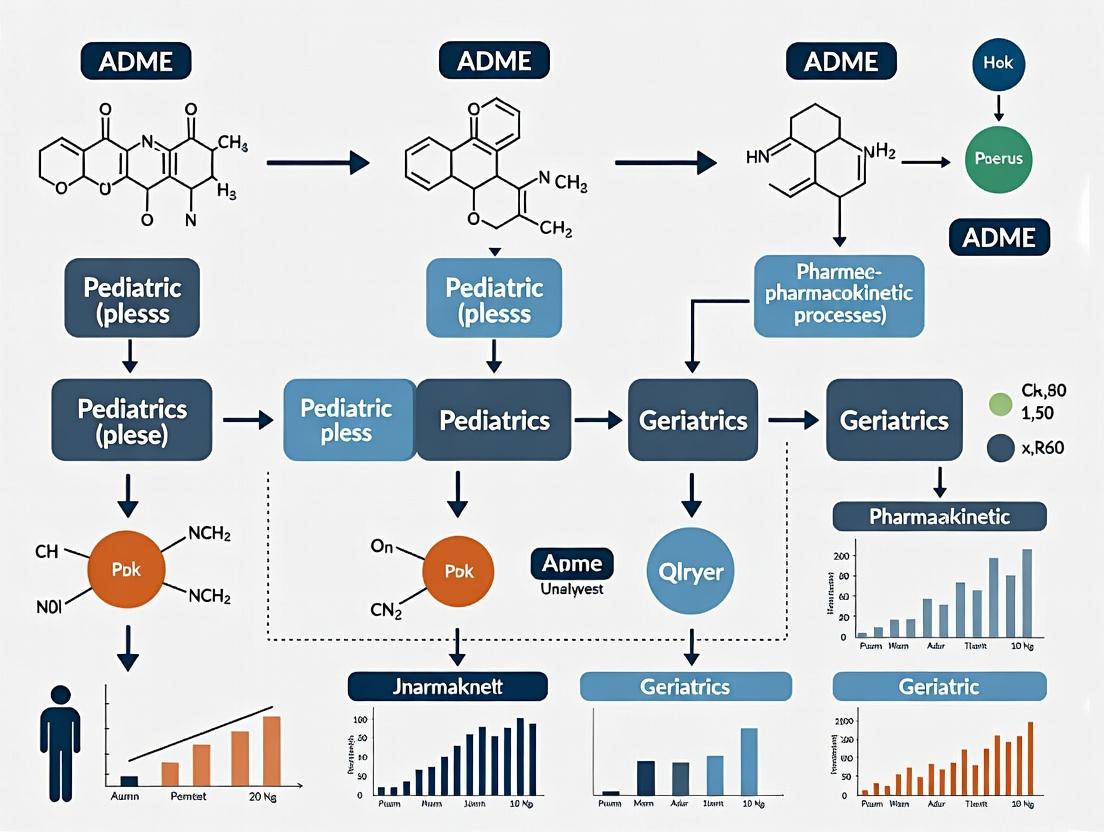
This article provides a comprehensive analysis of Absorption, Distribution, Metabolism, and Excretion (ADME) processes in pediatric and geriatric populations, highlighting their critical differences from the standard adult model.
Population-Specific ADME: Optimizing Drug Therapy in Pediatrics and Geriatrics from Discovery to Clinical Practice
Abstract
This article provides a comprehensive analysis of Absorption, Distribution, Metabolism, and Excretion (ADME) processes in pediatric and geriatric populations, highlighting their critical differences from the standard adult model. Tailored for researchers, scientists, and drug development professionals, we explore the unique physiological, biochemical, and cellular underpinnings that dictate drug disposition at life's extremes. The scope encompasses foundational biological mechanisms, advanced methodological and modeling approaches for study design, strategies to troubleshoot age-related therapeutic challenges, and the comparative validation of predictive tools. This review synthesizes current research and regulatory perspectives to guide the development of safer, more effective, and personalized pharmacotherapies for vulnerable populations.
Beyond the Adult Model: The Biological Basis of Age-Dependent ADME in Pediatric and Geriatric Physiology
Within the broader thesis on ADME (Absorption, Distribution, Metabolism, and Excretion) processes in specific populations, the profound impact of age stands as a paramount consideration for researchers and drug development professionals. Age-related physiological changes systematically alter the pharmacokinetic (PK) profile and pharmacodynamic (PD) response to medications, necessitating tailored research in pediatric and geriatric cohorts. This guide provides a technical overview of the core age-dependent variables, methodologies for their investigation, and implications for clinical development.
Physiological Changes Across the Age Spectrum
Age-dependent physiological alterations directly impact each component of ADME. The following tables summarize key quantitative changes.
Table 1: Age-Related Changes in Gastrointestinal Physiology Affecting Drug Absorption
| Parameter | Pediatric (vs. Young Adult) | Geriatric (vs. Young Adult) | PK Impact |
|---|---|---|---|
| Gastric pH | Higher (less acidic) in neonates/infants | Variable; may be higher due to atrophic gastritis | Altered solubility & stability of pH-sensitive drugs (e.g., penicillin G, ketoconazole). |
| Gastric Emptying | Slower and irregular in neonates | Generally slowed | Delayed onset of absorption for some drugs. |
| Intestinal Surface Area | Lower in neonates, maturing rapidly | Possibly decreased | Potential for reduced absorption capacity. |
| Bile Salt Production | Reduced in neonates | May be reduced | Affects absorption of lipophilic drugs. |
Table 2: Age-Related Changes in Body Composition and Distribution
| Parameter | Pediatric Trend | Geriatric Trend | PK Impact on Volume of Distribution (Vd) |
|---|---|---|---|
| Total Body Water (% BW) | Higher (80-85% in preterm, ~75% in term neonate) | Decreased (~50-55%) | Higher Vd for hydrophilic drugs (e.g., aminoglycosides) in pediatrics. Lower Vd in geriatrics. |
| Fat Content (% BW) | Low at birth, increases rapidly | Increases until middle age, may decrease in very old | Altered Vd for lipophilic drugs (e.g., diazepam). |
| Muscle Mass (% BW) | Lower in infants | Significantly decreased (sarcopenia) | Altered Vd for drugs binding to muscle tissue. |
| Plasma Proteins (Albumin) | Lower levels in infants, especially preterm | Slightly lower levels | Increased free fraction of highly protein-bound drugs (e.g., phenytoin, warfarin). |
Table 3: Age-Related Changes in Metabolism and Excretion
| Organ System | Pediatric Consideration | Geriatric Consideration | Key Impact |
|---|---|---|---|
| Hepatic Metabolism (Phase I - CYP450) | Isozyme-specific maturation patterns; generally reduced at birth, exceeding adult capacity in children 1-6 years. | Reduction in hepatic mass & blood flow; variable decline in CYP activity (e.g., CYP3A4, 2C19, 2D6). | Pediatrics: Non-linear, age-dependent clearance. Geriatrics: Reduced clearance, prolonged half-life for many drugs (e.g., diazepam, verapamil). |
| Hepatic Metabolism (Phase II) | Immature at birth (e.g., glucuronidation), maturing over months. | Relatively preserved, though some decline possible. | Pediatrics: Risk for toxicity with drugs reliant on conjugation (e.g., chloramphenicol "gray baby syndrome"). |
| Renal Excretion (GFR, Tubular Function) | GFR ~30-40% of adult at term, maturing by 8-12 months. Tubular secretion matures later. | Linear decline in GFR from ~40 years (CrCl may overestimate). Loss of tubular function. | Pediatrics: Reduced clearance of renally excreted drugs (e.g., aminoglycosides, digoxin). Geriatrics: Markedly reduced clearance, high risk of accumulation. |
Experimental Protocols for Age-Specific PK/PD Studies
Protocol 1: Population Pharmacokinetic (PopPK) Modeling in Pediatric Populations
- Objective: To characterize the developmental trajectory of drug clearance using sparse sampling.
- Methodology:
- Study Design: Prospective, open-label study enrolling subjects stratified by age (e.g., preterm neonates, term neonates, infants, children, adolescents).
- Dosing: Administer the investigational drug at a weight or BSA-based dose.
- Sampling: Collect 2-4 sparse blood samples per subject at protocol-defined windows (opportunistic or scheduled). Collect rich PK data in a subset if ethically feasible.
- Covariate Collection: Record exact age (postnatal, postmenstrual), weight, height, serum creatinine, genetic polymorphisms (e.g., CYP2C9), organ function biomarkers.
- Bioanalysis: Quantify drug and metabolite concentrations using a validated LC-MS/MS method.
- Modeling: Using NONMEM or Monolix, develop a base structural PK model. Test allometric scaling (weight^0.75 for clearance) and incorporate age as a continuous covariate using maturation functions (e.g., Hill equation) on clearance. Validate the final model.
Protocol 2: Hepatic Microsomal Activity Assessment Across Adult Age Groups
- Objective: To quantify in vitro intrinsic clearance (CLint) of a probe substrate across human liver microsomes from donors of varying age.
- Methodology:
- Materials: Pooled human liver microsomes (HLM) from age-stratified donors (e.g., 20-39, 40-59, 60-79, 80+ yrs). Probe substrate (e.g., midazolam for CYP3A4), NADPH-regenerating system, phosphate buffer.
- Incubation: In a 37°C water bath, incubate HLM (0.5 mg/mL) with substrate at a range of concentrations (below and above Km) in the presence of NADPH. Run in triplicate.
- Quenching: At predetermined timepoints (e.g., 0, 5, 10, 20, 30 min), remove aliquots and quench with cold acetonitrile containing internal standard.
- Analysis: Centrifuge, analyze supernatant via LC-MS/MS to determine substrate depletion over time.
- Calculations: Plot substrate depletion curve. Calculate CLint (µL/min/mg protein) from the slope of the natural log of concentration vs. time plot. Compare mean CLint across age-stratified HLM pools using statistical tests.
Visualization of Concepts and Workflows
Title: Age Modifies Drug Effect via PK and PD Pathways
Title: Pediatric Population PK Study Workflow
The Scientist's Toolkit: Key Research Reagent Solutions
Table 4: Essential Materials for Age-Related PK/PD Research
| Item | Function/Application | Example/Supplier Note |
|---|---|---|
| Age-Stratified Human Liver Microsomes (HLM) | In vitro assessment of ontogeny and senescence of hepatic drug-metabolizing enzymes (CYPs, UGTs). | Commercially available pools (e.g., Corning, XenoTech) categorized by donor age (pediatric, adult, geriatric). |
| Recombinant Human CYP Enzymes | Isozyme-specific reaction phenotyping to deconvolute contributions of specific pathways affected by age. | Supersomes (Corning) or Baculosomes (Invitrogen) expressing individual human CYP isoforms. |
| Caco-2 or Differentiated Intestinal Cell Lines | Modeling age-related changes in intestinal drug absorption and transporter activity (e.g., P-gp). | ATCC or ECACC. Protocols for differentiation into enterocyte-like cells are critical. |
| Age-Appropriated Animal Models | In vivo PK/PD studies mimicking pediatric development or geriatric decline. | Juvenile rodent models, aged rodent colonies (e.g., 24-month-old mice), senescent-accelerated mouse (SAMP). |
| Stable Isotope-Labeled Drug Standards | Internal standards for highly sensitive and accurate LC-MS/MS bioanalysis of drug concentrations in small volume pediatric samples. | Certilliant, Sigma-Aldrich. Essential for method validation. |
| Population PK/PD Modeling Software | Analysis of sparse, unbalanced data from pediatric/geriatric trials to identify age as a covariate. | NONMEM, Monolix, Phoenix NLME. Requires expertise in pharmacometric modeling. |
| Biomarker Assay Kits (e.g., Cystatin C, Cytokines) | Assess organ function (renal) or inflammatory status (inflammaging) as potential covariates. | R&D Systems, Abcam, immunoassay platforms. Cystatin C is a superior GFR marker in elderly vs. serum creatinine. |
This technical guide examines the dynamic nature of Absorption, Distribution, Metabolism, and Excretion (ADME) processes from the neonatal period through adolescence. Framed within the broader thesis of population-specific pharmacology, this document synthesizes current research to elucidate the non-linear, organ-specific maturation trajectories that critically influence drug safety, efficacy, and dosing in the pediatric population. Understanding these developmental windows is paramount for rational pediatric drug development and clinical practice.
Pediatric patients are not small adults. Their ADME profiles undergo profound, asynchronous changes as organ systems and physiological functions mature. These changes are not merely scaled by body weight or surface area but are governed by complex developmental biology. This guide details the trajectories of key ADME parameters, providing a framework for researchers and drug developers to predict and study age-dependent pharmacokinetics.
Absorption: Gastrointestinal, Dermal, and Pulmonary Maturation
Gastrointestinal (GI) Tract Development
- Gastric pH: Newborns have a neutral gastric pH due to immaturity of parietal cells, which rises to adult values by approximately 2 years of age. This markedly affects the ionization and solubility of weak acids and bases.
- Gastric Emptying & Intestinal Motility: Slower and irregular in neonates, becoming more predictable and adult-like by 6-8 months.
- Bile Salt Production & Pancreatic Function: Reduced in infancy, impacting the absorption of lipophilic drugs and nutrients.
- Intestinal Enzymes & Transporters: Expression and activity of cytochrome P450 3A4 (CYP3A4) and P-glycoprotein (P-gp) in the gut are low at birth, increasing gradually.
Other Routes
- Transdermal: The stratum corneum is underdeveloped in preterm and term neonates, leading to significantly higher percutaneous absorption of topical agents (risk of systemic toxicity).
- Intramuscular: Variable absorption due to reduced muscle mass and blood flow in neonates.
- Pulmonary: Alveolar surface area increases dramatically in the first two years, influencing inhaled drug delivery.
Distribution: Changing Body Composition and Protein Binding
Body Water and Fat
Total body water (as a percentage of body weight) is highest in preterm neonates (~85%) and decreases through infancy (~60% by 1 year). Extracellular fluid volume is also proportionally larger. Adipose tissue varies, being low in some neonates but increasing rapidly.
Plasma Protein Binding
- Albumin: Fetal albumin has lower binding affinity; concentrations are also lower at birth (~30 g/L), reaching adult levels (~45 g/L) by 1 year.
- Alpha-1-Acid Glycoprotein (AAG): Very low at birth, increasing slowly to adult levels by the first decade. This is critical for basic drug binding. Reduced protein binding leads to a higher free fraction of highly bound drugs, increasing pharmacological effect and potential for toxicity, despite potentially lower total plasma concentrations.
Table 1: Developmental Changes in Key Distribution Parameters
| Parameter | Preterm Neonate | Term Neonate (0-28d) | Infant (1-12mo) | Child (1-12y) | Adolescent (12-18y) |
|---|---|---|---|---|---|
| Total Body Water (% BW) | 80-85% | 70-75% | 60-65% | 60% | ~55-60% |
| Extracellular Fluid (% BW) | ~45% | ~40% | ~30% | ~25% | ~20% |
| Albumin (g/L) | 28-35 | 30-38 | 38-45 | 45-50 | 45-50 |
| AAG (g/L) | 0.2-0.4 | 0.4-0.6 | 0.6-0.8 | 0.7-1.0 | 0.7-1.0 |
Metabolism: Ontogeny of Drug-Metabolizing Enzymes
The maturation of drug-metabolizing enzymes is the most significant and complex factor in pediatric ADME. Enzyme families mature at distinct, non-linear rates.
Phase I Enzymes (Cytochrome P450)
- CYP3A4/5: Low activity at birth, increases rapidly after the first week, exceeding adult levels by 1-2 years, then declining to adult levels after puberty.
- CYP2D6: Detectable in fetal liver, but activity increases postnatally, reaching ~20% of adult at 1 month, and adult levels by 3-5 years.
- CYP2C9 & CYP2C19: Activity is very low at birth, reaching ~30% of adult by 1 month and full maturation by ~1 year (CYP2C9) and beyond (CYP2C19).
- CYP1A2: Virtually absent at birth, appearing after 1-3 months, slowly reaching adult levels by 1-5 years.
Phase II Enzymes
- UGT (e.g., UGT1A1, UGT2B7): Variable patterns. UGT1A1 (bilirubin conjugation) is low at birth, maturing over weeks. UGT2B7 (morphine, acetaminophen) has significant activity at birth.
- SULT: Often have high activity in fetal and neonatal periods, potentially exceeding adult levels.
- NAT2: Activity is absent ("slow acetylator" phenotype) in most newborns, maturing over the first 1-2 years of life.
Table 2: Representative Maturation Half-Lives (T½) and Clearance of Probe Drugs
| Enzyme System | Probe Drug | Clearance in Neonate (% of Adult) | Age at 50% Adult Activity | Age at Full Maturation |
|---|---|---|---|---|
| CYP3A4 | Midazolam | ~25% | 3-6 months | 1-2 years (then declines) |
| CYP2D6 | Dextromethorphan | ~20% | 10-12 months | 3-5 years |
| CYP2C9 | Ibuprofen | ~10% | 6-12 months | ~1 year |
| CYP1A2 | Caffeine | <10% | 4-6 months | 1-5 years |
| UGT1A1 | Acetaminophen | ~30% | 2-4 months | 6-24 months |
| NAT2 | Isoniazid | 0% (slow) | N/A | 1-4 years |
Excretion: Renal and Biliary Clearance Maturation
Renal Excretion
Glomerular filtration rate (GFR) and tubular secretion are markedly reduced at birth, especially in preterm infants.
- GFR: ~2-4 mL/min/1.73m² at 34 weeks gestation; increases rapidly postnatally, doubling by 2 weeks, and reaching adult values (~120 mL/min/1.73m²) by 8-12 months.
- Tubular Secretion: Matures more slowly than GFR, reaching adult capacity by approximately 1 year. Renal maturation is the primary determinant of clearance for renally excreted drugs (e.g., aminoglycosides, vancomycin, digoxin).
Experimental Protocols for Studying Pediatric ADME
1In VitroOntogeny Studies using Human Liver Microsomes (HLM) and Hepatocytes
Purpose: To quantify age-dependent expression and activity of drug-metabolizing enzymes. Protocol:
- Tissue Acquisition: Obtain banked human liver samples from donors of various pediatric ages (fetal to adolescent) and adults, with appropriate ethical approvals.
- Subcellular Fractionation: Prepare HLM via differential ultracentrifugation (9,000g and 100,000g spins). Isolate primary hepatocytes via collagenase perfusion (if fresh tissue) or use cryopreserved pediatric hepatocytes.
- Enzyme Activity Assay: Incubate HLM/hepatocytes with enzyme-specific probe substrates (e.g., midazolam for CYP3A4, dextromethorphan for CYP2D6) in NADPH-regenerating system buffer. Use linear conditions for time and protein concentration.
- Quantification: Terminate reaction with acetonitrile. Analyze metabolite formation using LC-MS/MS with stable isotope-labeled internal standards.
- Protein Quantification: Perform Western blot or targeted proteomics (e.g., LC-MS/MS with nano-ultra-performance liquid chromatography) to measure absolute enzyme protein concentrations.
Population Pharmacokinetic (PopPK) Modeling in Pediatric Trials
Purpose: To characterize the typical pharmacokinetic parameters in a population and identify covariates (weight, age, organ function) explaining inter-individual variability. Protocol:
- Study Design: Sparse sampling design (1-3 samples per patient) to minimize burden in pediatric clinical trials.
- Bioanalysis: Quantify drug and metabolite concentrations in small-volume plasma samples using validated, sensitive LC-MS/MS methods.
- Model Development: Use non-linear mixed-effects modeling software (e.g., NONMEM, Monolix, Phoenix NLME).
- Structural Model: Define base PK model (e.g., 1- or 2-compartment).
- Statistical Model: Estimate inter-individual variability (IIV) and residual error.
- Covariate Model: Test allometric scaling (weight^0.75 for clearance, weight^1 for volume), postnatal age (PMA), renal function (eGFR), or biomarkers of organ maturation using stepwise forward inclusion/backward elimination.
- Model Validation: Use visual predictive checks (VPCs) and bootstrap analysis to assess robustness.
3In SilicoPBPK Modeling for Pediatric Extrapolation
Purpose: To simulate and predict drug exposure across pediatric ages by integrating in vitro ontogeny data with physiological systems models. Protocol:
- Adult Model Building: Develop and validate a whole-body PBPK model in adults using software (e.g., GastroPlus, Simcyp, PK-Sim) incorporating drug-specific properties (solubility, permeability, binding, in vitro metabolism data).
- Incorporation of Ontogeny: Replace adult physiological parameters (organ volumes, blood flows, protein levels) with age-dependent values from established databases within the software. Incorporate enzyme/transporter maturation profiles (from in vitro ontogeny studies or literature).
- Pediatric Simulation: Simulate drug exposure (e.g., AUC, Cmax) in virtual pediatric populations of different age brackets.
- Prospective Dosing Strategy: Optimize pediatric dosing regimens to match adult exposure profiles associated with efficacy and safety.
Visualizations: Pathways and Workflows
Title: PBPK Modeling for Pediatric Dosing
Title: Developmental Switch in CYP3A Metabolism
Title: In Vitro Enzyme Ontogeny Study Workflow
The Scientist's Toolkit: Key Research Reagent Solutions
Table 3: Essential Materials for Pediatric ADME Research
| Item / Reagent | Supplier Examples | Function in Research |
|---|---|---|
| Cryopreserved Pediatric Hepatocytes | BioIVT, Lonza, Corning Life Sciences | Provides metabolically active cells from specific pediatric age groups for in vitro metabolism, induction, and toxicity studies. |
| Human Liver Microsomes (Pediatric Bank) | XenoTech LLC, Corning Life Sciences, Tissue Transformation Technologies | Subcellular fractions containing drug-metabolizing enzymes from donors of known age, essential for enzyme activity phenotyping. |
| Recombinant Human CYP Enzymes (Individual) | Corning Life Sciences, Sigma-Aldrich | Isolated human CYP isoforms for reaction phenotyping to identify which enzyme metabolizes a new chemical entity. |
| Stable Isotope-Labeled Internal Standards | Cambridge Isotope Laboratories, Cerilliant | Deuterated or 13C-labeled analogs of drugs/metabolites for highly accurate and precise quantification by LC-MS/MS, crucial for small-volume pediatric samples. |
| PBPK Modeling Software (Pediatric Module) | Certara (Simcyp), Simulations Plus (GastroPlus), Open Systems Pharmacology (PK-Sim) | Platforms with built-in pediatric physiological and enzyme ontogeny databases to simulate ADME from preterm neonates to adolescents. |
| Population PK Modeling Software | ICON (NONMEM), Certara (Phoenix NLME), Lixoft (Monolix) | Statistical tools for analyzing sparse, heterogeneous PK data from pediatric clinical trials to identify age/weight-dependent dosing algorithms. |
| Age-Specific Human Plasma (Stripped) | BioIVT, Sigma-Aldrich | Plasma pooled from specific age groups, used for in vitro plasma protein binding studies (e.g., ultracentrifugation, equilibrium dialysis). |
| Probe Substrate Cocktails (P450 & UGT) | Corning Life Sciences, BioreclamationIVT | Sets of non-interacting substrates to simultaneously assess the activity of multiple drug-metabolizing enzymes in a single incubation. |
The developmental trajectories of ADME processes are predictable yet complex. Successful pediatric drug development requires a multi-faceted approach integrating in vitro ontogeny data, PBPK modeling, and well-designed PopPK studies in clinical trials. Future research must focus on refining ontogeny profiles for transporters, understanding the impact of disease on maturation, and applying advanced -omics technologies (proteomics, metabolomics) to discover new biomarkers of organ maturation for individualized pediatric therapy. This aligns with the overarching thesis that precise medicine demands a deep, mechanistic understanding of ADME in specific populations across the human lifespan.
This whitepaper examines the profound alterations in Absorption, Distribution, Metabolism, and Excretion (ADME) processes in the geriatric population, driven by the physiological hallmarks of senescence and the complex reality of multimorbidity. Framed within the broader thesis of personalized, population-specific pharmacology, this document provides a technical guide for researchers and drug development professionals. It synthesizes current data, details critical experimental methodologies, and provides essential tools for investigating geriatric ADME.
The global population is aging rapidly, with those aged 65 and over representing the fastest-growing demographic. This population is characterized not by a single disease but by senescence—the gradual deterioration of physiological function—and multimorbidity—the co-occurrence of two or more chronic conditions. Both factors independently and synergistically disrupt standard ADME pathways, leading to unpredictable drug exposure, increased risk of toxicity, and therapeutic failure. Understanding these changes is critical for optimizing pharmacotherapy and designing clinical trials for this major patient group.
Quantitative Impact of Aging on ADME Parameters
The following tables summarize key quantitative changes in ADME parameters observed in healthy elderly (senescence-driven) and those further impacted by common morbidities.
Table 1: Impact of Senescence on Core ADME Parameters
| ADME Phase | Parameter | Young Adult (Reference) | Healthy Elderly (≈75 yrs) | Typical Change (%) | Primary Physiological Cause |
|---|---|---|---|---|---|
| Absorption | Gastric pH | 1.5-3.5 | 3.0-6.5 | Increase 50-100% | Reduced parietal cell function. |
| Small Intestinal Surface Area | ~30 m² | ~21 m² | Decrease ~30% | Villous atrophy. | |
| Splancnic Blood Flow | ~1.1 L/min | ~0.8 L/min | Decrease ~25% | Reduced cardiac output. | |
| Distribution | Total Body Water | 60% (M), 50% (F) | 52% (M), 42% (F) | Decrease 10-15% | Loss of lean body mass. |
| Adipose Tissue | 20-25% | 30-40% | Increase 30-50% | Shift in body composition. | |
| Serum Albumin | 4.0-4.5 g/dL | 3.2-3.8 g/dL | Decrease 10-20% | Reduced hepatic synthesis. | |
| α1-Acid Glycoprotein | 0.5-1.0 g/L | 0.7-1.3 g/L | Increase 20-40% | Response to chronic inflammation. | |
| Metabolism (Phase I) | Hepatic Mass | ~1500 g | ~1100 g | Decrease ~25% | Hepatocyte loss. |
| CYP3A4 Activity | 100% | 60-70% | Decrease 30-40% | Senescence & reduced synthesis. | |
| CYP2D6 Activity | 100% | 75-85% | Decrease 15-25% | Genetic polymorphism dominant. | |
| CYP2C19 Activity | 100% | 70-80% | Decrease 20-30% | Senescence effects. | |
| Excretion | Glomerular Filtration Rate (GFR) | 120-130 mL/min | 70-90 mL/min | Decrease 30-40% | Nephron loss & reduced renal plasma flow. |
| Renal Tubular Secretion | 100% | 50-60% | Decrease 40-50% | Reduced transporter function. |
Table 2: Exacerbation by Common Morbidities and Polypharmacy
| Morbidity / Factor | ADME Phase Most Affected | Exemplar Impact | Key Mechanism |
|---|---|---|---|
| Chronic Heart Failure (CHF) | Absorption, Distribution, Metabolism | Reduced hepatic blood flow up to 50%; Gut edema reduces absorption. | Decreased cardiac output; Fluid redistribution. |
| Chronic Kidney Disease (CKD) | Excretion, Distribution | GFR decline to <60 mL/min; Altered protein binding of uremic toxins. | Nephron loss; Accumulation of displacing toxins. |
| Hepatic Cirrhosis | Metabolism, Distribution | CYP activity reduced by >50%; Severe hypoalbuminemia. | Hepatocyte loss, portosystemic shunting; Synthetic failure. |
| Polypharmacy (≥5 drugs) | Metabolism, Excretion | CYP induction/inhibition; Transporter competition. | Drug-drug interactions at enzymatic and transporter sites. |
| Chronic Inflammation | Distribution, Metabolism | Elevated AAG altering basic drug binding; Cytokine-mediated CYP suppression. | Acute phase response; IL-6 downregulation of CYP genes. |
Experimental Protocols for Investigating Geriatric ADME
Protocol:In VitroAssessment of Age-Related CYP Inhibition Potential
Objective: To evaluate the inhibitory potential of a new chemical entity (NCE) on CYP isoforms (3A4, 2D6) using human liver microsomes (HLM) from young and elderly donors. Materials: HLM pools (e.g., from 20-30 yr and 65-75 yr donors, XenoTech), NADPH regeneration system, CYP-specific probe substrates (Midazolam for 3A4, Dextromethorphan for 2D6), NCE, LC-MS/MS system. Procedure:
- Prepare incubation mixtures (final volume 200 µL) containing HLM (0.2 mg protein/mL), probe substrate at Km concentration, and NCE at six concentrations (0, 0.1, 1, 10, 50, 100 µM) in potassium phosphate buffer (pH 7.4).
- Pre-incubate for 5 min at 37°C.
- Initiate reaction by adding NADPH regeneration system (1.3 mM NADP⁺, 3.3 mM Glucose-6-phosphate, 0.4 U/mL G6PDH, 3.3 mM MgCl₂).
- Incubate for 10 min (linear kinetics).
- Terminate reaction with 200 µL ice-cold acetonitrile containing internal standard.
- Centrifuge at 4000g for 15 min; analyze supernatant via LC-MS/MS for metabolite formation (1'-OH-midazolam, dextrorphan).
- Calculate IC₅₀ values using non-linear regression. Compare IC₅₀ shift between age-group HLM pools.
Protocol:Ex VivoAssessment of Transporter Function in Aged Tissue
Objective: To quantify P-glycoprotein (P-gp/ABCB1) efflux activity in gut biopsies from different age groups. Materials: Jejunal pinch biopsies (from consenting patients during endoscopy, categorized by age), Using chamber apparatus, Rhodamine 123 (P-gp fluorescent substrate), Verapamil (P-gp inhibitor), HBSS buffer. Procedure:
- Mount biopsy mucosa in Using chamber (exposed area 0.03 cm²), bathed in oxygenated HBSS at 37°C.
- Add Rhodamine 123 (5 µM) to the mucosal (apical) side.
- Measure serosal (basolateral) appearance of Rhodamine 123 over 120 min via fluorescence spectrophotometry (excitation 485 nm, emission 535 nm).
- In parallel chambers, pre-tissue with Verapamil (100 µM) on the mucosal side for 30 min to define P-gp-specific transport.
- Calculate apparent permeability (Papp) and net efflux ratio (Papp [B→A] / Papp [A→B]) in the absence and presence of inhibitor. Compare ratios between young, healthy elderly, and elderly with multimorbidity cohorts.
Visualizing Pathways and Relationships
Diagram 1: Senescence and Multimorbidity Converge on ADME
Diagram 2: Integrated Geriatric PK Research Workflow
The Scientist's Toolkit: Key Research Reagent Solutions
Table 3: Essential Materials for Geriatric ADME Research
| Reagent / Material | Supplier Examples | Function in Geriatric ADME Research |
|---|---|---|
| Age-Specific Human Liver Microsomes (HLM) & Hepatocytes | BioIVT, XenoTech, Lonza | Provide in vitro metabolic data from specific age cohorts (e.g., 65-75, >75) to assess senescence effects on CYP/UGT activity. |
| Cryopreserved Human Enterocytes / Renal Tubular Cells | BioIVT, Sekisui XenoTech | Enable study of age-related changes in intestinal absorption and renal secretion, including transporter function (P-gp, OATs, OCTs). |
| Recombinant CYP Enzymes (Wild-type & Polymorphic Variants) | Corning, Sigma-Aldrich | Decipher the relative contribution of senescence vs. genetic polymorphism (e.g., CYP2D6*10, *41) to inter-individual variability in the elderly. |
| MDR1-MDCKII (or Caco-2) Cell Lines | ATCC, DiscoverX | Standardized model for assessing P-gp-mediated efflux, critical for drug absorption and brain penetration studies in polypharmacy scenarios. |
| LC-MS/MS Systems with High Sensitivity | Sciex, Waters, Agilent | Quantify low drug and metabolite concentrations in small-volume samples (critical for pediatric-geriatric parallel studies) from complex matrices. |
| Physiologically-Based Pharmacokinetic (PBPK) Software | Certara Simcyp, GastroPlus | Platform to integrate in vitro data with age- and disease-altered physiology to predict geriatric PK and optimize trial design. |
| Cytokine Panels (e.g., IL-6, TNF-α) | R&D Systems, Meso Scale Discovery | Quantify inflammatory markers in serum/tissue to correlate with observed downregulation of metabolic enzymes and altered protein binding. |
| Uremic Plasma or Synthetic Toxin Mix | Innovative Research, In-house prep | Simulate the CKD milieu to study its impact on plasma protein binding and transporter inhibition in ex vivo or in vitro systems. |
This whitepaper examines three key physiological variables—organ function, body composition, and protein binding—within the broader thesis of understanding altered Absorption, Distribution, Metabolism, and Excretion (ADME) processes in specific populations, namely pediatrics and geriatrics. Inter-individual and age-related variability in these parameters are primary drivers of differential drug exposure, response, and toxicity, posing significant challenges in drug development and precision dosing.
Organ Function
Organ function, particularly of the liver and kidneys, is the cornerstone of drug metabolism and elimination. Its maturation and decline are central to pediatric and geriatric pharmacology.
Hepatic Metabolism
Hepatic drug-metabolizing enzymes exhibit profound ontogeny. Cytochrome P450 (CYP) isoforms mature at different rates postnatally, while phase II conjugation pathways like glucuronidation develop more slowly.
Table 1: Ontogeny of Major Human Hepatic CYP Enzymes
| CYP Enzyme | Primary Substrates | Developmental Trajectory | Approximate Adult Level Achievement |
|---|---|---|---|
| CYP3A4/5 | Midazolam, Nifedipine | Increases postnatally | 1-2 years |
| CYP2D6 | Desipramine, Dextromethorphan | Detectable in fetus, increases postnatally | 2-4 weeks postpartum |
| CYP1A2 | Caffeine, Theophylline | Last to mature | 1-5 years |
| CYP2C9 | S-Warfarin, Phenytoin | Slow postnatal increase | 1-6 months |
| CYP2C19 | Omeprazole, Clopidogrel | Variable maturation | Birth to 10 years (wide range) |
In geriatrics, hepatic blood flow and mass decrease, but the effect on intrinsic clearance is isoform-specific and less predictable than the systematic decline in renal function.
Renal Excretion
Glomerular filtration rate (GFR) is a critical metric. It rises from ~2-4 mL/min/1.73m² at birth to adult values (~120 mL/min/1.73m²) by age 2, then gradually declines from the 4th decade onward.
Table 2: Age-Dependent Changes in Renal Function
| Population | Average GFR (mL/min/1.73m²) | Key Physiological Drivers |
|---|---|---|
| Preterm Neonate | 10-20 | Nephrogenesis incomplete until ~34-36 weeks gestation |
| Term Neonate | 20-40 | High renal vascular resistance, low perfusion pressure |
| Age 2-12 years | 120-140 (often exceeds adult) | Increased kidney size/function relative to body surface area |
| Age 30 | ~120 | Peak adult function |
| Age 80 | ~60-70 | Nephron loss, glomerulosclerosis, reduced renal plasma flow |
Experimental Protocol for Measuring GFR in Pediatric Research:
- Method: Iohexol plasma clearance.
- Procedure:
- Administer a precise intravenous dose of iohexol (non-radioactive, low-protein-binding contrast agent).
- Collect timed blood samples (e.g., at 10, 30, 120, 240, and 300 minutes post-dose).
- Measure iohexol concentration in plasma using high-performance liquid chromatography (HPLC).
- Calculate the clearance using a two-compartment model or the slope-intercept method, normalized to body surface area (1.73 m²).
- Rationale: Considered a gold-standard reference method, avoiding the need for radioactive tracers (e.g., 51Cr-EDTA) in vulnerable populations.
Body Composition
Body composition defines the "volume of distribution" (Vd) for drugs, varying dramatically with age.
Table 3: Changes in Body Composition Across the Lifespan
| Component | Preterm Neonate | Term Neonate | Adult (Young) | Geriatric (≥65) |
|---|---|---|---|---|
| Total Body Water (% body weight) | 85-90% | 70-75% | 50-60% | 45-50% |
| Extracellular Water | High proportion | High proportion | Lower proportion | May increase (relative) |
| Fat (% body weight) | Very low (1-3%) | 10-15% | Variable (15-25%) | Increased (often 30%+), but with intramuscular fat loss |
| Muscle Mass (% body weight) | Very low | Low | Peak | Significantly decreased (Sarcopenia) |
| Serum Albumin (g/L) | 28-40 | 35-45 | 40-50 | 30-40 |
The high water and low fat content in neonates increase the Vd for hydrophilic drugs (e.g., aminoglycosides) and decrease it for lipophilic drugs. In the elderly, increased fat percentage and decreased lean mass increase Vd for lipophilic drugs (e.g., diazepam) and decrease Vd for hydrophilic drugs.
Protein Binding
Plasma protein binding, primarily to albumin and alpha-1-acid glycoprotein (AAG), influences free (active) drug concentration. Both concentration and binding affinity of these proteins are age-dependent.
Table 4: Age-Related Changes in Plasma Proteins and Binding Implications
| Protein | Primary Drug Binding | Pediatric Context | Geriatric Context | Clinical Implication |
|---|---|---|---|---|
| Albumin | Acidic, neutral drugs (e.g., phenytoin, warfarin) | Concentrations are low at birth, reaching adult levels by ~1 year. Fetal albumin may have different affinity. | Concentration decreases by 10-20% due to chronic disease/nutrition. Structure/affinity may alter. | Increased free fraction of drugs; total drug levels may be misleading. |
| Alpha-1-Acid Glycoprotein (AAG) | Basic drugs (e.g., lidocaine, propranolol) | Low at birth, peaks in infancy, variable in childhood. | Concentration may increase due to inflammation. | Altered free fraction of basic drugs; impacts Vd and clearance. |
Experimental Protocol for Determining Plasma Protein Binding:
- Method: Equilibrium Dialysis followed by LC-MS/MS.
- Procedure:
- Prepare a dialysis device with two chambers separated by a semi-permeable membrane (molecular weight cutoff ~10-14 kDa).
- Add patient plasma (spiked with drug of interest) to the donor chamber and isotonic phosphate buffer (pH 7.4) to the receiver chamber.
- Incubate at 37°C with gentle agitation for 4-24 hours to reach equilibrium.
- Collect aliquots from both chambers.
- Analyze drug concentrations in both chambers using a validated LC-MS/MS method.
- Calculate fraction unbound (fu): fu = [Drug] in buffer chamber / [Drug] in plasma chamber.
- Rationale: Equilibrium dialysis is considered the reference standard as it minimizes artifacts (like volume shift) seen in ultrafiltration, especially for highly bound drugs.
The Scientist's Toolkit: Key Research Reagent Solutions
Table 5: Essential Materials for Investigating Physiological Variables in ADME
| Reagent/Material | Function/Application |
|---|---|
| Human Hepatocytes (Cryopreserved) | In vitro metabolism studies; available in age-stratified pools (fetal, pediatric, adult, geriatric) to assess ontogeny/decline. |
| Recombinant Human CYP Enzymes | Isoform-specific reaction phenotyping to attribute metabolic pathways. |
| Stable Isotope-labeled Internal Standards (e.g., ¹³C, ²H) | Essential for accurate quantification of drugs/metabolites in biological matrices using LC-MS/MS. |
| Specific Chemical Inhibitors (e.g., Ketoconazole for CYP3A4) | Used in reaction phenotyping experiments in microsomes or hepatocytes to inhibit specific enzymes. |
| Human Serum Albumin (HSA) & Alpha-1-Acid Glycoprotein (AAG) | For in vitro protein binding assays; can be used to create standardized matrices. |
| Iohexol or Inulin | Exogenous filtration markers for precise measurement of GFR in clinical research studies. |
| Validated Biomarker Panels (e.g., for inflammation, renal injury) | To characterize the physiological status of donor tissues or clinical study participants. |
Visualizations
Ontogeny and Senescence of Drug-Metabolizing Enzymes (CYPs, UGTs) and Transporters
The processes of Absorption, Distribution, Metabolism, and Excretion (ADME) are not static across the human lifespan. Ontogeny (development from infancy to adulthood) and senescence (aging) critically regulate the expression and activity of key drug-metabolizing enzymes and transporters. This creates distinct pharmacokinetic and pharmacodynamic profiles in pediatric and geriatric populations compared to healthy adults, which is a fundamental consideration in rational drug development and clinical therapy. This whitepaper provides an in-depth technical review of the developmental trajectories of Cytochrome P450s (CYPs), UDP-Glucuronosyltransferases (UGTs), and major drug transporters, framed within the broader thesis of optimizing ADME predictions for specific populations.
Ontogeny of Drug-Metabolizing Enzymes and Transporters
Cytochrome P450 Enzymes (CYPs)
CYP isoforms exhibit unique developmental patterns, often categorized as "Class 1" (active in fetal life) or "Class 2" (active postpartum).
Table 1: Developmental Trajectory of Major Human CYP Enzymes
| CYP Isoform | Fetal Activity | Postnatal Development | Adult Activity Reached | Key Inducers/Regulators |
|---|---|---|---|---|
| CYP3A7 | High (fetal dominant form) | Declines rapidly after birth | Negligible in adults | Pregnane X Receptor (PXR) |
| CYP3A4 | Very Low | Increases from ~1 month; peaks in infancy/early childhood | ~6 months - 2 years | PXR, Glucocorticoid Receptor |
| CYP2D6 | Low/Moderate | Increases gradually | ~2-5 years | Constitutively expressed, limited inducibility |
| CYP1A2 | Not Detected | Slow increase post-birth | >1 year (late maturation) | Aryl Hydrocarbon Receptor (AhR) |
| CYP2C9 | Low | Gradual increase | Puberty | PXR, Constitutive Androstane Receptor (CAR) |
| CYP2C19 | Low | Gradual increase | Puberty | PXR, CAR |
Experimental Protocol: In Vitro Determination of CYP Ontogeny Using Human Liver Microsomes (HLM)
- Objective: To quantify CYP-specific protein expression or activity across a bank of pediatric and adult liver samples.
- Materials: Banked human liver tissue (pre-term fetal, term neonatal, infant, child, adolescent, adult); microsome isolation kit; CYP isoform-specific probe substrates (e.g., midazolam for CYP3A4/5, bupropion for CYP2B6); NADPH regeneration system; LC-MS/MS system.
- Method:
- Microsome Preparation: Homogenize liver samples in ice-cold sucrose buffer. Centrifuge at 9,000g to remove mitochondria/nuclei. Ultracentrifuge supernatant at 100,000g to pellet microsomes. Resuspend in storage buffer, determine protein concentration (Bradford assay).
- Activity Assay: Incubate HLM (0.1-0.5 mg protein) with isoform-specific probe substrate and NADPH in potassium phosphate buffer (pH 7.4). Perform time- and protein-linear pilot experiments.
- Reaction Termination: Stop reactions at multiple time points (e.g., 0, 5, 10, 20, 30 min) with ice-cold acetonitrile containing internal standard.
- Analysis: Centrifuge, inject supernatant into LC-MS/MS. Quantify metabolite formation against calibration curves.
- Data Normalization: Express activity as pmol metabolite formed/min/mg microsomal protein. Plot activity vs. post-menstrual or postnatal age.
UDP-Glucuronosyltransferase Enzymes (UGTs)
UGT maturation is generally slower than that of many CYPs, contributing to neonatal hyperbilirubinemia and altered drug clearance.
Table 2: Developmental Trajectory of Major Human UGT Enzymes
| UGT Family/Isoform | Substrate Examples | Fetal Activity | Postnatal Development | Adult Activity Reached |
|---|---|---|---|---|
| UGT1A1 | Bilirubin, Acetaminophen | Very Low | Rapid increase post-birth, then gradual rise | 3-6 months (varies) |
| UGT1A4 | Lamotrigine, Trifluoperazine | Low | Gradual increase | Late childhood/Adolescence |
| UGT1A6 | Serotonin, Acetaminophen | Moderate | Steady increase | ~5-10 years |
| UGT1A9 | Propofol, Mycophenolic Acid | Low | Steady increase | Adolescence |
| UGT2B7 | Morphine, Zidovudine | Moderate | Steady increase | 2-5 years |
| UGT2B10 | Nicotine, Amitriptyline | Limited Data | Limited Data | Limited Data |
Drug Transporters
Transporter expression in the liver, kidney, and intestine follows distinct developmental programs impacting drug absorption and elimination.
Table 3: Ontogeny of Key Drug Transporters
| Transporter | Primary Tissue | Role | Developmental Pattern |
|---|---|---|---|
| P-glycoprotein (MDR1/ABCB1) | Intestine, Liver, Kidney, BBB | Efflux, limits absorption | Increases from low fetal levels; mature by ~2 years |
| BCRP (ABCG2) | Placenta, Intestine, Liver | Efflux | Expressed in fetus; matures in early childhood |
| OATP1B1 (SLCO1B1) | Liver (basolateral) | Hepatic uptake | Very low at birth; slow maturation to adulthood |
| OATP1B3 (SLCO1B3) | Liver (basolateral) | Hepatic uptake | Low fetal; matures post-puberty |
| OCT2 (SLC22A2) | Kidney (basolateral) | Renal secretion | Low in neonates; matures by ~6-12 months |
| MATE1 (SLC47A1) | Kidney (apical) | Renal secretion | Limited data; may parallel kidney function maturation |
Diagram 1: Key Transcriptional Regulators of Enzyme & Transporter Ontogeny
Senescence of Drug-Metabolizing Enzymes and Transporters
Aging is associated with physiological declines that alter ADME: reduced liver mass and blood flow, decreased renal function, and changes in body composition.
Impact on Enzyme Activity
- CYP Metabolism: Overall hepatic CYP450 content and in vitro activity appear to decline by ~20-30% in healthy elderly (>70 years) compared to young adults. CYP3A4 activity is most consistently reported to decrease. Interindividual variability increases dramatically.
- UGT Metabolism: Data are less definitive but suggest a potential modest decline in glucuronidation capacity.
- Phase II (Non-UGT): Activities like acetylation (NAT2) are largely preserved.
Impact on Transporter Function
- Hepatic Uptake (OATPs): Limited clinical data suggest possible reduction.
- Renal Excretion: Age-related decline in glomerular filtration rate (GFR) is well-established. This parallels reductions in active tubular secretion mediated by transporters like OCT2 and MATEs.
- Intestinal Transport: Data are conflicting; P-gp expression may be unchanged or decreased.
Experimental Protocol: Assessing Age-Related Changes Using Probe Drug Cocktails
- Objective: To phenotype in vivo metabolic and transporter activity in geriatric vs. adult volunteers.
- Materials: FDA-approved "cocktail" probe substrates (e.g., midazolam [CYP3A], caffeine [CYP1A2], omeprazole [CYP2C19], dextromethorphan [CYP2D6], fexofenadine [OATP], metformin [OCT2/MATE]); pharmacokinetic sampling equipment; validated LC-MS/MS assays.
- Method:
- Study Design: Controlled clinical study with healthy young (18-45) and elderly (>65) cohorts, matched for genotype (e.g., CYP2D6 PM/EM status).
- Dosing & Sampling: Administer a low-dose, well-tolerated cocktail orally. Collect serial blood and urine samples over 3-5 terminal half-lives of the longest probe.
- Bioanalysis: Quantify parent drugs and primary metabolites in plasma and urine using multiplexed LC-MS/MS methods.
- PK Analysis: Calculate key parameters: AUC (total exposure), Cmax, clearance (CL/F), metabolic ratio (MR = metabolite/parent AUC or in a single sample). Use non-compartmental methods.
- Statistical Comparison: Compare parameters between age groups using appropriate tests (e.g., Mann-Whitney U), accounting for covariates (weight, serum creatinine).
The Scientist's Toolkit: Key Research Reagent Solutions
Table 4: Essential Reagents and Materials for Ontogeny/Senescence Research
| Reagent/Material | Supplier Examples | Function in Research |
|---|---|---|
| Human Liver Microsomes (HLM) | Corning Life Sciences, XenoTech, Sekisui Xenotech | In vitro activity assays for CYPs/UGTs across age-specific pools (fetal, pediatric, adult, geriatric). |
| Cryopreserved Human Hepatocytes | BioIVT, Lonza | Gold-standard for integrated enzyme/transporter function and induction studies; available from diverse donors. |
| Recombinant Human Enzymes (rCYPs, rUGTs) | BD Biosciences, Sigma-Aldrich | Isoform-specific reaction phenotyping to deconvolute contributions in HLM or tissue samples. |
| Transfected Cell Lines (e.g., MDCK, HEK293 overexpressing transporters) | GenScript, Thermo Fisher Scientific | To study uptake/efflux functions of specific transporters (OATP1B1, P-gp, BCRP, etc.). |
| Isoform-Specific Probe Substrates & Inhibitors | Cayman Chemical, Sigma-Aldrich, Tocris | To selectively measure or inhibit the activity of a single enzyme isoform in complex biological matrices. |
| LC-MS/MS System with ESI Source | Sciex, Agilent, Waters, Thermo Fisher | High-sensitivity, multiplexed quantification of drugs and metabolites in biological samples. |
| Age-Specific Tissue Banks | NIH Liver Tissue Cell Distribution System (LTCDS), Brain Bank for Aging | Source of RNA, protein, and DNA for genomic, transcriptomic, and proteomic analyses of development/aging. |
| siRNA/shRNA Libraries for Nuclear Receptors | Dharmacon, Sigma-Aldrich | To knock down PXR, CAR, HNF4α, etc., in cell models to study regulatory mechanisms of ontogeny. |
Diagram 2: Integrated Workflow for Studying Developmental Pharmacology
Understanding the ontogeny and senescence of ADME proteins is not merely an academic exercise but a cornerstone of precision medicine across ages. The data and methodologies outlined here provide a framework for researchers to systematically evaluate developmental pharmacology. Integrating this knowledge through mechanistic modeling (e.g., PBPK) is essential to predict drug exposure, optimize dosing, and improve therapeutic outcomes in the vulnerable pediatric and geriatric populations, thereby fulfilling a core mandate of modern drug development.
Age-Related Changes in Gastrointestinal, Renal, and Hepatic Clearance Pathways
Within the broader thesis on ADME (Absorption, Distribution, Metabolism, Excretion) processes in specific populations, understanding age-related changes is critical for pediatric and geriatric drug development. This whitepaper provides an in-depth technical analysis of the physiological alterations in gastrointestinal (GI), renal, and hepatic clearance pathways that occur across the lifespan, significantly impacting pharmacokinetics and pharmacodynamics.
Gastrointestinal (GI) Clearance Pathways: Age-Related Changes
GI clearance encompasses pre-systemic metabolism, transport, and direct excretion into the gut lumen. Key age-dependent changes occur in gastric pH, intestinal motility, enterocyte function, and the gut microbiome.
Key Physiological Changes
- Neonates/Pediatrics: Gastric pH is neutral at birth, dropping to adult values by ~2 years. Intestinal transit is variable and often prolonged. Expression of intestinal metabolizing enzymes (e.g., CYP3A4, UGTs) and transporters (P-gp, BCRP) matures over the first few years of life.
- Geriatrics: Increased gastric pH (atrophic gastritis), reduced splanchnic blood flow, decreased intestinal surface area and motility. Altered expression and function of P-glycoprotein (P-gp). Significant shifts in gut microbiome composition can alter enterohepatic recirculation and microbial metabolism.
Experimental Protocol for Assessing Intestinal Permeability and Metabolism
Title: In Situ Single-Pass Intestinal Perfusion (SPIP) with Cannulated Mesenteric Vein
- Animal Preparation: Anesthetize age-stratified rodent model (e.g., young adult vs. senescent). Maintain body temperature.
- Surgical Exposure: Perform a midline laparotomy to exteriorize a defined segment (e.g., jejunum) of the intestine.
- Cannulation: Cannulate the mesenteric vein draining the selected segment for venous blood collection.
- Perfusion: Ligate the segment, flush with buffer, and connect to a perfusion pump. Perfuse with Krebs-Ringer buffer containing the drug candidate (e.g., 10 µM) and a non-absorbable marker (e.g., phenol red) at a constant rate (e.g., 0.2 mL/min).
- Sampling: Collect perfusate from the outlet at timed intervals (e.g., every 10 min for 90 min). Simultaneously, collect blood from the mesenteric vein cannula.
- Analysis: Quantify drug and potential metabolite concentrations in inlet/outlet perfusate and blood samples using LC-MS/MS. Calculate permeability (Peff), fraction metabolized, and appearance rate of metabolites in blood.
Renal Clearance Pathways: Age-Related Changes
Renal clearance is determined by glomerular filtration (GFR), active secretion, and reabsorption. All three processes change markedly with age.
Quantitative Data on Age-Related Renal Function Changes
Table 1: Age-Stratified Changes in Key Renal Clearance Parameters
| Parameter | Neonates (Full-Term) | Children (1-12 yrs) | Young Adults (25 yrs) | Healthy Elderly (75 yrs) |
|---|---|---|---|---|
| GFR (mL/min/1.73m²) | ~40, matures by 1 yr | Supra-adult values (120-140) | 100-120 | Declines to ~70-80 |
| Renal Plasma Flow | Low | High | Baseline | Significantly reduced |
| Tubular Secretion (OAT/OCT activity) | Immature | Mature, may be higher | Baseline | Substantially reduced |
| Urine Concentration Ability | Immature | Mature | Baseline | Impaired |
Data synthesized from recent pediatric and geriatric nephrology studies.
Experimental Protocol for Isolated Perfused Kidney
Title: Ex Vivo Isolated Perfused Kidney Study for Secretion/Reabsorption
- Kidney Isolation: Surgically remove kidney from age-stratified animal under anesthesia, preserving renal artery, vein, and ureter.
- Cannulation and Mounting: Cannulate renal artery and connect to a recirculating or single-pass perfusion system (Krebs-Henseleit buffer with albumin, gassed with 95% O2/5% CO2, 37°C). Place kidney in a thermostated chamber.
- Perfusion: Maintain constant pressure (e.g., 90 mmHg) or flow. Allow stabilization (20 min).
- Dosing: Introduce drug into perfusion reservoir. For secretion studies, add a compound known to be secreted (e.g., p-aminohippurate, PAH).
- Sampling: Collect urine via ureter cannula and perfusate (venous effluent) at serial time points over 60-120 minutes.
- Analysis: Measure drug, metabolite, and marker concentrations. Calculate filtration fraction, clearance ratios (CLdrug/CLinulin), and model secretory/reabsorptive fluxes.
Hepatic Clearance Pathways: Age-Related Changes
Hepatic clearance involves uptake, metabolism (Phase I/II), and biliary excretion. Changes in liver size, blood flow, and enzyme/transporter expression drive age-related differences.
Quantitative Data on Age-Related Hepatic Changes
Table 2: Age-Related Trends in Hepatic Clearance Determinants
| Determinant | Pediatric Trend (vs. Adult) | Geriatric Trend (vs. Young Adult) |
|---|---|---|
| Liver Size (per kg BW) | Larger in infancy, normalizes | Decreases |
| Hepatic Blood Flow | Higher per kg | Decreases by 20-40% |
| Phase I Enzymes (CYPs) | Isoform-specific maturation | Overall reduction, high variability |
| Phase II Enzymes (UGTs, SULTs) | Early maturation for some | Modest reduction, less than CYPs |
| Uptake Transporters (OATPs, NTCP) | Postnatal maturation | Decreased expression/function |
| Efflux Transporters (MRP2, BSEP, MDR1) | Postnatal maturation | Data limited; some evidence of decrease |
BW: Body Weight. Compiled from recent ontogeny and aging literature.
Experimental Protocol for Hepatocyte Suspension Metabolism & Uptake
Title: Freshly Isolated Hepatocyte Assay for Intrinsic Clearance and Uptake
- Hepatocyte Isolation: Perform a two-step collagenase perfusion on liver from age-stratified model or use commercially available cryopreserved human hepatocytes from different age donors.
- Viability Assessment: Assess viability via Trypan Blue exclusion (>80% required).
- Metabolic Stability Assay: Incubate hepatocytes (0.5-1.0 million cells/mL) with drug (1 µM) in suspension. Take aliquots at 0, 5, 15, 30, 60 min. Stop reaction with acetonitrile.
- Uptake Assay (Rapid Filtration): Incubate hepatocytes (0.5 million cells/mL) with drug in a thermostated shaking water bath. At predetermined times (e.g., 0.5, 1, 2, 5 min), transfer an aliquot to ice-cold buffer to stop uptake, then immediately vacuum-filter through a glass fiber filter. Wash filters and analyze for cell-associated drug.
- Analysis: Use LC-MS/MS to quantify parent drug depletion (for stability) or cell-associated drug (for uptake). Calculate in vitro intrinsic clearance (CLint) or uptake velocity.
Visualizations
Age Effects on Major Clearance Organs
SPIP Experimental Workflow
Hepatic Clearance Pathways & Aging
The Scientist's Toolkit: Key Research Reagent Solutions
Table 3: Essential Reagents for Studying Age-Related Clearance Pathways
| Reagent / Material | Primary Function in Research |
|---|---|
| Cryopreserved Human Hepatocytes (Age-Donor Stratified) | In vitro model for studying ontogeny/aging of human hepatic metabolism & uptake. |
| Recombinant Human CYP & UGT Isozymes | Define the specific contribution of individual metabolizing enzymes across ages. |
| Transfected Cell Lines (e.g., OATP-HEK293, MDCK-MDR1) | Isolate and study the function of specific uptake/efflux transporters. |
| Specific Chemical Inhibitors (e.g., Ketoconazole (CYP3A), Rifampin (OATP), Verapamil (P-gp)) | Pharmacologically probe the role of specific enzymes/transporters in experimental systems. |
| LC-MS/MS with High Sensitivity | Quantify low drug/metabolite concentrations in small-volume biological samples (e.g., pediatric, murine). |
| Age-Stratified Animal Models (e.g., Young, Adult, Senescent Rodents) | In vivo and ex vivo models to study integrated physiology of clearance pathways. |
| Proteomic Kits for Enzyme/Transporter Quantification (e.g., LC-MS/MS based) | Quantify absolute protein abundance of ADME targets in tissue samples from different ages. |
| Standardized Perfusion Buffers (Krebs-Ringer, Krebs-Henseleit) | Maintain physiological ionic and nutrient balance in isolated organ/cell experiments. |
Bridging the Evidence Gap: Methodologies for Studying ADME in Special Populations
The study of Absorption, Distribution, Metabolism, and Excretion (ADME) is fundamental to drug development. However, ADME processes are not uniform across populations. Significant ontogenic and senescent changes in physiology, organ function, and enzyme expression create unique pharmacokinetic and pharmacodynamic profiles in pediatric and geriatric populations. This technical guide examines the regulatory frameworks—ICH E11, ICH E7, PREA, and Geriatric Guidance—that mandate and guide the ethical, scientific, and systematic evaluation of drugs in these specific populations. The core thesis is that effective drug development requires a population-specific ADME-driven approach, where regulatory mandates are not just compliance hurdles but essential scientific protocols to ensure efficacy and safety across the human lifespan.
Regulatory Frameworks: Core Principles and Requirements
ICH E11: Clinical Investigation of Medicinal Products in the Pediatric Population
ICH E11(R1) provides a framework for the ethical, efficient, and scientifically sound development of pediatric medicines. It emphasizes the need for age-appropriate formulations and a stepwise approach to pediatric drug development, often initiating studies in older children before progressing to younger, more vulnerable age groups.
Key Principles for ADME Studies:
- Age Stratification: Pediatric population should be subdivided: preterm newborns, term newborns (0-27 days), infants and toddlers (28 days to 23 months), children (2-11 years), and adolescents (12 to 16-18 years).
- Ontogeny Considerations: Specific guidance on studying the ontogeny of drug metabolizing enzymes (e.g., CYPs, UGTs), renal function, and transporters.
- Extrapolation of Efficacy: Allows for efficacy extrapolation from adult data when the disease course and expected response are similar, shifting focus to pharmacokinetic (PK) and safety studies.
Pediatric Research Equity Act (PREA)
PREA is a U.S. law that mandates pediatric studies for new drug and biological products. It requires an initial Pediatric Study Plan (iPSP) early in development (End-of-Phase 2 meeting) to be agreed upon with the FDA.
Key Requirements:
- Mandate: Requires pediatric assessments for new active ingredients, new indications, new dosage forms, new dosing regimens, or new routes of administration.
- Deferrals & Waivers: Studies may be deferred until after adult approval for safety/logistical reasons or waived if the product does not represent a meaningful therapeutic benefit or is not likely to be used in pediatric populations.
- Alignment with ICH E11: PREA provides the legal mandate, while ICH E11 provides the scientific and operational guidance.
ICH E7: Studies in Support of Special Populations: Geriatrics
ICH E7 requires that drugs likely to have significant use in the elderly be evaluated sufficiently to characterize their safety and efficacy profile in this population.
Key Principles for ADME Studies:
- Inclusion: A sufficient number of elderly patients (typically defined as ≥65 years) should be included in Phase 3 clinical trials to identify age-related differences.
- Pharmacokinetic Screening: PK screening in elderly subjects is encouraged, particularly for drugs with a narrow therapeutic index or significant hepatic metabolism/renal excretion.
- Focus on Comorbidities and Polypharmacy: Studies should consider the impact of concomitant illnesses and medications common in the elderly.
FDA & EMA Geriatric Guidance
These documents expand on ICH E7, recommending more granular age stratification (e.g., 65-74, 75-84, ≥85 years) and emphasizing the need for PK studies in elderly patients with varying degrees of organ dysfunction (renal/hepatic impairment).
Table 1: Key Ontogenic Changes Impacting Pediatric ADME
| ADME Process | Neonate/Infant (vs. Adult) | Child (2-11 yrs) (vs. Adult) | Implication for Drug Development |
|---|---|---|---|
| Absorption (Gastric pH) | Elevated pH, low acid secretion | Approaches adult levels by ~2 years | Altered bioavailability of acid-labile (increased) or weakly acidic (decreased) drugs. |
| Hepatic Metabolism (CYP3A4) | ~30% of adult activity at birth; reaches adult levels by ~1 year | May exceed adult levels (up to 200%) | Risk of toxicity for CYP3A4 substrates in infants; potential need for higher weight-adjusted doses in children. |
| Hepatic Metabolism (CYP2D6) | Very low activity at birth; matures by ~5 years | Reaches adult levels | Substantially reduced clearance of substrates (e.g., many beta-blockers, antidepressants) in early childhood. |
| Renal Excretion (GFR) | Dramatically low at birth (~40% of adult/SA); matures by 8-12 months | Exceeds adult values adjusted for BSA | Markedly reduced clearance of renally excreted drugs in neonates; higher mg/kg dosing often needed in children. |
Table 2: Key Senescent Changes Impacting Geriatric ADME
| ADME Process | Geriatric Change (vs. Young Adult) | Primary Cause | Implication for Drug Development |
|---|---|---|---|
| Absorption | Generally minimal change | Possible reduced splanchnic blood flow | Bioavailability typically unaffected, but first-pass metabolism may be altered. |
| Distribution (Lean Body Mass) | Decreased by 10-20% | Sarcopenia | Increased plasma concentrations of water-soluble drugs (e.g., digoxin). |
| Distribution (Body Fat) | Increased proportion | Altered body composition | Increased volume of distribution and prolonged half-life for lipophilic drugs (e.g., benzodiazepines). |
| Hepatic Metabolism (Phase I) | Reduced by ~30% on average | Reduced liver mass & blood flow | Reduced clearance of high-extraction ratio drugs and many CYP450 substrates. |
| Renal Excretion (GFR) | Decline of ~0.75-1 mL/min/year after age 40 | Glomerulosclerosis, reduced renal plasma flow | CRITICAL: Significantly reduced clearance of renally excreted drugs. Requires dose adjustment based on CrCl. |
Experimental Protocols for Population-Specific ADME Studies
Protocol 1: Pediatric Pharmacokinetic Study (Aligned with ICH E11 & PREA)
Objective: To characterize the pharmacokinetics, safety, and tolerability of Drug X in pediatric patients aged 2 to <12 years with condition Y. Design: Open-label, single- and multiple-dose, age-deescalation cohort study. Methodology:
- Cohorts: Sequential enrollment into three age cohorts: Cohort A (6 to <12 years), Cohort B (2 to <6 years). Progression to a younger cohort requires a safety review of the prior cohort.
- Dosing: Dose selection based on allometric scaling from adult PK data, targeting similar drug exposure (AUC). Administer age-appropriate liquid formulation.
- Pharmacokinetic Sampling: Intensive sparse sampling scheme (e.g., 3-4 time points per patient) pooled across patients to construct a population PK (PopPK) model. Samples analyzed using validated LC-MS/MS assay.
- Bioanalytical Analysis: Plasma concentrations are quantified. PopPK modeling using NONMEM accounts for covariates: body weight, age, body surface area, renal function (eGFR).
- Safety Monitoring: Continuous monitoring of AEs, vital signs, laboratory parameters, and ECG.
Protocol 2: Geriatric Pharmacokinetic & Safety Study (Aligned with ICH E7/Geriatric Guidance)
Objective: To evaluate the effect of age and renal impairment on the PK and safety of Drug Z. Design: Open-label, parallel-group, single-dose study. Methodology:
- Participants: Four groups (n=8 each): Group 1: Healthy young adults (18-45 yrs, normal renal function); Group 2: Healthy elderly (≥65 yrs, normal renal function); Group 3: Elderly with moderate renal impairment (eGFR 30-59 mL/min); Group 4: Elderly with severe renal impairment (eGFR 15-29 mL/min).
- Procedure: After overnight fast, a single oral dose of Drug Z is administered. Standard meal provided 4 hours post-dose.
- Pharmacokinetic Sampling: Serial blood samples pre-dose and at 0.5, 1, 2, 4, 8, 12, 24, 48, 72 hours post-dose. Urine collection over 0-72 hours.
- Analysis: Non-compartmental analysis (NCA) to determine PK parameters (AUC, C~max~, t~1/2~, CL/F, V~d~/F, Ae~urine~). Statistical comparison (ANOVA) of PK parameters across groups.
- Safety: AEs, clinical labs, physical exams.
Visualizations
Title: Pediatric Drug Development Decision Flow Under PREA & ICH E11
Title: Geriatric PK Assessment Strategy per ICH E7 & Guidance
The Scientist's Toolkit: Research Reagent Solutions for Population ADME Studies
Table 3: Essential Materials for In Vitro & Clinical ADME Studies
| Item / Reagent Solution | Function / Application | Population-Specific Relevance |
|---|---|---|
| Cryopreserved Human Hepatocytes (Age-Specific Pools) | In vitro assessment of metabolic stability, metabolite identification, and enzyme induction/inhibition. | Pediatric/Geriatric: Pools derived from pediatric or elderly donors are critical to model ontogenic/senescent changes in CYP450 and phase II enzyme activity. |
| Recombinant Human Enzymes & Transporters | Isoform-specific reaction phenotyping to identify enzymes responsible for drug metabolism. | Pediatric: Essential for quantifying ontogeny profiles of specific enzymes (e.g., CYP3A7 in neonates, CYP3A4 maturation). |
| LC-MS/MS Systems (e.g., Sciex Triple Quad, Orbitrap) | High-sensitivity, specific quantification of drugs and metabolites in biological matrices (plasma, urine). | Universal: Critical for sparse sampling in pediatric PopPK studies and analyzing low-concentration samples from microsampling. |
| Population PK Modeling Software (NONMEM, Monolix) | Nonlinear mixed-effects modeling to analyze sparse, unbalanced data and identify covariates (weight, age, renal function). | Universal: Core tool for analyzing pooled data from pediatric/geriatric trials and simulating optimal dosing regimens. |
| Dried Blood Spot (DBS) or Volumetric Absorptive Microsampling (VAMS) | Minimally invasive, low-volume blood sampling techniques. | Pediatric: Enables easier PK sampling in neonates and children, improving trial feasibility and recruitment. |
| Age-Appropriate Formulation Vehicles | Taste-masked granules, oral suspensions, mini-tablets. | Pediatric: Mandated by regulators for patient-centric development; impacts compliance and accurate dosing. |
| Cocktail Probe Substrates (e.g., "Cooperstown 5+1") | A set of specific drugs metabolized by individual CYP enzymes, used in clinical phenotyping studies. | Geriatric: Used in dedicated clinical trials to assess the impact of aging on in vivo activity of multiple metabolic pathways simultaneously. |
In Silico and Physiologically-Based Pharmacokinetic (PBPK) Modeling for Age Extrapolation
The investigation of Absorption, Distribution, Metabolism, and Excretion (ADME) processes in specific populations—pediatrics and geriatrics—is a critical challenge in drug development. These groups exhibit profound physiological differences from the standard adult population, leading to altered pharmacokinetics (PK) and potential safety or efficacy concerns. This whitepaper details the application of in silico and Physiologically-Based Pharmacokinetic (PBPK) modeling as a rigorous, mechanistic framework for extrapolating drug behavior across the human lifespan, thereby addressing a core thesis in population-specific ADME research.
Foundational Principles of Age-Related Physiological Variation
PBPK models are built on mathematical representations of human physiology. Key age-dependent parameters must be quantified for accurate extrapolation. The following tables summarize critical quantitative data.
Table 1: Age-Dependent Physiological Parameters Influencing PK
| Physiological Parameter | Neonate (0-1 mo) | Infant (1-12 mo) | Child (2-12 y) | Adult (20-65 y) | Geriatric (65+ y) | Primary PK Impact |
|---|---|---|---|---|---|---|
| Total Body Water (% BW) | 75-80% | 60-65% | ~60% | ~55% | ~50% | Volume of distribution (Vd) for hydrophilic drugs |
| Body Fat (% BW) | 10-15% | 20-25% | 15-20% | 15-25% (varies) | 20-30% (increase) | Vd for lipophilic drugs |
| Hepatic Mass (% BW) | ~4% | ~3.5% | ~2.5-3% | ~2.5% | ~1.6-2% | Metabolic clearance |
| Glomerular Filtration Rate (GFR, mL/min/1.73m²) | ~30-40 | Rapid increase to ~90 by 1 yr | ~120 (peak) | ~100-120 | Decline to ~70 | Renal clearance |
| Gastric pH | Neutral at birth, rises to 2-3 by 2 yrs | Lower than adult | Approaches adult | ~1-2 | May increase (achlorhydria) | Solubility & absorption of weak acids/bases |
| Plasma Protein (Albumin) Concentration (g/L) | 30-35 | 35-40 | 40-45 | 35-50 | 30-40 (slight decrease) | Protein binding & unbound fraction |
Table 2: Ontogeny of Major Drug-Metabolizing Enzymes (Relative to Adult Activity)
| Enzyme System | Newborn | 1-6 Months | 1-5 Years | Adolescent/Adult | Elderly |
|---|---|---|---|---|---|
| CYP3A4/5 | 20-40% | ~150% (surge) | ~120% | 100% | Potential moderate decline |
| CYP2D6 | 10-20% | Gradual increase | ~100% by 5-10 yrs | 100% | Limited data, possible decline |
| CYP2C9 | 10-20% | Gradual increase | ~100% by 1 yr | 100% | Possible slight decline |
| CYP1A2 | <5% | Gradual increase | ~100% by 1-5 yrs | 100% | Possible decline |
| UGT (e.g., UGT1A1) | <10% | Rapid increase to 50-100% by 6 mo | ~100-150% | 100% | Potential decline |
| Renal Transporters | Immature | Developing | Mature by ~2.5 yrs | 100% | Potential functional decline |
Core PBPK Modeling Methodology for Age Extrapolation
Experimental Protocol for Model Building and Verification
Protocol: Development and Qualification of an Age-Extrapolative PBPK Model
Compound Data Acquisition:
- Gather in vitro ADME data: intrinsic clearance (CLint) from human hepatocytes/microsomes, plasma protein binding (fu), blood-to-plasma ratio, permeability, and solubility.
- Obtain chemical-specific properties: molecular weight, pKa, logP.
- Source all available human PK data (preferably intravenous and oral) from adults (healthy volunteers and patients).
Adult Base Model Development:
- Use a commercial PBPK platform (e.g., GastroPlus, Simcyp Simulator, PK-Sim).
- Input compound data into a whole-body PBPK model structure.
- Optimize minimal system-dependent parameters (e.g., empirical scaling factor for CLint) to fit observed adult PK data. Document all assumptions.
Implementation of Age-Dependent Physiology:
- Select or build a "virtual population" generator encompassing the target age range.
- For pediatrics, incorporate validated ontogeny functions for enzymes and transporters (e.g., from the Simcyp Pediatric or OFFPEDR models).
- For geriatrics, integrate changes in organ volumes/flows, body composition, and declines in renal/hepatic function (e.g., using the Simcyp Elderly module).
Age Extrapolation and Prediction:
- Run simulations in virtual populations representing specific pediatric or geriatric age bands (e.g., 2-year-olds, 75-year-olds).
- The model uses the same drug-specific parameters from the adult, altered only by the system-specific age-dependent physiological changes.
Model Qualification/Validation:
- Compare model predictions against any available observed PK data in the specific age groups.
- Use standard diagnostic plots: observed vs. predicted concentrations, prediction error assessment.
- If data is scarce, perform sensitivity analysis on key uncertain physiological parameters.
Simulation of Dosing Scenarios:
- Use the qualified model to simulate alternative dosing regimens for the target population.
- Output key PK metrics (AUC, Cmax, trough) and compare to adult exposure or therapeutic windows.
Diagram: PBPK Age Extrapolation Workflow
Title: PBPK Modeling Workflow for Age Extrapolation
Diagram: Key Physiological Changes Across Lifespan
Title: Physiological Drivers of PK Change Across Ages
The Scientist's Toolkit: Key Research Reagent Solutions
Table 3: Essential Materials for PBPK Age-Extrapolation Research
| Item / Reagent Solution | Function in PBPK Modeling |
|---|---|
| Human Hepatocytes (Plateable & Cryopreserved) | In vitro determination of intrinsic metabolic clearance (CLint) and identification of major metabolic pathways. Pooled donors represent average adult activity. |
| Human Liver Microsomes/S9 Fractions | Cost-effective system for measuring CYP-mediated CLint and conducting reaction phenotyping. |
| Recombinant Human CYP/UGT Enzymes | Isoform-specific reaction phenotyping to attribute metabolism to specific enzymes, critical for applying correct ontogeny profiles. |
| Transfected Cell Systems (e.g., HEK293, OATP/BCRP) | Assessment of transporter-mediated uptake or efflux, informing distribution and clearance models. |
| Human Plasma for Protein Binding | Determination of fraction unbound (fu) via equilibrium dialysis or ultrafiltration, a key parameter for distribution and clearance scaling. |
| Biorelevant Dissolution Media (FaSSGF, FaSSIF) | Simulation of gastric and intestinal fluids to predict dissolution and absorption in different age groups with varying GI physiology. |
| PBPK Software Platform (e.g., Simcyp, GastroPlus, PK-Sim) | Integrated software containing compound, physiology, and trial design tools to build, simulate, and qualify mechanistic models. |
| Validated Ontogeny Libraries/Modules | Pre-validated mathematical functions within PBPK platforms that describe the maturation of enzymes and transporters from birth to adulthood. |
| Virtual Population Databases | Anthropometric and physiological parameter libraries (organ sizes, blood flows, enzyme abundances) for generating realistic virtual cohorts. |
Advanced Applications and Future Directions
Modern applications integrate PBPK with quantitative systems pharmacology (QSP) to predict pharmacodynamics (PD) in special populations. Furthermore, regulatory agencies (FDA, EMA) now endorse PBPK to support pediatric investigational plans and waiver requests. The future lies in refining ontogeny models for transporters, incorporating genetic polymorphism data across ages, and using machine learning to optimize model structures from rich clinical datasets, ultimately enabling truly personalized dosing across the human lifespan.
The investigation of Absorption, Distribution, Metabolism, and Excretion (ADME) processes in special populations, such as pediatrics and geriatrics, presents significant ethical and practical challenges. Traditional intensive pharmacokinetic (PK) sampling designs are often infeasible in these groups due to low blood volumes in neonates or frailty in the elderly. This necessitates innovative clinical trial methodologies that maximize information while minimizing patient burden. This technical guide details three pivotal designs—Sparse Sampling, Population PK (PopPK), and Opportunistic Studies—that are essential for advancing tailored pharmacotherapy in vulnerable populations.
Core Methodologies and Quantitative Data
Sparse Sampling Design
This design involves collecting a limited number of blood samples per subject at strategically varied times across the population, rather than many samples from each individual.
- Experimental Protocol: For a pediatric study, subjects are randomized into several sampling time windows (e.g., 0-1h, 1-3h, 4-8h, 12-24h post-dose). Each child provides only 1-2 blood draws within a single pre-assigned window. The precise sampling time within the window is recorded. Dosing, demographic (weight, age), and clinical laboratory data are concurrently collected.
Key Data Summary:
Table 1: Typical Sparse Sampling Schema for a Pediatric PK Study
Sampling Window (Post-dose) Target Number of Samples per Subject Primary PK Parameter Inferred 0 - 1 hour 1 Peak concentration (C~max~) 1 - 3 hours 1 Absorption phase 4 - 8 hours 1 Clearance, Half-life 12 - 24 hours 1 Trough concentration
Population Pharmacokinetic (PopPK) Modeling
PopPK is the analytical framework that interprets sparse data. It uses non-linear mixed-effects models to separate inter-individual variability from residual error and quantify the influence of covariates (e.g., weight, renal function).
- Experimental Protocol: The collected sparse PK concentrations are analyzed using software like NONMEM, Monolix, or R/Python packages. The core workflow involves: 1) Developing a structural PK model (e.g., 1- or 2-compartment), 2) Identifying and quantifying random effects, 3) Testing covariate relationships (e.g., clearance ~ (Weight/70)^0.75), and 4) Model validation using visual predictive checks and bootstrap methods.
Key Data Summary:
Table 2: Example PopPK Covariate Analysis Output in Geriatrics
Parameter Typical Value (Healthy Adult) Covariate Effect (Geriatric, CrCl=40 mL/min) Estimated Value in Population Clearance (CL) 5 L/h CL = 5 * (CrCl/90)^0.8 2.7 L/h Volume (V) 50 L V = 50 * (Weight/70) 45 L Half-life (t~1/2~) 6.9 h t~1/2~ = (0.693 * V) / CL 11.6 h
Opportunistic Study Design
This design "piggybacks" PK sampling onto necessary clinical blood draws, eliminating dedicated research phlebotomy. It is crucial in critically ill or fragile populations.
- Experimental Protocol: Research consent is obtained to collect leftover plasma/serum from routine clinical chemistry tests (e.g., renal or liver function panels). The exact sample timing relative to drug administration and all relevant patient clinical data (diagnosis, concomitant medications, organ function) are meticulously documented. Bioanalysis is performed using highly sensitive assays (e.g., LC-MS/MS) due to potentially unpredictable drug levels.
Key Data Summary:
Table 3: Data Yield from an Opportunistic Study in an ICU
Clinical Scenario Routine Blood Draw Frequency Approx. PK Samples Obtainable per Patient per Week Key Covariate Data Captured Sepsis 2-3 times daily 10-15 Fluid shifts, organ dysfunction, drug interactions Stable monitoring Every 24-48 hours 3-4 Body composition, albumin, concomitant meds
Visualizing the Integrated Workflow
The synergy between these designs is best understood through a unified workflow.
Diagram Title: Integrated PK Analysis Workflow for Special Populations
Diagram Title: PopPK Covariate Model for Individual Prediction
The Scientist's Toolkit: Research Reagent Solutions
Table 4: Essential Tools for Innovative PK Clinical Trials
| Item / Solution | Function in Study Design |
|---|---|
| Validated LC-MS/MS Assay | Enables quantification of drug concentrations from extremely small (e.g., 50 µL) or hemolyzed plasma samples, crucial for sparse/opportunistic designs. |
| Stable Isotope-Labeled Internal Standards | Compensates for matrix effects and recovery losses during sample preparation, ensuring assay accuracy and precision for PopPK modeling. |
| Specialized Pediatric/Neonatal Blood Collection Tubes | Microtainers or dried blood spot (DBS) kits that minimize total blood draw volume and reduce patient burden. |
| Electronic Data Capture (EDC) with Time Logging | Precisely records exact sample draw and dosing times, which is critical for accurate PK parameter estimation from sparse data. |
| Non-Linear Mixed-Effects Modeling Software (NONMEM, Monolix) | The computational engine for PopPK analysis, integrating sparse PK data with covariate information to build predictive models. |
| Dried Blood Spot (DBS) Card Kits | Allow for simplified, low-volume sample collection at home or in clinics, facilitating studies in ambulatory or geographically dispersed populations. |
Application of Microdosing and Microtracer Studies in Vulnerable Cohorts
The accurate characterization of Absorption, Distribution, Metabolism, and Excretion (ADME) processes is foundational to safe and effective drug development. In vulnerable cohorts—specifically pediatric and geriatric populations—these processes are often altered due to developmental or age-related physiological changes. Traditional pharmacokinetic (PK) studies in these groups present significant ethical and practical challenges. Microdosing (administering ≤1/100th of the therapeutic dose, ≤100 µg) and microtracer studies (administering a sub-therapeutic dose of the drug labeled with a radioactive or stable isotope concurrently with a therapeutic dose) offer innovative solutions. These techniques allow for early and efficient assessment of human PK with minimal risk, providing critical data to inform dosing regimens for vulnerable populations within a broader thesis on population-specific ADME.
Core Principles and Regulatory Context
A microdose is defined as less than 1/100th of the pharmacological dose (maximum 100 µg or 30 nmol for protein products). Regulatory guidelines (ICH M3(R2), EMA, FDA) allow for abbreviated preclinical safety packages for microdose studies, enabling first-in-human (FIH) data collection earlier. Microtracer studies typically use 100-250 µg of a carbon-14 (^14C)-labeled drug, administered simultaneously with a therapeutic dose, to elucidate full ADME pathways without relying on mass balance from a radiolabeled therapeutic dose alone.
These approaches minimize risk because of the low chemical and radiation exposure. They are particularly suited for vulnerable cohorts where traditional blood sampling volumes and radioactive burdens must be minimized.
Table 1: Comparison of Microdosing and Microtracer Approaches
| Parameter | Microdosing (Phase 0) | Microtracer (Phase I/II) |
|---|---|---|
| Typical Dose | ≤ 1/100th therapeutic dose, ≤ 100 µg | ~100-250 µg ^14C-label + therapeutic dose |
| Key Objective | Early human PK, linearity assessment | Full ADME, mass balance, metabolite profiling |
| Analytical Method | Accelerator Mass Spectrometry (AMS) or LC-MS/MS | AMS + conventional radiometric detection |
| Radioactivity Burden | Very low (≤ 200 µSv) | Low (≤ 1 mSv) - well below annual background |
| Typical Cohort | Healthy Volunteers or Targeted Patients | Patients (on therapeutic dose) or Special Populations |
| Regulatory Path | Exploratory IND / CTA | Traditional IND / CTA amendment |
Table 2: Key Physiological Variables Affecting ADME in Vulnerable Cohorts
| Physiological System | Pediatric Considerations | Geriatric Considerations |
|---|---|---|
| Absorption | Gastric pH higher, gastric emptying variable; skin permeability higher in neonates. | Increased gastric pH, reduced splanchnic blood flow, altered GI motility. |
| Distribution | Higher total body water, lower albumin & alpha-1-acid glycoprotein. | Decreased total body water, increased body fat, reduced lean mass, variable protein binding. |
| Metabolism (CYP) | Isoform-specific maturation (e.g., CYP3A4 reaches ~50% adult at 1 month, 100% at 1 year). | Reduced hepatic mass & blood flow; variable CYP activity (generally reduced). |
| Excretion (Renal) | GFR matures by 6-12 months; tubular secretion/secretion develops postnatally. | Reduced GFR, renal plasma flow, and tubular function. |
Experimental Protocols
Protocol 1: A Generic^14C-Microdosing Study for Pediatric Hepatic Clearance Prediction
- Objective: To predict hepatic clearance and exposure in children using a microdose.
- Design: Open-label, single
^14C-microdose administration. - Cohort: Stratified by age (e.g., 2-<6 years, 6-<12 years, adolescents) and healthy or with target condition.
- Dose: 100 µg (containing ~3.7 kBq
^14C), oral or IV. - Sample Collection: Sparse sampling: 5-8 timepoints up to 96 hours post-dose. Total blood <15 mL. Optional urine/feces for excretion pathway.
- Bioanalysis: Plasma samples analyzed via Accelerator Mass Spectrometry (AMS) for
^14Cconcentration. Parallel analysis by LC-MS/MS for parent drug if sensitivity allows. - PK Analysis: Non-compartmental analysis (NCA) to determine AUC, CL/F, Vd/F, t1/2. Assessment of ontogeny functions for clearance scaling.
Protocol 2: Microtracer Mass Balance Study in Geriatric Patients
- Objective: To determine excretion routes and metabolite profile of a drug in elderly patients (≥65 years) on stable therapeutic regimen.
- Design: Open-label, single-period. Therapeutic dose co-administered with
^14C-microtracer. - Cohort: Geriatric patients with condition under treatment, stratified by renal function (e.g., normal, mild/moderate impairment).
- Dose: Full therapeutic dose + 100 µg
^14C-labeled drug (~37 kBq) orally. - Sample Collection: Serial blood to 168+ hours. Total urine and feces collected in 24-hour intervals for 7-10 days or until ≥90% radioactivity recovered.
- Bioanalysis: Plasma, urine, feces: Total radioactivity by Liquid Scintillation Counting (LSC). Metabolite profiling via radio-HPLC and LC-MS/MS. AMS may be used for late, low-activity samples.
- PK Analysis: NCA for parent drug (from LC-MS/MS) and total radioactivity. Determination of mass balance (% recovery in excreta). Identification of major circulating and excretory metabolites.
The Scientist's Toolkit: Research Reagent Solutions
Table 3: Essential Materials for Microdosing/Microtracer Studies
| Item | Function & Importance |
|---|---|
^14C- or ^13C-Labeled Drug Substance |
Synthesized with label in metabolically stable position to track drug-related material. Enables distinction from endogenous compounds. |
| Accelerator Mass Spectrometry (AMS) | Ultra-sensitive technique for quantifying long-lived isotopes (e.g., ^14C). Enables minimal dosing and minimal sample volumes. |
| LC-MS/MS with High Sensitivity | For quantifying parent drug from microdoses; requires low pg/mL sensitivity. |
| Radio-HPLC System | Coupled with radiometric flow detector for metabolite profiling and quantification in excreta and plasma. |
| Graphite Targets (for AMS) | Sample preparation interface; biological samples (e.g., plasma) are converted to elemental graphite for AMS ion source. |
| Validated Stable Isotope Labeled Internal Standards | Critical for accurate LC-MS/MS quantification of parent drug and major metabolites. |
| Pediatric/Neonatal Blood Collection Systems | Allow for minimal, precise volume collection (e.g., microsampling via capillary or dried blood spots). |
| Low-Background LSC Vials and Cocktails | Essential for accurate total radioactivity measurement in excreta and plasma from microtracer doses. |
Visualizations
Title: Microdosing/Tracer Study Workflow
Title: ADME Pathways & Cohort Modulators
Biomarker and Surrogate Endpoint Strategies for Age-Specific Efficacy and Safety
The optimization of biomarker and surrogate endpoint strategies for age-specific populations (pediatrics and geriatrics) is a critical frontier in pharmacology, inherently tied to the nuanced understanding of Absorption, Distribution, Metabolism, and Excretion (ADME) processes across the lifespan. These populations exhibit distinct physiological profiles that profoundly influence pharmacokinetics (PK), pharmacodynamics (PD), and ultimately, therapeutic outcomes and safety. This whitepaper provides a technical guide for developing and validating biomarker strategies that account for these age-related ADME variabilities to support robust efficacy and safety assessments in targeted drug development.
Age-Specific ADME Considerations Impacting Biomarker Selection
The foundation of any age-specific biomarker strategy is a deep comprehension of population-specific ADME. Key physiological differences necessitate tailored approaches.
Table 1: Core Age-Specific ADME Variations Influencing Biomarker Strategy
| ADME Process | Pediatric Considerations | Geriatric Considerations | Impact on Biomarker Strategy |
|---|---|---|---|
| Absorption | Gastric pH higher, gastric emptying variable, intestinal permeability higher. | Gastric pH may increase, GI motility slower, splanchnic blood flow reduced. | Biomarkers of exposure (PK) may not correlate directly with dose; need for biomarkers of local effect. |
| Distribution | Higher total body water, lower body fat, reduced plasma protein binding. | Increased body fat, decreased total body water, decreased serum albumin. | Altered volume of distribution affects drug & biomarker concentrations; free vs. total biomarker levels critical. |
| Metabolism | Ontogeny of CYP450 enzymes (e.g., CYP3A4, CYP2D6) and UGTs; maturation over years. | Reduced hepatic mass & blood flow; variable declines in CYP450 activity (e.g., CYP3A4, CYP2C19). | Biomarkers of metabolic activity (probe substrates) essential; pharmacogenetic biomarkers for dose prediction. |
| Excretion | GFR maturation over first 2 years; tubular secretion immature. | Decline in GFR; reduced renal tubular function. | Renal biomarkers (e.g., cystatin C) crucial for safety; PK biomarkers must be adjusted for renal function. |
Biomarker Classification and Validation Framework for Age Groups
Biomarkers serve as indicators of biological processes, pharmacological responses, or safety events. Their utility varies by context.
Table 2: Biomarker Categories and Examples for Age-Specific Applications
| Biomarker Category | Definition | Pediatric Example | Geriatric Example |
|---|---|---|---|
| Type 0: Predisposition | Indicates risk or susceptibility. | Genetic variants in CYP2C9 and risk of NSAID toxicity. | APOE ε4 allele as risk marker for Alzheimer's disease progression. |
| Type I: Pharmacodynamic (PD) | Measures response to drug intervention. | Reduction in IgE levels post-omalizumab for asthma. | Change in NT-proBNP levels in heart failure therapy. |
| Type II: Surrogate Endpoint | Reasonably likely to predict clinical benefit. | For type 1 diabetes: HbA1c levels. | For osteoporosis: change in bone mineral density (BMD). |
| Safety Biomarker | Indicates potential for toxicity or adverse event. | Serum creatinine & cystatin C for renal monitoring. | Plasma troponin for cardiotoxicity; Hy's law components (ALT, Bilirubin). |
Validation Pathway: A biomarker intended for regulatory decision-making, especially as a surrogate endpoint, requires rigorous validation. The framework includes:
- Analytical Validation: Demonstrates the assay measures the biomarker accurately, reliably, and reproducibly in the relevant biological matrix (e.g., dried blood spots for pediatrics).
- Qualification: Establishes a body of evidence linking the biomarker to a biological process or clinical endpoint within the specific population and context of use (COU). For age groups, this must account for developmental or degenerative changes.
Experimental Protocols for Age-Specific Biomarker Development
Protocol 4.1: Ontogeny-Guified CYP450 Phenotyping for Pediatric Dosing
Objective: To characterize the ontogeny of a specific drug-metabolizing enzyme (e.g., CYP3A4) using a selective biomarker probe to inform pediatric dosing studies. Materials: See "The Scientist's Toolkit" below. Method:
- Cohort Design: Recruit pediatric participants stratified by age brackets (e.g., 0-28 days, 1-23 months, 2-11 years, 12-17 years) and healthy adult controls.
- Probe Administration: Administer a single, microdose (≤1% therapeutic dose) or a low therapeutic dose of a selective probe drug (e.g., midazolam for CYP3A4).
- Biospecimen Collection: Collect serial blood samples via sparse sampling or microsampling (e.g., 10-20 µL) over 24 hours. Collect urine over 0-8 and 8-24 hour intervals.
- Biomarker Analysis: Quantify the probe drug and its primary metabolite (e.g., 1'-hydroxymidazolam) in plasma and urine using validated LC-MS/MS assays.
- Data Analysis: Calculate metabolic ratio (Metabolite/Parent) in plasma (AUC) and urine as a biomarker of enzyme activity. Model ontogeny using population PK (e.g., NONMEM) with postmenstrual age (PMA) as a covariate.
Protocol 4.2: Validation of a Renal Safety Biomarker in a Geriatric Cohort
Objective: To validate cystatin C as a superior biomarker to serum creatinine for early detection of drug-induced renal impairment in older adults. Materials: Clinical chemistry analyzer, cystatin C immunoassay kit, creatinine assay, enrolled geriatric patient cohort. Method:
- Study Design: Prospective, observational study in geriatric patients (≥65 years) initiating treatment with a potentially nephrotoxic drug (e.g., aminoglycoside, NSAID).
- Baseline Assessment: Measure serum creatinine, cystatin C, and calculate estimated GFR (eGFR) using age-appropriate equations (e.g., CKD-EPI Cystatin C) prior to drug initiation.
- Monitoring: Collect serial blood samples at Days 1, 3, 5, 7, and 14 during treatment.
- Endpoint Correlation: Measure the rise in biomarker levels from baseline. Correlate the time-to-event of biomarker elevation (≥20% increase) with subsequent clinical renal dysfunction (defined by ≥0.3 mg/dL increase in creatinine or >25% decline in eGFR).
- Statistical Analysis: Compare sensitivity, specificity, and receiver operating characteristic (ROC) curves for creatinine vs. cystatin C for predicting clinical renal dysfunction.
Visualization of Concepts and Workflows
Biomarker Qualification Pathway for Age Groups
Age-Specific Biomarker Experiment Workflows
The Scientist's Toolkit: Research Reagent Solutions
Table 3: Essential Materials for Age-Specific Biomarker Research
| Item | Function/Application | Key Considerations for Age Groups |
|---|---|---|
| Dried Blood Spot (DBS) Cards & Punches | Microsampling for PK/PD biomarkers; minimizes blood volume. | Critical for pediatrics. Enables sparse sampling from neonates/infants. Requires hematocrit correction. |
| Stable Isotope-Labeled Internal Standards | For LC-MS/MS quantification of biomarkers and drugs. | Essential for high-precision assays where matrix effects may differ with age (e.g., varying plasma protein content). |
| Selective Pharmacogenetic Panels | Genotyping for ADME-relevant variants (e.g., CYP2C19, CYP2D6, TPMT). | Pediatric: Guide initial dosing. Geriatric: Explain variability, polypharmacy interactions. |
| Multiplex Immunoassay Panels | Simultaneous measurement of cytokine, cardiac, or neuronal injury biomarkers. | Geriatric: For comorbid monitoring. Pediatric: For developmental cytokine profiling. Validated for relevant species. |
| Recombinant Human Enzymes (CYP, UGT) | In vitro reaction phenotyping to identify metabolizing enzymes. | Pediatric: Use enzymes at concentrations reflective of in vivo ontogeny. Geriatric: Model reduced activity. |
| Cryopreserved Hepatocytes (Age-Stratified) | In vitro metabolism and toxicity studies in a physiologically relevant system. | Source from pediatric and geriatric donors is ideal but rare. Pooled adult hepatocytes are standard but lack age-specificity. |
| Cystatin C & NGAL Immunoassay Kits | Quantification of superior renal safety biomarkers. | More accurate than creatinine for geriatric (muscle mass-independent) and pediatric (developing muscle) populations. |
Incorporating Real-World Data (RWD) and Pharmacoepidemiology to Inform ADME Understanding
Understanding Absorption, Distribution, Metabolism, and Excretion (ADME) is foundational to drug development. Traditional clinical trials, while rigorous, often fail to capture the full spectrum of ADME variability in real-world populations, particularly in pediatric and geriatric cohorts. These groups present unique physiological challenges—immature or declining organ function, polypharmacy, and comorbidities—that can significantly alter pharmacokinetics and pharmacodynamics. This whitepaper details a framework for integrating Real-World Data (RWD) and pharmacoepidemiological methods to elucidate ADME properties in these specific populations, moving beyond controlled settings to inform precision dosing, safety monitoring, and regulatory decision-making.
RWD for ADME research originates from diverse sources, each with strengths and limitations. Pharmacoepidemiology provides the toolkit to analyze these data, applying epidemiological methods to study drug use and effects in large populations.
Table 1: Key Real-World Data Sources for ADME Research
| Data Source | Description & Relevance to ADME | Key Variables for Analysis |
|---|---|---|
| Electronic Health Records (EHRs) | Structured and unstructured clinical data from routine care. | Demographics (age, sex), diagnoses, lab values (e.g., serum creatinine, liver enzymes), medication orders/administration times, clinical notes. |
| Pharmacy Claims Databases | Records of dispensed prescriptions, including dosing and refill history. | Drug name, strength, quantity, days supply, refill adherence, prescriber specialty. Useful for exposure assessment and persistence. |
| Medical Claims Databases | Insurance billing data documenting diagnoses, procedures, and healthcare utilization. | ICD/CPT codes, hospitalization dates, co-morbidities. Useful for outcome identification and comorbidity adjustment. |
| Disease/Product Registries | Prospective collections of data on patients with specific conditions or using specific therapies. | Rich, curated data often including tailored outcomes, biomarkers, and patient-reported outcomes. |
| Linked Biospecimen Repositories | EHR or registry data linked to stored biological samples (e.g., blood, tissue). | Enables pharmacogenomic (PGx) analysis (e.g., CYP genotypes) and sparse pharmacokinetic sampling in a real-world cohort. |
Key Experimental Protocols & Analytical Approaches
Protocol: Population Pharmacokinetic (PopPK) Modeling with EHR-Integrated Sparse Sampling
- Objective: To estimate pharmacokinetic parameters and their variability in a geriatric population using opportunistically collected drug concentration data from routine therapeutic drug monitoring (TDM).
- Methodology:
- Cohort Identification: From EHR, identify patients aged ≥65 years prescribed the target drug (e.g., vancomycin, digoxin) with at least one recorded serum concentration.
- Data Curation: Extract exact dose administration times (from medication administration records), exact serum sample draw times, concentration values, and covariates (weight, serum creatinine, albumin, concomitant medications).
- Model Development: Use non-linear mixed-effects modeling (e.g., NONMEM, Monolix). The structural model (1- or 2-compartment) is fitted to the sparse, irregular concentration-time data.
- Covariate Analysis: Systematically test covariates (e.g., estimated glomerular filtration rate [eGFR] on clearance, body weight on volume) to explain inter-individual variability.
- Model Validation: Use visual predictive checks and bootstrap methods to evaluate model performance.
- Simulation: Simulate exposure profiles for various dosing regimens in virtual geriatric subpopulations (e.g., with severe renal impairment) to optimize dosing.
Protocol: High-Dimensional Propensity Score (hdPS) Adjusted Cohort Study for Drug-Drug Interaction (DDI) Detection
- Objective: To investigate the real-world impact of a suspected metabolic DDI (e.g., a commonly used drug inhibiting CYP3A4) on the risk of a concentration-dependent adverse event.
- Methodology:
- Exposure Definition: Using claims/EHR data, define two fixed cohorts: 1) Target drug + Interactor (Exposed), and 2) Target drug + No Interactor (Unexposed). Require continuous enrollment for 6 months prior.
- Outcome: Identify a validated ICD-10 code or lab abnormality indicating toxicity (e.g., rhabdomyolysis for a statin).
- Confounder Adjustment: Apply hdPS. Automatically screen hundreds of diagnosis, procedure, and drug code variables from the baseline period to identify potential confounders. Select the top n covariates (e.g., 500) most imbalanced between groups and include them in a propensity score model.
- Analysis: Match or stratify patients based on the propensity score. Calculate the hazard ratio (HR) for the outcome using Cox proportional hazards regression within matched strata.
- Sensitivity Analyses: Conduct rule-out sensitivity analyses (e.g., using negative control outcomes) to assess residual confounding.
Visualizing the Integrated Workflow
Diagram 1: RWD to ADME Evidence Generation Workflow
The Scientist's Toolkit: Essential Research Reagents & Solutions
Table 2: Key Reagents & Tools for RWD-ADME Research
| Tool / Reagent Category | Specific Example | Function in RWD-ADME Research |
|---|---|---|
| Data Linkage & Anonymization | Deterministic/Probabilistic matching algorithms; Tokenization software. | Links patient records across disparate databases (EHR to registry) while preserving privacy for longitudinal analysis. |
| Biomarker Assay Kits | LC-MS/MS validated assay kits for drug/metabolite quantification; Dried Blood Spot (DBS) collection kits. | Enables precise measurement of drug concentrations from sparse, opportunistically collected biospecimens for PopPK. |
| Pharmacogenomic Panels | Targeted next-generation sequencing (NGS) panels for ADME genes (e.g., CYP450s, transporters). | Genotypes patients from linked biobanks to assess the impact of genetic variation on drug metabolism/transport in real-world cohorts. |
| High-Performance Computing (HPC) / Cloud Platforms | AWS, Google Cloud, Azure with scalable processing containers. | Handles the computational burden of analyzing high-dimensional healthcare data and running complex simulation models. |
| Analytical Software | NONMEM, Monolix, R (with packages: PopED, hdps, Cyclops), Python (PyPopPK, causalml). |
Performs statistical modeling, population PK/PD analysis, and causal inference on observational data. |
| Standardized Vocabularies | OMOP Common Data Model (CDM), LOINC, RxNorm. | Harmonizes data from different source systems into a consistent format, enabling large-scale, reproducible analytics. |
The integration of RWD and pharmacoepidemiology provides a powerful, complementary approach to traditional ADME studies. By applying structured protocols—from PopPK modeling of sparse data to robust causal inference studies—researchers can generate actionable evidence on how ADME processes truly function in vulnerable populations like pediatrics and geriatrics. This paradigm accelerates the translation of pharmacological knowledge into safer, more effective real-world use.
Mitigating Risk and Enhancing Efficacy: Troubleshooting ADME Challenges in Pediatrics and Geriatrics
The optimization of drug formulations for specific populations—pediatrics and geriatrics—is a critical yet often underappreciated component of the broader Absorption, Distribution, Metabolism, and Excretion (ADME) research paradigm. Age-related physiological changes profoundly alter pharmacokinetic and pharmacodynamic profiles. In pediatrics, developmental changes in gastric pH, intestinal transit time, body composition, and enzyme maturation directly impact drug absorption and bioavailability. In geriatrics, polypharmacy, decreased gastric motility, reduced renal/hepatic clearance, and sensory decline present unique challenges. Formulation is not merely a delivery vehicle; it is a fundamental determinant of therapeutic success by ensuring accurate dosing, predictable ADME, and patient adherence. This whitepaper provides a technical guide to overcoming palatability, compliance, and dosage form challenges, integrating current research and methodologies.
Quantitative Data on Population-Specific Challenges
Table 1: Key Physiological & Compliance Factors in Pediatrics vs. Geriatrics
| Factor | Pediatric Population (Key Considerations) | Geriatric Population (Key Considerations) | Impact on Formulation Design |
|---|---|---|---|
| Swallowing Ability | Underdeveloped coordination; refusal of solids (<5 yrs). | Dysphagia prevalence ~15-30%; xerostomia. | Need for liquid, orally disintegrating, or small-particle formulations. |
| Taste Sensitivity | Heightened, especially bitter & sour rejection. | Diminished taste (hypogeusia) but aversion remains. | Critical need for flavor masking in children; less aggressive but still important in elderly. |
| Gastrointestinal Physiology | Variable gastric pH (neutral at birth, acidic by age 2); rapid transit. | Increased gastric pH; reduced motility & surface area. | Alters API stability & absorption; may require pH-sensitive coatings or permeation enhancers. |
| Body Composition | High water, low fat in neonates; changing with age. | Increased fat, decreased total body water. | Impacts volume of distribution; may necessitate weight/BSA-based dosing liquids. |
| Compliance Drivers | Palatability, caregiver convenience, dosing frequency. | Pill burden, ease of opening packaging, dosing complexity. | Unit-dose packaging, multi-particulate systems, combination products. |
| Reported Non-Compliance | Up to 50% in chronic conditions (due to taste/volume). | 40-75% in polypharmacy (due to regimen complexity). | Simplification via fixed-dose combinations or once-daily dosing is key. |
Table 2: Current & Emerging Dosage Form Technologies
| Dosage Form | Primary Age Target | Key Advantages | Technical Challenges (w.r.t. ADME) |
|---|---|---|---|
| Mini-tablets (1-3mm) | Pediatrics (>1 month) | Dose flexibility, ease of swallowing, improved content uniformity. | Ensuring consistent disintegration & absorption across variable GI tracts. |
| Orodispersible Films/Tablets | Pediatrics & Geriatrics | No water needed, rapid disintegration, pre-dose accuracy. | Hygroscopicity, taste masking load, buccal vs. GI absorption pathway. |
| Multiparticulates (Sprinkles) | Pediatrics | Can be mixed with food, flexible dosing. | Food-effect on bioavailability, stability in soft foods. |
| Soft Chewable Gels | Pediatrics & Geriatrics | Pleasant texture, no chewing required for some. | API stability in hydrophilic gel matrix, controlled release design. |
| Concentrated Drops | Neonates/Infants | Small volume administration. | Accurate dosing device needed, high concentration stability. |
| Ultrasmall Tablet-in-Capsule | Geriatrics | Combines ease of swallowing with taste masking. | Additional manufacturing step, potential for capsule lodging. |
Experimental Protocols for Key Evaluations
Protocol 1: Electronic Tongue-Based Palatability Screening
Objective: To objectively assess the bitterness suppression efficacy of various flavor-masking systems for a pediatric drug candidate. Methodology:
- Sensor Calibration: Calibrate α-ASTREE II or similar e-tongue with standard solutions (quinine hydrochloride for bitterness, NaCl for saltiness, etc.).
- Sample Preparation: Prepare 1.0 mg/mL solutions of the API (1) alone, (2) with cyclodextrin inclusion complex (1:1 molar ratio), (3) with ion-exchange resin masking, and (4) with a combination of polymer coating and sweetener (sucralose 0.05% w/v).
- Measurement: Immerse sensor array in each sample under magnetic stirring. Acquire potentiometric data for 120 seconds per sample, with a 30-second sensor rinse in deionized water between samples. Repeat 6 times.
- Data Analysis: Perform Principal Component Analysis (PCA) on the stabilized sensor signals. The Euclidean distance between the API-alone cluster and the masked formulation clusters in the PCA plot quantifies the degree of taste masking. A larger distance indicates more effective masking.
Protocol 2:In VitroDissolution for Age-Appropriate Formulations under Simulated GI Conditions
Objective: To compare the dissolution profile of a multiparticulate sprinkle formulation versus a traditional tablet in simulated pediatric and geriatric gastrointestinal fluids. Methodology:
- Media Preparation:
- Pediatric Gastric Fluid (pH ~4.5): 0.1 M phosphate buffer, pH adjusted with HCl. Add 0.32% pepsin.
- Geriatric Gastric Fluid (pH ~5.5): 0.1 M phosphate buffer, pH adjusted. Add 0.32% pepsin.
- Intestinal Fluid (pH 6.8): USP SIF (without enzymes for permeability assessment).
- Dissolution Test: USP Apparatus II (paddle). Volume: 500 mL (reflecting lower pediatric fluid volumes). Temperature: 37°C. Paddle speed: 50 rpm for pediatric, 75 rpm for geriatric (adjusted motility).
- Procedure: Introduce the sprinkle granules (equivalent to one dose) or the whole tablet. For the first 2 hours, use the appropriate gastric fluid. Then, raise pH to 6.8 and add SIF concentrate to simulate intestinal transition. Sample at 5, 15, 30, 60, 120, 180, and 240 minutes.
- Analysis: Filter samples, analyze via validated HPLC-UV method. Compare profiles using similarity factor (f2). Assess impact of pH change on release kinetics.
Protocol 3: Acceptability and Administration Error Study
Objective: To evaluate the ease of use and dosing accuracy of a novel oral syringe versus a dosing cup for a viscous pediatric suspension. Methodology:
- Participant Recruitment: 50 caregivers of children <8 years and 50 older adults (>65 years) with no professional healthcare training.
- Task: Each participant is asked to measure a prescribed dose (e.g., 3.7 mL) using the provided device (syringe or cup, randomized order) from a mock drug bottle.
- Data Collection:
- Accuracy: The measured volume is weighed and converted to mL. Error is calculated as (|Measured - Target| / Target) * 100%.
- Time: Time to complete the measurement is recorded.
- Perceived Ease: 5-point Likert scale questionnaire administered post-task.
- Statistical Analysis: Use paired t-test to compare accuracy error and time between devices. ANOVA for between-group (caregiver vs. elderly) comparisons.
Visualizations
Diagram 1: Pediatric Drug Development Workflow
Diagram 2: Key Pathways in Bitter Taste Perception & Masking
The Scientist's Toolkit: Research Reagent Solutions
Table 3: Essential Materials for Formulation Challenge Research
| Item / Reagent | Function in Research | Key Consideration |
|---|---|---|
| Electronic Tongue (e.g., α-ASTREE II) | Provides objective, high-throughput taste assessment of APIs and formulations, quantifying bitterness and masking efficacy. | Must be calibrated with known bitter standards; correlates with but does not replace human panels. |
| Simulated Gastrointestinal Fluids (Biorelevant Media) | Allows in vitro dissolution testing under pH and composition conditions mimicking pediatric, adult, and geriatric GI tracts. | Recipes (FaSSIF/FeSSIF) must be adapted for age-specific pH, bile salt, and phospholipid levels. |
| Cyclodextrins (e.g., HP-β-CD, SBE-β-CD) | Form non-covalent inclusion complexes with lipophilic, bitter APIs, masking taste and potentially enhancing solubility. | Toxicity profiles differ; SBE-β-CD (sulfobutylether) is preferred for parenteral use due to renal safety. |
| Ion-Exchange Resins (e.g., Polacrilex, Polystyrene Sulfonate) | Bind ionizable APIs to form tasteless complexes (resinates) that release drug in the ionic GI environment. | Drug loading capacity and release kinetics are critical quality attributes to optimize. |
| Orally Disintegrating Tablet (ODT) Excipients (e.g., Mannitol, Crospovidone) | Provide rapid disintegration (<30 sec) and pleasant mouthfeel without water. Mannitol offers cooling sensation and sweetness. | Hygroscopicity must be controlled; APIs must have acceptable buccal/oral mucosa permeability. |
| 3D Printing (SLA/FDM) for Prototyping | Enables rapid fabrication of novel dosage forms with complex geometries (e.g., hollow structures for high drug load) tailored for specific populations. | Choice of pharma-grade polymer (e.g., PVA, Eudragit) is critical for drug compatibility and release. |
| Population PK/PD Modeling Software (e.g., NONMEM, Monolix) | Integrates physiological growth/aging data to predict dosing and optimize formulation targets (e.g., release rate) for pediatric/geriatric subpopulations. | Requires high-quality prior PK data from adults or similar compounds for extrapolation. |
Within the broader thesis on the variability of Absorption, Distribution, Metabolism, and Excretion (ADME) processes in specific populations (pediatrics, geriatrics), the study of renal and hepatic impairment presents a critical focal point. These organs are primary determinants of systemic drug clearance. Their dysfunction leads to altered drug exposure, shifting the risk-benefit profile and necessitating precise dosing adjustments to maintain therapeutic efficacy while avoiding toxicity. This guide details the contemporary strategies and experimental methodologies for managing such alterations in drug development and clinical practice.
Quantitative Impact of Organ Impairment on Drug Disposition
Table 1: Pharmacokinetic Parameter Changes in Organ Impairment
| Parameter | Renal Impairment (vs. Normal) | Hepatic Impairment (vs. Normal) | Key Implication |
|---|---|---|---|
| Drug Clearance (CL) | ↓ Up to 90% for renally excreted drugs | ↓ Variable (20-80%) based on extraction ratio & disease severity | Increased AUC, prolonged half-life |
| Volume of Distribution (Vd) | ↑ for hydrophilic drugs (due to edema, ascites); ↓ for protein-bound drugs (hypoalbuminemia) | ↑ for low-extraction, protein-bound drugs (hypoalbuminemia, ascites) | Altered loading dose requirements |
| Half-life (t1/2) | ↑↑ (proportional to ↓ CL) | ↑ (variable) | Dosing interval extension needed |
| Bioavailability (F) | Typically unchanged | ↑ for high-extraction ratio drugs (reduced first-pass metabolism) | Potential need for reduced oral dose |
| Protein Binding | ↓ (uremic toxins displace drugs) | ↓ (hypoalbuminemia, bilirubin displacement) | Increased free fraction, potentiating effect/toxicity |
Table 2: Common Dosing Adjustment Strategies Based on Organ Function
| Strategy | Renal Impairment Application | Hepatic Impairment Application | Monitoring Parameters |
|---|---|---|---|
| Dose Reduction | Primary method (e.g., proportional to GFR) | Common for low-extraction, narrow-therapeutic-index drugs | Plasma drug concentrations, clinical response |
| Interval Extension | Common (e.g., q24h to q48h) | Less common; used with dose reduction | Trough concentrations, toxicity signs |
| Therapeutic Drug Monitoring (TDM) | Essential for narrow-therapeutic-index drugs (e.g., vancomycin, aminoglycosides) | Critical for drugs with variable hepatic metabolism (e.g., tacrolimus) | AUC, Cmax, Cmin |
| Avoidance/Alternative | If GFR <15-30 mL/min for certain drugs | In severe impairment (Child-Pugh C) for hepatotoxic drugs | Safety labs, clinical status |
Experimental Protocols for Assessing Impact
Protocol: Dedicated Renal Impairment Pharmacokinetic Study
- Objective: To characterize the PK of a drug and its active metabolites across varying degrees of renal function.
- Design: Open-label, parallel-group, single-dose or multiple-dose study.
- Population: Participants stratified by estimated Glomerular Filtration Rate (eGFR) using CKD-EPI formula: Normal (≥90 mL/min/1.73m²), Mild (60-89), Moderate (30-59), Severe (15-29), and End-Stage Renal Disease (<15, including hemodialysis patients).
- Procedure:
- Screening: Confirm stable renal function, obtain informed consent.
- Dosing: Administer a single oral or IV dose of the investigational drug.
- Sampling: Collect intensive PK blood samples pre-dose and at 0.5, 1, 2, 4, 6, 8, 12, 24, 48, 72 hours post-dose. Collect 24-hour urine for fractional excretion analysis (in non-dialysis groups).
- Dialysis Arm: For ESRD, conduct a separate session where drug is administered pre-hemodialysis. Serial blood sampling is done from arterial and venous dialysis lines to calculate dialysis clearance.
- Bioanalysis: Quantify drug and metabolite concentrations using validated LC-MS/MS.
- Analysis: Perform non-compartmental analysis (NCA) to derive AUC, Cmax, t1/2, CL, Vd. Develop a population PK model linking PK parameters to eGFR.
Protocol: Dedicated Hepatic Impairment Pharmacokinetic Study
- Objective: To evaluate the effect of hepatic dysfunction on the PK of a drug metabolized or eliminated by the liver.
- Design: Open-label, parallel-group, single-dose study.
- Population: Participants stratified by Child-Pugh score: Normal (healthy controls), Mild (Class A, 5-6 points), Moderate (Class B, 7-9 points), Severe (Class C, 10-15 points).
- Procedure:
- Screening: Confirm stable hepatic status, exclude conditions causing altered PK (e.g., portosystemic shunts).
- Dosing: Administer a single oral dose. For IV drugs, administer an IV dose.
- Sampling: Collect intensive PK blood samples pre-dose and at 0.25, 0.5, 1, 1.5, 2, 3, 4, 6, 8, 12, 24, 36, 48, 72 hours post-dose. Collect bile via nasoduodenal tube if applicable.
- Provocation Tests: Co-administer a CYP probe cocktail (e.g., caffeine [CYP1A2], warfarin [CYP2C9], omeprazole [CYP2C19], dextromethorphan [CYP2D6], midazolam [CYP3A4]) to phenotype metabolic activity.
- Bioanalysis: Quantify drug, metabolite, and probe concentrations via LC-MS/MS.
- Analysis: NCA to derive PK parameters. Correlate changes in CL/F with Child-Pugh score, albumin, bilirubin, and INR. Use physiologically-based pharmacokinetic (PBPK) modeling to extrapolate findings.
Visualization of Key Concepts
The Scientist's Toolkit: Key Research Reagent Solutions
Table 3: Essential Materials for Organ Impairment ADME Studies
| Item/Category | Function/Application | Example/Note |
|---|---|---|
| Stable Isotope-Labeled Drug | Internal standard for precise LC-MS/MS quantification; enables tracer studies. | ^13C- or ^2H-labeled analog of the investigational drug. |
| Human Liver Microsomes (HLM) & Hepatocytes | In vitro assessment of metabolic stability, reaction phenotyping, and inhibition potential. | Pooled from donors with normal and impaired function (e.g., from cirrhotic tissue). |
| Recombinant CYP Isozymes | Identify specific cytochrome P450 enzymes responsible for metabolism. | CYP1A2, 2B6, 2C8, 2C9, 2C19, 2D6, 3A4, etc. |
| CYP Probe Substrate Cocktail | Simultaneous in vivo phenotyping of multiple CYP enzyme activities in study participants. | "Pittsburgh Cocktail": Caffeine (1A2), Warfarin (2C9), Omeprazole (2C19), Dextromethorphan (2D6), Midazolam (3A4). |
| Biomatrix Samples (Control & Impaired) | Validate analytical methods in relevant matrices from target population. | Plasma, urine, and bile from patients with renal/hepatic impairment. |
| PBPK Modeling Software | Integrate in vitro and physiological data to predict PK in impairment and simulate dosing scenarios. | GastroPlus, Simcyp Simulator, PK-Sim. |
| Validated Clinical Assay Kits | Measure biomarkers of organ function (e.g., cystatin C for renal function) and drug exposure. | Immunoassays for biomarkers; commercial TDM kits. |
Navigating Polypharmacy and Drug-Drug Interactions in Geriatric Patients
The therapeutic management of geriatric patients is profoundly complicated by polypharmacy, increasing the risk of clinically significant drug-drug interactions (DDIs). Within the broader thesis of ADME (Absorption, Distribution, Metabolism, Excretion) processes in specific populations, the geriatric patient represents a unique convergence of age-related physiological decline, multimorbidity, and consequent complex pharmacotherapy. This whitepaper provides a technical guide for researchers and drug development professionals, focusing on the mechanistic underpinnings, predictive modeling, and experimental assessment of DDIs in this vulnerable demographic.
Quantitative Landscape of Polypharmacy in Geriatrics
Recent epidemiological data highlights the scale and risk of polypharmacy.
Table 1: Prevalence and Risk Associated with Geriatric Polypharmacy
| Metric | Value | Source / Notes |
|---|---|---|
| Prevalence of Polypharmacy (≥5 meds) | 35-50% in community-dwelling adults ≥65 yrs | Systematic Review, 2023 |
| Major DDIs Prevalence | ~15% of older adults exposed to ≥1 major potential DDI | Analysis of National Health Data, 2024 |
| Hospitalization Risk | 2-3x higher for ADR-related admissions in polypharmacy patients | Cohort Study, 2023 |
| CYP450 Involvement | ~80% of clinically significant DDIs involve Cytochrome P450 enzymes | Pharmacokinetic Review, 2024 |
| Renal Clearance Decline | GFR decreases ~0.75-1.0 mL/min/1.73m²/year after age 40 | NIH Longitudinal Data |
Mechanistic Pathways of Geriatric DDIs: A Focus on ADME
DDIs in older adults are driven by alterations in specific ADME pathways, which are compounded by polypharmacy.
Diagram 1: Key ADME Alterations and DDI Mechanisms in Aging
3.1 Key Metabolic Pathways CYP3A4, responsible for metabolizing >50% of prescription drugs, is particularly vulnerable. Age-related reduction in its activity, combined with co-administration of strong inhibitors (e.g., clarithromycin, ritonavir) or inducers (e.g., carbamazepine), can lead to drastic changes in substrate drug exposure (e.g., statins, calcium channel blockers).
Diagram 2: CYP3A4-Mediated DDI Pathway
Experimental Protocols for DDI Assessment
Regulatory guidelines (FDA, EMA) mandate in vitro and in vivo DDI studies. The following protocols are central to preclinical assessment.
4.1. In Vitro CYP450 Inhibition Assay (IC₅₀ Determination)
- Objective: To determine the concentration of a new molecular entity (NME) that inhibits a specific CYP enzyme activity by 50%.
- Methodology:
- Microsome Incubation: Human liver microsomes (0.1 mg/mL protein) are incubated with a CYP-specific probe substrate (e.g., midazolam for CYP3A4) at its Km concentration.
- Inhibitor Titration: The NME (test inhibitor) is added across a range of concentrations (typically 0.1-100 µM).
- Reaction Initiation & Termination: The reaction is initiated with NADPH (1 mM) and carried out at 37°C for a linear time period before termination with acetonitrile.
- Analytical Quantification: Formation of the metabolite is quantified using LC-MS/MS.
- Data Analysis: Percent inhibition is plotted against NME concentration. IC₅₀ is calculated using nonlinear regression.
4.2. Clinical DDI Study (Cocktail Approach)
- Objective: To assess the effect of an NME on multiple CYP enzymes simultaneously in humans.
- Methodology:
- Cocktail Administration: Healthy volunteers (or targeted patient population) receive a "cocktail" of low-dose selective probe substrates (e.g., caffeine [CYP1A2], warfarin [CYP2C9], omeprazole [CYP2C19], dextromethorphan [CYP2D6], midazolam [CYP3A4]).
- Study Design: A two-phase, crossover design. Phase A: Probe cocktails administered alone. Phase B: After repeated dosing of the NME to steady-state, the cocktail is co-administered.
- Sampling: Serial blood samples are collected over the probe drugs' elimination profiles.
- Pharmacokinetic Analysis: AUC, Cmax, and half-life of each probe are compared between phases. A ≥1.25-fold increase in AUC indicates inhibition; a ≤0.8-fold decrease indicates induction.
The Scientist's Toolkit: Key Research Reagent Solutions
Table 2: Essential Materials for DDI Research
| Item | Function in DDI Studies | Example Product/Supplier |
|---|---|---|
| Pooled Human Liver Microsomes (pHLM) | In vitro system containing functional CYP450 enzymes for metabolism and inhibition studies. | XenoTech HLM, Corning Gentest HLM |
| Recombinant CYP450 Enzymes (rCYP) | Individual, expressed human CYP isoforms for reaction phenotyping and selective inhibition studies. | BD Supersomes, Cypex Bactosomes |
| CYP-Specific Probe Substrates | Validated drug metabolized primarily by a single CYP isoform to assess enzyme activity. | Midazolam (CYP3A4), Bupropion (CYP2B6), Diclofenac (CYP2C9) |
| LC-MS/MS System | Gold-standard analytical platform for sensitive and specific quantification of drugs and metabolites in complex matrices. | Sciex Triple Quad, Waters Xevo TQ-S, Agilent 6470 |
| PBPK Modeling Software | Physiologically-based pharmacokinetic software to integrate in vitro data and predict clinical DDI magnitude. | Simcyp Simulator, GastroPlus, PK-Sim |
| Cryopreserved Human Hepatocytes | Intact cellular system for assessing both phase I/II metabolism and CYP450 enzyme induction (e.g., via CAR/PXR activation). | BioIVT Hepatocytes, Lonza Hepatocytes |
Diagram 3: Workflow for Predicting Clinical DDI from In Vitro Data
Navigating polypharmacy and DDIs in geriatric patients requires a deep mechanistic understanding of compromised ADME pathways. Integrating high-quality in vitro data with advanced PBPK modeling, tailored to the specific physiological parameters of the elderly, is essential for de-risking drug development and optimizing therapy. Future research must focus on developing and validating geriatric-specific in silico models and biomarkers to better predict individual patient risk in this heterogeneous population.
Optimizing Therapy for Age-Specific Diseases and Altered Disease Pathophysiology
Effective drug therapy is predicated on predictable Absorption, Distribution, Metabolism, and Excretion (ADME). In pediatric and geriatric populations, physiological and pathophysiological changes dramatically alter these processes, leading to suboptimal efficacy or increased toxicity. This whitepaper provides a technical guide for optimizing therapeutics for age-specific diseases, framed within the essential context of population-specific ADME research. The goal is to enable precision dosing and formulation strategies that account for the unique disease pathophysiology and pharmacokinetic profiles of these vulnerable groups.
Key Age-Related Physiological Changes Impacting ADME
Pediatric Considerations
- Absorption: Higher gastric pH, prolonged gastric emptying, reduced bile salt production, and larger body surface area impact oral and transdermal bioavailability.
- Distribution: Higher total body water, lower body fat, reduced plasma protein (albumin, α1-acid glycoprotein) binding capacity.
- Metabolism: Ontogeny of drug-metabolizing enzymes (e.g., CYP3A4, CYP2D6, UGTs) follows non-linear, isoform-specific maturation patterns from infancy through adolescence.
- Excretion: Glomerular filtration rate (GFR) and tubular secretion mature over the first 1-2 years of life.
Geriatric Considerations
- Absorption: Generally minimal change, though increased gastric pH, reduced splanchnic blood flow, and altered motility may be relevant for some drugs.
- Distribution: Increase in body fat, decrease in lean mass and total body water. Potential for reduced serum albumin.
- Metabolism: Reduced hepatic mass and blood flow; variable impact on Phase I (CYP450) enzymes, with generally greater preservation of Phase II (conjugation) pathways.
- Excretion: Progressive decline in GFR, renal blood flow, and tubular function.
Altered Disease Pathophysiology
Age fundamentally changes disease presentation and progression. For example:
- Pediatric Cancers: Often arise from embryonic cells (e.g., neuroblastoma) with distinct mutational drivers compared to adult carcinomas.
- Geriatric Heart Failure: Higher prevalence of heart failure with preserved ejection fraction (HFpEF), driven by comorbidities (hypertension, diabetes) and vascular stiffening.
- Neurodegeneration: Aging-associated decline in proteostasis, mitochondrial function, and blood-brain barrier integrity accelerates pathologies like Alzheimer's.
Data Synthesis: Quantitative ADME Shifts
Table 1: Representative Pharmacokinetic Parameter Changes Across Age Groups
| Drug Class / Example | Parameter | Pediatric (vs. Young Adult) | Geriatric (vs. Young Adult) | Clinical Implication |
|---|---|---|---|---|
| Aminoglycoside (Gentamicin) | Clearance (CL) | ↑ ~50-100% in neonates, maturing by ~2 yrs | ↓ ~30-50% (due to reduced GFR) | Critical to use age/weight-based dosing in children; dose adjust by CrCl in elderly. |
| Proton Pump Inhibitor (Omeprazole) | Systemic Exposure (AUC) | ↑ ~2-3 fold in neonates (<1 mo) | ↑ ~1.5 fold | Lower mg/kg dose may be needed in infants; monitor for ADRs in elderly. |
| SSRI (Sertraline) | Volume of Distribution (Vd) | ↑ due to higher body water | ↑ due to higher body fat | Loading dose may require adjustment; prolonged half-life possible in elderly. |
| Warfarin | Protein Binding | Slightly ↓ (lower albumin) | ↓ (lower albumin) | Increased free fraction; requires careful INR monitoring in both populations. |
| Analgesic (Acetaminophen) | Metabolic Pathway (Sulfation vs. Glucuronidation) | Sulfation predominant in infants | Glucuronidation preserved, CYP2E1 may be ↓ | Altered metabolite profile influences toxicity risk (e.g., NAPQI formation). |
Table 2: Disease Pathophysiology Differences in Select Conditions
| Disease | Pediatric Hallmarks | Geriatric Hallmarks | Therapeutic Target Implications |
|---|---|---|---|
| Acute Lymphoblastic Leukemia (ALL) | Hyperdiploidy, ETV6-RUNX1 fusion. | Higher frequency of BCR-ABL1 (Ph+), hypodiploidy. | Tyrosine kinase inhibitors more relevant in Ph+ elderly ALL. |
| Type 2 Diabetes | Rapid β-cell decline, strong link to obesity. | Insulin resistance + progressive secretory defect, multi-morbidity. | May require more aggressive early intervention in youth; complex regimens in elderly. |
| Hypertension | Often secondary to renal/cardiac causes. | Primary, isolated systolic HTN from arterial stiffening. | Vasodilators/CCBs may be prioritized in elderly; different first-line in pediatrics. |
| COVID-19 | Mild disease; strong innate/adaptive response. | Severe disease; immune senescence, inflammaging. | Immunomodulators (e.g., IL-6 inhibitors) have greater utility in elderly. |
Experimental Protocols for Age-Specific ADME & Efficacy Research
Protocol 1: In Vitro Assessment of Ontogenic CYP450 Expression using Human Hepatocytes
Objective: To quantify the maturation profile of specific CYP450 isoforms from infancy to adulthood. Materials: Cryopreserved human hepatocytes from donors of various pediatric ages and adults (commercially sourced). Method:
- Cell Thaw & Plating: Rapidly thaw hepatocytes and plate in collagen-coated 96-well plates at 0.7 x 10^5 viable cells/well in Williams' E medium with supplements.
- Culture: Maintain in a humidified incubator (37°C, 5% CO2) for 48h to allow recovery and attachment.
- Microsome Preparation: Lyse cells and prepare microsomal fractions via differential ultracentrifugation.
- Enzyme Activity Assay: Incubate microsomes with isoform-specific probe substrates (e.g., Midazolam for CYP3A4, Dextromethorphan for CYP2D6). Use LC-MS/MS to quantify metabolite formation rate (pmol/min/mg protein).
- Protein Quantification: Perform Western blot or targeted proteomics (LC-MS/MS) to determine absolute enzyme abundance (fmol/μg microsomal protein). Analysis: Plot activity/abundance vs. post-natal age. Fit data using a maturation function (e.g., Hill equation) to estimate age at which 50% of adult activity is reached (TM50).
Protocol 2: In Vivo PK/PD Study in an Aged Murine Model of HFpEF
Objective: To evaluate the altered pharmacokinetics and pharmacodynamics of a novel vasodilator in geriatric HFpEF. Materials: Aged mice (24-28 months), young adult controls (3-6 months). UNO-HSD high-fat diet, telemetry blood pressure monitors, LC-MS/MS system. Method:
- Disease Induction: Feed aged mice UNO-HSD diet for 8-12 weeks to induce obesity, hypertension, and diastolic dysfunction. Confirm HFpEF phenotype via echocardiography (E/A ratio, E/e', LV mass).
- PK Study: Administer a single IV/PO dose of the test compound. Collect serial blood samples via a sparse sampling cohort design. Process plasma via protein precipitation.
- Bioanalysis: Analyze compound concentrations using a validated LC-MS/MS method. Perform non-compartmental analysis (WinNonlin) to determine AUC, CL, Vd, t1/2.
- PD Study: In a separate cohort, implant telemetry probes. Pre-dose, administer compound, and continuously monitor hemodynamics (BP, heart rate) for 24h.
- Tissue Distribution: Euthanize animals at set time points, harvest key organs (heart, liver, kidney, brain), homogenize, and quantify drug concentration. Analysis: Compare PK parameters (AUC, CL) and PD response (magnitude/duration of BP change) between aged and young mice. Correlate tissue concentrations with PD effects.
Visualizing Pathways and Workflows
Diagram 1: ADME Alterations in Aging
Diagram 2: Ontogeny of Major Drug Metabolizing Enzymes
Diagram 3: Aged HFpEF Pathophysiology & Drug Target
The Scientist's Toolkit: Key Research Reagent Solutions
Table 3: Essential Reagents for Age-Specific ADME and Disease Modeling Research
| Reagent / Material | Vendor Examples (Illustrative) | Function in Age-Specific Research |
|---|---|---|
| Cryopreserved Human Hepatocytes (Pediatric & Geriatric Donors) | BioIVT, Lonza, Corning Life Sciences | In vitro assessment of age-dependent hepatic metabolism (CYP, UGT activity). Critical for ontogeny studies. |
| Recombinant Human CYP Enzymes & Supersomes | Corning Gentest, Sigma-Aldrich | Isoform-specific reaction phenotyping to deconvolute contributions of individual enzymes whose expression varies with age. |
| Age-Stratified Human Tissue Microarrays (TMAs) | US Biomax, Origene, Novus Biologicals | Immunohistochemical validation of target or enzyme expression across human lifespan in healthy/diseased tissues. |
| Aged/ Geriatric Mouse & Rat Models | The Jackson Laboratory (e.g., C57BL/6J aged), NIA Rodent Colony | In vivo PK/PD and efficacy studies in physiologically aged systems, including models of geriatric syndromes. |
| Diet-Induced Animal Models of Pediatric/Geriatric Disease | Research Diets Inc., Envigo | Induction of age-relevant pathophysiology (e.g., pediatric NAFLD, geriatric HFpEF) for therapeutic testing. |
| LC-MS/MS Kits for Metabolite/Protein Quantitation | Cell Biolabs, Abcam, Cayman Chemical | High-sensitivity measurement of drugs, metabolites, and protein biomarkers in limited-volume pediatric or frail elder samples. |
| siRNA/shRNA Libraries Targeting Age-Related Genes | Dharmacon (Horizon), Santa Cruz Biotechnology | Functional genomics screens to identify key drivers of age-altered disease pathways (e.g., senescence, inflammaging). |
| Organ-on-a-Chip with Aged Cell Lines | Emulate, Mimetas, CN Bio | Physiologically relevant in vitro models incorporating flow and tissue-tissue interfaces to study age-specific ADME/toxicity. |
| Senescence-Associated β-Galactosidase (SA-β-gal) Assay Kits | Cell Signaling Technology, Abcam | Detection of cellular senescence, a key pathological mechanism in aging tissues and geriatric diseases. |
Overcoming Ethical and Practical Barriers to Recruitment and Sampling
Within the critical research domain of ADME (Absorption, Distribution, Metabolism, and Excretion) processes in specific populations—pediatrics and geriatrics—the validity and translatability of findings hinge on representative recruitment and robust biological sampling. This guide addresses the compounded ethical and practical barriers inherent to these vulnerable cohorts and provides technical frameworks to overcome them, ensuring scientifically rigorous and ethically sound research.
Section 1: Core Barriers in Pediatric and Geriatric ADME Research
Recruiting pediatric and geriatric populations for ADME studies presents unique challenges, summarized quantitatively below.
Table 1: Quantitative Overview of Key Recruitment Barriers
| Barrier Category | Pediatric Research (%) | Geriatric Research (%) | Primary Impact on ADME Studies |
|---|---|---|---|
| Guardian/Patient Consent Refusal | ~70% (Guardian) | ~40% (Self or Proxy) | Limits sample size & diversity |
| Comorbidity Exclusions | ~20% (with conditions) | >80% (≥2 conditions) | Reduces generalizability of PK/PD data |
| Polypharmacy Conflicts | Low (but critical) | >90% (≥1 medication) | Alters enzyme activity (CYP450), confounds data |
| Practical (Travel, Burden) | ~60% (Guardian time) | ~75% (Mobility/access) | Increases dropout rates, impacts sampling schedule |
| Inadequate Sampling Volumes | ~100% (Volume-limited) | ~30% (Venous access) | Prevents full PK profiling & biomarker analysis |
Section 2: Ethical Frameworks and Protocol Design
Overcoming ethical barriers requires proactive, population-specific strategies embedded in the study protocol.
Pediatric-Specific Ethical Protocols
Protocol: Tiered Age-Appropriate Assent and Consent
- Neonate/Infant (0-2 yrs): Parental/Legal guardian permission only. Justify minimal risk or a minor increase over minimal risk with prospect of direct benefit.
- Child (3-11 yrs): Parental permission + verbal/written child assent using age-appropriate language and tools (e.g., cartoons).
- Adolescent (12-17 yrs): Parental permission + the adolescent's own signed assent, treated similarly to consent.
Protocol: Justification for Minimal Blood Sample Volumes
- Calculate total blood volume (TBV): TBV (mL) = Weight (kg) x 70-80 mL/kg.
- Adhere to institutional and EMA/ICH S11 guidelines: A single draw ≤3% TBV; total during study period ≤5% TBV for non-therapeutic research.
- Implement microsampling techniques (detailed in Section 3.1) to reduce volume per draw.
Geriatric-Specific Ethical Protocols
Protocol: Assessment of Decision-Making Capacity
- Utilize the University of California, San Diego Brief Assessment of Capacity to Consent (UBACC) at screening.
- Implement a progressive consent process: Break down complex ADME study information into discrete sessions with verification of understanding.
- Establish clear guidelines for legally authorized representative (LAR) consent while respecting remaining autonomy of the participant.
Section 3: Technical Solutions for Practical Sampling Barriers
Microsampling and Dried Blood Spot (DBS) Workflow
Microsampling is pivotal for volume-limited pediatric populations and facilitates home sampling for geriatric participants with mobility issues.
Experimental Protocol: Serial PK Profiling Using Capillary Microsampling
- Objective: To obtain full pharmacokinetic profiles from a pediatric cohort.
- Materials: Sterile safety lancet, pre-heparinized capillaries (e.g., 10-20 µL), capillary sealer, DBS cards, desiccant, low-permeability zip bags.
- Procedure:
- Perform heel/finger stick (pediatric) or venous draw (geriatric).
- Fill pre-heparinized capillary by capillary action. Wipe exterior.
- Expel blood onto pre-marked circle of DBS card. Saturate completely.
- Air-dry horizontally for ≥3 hours in a low-humidity environment.
- Place card in zip bag with desiccant and humidity indicator.
- Store at ≤-20°C until analysis.
- For PK, repeat at pre-defined timepoints (e.g., 0, 0.5, 1, 2, 4, 8, 12h).
Opportunistic and Alternative Sampling in Geriatrics
Protocol: Parallel Opportunistic Sampling During Routine Clinical Care
- Collaborate with geriatric clinics or hospital pharmacies.
- Identify patients already scheduled for therapeutic drug monitoring (e.g., digoxin) or routine blood tests.
- Obtain separate consent to use leftover biological fluid (plasma, urine) or tissue from biopsies for ADME research after primary clinical use.
- Key: Ethical approval must explicitly cover "waste sample" use without impacting clinical care.
Section 4: The Scientist's Toolkit: Research Reagent Solutions
Table 2: Essential Materials for Pediatric & Geriatric ADME Sampling
| Item | Function in Research | Population-Specific Rationale |
|---|---|---|
| Pre-heparinized Microsampling Capillaries (10-30 µL) | Precise, low-volume whole blood collection. | Adheres to pediatric blood volume limits; minimizes discomfort. |
| Automated DBS Punches & 96-well Plate Elution Systems | High-throughput, reproducible extraction of analytes from DBS cards. | Enables batch analysis of large cohort studies; improves data precision. |
| Stable Isotope-Labeled Internal Standards (SIL-IS) | Mass spectrometry internal standard for absolute quantification. | Corrects for variable hematocrit effects in DBS from geriatric/ pediatric populations. |
| PXR/CAR Receptor Reporter Assay Kits | In vitro assessment of drug-induced enzyme (CYP3A4) regulation. | Predicts DDIs in polypharmacy geriatric patients using surrogate tissues. |
| Pediatric/ Geriatric Hepatocyte Coculture Systems | Physiologically relevant in vitro ADME model. | Studies age-related changes in metabolism without need for large tissue samples. |
| Saliva Collection Devices (e.g., Sarstedt Salivette) | Non-invasive collection for therapeutic drug monitoring. | Ideal for geriatric home sampling or fearful children; useful for unbound drug concentration. |
Section 5: Analytical & Computational Mitigation Strategies
When ideal sampling is constrained, advanced analytics can maximize data utility.
Protocol: Population Pharmacokinetic (PopPK) Modeling with Sparse Sampling
- Design: Employ optimal sparse sampling windows (2-4 timepoints per subject) derived from prior rich data.
- Analysis: Use non-linear mixed-effects modeling (e.g., NONMEM, Monolix).
- Covariates: Incorporate body weight (allometric scaling), organ function (e.g., eGFR), and comedications as covariates on PK parameters (CL, Vd).
- Output: A robust model characterizing inter-individual variability and identifying key age- or physiology-dependent determinants of ADME.
Advancing ADME understanding in pediatric and geriatric populations necessitates a dual focus: ethically rigorous, participant-centric recruitment frameworks and the deployment of innovative, minimally invasive sampling and analytical technologies. By integrating microsampling, opportunistic designs, and advanced modeling, researchers can generate high-quality data that faithfully represents these vulnerable yet critical populations, ultimately guiding safer and more effective dosing regimens.
Leveraging Therapeutic Drug Monitoring (TDM) and Pharmacogenomics for Personalized Dosing
Personalized dosing, integrating Therapeutic Drug Monitoring (TDM) and pharmacogenomics (PGx), represents the clinical zenith of applied pharmacokinetics and pharmacodynamics (PK/PD). This integration is paramount for addressing inter-individual variability in Absorption, Distribution, Metabolism, and Excretion (ADME) processes, which is magnified in vulnerable populations like pediatrics and geriatrics. Pediatric patients are not small adults; they undergo dynamic ontogeny of drug-metabolizing enzymes and transporters. Geriatric patients contend with polypharmacy, comorbidities, and age-related decline in hepatic and renal function. A thesis on ADME in these populations must therefore position TDM and PGx as essential, complementary tools to guide dosing where classical models fail, mitigating toxicity and therapeutic failure.
The following tables consolidate quantitative data on critical gene-drug pairs and therapeutic indices relevant to personalized dosing research.
Table 1: High-Evidence Pharmacogenomic Associations for Dosing
| Gene (Enzyme/Transporter) | Example Drug(s) | Key Variant(s) | Phenotype & Prevalence | Clinical Dosing Recommendation |
|---|---|---|---|---|
| CYP2C19 | Clopidogrel, Voriconazole | *2 (rs4244285), *3 (rs4986893) | Poor Metabolizer (PM): ~2-15% across populations | Clopidogrel: Use alternative antiplatelet (e.g., Prasugrel). Voriconazole: Increase initial dose, prioritize TDM. |
| CYP2D6 | Codeine, Tamoxifen | *3 (rs35742686), *4 (rs3892097), *5 (gene deletion), gene duplication | PM: ~5-10% EUR; Ultrarapid Metabolizer (UM): ~1-10% (higher in N. Africa) | Codeine: Contraindicated in PM (toxicity risk) and UM (efficacy risk). Tamoxifen: Alternative for PM. |
| TPMT/NUDT15 | Azathioprine, 6-Mercaptopurine | TPMT*3A (rs1800460), NUDT15 rs116855232 | TPMT PM: ~0.3-0.5%; NUDT15 PM: up to ~20% in Asian populations | Reduce dose by 30-80% for intermediate metabolizers; >90% reduction or avoid for PM. |
| VKORC1/CYP2C9 | Warfarin | VKORC1 -1639G>A (rs9923231); CYP2C9 *2, *3 | Combined genotypes account for ~20-30% of dose variability | Use FDA/CPIC genotype-guided dosing algorithms for initial dose selection. |
| DPYD | Fluorouracil, Capecitabine | *2A (rs3918290), c.2846A>T (rs67376798) | DPD Deficiency: ~3-5% EUR | Absolute contraindication or >50% dose reduction with intense monitoring. |
Table 2: Drugs Requiring Routine TDM in Special Populations
| Drug Class | Example Drugs | Therapeutic Range (General) | Primary PK Driver for Variability | Special Population Concern |
|---|---|---|---|---|
| Antiepileptics | Valproic Acid, Carbamazepine | 50-100 mg/L; 4-12 mg/L | Metabolism (CYP), protein binding | Pediatrics: Rapid growth altering Vd/CL. Geriatrics: Altered protein binding, drug interactions. |
| Immunosuppressants | Tacrolimus, Cyclosporine | 5-15 ng/mL; 100-400 ng/mL (trough) | Metabolism (CYP3A4/5), P-gp transport | Pediatrics: Faster clearance. Both: High risk of nephrotoxicity. |
| Antibiotics | Vancomycin, Aminoglycosides | AUC/MIC >400 (Vanco); Peak 8-10 mg/L, Trough <1 mg/L (Gentamicin) | Renal filtration (CLcr) | Geriatrics: Reduced renal function necessitates major dose adjustment. |
| Antipsychotics | Clozapine | 350-600 ng/mL | Metabolism (CYP1A2) | Geriatrics: Increased sensitivity to ADRs, complex DDIs. |
Experimental Protocols for Integrated TDM and PGx Research
Protocol 1: Prospective Genotype-Guided Dosing Study with TDM Validation
- Objective: To evaluate the superiority of a pre-emptive PGx-guided dosing algorithm over standard of care for achieving therapeutic range at first TDM measurement.
- Population: Adult or pediatric patients initiating therapy with a drug with an established PGx association (e.g., voriconazole, tacrolimus).
- Methodology:
- Genotyping: Extract genomic DNA from whole blood or saliva using a magnetic bead-based purification kit. Perform genotyping via a targeted PCR-based sequencing panel (e.g., Illumina MiSeq) or a pre-designed pharmacogenetic array (e.g., PharmacoScan) for relevant genes (e.g., CYP2C19, CYP3A5, VKORC1). Assign phenotype (e.g., Poor, Intermediate, Normal, Ultrarapid Metabolizer).
- Randomization: Randomize patients to Arm A (PGx-Guided): Initial dose determined by a published algorithm (e.g., CPIC) using genotype, age, weight. Arm B (Standard): Initial dose per institutional guidelines (body weight/surface area).
- TDM & PK Sampling: At steady-state (after 4-5 half-lives), collect trough blood sample. Quantify drug concentration using a validated LC-MS/MS method (see Toolkit). Calculate relevant PK indices (e.g., dose-normalized concentration (C/D)).
- Endpoint Analysis: Primary endpoint: proportion of patients within therapeutic range at first TDM. Secondary: time to reach therapeutic range, incidence of adverse drug reactions (ADRs).
Protocol 2: In Vitro Investigation of Altered Metabolism in Aging Hepatocytes
- Objective: To characterize ontogenic (pediatric) and senescent (geriatric) differences in CYP450 activity using primary human hepatocyte models.
- Cell Models: Cryopreserved primary human hepatocytes from donors of three groups: pediatric (≤5 yrs), adult (20-40 yrs), geriatric (≥65 yrs). Ensure viability >80% post-thaw.
- Methodology:
- Culture: Plate hepatocytes in collagen-coated 96-well plates in supplemented hepatocyte maintenance medium. Allow 24-48 hrs for monolayer formation.
- Drug Incubation: Incubate with a probe substrate cocktail (e.g., midazolam for CYP3A4, bupropion for CYP2B6) at a physiologically relevant concentration (1-10 µM) for 2-4 hours. Include positive controls (specific inducers/inhibitors) and vehicle controls.
- Metabolite Quantification: Stop reaction with acetonitrile containing internal standard. Analyze supernatant via LC-MS/MS to quantify the formation rate of primary metabolites (e.g., 1'-OH-midazolam).
- Gene Expression (qPCR): In parallel wells, extract total RNA, synthesize cDNA, and perform qPCR for major ADME genes (e.g., CYP3A4, CYP2C9, SLCO1B1), normalized to housekeeping genes (e.g., GAPDH, RPLP0).
- Data Analysis: Normalize metabolic activity to protein content (BCA assay). Compare intrinsic clearance (CL~int~) across age groups using ANOVA. Correlate CL~int~ with gene expression levels.
Mandatory Visualizations
Diagram 1: TDM and PGx Integration for Personalized Dosing
Diagram 2: PGx Impact on Prodrug Activation (CYP2C19 Example)
The Scientist's Toolkit: Key Research Reagent Solutions
| Item/Category | Function in TDM/PGx Research | Example Product/Source |
|---|---|---|
| Cryopreserved Primary Human Hepatocytes | Gold-standard in vitro model for studying metabolism (CYP activity) across age groups (pediatric, adult, geriatric). | Lonza (Multi-donor pools), Coriell Institute (age-stratified biobank). |
| LC-MS/MS System with Validated Assay Kits | Quantification of drugs and metabolites in biological matrices (plasma, urine) for TDM and PK studies. High sensitivity and specificity. | Agilent 6470 Triple Quadrupole LC/MS, SCIEX QTRAP systems. Commercial kits for immunosuppressants, antipsychotics. |
| Pharmacogenomic Genotyping Array | High-throughput, multiplexed genotyping of clinically relevant ADME gene variants (SNPs, indels, CNVs). | Thermo Fisher Scientific PharmacoScan, Illumina Infinium PGx BeadChip. |
| Digital Droplet PCR (ddPCR) System | Absolute quantification of low-frequency variants, gene duplications (e.g., CYP2D6 xN), or rare PGx alleles with high precision. | Bio-Rad QX200 Droplet Digital PCR. |
| Stable Isotope-Labeled Internal Standards | Critical for LC-MS/MS assay accuracy; correct for matrix effects and extraction efficiency during drug/metabolite quantification. | Cerilliant, Cambridge Isotope Laboratories (e.g., Tacrolimus-13C,D2). |
| Human ADME Pathway Reporter Assays | Cell-based systems to assess functional impact of genetic variants on enzyme or transporter activity (e.g., for novel alleles). | Promega P450-Glo Assays, Solvo Transporter Assay Kits. |
| Population-Specific Genomic DNA Panels | Control DNA from diverse ethnicities and ages for assay validation and controlling for population stratification in PGx studies. | Coriell Institute Human Variation Panels, 1000 Genomes Project samples. |
From Models to Medicine: Validating Predictive Tools and Comparing Population-Specific Outcomes
Within the broader thesis on ADME (Absorption, Distribution, Metabolism, Excretion) processes in specific populations, the development and validation of Physiologically-Based Pharmacokinetic (PBPK) models for pediatric and geriatric patients represents a critical frontier. These populations exhibit distinct physiological changes that significantly alter drug disposition, making empirical dosing strategies risky and often inadequate. This technical guide explores the current state, methodologies, successes, and inherent limitations in validating PBPK models for predictive dose optimization in pediatrics and geriatrics, serving researchers and drug development professionals engaged in population-specific pharmacology.
Physiological Variability and Model Parameterization
PBPK models are mathematical constructs that simulate drug concentration-time profiles by integrating drug-specific properties with system-specific (physiological) parameters. Successful prediction hinges on accurate parameterization of age-related physiological changes.
Key Age-Dependent Physiological Parameters
The following table summarizes critical, quantifiable physiological variables incorporated into population-specific PBPK models.
Table 1: Key Age-Dependent Physiological Parameters for PBPK Modeling
| Physiological Compartment/Parameter | Pediatric Consideration (vs. Adult) | Geriatric Consideration (vs. Young Adult) | Primary Data Sources |
|---|---|---|---|
| Body Composition | Higher total body water (TBW), lower adipose tissue in neonates/infants. | Lower TBW, lean body mass; increased body fat percentage. | MRI, DEXA studies, population anthropometric databases. |
| Organ Weights & Volumes | Allometric scaling from adult values; non-linear organ maturation. | Reduction in liver/kidney mass; possible atrophy. | Autopsy data, imaging studies (Ultrasound, CT). |
| Hepatic Metabolic Capacity | Isoenzyme-specific maturation profiles (CYP3A4, CYP2D6, etc.). | Reduction in hepatic blood flow and CYP450 activity (variable). | In vitro microsomal data, probe drug phenotyping studies. |
| Renal Function | Glomerular filtration rate (GFR) maturation from ~34 weeks gestation to ~2 years. | Decline in GFR, renal blood flow, and tubular secretion. | Population pharmacokinetics of renal biomarkers (e.g., iohexol, creatinine clearance). |
| Plasma Protein Binding | Reduced albumin and α1-acid glycoprotein (AAG) in neonates. | Slight decrease in albumin; variable AAG (may increase with inflammation). | Ex vivo binding assays across age strata. |
| Gastrointestinal Physiology | Higher gastric pH, prolonged gastric emptying, variable bile salt levels. | Increased gastric pH, reduced motility and splanchnic blood flow. | pH probe studies, absorption marker tests. |
Visualizing Age-Related Physiological Shifts
The following diagram conceptualizes the key physiological changes affecting ADME in pediatric and geriatric populations, which must be parameterized within a PBPK framework.
Diagram 1: Physiological Impact on ADME (64 chars)
Validation Workflow and Methodologies
Validation is the process of assessing a model's predictive performance against independent clinical data not used for model building. A robust validation strategy is mandatory for regulatory acceptance.
Core Validation Protocol
A standard validation workflow involves iterative steps of model development, qualification, and external evaluation.
Diagram 2: PBPK Model Validation Workflow (37 chars)
Key Validation Experiments and Metrics
Protocol for Predictive Performance Evaluation:
- Data Splitting: For a given dataset (e.g., pediatric PK study with 5 age bands), reserve data from 1-2 age bands as a completely independent "external" validation set.
- Simulation: Run the PBPK model (parameterized without the validation set data) to predict PK profiles (e.g., AUC, C~max~, clearance) for the validation cohort.
- Quantitative Comparison: Calculate validation metrics:
- Geometric Mean Fold Error (GMFE):
GMFE = 10^(mean(|log10(Predicted/Observed)|)). Target: GMFE ≤ 2.0 (i.e., predictions within 2-fold of observed). - Visual Predictive Check (VPC): Overlay observed data percentiles (e.g., 5th, 50th, 95th) with the simulated prediction intervals (e.g., 90% CI of simulations) over time.
- Prediction Performance Check (PPC): Plot observed vs. predicted PK parameters. Ideal alignment along the line of unity.
- Geometric Mean Fold Error (GMFE):
- Sensitivity Analysis: Identify the 3-5 most influential physiological/drug parameters (e.g., hepatic intrinsic clearance, renal function) and assess model output variance when these parameters are varied within plausible physiological ranges.
Table 2: Summary of Common PBPK Validation Metrics and Success Criteria
| Metric | Calculation/Description | Typical Success Criteria | Application in Pediatrics/Geriatrics | ||
|---|---|---|---|---|---|
| Geometric Mean Fold Error (GMFE) | `10^(mean( | log10(Predicted/Observed) | ))` across key PK parameters. | GMFE ≤ 2.0 | Applied within specific age bins (e.g., 2-6 years) to ensure accuracy across development. |
| Visual Predictive Check (VPC) | Graphical comparison of prediction intervals from simulations vs. percentiles of observed data. | >90% of observed data points fall within the 90% prediction interval. | Crucial for evaluating model performance across the entire concentration-time profile. | ||
| Average Prediction Error (APE) | (Predicted - Observed) / Observed * 100% (per subject), then averaged. |
Mean APE ± 20-30%, depending on parameter. | Useful for assessing bias (under/over-prediction) in clearance or volume. | ||
| Regulatory Guidance Compliance | Adherence to EMA/FDA modeling guidelines. | Full documentation of model structure, inputs, and validation steps. | Essential for submissions requesting waivers for pediatric studies or geriatric dose justification. |
The Scientist's Toolkit: Research Reagent Solutions
Successful PBPK model development and validation rely on high-quality in vitro and in silico tools.
Table 3: Essential Research Tools for Population PBPK Modeling
| Tool/Reagent Category | Specific Item/Software | Primary Function in PBPK Workflow |
|---|---|---|
| In Vitro ADME Assays | Human liver microsomes (pediatric & adult pools), recombinant CYP enzymes, hepatocytes (suspended or plated). | Determination of drug-specific parameters: intrinsic clearance (CL~int~), fraction unbound (f~u~), reaction phenotyping. |
| Physiological Databases | ICD (Inter-ethnic Composition Database), NHANES (National Health and Nutrition Examination Survey), literature compilations of organ weights, blood flows. | Provide system-specific parameters for model construction (e.g., mean and variance of tissue volumes by age). |
| PBPK Software Platforms | GastroPlus, Simcyp Simulator, PK-Sim. | Provide pre-constructed, verified physiological models and a framework for integrating drug and system data to perform simulations. |
| Clinical PK Data Repositories | ClinicalTrials.gov data, published literature, internal company databases. | Source of observed PK data in target populations for model calibration and, crucially, external validation. |
| Statistical & Scripting Tools | R (with mrgsolve, PKNCA packages), Python (with PyPKPD, SciPy), Phoenix WinNonlin. |
Used for data processing, calculation of validation metrics (GMFE), creation of VPCs, and custom model scripting. |
Documented Successes and Persistent Limitations
Successes
- Pediatric Dose Extrapolation: Successful prediction of PK for drugs cleared primarily via renal filtration (e.g., antibiotics) using allometric scaling of GFR. Models for drugs with maturing metabolic pathways (e.g., midazolam - CYP3A4) have also been validated.
- Geriatric DDI Prediction: PBPK models integrating age-dependent reduction in CYP activity and physiological changes have accurately predicted the magnitude of drug-drug interactions (DDIs) in the elderly (e.g., effect of a CYP inhibitor).
- Regulatory Submissions: Both the FDA and EMA have accepted PBPK analyses to support pediatric investigational plans, waive specific clinical studies, and recommend dosing in geriatrics on drug labels.
Limitations and Future Directions
- Data Paucity: High-quality, in vitro metabolic data from pediatric tissue and comprehensive physiological data in the very old (>85 years) remain scarce, forcing reliance on extrapolation.
- Disease Complexity: Geriatric models often struggle to disentangle age-related physiological decline from the confounding effects of multi-morbidity and polypharmacy.
- Complex ADME Pathways: Validation becomes more challenging for drugs with complex pathways (e.g., transporter-mediated hepatobiliary excretion with ontogeny) due to limited quantitative in vitro-to-in vivo extrapolation (IVIVE) methods for transporters.
- Validation vs. Verification: A validated model for one drug or one age group does not guarantee accuracy for another, necessitating continuous re-evaluation.
Validated PBPK models offer a powerful, mechanistic tool for predicting appropriate doses in pediatric and geriatric populations, directly addressing the core challenge of variable ADME processes outlined in the broader thesis. While significant successes demonstrate the value of this approach, its limitations underscore the need for continued generation of high-quality physiological and drug-specific data. Rigorous, transparent validation against independent clinical data remains the cornerstone of building confidence for both scientific and regulatory decision-making in the dose optimization for these vulnerable populations.
This whitepaper provides a technical guide for the comparative analysis of Absorption, Distribution, Metabolism, and Excretion (ADME) processes across the human lifespan. Understanding the ontogeny and senescence of physiological systems is critical for predicting drug exposure and pharmacodynamic response, ensuring safe and effective pharmacotherapy from infancy through old age. This document frames these concepts within the broader thesis that population-specific ADME research is non-negotiable for precision medicine.
Quantitative Physiological & Pharmacokinetic Comparison
Key physiological parameters that govern ADME exhibit significant variation across age groups. The table below summarizes core quantitative data.
Table 1: Comparative Physiological & PK Parameters by Population
| Parameter | Pediatrics (Neonate/Infant) | Adults (Reference) | Geriatrics (≥65 years) | Primary PK Impact |
|---|---|---|---|---|
| Body Water (% BW) | 80% (Neonate) | 60% | 50-55% | Vd of hydrophilic drugs |
| Body Fat (% BW) | Low at term, increases rapidly | Stable | Increases (then may decline in very old) | Vd of lipophilic drugs |
| Gastric pH | Neutral at birth, rises to >4 by ~2 yrs | ~1-2 | Increased (hypochlorhydria) | Altered solubility & absorption (e.g., weak acids/bases) |
| Hepatic Cytochrome P450 (CYP3A4) Activity | <30% adult at birth, reaches peak ~200% by 1-4 yrs, then declines | 100% (Reference) | Decreased by 20-40% | Reduced clearance of CYP3A4 substrates (varies by isoform) |
| Glomerular Filtration Rate (GFR, mL/min/1.73m²) | ~2-4 at birth, matures by 8-12 mos | 100-120 | Decreases linearly ~1%/year after 40 | Reduced renal clearance |
| Serum Albumin (g/L) | 28-44 (Neonate) | 35-50 | Slight decrease | Increased free fraction of highly protein-bound drugs |
Experimental Protocols for Population-Specific ADME Research
3.1. Protocol for Ontogeny/Senescence of Hepatic Metabolism (In Vitro)
- Objective: To characterize the developmental trajectory and age-related decline of specific drug-metabolizing enzyme activities.
- Materials: Human liver microsomes (HLM) or hepatocytes from pediatric, adult, and geriatric donors (commercially sourced from biorepositories like ILS, XenoTech).
- Methodology:
- Sample Preparation: Pool HLMs by age cohort (e.g., 0-1 yr, 1-5 yrs, adult 20-40, geriatric >70). Normalize by total protein concentration.
- Incubation: For a probe substrate (e.g., midazolam for CYP3A4), set up reactions containing HLM, NADPH-regenerating system, and substrate in potassium phosphate buffer (pH 7.4). Use multiple substrate concentrations for kinetic analysis.
- Reaction Termination: Quench at predetermined timepoints with ice-cold acetonitrile containing internal standard.
- Analysis: Quantify metabolite formation (1'-OH-midazolam) using LC-MS/MS.
- Data Analysis: Calculate enzyme kinetic parameters (Vmax, Km, Clint = Vmax/Km) for each age-pooled sample. Plot Clint vs. age to model ontogeny/senescence.
3.2. Protocol for Population Pharmacokinetic (PopPK) Study
- Objective: To identify and quantify the sources of variability (age, weight, organ function) in drug exposure within and between populations.
- Design: Sparse sampling design within a clinical trial or observational study. Collect 2-4 blood samples per subject at opportunistic times.
- Methodology:
- Subject Cohorts: Enroll patients from target populations (pediatric, adult, geriatric) receiving the drug of interest under standard care.
- Sample & Data Collection: Collect plasma samples and precise dosing histories. Record covariate data: age, weight, height, serum creatinine, ALT, albumin, concomitant medications.
- Bioanalysis: Determine drug concentrations in all samples using a validated LC-MS/MS assay.
- Modeling: Use non-linear mixed-effects modeling (NONMEM, Monolix) to develop a PopPK model. Base structural model (1- or 2-compartment) is scaled using allometric scaling (weight^0.75 for clearance, weight^1 for volume). Test covariates (e.g., age, renal function) for statistical significance.
- Validation: Validate the final model using visual predictive checks and bootstrap analysis.
Visualizations
Title: Key ADME Drivers Across Age Populations
Title: Population PK Modeling Workflow
The Scientist's Toolkit: Key Research Reagent Solutions
Table 2: Essential Reagents & Materials for Population ADME Studies
| Item | Function & Application | Example Supplier(s) |
|---|---|---|
| Age-Stratified Human Liver Microsomes (HLM) | In vitro system to study ontogeny/senescence of Phase I metabolism. Critical for reaction phenotyping and enzyme kinetic studies. | Corning Life Sciences, BioIVT, XenoTech LLC |
| Cryopreserved Human Hepatocytes (Age-Specified) | More physiologically complete system than HLMs, supporting both Phase I & II metabolism, transporter activity, and induction studies. | Lonza, BioIVT, Thermo Fisher Scientific |
| Recombinant Human Cytochrome P450 Enzymes (rCYPs) | Isoform-specific reaction phenotyping to attribute metabolic clearance to a specific enzyme pathway across age groups. | Sigma-Aldrich, Corning Life Sciences |
| Stable Isotope-Labeled Internal Standards (^13C, ^2H) | Essential for robust and precise quantification of drugs and metabolites in biological matrices using LC-MS/MS, minimizing matrix effects. | Cambridge Isotope Laboratories, Toronto Research Chemicals |
| Membrane Vesicles Overexpressing Transporters (e.g., P-gp, OATP1B1) | To assess the role of uptake/efflux transporters in drug disposition and potential age-related expression changes. | GenoMembrane, Solvo Biotechnology |
| Validated PopPK/PD Modeling Software | Platform for developing quantitative models to describe and predict drug exposure and response across populations. | NONMEM, Monolix, Phoenix NLME |
Age-appropriate drug development necessitates a profound understanding of Absorption, Distribution, Metabolism, and Excretion (ADME) processes across the human lifespan. This technical guide examines case studies within the context of pediatric and geriatric pharmacology, where altered physiology, organ function, and disease progression critically impact drug efficacy and safety. Success hinges on tailored experimental design, while failures often stem from inadequate extrapolation from standard adult models.
Core ADME Considerations in Specific Populations
Pediatric Population
Pediatric ADME is characterized by ontogeny—the developmental maturation of enzyme systems, renal function, and body composition. Key variables include changing protein binding capacity, glomerular filtration rates, and phase I/II enzyme activity.
Geriatric Population
Geriatric ADME is influenced by senescence—the age-related decline in organ function, polypharmacy, and altered body composition (increased fat mass, decreased lean mass and total body water). Hepatic metabolism and renal clearance often decrease, while pharmacodynamic sensitivity may increase.
Case Study 1: Success – Pediatric Oncology (Mercaptopurine)
Background & Protocol
Mercaptopurine (6-MP) is a cornerstone of acute lymphoblastic leukemia (ALL) treatment. Its metabolism is primarily governed by Thiopurine Methyltransferase (TPMT), an enzyme with significant genetic polymorphism and age-dependent expression.
Key Experimental Protocol: TPMT Phenotyping and Dose Optimization
- Patient Stratification: Enroll pediatric ALL patients in remission on 6-MP maintenance therapy.
- Genotyping: Isolate genomic DNA from whole blood. Perform PCR amplification of the TPMT gene followed by sequencing or allele-specific PCR to identify common variant alleles (TPMT2, TPMT3A, TPMT3C).
- Phenotyping: Collect pre-dose blood sample. Measure RBC TPMT enzyme activity via a radiochemical assay (using 6-MP and radiolabeled S-adenosylmethionine) or a non-radioactive HPLC method.
- Pharmacokinetic Sampling: Collect serial blood samples over 8 hours post 6-MP dose. Quantify 6-MP and its metabolites (6-thioguanine nucleotides, 6-methylmercaptopurine) using LC-MS/MS.
- Dose Titration: Adjust 6-MP dose based on a pre-defined algorithm incorporating TPMT genotype/phenotype, neutrophil count, and metabolite levels. Target 6-TGN levels of 235-400 pmol/8x10^8 RBCs.
- Outcome Monitoring: Record incidence of myelosuppression (neutropenia), hepatotoxicity, and disease relapse over a 24-month period.
Table 1: TPMT Activity and 6-MP Dosing in Pediatrics
| TPMT Phenotype | Genotype Example | Prevalence (%) | Recommended 6-MP Dose (% of standard) | Key Clinical Risk |
|---|---|---|---|---|
| High Activity | TPMT1/TPMT1 | ~86-97% | 100% | Potential under-treatment |
| Intermediate Activity | TPMT1/TPMT3A | ~6-11% | Reduce by 30-50% | Myelosuppression |
| Low Activity | TPMT3A/TPMT3A | ~0.3-0.5% | Reduce by 90% or use 10-fold lower dose | Severe, life-threatening myelosuppression |
Visualization: 6-MP Metabolic Pathway and Dose Logic
Title: 6-MP Metabolism & TPMT-Guided Dosing Logic
The Scientist's Toolkit: 6-MP/TPMT Research
Table 2: Key Research Reagents & Materials
| Item | Function in Protocol |
|---|---|
| Human RBC Lysate | Source of TPMT enzyme for phenotypic activity assays. |
| S-adenosyl-L-methionine (SAMe), [³H-methyl]- | Radiolabeled methyl donor for classical TPMT radiochemical assay. |
| TPMT Allele-Specific PCR Primers | For genotyping common variant alleles (*2, *3A, *3C). |
| 6-TGN & 6-MMP Reference Standards | Critical for LC-MS/MS method development and quantification of metabolites in RBCs. |
| Ultra-Performance Liquid Chromatography (UPLC) System | Enables high-resolution separation of 6-MP and its metabolite isomers. |
| Tandem Mass Spectrometer (MS/MS) | Provides sensitive and specific detection of thiopurine metabolites. |
Case Study 2: Failure – Geriatric Sedation (Benzodiazepines)
Background & Protocol
Long-acting benzodiazepines (e.g., diazepam) exemplify age-inappropriate pharmacotherapy. Failure stemmed from applying adult PK/PD data to the elderly without accounting for reduced hepatic oxidative metabolism (CYP2C19, CYP3A4), increased volume of distribution for lipophilic drugs, and enhanced central nervous system sensitivity.
Key Experimental Protocol: Retrospective PK/PD Analysis in Geriatrics
- Data Collection: Aggregate retrospective data from hospitalized patients >65 years prescribed diazepam for agitation/sedation.
- PK Analysis: Model plasma concentration-time data using non-compartmental analysis. Key parameters: clearance (CL), volume of distribution (Vd), elimination half-life (t½).
- Covariate Analysis: Use population PK modeling (e.g., NONMEM) to correlate PK parameters with age, body composition (serum albumin, BMI), renal function (eGFR), and concomitant medications (CYP inhibitors).
- PD Endpoint Assessment: Link estimated plasma levels to clinical records of oversedation (Richmond Agitation-Sedation Scale scores ≤ -4), falls, or delirium.
- Comparator Cohort: Compare PK parameters and adverse event rates with a younger adult cohort (18-40 years).
Table 3: Diazepam PK/PD Changes in Geriatric vs. Adult Patients
| Parameter | Healthy Adult (30 yrs) | Healthy Geriatric (75 yrs) | Clinical Impact |
|---|---|---|---|
| Clearance (CL) | ~20-30 mL/min | Reduced by 20-30% | Accumulation with repeated dosing |
| Volume of Distribution (Vd) | ~1.0 L/kg | Increased by 30-50% (due to ↑ body fat) | Longer half-life, delayed elimination |
| Elimination Half-life (t½) | 20-50 hours | Prolonged to 50-120 hours | Prolonged sedative effect |
| Active Metabolite (Desmethyldiazepam) t½ | 50-100 hours | Prolonged to 100-200 hours | Further contributes to prolonged effect |
| Brain Sensitivity (GABA-A receptor) | Baseline | Pharmacodynamically increased | Enhanced sedative effect at equal plasma concentrations |
Visualization: Geriatric Factors in Benzodiazepine Disposition
Title: Geriatric ADME & PD Risks for Benzodiazepines
The Scientist's Toolkit: Geriatric PK/PD Studies
Table 4: Key Research Reagents & Materials
| Item | Function in Protocol |
|---|---|
| Stable Isotope-Labeled Diazepam (e.g., d5-diazepam) | Internal standard for robust LC-MS/MS quantification of plasma concentrations. |
| Human Liver Microsomes (Geriatric Donor Pool) | In vitro system to study age-related changes in CYP-mediated phase I metabolism. |
| Recombinant Human CYP Enzymes (CYP3A4, 2C19) | To delineate the specific contribution of each CYP isoform to metabolic clearance. |
| Population PK Modeling Software (NONMEM, Monolix) | For covariate analysis and identifying the impact of age, weight, and organ function on PK parameters. |
| Validated Clinical Scales (RASS, CAM-ICU) | To quantitatively assess pharmacodynamic endpoints (sedation depth, delirium). |
Case Study 3: Success – Geriatric Oral Anticoagulation (Direct Oral Anticoagulants)
Background & Protocol
Direct Oral Anticoagulants (DOACs: apixaban, rivaroxaban, edoxaban, dabigatran) succeeded by design: predictable PK, limited drug interactions, and renal-adjusted dosing. They were studied extensively in elderly patients with atrial fibrillation, including those with comorbidities.
Key Experimental Protocol: Renal Function-Based Dosing Trial
- Population: Enroll elderly AF patients (>75 yrs) stratified by renal function (Cockcroft-Gault CrCl: >50, 30-50, 15-30 mL/min).
- Dosing Regimen: Randomize to standard dose or reduced dose (per prescribing information) of the DOAC.
- PK Sampling: Perform sparse sampling for trough (Ctrough) and peak (Cpeak) plasma concentrations. Use validated anti-Factor Xa assays (for apixaban/rivaroxaban/edoxaban) or diluted thrombin time (for dabigatran).
- PD/Outcome Biomarkers: Measure endogenous thrombin potential or specific coagulation markers.
- Efficacy & Safety Endpoints: Primary: composite of stroke/systemic embolism. Safety: major bleeding (ISTH criteria). Correlate outcomes with CrCl, drug exposure (Ctrough), and dose group.
Table 5: DOAC Dose Adjustment in Geriatric Patients with Renal Impairment
| Drug (Standard Adult Dose) | Dosing Metric | CrCl >50 mL/min | CrCl 30-50 mL/min | CrCl 15-30 mL/min | Key Elimination Pathway |
|---|---|---|---|---|---|
| Apixaban (5 mg BID) | Reduced Dose | Not required | 2.5 mg BID* | 2.5 mg BID* | Hepatic (CYP3A4) / Renal (~27%) |
| Rivaroxaban (20 mg QD) | Reduced Dose | Not required | 15 mg QD | Use not recommended | Renal (~36%) / Hepatic |
| Edoxaban (60 mg QD) | Reduced Dose | 60 mg QD | 30 mg QD | 30 mg QD | Renal (~50%) |
| Dabigatran (150 mg BID) | Reduced Dose | 150 mg BID | 110 mg BID† | 75 mg BID† | Renal (~80%) |
*Also recommended for patients ≥80 years or body weight ≤60 kg. †Dose varies by region and indication.
Visualization: DOAC Development & Dosing Strategy Workflow
Title: Successful Geriatric DOAC Development Workflow
The presented case studies underscore that successful age-appropriate development is proactive, not reactive. It requires:
- Early Life-Cycle Planning: Integrate pediatric and geriatric investigation plans (PiP, GeriP) from Phase I.
- Mechanistic Understanding: Deploy in vitro (human hepatocytes from donors of varying age), in silico (PBPK modeling), and in vivo models to characterize ontogeny and senescence.
- Biomarker-Driven Dosing: Utilize pharmacogenomics (TPMT) and physiologic biomarkers (CrCl) to personalize therapy.
- Inclusive Clinical Trials: Design trials that adequately represent the target age population, using adaptive designs and appropriate endpoints.
Future advancements depend on leveraging physiologically-based pharmacokinetic (PBPK) modeling integrated with systems pharmacology to simulate age-related ADME changes, guiding efficient and ethical trial design for the youngest and oldest patients.
Evaluating the Impact of Age-Specific Formulations on Bioavailability and Adherence
Within the paradigm of Absorption, Distribution, Metabolism, and Excretion (ADME) research, tailoring drug formulations to specific populations—particularly pediatrics and geriatrics—is a critical frontier. This whitepaper examines the impact of age-specific formulations on two pivotal parameters: bioavailability, a core pharmacokinetic metric, and patient adherence, a behavioral outcome with direct pharmacokinetic consequences. The interplay between formulation science and ADME processes in these populations with distinct physiological profiles is central to optimizing therapeutic outcomes.
Physiological & ADME Variations in Target Populations
Table 1: Key Age-Related Physiological Factors Influencing ADME and Formulation Needs
| Physiological Parameter | Pediatric Considerations | Geriatric Considerations | Impact on Formulation Design |
|---|---|---|---|
| Gastric pH | Neonates/infants have higher, less acidic pH; approaches adult values by ~2 years. | Increased prevalence of achlorhydria, especially with comorbidities/proton pump inhibitors. | Alters solubility and stability of pH-sensitive APIs (e.g., some penicillins). Requires protective coatings or buffering. |
| Gastric Emptying & GI Motility | Highly variable and often prolonged in neonates; becomes more rapid in young children. | Generally delayed, with increased variability. | Impacts time to onset and absorption consistency. Liquid or rapidly disintegrating formulations may be preferred. |
| Body Water/Fat Composition | Higher total body water (80-85% in neonates), lower fat content. | Decreased total body water, increased body fat percentage. | Alters volume of distribution for hydrophilic/lipophilic drugs, affecting dosing. Formulation must enable precise dose titration. |
| Hepatic Metabolism | CYP450 enzyme activity matures over first year; phase II pathways develop variably. | Reduced hepatic mass and blood flow; variable CYP450 activity (some induced, some reduced). | Requires dose and/or release rate adjustment. May need to avoid prodrugs reliant on specific enzymes. |
| Renal Excretion | Glomerular filtration rate (GFR) matures by 6-12 months. | Steady decline in GFR after age 40, often underestimated by serum creatinine. | Critical for APIs cleared renally. Formulations must support flexible, often lower dosing. |
| Swallowing Ability | Cannot swallow solids until ~3-4 years; coordination develops with age. | Potential for dysphagia due to neurological conditions or xerostomia (dry mouth). | Solid oral dosage forms may be unsuitable. Mini-tablets, orally disintegrating tablets (ODTs), liquids, or patches are alternatives. |
Formulation Strategies & Their Impact on Bioavailability
Table 2: Age-Specific Formulation Platforms and Bioavailability Outcomes
| Formulation Strategy | Target Population | Primary ADME/Bioavailability Aim | Reported Bioavailability Impact (Quantitative Examples) |
|---|---|---|---|
| Pediatric Mini-Tablets (2 mm) | Children ≥1 year | Enable precise dosing, improve swallowability, consistent disintegration. | Bioequivalent to standard tablets in studied APIs (e.g., lamotrigine). Improved dose accuracy vs. liquid splits. |
| Orally Disintegrating Tablets (ODTs) | Pediatrics & Geriatrics (dysphagia) | Bypass swallowing difficulty; rapid disintegration in saliva for gastric absorption. | Bioequivalence to conventional tablets is API-dependent (e.g., donepezil ODT bioequivalent). Faster Tmax possible. |
| Liquid Formulations (Solutions, Suspensions) | Primarily Pediatrics | Flexible dosing, ease of administration. | Critical Issue: Excipients (e.g., sorbitol) can alter GI motility, affecting Cmax and AUC. Some APIs (e.g., phenytoin) show variable bioavailability in suspension vs. solution. |
| Transdermal Patches | Geriatrics (polypharmacy, adherence), some pediatrics | Avoid first-pass metabolism, provide steady plasma concentration. | Provides consistent bioavailability by continuous input; avoids GI variability. Dose "titration" is less flexible. |
| Sprinkle Formulations | Young children | Deliver solid API mixed with soft food without chewing. | Designed to be bioequivalent to reference product when administered intact (e.g., some antiepileptic drug sprinkles). |
| Geriatric-Friendly Tablet Modifications (e.g., Scoring, Soft Chewables) | Geriatrics | Facilitate dose splitting, ease chewing/swallowing. | Bioequivalence must be maintained post-splitting; poor splitting can lead to ±25% dose error, altering AUC. |
Diagram 1: Formulation Strategy Logic Flow
Experimental Protocols for Evaluating Age-Specific Formulations
Protocol:In VitroBiorelevant Dissolution Testing for Pediatric & Geriatric Conditions
Objective: To simulate API release under age-specific GI conditions (pH, motility, fluid volume/composition). Methodology:
- Apparatus: USP Apparatus II (paddle) or III (bio-dis) modified for smaller volumes.
- Media:
- Pediatric Gastric: Simulated Gastric Fluid (SGF) pH 4-5 for neonates, transitioning to pH 1.2-3 for older children.
- Geriatric Gastric: SGF pH 1.2, optionally with pepsin, and SGF pH 5-6 to model achlorhydria.
- Intestinal: FaSSIF-V2 (Fasted State) and FeSSIF-V2 (Fed State) simulating fluid.
- Volume: Pediatric: 50-250 mL (scaled to body weight/age). Geriatric/Adult: 500 mL.
- Agitation: Pediatric: Lower paddle speed (25-50 rpm) to model calmer motility. Standard (50-75 rpm) for geriatric.
- Sampling: Time points: 5, 10, 15, 30, 45, 60, 90, 120 min. Analyze dissolved API via HPLC-UV.
- Data Analysis: Compare dissolution profiles (f2 similarity factor) against reference (adult standard) formulation.
Protocol: Relative Bioavailability/Bioequivalence (BA/BE) Study in Target Populations
Objective: To compare the rate (Cmax, Tmax) and extent (AUC0-t, AUC0-∞) of absorption of the age-specific formulation versus a reference. Methodology:
- Design: Randomized, crossover, single or multiple-dose study in healthy volunteers from the target age cohort (with ethical approval). For pediatrics, age-stratified groups.
- Dosing: Administer test and reference formulations after an overnight fast (fed state may be added).
- Pharmacokinetic Sampling: Serial blood samples over ≥3 elimination half-lives. Sparse sampling designs may be used in pediatric studies to minimize burden.
- Bioanalysis: Quantify plasma API concentration using validated LC-MS/MS method.
- Statistical Analysis: Log-transform AUC and Cmax. Calculate 90% confidence intervals (CI) for the geometric mean ratio (Test/Reference). Bioequivalence is concluded if the 90% CI falls within 80.00-125.00%.
Protocol: Adherence Assessment via Electronic Monitoring (MEMS)
Objective: To objectively measure primary adherence (obtaining drug) and implementation (dosing patterns) in real-world settings. Methodology:
- Tool: Medication Event Monitoring System (MEMS) cap or smart blister pack.
- Study Design: Prospective observational or interventional study. Patients receive medication in the electronic monitor.
- Data Collection: The device records date and time of each opening over the study period (e.g., 3-6 months).
- Adherence Metrics Calculated:
- Primary Adherence: % of patients who initiate therapy.
- Implementation: % of prescribed doses taken.
- Persistence: Time from initiation to discontinuation.
- Timing Adherence: % of doses taken within a prescribed time window (e.g., ±1 hour).
- Correlation with PK: In sub-studies, sparse PK sampling can correlate adherence patterns with drug concentrations.
The Scientist's Toolkit: Key Research Reagent Solutions
Table 3: Essential Materials for Age-Specific Formulation Research
| Research Reagent / Material | Function & Rationale |
|---|---|
| Biorelevant Dissolution Media (Biorelevant.com or in-house) | FaSSIF/FeSSIF powders. Simulate intestinal fluid composition (bile salts, phospholipids) for predictive in vitro performance testing. |
| Age-Specific Simulated Gastric Fluids | Custom pH buffers with/without enzymes (pepsin, lipase). Crucial for modeling the evolving gastric environment from neonate to elderly. |
| Mini-Tablet Press Tooling (e.g., 1-2 mm punches) | Enables development of small, precise solid dosage forms suitable for pediatric and geriatric swallowing. |
| Orally Disintegrating Tablet (ODT) Excipients (Crospovidone, Mannitol, Microcrystalline Cellulose) | Superdisintegrants and highly soluble fillers that ensure rapid disintegration in saliva without water. |
| Taste-Masking Agents (Sucralose, Acesulfame-K, Flavors, Ion-Exchange Resins) | Critical for pediatric liquid and ODT formulations to improve palatability and acceptance, directly impacting adherence. |
| Electronic Medication Adherence Monitors (MEMS, Wisepill) | Gold-standard objective tool for measuring real-world dosing events, enabling correlation between adherence behavior and pharmacokinetic variability. |
| Validated LC-MS/MS Assay Kits (for common APIs) | Enables precise, sensitive, and high-throughput bioanalysis of drug concentrations in small-volume plasma samples from pediatric or frail geriatric patients. |
Diagram 2: Integrated Formulation Research Workflow
The development of age-specific formulations is a multidisciplinary endeavor grounded in a deep understanding of population-specific ADME processes. As evidenced, strategic modifications—from mini-tablets and ODTs to tailored excipient profiles—directly address physiological barriers, thereby optimizing bioavailability. Critically, these formulation advances also serve as key enablers of improved medication adherence, completing the therapeutic loop by ensuring that the designed pharmacokinetic profile is realized in real-world use. Continued research integrating advanced in vitro models, targeted clinical PK studies, and objective adherence monitoring is essential to advance personalized pharmacotherapy across the human lifespan.
Assessing Long-Term Safety and PK Drift in Chronic Pediatric and Geriatric Therapy
The assessment of Absorption, Distribution, Metabolism, and Excretion (ADME) processes forms the cornerstone of safe and effective pharmacotherapy. This whitepaper addresses a critical gap within this broader thesis: the longitudinal evaluation of pharmacokinetic (PK) stability and safety in pediatric and geriatric populations undergoing chronic therapy. These populations exhibit distinct, dynamic, and often opposing physiological trajectories that challenge the foundational principle of time-invariant PK derived from short-term adult studies. In pediatrics, ontogeny drives the maturation of organ function and enzyme systems, while in geriatrics, senescence leads to the decline of these same systems. Consequently, the assumption of constant exposure for a given dose over years of treatment is invalid, leading to potential "PK drift"—a systematic shift in drug concentration-time profiles. This drift directly impacts therapeutic efficacy and safety, necessitating specialized, long-term assessment strategies integrated into the drug development lifecycle and post-marketing surveillance.
Physiological Drivers of PK Drift
Pediatric Population
- Absorption: Gastric pH neutralization at birth, reaching adult values by ~2 years; prolonged gastric emptying and irregular peristalsis in neonates.
- Distribution: Higher total body water and extracellular fluid (~80% in preterm neonates vs. 55% in adults); lower plasma protein binding (low albumin and α1-acid glycoprotein).
- Metabolism: Isozyme-specific maturation profiles for CYP enzymes (e.g., CYP3A4/7, CYP2D6, CYP1A2) and Phase II enzymes (UGTs, NATs). Maturation is not linear and can be influenced by disease.
- Excretion: Glomerular filtration rate (GFR) increases from ~2-4 mL/min/1.73m² at birth to adult values by 1-2 years; tubular secretion matures more slowly.
Geriatric Population
- Absorption: Generally minimal change, though reduced splanchnic blood flow and altered gastric motility may affect rate.
- Distribution: Increase in body fat, decrease in lean body mass and total body water; potential for altered protein binding due to chronic disease and inflammation.
- Metabolism: Significant reduction in hepatic mass and blood flow; variable decline in activity of specific CYP enzymes (e.g., CYP3A4, CYP2C19, CYP2D6).
- Excretion: Steady decline in GFR after age 40 (~0.5-1 mL/min/1.73m² per year); reduced renal tubular function.
Table 1: Quantitative Comparison of Key Physiological Parameters Driving PK Drift
| Parameter | Pediatric (Neonate/Infant) | Pediatric (Child/Adolescent) | Geriatric (≥65 years) | Impact on PK |
|---|---|---|---|---|
| Body Water (% BW) | 75-85% | ~60% (by adolescence) | ~50% | Alters Vd of hydrophilic drugs (↑ in peds, ↓ in elderly) |
| Body Fat (% BW) | ~12% | Increases with age | ↑↑ (Variable) | Alters Vd of lipophilic drugs (↑ in elderly) |
| Albumin (g/L) | 28-44 (neonate) | ~40 (by 1 year) | Slight decrease (~5%) | May ↑ free fraction of acidic drugs |
| CYP3A4 Activity | <30% at birth, matures by ~1 year | Exceeds adult levels in childhood | Reduced by 20-50% | Major cause of clearance drift for substrate drugs |
| GFR (mL/min/1.73m²) | ~2-40 (age-dependent) | Matches adult by 1-2 years | Declines to 50-75% of young adult | Primary driver of clearance drift for renally excreted drugs |
Methodologies for Long-Term Assessment
Longitudinal Pharmacokinetic Study Design
Protocol: A prospective, observational, or interventional cohort study with serial PK sampling.
- Population: Stratified recruitment of pediatric (by age brackets) and geriatric (by decade and health status) patients initiating chronic therapy.
- Dosing & Adherence: Standard of care dosing with electronic medication adherence monitoring.
- Sampling Scheme: Employ sparse sampling strategies (e.g., 1-3 samples per visit) aligned with routine clinical visits to minimize burden. Key timepoints: Baseline (Month 1), 6 months, 12 months, and annually thereafter for 3-5 years. Opportunistic sampling during hospitalizations may be considered.
- Bioanalysis: Use of highly sensitive and specific LC-MS/MS assays validated per FDA/EMA guidelines.
- PK Analysis: Population PK (PopPK) modeling using nonlinear mixed-effects modeling (NONMEM, Monolix). Covariate analysis includes time-varying parameters (e.g., weight, eGFR, biomarkers of organ function).
Safety and TDM Integration Protocol
Protocol: Linking PK data with continuous safety monitoring and therapeutic drug monitoring (TDM).
- Safety Assessments: Standardized collection of AEs/SAEs, laboratory panels (hematology, chemistry, urinalysis), organ function tests (eGFR, liver enzymes), and growth metrics (pediatrics) at each PK visit.
- Biomarker Correlates: Collection and biobanking of plasma/serum for exploratory biomarker analysis (e.g., biomarkers of inflammation, organ injury).
- TDM Feedback Loop: For drugs with a narrow therapeutic index, PK results are evaluated against a target concentration window. Dose adjustments are recommended per a pre-specified algorithm and recorded.
Physiologically-Based Pharmacokinetic (PBPK) Modeling for Prediction
Protocol: Developing and validating PBPK models to simulate long-term PK drift.
- Model Building: Develop base PBPK model in software (e.g., Simcyp, GastroPlus) using in vitro drug data and system parameters for a "virtual healthy adult."
- Population Scaling: Incorporate age-dependent physiological changes using built-in pediatric and elderly population modules.
- Validation: Qualitatively and quantitatively verify model predictions against observed short-term PK data from Phase I/III studies in the target populations.
- Simulation of Drift: Run virtual trials simulating 5-10 years of therapy. Introduce time-dependent functions for key parameters (e.g., linearly declining eGFR in elderly, maturation functions for enzyme activity in children).
Visualizing Core Concepts and Workflows
Diagram 1: Mechanism of PK Drift in Special Populations
Diagram 2: Long-Term Assessment Study Workflow
The Scientist's Toolkit: Research Reagent Solutions
Table 2: Essential Materials for Long-Term PK and Safety Studies
| Item/Category | Function & Rationale |
|---|---|
| Validated LC-MS/MS Assay Kits | For precise, sensitive, and specific quantification of drug and major metabolite concentrations in small-volume plasma/serum samples (critical for pediatrics). |
| Dried Blood Spot (DBS) Cards | Enables simplified, remote, and low-volume sample collection for PK studies, improving feasibility in outpatient and pediatric settings. |
| Stable Isotope-Labeled Internal Standards | Essential for MS-based bioanalysis to correct for matrix effects and recovery variations, ensuring data accuracy over long study durations. |
| Population PK Software(e.g., NONMEM, Monolix, Phoenix NLME) | Platforms for nonlinear mixed-effects modeling to analyze sparse, unbalanced longitudinal PK data and identify covariates (e.g., age, weight, eGFR) of PK drift. |
| PBPK Simulator(e.g., Simcyp Simulator, GastroPlus) | To build mechanistic models incorporating ontogeny/senescence, predict PK drift, and optimize sampling schedules prior to clinical studies. |
| Electronic Adherence Monitors(e.g., Smart Blister Packs) | To objectively measure medication-taking behavior, a critical confounder in interpreting long-term PK variability. |
| Multiplex Biomarker Panels(e.g., Nephrotoxicity, Hepatotoxicity) | To screen for early subclinical organ injury correlated with drug exposure, linking PK drift to long-term safety. |
| Standardized Biomaterial Storage Systems(e.g., Biobanking LIMS, -80°C Freezers) | For longitudinal integrity of biological samples (plasma, DNA) for future biomarker or pharmacogenomic analysis. |
Benchmarking Against Regulatory Standards and Labeling Requirements
Within the broader thesis on ADME (Absorption, Distribution, Metabolism, and Excretion) processes in specific populations—pediatrics and geriatrics—benchmarking against regulatory standards is not merely a compliance exercise but a critical scientific endeavor. The unique physiological and pathophysiological states of these populations lead to significant differences in pharmacokinetics and pharmacodynamics. This whitepaper provides a technical guide for researchers and drug development professionals to design, execute, and interpret studies that benchmark developmental or geriatric drug formulations against established regulatory criteria for labeling and approval.
Regulatory Framework and Quantitative Benchmarks
The core regulatory guidance for pediatrics (e.g., ICH E11(R1)) and geriatrics (e.g., ICH E7) mandates specific study designs and acceptance criteria. Benchmarking involves direct comparison of ADME parameters in the special population against the reference (typically healthy adults).
Table 1: Key Regulatory Benchmarking Criteria for ADME Studies
| Population | Primary Regulatory Guideline | Key ADME Benchmarking Metrics | Typical Statistical Acceptance Criteria |
|---|---|---|---|
| Pediatrics | ICH E11(R1), FDA Pediatric Study Decision Tree | AUC0-inf, Cmax, Clearance, Half-life (t1/2) | 90% CI for GMR must fall within 80.00%-125.00% for AUC and Cmax (for efficacy). Safety margins may differ. |
| Geriatrics | ICH E7, EMA Geriatric Medicines Guideline | AUC0-inf, Cmax, Renal Clearance, Protein Binding, Volume of Distribution (Vd) | Similar bioequivalence bounds often apply (80-125%). Specific assessment of renal impairment impact (e.g., stratification by CrCl). |
| Hepatic Impairment (Often relevant in geriatrics) | FDA/EMA Hepatic Impairment Guidance | Unbound AUC, Metabolic Ratios, Fraction metabolized (fm) | Comparative analysis across Child-Pugh classes; no universal BE bounds, but dose recommendations are derived. |
GMR: Geometric Mean Ratio; CI: Confidence Interval; CrCl: Creatinine Clearance.
Experimental Protocols for Benchmarking Studies
Protocol 1: Pediatric Pharmacokinetic (PK) Bridging Study
Objective: To benchmark the PK of a drug in pediatric age-stratified cohorts (e.g., 12-17 yrs, 6-11 yrs, 2-5 yrs) against adult PK data to support dosing recommendations.
Methodology:
- Study Design: Open-label, single/multiple-dose, parallel-group or sparse-sampling population PK design.
- Participants:
- Reference Group: Historical or concurrent healthy adult data (n ≥ 12).
- Test Groups: Pediatric patients from target age bands (with ethical approval), stratified by weight/BSA and developmental stage.
- Sample Collection: Intensive or sparse blood sampling per protocol. DBS (Dried Blood Spot) may be used for pediatrics to minimize volume.
- Bioanalysis: Validate and use a sensitive LC-MS/MS method for parent drug and major metabolites. Ensure a validated assay for Pediatric Plasma.
- PK Analysis: Non-compartmental analysis (NCA) to derive primary endpoints (AUC0-t, AUC0-inf, Cmax, t1/2, CL/F). For sparse data, use population PK modeling (NONMEM/Monolix) to estimate parameter distributions.
- Benchmarking Statistics: Compute the geometric mean ratio (GMR) of pediatric to adult PK parameters with 90% confidence intervals. Compare against the 80-125% equivalence range.
Protocol 2: Geriatric ADME Study with Renal Impairment Stratification
Objective: To benchmark the impact of age-related renal decline on drug exposure and recommend label adjustments.
Methodology:
- Study Design: Single-dose, open-label, parallel-group study stratified by renal function.
- Participants (Renal Impairment Groups):
- Group 1: Severe Renal Impairment (eGFR 15-29 mL/min)
- Group 2: Mild/Moderate Renal Impairment (eGFR 30-80 mL/min)
- Control: Healthy age-matched subjects with normal renal function (eGFR ≥ 90 mL/min).
- Procedures: Administer a single oral dose. Collect serial plasma and urine samples over 5 half-lives.
- Bioanalysis: Quantify parent drug and metabolites in plasma and urine. Measure unbound fraction using equilibrium dialysis.
- PK/PD Analysis: Perform NCA for plasma PK and renal clearance (CLr). Correlate AUC with eGFR using linear regression.
- Benchmarking & Labeling: Benchmark exposure (AUC) in each impairment group vs. control. Propose contraindication, warning, or dose adjustment language for the label based on predefined safety/exposure thresholds.
Visualization of Workflows and Relationships
Diagram 1: Benchmarking Study Workflow
Diagram 2: ADME to Labeling Decision Pathway
The Scientist's Toolkit: Key Research Reagent Solutions
Table 2: Essential Materials for ADME Benchmarking Studies
| Item | Function in Benchmarking Studies |
|---|---|
| Stable Isotope-Labeled Internal Standards (e.g., ¹³C, ²H) | Critical for precise LC-MS/MS bioanalysis to correct for matrix effects and recovery variations during quantification of drug/metabolites in complex biological matrices. |
| Human Hepatocytes (Pooled & Cryopreserved) | Used in in vitro studies to benchmark metabolic stability and metabolite profiling in special populations vs. general population. |
| Recombinant CYP Isoenzymes | To identify and benchmark the contribution of specific metabolic pathways (e.g., CYP2D6, CYP3A4) that may be developmentally variable or impaired. |
| Human Serum Albumin & α1-Acid Glycoprotein | For determining plasma protein binding (equilibrium dialysis) to benchmark free drug fraction, crucial in geriatrics where protein levels may shift. |
| Validated ELISA/Kits for Biomarkers (e.g., Creatinine, Cystatin C, ALT) | To accurately assess renal/hepatic function for proper patient stratification in geriatric and pediatric studies, a key covariate in PK analysis. |
| Population PK/PD Modeling Software (e.g., NONMEM, Monolix, Phoenix NLME) | Essential for analyzing sparse data from pediatric/geriatric trials, identifying covariates, and simulating optimal dosing regimens for benchmarking. |
Conclusion
Understanding ADME in pediatric and geriatric populations is not merely an adjustment of adult parameters but requires a fundamental, physiology-driven re-evaluation of drug disposition. This synthesis underscores that successful drug development and therapy for these populations hinge on integrating foundational biology with advanced modeling methodologies, proactive troubleshooting of clinical challenges, and rigorous validation of predictive approaches. The future lies in embracing model-informed drug development (MIDD) as a standard, investing in innovative non-invasive biomarkers and trial designs, and fostering a lifecycle approach to pharmacotherapy that adapts dosing from childhood through old age. Closing the evidence gap for these vulnerable groups is an ethical and scientific imperative, promising more personalized, effective, and safer medicines for all ages.