Predicting Oral SERD Pharmacokinetics: A Comprehensive Guide to PBPK Modeling for Drug Development
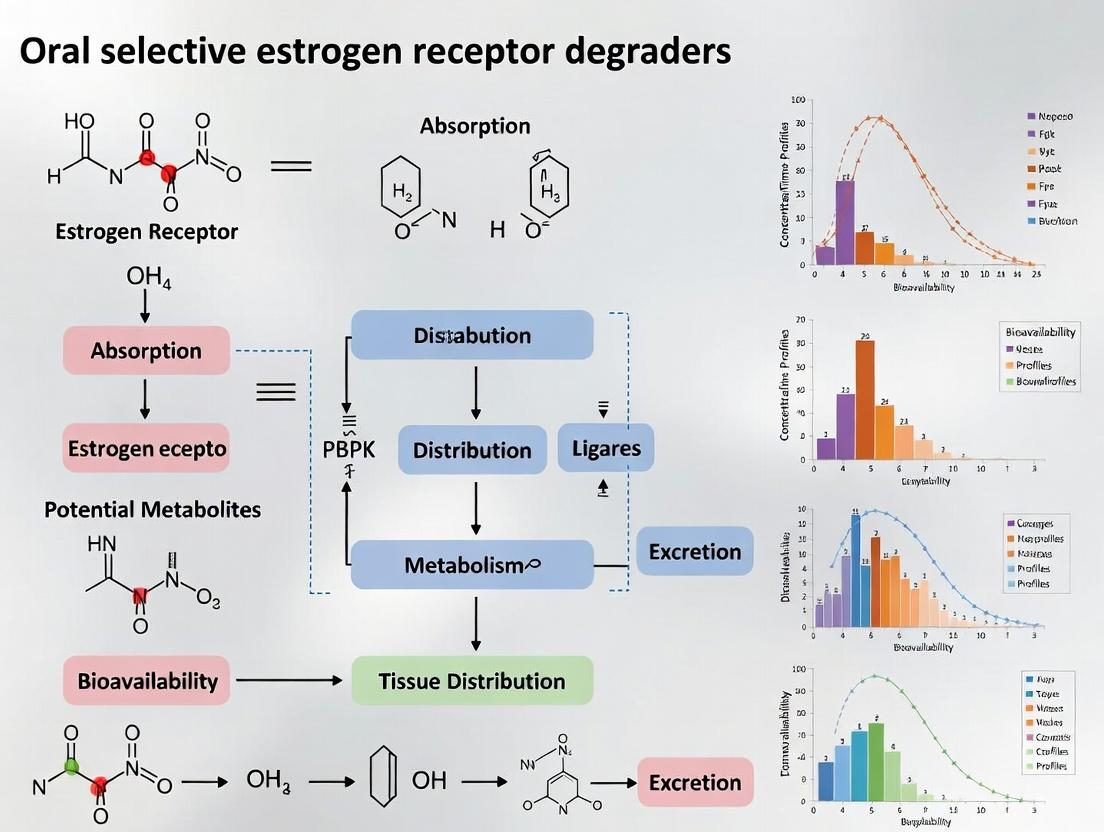
This article provides a detailed guide to Physiologically Based Pharmacokinetic (PBPK) modeling for oral Selective Estrogen Receptor Degraders (SERDs).
Predicting Oral SERD Pharmacokinetics: A Comprehensive Guide to PBPK Modeling for Drug Development
Abstract
This article provides a detailed guide to Physiologically Based Pharmacokinetic (PBPK) modeling for oral Selective Estrogen Receptor Degraders (SERDs). It explores the foundational principles of SERD disposition, outlines methodological approaches for model development, addresses common troubleshooting and optimization challenges, and examines validation strategies and comparative analyses with other modalities. Tailored for researchers, scientists, and drug development professionals, this guide synthesizes current best practices to enhance the efficiency and predictive power of PBPK modeling in advancing oral SERD candidates from preclinical stages to clinical trials.
Understanding SERD Disposition: Core Principles for PBPK Model Development
Application Notes: Mechanism and Therapeutic Context
Oral Selective Estrogen Receptor Degraders (SERDs) are a transformative class of endocrine therapy for hormone receptor-positive (HR+) breast cancer. Unlike selective estrogen receptor modulators (SERMs) which antagonize estrogen receptor (ER) activity in some tissues while agonizing in others, SERDs induce a conformational change in the ER that leads to its ubiquitination and proteasomal degradation, resulting in a complete abrogation of ER signaling.
Therapeutic Significance: The development of oral SERDs addresses a critical unmet need for patients with ER+/HER2- metastatic breast cancer, particularly those with ESR1 mutations that confer resistance to prior endocrine therapies like aromatase inhibitors. Oral administration offers a significant quality-of-life advantage over the first-generation SERD fulvestrant, which requires intramuscular injection.
PBPK Modeling Context: Physiologically Based Pharmacokinetic (PBPK) modeling is pivotal for oral SERD development. It integrates compound-specific physicochemical and pharmacokinetic data with human physiological parameters to predict systemic exposure, assess drug-drug interaction potential, optimize dosing regimens, and inform clinical trial design, especially for special populations. This is crucial for oral SERDs, which often exhibit complex absorption, distribution, metabolism, and excretion (ADME) profiles.
Table 1: Key Oral SERDs in Clinical Development (as of 2024)
| Compound Name (Brand) | Highest Phase | Key Trial(s) | Primary Indication |
|---|---|---|---|
| Elacestrant (Orserdu) | Approved (2023) | EMERALD | ER+/HER2-, ESR1-mutated advanced BC post-CDK4/6i |
| Camizestrant | Phase III | SERENA-6 | ER+/HER2- advanced BC, 1L in combination vs AI |
| Giredestrant | Phase III | lidERA | ER+/HER2-, ESR1-mutated advanced BC |
| Imlunestrant | Phase III | EMBER-3 | ER+/HER2- advanced BC |
| Amcenestrant | Discontinued (Ph III) | AMEERA-3,5 | Did not meet primary endpoints |
Table 2: Quantitative Efficacy Data from Pivotal Oral SERD Trials
| Trial Name | Intervention vs. Control | Population | Median PFS (Primary Endpoint) | Hazard Ratio (HR) |
|---|---|---|---|---|
| EMERALD | Elacestrant vs SOC ET | All comers | 2.8 vs 1.9 mo | 0.70 (95% CI, 0.55-0.88) |
| EMERALD | Elacestrant vs SOC ET | ESR1-mutant | 3.8 vs 1.9 mo | 0.55 (95% CI, 0.39-0.77) |
| SERENA-2 (Ph II) | Camizestrant 75mg vs Fulvestrant | AI-pretreated | 7.2 vs 3.7 mo | 0.58 (95% CI, 0.41-0.81) |
| acelERA (Ph II) | Giredestrant vs Physician's Choice ET | 2L/3L | 5.6 vs 5.4 mo | 0.81 (95% CI, 0.60-1.10) |
Key Experimental Protocols
Protocol 1: In Vitro Assessment of ERα Degradation and Antiproliferative Activity
Objective: To evaluate the potency of an oral SERD candidate in degrading ERα and inhibiting proliferation in ER+ breast cancer cell lines.
Materials: MCF-7 or T47D cells, candidate SERD, fulvestrant (control), 17β-estradiol (E2), dimethyl sulfoxide (DMSO), complete growth medium (RPMI-1640 + 10% FBS), charcoal-stripped FBS, western blot reagents (anti-ERα antibody, anti-β-actin antibody), MTT or CellTiter-Glo assay kit.
Methodology:
- Cell Culture & Preparation: Maintain cells in complete medium. For experiments, switch to phenol-red free medium supplemented with 5% charcoal-stripped FBS for 3-5 days to estrogen-starve cells.
- Compound Treatment: Seed cells in 96-well plates (proliferation) or 6-well plates (degradation). After 24h, pre-treat with vehicle (DMSO), SERD candidate, or fulvestrant at a range of concentrations (e.g., 1 nM – 10 µM) for 2 hours.
- Estrogen Stimulation: Add 1 nM E2 (or vehicle) to appropriate wells to stimulate ER signaling. Incubate for 24-72 hours.
- ERα Degradation Assay (24h endpoint):
- Lyse cells in RIPA buffer.
- Perform western blotting with 30-50 µg total protein.
- Probe for ERα (∼66 kDa) and a loading control (e.g., β-actin, 42 kDa).
- Quantify band intensity via densitometry; express ERα levels relative to control.
- Proliferation Assay (72h endpoint):
- Add 10 µL of MTT reagent (5 mg/mL) per 100 µL medium.
- Incubate 2-4h at 37°C. Carefully aspirate medium and solubilize formazan crystals in DMSO.
- Measure absorbance at 570 nm. Calculate % inhibition relative to vehicle control.
- Data Analysis: Determine DC50 (concentration for 50% degradation) and IC50 (concentration for 50% proliferation inhibition) using non-linear regression (e.g., four-parameter logistic model).
Protocol 2:In VivoEfficacy Study in a Patient-Derived Xenograft (PDX) Model
Objective: To assess the antitumor efficacy and pharmacodynamic effect of an oral SERD in a clinically relevant ESR1-mutant PDX model.
Materials: ESR1-mutant breast cancer PDX mice (female, ovariectomized), candidate SERD formulated in vehicle (e.g., 0.5% methylcellulose), calipers, digital scale, microtainers for blood collection, tissue cassettes.
Methodology:
- Model Establishment: Implant PDX tumor fragments (∼30 mm³) subcutaneously into the flank of mice. Randomize mice into cohorts (n=8-10) when tumors reach 150-200 mm³.
- Dosing Regimens: Administer treatments daily via oral gavage:
- Cohort 1: Vehicle control.
- Cohort 2: Fulvestrant (5 mg/mouse, SC, weekly, as reference).
- Cohort 3: Oral SERD Candidate (e.g., at MTD and one lower dose).
- Treatment duration: 21-28 days.
- Monitoring: Measure tumor volume (TV = (Length x Width²)/2) and body weight bi-weekly. Calculate %TGI (Tumor Growth Inhibition) vs. control.
- Terminal Pharmacodynamic Analysis: At study end, euthanize animals. Collect tumors and snap-freeze in liquid N₂ or fix in 10% neutral buffered formalin.
- Tumor Analysis:
- IHC: Perform immunohistochemistry for ERα (6F11 antibody), Ki67 (proliferation), and Cleaved Caspase-3 (apoptosis) on formalin-fixed paraffin-embedded sections.
- Biomarker Quantification: Score ERα H-score (0-300) and calculate % Ki67-positive cells.
- Statistical Analysis: Compare TV over time using repeated measures two-way ANOVA and terminal biomarker data using one-way ANOVA.
Signaling Pathway and PBPK Framework
Diagram Title: Integration of Oral SERD PBPK Modeling and Cellular Mechanism of Action
The Scientist's Toolkit: Key Research Reagents & Materials
Table 3: Essential Reagents for Oral SERD Research
| Item | Function / Application | Example Product / Note |
|---|---|---|
| Charcoal-Stripped FBS | Removes endogenous steroids for estrogen-starved cell culture conditions, essential for in vitro SERD assays. | Gibco Charcoal/Dextran Treated FBS. |
| ERα Antibody (for Western/IHC) | Detects and quantifies ERα protein levels to measure degradation efficacy (DC50). | Cell Signaling #8644 (SP1) or Abcam #ab32063 (6F11 for IHC). |
| ESR1-Mutant Cell Lines | Models of endocrine resistance for evaluating SERD potency against clinically relevant mutations. | MCF-7 Y537S, T47D Y537S (available via repositories). |
| Patient-Derived Xenograft (PDX) Models | In vivo models retaining tumor heterogeneity and ESR1 mutations for efficacy studies. | Available from JAX, Champions Oncology, or academic labs. |
| CYP Isozyme Assay Kits | Evaluates metabolic stability and drug-drug interaction potential of oral SERD candidates (CYP3A4 is key). | Corning Gentest CYP450 Assay Kits. |
| PBPK Modeling Software | Platform for integrating in vitro ADME and physicochemical data to predict human PK. | GastroPlus, Simcyp Simulator, PK-Sim. |
| LC-MS/MS System | Quantifies drug concentrations in plasma and tissues for PK/PD correlation studies. | SCIEX or Waters systems. |
| Cell Viability Assay | Measures antiproliferative effects of SERDs (IC50 determination). | Promega CellTiter-Glo 3D (for 3D spheroids) or MTT. |
Within the framework of developing robust Physiologically-Based Pharmacokinetic (PBPK) models for oral Selective Estrogen Receptor Degraders (SERDs), three fundamental PK challenges must be systematically characterized: aqueous solubility, intestinal permeability, and extensive first-pass metabolism. These parameters are critical inputs for accurate PBPK simulations that predict human exposure, optimize formulation strategies, and inform clinical dose selection. This document provides detailed application notes and experimental protocols for their determination.
Table 1: Representative In Vitro and In Vivo PK Parameters for Oral SERDs (Illustrative Data)
| Parameter | Experimental System | Typical Value Range for SERDs | Key Implication for PBPK |
|---|---|---|---|
| Aqueous Solubility (pH 7.4) | Shake-flask / HPLC-UV | 0.1 - 10 µg/mL | Low solubility limits dissolution rate & extent, a key input for dissolution model. |
| Apparent Permeability (Papp) | Caco-2 monolayer assay | 0.5 - 5 x 10⁻⁶ cm/s | Determines intestinal absorption rate; critical for ACAT model in PBPK. |
| Microsomal CLint (Human Liver) | Metabolic stability assay | 50 - 500 µL/min/mg | Direct input for predicting hepatic first-pass extraction (EH). |
| Fraction Unbound in Microsomes (fumic) | Equilibrium dialysis | 0.01 - 0.2 | Required to correct intrinsic clearance for binding. |
| B:A Ratio (Caco-2) | Bidirectional assay | 0.3 - 2.0 | Indicator of efflux transporter involvement (e.g., P-gp). |
Experimental Protocols
Protocol 2.1: Equilibrium Solubility Determination (Shake-Flask Method)
Objective: To determine the thermodynamic solubility of an oral SERD candidate in physiologically relevant buffers. Materials: SERD compound, PBS (pH 6.5 & 7.4), FaSSIF (Fasted State Simulated Intestinal Fluid), orbital shaker incubator, 0.22 µm PVDF syringe filters, HPLC system with UV detector. Procedure:
- Prepare saturated solutions by adding excess solid SERD to 5 mL of each medium in glass vials.
- Agitate at 37°C for 24 hours in an orbital shaker (100 rpm).
- After 24h, measure pH to confirm stability.
- Filter aliquots immediately using a pre-warmed syringe and filter.
- Dilute filtrate appropriately with mobile phase and analyze by validated HPLC-UV.
- Calculate concentration using a standard curve. Perform in triplicate.
Protocol 2.2: Caco-2 Permeability and Efflux Assay
Objective: To determine apparent permeability (Papp) and efflux ratio for intestinal absorption and transporter interaction assessment. Materials: Caco-2 cells (passage 60-80), 24-well Transwell plates, HBSS-HEPES transport buffer, SERD compound (in DMSO), Lucifer Yellow (integrity marker), LC-MS/MS. Procedure:
- Culture Caco-2 cells on collagen-coated polycarbonate membranes for 21-28 days until TEER > 300 Ω·cm².
- Bidirectional Assay: For apical-to-basolateral (A-B) transport, add SERD (e.g., 10 µM) to donor (apical) compartment. For basolateral-to-apical (B-A), add to donor (basolateral) compartment.
- Sample from receiver compartment at 30, 60, 90, and 120 min, replacing with fresh buffer.
- Analyze all samples by LC-MS/MS.
- Calculate Papp = (dQ/dt) / (A * C₀), where dQ/dt is flux rate, A is membrane area, C₀ is initial donor concentration.
- Calculate Efflux Ratio = Papp (B-A) / Papp (A-B).
Protocol 2.3: Determination of Hepatic Intrinsic Clearance (CLint)
Objective: To measure in vitro metabolic stability in human liver microsomes (HLM) for first-pass metabolism prediction. Materials: Pooled HLM, SERD compound, NADPH regenerating system, phosphate buffer (0.1 M, pH 7.4), stop solution (acetonitrile with internal standard), LC-MS/MS. Procedure:
- Prepare incubation mix: HLM (0.5 mg/mL), SERD (1 µM), in phosphate buffer. Pre-incubate at 37°C for 5 min.
- Initiate reaction by adding NADPH regenerating system.
- Aliquot at times t=0, 5, 15, 30, 45, 60 min into pre-chilled stop solution.
- Centrifuge, analyze supernatant by LC-MS/MS.
- Plot Ln(% remaining) vs. time. Slope (k) = CLint (µL/min/mg protein) / V (µL/mg protein). Calculate in vitro CLint = k * (incubation volume/protein amount).
Visualization: Pathways and Workflows
Diagram 1: Oral SERD Absorption and First-Pass Metabolism Pathway
Title: SERD GI Absorption and Hepatic First-Pass Pathway
Diagram 2: Integrated PBPK Model Development Workflow
Title: Oral SERD PBPK Model Development Workflow
The Scientist's Toolkit: Essential Research Reagents & Materials
Table 2: Key Reagent Solutions for Oral SERD PK Characterization
| Reagent / Material | Function / Application | Key Consideration |
|---|---|---|
| FaSSIF/FeSSIF Powder | Simulates intestinal fluid for solubility & dissolution testing. | Critical for predicting in vivo dissolution of low-solubility SERDs. |
| Caco-2 Cell Line | Gold standard in vitro model for intestinal permeability & efflux. | Requires long differentiation (21+ days); monitor TEER for integrity. |
| Pooled Human Liver Microsomes (HLM) | Contains major CYP enzymes for metabolic stability (CLint) assays. | Use appropriate pool (e.g., 50-donor) to capture population variability. |
| NADPH Regenerating System | Provides essential cofactor for Phase I oxidative metabolism in HLM assays. | Must be fresh or properly aliquoted and frozen to maintain activity. |
| LC-MS/MS System | Quantification of SERDs in complex biological matrices (permeability, metabolic). | Requires stable isotope-labeled internal standard for optimal accuracy. |
| PBPK Software (e.g., GastroPlus, Simcyp) | Platform for integrating in vitro data to build and simulate mechanistic absorption/metabolism models. | Model credibility depends on quality of in vitro input parameters. |
Application Note
Within a research thesis on the development of Oral Selective Estrogen Receptor Degraders (SERDs), the application of Physiologically Based Pharmacokinetic (PBPK) modeling is indispensable. Low oral bioavailability is a critical challenge for many drug candidates, including SERDs, often due to poor solubility, extensive pre-systemic metabolism, or efflux by transporters. This note details the construction and application of a mechanistic PBPK model to elucidate the determinants of low bioavailability, facilitating rational formulation design and drug candidate optimization.
A comprehensive PBPK model for a low-bioavailability compound integrates compound-specific physicochemical and biochemical parameters with system-specific (physiological) parameters. The model simulates the drug's journey from dissolution in the gastrointestinal (GI) tract to systemic circulation. For an oral SERD, key processes include dissolution kinetics, solubility-limited absorption, gut wall metabolism (e.g., by CYP3A4), hepatic first-pass extraction, and potential involvement of intestinal efflux transporters like P-glycoprotein (P-gp).
Table 1: Core System-Dependent (Physiological) Parameters for a GI Tract Absorption Model
| Parameter | Value (Mean) | Description |
|---|---|---|
| Stomach Volume | 250 mL | Fluid volume available for dissolution. |
| Small Intestinal Length | 6 m | Total length of the primary absorption site. |
| Small Intestinal Radius | 1.75 cm | Influences surface area for absorption. |
| Intestinal Transit Time | 3-4 hours | Time available for dissolution and absorption. |
| Enterocyte Volume | 0.01 L/kg | Volume of gut wall cells where metabolism can occur. |
| Portal Vein Blood Flow | 18 L/h | Carries absorbed drug to the liver. |
| Hepatic Blood Flow | 90 L/h | Determines the rate of presentation to the liver. |
| Plasma Protein (Albumin) | 43 g/L | Primary binding protein for acidic/neutral drugs. |
Table 2: Essential Compound-Dependent Parameters for a Low-Bioavailability SERD
| Parameter | Example Value | Experimental Method |
|---|---|---|
| Log P | 4.5 | Shake-flask or HPLC method. |
| pKa | 6.2 (acid) | Potentiometric titration. |
| Solubility (pH 6.8) | 5 µg/mL | Thermodynamic solubility assay. |
| Permeability (Peff) | 1.5 x 10⁻⁴ cm/s | Human jejunal perfusion or Caco-2 assay. |
| Fraction Unbound in Plasma (fu) | 0.02 | Equilibrium dialysis or ultracentrifugation. |
| CYP3A4 Clint | 50 µL/min/pmol | Recombinant enzyme or human liver microsomes. |
| P-gp Km | 15 µM | Bidirectional transport assay (Caco-2/LLC-PK1). |
| Blood-to-Plasma Ratio | 0.65 | Incubation of drug with fresh blood. |
Diagram: PBPK Absorption Pathway for an Oral SERD
Experimental Protocols
Protocol 1: Determination of Effective Permeability (Peff) Using Caco-2 Cell Monolayers Objective: To quantify the apical-to-basolateral apparent permeability of a SERD candidate. Materials:
- Caco-2 cells (passage 40-60)
- Transwell inserts (polycarbonate membrane, 1.12 cm², 0.4 µm pore)
- HBSS buffer (pH 7.4, with 25mM HEPES)
- Test compound (10 mM stock in DMSO)
- LC-MS/MS system for analysis Procedure:
- Seed Caco-2 cells on Transwell inserts at high density (e.g., 100,000 cells/cm²). Culture for 21-28 days, changing media every 2-3 days, until transepithelial electrical resistance (TEER) > 350 Ω·cm².
- On the day of the experiment, wash monolayers twice with pre-warmed HBSS. Add HBSS to the basolateral (BL) compartment.
- Prepare a 10 µM solution of test compound in HBSS (final DMSO ≤0.1%) and add to the apical (AP) compartment.
- Incubate at 37°C with gentle shaking. Sample 100 µL from the BL compartment at 30, 60, 90, and 120 minutes, replacing with fresh pre-warmed HBSS.
- Quantify drug concentration in samples via LC-MS/MS.
- Calculate apparent permeability (Papp): Papp = (dQ/dt) / (A * C₀), where dQ/dt is the transport rate, A is the membrane area, and C₀ is the initial donor concentration.
- Include control compounds (e.g., high-permeability metoprolol, low-permeability atenolol).
Protocol 2: Assessing CYP3A4 Metabolic Clearance Using Human Liver Microsomes (HLM) Objective: To obtain intrinsic clearance (Clint) for the primary metabolizing enzyme. Materials:
- Pooled Human Liver Microsomes (e.g., 0.5 mg/mL protein)
- NADPH Regenerating System (Solution A: NADP+, Solution B: Glucose-6-phosphate & MgCl₂)
- Test compound (stock in DMSO)
- Phosphate buffer (0.1 M, pH 7.4)
- Quenching solution (acetonitrile with internal standard)
- LC-MS/MS system Procedure:
- Prepare incubation mix: Phosphate buffer, HLM, and test compound (1 µM final). Pre-incubate for 5 minutes at 37°C.
- Initiate the reaction by adding the NADPH Regenerating System (final 1x concentration).
- At pre-determined time points (0, 5, 10, 20, 30 minutes), aliquot 50 µL of incubation mix into 100 µL of ice-cold quenching solution.
- Centrifuge samples (≥4000g, 15 min, 4°C) and analyze supernatant by LC-MS/MS to determine parent compound depletion.
- Plot natural log of the percent parent remaining vs. time. The slope (k) is the depletion rate constant.
- Calculate Clint, mic = (k * Incubation Volume) / (Microsomal Protein). Scale to whole liver using standard scaling factors (e.g., 40 mg microsomal protein per gram liver).
The Scientist's Toolkit: Key Research Reagent Solutions
Table 3: Essential Materials for PBPK-Oriented Absorption & Metabolism Studies
| Item | Function in Research |
|---|---|
| Bi-relevant Dissolution Media (FaSSIF/FeSSIF) | Simulates intestinal fluids for more predictive solubility and dissolution testing of low-solubility compounds. |
| P-glycoprotein Inhibitor (e.g., Elacridar, GF120918) | Used in permeability assays to quantify the specific contribution of efflux transporters to low absorption. |
| CYP Isozyme-Specific Inhibitors (e.g., Ketoconazole for CYP3A4) | To phenotype the major metabolic pathways and obtain enzyme-specific kinetic parameters. |
| Recombinant CYP Enzymes | To determine individual enzyme kinetics (Km, Vmax) without interference from other enzymes present in HLM. |
| Equilibrium Dialysis Device | To accurately measure the fraction of drug unbound in plasma (fu), critical for predicting tissue distribution. |
| Stable Isotope-Labeled Drug (¹³C, ²H) | Serves as an internal standard for LC-MS/MS quantification, improving accuracy in complex biological matrices. |
| PBPK Software Platform (e.g., GastroPlus, Simcyp Simulator) | Integrates in vitro and system data to build, validate, and simulate the full PBPK model for prediction. |
Diagram: Integrated PBPK Modeling Workflow
Within the broader thesis on advancing Physiologically-Based Pharmacokinetic (PBPK) modeling for oral Selective Estrogen Receptor Degraders (SERDs), the accurate parameterization of compound-specific physicochemical and binding properties is paramount. This document provides detailed application notes and experimental protocols for determining critical parameters—LogP, pKa, Blood-to-Plasma Ratio (B/P), and Tissue Affinity—that directly dictate the absorption, distribution, metabolism, and excretion (ADME) of SERDs. These data are essential for building robust PBPK models that can predict human pharmacokinetics, optimize dosing regimens, and elucidate tissue-specific target engagement, particularly in estrogen receptor-positive (ER+) breast cancer.
Table 1: Critical Drug-Specific Parameters for Representative SERDs
| Parameter | Fulvestrant (IM) | Oral SERD Example (Elacestrant) | Oral SERD Example (Giredestrant) | Impact on PBPK Model |
|---|---|---|---|---|
| LogD (pH 7.4) | ~5.6 (High) | ~4.2 | ~3.8 | Dictates passive permeability, tissue partitioning, and plasma protein binding. |
| pKa | None (neutral) | Basic (~8.5 for amine) | Basic (~9.1 for amine) | Influences ionization state, solubility, and absorption across GI membranes. |
| Blood-to-Plasma Ratio (B/P) | ~0.65 | ~0.75 | ~0.70 | Critical for converting between plasma and whole-blood concentrations. |
| fu (Fraction unbound in plasma) | <0.01 | ~0.02 | ~0.015 | Determines free drug concentration available for receptor binding and hepatic clearance. |
| Kp (Tissue:Plasma Partition Coefficient) | Adipose: High, Liver: High | Predicted tissue-specific values from in vitro assays (see Protocol 4.0) | Defines drug distribution into target (e.g., breast) and off-target tissues. |
Data synthesized from recent preclinical and clinical pharmacology publications (2022-2024). Fulvestrant data is historical but included for contrast with modern oral agents.
Experimental Protocols
Protocol 3.1: Determination of LogP/LogD and pKa via Potentiometric Titration & Microshake-Flask Method
Objective: To accurately measure the lipophilicity (LogP/LogD at pH 7.4) and acid dissociation constant(s) of a novel SERD candidate.
Materials & Reagents:
- Compound: SERD candidate (≥95% purity).
- Solvents: High-purity water, n-octanol, PBS (pH 7.4).
- Equipment: Potentiometric titrator (e.g., GLpKa), HPLC-UV system, microbalance, vortex mixer, centrifuge.
- Vials: 2 mL glass vials with PTFE-lined caps.
Procedure:
- Potentiometric pKa Determination:
- Dissolve 0.5-1 mg of compound in 20 mL of a methanol-water mixture (for solubility).
- Titrate with standardized 0.1 M HCl or KOH under nitrogen atmosphere.
- Record pH vs. titrant volume. Use refinement software (e.g., Refinement Pro) to calculate pKa values from the titration curve.
- LogD7.4 Determination (Microshake-Flask):
- Pre-saturate n-octanol and PBS (pH 7.4) by mutually stirring for 24h.
- Weigh ~1 mg of SERD into a 2 mL vial. Add 500 µL of each pre-saturated phase.
- Vortex vigorously for 1h, then centrifuge at 10,000 rpm for 10 min.
- Carefully separate phases. Analyze drug concentration in each phase via validated HPLC-UV method.
- Calculate: LogD7.4 = log10([Drug]octanol / [Drug]PBS buffer).
Protocol 3.2: Determination of Blood-to-Plasma Ratio (B/P)
Objective: To measure the partitioning of the SERD between blood cells and plasma.
Materials & Reagents:
- Biological Matrix: Fresh human whole blood (with anticoagulant, e.g., K2EDTA).
- Compound: SERD stock solution in DMSO (<0.5% final v/v).
- Equipment: Thermostatted water bath (37°C), centrifuge, LC-MS/MS.
- Tubes: Polypropylene microcentrifuge tubes.
Procedure:
- Spike the SERD candidate into fresh whole blood to a final concentration of 1 µM (therapeutically relevant). Incubate at 37°C for 30 min with gentle mixing.
- Aliquot 200 µL of spiked whole blood in duplicate (Total Concentration, C_blood).
- Centrifuge the remaining spiked blood at 2000 x g for 10 min at 37°C to obtain plasma.
- Aliquot 200 µL of plasma in duplicate (Plasma Concentration, C_plasma).
- Immediately precipitate proteins in all aliquots with cold acetonitrile containing internal standard.
- Centrifuge and analyze supernatants via LC-MS/MS.
- Calculate: B/P = Cblood / Cplasma.
Protocol 3.3: Determination of Plasma Protein Binding (fu) via Rapid Equilibrium Dialysis (RED)
Objective: To determine the fraction of SERD unbound in plasma (fu), a critical input for PBPK.
Materials & Reagents:
- RED Device: 96-well RED plate with 8 kDa MWCO membranes.
- Matrices: Human plasma (K2EDTA), PBS (pH 7.4).
- Equipment: Plate shaker in a 37°C incubator, LC-MS/MS.
- Buffer: Phosphate Buffered Saline (PBS), pH 7.4.
Procedure:
- Spike SERD into plasma to 1 µM. Load 150 µL into the sample chamber (donor).
- Load 350 µL of PBS into the adjacent buffer chamber (receiver).
- Seal plate and incubate at 37°C with gentle shaking for 6h (validate time to equilibrium).
- Post-incubation, aliquot equal volumes from both chambers.
- Analyze donor (plasma) and receiver (buffer) concentrations via LC-MS/MS. Use matrix-matched calibration standards.
- Calculate: fu = Cbuffer / Cplasma (correcting for volume differences).
Protocol 4.0: In Vitro Assessment of Tissue Affinity (Cellular Partitioning)
Objective: To estimate tissue-to-plasma partition coefficients (Kp) using cell-based uptake assays.
Materials & Reagents:
- Cell Lines: ER+ breast cancer cells (e.g., MCF-7), hepatocytes (e.g., HepaRG), and other relevant cell types.
- Compound: Radiolabeled ([³H] or [¹⁴C]) or cold SERD for LC-MS/MS detection.
- Buffers: Hanks' Balanced Salt Solution (HBSS), PBS, cell lysis buffer.
- Equipment: Humidified CO2 incubator, cell cultureware, scintillation counter or LC-MS/MS, liquid nitrogen for snap-freezing.
Procedure:
- Culture cells to 80-90% confluence in 24-well plates.
- Uptake Phase: Replace medium with pre-warmed HBSS containing 1 µM SERD. Incubate for a predetermined time (e.g., 2h) at 37°C.
- Termination: Aspirate dosing solution rapidly. Wash cells 3x with ice-cold PBS.
- Lysis: Lyse cells with 200 µL of lysis buffer (e.g., 0.1% Triton X-100) or acetonitrile/water mixture. Scrape and transfer lysate.
- Analysis: Quantify drug amount in lysate via scintillation counting or LC-MS/MS. Normalize to total cellular protein (BCA assay).
- Data Analysis: Calculate cellular-to-medium concentration ratio. Use mechanistic tissue composition equations (e.g., Rodgers & Rowland) in conjunction with LogD and fu to predict in vivo Kp values for PBPK input.
Visualizations
Diagram 1: Key SERD parameters influence PBPK model ADME processes.
Diagram 2: Experimental workflow for SERD parameter determination.
The Scientist's Toolkit: Research Reagent Solutions
Table 2: Essential Materials for SERD ADME Parameterization
| Item | Function/Application in SERD Research | Example Vendor/Product |
|---|---|---|
| Human Matrices (Plasma/Blood) | Essential for in vitro B/P, fu, and metabolic stability studies under physiologically relevant conditions. | BioIVT, Zen-Bio |
| Rapid Equilibrium Dialysis (RED) Device | Gold-standard method for high-throughput determination of plasma protein binding (fu). | Thermo Fisher Scientific (Pierce) |
| Potentiometric Titrator with LogP option | Allows simultaneous, accurate determination of pKa and LogP/LogD for ionizable SERDs. | Sirius Analytical (T3) |
| Pre-saturated n-Octanol & Buffer | Critical for reproducible LogD measurements; avoids volume shifts from mutual saturation. | Sigma-Aldrich (prepared in-house) |
| ER+ Cell Lines (MCF-7, T47D) | In vitro models for assessing cellular uptake, tissue affinity, and pharmacodynamic response. | ATCC |
| Radiolabeled SERD Analogs ([³H], [¹⁴C]) | Enable definitive tracking of drug distribution in in vitro and in vivo ADME studies. | Custom synthesis (e.g., Selvita, RC TRITEK) |
| LC-MS/MS System (Triple Quadrupole) | Quantification of SERDs at low concentrations in complex biological matrices (plasma, tissue homogenate). | Sciex, Agilent, Waters |
| PBPK Modeling Software | Platform for integrating experimentally derived parameters to build, simulate, and validate SERD models. | GastroPlus, Simcyp Simulator, PK-Sim |
Physiologically-based pharmacokinetic (PBPK) modeling of oral selective estrogen receptor degraders (SERDs) requires precise definition of system parameters. The inherent physiological variability between sexes and in disease states like hepatic impairment significantly alters drug absorption, distribution, metabolism, and excretion (ADME). This application note details the protocols for quantifying and incorporating these critical parameters into a PBPK framework to improve model predictive performance for SERDs, which often have complex pharmacokinetics and narrow therapeutic indices.
Quantitative System Parameters
The following tables compile key physiological parameters that must be adapted in a PBPK model to account for sex-specific differences and hepatic impairment. Data is derived from recent literature and consensus guidelines.
Table 1: Sex-Specific Physiological Parameters Relevant to Oral SERD PBPK Modeling
| Parameter | Healthy Male (Mean ± SD) | Healthy Female (Mean ± SD) | Impact on Oral SERD PK | Primary Citation |
|---|---|---|---|---|
| Absolute Organ Weights | ||||
| Liver Weight (kg) | 1.8 ± 0.2 | 1.4 ± 0.2 | Alters metabolic capacity volume | Johnson et al. (2023) |
| GI Tract Volume (L) | 1.1 ± 0.2 | 1.0 ± 0.2 | Impacts dissolution & absorption | |
| Adipose Tissue Volume (L) | 18.5 ± 6.1 | 25.3 ± 7.5 | Affects distribution of lipophilic SERDs | |
| Physiological Rates | ||||
| Gastric Emptying T½ (min) | 65 ± 15 | 85 ± 20* | Alters initial absorption rate | Chen & Lee (2024) |
| Hepatic CYP3A4 Abundance (pmol/mg) | 110 ± 25 | 95 ± 20* | Major pathway for many SERDs | |
| Biliary Flow (mL/min) | 10.5 ± 2.5 | 9.2 ± 2.0 | Impacts enterolepatic recirculation | |
| Blood Flows | ||||
| Hepatic Arterial Flow (L/h) | 30 ± 5 | 27 ± 5 | Determines hepatic clearance | |
| Portal Vein Flow (L/h) | 75 ± 10 | 68 ± 10 | Determines first-pass metabolism |
Note: Variations during menstrual cycle phases may be significant for some parameters.
Table 2: Disease-State Parameters for Hepatic Impairment (Child-Pugh Classification)
| Parameter | Child-Pugh A (Mild) | Child-Pugh B (Moderate) | Child-Pugh C (Severe) | Impact on Oral SERD PK |
|---|---|---|---|---|
| Hepatic Function | ||||
| CYP Activity Fraction | 0.7 – 0.8 | 0.4 – 0.6 | 0.2 – 0.3 | Reduced intrinsic clearance |
| Hepatic Blood Flow Fraction | 0.9 – 1.0 | 0.8 – 0.9 | 0.7 – 0.8 | Altered hepatic delivery |
| Albumin (g/dL) | 3.5 – 4.0 | 2.8 – 3.5 | < 2.8 | Affects protein binding for acidic SERDs |
| Systemic Impact | ||||
| Serum Bilirubin (mg/dL) | < 2.0 | 2.0 – 3.0 | > 3.0 | May inhibit transporters (OATP1B1/B3) |
| Portal-Systemic Shunting (%) | < 20 | 20 – 60 | > 60 | Bypasses hepatic first-pass |
Experimental Protocols
Protocol 1:In VitroDetermination of Sex-Specific Hepatic Metabolic Clearance
Objective: To quantify intrinsic clearance (CLint) of a SERD using human hepatocytes from male and female donors. Materials: Cryopreserved human hepatocytes (3 male, 3 female donors), SERD compound, Williams' E medium, incubation system. Procedure:
- Thaw hepatocytes and assess viability (>80% required).
- Incubate cells (1 million/mL) with SERD (1 µM) in triplicate.
- Collect supernatant samples at 0, 15, 30, 60, 90, and 120 minutes.
- Terminate reactions with acetonitrile containing internal standard.
- Analyze samples via LC-MS/MS to determine parent compound depletion.
- Calculate CLint using the in vitro half-life method: CLint (µL/min/million cells) = (0.693 / t1/2) * (incubation volume / cell count).
- Statistically compare CLint values between sex-matched donors.
Protocol 2: Protocol for Populating a Hepatic Impairment PBPK Module
Objective: To scale in vitro clearance data for incorporation into a hepatic impairment PBPK model. Materials: In vitro CLint data, system parameters from Table 2, modeling software (e.g., GastroPlus, Simcyp, PK-Sim). Procedure:
- Incorporate healthy system parameters (organ volumes, blood flows) for a virtual population.
- Define a "Healthy" liver model using the well-stirred liver model: CLh = Qh * (fub * CLint) / (Qh + fub * CLint), where Qh is hepatic blood flow, fub is fraction unbound.
- For each Child-Pugh class (A, B, C): a. Scale hepatic blood flow parameter based on Table 2. b. Scale relevant CYP enzyme abundances (CLint) by the fractional activity from Table 2. c. Adjust serum albumin concentration to modify fub if necessary. d. Implement a shunting fraction parameter to account for portal-systemic shunting.
- Validate the scaled model by simulating the PK of probe drugs (e.g., midazolam for CYP3A4) and comparing outputs to observed clinical data in hepatic impairment populations.
Visualizations
Title: SERD PK Pathway Modified by Sex and Liver Disease
Title: PBPK Model Development and Validation Workflow
The Scientist's Toolkit
Table 3: Key Research Reagent Solutions for System Parameter Research
| Item | Function in Research | Example Product/Source |
|---|---|---|
| Cryopreserved Human Hepatocytes | Sex-matched cells for in vitro metabolic stability assays to determine intrinsic clearance (CLint). | BioIVT (Diverse Donor Pool), Corning Gentest. |
| Human Liver Microsomes/S9 Fractions | Pooled or individual donor subcellular fractions for initial enzyme phenotyping and reaction phenotyping of SERDs. | XenoTech, Thermo Fisher Scientific. |
| Recombinant CYP Enzymes | Expressed individual CYP isoforms (e.g., 3A4, 2D6, 2C9) to identify primary metabolic pathways. | BD Biosciences, Cypex. |
| Physiological Buffers & Media | Biorelevant media (FaSSIF, FeSSIF) for solubility/permeability assays; incubation buffers for hepatocyte work. | Biorelevant.com, Sigma-Aldrich. |
| LC-MS/MS System | Gold standard for quantitative bioanalysis of SERD concentrations in in vitro and in vivo samples. | Sciex Triple Quad, Waters Xevo TQ-S. |
| PBPK Modeling Software | Platform for integrating in vitro data and system parameters to build, simulate, and validate models. | Certara Simcyp, Simulations Plus GastroPlus, Open Systems Pharmacology. |
| Clinical Database Access | Source of real-world physiological and PK data for model validation (e.g., hepatic impairment studies). | OPTUM, ICE, published literature repositories. |
Building the Model: A Stepwise Approach to Oral SERD PBPK Simulation
Within the framework of a thesis on PBPK modeling for Oral Selective Estrogen Receptor Degraders (SERDs), accurate IVIVE is the foundational step. Predicting human pharmacokinetics relies on robust scaling of three critical in vitro parameters: cytochrome P450 (CYP)-mediated metabolic clearance, transporter-mediated uptake/efflux, and plasma protein binding. This protocol details the standardized experimental and computational approaches to generate these essential inputs for subsequent PBPK model development and validation.
Core Quantitative Data for IVIVE of Oral SERDs
The following tables summarize typical in vitro parameters required for IVIVE, using exemplar data from research on compounds like fulvestrant and novel oral SERDs.
Table 1: Key In Vitro Parameters for CYP Metabolism
| Parameter | Typical Value (Range) | Experimental System | Scaling Factor |
|---|---|---|---|
| CLint, in vitro (µL/min/mg protein) | 5 - 50 | Human liver microsomes (HLM) | Microsomal protein per gram of liver (MPPGL): 40 mg/g |
| Km (µM) | 2 - 20 | Recombinant CYP enzymes (e.g., CYP3A4) | -- |
| Vmax (pmol/min/pmol P450) | 10 - 100 | Recombinant CYP enzymes | Abundance of specific CYP in HLM (pmol/mg) |
| Fraction metabolized by CYP (fm,CYP) | 0.7 - 0.9 (for CYP3A4 substrates) | Chemical inhibition in HLM | -- |
| Predicted Hepatic CLint (mL/min/kg) | 10 - 30 | Scaled from HLM data using: CLint, vivo = CLint, vitro × MPPGL × Liver Weight |
Table 2: Key In Vitro Parameters for Transporter Kinetics
| Parameter | P-gp (MDR1) | BCRP | OATP1B1/1B3 |
|---|---|---|---|
| Assay System | Caco-2 / MDCKII-MDR1 | MDCKII-BCRP / Vesicles | HEK293-OATP1B1 / Hepatocytes |
| Efflux Ratio (ER) Threshold | ER ≥ 2 indicates substrate | ER ≥ 2 indicates substrate | Uptake ratio > 2 vs. control |
| Km (µM) | 10 - 100 | 5 - 50 | 1 - 10 (for uptake) |
| Jmax (pmol/min/mg protein) | 500 - 5000 | 300 - 3000 | 200 - 2000 |
| Scaled Active Transport (CLactive) | Incorporated as PSinf or PSeff in gut/liver PBPK models |
Table 3: Protein Binding Parameters
| Matrix | Method | Typical Fraction Unbound (fu) for Oral SERDs | Key Binding Protein |
|---|---|---|---|
| Human Plasma | Equilibrium Dialysis / Ultracentrifugation | 0.01 - 0.05 (Low fu) | Albumin, α-1-Acid Glycoprotein |
| Human Hepatocytes | Equilibrium Dialysis | 0.03 - 0.10 | Cellular proteins & lipids |
| Mouse/Rat Plasma | Equilibrium Dialysis | Often 2-5x higher than human | Species-specific affinity |
Detailed Experimental Protocols
Protocol 3.1: Determination of Metabolic Stability & CYP Reaction Phenotyping
Objective: To measure intrinsic clearance (CLint) and identify contributing CYP enzymes.
Materials:
- Test compound (Oral SERD)
- Human liver microsomes (HLM, pooled)
- Recombinant human CYP enzymes (Supersomes)
- NADPH regenerating system
- LC-MS/MS system
Procedure:
- Incubation Setup: Prepare duplicate incubations containing 0.1 µM SERD, 0.1 mg/mL HLM (or 10 pmol/mL recombinant CYP), and phosphate buffer (pH 7.4) in a final volume of 100 µL. Pre-incubate for 5 min at 37°C.
- Reaction Initiation: Start reaction by adding NADPH regenerating system. Incubate for 0, 5, 10, 20, and 30 minutes.
- Termination: Stop reaction at each time point with 100 µL ice-cold acetonitrile containing internal standard.
- Analysis: Centrifuge, dilute supernatant, and analyze parent compound disappearance using LC-MS/MS.
- Data Analysis: Fit % remaining vs. time to first-order decay. Calculate in vitro CLint (µL/min/mg) = (k × Incubation Volume) / Microsomal Protein. For phenotyping, calculate relative activity factor (RAF)-scaled contribution from each CYP.
Protocol 3.2: Transporter Kinetic Assay Using Overexpressing Cell Lines
Objective: To determine kinetic parameters (Km, Jmax) for P-gp-mediated efflux.
Materials:
- MDCKII-MDR1 cells
- Transport buffer (HBSS, 10 mM HEPES, pH 7.4)
- LC-MS/MS system
Procedure:
- Cell Culture: Seed MDCKII-MDR1 cells on 24-well Transwell plates at high density. Culture for 7-10 days until TEER > 300 Ω·cm².
- Bidirectional Transport: Prepare SERD solutions in transport buffer at six concentrations (e.g., 1, 5, 10, 25, 50, 100 µM). For A-to-B (AP-to-BL) direction, add compound to apical chamber. For B-to-A (BL-to-AP), add to basolateral chamber.
- Incubation: Incubate at 37°C with shaking. Sample 50 µL from receiver chamber at 30, 60, 90, 120 min. Replace with fresh buffer.
- LC-MS/MS Analysis: Quantify SERD concentrations in samples.
- Kinetic Analysis: Calculate net efflux ratio. Fit transport velocity (pmol/min) vs. concentration to Michaelis-Menten equation to derive Km and Jmax.
Protocol 3.3: Determination of Fraction Unbound (fu) by Equilibrium Dialysis
Objective: To measure free fraction of SERD in plasma and hepatocyte suspensions.
Materials:
- HTD96b equilibrium dialysis device
- Regenerated cellulose membranes (12-14 kDa MWCO)
- Matched plasma and hepatocyte incubation media
Procedure:
- Preparation: Pre-soak dialysis membrane in deionized water for 60 min, then in buffer for 30 min. Load 150 µL of plasma (or hepatocyte suspension) containing 5 µM SERD into one chamber (donor) and 150 µL of matching buffer into the other (receiver).
- Dialysis: Assemble device and incubate at 37°C with gentle rotation for 6 hours to reach equilibrium.
- Post-Dialysis Sampling: Carefully collect 50 µL from both chambers. For plasma chambers, add equal volume of blank buffer. For buffer chambers, add equal volume of blank plasma to match matrix for analysis.
- LC-MS/MS Analysis: Quantify total drug concentration in both sides. fu = [Drug]buffer chamber / [Drug]plasma chamber. Correct for volume shift if >5%.
IVIVE Workflow and Pathway Diagrams
Diagram Title: IVIVE Workflow for PBPK Modeling
Diagram Title: Oral SERD Absorption and Hepatic Disposition Pathways
The Scientist's Toolkit: Key Research Reagent Solutions
Table 4: Essential Materials for IVIVE Studies on Oral SERDs
| Item | Function/Application | Example Product/Catalog |
|---|---|---|
| Pooled Human Liver Microsomes | System for measuring hepatic phase I metabolic stability and obtaining CLint. | Xenotech H0610.C, Corning 452117 |
| Recombinant CYP Enzymes (Supersomes) | For CYP reaction phenotyping to identify specific enzymes involved in SERD metabolism. | Corning Gentest 456200-series |
| Cryopreserved Human Hepatocytes | Integrated system for metabolism, transporter activity, and hepatocellular binding studies. | BioIVT HUM4050, Lonza HUCPM |
| Transporter-Overexpressing Cell Lines | Determination of substrate specificity and kinetics for key transporters (P-gp, BCRP, OATPs). | MDCKII-MDR1 (Sigma #ZHA003), HEK293-OATP1B1 (Solvo #C2110) |
| Equilibrium Dialysis Kit | Gold-standard method for accurate determination of fraction unbound (fu) in plasma and cells. | HTDialysis HTD96b |
| NADPH Regenerating System | Provides essential cofactor for CYP-mediated oxidative metabolism in microsomal incubations. | Corning Gentest 451220 |
| LC-MS/MS System with UPLC | Quantitative analysis of SERD and metabolite concentrations in complex biological matrices. | Waters ACQUITY UPLC & Xevo TQ-S |
| PBPK Modeling Software | Platform for integrating in vitro data, performing IVIVE, and building mechanistic models. | Simcyp Simulator, GastroPlus, PK-Sim |
Application Notes on PBPK Model Selection for Oral SERDs
This document, framed within a thesis on PBPK modeling for oral Selective Estrogen Receptor Degraders (SERDs), provides a structured comparison between Full and Minimal PBPK model structures to guide selection across drug development stages. Oral SERDs present unique challenges, including low solubility, extensive first-pass metabolism, and complex tissue-specific distribution to target ERα-positive tissues.
Key Considerations for Oral SERDs:
- Early Development: Focus on predicting first-in-human PK, assessing absorption limitations, and identifying potential drug-drug interactions (DDIs) via CYP3A4.
- Late Development: Require robust predictions of target tissue concentrations (e.g., breast, uterus), covariate effects (e.g., renal/hepatic impairment), and precise DDI risk quantification for labeling.
Comparative Analysis: Full vs. Minimal PBPK Models
| Parameter | Full PBPK Model | Minimal PBPK (mPBPK) Model |
|---|---|---|
| Structural Resolution | High. Represents all major organs/tissues as discrete compartments connected by physiological blood flows. | Low. Aggregates tissues into lumped compartments (e.g., richly/poorly perfused). |
| Tissue:Plasma Partitioning | Uses mechanistic tissue composition equations (e.g., Rodgers & Rowland, Poulin & Theil). | Often uses empirical or hybrid distribution parameters. |
| Application - Early Stage | Limited use due to high parameter burden and uncertainty. | Preferred. Efficient for first-in-human PK prediction and rapid screening of formulations. |
| Application - Late Stage | Preferred. Essential for predicting tissue-specific exposure in target (breast) and off-target sites. | Limited for tissue-specific questions but useful for population PK analysis. |
| DDI Prediction | High-fidelity for enzyme/transporter-mediated DDIs in specific organs. | Suitable for systemic clearance-based DDIs; less specific for tissue interactions. |
| Parameter Requirements | High: Tissue volumes, blood flows, drug-specific tissue partition coefficients, permeability. | Low: Primarily relies on systemic PK parameters (clearance, volume). |
| Software Examples | GastroPlus, Simcyp, PK-Sim. | Monolix, NONMEM, Berkeley Madonna (with tailored structures). |
Table 1: Performance Metrics in Predicting Human Pharmacokinetics.
| Metric | Full PBPK (Late-Stage) | Minimal PBPK (Early-Stage) |
|---|---|---|
| Predicted vs. Observed AUC₀–∞ GMR (90% CI) | 0.95 (0.85–1.05) | 1.10 (0.70–1.50) |
| Predicted vs. Observed Cmax GMR (90% CI) | 0.98 (0.88–1.10) | 1.25 (0.60–1.90) |
| Time to Conduct Analysis | 4-6 weeks | 1-2 weeks |
| Typical # of Estimated Parameters | 15-25+ | 4-8 |
Experimental Protocol 1: Establishing a Minimal PBPK Model for Early SERD Candidate Screening
Objective: To develop and qualify a minimal PBPK model using preclinical rat data to predict human intravenous and oral pharmacokinetics for an oral SERD candidate.
Materials & Reagents:
- Preclinical PK Data: Rat plasma concentration-time profiles after IV and oral administration.
- In Vitro Data: Human and rat liver microsomal intrinsic clearance (CLint), plasma protein binding (fu), and Caco-2 apparent permeability (Papp).
- Software: Nonlinear mixed-effects modeling software (e.g., Monolix 2024R1).
Procedure:
- Model Structure Definition: Implement a 4-compartment mPBPK structure: Lung, Plasma, Rapidly Perfused Tissue, Slowly Perfused Tissue.
- Parameter Estimation:
- Fix physiological volumes and blood flows for the rat.
- Estimate systemic clearance (CL) and distributional clearances between plasma and tissue compartments using rat IV data.
- Allometric Scaling: Scale rat CL to human using standard allometric scaling with a fixed exponent of 0.75.
- Oral Absorption Modeling: Apply a first-order absorption model with lag time fitted to rat oral data. Scale absorption rate constant (ka) using known species differences in intestinal transit time.
- Human Prediction: Simulate human PK profiles by replacing rat physiological parameters with human values and using scaled clearance and absorption parameters.
- Qualification: Compare predicted human AUC and Cmax to observed early clinical data (if available) or to benchmarks from literature for similar SERDs.
Experimental Protocol 2: Developing a Full PBPK Model for Late-Stage SERD Development
Objective: To develop a full PBPK model for an oral SERD to simulate concentration-time profiles in target tissues (breast, uterus) and assess the impact of a strong CYP3A4 inhibitor.
Materials & Reagents:
- Comprehensive In Vitro Data: CLint from recombinant CYP enzymes, BCRP/MDR1 transporter inhibition data, solubility profile, logP, pKa.
- Clinical PK Data: Human plasma PK from single and multiple ascending dose studies.
- Tissue Composition Data: Physiological lipid, water, and protein content for key tissues.
- Software: Full PBPK platform (e.g., Simcyp Simulator V21).
Procedure:
- Compound File Creation: Enter all in vitro data into the simulator's compound file builder. Use the Rodgers & Rowland method to predict tissue:plasma partition coefficients (Kp).
- Absorption Model: Enable the Advanced Dissolution, Absorption, and Metabolism (ADAM) model. Enter measured solubility and permeability. Optimize the effective permeability (Peff) by fitting to human oral PK data.
- Distribution & Clearance Model: Verify the predicted Kp values. Refine the hepatic CLint if a discrepancy between predicted and observed plasma clearance exists.
- Target Tissue Configuration: Confirm the model's prediction of breast and uterus concentrations against any available preclinical tissue distribution data from animal studies.
- DDI Simulation: Design a virtual trial (n=10 trials, 100 subjects each) mimicking a clinical DDI study. Simulate co-administration of the SERD with a strong CYP3A4 inhibitor (e.g., itraconazole). Compare the geometric mean fold-change in AUC and Cmax to regulatory thresholds.
Visualizations
Title: PBPK Model Selection Workflow for Oral SERDs
Title: Key Pathways for Oral SERD Absorption & Disposition
The Scientist's Toolkit: Essential Research Reagent Solutions
Table 2: Key Materials for PBPK Model Development of Oral SERDs.
| Reagent/Material | Function in PBPK Context |
|---|---|
| Human Liver Microsomes (HLM) & Recombinant CYP Enzymes | To determine enzyme-specific intrinsic clearance (CLint) for scaling hepatic metabolic clearance. |
| Caco-2 Cell Line | To measure apparent permeability (Papp), estimating human intestinal absorption potential. |
| HEK293 Cells Transfected with BCRP/MDR1 | To assess potential for transporter-mediated efflux in gut or liver impacting bioavailability. |
| Equilibrium Dialysis Apparatus | To measure fraction unbound in plasma (fu) for accurate clearance and tissue distribution prediction. |
| Simulated Intestinal Fluids (FaSSIF/FeSSIF) | To determine solubility under physiologically relevant conditions for absorption modeling. |
| PBPK Modeling Software (e.g., Simcyp, GastroPlus, PK-Sim) | Integrated platforms containing physiological databases and algorithms for model building and simulation. |
| Nonlinear Mixed-Effects Software (e.g., Monolix, NONMEM) | For parameter estimation and population analysis within minimal PBPK frameworks. |
Within the thesis on PBPK modeling for Oral Selective Estrogen Receptor Degraders (SERDs), accurate prediction of oral bioavailability (F) is paramount. SERDs, often with low solubility and high permeability (BCS II/IV), present complex absorption challenges. This step details the implementation and differentiation of three advanced compartmental absorption and transit (CAT) models—ACAT, ADAM, and GISIM—integral to simulating the gastrointestinal (GI) absorption kinetics of SERDs in whole-body PBPK models.
The following table summarizes the core structural and physiological differences between the three models.
Table 1: Comparison of ACAT, ADAM, and GISIM Model Features
| Feature | ACAT (Advanced CAT) | ADAM (Advanced Dissolution, Absorption, and Metabolism) | GISIM (GI-Simulation) |
|---|---|---|---|
| Origin / Primary Platform | Simcyp Simulator | GastroPlus | PK-Sim / Open Systems Pharmacology |
| Core GI Compartment Structure | 9 compartments (stomach, 7 small intestinal, colon). | 9 compartments (stomach, 7 small intestinal, colon). | Anatomically-based, variable number of segments (e.g., 12+), including stomach, duodenum, jejunum, ileum, colon. |
| pH Gradient | Dynamic, pre-defined fasted/fed state profiles. | Dynamic, based on species-specific data. | Physiologically-based, dynamically changing. |
| Transit Time Dynamics | Fixed or variable transit times per compartment. | Uses the Yu et al. equations for flow rates and volumes. | Uses flow rates based on physiological luminal water volumes and motility patterns. |
| Dissolution Modeling | Johnson et al. model; can interface with advanced models (e.g., DDDPlus). | Includes multiple models (e.g., diffusion layer, intrinsic dissolution, Johnson). | Integrated dissolution model considering particle size distribution and precipitation. |
| Permeability Input | Human effective permeability (Peff), derived from in vitro (Caco-2, MDCK) or in situ models. | Human Peff, often scaled from rat intestinal perfusion. | Can use intrinsic permeability (Ptrans) scaled to regional Peff based on surface area and cellular composition. |
| Special Features for SERDs | Extensive metabolism & transporter integration (e.g., P-gp, BCRP). | Tight integration with metabolism in gut wall and liver (first-pass). | Explicit modeling of intestinal tissue layers (mucosa, submucosa) for distribution and metabolism. |
| Key Output for Bioavailability | Fraction absorbed (Fa), fraction escaping gut metabolism (Fg). | Fa, Fg, and dissolution profiles. | Regional absorption profiles and systemic appearance. |
Experimental Protocols for Model Input Parameterization
Protocol 1: Determination of Effective Human Intestinal Permeability (Peff, man)
Objective: To derive the critical Peff, man input for ACAT/ADAM/GISIM models from in vitro assays.
Materials (Research Reagent Solutions Toolkit):
- Caco-2 Cell Monolayers: Human colon adenocarcinoma cell line, a standard model for predicting intestinal permeability.
- Hanks' Balanced Salt Solution (HBSS): Buffered salt solution used as the transport medium to maintain physiological pH and osmolarity.
- Test SERD Compound: Prepared as a 10 mM stock solution in DMSO.
- Lucifer Yellow (LY): Paracellular flux marker to validate monolayer integrity.
- LC-MS/MS System: For quantitative analysis of SERD concentrations in donor/receiver compartments.
Procedure:
- Culture Caco-2 cells on semi-permeable inserts for 21-24 days to allow full differentiation.
- Pre-warm HBSS (pH 7.4) and prepare SERD working solution (e.g., 10 µM) in both apical (A) and basolateral (B) buffers for bidirectional assay.
- Aspirate culture media and wash monolayers with HBSS.
- For A-to-B (absorptive) direction: Add SERD solution to the apical donor compartment and blank buffer to the basolateral receiver. For B-to-A (secretory) direction, reverse the setup.
- Incubate at 37°C with mild agitation. Sample 100 µL from the receiver compartment at 30, 60, 90, and 120 minutes, replacing with fresh buffer.
- Analyze samples via LC-MS/MS to determine apparent permeability (Papp).
- Calculate Papp (cm/s) using the formula: Papp = (dQ/dt) / (A * C0), where dQ/dt is the transport rate, A is the filter area, and C0 is the initial donor concentration.
- Scale Papp (Caco-2) to human Peff using a validated correlative equation (e.g., Peff, man (×10-4 cm/s) = 0.4926 × log Papp (Caco-2) + 0.2134).
Protocol 2: Determination of Solubility-pH Profile
Objective: To measure solubility across the physiological pH range (1.5-7.5) for accurate dissolution modeling in GISIM/ADAM.
Materials:
- Potentiometric Titration System (e.g., CheqSol): For efficient determination of pH-dependent solubility.
- Universal Buffer Solutions: Covering pH 1-8 (e.g., prepared from KCl/HCl, phosphate, acetate).
- Excess Solid SERD Compound: To ensure a saturated solution.
- Shaking Thermostated Bath: Maintained at 37°C.
Procedure:
- Prepare 10 mL of each buffer solution in sealed vials.
- Add a ~10 mg excess of the solid SERD to each vial.
- Place vials in a thermostated shaker (37°C, 200 rpm) for 24 hours to reach equilibrium.
- Centrifuge samples (e.g., 10,000 rpm, 10 min) to separate undissolved solid.
- Carefully collect the supernatant, dilute appropriately, and quantify the dissolved SERD concentration using HPLC-UV.
- Plot solubility (mg/mL or µM) versus pH to generate the critical profile for dissolution algorithms.
PBPK Model Integration & Simulation Workflow
Diagram 1: Absorption Model Integration Workflow
Model Decision Logic for SERD Applications
Diagram 2: Logic for Selecting an Absorption Model
The Scientist's Toolkit: Key Research Reagent Solutions
Table 2: Essential Materials for Absorption Kinetics Parameterization
| Item | Function/Application |
|---|---|
| Differentiated Caco-2 Cell Monolayers | Gold-standard in vitro system for predicting human intestinal permeability and transporter effects. |
| MDCK-II Cells Transfected with MDR1 (P-gp) | Specifically used to quantify P-glycoprotein-mediated efflux, critical for many SERDs. |
| Hanks' Balanced Salt Solution (HBSS, pH 7.4) | Physiological buffer for permeability and transport assays, maintaining cell viability. |
| FaSSIF/FeSSIF (Fasted/ Fed State Simulated Intestinal Fluid) | Biorelevant media for measuring solubility and dissolution, mimicking intestinal conditions. |
| Potentiometric Titration System (CheqSol) | Accelerates determination of pH-solubility profiles and key pKa values. |
| LC-MS/MS System with ESI Source | Provides sensitive and specific quantification of drug concentrations in complex in vitro matrices. |
| GastroPlus, Simcyp Simulator, PK-Sim Software | Commercial platforms housing the ADAM, ACAT, and GISIM models, respectively. |
This application note details the implementation of mechanistic tissue composition-based partitioning models, specifically the Rodgers and Rowland (R&R) model, within a whole-body Physiologically Based Pharmacokinetic (PBPK) framework for oral Selective Estrogen Receptor Degraders (SERDs). Accurate prediction of tissue-to-plasma partition coefficients (Kp) is critical for SERD development, as their efficacy and toxicity are directly linked to distribution into target tissues (e.g., breast) and avoidance of off-target sites. This step follows the definition of system parameters and absorption/metabolism modules, enabling the simulation of drug distribution driven by physiochemical properties and fundamental biological interactions.
Theoretical Basis of the Rodgers & Rowland Model
The Rodgers, Rowland, and Jones models provide a mechanistic alternative to purely empirical regression-based Kp predictions. For SERDs, which are typically lipophilic bases, the model calculates distribution as a function of drug-specific properties (pKa, Log P, blood-to-plasma ratio) and tissue-specific compositions (volume fractions of water, neutral lipids, phospholipids, and acidic phospholipids). The model separately considers partitioning into intracellular and extracellular spaces and binding to intracellular proteins, which is paramount for SERDs that target intracellular receptors.
Key Equations for a Monoprotic Base (typical SERD):
- Tissue-to-plasma water concentration ratio (Kpu):
Kpu = (Kp * (1 + (CLp/PL))) / ((EP + IP * (Kinet * fuit)) / (EP + IP))whereKinet = ((fue * (1 + CLew/PL)) + (fui * (Ka * (CLip + CLnl * Knl + CLph * Kph + CLap * Kap)))) / fui - Key Variables: EP/IP = extra/intracellular water volumes; CLp/PL = plasma protein binding; CLew/PL = extracellular water binding; fui/fue = fraction unbound intra/extra cellular; CLip = intracellular protein content; CLnl, CLph, CLap = lipid volumes; Knl, Kph, Kap = drug-lipid partition coefficients.
Essential Input Data for SERD Application
Table 1: Required Drug-Specific Input Parameters for SERDs
| Parameter | Symbol | Typical Range for SERDs | Example Value* | Experimental Protocol for Determination |
|---|---|---|---|---|
| Acid Dissociation Constant | pKa | 4.0 - 9.0 (basic) | 8.2 | Potentiometric Titration: Dissolve compound in a mixed cosolvent system (e.g., water-methanol). Titrate with standardized acid/base using an automated titrator. Determine pKa via refinement of titration curve using software (e.g., Refinement Pro). Conduct at 25°C and ionic strength 0.15 M KCl. |
| Octanol-Water Partition Coeff. | Log P (Log D₇.₄) | 3.0 - 6.0 | 4.5 | Shake-Flask Method: Pre-saturate octanol and phosphate buffer (pH 7.4). Dissolve SERD in one phase, mix phases in a controlled-temperature shaker, separate by centrifugation, and quantify drug concentration in each phase via LC-MS/MS. Log P = log₁₀([Drug]ₒcₜₐₙₒₗ/[Drug]ᵦᵤffₑᵣ). |
| Fraction Unbound in Plasma | fuₚ | 0.001 - 0.1 | 0.02 | Rapid Equilibrium Dialysis (RED): Spike SERD into plasma (human/rat). Load into sample chamber separated by a semi-permeable membrane from buffer chamber. Incubate at 37°C with gentle agitation. Post-incubation, quantify drug in both chambers via LC-MS/MS. fuₚ = [Buffer]/[Plasma]. |
| Blood-to-Plasma Ratio | C₆/Cₚ | 0.6 - 1.2 | 0.85 | In Vitro Blood Incubation: Spike SERD into fresh, heparinized whole blood. Incubate at 37°C for 60 min. Centrifuge to separate plasma. Quantify drug concentration in whole blood homogenate and plasma via LC-MS/MS. C₆/Cₚ = [Blood]/[Plasma]. |
*Example values are illustrative for a model compound.
Table 2: Key Tissue Composition Parameters (Rodgers & Rowland)
| Tissue | Extracellular Water (EP) | Intracellular Water (IP) | Neutral Lipids (CLnl) | Phospholipids (CLph) | Intracellular Proteins (CLip) |
|---|---|---|---|---|---|
| Adipose | 0.135 | 0.147 | 0.756 | 0.002 | 0.021 |
| Bone | 0.063 | 0.253 | 0.027 | 0.001 | 0.058 |
| Brain | 0.154 | 0.648 | 0.018 | 0.034 | 0.147 |
| Liver | 0.151 | 0.570 | 0.025 | 0.025 | 0.228 |
| Muscle | 0.117 | 0.492 | 0.023 | 0.007 | 0.360 |
| Mammary Gland | 0.142 | 0.520 | 0.074 | 0.012 | 0.252 |
Protocol: Implementing R&R Model in PBPK Software
Objective: To calculate tissue-specific partition coefficients (Kp) for an oral SERD using the Rodgers & Rowland model within a PBPK software platform (e.g., GastroPlus, Simcyp, PK-Sim, or MATLAB).
Step-by-Step Workflow:
- Compile Inputs: Gather the compound parameters from Table 1 and ensure tissue composition data (Table 2) is available in the software database.
- Model Selection: In the compound distribution module, select "Mechanistic Tissue Composition" or "Rodgers & Rowland" model.
- Input Parameterization: Enter the experimental values for Log P, pKa, fuₚ, and C₆/Cₚ. Select the appropriate compound type ("Monoprotic Base").
- Tissue Selection: Define the list of tissues for the PBPK model. The software will automatically retrieve the corresponding physiological composition data.
- Calculation & Output: Execute the Kp calculation. The software will solve the equations in Section 2 for each tissue.
- Validation: Compare predicted Kp values against in vivo Kp data derived from rat or mouse tissue distribution studies (see Protocol 5). Optimize Log P or fuₚ within reasonable experimental error bounds if a systematic bias is observed.
Diagram Title: SERD Tissue Partition Coefficient Prediction Workflow
Protocol: In Vivo Tissue Distribution Study for Kp Validation
Objective: To obtain experimental tissue-to-plasma concentration ratios (Kp) in rats for validation of the PBPK-predicted distribution.
Materials:
- Adult female Sprague-Dawley rats (n=4-6 per time point).
- SERD formulation (e.g., in 0.5% methylcellulose).
- LC-MS/MS system for bioanalysis.
- Tissue homogenizer.
Procedure:
- Dosing & Sampling: Administer SERD orally at a pharmacologically relevant dose. Euthanize animals at pre-defined time points (e.g., 2, 6, 12, 24h post-dose).
- Biosample Collection: Collect blood via cardiac puncture into heparin tubes. Centrifuge (4°C, 2000xg, 10 min) to obtain plasma. Simultaneously, harvest key tissues (liver, lung, muscle, fat, mammary gland, brain).
- Sample Processing: Weigh each tissue. Add phosphate buffer (pH 7.4, 3-4x volume/weight) and homogenize on ice. Aliquot plasma and tissue homogenate.
- Bioanalysis: Add internal standard to aliquots, perform protein precipitation/extraction. Analyze SERD concentrations using a validated LC-MS/MS method.
- Data Calculation: For each animal and time point, calculate the tissue-to-plasma ratio:
Kp_obs = [Tissue] / [Plasma], where [Tissue] is the homogenate concentration corrected for tissue weight and dilution.
The Scientist's Toolkit: Key Research Reagent Solutions
Table 3: Essential Materials for Tissue Partitioning Studies
| Item | Function in SERD Research | Example Product/Catalog # |
|---|---|---|
| Phospholipid Bilayer Columns (IAM/HAM) | Mimics cellular membrane partitioning; used to estimate drug-membrane affinity complementary to Log P. | Regis IAM.PC.DD2 Column |
| Rapid Equilibrium Dialysis (RED) Device | High-throughput determination of plasma protein binding (fuₚ) and tissue homogenate binding. | Thermo Fisher Scientific RED Plate |
| In Vitro Human Tissue Homogenates | For experimental determination of tissue-specific fractional binding. | BioIVT Human Tissue Homogenates |
| PBPK Software with R&R Model | Platform for implementing mechanistic distribution models and building whole-body PBPK models. | Certara Simcyp Simulator / Simulations Plus GastroPlus |
| Validated LC-MS/MS Method Kits | For robust, sensitive quantification of SERDs in complex biological matrices (plasma, tissue). | Custom method development required. |
| Physiological Tissue Composition Database | Curated dataset of human/rodent tissue volumes, blood flows, and composition for PBPK. | Built into major PBPK platforms; also in published literature. |
Accurate prediction of the pharmacokinetics (PK) of oral Selective Estrogen Receptor Degraders (SERDs) requires robust Physiologically-Based Pharmacokinetic (PBPK) models. These models depend critically on the precise integration of compound-specific elimination parameters. For many SERDs, which are often lipophilic and extensively metabolized, elimination is a complex interplay of hepatic metabolism, biliary excretion, and, to a lesser extent, renal clearance. This protocol details the in vitro and in silico methodologies required to parameterize and integrate these three primary clearance pathways into a unified PBPK framework, essential for predicting human exposure and guiding dose selection.
Table 1: Typical In Vitro Clearance Parameters for Prototype Oral SERDs
| Parameter | Hepatocyte CLint (µL/min/million cells) | Microsomal CLint (µL/min/mg protein) | Biliary Clearance Index (BCI) | Renal Clearance (mL/min/kg) in vivo | Fraction Unbound in Plasma (fu) |
|---|---|---|---|---|---|
| SERD Example A | 25.4 ± 3.1 | 18.7 ± 2.5 | 0.65 | 0.05 | 0.012 |
| SERD Example B | 8.9 ± 1.7 | 6.2 ± 1.1 | 0.85 | <0.01 | 0.005 |
| SERD Example C | 45.2 ± 5.3 | 32.8 ± 4.0 | 0.45 | 0.12 | 0.085 |
Table 2: Scaling Factors and Physiological Constants for PBPK Integration
| Scaling Factor / Constant | Human Value | Rat Value | Purpose in Scaling |
|---|---|---|---|
| Hepatocyte Count per gram liver | 120 x 106 | 110 x 106 | Scaling in vitro hepatic CLint |
| Microsomal Protein per gram liver | 40 mg | 45 mg | Scaling in vitro hepatic CLint |
| Liver Weight (% of BW) | 2.5% | 4.0% | Organ volume in PBPK model |
| Bile Flow Rate | 0.7 mL/min/kg | 0.9 mL/min/kg | Biliary excretion modeling |
| Glomerular Filtration Rate (GFR) | 1.73 mL/min/kg | 5.2 mL/min/kg | Renal clearance cap |
Experimental Protocols
Protocol 3.1: Determination of Hepatic Metabolic Clearance (In Vitro)
Objective: To determine the intrinsic clearance (CLint) of an SERD using cryopreserved human hepatocytes and liver microsomes.
Materials: See "Scientist's Toolkit" (Section 5). Procedure:
- Incubation Setup: Prepare 1 µM SERD in Dulbecco’s Phosphate-Buffered Saline (DPBS) with 0.1% DMSO. Pre-warm.
- Hepatocyte Assay: Thaw cryopreserved human hepatocytes (0.5 million cells/mL viability >80%). Add 0.5 mL cell suspension to 0.5 mL SERD solution. Incubate at 37°C, 5% CO₂.
- Microsomal Assay: Prepare human liver microsomes (0.5 mg protein/mL) in 100 mM potassium phosphate buffer (pH 7.4) with NADPH-regenerating system. Add SERD solution.
- Sampling: At time points (0, 5, 15, 30, 45, 60 min), withdraw 100 µL aliquot and quench in 200 µL acetonitrile with internal standard.
- Analysis: Centrifuge quenched samples (4000g, 15 min). Analyze supernatant via LC-MS/MS for parent compound depletion.
- Data Analysis: Plot ln(% parent remaining) vs. time. The slope (k) is the depletion rate. Calculate in vitro CLint = k / (cell count or protein concentration). Scale to in vivo hepatic CLint using scaling factors in Table 2.
Protocol 3.2: Assessment of Biliary Excretion Potential (Sandwich-Cultured Hepatocytes)
Objective: To estimate the biliary excretion index (BEI) and in vitro biliary clearance using sandwich-cultured human hepatocytes (SCHH).
Procedure:
- Culture SCHH: Plate primary human hepatocytes on collagen-coated plates. After 24h, overlay with Matrigel to form biliary canaliculi. Culture for 5-7 days.
- Accumulation Study: Incubate SCHH with SERD (1-10 µM) in standard buffer (with Ca²⁺) for 10 min. This allows accumulation in cells + bile.
- Depletion Study: Incubate separate SCHH wells with SERD in Ca²⁺-free buffer for 10 min. This disrupts tight junctions, releasing biliary content.
- Sampling & Analysis: Lyse cells. Measure SERD concentration in lysates from both conditions via LC-MS/MS.
- Calculation: BEI = [1 - (AccumulationCa²⁺-free / AccumulationCa²⁺)] x 100%. In vitro biliary CL = BEI * Intracellular accumulation rate.
Protocol 3.3: Determination of Renal Clearance Components
Objective: To characterize SERD interactions with key renal transporters and assess passive glomerular filtration.
Procedure:
- Plasma Protein Binding: Determine fraction unbound (fu) using rapid equilibrium dialysis (RED) against phosphate buffer.
- Transporter Studies: Use transfected cell systems (e.g., HEK293- OAT1, OAT3, OCT2, MATE1, MATE2-K). Incubate cells with SERD (1-50 µM) for 2-5 min. Measure uptake vs. vector-control cells to identify active transport.
- Passive Filtration Estimate: Calculate theoretical renal clearance from GFR: CLrenal, filtration = fu * GFR. Compare to any active uptake/efflux signals.
Visualization of Pathways and Workflows
Title: SERD Elimination Pathways in PBPK Model
Title: From In Vitro Data to PBPK Prediction
The Scientist's Toolkit: Research Reagent Solutions
Table 3: Essential Materials for SERD Elimination Studies
| Item | Function & Application |
|---|---|
| Cryopreserved Human Hepatocytes | Gold-standard cell system for measuring intrinsic metabolic clearance and metabolic stability. |
| Human Liver Microsomes (HLM) | Subcellular fraction containing CYP450 enzymes for metabolic clearance assessment and reaction phenotyping. |
| Sandwich-Cultured Hepatocyte Kit | Enables formation of functional bile canaliculi in vitro for quantifying biliary excretion index (BEI). |
| Transporter-Transfected Cell Lines (HEK293/MDCK-OATP1B1, OATP1B3, BCRP, MDR1, OATs, OCTs, MATEs) | To identify specific hepatic uptake/efflux and renal transporters involved in SERD clearance. |
| Rapid Equilibrium Dialysis (RED) Device | High-throughput method for determining fraction unbound in plasma (fu), critical for scaling. |
| NADPH Regenerating System | Provides essential cofactors for CYP450 activity in microsomal incubation assays. |
| LC-MS/MS System with Acquity UPLC | For sensitive and specific quantitation of SERD concentrations in complex biological matrices. |
| PBPK Software Platform (e.g., GastroPlus, Simcyp Simulator, PK-Sim) | In silico environment to integrate in vitro parameters, physiology, and simulate PK. |
Solving Common PBPK Challenges: Strategies to Improve Oral SERD Model Performance
Application Notes & Protocols for SERD Research PBPK Modeling
Within the thesis on PBPK modeling for oral Selective Estrogen Receptor Degraders (SERDs), a critical challenge is the systematic underprediction of in vivo clearance (CL) and volume of distribution at steady-state (Vss) from in vitro systems (IVIVE). These underpredictions, often by an order of magnitude or more, undermine the predictive power of PBPK models, delaying candidate selection and increasing development costs. This document provides application notes and protocols to diagnose and correct these common IVIVE failures.
Quantitative Analysis of IVIVE Discrepancies
The following table summarizes common causes and their typical quantitative impact on CL and Vss predictions for SERDs and similar compounds.
Table 1: Major Causes and Impact of IVIVE Underpredictions
| Category | Specific Cause | Typical Impact on Prediction | Reported Correction Factor Range |
|---|---|---|---|
| Non-Specific Binding | High microsomal/plasma protein binding not accounted for. | Underprediction of intrinsic CL (CLint). Can reduce predicted CL by 10-100x. | fu,inc correction: 2x to >100x. |
| Transporter Involvement | Active hepatic uptake (e.g., via OATP1B1/1B3). | Underprediction of hepatic CL and Vss. CL can increase 2-5x with uptake. | Uptake CL can add 1-10 µL/min/million cells. |
| Extrahepatic Metabolism | Contribution of gut, renal, or pulmonary CYP450 or UGT enzymes. | Underprediction of total systemic CL. Can account for 20-50% of total CL. | Scaling factor of 1.2 to 2.0 for total CL. |
| Non-CYP Pathways | Aldehyde oxidase (AO), carboxylesterase (CES), or other non-microsomal enzymes. | Complete underprediction if only CYP data used. AO CLint can be >500 µL/min/mg protein. | Requires specific subcellular fractions (S9, cytosol). |
| Ionization & Partitioning | Lysosomal trapping (for basic amines) or phospholipid binding. | Severe underprediction of Vss. Vss can be underpredicted by 5-50x. | Kp scaling methods (e.g., Rodgers & Rowland) essential. |
| Time-Dependent Inhibition | Metabolite-mediated inactivation of enzymes (not measured in brief assays). | Overestimation of CL (faster in vivo depletion than predicted). | kinact/KI parameter required for accurate simulation. |
Diagnostic Protocols
Protocol 1: ComprehensiveIn VitroBinding Assessment
Objective: To accurately measure free fraction for correction of in vitro metabolic data. Materials: See Toolkit Table A. Method:
- Incubation Binding (fu,inc): Use equilibrium dialysis or rapid ultrafiltration. Incubate SERD (1 µM) with human liver microsomes (0.5 mg/mL) in 100 mM phosphate buffer (pH 7.4) for 4 hours at 37°C. Analyze parent compound via LC-MS/MS.
- Plasma Binding (fu,p): Incubate SERD (1 µM) in fresh human plasma using equilibrium dialysis (37°C, 6 hours).
- Calculation: Correct measured in vitro CLint by dividing by fu,inc.
Protocol 2: Identification of Transporter & Non-CYP Contributions
Objective: To delineate mechanisms contributing to underprediction. Materials: See Toolkit Table A. Method:
- Transporter-Mediated Uptake: Use suspended human hepatocytes (0.5-1.0 x 10^6 cells/mL) in uptake buffer. Perform assays at 37°C and 4°C (passive diffusion control) over 2-5 minutes. Include selective inhibitors (e.g., Rifampicin for OATPs).
- Non-CYP Metabolism: Use human liver S9 fraction or cytosol. For AO assessment, incubate in ammonium acetate buffer (pH 7.4) with an aldehyde substrate probe. Monitor metabolite formation.
Corrective PBPK Modeling Strategies
Integrate diagnostic findings into the PBPK model using the following workflow:
Diagram Title: Diagnostic and Corrective Workflow for IVIVE Failure
The Scientist's Toolkit: Research Reagent Solutions
Table A: Essential Materials for SERD IVIVE Correction Studies
| Item | Function in Protocol | Example/Catalog Consideration |
|---|---|---|
| Human Liver Microsomes (Pooled) | Standard CYP450 activity assessment for baseline CLint. | XenoTech H0610 or Corning 452117. |
| Human Hepatocytes (Plateable & Suspended) | Integrated assessment of uptake, metabolism, and binding; gold standard for CLint. | BioIVT or Lonza donors; include high OATP activity lots. |
| Human Liver S9 Fraction & Cytosol | Assessment of non-CYP pathways (AO, UGTs, CES). | BioIVT H0609 (S9) & H0620 (Cytosol). |
| Rapid Equilibrium Dialysis (RED) Device | Accurate measurement of unbound fraction (fu,inc and fu,p). | Thermo Fisher Scientific 89810. |
| Transporter Inhibitors (Selective) | Mechanistic delineation of uptake contributions (e.g., OATP, OCT). | Rifampicin (OATP1B), Verapamil (OCT1). |
| LC-MS/MS System with Stable Isotope Labels | Quantification of low substrate concentrations and metabolite identification. | Shimadzu LCMS-8060 or Sciex Triple Quad 6500+. |
| Specialized Assay Buffers | Maintain physiological ion gradients for transporter assays. | Hanks' Balanced Salt Solution (HBSS) for uptake studies. |
| Mechanistic PBPK Software | Implement complex, physiology-based models with transport. | Certara Simcyp, Bayer PK-Sim, or Open-Source mrgsolve. |
Oral selective estrogen receptor degraders (SERDs) represent a promising therapeutic class for hormone receptor-positive breast cancer. However, their clinical success is often hindered by complex and variable oral absorption profiles. These challenges—significant food effects, pH-dependent solubility, and the potential for transporter saturation—directly impact bioavailability, inter-subject variability, and ultimately, efficacy and safety. Physiologically based pharmacokinetic (PBPK) modeling has emerged as an indispensable tool in this research domain. A robust PBPK model, mechanistically integrating gastrointestinal physiology, drug physicochemical properties, and formulation characteristics, can deconvolute these interrelated factors. This enables the prediction of human pharmacokinetics, optimization of formulation strategies, and rational design of clinical protocols (e.g., fed vs. fasted dosing), thereby accelerating the development of next-generation oral SERDs.
Table 1: Common Oral SERDs & Key Physicochemical/Pharmacokinetic Challenges
| SERD Candidate / Drug | LogP | Solubility (pH 6.8) µg/mL | Solubility (pH 1.2) µg/mL | Reported Food Effect (AUC ratio) | Key Transporter Interactions (in vitro) |
|---|---|---|---|---|---|
| Camizestrant (AZD9833) | 4.2 | 5.7 | >1000 | 1.8 (High-fat meal) | P-gp substrate (low), BCRP substrate |
| Giredestrant (GDC-9545) | 3.9 | 12.5 | >500 | ~2.0 | P-gp substrate |
| Elacestrant (RAD1901) | 5.1 | <1 | >400 | Significant (dose-dependent) | P-gp substrate/inhibitor |
| Imlunestrant (LY3484356) | 4.5 | 10 | >1000 | ~1.3 | Not a significant P-gp substrate |
| Theoretical BCS Class | Class II/IV | Low at intestinal pH | High in stomach | Often increases exposure | Risk of gut/hepatic saturation |
Table 2: Impact of Gastric pH Modifiers on SERD Solubility & Absorption
| Condition/Modifier | Gastric pH | Dissolution Rate (Relative) | Cmax Impact (Model Prediction) | Rationale for PBPK Input |
|---|---|---|---|---|
| Fasted State | ~1.5-2.0 | 1.0 (Baseline) | Baseline | High solubility, rapid dissolution. |
| High-Fat Meal | ~4.0-5.0 | 0.2-0.5 | Variable (+50% to +200%) | Reduced dissolution but enhanced solubilization by bile salts & prolonged transit. |
| Proton Pump Inhibitor (PPI) Co-admin | ~4.0-6.0 | 0.1-0.3 | Decrease (-30% to -70%) | Drastically reduced dissolution in stomach, limiting concentration available for absorption. |
Application Notes for PBPK Modeling of Oral SERDs
Mechanistic Modeling of Food Effects
Food effects are multifaceted. For weak-base SERDs with high gastric solubility, a high-fat meal can: a) increase bile salt-mediated solubilization in the intestine, b) delay gastric emptying, prolonging dissolution time, and c) increase splanchnic blood flow. A mechanistic dissolution module coupled with advanced compartmental absorption and transit (ACAT) model is critical. Inputs must include pH-solubility profile, biorelevant media solubility data (FaSSGF, FeSSGF, FaSSIF, FeSSIF), and precipitation kinetics.
Integrating pH-Dependent Solubility & Precipitation Risk
The sharp solubility gradient between gastric and intestinal pH poses a precipitation risk upon gastric emptying. The PBPK model must include a pH-shift precipitation algorithm. Key parameters include the supersaturation ratio and precipitation time constant, derived from in vitro transfer experiments. This allows simulation of the "spring-and-parachute" effect, informing the need for enabling formulations (amorphous solid dispersions, lipid-based).
Accounting for Transporter Saturation
Saturation of efflux transporters (e.g., P-gp, BCRP) in the gut epithelium can lead to non-linear absorption. The model should implement Michaelis-Menten kinetics for relevant transporters. Parameters (Jmax, Km) from Caco-2 or transfected cell assays are required. This is crucial for predicting dose-exposure relationships and potential drug-drug interactions.
Detailed Experimental Protocols
Protocol 1: Biorelevant Dissolution and Transfer Modeling
Objective: To characterize pH-dependent dissolution and precipitation kinetics for PBPK model input. Materials: See "Scientist's Toolkit" below. Procedure:
- Media Preparation: Prepare FaSSGF (pH 1.6), FeSSGF (pH 5.0), FaSSIF-V2 (pH 6.5), and FeSSIF-V2 (pH 5.8) according to established recipes.
- Gastric Phase Dissolution: Place 900 mL of pre-warmed (37°C) FaSSGF (fasted) or FeSSGF (fed) in USP Apparatus II (paddles). Add SERD powder/equivalent solid dosage form. Agitate at 75 rpm. Monitor concentration vs. time for 30-60 min using in situ UV probe or HPLC samples.
- Intestinal Transfer: After gastric phase, initiate a peristaltic pump to transfer the gastric medium into a vessel containing pre-warmed FaSSIF or FeSSIF (simulating gastric emptying), maintaining sink conditions or appropriate ratio (typically 1:1 to 1:2 gastric:intestine).
- Precipitation Monitoring: Continuously monitor concentration in the intestinal vessel. Note the time point and extent of precipitation if the concentration falls below the gastric phase concentration.
- Data Analysis: Fit dissolution data to a suitable model (e.g., Noyes-Whitney). Derive precipitation kinetics (rate constant) from the intestinal phase data.
Protocol 2: Caco-2 Transwell Assay for Transporter Kinetics
Objective: To determine if the SERD is a substrate for P-gp/BCRP and estimate kinetic parameters (Km, Jmax). Materials: See "Scientist's Toolkit." Procedure:
- Cell Culture: Grow Caco-2 cells on collagen-coated transwell inserts for 21-25 days until transepithelial electrical resistance (TEER) > 300 Ω·cm².
- Test for Efflux: Perform bi-directional transport studies. Add SERD (at 3-5 concentrations across expected clinical range) to the apical (A) or basolateral (B) donor compartment. Sample from the receiver compartment at timed intervals (e.g., 30, 60, 90, 120 min).
- Inhibition Studies: Repeat with a known inhibitor (e.g., GF120918 for P-gp/BCRP, Ko143 for BCRP) to confirm transporter involvement.
- LC-MS/MS Analysis: Quantify SERD concentrations in samples.
- Kinetic Analysis: Calculate apparent permeability (Papp). Determine efflux ratio (Papp(B-A)/Papp(A-B)). For saturated conditions, fit the net transporter-mediated flux vs. concentration data to a Michaelis-Menten model to estimate Jmax and Km.
Visualization: Diagrams & Workflows
PBPK Workflow for Oral SERD Absorption
Title: PBPK Modeling Workflow for Oral SERD Development
Mechanism of Complex SERD Absorption
Title: Key Processes in SERD GI Absorption
The Scientist's Toolkit
Table 3: Essential Research Reagents & Materials for SERD Absorption Studies
| Item | Function/Application in Protocols | Example/Notes |
|---|---|---|
| Biorelevant Media Powders (SIF Powder Original, FaSSIF/FeSSIF) | Simulate fasted & fed state intestinal fluids for dissolution & transfer experiments. Critical for predicting in vivo performance. | Biorelevant.com products are the gold standard. |
| USP Dissolution Apparatus II (Paddles) with In Situ UV Probes | Real-time monitoring of dissolution without manual sampling, essential for kinetic profiling. | Distek, Agilent, or equivalent systems with fiber optic probes. |
| Caco-2 Cell Line (HTB-37) | Standard in vitro model of human intestinal epithelium for assessing permeability & transporter interactions. | Obtain from ATCC; maintain strict culture protocols. |
| Transwell Plate Inserts (Collagen-Coated, 0.4 µm pore) | Support polarized growth of Caco-2 monolayers for bidirectional transport assays. | Corning, Millipore, or Greiner Bio-One. |
| Specific Transporter Inhibitors (e.g., GF120918, Ko143, Verapamil) | To confirm and characterize involvement of specific efflux transporters (P-gp, BCRP). | Use at validated, non-toxic concentrations. |
| LC-MS/MS System | Quantification of SERDs at low concentrations in complex matrices (dissolution media, transport buffers, plasma). | Essential for obtaining accurate PK parameters. |
| PBPK Software Platform | Mechanistic modeling and simulation of absorption processes. | GastroPlus, Simcyp Simulator, or PK-Sim. |
| pH-Stat Titrator | To maintain constant pH during dissolution experiments, especially useful for studying base or acid reactions. | Metrohm, Mettler Toledo. |
Handling Metabolite and Active MoIety Kinetics in PBPK-PD Models
Within the broader thesis on developing physiologically based pharmacokinetic (PBPK) models for next-generation oral Selective Estrogen Receptor Degraders (SERDs), the accurate characterization of metabolite and active moiety kinetics is paramount. Oral SERDs often require metabolic activation (e.g., to active metabolites) or function as prodrugs, where the parent and its metabolites collectively constitute the "active moiety" responsible for pharmacological effect and receptor degradation. This application note details the integration of metabolite kinetics into whole-body PBPK models linked to pharmacodynamic (PD) models of estrogen receptor turnover, a critical step for predicting efficacy and safety in target populations.
Quantitative Data on SERD Metabolism
The following table summarizes key metabolic parameters for a representative oral SERD (Compound X) and its primary active metabolite (M1), essential for PBPK model parameterization.
Table 1: Key Metabolic Kinetic Parameters for a Model Oral SERD and Active Metabolite
| Parameter | Parent SERD (Compound X) | Active Metabolite (M1) | Notes/Source |
|---|---|---|---|
| Molecular Weight (g/mol) | 650.2 | 466.1 | Calculated from structure |
| logP | 4.8 | 3.1 | In silico prediction |
| fu (Fraction Unbound) | 0.015 | 0.21 | Human plasma protein binding assay |
| CLint, CYP3A4 (µL/min/pmol) | 12.5 | 2.1 | Recombinant enzyme assay |
| Km, CYP3A4 (µM) | 45 | N/A | Microsomal incubation |
| Vmax, UGT2B7 (pmol/min/mg) | 180 | N/A | Human liver microsomes |
| Formation CLint of M1 (µL/min/mg) | 9.8 | – | Hepatocyte incubation |
| M1/Parent AUC Ratio | – | 0.85 | Observed in human Phase I data |
Research Reagent Solutions and Essential Materials
Table 2: Scientist's Toolkit for Metabolite PBPK Studies
| Item/Category | Function in PBPK-PD Context |
|---|---|
| Recombinant CYP Enzymes (3A4, 2C8) | Determine enzyme-specific intrinsic clearance (CLint) for parent drug metabolism. |
| Cryopreserved Human Hepatocytes | Assess comprehensive metabolic stability and metabolite formation kinetics under physiologically relevant conditions. |
| LC-MS/MS System (QTRAP) | Quantify parent drug and multiple metabolites simultaneously in complex matrices (plasma, tissue homogenates) with high sensitivity. |
| Transwell Systems with Caco-2/MDCK cells | Determine apparent permeability (Papp) for parent and key metabolites to inform intestinal absorption and distribution. |
| Human Plasma (Pooled) | Conduct equilibrium dialysis or ultrafiltration to determine fraction unbound (fu) for plasma protein binding. |
| PBPK Software (e.g., GastroPlus, Simcyp, PK-Sim) | Platform for building, simulating, and validating the integrated parent-metabolite PBPK-PD model. |
| Active ERα Degradation Assay (Cell-Based) | Generate PD data (ERα levels vs. time) for linking active moiety concentrations to pharmacological effect. |
Experimental Protocols
Protocol 4.1: Determining Metabolic Formation Kinetics Using Human Hepatocytes
Objective: To obtain kinetic parameters (Km, Vmax) for the formation of the active metabolite M1 from the parent SERD. Materials: Cryopreserved human hepatocytes (3-donor pool), Williams' E medium, model SERD (Compound X) stock solution, LC-MS/MS system. Procedure:
- Thaw & Viability Check: Rapidly thaw hepatocytes per manufacturer's protocol. Assess viability via trypan blue exclusion (>80% required).
- Incubation: Suspend hepatocytes (0.5 million cells/mL) in pre-warmed, serum-free Williams' E medium. Add SERD at 8 concentrations (e.g., 1-100 µM). Incubate at 37°C, 5% CO₂ with gentle shaking.
- Sampling: At time points (0, 5, 15, 30, 60, 90 min), remove 50 µL aliquots and quench in 150 µL of ice-cold acetonitrile containing internal standard.
- Analysis: Centrifuge quenched samples (10,000g, 10 min). Analyze supernatant via LC-MS/MS to quantify parent depletion and M1 formation.
- Data Analysis: Fit initial rate of M1 formation (v) vs. parent concentration [S] to the Michaelis-Menten model: v = (Vmax * [S]) / (Km + [S]). Derive formation CLint as Vmax/Km.
Protocol 4.2: Integrating Metabolite Kinetics into a Whole-Body PBPK-PD Model
Objective: To build and validate an integrated PBPK-PD model for an oral SERD that includes its active metabolite. Materials: PBPK software, in vitro and in silico ADME parameters (Tables 1 & 2), clinical PK/PD data. Procedure:
- Parent Model Construction: Build a full-PBPK model for the parent SERD. Populate with physicochemical properties, plasma protein binding, and in vitro hepatic metabolic clearance (scaled using the well-stirred liver model).
- Metabolite Model Linkage: Add a sub-model for the active metabolite M1. Define its properties (MW, logP, fu). Link to the parent model by defining the metabolic formation pathway (e.g., via CYP3A4) using the in vitro formation CLint scaled to in vivo.
- Distribution & Elimination: For M1, define tissue distribution using a permeability-limited or partition coefficient model. Assign additional elimination routes (e.g., biliary or renal clearance) if data exist.
- PD Model Linking: Link the combined "active moiety" concentration (free parent + free M1) in the target tissue (e.g., breast) to a turnover model for ERα degradation: d(ER)/dt = ksyn - kdeg * (1 + (Emax * C_moiety^γ) / (EC50^γ + C_moiety^γ)) * ER where ksyn is zero-order synthesis rate, kdeg is first-order degradation rate, Emax is maximal degradation effect, EC50 is moiety concentration for half-maximal effect, and γ is the Hill coefficient.
- Model Verification & Validation: Verify model by comparing simulated parent and metabolite plasma concentrations to observed Phase I data. Validate the PD component by comparing simulated ERα degradation profiles to in vitro or clinical biomarker data.
Visualization of Modeling Workflow and Pathways
Title: PBPK-PD Modeling Workflow for SERDs with Active Metabolites
Title: PD Turnover Model for SERD-Induced ERα Degradation
Within the broader thesis on developing and validating PBPK (Physiologically Based Pharmacokinetic) models for oral Selective Estrogen Receptor Degraders (SERDs), sensitivity analysis (SA) is a critical step. Oral SERDs, such as elacestrant and camizestrant, represent a promising therapeutic class for advanced ER+ breast cancer. Their pharmacokinetics are complex, influenced by factors like solubility, permeability, first-pass metabolism, and active transport. This application note provides detailed protocols for conducting a systematic sensitivity analysis to identify and refine the most influential parameters in an oral SERD PBPK model, thereby enhancing model robustness and predictive power for clinical translation.
Key PBPK Parameters for Oral SERDs
A comprehensive PBPK model for an oral SERD incorporates numerous physiological, drug-specific, and formulation-related parameters. The table below summarizes the core parameter categories subject to sensitivity analysis.
Table 1: Core PBPK Model Parameters for Oral SERDs
| Parameter Category | Specific Examples | Typical Range/Value | Source |
|---|---|---|---|
| Physiological | Gastric Emptying Time, Intestinal pH, Splanchnic Blood Flow, Liver Volume, CYP3A4 Abundance | Gut transit: 0.25-3 hr; Liver vol: 1.5 L | Literature/Population Databases |
| Drug-Specific Physicochemical | LogP, pKa, Solubility (pH-dependent), Particle Size | LogP: 3-6; Solubility: 0.001-0.1 mg/mL | In vitro assays |
| Drug-Specific ADME | Permeability (Peff), Fraction Unbound (Fu), CLint for CYP3A4, BCRP/P-gp Affinity (Km, Vmax) | Fu: 0.01-0.05; CLint: 10-50 µL/min/million cells | In vitro hepatocyte/transporter assays |
| Formulation | Disintegration Time, Dissolution Rate (kdiss) | kdiss: 0.05-0.5 min⁻¹ | In vitro dissolution testing |
Protocol for Global Sensitivity Analysis Using Morris Screening
Objective
To perform an initial, computationally efficient screening of a large number of PBPK parameters to identify those with the most significant influence on key PK outputs (e.g., Cmax, AUC0-inf, Tmax).
Materials & Reagents
Table 2: Research Reagent Solutions for SA
| Item | Function/Description |
|---|---|
| PBPK Software (e.g., GastroPlus, Simcyp, PK-Sim) | Platform for building the mechanistic model and running simulations. |
| Morris Screening Algorithm Module | Integrated or external tool (e.g., in R/Python: sensitivity package) to generate parameter trajectories and compute elementary effects. |
| High-Performance Computing (HPC) Cluster or Workstation | To manage the hundreds of model simulations required. |
| Parameter Distribution Files (.csv) | Text files defining the plausible range (min, max) and distribution type (uniform, log-uniform) for each input parameter. |
| Visualization Software (e.g., R, Python matplotlib) | To create tornado plots and scatter plots of elementary effects. |
Experimental Workflow
- Model Definition: Finalize the base PBPK model for the oral SERD, ensuring it can accurately simulate observed clinical data (e.g., from a first-in-human study).
- Parameter Selection & Ranging: Select all uncertain parameters (from Table 1) for screening. Define a physiologically plausible range for each (e.g., ±50% of base value, bounded by biological limits).
- Generate Trajectories: Use the Morris algorithm to generate
rtrajectories through the parameter space. Each trajectory involves changing one parameter at a time. A typical setting isr = 50-100. - Run Simulations: Execute the PBPK model for each parameter set defined by the Morris trajectories. Automate via batch scripting.
- Compute Elementary Effects (EE): For each output (AUC, Cmaxi:
EE_i = [Y(P1,...,Pi+Δ,...,Pk) - Y(P)] / Δ, whereΔis a predetermined change step. - Analyze Results: Compute the mean (
μ) of the absolute EE values (indicating overall influence) and their standard deviation (σ) (indicating non-linearity or interaction effects). Rank parameters byμ. - Visualization: Create a tornado plot ranking the top 10 parameters by
μ*(mean of absolute EE).
Global Sensitivity Analysis Screening Workflow
Protocol for Local Refinement Using Sobol/Variance-Based Analysis
Objective
To quantitatively apportion the variance in model outputs to the top-ranked parameters from the Morris screen, including their individual (first-order) and interactive (total-order) effects.
Materials & Reagents
| Item | Function/Description |
|---|---|
| Variance-Based SA Algorithm | Sobol method implementation (e.g., SALib Python library, Simcyp SA tool). |
| Expanded Computational Resources | HPC cluster capable of thousands of simulations (N ~ 10,000+). |
| Quasi-Random Number Generator | To generate low-discrepancy sequences (Sobol sequences) for efficient sampling. |
Experimental Workflow
- Parameter Subset: Select the top 8-12 influential parameters identified from the Morris screening.
- Generate Sobol Sample Matrices: Create two
N x kmatrices (A and B) using Sobol sequences, whereNis the sample size (~1,000-10,000) andkis the number of parameters. - Create Hybrid Matrices: For each parameter
i, create a matrixAB_iwhere all columns are from A except columni, which is from B. - Run Simulations: Execute the PBPK model for all parameter sets in matrices A, B, and each
AB_i. - Calculate Sobol Indices: Compute first-order (
S_i) and total-order (S_Ti) indices using the model outputs.S_imeasures the direct contribution of parameterito the output variance.S_Timeasures the total contribution (including all interactions). - Interpretation: A large gap between
S_TiandS_iindicates significant parameter interactions. Parameters with highS_Tiare critical targets for refinement.
Variance Decomposition via Sobol Indices
Parameter Refinement Protocol
Objective
To experimentally refine the values of the most influential parameters (high S_Ti) identified by variance-based SA, thereby reducing overall model uncertainty.
Targeted Experimental Design
Table 3: Refinement Experiments for Key Parameters
| Influential Parameter | Refinement Experiment | Protocol Summary |
|---|---|---|
| Hepatic CLint (CYP3A4) | Fresh Human Hepatocyte Assay | Incubate SERD at 5 concentrations with pooled cryopreserved human hepatocytes. Sample at 7 time points (0-120 min). Fit depletion curve to calculate CLint, in vitro. Apply appropriate scaling factors. |
| Fraction Unbound (Fu) | Rapid Equilibrium Dialysis (RED) | Spike SERD into plasma. Load into donor chamber separated by a dialysis membrane from buffer chamber. Incubate 6 hr at 37°C. Measure concentrations in both chambers via LC-MS/MS. Calculate Fu = Buffer/Plasma concentration ratio. |
| Apparent Permeability (Papp) | Caco-2 Transwell Assay | Grow Caco-2 cells to confluent monolayers. Apply SERD in donor compartment (apical for A→B, basolateral for B→A). Sample receiver compartment at 30, 60, 90, 120 min. Calculate Papp and assess efflux ratio (B→A/A→B). |
| pH-Solubility Profile | Shake-Flask Method | Prepare buffers at pH 1.2, 4.5, 6.8. Add excess SERD and incubate at 37°C with shaking for 24 hr. Filter, dilute, and quantify concentration by HPLC-UV. |
Model Updating and Validation
- Incorporate New Data: Update the PBPK model with the refined parameter values and associated variability.
- Re-run Sensitivity Analysis: Perform a final local SA around the refined values to confirm reduced output variance.
- External Validation: Test the predictive performance of the refined model against a clinical dataset not used for model building (e.g., drug-drug interaction study or a different patient population).
Integrating a tiered sensitivity analysis—from initial Morris screening to detailed Sobol analysis—within oral SERD PBPK modeling is essential. It provides a systematic, data-driven approach to identify critical knowledge gaps, prioritize costly in vitro experiments, and ultimately develop a more robust and predictive model. This refined model forms a cornerstone of the broader thesis, enabling reliable simulations of clinical scenarios like dose selection, special population dosing, and drug-drug interaction risk assessment for novel oral SERDs.
1. Introduction Within the context of developing oral Selective Estrogen Receptor Degraders (SERDs), achieving adequate systemic exposure is often challenged by poor aqueous solubility and permeability. This application note details how Physiologically Based Pharmacokinetic (PBPK) modeling is utilized to guide the optimization of enabling formulations (e.g., amorphous solid dispersions, lipid-based systems) and rational prodrug design to enhance the absorption and pharmacokinetic profile of lead SERD candidates.
2. Key Data Summary
Table 1: Impact of Formulation Strategy on Simulated Oral PK Parameters for a Model SERD (Compound X)
| Parameter | Crystalline API (Suspension) | Amorphous Solid Dispersion (ASD) | Lipid-Based Formulation (LBF) | Phosphate Prodrug |
|---|---|---|---|---|
| Simulated C~max~ (ng/mL) | 45.2 | 312.5 | 189.7 | 155.8 |
| Simulated AUC~0-24h~ (ng·h/mL) | 520 | 3450 | 2100 | 2800 |
| Relative Bioavailability (F~rel~) | 1.0 (Reference) | 6.6 | 4.0 | 5.4 |
| Key Model Input Modified | Default solubility (5 µg/mL) | Solubility enhanced 50-fold | Lipid dissolution & lymphatic transport | Intestinal permeability enhanced 10x |
Table 2: Key Input Parameters for SERD PBPK Model Optimization
| Parameter Category | In Vitro/Physicochemical Data Source | PBPK Model Implementation |
|---|---|---|
| API Solubility (pH-dependent) | Potentiometric titration (pKa, intrinsic solubility) | Input into dissolution model (e.g., Johnson) |
| Permeability | Caco-2 or PAMPA assay | Assigned to human effective permeability via correlation |
| Metabolism & Clearance | Human liver microsomes (HLM)/hepatocytes; recombinant CYP enzymes | Scale to in vivo CL using well-stirred liver model |
| Prodrug Conversion | Plasma/SIT stability assay; intestinal homogenate kinetics | First-order or enzymatic (K~m~/V~max~) conversion link |
| Formulation Release | USP dissolution apparatus (pH gradient) | Weibull function or mechanistic dissolution model |
3. Experimental Protocols
Protocol 3.1: In Vitro Dissolution for Formulation Ranking Objective: To generate input data for PBPK dissolution model calibration. Materials: USP Apparatus II (paddles), biorelevant media (FaSSIF, FeSSIF), test formulations. Procedure:
- Prepare 900 mL of FaSSIF (pH 6.5) and FeSSIF (pH 5.0) media pre-warmed to 37±0.5°C.
- For each formulation, add an equivalent of 50 mg API to the vessel. Maintain paddle speed at 75 rpm.
- Withdraw samples (5 mL) at 5, 10, 15, 20, 30, 45, 60, 90, and 120 minutes. Filter through a 0.45 µm PVDF filter.
- Analyze drug concentration using a validated HPLC-UV method.
- Fit release profiles to a Weibull function: %Released = 100 * (1 - exp(-(t/α)^β)), where α is scale and β is shape parameter. Input α and β into the PBPK software's dissolution module.
Protocol 3.2: Prodrug Stability and Conversion Kinetics Objective: To quantify prodrug conversion rates for PBPK model linkage. Materials: Prodrug, parent SERD, human/rat plasma, intestinal S9 fractions, LC-MS/MS. Procedure:
- Plasma Stability: Spike prodrug into plasma (final conc. 1 µM). Incubate at 37°C.
- Aliquot at 0, 5, 15, 30, 60, 120 min. Quench with 3x volume of acetonitrile containing internal standard.
- Enzymatic Kinetics: Incubate prodrug with intestinal S9 fraction (0.5 mg/mL) in PBS. Vary substrate concentration (e.g., 1-100 µM).
- Terminate reactions as above. Centrifuge and analyze supernatant for prodrug depletion and parent drug formation via LC-MS/MS.
- Calculate first-order rate constant (k~plasma~) or Michaelis-Menten parameters (K~m~, V~max~). Implement these as a conversion "link" between prodrug and parent compound compartments in the PBPK model.
4. The Scientist's Toolkit
Table 3: Essential Research Reagent Solutions for PBPK-Guided Formulation/Prodrug Studies
| Item / Reagent Solution | Function / Purpose |
|---|---|
| Biorelevant Dissolution Media (FaSSIF/FeSSIF) | Simulates intestinal fluid composition for predictive in vitro release testing. |
| Human Liver Microsomes (HLM) Pool | Provides major CYP enzymes for in vitro-in vivo extrapolation (IVIVE) of clearance. |
| Caco-2 Cell Line | Gold-standard in vitro model for assessing passive/active intestinal permeability. |
| Intestinal S9 Fractions | Source of hydrolytic/enzymatic activity for prodrug conversion studies. |
| PBPK Software Platform (e.g., GastroPlus, Simcyp Simulator) | Integrates physicochemical, in vitro, and physiological data for simulation. |
| Stable-Labeled Internal Standards (IS) | Essential for accurate and precise LC-MS/MS quantitation of SERD and prodrug. |
5. Visualizations
Diagram Title: PBPK Integrates Formulation & Prodrug Data for SERD Optimization
Diagram Title: Formulation vs. Prodrug Strategies to Overcome SERD Limitations
Benchmarking and Validation: Ensuring Robust Oral SERD PBPK Predictions for Clinical Translation
This application note details protocols for validating Physiologically-Based Pharmacokinetic (PBPK) models for oral Selective Estrogen Receptor Degraders (SERDs). In the context of oncology drug development, rigorous validation is critical to ensure model reliability for predicting human pharmacokinetics (PK), optimizing first-in-human (FIH) doses, and guiding clinical trial design. This document outlines structured internal (verification) and external (predictive assessment) validation workflows, specifically for comparing simulation outputs with preclinical in vivo and early clinical PK data.
Internal Validation Protocol: Preclinical PBPK Model Verification
Objective: To ensure the developed PBPK model accurately recapitulates observed preclinical PK data from animal studies (e.g., rat, mouse, dog) before extrapolation to humans.
Key Experimental Data Requirements
Quantitative data from preclinical studies must be collected for model input and verification.
Table 1: Essential Preclinical PK Data for Internal Validation
| Data Type | Species | Administration Route | Key Parameters | Purpose in Model |
|---|---|---|---|---|
| Plasma PK | Rat, Mouse, Dog | Oral (PO), IV | AUC, C~max~, T~max~, t~1/2~, CL, V~d~ | Calibrate systemic clearance and volume. |
| Tissue Distribution | Rat (typically) | PO or IV | Tissue:Plasma ratios (e.g., liver, tumor) | Verify tissue partition coefficients. |
| Protein Binding | Rat, Mouse, Human in vitro | In vitro assay | Fraction unbound (f~u~) in plasma/microsomes | Scale intrinsic clearance. |
| Metabolism & Enzyme Kinetics | Human/animal hepatocytes, microsomes | In vitro assay | CL~int~, K~m~, V~max~, major CYP isoforms | Inform metabolic clearance pathways. |
| Physicochemical Properties | N/A | In vitro assay | LogP, pK~a~, solubility, permeability | Define compound-specific input parameters. |
Experimental Protocol: Preclinical Rat PK Study
This protocol is cited as a standard source of verification data.
A. Title: Single-Dose Pharmacokinetics of an Oral SERD in Sprague-Dawley Rats.
B. Materials & Reagents:
- Test SERD compound (≥98% purity).
- Vehicle for formulation (e.g., 0.5% methylcellulose/0.1% Tween 80).
- Male Sprague-Dawley rats (n=6 per route, 250-300g).
- Heparinized blood collection tubes.
- LC-MS/MS system for bioanalysis.
C. Procedure:
- Formulation: Prepare SERD suspension in vehicle at target concentration (e.g., 3 mg/mL for a 10 mg/kg dose).
- Dosing & Sampling (Oral):
- Administer dose via oral gavage (e.g., 10 mg/kg).
- Collect serial blood samples (~0.2 mL) via jugular vein cannula or tail vein at pre-dose, 0.25, 0.5, 1, 2, 4, 8, 12, and 24 hours post-dose.
- Dosing & Sampling (IV Bolus - for absolute bioavailability):
- Administer SERD solution via tail vein (e.g., 1 mg/kg).
- Collect blood samples at pre-dose, 0.083, 0.25, 0.5, 1, 2, 4, 6, and 8 hours.
- Bioanalysis: Process plasma by protein precipitation. Analyze SERD concentration using a validated LC-MS/MS method.
- PK Analysis: Use non-compartmental analysis (NCA) software (e.g., Phoenix WinNonlin) to calculate AUC, C~max~, T~max~, t~1/2~, CL, V~d~, and oral bioavailability (F%).
D. Model Verification: The PBPK model (built with software like GastroPlus or PK-Sim) is initialized with in vitro inputs. The simulated rat plasma concentration-time profile is overlaid with the observed data. Key metrics (AUC, C~max~) are compared. The model is internally validated if predictions fall within 2-fold of observed values.
External Validation Protocol: Comparison with Early Clinical Data
Objective: To assess the predictive performance of the human PBPK model by comparing simulations against independent data from a FIH or Phase I clinical trial.
Key Clinical Data for Comparison
Table 2: Early Clinical PK Data for External Validation
| Data Type | Study Phase | Key Parameters for Comparison | Validation Benchmark |
|---|---|---|---|
| Single Ascending Dose (SAD) | FIH / Phase I | Plasma AUC~0-inf~, C~max~, T~max~, t~1/2~ vs. dose. | Predicted vs. Observed ratio (1.0-2.0 ideal). |
| Multiple Ascending Dose (MAD) | Phase I | Plasma PK at steady-state, accumulation ratio (R~ac~). | Verify time-dependent predictions. |
| Food Effect | Phase I (often) | AUC and C~max~ ratio (Fed/Fasted). | Qualitatively and quantitatively predict food impact. |
| Dose Proportionality | Phase I | Linear regression of AUC, C~max~ vs. dose. | Confirm model-predicted linearity/non-linearity. |
Validation Workflow Protocol
A. Title: External Validation of Human PBPK Model Using Phase I SAD Data.
B. Procedure:
- Model Initialization: Populate the human PBPK model solely with:
- In vitro data (physicochemical, f~u~, CL~int~).
- In silico predictions (tissue partition coefficients via Rodgers & Rowland method).
- System-specific parameters (human physiology).
- Clinical Trial Simulation: Simulate the exact dosing regimen from the SAD study (e.g., 50, 200, 600 mg PO in fasted healthy volunteers).
- Blinding: Ideally, simulations are conducted and archived prior to the availability of clinical PK results.
- Quantitative Comparison: Overlay simulated mean PK profiles with observed clinical data. Calculate the prediction error (PE) for AUC and C~max~:
- PE = (Predicted Value / Observed Value).
- Acceptance Criteria: The model is considered externally validated if the PE for AUC and C~max~ across the dose range is within the 2-fold threshold (0.5 ≤ PE ≤ 2.0). This is the standard benchmark in regulatory PBPK submissions.
The Scientist's Toolkit: Research Reagent Solutions
Table 3: Essential Materials for PBPK Validation of Oral SERDs
| Item / Reagent | Supplier Examples | Function in Validation |
|---|---|---|
| Human Liver Microsomes (HLM) / Hepatocytes | Corning Life Sciences, BioIVT, Xenotech | Determine metabolic stability (CL~int~) and identify CYP reaction phenotyping for clearance scaling. |
| Plasma Protein Binding Kit (Rapid Equilibrium Dialysis) | Thermo Fisher Scientific (Pierce) | Measure fraction unbound in plasma (f~u~) for accurate free drug concentration estimates. |
| Caco-2 Cell Line | ATCC, Sigma-Aldrich | Assess intestinal permeability, a critical parameter for predicting oral absorption. |
| PBPK Modeling Software | Simulations Plus (GastroPlus), Certara (PK-Sim), Open Systems Pharmacology | Platform for integrating in vitro data, building models, and executing simulations. |
| LC-MS/MS System | Sciex, Agilent, Waters, Thermo Fisher | Gold standard for quantitating SERD concentrations in biological matrices (plasma, tissues) for PK studies. |
| Non-Compartmental Analysis Software | Certara (Phoenix WinNonlin) | Calculate empirical PK parameters from observed concentration-time data for model comparison. |
Visualizations
Diagram 1: PBPK Validation Workflow for SERDs (76 chars)
Diagram 2: Key SERD Absorption & Disposition Pathways (69 chars)
Within the broader thesis on advancing PBPK modeling for oral Selective Estrogen Receptor Degrader (SERD) research, this case study focuses on applying mechanistic absorption and disposition models to two prominent oral SERDs: elacestrant (approved) and camizestrant (clinical-stage). The thesis posits that robust PBPK models are critical for optimizing the development of this new class of endocrine therapies, particularly for predicting drug-drug interactions (DDIs), food effects, and exposure in special populations, thereby reducing clinical trial burdens.
Compound-Specific PBPK Parameters
A critical step in model development is the collection of compound-specific physicochemical, in vitro, and clinical pharmacokinetic (PK) data. The table below summarizes key parameters for elacestrant and camizestrant.
Table 1: Key Compound Parameters for PBPK Model Development
| Parameter | Elacestrant | Camizestrant | Source/Notes |
|---|---|---|---|
| Molecular Weight (g/mol) | 469.6 | 500.6 | Calculated from structure |
| Log P | ~4.5 (Predicted) | ~3.8 (Predicted) | Estimated, influences tissue distribution |
| pKa | Basic (~8.5) | Basic (~9.1) | Impacts solubility and absorption |
| B:P Ratio | ~0.7 | ~0.65 | Clinical data; critical for plasma exposure |
| fu (Fraction unbound) | 0.014 - 0.017 | 0.02 - 0.03 | In vitro plasma protein binding |
| Major Metabolizing Enzymes | CYP3A4 (Primary) | CYP3A4 (Primary) | In vitro reaction phenotyping |
| Transporters Involved | P-gp substrate | P-gp substrate | In vitro transporter assays |
| Clinical Dose(s) | 345 mg once daily | 75 mg, 150 mg once daily | Approved/clinical trial doses |
| Key Clinical PK Parameters | t~1/2~ ~30-50h; C~max~ ~1000 ng/mL | t~1/2~ ~20-30h; C~max~ ~200-400 ng/mL | Single/multiple dose studies |
PBPK Model Development and Verification Protocol
This protocol outlines the stepwise process for building and verifying a whole-body PBPK model for an oral SERD using specialized software (e.g., GastroPlus, Simcyp, PK-Sim).
Protocol Title: Development and Verification of an Oral SERD PBPK Model
3.1. Objective: To develop a mechanistic PBPK model capable of simulating the plasma concentration-time profile of an oral SERD and verifying it against observed clinical PK data.
3.2. Materials & Software:
- PBPK modeling platform (e.g., Simcyp Simulator V21+).
- Compound parameter dataset (as in Table 1).
- In vitro assay data (e.g., Caco-2 permeability, metabolic stability).
- Observed clinical PK data (e.g., from Phase I single ascending dose study).
3.3. Methodology:
- Base Model Construction:
- Input physicochemical properties (MW, logP, pKa).
- Select a "full PBPK" distribution model (e.g., permeability-limited). Use the
Rodger and Rowlandmethod for tissue partition coefficient prediction. - Define elimination pathways: Input in vitro
CLint(intrinsic clearance) values for CYP3A4. Scale to in vivo using appropriateISEF(Inter-system Extrapolation Factor) and liver microsomal or hepatocyte abundance. - Define absorption using the
Advanced Dissolution, Absorption, and Metabolism (ADAM)model. Input solubility (pH-dependent), permeability (Peff), and specify as aP-gp substrateif applicable.
Model Verification (Clinical Calibration):
- Simulate a Phase I SAD trial in healthy volunteers (n=10, matched to study demographics).
- Input the exact clinical protocol: dose (e.g., 345 mg), formulation (tablet), dosing condition (fasted/fed).
- Run the simulation and output the predicted plasma concentration-time profile.
- Compare predicted vs. observed PK metrics (
Cmax,AUCinf,Tmax) using fold-error criteria (e.g., 0.5 - 2.0-fold acceptance). Visually assess the overlay of predicted and observed profiles. - If necessary, conduct sensitivity analysis on uncertain parameters (e.g.,
Peff,fa- fraction absorbed) and refine within physiologically plausible ranges to improve fit.
Model Application (Simulation):
- Once verified, apply the model to simulate untested scenarios:
- Drug-Drug Interaction (DDI): Simulate co-administration with a strong CYP3A4 inhibitor (e.g., itraconazole) or inducer (e.g., rifampin).
- Food Effect: Simulate administration with a high-fat meal by modifying relevant physiological parameters (e.g., gastric emptying, bile salts) in the ADAM model.
- Special Populations: Simulate exposure in patients with hepatic impairment by modifying liver volume and enzyme activity.
- Once verified, apply the model to simulate untested scenarios:
3.4. Data Analysis: Successful verification is achieved when ≥90% of predicted/observed ratios for key PK parameters fall within the pre-defined fold-error range and the concentration-time profile overlay is satisfactory.
Visualizing the PBPK Model Workflow and SERD Pathway
Diagram 1: PBPK Workflow and SERD Action Pathway
The Scientist's Toolkit: Key Research Reagent Solutions
Table 2: Essential Materials for Oral SERD PBPK Research
| Reagent/Kit/Material | Provider Examples | Function in PBPK Context |
|---|---|---|
| Human Liver Microsomes (HLM) & Hepatocytes | Corning, Thermo Fisher, BioIVT | Determine intrinsic metabolic clearance (CLint) and identify major CYP enzymes involved. |
| Transfected Cell Systems (e.g., MDCK-MDR1) | GenoMembrane, Solvo Biotechnology | Assess transporter (e.g., P-gp) substrate potential and permeability, key for ADAM model input. |
| Caco-2 Cell Line | ATCC, Sigma-Aldrich | Measure apparent permeability (Papp) to estimate human effective permeability (Peff). |
| Rapid Equilibrium Dialysis (RED) Device | Thermo Fisher | Determine plasma protein binding fraction (fu) critical for accurate distribution predictions. |
| Recombinant CYP Enzymes (rCYP) | Corning, Sigma-Aldrich | Conduct reaction phenotyping to identify specific isoforms metabolizing the SERD. |
| PBPK Modeling Software | Certara (Simcyp), Simulations Plus (GastroPlus), Open Systems Pharmacology (PK-Sim) | Integrate all in vitro and physiological data to build, verify, and simulate the mechanistic model. |
| pH-Shift Solubility Assay Kit | Pion Inc. | Measure solubility across the GI pH range, a critical input for predicting dissolution and absorption. |
Physiologically-based pharmacokinetic (PBPK) modeling is a pivotal tool in modern oncology drug development, enabling the prediction of drug disposition by integrating system-specific physiological parameters with compound-specific physicochemical and biochemical properties. Within the context of endocrine therapy for hormone receptor-positive (HR+) breast cancer, PBPK models are critically valuable for comparing novel oral selective estrogen receptor degraders (SERDs) with the established intramuscular SERD fulvestrant and with selective estrogen receptor modulators (SERMs) like tamoxifen.
Key Applications:
- Bridging Formulations and Routes: Simulating the complex absorption and disposition of intramuscularly administered depot formulations (fulvestrant) versus oral formulations, accounting for site-of-absorption physiology, lymphatic transport, and first-pass metabolism.
- Predicting Drug-Drug Interactions (DDIs): Informing clinical DDI risk for oral agents metabolized by CYP450 enzymes (e.g., CYP3A4), which is less relevant for fulvestrant, a drug with minimal hepatic metabolism.
- Optimizing Dosing Regimens: Exploring alternative loading/maintenance doses or dosing intervals for intramuscular therapies to overcome the slow, variable absorption and long time to steady-state.
- Interspecies Extrapolation: Scaling preclinical data from animal models to humans to support first-in-human (FIH) dosing for novel oral SERDs.
- Evaluating Special Populations: Assessing the impact of organ dysfunction (e.g., hepatic impairment) or patient factors (e.g., obesity) on exposure, which may differ significantly between routes of administration.
Table 1: Key Pharmacokinetic and Physicochemical Parameters for SERDs and SERMs
| Parameter | Oral SERD (e.g., Elacestrant) | Intramuscular SERD (Fulvestrant) | Oral SERM (e.g., Tamoxifen) |
|---|---|---|---|
| Route & Formulation | Oral tablet/ capsule | Intramuscular (IM) depot injection | Oral tablet |
| Bioavailability (F) | ~10% (high first-pass) | 100% (by IM route, slow absorption) | >90% (extensive enterophepatic recirculation) |
| Tmax | 1-4 hours | 7-9 days (after single dose) | 4-7 hours |
| Half-life (t1/2) | 20-40 hours | ~40 days (after multiple doses) | 5-7 days (parent + active metabolites) |
| Plasma Protein Binding | >95% (Albumin) | >99% (VLDL, LDL, HDL) | >99% (Albumin) |
| Key Metabolizing Enzymes | CYP3A4 (primary) | Minimal hepatic metabolism; oxidoreduction & conjugation | CYP3A4, CYP2D6 (to active metabolites) |
| Key Transporters | P-gp substrate | Not well characterized | P-gp substrate |
| Vd (L/kg) | 5-10 (high tissue distribution) | ~3-5 (slow release from depot) | 20-60 (very high, lipophilic) |
| LogP | High (~5-6) | Very High (>7) | High (~6) |
Table 2: PBPK Model Input Requirements for Different Agent Classes
| Model Component | Oral SERD (Elacestrant-like) | IM SERD (Fulvestrant-like) | Oral SERM (Tamoxifen-like) |
|---|---|---|---|
| Absorption Model | Advanced Compartmental Absorption & Transit (ACAT) with solubility-limited dissolution. | First-order or Weibull-function release from IM depot compartment into systemic circulation. | ACAT model, with consideration for enterophepatic recycling. |
| Distribution Model | Full PBPK (tissue-plasma partition coefficients predicted via mechanistic in vitro-to-in vivo extrapolation). | Full PBPK with adjusted perfusion-limited kinetics for muscle tissue, plus potential for lymphatic uptake modeling. | Full PBPK, often requiring deep tissue binding parameters. |
| Metabolism Model | CYP3A4-mediated clearance (Michaelis-Menten kinetics). May include non-CYP pathways. | Non-enzymatic degradation and conjugative clearance (UGT, SULT). | Multi-enzyme pathway (CYP3A4, 2D6) to active (endoxifen) and inactive metabolites. |
| Elimination Model | Biliary and renal excretion of metabolites. | Biliary excretion of conjugates. | Fecal excretion via bile; minimal renal. |
Detailed Experimental Protocols for PBPK Model Input Generation
Protocol 1: Determination of Solubility and Dissolution Kinetics for Oral Agents Objective: To obtain critical inputs for the absorption module of oral SERD/SERM PBPK models. Materials: See Scientist's Toolkit. Procedure:
- Prepare simulated gastrointestinal fluids (FaSSGF, FaSSIF, FeSSIF) as per manufacturer protocols.
- For equilibrium solubility: Add excess compound to each medium. Shake for 24 hours at 37°C. Centrifuge and filter (0.45 µm). Quantify supernatant concentration via HPLC-UV/MS.
- For intrinsic dissolution rate: Use rotating disk method. Compact compound into a non-disintegrating die. Expose surface to 500 mL of dissolution medium at 37°C, paddle speed 50 rpm. Sample at intervals and analyze concentration.
- For powder dissolution: Introduce a known mass of crystalline powder to 900 mL of medium (paddle, 50 rpm). Sample at frequent early timepoints (e.g., 5, 10, 15, 30, 60 min). Analyze and plot % dissolved vs. time.
Protocol 2: In Vitro Microsomal Stability Assay for Hepatic Clearance Prediction Objective: To determine intrinsic clearance (CLint) for inclusion in the PBPK model liver compartment. Materials: See Scientist's Toolkit. Procedure:
- Prepare incubation mix: 0.1 M phosphate buffer (pH 7.4), 0.1 mg/mL human liver microsomes, 1 mM NADPH regenerating system.
- Pre-warm mix at 37°C for 5 minutes. Initiate reaction by spiking in test compound (final concentration ~1 µM).
- Aliquot reaction mixture at multiple timepoints (e.g., 0, 5, 10, 20, 30, 45 min) into pre-chilled acetonitrile containing internal standard to stop reaction.
- Centrifuge to precipitate proteins. Analyze supernatant via LC-MS/MS to determine parent compound remaining.
- Plot ln(% remaining) vs. time. Slope = -k (first-order rate constant). Calculate CLint, in vitro = k / [microsomal protein concentration]. Scale to hepatic CLint using scaling factors.
Protocol 3: Assessing Release from IM Depot Formulation (In Vitro) Objective: To characterize the release profile of an IM depot formulation (e.g., fulvestrant) for PBPK model parameterization. Materials: See Scientist's Toolkit. Procedure:
- Sample Preparation: Accurimately weigh the depot formulation into a sterile vial.
- Release Media: Use 0.01 M phosphate-buffered saline (PBS, pH 7.4) with 0.02% w/v sodium azide and 0.5% w/v Tween 80 to maintain sink conditions.
- Incubation: Add a pre-determined volume of release media to the vial. Place in a shaking incubator at 37°C, 60 rpm.
- Sampling: At defined intervals (e.g., days 1, 3, 7, 14, 21, 28), centrifuge the vial briefly. Carefully withdraw a sample of the supernatant without disturbing the depot.
- Analysis: Dilute sample as needed and analyze drug concentration using a validated HPLC-UV or LC-MS/MS method.
- Model Fitting: Plot cumulative drug released vs. time. Fit data to release kinetics models (e.g., first-order, Higuchi, Weibull) to derive release rate constants for PBPK input.
Visualization: PBPK Modeling Workflow and Pathways
Diagram 1 Title: PBPK Workflow & SERD ADME Pathways
The Scientist's Toolkit: Key Research Reagent Solutions
| Item | Function in PBPK-Related Experiments | Example/Notes |
|---|---|---|
| Biorelevant Dissolution Media (FaSSGF, FaSSIF, FeSSIF) | Simulates gastric and intestinal fluids for accurate in vitro solubility/dissolution measurement of oral compounds. | Biorelevant.com, Biorelevant media kits. |
| Human Liver Microsomes (HLM) / S9 Fractions | Contain major CYP450 enzymes for determining metabolic stability and intrinsic clearance (CLint). | Corning Gentest, Xenotech. Pooled from multiple donors. |
| NADPH Regenerating System | Provides essential cofactors for CYP450 enzymatic activity in microsomal incubations. | Commercial systems ensure consistent reaction kinetics. |
| Caco-2 Cell Line | Model for predicting intestinal permeability and efflux transporter (P-gp) interactions. | ATCC HTB-37. Requires 21-day culture for differentiation. |
| Transwell Plates | Permeable supports used for Caco-2 assays to measure apical-to-basolateral transport. | Corning, Millipore. Polycarbonate membrane, 0.4 µm pore. |
| LC-MS/MS System | Gold standard for quantitative analysis of drugs and metabolites in complex biological matrices. | Triple quadrupole systems (Sciex, Agilent, Waters). |
| PBPK Software Platform | Enables model construction, simulation, and population analysis. | GastroPlus, Simcyp Simulator, PK-Sim. |
| Phosphate-Buffered Saline (PBS) with Surfactant | Sink-condition release medium for in vitro characterization of IM depot formulations. | Tween 80 or SDS added to prevent saturation. |
Application Notes
Physiologically Based Pharmacokinetic (PBPK) modeling is a critical tool in modern drug development, integrating physicochemical properties, in vitro data, and system-specific physiological parameters to simulate drug absorption, distribution, metabolism, and excretion (ADME). For oral selective estrogen receptor degraders (SERDs), PBPK models are indispensable for optimizing clinical trial design, particularly for complex molecules targeting hormone receptor-positive cancers. The following notes detail key applications.
First-in-Human (FIH) Dose Selection
For novel oral SERDs, PBPK models integrate in vitro solubility, permeability, and metabolism data (e.g., from human liver microsomes) to predict human PK. Simulations from preclinical species (rat, dog, monkey) are extrapolated using allometric scaling and in vitro-in vivo extrapolation (IVIVE) of clearance. The predicted human PK profile is used to identify a safe starting dose (based on the no-observed-adverse-effect-level, NOAEL) and to project dose ranges likely to achieve target receptor occupancy.
Special Populations: Hepatic Impairment
Patients with metastatic breast cancer may present with varying degrees of hepatic impairment. A PBPK model for an oral SERD can be modified to simulate altered hepatic blood flow, plasma protein binding, and cytochrome P450 (CYP) activity. This informs the need for, and design of, a dedicated hepatic impairment study, potentially allowing for recruitment of a narrower range of impairment severity.
Drug-Drug Interaction (DDI) Risk Assessment
Oral SERDs are often co-administered with other agents (e.g., CYP3A4 inducers/inhibitors, acid-reducing agents). A PBPK model can simulate the impact of:
- Enzyme-mediated DDIs: If the SERD is a substrate, victim, or perpetrator of CYP enzymes (e.g., 3A4, 2D6).
- Transporter-mediated DDIs: Involvement of intestinal P-gp or BCRP.
- pH-dependent DDIs: Impact of proton-pump inhibitors on the solubility of a weakly basic SERD. This allows for proactive labeling and on-study concomitant medication restrictions.
Experimental Protocols
Protocol 1: Building and Verifying a Base PBPK Model for an Oral SERD
Objective: To develop a compound PBPK model for a novel oral SERD, verified against available preclinical PK data.
Materials: See "Research Reagent Solutions" table.
Methodology:
- Compound Data Input: Compile the molecule's physicochemical properties (molecular weight, logP, pKa), blood-to-plasma ratio, and in vitro binding data (fu,plasma).
- Absorption Model: Use the Advanced Dissolution, Absorption, and Metabolism (ADAM) model. Input measured solubility (FaSSIF/FeSSIF) and permeability (Caco-2 or PAMPA). Optimize using rat intestinal perfusion data if available.
- Distribution Model: Employ a minimal-PBPK (mPBPK) or full-tissue model. Use mechanistic tissue composition equations (e.g., Poulin and Theil) informed by logP and pKa.
- Elimination Model: Incorporate clearance pathways.
- Metabolic Clearance: Use IVIVE from human liver microsome intrinsic clearance (CLint), applying appropriate scalars and correction factors (e.g., RAF/ISEF).
- Biliary Clearance: Input if in vitro transporter data (e.g., BSEP inhibition) indicates potential.
- Verification: Simulate single and multiple-dose PK profiles in rat and dog. Compare simulated vs. observed plasma concentration-time profiles. Optimize model parameters (e.g., specific intestinal permeability) if needed to achieve a predicted/observed ratio for AUC and Cmax within 2-fold. The model is considered verified if it meets this criterion.
Protocol 2: Simulating the Effect of Hepatic Impairment
Objective: To predict the PK of the oral SERD in patients with mild and moderate hepatic impairment (Child-Pugh A & B).
Methodology:
- Modify System Parameters: In the verified human PBPK model, create new virtual populations.
- Alter Parameters: Adjust hepatic blood flow, hematocrit, and levels of albumin and alpha-1-acid glycoprotein (AAG) based on literature-derived values for each Child-Pugh class.
- Adjust Enzyme Activity: Reduce the activity of relevant CYP enzymes (e.g., CYP3A4, 2C) according to published scaling factors (e.g., 70% for moderate impairment).
- Simulate: Run simulations for single-dose administration in virtual populations of healthy volunteers, Child-Pugh A, and Child-Pugh B patients (n=100 each).
- Output Analysis: Calculate geometric mean ratios (GMR) and 90% confidence intervals for AUC(0-inf) and Cmax comparing each impaired group to healthy.
Protocol 3: DDI Simulation with a Strong CYP3A4 Inhibitor (Itraconazole)
Objective: To assess the magnitude of interaction when the oral SERD (as a sensitive CYP3A4 substrate) is co-administered with itraconazole.
Methodology:
- Define Victim & Perpetrator: Ensure the SERD model includes CYP3A4-mediated metabolism. Use a verified PBPK model for itraconazole and its metabolite, hydroxy-itraconazole (available in commercial software libraries).
- Simulation Design: Design two virtual clinical trials:
- Arm A: SERD administered alone.
- Arm B: SERD administered after multiple doses of itraconazole (e.g., 200 mg once daily) to achieve steady-state inhibition.
- Mechanism Input: The itraconazole model will mechanistically inhibit CYP3A4 activity (via KI value) in the SERD model during co-administration.
- Execute & Analyze: Run simulations (n=100 virtual subjects per arm). Calculate the GMR (with 90% CI) of the SERD's AUC and Cmax (Arm B / Arm A). An AUC GMR ≥ 2 indicates a positive DDI requiring clinical management.
Table 1: Simulated Impact of Hepatic Impairment on Oral SERD PK Exposure
| Population (Child-Pugh) | Simulated AUC(0-inf) GMR vs. Healthy (90% CI) | Simulated Cmax GMR vs. Healthy (90% CI) | Recommendation |
|---|---|---|---|
| Mild Impairment (Class A) | 1.25 (1.10 – 1.42) | 1.08 (0.95 – 1.23) | No dose adjustment needed. |
| Moderate Impairment (Class B) | 1.85 (1.60 – 2.14) | 1.15 (0.98 – 1.35) | Consider 25-50% dose reduction. Study required. |
Table 2: Simulated DDI Risk for Oral SERD with Common Co-medications
| Perpetrator Drug (Mechanism) | SERD Role | Simulated AUC GMR (90% CI) | Risk Prediction & Action |
|---|---|---|---|
| Itraconazole (Strong CYP3A4 Inhibitor) | Victim | 3.40 (2.95 – 3.92) | Positive. Contraindicate or require significant dose reduction. |
| Rifampin (Strong CYP3A4 Inducer) | Victim | 0.22 (0.19 – 0.26) | Positive. Avoid co-administration. |
| Omeprazole (Increase Gastric pH) | Victim (if base) | 0.65 (0.58 – 0.73) | Potential. Recommend dosing separation. |
| SERD as perpetrator (CYP2C8 Inhibitor) | Perpetrator | Simulated Statin AUC Ratio: 1.95 | Potential. Include sensitive CYP2C8 substrate (e.g., repaglinide) in clinical DDI study. |
Diagrams
PBPK Workflow for Clinical Trial Design
Mechanism of CYP3A4-Mediated DDI
The Scientist's Toolkit: Research Reagent Solutions
Table 3: Essential Materials for PBPK Modeling of Oral SERDs
| Item / Reagent | Function in PBPK Context |
|---|---|
| Human Liver Microsomes (HLM) | Source of human metabolic enzymes for measuring intrinsic clearance (CLint) via IVIVE. |
| Caco-2 Cell Line | In vitro model for determining apparent permeability (Papp), predicting human intestinal absorption. |
| FaSSIF/FeSSIF Media | Biorelevant media simulating fasted & fed state intestinal fluids for measuring solubility. |
| Recombinant CYP Enzymes | Used to identify specific CYP isoforms involved in SERD metabolism for targeted DDI studies. |
| PBPK Software Platform | Simulation environment (e.g., Simcyp, GastroPlus, PK-Sim) containing compound, population, and trial design tools. |
| Verified Itraconazole/Rifampin PBPK Models | Library files for perpetrators to run mechanistic DDI simulations. |
| Virtual Population Databases | Age, gender, genotype, and disease-state specific physiological parameter sets within PBPK software. |
Oral Selective Estrogen Receptor Degraders (SERDs) represent a promising class of therapeutics for advanced estrogen receptor-positive (ER+) breast cancer. Physiologically Based Pharmacokinetic (PBPK) modeling is increasingly integral to their development and regulatory evaluation. This document outlines the current expectations of the U.S. Food and Drug Administration (FDA) and the European Medicines Agency (EMA) for PBPK submissions supporting oral SERD programs, framed within a broader thesis on advancing PBPK applications in oncology.
The regulatory acceptance of PBPK modeling has matured, with both agencies publishing formal guidance. For oral SERDs, which often exhibit complex pharmacokinetics involving low solubility, pH-dependent dissolution, and metabolism by cytochrome P450 enzymes (notably CYP3A4), PBPK can address critical development questions.
Key Regulatory Guidance Documents:
- FDA: "Physiologically Based Pharmacokinetic Analyses — Format and Content" (August 2018).
- EMA: "Guideline on the reporting of physiologically based pharmacokinetic (PBPK) modelling and simulation" (July 2018, updated January 2024).
Comparative Analysis of FDA and EMA Expectations
The core principles of model credibility are aligned between agencies, but nuanced differences in emphasis exist.
Table 1: Comparison of Key Regulatory Expectations for PBPK Submissions
| Aspect | FDA Perspective | EMA Perspective |
|---|---|---|
| Primary Application | Strong emphasis on predicting Drug-Drug Interactions (DDIs), especially for CYP3A4 substrates. Support for dose selection and bioavailability (BA) / bioequivalence (BE) waivers. | Broad application across DDIs, special populations (hepatic impairment), and pediatric extrapolation. Encourages use in justifying first-in-human (FIH) doses. |
| Model Verification | Requires "validation" against observed clinical data. Stresses the importance of a stepwise approach, verifying system and drug parameters independently. | Uses the term "evaluation." Emphasizes the sensitivity analysis to identify critical parameters and define the model's applicability domain. |
| Report Content | Highly structured expectation: Executive Summary, Report Body (Objectives, Methods, Results), Appendices (input parameters, code). | Similar structure but places additional focus on a comprehensive "Model Evaluation" section and justification of model assumptions. |
| Submission Context | Often integrated within a Model-Informed Drug Development (MIDD) framework. Encourages early interaction via pre-IND or end-of-Phase II meetings. | Integrated within a Qualification of Novel Methodologies for Drug Development approach. Recommends submission of a "full PBPK report" in Module 2.7.2 of the CTD. |
Core Components of a Compliant PBPK Submission for an Oral SERD
Model Development and Parameterization
Objective: To develop a robust PBPK model that accurately describes the absorption, distribution, metabolism, and excretion (ADME) of the oral SERD.
Protocol: Parameter Acquisition and System Model Setup
- System Parameters: Use a well-established population simulator (e.g., Simcyp Simulator, GastroPlus). Justify the virtual population (e.g., Simcyp "North European Caucasian").
- Drug-Dependent Parameters:
- Physicochemical: LogP, pKa, solubility (across biorelevant pH), particle size distribution.
- In Vitro Disposition: Blood-to-plasma ratio, plasma protein binding (e.g., to human serum albumin).
- In Vitro Metabolism: Clearance data from human liver microsomes (HLM) or hepatocytes. Identification of major metabolizing enzymes (e.g., CYP3A4) via chemical inhibition or recombinant enzymes.
- In Vitro Permeability: Caco-2 or MDCK cell data, or human effective permeability (Peff) estimates.
- Model Building: Implement a full PBPK or minimal PBPK model with an advanced dissolution, absorption, and metabolism (ADAM) model for absorption. Incorporate relevant enzyme/transporter kinetics.
Table 2: Essential In Vitro Data for Oral SERD PBPK
| Parameter | Typical Experimental Method | Purpose in Model |
|---|---|---|
| Solubility (pH 1-7.4) | Shake-flask or potentiometric titration | To define pH-dependent dissolution in gut. |
| Permeability (Peff) | Caco-2 assay | To define intestinal absorption rate. |
| Fraction Unbound (fu) | Equilibrium dialysis or ultracentrifugation | To estimate free drug for hepatic clearance and tissue distribution. |
| Metabolic Stability (CLint) | Human liver microsomes/hepatocytes incubation | To estimate intrinsic clearance. |
| Enzyme Phenotyping (fmCYP3A4) | Chemical inhibition with ketoconazole/Azamun | To define fraction metabolized by key pathways. |
Model Evaluation and Verification
Objective: To demonstrate the model's predictive performance against all available clinical data.
Protocol: Stepwise Model Evaluation
- Predicted vs. Observed Analysis: Compare model-simulated plasma concentration-time profiles to observed Phase I single/multiple ascending dose (SAD/MAD) data. Use visual predictive checks and quantitative metrics (e.g., geometric mean fold error of AUC and Cmax).
- Sensitivity Analysis: Perform local or global sensitivity analysis on key uncertain parameters (e.g., gut metabolism scaling factor, particle size) to assess their impact on exposure (AUC, Cmax).
- External Validation: If available, use data from a separate clinical study (e.g., a DDI study) not used for model building, to test predictive performance.
Application Notes: Specific Use Cases for Oral SERDs
Application Note 1: Predicting CYP3A4-Mediated Drug-Drug Interactions
- Scenario: An oral SERD is a CYP3A4 substrate. Predict the impact of a strong inhibitor (itraconazole) and inducer (rifampin).
- Protocol:
- Incorporate the in vitro Ki value for inhibition or EC50/Emax for induction of CYP3A4 by the perpetrator drug.
- Simulate the SERD given alone and with the perpetrator using the recommended clinical dosing regimen.
- Predict the geometric mean ratio (GMR) of AUC and Cmax (SERD + perpetrator / SERD alone).
- Submit the simulations alongside a proposal for a dedicated DDI study or to waive it if the predicted change is within acceptable bounds (e.g., AUC increase <2-fold).
Application Note 2: Supporting Formulation Changes and Bioequivalence
- Scenario: Justifying a bridge between clinical trial formulation and commercial formulation without a new BE study.
- Protocol:
- Characterize the in vitro dissolution profiles of both formulations in biorelevant media (FaSSIF, FeSSIF).
- Input the differing dissolution parameters into the verified PBPK model.
- Simulate the PK of both formulations in the target population.
- Demonstrate that the predicted GMR for AUC and Cmax falls within the standard BE range (80-125%).
Application Note 3: Evaluating the Impact of Hepatic Impairment
- Scenario: Informing dosing recommendations for patients with moderate hepatic impairment (Child-Pugh B).
- Protocol:
- Adjust system parameters in the simulator for Child-Pugh B population (e.g., hepatic blood flow, enzyme activity levels, albumin).
- Simulate SERD exposure in the impaired population vs. matched healthy controls.
- Recommend a dose adjustment if the predicted exposure change is clinically significant (>2-fold increase in AUC).
The Scientist's Toolkit: Research Reagent Solutions
Table 3: Essential Materials for Oral SERD PBPK Parameterization
| Item / Reagent | Function in PBPK Development |
|---|---|
| Human Liver Microsomes (Pooled) | To determine intrinsic metabolic clearance (CLint) and conduct enzyme reaction phenotyping. |
| Recombinant CYP Enzymes (rCYP3A4) | To confirm the specific cytochrome P450 isoform responsible for metabolism and estimate kinetic parameters (Km, Vmax). |
| Caco-2 Cell Line | To measure apparent permeability (Papp), predicting human intestinal absorption. |
| Biorelevant Dissolution Media (FaSSIF, FeSSIF) | To generate in vitro dissolution profiles reflective of human fasted and fed states for absorption modeling. |
| Equilibrium Dialysis Device | To accurately measure fraction unbound (fu) in plasma or tissue homogenates. |
| Validated PBPK Platform Software (e.g., Simcyp, GastroPlus) | Integrated software containing physiological databases, ADME models, and simulation engines for population PK predictions. |
Visualized Workflows and Pathways
Diagram 1: Oral SERD PBPK Development and Application Workflow (100 chars)
Diagram 2: Oral SERD Absorption and Metabolism Pathway (85 chars)
Conclusion
PBPK modeling has emerged as an indispensable, integrative tool in the development of oral SERDs, providing a mechanistic framework to navigate their complex pharmacokinetics. From foundational understanding to methodological execution, troubleshooting, and rigorous validation, a well-constructed PBPK model can de-risk development by predicting human PK, optimizing formulations, and guiding clinical protocols. Future directions include the tighter integration of PBPK with quantitative systems pharmacology (QSP) models to directly link target engagement and tumor growth inhibition, and the expansion of models to simulate resistance mechanisms and combination therapies. As the oral SERD landscape evolves, continued refinement and application of PBPK will be critical for accelerating the delivery of more effective, patient-centric therapies to the clinic.