Decoding the Ras-ERK Pathway: Essential Signaling Mechanism, Research Methods, and Therapeutic Targeting in Growth Factor Signaling
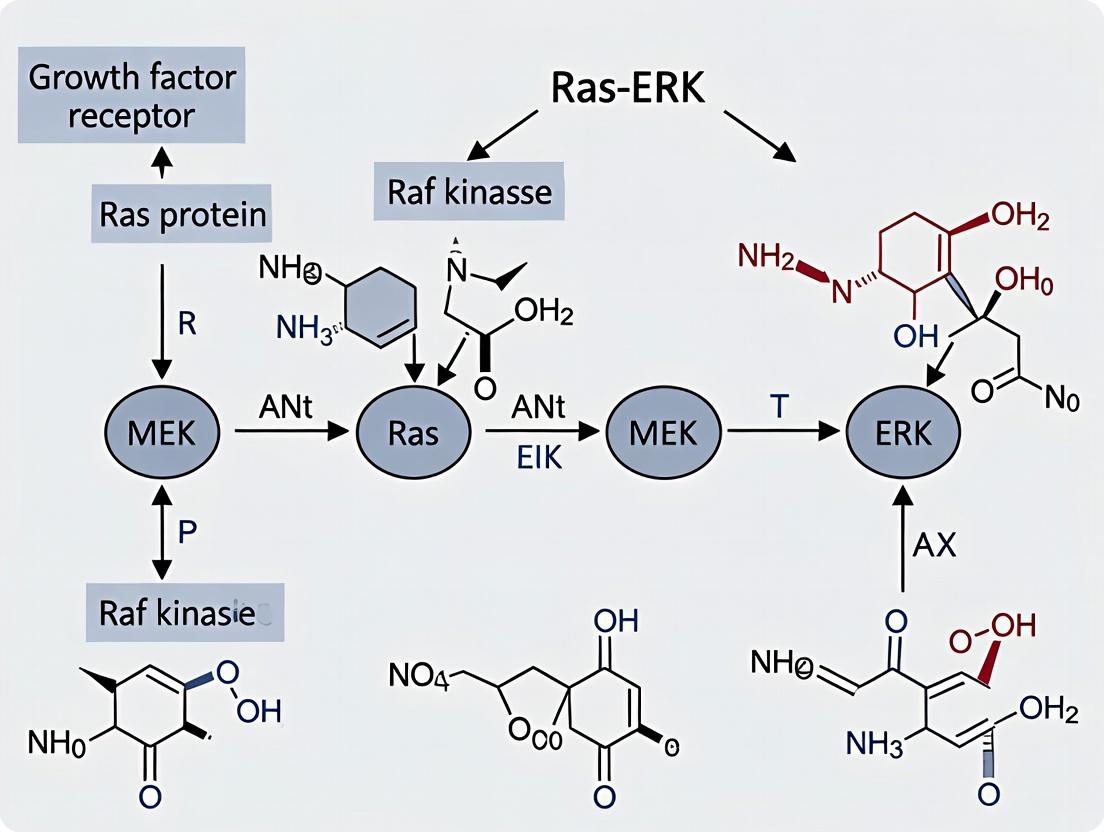
This comprehensive resource for researchers, scientists, and drug development professionals explores the Ras-ERK pathway as a central hub in growth factor signal transduction.
Decoding the Ras-ERK Pathway: Essential Signaling Mechanism, Research Methods, and Therapeutic Targeting in Growth Factor Signaling
Abstract
This comprehensive resource for researchers, scientists, and drug development professionals explores the Ras-ERK pathway as a central hub in growth factor signal transduction. The article systematically covers foundational biology from growth factor binding to transcriptional regulation, details current experimental methodologies and pharmacological interventions, addresses common challenges in pathway analysis, and validates findings through cross-model comparisons. By synthesizing mechanism, method, and application, it provides a critical framework for advancing basic research and developing targeted therapies in oncology and beyond.
The Ras-ERK Cascade: Core Molecular Architecture and Growth Factor Signal Relay
The Ras-ERK (Extracellular Signal-Regulated Kinase) pathway represents a cornerstone of eukaryotic cellular signaling, governing critical processes such as proliferation, differentiation, survival, and metabolism. This pathway's aberrant activation is a hallmark of numerous cancers and developmental disorders. Growth factor receptors (GFRs), predominantly receptor tyrosine kinases (RTKs), serve as the principal gateways for extracellular signals to access this intracellular signaling cascade. This whitepaper provides an in-depth technical analysis of the mechanisms by which GFRs initiate and regulate Ras-ERK activation, framed within ongoing research aimed at understanding pathway specificity, feedback loops, and therapeutic targeting.
Structural & Mechanistic Principles of Gateway Activation
Receptor Activation and Dimerization
Upon binding of specific growth factors (e.g., EGF, PDGF, FGF), RTKs undergo conformational changes that promote dimerization or higher-order oligomerization. This event facilitates trans-autophosphorylation of specific tyrosine residues within the intracellular kinase domains and cytoplasmic tails.
Adapter Protein Recruitment and SOS Activation
Phosphotyrosine residues serve as docking sites for Src Homology 2 (SH2) and phosphotyrosine-binding (PTB) domain-containing adapter proteins, primarily Growth factor receptor-bound protein 2 (Grb2). Grb2 is constitutively associated with the guanine nucleotide exchange factor (GEF) Son of Sevenless (SOS). Recruitment of the Grb2-SOS complex to the activated receptor localizes SOS to the plasma membrane, proximate to its substrate, the small GTPase Ras (predominantly H-Ras, K-Ras, N-Ras).
Ras Activation Cycle
Ras acts as a molecular switch, cycling between an inactive GDP-bound state and an active GTP-bound state. Membrane-localized SOS catalyzes the exchange of GDP for GTP on Ras, thereby activating it. This process is tightly regulated by GTPase-Activating Proteins (GAPs, e.g., p120GAP, NF1) which accelerate the intrinsic GTPase activity of Ras, returning it to its inactive state.
Initiating the Kinase Cascade
GTP-bound Ras recruits and activates the serine/threonine kinase Raf (A-Raf, B-Raf, C-Raf) to the plasma membrane. Raf then phosphorylates and activates MEK1/2 (MAPK/ERK Kinase), which in turn phosphorylates ERK1/2 on both threonine and tyrosine residues within a conserved T-E-Y motif. Activated ERK phosphorylates a vast array of cytosolic and nuclear substrates, including transcription factors (e.g., Elk-1, c-Myc), thereby orchestrating the cellular response.
Table 1: Representative Growth Factor Receptors and Their Ras-ERK Signaling Attributes
| Receptor (RTK) | Primary Ligand(s) | Key Docking Tyrosine(s) | Primary Adapter | Typical Ras Isoform Activated | ERK Activation Onset (Post-Stim.) |
|---|---|---|---|---|---|
| EGFR (ErbB1) | EGF, TGF-α | Y1068, Y1086 | Grb2 | H-Ras, N-Ras | 2-5 minutes |
| PDGFRβ | PDGF-BB | Y716, Y751 | Grb2, Shc | H-Ras, N-Ras | 5-10 minutes |
| FGFR1 | FGF2 | Y766 | Grb2, FRS2 | H-Ras, K-Ras | 5-15 minutes |
| TrkA | NGF | Y490 | Shc/Grb2 | H-Ras, N-Ras | 10-20 minutes |
| c-Met | HGF | Y1349, Y1356 | Grb2, Gab1 | H-Ras, K-Ras | 5-10 minutes |
Note: Onset times are approximate and cell-type dependent. Data synthesized from recent literature (2022-2024).
Table 2: Core Ras-ERK Cascade Kinase Properties
| Protein | Gene(s) | Size (kDa) | Activating Phosphorylation Site(s) | Known Inhibitors (Clinical/Pre-clinical) |
|---|---|---|---|---|
| Raf-1 (C-Raf) | RAF1 | 74 | S338, Y341 | Sorafenib, LY3009120 |
| B-Raf | BRAF | 84-95 | T599, S602 (monomer) | Vemurafenib, Dabrafenib |
| MEK1/2 | MAP2K1/2 | 43/45 | S218/S222, S222/S226 (MEK1) | Trametinib, Selumetinib |
| ERK1/2 | MAPK3/1 | 44/42 | T202/Y204, T185/Y187 | Ulixertinib (GDC-0994) |
Key Experimental Protocols for Investigating GFR-Ras-ERK Signaling
Protocol: Assessing Receptor Activation and Downstream Recruitment
Objective: To evaluate RTK phosphorylation and subsequent Grb2-SOS complex recruitment. Methodology:
- Stimulation & Lysis: Serum-starve cells (e.g., HEK293, MCF-7) for 12-16 hours. Stimulate with relevant growth factor (e.g., 50 ng/mL EGF) for a time course (0, 2, 5, 10, 30 min). Lyse cells in RIPA buffer supplemented with protease and phosphatase inhibitors.
- Immunoprecipitation (IP): Pre-clear lysate. Incubate with antibody against the RTK of interest (e.g., anti-EGFR) conjugated to protein A/G beads for 2-4 hours at 4°C.
- Immunoblotting: Resolve immunoprecipitated proteins and total lysate controls by SDS-PAGE. Transfer to PVDF membrane.
- Detection: Probe membranes with:
- Primary: Anti-phosphotyrosine (e.g., 4G10) to confirm receptor activation.
- Primary: Anti-Grb2 to assess adapter recruitment.
- Primary: Anti-SOS1 to confirm GEF recruitment.
- Primary: Anti-RTK antibody as loading control for IP.
- Quantification: Use densitometry to quantify band intensity, normalizing Grb2/SOS signal to the total immunoprecipitated receptor.
Protocol: Measuring Ras Activation (GTP-Loading)
Objective: To directly quantify the levels of active, GTP-bound Ras. Methodology (Raf-1 RBD Pull-down Assay):
- Stimulation & Lysis: Stimulate cells as in 4.1. Lyse in Mg²⁺-containing lysis buffer (25mM HEPES pH 7.5, 150mM NaCl, 1% Igepal CA-630, 10mM MgCl₂, 1mM EDTA, 2% glycerol, with inhibitors).
- Affinity Precipitation: Incubate clarified lysates with GST-tagged Raf-1 Ras-binding domain (RBD) pre-bound to glutathione-sepharose beads for 45-60 minutes at 4°C. The RBD domain specifically binds only to GTP-bound Ras.
- Washing & Elution: Wash beads extensively with lysis buffer. Elute bound proteins with SDS-PAGE sample buffer.
- Immunoblotting: Resolve eluates (active Ras) and total lysate inputs by SDS-PAGE. Probe with pan-Ras or isoform-specific (H-, K-, N-) antibodies.
- Quantification: The amount of Ras in the pull-down fraction relative to total Ras in the lysate indicates the activation ratio.
Protocol: Monitoring ERK Activation Dynamics
Objective: To measure the phosphorylation (activation) status of ERK1/2 over time. Methodology (Phospho-Specific Immunoblotting):
- Cell Stimulation & Preparation: As in 4.1. Prepare whole-cell lysates in SDS-sample buffer for direct analysis.
- Immunoblotting: Resolve lysates by SDS-PAGE. Transfer to membrane.
- Dual Probing: Probe membrane with:
- Primary: Anti-phospho-p44/42 ERK (Thr202/Tyr204) antibody to detect active ERK.
- Stripping and re-probing (or parallel gel): Anti-total ERK antibody for normalization.
- Alternative: Use multiplex fluorescent Western blotting systems to detect phospho- and total-ERK simultaneously on the same blot.
- Data Analysis: Plot the ratio of phospho-ERK/total-ERK over time to define activation kinetics.
Signaling Pathway Visualizations
Diagram 1: Core GFR-Mediated Ras-ERK Activation Cascade
Diagram 2: Experimental Workflow for Ras-GTP Pull-Down Assay
The Scientist's Toolkit: Key Research Reagent Solutions
Table 3: Essential Reagents for GFR-Ras-ERK Pathway Investigation
| Reagent Category | Specific Example(s) | Function & Application | Key Considerations |
|---|---|---|---|
| Activation Ligands | Recombinant Human EGF, PDGF-BB, FGF2 (with heparin), HGF. | Used to specifically stimulate target RTKs in cell-based assays. | Source (e.g., mammalian vs. E. coli expression) affects glycosylation and activity. Aliquot to avoid freeze-thaw cycles. |
| Phospho-Specific Antibodies | Anti-phospho-Tyr (4G10, pY100); Anti-phospho-EGFR (Y1068); Anti-phospho-ERK1/2 (T202/Y204). | Detect activated (phosphorylated) state of receptors and kinases via WB, IF, or IP. | Validate specificity via siRNA/knockout or ligand stimulation/inhibition controls. |
| Activation State Assay Kits | Ras GST Pull-Down Assay Kit (e.g., Cytoskeleton #BK008); Rac1/Cdc42 Assay Kits. | Pre-validated reagents (RBD beads, lysis buffers, controls) for reliable GTPase activity measurement. | Includes positive/negative controls crucial for interpreting results. |
| Inhibitors (Tool Compounds) | AG1478 (EGFRi); Trametinib (MEKi); Ulixertinib (ERKi); SOS1 inhibitors (e.g., BI-3406). | Chemically inhibit specific nodes to establish necessity and analyze pathway hierarchy. | Optimize dose and pre-treatment time carefully; monitor off-target effects. |
| siRNA/shRNA/CRISPR | siRNA pools targeting SOS1, Grb2, specific Ras isoforms; KRAS G12C mutant cell lines. | Genetically ablate or alter expression of pathway components for functional studies. | Include non-targeting controls and rescue experiments to confirm phenotype specificity. |
| Biosensors (Live-Cell Imaging) | FRET-based EKAR (ERK Activity Reporter); Ras activation biosensors (e.g., Raf-RBD probes). | Enable real-time, spatiotemporally resolved monitoring of kinase activity in single cells. | Requires appropriate imaging setup and calibration. Can report compartmentalized signaling. |
| Recombinant Protein Modules | GST/His-tagged SH2 domains (Grb2, Shc), Raf-RBD, GST-SOS1 cat. domain. | For in vitro binding assays, pull-down experiments, or structural studies. | Ensure proper folding and post-translational modifications if required for activity. |
Within the canonical growth factor-mediated Ras-ERK signal transduction cascade, Ras GTPases function as the quintessential binary molecular switch. This whitepaper provides an in-depth technical analysis of Ras proteins, framing their function within the broader thesis of precise spatiotemporal regulation of the ERK pathway, which dictates critical cellular outcomes such as proliferation, differentiation, and survival. Dysregulation of this switch is a hallmark of cancer, driving targeted therapeutic discovery.
Structural and Biochemical Fundamentals
Ras proteins (H-, K-, and N-Ras) are small (21 kDa) membrane-anchored GTPases. Their switch mechanism is governed by the nature of the bound guanine nucleotide:
- GTP-bound (Active): The γ-phosphate induces conformational changes in Switch I (residues 30-38) and Switch II (residues 60-76), enabling high-affinity interaction with downstream effectors like RAF kinases.
- GDP-bound (Inactive): The absence of the γ-phosphate results in a distinct conformation that cannot productively engage effectors.
The cycle is regulated by two key protein classes:
- Guanine Nucleotide Exchange Factors (GEFs): Catalyze GDP release and GTP loading, activating Ras. Key GEFs include SOS (Son of Sevenless).
- GTPase-Activating Proteins (GAPs): Dramatically enhance the intrinsic GTP hydrolysis rate, inactivating Ras. Key GAPs include p120GAP and NF1.
Table 1: Key Biochemical Parameters of Ras GTPases
| Parameter | GDP-bound State | GTP-bound State | Regulatory Protein Impact |
|---|---|---|---|
| Conformational State | "Off" | "On" | - |
| Effector Binding Affinity (KD) | >10 µM (very weak) | ~20-100 nM (high) | - |
| Intrinsic Hydrolysis Rate (kcat) | ~0.02 min⁻¹ | ~0.02 min⁻¹ | GAPs increase kcat by 10⁵-fold |
| Intrinsic Exchange Rate | Slow (hours) | Slow (hours) | GEFs increase rate by 10⁵-fold |
| Major Regulatory Proteins | GEFs (e.g., SOS) | GAPs (e.g., p120GAP, NF1) | - |
Ras within the Growth Factor-ERK Pathway Context
The primary thesis of Ras-ERK pathway research posits that the magnitude, duration, and subcellular localization of ERK activation—controlled by the Ras switch—encode specific biological instructions. Growth factor (e.g., EGF) binding to RTKs initiates the canonical activation cascade.
Diagram 1: Ras-ERK Signal Transduction Cascade
Key Experimental Protocols for Ras Research
Protocol: Measuring Ras Activation (GTP-Loading) via RBD Pull-Down
Objective: Quantify the proportion of active, GTP-bound Ras in cells following growth factor stimulation. Principle: The Ras Binding Domain (RBD) of downstream effector c-RAF-1 binds specifically to GTP-bound Ras.
Procedure:
- Cell Stimulation & Lysis: Treat serum-starved cells with EGF (e.g., 100 ng/mL) for a time course (0, 2, 5, 15, 30 min). Lyse in MLB buffer (25 mM HEPES pH 7.5, 150 mM NaCl, 1% NP-40, 0.25% Na-deoxycholate, 10% glycerol, 10 mM MgCl₂, 1 mM EDTA, protease/phosphatase inhibitors).
- Affinity Precipitation: Incubate clarified lysates with GST-tagged RAF-RBD protein pre-bound to glutathione-sepharose beads for 1 hour at 4°C.
- Washing & Elution: Pellet beads, wash 3x with lysis buffer.
- Immunoblotting: Resuspend beads in Laemmli buffer, boil, and run supernatant by SDS-PAGE. Probe with anti-Ras antibody.
- Quantification: Compare signal from pull-down (active Ras) to total Ras from whole cell lysate input. Normalize to time zero.
Protocol: FRET-Based Live-Cell Imaging of Ras Activity
Objective: Visualize spatiotemporal dynamics of Ras activation in single living cells. Principle: Uses a biosensor (e.g., Raichu-Ras) where Ras, RAF-RBD, and CFP/YFP are fused. Upon Ras-GTP formation, intramolecular binding brings CFP and YFP together, increasing FRET efficiency.
Procedure:
- Sensor Transfection: Transfect cells with the Raichu-Ras plasmid.
- Image Acquisition: Place cells on a temperature-controlled stage. Acquire baseline CFP and FRET (YFP emission upon CFP excitation) channel images using a confocal or widefield microscope.
- Stimulation & Kinetics: Add growth factor and acquire time-lapse images (e.g., every 30 seconds for 30 minutes).
- Image Analysis: Calculate the FRET/CFP ratio on a pixel-by-pixel basis to generate a ratiometric map of Ras activity over time.
Table 2: Key Research Reagent Solutions
| Reagent | Function / Description | Example Catalog # / Source |
|---|---|---|
| Recombinant RAF-RBD (GST-tagged) | Binds specifically to active GTP-Ras for pull-down assays. | MilliporeSigma, 14-278 |
| Active Ras Detection Kit | Commercial kit containing RBD beads and controls for GTP-loading assays. | Cell Signaling Tech., #8821 |
| EGF, Recombinant Human | Prototypical growth factor to stimulate the Ras-ERK pathway. | PeproTech, AF-100-15 |
| Raichu-Ras FRET Biosensor | Plasmid for live-cell imaging of Ras activation dynamics. | Addgene, plasmid #18680 |
| Ras Antibody, Pan | Detects all Ras isoforms (H, K, N) by immunoblot. | Cell Signaling Tech., #3965 |
| GTPγS & GDPβS (Non-hydrolyzable analogs) | Used in in vitro assays to lock Ras in active or inactive states. | Tocris, 0411 & 0201 |
| SOS1 Inhibitor (BAY-293) | Small molecule inhibitor of the RasGEF SOS1, used to probe GEF dependence. | MedChemExpress, HY-112566 |
| MLB Lysis Buffer | Mg²⁺-containing buffer essential for preserving Ras•GTP state during lysis. | - |
Quantitative Data on Ras in Disease and Targeting
Table 3: Ras Mutation Prevalence and Therapeutic Landscape
| Data Category | Specific Metric | Value / Finding | Implication |
|---|---|---|---|
| Mutation Prevalence in Cancer | All Human Cancers | ~19% harbor RAS mutations | Most common oncogenic driver family |
| Pancreatic Adenocarcinoma | ~90% (KRAS) | Near-universal driver | |
| Colorectal Adenocarcinoma | ~45% (KRAS) | Key determinant for anti-EGFR therapy resistance | |
| Lung Adenocarcinoma | ~32% (KRAS) | Major subtype, often with co-mutations | |
| Biochemical Properties of Mutants | KRAS G12C Hydrolysis Rate (kcat) | ~0.003 min⁻¹ | ~7-fold slower than wild-type, prolonging active state |
| Affinity of KRAS G12C for GDP vs. GTP | Similar (low pM range) | Allows for targeted trapping in inactive state | |
| Direct Targeting (KRAS G12C) | Sotorasib (AMG 510) Response Rate (NSCLC) | ~41% (CodeBreaK 100) | Proof of principle for direct inhibition |
| Adagrasib (MRTX849) Median PFS (NSCLC) | ~6.5 months (KRYSTAL-1) | Clinical benefit established | |
| Indirect Targeting Strategies | SOS1 Inhibitor (BI 1701963) + MEK Inhibitor Trial | Phase I (NCT04111458) | Vertical pathway inhibition |
| Upstream/Downstream Targeting | EGFR mAb (Cetuximab) in RAS WT mCRC | Improves survival | Effective only in absence of Ras mutation |
Diagram 2: Experimental Ras Activity Workflow
Ras GTPases remain the pivotal, non-redundant switch at the heart of the growth factor-ERK pathway. The central thesis that precise modulation of this switch dictates differential biological outcomes continues to drive research. While historically "undruggable," recent breakthroughs in allele-specific targeting validate Ras as a therapeutic target. Future research must focus on understanding Ras signaling plasticity, overcoming resistance to direct inhibitors, and exploiting vulnerabilities in Ras-driven cancers through combinatorial approaches targeting the broader pathway network.
1. Introduction in the Context of Ras-ERK Pathway Research
The Ras-ERK pathway is the canonical signaling route transducing extracellular growth signals into intracellular proliferative, survival, and differentiation responses. At its operational core lies the RAF-MEK-ERK kinase cascade, a quintessential three-tiered amplification module. This whitepaper details the architecture, regulation, and quantitative dynamics of this cascade, framing it as the central signal processor within the broader Ras-ERK pathway thesis. Its dysregulation is a hallmark of cancer and developmental disorders, making it a premier target for therapeutic intervention.
2. Cascade Architecture & Quantitative Amplification Dynamics
The cascade consists of three sequentially activating kinases: a RAF kinase (ARAF, BRAF, or CRAF), the dual-specificity kinases MEK1/2, and the terminal kinases ERK1/2. Each activation step involves phosphorylation and exhibits substantial signal amplification.
Table 1: Core Components of the RAF-MEK-ERK Cascade
| Component | Gene(s) | Classification | Key Activating Modification |
|---|---|---|---|
| RAF | ARAF, BRAF, CRAF | Ser/Thr Kinase | Dimerization & phosphorylation of activation loop (e.g., pS445/pS446 in BRAF) |
| MEK | MAP2K1, MAP2K2 | Dual-specificity Kinase | Phosphorylation of two Ser residues in activation loop (S218/S222 for MEK1) |
| ERK | MAPK3, MAPK1 | Ser/Thr Kinase | Dual phosphorylation of Thr-Glu-Tyr motif (T202/Y204 for ERK1, T185/Y187 for ERK2) |
Table 2: Representative Quantitative Amplification Metrics
| Amplification Stage | Estimated Gain | Experimental Basis & Notes |
|---|---|---|
| RAF to MEK | ~10-100x | In vitro kinase assays show 1 molecule of active RAF can phosphorylate many MEK molecules. |
| MEK to ERK | ~100-1000x | MEK has a high catalytic rate (kcat) for ERK substrate. |
| Total Cascade Gain | ~10^3-10^5x | Theoretical multiplicative gain; subject to robust negative feedback in cells. |
| ERK Nuclear Translocation | N/A | Time to nuclear accumulation: ~5-15 minutes post-stimulation. |
Diagram 1: RAF-MEK-ERK Cascade in the Ras Signaling Pathway (90 chars)
3. Key Experimental Protocols for Cascade Analysis
Protocol 1: Time-Course Analysis of Cascade Phosphorylation by Western Blotting
- Objective: Determine the sequential activation kinetics of RAF, MEK, and ERK.
- Methodology:
- Stimulation: Serum-starve cells (e.g., HEK293, MCF-10A) for 12-24 hours. Stimulate with EGF (e.g., 100 ng/mL) for defined times (e.g., 0, 2, 5, 15, 30, 60 min).
- Lysis: Rapidly lyse cells in RIPA buffer supplemented with phosphatase and protease inhibitors.
- Detection: Resolve proteins by SDS-PAGE. Perform Western blotting using phospho-specific antibodies: p-MEK (S218/S222), p-ERK1/2 (T202/Y204; T185/Y187), and p-CRAF (S338) or p-BRAF (S445). Re-probe with total protein antibodies to confirm loading.
- Interpretation: Sequential appearance of p-MEK followed by p-ERK confirms cascade activity.
Protocol 2: In Vitro Kinase Assay for RAF Activity
- Objective: Measure direct RAF kinase activity independent of upstream signals.
- Methodology:
- Immunoprecipitation: Immunoprecipitate RAF (e.g., BRAF) from cell lysates using a specific antibody.
- Kinase Reaction: Incubate RAF beads with recombinant inactive MEK1 (substrate), ATP, and kinase buffer.
- Detection: Terminate reaction and analyze by Western blot for p-MEK. Alternatively, use a radiometric assay with γ-³²P-ATP and quantify incorporated radioactivity.
4. Regulatory Feedback Loops
The cascade is tightly controlled by ERK-driven negative feedback.
Diagram 2: ERK-Mediated Negative Feedback Loops (75 chars)
5. The Scientist's Toolkit: Key Research Reagent Solutions
Table 3: Essential Reagents for Ras-RAF-MEK-ERK Pathway Research
| Reagent / Material | Function & Application | Example Specifics |
|---|---|---|
| Phospho-Specific Antibodies | Detect activated/phosphorylated cascade components via WB, IHC, IF. | p-ERK1/2 (Thr202/Tyr204), p-MEK1/2 (Ser217/221), p-BRAF (Ser445). |
| Recombinant Active Kinases | Substrates for in vitro kinase assays or positive controls. | Active His-tagged BRAF(V600E), active GST-MEK1. |
| Pathway Inhibitors (Tool Compounds) | Chemically dissect cascade function and validate drug targets. | BRAFi: Dabrafenib; MEKi: Trametinib, U0126; ERK inhibitor: SCH772984. |
| EGF / Growth Factors | Standardized ligands to stimulate the pathway. | Recombinant human EGF, FGF, NGF. |
| Ras Activity Pull-Down Assay Kits | Measure levels of active GTP-bound Ras. | Uses RAF-RBD domain to pull down Ras-GTP from cell lysates. |
| FRET/BRET Biosensors | Real-time, live-cell imaging of ERK activity dynamics. | EKAR-type biosensors reporting ERK phosphorylation-dependent FRET changes. |
| Kinase-Defective Mutants (KM) | Used as dominant-negative controls to block specific cascade steps. | MEK1-K97M (kinase dead). |
| Constitutively Active Mutants (CA) | Used to ectopically activate the pathway. | MEK1-DD (S218D/S222D phospho-mimetic). |
This technical whitpaper examines the role of the immediate-early genes (IEGs) c-FOS and c-MYC as critical nuclear endpoints of the Ras-ERK pathway, dictating transcriptional programs that determine cell proliferation, differentiation, or apoptosis. Framed within the broader thesis of growth factor signal transduction research, we detail how dynamic ERK signaling kinetics and localization govern the expression and activity of these transcription factors, ultimately directing cell fate decisions. This guide integrates current molecular mechanisms, quantitative experimental data, and standardized methodologies for the research community.
The Ras-ERK (Extracellular signal-Regulated Kinase) cascade is a cornerstone of growth factor signaling. Upon growth factor receptor activation, membrane-recruited GRB2-SOS complexes activate Ras, triggering a phosphorylation cascade through RAF, MEK, and ERK. The critical biological outcome is determined upon ERK's nuclear translocation, where it phosphorylates numerous substrates, with transcription factors (TFs) being primary targets. Among these, the IEG products c-Fos and c-Myc are pivotal. c-Fos, a component of the AP-1 complex, and c-Myc, a master regulator of metabolism and proliferation, are rapidly induced post-stimulation. Their expression levels, post-translational modifications, and partnership with other TFs integrate signal duration and intensity into specific transcriptional outputs, steering cells toward distinct fates.
Quantitative Data on Expression Dynamics and Outcomes
Table 1: Kinetic Profiles of c-Fos and c-Myc Induction Post-Growth Factor Stimulation
| Transcript / Protein | Basal Level | Peak Induction Time (Post-Stimulus) | Approx. Fold Increase (Range) | Key Upstream ERK-Dependent Signal |
|---|---|---|---|---|
| c-FOS mRNA | Very Low | 30-45 minutes | 50-100x | SRF/Elk-1 phosphorylation |
| c-Fos protein | Undetectable | 60-90 minutes | High | RSK-mediated stabilization |
| c-MYC mRNA | Low | 2-4 hours | 10-50x | ERK-mediated transcription & mRNA stabilization |
| c-Myc protein | Low | 4-6 hours | 5-20x | GSK3β inhibition, increased translation |
Table 2: Correlation of ERK Signaling Dynamics with Transcriptional & Fate Outcomes
| ERK Signaling Profile | c-Fos/c-Myc Activity | Dominant Transcriptional Program | Typical Cell Fate Outcome |
|---|---|---|---|
| Sustained (>60-90 min) | High, sustained | Proliferation (Cyclin D1, E2F targets), Metabolism | Proliferation / Survival |
| Pulsed / Transient (<30 min) | Low, transient | Differentiation / Stress Response | Differentiation / Quiescence |
| Dysregulated / Hyperactive | Constitutively high | Pro-apoptotic (e.g., BIM), Replicative stress | Senescence / Apoptosis |
Core Signaling Pathways: From Membrane to Nucleus
Diagram 1: Ras-ERK to c-Fos/c-Myc Signaling Cascade
Detailed Experimental Protocols
Protocol: Monitoring ERK-Dependent c-Fos and c-Myc Induction
Title: Time-Course Analysis of IEG Expression via Western Blot and qRT-PCR Objective: To correlate ERK activation kinetics with c-FOS and c-MYC transcript and protein levels. Materials: See "Scientist's Toolkit" below. Procedure:
- Cell Stimulation & Harvest: Serum-starve cells (e.g., NIH/3T3, MCF-10A) for 18-24h. Stimulate with growth factor (e.g., EGF, 50 ng/mL). Harvest cells at times: 0, 15, 30, 60, 90, 120, 240 min post-stimulation. Use lysis buffer for protein, TRIzol for RNA.
- Western Blot Analysis:
- Separate 20-30 μg protein via SDS-PAGE (4-12% gel).
- Transfer to PVDF membrane.
- Block with 5% BSA/TBST for 1h.
- Incubate with primary antibodies (p-ERK, total ERK, c-Fos, c-Myc, β-Actin) overnight at 4°C.
- Use HRP-conjugated secondary antibodies (1:5000, 1h RT).
- Develop with ECL and quantify band intensity.
- Quantitative RT-PCR:
- Synthesize cDNA from 1 μg total RNA using a reverse transcription kit.
- Prepare qPCR reactions with SYBR Green master mix and gene-specific primers (c-FOS, c-MYC, GAPDH).
- Run on a real-time PCR system. Calculate fold change using the 2^(-ΔΔCt) method normalized to GAPDH.
Protocol: Assessing Functional Role via CRISPRi Knockdown
Title: CRISPRi-Mediated Knockdown of c-Fos/c-Myc and Fate Assessment Objective: To determine the necessity of c-Fos/c-Myc for ERK-driven fate decisions. Procedure:
- Cell Line Engineering: Lentivirally transduce cells with dCas9-KRAB (CRISPRi system). Select with puromycin (2 μg/mL, 5 days).
- sgRNA Design & Transduction: Design 3 sgRNAs per target (FOS, MYC) and a non-targeting control. Clone into lentiviral guide vectors. Produce virus and transduce stable dCas9 cells.
- Phenotypic Assays:
- Proliferation: 72h post-induction, seed cells and count via hemocytometer or MTT assay daily for 3 days.
- Differentiation: For pre-osteoblasts (e.g., MC3T3), induce differentiation post-knockdown. Quantify alkaline phosphatase activity at day 7.
- Apoptosis: 48h post-knockdown, treat with etoposide (50 μM, 24h). Analyze by Annexin V/PI flow cytometry.
The Scientist's Toolkit: Key Research Reagents
Table 3: Essential Reagents for Studying c-Fos/c-Myc in Ras-ERK Signaling
| Reagent / Material | Supplier Examples (for Reference) | Key Function / Application |
|---|---|---|
| Phospho-p44/42 ERK (Thr202/Tyr204) Antibody | Cell Signaling Technology #4370 | Detects active, dual-phosphorylated ERK1/2 by Western blot. |
| c-Fos (9F6) Rabbit mAb | Cell Signaling Technology #2250 | Detects total c-Fos protein; ChIP-grade. |
| c-Myc Antibody (9E10) | Santa Cruz Biotechnology sc-40 | Classic antibody for Myc detection in WB, IF, IP. |
| Recombinant Human EGF | PeproTech AF-100-15 | Standard growth factor to activate Ras-ERK pathway. |
| U0126 MEK Inhibitor | Selleckchem S1102 | Selective, non-ATP competitive MEK1/2 inhibitor; validates ERK dependence. |
| TRIzol Reagent | Thermo Fisher 15596026 | For simultaneous isolation of high-quality RNA, DNA, and protein. |
| SYBR Green qPCR Master Mix | Thermo Fisher A25742 | For sensitive detection of c-FOS/c-MYC mRNA levels. |
| pLV hU6-sgRNA hUbC-dCas9-KRAB-T2a-Puro | Addgene #71236 | Lentiviral vector for stable CRISPRi knockdown. |
| Annexin V-FITC Apoptosis Kit | BioLegend 640914 | Quantifies apoptotic cells by flow cytometry post-perturbation. |
Logical Framework of Transcriptional Decision-Making
Diagram 2: Logic of Signal-to-Fate Decision via c-Fos/c-Myc
c-Fos and c-Myc serve as decisive molecular integrators, converting analog Ras-ERK signaling kinetics into digital transcriptional and fate outcomes. Their study remains fundamental for understanding normal development and pathologies like cancer, where their dysregulation is common. Targeting their expression or activity, or the upstream Ras-ERK pathway, continues to be a major strategy in precision oncology drug development.
Within the broader thesis on the Ras-ERK pathway in growth factor signal transduction research, a central theme emerges: signaling pathways do not operate in isolation. The canonical Ras-ERK cascade, governing cell proliferation, survival, and differentiation, is embedded in a dense network of regulatory interactions. This whitepaper provides an in-depth technical guide to the core mechanisms of cross-talk and network integration between the Ras-ERK pathway and key nodes such as PI3K, mTOR, AMPK, and others. Understanding these interfaces is critical for deciphering complex cellular behaviors and for developing targeted therapeutic strategies in oncology and beyond.
Core Signaling Nodes and Their Interactions
The Ras-ERK Pathway: A Brief Recap
Upon growth factor receptor tyrosine kinase (RTK) activation, adaptor proteins (GRB2, SOS) facilitate GTP-loading of membrane-bound Ras (H-, K-, N-Ras). Active Ras recruits and activates RAF kinases (ARAF, BRAF, CRAF), initiating the MAPK cascade: RAF phosphorylates and activates MEK1/2, which then phosphorylates and activates ERK1/2. Activated ERK translocates to the nucleus to phosphorylate transcription factors (e.g., ELK1, c-MYC) and cytosolic substrates (e.g., RSK, MNK) to drive proliferative and transcriptional programs.
Key Interface Hubs: PI3K-AKT and mTOR Complexes
The Phosphoinositide 3-Kinase (PI3K)-AKT pathway is a primary parallel and interacting pathway. RTK activation directly stimulates PI3K, which converts PIP2 to PIP3. PIP3 recruits PDK1 and AKT to the membrane, where AKT is fully activated. AKT then phosphorylates numerous substrates, including TSC2, which is a critical nexus.
The mammalian Target of Rapamycin (mTOR) exists in two complexes: mTORC1 (sensitive to rapamycin) integrates nutrient, energy, and growth factor signals to promote anabolic processes; mTORC2 (generally rapamycin-insensitive) phosphorylates AKT and other AGC kinases and is involved in cytoskeletal organization.
Major Axes of Cross-Talk: Mechanisms and Quantitative Data
ERK to PI3K/AKT/mTOR Signaling
- Direct Phosphorylation of TSC2: Both ERK and RSK phosphorylate TSC2 at distinct sites from AKT, leading to its inhibition. This relieves repression of Rheb, activating mTORC1.
- Regulation of Raptor: ERK and RSK phosphorylate the mTORC1 component Raptor, promoting mTORC1 assembly/activity.
- Control of PI3K: In some contexts, RSK can provide negative feedback by phosphorylating and inhibiting upstream components like IRS-1.
PI3K/AKT to ERK Signaling
- RAF Regulation: AKT phosphorylates CRAF at S259, promoting 14-3-3 binding and inhibiting its activity. This constitutes a dominant inhibitory cross-talk in many cell types.
- Positive Regulation via PKC: PI3K products can activate certain PKC isoforms, which can positively regulate the Raf-MEK-ERK cascade.
Feedback and Adaptive Resistance Loops
- RTK Feedback Inhibition: Both mTORC1 and S6K (a downstream kinase) can phosphorylate and inhibit IRS-1 and other adaptors, dampening both PI3K and ERK signaling—a key mechanism of adaptive resistance to targeted therapies.
- ERK-Dependent USPs: ERK activity can upregulate Deubiquitinases (DUSPs) and Sprouty (SPRY) proteins, which provide negative feedback to its own pathway.
Interface with Metabolic and Stress Sensors: AMPK and p53
- AMPK Inhibition of mTORC1: The energy sensor AMPK phosphorylates and activates TSC2 and Raptor, inhibiting mTORC1. AMPK can also be regulated by ERK signaling in certain contexts.
- p53 Integration: The tumor suppressor p53 transcriptionally induces PTEN (antagonist of PI3K) and TSC2 (inhibitor of mTORC1), thereby intersecting with and modulating the outputs of both the ERK and PI3K pathways.
Table 1: Quantitative Data on Key Cross-Talk Phosphorylation Events
| Phospho-Site | Upstream Kinase | Downstream Target | Effect | Reported Kd/Km/EC50 | Primary Assay |
|---|---|---|---|---|---|
| TSC2 S664 | ERK1/2 | TSC2 (Inhibition) | Promotes mTORC1 activation | App. Km ~15-20 µM in vitro | IP-Kinase Assay, Phos-tag SDS-PAGE |
| TSC2 S1798 | AKT1 | TSC2 (Inhibition) | Promotes mTORC1 activation | - | Phospho-specific WB, Mass Spec |
| CRAF S259 | AKT1 | CRAF (Inhibition) | Inhibits MEK-ERK signaling | - | Phospho-specific WB, Mutagenesis |
| Raptor S792 | AMPK | mTORC1 (Inhibition) | Inhibits mTORC1 activity | - | Phospho-specific WB, IP-Kinase Assay |
| IRS-1 S636/639 | S6K1 | IRS-1 (Inhibition) | Attenuates PI3K & Ras signaling | - | Phospho-specific WB, Functional IRS-1 assays |
Note: Specific kinetic constants (Kd/Km) for many in vivo regulatory phosphorylation events are not fully defined; data often derived from cellular phosphorylation studies.
Experimental Protocols for Investigating Cross-Talk
Protocol: Assessing mTORC1 Activation Status via S6K and 4E-BP1 Phosphorylation
Objective: Determine the impact of Ras-ERK pathway manipulation on mTORC1 activity.
- Cell Treatment & Lysis: Serum-starve cells (e.g., MCF-10A, HEK293) for 18-24h. Stimulate with EGF (50-100 ng/mL) for 0, 5, 15, 30, 60 min in the presence/absence of MEK inhibitor (e.g., U0126, 10 µM, 1h pre-treatment) or PI3K inhibitor (e.g., LY294002, 20 µM). Lyse cells in RIPA buffer with protease/phosphatase inhibitors.
- Immunoblotting: Resolve 20-40 µg protein by SDS-PAGE. Transfer to PVDF membrane.
- Detection: Probe with primary antibodies: phospho-S6K1 (T389), total S6K1, phospho-4E-BP1 (T37/46), total 4E-BP1, phospho-ERK1/2 (T202/Y204), total ERK1/2. Use HRP-conjugated secondary antibodies and chemiluminescence.
- Interpretation: Reduced pS6K/p4E-BP1 with MEKi indicates ERK-to-mTORC1 cross-talk. Controls: Total protein loading (β-actin/GAPDH); pathway specificity (pERK for MEKi efficacy).
Protocol: Co-Immunoprecipitation (Co-IP) to Study Complex Formation (e.g., Ras-GRB2-SOS)
Objective: Evaluate the effect of PI3K/AKT activity on early Ras activation complex assembly.
- Transfection & Treatment: Transfect cells with FLAG-tagged GRB2. After 24h, treat with AKT inhibitor (e.g., MK-2206, 1 µM) or vehicle for 2h, then stimulate with EGF (5 min).
- Cell Lysis for IP: Lyse in mild NP-40 lysis buffer (1% NP-40, 150 mM NaCl, 50 mM Tris pH 8.0) to preserve protein complexes.
- Immunoprecipitation: Incubate clarified lysate with anti-FLAG M2 affinity gel for 2-4h at 4°C. Wash beads 3-4 times with lysis buffer.
- Analysis: Elute proteins with 2X Laemmli buffer. Perform immunoblotting for SOS1, pan-Ras, FLAG (GRB2), and pAKT (S473) from input lysates.
Protocol: Metabolic Labeling with [³²P]-Orthophosphate to Map Novel Phosphorylation Events
Objective: Identify new phosphorylation events on a protein of interest (e.g., TSC2) in response to pathway activation.
- Labeling: Serum-starve cells in phosphate-free media for 1h. Add [³²P]-orthophosphate (0.1-0.5 mCi/mL) for 3-4h.
- Stimulation & IP: Stimulate with EGF ± inhibitors. Lyse cells. Pre-clear lysate, then immunoprecipitate the target protein (e.g., TSC2) with specific antibody.
- Separation & Detection: Wash IP complexes extensively. Resolve by SDS-PAGE. Dry gel and expose to a phosphor screen or X-ray film for autoradiography.
- Follow-up: Bands of interest can be excised for mass spectrometric analysis to identify phosphorylation sites.
Pathway and Network Visualizations
Diagram 1: Core Ras-ERK, PI3K-mTOR cross-talk network.
Diagram 2: Generic workflow for pathway cross-talk experiments.
The Scientist's Toolkit: Key Research Reagent Solutions
Table 2: Essential Reagents for Ras-ERK/PI3K/mTOR Cross-Talk Research
| Reagent Category | Example Product (Specific) | Function in Cross-Talk Studies |
|---|---|---|
| Pharmacologic Inhibitors | U0126 (MEK1/2 inhibitor), MK-2206 (AKT inhibitor), Rapamycin (mTORC1 inhibitor), Torin 1 (mTORC1/2 inhibitor), LY294002 (PI3K inhibitor) | Selective pathway blockade to dissect causal relationships and feedback loops. |
| Active Recombinant Proteins | Active ERK2 (kinase), Active AKT1 (kinase), Recombinant TSC2 protein | For in vitro kinase assays to identify direct phosphorylation events and substrates. |
| Phospho-Specific Antibodies | Anti-phospho-ERK1/2 (T202/Y204), Anti-phospho-AKT (S473), Anti-phospho-S6K1 (T389), Anti-phospho-4E-BP1 (T37/46), Anti-phospho-TSC2 (S664) | Critical for detecting activation states of pathway components via Western blot, IF, or IP. |
| Activation State Biosensors | FRET-based EKAR (ERK activity), AKAR (AKT activity) reporters; Raichu-Ras (Ras activity) probes | Live-cell, real-time monitoring of spatiotemporal signaling dynamics upon perturbation. |
| CRISPR/Cas9 & RNAi Tools | sgRNAs targeting TSC2, RPTOR, RSK1/2; siRNA pools against ERK1/2, AKT1/2/3 | Genetic knockout/knockdown to validate protein function and necessity in cross-talk. |
| PIP3 & Lipid Binding Probes | GFP-tagged PH domain of AKT (PIP3 sensor), PLCδ-PH-GFP (PIP2 sensor) | Visualize changes in lipid second messenger levels in response to pathway modulation. |
| Proteomic Kits | Phospho-tyrosine/Ser/Thr enrichment kits (e.g., TiO2, IMAC); Ubiquitin remnant motif (K-ε-GG) antibody | System-wide identification of phosphorylation/ubiquitination changes upon cross-talk. |
Research Tools and Pharmacological Strategies: Analyzing and Targeting the Ras-ERK Pathway
This technical guide details core methodologies for interrogating the Ras-ERK signaling cascade, a central pathway in growth factor-mediated signal transduction. Precise measurement of pathway activation states—through ERK phosphorylation, ERK kinase activity, and Ras GTP-loading—is fundamental for basic research in cell biology and for drug discovery targeting oncogenic mutations in cancers. This document provides current, detailed protocols and data analysis frameworks within the thesis that dynamic, quantitative profiling of these nodes is essential for understanding pathway logic, feedback mechanisms, and therapeutic intervention points.
The activation state of the Ras-ERK pathway is quantified at three critical nodes: the active GTP-bound Ras, the dually phosphorylated/activated ERK, and the functional output of ERK as a kinase.
Table 1: Summary of Key Assay Parameters and Typical Results
| Assay Target | Method Principle | Readout | Typical Baseline (Serum-Starved) | Typical Stimulated (e.g., EGF, 10min) | Key Interpreting Metric |
|---|---|---|---|---|---|
| ERK Phosphorylation | Immunoblot (Western Blot) | p-ERK1/2 (T202/Y204, T185/Y187) band intensity | 1.0 (arbitrary reference) | 5.0 - 15.0 fold increase | Fold-change in p-ERK/total ERK ratio. |
| ERK Kinase Activity | In vitro kinase assay | 32P incorporation or ELISA-based detection of phosphorylated substrate | 100-500 cpm (background) | 2000-10000 cpm | Absolute kinase activity (pmol/min/µg lysate). |
| Ras GTP-Loading | Pull-down assay | GTP-Ras / Total Ras by immunoblot | <10% of total Ras | 30-60% of total Ras | % Ras in active GTP-bound state. |
Table 2: Common Agonists and Inhibitors for Pathway Modulation
| Reagent | Target/Effect | Typical Working Concentration | Expected Impact on Assays (p-ERK, Ras-GTP) |
|---|---|---|---|
| Epidermal Growth Factor (EGF) | Receptor Tyrosine Kinase (EGFR) agonist | 10-100 ng/mL | Strong increase. |
| Phorbol 12-myristate 13-acetate (PMA) | PKC activator, indirectly activates Raf | 100 nM | Strong increase in p-ERK; variable on Ras-GTP. |
| U0126 | MEK1/2 inhibitor (non-ATP competitive) | 10 µM | Abolishes p-ERK and ERK kinase activity. |
| PD0325901 | MEK1/2 inhibitor (clinical candidate) | 100 nM | Abolishes p-ERK and ERK kinase activity. |
| SOS1 inhibitor (e.g., BI-3406) | Prevents Ras activation by SOS1 | 1 µM | Reduces Ras GTP-loading and downstream signaling. |
Detailed Experimental Protocols
Protocol: Measuring ERK Phosphorylation by Immunoblot
Objective: To semi-quantify levels of dually phosphorylated, activated ERK1 and ERK2 relative to total ERK protein.
Materials: Cell lysates, SDS-PAGE system, nitrocellulose/PVDF membrane, anti-phospho-ERK1/2 (Thr202/Tyr204) antibody, anti-total ERK1/2 antibody, HRP-conjugated secondary antibodies, chemiluminescence substrate.
Procedure:
- Cell Stimulation & Lysis: Serum-starve cells (e.g., HEK293, MCF-10A) for 12-18 hours. Stimulate with agonist (e.g., 50 ng/mL EGF) for desired time (e.g., 0, 5, 15 min). Immediately lyse cells in 1X RIPA buffer supplemented with protease and phosphatase inhibitors. Clear lysate by centrifugation (14,000 x g, 15 min, 4°C).
- Protein Separation & Transfer: Determine protein concentration (BCA assay). Load equal amounts (10-30 µg) onto a 10% SDS-PAGE gel. Run electrophoresis and transfer proteins to a nitrocellulose membrane.
- Immunodetection:
- Block membrane with 5% BSA in TBST for 1 hour.
- Incubate with primary anti-pERK antibody (1:2000) in blocking buffer overnight at 4°C.
- Wash membrane (3 x 10 min TBST).
- Incubate with HRP-conjugated secondary antibody (1:5000) for 1 hour at RT.
- Wash and develop with chemiluminescent substrate. Image.
- Strip and Reprobe: Strip membrane (mild stripping buffer), re-block, and reprobe with anti-total ERK antibody (1:5000) to determine loading control.
- Data Analysis: Quantify band intensities using densitometry software (e.g., ImageJ). Calculate the ratio of pERK signal to total ERK signal for each sample. Express stimulated conditions as fold-change relative to the unstimulated control.
Protocol: Measuring ERK Kinase Activity byIn VitroKinase Assay
Objective: To quantitatively measure the functional activity of ERK immunoprecipitated from cell lysates.
Materials: Cell lysates, protein A/G agarose beads, anti-ERK antibody (for IP), kinase-inactive Elk1 or myelin basic protein (MBP) as substrate, [γ-32P]ATP or ATP + anti-phospho-Elk1 antibody, kinase assay buffer.
Procedure:
- ERK Immunoprecipitation: Prepare cleared cell lysate as in 3.1. Pre-clear lysate with protein A/G beads for 30 min. Incubate 200-500 µg of lysate with 1-2 µg of anti-ERK antibody for 2 hours at 4°C. Add 20 µL of protein A/G bead slurry and incubate for an additional 1 hour. Pellet beads and wash 3x with lysis buffer, then 2x with kinase assay buffer.
- Kinase Reaction:
- Resuspend bead-ERK complex in 30 µL kinase assay buffer (20 mM HEPES pH 7.4, 10 mM MgCl2, 1 mM DTT).
- Add substrate (2 µg of recombinant kinase-inactive Elk1 or MBP).
- Initiate reaction by adding 10 µM ATP + 5 µCi [γ-32P]ATP (radioactive) or 100 µM ATP (for ELISA-based readout).
- Incubate at 30°C for 30 minutes with gentle shaking.
- Reaction Termination & Detection:
- Radioactive Method: Stop reaction with SDS sample buffer. Boil samples, separate by SDS-PAGE. Dry gel and expose to phosphorimager screen. Quantify 32P incorporation into the substrate band.
- Non-Radiometric ELISA Method: Use a specific phospho-substrate antibody (e.g., anti-phospho-Elk1 Ser383) in a plate-based format following reaction termination with EDTA.
- Data Analysis: Subtract background signal (beads only control). Express activity as pmol of phosphate transferred per minute per µg of lysate used for IP, using a standard curve if applicable.
Protocol: Measuring Ras GTP-Loading by Active Ras Pull-Down Assay
Objective: To specifically isolate and quantify the fraction of Ras protein bound to GTP.
Materials: Cell lysates, GST-Raf1-RBD (Ras Binding Domain) fusion protein bound to glutathione-sepharose beads, anti-Ras antibody for immunoblot, GTPγS and GDP for controls.
Procedure:
- Preparation of Beads: Express and purify GST-Raf1-RBD protein. Bind 10-20 µg of the fusion protein to 20 µL of glutathione-sepharose bead slurry in lysis buffer for 1 hour at 4°C.
- Cell Lysis: Lyse stimulated cells in Mg2+-containing lysis buffer (25 mM HEPES pH 7.5, 150 mM NaCl, 1% NP-40, 10 mM MgCl2, 1 mM EDTA, 2% glycerol, plus protease inhibitors). Critical: The presence of Mg2+ stabilizes the GTP-Ras complex. Clear lysate by centrifugation.
- GTP-Ras Pull-Down: Incubate 500-1000 µg of cleared lysate with the GST-RBD bead slurry for 45-60 minutes at 4°C with gentle rotation.
- Wash and Elute: Pellet beads and wash 3x with ice-cold lysis buffer. Elute bound proteins with 2X Laemmli SDS sample buffer by boiling for 5 min.
- Detection: Subject eluates (GTP-Ras) and aliquots of total lysate (input, for total Ras) to SDS-PAGE and immunoblot with a pan-Ras antibody.
- Data Analysis: Quantify band intensities. The amount of Ras in the pull-down fraction represents active GTP-Ras. Calculate % GTP-Ras as: (Intensity of Ras in Pull-Down / Intensity of Ras in Input) * 100, adjusted for the fraction of lysate used.
The Scientist's Toolkit: Research Reagent Solutions
Table 3: Essential Reagents for Ras-ERK Pathway Assays
| Reagent | Function & Application | Example Product/Catalog # (Representative) |
|---|---|---|
| Phospho-ERK1/2 (Thr202/Tyr204) Antibody | Detects activated ERK1/2 in immunoblot, immunofluorescence. | Cell Signaling Technology #4370 |
| Total ERK1/2 Antibody | Loading control for ERK expression in immunoblot. | Cell Signaling Technology #4695 |
| Pan-Ras Antibody | Detects all Ras isoforms (H, K, N) in GTP-loading assays. | MilliporeSigma #05-516 |
| GST-Raf1-RBD Protein | Binds specifically to GTP-Ras for pull-down assays. | Cytoskeleton #RT02 |
| Kinase-Inactive Elk1 Protein | Specific substrate for in vitro ERK kinase assays. | SignalChem #E01-11G |
| U0126 (MEK1/2 Inhibitor) | Negative control to confirm signaling specificity. | Tocris Bioscience #1144 |
| EGF (Recombinant Human) | Standard agonist for pathway activation. | PeproTech #AF-100-15 |
| Halt Protease & Phosphatase Inhibitor Cocktail | Preserves signaling states during lysis. | Thermo Scientific #78440 |
| Glutathione Sepharose 4B | Beads for immobilizing GST-tagged RBD protein. | Cytiva #17075601 |
Signaling Pathway and Workflow Diagrams
Diagram 1: Core Ras-ERK Signaling Pathway Cascade.
Diagram 2: Experimental Workflow for Three Key Assays.
Diagram 3: Ras GTP-Loading Assay Pull-Down Workflow.
This whitepaper provides an in-depth technical guide on model systems used to study the Ras-ERK (MAPK) pathway in growth factor signal transduction. Each system, from traditional cell lines to advanced organoids and GEMMs, offers unique advantages and limitations for dissecting the complex biochemistry, network dynamics, and pathological consequences of Ras-ERK signaling. The choice of model is critical for generating biologically relevant data that can inform basic research and therapeutic development.
Immortalized Cell Lines: The Foundational Workhorse
Immortalized cell lines provide a homogeneous, easily cultivable system for initial pathway dissection and high-throughput screening.
Key Applications in Ras-ERK Research:
- Pathway Mapping: Identifying upstream activators (e.g., RTKs) and downstream effectors.
- Mutant Characterization: Analyzing the biochemical activity of oncogenic Ras (KRAS G12D/V) or B-Raf (V600E) mutants.
- Inhibitor Screening: Initial evaluation of MEK and ERK inhibitor efficacy and toxicity.
Quantitative Comparison of Common Cell Lines:
| Cell Line | Origin | Common Ras-ERK Application | Key Genotype Notes | Doubling Time (approx.) |
|---|---|---|---|---|
| HEK293 | Human Embryonic Kidney | Transfection studies, protein interaction assays | Low endogenous Ras activity | ~24 hours |
| NIH/3T3 | Mouse Embryo Fibroblast | Focus formation assays for oncogenic transformation | Immortalized, contact-inhibited | ~20 hours |
| MCF-10A | Human Mammary Epithelium | Growth factor-dependent ERK signaling studies | Non-tumorigenic, requires EGF | ~36 hours |
| A549 | Human Lung Carcinoma | KRAS mutation studies, drug resistance models | Homozygous KRAS G12S mutation | ~22 hours |
| HCT116 | Human Colon Carcinoma | KRAS mutant signaling & combinatoral therapy tests | Heterozygous KRAS G13D mutation | ~18 hours |
Detailed Protocol: Serum-Starvation and Growth Factor Stimulation (Western Blot)
- Cell Culture: Maintain cells in appropriate medium (e.g., DMEM + 10% FBS) at 37°C, 5% CO₂.
- Starvation: Plate cells at 70% confluence. After 24 hours, replace medium with serum-free medium for 12-18 hours to quiesce cells and minimize basal ERK phosphorylation.
- Stimulation: Prepare a working solution of growth factor (e.g., EGF, 100 ng/mL). Aspirate starvation medium and add medium containing the stimulus. Incubate at 37°C for variable timepoints (e.g., 0, 5, 15, 30, 60 min).
- Lysis & Analysis: Immediately aspirate medium and lyse cells on ice with RIPA buffer supplemented with phosphatase/protease inhibitors. Clarify lysate by centrifugation (14,000g, 15 min, 4°C). Analyze phosphorylated ERK1/2 (p-p44/42 MAPK) and total ERK by SDS-PAGE/Western blot.
3D Organoids: Recapitulating Tissue Architecture
Organoids are self-organizing, multicellular structures derived from stem cells that model tissue-specific pathophysiology and signaling dynamics in a more physiologically relevant context.
Key Applications in Ras-ERK Research:
- Tissue-Specific Signaling: Studying how stromal and epithelial interactions modulate Ras-ERK output.
- Tumorigenesis Modeling: Tracking the progression from normal to Ras-mutant dysplastic lesions.
- Personalized Medicine: Testing drug responses on patient-derived organoids (PDOs) containing native oncogenic mutations.
Detailed Protocol: Establishing Colorectal Cancer Organoids from GEMMs
- Tissue Isolation: Euthanize a Apcfl/fl; KrasLSL-G12D/+; Villin-CreERT2 mouse post-tamoxifen induction. Isolate and dissect crypts from the small intestine.
- Crypt Embedding: Mix crypts with Matrigel on ice. Plate 50µL domes in a pre-warmed 24-well plate. Polymerize at 37°C for 20 min.
- Organoid Culture: Overlay with IntestiCult Organoid Growth Medium. Culture at 37°C, 5% CO₂.
- Passaging & Experimentation: For drug testing, dissociate organoids with TrypLE, re-embed in Matrigel, and treat with MEK inhibitors (e.g., Trametinib, 0-100 nM) upon regrowth. Assess viability via CellTiter-Glo 3D after 72-96 hours.
Title: Workflow for Establishing Intestinal Organoids from GEMMs
Genetically Engineered Mouse Models (GEMMs): In Vivo Physiology and Complexity
GEMMs allow for the study of Ras-ERK signaling in the context of a whole, immune-competent organism, enabling analysis of tumor-stroma interactions, immune modulation, and systemic drug effects.
Key Applications in Ras-ERK Research:
- Spatiotemporal Control: Using Cre-LoxP or similar systems to induce oncogenic Ras expression in specific tissues and at defined times.
- Therapeutic Validation: Testing the efficacy and mechanism of action of pathway inhibitors in an intact tumor microenvironment.
- Resistance Mechanisms: Modeling adaptive feedback and acquired resistance to targeted therapies over time.
Quantitative Comparison of Common Ras-ERK GEMMs:
| Model Name | Targeted Tissue | Inducible Genetic Alteration | Primary Phenotype | Latency (approx.) |
|---|---|---|---|---|
| LSL-KrasG12D; p53fl/fl (KP) | Lung Pancreas | Cre-dependent Kras activation & p53 deletion | Lung adenocarcinoma, Pancreatic ductal adenocarcinoma | 8-12 weeks (lung) |
| BrafCA; Ptenfl/fl | Thyroid, Colon | Tamoxifen-inducible Braf V600E & Pten deletion | Papillary thyroid cancer, Serrated colon tumors | 4-8 weeks (thyroid) |
| NrasQ61K; Mitf-Cre | Melanocytes | Melanocyte-specific Nras activation | Melanocyte hyperplasia, Melanoma (with additional hits) | >6 months |
| HER2/Neu (Erbb2) | Mammary Epithelium | MMTV-promoter driven overexpression | Mammary adenocarcinomas | Highly variable |
Detailed Protocol: Tumor Induction and Monitoring in a Lung Cancer GEMM
- Mouse Strain: LSL-KrasG12D/+; Rosa26LSL-tdTomato/+.
- Adenoviral Cre Delivery: Anesthetize mouse. Administer 2.5 x 10⁷ PFU of Adenovirus expressing Cre (Adeno-Cre) via intranasal instillation.
- Tumor Monitoring: Image tdTomato fluorescence weekly using an in vivo imaging system (IVIS) to track transformed cell clones. Perform micro-CT scans at 4, 8, and 12 weeks post-induction to quantify tumor burden.
- Endpoint Analysis: Harvest lungs at defined endpoint. Weigh, inflate with formalin for fixation, and perform serial sectioning for H&E staining and phospho-ERK immunohistochemistry.
The Scientist's Toolkit: Ras-ERK Pathway Research Reagents
Essential materials for probing the Ras-ERK pathway across model systems.
| Reagent Category | Specific Example | Function & Application |
|---|---|---|
| Cell Culture Media | Serum-free DMEM/F-12 | For serum-starvation to study growth factor-specific ERK activation. |
| Growth Factors/Cytokines | Recombinant Human EGF | The canonical activator of the Ras-ERK pathway via EGFR engagement. |
| Small Molecule Inhibitors | Trametinib (GSK1120212) | Potent, selective allosteric MEK1/2 inhibitor for pathway blockade. |
| SCH772984 | Selective, ATP-competitive ERK1/2 inhibitor for targeting feedback-resistant states. | |
| Activation-State Antibodies | Anti-Phospho-p44/42 MAPK (Thr202/Tyr204) | Detects active, dually phosphorylated ERK1/2 in Western blot, IHC, and flow cytometry. |
| Viral Vectors | pBabe-Puro-H-RasG12V | Retroviral plasmid for stable expression of oncogenic Ras in cell lines. |
| Mouse Model Tools | Ad5-CMV-Cre (Adenovirus) | For spatially restricted Cre-mediated recombination in GEMMs (e.g., lung). |
| 3D Culture Matrix | Growth Factor-Reduced Matrigel | Basement membrane extract for supporting 3D organoid growth and polarization. |
| Viability Assay | CellTiter-Glo 3D | Luminescent assay optimized for measuring ATP levels in 3D organoid cultures. |
Comparative Analysis and Integration
The selection of a model system dictates the scope of conclusions. Data from cell lines must be validated in more complex systems to account for tissue architecture and systemic physiology. The Ras-ERK pathway exhibits profound context-dependent signaling, where feedback loops and crosstalk differ markedly between a monolayer culture and an in vivo tumor.
A tiered, integrative approach leveraging cell lines, organoids, and GEMMs provides the most powerful strategy for deconvoluting the Ras-ERK pathway. Starting with mechanistic studies in simplified cell systems, moving to tissue-relevant contexts in organoids, and culminating in physiological validation in GEMMs creates a robust pipeline for translating basic signal transduction research into actionable therapeutic insights.
Title: Core Ras-ERK Pathway with Key Regulatory Feedback
The Ras-ERK (Extracellular Signal-Regulated Kinase) pathway is a central signaling cascade transmitting extracellular growth factor signals to intracellular effectors, regulating cell proliferation, survival, differentiation, and metabolism. Dysregulation of this pathway, particularly through activating mutations in BRAF or RAS genes, is a hallmark of many cancers, including melanoma, colorectal, and non-small cell lung cancers. Targeted pharmacological inhibition of key nodes—RAF, MEK, and ERK—represents a cornerstone of precision oncology.
Key Therapeutic Targets and Inhibitor Classes
RAF Inhibitors
RAF kinases (ARAF, BRAF, CRAF) are activated downstream of RAS. BRAF V600E is a common oncogenic driver mutation. RAF inhibitors are classified as Type I (ATP-competitive, binding active conformation) and Type I.5/II (binding inactive conformation, often inhibiting both wild-type and mutant forms).
Vemurafenib (PLX4032): A first-in-class, ATP-competitive inhibitor selective for BRAF V600E mutant kinase. It demonstrates high efficacy in BRAF V600E-mutant melanoma but paradoxically activates the MAPK pathway in cells with wild-type BRAF/RAS mutations, leading to potential secondary malignancies.
MEK Inhibitors
MEK1/2 (MAPK/ERK kinase) are dual-specificity kinases downstream of RAF. They are attractive targets due to a single activation loop and minimal other cellular functions.
Trametinib (GSK1120212): A reversible, allosteric non-ATP-competitive inhibitor of MEK1/2. It binds adjacent to the ATP-binding pocket, locking the kinase in an inactive conformation. It is effective in BRAF V600E/K-mutant cancers and is used in combination with RAF inhibitors to overcome resistance.
ERK Inhibitors
ERK1/2 are the terminal kinases in the cascade. Inhibiting ERK can overcome resistance upstream from RAF or MEK inhibition.
Ulixertinib (BVD-523) and LY3214996: These are ATP-competitive, reversible inhibitors of ERK1/2. They are clinically investigated for tumors with MAPK pathway alterations resistant to RAF/MEK inhibition.
Table 1: Representative Clinical-Stage Inhibitors of the MAPK Pathway
| Target | Drug Name | Class/Type | Key Indication(s) (FDA Approved) | Common Resistance Mechanisms |
|---|---|---|---|---|
| BRAF V600E | Vemurafenib | Type I ATP-competitive | Melanoma, ECD, LCH | BRAF splicing, KRAS/NRAS mutations, COT/MAP3K8 overexpression, MEK/ERK re-activation |
| BRAF V600E | Dabrafenib | Type I ATP-competitive | Melanoma, NSCLC, ATC | Similar to Vemurafenib |
| MEK1/2 | Trametinib | Allosteric Non-ATP-competitive | Melanoma, NSCLC | MEK1/2 mutations, Amplified BRAF V600E, ERK reactivation |
| MEK1/2 | Cobimetinib | Allosteric Non-ATP-competitive | Melanoma | Similar to Trametinib |
| ERK1/2 | Ulixertinib* | ATP-competitive | Solid Tumors (Phase II) | Upstream re-activation, feedback loops |
| Pan-RAF | LY3009120* | Type II ATP-competitive | Solid Tumors (Phase I) | KRAS amplification, PI3K pathway activation |
*Clinical-stage, not yet FDA-approved for commercial therapy. ECD: Erdheim-Chester Disease; LCH: Langerhans Cell Histiocytosis; NSCLC: Non-Small Cell Lung Cancer; ATC: Anaplastic Thyroid Cancer.
Experimental Protocols for Investigating Inhibitor Efficacy & Resistance
Protocol 1: Assessing Inhibitor Potency (IC50 Determination)
Objective: Quantify the half-maximal inhibitory concentration (IC50) of an inhibitor on target kinase activity or cellular pathway suppression.
Methodology:
- Cell Plating: Seed cancer cells (e.g., A375 melanoma for BRAF V600E) in 96-well plates.
- Dose Response: Treat cells with a 10-point serial dilution of the inhibitor (e.g., 10 µM to 0.1 nM) for 2-4 hours (acute signaling) or 72 hours (viability).
- Lysis & Analysis:
- Signaling Readout: Lyse cells, perform Western blotting for pERK1/2 (T202/Y204) and total ERK. Quantify band intensity.
- Viability Readout: Perform CellTiter-Glo luminescent assay.
- Data Fitting: Plot inhibition (%) vs. log10[Inhibitor]. Fit data using a 4-parameter logistic model (e.g., in GraphPad Prism) to calculate IC50.
Table 2: Example In Vitro IC50 Ranges for Key Inhibitors
| Inhibitor | Target | Cellular pERK IC50 (nM) | Cell Viability IC50 (nM) | Notable Cell Line |
|---|---|---|---|---|
| Vemurafenib | BRAF V600E | 30-100 | 30-300 | A375 (Melanoma) |
| Trametinib | MEK1/2 | 0.1-2 | 1-10 | A375, SK-MEL-28 |
| Ulixertinib | ERK1/2 | 10-50 | 50-200 | A375, COLO205 |
Protocol 2: Detecting Pathway Feedback and Adaptive Resistance
Objective: Evaluate rebound activation of the MAPK pathway or parallel survival pathways following prolonged inhibitor exposure.
Methodology:
- Chronic Exposure: Treat cells with a clinically relevant dose (e.g., 1 µM Vemurafenib, 10 nM Trametinib) for 7-14 days, refreshing media and inhibitor every 2-3 days.
- Pathway Profiling: Lyse cells at multiple time points (e.g., 2h, 24h, 7d, 14d). Perform Western blotting for:
- MAPK Pathway: pMEK, pERK, total MEK/ERK.
- Feedback Nodes: pEGFR, pCRAF, pS6 (PI3K/mTOR readout).
- Apoptosis: Cleaved PARP, Caspase-3.
- Analysis: Observe for pERK rebound after initial suppression, indicating adaptive resistance. Correlate with upstream node phosphorylation (e.g., pCRAF increase with RAF inhibitor).
Protocol 3: Combination Therapy Synergy Analysis
Objective: Determine if combining RAF + MEK inhibitors yields synergistic anti-proliferative effects.
Methodology:
- Checkerboard Assay: Seed cells in 96-well plates. Treat with a matrix of RAF inhibitor (e.g., Dabrafenib, 8 doses) and MEK inhibitor (e.g., Trametinib, 8 doses) for 72 hours.
- Viability Assay: Measure viability using CellTiter-Glo.
- Synergy Scoring: Analyze data using the Bliss Independence or Zero Interaction Potency (ZIP) model (e.g., using SynergyFinder software). A synergy score >10 indicates significant synergy.
Visualizing Signaling Pathways and Inhibitor Action
Title: MAPK Pathway with RAF/MEK/ERK Inhibitor Targets
Title: Experimental Workflow for MAPK Inhibitor Profiling
The Scientist's Toolkit: Key Research Reagent Solutions
Table 3: Essential Reagents for MAPK Pathway and Inhibitor Research
| Reagent/Material | Supplier Examples | Function in Research |
|---|---|---|
| Phospho-ERK1/2 (T202/Y204) Antibody | Cell Signaling Tech (#4370), CST | Gold-standard readout for MAPK pathway activity and inhibitor efficacy. |
| Phospho-MEK1/2 (S217/221) Antibody | Cell Signaling Tech (#9154), CST | Assesses MEK activation upstream of ERK; useful for detecting RAF inhibitor paradoxical activation. |
| CellTiter-Glo Luminescent Cell Viability Assay | Promega (G7570) | Robust, homogeneous ATP-based assay for quantifying cell proliferation/cytotoxicity in 96/384-well plates. |
| Recombinant Active BRAF V600E Kinase | Thermo Fisher (PV4872) | For biochemical kinase assays to determine direct inhibitor IC50 values without cellular complexity. |
| MAPK Pathway Phospho-Antibody Array | R&D Systems (ARY003B) | Simultaneously profile multiple phospho-proteins in the MAPK and related pathways for feedback analysis. |
| Validated BRAF V600E Mutant & Wild-type Isogenic Cell Lines | ATCC, Horizon Discovery | Controlled genetic background to isolate the effect of the mutation on inhibitor response. |
| MEK1 (Q56P) Mutant Plasmid | Addgene (#12296) | Tool to experimentally induce resistance to allosteric MEK inhibitors like Trametinib. |
| SynergyFinder Web Application | N/A (synergyfinder.fimm.fi) | Public computational tool for analyzing drug combination data (Bliss, Loewe, ZIP, HSA models). |
The Ras-ERK pathway is the canonical signaling cascade translating extracellular growth factor signals into intracellular responses governing proliferation, survival, and differentiation. In this framework, receptor tyrosine kinases (RTKs) act as the primary upstream nodes, initiating a phosphorylation cascade through adaptors (GRB2, SOS), the central GTPase switch (RAS), a kinase cascade (RAF, MEK, ERK), and ultimately transcription factors. Mutations in KRAS, NRAS, or HRAS render this pathway constitutively active, driving approximately 30% of all human cancers. Direct pharmacological targeting of mutant Ras proteins has proven formidable, leading to the strategic pivot of "targeting upstream nodes"—specifically RTKs—to indirectly modulate pathway flux and exploit residual oncogene dependence. This whitepaper examines contemporary RTK inhibitor strategies and combinatorial approaches within the context of Ras-ERK signal transduction research.
Current Landscape of RTK Inhibition in Ras-Mutant Cancers
RTK inhibition aims to suppress the upstream input that mutant Ras proteins still often require for full pathological signaling, a concept known as "oncogene priming" or "adaptive signaling rewiring."
Table 1: Clinically Evaluated RTK Inhibitors in Key Ras-Mutant Cancers
| Cancer Type (Common Ras Mutant) | Target RTK | Example Inhibitor(s) | Clinical Stage & Key Finding | Primary Rationale |
|---|---|---|---|---|
| Non-Small Cell Lung Cancer (KRAS G12C) | EGFR | Cetuximab, Erlotinib + KRAS G12Ci | Phase III (CodeBreaK 101). Combination shows improved PFS vs. monotherapy. | Counteracts RTK-driven adaptive feedback and tumor escape. |
| Colorectal Cancer (KRAS mut) | EGFR | Panitumumab, Cetuximab | Standard of care in KRAS wild-type; contraindicated in KRAS mut. monotherapy. | In KRAS mut, EGFR inhibition alone is insufficient due to pathway redundancy. |
| Pancreatic Ductal Adenocarcinoma (KRAS mut) | EGFR | Erlotinib + Gemcitabine | Approved but with marginal benefit. Highlights need for broader combinatorial strategies. | Targets persistent EGFR co-signaling in stroma-rich tumors. |
| Multiple Tumor Types | FGFR, AXL, MET | BGJ398 (Infigratinib), Cabozantinib | Phase I/II in combination with MEK inhibitors or direct RAS inhibitors. | Aims to overcome resistance driven by alternative RTK bypass signaling. |
Table 2: Quantitative Efficacy of Select RTK-Based Combinations in Preclinical Models
| Combination Therapy | Model System | Key Metric & Result | Proposed Mechanism |
|---|---|---|---|
| Sotorasib (KRAS G12Ci) + Pan-ERBB Inhibitor | KRAS G12C NSCLC PDX | Tumor Regression: 80% vs. 40% (monotherapy) | Blocks RTK-mediated reactivation of wild-type RAS isoforms and ERK. |
| Trametinib (MEKi) + AXL Inhibitor | KRAS mut Pancreatic Cancer Cell Line | Apoptosis Increase: 4-fold over MEKi alone. | Overcomes EMT-linked, AXL-driven resistance to pathway inhibition. |
| Adagrasib (KRAS G12Ci) + Cetuximab (EGFRi) | KRAS G12C CRC Organoid | Synergy Score (Loewe): >10 | Dual blocks vertical (EGFRi) and nodal (KRAS G12Ci) pathway activation. |
Detailed Experimental Protocols
Protocol 1: Assessing RTK Phosphorylation & Adaptive Feedback Post-KRAS Inhibition Objective: To profile dynamic changes in RTK phosphorylation status following acute KRAS G12C inhibition, identifying mechanisms of adaptive resistance. Materials: KRAS G12C mutant cell line (e.g., NCI-H358), KRAS G12C inhibitor (e.g., ARS-1620), Phospho-RTK Array Kit, Lysis Buffer, Detection Reagents. Procedure:
- Seed cells in 10 cm dishes and grow to 70% confluence.
- Treat with DMSO (vehicle) or 1 µM ARS-1620 for 1, 6, and 24 hours (n=3 per group).
- Lyse cells in provided lysis buffer supplemented with phosphatase/protease inhibitors.
- Quantify protein concentration. Apply 500 µg of lysate to the phosphorylated RTK array membrane following kit instructions.
- Incubate membranes with diluted anti-phospho-tyrosine-HRP antibody.
- Develop using chemiluminescent substrate and image.
- Analyze spot density normalized to positive controls. Identify RTKs with >2-fold increase in phosphorylation over vehicle at any time point.
Protocol 2: In Vivo Efficacy of RTKi + MEKi Combination in PDX Models Objective: Evaluate the anti-tumor activity of combined upstream (RTK) and downstream (MEK) inhibition. Materials: Ras-mutant Patient-Derived Xenograft (PDX) mice (n=8/group), Small molecule RTK inhibitor (e.g., Erlotinib), MEK inhibitor (e.g., Binimetinib), Calipers. Procedure:
- Implant PDX tumor fragment subcutaneously in NSG mice. Allow tumors to reach ~150 mm³.
- Randomize mice into four groups: Vehicle, RTKi alone, MEKi alone, RTKi + MEKi.
- Administer drugs via oral gavage daily at predetermined maximum tolerated doses.
- Measure tumor volumes bi-weekly using the formula: Volume = (Length x Width²)/2.
- Monitor mouse body weight as a toxicity readout.
- At endpoint (day 28 or tumor volume >1500 mm³), harvest tumors for downstream phospho-ERK IHC analysis.
- Statistical analysis: Compare tumor growth curves using two-way ANOVA.
Diagrams: Signaling Pathways and Experimental Workflows
Title: Ras-ERK Pathway with Mutant RAS and RTK Feedback
Title: Phospho-RTK Array Workflow for Adaptive Feedback
The Scientist's Toolkit: Key Research Reagent Solutions
Table 3: Essential Reagents for RTK/Ras Pathway Research
| Reagent/Material | Supplier Examples | Function in Experimentation |
|---|---|---|
| Phospho-RTK Array Kit | R&D Systems, Proteome Profiler | Simultaneously profiles phosphorylation status of dozens of RTKs from cell lysates. |
| Selective KRAS G12C Inhibitors (Tool Compounds) | Selleck Chem, MedChemExpress | In vitro and in vivo validation of on-target effects and combination strategies (e.g., MRTX849, ARS-1620). |
| Recombinant Growth Factors (EGF, FGF, HGF) | PeproTech, R&D Systems | Used to stimulate RTK pathways in controlled experiments or rescue studies. |
| Phospho-Specific Antibodies (pERK1/2, pMEK1/2, pRTK) | Cell Signaling Technology, CST | Western blot and IHC readouts for downstream pathway activity and target engagement. |
| Patient-Derived Xenograft (PDX) Models (Ras mutant) | Jackson Laboratory, Crown Bioscience | Preclinical in vivo models with preserved tumor heterogeneity and predictive value. |
| 3D Organoid Culture Media Kits | STEMCELL Technologies, Corning | Enables propagation of patient-derived tumor organoids for high-throughput drug testing. |
| MEK/ERK Inhibitors (Trametinib, SCH772984) | Cayman Chemical, Selleck Chem | Downstream pathway blockers used in combination studies with RTK inhibitors. |
The Ras-ERK (Extracellular Signal-Regulated Kinase) pathway is a central signaling cascade that translates extracellular growth factor signals into intracellular responses governing cell proliferation, differentiation, and survival. Dysregulation of this pathway is implicated in numerous cancers and developmental disorders, making it a prime target for therapeutic intervention. Traditional population-averaged measurements often mask the critical heterogeneity and dynamic behavior inherent to this pathway. This technical guide details three emerging, synergistic techniques—live-cell biosensors, single-cell analysis, and computational modeling—that are revolutionizing our quantitative understanding of Ras-ERK pathway dynamics, enabling the dissection of complex signaling behaviors with unprecedented spatiotemporal resolution.
Live-Cell Biosensors for Real-Time Ras-ERK Activity Monitoring
Live-cell biosensors are genetically encoded or chemically introduced tools that report specific biochemical activities within living cells, allowing for non-invasive, longitudinal observation of signaling dynamics.
Key Biosensor Designs for the ERK Pathway
The core principle involves the fusion of a phospho-sensitive ERK substrate sequence to fluorescent protein pairs (FRET-based) or single fluorescent proteins with translocation motifs.
Table 1: Common Live-Cell ERK Biosensors
| Biosensor Name | Type | Readout Mechanism | Dynamic Range (ΔR/R%) | Temporal Resolution |
|---|---|---|---|---|
| EKAR (ERK Activity Reporter) | FRET-based | Phosphorylation-induced conformational change alters FRET between CFP/YFP. | ~25-40% | 30 sec to several minutes |
| ERK-KTR (Kinase Translocation Reporter) | Translocation | Phosphorylation exposes a nuclear export signal, shifting sensor from nucleus to cytoplasm. | Nuclear-to-Cytoplasmic Ratio | 5-10 minutes |
| MERO (MEK/ERK Activity Reporter) | FRET-based | Optimized for brighter fluorescence and improved dynamic range. | ~40-60% | 30 sec to several minutes |
Protocol: Live-Cell Imaging with EKAR Biosensor
Objective: To measure spatiotemporal ERK activity dynamics in response to growth factor stimulation in adherent cells.
Materials:
- HeLa or MCF-10A cells stably expressing the EKAR3-NES biosensor.
- Leibovitz's L-15 or FluoroBrite DMEM imaging medium.
- Epidermal Growth Factor (EGF), 100 ng/µL stock.
- Confocal or widefield fluorescence microscope with environmental control (37°C).
- Appropriate filter sets for CFP (ex: 435/20, em: 480/40) and YFP/FRET (ex: 435/20, em: 535/30).
Procedure:
- Cell Preparation: Plate biosensor-expressing cells on a 35-mm glass-bottom dish 24-48 hours prior to imaging to achieve 50-70% confluency.
- Serum Starvation: Replace growth medium with low-serum (0.5% FBS) or serum-free medium 12-16 hours before imaging to reduce basal ERK activity.
- Microscope Setup: Equilibrate the microscope stage-top incubator to 37°C. Use a 40x or 60x oil-immersion objective. Set up time-lapse acquisition for both CFP and FRET (YFP) channels.
- Acquisition: Acquire a 5-10 frame baseline. Without moving the dish, carefully add EGF to the medium for a final concentration of 50-100 ng/mL. Continue time-lapse acquisition every 30-60 seconds for 60-120 minutes.
- Data Processing:
- Background subtract both channels.
- Calculate the FRET ratio (R) as
I_FRET / I_CFPfor each cell and time point. - Normalize data as
(R - R_min) / (R_max - R_min)or present as ΔR/R₀.
Single-Cell Analysis to Decipher Population Heterogeneity
Single-cell RNA sequencing (scRNA-seq) and multiplexed protein assays reveal cell-to-cell variability in pathway state and output, uncovering rare cell populations and complex regulatory networks.
Protocol: Phospho-Flow Cytometry for ERK Pathway Analysis
Objective: Quantify phosphorylated pathway components (pMEK, pERK) in thousands of single cells under different stimulations.
Materials:
- Single-cell suspension of interest (e.g., primary T cells, cancer cell lines).
- Fixation Buffer (e.g., 4% Paraformaldehyde).
- Permeabilization Buffer (100% ice-cold methanol or commercial saponin-based buffer).
- Fluorescently conjugated antibodies: Anti-pERK1/2 (T202/Y204), Anti-pMEK1/2 (S217/221), anti-CD marker for cell type identification.
- Flow cytometer with at least 3 lasers.
Procedure:
- Stimulation & Fixation: Aliquot cells into a 96-well V-bottom plate. Stimulate with EGF (100 ng/mL) or inhibitor (e.g., Trametinib) for timepoints from 5-60 min. Immediately add an equal volume of pre-warmed 8% PFA to each well (final 4%). Incubate 15 min at 37°C.
- Permeabilization: Pellet cells, wash with PBS. Resuspend pellet in 100 µL PBS, then add 900 µL of ice-cold 100% methanol while vortexing. Incubate at -20°C for at least 30 min.
- Staining: Wash cells twice with staining buffer (PBS + 2% FBS). Incubate with antibody cocktails (diluted in staining buffer) for 1 hour at room temperature in the dark.
- Acquisition & Analysis: Wash cells, resuspend in PBS, and acquire on a flow cytometer. Use flow cytometry analysis software (e.g., FlowJo) to gate on single, live cells. Analyze median fluorescence intensity (MFI) of phospho-proteins across conditions and cell subsets.
Table 2: Representative Single-Cell Data (Hypothetical Jurkat T Cells + PMA)
| Cell Subset | Basal pERK MFI | 10-min PMA pERK MFI | Response Fold-Change | % Responding Cells (Threshold >2x basal) |
|---|---|---|---|---|
| CD4+ Naïve | 520 ± 45 | 12,850 ± 1,200 | 24.7 | 98.2% |
| CD4+ Memory | 610 ± 62 | 8,950 ± 890 | 14.7 | 87.5% |
| Regulatory T cells | 480 ± 51 | 3,220 ± 310 | 6.7 | 65.1% |
Computational Modeling of Pathway Dynamics
Mathematical models integrate quantitative data to predict system behavior, test hypotheses, and identify critical control points in the Ras-ERK network.
Core Modeling Frameworks
- Ordinary Differential Equations (ODEs): Describe concentration changes over time using mass-action or enzymatic kinetics. Ideal for modeling bistability or oscillations.
- Agent-Based Models (ABMs): Simulate individual cell behaviors and interactions, incorporating heterogeneity and spatial effects.
Protocol: Building a Simple ODE Model for ERK Activation
Objective: Create a minimal two-stage model of MEK-dependent ERK activation and inactivation.
Software: Use MATLAB with SimBiology, Python with SciPy, or COPASI.
Model Definition:
- Species:
ERK(inactive),pERK(active),MEK(active input, treat as time-varying parameter). - Reactions:
- Phosphorylation:
ERK + MEK -> pERK + MEK(Rate = k1 * [ERK] * [MEK]) - Dephosphorylation:
pERK -> ERK(Rate = k2 * [pERK])
- Phosphorylation:
- Parameters:
k1 = 0.1 (µM⁻¹min⁻¹);k2 = 1.0 (min⁻¹). Initial[ERK] = 1.0 µM,[pERK] = 0. - Simulation: Simulate for 60 minutes. Define
[MEK](t)as a pulse: 1.0 µM for minutes 5-15, otherwise 0. - Output: The model will generate time-course predictions for
[pERK], demonstrating reversible activation kinetics.
The Scientist's Toolkit: Research Reagent Solutions
Table 3: Essential Reagents for Ras-ERK Pathway Dynamics Research
| Reagent / Material | Supplier Examples | Function in Research |
|---|---|---|
| Genetically Encoded ERK Biosensors (plasmids) | Addgene (EKAR, MERO), Kerafast | Enable real-time, live-cell imaging of ERK kinase activity with high spatiotemporal resolution. |
| Phospho-Specific Antibodies (pERK, pMEK, pRSK) | Cell Signaling Technology, CST; Abcam | Validate biosensor data, measure protein phosphorylation in fixed cells via Western blot or flow cytometry. |
| Recombinant Growth Factors (EGF, FGF, NGF) | PeproTech, R&D Systems | Defined, high-purity ligands to precisely stimulate the Ras-ERK pathway at known concentrations. |
| Small Molecule Inhibitors (Trametinib, Cobimetinib, SCH772984) | Selleck Chem, MedChemExpress | Pharmacologically perturb MEK or ERK activity to probe network logic, resilience, and for control experiments. |
| Single-Cell RNA-Seq Kits (3' or 5' Gene Expression) | 10x Genomics, Parse Biosciences | Profile transcriptomic heterogeneity and identify gene expression programs downstream of ERK activation. |
| Mass Cytometry (CyTOF) Metal-Labeled Antibodies | Fluidigm (Standard BioTools) | Perform deep, multiplexed (>40-parameter) single-cell protein analysis of signaling and phenotype. |
| Mathematical Modeling Software (COPASI, Virtual Cell, MATLAB) | Open source, commercial | Develop, simulate, and fit computational models to quantitative pathway data. |
Pathway and Workflow Visualizations
Diagram 1: Core Ras-ERK Pathway with Key Feedbacks
Diagram 2: Integrated Research Workflow for Pathway Analysis
Overcoming Experimental Hurdles: Common Pitfalls in Ras-ERK Pathway Analysis and Mitigation
Understanding the precise spatiotemporal dynamics of the Ras-ERK (Extracellular signal-Regulated Kinase) pathway is a cornerstone of growth factor signal transduction research. The broader thesis posits that cellular fate decisions—proliferation, differentiation, or survival—are dictated not merely by ERK activation, but by the magnitude, duration, and subcellular localization of its activity. A critical challenge lies in experimentally dissecting basal (unstimulated) from growth factor-stimulated ERK signaling, and further, distinguishing its cytoplasmic functions from its nuclear transcriptional roles. This guide provides a technical framework for addressing this challenge, enabling researchers to move beyond bulk, population-level assays to a quantitated, compartmentalized understanding of pathway flux.
Quantitative Landscape of Ras-ERK Activity
The following tables summarize key quantitative benchmarks and dynamic ranges for ERK activity under basal and stimulated conditions, across cellular compartments.
Table 1: Kinetic Parameters of ERK Activation Post-Growth Factor Stimulation
| Parameter | Cytoplasmic Activity | Nuclear Activity | Measurement Technique |
|---|---|---|---|
| Onset Lag Time | 1-2 minutes | 3-5 minutes | FRET/BRET Biosensors, IF |
| Peak Amplitude (Fold Change) | 10-50 fold over basal | 20-80 fold over basal | Phospho-ERK Immunoblot, ELISA |
| Time to Peak | 5-10 minutes | 10-15 minutes | Live-cell Imaging, Multiplex IF |
| Signal Duration (Half-life) | 15-30 minutes | 60-120 minutes | MSD, ELISA, Degradation Assays |
| Basal pERK/Total ERK | ~1-5% | ~0.5-2% | Quantitative Immunofluorescence, Flow Cytometry |
Table 2: Key Physiologic Readouts Correlated with Compartmentalized ERK Activity
| Readout | Primary Compartment | Typical Dynamic Range (Stimulated vs. Basal) | Assay Example |
|---|---|---|---|
| Immediate Early Gene (c-Fos) Induction | Nuclear | 50-200 fold increase in mRNA | qRT-PCR, RNA-seq |
| RSK (p90 ribosomal S6 kinase) Phosphorylation | Cytoplasmic (at membrane/cytoplasm) | 15-40 fold | Phospho-specific Flow Cytometry |
| Elk-1 Transcriptional Activation | Nuclear | 10-30 fold luciferase reporter increase | Luciferase Reporter Assay |
| DUSP (MKP) Feedback Induction | Nuclear & Cytoplasmic | 5-20 fold increase in protein | Immunoblot, Proximity Ligation |
Detailed Experimental Protocols
Protocol 1: Subcellular Fractionation with Sequential ERK Activity Assay
Objective: To biochemically separate cytoplasmic and nuclear fractions and quantify ERK activity (via phosphorylation) in each under basal and stimulated conditions.
Methodology:
- Cell Culture & Stimulation: Serum-starve cells (e.g., NIH/3T3, HEK293) for 18-24 hours to establish a true basal state. Stimulate with EGF (50 ng/mL) or FBS (10%) for defined times (e.g., 5, 15, 60 min). Include a MEK inhibitor (e.g., U0126, 10 µM, 1 hr pre-treatment) control.
- Harvesting: Wash cells in ice-cold PBS, scrape, and pellet.
- Hypotonic Lysis (Cytoplasmic Extract): Resuspend pellet in 500 µL Hypotonic Buffer (10 mM HEPES pH 7.9, 1.5 mM MgCl2, 10 mM KCl, 0.5 mM DTT, protease/phosphatase inhibitors). Incubate 15 min on ice. Add 25 µL of 10% NP-40, vortex vigorously for 10 sec. Centrifuge at 3,500 x g for 5 min at 4°C. Transfer supernatant (cytoplasmic fraction) to a fresh tube.
- Nuclear Extraction: Wash the pellet (crude nuclei) once with Hypotonic Buffer. Resuspend in 100-150 µL High-Salt Nuclear Extraction Buffer (20 mM HEPES pH 7.9, 1.5 mM MgCl2, 420 mM NaCl, 0.2 mM EDTA, 25% glycerol, protease/phosphatase inhibitors). Rock vigorously at 4°C for 30 min. Centrifuge at 14,000 x g for 10 min. Collect supernatant (nuclear fraction).
- Activity Quantification: Determine protein concentration. Analyze equal protein amounts by:
- Immunoblotting: Probe for p-ERK1/2 (T202/Y204), total ERK1/2, and compartment markers (e.g., α-tubulin for cytoplasm, Lamin B1 or Histone H3 for nucleus).
- ELISA/MSD: Use phospho-ERK specific sandwich immunoassays for precise quantitation. Normalize to total ERK in each fraction.
Protocol 2: Quantitative Immunofluorescence (qIF) for Spatial pERK Mapping
Objective: To measure the intensity and distribution of phosphorylated ERK at single-cell resolution within defined subcellular regions.
Methodology:
- Cell Preparation: Seed cells on #1.5 glass-bottom dishes or chamber slides. Serum-starve and stimulate as in Protocol 1.
- Fixation & Permeabilization: Fix immediately with 4% paraformaldehyde for 15 min at RT. Permeabilize with 0.2% Triton X-100 in PBS for 10 min.
- Immunostaining: Block with 3% BSA/5% normal serum for 1 hr. Incubate with primary antibodies (e.g., anti-pERK, anti-ERK2, anti-Lamin A/C for nuclear rim) overnight at 4°C. Use highly validated, specific antibodies.
- Imaging & Analysis: Acquire high-resolution, non-saturated confocal or widefield images with identical settings across all samples.
- Segmentation: Use analysis software (e.g., CellProfiler, ImageJ/FIJI) to create masks for the whole cell, cytoplasm (cell mask - nucleus mask), and nucleus (DAPI or Lamin stain).
- Quantification: Measure mean fluorescence intensity (MFI) of pERK and total ERK in each compartment. Calculate nuclear:cytoplasmic (N:C) ratio of pERK signal. Report MFI values normalized to basal control or inhibitor-treated samples.
Protocol 3: Live-Cell Imaging with Compartmentalized FRET Biosensors
Objective: To monitor the real-time kinetics of ERK activity in the cytoplasm and nucleus simultaneously in single living cells.
Methodology:
- Biosensor Selection: Use validated ERK activity FRET biosensors (e.g., EKAR, EKAREV) targeted to specific compartments. Common variants include: cytosolic (no tag), nuclear (NLS-tagged), and membrane-targeted (CAAX-tagged).
- Transfection: Transfect cells with the biosensor plasmid(s) using a method suitable for imaging (e.g., lipofection, nucleofection).
- Image Acquisition: 24-48 hrs post-transfection, serum-starve cells in imaging medium. Mount on a temperature/CO2-controlled microscope stage. Acquire baseline FRET ratio (typically CFP emission / YFP emission upon CFP excitation) for 5-10 min to establish basal activity.
- Stimulation & Recording: Add growth factor directly to the dish without moving it. Continue time-lapse acquisition (e.g., every 30-60 sec) for 60-120 min.
- Data Processing: For each cell, define regions of interest (ROIs) for the cytoplasm and nucleus. Calculate the FRET ratio (R) over time for each ROI. Normalize data as ΔR/R0, where R0 is the average basal ratio pre-stimulation. Plot kinetic curves and extract parameters (peak amplitude, time to peak, integral of activity).
Pathway & Workflow Visualizations
Title: Ras-ERK Pathway Activation and Nuclear Translocation
Title: Quantitative Immunofluorescence Workflow for pERK
Title: Research Reagent Solutions for ERK Activity Analysis
The Scientist's Toolkit
The table below, generated via Graphviz, details essential research reagents and their functions for conducting the experiments described in this guide.
Title: Research Reagent Solutions for ERK Activity Analysis
Within the broader thesis investigating the Ras-ERK pathway's role in growth factor signal transduction, a critical methodological challenge is the accurate interpretation of inhibitor-based experiments. This guide details the prevalence, mechanisms, and detection of off-target effects and adaptive resistance, which confound data and lead to erroneous conclusions about pathway architecture and drug efficacy. Mastery of these pitfalls is essential for rigorous research and therapeutic development targeting this oncogenic pathway.
The Ras-ERK (MAPK) pathway is a central mediator of cellular responses to growth factors, regulating proliferation, differentiation, and survival. Its frequent dysregulation in cancer makes it a prime target for therapeutic inhibition. Researchers rely heavily on pharmacological inhibitors (e.g., RAF, MEK, ERK inhibitors) to dissect pathway logic and validate drug targets. However, two major pitfalls compromise these studies:
- Off-Target Effects: The inhibitor modulates proteins or pathways other than its intended target.
- Adaptive Resistance: Cells rapidly rewire signaling networks to bypass the inhibition, often through feedback loops inherent to the pathway.
This whitepaper provides a technical guide to identify, mitigate, and account for these phenomena.
Quantitative Data on Common Inhibitors
The following tables summarize documented off-target effects and adaptive responses for widely used Ras-ERK pathway inhibitors.
Table 1: Documented Off-Target Effects of Select Kinase Inhibitors
| Inhibitor (Intended Target) | Common Concentrations Used | Known Off-Target Kinases (Examples) | Potential Impact on Ras-ERK Interpretation |
|---|---|---|---|
| Vemurafenib (BRAF V600E) | 1 - 10 µM | CRAF, ARAF, SRMS, ACK1 | Can paradoxically activate ERK in RAF wild-type cells via dimer-driven CRAF activation. |
| Sorafenib (RAF, VEGFR) | 5 - 20 µM | p38, CK2, FLT3, RET, KIT | Anti-proliferative effects may be misinterpreted as solely RAF/ERK blockade. |
| PD0325901 (MEK1/2) | 0.1 - 1 µM | MKK5, ERK5 (at higher doses) | May inadvertently block parallel survival pathways. |
| U0126 (MEK1/2) | 10 - 50 µM | MLK3, GSK3β, B-Raf | Lack of specificity can lead to overestimation of MEK's role in a phenotype. |
| SCH772984 (ERK1/2) | 0.1 - 1 µM | Has high selectivity; minimal reported | Considered a highly selective tool compound. |
Table 2: Mechanisms and Kinetics of Adaptive Resistance
| Inhibitor Class | Primary Adaptive Response | Key Mediators | Typical Onset |
|---|---|---|---|
| RAF Inhibitor | RTK upregulation, RAF dimerization, COT/MAP3K8 activation | FGFR, PDGFR, CRAF | Hours to days |
| MEK Inhibitor | Relief of ERK-dependent feedback, increased RTK signaling | EGFR, HER2, HER3, ARAF | 12-24 hours |
| ERK Inhibitor | Transcriptional adaptation, RSK suppression relief | c-MYC, FRA1, DUSP loss | 24-48 hours |
Experimental Protocols for Identification and Validation
Protocol 3.1: Profiling Off-Target Effects
Aim: To distinguish the intended target effect from off-target activities. Methodology:
- Kinome-Wide Profiling: Utilize in vitro kinase assay panels (e.g., DiscoverX KINOMEscan, Eurofins KinaseProfiler) to determine the inhibitor's spectrum of activity at a standard concentration (e.g., 1 µM). Express results as % control binding.
- Rescue with Target Expression:
- Generate isogenic cell lines expressing either a wild-type or an inhibitor-resistant mutant of the target kinase (e.g., a gatekeeper mutation).
- Treat both lines with the inhibitor across a dose range.
- Expected Outcome: Specific on-target effects will be shifted to higher IC50 values in the resistant mutant line, while off-target effects will remain potent in both.
- Multi-Inhibitor Correlation Analysis: Test a panel of 3-5 inhibitors with different chemical scaffolds but same nominal target on the phenotype of interest (e.g., proliferation, ERK phosphorylation). Poor correlation in potency suggests off-target effects dominate the phenotype for some compounds.
Protocol 3.2: Monitoring Adaptive Resistance
Aim: To dynamically capture pathway reactivation and network rewiring. Methodology:
- Longitudinal Phosphoproteomics:
- Treat cells with the inhibitor (at IC90 for pERK suppression) and collect lysates at multiple time points (e.g., 1h, 6h, 24h, 48h).
- Perform mass spectrometry-based phosphoproteomic analysis.
- Use bioinformatics to identify pathways showing increased phosphorylation over time, indicating adaptive bypass.
- Feedback Loop Analysis by Immunoblotting:
- Protocol: Seed cells and serum-starve overnight. Treat with MEK inhibitor (e.g., Trametinib 100 nM) for 0, 2, 8, 24 hours.
- Lyse cells, run SDS-PAGE, and probe for: pERK (inhibition efficacy), pMEK (feedback increase), pRSK (output suppression), RTKs (pEGFR, pHER3) (adaptive upregulation), and loading controls.
- Interpretation: Sustained pERK suppression with rising pMEK and pRTK indicates successful MEK blockade with compensatory adaptation.
- Combination Screening: Co-treat cells with the primary pathway inhibitor and a library of agents targeting receptor tyrosine kinases (RTKs) or parallel pathways (e.g., PI3K). Synergistic inhibition of proliferation identifies nodes critical for adaptive resistance.
Visualization of Pathways and Pitfalls
Title: Ras-ERK Pathway, Feedback, and Inhibitor Adaptation
Title: Workflow for On-Target Effect Validation
The Scientist's Toolkit: Research Reagent Solutions
| Reagent / Tool | Function & Application in Mitigating Pitfalls |
|---|---|
| Selective Tool Compounds (e.g., SCH772984 for ERK) | High-specificity inhibitors minimize off-target confounders; use as gold standard comparators. |
| Drug-Resistant "Gatekeeper" Mutant Clones | Isogenic cell lines expressing mutated target kinase; essential control for distinguishing on vs. off-target effects. |
| Phospho-Specific Antibodies (e.g., pERK T202/Y204, pMEK S217/221, pRSK) | Critical for longitudinal immunoblotting to monitor target inhibition and feedback loop dynamics. |
| Kinase Profiling Service (e.g., DiscoverX KINOMEscan) | Provides quantitative, kinome-wide off-target data for any compound; essential for interpretation. |
| Reverse Phase Protein Array (RPPA) | Allows high-throughput, quantitative measurement of 100-300 signaling proteins across many time points/conditions to map adaptation. |
| Proteolysis-Targeting Chimeras (PROTACs) | Catalytic degraders of target kinases; orthogonal approach to inhibition that can bypass some adaptive resistance mechanisms. |
| siRNA/shRNA Knockdown Libraries | Genetic validation of inhibitor phenotype; lack of correlation suggests off-target activity. |
The Ras-ERK (Extracellular signal-Regulated Kinase) pathway is a canonical mediator of growth factor signal transduction, governing fundamental processes including proliferation, differentiation, and survival. The traditional linear cascade—Receptor Tyrosine Kinase (RTK) → GRB2/SOS → Ras → Raf → MEK → ERK—belies a profound complexity. Pathway output is not deterministic; it is exquisitely modulated by cellular context, primarily defined by Cell Type, Mutation Status, and Feedback Loops. These variables dictate whether ERK activation results in mitogenesis, senescence, or differentiation, with critical implications for both developmental biology and oncology.
This technical guide dissects how these three factors integrate to produce context-dependent signaling outcomes, providing a framework for experimental design and interpretation in Ras-ERK research.
Core Determinants of Context-Dependent Signaling
Cell Type: The Architectural Blueprint
The proteomic and transcriptomic landscape of a cell creates a unique signaling "ecosystem." Key variables include:
- Expression Levels: Absolute and relative abundances of pathway components (e.g., EGFR, HER2, Ras isoforms, Raf isoforms, ERK, phosphatases, scaffolds like KSR).
- Transcriptional Programs: Pre-existing gene expression networks that determine the suite of ERK nuclear substrates and target genes.
- Cross-Talk Hubs: Presence and activity of parallel pathways (e.g., PI3K-AKT, JNK, p38) that interact with the Ras-ERK axis.
Mutation Status: Rewiring the Circuit
Somatic mutations, particularly in cancers, constitutively activate or disrupt regulatory nodes, altering system dynamics.
- Oncogenic Mutations: e.g., KRASG12D, BRAFV600E, NF1 loss. These reduce upstream dependence and alter sensitivity to feedback.
- Tumor Suppressor Loss: e.g., PTEN loss enhances PI3K signaling, creating a permissive context for ERK-driven growth.
Feedback Loops: The Temporal Modulators
Feedback loops dynamically shape the duration, amplitude, and spatial localization of ERK signals.
- Negative Feedback: Rapidly attenuates signaling (e.g., ERK-dependent phosphorylation and inhibition of SOS, RAF, and RTKs).
- Positive Feedback: Can sustain or amplify signals (e.g., ERK-mediated upregulation of growth factor ligands).
- Adaptive Resistance: Negative feedback mechanisms can create a "drug-tolerant" state upon pathway inhibition.
Quantitative Data Synthesis
The following tables summarize key experimental data illustrating context-dependence.
Table 1: Impact of Cell Lineage on ERK-Mediated Outcomes
| Cell Type | Stimulus | ERK Activity Profile | Primary Outcome | Key Determinant | Reference |
|---|---|---|---|---|---|
| PC12 (Pheochromocytoma) | NGF (20 ng/mL) | Sustained (>6 hr) | Neuronal Differentiation | Scaffold protein complexes, sustained nuclear ERK | Chen et al., 2022 |
| MCF-10A (Mammary Epithelial) | EGF (10 ng/mL) | Transient (~30 min peak) | Proliferation | Strong receptor downregulation, potent negative feedback | Shin et al., 2023 |
| Primary Hepatocytes | HGF (40 ng/mL) | Biphasic (peak 15 min, 4 hr) | Cytoprotection / Regeneration | Cross-talk with mTOR, distinct transcriptional programs | Osaka et al., 2023 |
Table 2: Influence of Mutation Status on Pathway Dynamics & Drug Response
| Genetic Background | Model System | ERK Baseline | Response to EGF | Viability to RAFi (PLX4032) | Mechanism |
|---|---|---|---|---|---|
| BRAFWT/KRASWT | HT-29 Colorectal | Low | Strong, transient activation | Sensitive (IC~50~: 0.1 µM) | Monomeric BRAF inhibited by drug. |
| BRAFV600E | A375 Melanoma | High | Attenuated | Sensitive (IC~50~: 0.05 µM) | Mutant BRAF monomer hyperactive, drug-sensitive. |
| KRASG12C | NCI-H358 Lung | Moderate | Blunted | Resistant (IC~50~: >10 µM) | Signaling driven by KRAS-GTP, independent of RAF dimerization. |
| KRASG12D/NF1-/- | Patient-derived Glioma | High | Minimal | Highly Resistant (IC~50~: >20 µM) | Redundant GTP loading via NF1 loss, hyper-stable RAS-GTP. |
Experimental Protocols for Deconstructing Context
Protocol: Measuring Temporal ERK Signaling Dynamics via Phospho-Flow Cytometry
Objective: Quantify single-cell, time-resolved phosphorylation of ERK1/2 (pT202/pY204) across different cell contexts. Key Reagents: See Scientist's Toolkit below. Procedure:
- Cell Preparation: Harvest and serum-starve cells (appropriate cell lines, e.g., MCF-10A vs. PC12) for 12-16 hours in 0.1% serum media.
- Stimulation: Stimulate cells with a precise concentration of growth factor (e.g., 50 ng/mL EGF) for a time course (0, 2, 5, 15, 30, 60, 120, 240 min). Include unstimulated controls.
- Fixation & Permeabilization: At each timepoint, immediately fix cells with pre-warmed 4% PFA for 10 min at 37°C. Pellet, wash with PBS, and permeabilize in 90% ice-cold methanol for 30 min on ice. Store at -20°C.
- Staining: Wash cells twice in FACS buffer (PBS + 2% FBS). Incubate with Alexa Fluor 647-conjugated anti-phospho-p44/42 MAPK (Erk1/2) (T202/Y204) antibody (1:50 dilution) for 1 hour at room temp, protected from light.
- Acquisition & Analysis: Acquire data on a flow cytometer. Analyze median fluorescence intensity (MFI) of the phospho-ERK channel for each timepoint. Plot MFI vs. time to generate kinetic curves. Compare amplitude and duration between cell types or genetic backgrounds.
Protocol: Assessing Feedback Strength via MEK Inhibition Pulse
Objective: Evaluate the contribution of negative feedback to pathway reactivation. Key Reagents: See Scientist's Toolkit. Procedure:
- Pre-Inhibition & Stimulation: Serum-starve cells (e.g., wild-type vs. KRAS mutant). Pre-treat with a MEK inhibitor (Trametinib, 100 nM) or DMSO vehicle for 2 hours to allow feedback proteins to dephosphorylate.
- Growth Factor Challenge: While maintaining inhibitor presence, stimulate with EGF (50 ng/mL) for 5 minutes.
- Lysis and Immunoblot: Lyse cells in RIPA buffer with protease/phosphatase inhibitors. Perform SDS-PAGE and western blotting.
- Probing: Probe for pERK, total ERK, pMEK, and key feedback phospho-sites (e.g., pS259 RAF1, pS338 CRAF). A strong negative feedback loop in WT cells will show blunted pERK and pMEK response after pre-inhibition compared to DMSO control. Mutant RAS cells may show less blunting, indicating impaired feedback.
The Scientist's Toolkit: Research Reagent Solutions
| Reagent / Material | Provider Examples | Function in Context-Dependence Research |
|---|---|---|
| Isoform-Specific KRAS G12C Inhibitor (e.g., AMG 510) | Amgen, Selleckchem | Probes mutant-specific pathway dependency; tool for assessing synthetic lethality. |
| Recombinant Human Growth Factors (EGF, NGF, HGF) | PeproTech, R&D Systems | Defined stimuli to trigger pathway activation; allows comparison of receptor-specific responses. |
| Phospho-Site Specific Antibodies (pERK T202/Y204, pMEK S217/221, pRAF S259) | Cell Signaling Technology, Abcam | Readout for pathway node activity; pRAF S259 is a key negative feedback marker. |
| Reversible MEK Inhibitor (e.g., Trametinib, Selumetinib) | Selleckchem, MedChemExpress | Tool for probing feedback dynamics and adaptive resistance mechanisms. |
| ERK Kinase Translocation Reporter (EKAR) | Addgene, Commercial Kits | FRET-based biosensor to measure spatiotemporal ERK activity in live cells. |
| CRISPR/Cas9 Gene Editing Kits (for NF1, DUSP, SPRY) | Synthego, IDT | Enables genetic manipulation to isolate the role of specific feedback regulators. |
| Cell Line Panels (Isogenic Pairs, Broad Cancer Panel) | ATCC, NCI-60, DepMap | Essential for comparing genetic backgrounds while controlling for cellular origin. |
Signaling Pathway Visualizations
Diagram 1: Ras-ERK Pathway with Feedback and Context.
Diagram 2: Experimental Workflow for Context Studies.
Accurate interrogation of the Ras-ERK (Extracellular signal-Regulated Kinase) pathway is foundational to growth factor signal transduction research. This pathway, initiated by receptor tyrosine kinases (RTKs) like EGFR, transmits mitogenic signals through a cascade involving Ras, Raf, MEK, and ERK, ultimately regulating cell proliferation, differentiation, and survival. A critical, yet often problematic, experimental prerequisite for studying growth factor signaling is serum-starvation—withholding serum to synchronize cells in a quiescent state and reduce basal pathway activity. While necessary, this manipulation can induce cellular stress responses that confound results, such as altered receptor expression, non-canonical pathway activation, or changes in feedback loop dynamics. Concurrently, the reliance on phospho-specific antibodies (e.g., for p-ERK1/2) demands rigorous validation to ensure observed signal changes reflect true pathway modulation and not antibody cross-reactivity. This guide provides a technical framework to optimize these two interdependent aspects, ensuring data integrity in Ras-ERK pathway studies.
The Critical Pitfall: Serum-Starvation-Induced Artifacts
Serum starvation is intended to lower basal ERK phosphorylation, creating a dynamic range for observing growth factor (e.g., EGF) stimulation. However, prolonged starvation can trigger adaptive and stress responses that artifactually modulate the pathway.
Key Artifacts and Supporting Data:
| Artifact Type | Potential Impact on Ras-ERK Pathway | Typical Onset (Hours of Starvation) | Evidence / Mechanism |
|---|---|---|---|
| ERK Pathway Priming | Increased amplitude or kinetics of ERK response to GF. | 12-24 | Upregulation of RTKs (e.g., EGFR) or MAPK scaffold proteins. |
| Autocrine Signaling | Elevated or oscillatory basal p-ERK. | >24 | Secretion of ligands (e.g., TGF-α) activating RTKs. |
| Stress Kinase Activation | p-ERK signal from cross-talk with p38/JNK. | 16-48 | Cellular stress activating alternative MAPK pathways. |
| Altered Feedback Dynamics | Blunted or sustained signaling response. | >24 | Changes in expression of phosphatases (DUSPs) or Sprouty proteins. |
| Loss of Cell Viability | Non-specific loss of signal; apoptosis activation. | >48 | Induction of pro-apoptotic pathways. |
Optimized Serum-Starvation Protocol
Objective: To achieve adequate reduction of basal pathway activity while minimizing cellular stress artifacts.
Detailed Protocol:
- Cell Preparation: Seed cells at a consistent, sub-confluent density (e.g., 60-70%) appropriate for the cell line. Allow attachment for at least 18 hours in complete growth medium.
- Starvation Medium Formulation: Use the same basal medium (e.g., DMEM) supplemented with:
- 0.1-0.5% Bovine Serum Albumin (BSA) or 0.1-0.2% serum (charcoal-stripped can be optimal) to maintain cell health.
- Standard concentrations of L-glutamine and antibiotics.
- Optional: For highly sensitive cells, consider adding 1x Insulin-Transferrin-Selenium (ITS) supplement.
- Starvation Duration Titration:
- Perform a time-course: Starve cells for 2, 4, 6, 12, 16, and 24 hours.
- Measure Basal p-ERK: Harvest starved cells and compare p-ERK levels to cells in complete medium via quantitative Western blot (see Section 5).
- Measure Stress Markers: In parallel, probe for markers of stress (e.g., phospho-p38, phospho-JNK, cleaved Caspase-3) and ERK pathway components (e.g., total ERK, EGFR).
- Determine Optimal Window: Select the shortest starvation time that achieves a consistent, low basal p-ERK signal without upregulating stress markers or target proteins. For many cell lines, this is 4-6 hours.
- Stimulation Control: Always include a non-starved, growth-factor-stimulated positive control to confirm pathway responsiveness post-starvation.
Comprehensive Antibody Specificity Validation
Reliable detection of phosphorylated ERK (Thr202/Tyr204) and other pathway components is non-negotiable. A multi-pronged validation strategy is required.
Experimental Validation Workflow:
Diagram Title: Antibody Validation Strategy for Specificity
Detailed Protocols for Key Validation Experiments:
1. Pharmacological Modulation (Primary Test):
- Method: Treat serum-starved cells with a strong ERK pathway activator (e.g., 100 ng/mL EGF for 5-15 min) and a specific MEK inhibitor (e.g., 10 µM U0126 or 1 µM Trametinib for 1-2 hours pre-treatment + GF). Prepare cell lysates.
- Expected Result: A robust p-ERK signal upon EGF stimulation that is completely abolished by MEK inhibitor pre-treatment. The total ERK signal must remain constant.
2. Genetic Knockdown/Knockout (Gold Standard):
- Method: Use siRNA to knock down ERK1/2 or CRISPR-Cas9 to generate ERK1/2 knockout cell lines. Probe lysates from wild-type and deficient cells.
- Expected Result: The p-ERK signal should be absent or drastically reduced in the deficient cells upon stimulation, confirming target specificity.
3. Peptide Blocking Competition:
- Method: Prior to antibody incubation on a Western blot, pre-adsorb the diluted p-ERK antibody with a 10-fold molar excess of the phospho-peptide corresponding to its epitope (or the non-phospho version as a control) for 1 hour at room temperature.
- Expected Result: Signal should be blocked only by the phospho-peptide, not the non-phospho control.
Data Presentation: Quantification of Optimization Experiments
Table 1: Impact of Serum-Starvation Duration on Basal & Stimulated ERK Signaling in HeLa Cells (Representative quantitative Western blot data; band intensity normalized to total ERK)
| Starvation Duration (hr) | Basal p-ERK/ERK (A.U.) | EGF-Stimulated p-ERK/ERK (A.U.) | Fold Stimulation | p-p38 / Total p38 (A.U.) | Viability (% vs. Control) |
|---|---|---|---|---|---|
| 0 (Complete Medium) | 0.95 ± 0.12 | 5.21 ± 0.43 | 5.5x | 0.11 ± 0.02 | 100% |
| 2 | 0.41 ± 0.08 | 8.75 ± 0.61 | 21.3x | 0.13 ± 0.03 | 99% |
| 6 | 0.15 ± 0.03 | 9.32 ± 0.55 | 62.1x | 0.18 ± 0.04 | 98% |
| 12 | 0.08 ± 0.02 | 10.50 ± 0.89 | 131.3x | 0.45 ± 0.07 | 95% |
| 24 | 0.22 ± 0.05* | 7.84 ± 0.71 | 35.6x | 1.12 ± 0.15 | 85% |
Note: Increase at 24h suggests potential autocrine signaling or stress rebound.
Table 2: Specificity Validation Results for Anti-p-ERK Antibody (Clone D13.14.4E) (All data from 6-hour starved, EGF-stimulated HeLa cells)
| Validation Method | Test Condition | p-ERK Signal Intensity | Total ERK Signal | Interpretation |
|---|---|---|---|---|
| Pharmacological | EGF (100ng/mL, 10min) | 9.32 ± 0.55 A.U. | 1.00 ± 0.05 A.U. | Strong activation. |
| EGF + U0126 (10µM) | 0.10 ± 0.05 A.U. | 1.02 ± 0.06 A.U. | Specific inhibition. | |
| Genetic (CRISPR) | WT Cells + EGF | 9.45 ± 0.60 A.U. | 1.00 ± 0.05 A.U. | Positive response. |
| ERK1/2 KO + EGF | 0.15 ± 0.04 A.U. | 0.05 ± 0.01 A.U. | Specificity confirmed. | |
| Peptide Blocking | Standard Antibody | 9.32 ± 0.55 A.U. | - | Reference signal. |
| + Phospho-peptide | 0.80 ± 0.20 A.U. | - | Epitope competition. | |
| + Non-phospho-peptide | 9.10 ± 0.58 A.U. | - | No competition. |
Integrated Experimental Workflow for Ras-ERK Studies
Diagram Title: Integrated Workflow for Robust Ras-ERK Signaling Assays
The Scientist's Toolkit: Essential Reagent Solutions
| Research Reagent | Function & Role in Optimization | Example Product / Note |
|---|---|---|
| Charcoal-Stripped Fetal Bovine Serum (FBS) | Removes endogenous steroids and growth factors. Used in starvation medium to reduce variable autocrine signaling. | Gibco Charcoal Stripped FBS. |
| Recombinant Growth Factors (e.g., EGF) | High-purity, defined activity ligands for consistent pathway stimulation. Critical for positive controls in validation. | PeproTech Human EGF. |
| MEK Inhibitors (U0126, Trametinib) | Tool compounds for antibody validation; inhibit MEK to block ERK phosphorylation, confirming antibody specificity. | Cell Signaling Technology U0126 (9903). |
| Phospho-specific & Total Antibody Pairs | Validated antibody pairs (e.g., p-ERK1/2 and total ERK1/2) for quantitative Western blotting. | CST p44/42 MAPK (Erk1/2) Antibody Sampler Kit. |
| Phospho- & Non-phospho Blocking Peptides | Synthetic peptides for pre-adsorption competition assays to confirm antibody epitope specificity. | Custom synthesized by a peptide vendor. |
| Pathway Stress Marker Antibodies | Antibodies against phospho-p38, phospho-JNK, cleaved Caspase-3 to monitor starvation-induced artifacts. | CST Phospho-SAPK/JNK (Thr183/Tyr185) Antibody. |
| Chemiluminescent Substrate (High Sensitivity) | For detecting low-abundance phospho-proteins, especially under optimized low-basal conditions. | Bio-Rad Clarity Max ECL. |
| siRNA or CRISPR/Cas9 Kits for ERK1/2 | Genetic tools for the gold-standard knockout validation of antibody specificity. | Dharmacon ON-TARGETplus ERK1/2 siRNA. |
Within the central thesis of Ras-ERK pathway research in growth factor signal transduction, a persistent challenge is therapeutic resistance driven by compensatory and bypass mechanisms. Targeted inhibition of core nodes (e.g., KRAS, BRAF, MEK) often fails due to latent network rewiring, feedback loops, and non-genetic adaptation. This guide details a strategic framework for integrating multi-omics data to systematically map these escape routes, enabling the rational design of durable combination therapies.
Conceptual Framework for Multi-Omics Integration
The strategy involves longitudinal profiling pre- and post-therapeutic perturbation across multiple molecular layers. Correlation and causal inference across these layers reveal mechanistic connections.
Core Experimental Protocols
Longitudinal Multi-Omics Profiling inIn VitroModels
Objective: To capture dynamic, adaptive responses to Ras-ERK pathway inhibition over time.
Protocol:
- Cell Model Selection: Use genetically defined cancer cell lines sensitive to MEK inhibition (e.g., BRAF V600E mutant).
- Perturbation & Sampling:
- Treat cells with a clinical-grade MEK inhibitor (e.g., Trametinib at IC90).
- Harvest cells at multiple time points (e.g., 0h, 6h, 24h, 72h, 1 week) for multi-omics extraction.
- Include a persistent, drug-tolerant persister (DTP) population sampled after 3-4 weeks of continuous exposure.
- Omics Data Generation:
- DNA/RNA: Extract gDNA and total RNA concurrently using AllPrep kits. Perform WES for genomic stability and RNA-seq (bulk and, if possible, single-cell for later time points).
- Proteomics/Phosphoproteomics: Lyse cells in urea-based buffer. For phosphoproteomics, enrich phosphopeptides using TiO2 or Fe-IMAC columns prior to LC-MS/MS.
- Metabolomics: Quench metabolism rapidly with cold methanol. Perform LC-MS on hydrophilic interaction chromatography (HILIC) columns for polar metabolites.
Functional Validation via CRISPR Screening
Objective: To establish causality for omics-predicted compensatory genes.
Protocol:
- Library Design: Create a custom sgRNA library targeting ~500 genes identified from integrated analysis (e.g., upregulated receptor tyrosine kinases (RTKs), parallel pathway nodes, transcription factors).
- Screen Execution:
- Transduce cells at low MOI to ensure single-guide integration. Select with puromycin.
- Split cells into DMSO control and MEK inhibitor-treated arms.
- Culture for 14-21 days, maintaining library representation.
- Harvest genomic DNA at endpoint and amplify sgRNA regions for NGS.
- Analysis: Use MAGeCK or BAGEL2 to identify sgRNAs enriched/depleted in the treatment arm vs. control, highlighting genes essential for survival under inhibition.
Key Quantitative Data from Recent Studies
Table 1: Common Compensatory Mechanisms in Ras-ERK Inhibited Cancers
| Mechanism | Omics Detection Method | Frequency in MEKi-Resistant Models* | Key Effector Molecules |
|---|---|---|---|
| RTK Upregulation | Phosphoproteomics, RNA-seq | ~40-60% | FGFR1, HER2, IGF1R, AXL |
| Parallel Pathway Activation | Phosphoproteomics, Metabolomics | ~30-50% | YAP/TAZ, PI3K-mTOR, SRC |
| Kinome Rewiring | Phosphoproteomics, Affinity Purification MS | ~20-40% | PAK, JNK, p38 MAPK |
| Epigenetic Adaptation | ATAC-seq, ChIP-seq, Methylation Arrays | ~25-35% | SWI/SNF Complex, HDACs, EZH2 |
| Metabolic Reprogramming | Metabolomics, Seahorse Assay | ~50-70% | PDH, GPX4, OXPHOS Complexes |
*Frequency estimates aggregated from recent literature (2022-2024).
Table 2: Multi-Omics Platform Comparison for Bypass Mechanism Discovery
| Platform | Throughput | Key Measurement | Advantage for Bypass Detection | Typical Cost per Sample |
|---|---|---|---|---|
| scRNA-seq | Moderate | Gene expression in single cells | Identifies rare persister subpopulations | $$$$ |
| Bulk RNA-seq | High | Average gene expression | Detects global transcriptional shifts | $$ |
| Mass Spec Phosphoproteomics | Low-Medium | Phosphorylation sites & levels | Directly measures signaling network state | $$$$ |
| Reverse Phase Protein Array (RPPA) | High | ~300 key proteins & phospho-proteins | High-throughput, quantitative validation | $ |
| LC-MS Metabolomics | Medium | Metabolite abundance | Captures functional biochemical output | $$$ |
Integrated Data Analysis Workflow
The Scientist's Toolkit: Research Reagent Solutions
Table 3: Essential Reagents for Multi-Omics Pathway Analysis
| Item | Function/Application | Example Product/Catalog |
|---|---|---|
| MEK Inhibitor (Clinical Grade) | Selective inhibitor to perturb Ras-ERK pathway. Induces adaptive response. | Trametinib (GSK1120212), Selumetinib (AZD6244) |
| AllPrep DNA/RNA/Protein Kit | Simultaneous isolation of multiple macromolecules from a single sample. | Qiagen #80004 |
| Phosphoprotein Enrichment Kit | Enrichment of phosphorylated peptides for sensitive phosphoproteomics. | Thermo Fisher #A32992 (TiO2) |
| 10x Genomics Chromium | Platform for single-cell RNA/DNA library preparation. | 10x Genomics Single Cell Gene Expression |
| Seahorse XFp Analyzer Kits | Real-time measurement of metabolic flux (glycolysis, OXPHOS). | Agilent Seahorse XFp Cell Mito Stress Test |
| Custom CRISPR sgRNA Library | Pooled library for functional screening of candidate resistance genes. | Synthego or Custom Array Synthesis |
| MOFA+ R/Python Package | Statistical tool for unsupervised integration of multi-omics data sets. | BioConductor MOFA2 |
| CausalPath Analysis Tool | Web-based tool to infer causal signaling paths from phosphoproteomics. | http://causalpath.org |
Pathway Diagram of Identified Compensatory Loops
Bench to Bedside: Validating Pathway Models and Comparative Efficacy of Therapeutic Strategies
1. Introduction: Validation within Ras-ERK Pathway Research The Ras-ERK (Extracellular signal-Regulated Kinase) pathway is a cornerstone of growth factor signal transduction, governing critical processes like proliferation, differentiation, and survival. Disregulation of this pathway is implicated in numerous cancers and developmental disorders. A single model system is insufficient to capture its complex dynamics and therapeutic vulnerabilities. Cross-model validation—systematically correlating data from reductionist 2D cultures, physiologically complex in vivo models, and clinically relevant patient-derived samples—is essential to build a robust, translatable understanding of pathway biology and therapeutic response.
2. Quantitative Data Comparison Across Models The following tables summarize typical quantitative outputs and their correlation challenges across the three model tiers.
Table 1: Key Ras-ERK Pathway Metrics Across Models
| Metric | 2D Cell Culture (e.g., MCF10A, HEK293) | In Vivo Model (e.g., Mouse Xenograft, GEMM) | Patient-Derived Sample (e.g., Tumor Biopsy, PBMCs) |
|---|---|---|---|
| ERK1/2 Phosphorylation | High, transient peak (5-30 min post-stimulation). Easily quantified by immunoblot. | Heterogeneous; varies by tissue, tumor region. Measured by IHC or phospho-flow. | Highly variable; influenced by sample handling, tumor heterogeneity. |
| Signal Duration/Osillations | Can be precisely measured in single cells via FRET reporters. | Difficult to measure dynamically; requires advanced imaging windows. | Essentially a single time-point "snapshot." |
| Proliferation Output | Direct correlation with pathway activity via EdU/BrdU assays. | Influenced by microenvironment (stroma, vasculature). | Historical; inferred from Ki67 IHC staining. |
| Therapeutic IC₅₀ (e.g., MEKi) | 1-100 nM (defined media, controlled). | 10-1000 nM (pharmacokinetics, tolerance affect dose). | Rarely calculated directly; derived from ex vivo assays on derived cells. |
| Data Variability (CV%) | Low (10-25%) | Moderate to High (25-50%+) | Very High (50-100%+) |
Table 2: Advantages and Limitations for Ras-ERK Studies
| Model | Primary Advantages | Key Limitations |
|---|---|---|
| 2D Culture | High-throughput, genetic manipulation ease, defined conditions, precise kinetic measurements. | Lacks tissue context, stromal interactions, and physiological pharmacokinetics. |
| In Vivo Models | Intact tissue architecture, pharmacokinetics/pharmacodynamics (PK/PD), immune system interactions. | Costly, low-throughput, interspecies differences, challenging real-time pathway monitoring. |
| Patient-Derived | Ultimate clinical relevance, captures human genetic diversity and tumor heterogeneity. | Limited availability, genetic drift in culture, no dynamic pretreatment analysis. |
3. Detailed Experimental Protocols for Cross-Validation
Protocol 1: Phospho-ERK Kinetic Analysis Across Models
- 2D Culture (Immunoblot): Serum-starve cells (e.g., NIH-3T3) for 12-18 hours. Stimulate with EGF (10-100 ng/mL). Lyse cells at time points (2, 5, 15, 30, 60 min) in RIPA buffer with protease/phosphate inhibitors. Perform SDS-PAGE and immunoblot with anti-p-ERK1/2 (Thr202/Tyr204) and total ERK1/2 antibodies.
- In Vivo (Phospho-Specific IHC): Treat tumor-bearing mice with MEK inhibitor (e.g., trametinib, 1 mg/kg) or vehicle. Harvest tumors at 2h and 24h post-dose. Fix in 4% PFA, embed in paraffin. Perform IHC using validated p-ERK1/2 antibody. Score staining intensity (H-score) in 5-10 random fields.
- Patient-Derived Xenograft (PDX) Ex Vivo Analysis: Mince fresh PDX tumor tissue into <1 mm³ fragments. Treat fragments with vehicle or drug in culture medium for 4 hours. Process for immunoblot or multiplex immunofluorescence (e.g., Imaging Mass Cytometry) to measure p-ERK.
Protocol 2: Genetic Perturbation Correlation
- 2D CRISPR-Cas9 Screen: Infect KRAS-mutant cancer cells (e.g., A549) with a genome-wide sgRNA library. Treat with sub-lethal dose of MEK inhibitor (selumetinib, 50 nM) for 14-21 days. Ispose genomic DNA, amplify sgRNA regions, and sequence to identify enriched/depleted sgRNAs (synthetic lethal hits).
- In Vivo Validation of Hits: Generate knockout/knockdown of the candidate gene in the same cell line using stable shRNA or CRISPR. Inject cells into immunocompromised mice. Once tumors are established, randomize mice into vehicle and MEK inhibitor treatment groups. Measure tumor volume twice weekly. Compare growth inhibition to control tumors.
- Patient-Derived Organoid (PDO) Validation: Isplicate organoids from colorectal cancer patients with KRAS mutations. Use lentiviral transduction to knock down the synthetic lethal hit gene. Treat organoids with MEKi and quantify viability via ATP-based assay (e.g., CellTiter-Glo) after 5-7 days.
4. Visualizing Cross-Model Validation Workflow and Pathway
Core Ras-ERK Pathway & Model Correlation
Cross-Model Validation Workflow for Ras-ERK
5. The Scientist's Toolkit: Key Research Reagent Solutions
| Reagent / Material | Function in Ras-ERK Cross-Validation |
|---|---|
| Phospho-Specific Antibodies (p-ERK1/2, p-MEK) | Detect active pathway nodes via immunoblot, IHC, and flow cytometry across all models. Validation for specific applications (e.g., IHC-P) is critical. |
| EGF & Other Growth Factors | Standardized ligand for pathway stimulation in 2D and ex vivo assays (e.g., PDO treatment). |
| MEK Inhibitors (e.g., Trametinib, Selumetinib) | Tool compounds for pathway inhibition; used from nano-molar (2D) to mg/kg (in vivo) doses to establish dose-response relationships. |
| FRET/BRET ERK Biosensors (e.g., EKAR) | Enable live-cell, single-cell kinetic analysis of ERK activity in 2D cultures; gold standard for signal dynamics. |
| Patient-Derived Xenograft (PDX) or Organoid (PDO) Media Kits | Specialized, defined media formulations essential for maintaining and expanding patient-derived samples with fidelity. |
| Multiplex Immunofluorescence Panels (e.g., Opal, CyCIF) | Allow simultaneous detection of p-ERK, lineage markers, and immune cells in fixed in vivo and patient samples, capturing heterogeneity. |
| Next-Generation Sequencing (NGS) Reagents | For genomic (WES) and transcriptomic (RNA-seq) profiling of all models to correlate genetic alterations (e.g., RAS mutations) with pathway activity and drug response. |
| Matrigel / BME | Basement membrane extract used for 3D culturing of organoids and for establishing in vivo xenografts, providing a physiological scaffold. |
6. Conclusion Effective cross-model validation for the Ras-ERK pathway requires a deliberate, iterative strategy that acknowledges the strengths and weaknesses of each system. Quantitative data must be contextualized within the model's constraints. By employing standardized protocols for key readouts like phospho-ERK, and leveraging modern tools like PDOs and multiplex imaging, researchers can construct a converging evidence chain that significantly de-risks the translation of basic pathway insights into therapeutic strategies. The ultimate goal is a feedback loop where patient-derived observations inform refined hypotheses, tested again in mechanistic models, accelerating the development of targeted cancer therapies.
This analysis is framed within a broader thesis on the Ras-ERK (MAPK) pathway, a central pillar in growth factor signal transduction research. This highly conserved kinase cascade, comprising RAS, RAF (ARAF, BRAF, CRAF), MEK1/2 (MAP2K), and ERK1/2 (MAPK), translates extracellular signals into cellular responses governing proliferation, survival, and differentiation. Its frequent dysregulation in cancer and other proliferative diseases has made it a premier therapeutic target. Direct pharmacological inhibition of nodes within this pathway—RAF, MEK, and ERK—represents distinct therapeutic strategies with unique mechanistic implications, efficacy outcomes, resistance landscapes, and toxicity profiles. This whitepaper provides a comparative technical analysis of these inhibitor classes, essential for researchers designing next-generation targeted therapies.
Core Signaling Pathway and Inhibitor Targets
Diagram 1: Ras-ERK pathway with inhibitor target sites.
Comparative Efficacy, Resistance, and Toxicity
Table 1: Comparative Profile of RAF, MEK, and ERK Inhibitors
| Parameter | RAF Inhibitors (Type I, e.g., Vemurafenib, Dabrafenib) | MEK Inhibitors (Allosteric, e.g., Trametinib, Cobimetinib) | ERK Inhibitors (e.g., Ulixertinib, Ravoxertinib) |
|---|---|---|---|
| Primary Target | Mutant BRAF (V600E/K) monomers; Paradox breaker for dimer inhibition. | MEK1/2 ATP-binding adjacent site. | ERK1/2 catalytic site. |
| Efficacy (Single Agent) | High in BRAFV600E melanoma (~50% RR). Low in BRAFV600E CRC due to EGFR feedback. | Limited single-agent activity. Used in combo with RAFi in melanoma, NSCLC. | Modest single-agent activity in early trials. Potential in post-RAFi/MEKi settings. |
| Key Resistance Mechanisms | 1. RAF isoform switching/splicing.2. RAS mutations/upregulation.3. MEK/ERK reactivation.4. RTK (e.g., EGFR, PDGFR) upregulation. | 1. MEK1/2 mutations.2. RAF amplification.3. ERK reactivation.4. Parallel pathway (PI3K) activation. | 1. Upstream re-activation (RTK, RAS).2. ERK amplification.3. Bypass via alternative kinases (RSK). |
| Common Toxicities | Cutaneous SCC/keratoacanthoma (paradoxical MAPK activation), arthralgia, photosensitivity, fatigue. | Dermatologic (rash, acneiform), diarrhea, fatigue, ocular (retinopathy), cardiac (LVEF decrease). | Fatigue, dermatitis, diarrhea, nausea. Potentially less severe skin toxicity than RAFi/MEKi. |
| FDA-Approved Context (Examples) | Melanoma, NSCLC, ATC with BRAFV600 mutations. Always combined with MEKi (except specific cases). | Melanoma, NSCLC with BRAFV600 mutations (combo with RAFi). NF1-associated plexiform neurofibroma. | None yet (under clinical investigation). |
Experimental Protocols for Key Analyses
Protocol 1: Assessing Pathway Inhibition & Feedback Loops (Western Blot)
Objective: Determine the effect of RAF, MEK, or ERK inhibition on ERK phosphorylation (p-ERK) and feedback reactivation of upstream nodes. Methodology:
- Cell Treatment: Plate cancer cell lines (e.g., A375 [BRAF V600E], HT-29 [BRAF V600E CRC]) in 6-well plates. At 70% confluence, treat with DMSO (control), target inhibitor (e.g., 100 nM dabrafenib, 10 nM trametinib, 1 µM ulixertinib) for 1, 6, 24 hours.
- Lysate Preparation: Lyse cells in RIPA buffer + phosphatase/protease inhibitors. Quantify protein via BCA assay.
- Western Blot: Load 20-30 µg protein per lane on 4-12% Bis-Tris gels. Transfer to PVDF membrane. Block in 5% BSA/TBST.
- Antibody Incubation: Probe with primary antibodies overnight at 4°C:
- Key Markers: p-ERK1/2 (T202/Y204), total ERK1/2, p-MEK1/2 (S217/221), total MEK, p-CRAF (S338), p-EGFR (Y1068), p-RSK (S380).
- Loading Control: β-Actin or GAPDH.
- Detection: Use HRP-conjugated secondary antibodies and chemiluminescent substrate. Image with a digital imager.
- Analysis: High p-ERK inhibition indicates on-target effect. Increased p-EGFR or p-CRAF at later time points suggests RTK/RAF feedback reactivation.
Protocol 2: Combinatorial Viability Assay (Synergy Screening)
Objective: Evaluate synergistic effects of RAF/MEK/ERKi combinations or with agents targeting resistance pathways (e.g., EGFR, PI3K). Methodology:
- Cell Plating: Seed cells in 96-well plates at density for linear growth over 72-96 hours.
- Drug Treatment: Prepare serial dilutions of Drug A (e.g., RAFi) and Drug B (e.g., ERKi) in medium. Use a matrix design (e.g., 4x4 concentrations). Include single-agent and DMSO controls. Each condition in triplicate.
- Incubation: Incubate for 72 hours.
- Viability Readout: Add CellTiter-Glo luminescent reagent. Measure luminescence on a plate reader.
- Data Analysis: Calculate % viability relative to DMSO control. Analyze synergy using the Bliss Independence or Loewe Additivity model (e.g., with SynergyFinder software). A Bliss score >10 indicates synergy.
Diagram 2: Workflow for combinatorial drug synergy screening.
The Scientist's Toolkit: Key Research Reagent Solutions
| Item / Reagent | Function / Application in Ras-ERK Research |
|---|---|
| Phospho-Specific Antibodies (p-ERK, p-MEK, p-RSK, p-EGFR) | Critical for detecting pathway activation/inhibition and feedback loops via Western blot, immunofluorescence. |
| Selective Inhibitors (Vemurafenib/RAF, Trametinib/MEK, Ulixertinib/ERK) | Tool compounds for in vitro and in vivo perturbation studies to dissect pathway logic and therapeutic effects. |
| Cell Lines with Defined Genetics (A375 [BRAF V600E], HT-29 [BRAF V600E, CRC], HCT116 [KRAS G13D]) | Models to study inhibitor efficacy, intrinsic resistance mechanisms, and cell-context dependencies. |
| CellTiter-Glo or MTS Assay Kits | Standardized, high-throughput methods for quantifying cell viability and proliferation after inhibitor treatment. |
| Lentiviral CRISPR/Cas9 Systems | For genetic knockout of pathway components (e.g., CRAF, EGFR) to validate mechanism of action or resistance. |
| Recombinant Growth Factors (EGF, FGF) | To stimulate the Ras-ERK pathway in a controlled manner for feedback and signaling dynamic studies. |
| Proteome Profiler Phospho-Kinase Array | Simultaneous semi-quantitative screening of activation states of multiple kinase pathways to identify bypass mechanisms. |
| Xenograft Mouse Models (e.g., A375-derived) | In vivo platform for evaluating inhibitor pharmacokinetics, efficacy, and toxicity in a physiological context. |
The Ras-ERK (Extracellular signal-Regulated Kinase) pathway is a central growth factor signal transduction cascade that governs fundamental cellular processes including proliferation, survival, differentiation, and motility. Constitutively activated through mutations in KRAS, NRAS, or HRAS, or upstream receptor tyrosine kinases (RTKs), this pathway is a cornerstone of oncogenesis. Direct targeting of mutant Ras, long considered "undruggable," has seen breakthroughs with allele-specific inhibitors like sotorasib and adagrasib targeting KRAS G12C. Concurrently, the clinical success of immunotherapy and the enduring role of chemotherapy necessitate a systematic evaluation of combining Ras-ERK pathway inhibition (Ras-i/ERK-i) with these modalities. This whitepaper synthesizes current research on the mechanistic rationale, experimental evidence, and clinical challenges of these combinations, framed within the broader thesis that pathway context and tumor microenvironment (TME) remodeling are critical determinants of combinatorial efficacy.
Table 1: Summary of Clinical Trial Data for Ras-ERK Inhibitor Combinations
| Combination Class | Example Agents (Ras-i/ERK-i + Combo) | Phase | Key Cancer Type | Primary Endpoint Result | Key Adverse Events (Grade ≥3) | Reference / Trial ID |
|---|---|---|---|---|---|---|
| Immunotherapy | Sotorasib + Pembrolizumab | I/II | KRAS G12C NSCLC | ORR: ~29%; High incidence of hepatotoxicity | Hepatitis (50%), AST/ALT elevation | CodeBreak 101 / NCT04185883 |
| Chemotherapy | Trametinib (MEKi) + Docetaxel | II | KRAS-mutant NSCLC | PFS: 4.1 vs 2.1 mo (docetaxel alone) | Febrile neutropenia, fatigue, rash | J Clin Oncol. 2017 |
| Targeted Therapy | Dabrafenib (BRAFi) + Trametinib (MEKi) | III | BRAF V600E NSCLC | ORR: 63.2% vs 64% (chemotherapy) | Pyrexia, hypertension | Lancet Oncol. 2017 |
| Vertical Inhibition | GDC-6036 (KRAS G12Ci) + Cetuximab (EGFRi) | I/II | KRAS G12C CRC | ORR: 46.9% (combo) vs 19% (mono) | Rash, diarrhea, hypoalbuminemia | Nature. 2023 / NCT04449874 |
Table 2: Preclinical In Vivo Efficacy of Representative Combinations
| Study Model | Ras-ERK Inhibition | Combination Agent | Tumor Growth Inhibition (TGI) vs Control | Impact on TME (Key Findings) | Citation (Preprint/Journal) |
|---|---|---|---|---|---|
| KRAS G12C LUAD PDX | MRTX849 (adagrasib) | Anti-PD-1 | 78% vs 52% (monotherapy) | Increased CD8+ T-cell infiltration, decreased Tregs | Cancer Discov. 2021 |
| KRAS-mutant CRC CDX | AMG510 (sotorasib) | Anti-EGFR (cetuximab) | 98% (near regression) | Enhanced apoptosis, suppressed adaptive RTK feedback | Cancer Cell. 2020 |
| Pancreatic KPC Model | Trametinib (MEKi) | Gemcitabine + Nab-paclitaxel | 75% (additive effect) | Reduced fibrosis, improved drug delivery | Sci Transl Med. 2019 |
| NRAS-mutant Melanoma | Binimetinib (MEKi) | CDK4/6 inhibitor (palbociclib) | Synergistic (Coefficient <0.8) | Cell cycle arrest, senescence induction | Cell Rep. 2022 |
Experimental Protocols for Core Mechanistic Studies
Protocol 1:In VitroSynergy Screening (2D Co-Culture)
Objective: Quantify synergistic, additive, or antagonistic effects of Ras-ERK inhibitors combined with other agents. Materials: Target cancer cell line (e.g., NCI-H358 KRAS G12C), DMSO, Ras-i (e.g., sotorasib), combo agent (e.g., anti-PD-1 surrogate, chemotherapeutic), CellTiter-Glo. Method:
- Seed cells in 384-well plates (500 cells/well).
- 24h post-seeding, perform a 6x6 matrix dose-response treatment using a liquid handler. Include single-agent and combination gradients.
- Incubate for 72-96h under standard conditions.
- Add CellTiter-Glo reagent, incubate for 10 min, measure luminescence.
- Analysis: Calculate % viability. Input data into synergy calculation software (e.g., Combenefit, SynergyFinder). Use the Zero Interaction Potency (ZIP) model to generate synergy scores (ΔZIP score >10 indicates synergy).
Protocol 2: Immune Phenotyping of TME Post-Treatment (Mouse Model)
Objective: Characterize immune cell composition and activation state in tumors following combination therapy. Materials: Syngeneic mouse model (e.g., CT26 KRAS G12D), Ras-i, anti-PD-1 antibody, collagenase IV/DNase I digestion cocktail, flow cytometry panel. Method:
- Randomize mice into 4 groups: Vehicle, Ras-i mono, anti-PD-1 mono, Combination (n=8/group).
- Treat until endpoint (e.g., 14 days). Harvest tumors, weigh, and dissociate into single-cell suspensions using the enzymatic cocktail.
- Stain cells with viability dye and antibody panel: CD45 (leukocytes), CD3 (T cells), CD8 (cytotoxic T), CD4 (helper), FoxP3 (Tregs), CD11b (myeloid), Gr-1 (MDSCs/neutrophils), F4/80 (macrophages), PD-1, TIM-3, GzmB.
- Acquire data on a 3-laser flow cytometer (>100,000 live CD45+ events).
- Analysis: Use FlowJo software. Gate on live, single, CD45+ cells. Report frequencies of subsets and MFI of activation/exhaustion markers. Perform statistical analysis (e.g., 2-way ANOVA).
Protocol 3: Phospho-Proteomics for Adaptive Resistance Signaling
Objective: Identify compensatory pathway activation following Ras-ERK inhibition. Materials: Cell line treated with Ras-i (6h), Lysate, Phospho-tyrosine enrichment kit (e.g., p-Tyr-1000), LC-MS/MS. Method:
- Treat cells with IC90 dose of Ras-i or DMSO. Lyse in urea-based buffer with phosphatase/protease inhibitors.
- Digest proteins with trypsin, desalt.
- Enrich phospho-tyrosine peptides using immobilized anti-phosphotyrosine antibodies.
- Analyze by high-resolution LC-MS/MS.
- Analysis: Map peptide IDs and intensities to signaling pathways (KEGG, Reactome). Compare fold-change in phosphorylation of nodes like SHP2, PI3K/AKT, YAP/TAZ, and RTKs (EGFR, AXL).
Visualizing Signaling Pathways and Experimental Workflows
Diagram Title: Core Ras-ERK Pathway and Therapeutic Intervention Points
Diagram Title: Workflow for Evaluating Ras-ERK Inhibitor Combinations
The Scientist's Toolkit: Key Research Reagent Solutions
Table 3: Essential Reagents for Ras-ERK Combination Studies
| Reagent Category | Specific Product/Assay | Primary Function in Research | Key Vendor Examples |
|---|---|---|---|
| Live-Cell Viability | CellTiter-Glo 3D | Quantifies metabolically active cells for 2D/3D synergy assays. Measures ATP. | Promega |
| Phosphoprotein Detection | Phospho-ERK1/2 (Thr202/Tyr204) ELISA Kit | Measures target engagement of Ras/MEK inhibitors in cell lysates. | R&D Systems, CST |
| Multiplex Immunoassay | Luminex Cytokine Panels (e.g., 30-plex) | Profiles cytokine/chemokine secretome from treated co-cultures or sera. | Thermo Fisher |
| In Vivo Imaging | IVISpectrum In Vivo Imaging System | Tracks luciferase-expressing tumor growth and metastasis longitudinally. | PerkinElmer |
| Flow Cytometry | Anti-mouse/human TruStain FcX | Blocks Fc receptors to reduce non-specific antibody binding in immune phenotyping. | BioLegend |
| Gene Expression | NanoString PanCancer IO 360 Panel | Profiles 770+ genes related to immune response and tumor biology from FFPE. | NanoString |
| KRAS Activity | Active RAS Pull-Down Kit | Isolates GTP-bound RAS from lysates to assess inhibitor efficacy. | Thermo Fisher |
| Organoid Culture | Cultrex BME for 3D Culture | Basement membrane extract for establishing patient-derived organoids (PDOs). | Bio-Techne |
The Ras-ERK pathway is a cornerstone of growth factor signal transduction, governing critical cellular processes such as proliferation, differentiation, and survival. Its frequent dysregulation in cancer and other diseases makes it a prime target for therapeutic intervention. In clinical trials for pathway inhibitors (e.g., MEK, RAF, ERK inhibitors), robust biomarkers are essential for patient stratification, dose selection, and demonstrating target engagement. Two primary biomarker classes have emerged: phospho-ERK (pERK), a direct measure of pathway activity, and ERK-related gene expression signatures (GES), which capture the downstream transcriptional output. This guide provides a technical comparison of these biomarkers, detailing their measurement, interpretation, and predictive value.
Quantitative Benchmarking of Biomarker Performance
The clinical utility of pERK and GES is evaluated across several dimensions. The following tables synthesize key performance metrics from recent studies and trials.
Table 1: Technical and Analytical Characteristics
| Characteristic | pERK (IHC or WB) | ERK Pathway Gene Expression Signatures (RNA-seq/NanoString) |
|---|---|---|
| Specimen Type | FFPE tissue, fresh frozen | FFPE tissue, fresh frozen, whole blood (for some signatures) |
| Spatial Resolution | Single-cell/subcellular (IHC) | Bulk tumor or selected region |
| Temporal Resolution | Snapshot of activity at fixation | Integrated signal over hours/days |
| Turn-around Time | ~1-2 days (IHC) | 2-5 days (varies by platform) |
| Primary Readout | Protein phosphorylation state | mRNA abundance of pathway target genes |
| Key Advantages | Direct target engagement measure; visual tumor heterogeneity | High multiplexing; more stable; systemic response capture |
| Key Limitations | Post-fixation phosphorylation loss; semi-quantitative (IHC) | Indirect measure; influenced by other signaling inputs |
Table 2: Predictive Value in Select Clinical Trial Contexts (Illustrative)
| Trial Context / Drug Class | Biomarker Used | Primary Predictive Role | Reported Performance Metric |
|---|---|---|---|
| MEK inhibitor in Melanoma | pERK IHC (pre/post) | Pharmacodynamic (PD) / Early Response | >70% reduction post-dose correlated with PFS (HR ~0.5) |
| MEK/RAF combo in CRC | ERK Pathway GES (Oncotype MAPK) | Patient Stratification | High baseline signature associated with 3x higher response rate |
| ERK inhibitor in Solid Tumors | pERK in PBMCs (WB) | Target Engagement | >90% inhibition in PBMCs at efficacious dose |
| RAF inhibitor in Pan-Cancer | DUSP6/SPRY4 mRNA (qPCR) | PD Biomarker | ~10-fold induction post-treatment in BRAF-mutant tumors |
Experimental Protocols for Key Assays
Protocol 3.1: pERK Immunohistochemistry (IHC) on FFPE Tissue for PD Assessment
- Objective: To quantitatively assess ERK1/2 phosphorylation at Thr202/Tyr204 and Thr185/Tyr187 in tumor tissue pre- and on-treatment.
- Materials: FFPE tissue sections (4-5 µm), validated anti-pERK antibody (e.g., Clone D13.14.4E), automated IHC platform, antigen retrieval solution (pH 9), detection kit, hematoxylin.
- Procedure:
- Bake slides at 60°C for 1 hour.
- Deparaffinize and rehydrate through xylene and graded ethanol series.
- Perform heat-induced epitope retrieval in EDTA-based buffer (pH 9.0) for 20 mins.
- Block endogenous peroxidase and non-specific binding.
- Incubate with primary anti-pERK antibody (optimized dilution, typically 1:100-1:400) at 4°C overnight.
- Apply labeled polymer-HRP secondary antibody for 30 mins at RT.
- Develop with DAB chromogen, counterstain with hematoxylin, and mount.
- Analysis: Digital pathology scoring (H-score) or pathologist-based scoring (0-3+). Paired pre/post samples must be stained in the same batch.
Protocol 3.2: NanoString-based ERK Pathway Signature Quantification
- Objective: To profile the expression of a predefined ERK pathway gene set (e.g., from MSigDB Hallmarks) in RNA from FFPE tissue.
- Materials: RNA from FFPE (DV200 > 30%), nCounter PanCancer Pathway Panel or custom CodeSet, nCounter Prep Station and Digital Analyzer.
- Procedure:
- Quantify RNA and assess quality.
- For each sample, mix 100ng RNA with Reporter CodeSet and Capture ProbeSet in hybridization buffer.
- Hybridize at 65°C for 18-20 hours.
- Purify complexes on the nCounter Prep Station using automated magnetic bead-based purification.
- Immobilize complexes on a cartridge and count on the Digital Analyzer.
- Analysis: Normalize raw counts using built-in positive controls and housekeeping genes. Calculate signature score as the geometric mean of constituent genes or using specialized algorithms (e.g., single-sample GSEA).
Visualizing Pathways and Workflows
- Diagram Title: Ras-ERK Pathway to Biomarkers
- Diagram Title: Biomarker Analysis Workflow
The Scientist's Toolkit: Key Research Reagent Solutions
| Item / Reagent | Function / Application in Biomarker Studies | Key Considerations |
|---|---|---|
| Validated pERK Antibodies (IHC/WB) | Detection of phosphorylated ERK1/2 for target engagement studies. | Clone specificity (e.g., D13.14.4E); validation for FFPE IHC is critical. |
| nCounter PanCancer Pathway Panel | Multiplexed mRNA measurement of ~770 genes across 13 pathways, including MAPK. | Enables GES generation from low-quality FFPE RNA; no amplification needed. |
| RNA Stabilization Solutions | Preserve RNA integrity in tissue post-collection (e.g., RNAlater). | Essential for obtaining high-quality RNA for accurate GES quantification. |
| Digital Pathology Scanner & Software | Quantify pERK IHC staining (H-score, % positive cells). | Enables high-throughput, reproducible, and quantitative analysis of IHC. |
| Single-Sample GSEA (ssGSEA) Algorithm | Calculate an enrichment score for an ERK gene set in individual samples. | Converts gene expression data into a single pathway activity score. |
| PBMC Isolation Kits | Isolate peripheral blood mononuclear cells for surrogate pERK analysis. | Allows serial, non-invasive monitoring of pathway inhibition in trials. |
Within the broader thesis on growth factor signal transduction, the Ras-ERK pathway serves as a paradigm for understanding how precise spatiotemporal regulation of a ubiquitous signaling cascade dictates specific cellular outcomes. Dysregulation of this pathway manifests in fundamentally distinct ways across disease spectrums—driving proliferative pathology in cancer, disrupting morphogenetic programs in development, and contributing to maladaptive hypertrophy and insulin resistance in cardio-metabolic diseases. This whitepaper synthesizes current mechanistic insights, experimental approaches, and therapeutic implications derived from comparing these disease contexts.
The nature and consequence of Ras-ERK dysregulation vary significantly by disease context, as summarized in the tables below.
Table 1: Genetic and Epigenetic Alterations Driving Ras-ERK Dysregulation
| Disease Context | Common Genetic Alterations | Prevalence of Alteration | Key Upstream Triggers | Primary Cellular Outcome |
|---|---|---|---|---|
| Cancer | KRAS, NRAS, HRAS mutations; BRAF V600E; NF1 loss; RTK amplifications. | ~30% all cancers (RAS mut); ~50% melanomas (BRAF V600E). | Constitutive ligand-independent activation. | Uncontrolled proliferation, evasion of apoptosis, metastasis. |
| Developmental Disorders (RASopathies) | Germline mutations in PTPN11, SOS1, RAF1, KRAS, HRAS, NRAS, BRAF, MAP2K1/2, CBL, RIT1. | ~1 in 1,000-2,500 births (Noonan syndrome). | Enhanced, ligand-sensitive signaling during embryogenesis. | Craniofacial, cardiac, skeletal, cognitive developmental defects. |
| Cardio-Metabolic Diseases | Rare monogenic mutations (e.g., RAF1 in Noonan-like HCM); Common pathway hyperactivity via metabolic inflammation. | High prevalence of ERK activation in heart failure/obesity cohorts. | Neurohormonal (Ang II, ET-1) & inflammatory (TNF-α, IL-6) cytokines; Hyperinsulinemia. | Cardiomyocyte hypertrophy & fibrosis; Insulin resistance in muscle/liver. |
Table 2: Pharmacologic Intervention Outcomes in Clinical/Preclinical Studies
| Therapeutic Class | Example Agent(s) | Cancer Response | RASopathy Trials (e.g., Noonan) | Cardio-Metabolic Preclinical Data |
|---|---|---|---|---|
| MEK Inhibitors | Trametinib, Selumetinib | Tumor regression in BRAF/NRAS mutant cancers; Resistance common. | Improved growth, cardiac function, neurocognitive in trials. | Attenuates pathological hypertrophy; improves insulin sensitivity. |
| RAF Inhibitors | Vemurafenib, Dabrafenib | Effective in BRAF V600E melanomas; Paradoxical activation in WT-BRAF. | Not first-line due to paradoxical activation risk. | Limited data; potential for adverse effects. |
| SHP2 Inhibitors | TNO155, RMC-4630 | In clinical trials for KRAS mutant cancers. | Preclinical correction of NS-related phenotypes. | Shows promise in reducing hypertrophy. |
| ERK Inhibitors | Ulixertinib (BVD-523) | Activity in post-MEK/RAF resistant settings. | Limited clinical data. | Reduces angiotensin II-induced cardiac remodeling. |
Detailed Experimental Protocols
Protocol: Assessing Ras-ERK Activity & Dynamics in Tissue Samples
This protocol is essential for comparative studies across disease models.
A. Phospho-ERK/Total ERK Immunoblotting from Tissue Lysates
- Tissue Homogenization: Flash-freeze tissue samples in liquid N₂. Homogenize on ice in RIPA buffer (150 mM NaCl, 1% NP-40, 0.5% Na-deoxycholate, 0.1% SDS, 50 mM Tris pH 8.0) supplemented with phosphatase inhibitors (10 mM NaF, 1 mM Na₃VO₄) and protease inhibitors.
- Protein Quantification: Use a BCA assay. Normalize all samples to 2-5 µg/µL.
- Electrophoresis & Transfer: Load 20-50 µg protein per lane on a 4-12% Bis-Tris polyacrylamide gel. Transfer to PVDF membrane using standard wet or semi-dry transfer.
- Immunoblotting: Block membrane in 5% BSA/TBST for 1h. Incubate with primary antibodies overnight at 4°C:
- Phospho-ERK1/2 (T202/Y204): Rabbit monoclonal (Cell Signaling #4370), 1:2000.
- Total ERK1/2: Rabbit monoclonal (Cell Signaling #4695), 1:2000.
- Detection: Use HRP-conjugated anti-rabbit secondary antibody and enhanced chemiluminescence. Quantify band intensity using ImageJ. Calculate pERK/tERK ratio for each sample.
B. Multiplex Immunofluorescence (mIF) for Spatial Pathway Analysis
- Sectioning & Staining: Cut 4 µm FFPE tissue sections. Perform antigen retrieval in citrate buffer (pH 6.0).
- Sequential Staining Cycles: Utilize a multiplex kit (e.g., Akoya Biosciences OPAL). Each cycle includes: a. Block endogenous peroxidase/peroxidase. b. Incubate with primary antibody (e.g., pERK, cell-type marker). c. Incubate with HRP-conjugated polymer. d. Apply fluorophore tyramide (e.g., OPAL 520, 570, 690). e. Microwave strip antibody complex.
- Imaging & Analysis: Acquire images on a multispectral scanner (Vectra/Polaris). Use inForm or HALO software for spectral unmixing and quantitative analysis of pERK intensity in specific cellular compartments.
Protocol: CRISPR-Cas9 Engineering of Disease-Associated Mutations
For functional validation of mutations from different disease contexts in isogenic cell lines.
- gRNA Design & Cloning: Design two gRNAs flanking the codon to be mutated in the target gene (e.g., KRAS G12). Clone into a Cas9/sgRNA expression vector (e.g., pSpCas9(BB)-2A-Puro).
- Donor Template Design: Synthesize a single-stranded oligodeoxynucleotide (ssODN) donor template (~200 nt) containing the desired mutation (e.g., G12V for cancer, G12C for a RASopathy) and silent mutations to disrupt the PAM site and gRNA binding.
- Cell Transfection: Co-transfect HEK293T or relevant cell line with 1 µg of Cas9/gRNA plasmid and 2 µM of ssODN donor using Lipofectamine 3000.
- Clonal Selection & Validation: 48h post-transfection, begin puromycin selection (1-2 µg/mL). After 1 week, seed cells at single-cell density. Expand clones for 2-3 weeks. Screen clones by Sanger sequencing of the targeted genomic locus. Confirm protein expression and constitutive ERK activation by immunoblotting.
Signaling Pathway Diagrams
Diagram 1: Ras-ERK Core and Disease-Specific Inputs/Outputs
Diagram 2: Experimental Workflow for Ras-ERK Analysis
The Scientist's Toolkit: Research Reagent Solutions
| Reagent/Category | Example Product (Supplier) | Function in Ras-ERK Research | Key Application |
|---|---|---|---|
| Phospho-Specific Antibodies | pERK1/2 (T202/Y204) (CST #4370) | Detects active, dually phosphorylated ERK1/2. Gold standard for pathway activity readout. | WB, IF, IHC across all disease models. |
| Ras Activity Assay | Ras G-LISA Activation Assay (Cytoskeleton #BK131) | Pulldown of active Ras-GTP using Raf-RBD; colorimetric/fluorometric quantitation. | Comparing basal Ras activity in engineered cell lines. |
| MEK Inhibitors | Trametinib (GSK1120212) (Selleckchem S2673) | Highly selective, allosteric inhibitor of MEK1/2. Used in vitro and in vivo. | Rescue experiments in RASopathy models; cancer cell viability assays. |
| SHP2 Inhibitors | TNO155 (MedChemExpress HY-130113) | Allosteric inhibitor of SHP2 phosphatase, a key node upstream of RAS. | Testing in KRAS mutant cancers & Noonan syndrome models. |
| ERK FRET Biosensor | EKAR-EV (Addgene #18679) | Genetically encoded FRET biosensor for real-time ERK activity dynamics in live cells. | Measuring signal duration/oscillations in development vs. oncogenesis. |
| CRISPR-Cas9 Tools | pSpCas9(BB)-2A-Puro (PX459) V2.0 (Addgene #62988) | All-in-one vector for sgRNA expression, Cas9, and puromycin selection. | Engineering disease-associated point mutations in isogenic backgrounds. |
| Multiplex IHC/IF Kits | OPAL Polaris 7-Color Kit (Akoya Biosciences) | Tyramide signal amplification with fluorophore conjugation for sequential labeling. | Spatial profiling of pERK in complex tissue microenvironments (e.g., tumor stroma, heart). |
| Recombinant Growth Factors/Cytokines | Human EGF (PeproTech AF-100-15); Human Angiotensin II (Tocris 1158) | Precise ligands to stimulate pathway via RTK or GPCR in controlled experiments. | Comparing acute signaling responses in cardio-metabolic vs. cancer cell models. |
Conclusion
The Ras-ERK pathway remains a linchpin in our understanding of growth factor signaling, with its intricate regulation presenting both challenges and opportunities for therapeutic intervention. Foundational knowledge of its architecture provides the map, while sophisticated methodological tools enable precise navigation and manipulation. Addressing experimental pitfalls is crucial for generating reliable data, and rigorous cross-model validation bridges the gap between discovery and clinical application. Future directions will hinge on overcoming adaptive resistance through rational combination therapies, developing direct inhibitors for historically 'undruggable' targets like mutant Ras, and leveraging single-cell technologies to understand pathway heterogeneity in tumors and tissues. A holistic, system-level understanding of this dynamic network is essential for unlocking its full potential in precision medicine.