Drug-Receptor Interactions and Signal Transduction: From Molecular Foundations to Therapeutic Innovation
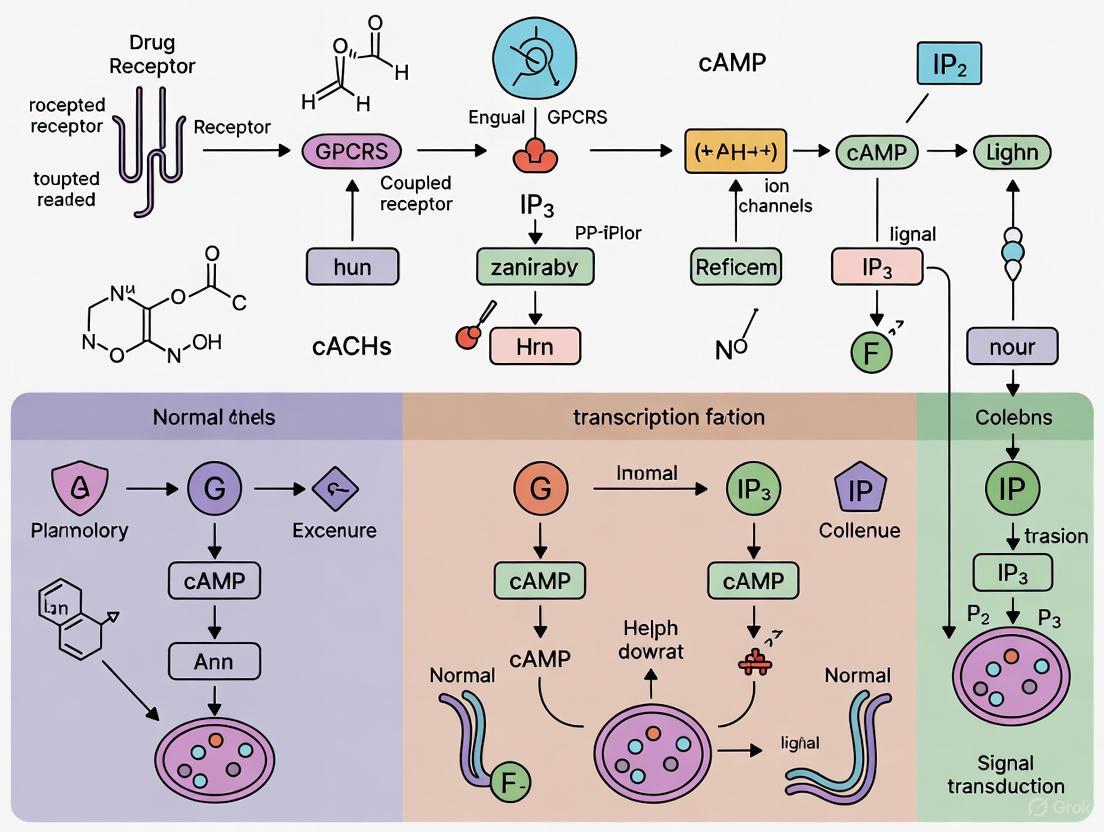
This comprehensive review explores the intricate landscape of drug-receptor interactions and their role in cellular signal transduction, a cornerstone of modern pharmacology and drug development.
Drug-Receptor Interactions and Signal Transduction: From Molecular Foundations to Therapeutic Innovation
Abstract
This comprehensive review explores the intricate landscape of drug-receptor interactions and their role in cellular signal transduction, a cornerstone of modern pharmacology and drug development. Tailored for researchers, scientists, and drug development professionals, the article synthesizes foundational principles with cutting-edge methodological advances. It delves into the molecular mechanisms of major receptor families, the application of innovative technologies like Cryo-EM and AI in target discovery, and strategies to overcome challenges in drug efficacy and selectivity. Furthermore, it examines computational and experimental frameworks for validating drug effects on signaling networks and compares therapeutic targeting strategies. By integrating these perspectives, the article aims to bridge fundamental research with clinical translation, offering a roadmap for developing more precise and effective therapeutics.
The Molecular Language of Cellular Signaling: Decoding Receptor Families and Interaction Principles
Within the framework of drug receptor interactions and signal transduction pathways research, a fundamental principle is that drugs primarily exert their effects by modulating the activity of specific macromolecular targets in the body [1]. These interactions initiate a cascade of biochemical events, or signal transduction, that ultimately results in an observed physiological or therapeutic effect [1]. The most critical classes of these drug targets include receptors, ion channels, enzymes, and transporters [2]. Understanding the function and signaling mechanisms of these targets is not merely an academic exercise; it forms the essential foundation for rational drug design, enabling the development of novel, targeted therapies that improve patient outcomes and advance the entire field of pharmacology [1]. This review provides an in-depth exploration of these major drug target classes, detailing their structures, signaling mechanisms, and the experimental methodologies used to investigate them.
Major Drug Target Classes: Structure, Function, and Signaling
Drug targets are intrinsic biological macromolecules to which a drug binds to produce its pharmacological effect [1]. The interaction between a drug and its target is highly specific, aiming to achieve the intended medical benefit while minimizing side effects, though no drug possesses complete specificity [1]. The principal classes of drug targets are summarized in the table below.
Table 1: Core Classes of Drug Targets and Their Characteristics
| Target Class | Key Function | Signaling Mechanism | Example Drugs |
|---|---|---|---|
| Receptors [2] | Recognize specific ligands and initiate intracellular signaling cascades. | Varies by subtype (e.g., GPCRs activate G proteins, Nuclear receptors regulate gene transcription) [3] [4]. | Agonists (mimic endogenous ligands); Antagonists (block endogenous ligands) [2]. |
| Ion Channels [2] | Facilitate the movement of ions across cell membranes. | Ligand-gated: Open upon agonist binding [2]. Voltage-gated: Open in response to membrane potential changes [2]. | Channel blockers (e.g., Dihydropyridines for Ca2+ channels), allosteric modulators (e.g., Benzodiazepines for GABAA receptor) [2]. |
| Enzymes [2] | Catalyze biochemical reactions within a cell. | Drugs often act as inhibitors, binding to the enzyme and preventing substrate conversion, thereby disrupting metabolic pathways [2]. | Substrate analogs (e.g., Fluorouracil), irreversible inhibitors. |
| Transporters [2] | Move ions or metabolites across cell membranes. | Drugs typically block the transporter, preventing the reuptake or movement of substances (e.g., neurotransmitters, ions) [2]. | Inhibitors (e.g., Furosemide blocking Na+-K+-2Cl- cotransporter) [2]. |
Receptors
Receptors are proteins, located on cell membranes or intracellularly, that transduce signals from endogenous ligands or drugs to intracellular mediators [1]. They are crucial for chemical communication and homeostasis [1]. Receptors are classified based on their mechanism and location.
G Protein-Coupled Receptors (GPCRs)
GPCRs constitute the largest family of membrane receptors and are characterized by seven transmembrane alpha-helices [4]. Upon ligand binding, the receptor undergoes a conformational change, activating heterotrimeric G proteins (e.g., Gs, Gi, Gq) [4]. The activated G protein subunits then modulate effector proteins like adenylyl cyclase (which produces cAMP) or phospholipase C (which generates IP3 and DAG), leading to diverse cellular responses such as changes in heart rate or neurotransmission [4].
Ion Channel Receptors
Also known as ligand-gated ion channels, these receptors form a pore that opens upon binding of a neurotransmitter, allowing specific ions (e.g., Na+, K+, Ca2+, Cl-) to flow across the membrane [2] [4]. This ion movement rapidly alters the membrane potential, making them critical for fast synaptic transmission [4]. For example, acetylcholine binding to nicotinic receptors causes sodium influx and depolarization [4].
Enzyme-Linked Receptors
These single-pass transmembrane receptors possess intrinsic enzymatic activity or associate directly with enzymes [4]. A prominent subfamily is the Receptor Tyrosine Kinases (RTKs). Ligand binding (e.g., insulin or growth factors) induces receptor dimerization and autophosphorylation, creating docking sites for intracellular signaling proteins and initiating complex cascades that regulate processes like cell growth and glucose uptake [4].
Nuclear Receptors
Nuclear receptors (NRs) are ligand-activated transcription factors located inside the cell [3]. They sense hydrophobic signaling molecules, such as steroid hormones (e.g., estrogen, cortisol), thyroid hormone, and vitamin D [3]. Upon ligand binding, they undergo a conformational change, dimerize, and bind to specific DNA sequences called hormone response elements (HREs) in the promoter or enhancer regions of target genes, thereby directly modulating gene expression [3]. This process plays a crucial role in development, metabolism, and reproduction [3].
Second Messengers in Signal Transduction
The activation of many receptors does not directly produce the cellular effect but instead triggers the production or release of intracellular signaling molecules known as second messengers. These molecules relay and amplify the signal from the first messenger (the ligand) to provoke a broad, coordinated cellular response [4].
Table 2: Key Second Messengers in Cellular Signaling
| Second Messenger | Primary Function | Generating Enzyme/Process | Downstream Effect |
|---|---|---|---|
| Cyclic AMP (cAMP) [4] | Activates Protein Kinase A (PKA). | Synthesized from ATP by adenylyl cyclase (often stimulated by GPCRs). | Phosphorylation of various target proteins; e.g., increased heart rate and contractility. |
| Inositol 1,4,5-trisphosphate (IP3) & Diacylglycerol (DAG) [4] | IP3 releases Ca2+ from intracellular stores; DAG activates Protein Kinase C (PKC). | Generated by phospholipase C (PLC) from membrane lipid PIP2. | Calcium-mediated events (e.g., muscle contraction); PKC-mediated phosphorylation. |
| Calcium Ions (Ca2+) [4] | A versatile intracellular signal. | Released from ER via IP3 receptors or enters through plasma membrane channels. | Triggers exocytosis, muscle contraction, enzyme activation, and apoptosis. |
| Nitric Oxide (NO) [4] | A gaseous, membrane-diffusible messenger. | Synthesized by nitric oxide synthase (NOS). | Activates guanylyl cyclase to produce cGMP, leading to smooth muscle relaxation and vasodilation. |
Diagram 1: Key signaling pathways for major receptor classes.
Advanced Research Methodologies in Target Identification and Validation
Modern drug discovery relies on sophisticated technologies to identify and validate the molecular targets of bioactive compounds, particularly for complex natural products or novel synthetic molecules. The workflow below outlines a generalized strategy for this process.
Diagram 2: General workflow for identifying drug targets.
Key Experimental Protocols and Reagents
Several powerful chemical biology-driven methods have been developed for target identification. The following table details essential reagents and their functions in these experimental protocols.
Table 3: Research Reagent Solutions for Drug Target Identification
| Research Tool / Method | Core Function | Key Reagents & Techniques |
|---|---|---|
| Affinity Purification (Target Fishing) [5] | Isolates target proteins from complex biological mixtures using a immobilized drug molecule as bait. | Biotin-/Immobilized Probe: A derivative of the drug compound attached to a solid support (e.g., sepharose beads) or biotin for capture. Cell Lysate: Source of potential target proteins. Streptavidin Beads: Used to capture the biotinylated probe-protein complex. |
| Click Chemistry & Photoaffinity Labeling [5] | Covalently "tags" the drug target within live cells for subsequent isolation and identification, providing high spatial and temporal resolution. | Clickable Probe: A drug analog containing a small, bioorthogonal chemical group (e.g., an alkyne). Photoaffinity Group: A chemical moiety (e.g., diazirine) that forms a covalent bond with the target protein upon UV irradiation. Fluorescent Azide/Biotin Azide: For visualization or pull-down after the "click" reaction. |
| Cellular Thermal Shift Assay (CETSA) [5] | Measures drug engagement by detecting changes in the thermal stability of the target protein upon ligand binding. | Heated/Cooled Blocks: For precise temperature control of cell or protein lysates. Protease Inhibitors: To prevent protein degradation during the assay. Antibodies/Western Blot or MS: For detecting and quantifying the remaining soluble target protein. |
| Drug Affinity Responsive Target Stability (DARTS) [5] | Leverages the principle that a drug-bound protein is less susceptible to proteolytic degradation. | Drug and Vehicle Control: For treatment and control samples. Pronase or Other Proteases: For limited proteolysis. SDS-PAGE & Western Blot/Mass Spectrometry: To analyze protease-resistant protein fragments. |
| Network-Based Target Discovery [6] | Uses computational analysis of protein-protein interaction networks to predict optimal co-target combinations to overcome drug resistance in diseases like cancer. | Protein-Protein Interaction (PPI) Databases: (e.g., HIPPIE) providing high-confidence interaction data. Shortest Path Algorithms: (e.g., PathLinker) to identify key communication nodes. Genomic Datasets: (e.g., TCGA, AACR GENIE) for mutation co-occurrence analysis. |
A Protocol for Affinity Purification-Based Target Identification
The classic affinity purification strategy, continuously refined with advancements in chemical biology, remains a cornerstone technique for identifying direct protein targets [5]. The detailed methodology is as follows:
- Probe Design and Synthesis: The investigated drug molecule is chemically modified to incorporate a functional handle, such as a primary amino or alkyne group, without destroying its biological activity. This handle is used to covalently link the drug to a solid support matrix, such as sepharose beads, creating the affinity resin [5].
- Sample Preparation and Incubation: A complex protein mixture, typically a cell lysate from a relevant tissue or cell line, is prepared. The lysate is pre-cleared with bare beads to remove non-specifically binding proteins. The pre-cleared lysate is then incubated with the drug-conjugated affinity resin to allow the formation of specific drug-target complexes [5].
- Washing and Elution: After incubation, the resin is extensively washed with buffer to remove unbound and weakly associated proteins. The specifically bound target proteins are then eluted using a high-salt buffer, a detergent, or, most specifically, with an excess of the free, non-modified drug molecule, which competes for binding and releases the target [5].
- Target Identification and Validation: The eluted proteins are separated by SDS-PAGE and identified using analytical techniques, most commonly tryptic digestion followed by liquid chromatography-tandem mass spectrometry (LC-MS/MS) [5]. The putative target must then be validated through orthogonal methods, such as cellular thermal shift assays (CETSA), knockout/knockdown studies, or functional assays, to confirm the physiological relevance of the interaction [5].
The precise definition of drug target classes—receptors, ion channels, enzymes, and transporters—and a deep understanding of their distinct signaling transduction pathways are fundamental to biomedical research and therapeutic development. The ongoing refinement of target identification technologies, ranging from classical affinity purification to modern chemical proteomics and network-based computational approaches, continues to illuminate the complex pharmacological mechanisms of both old and new drugs. This expanding knowledge base is critical for systematically designing novel, focused combination therapies and personalized medicine strategies that effectively target the underlying molecular mechanisms of disease, ultimately aiming to improve therapeutic efficacy and patient outcomes.
G protein-coupled receptors (GPCRs) represent the largest family of signaling proteins in animals and constitute the largest class of membrane protein targets for therapeutic drugs. [7] [8] The human genome encodes nearly 800 distinct GPCR subtypes, which are integral membrane proteins characterized by a common core of seven transmembrane α-helical domains (7TM). [9] [7] These receptors recognize a vast array of extracellular signals—including photons, ions, lipids, neurotransmitters, hormones, and peptides—and transduce these signals across the cell membrane to initiate intracellular responses. [10] [8] Due to their central role in physiological processes and their pharmaceutical importance—targeted by approximately 34% of FDA-approved drugs—understanding GPCR structure, activation mechanisms, and signaling pathways remains a critical focus in biomedical research and drug discovery. [11] [8]
Structural Architecture of the GPCR Superfamily
Common Topology and Structural Classification
All GPCRs share a conserved seven-transmembrane (7TM) topology, forming a bundle of helices connected by three extracellular loops (ECLs) and three intracellular loops (ICLs). [12] [9] This structure creates an extracellular N-terminus and an intracellular C-terminus, whose lengths and domains vary considerably across the superfamily. [7] GPCRs are structurally and phylogenetically classified into five main families in the GRAFS system: Glutamate, Rhodopsin, Adhesion, Frizzled/Taste2, and Secretin. [13] [14] The Rhodopsin family (Class A) is the largest and most extensively studied, comprising about 90% of all GPCRs. [14] [9]
Table 1: Major GPCR Families and Their Characteristics
| Family | Representative Members | Key Structural Features | Ligand Examples |
|---|---|---|---|
| Rhodopsin (Class A) | β2-adrenergic receptor, Rhodopsin, Dopamine receptors | Short N-terminus; ligand binding within TM domain | Adrenaline, Dopamine, Light [10] [9] |
| Secretin (Class B) | Glucagon-like peptide-1 receptor (GLP-1R), Parathyroid hormone receptor | Large N-terminal extracellular domain (ECD) with conserved fold stabilized by disulfide bonds [12] | Peptide hormones (Glucagon, PTH) [12] |
| Glutamate (Class C) | Metabotropic glutamate receptors, Calcium-sensing receptor | Large bi-lobed Venus flytrap ECD; often form dimers [10] | Glutamate, Calcium [10] |
| Adhesion | GPR56, EMR2 | Very long N-terminus with adhesion domains; GPS proteolytic site [14] | Extracellular matrix proteins [14] |
| Frizzled/Taste2 | Frizzled receptors, Smoothened | Cysteine-rich domain in ECD [13] | Wnt proteins, Bitter tastants [13] |
Ligand Recognition and Binding Pockets
GPCRs recognize their diverse ligands via several mechanisms. For small molecules (e.g., adrenaline in aminergic receptors), the primary binding pocket is located within the upper third of the 7TM bundle. [10] [8] In contrast, peptide-binding GPCRs often involve the extracellular loops (ECLs) and the N-terminal tail in ligand engagement. [12] Class B GPCRs exhibit a distinctive mechanism where the peptide ligand's C-terminus interacts with the large N-terminal ECD, while its N-terminus inserts into the 7TM core, effectively acting as a dual-domain agonist. [12]
The conserved seven-transmembrane helix architecture forms the foundation for a specialized set of structural microdomains and motifs crucial for GPCR function. The "DRY" motif at the intracellular end of TM3 is essential for G protein coupling and receptor activation, while the "NPxxY" motif in TM7 contributes to receptor stability and activation. [12] A highly conserved disulfide bridge between cysteine residues in ECL2 and TM3 stabilizes the extracellular region. [12] These receptors function as sophisticated allosteric machines, with their conformational equilibrium and signaling efficacy modulated not only by ligands but also by ions (e.g., sodium), lipids, cholesterol, and water molecules embedded within the TM bundle. [10]
GPCR Activation Mechanisms
The Activation Cycle and Conformational Changes
GPCR activation follows a fundamental mechanism where extracellular ligand binding induces conformational changes that are transmitted approximately 40 angstroms across the cell membrane to the intracellular surface. [8] This process can be conceptualized as a conformational transition from an inactive (R) state to an active (R*) state.
The following diagram illustrates the core conformational changes during GPCR activation and the critical intracellular partners involved in signal propagation and regulation.
Upon agonist binding, the receptor undergoes key conformational rearrangements, notably an outward movement of TM6 on the intracellular side. [12] This movement creates a crevice for coupling with intracellular transducer proteins. Recent research by Guo et al. demonstrates that agonist-induced structural disorder on the cytoplasmic side enables this versatile coupling, revealing the molecular basis for GPCR activation mechanisms. [15] [7] The receptor functions as a guanine nucleotide exchange factor (GEF), catalyzing the exchange of GDP for GTP on the Gα subunit of heterotrimeric G proteins. [9] [8]
Regulation and Desensitization
To prevent sustained signaling, activated GPCRs undergo a tightly coordinated regulation process. This begins with phosphorylation of the receptor's intracellular loops and C-terminal tail by G protein-coupled receptor kinases (GRKs). [13] [8] This phosphorylation creates a "barcode" that promotes the binding of β-arrestins. [13] β-arrestin binding sterically hinders further G protein coupling (desensitization) and facilitates receptor internalization via clathrin-coated pits. [9] [8] The internalized receptor can then be dephosphorylated and recycled to the membrane (resensitization) or targeted for degradation (downregulation). [9]
Signal Transduction Pathways
Primary G Protein-Mediated Signaling
GPCRs primarily signal through heterotrimeric G proteins, which consist of Gα, Gβ, and Gγ subunits. [13] [9] The human genome encodes four main Gα families (Gs, Gi/o, Gq/11, and G12/13), each initiating distinct downstream signaling cascades. [13] [8] The specificity of G protein coupling underlies the diverse functional outcomes of GPCR activation.
Table 2: Major G Protein Signaling Pathways
| G Protein | Primary Effector(s) | Second Messenger & Changes | Representative Physiological Roles |
|---|---|---|---|
| Gs (Stimulatory) | Stimulates Adenylyl Cyclase (AC) | ↑ cAMP, activates PKA [9] [8] | Increased heart rate, gluconeogenesis [9] |
| Gi/o (Inhibitory) | Inhibits Adenylyl Cyclase (AC) | ↓ cAMP, inhibits PKA [9] [8] | Reduced heart rate, neural modulation [9] |
| Gq/11 | Activates Phospholipase C-β (PLCβ) | ↑ IP3 & DAG; ↑ Ca2+; activates PKC [9] [8] | Smooth muscle contraction, hormone secretion [9] |
| G12/13 | Activates RhoGEFs | Activates Rho GTPase [13] [8] | Cell cytoskeleton reorganization, migration [13] |
The following pathway map integrates the major G protein and β-arrestin signaling routes, highlighting the production of key second messengers and downstream cellular responses.
Compartmentalized Signaling and β-Arrestin Pathways
A critical advancement in understanding GPCR signaling is the concept of signal compartmentalization. Rather than being uniformly distributed, second messengers like cAMP are organized into highly localized nanodomains, often regulated by phosphodiesterases (PDEs) that hydrolyze cAMP and limit its diffusion. [16] Furthermore, GPCRs can initiate distinct signaling profiles based on their subcellular localization, with receptors at the plasma membrane, endosomes, Golgi apparatus, and even the nucleus eliciting unique cellular responses. [16]
Beyond G proteins, GPCRs activate β-arrestin-mediated signaling. Once recruited to the activated and GRK-phosphorylated receptor, β-arrestins not only mediate desensitization and internalization but also serve as scaffolds to activate various kinase pathways, such as the ERK/MAPK cascade, leading to diverse cellular outcomes like cell growth and survival. [13] [8]
Experimental Approaches and Research Toolkit
The complex study of GPCRs relies on a multidisciplinary arsenal of structural, biophysical, and pharmacological techniques. The field has been revolutionized by advances in structural biology, particularly cryo-electron microscopy (cryo-EM), which has enabled the visualization of GPCRs in fully active complexes with G proteins and β-arrestins. [12] [8]
Table 3: Key Experimental Methods in GPCR Research
| Method Category | Specific Techniques | Key Applications in GPCR Research |
|---|---|---|
| Structural Biology | X-ray Crystallography, Cryo-Electron Microscopy (cryo-EM), NMR Spectroscopy [10] [8] | Determining high-resolution structures of GPCRs in different states (inactive, active, transducer-bound); studying dynamics. [10] [12] |
| Biophysics & Spectroscopy | Hydrogen/Deuterium Exchange-Mass Spectrometry (HDX-MS), Double Electron-Electron Resonance (DEER), FRET [10] [8] | Probing conformational changes, dynamics, and distances between specific residues. [10] [8] |
| Cell-Based Assays | BRET/FRET Biosensors, GloSensor cAMP assay, Tango/Precocious-Tango β-arrestin recruitment assay [13] | Measuring second messenger production (cAMP, Ca2+), kinase activation, and pathway-specific signaling (G protein vs. β-arrestin). [13] |
| Pharmacology & Simulation | Molecular Dynamics (MD) Simulations, Virtual Screening [10] [8] | Understanding activation pathways, predicting ligand-receptor interactions, and rational drug design. [10] [8] |
The experimental workflow for characterizing GPCR ligands and their functional outcomes involves a multi-step process to delineate complex signaling profiles, as shown in the following diagram.
The Scientist's Toolkit: Essential Research Reagents
- Stabilized Receptor Constructs (e.g., BRIL fusions, thermostabilized mutants): Protein engineering is crucial for enhancing receptor stability and crystallization for structural studies. [10] [8]
- G Protein Mimetics (e.g., NanoBits, mini-G proteins, nanobodies): These tools are used to stabilize the active conformation of GPCRs for structural studies or to measure G protein activation in functional assays. [8]
- Pathway-Selective Biosensors (e.g., GloSensor cAMP, Tango β-arrestin kits): These are cell-based assay systems that allow for the specific and quantitative measurement of individual signaling pathways downstream of GPCR activation. [13]
- Intracellular Biased Allosteric Modulators (BAMs): Small molecules that bind to intracellular allosteric sites and stabilize specific receptor-transducer complexes, enabling the study and promotion of pathway-biased signaling. [13] [11]
Implications for Drug Discovery and Therapeutic Targeting
The deep structural and mechanistic understanding of GPCRs has profoundly impacted modern pharmacology. The trend is moving beyond simple agonists and antagonists toward sophisticated modulators. Allosteric modulators bind to sites distinct from the orthosteric (endogenous ligand) site, offering potential for greater subtype selectivity and reduced side effects. [11] [8] Furthermore, the concept of biased agonism (or functional selectivity)—where a ligand preferentially activates a subset of the receptor's signaling pathways—is a major frontier. [12] [13] For example, G protein-biased μ-opioid receptor agonists like oliceridine aim to provide analgesia while minimizing the β-arrestin-mediated side effects of respiratory depression and constipation. [12]
Emerging strategies include the design of bitopic ligands that simultaneously engage both the orthosteric and an allosteric site, and the exploration of intracellular binding sites for "molecular glues" that can stabilize specific receptor-transducer interfaces. [11] [8] As of late 2023, over 550 structures of GPCR-signaling complexes are available in the Protein Data Bank, providing an unprecedented roadmap for structure-based drug design and the development of next-generation therapeutics with improved efficacy and safety profiles. [8]
Ionotropic receptors, also known as ligand-gated ion channels (LICs, LGIC), represent a critical class of transmembrane proteins that directly mediate rapid signal transduction throughout the nervous system by converting chemical neurotransmitter signals into electrical impulses at synapses [17]. These receptors function as molecular machines that open their intrinsic ion-conducting pores in response to binding specific chemical messengers (ligands), thereby permitting selective ion flux across cell membranes within milliseconds [18]. This direct coupling of ligand binding to channel gating enables the exceptional speed of synaptic transmission that underpins neural communication, contrasting with the slower metabotropic receptors that operate through second messenger systems [18].
Within the broader context of drug-receptor interactions research, ionotropic receptors represent prime pharmacological targets for therapeutic intervention in neurological and psychiatric disorders [19]. Their well-defined binding sites, diverse subunit compositions, and sophisticated allosteric regulation mechanisms offer multiple avenues for drug discovery and development [20]. This technical guide comprehensively examines the structural classification, gating mechanisms, research methodologies, and therapeutic targeting of ionotropic receptors, providing a foundation for ongoing research into these crucial signaling molecules.
Structural Classification and Functional Properties
Ionotropic receptors are classified into three evolutionarily distinct superfamilies based on their structural architecture and activation mechanisms: the cys-loop receptors, ionotropic glutamate receptors, and ATP-gated channels [17]. Despite functional similarities, these superfamilies exhibit unique structural characteristics that define their gating kinetics, ion selectivity, and regulatory properties.
Cys-Loop Receptors
The cys-loop receptor superfamily is named for a characteristic disulfide bond between two cysteine residues in the extracellular N-terminal domain [17]. These receptors are pentameric assemblies with each subunit containing four transmembrane helices (TMSs) that constitute the transmembrane domain, and an extracellular, beta sheet sandwich-type, N-terminal ligand-binding domain [17]. Cys-loop receptors are further subdivided into cationic and anionic types based on their ion selectivity, which determines whether their activation produces excitatory or inhibitory responses [17].
Table 1: Cationic Cys-Loop Receptors
| Type | Class | IUPHAR Protein Name | Gene | Ion Selectivity | Primary Effect |
|---|---|---|---|---|---|
| Serotonin | 5-HT3 | 5-HT3A, 5-HT3B, 5-HT3C, 5-HT3D, 5-HT3E | HTR3A, HTR3B, HTR3C, HTR3D, HTR3E | Cations (Na+, K+) | Excitatory |
| Nicotinic acetylcholine | nAChR | α1-α10, β1-β4, γ, δ, ε | CHRNA1-CHRNA10, CHRNB1-CHRNB4, CHRNG, CHRND, CHRNE | Cations (Na+, K+, Ca2+) | Excitatory |
| Zinc-activated ion channel | ZAC | ZACN | ZACN | Cations | Excitatory |
Table 2: Anionic Cys-Loop Receptors
| Type | Class | IUPHAR Protein Name | Gene | Ion Selectivity | Primary Effect |
|---|---|---|---|---|---|
| GABAA | Alpha, Beta, Gamma, etc. | α1-α6, β1-β3, γ1-γ3, etc. | GABRA1-GABRA6, GABRB1-GABRB3, GABRG1-GABRG3, etc. | Anions (Cl-) | Inhibitory |
| Glycine | Alpha, Beta | α1-α4, β | GLRA1-GLRA4, GLRB | Anions (Cl-) | Inhibitory |
The prototypic ligand-gated ion channel is the nicotinic acetylcholine receptor (nAChR), which consists of a pentamer of protein subunits (typically ααβγδ) with two binding sites for acetylcholine [17]. When acetylcholine binds at the interface of each alpha subunit, it induces a conformational change that twists the T2 helices, moving leucine residues that block the pore out of the channel pathway, thereby widening the constriction in the pore from approximately 3Å to 8Å to allow ions to pass through [17]. This pore opening permits Na+ ions to flow down their electrochemical gradient into the cell, and with sufficient channel activation, this inward flow of positive charges depolarizes the postsynaptic membrane sufficiently to initiate an action potential [17].
Ionotropic Glutamate Receptors
Ionotropic glutamate receptors (iGluRs) constitute a structurally distinct family that mediates the majority of excitatory neurotransmission in the central nervous system [21]. These receptors form tetrameric assemblies with each subunit consisting of four discrete domains: an extracellular amino-terminal domain (ATD) involved in tetramer assembly, an extracellular ligand-binding domain (LBD) that binds glutamate, a transmembrane domain (TMD) that forms the ion channel, and an intracellular carboxy-terminal domain (CTD) responsible for receptor localization and regulation [21] [22].
Table 3: Ionotropic Glutamate Receptor Classification
| Type | Class | IUPHAR Protein Name | Gene | Kinetic Properties | Calcium Permeability |
|---|---|---|---|---|---|
| AMPA | GluA | GluA1-GluA4 | GRIA1-GRIA4 | Fast activation and desensitization | GluA2-lacking: Ca2+ permeable |
| Kainate | GluK | GluK1-GluK5 | GRIK1-GRIK5 | Intermediate kinetics | Variable |
| NMDA | GluN | GluN1, GluN2A-GluN2D, GluN3A-GluN3B | GRIN1, GRIN2A-GRIN2D, GRIN3A-GRIN3B | Slow kinetics, voltage-dependent | Highly Ca2+ permeable |
The iGluR architecture exhibits a unique 2-fold symmetry throughout the extracellular and transmembrane domains, which is exceptional for tetrameric ion channels [21]. The transmembrane domain has an inverted orientation in the membrane compared to voltage-gated ion channels and consists of three transmembrane helices (M1, M3, and M4) and a re-entrant intracellular loop (M2) between helices M1 and M3 [21]. The M3 segments line the extracellular portion of the ion channel pore, while M1 and M4 surround M3s and form the ion channel periphery [21].
The NMDA receptor subtype exhibits particularly complex gating properties, functioning as a coincidence detector that requires both glutamate binding and postsynaptic depolarization to relieve voltage-dependent Mg2+ block, thereby enabling calcium influx that is essential for synaptic plasticity processes including long-term potentiation (LTP) and long-term depression (LTD) [18].
Gating Mechanisms and Signal Transduction
The process by which ionotropic receptors convert ligand binding into ion channel opening represents a fundamental problem in structural biology. Recent advances in cryo-electron microscopy (cryo-EM) and X-ray crystallography have provided unprecedented insights into the conformational changes underlying receptor gating.
Structural Mechanisms of Gating
Ionotropic receptors exist in multiple functional states—closed, open, and desensitized—with transitions between these states governed by both ligand binding and allosteric modulation [21]. For iGluRs, the LBD forms a clamshell-like structure that closes around the bound agonist, creating tension in the linkers connecting the LBD to the transmembrane domain [22]. This tension is thought to pull on the M3 helices that form the channel gate, leading to a rotation and separation of these helices that opens the ion conduction pathway [21].
The gating process can be described by a simplified kinetic model that includes closed (C), pre-active (P), open (O), and desensitized (D) states [21]. Agonist binding (C to CA transition) is followed by conformational changes that place the receptor in a pre-active state (P), from which it can either convert into a conducting state (O) or adopt an active but nonconducting desensitized state (D) [21]. The transition from PA to OA is much faster than the PA to DA transition and defines the fast, submillisecond timescale rise in inward current that signifies receptor activation [21].
Diagram 1: Ionotropic Receptor Gating Cycle. This diagram illustrates the simplified kinetic model of ionotropic receptor gating, showing transitions between closed (C), agonist-bound closed (CA), pre-active (P), open (O), and desensitized (D) states.
Ion Permeation and Selectivity
The ion selectivity of ligand-gated channels determines their physiological effects, with excitatory receptors generally permeable to cations (Na+, K+, and sometimes Ca2+) and inhibitory receptors generally permeable to anions (Cl-) [18]. Excitatory ionotropic receptors are nonselective cation channels with a reversal potential (E_rev) around 0 mV, while inhibitory receptors are anion selective with a reversal potential of -70 to -30 mV [18].
For the nicotinic acetylcholine receptor, the opening of the channel pore allows simultaneous passage of Na+, Ca2+, and K+ ions, with the net effect of moving the membrane potential close to 0 mV (approximately halfway between the equilibrium potential of Na+ and the equilibrium potential of K+) [23]. This represents a large depolarization from the typical resting potential of -70 mV and is typically sufficient to stimulate an action potential or activate voltage-gated Ca2+ channels at the active zone of a synapse [23].
In contrast, GABAA receptor activation allows the passage of chloride (Cl-) ions, generally moving the membrane potential toward ECl (the equilibrium potential for Cl-, which is generally near the resting potential) [23]. This "clamps" the membrane potential at ECl and prevents it from rising to threshold potential, thereby producing neuronal inhibition [23].
Experimental Methodologies for Ionotropic Receptor Research
Structural Biology Approaches
Understanding ionotropic receptor function at the molecular level requires detailed structural information, which has been obtained through multiple complementary techniques:
X-ray Crystallography: This technique has provided high-resolution structures of isolated domains (ATD and LBD) of iGluRs, revealing the atomic details of ligand binding and domain arrangements [22]. For example, over 268 crystal structures of LBDs of various subunits from all major iGluR subclasses in complex with agonists, antagonists, partial agonists, and allosteric modulators are available [22]. The first structure of a full-length iGluR (AMPAR subtype GluA2) in the closed, competitive antagonist-bound state was determined using crystallography [21].
Cryo-Electron Microscopy (cryo-EM): Recent advances in cryo-EM have enabled determination of full-length iGluR structures in various functional states, including activated, glutamate-bound AMPA receptors in conducting states and conformational changes during desensitization [21]. This technique has been particularly valuable for visualizing heterotetrameric NMDA receptors, which were once considered overwhelmingly challenging targets for structural biology [22]. Cryo-EM studies of the GluA2-GSG1L complex in the presence of antagonists have provided the most complete closed state iGluR channel structure to date [21].
Electrophysiological Techniques: Patch-clamp recording, particularly in whole-cell and single-channel configurations, provides functional data complementary to structural studies. Whole-cell patch-clamp currents in response to prolonged application of agonist illustrate three major iGluR gating functions: activation, desensitization, and deactivation [21]. Single-channel recordings reveal multiple conductance levels whose occupancy depends on agonist type and concentration, reflecting different extents of pore opening and activation states for each of the four contributing receptor subunits [21].
Table 4: Key Structural Studies of Ionotropic Glutamate Receptors
| Receptor Type | Technique | State | Resolution | Key Findings |
|---|---|---|---|---|
| GluA2 AMPAR | X-ray Crystallography | Antagonist-bound (closed) | 3.6 Å | First full-length iGluR structure; revealed Y-shaped architecture and domain organization [22] |
| GluA2 AMPAR | Cryo-EM | Agonist-bound (pre-active) | 4.0-4.5 Å | Showed shortened vertical dimension with ATD and LBD closer together [21] |
| GluA2-GSG1L Complex | Cryo-EM | Antagonist-bound (closed) | 4.6 Å (TMD ~4 Å) | Most complete closed state iGluR channel structure [21] |
| GluN1/GluN2B NMDA | Cryo-EM | Antagonist-bound | 4.0 Å | First heterotetrameric NMDAR structure; revealed allosteric sites [22] |
The Scientist's Toolkit: Essential Research Reagents
Table 5: Key Research Reagents for Ionotropic Receptor Studies
| Reagent Category | Specific Examples | Function in Research | Applications |
|---|---|---|---|
| Agonists | Glutamate, Acetylcholine, GABA, Glycine | Activate receptors by binding to orthosteric sites | Receptor activation studies, functional assays |
| Competitive Antagonists | ZK200775 (AMPAR), D-AP5 (NMDAR) | Bind orthosteric site without activation, block agonist binding | Defining receptor specificity, structural studies of closed states |
| Allosteric Modulators | Cyclothiazide (AMPAR), Ifenprodil (NMDAR) | Bind to alternative sites to potentiate or inhibit receptor function | Studying gating mechanisms, therapeutic development |
| Channel Blockers | Memantine (NMDAR), PCP (NMDAR) | Bind within ion channel pore to physically block ion flux | Investigating pore properties, therapeutic applications |
| subunit-Selective Compounds | α-Bungarotoxin (nAChR), NASPM (Ca2+-permeable AMPAR) | Specifically target receptor subtypes | Determining subunit composition, selective manipulation |
| Tagged Antibodies | Anti-GluN1, Anti-GABAAR β-subunit | Label receptors for localization and quantification | Immunohistochemistry, Western blot, surface expression |
| Auxiliary Subunits | GSG1L, Stargazin | Modulate receptor trafficking and gating | Studying native receptor complexes, regulatory mechanisms |
Diagram 2: Experimental Approaches for Ionotropic Receptor Research. This diagram categorizes the major methodological approaches used to study the structure, function, and pharmacology of ionotropic receptors.
Pathophysiological Implications and Therapeutic Targeting
Dysfunction of ionotropic receptor signaling is implicated in numerous neurological and psychiatric disorders, making these receptors prominent targets for therapeutic intervention [18]. Aberrant expression or function of neuronal ion channels, including ionotropic neurotransmitter receptors, is a major epileptogenic factor, with channelopathies favoring increased amplitude or duration of depolarizing currents or reduced hyperpolarizing currents, contributing to neuronal hyper-excitability and idiopathic epilepsies [18].
Excitotoxicity and Neurodegenerative Disorders
Excitotoxicity resulting from overactivation of glutamate ionotropic receptors is considered one of the main causes of neuronal damage in acute and chronic neurodegenerative disorders [18]. Overstimulation of NMDA receptors floods the cytoplasm with calcium, while AMPA receptor stimulation is necessary to depolarize the neuronal membrane, allowing NMDA channels to open [18]. This pathological process is implicated in Alzheimer's disease, Parkinson's disease, Huntington's disease, amyotrophic lateral sclerosis, and stroke-related damage [18].
The NMDA receptor dysfunction is particularly significant in cognitive deficits associated with neuropsychiatric disorders and neurodegenerative diseases, including Alzheimer's disease and schizophrenia [18]. Anti-NMDA receptor encephalitis represents an autoimmune disorder characterized by autoantibodies targeting the NMDA receptor, leading to psychiatric and neurologic symptoms, including seizures and amnesia [18].
Pharmacological Interventions
Several therapeutic strategies target ionotropic receptors for symptomatic and disease-modifying benefits:
NMDA Receptor Antagonists: Memantine, an uncompetitive NMDA receptor antagonist, is the only FDA-approved NMDA receptor antagonist indicated for moderate-to-severe Alzheimer's disease, showing modest but statistically significant improvements in cognition and functional endpoints [20] [18]. Memantine functions through a mechanism called membrane-to-channel inhibition (MCI), where membrane-associated drug molecules can transit into the channel through a fenestration within the NMDAR upon receptor activation [20].
GABAA Receptor Modulators: Benzodiazepines and barbiturates enhance GABAA receptor function through allosteric binding sites, producing anxiolytic, sedative, and anticonvulsant effects [17]. These drugs potentiate GABA-induced chloride currents without directly activating the receptor themselves.
Nicotinic Receptor Agonists: Varenicline, a partial agonist at α4β2 nicotinic acetylcholine receptors, is used for smoking cessation by reducing nicotine craving and withdrawal symptoms while providing limited activation of the reward system [17].
The evolutionary history of ionotropic receptors provides important context for understanding their roles in human physiology and disease. Comparative genomic analyses reveal that the Human-Cnidaria common ancestor displayed a massive emergence of neuroexclusive genes, mainly ionotropic receptors, which might have been crucial to the evolution of synapses [24]. This evolutionary perspective highlights the fundamental conservation of these signaling mechanisms while also revealing opportunities for developing species-specific pharmacological interventions.
Ionotropic receptors represent sophisticated molecular machines that directly convert chemical signals into electrical impulses with remarkable speed and precision. Their complex modular architecture, diverse subunit composition, and dynamic gating mechanisms enable the nuanced regulation of synaptic transmission essential for neural computation, learning, and memory. Ongoing structural biology efforts continue to reveal new insights into the conformational changes underlying receptor activation, desensitization, and allosteric modulation.
From a drug-receptor interactions perspective, ionotropic receptors offer multiple targeting opportunities through orthosteric sites, allosteric regulatory sites, and channel-blocking mechanisms. The continued development of subtype-selective compounds holds promise for more effective therapies with reduced side effects for neurological and psychiatric disorders. As research methodologies advance, particularly in cryo-EM and computational modeling, our understanding of these crucial signaling molecules will continue to deepen, enabling more sophisticated therapeutic interventions for conditions involving disrupted synaptic transmission.
Kinase-linked receptors and nuclear receptors represent two paramount classes of signaling molecules that transduce extracellular and intracellular cues into precise transcriptional programs, thereby governing essential cellular processes such as growth, differentiation, and metabolism. This technical guide delineates the fundamental structures, activation mechanisms, and downstream signaling cascades associated with these receptors, emphasizing their roles in gene regulation and cellular proliferation. Within the broader thesis of drug receptor interactions, we explore the profound therapeutic implications of targeting these pathways, including the management of cancer, metabolic diseases, and inflammatory disorders. The whitepaper synthesizes current research findings, provides detailed experimental methodologies, and visualizes complex signaling networks, offering a comprehensive resource for researchers and drug development professionals engaged in signal transduction pathways research.
Cell-cell communication and responses to environmental stimuli are mediated by a diverse array of receptor families, among which kinase-linked receptors and nuclear receptors constitute two major classes with distinct yet sometimes interconnected signaling mechanisms. Kinase-linked receptors, primarily located on the cell surface, include receptor tyrosine kinases (RTKs) which initiate complex intracellular phosphorylation cascades in response to growth factors and hormones [25]. These signals ultimately reach the nucleus to modulate gene expression, influencing critical processes like cell cycle progression and survival. In contrast, nuclear receptors reside within the cell and function as ligand-activated transcription factors that directly bind DNA and regulate gene transcription in response to lipophilic hormones such as steroids, thyroid hormone, and vitamins [3] [26].
The signaling timelines and biological outcomes differ significantly between these receptor classes. RTK signaling typically initiates within seconds to minutes, culminating in transcriptional changes over hours. Nuclear receptor signaling, while sometimes involving non-genomic effects, primarily regulates transcription over hours to days, resulting in sustained changes to cellular phenotype [25]. Despite these differences, crosstalk between RTK and nuclear receptor pathways creates integrated signaling networks that coordinate complex physiological responses, with dysregulation in these networks contributing to various disease states, including cancer, metabolic syndrome, and inflammatory disorders [27] [26].
Kinase-Linked Receptors: Structure and Activation Mechanisms
Structural Organization and Classification
Kinase-linked receptors are transmembrane proteins that transmit signals from extracellular ligands to the cell interior through their intrinsic enzymatic activity. The most prominent subgroup, receptor tyrosine kinases (RTKs), comprises large intrinsic membrane proteins with a single membrane-spanning segment. These receptors function as dimers, either constitutively or induced by ligand binding [25]. The human genome encodes approximately 90 tyrosine kinases, with over half classified as RTKs [25]. Structurally, RTKs contain an extracellular ligand-binding domain, a transmembrane helix, and an intracellular domain possessing tyrosine kinase activity.
Ligands for RTKs are typically polypeptide hormones and growth factors such as epidermal growth factor (EGF), nerve growth factor (NGF), vascular endothelial growth factor (VEGF), and insulin [25]. Upon ligand binding to the extracellular domain, RTKs undergo conformational changes that stimulate their tyrosine kinase activity located in the cytoplasmic portion, initiating intracellular signaling cascades.
Activation Mechanism and Autophosphorylation
The activation mechanism of RTKs involves ligand-induced dimerization, bringing two receptor subunits into close proximity [25]. In this dimeric configuration, each subunit phosphorylates tyrosine residues in its partner subunit through a process termed auto-phosphorylation [25]. These phosphorylation events occur in specific regions of the intracellular domain and serve two crucial functions: they enhance the kinase activity of the receptor itself, and create docking sites for intracellular signaling proteins containing phosphotyrosine-binding domains such as SH2 domains.
This nucleation of protein complexes on the phosphorylated tyrosine residues of activated RTKs represents the primary mechanism for initiating downstream signaling pathways [25]. The specific pattern of phosphorylation determines which signaling molecules are recruited, thus defining the cellular response to receptor activation.
Table 1: Major Receptor Tyrosine Kinase Families and Their Ligands
| RTK Family | Representative Members | Key Ligands | Primary Functions |
|---|---|---|---|
| ErbB | EGFR (ERBB1), HER2 (ERBB2) | EGF, TGF-α | Cell proliferation, differentiation |
| Insulin Receptor | INSR, IGF1R | Insulin, IGF-1 | Metabolic regulation, growth |
| NGFR | TrkA, TrkB | NGF, BDNF | Neuronal survival, plasticity |
| VEGFR | VEGFR1, VEGFR2 | VEGF-A, VEGF-B | Angiogenesis, vascular permeability |
| FGFR | FGFR1, FGFR2 | FGF-1, FGF-2 | Development, tissue repair |
Nuclear Receptors: Structure and Classification
Structural Domains and Functional Organization
Nuclear receptors (NRs) comprise a superfamily of 48 members in the human genome that function as ligand-dependent transcription factors [3] [28]. These receptors share a conserved modular structure consisting of several functional domains:
- N-terminal domain (NTD): Contains the activation function 1 (AF-1) region, which participates in transcriptional activation and interacts with coregulatory proteins [3].
- DNA-binding domain (DBD): A highly conserved region containing two zinc fingers that mediate sequence-specific binding to hormone response elements (HREs) in target gene promoters [3].
- Hinge region: Provides flexibility between the DBD and LBD.
- Ligand-binding domain (LBD): Mediates ligand binding, receptor dimerization, and contains the activation function 2 (AF-2) region that recruits transcriptional co-regulators [3].
This modular architecture enables nuclear receptors to sense intracellular hormonal and metabolic signals and directly translate these signals into changes in gene expression programs.
Classification Systems for Nuclear Receptors
Nuclear receptors are classified based on their ligand specificity, dimerization properties, and DNA binding mechanisms:
Type I Nuclear Receptors (Steroid receptors): Include estrogen receptor (ER), androgen receptor (AR), progesterone receptor (PR), glucocorticoid receptor (GR), and mineralocorticoid receptor (MR). These receptors typically reside in the cytoplasm complexed with heat shock proteins (HSPs) in the absence of ligand. Upon ligand binding, they dissociate from HSPs, form homodimers, translocate to the nucleus, and bind to inverted repeat HREs [3] [26].
Type II Nuclear Receptors (Non-steroid receptors): Include thyroid hormone receptors (TRα and TRβ), retinoic acid receptors (RARα, β, γ), vitamin D receptor (VDR), and peroxisome proliferator-activated receptors (PPARα, β, γ). These receptors typically reside in the nucleus bound to DNA even in the absence of ligand, often forming heterodimers with retinoid X receptors (RXR) and binding to direct repeat HREs [3] [26].
Type III and IV Receptors: Include orphan receptors whose endogenous ligands remain unknown or receptors that function as monomers [3] [26].
Table 2: Major Nuclear Receptor Classes and Their Characteristics
| Receptor Type | Representative Members | Endogenous Ligands | DNA Binding Pattern |
|---|---|---|---|
| Type I (Steroid) | ER, AR, GR, MR | Steroid hormones | Homodimers on inverted repeats |
| Type II (Non-steroid) | TR, RAR, VDR, PPAR | Thyroid hormone, retinoic acid, vitamin D | RXR heterodimers on direct repeats |
| Type III (Orphan) | HNF4A, NR4A1 | Unknown or fatty acids | Homodimers or monomers |
| Type IV (Monomeric) | SF1, LRH1 | Phospholipids | Monomers on extended sites |
Signaling Cascades and Gene Regulation Mechanisms
Major Kinase-Linked Receptor Signaling Pathways
Ras/ERK Pathway (MAPK Cascade)
The Ras/ERK pathway represents a quintessential kinase signaling cascade that relays signals from activated RTKs to the nucleus. The signaling sequence involves:
- RTK activation by growth factors (e.g., EGF) leads to autophosphorylation and recruitment of the adaptor protein Grb2 [29] [25].
- Grb2 recruits the guanine nucleotide exchange factor SOS to the membrane, where it activates Ras by promoting GDP to GTP exchange [29] [25].
- Activated Ras triggers a three-tiered kinase cascade: Raf (MAPKKK) → MEK (MAPKK) → ERK (MAPK) [29] [25].
- ERK translocates to the nucleus and phosphorylates transcription factors such as Elk-1, c-Fos, and c-Myc, thereby regulating genes controlling cell cycle progression and proliferation [29].
This cascade demonstrates the principle of signal amplification, where a single activated receptor can ultimately influence the phosphorylation of hundreds of substrates [29].
PI3K/Akt Pathway
The PI3K/Akt pathway represents another critical signaling route from RTKs:
- Activated RTKs recruit and activate phosphoinositide 3-kinase (PI3K) either directly or through adaptor proteins like IRS1 in insulin signaling [29] [25].
- PI3K phosphorylates the membrane lipid PIP₂ to generate PIP₃ [29].
- Akt is recruited to the membrane by PIP₃ and phosphorylated/activated by PDK1 and mTORC2 [29].
- Activated Akt controls both cytoplasmic functions (e.g., GLUT4 translocation to the membrane for glucose uptake) and nuclear functions (e.g., regulation of transcription factors like FoxO1) [29] [25].
This pathway is crucial for metabolic regulation and cell survival, with its deregulation frequently observed in cancer and metabolic disorders.
Nuclear Receptor Mechanisms of Gene Regulation
Nuclear receptors regulate gene expression through a multi-step process:
Ligand binding: Hydrophobic ligands diffuse across the plasma membrane and bind to the LBD of nuclear receptors, inducing conformational changes [3] [26].
Nuclear translocation and DNA binding: For Type I receptors, ligand binding triggers dissociation from chaperone proteins, nuclear translocation, and binding to specific DNA sequences called hormone response elements (HREs) [3] [26]. Type II receptors are typically already nuclear and DNA-bound.
Recruitment of co-regulators: Ligand-bound receptors recruit co-activator complexes (e.g., histone acetyltransferases) that modify chromatin structure and make target genes more accessible [3] [26].
Assembly of transcriptional machinery: The receptor-coactivator complexes recruit RNA polymerase II and general transcription factors to initiate transcription of target genes [3] [25].
The specific HRE sequence, cellular context, and recruited co-regulators determine which genes are activated or repressed by a given nuclear receptor.
Figure 1: Kinase-Linked Receptor Signaling Cascade. This diagram illustrates the sequential activation of signaling components from growth factor binding to gene expression regulation through the MAPK pathway.
Figure 2: Nuclear Receptor-Mediated Gene Regulation. This diagram illustrates the pathway from ligand binding to transcription activation through nuclear receptor binding to hormone response elements.
Experimental Approaches for Studying Receptor Function
Investigating Kinase-Linked Receptors
Kinase Activity Profiling
Comprehensive approaches to map kinase signaling networks have been developed, including large-scale screening of kinase-substrate relationships. A recent study from St. Jude Children's Research Hospital exemplifies this approach:
- Experimental Objective: Systematically identify kinases capable of phosphorylating the RNA polymerase II C-terminal domain (CTD) at specific positions [30].
- Methodology:
- Expressed and purified 427 human kinases
- Performed in vitro kinase assays with synthetic RNA polymerase II CTD peptides
- Utilized phospho-specific antibodies and mass spectrometry to identify phosphorylation sites
- Validated findings using immunofluorescence and chromatin immunoprecipitation [30]
- Key Finding: Identified 117 kinases with specific positional preferences, including unexpected nuclear functions for cell surface receptors like EGFR [30].
Signal Transduction Analysis
To study downstream signaling cascades:
- Phosphoprotein Analysis: Western blotting with phospho-specific antibodies to monitor activation states of pathway components (e.g., phospho-ERK, phospho-Akt) [29].
- Pathway Reporter Assays: Utilization of luciferase-based reporters (e.g., GloSensor cAMP biosensor) to quantify second messenger production or pathway activation in live cells [13].
- Protein-Protein Interaction Studies: Co-immunoprecipitation and proximity ligation assays to characterize signaling complexes formation [27].
Analyzing Nuclear Receptor Function
Transcriptional Activation Assays
Standard protocols for assessing nuclear receptor activity include:
Luciferase Reporter Assays:
- Clone hormone response elements (HREs) upstream of a minimal promoter driving luciferase expression
- Cotransfect receptor expression plasmid and reporter construct into recipient cells
- Treat with candidate ligands for 24-48 hours
- Measure luciferase activity as a readout of receptor activation [3]
Gene Expression Profiling:
Receptor-Ligand Interaction Studies
- Ligand Binding Assays: Use of radiolabeled ligands (e.g., [³H]-dexamethasone for GR) in competitive binding experiments to determine binding affinities (Kd values) [3].
- X-ray Crystallography: Determination of receptor-ligand binding domain structures to understand interaction mechanisms and guide drug design [3] [26].
- Cellular Localization Studies: Immunofluorescence staining to monitor receptor translocation from cytoplasm to nucleus upon ligand treatment [3].
The Scientist's Toolkit: Essential Research Reagents
Table 3: Key Research Reagents for Studying Kinase-Linked and Nuclear Receptors
| Reagent Category | Specific Examples | Research Applications | Key Functions |
|---|---|---|---|
| Kinase Inhibitors | Selumetinib (MEK inhibitor), Imatinib (BCR-Abl inhibitor) | Pathway inhibition studies, therapeutic screening | Target specific kinases to block downstream signaling and assess functional outcomes |
| Nuclear Receptor Ligands | Rosiglitazone (PPARγ agonist), Tamoxifen (ER modulator), Obeticholic acid (FXR agonist) | Receptor activation studies, gene regulation analysis, drug development | Activate or inhibit specific NRs to study their functions and therapeutic potential |
| Pathway Reporters | GloSensor cAMP biosensor, ERK translocation biosensors, PRE/TRE-luciferase reporters | Real-time signaling monitoring, high-throughput compound screening | Visualize and quantify pathway activation in live cells or after treatment |
| Phospho-Specific Antibodies | Anti-phospho-ERK, Anti-phospho-Akt, Anti-phospho-tyrosine | Western blotting, immunofluorescence, flow cytometry | Detect activation states of signaling molecules with high specificity |
| Protein Interaction Tools | Co-IP kits, Proximity ligation assay reagents, Yeast two-hybrid systems | Mapping signaling complexes, identifying novel interactions | Characterize protein-protein interactions in signaling pathways |
| Gene Expression Analysis | RNA-seq kits, qPCR reagents, ChIP kits | Transcriptome profiling, target gene validation, chromatin binding studies | Analyze gene expression changes and direct transcriptional targets |
Crosstalk Between Signaling Pathways
Receptor Transactivation Mechanisms
Significant crosstalk occurs between kinase-linked receptors and nuclear receptors, creating interconnected signaling networks:
RTK-Nuclear Receptor Interactions: Computational analyses of human signaling networks have identified numerous interactions between RTKs and nuclear receptors. For example, the EGFR-ESR1 (estrogen receptor) interaction has been experimentally validated, representing a key point of crosstalk between growth factor and hormonal signaling pathways [27].
GPCR-RTK Transactivation: G protein-coupled receptors can transactivate RTKs through proteolytic cleavage of RTK ligands (e.g., HB-EGF by ADAM17) or through intracellular kinase-mediated activation (e.g., Fyn-mediated TrkB activation) [25].
Nuclear Kinase Functions: Recent research has revealed unexpected nuclear roles for traditional signaling kinases. For instance, the cell-surface tyrosine kinase EGFR can translocate to the nucleus and directly phosphorylate RNA polymerase II, providing a more immediate mechanism for regulating gene transcription in response to extracellular signals [30].
Integrated Signaling in Disease
The crosstalk between signaling pathways has profound implications for disease mechanisms and treatment:
Cancer: In breast cancer, complex interactions between steroid receptors (ER and PR) and growth factor receptor signaling govern disease progression and therapeutic response [27]. The presence of untethered kinases in the nucleus of aggressive cancers can disrupt transcriptional programs, suggesting new therapeutic vulnerabilities [30].
Metabolic Disease: Nuclear receptors such as PPARγ, which is targeted by thiazolidinedione drugs for diabetes, integrate metabolic and inflammatory signals [26] [28]. The therapeutic effects of PPARγ activation involve both direct transcriptional regulation and modulation of kinase signaling pathways.
Drug Resistance: Cross-talk between signaling pathways often underlies resistance to targeted therapies. For example, resistance to RAF inhibitors in melanoma frequently involves rewiring of both MAPK and PI3K/AKT pathways [29].
Therapeutic Applications and Drug Development
Clinically Targeted Receptors
Both kinase-linked receptors and nuclear receptors represent important drug targets across diverse disease areas:
Kinase-Targeted Therapies:
- EGFR inhibitors (e.g., erlotinib, gefitinib) for non-small cell lung cancer
- BCR-Abl inhibitors (e.g., imatinib) for chronic myeloid leukemia
- Multiple kinase inhibitors (e.g., sorafenib, regorafenib) for various cancers [29]
Nuclear Receptor-Targeted Therapies:
- PPARγ agonists (e.g., pioglitazone, rosiglitazone) for type 2 diabetes [26] [28]
- Selective estrogen receptor modulators (e.g., tamoxifen, raloxifene) for breast cancer and osteoporosis [3]
- AR antagonists (e.g., enzalutamide) for prostate cancer [3]
- FXR agonists (e.g., obeticholic acid) for metabolic liver diseases [26]
Emerging Approaches in Drug Discovery
Recent advances in receptor-targeted drug development include:
Biased Signaling Modulation: Development of ligands that preferentially activate specific downstream pathways while avoiding others to enhance therapeutic efficacy and reduce side effects. This approach is being actively pursued for both GPCRs and nuclear receptors [13].
Selective Nuclear Receptor Modulators: Development of tissue-selective receptor modulators that activate receptors in desired tissues while antagonizing them in tissues where activation would cause side effects [26].
Intracellular Allosteric Modulators: Identification of compounds that bind to allosteric sites on intracellular domains of receptors to achieve greater specificity [13].
Combination Therapies: Strategic targeting of multiple receptors in interconnected pathways to enhance efficacy and overcome resistance mechanisms [29] [26].
Kinase-linked receptors and nuclear receptors represent sophisticated signaling systems that translate extracellular and intracellular cues into precise transcriptional responses governing cell growth, metabolism, and differentiation. While operating through distinct mechanisms—with kinase-linked receptors utilizing sequential phosphorylation cascades and nuclear receptors functioning as direct ligand-activated transcription factors—these systems exhibit extensive crosstalk that enables integrated control of cellular physiology.
Future research directions will likely focus on several key areas: First, comprehensively mapping the complex interaction networks between different receptor families to understand systems-level regulation of cellular functions. Second, exploiting structural biology and computational approaches to design increasingly specific receptor modulators with tailored signaling properties. Third, developing strategies to achieve tissue-selective receptor modulation to enhance therapeutic efficacy while minimizing side effects. Finally, advancing our understanding of receptor dysregulation in disease states to identify new therapeutic targets and overcome drug resistance mechanisms.
The continued elucidation of receptor mechanisms and their interconnections will undoubtedly yield novel insights into cellular regulation and provide new opportunities for therapeutic intervention across a spectrum of human diseases, from cancer to metabolic disorders. As research methodologies advance, particularly in areas such as structural biology, single-cell analysis, and artificial intelligence-assisted drug design, our ability to precisely target these critical signaling molecules will continue to improve, offering new hope for patients with diseases driven by receptor pathway dysregulation.
The therapeutic effects of drugs are fundamentally governed by their precise interactions with specific cellular targets, primarily receptors. These drug-receptor interactions form the cornerstone of pharmacology, dictating the efficacy, safety, and specificity of therapeutic agents [19]. At the core of understanding these interactions are two indispensable drug properties: affinity, which describes the strength of binding between a drug and its receptor, and efficacy, which describes the ability of a drug to activate the receptor and produce a biological response once bound [31] [32]. These properties are not isolated; they are inextricably linked, a phenomenon known as the affinity-efficacy problem, wherein the binding of a ligand that induces a conformational change in its receptor depends on both its affinity for the receptor and its efficacy [33]. This comprehensive guide explores the principles of drug binding, framing them within the context of modern receptor theory and signal transduction research for an audience of scientists and drug development professionals.
Core Principles of Drug-Receptor Interactions
Affinity: The Strength of Binding
Affinity is the thermodynamic measure of the propensity of a drug to bind to a specific receptor. It is a system-independent constant, unique for each drug-receptor pair and determined by the structural complementarity between the drug and its receptor binding site [31] [19]. Numerically, affinity is most often quantified as the equilibrium dissociation constant (Kd), which is the concentration of drug required to occupy 50% of the receptor population at equilibrium [32]. A lower Kd value signifies a higher binding affinity, meaning less drug is required to achieve a given level of receptor occupancy [32]. The binding of a drug to its receptor is governed by the law of mass action and can be described by a graded dose-binding curve, from which the Bmax (maximal binding capacity) and Kd can be derived [32].
Efficacy: The Capacity to Elicit a Response
Efficacy (or intrinsic efficacy) is the property of a drug that determines the magnitude of the biological effect produced after it binds to the receptor [31]. Unlike affinity, efficacy is a dimensionless term that cannot be measured directly and is typically expressed relative to a reference agonist [31]. In functional assays, efficacy is observed as the maximal response (Emax) that a drug can produce [32]. A drug with high intrinsic efficacy can fully activate a receptor, leading to a maximal system response, whereas a drug with lower intrinsic efficacy may only partially activate the receptor, producing a submaximal response even at full receptor occupancy [34]. According to the del Castillo-Katz mechanism, efficacy arises from the drug's ability to stabilize the active conformation of the receptor, facilitating its isomerization from an inactive (R) to an active (R*) state [33].
The Affinity-Efficacy Problem
A critical and often overlooked concept in pharmacology is the affinity-efficacy problem. Traditional receptor theory, as proposed by Stephenson, assumed that receptor occupancy and the resulting response were separable properties, with occupancy depending solely on affinity (KA) [33]. However, this framework is flawed for agonists. The del Castillo-Katz mechanism provides a more accurate model:
Here, a drug (A) binds to the inactive receptor (R) to form a complex (AR), which can then isomerize to an active state (AR). The equilibrium constant for binding is the microscopic affinity, KA, and the equilibrium constant for the isomerization is the efficacy, E [33]. Crucially, a standard agonist binding experiment does not distinguish between AR and AR; it measures the total bound complex. The concentration for half-maximal binding in such an experiment is not KA, but an effective equilibrium constant, Keff, where Keff = KA/(1+E) [33]. This demonstrates that the measured macroscopic affinity of an agonist depends on both its true microscopic affinity (KA) and its efficacy (E). Therefore, for any agonist that induces a conformational change, affinity and efficacy are fundamentally linked and cannot be separated by simple equilibrium binding measurements [33].
Potency: A Hybrid Parameter
Potency is a functional parameter that reflects the dose of a drug required to produce a given effect. It is typically reported as the EC50 (or ED50), the concentration (or dose) that elicits 50% of the maximal response [32]. Potency is a hybrid property influenced by both the drug's affinity and its intrinsic efficacy. A drug can be potent due to high affinity (binding strongly at low concentrations), high efficacy (producing a strong signal even with low occupancy), or a combination of both [32]. Consequently, potency is a critical parameter in drug development, as it dictates the dosing regimen, but it must be interpreted in the context of the underlying affinity and efficacy.
Table 1: Key Quantitative Parameters in Drug-Receptor Interactions
| Parameter | Symbol | Definition | Interpretation |
|---|---|---|---|
| Dissociation Constant | Kd | Concentration for 50% receptor occupancy | Lower Kd = Higher Affinity |
| Maximal Binding | Bmax | Total density of available receptors | System-specific capacity |
| Half-Maximal Effective Concentration | EC50 | Concentration for 50% of maximal response | Lower EC50 = Greater Potency |
| Maximal Response | Emax | Greatest possible effect of a drug | Defines Intrinsic Efficacy |
The Agonist-Antagonist Spectrum
Drugs are classified based on their intrinsic efficacy and the resulting biological effects, forming a spectrum of activity from full activation to complete blockade of receptor function.
Agonists
Agonists are ligands that bind to a receptor and alter its state, resulting in a biological response [34]. They possess both affinity and positive intrinsic efficacy.
- Full Agonists: These ligands produce the maximal response that the biological system is capable of. They can often do this without occupying 100% of the receptors, a concept related to "spare receptors" [34].
- Partial Agonists: These ligands bind to the receptor but produce a submaximal response (lower Emax) even when occupying the entire receptor population. In a system with a full agonist present, a partial agonist will act as a competitive antagonist, as it competes for and occupies receptors without fully activating them [31] [34].
- Inverse Agonists: These ligands produce an effect opposite to that of a conventional agonist. This is only possible in receptor systems that exhibit constitutive activity (basal activity in the absence of any ligand). Inverse agonists possess negative intrinsic efficacy, stabilizing the receptor in its inactive form and reducing basal signaling [31] [34].
Antagonists
Antagonists bind to receptors but possess zero intrinsic efficacy. They produce no biological response themselves but prevent agonists from binding and activating the receptor [31] [35].
- Competitive Antagonists: These drugs bind reversibly to the same site as the agonist (the orthosteric site), competing for occupancy. Their effects can be overcome by increasing the concentration of the agonist, which shifts the agonist's dose-response curve to the right (decreased potency) without altering the Emax [35].
- Non-competitive Antagonists: These drugs bind irreversibly to the orthosteric site or, more commonly, bind to a distinct, allosteric site on the receptor. By acting at a different site, they inhibit the receptor's function regardless of the agonist concentration, typically leading to a depression of the agonist's Emax [35].
Allosteric Modulators
Allosteric modulators bind to a site on the receptor that is topographically distinct from the orthosteric (primary) agonist site. They alter the receptor's conformation, which can either enhance (positive allosteric modulators) or diminish (negative allosteric modulators) the receptor's sensitivity to the orthosteric agonist [35] [34]. Unlike orthosteric ligands, allosteric modulators typically have no effect on their own and require the presence of the orthosteric agonist to exert their effect.
Diagram 1: Agonist-Antagonist Spectrum. This diagram visualizes the continuum of intrinsic efficacy, from inverse agonists that suppress constitutive receptor activity to full agonists that produce a maximal response.
Experimental Protocols for Quantifying Drug Properties
Radioligand Binding Assays to Measure Affinity (Kd)
Purpose: To determine the affinity (Kd) and density (Bmax) of receptors for a specific ligand. Methodology:
- Membrane Preparation: Isolate cell membranes expressing the target receptor.
- Saturation Binding: Incubate a constant amount of membrane protein with increasing concentrations of a radioactively labeled ligand ( [1]H- or I-labeled).
- Separation and Measurement: Separate the bound radioligand from the free radioligand (e.g., by filtration or centrifugation). Measure the radioactivity in the bound fraction.
- Non-Specific Binding: Parallel incubations include a high concentration (e.g., 1000x Kd) of an unlabeled competitor to define non-specific binding. Specific binding is total binding minus non-specific binding.
- Data Analysis: Plot specific bound radioligand (y-axis) against the concentration of free radioligand (x-axis). The resulting hyperbolic curve is analyzed by non-linear regression to derive Bmax and Kd [31].
Functional Assays to Measure Efficacy (Emax) and Potency (EC50)
Purpose: To quantify the biological response (efficacy and potency) of an agonist in a cellular system. Methodology:
- System Selection: Choose a cell-based system (primary cells or cell line) that natively expresses or is transfected with the target receptor and has a measurable, relevant downstream response.
- Response Measurement: Treat cells with a range of concentrations of the test agonist. The measured response can be:
- Second Messenger Production: e.g., cAMP, Ca2+, IP3 (measured via ELISA, FRET, or fluorescent dyes).
- Protein Phosphorylation: e.g., ERK1/2 phosphorylation (measured via Western blot or immunoassays).
- Gene Reporter Assays: e.g., Luciferase activity under the control of a responsive promoter.
- Cell Growth or Cytotoxicity: for drugs targeting proliferation.
- Data Analysis: Plot the response (y-axis) against the logarithm of the agonist concentration (x-axis). The generated sigmoidal curve is fitted to determine the EC50 (potency) and the Emax (efficacy) [32].
Schild Analysis for Antagonist Characterization
Purpose: To determine the affinity (pA2/KB) of a competitive antagonist and confirm its mechanism of action. Methodology:
- Generate a control concentration-response curve for an agonist.
- Generate subsequent agonist concentration-response curves in the presence of several fixed, increasing concentrations of the antagonist.
- A competitive antagonist will produce a parallel rightward shift of the agonist curves without suppressing Emax.
- Plot the log(agonist dose ratio - 1) against the log(antagonist concentration). The x-intercept of the resulting Schild regression is the pA2 value, which is the negative log of the antagonist's dissociation constant (KB) [31].
Table 2: Essential Research Reagents and Materials for Key Experiments
| Reagent / Material | Function / Application | Example Assays |
|---|---|---|
| Cell Lines (Recombinant or Endogenous) | Provides the biological system expressing the target receptor and signaling machinery. | All functional assays (cAMP, Ca2+, reporter gene). |
| Radiolabeled Ligands (e.g., [³H], [¹²⁵I]) | High-sensitivity tracer for direct measurement of receptor binding parameters (Kd, Bmax). | Saturation and competition binding assays. |
| Fluorescent Dyes / FRET Probes | Real-time, live-cell measurement of second messengers (e.g., Ca2+, cAMP). | Functional assays (FLIPR, plate reader imaging). |
| Phospho-Specific Antibodies | Detect phosphorylation of signaling proteins (e.g., ERK, AKT) as a proximal readout of receptor activation. | Western Blot, ELISA, HTRF/AlphaLISA. |
| Luciferase Reporter Constructs | Measure downstream transcriptional activity as an integrated response to receptor activation. | Reporter Gene Assays. |
| Scintillation Proximity Assay (SPA) Beads | Homogeneous assay format that eliminates the need for separation steps in binding studies. | Radioligand binding assays. |
Advanced Concepts in Signal Transduction
Receptor Theory and Conformational Selection
The two-state model, which posits that receptors exist in an equilibrium between an inactive (R) and an active (R) conformation, provides a foundational framework. Agonists have higher affinity for the R state, shifting the equilibrium toward activation. Antagonists have equal affinity for both states, stabilizing the equilibrium, while inverse agonists preferentially bind to and stabilize the R state [1] [34]. However, this model is a simplification. Receptors are highly dynamic and can adopt multiple active and inactive conformations. This leads to the concept of functional selectivity or biased agonism, where a ligand can stabilize a specific receptor conformation that preferentially activates one signaling pathway (e.g., G protein) over another (e.g., β-arrestin) [31]. This has profound implications for drug development, as it allows for the design of drugs that selectively elicit therapeutic effects while minimizing adverse pathways.
Major Receptor Families and Signaling Pathways
Drug targets are diverse, and the nature of the signal transduction pathway is determined by the receptor family.
- G Protein-Coupled Receptors (GPCRs): The largest family of drug targets. Upon agonist binding, the receptor activates heterotrimeric G proteins (Gs, Gi, Gq, G12/13), which in turn regulate enzymes like adenylate cyclase (cAMP production) and phospholipase C (IP3 and DAG production) to initiate downstream signaling cascades [36].
- Ion Channel Receptors (LGICs): Agonist binding directly opens an integral ion channel, leading to rapid changes in the membrane potential and excitability of the cell (e.g., nicotinic acetylcholine receptors, GABAA receptors) [36].
- Enzyme-Linked Receptors (e.g., RTKs): Agonist binding induces receptor dimerization and autophosphorylation, creating docking sites for intracellular signaling proteins and initiating complex kinase cascades (e.g., MAPK/ERK pathway) that regulate cell growth, differentiation, and survival [36].
- Intracellular (Nuclear) Receptors: Lipid-soluble ligands (e.g., steroids, thyroid hormone) diffuse across the membrane and bind to receptors in the cytoplasm or nucleus. The ligand-receptor complex then acts as a transcription factor, directly modulating gene expression [3] [36].
Diagram 2: Major Receptor Signaling Pathways. This diagram outlines the primary signal transduction cascades initiated by the four major receptor families, from initial ligand binding to ultimate cellular response.
The principles of drug binding—affinity, efficacy, and the agonist-antagonist spectrum—are fundamental to rational drug discovery and therapeutic optimization. A deep understanding of these concepts, including the nuanced affinity-efficacy problem, is essential for accurately interpreting experimental data and predicting drug behavior in vivo. The ongoing elucidation of complex phenomena such as functional selectivity, allosteric modulation, and constitutive activity continues to refine our models of receptor pharmacology. For researchers and drug developers, integrating these principles with advanced experimental protocols and a detailed knowledge of signal transduction pathways provides a powerful framework for designing the next generation of safer, more effective, and highly targeted therapeutics.
The two-state model of receptor activation, which posits that receptors exist in an equilibrium between active and inactive states, has long served as a foundational concept in molecular pharmacology. However, recent structural and computational advances have revealed a far more complex landscape of receptor conformational dynamics. This whitepaper explores how modern research has moved beyond the simple binary model to characterize multiple intermediate states, allosteric modulation, and biased signaling through high-resolution structural biology, molecular dynamics simulations, and sophisticated pharmacological analyses. Understanding these detailed mechanisms provides unprecedented opportunities for developing safer, more effective therapeutics with targeted signaling profiles.
G protein-coupled receptors (GPCRs) and nuclear receptors represent two major classes of drug targets, with approximately 34% and 15-20% of marketed drugs targeting them, respectively [37] [3]. The traditional two-state model conceptualizes receptors as existing in either an active (R) or inactive (R) state, with agonists preferentially stabilizing R and inverse agonists stabilizing R [1]. While this model successfully explains fundamental concepts like constitutive activity and efficacy, it fails to capture the full complexity of receptor dynamics observed in modern pharmacological studies.
Advances in structural biology, particularly cryo-electron microscopy (cryo-EM) and X-ray crystallography, have enabled high-resolution visualization of receptors in multiple conformational states [38]. Simultaneously, molecular dynamics (MD) simulations have revealed that receptors exhibit significant flexibility, sampling numerous conformational substates on nanosecond to microsecond timescales [39]. These observations have established that receptors access not just two, but an entire ensemble of conformations, with ligands selectively stabilizing distinct subsets that can preferentially activate specific signaling pathways—a phenomenon known as biased signaling [40].
Quantitative Analysis of Conformational Changes
Experimentally Observed Structural Transitions
Statistical analysis of Class A GPCR structures in active versus inactive states has quantified specific helical movements during activation. Key conformational changes include significant alterations in interhelical angles and distances that facilitate transducer protein binding.
Table 1: Statistically Significant Conformational Changes in Class A GPCR Activation
| Structural Parameter | Change (Active vs. Inactive) | Statistical Significance | Functional Impact |
|---|---|---|---|
| TM3-TM6 interhelical angle | -9° decrease | Significant (p < 0.05) | Opens intracellular G protein binding cavity |
| TM6-TM7 interhelical angle | +12° increase | Significant (p < 0.05) | Contributes to binding pocket narrowing |
| TM3-TM7 distance | >2 Å decrease | Significant (p < 0.05) | Increases van der Waals interactions |
| TM3-TM6 hydrogen bonding | Decrease | Significant (p < 0.05) | Facilitates TM6 outward movement |
| Binding pocket volume | ~200 ų reduction | Consistent observation | Creates narrowing in activated receptors |
Data derived from quantitative analysis of 25 Class A GPCR structures (7 active, 18 inactive) using Helix Packing Pair and POVME algorithms [41].
Dynamics of Receptor Activation
Large-scale molecular dynamics investigations have revealed that GPCRs exhibit substantial "breathing motions" on nanosecond to microsecond timescales, even in the absence of ligands [39]. Analysis of 190 GPCR structures with cumulative simulation times exceeding half a millisecond demonstrates that:
- Apo receptors sample intermediate (9.07% of simulation time) and even fully open (0.5%) states despite starting from closed conformations [39]
- Ligand-bound states significantly alter conformational sampling, with antagonists/inverse agonists reducing open state sampling to <0.1% [39]
- State transition kinetics occur on predictable timescales: closed to intermediate transitions average 0.5 μs for apo receptors versus 1.2 μs for antagonist-bound receptors [39]
These dynamic observations confirm that receptors exist in conformational ensembles rather than discrete states, with ligands modulating the equilibrium and kinetics between these states.
Experimental Methodologies for Studying Receptor Dynamics
Disulfide Cross-Linking Scanning
Protocol Overview: This method introduces paired cysteine residues at specific positions in cysteine-depleted receptor backgrounds. Formation of disulfide bridges between strategically positioned cysteines reports on proximity changes during activation [42].
Detailed Methodology:
- Receptor Engineering: Create a modified receptor background (e.g., M3' (3C)-Xa for muscarinic receptors) where all but essential cysteine residues are removed [42]
- Cysteine Pair Selection: Introduce cysteine residues at positions predicted to come closer together or move apart during activation, typically flanking a specialized region like a factor Xa protease site
- Oxidation and Cross-Linking: Treat membrane preparations or intact cells expressing mutant receptors with oxidizing agents like Cu(II)-(1,10-phenanthroline)₃ or molecular iodine
- Detection: Analyze cross-linked products via Western blot under non-reducing conditions; disulfide bridge formation prevents separation of receptor fragments after protease digestion
Applications: This approach has identified activation-dependent proximity changes between transmembrane helices III, VI, and VII in the M3 muscarinic receptor, revealing that agonist binding increases proximity between extracellular segments of TM III and TM VII [42].
Molecular Dynamics Simulations
Protocol Overview: MD simulations computationally model atomic-level movements of receptors embedded in membrane environments, providing temporal resolution of conformational changes inaccessible to experimental methods [39].
Detailed Methodology:
- System Preparation: Embed receptor structures in physiologically realistic lipid bilayers, solvate with water molecules, and add ions to achieve physiological concentration
- Simulation Parameters: Use packages like GPCRmd with standardized protocols; run multiple independent replicates (typically 3 × 500 ns) to ensure statistical robustness [39]
- Conformational Sampling: Apply enhanced sampling techniques like metadynamics to overcome energy barriers and observe rare transitions [43]
- Analysis: Quantify specific conformational metrics (e.g., TM6-TM2 distance for activation) and identify metastable states through clustering algorithms
Applications: Large-scale MD datasets have revealed lipid insertion pathways, allosteric pockets, and lateral ligand entrance gateways in GPCRs, demonstrating that receptor flexibility significantly impacts drug binding sites [39].
Quantitative Pharmacological Analysis
Protocol Overview: Global curve fitting of operational model equations to dose-response data quantifies affinity and efficacy parameters for agonists and allosteric modulators [40].
Detailed Methodology:
- Experimental Design: Collect comprehensive concentration-response matrices for agonists and modulators across multiple receptor systems or signaling pathways
- Global Fitting: Apply general operational models incorporating constitutive activity to determine parameters (Kₐ, Kᵦ, τₐ, τᵦ, α, β, χ) through nonlinear regression
- Selectivity Calculation: Compute equi-response and equi-occupancy selectivity values using derived parameters to quantify ligand bias and pathway selectivity [40]
Applications: This quantitative framework enables panoramic selectivity assessment, differentiating not only between ligands but also between on-target and off-target receptors or functional pathways [40].
Table 2: Key Research Tools for Investigating Receptor Conformational Dynamics
| Tool/Resource | Function/Application | Key Features |
|---|---|---|
| GPCRdb Database [37] | Centralized repository for GPCR structures, sequences, and tools | Contains reference data, analysis tools, and visualization resources for 400+ human GPCRs |
| GPCRmd Platform [39] | Molecular dynamics data repository and analysis portal | Provides access to 556.5 μs of cumulative simulation data across 190 GPCR structures |
| FoldSeek Algorithm [37] | Fast protein structure similarity search | Enables 4-5x faster structural comparisons than traditional methods |
| Cysteine-less Receptor Mutants [42] | Background for disulfide cross-linking studies | Enables introduction of specific cysteine pairs without interference from native cysteines |
| AlphaFold-Multistate & RoseTTAFold [37] | Protein complex structure prediction | Generates models of receptor-ligand complexes with higher accuracy and speed |
Advanced Concepts: Allosteric Modulation and Biased Signaling
Allosteric Site Plasticity
MD simulations demonstrate that allosteric sites in GPCRs are not static pockets but exhibit significant conformational plasticity, frequently adopting partially or completely closed states in the absence of molecular modulators [39]. Lipid insertions into the receptor core serve as natural markers for membrane-exposed allosteric pockets and can even reveal lateral entrance gateways for specific ligand types [39].
Quantifying Biased Signaling
The concept of equi-response selectivity provides a quantitative framework for measuring ligand bias [40]. Rather than comparing potency (EC₅₀) values, which may represent different fractional responses, this method calculates the selectivity between two systems (different receptors or pathways) at precisely equal response levels, incorporating all affinity and efficacy parameters of receptor agonism and allosterism.
Implications for Drug Discovery and Therapeutic Development
The evolution from a two-state to a multi-state understanding of receptor activation has profound implications for drug discovery:
- Allosteric Drug Development: Identification of transient allosteric pockets through MD simulations enables targeting of previously undruggable sites [39]
- Biased Ligand Design: Quantitative pharmacological parameters allow rational design of ligands that selectively activate therapeutic pathways while avoiding those mediating side effects [40]
- Personalized Medicine Approaches: Understanding how mutations alter conformational landscapes enables therapies tailored to specific receptor variants [6]
- Combination Therapy Optimization: Network-based approaches identifying key communication nodes facilitate rational design of target combinations that counter resistance mechanisms [6]
Nuclear receptor drug development exemplifies these principles, where compounds with improved binding affinity and specificity are being developed to overcome limitations of current drugs that often lack specificity and exhibit significant side effects [3].
The simple two-state model has evolved into a sophisticated understanding of receptors as dynamic proteins sampling multiple conformational states. This paradigm shift, driven by structural biology, computational approaches, and quantitative pharmacology, reveals that ligands do not simply turn receptors on or off but rather stabilize specific conformational subsets from the available ensemble. This refined understanding enables more precise therapeutic interventions through allosteric modulation, biased ligand design, and personalized approaches that account for individual receptor dynamics. As research continues to characterize receptor conformational landscapes with increasing resolution, the potential for developing therapeutics with enhanced efficacy and reduced side effects will continue to grow.
Harnessing Technological Innovations for Mapping and Targeting Signaling Pathways
The precise visualization of receptor structures is a cornerstone of modern drug discovery, enabling researchers to understand drug-receptor interactions and signal transduction pathways at a molecular level. For decades, X-ray crystallography served as the primary workhorse for determining high-resolution structures of biological macromolecules. Recently, cryo-electron microscopy (cryo-EM) has emerged as a revolutionary technique, transforming the landscape of structural biology. This paradigm shift is particularly evident in the study of complex drug targets such as G protein-coupled receptors (GPCRs) and large receptor complexes, which are often difficult to crystallize. This technical guide explores the complementary roles of these two powerful methods, providing researchers and drug development professionals with a comprehensive framework for selecting and implementing the most appropriate visualization strategy for their specific receptor targets.
Technical Principles and Comparative Analysis
Fundamental Mechanisms
X-ray crystallography determines molecular structure by analyzing the diffraction patterns generated when X-rays interact with crystallized samples. The technique relies on measuring both the amplitude and phase of diffracted X-rays to generate an electron density map into which an atomic model is built [44]. The process requires growing highly ordered crystals of the target molecule, which has historically been a major bottleneck, particularly for membrane proteins and large complexes.
Cryo-electron microscopy bypasses the crystallization requirement by flash-freezing protein solutions in vitreous ice and directly imaging individual particles using an electron beam. The core of its imaging capability lies in phase contrast, which is generated by intentional defocusing to create an observable signal from the weak phase objects that biological samples represent [45]. Computational algorithms then process hundreds of thousands to millions of these two-dimensional particle images to reconstruct a three-dimensional density map [46].
Comparative Technical Specifications
The selection between cryo-EM and X-ray crystallography depends on multiple project-specific factors. The following tables summarize key comparative aspects to guide method selection.
Table 1: Sample and Project Requirements Comparison
| Parameter | Cryo-EM | X-ray Crystallography |
|---|---|---|
| Molecular Size | Optimal >100 kDa [47] | Optimal <100 kDa [47] |
| Structural Stability | Tolerates flexibility & dynamics [47] | Requires rigid, stable structures [47] |
| Sample Amount | 0.1-0.2 mg [47] | Typically >2 mg [47] |
| Sample Purity | Moderate heterogeneity acceptable [47] | High homogeneity required [47] |
| Target Type | Ideal for membrane proteins & large complexes [47] | Best for soluble proteins [47] |
Table 2: Technical and Operational Considerations
| Aspect | Cryo-EM | X-ray Crystallography |
|---|---|---|
| Resolution Range | Typically 2.5-4.0Å (up to 2-3Å maximum) [47] | Up to 1.0Å possible (typically 1.5-2.5Å) [47] |
| Timeline | Weeks typically [47] | Weeks to months [47] |
| Data Collection | Hours to days [47] | Minutes to hours [47] |
| Equipment Access | High-end microscope needed [47] | Synchrotron access required [47] |
| Data Processing | Intensive computing needed [47] | Established pipelines [47] |
Experimental Protocols and Workflows
Cryo-EM Single Particle Analysis Workflow
The cryo-EM workflow for receptor structure determination involves multiple critical steps that preserve the native state of the sample:
Sample Preparation and Vitrification: Purified receptor protein in solution is applied to a specialized grid and rapidly plunged into a cryogen (typically liquid ethane) cooled to approximately -180°C. This vitrification process preserves biological structures in a near-native state by forming amorphous ice rather than crystalline ice, which would damage the sample [46].
Data Collection: The vitrified sample is transferred to a transmission electron microscope maintained at cryogenic temperatures. An electron beam passes through the sample, and multiple images are collected at different tilt angles [46]. Direct electron detectors are crucial for capturing high-quality images with improved signal-to-noise ratios [44].
Image Processing and 3D Reconstruction: This computationally intensive stage involves several sub-steps:
- Motion correction to compensate for beam-induced movement
- Contrast transfer function (CTF) estimation to correct for microscope optics artifacts [47]
- Particle picking to identify individual molecular images
- 2D classification to sort particles into homogeneous groups
- 3D reconstruction to generate an initial density map through iterative refinement [48]
Model Building and Refinement: An atomic model is built into the resolved density map, either de novo or based on existing structures, and iteratively refined to improve the fit to the density while maintaining proper stereochemistry [48].
X-ray Crystallography Workflow
The crystallographic approach follows a distinct pathway centered on crystal formation:
Protein Crystallization: The purified receptor is concentrated and subjected to crystallization trials using various conditions (precipitants, buffers, additives) to promote the formation of well-ordered three-dimensional crystals. This often represents the most unpredictable and time-consuming step, particularly for membrane proteins which may require lipidic cubic phase (LCP) crystallization [44].
Crystal Harvesting and Cryocooling: Successful crystals are harvested and cryo-cooled in liquid nitrogen, often with cryoprotectants to prevent ice formation during data collection.
X-ray Diffraction Data Collection: Crystals are exposed to high-intensity X-rays, typically from a synchrotron source, and diffraction patterns are collected at various orientations [44].
Phase Determination: The "phase problem" is solved using methods such as molecular replacement (using a known homologous structure) or experimental phasing (using heavy atom derivatives) [44].
Model Building and Refinement: An atomic model is built into the electron density map and refined through iterative cycles to improve the fit to the diffraction data while optimizing geometric parameters [44].
Applications in Receptor Visualization and Drug Discovery
GPCR Structure Determination
GPCRs represent one of the most important drug target families, with approximately 34% of FDA-approved drugs targeting these receptors [8]. The structural biology of GPCRs has been revolutionized by both techniques:
X-ray crystallography provided the first atomic structures of GPCRs, beginning with rhodopsin in 2000 and the β2-adrenergic receptor in 2007 [8]. These breakthroughs required sophisticated protein engineering strategies, including fusion proteins and thermostabilizing mutations, to facilitate crystallization [8].
Cryo-EM has more recently enabled the determination of GPCR structures in complex with their signaling partners, such as G proteins and arrestins. Since cryo-EM does not require crystallization, it can capture receptors in more native states within lipid environments and has become the preferred method for studying larger GPCR signaling complexes [8].
Visualizing Receptor-Receptor Interactions
Structural biology has revealed that receptors frequently form dimers and higher-order oligomers that significantly influence their function and pharmacology [49]. The phenomenon of receptor-receptor interactions (RRI) represents a widespread mechanism for integrating cellular signals at the membrane level [49].
Cryo-EM is particularly suited for studying these complexes because it can:
- Resolve large assemblies without crystal packing constraints
- Capture multiple conformational states within a single sample
- Visualize receptors in near-native lipid environments [47]
These capabilities provide critical insights for drug discovery, as receptor oligomerization creates novel allosteric sites that can be targeted for enhanced therapeutic specificity [49].
Mapping Signaling Pathways
Structural insights from both techniques have dramatically advanced our understanding of signal transduction mechanisms:
GPCR Signaling: High-resolution structures have revealed how agonist binding induces conformational changes that promote G protein coupling, followed by GRK-mediated phosphorylation that facilitates β-arrestin recruitment and receptor internalization [8]. These structural insights enable the rational design of biased ligands that selectively activate specific signaling pathways.
Downstream Signaling: Structures of receptors with their intracellular effectors have illuminated the molecular basis of signal amplification and transduction. For example, M2 muscarinic receptor activation in Schwann cells modulates the PI3K/Akt/mTORC1 axis through β-arrestin, influencing cell proliferation, migration, and myelination [50].
Essential Research Reagents and Materials
Table 3: Key Research Reagent Solutions for Structural Biology
| Reagent/Material | Function | Application Notes |
|---|---|---|
| Lipidic Cubic Phase (LCP) | Membrane protein crystallization matrix [44] | Mimics native lipid environment for crystallizing GPCRs and other membrane proteins |
| Direct Electron Detectors | High-sensitivity electron detection for cryo-EM [44] | Critical for "resolution revolution" with improved signal-to-noise ratios |
| Cryogenic Electron Microscopes | High-resolution imaging of vitrified samples [47] | Require significant infrastructure investment and operating expertise |
| Synchrotron Beamlines | High-intensity X-ray source for diffraction [47] | Provide tunable wavelengths and high brilliance for challenging crystals |
| Thermostabilizing Mutations | Enhance protein stability for crystallization [8] | Particularly important for GPCRs and other dynamic membrane proteins |
| Nanobodies/Mini-G Proteins | Stabilize specific conformational states [8] | Enable trapping of active states for structural studies |
The ongoing revolution in structural biology continues to evolve with the integration of artificial intelligence and machine learning approaches. Tools like AlphaFold are complementing experimental methods by providing accurate structural predictions that can serve as starting models for molecular replacement in crystallography or for map interpretation in cryo-EM [44]. The combination of these computational approaches with experimental structural biology is accelerating the pace of receptor structure determination, particularly for challenging targets that resist conventional approaches.
For drug discovery professionals, these advances translate to an expanding repertoire of structural information that informs structure-based drug design. The ability to visualize receptors in multiple conformational states and within functional complexes provides unprecedented opportunities for developing more selective therapeutics with reduced side effects. In particular, the characterization of allosteric sites through structural biology enables novel approaches to modulate receptor function with enhanced subtype specificity [8].
As both cryo-EM and X-ray crystallography continue to advance, their synergistic application will further illuminate the structural basis of receptor function and signaling transduction, ultimately accelerating the development of novel therapeutics for a wide range of human diseases.
High-Throughput Screening and Phosphoproteomics for Pathway Deconvolution
In the field of drug discovery, understanding the intricate signaling pathways downstream of receptor interactions is paramount. High-throughput phosphoproteomics has emerged as a transformative technology for the unbiased reconstruction of intracellular signaling networks that respond to pharmacological interventions [51]. This approach enables researchers to move beyond hypothesis-driven methods and capture system-wide phosphorylation events that constitute the molecular language of signal transduction.
Cascades of phosphorylation between protein kinases form the core mechanism by which cells integrate and propagate intracellular signals following receptor activation [51]. While traditional, antibody-based methods have built a solid foundation of knowledge, they are limited by their low throughput and restricted target scope [52]. Mass spectrometry-based phosphoproteomics overcomes these limitations by enabling simultaneous monitoring of thousands of phosphorylation events, providing unprecedented insights into the mechanisms of drug action, resistance, and toxicity [53] [52]. This technical guide explores how high-throughput phosphoproteomics, particularly when integrated with advanced computational methods, is revolutionizing pathway deconvolution in drug receptor research.
Core Technological Foundations of High-Throughput Phosphoproteomics
Acquisition Methods: DDA vs. DIA
The choice between Data-Dependent Acquisition (DDA) and Data-Independent Acquisition (DIA) represents a critical methodological decision in phosphoproteomic study design.
Data-Dependent Acquisition (DDA) follows a sequential approach where the most abundant precursor ions detected in an MS1 scan are selected for fragmentation. While this has been the traditional workhorse, the semi-stochastic nature of precursor selection leads to incomplete coverage and limited reproducibility across samples [54]. The EasyPhos platform, for example, represents a refined DDA workflow capable of quantifying >10,000 phosphorylation sites from ≤200 μg of protein starting material with high reproducibility [55].
Data-Independent Acquisition (DIA) marks a paradigm shift by systematically fragmenting all ions within predefined m/z windows throughout the chromatographic separation. This approach demonstrates an order of magnitude broader dynamic range, higher reproducibility, and improved quantification accuracy compared to DDA [54]. A single 15-minute DIA analysis can quantify >20,000 distinct phosphopeptides, rivaling depths previously requiring days of measurement time [54]. DIA also eliminates the need for project-specific spectral libraries through direct DIA (dDIA) approaches that generate spectral libraries directly from DIA data [54].
Table 1: Comparison of DDA and DIA Phosphoproteomics Approaches
| Feature | Data-Dependent Acquisition (DDA) | Data-Independent Acquisition (DIA) |
|---|---|---|
| Acquisition Principle | Sequential selection of top abundant precursors | Parallel fragmentation of all ions in predefined m/z windows |
| Identification Reproducibility | Moderate (60-70% overlap between replicates) | High (>90% overlap between replicates) |
| Dynamic Range | Limited by precursor abundance | ~10-fold broader than DDA |
| Typical IDs (15-min gradient) | ~7,000 phosphopeptides | >20,000 phosphopeptides |
| Quantitative Precision | R² = 0.89 between replicates | R² = 0.93 between replicates |
| Spectral Libraries | Required from DDA data | Can be generated directly from DIA data (dDIA) |
Advanced Methodological Innovations
Recent innovations have further enhanced the capabilities of phosphoproteomics for drug pathway deconvolution:
Spike-In Enhanced Detection (SPIED-DIA) combines DIA with heavy stable isotope-labeled synthetic phosphopeptides to improve detection and quantification of low-abundance signaling nodes [53]. This approach uses synthetic peptides as internal references that serve as detection beacons for their endogenous counterparts, improving coverage of targeted phosphopeptides up to threefold while maintaining the discovery potential of global phosphoproteomics [53]. When applied to MEK inhibition in colorectal cancer cells, SPIED-DIA revealed synergistic JNK signaling activation, highlighting its potential for uncovering compensatory resistance mechanisms [53].
High-Throughput Workflow Optimizations include the EasyPhos platform, which eliminates protein precipitation steps and performs the entire protocol in a single 96-well plate, minimizing sample loss and variability while enabling analysis of hundreds of phosphoproteomes [55]. This streamlined approach achieves high reproducibility with small sample requirements (≤200 μg protein), making it particularly valuable for precious clinical specimens [55].
Computational and Analytical Approaches for Network Reconstruction
Overcoming Study Bias in Pathway Annotation
Traditional knowledge of signaling pathways suffers from significant study bias, where well-characterized kinases like Src (with 76 annotated kinase substrates) dominate literature-curated databases, while 262 human kinases lack any annotations for downstream protein kinase substrates [51]. This bias obfuscates network-level conclusions and potentially overlooks important signaling mechanisms, particularly for understudied kinases [51].
Phosphoproteomics enables unbiased pathway reconstruction by directly measuring phosphorylation states across the kinome. Computational methods have been developed to exploit quantitative phosphorylation data to reconstruct the underlying signaling architecture, with several approaches validated through the Dialogue for Reverse Engineering Assessment and Methods (DREAM) challenges [51].
Network Reconstruction Methods
Modular Response Analysis (MRA) leverages successive perturbations of pathway components to linearly approximate how each component's activity changes in response to perturbations in others [51]. This approach generates signed coefficients reflecting inhibitory or activating relationships between kinases. When applied to MAPK signaling in PC-12 cells under different growth factor stimulations, MRA revealed distinct context-specific feedback modes: negative feedback from MAPKs to Raf kinases under EGF stimulation versus positive feedback under NGF stimulation [51].
Bayesian Inference Methods provide a powerful framework for dealing with the complexity and noise inherent in phosphoproteomic data. These approaches model phosphoprotein states using functions reflecting biochemical equilibrium kinetics and identify the most probable network topology given the observed data [51]. Bayesian methods have demonstrated superior predictive performance compared to linear methods, particularly when applied to unperturbed datasets such as panels of cancer cell lines [51].
Machine Learning-Driven Network Mapping represents the cutting edge in computational reconstruction. The CoPheeMap approach integrates phosphoproteomic data from 1,195 tumor specimens across 11 cancer types to construct a co-regulation network of 26,280 phosphosites [56]. By incorporating network features into a second model (CoPheeKSA), this approach predicts 24,015 kinase-substrate associations between 9,399 phosphosites and 104 serine/threonine kinases, dramatically expanding the annotated signaling landscape [56].
Table 2: Computational Methods for Signaling Network Reconstruction
| Method | Principle | Data Requirements | Key Advantages |
|---|---|---|---|
| Modular Response Analysis (MRA) | Linear approximation of component responses to perturbations | Full perturbation scheme across conditions | Reveals context-specific feedback mechanisms |
| Bayesian Inference | Probabilistic modeling of network topology | Steady-state or time-resolved data | Handles uncertainty and noise effectively |
| Dynamic Bayesian Networks | Models temporal dependencies | Evenly-sampled time-course data | Captures signaling dynamics and causality |
| Machine Learning (CoPheeKSA) | Network embedding and feature learning | Large-scale pan-cancer or multi-condition data | Predicts associations for understudied kinases |
Experimental Design and Workflow Implementation
Comprehensive Phosphoproteomics Workflow
The following diagram illustrates the integrated experimental and computational workflow for high-throughput phosphoproteomics in pathway deconvolution:
The Scientist's Toolkit: Essential Research Reagents and Materials
Table 3: Essential Research Reagents and Materials for High-Throughput Phosphoproteomics
| Category | Specific Reagents/Resources | Function and Application |
|---|---|---|
| Sample Preparation | Ti-IMAC Magnetic Beads | Phosphopeptide enrichment from complex digests |
| Styrene Divinylbenzene Reverse Phase Sulfonate (SDS-RPS) | Sample cleanup and desalting | |
| Tandem Mass Tag (TMT) Reagents | Multiplexed sample labeling for quantitative comparisons | |
| Mass Spectrometry | Q Exactive HF-X Mass Spectrometer | High-resolution LC-MS/MS analysis |
| Heavy Stable Isotope-Labeled Phosphopeptides | Spike-in internal standards for quantification (SPIED-DIA) | |
| Liquid Chromatography Systems (nanoLC) | High-resolution peptide separation | |
| Computational Tools | DIA-NN Software | Data-independent acquisition data processing |
| MaxQuant | DDA data analysis and label-free quantification | |
| PhosR Package (R/Bioconductor) | Comprehensive phosphoproteomics data analysis | |
| CoPheeKSA | Machine learning-based kinase-substrate association prediction | |
| Data Resources | PhosphoSitePlus Database | Manually curated phosphorylation sites and associations |
| CPTAC Data Portal | Clinical phosphoproteomics datasets | |
| OmniPath | Consensus protein signaling network resource |
Case Studies in Drug Receptor Research
Deconvoluting Kinase Inhibitor Signaling Networks
A systematic DIA phosphoproteomics analysis of thirty kinase inhibitors in the context of epidermal growth factor (EGF) signaling demonstrated the power of this approach for comprehensive drug mechanism characterization [54]. The study employed fast liquid chromatography (15-minute gradients) coupled with DIA to quantify phosphorylation changes across thousands of sites, identifying specific protein kinases that mediate EGF-dependent phospho-regulation [54]. This high-throughput screening approach enabled the researchers to build a detailed map of kinase inhibitor specificity and crosstalk, revealing both intended targets and off-network effects that contribute to drug efficacy and toxicity.
Uncovering Synergistic Signaling in Cancer Therapy
The application of SPIED-DIA to MEK inhibition in colorectal cancer cells revealed compensatory JNK pathway activation as a mechanism of adaptive signaling [53]. This discovery emerged from the enhanced sensitivity for detecting phosphorylation changes in key signaling nodes afforded by the spike-in methodology. The functional validation of this finding—demonstrating synergistic growth impairment when combining MEK and JNK inhibitors—showcases how phosphoproteomics can directly inform rational drug combination strategies to overcome resistance mechanisms [53].
Characterizing Protective Signaling Pathways in Complex Systems
Phosphoproteomics has also been applied to deconvolute signaling pathways downstream of protective receptors in the Renin-Angiotensin System (RAS) [52]. This approach identified shared and distinct phosphorylation events activated by the protective receptors (AT2R, MasR, MrgD) compared to the classical AT1R pathway [52]. The unbiased nature of phosphoproteomics enabled researchers to discover previously unknown signaling mechanisms, providing insights into how balanced receptor activation maintains physiological homeostasis and suggesting new therapeutic strategies for RAS-associated disorders.
Implementation Guidelines and Best Practices
Experimental Design Considerations
Perturbation Strategies: Effective pathway deconvolution requires carefully designed perturbation schemes. For Modular Response Analysis, this involves successive and exhaustive perturbations of each pathway component [51]. In drug receptor studies, this typically includes receptor activation with specific agonists followed by targeted kinase inhibitions across a time course to capture dynamic signaling events [53] [54].
Temporal Resolution: For capturing signaling dynamics, evenly sampled time courses provide far stronger performance than unequal sampling schemes common in biological experiments [51]. Temporal dependencies between samples enable the application of powerful analytical methods like Dynamic Bayesian Networks that can infer causal relationships [51].
Sample Preparation Optimization: The EasyPhos protocol demonstrates that performing the entire sample preparation in a single 96-well plate minimizes opportunities for sample loss and variability [55]. For clinical specimens, recent advances enable high-throughput proteomic and phosphoproteomic analysis of formalin-fixed paraffin-embedded (FFPE) tissues, greatly expanding access to clinically relevant sample types [57].
Data Analysis Workflow
A standardized computational workflow for phosphoproteomics data includes:
Preprocessing and Quality Control:
- Filtering with strict criteria (localization probability ≥0.75, removal of reverse database hits and contaminants)
- Missing value imputation based on missing rate (random forest for >30%, KNN for 15-30%, minimum value for <15%)
- Batch effect correction using methods like ComBat [58]
Differential Analysis:
- Linear modeling with empirical Bayes moderation (limma package)
- Kinase-substrate enrichment analysis (PhosR package)
- Context sequence extraction for motif analysis [58]
Advanced Network Modeling:
- Kinase activity inference using linear models or machine learning approaches
- Network construction and topology analysis (igraph package)
- Multi-omics integration (MOFA2 package) [58]
High-throughput phosphoproteomics has fundamentally transformed our approach to deconvoluting signaling pathways downstream of drug-receptor interactions. The integration of advanced acquisition methods like DIA with sophisticated computational approaches enables researchers to move beyond canonical pathways and explore the vast, understudied regions of the kinome signaling network [51] [56]. As these technologies continue to evolve—particularly through innovations in machine learning-based network prediction and targeted acquisition methods—they promise to accelerate the discovery of novel therapeutic targets and rational drug combinations [56] [53]. For drug development professionals, embracing these comprehensive, unbiased approaches to pathway deconvolution will be essential for overcoming the challenges of drug resistance and toxicity in targeted therapies.
The integration of computational methodologies is fundamentally reshaping the landscape of biological research and therapeutic development. This whitepaper details two pivotal computational approaches—Integer Linear Programming (ILP) and Artificial Intelligence (AI)-driven network analysis—within the context of drug receptor interactions and signal transduction pathway research. The paradigm is shifting from a traditional, linear investigation of single targets to a systems-level, multi-scale understanding of disease mechanisms. ILP provides a robust framework for solving complex combinatorial optimization problems inherent in target identification and gene selection, while AI-based network analysis enables the deciphering of intricate molecular relationships within cellular systems. Together, these methodologies are accelerating the discovery of novel drug targets and the design of sophisticated therapeutic interventions, such as engineered cell therapies, by offering a more holistic and predictive view of biological complexity [59] [60] [61].
Integer Linear Programming in Genomic Selection and Target Discovery
Core Principles and Biological Applications
Integer Linear Programming is a mathematical optimization technique designed for problems where some or all decision variables are restricted to discrete integer values. In biological contexts, 0/1 ILPs, also known as selection problems, are particularly powerful for modeling yes/no decisions, such as the selection of a specific combination of genes or drug targets from a vast set of possibilities [60].
A typical ILP objective function in this domain might take the form of ( 3.2x + 1.5y ), where ( x ) and ( y ) represent decision variables for genes or targets, constrained to integer values (e.g., 0 or 1), and the coefficients represent the cost, priority, or other weighted value associated with selecting each item. The power of ILP lies in its ability to find the optimal set of items that minimizes or maximizes this objective function while satisfying a set of linear constraints that represent biological or experimental limitations [60].
A key motivation for using ILP in biomedical research is the frequent existence of multiple distinct optimal solutions. For a given combinatorial problem, there may be several different sets of genes or targets that are mathematically equivalent in their optimality according to the model's objective function. However, from a biological or clinical perspective, these solutions are not equivalent. Some optimal gene sets may contain targets that are more "druggable," have fewer side-effect profiles, or are more accessible to therapeutic compounds. The identification of these multiple optima is therefore critical for informing downstream research and development choices [60].
The MORSE Algorithm for Enumerating Multiple Optimal Solutions
Standard ILP solvers like Gurobi, SCIP, and CPLEX typically return a single optimal solution. To address the need for finding multiple optima, the MORSE (Multiple Optima via Random Sampling and careful choice of the parameter Epsilon) algorithm was developed. MORSE is a randomized, parallelizable algorithm that efficiently generates distinct optimal solutions for ILPs and Mixed Integer Programs (MIPs) [60].
The core intuition behind MORSE is that multiple optimal solutions exist due to "ties" in the objective function for different variable combinations. MORSE breaks these ties by introducing multiplicative perturbations to the coefficients in the objective function. It generates a modified instance of the original problem that retains an optimum of the original but may favor a different solution due to the slight random changes in the coefficients' weights. By running MORSE multiple times with different random perturbations, a diverse set of optimal solutions can be collected [60].
Table 1: Key Features of the MORSE Algorithm
| Feature | Description |
|---|---|
| Core Mechanism | Multiplicative random perturbation of the objective function coefficients. |
| Advantage over Solvers | Finds a more diverse set of optimal solutions compared to Gurobi's solution pool. |
| Parallelizability | Multiple independent runs can be executed simultaneously. |
| Theoretical Guarantee | For 0/1 selection problems, MORSE finds each distinct optimum with equal probability. |
| Primary Application | To identify multiple, biologically distinct solutions for expert evaluation. |
Experimental Protocol: Applying ILP to Cancer Target Discovery
The following protocol outlines the application of ILP and the MORSE algorithm, as implemented in tools like MadHitter, for identifying optimal gene targets from single-cell RNA sequencing data [60].
Problem Formulation as a Minimum Hitting Set: The biological problem is modeled as a minimum hitting set problem. In this model:
- Each gene is a variable that can be selected (1) or not selected (0).
- The objective is to find the smallest set of genes (the "hitting set") that "covers" or "hits" all diseased cellular states or patient samples in the dataset.
ILP Model Construction:
- Objective Function: Defined to minimize the sum of the selected genes (i.e., ( \text{Minimize } Z = x1 + x2 + ... + xn )), where ( xi ) is a binary variable for each gene.
- Constraints: Linear constraints are added to ensure that for every diseased cell or patient sample, at least one of the characterizing genes is selected. A sample constraint would be: ( xa + xb + x_c \geq 1 ), meaning at least one of genes a, b, or c must be selected to cover that specific condition.
Solution Generation with MORSE:
- The base ILP model is solved to confirm optimality and obtain the objective function value ( Z^* ).
- The MORSE algorithm is then applied. The objective function is perturbed to ( \text{Minimize } Z' = \epsilon1 x1 + \epsilon2 x2 + ... + \epsilonn xn ), where each ( \epsilon_i ) is a randomly generated coefficient close to 1.0.
- This perturbed model is solved. Any solution achieving ( Z' ) that corresponds to the original ( Z^* ) is stored as a distinct optimal solution.
Solution Analysis and Prioritization:
- The collected set of optimal gene sets is analyzed for diversity using metrics like average pairwise Hamming distance.
- A biologist or drug developer then examines the list of diverse optimal solutions and prioritizes them based on external knowledge, such as the "druggability" of the genes involved or their known roles in specific pathways.
Diagram 1: ILP-MORSE Workflow for finding multiple optimal gene sets.
AI-Driven Network Analysis for Drug-Target Interaction and Signaling
Predicting Drug-Target Interactions with Evidential Deep Learning
Predicting Drug-Target Interactions (DTI) is a crucial step in compound screening. Traditional deep learning models for DTI prediction, while powerful, often lack reliable confidence estimates, leading to overconfident and incorrect predictions on novel data. EviDTI is a novel framework that addresses this by incorporating Evidential Deep Learning (EDL) for uncertainty quantification [62].
The EviDTI framework integrates multi-dimensional data to make robust predictions:
- Protein Features: Encodes target sequence features using a pre-trained protein language model (ProtTrans) and processes them with a light attention mechanism to highlight locally important residues.
- Drug Features: Encodes both 2D topological graphs (using the MG-BERT pre-trained model) and 3D spatial structures (using geometric deep learning via GeoGNN) of the drug molecule.
- Evidential Layer: The concatenated drug and target representations are fed into this layer, which outputs parameters used to calculate both the prediction probability and an associated uncertainty value [62].
This uncertainty estimate is critical for prioritizing which DTIs should be advanced to costly experimental validation. It allows researchers to filter out high-risk predictions and focus resources on the most promising candidates, thereby increasing the efficiency of the drug discovery pipeline [62].
Table 2: Performance of EviDTI on Benchmark DTI Datasets (Values in %)
| Evaluation Metric | DrugBank Dataset | Davis Dataset | KIBA Dataset |
|---|---|---|---|
| Accuracy (ACC) | 82.02 | Outperformed best baseline by 0.8 | Outperformed best baseline by 0.6 |
| Precision | 81.90 | Outperformed best baseline by 0.6 | Outperformed best baseline by 0.4 |
| Matthews Correlation Coefficient (MCC) | 64.29 | Outperformed best baseline by 0.9 | Outperformed best baseline by 0.3 |
| F1 Score | 82.09 | Outperformed best baseline by 2.0 | Outperformed best baseline by 0.4 |
| Area Under ROC Curve (AUC) | - | Outperformed best baseline by 0.1 | Outperformed best baseline by 0.1 |
Reconstructing Signaling Pathways with Perturbation Screens
Understanding signal transduction pathways requires moving beyond observational data to establishing causal regulatory relationships. A powerful experimental-computational hybrid approach involves Perturb-seq (pooled genetic screens with single-cell RNA sequencing) [63].
The experimental and computational workflow is as follows:
- Systematic Perturbation: A library of genetic perturbations (e.g., CRISPR-based knockout or knockdown) is applied to a pool of cells, targeting hundreds of signaling regulators across multiple cell lines.
- Single-Cell Sequencing: The transcriptomes of the perturbed cells are sequenced at a single-cell resolution, capturing the downstream molecular effects of each perturbation.
- Computational Analysis: An improved computational framework, Mixscale, is applied to address cellular variation in perturbation efficiency. It uses optimized statistical methods to identify differentially expressed genes and learn conserved molecular signatures for each perturbation.
- Signature Application: The derived gene lists serve as precise "fingerprints" for specific pathway activation or inhibition. These signatures can then be used to infer changes in signaling pathway activity in in vivo or patient samples, based on their transcriptomic profiles [63].
This method enables the data-driven inference of an 'atlas' of perturbation signatures, systematically linking regulators to their target genes and pathway outcomes.
Computational Design of Synthetic Signaling Receptors
AI-driven network analysis is now enabling the forward engineering of biological systems. A prime example is the de novo computational design of synthetic receptors with programmable signaling activities for enhanced cancer T cell therapy [61].
The platform, named T-SenSER (TME-sensing switch receptor for enhanced response to tumours), was developed to sense soluble factors in the tumour microenvironment (TME) and deliver custom co-stimulatory signals to CAR-T cells. The computational design process involves a bottom-up assembly [61]:
- Element Selection: Choose the extracellular sensor domain (e.g., from VEGFR2 or CSF1R to bind VEGFA or CSF1) and the intracellular signaling domain (e.g., c-MPL for T cell co-stimulation).
- Scaffold Assembly: Use structure prediction tools like RoseTTAFold and AlphaFold2 to assemble multi-domain dimeric scaffolds. Rosetta design protocols are used to optimize the juxtamembrane linker sequences.
- Ranking and Selection: Rank candidate receptor scaffolds based on their computed propensity for dimerization and long-range communication (coupling) between the ligand-binding and signaling domains in their active state.
- Validation: The designed T-SenSERs, when co-expressed with CARs in human T cells, have been shown to enhance anti-tumour responses in models of lung cancer and multiple myeloma in a ligand-dependent manner [61].
Diagram 2: Structure of a computationally designed synthetic receptor (T-SenSER).
The Scientist's Toolkit: Key Research Reagents and Solutions
Table 3: Essential Research Reagents and Computational Tools
| Item / Software | Function / Description | Application Context |
|---|---|---|
| Gurobi / SCIP / CPLEX | Commercial and open-source optimization solvers for finding solutions to ILP/MIP models. | Solving the core optimization problem in target discovery pipelines like MadHitter [60]. |
| MORSE Algorithm | Randomized algorithm for generating multiple distinct optimal solutions to an ILP. | Enumerating diverse optimal gene sets for expert biological prioritization [60]. |
| EviDTI Framework | Evidential deep learning model for DTI prediction with integrated uncertainty quantification. | Prioritizing high-confidence drug-target pairs for experimental validation, reducing false positives [62]. |
| Perturb-seq | Experimental method combining pooled CRISPR screening with single-cell RNA sequencing. | Systematically mapping causal regulatory relationships and reconstructing pathway signatures [63]. |
| Mixscale | Computational framework for analyzing Perturb-seq data. | Correcting for cellular variation and deriving robust differential expression signatures [63]. |
| RoseTTAFold / AlphaFold2 | AI-based protein structure prediction tools. | Predicting and assembling the 3D structures of de novo designed multi-domain protein receptors [61]. |
| Rosetta | Software suite for macromolecular modeling and design. | Designing and optimizing the sequences and structures of synthetic proteins and receptors [61]. |
| ProtTrans | Pre-trained protein language model. | Generating meaningful numerical representations (embeddings) of protein sequences for DTI models [62]. |
| MG-BERT | Pre-trained model for molecular graphs. | Encoding 2D topological information of drug molecules for input into DTI prediction models [62]. |
The paradigm of drug discovery has traditionally been dominated by orthosteric targeting, where therapeutic molecules are designed to bind directly to the primary active site of a biomolecule, competing with endogenous ligands for binding. While this approach has yielded numerous successful therapeutics, it faces inherent limitations in selectivity and regulatory control. Many enzymes or receptors with related functions share highly conserved orthosteric sites, making it challenging to develop drugs that can discriminate between closely related subtypes, often resulting in adverse side effects [64]. Furthermore, orthosteric drugs typically function as complete inhibitors or activators, operating like an "on/off" switch rather than offering fine-tuned modulation of biological activity [64].
In response to these challenges, allosteric and bitopic modulation have emerged as innovative strategies that exploit secondary binding sites to achieve enhanced selectivity and nuanced control over receptor function. Allosteric modulators bind to topographically distinct sites from the orthosteric pocket, inducing conformational changes that remotely alter receptor response to endogenous ligands [64] [65]. Bitopic ligands represent an advanced design approach that incorporates both orthosteric and allosteric pharmacophores within a single molecule, enabling unprecedented control over receptor signaling [65]. These approaches represent a fundamental shift in drug design philosophy, moving from competitive inhibition to contextual modulation of biological activity.
Theoretical Foundations: Mechanisms of Allosteric and Bitopic Modulation
Fundamental Principles of Allosterism
Allosteric modulation operates on the principle that proteins exist in dynamic equilibrium between different conformational states. The binding of a modulator to an allosteric site stabilizes specific receptor conformations, thereby altering the receptor's affinity for and/or efficacy of orthosteric ligands [66]. This mechanism provides several unique pharmacological advantages:
- Spatial Separation: Allosteric sites are structurally distinct from orthosteric sites, enabling targeted modulation without direct competition with endogenous ligands [64].
- Probe Dependence: The effects of an allosteric modulator are contingent upon the presence and identity of the orthosteric ligand, creating context-dependent pharmacology [66].
- Saturable Effect: Allosteric effects reach a ceiling when the allosteric site is fully occupied, providing inherent safety limits [66].
- Signal Bias: Allosteric modulators can preferentially stabilize specific receptor conformations that activate distinct signaling pathways, enabling pathway-selective modulation [65].
The theoretical framework for understanding allosteric modulation has evolved from simple two-state models to more sophisticated concepts that account for multiple receptor states and biased signaling [1]. Receptors are now understood to be highly flexible entities that can adopt multiple active and inactive conformations, with different ligands stabilizing distinct shapes that can lead to differential activation of various signaling pathways [1].
Classification of Allosteric Modulators
Allosteric modulators are classified based on their effects on agonist affinity and efficacy, with major categories including:
Table 1: Classification of Allosteric Modulators
| Modulator Type | Effect on Agonist Affinity | Effect on Agonist Efficacy | Intrinsic Efficacy | Clinical Examples |
|---|---|---|---|---|
| PAM | Increase | Increase | None | Benzodiazepines (GABAA) |
| PAM-agonist | Increase | Increase | Agonist | - |
| PAM-antagonist | Increase | Decrease | Antagonist | - |
| NAM | Decrease | Decrease | None | Maraviroc (CCR5) |
| NAM-agonist | Decrease | Decrease | Agonist | - |
| SAM/NAL | No change | No change | None | 5MPEP (research) |
Positive Allosteric Modulators (PAMs) enhance agonist affinity and/or efficacy, effectively potentiating the natural signaling response [64] [66]. For instance, benzodiazepines like diazepam act as PAMs at GABAA receptors by binding between α and γ subunits, increasing the channel opening frequency in response to GABA [66]. Negative Allosteric Modulators (NAMs) reduce agonist affinity and/or efficacy, providing an inhibitory influence on signaling [64]. Neutral Allosteric Ligands (NALs) or Silent Allosteric Modulators (SAMs) occupy the allosteric site without affecting orthosteric ligand binding, but can block access for other modulators [66].
Bitopic Ligands: Hybrid Design Strategy
Bitopic ligands represent an advanced design strategy that combines orthosteric and allosteric pharmacophores within a single molecule, typically connected through a flexible linker [65]. This hybrid approach offers unique advantages:
- Dual Engagement: Simultaneous occupation of both orthosteric and allosteric sites can yield unprecedented receptor subtype selectivity.
- Metastable Binding: The interaction at both sites creates a more complex binding landscape that can enhance selectivity.
- Pathway Bias: Bitopic ligands can preferentially stabilize specific receptor conformations that activate desired signaling pathways while avoiding others.
The bitopic approach is particularly valuable for targeting receptors with highly conserved orthosteric sites but divergent allosteric regions, such as GPCRs and kinases [65].
Quantitative Analysis: Comparative Benefits of Modulation Strategies
The theoretical advantages of allosteric and bitopic approaches translate into measurable benefits in drug discovery and development. The following table summarizes key quantitative differences between orthosteric, allosteric, and bitopic targeting strategies:
Table 2: Comparative Analysis of Drug Targeting Strategies
| Parameter | Orthosteric Drugs | Allosteric Modulators | Bitopic Ligands |
|---|---|---|---|
| Binding Site Conservation | High across subtypes | Low across subtypes | Mixed (high + low) |
| Selectivity Potential | Moderate | High | Very High |
| Signal Bias Capability | Limited | Significant | Extensive |
| Effect on Endogenous Signaling | Displaces natural ligand | Modulates natural ligand | Modulates and/or activates |
| Overdose Risk | Higher (no ceiling) | Lower (saturable effect) | Moderate |
| Therapeutic Window | Often narrow | Potentially wider | Context-dependent |
| Chemical Tractability | Well-established | Emerging | Complex design |
The enhanced selectivity of allosteric modulators stems from the greater evolutionary diversity of allosteric sites compared to orthosteric sites. While orthosteric sites are highly conserved due to functional constraints, allosteric sites show greater structural variation across receptor subtypes, enabling more selective targeting [66]. This variability, however, can also lead to significant species differences, which must be considered during preclinical development [66].
Molecular Mechanisms and Signaling Pathways
Structural Basis of Allosteric Modulation
Allosteric modulation operates through induced conformational changes in the target protein. When an allosteric modulator binds, it stabilizes specific receptor conformations that alter the functional properties of the orthosteric site [65]. Advanced structural biology techniques, including X-ray crystallography and cryo-electron microscopy (Cryo-EM), have revealed detailed mechanisms of allosteric communication within proteins [1].
Several mechanistic models explain how allosteric modulators influence receptor function:
- Conformational Selection: Modulators selectively stabilize pre-existing receptor conformations with distinct functional properties.
- Binding Cooperativity: Allosteric and orthosteric ligands exhibit cooperative binding, where binding at one site influences binding at the other.
- Signal Transduction: Allosteric effects propagate through defined pathways within the protein structure via networks of interacting residues.
Recent studies have identified novel allosteric mechanisms such as charge-reorganization allostery (CRA) and dielectric allostery, which involve long-range electrostatic interactions and changes in the protein dielectric environment [65].
Allosteric Modulation of Major Drug Target Families
G-Protein Coupled Receptors (GPCRs)
GPCRs represent a major target class for allosteric drug discovery. Allosteric modulators of GPCRs can bind to various locations, including extracellular loops, transmembrane domains, and intracellular regions [65]. The complex allosteric landscape of GPCRs enables fine-tuned control over signaling, including the ability to bias signaling toward specific G-protein pathways or β-arrestin recruitment [65].
Diagram Title: Allosteric Modulation of GPCR Signaling
Kinases
Kinases represent another important target class for allosteric modulation. Allosteric kinase inhibitors typically bind outside the conserved ATP-binding pocket, offering enhanced selectivity compared to orthosteric inhibitors [65]. These modulators often stabilize inactive kinase conformations through interactions with regulatory elements such as the activation loop or αC-helix.
Experimental Analysis of Allosteric Mechanisms
Understanding allosteric mechanisms requires specialized experimental approaches that can detect conformational changes and measure allosteric effects:
- Biophysical Methods: Plasmon resonance, isothermal titration calorimetry, and X-ray crystallography to study binding and structural changes.
- Spectroscopic Techniques: NMR spectroscopy and fluorescence resonance energy transfer (FRET) to monitor conformational dynamics.
- Functional Assays: Calcium flux, cAMP accumulation, and β-arrestin recruitment to quantify signaling bias.
Bimolecular fluorescence complementation (BiFC) and multicolor BiFC (mBiFC) have been used to explore the composition, cellular localization, and drug modulation of GPCR complexes in living cells [67].
Experimental Protocols and Methodologies
Identifying and Validating Allosteric Sites
Protocol 1: Computational Prediction of Allosteric Sites
Objective: Identify potential allosteric pockets on target proteins using in silico methods.
Structure Preparation:
- Obtain high-resolution protein structures from PDB or generate homology models.
- Remove bound ligands and optimize hydrogen bonding networks.
- Perform energy minimization to relieve steric clashes.
Pocket Detection:
- Utilize algorithms (FTMap, POCKETOME, AlloSite) to detect potential binding cavities.
- Prioritize pockets based on volume, depth, and evolutionary conservation.
- Analyze correlation with known functional sites using methods like SBSMMA (Structure-Based Statistical Mechanical Model of Allostery) [65].
Dynamics Assessment:
- Perform molecular dynamics simulations to assess pocket stability.
- Identify residues with high conformational flexibility that may contribute to allosteric pathways.
Functional Annotation:
- Map identified pockets to known functional motifs and regulatory domains.
- Analyze conservation across protein families to assess selectivity potential.
Protocol 2: Experimental Validation of Allosteric Sites
Objective: Confirm functional allosteric sites and characterize modulator interactions.
Mutagenesis Studies:
- Generate alanine mutants of residues lining predicted allosteric pockets.
- Express mutant proteins and assess binding and functional effects of putative modulators.
- Identify critical residues for modulator binding and function.
Binding Assays:
- Use surface plasmon resonance (SPR) to characterize binding kinetics of modulators.
- Perform competition binding with orthosteric ligands to confirm non-competitive interaction.
- Use radioactive allosteric modulators when available for direct binding studies.
Functional Characterization:
- Measure agonist dose-response curves in the absence and presence of modulators.
- Quantify changes in agonist potency (EC50) and efficacy (Emax).
- Determine modulator affinity (KB) and cooperativity factors (α, β).
Screening for Allosteric Modulators
Protocol 3: High-Throughput Screening for Allosteric Modulators
Objective: Identify novel allosteric modulators using functional screening approaches.
Assay Development:
- Establish cell-based functional assays monitoring pathway activation (calcium flux, cAMP, ERK phosphorylation).
- Optimize signal-to-noise ratio and Z-factor for high-throughput compatibility.
- Determine appropriate agonist concentrations (typically EC20-EC80) for modulation studies.
Primary Screening:
- Screen compound libraries (10,000-1,000,000 compounds) in the presence of fixed agonist concentration.
- Include controls for orthosteric activity (compounds tested in absence of agonist).
- Apply statistical thresholds for hit selection (typically >3SD from mean).
Hit Confirmation:
- Retest hits in concentration-response format.
- Exclude compounds with intrinsic agonist/antagonist activity.
- Confirm allosteric mechanism through binding studies.
Characterization:
- Determine PAM/NAM classification based on effects on agonist potency and efficacy.
- Assess binding affinity and cooperativity with orthosteric ligands.
- Evaluate selectivity across related receptor subtypes.
Advanced Techniques for Bitopic Ligand Design
Protocol 4: Structure-Based Design of Bitopic Ligands
Objective: Design and optimize bitopic ligands with enhanced selectivity.
Pharmacophore Identification:
- Characterize orthosteric and allosteric binding motifs through structural analysis.
- Define spatial relationships between key interaction points.
Linker Optimization:
- Design flexible linkers of appropriate length and composition to connect pharmacophores.
- Balance conformational flexibility with entropic costs of binding.
- Utilize PEG, alkyl, or aromatic spacers with 5-20 atom distances.
Molecular Modeling:
- Dock candidate bitopic ligands to ensure simultaneous engagement of both sites.
- Perform molecular dynamics to assess stability of ternary complexes.
- Use free energy calculations to optimize binding affinity.
Synthesis and Evaluation:
- Synthesize focused libraries with variations in linker length and composition.
- Evaluate binding affinity and functional activity across receptor subtypes.
- Assess signaling bias compared to orthosteric ligands.
The Scientist's Toolkit: Essential Research Reagents and Technologies
Successful research in allosteric and bitopic modulation requires specialized reagents and technologies. The following table details key research tools and their applications:
Table 3: Essential Research Reagents and Technologies for Allosteric Drug Discovery
| Reagent/Technology | Function | Application Examples |
|---|---|---|
| SBSMMA Software | Structure-based analysis of allosteric communication | Predicting allosteric sites and pathways [65] |
| Bimolecular Fluorescence Complementation (BiFC) | Studying GPCR dimerization in living cells | Analyzing receptor-receptor interactions [67] |
| Cryo-Electron Microscopy | High-resolution structure determination | Visualizing allosteric modulator-receptor complexes [1] |
| DeepDTAGen Framework | Predicting drug-target affinity and generating novel compounds | Multitask learning for drug-target binding prediction [68] |
| Allosteric Mutant Receptors | Validating allosteric site functionality | Site-directed mutagenesis of allosteric pockets |
| Radio-labeled Allosteric Probes | Direct binding studies | Quantifying allosteric ligand-receptor interactions |
| Pathway-Selective Reporters | Detecting signaling bias | BRET/FRET assays for G-protein vs. arrestin signaling |
| POCKETOME Database | Cataloging allosteric sites across GPCRs | Identifying novel allosteric sites for drug targeting [65] |
Case Studies and Clinical Applications
Successful Allosteric Drugs in Clinical Practice
Several allosteric modulators have achieved clinical success, demonstrating the therapeutic potential of this approach:
- Cinacalcet (Sensipar): A positive allosteric modulator of the calcium-sensing receptor used for treating hyperparathyroidism. It increases the receptor's sensitivity to extracellular calcium, reducing parathyroid hormone secretion [64] [66].
- Maraviroc (Selzentry): A negative allosteric modulator of CCR5 receptors used as an entry inhibitor in HIV therapy. It binds to an allosteric site and induces conformational changes that prevent HIV co-receptor binding [64] [66].
- Benzodiazepines: Positive allosteric modulators of GABAA receptors that enhance GABAergic neurotransmission for treating anxiety, insomnia, and seizures [66].
Emerging Applications in CNS Disorders
Allosteric modulation shows particular promise for central nervous system disorders where fine-tuned receptor modulation is essential:
- Parkinson's Disease: D1 receptor PAMs such as compounds from Eli Lilly's 3,4-dihydroisoquinolin-2(1H)-yl series offer potential for improving motor symptoms without the limitations of direct dopamine agonists [64].
- Schizophrenia: mGluR5 positive allosteric modulators and D1 PAMs are being investigated for treating negative symptoms and cognitive deficits [64] [66].
- Depression: Experimental D1 receptor PAMs including DETQ, DPTQ and LY3154207 show antidepressant potential through dopaminergic modulation [66].
Future Perspectives and Challenges
The field of allosteric and bitopic drug discovery continues to evolve with several emerging trends and persistent challenges:
Technological Advances
- Artificial Intelligence and Machine Learning: AI approaches are being increasingly applied to predict allosteric sites, design modulators, and optimize bitopic ligands [69] [68]. Models like DeepDTAGen demonstrate the potential of multitask learning for simultaneous binding affinity prediction and drug generation [68].
- Advanced Structural Biology: Cryo-EM enables visualization of allosteric modulator-receptor complexes at near-atomic resolution, providing unprecedented insights into modulation mechanisms [1].
- Quantitative Systems Pharmacology: Multiscale modeling approaches that integrate molecular-level allosteric mechanisms with cellular and tissue-level responses [69].
Design Challenges
Despite the promise of allosteric and bitopic approaches, several challenges remain:
- Identifying Functional Allosteric Sites: Not all allosteric sites are suitable for drug discovery, as binding may not necessarily translate to functional effects [64].
- Complex Pharmacology: The probe-dependent and pathway-biased nature of allosterism creates complexity in preclinical-to-clinical translation.
- Molecular Design: Bitopic ligands require careful optimization of multiple pharmacophores and linkers, presenting synthetic and design challenges.
Future Directions
Future advances in allosteric drug discovery will likely focus on:
- Allosteric Combination Therapies: Rational pairing of allosteric and orthosteric drugs for enhanced therapeutic effects.
- Targeted Protein Degradation: Development of allosteric proteolysis-targeting chimeras (PROTACs) for selective protein degradation.
- Personalized Allosteric Medicine: Leveraging individual genetic variations in allosteric sites for personalized therapy.
As the field matures, allosteric and bitopic modulation are poised to fundamentally transform drug discovery by enabling unprecedented selectivity and control over biological signaling pathways.
The development of targeted therapies has transformed cancer treatment, yet a central challenge remains: the precise prediction of individual patient drug response. Traditional approaches often rely on single-gene biomarkers or static molecular snapshots, which frequently fail to capture the complex, dynamic nature of cellular signaling networks that determine treatment efficacy. Mechanism-based biomarkers represent a paradigm shift from this gene-centric view to a pathway activity perspective. These biomarkers recode molecular data into functional readouts of signal transduction pathway activation, providing a more physiologically relevant prediction framework that accounts for the complex network interactions governing drug sensitivity [70].
This approach is gaining significant regulatory traction. The U.S. Food and Drug Administration (FDA) has recently introduced initiatives like the Plausible Mechanism Pathway, which specifically targets products for which traditional randomized trials are not feasible and emphasizes understanding the underlying biological mechanism [71]. Similarly, the FDA's Rare Disease Evidence Principles clarify that for certain rare diseases with known genetic defects, substantial evidence of effectiveness can be established through one adequate and well-controlled trial accompanied by robust confirmatory evidence, which can include pathway-based biomarkers [71]. This evolving regulatory landscape underscores the growing importance of mechanism-based approaches in modern drug development.
Theoretical Foundation: From Static Markers to Dynamic Pathways
Defining Mechanism-Based Biomarkers
Mechanism-based biomarkers differ fundamentally from traditional static biomarkers. While conventional biomarkers might identify a specific mutation or overexpression pattern, mechanism-based biomarkers quantify the functional consequence of those alterations on downstream signaling circuits and cellular processes.
The FDA-NIH BEST Resource categorizes biomarkers into several types, with pharmacodynamic/response biomarkers being most relevant for predicting drug sensitivity. When sufficiently validated, these can become surrogate endpoints that predict clinical benefit [72]. Mechanism-based biomarkers specifically fall into this category, as they provide direct insight into the biological pathway modulation caused by a therapeutic intervention.
Biological Rationale for Pathway-Level Analysis
The fundamental premise underlying pathway-based prediction is that drug response emerges from complex interactions within biological networks, rather than from isolated molecular events. Several key principles support this approach:
- Network Robustness: Signaling pathways contain built-in redundancy and compensatory mechanisms. Targeting a single node often triggers network adaptations that lead to drug resistance [70].
- Pathway Crosstalk: Cellular responses are shaped by interactions between multiple pathways. A drug targeting one pathway may have unintended consequences on interconnected networks [73].
- Context Dependence: The same genetic alteration can have different functional consequences depending on cellular context and background mutations [74].
Pathway activity biomarkers capture these higher-order interactions by measuring the integrated output of multiple pathway components, providing a more comprehensive view of the functional state most relevant to drug response.
Computational Methodologies for Pathway Activity Quantification
Pathway Activity Scoring Algorithms
Multiple computational approaches have been developed to quantify pathway activity from molecular data. The table below summarizes key methodologies and their applications in drug response prediction.
Table 1: Computational Methods for Pathway Activity Scoring in Drug Response Prediction
| Method | Underlying Approach | Data Inputs | Key Application in Drug Prediction | Representative Reference |
|---|---|---|---|---|
| Signaling Circuit Activation | Recodes gene expression into probabilities of signaling circuit activation using probabilistic models | Gene expression data | Predicted IC50 values for cancer drugs with accuracy comparable to genome-wide expression (r=0.709) [70] | Scientific Reports (2015) |
| Pathway-Based Difference Features | Computes differences in multi-omics data within and outside biological pathways using statistical tests (Mann-Whitney U, Chi-square-G) | Gene expression, copy number variations, mutations | PASO model achieved superior accuracy in predicting anticancer drug sensitivity by using pathway difference values [75] | PLOS Computational Biology (2025) |
| Pathway Activation Scores (PAS) | Biologically motivated features calculating activation of upstream, downstream, and driver genes in pathways | Gene expression, mutation profiles, gene-interaction networks | DIPx model for drug synergy prediction (Spearman's correlation=0.50 in known combinations) [73] | eLife (2025) |
| Deep Learning Integration | Uses pathway features combined with drug chemical structures in multi-scale neural networks | Multi-omics pathway differences + drug SMILES | PASO model integrates transformer encoders, multi-scale CNNs, and attention mechanisms for drug response prediction [75] | PLOS Computational Biology (2025) |
Experimental Workflow for Pathway-Based Drug Response Prediction
The following diagram illustrates the integrated computational and experimental workflow for developing and validating pathway-based drug response predictions:
Advanced Deep Learning Architectures
Recent advancements incorporate pathway features into sophisticated deep learning frameworks. The PASO model (Pathway-based Attention network for drug Sensitivity prediction) exemplifies this approach by integrating multiple deep learning techniques [75]:
- Multi-scale convolutional networks extract features from drug chemical structures at different resolution levels
- Transformer encoders capture complex relationships within biological pathway data
- Attention mechanisms identify which pathway-drug feature interactions most significantly influence response predictions
This architecture demonstrates how pathway-level information can be effectively combined with drug structural data to achieve state-of-the-art prediction accuracy while maintaining interpretability through attention weights that highlight contributing pathways.
Experimental Protocols and Validation Frameworks
Core Methodologies for Pathway Activity Assessment
Signaling Circuit Activation Profiling
This method transforms gene expression data into mechanism-based biomarkers by estimating activation probabilities of signaling circuits [70]:
Protocol:
- Data Normalization: Normalize microarray gene expression data using RMA (Robust Multi-array Average)
- Pathway Mapping: Map genes to signaling circuits within pathways using databases like KEGG or Reactome
- Probability Calculation: Transform normalized expression values into probabilities of signaling circuit activation using probabilistic models
- Feature Selection: Apply correlation-based feature selection (CFS) to identify circuits with predictive value
- Model Training: Use support vector machine (SVM) regression to predict continuous response variables (e.g., IC50)
Validation:
- Perform ten-fold cross-validation using mean square error and squared correlation coefficient as accuracy metrics
- External validation using independent datasets (e.g., training on CGP dataset, testing on CCLE dataset)
Pathway-Based Difference Feature Calculation
This approach captures pathway-level biological changes by computing differences in multi-omics data within and outside pathways [75]:
Protocol:
- Pathway Gene Set Definition: Obtain pathway gene sets from databases (e.g., 619 KEGG_MEDICUS pathways from MSigDB)
- Difference Calculation:
- For gene expression: Apply Mann-Whitney U test to calculate differences between within-pathway and out-of-pathway genes
- For copy number variations and mutations: Apply Chi-square-G test
- Feature Representation: Use pathway difference values as features representing omics data
- Model Integration: Combine with drug features (SMILES representations) in deep learning architectures
Experimental Validation in Clinical Models
Patient-Derived Xenograft (PDX) Validation:
- Correlate model predictions with drug response data from PDX models [74]
- Evaluate pathway activation signatures in pre-treatment samples relative to treatment response
Functional Signaling Profiling with Live Cells:
- Use systems like SnapPath to automate functional ex vivo profiling of live solid tumor cells [76]
- Expose live tumor cells to targeted therapies ex vivo
- Generate Functional Signaling Profiles that capture dynamic, phosphoprotein-based biomarkers
- Apply algorithms to analyze off-platform results for predictive signaling information
Research Reagent Solutions Toolkit
Table 2: Essential Research Reagents and Platforms for Pathway-Based Biomarker Studies
| Reagent/Platform | Function/Application | Key Features | Reference/Example |
|---|---|---|---|
| SnapPath Live Tumor Testing System | Automated functional ex vivo profiling of live solid tumor cells | Preserves molecular integrity of living cells for exposure to targeted therapies; generates predictive PathMAP Functional Signaling Profiles | [76] |
| MSigDB Pathway Databases | Source of curated pathway gene sets for pathway activity analysis | Contains 619 KEGG_MEDICUS pathways; enables standardized pathway definitions across studies | [75] |
| CCLE & GDSC Databases | Pharmacogenomic resources for model training and validation | Provides drug sensitivity data (IC50) for ~1000 cancer cell lines to ~500 drugs; includes multi-omics data | [75] [74] |
| TCGA Clinical Dataset | Validation of predictive models in clinical samples | Contains molecular data and clinical outcomes from cancer patients; enables correlation with survival | [75] [74] |
| Pathway Activation Scoring Algorithms | Computational tools for quantifying pathway activity from molecular data | Transforms gene expression into pathway activation probabilities; implemented in tools like DIPx | [70] [73] |
Application in Drug Development and Clinical Translation
Predicting Synergistic Drug Combinations
The DIPx algorithm demonstrates how pathway activation scores enable prediction of synergistic drug combinations [73]:
- Input Integration: Combines gene expression, mutation profiles, and gene-interaction networks
- Pathway Context: Calculates drug-specific pathway activation scores relative to target positions
- Synergy Prediction: Uses random forest regression to predict Loewe synergy scores
- Mechanistic Insight: Identifies pathways mediating synergistic effects (e.g., ERBB-related pathways for Capivasertib + Sapitinib combination)
This approach achieved Spearman's correlation of 0.50 in predicting known drug combinations and 0.26 for novel combinations, outperforming methods that don't incorporate pathway context.
Regulatory Considerations and Biomarker Qualification
The FDA emphasizes fit-for-purpose validation of biomarkers, where the level of evidence required depends on the specific context of use [72]. For mechanism-based biomarkers:
- Analytical Validation: Must demonstrate accuracy, precision, sensitivity, and specificity of the pathway activity measurement
- Clinical Validation: Must establish that the biomarker accurately predicts drug response or clinical outcomes
- Regulatory Pathways: Engagement opportunities include:
- Critical Path Innovation Meetings: Early discussion of biomarker validation plans
- Biomarker Qualification Program: Structured framework for regulatory acceptance of biomarkers for specific contexts of use
- IND Application Process: Submission of biomarker data within specific drug development programs
The Plausible Mechanism Pathway recently unveiled by FDA provides a regulatory framework particularly relevant for targeted therapies where traditional trials are not feasible, emphasizing the importance of understanding biological mechanism [71].
Signaling Pathways in Drug Response Mechanisms
The following diagram illustrates how signaling pathway analysis reveals mechanisms of drug sensitivity and resistance, using the ERBB signaling pathway as an example:
Emerging Trends and Opportunities
The field of mechanism-based biomarkers continues to evolve with several promising directions:
- Integration of Multi-modal Data: Combining pathway activity with digital pathology images, proteomic data, and clinical features for more comprehensive predictions [74]
- Dynamic Pathway Modeling: Moving beyond static snapshots to capture temporal changes in pathway activity during treatment
- Single-Cell Pathway Analysis: Applying pathway-based prediction at single-cell resolution to address tumor heterogeneity [77]
- AI-Driven Pathway Discovery: Using unsupervised learning to identify novel, functionally relevant pathways directly from molecular data
Mechanism-based biomarkers that quantify pathway activation represent a powerful approach for predicting drug sensitivity. By capturing the functional state of signaling networks most relevant to therapeutic response, these biomarkers provide more physiologically relevant predictions than traditional single-gene approaches. The integration of pathway-based features with advanced computational models, combined with robust experimental validation frameworks, enables more accurate prediction of drug response and synergy. As regulatory agencies increasingly recognize the importance of biological mechanism in drug development, pathway-based biomarkers are poised to play an increasingly central role in precision medicine, ultimately improving patient outcomes through more targeted and effective therapeutic strategies.
Overcoming Hurdles in Drug Development: Selectivity, Resistance, and Side Effects
Addressing Drug Promiscuity and Off-Target Effects
Drug promiscuity, the ability of a small molecule to interact with multiple protein targets, is a widespread phenomenon with profound implications for drug discovery and development. While often perceived negatively due to its association with adverse side effects, this promiscuity also presents opportunities for drug repurposing and the development of polypharmacological strategies [78]. Understanding the molecular basis of drug promiscuity and off-target effects is therefore crucial for improving the efficiency and safety of therapeutic interventions. This whitepaper examines the mechanisms, detection methods, and strategic implications of drug promiscuity within the broader context of drug-receptor interactions and signal transduction pathways, providing researchers with a comprehensive technical framework for addressing these challenges in preclinical development.
The high failure rate of oncology drugs in clinical trials (97% never advance to FDA approval) underscores the critical nature of this problem. While lack of efficacy and dose-limiting toxicities are commonly cited reasons for failure, the fundamental mechanistic understanding of why these problems occur is often lacking [79]. Recent evidence suggests that inaccurate target validation and unrecognized off-target effects contribute significantly to these failures, highlighting the need for more rigorous preclinical assessment of drug mechanism of action.
Fundamental Concepts of Drug-Receptor Interactions
Drug-receptor interactions form the molecular foundation of pharmacology, governing how therapeutic agents exert their effects through binding to specific cellular targets, typically proteins [80]. These interactions initiate a cascade of molecular events that ultimately influence cellular responses and therapeutic outcomes.
Key Pharmacological Parameters
The interaction between a drug and its receptor is characterized by three fundamental parameters:
- Affinity: The strength of binding between a drug and its receptor, described by the equilibrium dissociation constant (K_D), which represents the concentration of drug needed to occupy 50% of available receptors. High-affinity drugs require lower concentrations to achieve receptor occupancy [81].
- Potency: The concentration or dose range over which a drug produces a response, measured as EC50 or ED50 (the effective concentration or dose to cause 50% of maximal response) [81].
- Efficacy: The ability of a drug to initiate a cellular response after receptor binding. Drugs are classified as full agonists, partial agonists, antagonists, or inverse agonists based on their efficacy [81].
Receptor Types and Signaling Mechanisms
Receptors are classified into four main categories based on their structure and signaling mechanisms [81]:
Table 1: Major Receptor Classes and Their Characteristics
| Receptor Class | Signaling Mechanism | Example Therapeutic Targets |
|---|---|---|
| G-protein-coupled receptors (GPCRs) | Activate intracellular G proteins that modulate second messenger systems | Opioid receptors, adrenergic receptors |
| Ligand-gated ion channels | Directly regulate ion flow across cell membranes | GABA_A receptors, nicotinic cholinergic receptors |
| Enzyme-linked receptors | Initiate intracellular enzymatic cascades | Growth factor receptors, cytokine receptors |
| Intracellular/nuclear receptors | Regulate gene transcription by binding to DNA response elements | Steroid hormone receptors, thyroid receptors |
G-protein-coupled receptors represent the largest class of membrane proteins in the human genome and are targeted by approximately 34% of all FDA-approved drugs [81]. Their activation triggers conformational changes that facilitate interaction with intracellular G-proteins, leading to separation into Gα and Gβγ subunits that modulate various downstream effectors including enzymes and ion channels.
Mechanisms and Implications of Drug Promiscuity
Molecular Drivers of Promiscuity
Drug promiscuity arises from several interrelated molecular and structural factors:
- Structural Similarity of Binding Sites: Proteins from different families may share similar binding pockets despite lacking sequence homology. Methods like IsoMIF can detect these similarities by comparing molecular interaction fields (MIFs) between binding sites [78].
- Ligand Properties: Hydrophobicity and molecular flexibility correlate with increased promiscuity. More hydrophobic and flexible compounds tend to interact with a broader range of targets [78].
- Protein Structural Plasticity: Many proteins can adopt multiple conformations, allowing binding of diverse ligands through induced fit mechanisms [78].
Promiscuous binding sites tend to display higher levels of hydrophobic and aromatic similarities, facilitating interactions with diverse chemical structures [78]. This phenomenon is particularly prevalent among kinase inhibitors, with studies showing that 64% of compounds tested bound to 20% of kinases at an affinity threshold of 3 μM [78].
Implications for Drug Development
The implications of drug promiscuity are dual-edged, presenting both challenges and opportunities:
Table 2: Implications of Drug Promiscuity in Pharmaceutical Development
| Negative Consequences | Potential Opportunities |
|---|---|
| Side effects and toxicity (responsible for ~30% of drug failures) [78] | Drug repurposing opportunities for new indications |
| Difficulty in establishing mechanism of action | Polypharmacology strategies for complex diseases |
| Challenge in identifying predictive biomarkers | Multi-target drugs with improved efficacy profiles |
| Reduced therapeutic index due to off-target activity | Chemical probes for exploring biological pathways |
The case of MELK (Maternal Embryonic Leucine Zipper Kinase) exemplifies how mischaracterized drug targets can lead to costly clinical trial failures. CRISPR/Cas9 studies demonstrated that MELK is dispensable for cancer cell proliferation, and the small-molecule inhibitor OTS167 (in Phase II trials) killed cells through off-target effects rather than MELK inhibition [79]. Genetic target-deconvolution revealed that OTS964, another mischaracterized agent, actually targets CDK11, revealing a previously unrecognized cancer dependency [79].
Experimental Approaches for Detecting Off-Target Effects
Genetic Validation Methods
CRISPR/Cas9 competition assays provide a powerful approach for validating putative cancer dependencies and drug targets [79]. This method involves:
- Guide RNA Design: Designing gRNAs to target exons encoding key functional domains to maximize likelihood of generating non-functional alleles.
- Cell Transduction: Infecting cancer cells at low multiplicity of infection with GFP-expressing gRNA vectors.
- Competition Monitoring: Tracking the percentage of GFP+ cells over multiple passages; depletion indicates reduced cell fitness due to target gene disruption.
- Validation: Confirming target ablation using Western blotting with multiple antibodies recognizing distinct protein epitopes.
This approach robustly identifies both pan-essential and cancer-specific genetic dependencies, unlike previous methods like RNAi that may produce misleading results due to off-target effects [79]. In one systematic analysis, guides targeting reported cancer dependencies (HDAC6, MAPK14/p38α, PAK4, PBK, and PIM1) failed to drop out across 32 cell lines from 12 cancer types, questioning their essentiality despite extensive literature support [79].
Computational Prediction Methods
Computational approaches provide complementary strategies for predicting off-target interactions:
- Ligand-Based Methods: Utilize chemical similarity principles, where compounds with similar structures are predicted to have similar biological properties. The Similarity Ensemble Approach (SEA) compares query compounds to ensembles of known active ligands [78].
- Structure-Based Methods: Leverage protein structural information to predict binding. Panel docking screens compounds against multiple target structures, while binding site similarity methods (e.g., CavBase, SOIPPA) compare receptor environments [78].
- Network Pharmacology: Employs bipartite networks to analyze complex drug-gene interactions, moving beyond the "one drug, one target" paradigm to multiple drugs, multiple targets hypothesis [82].
Large-scale analyses using these methods have identified thousands of potential off-target interactions. One study detecting binding-site similarities between 400 drug targets and 14,082 protein cavities found 2,923 significant cases involving 140 drugs and 1,216 potential off-target proteins [78].
Technical Protocols for Off-Target Assessment
CRISPR Competition Assay Protocol
Objective: To genetically validate putative drug targets and identify true cancer dependencies.
Materials and Reagents:
- CRISPR/Cas9 components: GFP-expressing guide RNA vectors targeting genes of interest
- Cell lines: Relevant cancer cell lines (e.g., MDA-MB-231, A375, DLD1)
- Controls: gRNAs targeting non-essential loci (Rosa26, AAVS1) and essential genes (PCNA, RPA3)
- Antibodies: For Western blot validation using antibodies recognizing distinct protein epitopes
Procedure:
- Design 4-5 gRNAs per target gene, focusing on exons encoding critical functional domains.
- Transduce cells at low MOI (<0.3) to ensure single copy integration.
- Passage cells every 3-4 days, maintaining representation of GFP+ population.
- Monitor GFP+ percentage by flow cytometry at each passage for 5 passages (approximately 15-20 population doublings).
- Calculate fold depletion relative to control gRNAs.
- Generate knockout clones using dual gRNA approach targeting different exons.
- Validate complete target ablation by Western blotting with multiple antibodies.
- Compare growth kinetics and drug sensitivity of knockout clones to controls.
Interpretation: Genes whose disruption causes significant depletion (>2.5-fold) represent true dependencies. Drugs whose potency is unaffected in knockout cells likely act through off-target mechanisms [79].
Computational Off-Target Prediction Using IsoMIF
Objective: To identify potential off-targets through binding-site similarity detection.
Materials:
- Drug dataset: Structures of drug-target complexes from PDB (e.g., Drug and Drug Target Mapping)
- Non-redundant protein structure dataset: From PISCES server (30% sequence identity cutoff)
- Software: IsoMIF algorithm, GetCleft for cavity detection, FlexAID for docking validation
Procedure:
- Define binding sites: Extract drug-binding cavities using GetCleft with 3Å threshold around ligands.
- Generate non-redundant cavity set: Identify top two largest cavities for each protein in dataset.
- Detect similarities: Run IsoMIF with default parameters (1.5Å grid spacing) to compare each drug binding-site against all cavities in reference set.
- Calculate similarity metrics: Compute Tanimoto coefficient and fraction of significant MIF probes in common.
- Filter results: Retain statistically significant similarities (Z-score ≥ 3.0).
- Validate with docking: Perform docking simulations with FlexAID; retain predictions with RMSD < 2.0Å between IsoMIF and docking poses.
- Correlate with side effects: Integrate with pharmacological data to associate potential off-targets with observed side effects.
Interpretation: High-confidence off-target predictions can explain drug side effects or suggest repurposing opportunities, but require experimental validation [78].
Visualization of Experimental Workflows
Target Validation Workflow: Integrated experimental and computational approach for identifying true drug targets and recognizing off-target effects.
Research Reagent Solutions
Table 3: Essential Research Tools for Studying Drug Promiscuity
| Reagent/Tool | Function | Application Example |
|---|---|---|
| CRISPR/Cas9 with gRNA libraries | Gene knockout and functional screening | Validation of putative cancer dependencies [79] |
| IsoMIF algorithm | Detection of binding-site similarities | Large-scale prediction of potential off-targets [78] |
| FlexAID docking software | Molecular docking simulations | Validation of predicted drug-off-target interactions [78] |
| GetCleft | Binding site/cavity detection | Identification of potential binding pockets for similarity analysis [78] |
| Chemical similarity networks | Clustering of compounds by structural similarity | Target prediction and polypharmacology analysis [82] |
Addressing drug promiscuity and off-target effects requires a paradigm shift in preclinical drug development. The traditional "one drug, one target" approach is increasingly being replaced by polypharmacological strategies that deliberately target multiple proteins for complex diseases [82] [78]. However, this requires sophisticated methods to distinguish therapeutic polypharmacology from harmful off-target effects.
Future directions in the field include:
- Standardized Validation Frameworks: Implementation of rigorous, standardized experimental and computational protocols across the industry to improve reproducibility and predictive value of preclinical studies [83].
- Structural Polypharmacology: Leveraging structural data to gain mechanistic understanding of drug action and side effects, enabling rational design of drugs with optimal target profiles [82].
- Advanced Cellular Models: Development of microphysiological systems (MPS) that better recapitulate human tissue and organ pathophysiology for more predictive toxicity and efficacy testing [83].
- Integrative Data Standards: Adoption of FAIR (Findable, Accessible, Interoperable, Reusable) principles for drug discovery data to enable better data integration and mining [83].
As drug discovery continues to evolve, embracing the complexity of drug-receptor interactions rather than simplifying it will be key to developing safer, more effective therapeutics. The strategic application of genetic validation tools like CRISPR/Cas9 combined with sophisticated computational prediction methods represents a powerful approach to harness the potential of drug promiscuity while minimizing its risks.
Mechanisms of Desensitization, Tachyphylaxis, and Drug Resistance
This technical guide provides a comprehensive analysis of the mechanisms underlying desensitization, tachyphylaxis, and drug resistance within the broader context of drug-receptor interactions and signal transduction pathways. For researchers and drug development professionals, this whitepaper synthesizes current understanding of these pharmacological phenomena, detailing molecular pathways, experimental methodologies, and clinical implications. The progressive diminution of drug response represents a significant challenge in therapeutics, particularly in the management of chronic conditions such as depression, hypertension, and infectious diseases. Through systematic examination of receptor-level adaptations, cellular homeostatic mechanisms, and system-wide physiological responses, this review aims to facilitate the development of novel strategies to overcome these barriers to effective long-term pharmacotherapy.
In pharmacological terms, desensitization refers to the common situation where the biological response to a drug diminishes when it is given continuously or repeatedly [84]. This broad phenomenon encompasses multiple specific processes distinguished by their time course and underlying mechanisms. Tachyphylaxis represents an acute form of desensitization that occurs very rapidly, sometimes with the initial dose, while tolerance describes a more gradual loss of response to a drug that occurs over days or weeks [84]. The term drug resistance is conventionally reserved to describe the loss of effectiveness of antimicrobial or cancer chemotherapy drugs [84].
Understanding these phenomena requires a foundation in drug-receptor interactions, which form the basis of pharmacological effects. When a drug enters the body, it seeks out specific receptors that match its molecular structure in a key-lock relationship [80]. This binding triggers conformational changes in the receptor's structure, initiating cellular responses through signal transduction pathways [80]. Prolonged or excessive activation of these pathways can trigger adaptive processes that ultimately diminish drug effectiveness through various mechanisms.
Definitions and Conceptual Framework
The terminology describing diminished drug response has evolved with pharmacological understanding, yet inconsistencies remain in their application across the literature. The following conceptual framework establishes precise definitions for the purpose of this technical guide:
Table 1: Classification of Diminished Drug Response Phenomena
| Term | Time Course | Primary Mechanisms | Reversibility |
|---|---|---|---|
| Tachyphylaxis | Rapid (minutes to hours) | Mediator depletion, receptor phosphorylation, transient internalization | Rapid (hours to days after discontinuation) |
| Desensitization | Rapid (seconds to minutes) | Receptor uncoupling via phosphorylation, β-arrestin recruitment | Variable (may require synthesis of new receptors) |
| Tolerance | Gradual (days to weeks) | Receptor downregulation, physiological adaptation, metabolic changes | Slow (days to weeks) |
| Drug Resistance | Variable (days to years) | Genetic mutations, efflux pumps, biofilm formation, enzymatic inactivation | Often irreversible |
Recent pharmacological research has proposed more precise differentiation between these phenomena. Tachyphylaxis should be reserved for attenuation that occurs specifically in response to cellular depletion, whereas tolerance describes attenuations that arise from cellular adaptations such as receptor downregulation [85]. This distinction moves beyond temporal considerations to focus on underlying mechanisms.
Refractoriness describes a state where there is a complete lack of responsiveness to a drug, often arising from extreme cases of tachyphylaxis or tolerance [84]. Cross-tolerance occurs when repeated administration of one drug attenuates the response to a second drug, commonly observed with agents sharing mechanisms of action or acting within the same signaling system [85].
Molecular Mechanisms of Desensitization
GPCR Desensitization Pathways
G protein-coupled receptors (GPCRs) represent one of the most extensively studied receptor families regarding desensitization mechanisms. The desensitization process for GPCRs occurs through well-orchestrated molecular events:
Receptor phosphorylation: Activated GPCRs become substrates for G protein-coupled receptor kinases (GRKs), which phosphorylate serine and threonine residues on the receptor's intracellular domains [86]. This phosphorylation occurs within seconds to minutes of receptor activation [86].
Arrestin recruitment: Phosphorylation creates binding sites for β-arrestins, which sterically hinder further G protein coupling, effectively uncoupling the receptor from downstream signaling pathways [86]. This process represents homologous desensitization when it occurs in an agonist-specific manner [86].
Receptor internalization: Phosphorylated GPCRs bound to β-arrestin recruit adaptor proteins like AP-2, leading to endocytosis via clathrin-coated pits [86]. This clathrin-mediated process sequesters receptors into early endosomes, removing them from agonist access [86].
The following diagram illustrates the GPCR desensitization pathway:
Experimental Protocols for Studying GPCR Desensitization
GRK/Arrestin Recruitment Assay
Purpose: To quantify GRK-mediated phosphorylation and subsequent β-arrestin recruitment to activated GPCRs.
Methodology:
- Transfect cells with target GPCR and β-arrestin-GFP fusion protein constructs
- Stimulate with agonist (EC80 concentration) for 0-30 minutes
- Fix cells and immunostain for phosphorylated receptor using phospho-specific antibodies
- Quantify β-arrestin translocation via confocal microscopy or BRET/FRET assays
- Analyze dose-response and time-course relationships
Key Measurements:
- Time to half-maximal β-arrestin translocation
- Phosphorylation kinetics via western blot
- Receptor internalization rate via flow cytometry
Radioligand Binding for Receptor Trafficking
Purpose: To measure receptor internalization and recycling kinetics.
Methodology:
- Label cell surface receptors with membrane-impermeant radioligand (e.g., [³H]-NMS for muscarinic receptors)
- Incubate with agonist for various time points at 37°C
- Remove surface-bound radioligand by acid wash (pH 3.0)
- Measure internalized radioligand by scintillation counting
- Calculate internalization rate as percentage of initial surface binding
Mechanisms of Tachyphylaxis
Receptor-Level Mechanisms
Tachyphylaxis represents an immediate adaptive response at the cellular level, preventing sustained overstimulation by therapeutic agents [86]. Unlike gradual tolerance, tachyphylaxis occurs rapidly through distinct mechanisms:
Mediator depletion: This mechanism is particularly prominent with indirect-acting agonists. For example, repeated administration of sympathomimetics like ephedrine leads to rapid depletion of presynaptic neurotransmitter stores, limiting further release upon subsequent dosing [86]. The depletion of intracellular secondary messengers such as cyclic AMP (cAMP) through accelerated hydrolysis or insufficient resynthesis also contributes to rapidly diminished responses [86].
Receptor conformational changes: Sustained agonist exposure can induce transitional receptor states that exhibit reduced signaling capacity without complete internalization or downregulation. These conformational changes may involve altered G protein coupling efficiency or enhanced susceptibility to regulatory proteins.
Feedback inhibition: Drug-induced activation triggers immediate negative regulatory loops to restore homeostasis. This can involve rapid upregulation of phosphatase activity that dephosphorylates key proteins in signaling cascades, thereby attenuating the cellular response [86].
Clinical Manifestations and Quantitative Data
Tachyphylaxis presents significant clinical challenges across multiple drug classes. The following table summarizes incidence data and time courses for commonly affected therapeutics:
Table 2: Clinical Incidence and Time Course of Tachyphylaxis
| Drug Class | Example Agents | Incidence | Onset | Primary Mechanism |
|---|---|---|---|---|
| Antidepressants | Fluoxetine, Sertraline | 9-33% of SSRI users [87] | 14-54 weeks [87] | Receptor downregulation |
| Nitrates | Nitroglycerin | >50% with continuous use | 24-48 hours | Sulfhydryl group depletion [86] |
| Sympathomimetics | Ephedrine, Amphetamines | Dose-dependent | Minutes to hours | Neurotransmitter depletion [86] |
| Beta-agonists | Albuterol, Salmeterol | 30-40% with regular use | 24-72 hours | β2-adrenergic receptor desensitization |
| Opioids | Morphine, Fentanyl | Variable | Hours to days | μ-opioid receptor uncoupling [86] |
In antidepressant therapy, tachyphylaxis (colloquially termed "poop-out") affects approximately 25% of treated depressed patients, with studies showing considerable variation in reported rates from 9% to 33% of SSRI users [87]. Research by Fava et al. revealed that 33.7% of depressed patients who achieved complete remission with fluoxetine 20mg daily experienced symptom recurrence between 14 and 54 weeks despite continued maintenance treatment [87].
Drug Resistance Mechanisms
Pharmacodynamic vs. Pharmacokinetic Resistance
Drug resistance encompasses both pharmacodynamic and pharmacokinetic mechanisms. Pharmacodynamic resistance involves alterations at drug targets that reduce therapeutic effectiveness, while pharmacokinetic resistance results from processes that reduce drug concentration at the target site.
Target site alterations: Genetic mutations in drug targets represent a fundamental resistance mechanism, particularly prominent in antimicrobial and anticancer therapies. These mutations may reduce drug binding affinity while preserving the target's physiological function.
Efflux transporters: Upregulation of membrane transport proteins such as P-glycoprotein (P-gp) actively exports drugs from cells, reducing intracellular concentrations. This mechanism features prominently in cancer chemotherapy and antimicrobial treatments.
Metabolic inactivation: Some pathogens and tumor cells develop enhanced capacity to enzymatically inactivate therapeutic agents. β-lactamase production in bacteria represents a classic example of this resistance strategy.
Bypass pathways: Cellular systems may activate alternative signaling pathways that circumvent the drug-inhibited pathway, maintaining physiological function despite target inhibition.
Experimental Approaches to Studying Drug Resistance
Resistance Selection Protocols
Purpose: To model the development of drug resistance in cellular systems.
Methodology:
- Culture cells (bacterial, fungal, or mammalian) in subinhibitory drug concentrations
- Gradually increase drug concentration over multiple passages (10-20 generations)
- Isolate resistant clones and characterize genomic alterations via whole-genome sequencing
- Compare gene expression profiles between resistant and sensitive cells via RNA-seq
- Validate resistance mechanisms through gene knockout/complementation studies
Key Applications:
- Identification of resistance mutations
- Prediction of clinical resistance patterns
- Development of resistance-breaking compounds
The Scientist's Toolkit: Research Reagent Solutions
This section details essential research tools for investigating mechanisms of desensitization, tachyphylaxis, and drug resistance.
Table 3: Essential Research Reagents for Diminished Response Studies
| Reagent/Category | Specific Examples | Research Application | Key Function |
|---|---|---|---|
| Phospho-Specific Antibodies | Anti-phospho-GPCR, Anti-pERK | Western blot, Immunofluorescence | Detection of receptor phosphorylation and downstream signaling activation |
| Arrestin Recruitment Assays | BRET/FRET-based systems, β-arrestin-GFP fusions | High-throughput screening, kinetic studies | Quantification of GPCR-arrestin interactions and desensitization kinetics |
| Radiolabeled Ligands | [³H]-Dihydroalprenolol, [¹²⁵I]-CYP | Receptor binding studies, occupancy assays | Measurement of receptor density, affinity, and trafficking |
| Kinase Inhibitors | GRK2/3 inhibitors (e.g., CMPD101) | Mechanistic studies, pathway validation | Selective inhibition of specific desensitization pathways |
| Genome Editing Tools | CRISPR/Cas9 systems, siRNA libraries | Target validation, resistance mechanism identification | Genetic manipulation of desensitization and resistance pathways |
Signaling Pathway Integration and Receptor-Receptor Interactions
Recent research has revealed that receptor-receptor interactions (RRI) represent a widespread phenomenon that significantly influences drug responsiveness [49]. The discovery that GPCRs can operate as receptor complexes, not only as monomers, suggests that several different incoming signals could be integrated at the plasma membrane level via direct allosteric interactions between protomers forming the complex [49].
The following diagram illustrates receptor-receptor interactions in a receptor mosaic:
These receptor mosaics demonstrate emergent properties that depend not only on the type of allosteric interactions within the complex but also on the location and order of activation of the participating receptors [49]. The discovery of these macromolecular assemblies may have a major impact on pharmacology, as the formation of receptor complexes significantly broadens the spectrum of mechanisms available to receptors for recognition and signaling [49].
The mechanisms of desensitization, tachyphylaxis, and drug resistance represent significant challenges in pharmacotherapy, yet他们也 offer opportunities for innovative therapeutic strategies. Understanding these processes at molecular, cellular, and systems levels enables the development of compounds and treatment regimens that mitigate diminished responsiveness.
Future research directions should focus on:
- Allosteric modulation: Investigating ligands that bind to sites other than the active site of receptors to modulate function with potentially improved specificity [80]
- Biased agonism: Developing compounds that selectively activate specific signaling pathways while avoiding those associated with desensitization
- Receptor mosaic-targeted therapeutics: Exploiting receptor-receptor interactions to achieve tissue-specific or context-dependent effects [49]
- Personalized medicine approaches: Utilizing genetic information to predict individual susceptibility to tachyphylaxis and resistance
As our understanding of the intricate dynamics of drug-receptor interactions continues to expand, so too will our ability to overcome the challenges posed by desensitization, tachyphylaxis, and drug resistance, ultimately leading to more durable and effective therapeutic interventions.
Within the paradigm of modern drug discovery, achieving high selectivity for the intended therapeutic target remains a paramount challenge and a key determinant of a drug's efficacy and safety profile. Traditional orthosteric drugs, which target a protein's active site, often face limitations due to the high conservation of these sites across protein families, leading to potential off-target effects. This technical guide explores two advanced and interconnected strategies for optimizing drug selectivity: the targeting of allosteric sites and the exploitation of receptor-receptor interactions. Framed within the broader context of drug-receptor interactions and signal transduction pathway research, these strategies leverage unique protein regulatory mechanisms to achieve unprecedented specificity in therapeutic intervention [88] [89]. Allosteric drugs, which bind to sites topographically distinct from the orthosteric site, offer unique advantages, including high specificity and diverse regulatory types, providing a new paradigm for modern drug discovery [88]. Concurrently, a deep understanding of signal transduction pathways, such as the RTK and JAK-STAT pathways, reveals how receptor-receptor interactions like dimerization are critical for cellular communication and can be targeted for selective modulation [90]. This document provides an in-depth analysis of the computational and experimental methodologies driving innovation in this field, serving as a resource for researchers and drug development professionals.
Allosteric Sites as a Selectivity Lever
The Allosteric Advantage
Allosteric regulation is a fundamental mechanism whereby the binding of an effector molecule at one site influences the activity of a protein at a distant, often orthosteric, site. This mechanism allows cells to fine-tune metabolic pathways and integrate external signals [89]. From a therapeutic perspective, targeting allosteric sites presents several distinct advantages for selectivity:
- Enhanced Specificity: Allosteric sites are typically less conserved across protein families than the highly conserved orthosteric sites. This allows for the development of modulators that can selectively target specific protein subtypes, such as individual members of a kinase family, minimizing off-target effects [89] [91].
- Diverse Regulatory Potential: Allosteric modulators can either inhibit (non-competitive inhibition) or enhance (positive modulation) protein activity. This provides a finer degree of control compared to orthosteric drugs, which typically only block function [88].
- Synergistic Action: Allosteric modulators can act in concert with orthosteric drugs to enhance treatment efficacy. A documented example is the combination of the allosteric modulator GNF-2 with the orthosteric drug imatinib in the treatment of chronic myelogenous leukemia [89].
Computational Strategies for Allosteric Site Identification
The discovery of allosteric sites, including hidden or cryptic sites that are not apparent in static protein structures, is greatly accelerated by computational methods [88]. The following table summarizes key computational approaches for identifying and characterizing allosteric sites.
Table 1: Computational Methods for Allosteric Site Identification
| Method Category | Description | Key Tools/Techniques | Application |
|---|---|---|---|
| Structure-Based Network Analysis | Models the protein as a graph of residues to identify communication pathways and central hubs (hotspots) critical for allosteric signaling [92]. | Betweenness Centrality, Current-Flow Betweenness Centrality, AlloViz | Analysis of allosteric communication networks from Molecular Dynamics (MD) simulations [92]. |
| Dynamics-Driven Analysis | Uses atomic-level simulations to capture protein motion, revealing transient allosteric pockets not visible in crystal structures [89]. | Molecular Dynamics (MD), Metadynamics, Accelerated MD | Identification of cryptic allosteric sites in enzymes like BCKDK and thrombin [89]. |
| Machine Learning (ML) Prediction | Employs algorithms trained on structural and evolutionary data to predict allosteric sites and residues from a single protein structure [93] [91]. | STINGAllo, ProDomino | High-throughput, per-residue prediction of allosteric site-forming residues (AFRs) using protein nanoenvironment descriptors [91]. |
Experimental Protocols for Validating Allosteric Sites
Protocol 1: Molecular Dynamics (MD) Simulation for Cryptic Site Detection This protocol is used to identify allosteric sites that become apparent only during protein dynamics [89].
- System Preparation: Obtain a high-resolution crystal structure of the target protein. Use a program like PDB2GMX to add missing hydrogen atoms, embed the protein in a solvation box (e.g., TIP3P water model), and add ions to neutralize the system.
- Energy Minimization: Run an energy minimization step using a molecular mechanics force field (e.g., CHARMM36 or AMBER) to remove steric clashes.
- Equilibration: Perform equilibration simulations in two phases: a) NVT ensemble (constant Number of particles, Volume, and Temperature) for 100-500 ps to stabilize the temperature, and b) NPT ensemble (constant Number of particles, Pressure, and Temperature) for 100-500 ps to stabilize the pressure.
- Production MD Run: Conduct an unrestrained MD simulation for a timescale of hundreds of nanoseconds to microseconds, depending on the system and available computational resources. Save atomic coordinates at regular intervals (e.g., every 10-100 ps).
- Trajectory Analysis: Analyze the saved trajectories using tools like MDpocket to detect transient pockets. Calculate the root-mean-square deviation (RMSD) and fluctuation (RMSF) to assess stability and identify flexible regions. Use a tool like AlloViz to build and analyze residue interaction networks from the MD data, identifying high-centrality residues that may form allosteric hotspots [92] [89].
Protocol 2: In Silico Saturation Mutagenesis for Allosteric Hotspot Validation This protocol uses computational tools to predict the functional impact of mutations on allosteric communication.
- Residue Selection: Based on ML predictions (e.g., from STINGAllo) or network analysis, select a set of candidate allosteric site-forming residues (AFRs) for validation [91].
- Generate Mutant Structures: For each candidate residue, computationally generate mutant protein structures where the residue is mutated to all other 19 natural amino acids.
- Calculate Energetic Impact: Use a method like Statistical Coupling Analysis (SCA) or a similar energy-based calculation to quantify the change in stability or allosteric coupling energy for each mutant.
- Identify Hotspots: Residues for which a majority of mutations significantly disrupt stability or allosteric communication are classified as functional hotspots, making them prime candidates for experimental mutagenesis.
Targeting Receptor-Receptor Interactions in Signal Transduction
The Role of Dimerization in Signaling
Many signal transduction pathways are initiated and regulated through specific receptor-receptor interactions, with dimerization being a central mechanism. For example, Receptor Tyrosine Kinases (RTKs) undergo ligand-induced dimerization, which is a critical step for signal propagation across the membrane [90]. Understanding and targeting these interactions provides a powerful strategy for modulating pathway activity with high selectivity.
Table 2: Key Signal Transduction Pathways Involving Receptor-Receptor Interactions
| Pathway | Receptor Type | Key Interaction | Biological Role | Therapeutic Relevance |
|---|---|---|---|---|
| RTK-Ras Pathway | Receptor Tyrosine Kinase (RTK) | Ligand-induced dimerization and autophosphorylation [90]. | Cell growth, proliferation, differentiation. | Mutations in RTKs (e.g., FGFR3) are linked to cancers and dwarfism; targeted by therapies like imatinib [90]. |
| JAK-STAT Pathway | Cytokine Receptors | Ligand-induced dimerization/oligomerization, bringing associated JAK kinases into proximity [90]. | Immune regulation, hematopoiesis, cell growth. | Important in immune disorders and cancers; JAK inhibitors are used clinically. |
| GPCR Pathway | G Protein-Coupled Receptor (GPCR) | Can function as monomers or dimers; dimerization may affect ligand binding and G-protein coupling [94]. | Sensory perception, neurotransmission, metabolism. | GPCRs are targets for >30% of modern drugs; allosteric modulators can exploit dimer interfaces. |
Visualizing Key Signaling Pathways
The diagram below illustrates the core sequence of events in a generalized Receptor Tyrosine Kinase (RTK) pathway, a classic example of signaling initiated by receptor-receptor interaction.
RTK Pathway Activation
The workflow for a combined computational and experimental approach to identify and target allosteric sites and receptor-receptor interactions is summarized below.
Allosteric Drug Discovery Workflow
The Scientist's Toolkit: Essential Research Reagents and Materials
The following table details key reagents and computational tools essential for research in allosteric sites and receptor-receptor interactions.
Table 3: Research Reagent and Tool Solutions
| Item Name | Function/Description | Application Example |
|---|---|---|
| AlloViz | An open-source Python package to compute, analyze, and visualize allosteric communication networks from MD simulation data [92]. | Analyzing residue interaction networks to identify high-centrality, allosteric hotspot residues in proteins like β-arrestin 1 [92]. |
| STINGAllo Web Server | A residue-centric machine learning server that predicts allosteric site-forming residues using 54 internal protein nanoenvironment descriptors [91]. | High-throughput prediction of allosteric residues from a PDB file, independent of surface pocket geometry [91]. |
| ProDomino | A machine learning pipeline that predicts permissive sites for domain insertion in proteins, facilitating the engineering of allosteric protein switches [95]. | Rational design of light- or chemically-regulated CRISPR-Cas systems by inserting receptor domains into predicted permissive sites [95]. |
| Bioluminescence Resonance Energy Transfer (BRET) Assay Kits | Kits to measure protein-protein interactions (e.g., dimerization) in live cells in real-time by energy transfer between a luciferase and a fluorescent protein. | Validating the disruption or enhancement of receptor-receptor interactions (e.g., GPCR dimerization) by candidate molecules. |
| Site-Directed Mutagenesis Kits | Commercial kits for introducing point mutations into plasmid DNA. | Experimentally validating predicted allosteric hotspots or key dimer interface residues by alanine scanning mutagenesis. |
The strategic targeting of allosteric sites and receptor-receptor interactions represents the forefront of selectivity optimization in drug discovery. The integration of sophisticated computational methodologies—from molecular dynamics and network analysis to machine learning—with rigorous experimental validation provides a powerful framework for identifying and characterizing these regulatory sites. As computational power increases and algorithms become more refined, the ability to rationally design highly selective allosteric modulators and inhibitors of pathological receptor dimerization will be significantly accelerated. This approach holds immense promise for expanding the druggable genome and developing safer, more effective therapeutics for a wide range of diseases, from cancer to neurological disorders. The continued synergy between computational prediction and experimental validation is paramount to fully realizing the potential of these strategies.
The paradigm of drug-receptor interactions has evolved beyond the classic model of full, partial, and inverse agonism. The concept of functional selectivity, or biased agonism, now recognizes that ligands can stabilize unique receptor conformations, leading to the preferential activation of specific signaling pathways over others. This in-depth technical guide explores the mechanistic basis, quantitative assessment, and rational design of biased agonists, framed within the context of modern signal transduction research. For drug development professionals, harnessing biased signaling offers a transformative strategy to engineer therapeutics with enhanced efficacy and dramatically reduced side-effect profiles, paving the way for a new generation of precision medicines.
G Protein-Coupled Receptors (GPCRs) transduce a vast array of extracellular signals into intracellular responses. Traditional pharmacology classifies ligands based on their efficacy in activating all downstream signaling pathways emanating from a receptor, categorizing them as full agonists, partial agonists, neutral antagonists, or inverse agonists [96]. However, this classification is system-dependent and fails to capture the full complexity of receptor signaling.
The principle of functional selectivity or biased agonism has redefined this landscape. It posits that a ligand can possess different intrinsic abilities to activate different signaling pathways coupled to the same receptor [96] [97]. This means an agonist can be a full agonist for one pathway (e.g., G protein coupling) while simultaneously acting as a neutral antagonist or even a partial agonist for another (e.g., β-arrestin recruitment) [96]. This phenomenon, initially proposed as the "agonist trafficking theory" [98], is now a major focus in drug discovery. The implications are profound: biased agonists can be designed to activate therapeutically beneficial pathways while avoiding those responsible for adverse effects, thereby unlocking unprecedented specificity in drug action [97] [99].
Molecular Mechanisms of Biased Signaling
Biased signaling is not an epiphenomenon but is rooted in distinct structural and dynamic properties of the ligand-receptor complex. Understanding these mechanisms is foundational to rational drug design.
Ligand-Specific Receptor Conformations
An agonist binding to the orthosteric site induces conformational changes in the receptor. Different agonists, due to their unique chemical structures and binding modes, can stabilize distinct active-state conformations of the same receptor [96] [100]. These conformational "flavors" are then differentially recognized by intracellular transducers (G proteins and β-arrestins), leading to biased signaling. For instance, the μ-opioid receptor (OPRM1) agonists morphine and etorphine engage different intracellular signaling pathways; morphine preferentially activates ERK phosphorylation via Protein Kinase C (PKC), while etorphine utilizes the β-arrestin pathway [96].
Structural Determinants and "Hot Spots"
Recent structural biology studies, particularly cryo-EM of receptor-G protein complexes, have begun to identify specific residues that act as critical nodes for bias. Research on the kappa opioid receptor (KOR) has identified key amino acids (e.g., K227⁵‧⁴⁰ and Y312⁷‧³⁴) that play crucial roles in β-arrestin recruitment. Mutagenesis of these residues can significantly alter the bias of a ligand, reducing β-arrestin recruitment while preserving G protein activity [99]. The concept of agonist binding to 'hot spot' residues that dictate activation of a specific pathway is key; smaller agonists that interact with fewer of these spots have a higher probability of exhibiting biased signaling [100].
The Role of GPCR Heterodimers
Emerging evidence reveals that GPCRs can form functional heterodimers, complexes of two different receptor subtypes. These heterodimers can generate unique signaling complexes with distinct pharmacological properties and biased signaling profiles [101]. This adds a layer of complexity and opportunity, as drugs can be designed to selectively target these specific receptor pairs, potentially achieving tissue- or context-specific signaling outcomes that are not possible by targeting a single receptor subtype alone.
Quantitative Assessment of Signaling Bias
The identification and development of a biased agonist require rigorous quantitative pharmacological analysis. Moving beyond qualitative observations is essential for accurate characterization.
Experimental Protocols for Pathway Profiling
A comprehensive bias analysis involves measuring ligand activity across multiple pathways. Below are key methodologies.
G Protein Activation Assays:
- GTPγ[³⁵S] Binding: This assay directly measures the activation of specific Gα subunits in cell membranes. Membranes expressing the receptor of interest are incubated with the agonist and GTPγ[³⁵S] (a non-hydrolyzable GTP analog). The amount of radiolabeled nucleotide bound to the Gα subunit is quantified, providing a direct readout of G protein activation potency (EC₅₀) and efficacy (Eₘₐₓ) [100].
- Second Messenger Measurements: Functional downstream outputs are also critical. This includes measuring inhibition of adenylyl cyclase activity for Gi/o-coupled receptors (e.g., via cAMP assays) or accumulation of inositol phosphates for Gq/11-coupled receptors (e.g., via IP₁ accumulation assays) [100].
β-Arrestin Recruitment Assays:
- NanoBiT / BRET Assays: These are commonly used, highly sensitive live-cell assays. They rely on complementation or energy transfer between tags on the receptor and β-arrestin. For example, in the NanoBiT system, one part of a luciferase is fused to the receptor and the other to β-arrestin. Upon agonist-induced recruitment, the luciferase fragments complement, generating a luminescent signal that is quantified to determine the potency and efficacy of β-arrestin recruitment [99].
Downstream Pathway Analysis:
- ERK Phosphorylation (pERK): The phosphorylation of ERK is a key integrative node. It can be activated by both G protein-dependent (e.g., PKC/PKA) and β-arrestin-dependent pathways. The specific pathway used can be identified using pharmacological inhibitors (e.g., PKC inhibitors) or genetic knockdown (e.g., β-arrestin siRNA) [96]. Importantly, the subcellular localization of pERK (cytosolic vs. nuclear) can differ based on the activating pathway, leading to distinct biological outcomes [96].
Data Analysis and Calculation of Bias Factors
Once potency (EC₅₀) and efficacy (Eₘₐₓ, often expressed as a percentage of a reference agonist) are determined for multiple pathways, a quantitative bias factor can be calculated. The standard method involves the following steps [100]:
- For each ligand and pathway, calculate the transduction coefficient, log(τ/KA), which incorporates both efficacy and affinity.
- Normalize this value to that of a reference agonist in the same pathway to obtain Δlog(τ/KA).
- Calculate the bias factor (ΔΔlog(τ/KA)) by subtracting the normalized value for pathway A from the normalized value for pathway B (e.g., G protein vs. β-arrestin).
A significant positive or negative bias factor indicates a statistically relevant preference for one pathway over another.
Quantitative Modeling of Signaling Networks
Computational models are increasingly vital for interpreting complex signaling data. Coarse-grained kinetic models, which simplify network details to the essential features, can be trained on quantitative data (e.g., time-course phospho-protein data) to become quantitatively predictive of network behavior [102]. Furthermore, Bayesian computational models can infer functional pathway activity directly from mRNA levels of a pathway's transcriptional target genes, providing a method to quantify pathway activity in patient tissue samples [103].
A Practical Guide to Bias Evaluation: From Theory to Data
The following diagram and table summarize the core experimental workflow and data processing pipeline for evaluating biased agonists.
Figure 1: Experimental workflow for biased agonist evaluation.
Table 1: Key Research Reagent Solutions for Biased Agonism Studies
| Research Reagent | Function in Experiment | Example Application |
|---|---|---|
| Tetrahydropyridine-based agonists [100] | Novel orthosteric agonists with small pharmacophore to probe "hot spots" for bias. | Studying biased signaling at muscarinic acetylcholine receptor subtypes (e.g., M2). |
| Nalfurafine & U-50,488H [99] | Well-characterized KOR agonists with different bias profiles (nalfurafine is G-protein biased). | Structural and mechanistic studies of KOR biased signaling using Cryo-EM and mutagenesis. |
| Membrane Systems (Sf9, CHO cells) [100] | Engineered cell membranes overexpressing specific receptors and G proteins. | Performing GTPγ[³⁵S] binding assays to measure direct G protein activation. |
| NanoBiT / BRET Systems [99] | Split-luciferase or bioluminescence resonance energy transfer protein fragments. | Real-time, live-cell measurement of β-arrestin recruitment to activated receptors. |
| Phospho-ERK Antibodies [96] | Antibodies specific to phosphorylated ERK for Western Blot or immunofluorescence. | Detecting and quantifying ERK pathway activation and subcellular localization. |
| G Protein Subtype-Specific Assays [100] | Assays configured to measure activation of individual Gα subunits (e.g., GoA, Gi1, Gi2, Gi3). | Profiling agonist selectivity among closely related G proteins within the same class. |
Table 2: Example Quantitative Output from a Muscarinic M2 Receptor Study [100]
| * | Agonist | GαoA Efficacy (% Carbachol) | Gαi1 Efficacy (% Carbachol) | β-arrestin Rec. Efficacy (% Carbachol) | Calculated Bias (GαoA vs. β-arrestin) |
|---|---|---|---|---|---|
| Carbachol (Reference) | 100 | 100 | 100 | Balanced | |
| JR-6 | 85 | 45 | 20 | G protein-biased | |
| PN-152 | 95 | 88 | 90 | ~Balanced | * |
Case Studies in Biased Agonist Development
μ-Opioid Receptor (OPRM1) Agonists
The pursuit of non-addictive, safe analgesics is a prime example of biased agonism. Morphine, a classic opioid, induces minimal β-arrestin recruitment and receptor internalization compared to other agonists like etorphine or DAMGO [96]. Preclinical studies suggest that the β-arrestin pathway may be linked to adverse effects like respiratory depression and constipation. Consequently, G protein-biased MOR agonists (e.g., oliceridine/TRV130, PZM21) were developed to retain potent analgesia while reducing these side effects [97] [99]. Oliceridine has been clinically approved and demonstrates this improved therapeutic window.
Muscarinic Acetylcholine Receptor Agonists
Developing subtype-selective muscarinic agonists has been challenging due to high conservation of the orthosteric site. Biased signaling offers an alternative route to selectivity. Studies show that novel tetrahydropyridine-based agonists (e.g., JR-6) can exert specific signaling profiles, differentially activating individual Gαi/o subunits (GαoA, Gαi1, etc.) [100]. This "fingerprint" of G protein activation can lead to functional selectivity among receptor subtypes and, due to the non-uniform tissue expression of G proteins, may even achieve tissue specificity.
Serotonin and Kappa Opioid Receptors
At the 5-HT2A serotonin receptor, the endogenous ligand serotonin is a functionally selective agonist, activating phospholipase C but not phospholipase A2. In contrast, the psychedelic compound LSD activates a different set of pathways, a phenomenon that may involve 5-HT2A–mGluR2 heteromers [97]. For the KOR, G protein-biased agonists (e.g., nalfurafine, triazole derivatives) are being developed to retain analgesic and antipruritic (anti-itch) effects while limiting dysphoria and sedation associated with balanced agonists [99].
The rational design of pathway-selective biased agonists represents a paradigm shift in pharmacology and drug discovery. By moving beyond the simplistic view of receptors as on/off switches to understanding them as sophisticated computational units, scientists can now design drugs with previously unattainable levels of precision. The integration of structural biology (e.g., cryo-EM), quantitative pharmacology, and computational modeling provides a powerful toolkit for this endeavor.
Future progress will depend on deepening our understanding of the dynamic structural changes that underlie bias, the physiological roles of specific pathways in vivo, and the impact of receptor heterodimerization and tissue-specific signaling environments. As these complexities are unraveled, the ability to design biased agonists will expand beyond GPCRs and become a central strategy in targeting a wide range of signaling molecules, ultimately enabling the development of safer and more effective targeted therapies.
The Challenge of Predicting In Vivo Efficacy from In Vitro Data
In the disciplined field of drug discovery, the transition from controlled in vitro environments to complex in vivo systems represents one of the most significant challenges. Despite positive preclinical results, approximately 30% of drug candidates fail human clinical trials due to adverse side effects, and an additional 60% do not produce the desired therapeutic effect [104]. This translational precipice underscores a fundamental disconnect between cellular studies conducted "in glass" (in vitro) and the physiological reality of living organisms (in vivo) [104] [105].
This whitepaper examines the scientific foundations of this challenge through the lens of drug receptor interactions and signal transduction pathways. By exploring the limitations of current models, advances in quantitative modeling, and emerging integrated approaches, we provide a framework for researchers to navigate this complex landscape and improve the predictive power of preclinical data.
Fundamental Disconnects Between In Vitro and In Vivo Systems
The core challenge in predicting in vivo efficacy stems from fundamental biological differences between simplified in vitro environments and the complex, integrated physiology of living systems. These differences create multiple potential failure points when translating in vitro findings.
Table 1: Key Differences Between In Vitro and In Vivo Environments
| Parameter | In Vitro Characteristics | In Vivo Characteristics | Translational Impact |
|---|---|---|---|
| System Complexity | Isolated cells or tissues [104] | Whole living organism with multiple interacting systems [104] [106] | Loss of systemic effects (immune, endocrine, neural) |
| Pharmacokinetics | Direct application to cells [107] | ADME processes: Absorption, Distribution, Metabolism, Excretion [106] | Altered drug concentration at target site |
| Microenvironment | Artificial culture media, often static [104] | Dynamic physiological milieu with homeostatic controls [106] | Changed cellular responses and signaling |
| Temporal Dynamics | Short-term, defined endpoints [105] | Chronic exposure, adaptive responses [107] | Missed delayed effects or compensatory mechanisms |
| Cellular Interactions | Limited cell types, simplified architecture [104] | Complex tissue structures, cell-cell interactions [49] | Absence of paracrine signaling and tissue context |
The Signaling Context Disparity
The disparity in signaling context between in vitro and in vivo systems presents a particular challenge for drugs targeting receptor-mediated pathways. In living organisms, receptor-receptor interactions (RRI) create a complex signaling landscape where receptors operate not as isolated monomers but as part of supramolecular complexes that integrate multiple signals at the plasma membrane level [49]. G protein-coupled receptors (GPCRs), which constitute nearly 4% of the human genome and are common drug targets, frequently form such complexes [49] [108].
These receptor complexes exhibit emergent properties that cannot be easily predicted from studying individual receptors in isolation. The formation of heterodimers and higher-order oligomers creates novel allosteric sites and modifies signaling outcomes [49] [108]. For example, the dopamine D4 receptor's function is significantly modulated through heterodimerization with adrenergic α2A or dopamine D2 receptors, with polymorphic variants further altering these pharmacological properties [108]. Such complex interactions are largely absent in reductionist in vitro systems, leading to inaccurate predictions of drug efficacy and safety.
Quantitative Modeling Approaches to Bridge the Gap
Pharmacokinetic/Pharmacodynamic (PK/PD) Modeling
Quantitative pharmacokinetic/pharmacodynamic (PK/PD) modeling has emerged as a powerful approach to translate in vitro findings to in vivo predictions. These mathematical models, primarily formulated as systems of ordinary differential equations, establish quantitative relationships among dose, exposure, and efficacy [107].
A landmark 2020 study demonstrated this approach with ORY-1001, a potent inhibitor of LSD1 (a histone demethylase overexpressed in various cancers) [107]. Researchers built a semi-mechanistic PK/PD model trained almost exclusively on in vitro data that successfully predicted in vivo efficacy in animal xenograft models of tumor growth.
Table 2: Key Experimental Data for PK/PD Model Development in LSD1 Inhibitor Study
| Measurement Type | Setting | Time Points | Doses | Dosing Regimens |
|---|---|---|---|---|
| Target Engagement | In vitro | 4 | 3 | Pulsed |
| Biomarker Levels (GRP) | In vitro | 3 | 3 | Both continuous & pulsed |
| Drug-Free Cell Growth | In vitro | 6 | No drug | No drug |
| Drug-Treated Cell Viability | In vitro | No | 9 | Both continuous & pulsed |
| Drug-Free Tumor Growth | In vivo | 9 | No drug | No drug |
| Drug Pharmacokinetics | In vivo | 3-7 | 3 | Single dose |
The remarkable finding was that only a single parameter change—the one controlling intrinsic cell growth in the absence of drug—was needed to scale the PD model from in vitro to in vivo settings [107]. This parameter adjustment accounted for both the change in units (cell number to tumor volume) and the slower growth rate of cells in the in vivo tumor environment.
Experimental Protocol: Building a Predictive PK/PD Model
Objective: To develop a quantitative framework for predicting in vivo antitumor efficacy primarily from in vitro data sets.
Methodology:
In Vitro PD Model Development:
- Culture target cancer cells (e.g., NCI-H510A for SCLC) and expose to drug candidates across multiple doses and time points under both continuous and pulsed regimens [107].
- Measure key pharmacodynamic events: target engagement (e.g., percent LSD1 bound), biomarker dynamics (e.g., GRP levels), and cell growth inhibition [107].
- Formulate a system of ordinary differential equations capturing relationships between drug exposure, PD response, and cell growth.
In Vivo PK Model Development:
- Administer drug candidate to animal models (e.g., mice) via relevant route (e.g., oral for ORY-1001) [107].
- Collect plasma at multiple time points and measure drug concentration.
- Fit data to appropriate compartmental PK model (e.g., two-compartment model with first-order absorption).
- Calculate unbound plasma drug concentration (pharmacologically active) by applying fraction unbound correction [107].
Model Linking and Scaling:
- Link the in vitro PD model with the in vivo PK model via the unbound drug concentration.
- Adjust the single parameter controlling intrinsic growth rate (k~P~) to scale from in vitro to in vivo setting.
- Validate model predictions against actual in vivo efficacy data from animal xenograft models.
The Scientist's Toolkit: Essential Research Reagent Solutions
Table 3: Key Research Reagents for In Vitro to In Vivo Translation Studies
| Reagent/Category | Function in Research | Specific Application Examples |
|---|---|---|
| Pathway-Based Screening Libraries | Collections of compounds designed to modulate specific signal pathways [109] | Investigate pathway activation/inhibition in disease models; identify novel drug candidates |
| Cell Line Panels | Commercially available or engineered cell lines representing disease subtypes | In vitro efficacy screening; mechanism of action studies; biomarker identification |
| Biomarker Assay Kits | Quantify target engagement and downstream pathway modulation | Measure specific biomarkers (e.g., GRP in LSD1 inhibition studies); validate target engagement |
| Organ-on-a-Chip Systems | Microfluidic devices mimicking organ-level physiology [105] | Study adsorption, distribution, metabolism, excretion; bridge 2D cultures and animal models |
| PK/PD Modeling Software | Computational platforms for quantitative systems pharmacology | Virtual Cell simulation environment; custom differential equation solvers [98] |
Advanced Systems Biology and Signal Transduction Modeling
The emerging field of systems biology provides powerful new approaches to address the complexity of in vivo prediction. By treating signal transduction as an integrated network rather than isolated linear pathways, researchers can develop more predictive computational models [110].
Signal Transduction Pathway Modeling
Signal transduction pathways represent complex networks of multifunctional interactions that occur in non-linear fashion [110]. Modeling these pathways requires translating biological knowledge into mathematical formulations that can capture the dynamic behavior of cellular signaling systems.
The fundamental approach involves:
- Defining the system of reaction equations describing interactions between signaling molecules [110]
- Applying kinetic laws to describe reaction rates
- Formulating ordinary differential equations that describe how component quantities change over time
- Running simulations to investigate system properties and dynamic behaviors [110]
Diagram 1: Generalized signal transduction pathway
Case Study: GPCR Signal Transduction Modeling
G protein-coupled receptors (GPCRs) represent a particularly important class of drug targets, with approximately 800 members in the human genome [49]. Modeling GPCR signaling illustrates both the challenges and opportunities in predictive signal transduction research.
A prototype model for agonist-induced Ca²⁺ signaling through GPCRs includes several key components [98]:
- Receptor activation with precoupled receptors (typically 10-30% of total)
- Ternary complex formation between ligand, receptor, and G-protein
- G-protein cycle with GDP/GTP exchange and subunit dissociation
- Effector activation (e.g., phospholipase C) and second messenger generation
- Downstream responses (e.g., Ca²⁺ release, kinase activation)
Diagram 2: GPCR activation and signaling mechanism
Future Perspectives and Integrated Approaches
The future of predicting in vivo efficacy lies in the intelligent integration of multiple approaches that collectively address the limitations of individual methods. Several promising strategies are emerging:
Advanced In Vitro Systems
Organ-on-a-chip and microphysiological systems represent significant advances in in vitro technology [105]. These three-dimensional, microfluidic devices combine cell culture with biomedical engineering to simulate organ-level physiology in vitro. For example, kidney-on-a-chip systems combine functional glomerular and nephron-derived constructs to mimic a working kidney, providing more physiologically relevant platforms for studying drug absorption, distribution, metabolism, and excretion [105].
Receptor Complex-Focused Drug Discovery
The growing understanding of receptor-receptor interactions opens new avenues for drug development [49] [108]. Rather than targeting individual receptors, future approaches may focus on:
- Developing bivalent ligands that simultaneously engage multiple receptors in a complex
- Designing allosteric modulators that target novel sites emerging in receptor complexes
- Creating heteromer-selective compounds that specifically modulate signals from particular receptor assemblies [108]
This approach could increase drug specificity and reduce side effects by targeting receptor combinations with restricted tissue distribution.
Artificial Intelligence and Machine Learning
The integration of artificial intelligence and machine learning with experimental data offers powerful new approaches to prediction [1]. These technologies can identify complex, non-linear relationships in high-dimensional data that escape traditional analytical methods. When combined with mechanistic PK/PD modeling, AI approaches may significantly improve our ability to extrapolate from in vitro to in vivo systems.
The challenge of predicting in vivo efficacy from in vitro data remains substantial, but not insurmountable. The disconnect between simplified cellular systems and whole-organism physiology can be bridged through quantitative modeling approaches that explicitly account for key differences in receptor signaling context, pharmacokinetics, and system complexity.
The most promising path forward involves the strategic integration of advanced in vitro systems, mechanistic mathematical modeling, and emerging technologies like AI and organ-on-a-chip platforms. Furthermore, adopting a perspective that recognizes the inherent complexity of receptor interactions—where receptors function as part of integrated networks and complexes rather than isolated entities—will be essential for developing more predictive models and ultimately more successful therapeutics.
By embracing these integrated approaches, researchers can transform the "translational precipice" from a barrier into a bridge, accelerating the development of effective treatments while reducing reliance on animal testing and late-stage clinical failures.
Benchmarking Therapeutic Strategies: From Target Validation to Clinical Translation
Validating Drug Effects via Pathway Alteration Analysis
The validation of drug effects has evolved from a narrow focus on isolated drug-receptor interactions to a systems-level analysis of subsequent alterations within entire signaling pathways. This paradigm shift is crucial in complex diseases like cancer, where cellular outcomes are determined not by single mutations but by the rewiring of core signaling networks [111]. The fundamental premise is that a successful therapeutic intervention should manifest as a measurable and predictable recalibration of the target pathway's activity. Pathway alteration analysis therefore provides a powerful, functional readout of drug efficacy, moving beyond mere target engagement to confirm the intended downstream biological consequence. This approach is particularly vital for targeted therapies, where the pathway alteration load—the number of altered oncogenic signaling pathways in a tumor—has emerged as a key determinant of clinical outcomes, influencing response to molecularly matched treatments [112]. This guide details the core principles, methodologies, and analytical frameworks for implementing pathway alteration analysis in a rigorous, translational research setting.
Theoretical Foundations: From Receptor Engagement to Network Rewiring
The Quantitative Basis of Drug-Receptor Interactions
The quantitative analysis of how drugs interact with receptors forms the historical cornerstone of pharmacology. The field began to mature in 1909 with A.V. Hill's application of the Langmuir equation to the actions of nicotine and curare, providing a mathematical foundation for understanding drug binding and effect [113]. This quantitative relationship is the initial trigger, the binding of a drug to its receptor, which initiates a cascade of events. The core challenge, however, lies in the complex transduction of this initial signal. The activation of a G-protein-coupled receptor (GPCR) or a receptor tyrosine kinase does not occur in isolation; it is amplified and modulated through intricate intracellular signaling networks before culminating in a final cellular response, such as gene expression changes or apoptosis [113] [114].
Signaling Pathways as Information Processing Systems
A powerful conceptual framework for analyzing these networks is to view signaling pathways as sophisticated information processing systems. In this model, each element of the pathway (e.g., a kinase, phosphatase, or second messenger) has a transfer function—a quantitative relationship between its input signal and its output signal [114]. For a pathway to transmit information about an extracellular ligand concentration faithfully, the transfer functions of each sequential element must be well-aligned. A mismatch can lead to saturation or inadequate stimulation of downstream components, corrupting the signal and diminishing the pathway's ability to distinguish between different stimulus intensities [114]. This systems-level perspective is essential for designing experiments that accurately capture a drug's effect on the entire network, rather than just a single node.
Analytical Frameworks for Pathway Alteration Analysis
The Pathway Alteration Load as a Predictive Biomarker
Recent pan-cancer studies have highlighted the clinical relevance of a pathway-level view. Evidence from the Drug Rediscovery Protocol (DRUP) indicates that the pathway alteration load is a negative determinant of clinical benefit from molecularly targeted therapies [112]. In essence, tumors with a higher number of concurrently altered oncogenic pathways derive less benefit from monotherapy targeting a single driver alteration. This finding underscores the limitation of a single-target approach in molecularly complex diseases and emphasizes the need for analytical methods that can quantify this complexity to better predict drug efficacy. Validation in independent cohorts supports that decreased efficacy of targeted treatment in molecularly complex tumors is a recurring theme, though the exact definition of molecular complexity may vary by molecular subgroup [112].
Multi-Omics Integration for Pathway Identification
Systematically identifying which pathways are altered in a specific disease context is a prerequisite for validating drug effects. This is achieved through the integration of multiple omics technologies. A 2025 study demonstrated this by collectively analyzing transcriptomics and proteomics data from 16 common human cancer types to identify cancer-specific biological pathways and potential drugs to target them [115]. The workflow involves:
- Data Collection: Gathering transcriptomic (e.g., RNA-Seq) and proteomic data from patient samples or representative cell lines.
- Identification of Significant Analytes: Using statistical approaches to find transcripts and proteins that are significantly differentially expressed in a specific cancer type compared to others.
- Pathway Enrichment Analysis: Analyzing the sets of significant transcripts and proteins to identify over-represented biological pathways.
- Consensus Pathway Definition: Overlapping pathways derived from both transcriptomic and proteomic data provides a more robust, characteristic set of pathways for a given cancer type [115]. The number of such overlapping pathways can vary widely, from just four in stomach cancer to 112 in acute myeloid leukemia (AML) [115].
Table 1: Example Cancer-Specific Pathways and Potential Targeted Therapies Identified via Multi-Omis Analysis [115]
| Cancer Type | Example Significant Pathway | Potential for Targeted Intervention |
|---|---|---|
| Acute Myeloid Leukemia (AML) | Olfactory Transduction Pathway | Pathway identified; high number (97) of therapeutic drugs target associated pathways. |
| Glioma | Messenger RNA Processing | Pathway identified as significant. |
| Urinary Tract Cancer | Alpha-6 Beta-1 and Alpha-6 Beta-4 Integrin Signaling | Pathway identified as significant. |
| Stomach Cancer | Axon Guidance Pathway | Pathway identified as significant. |
| Breast, Colorectal, & Kidney Cancer | Signaling by the GPCR Pathway | Pathway identified as significant across multiple cancer types. |
Experimental Methodologies and Workflows
The experimental pipeline for validating drug effects via pathway analysis involves perturbing a biological system with a drug and quantitatively measuring the resulting changes in pathway activity at multiple molecular levels.
Workflow for Pathway-Centric Drug Validation
The following diagram illustrates the integrated computational and experimental workflow for this analysis:
Core Experimental Protocols
Generating Consensus Signatures (Consensomes)
A key computational method for predicting downstream targets of a signaling pathway node (e.g., a receptor, enzyme, or transcription factor) is the generation of consensomes. This meta-analysis technique, used by resources like the Signaling Pathways Project (SPP), ranks genes based on their significant differential expression or promoter occupancy across hundreds of public transcriptomic or cistromic (ChIP-Seq) experiments mapped to a specific node family [116].
- Methodology: A bio-curation pipeline classifies public 'omics datasets according to the signaling pathway node manipulated and the biosample studied. For a given node family (e.g., "Nuclear Receptors"), genes are ranked based on a consensus measure of their differential expression across all relevant datasets. This results in a prioritized list of gene targets with the strongest evidence for being regulated by that node family [116].
- Application: Consensomes allow researchers to predict which genes and, by extension, which pathways are most likely to be affected by a drug targeting a specific node. This prediction can be validated against experimental data from drug perturbation studies.
Measuring Signaling Network Activity
To model and quantify the effects of a drug, it is necessary to monitor the activity of signaling proteins under different perturbation conditions. The primary method for this is the measurement of specific phosphorylation sites, which act as a proxy for protein activity [111]. Two primary technological platforms exist:
- Mass Spectrometry: Especially phospho-proteomics by liquid chromatography-mass spectrometry (LC-MS/MS). This method allows for the untargeted discovery and quantification of thousands of phosphorylation sites in a single sample [111].
- Antibody-Based Multiplexed Assays: Including reverse-phase protein arrays (RPPA) and multiplexed flow cytometry (CyTOF). These methods are highly sensitive and capable of analyzing many samples in parallel, but are limited to pre-defined, known analytes for which high-quality antibodies exist [111].
The data generated—a matrix of phosphorylation site abundances under different drug perturbation conditions—serves as the input for computational modeling of the signaling network.
Computational Modeling of Network Perturbation
The data collected from phospho-proteomic and transcriptomic experiments are used to build mathematical models that can predict drug effects.
- Differential Equations Models: These models aim to directly represent the physicochemical processes of signal transduction. They describe how the rate of change of a phosphoprotein depends on the concentrations of its upstream kinases and phosphatases, using a set of rate constants [111]. Once parameterized and validated, these models can simulate the effect of a drug (e.g., a kinase inhibitor) on the entire network dynamics.
- Data-Driven Models: Techniques like partial least squares regression (PLSR) are used to infer the causal relationships between signaling proteins and downstream phenotypic outputs or drug responses. These models can identify which signaling proteins are the strongest predictors of a successful drug effect, highlighting critical nodes in the network [111].
Table 2: Key Research Reagents and Knowledgebases for Pathway Alteration Analysis
| Resource / Reagent | Function & Application | Specific Example / Source |
|---|---|---|
| Multi-Omics Data Repositories | Provides baseline transcriptomic and proteomic data for identifying disease-specific pathways. | Cancer Cell Line Encyclopedia (CCLE) [115] |
| Signaling Pathway Knowledgebase | Allows mining of integrated public transcriptomic and ChIP-Seq datasets to predict node-target relationships via consensomes. | Signaling Pathways Project (SPP) [116] |
| Phospho-Specific Antibodies | Enable multiplexed measurement of signaling protein activity (phosphorylation) in perturbation experiments. | Used in RPPA and CyTOF [111] |
| Bioactive Small Molecules (BSMs) | Used as perturbagens (drugs) in experiments to modulate specific pathway nodes and study downstream effects. | Mapped to pathway nodes in SPP [116] |
| Tandem Mass Tag (TMT) Reagents | Allow multiplexed, quantitative proteomics by labeling proteins from different conditions for simultaneous MS analysis. | Used in large-scale protein quantification [115] |
Validating drug effects through pathway alteration analysis represents a necessary evolution in pharmacology. By moving from a solitary focus on the drug-receptor interaction to a systems-level, quantitative understanding of subsequent network-wide changes, researchers and drug developers can more accurately assess the true efficacy and mechanism of action of therapeutic candidates. The integration of multi-omics profiling, sophisticated computational modeling, and rigorous experimental validation creates a powerful framework for deconvoluting the complex mechanisms of human disease and for prioritizing and repowering drugs as anti-cancer therapies and beyond [115] [111]. This pathway-centric approach is fundamental to the future of precision medicine.
Comparative Analysis of Orthosteric vs. Allosteric Drug Mechanisms
Drug-receptor interactions represent the foundational mechanism through which therapeutic agents exert their pharmacological effects, primarily by binding to specific protein targets within the body and triggering cascades of molecular events that influence cellular responses and physiological processes [80]. Within this framework, two distinct mechanistic paradigms govern pharmacodynamic activity: orthosteric and allosteric modulation [117]. The precision and success of modern drug discovery increasingly depend on understanding these contrasting mechanisms, their implications for therapeutic efficacy, and their respective roles in overcoming challenges such as selectivity limitations and drug resistance [118] [65].
Orthosteric drugs, which constitute the majority of historically marketed therapeutics, function by directly competing with endogenous ligands for binding at the evolutionarily conserved active site of the target protein [117] [8]. In contrast, allosteric drugs bind at topographically distinct, often less conserved, sites on the protein surface, indirectly modulating receptor function through conformational changes that propagate through the protein structure [117] [119]. This whitepaper provides a comprehensive technical analysis of both mechanisms, framed within the context of drug receptor interactions and signal transduction pathway research, to inform strategic decision-making in therapeutic development.
Fundamental Mechanisms and Molecular Principles
Orthosteric Drug Action
Orthosteric binding sites are the primary locations where endogenous ligands (e.g., neurotransmitters, hormones) naturally bind to initiate biological function [117] [80]. Drugs targeting these sites typically act as either agonists (mimicking natural ligands) or antagonists (blocking natural ligand binding) [1]. The key characteristic of orthosteric mechanism is direct competition with native substrates—the drug with higher affinity or concentration will dominate binding according to mass action principles [117] [118].
From a structural perspective, orthosteric binding induces conformational changes primarily localized to the active site region, though these may propagate to affect overall protein function [80] [8]. The binding follows a "key-and-lock" relationship where structural complementarity between the drug and binding site determines specificity [80]. A significant challenge in orthosteric drug development stems from the high conservation of active sites across protein families, making selectivity difficult to achieve and often resulting in off-target effects [117] [8].
Allosteric Drug Action
Allosteric modulators bind to sites distinct from the orthosteric pocket, inducing functional changes through long-range propagation of conformational strain across the protein structure [117] [65]. This propagation occurs as the binding event perturbs protein surface atoms, creating strain energy that travels like waves through the protein, ultimately reaching and altering the conformation and dynamics of the active site [117].
The free energy landscape model provides a theoretical framework for understanding allosteric regulation [117] [65]. Proteins exist as conformational ensembles with multiple states separated by low energy barriers. Allosteric drug binding stabilizes specific conformations within this ensemble, effectively shifting the equilibrium toward either active or inactive states [117]. This mechanism allows allosteric modulators to function as fine-tuners of biological activity rather than simple on/off switches [118].
Allosteric modulators are categorized based on their effects: Positive Allosteric Modulators (PAMs) enhance agonist response, Negative Allosteric Modulators (NAMs) inhibit agonist response, and Neutral Allosteric Ligands (NALs) occupy allosteric sites without affecting orthosteric ligand affinity or efficacy [65] [8]. Unlike orthosteric drugs, allosteric modulators can exert influence even when endogenous ligands are bound simultaneously, enabling more nuanced pharmacological control [117] [119].
Table 1: Fundamental Characteristics of Orthosteric vs. Allosteric Drugs
| Characteristic | Orthosteric Drugs | Allosteric Drugs |
|---|---|---|
| Binding Site | Active/functional site | Topographically distinct site |
| Mechanism | Direct competition with endogenous ligands | Indirect modulation via conformational changes |
| Effect on Activity | Typically complete activation or inhibition | Fine-tuning of receptor response |
| Conservation | High across protein families | Low, often unique to specific subtypes |
| Cooperativity | Competitive | Non-competitive/un-competitive |
| Signal Propagation | Localized to active site | Long-range through protein structure |
Structural Biology and Signaling Pathways
Structural Basis of Receptor Modulation
High-resolution structural studies using X-ray crystallography, cryo-electron microscopy (cryo-EM), and NMR spectroscopy have revealed fundamental differences in how orthosteric and allosteric ligands engage their targets [65] [8]. For G protein-coupled receptors (GPCRs)—which represent approximately 34% of FDA-approved drug targets—orthosteric binding typically occurs within the extracellular half of the transmembrane bundle or in the large extracellular domain for class C GPCRs [49] [8].
Allosteric sites in GPCRs are remarkably diverse, located in extracellular loops, transmembrane domains, intracellular surfaces, and even at receptor-lipid interfaces [8] [120]. This structural diversity enables the development of highly selective modulators that can discriminate between closely related receptor subtypes [8]. The mechanism of allosteric modulation involves altering the energy landscape of conformational states, with effective drugs establishing optimal contacts with 'right' protein atoms to elicit propagation waves that efficiently reach the target binding site [117].
Signaling Pathway Implications
The differential impact of orthosteric versus allosteric modulation on signaling pathways is particularly evident in complex receptor systems like GPCRs and kinase families [121] [8]. Upon activation, GPCRs primarily employ heterotrimeric G-proteins (Gs, Gi/o, Gq/11, G12/13) and arrestins as transducers, producing diverse second messengers that initiate downstream signaling cascades [8].
Diagram 1: Orthosteric vs. Allosteric Signaling Pathways
Allosteric modulators can produce biased signaling by preferentially stabilizing receptor conformations that favor specific downstream pathways (e.g., G protein versus β-arrestin recruitment) [8]. This pathway-selective modulation enables more precise therapeutic interventions by activating beneficial signaling while avoiding detrimental pathways [8] [120]. Orthosteric ligands typically lack this sophistication, often engaging all available signaling routes connected to the receptor [117].
Comparative Advantages and Limitations
Therapeutic Specificity and Selectivity
A critical distinction between orthosteric and allosteric mechanisms lies in their potential for therapeutic specificity [117]. Orthosteric sites are often highly conserved across protein family members, making selective targeting challenging. For example, designing orthosteric drugs that distinguish between closely related GPCR subtypes frequently leads to off-target effects and toxicity [117] [8].
Allosteric modulators benefit from greater sequence divergence in allosteric sites, even among closely related receptor subtypes [117] [119]. This structural characteristic enables the development of highly selective drugs with reduced off-target effects. Additionally, allosteric modulators typically preserve spatiotemporal patterns of endogenous signaling, as they only modulate receptors when and where the native ligand is present [121] [118].
Clinical Efficacy and Safety Profiles
Table 2: Clinical and Pharmacological Comparison
| Parameter | Orthosteric Drugs | Allosteric Drugs |
|---|---|---|
| Target Specificity | Moderate to Low (due to conserved sites) | High (due to divergent allosteric sites) |
| Dosing Considerations | Higher doses often needed to overcome competition | Lower effective doses due to cooperativity |
| Side Effect Profile | Broader potential for off-target effects | Reduced off-target effects |
| Therapeutic Window | Often narrower | Potentially wider |
| Resistance Development | Common (single mutation in active site) | Less common (requires multiple mutations) |
| Physiological Relevance | Overrides natural rhythms | Works with endogenous signaling patterns |
The clinical translation of these mechanistic differences is significant. Orthosteric antagonists essentially hijack receptor physiology, potentially causing complete pathway blockade that disrupts homeostatic processes [118]. This blunt action often necessitates precise dosing to balance efficacy with toxicity [117]. Allosteric drugs, by contrast, work cooperatively with the endogenous system, offering a gentler approach that can fine-tune biological responses while preserving physiological patterns [118] [119].
For diseases where drug resistance emerges rapidly (e.g., cancer, viral infections), allosteric drugs provide particular value. Since orthosteric and allosteric drugs target different sites, combination therapies can prevent resistance—a single mutation is unlikely to confer resistance to both mechanisms simultaneously [119].
Experimental Methodologies and Research Approaches
Structural Characterization Techniques
Understanding orthosteric and allosteric mechanisms requires sophisticated structural biology approaches. X-ray crystallography provided the first high-resolution views of ligand-receptor complexes, but is limited to capturing stable, low-energy conformations [8]. Cryo-electron microscopy (cryo-EM) has revolutionized the field by enabling visualization of fully active states and larger protein complexes without crystallization [8]. Advanced techniques like X-ray free electron lasers (XFELs) allow observation of dynamic processes at femtosecond timescales [8].
NMR spectroscopy offers unique insights into protein dynamics in solution, detecting micro-environmental changes around stable-isotope probes incorporated into receptors [8]. Biophysical methods including double electron-electron resonance (DEER) and fluorescence resonance energy transfer (FRET) provide distance constraints between specific labeling sites, revealing conformational changes associated with different ligand types [8].
Functional Assays and Signaling Analysis
Comprehensive analysis of drug mechanisms requires integration of multiple functional assays. For GPCR-targeted drugs, this includes:
- Calcium flux assays to monitor Gq-coupled pathway activation
- cAMP accumulation assays for Gs/Gi-coupled receptors
- β-arrestin recruitment assays to assess biased signaling
- Kinase activity profiling for enzyme targets
- Internalization and trafficking studies
High-throughput screening approaches traditionally designed for orthosteric ligand discovery require modification for allosteric modulator identification [65] [119]. Allosteric drugs may show weak activity in conventional assays or exhibit context-dependent effects that only manifest in specific cellular environments [119].
Diagram 2: Experimental Workflow for Mechanism Characterization
The Scientist's Toolkit: Essential Research Reagents
Table 3: Key Research Reagents for Orthosteric/Allosteric Studies
| Reagent Category | Specific Examples | Research Application |
|---|---|---|
| Stabilized Receptors | Thermostabilized GPCR mutants, Nanodisc-embedded receptors | Structural studies and high-throughput screening |
| Bioluminescence Resonance Energy Transfer (BRET) Systems | NanoLuc fusion constructs, Venus-tagged proteins | Real-time monitoring of protein-protein interactions |
| Radiolabeled Ligands | [³H]-NMS, [¹²⁵I]-iodocyanopindolol | Binding affinity and competition studies |
| Fluorescent Probes | CAUMIMO dyes, TAMRA-labeled ligands | Conformational studies via FRET/BRET |
| G-protein Mimetics | Mini-G proteins, Nanobodies (Nb35, Nb80) | Stabilization of active receptor states |
| Allosteric Modulator Libraries | Structurally diverse compound collections | Screening for novel allosteric sites |
Emerging Trends and Future Perspectives
Dualsteric/Bitopic Ligands
A promising frontier in drug discovery involves the development of dualsteric or bitopic ligands that incorporate both orthosteric and allosteric pharmacophores connected by a flexible linker [120]. These hybrid molecules simultaneously engage both binding sites, potentially combining the high potency of orthosteric ligands with the exceptional selectivity of allosteric modulators [8] [120].
Dualsteric ligands offer several advantages: (1) enhanced subtype selectivity through dual-point recognition, (2) reduced susceptibility to resistance mutations (requiring simultaneous mutations in both sites), and (3) potential for pathway-biased signaling through precise control of receptor conformation [120]. The design of such compounds requires detailed structural knowledge of both orthosteric and allosteric sites, as well as optimal linker length and flexibility to enable simultaneous engagement without steric hindrance [120].
Computational and AI-Driven Approaches
The identification and characterization of allosteric sites has been transformed by computational advances. Structure-based statistical mechanical models of allostery (SBSMMA) account for the causality and energetics of allosteric communication in per-residue approximation [65]. Machine learning algorithms can predict allosteric sites from protein sequence and structural data, while molecular dynamics simulations capture the time-resolved conformational changes associated with allosteric modulation [65] [119].
Physics-based computational approaches can identify druggable allosteric sites previously missed by conventional screening methods [119]. These technologies enable virtual screening of massive compound libraries to discover novel allosteric modulators with optimal binding characteristics [119]. For challenging targets like Ras oncoproteins—where orthosteric sites have proven undruggable—these computational methods offer hope for identifying allosteric pockets that can be targeted therapeutically [120].
The comparative analysis of orthosteric versus allosteric drug mechanisms reveals a complex landscape where each approach offers distinct advantages suited to different therapeutic contexts. Orthosteric drugs provide potent, direct intervention valuable in acute settings requiring complete pathway activation or inhibition. Allosteric modulators enable nuanced pharmacological control with enhanced selectivity, particularly valuable for chronic conditions where preserving physiological signaling patterns is beneficial.
The future of drug discovery lies not in choosing one mechanism over the other, but in strategically employing both approaches—and their combination in dualsteric ligands—based on specific therapeutic requirements. As structural biology techniques continue to reveal intricate details of receptor dynamics and allosteric communication networks, and computational methods accelerate the identification of novel allosteric sites, researchers are increasingly equipped to design precision therapeutics that overcome the limitations of traditional orthosteric drugs. This evolving understanding of drug-receptor interactions promises to expand the druggable genome and deliver safer, more effective treatments for challenging diseases.
Receptor-receptor interactions (RRIs) represent a foundational paradigm in modern pharmacology, critical for understanding the molecular mechanisms underlying cellular communication and signal transduction. These interactions are essential for translating extracellular signals into intracellular responses, governing everything from basic cellular functions to complex physiological processes. In the context of drug discovery, targeting RRIs offers unprecedented opportunities for developing more precise and effective therapeutics with reduced side effects. The significance of this approach is underscored by the fact that approximately 34% of pharmaceutical drugs target G protein-coupled receptors (GPCRs) alone, representing a substantial portion of the current pharmacopeia [37] [122]. This whitepaper provides a comprehensive technical guide to evaluating novel RRIs as therapeutic targets, with a specific focus on experimental methodologies, current therapeutic advancements, and specialized research tools essential for researchers and drug development professionals.
The contemporary understanding of RRIs has evolved beyond simple lock-and-key models to encompass complex networks of interacting membrane proteins that exhibit sophisticated allosteric regulation and functional selectivity. These interactions form the basis of biased signaling, where ligands preferentially activate specific signaling pathways over others, potentially leading to more targeted therapeutic outcomes [122]. Recent structural biology advancements, including cryo-EM and X-ray crystallography, have revealed the intricate architecture of these complexes, providing unprecedented opportunities for structure-based drug design [37] [1]. This exploration is framed within the broader context of drug receptor interactions and signal transduction pathways research, emphasizing the transformative potential of targeting specific RRIs for therapeutic innovation.
Current Therapeutic Targets and Clinical Developments
The therapeutic targeting of receptor-receptor interactions has yielded significant clinical advances, particularly through the development of biased ligands and allosteric modulators that fine-tune signaling outcomes. Current drug discovery efforts have expanded beyond traditional pathways to target previously undruggable receptor complexes, with several promising candidates in advanced clinical development.
Table 1: Novel Drugs Targeting Receptor-Receptor Interactions in Clinical Development
| Drug/Therapeutic | Target Pathway | Mechanism of Action | Development Stage | Key Indication |
|---|---|---|---|---|
| Sotatercept | BMP/TGF-β signaling | Activin receptor ligand trap; rebalances BMP/TGF-β signaling | Clinical Trials | Pulmonary Arterial Hypertension (PAH) [123] |
| Imatinib (for PAH) | Receptor Tyrosine Kinases (RTKs) | Platelet-derived growth factor (PDGF) pathway inhibition | Clinical Trials (oral formulation limited by side effects) | Pulmonary Arterial Hypertension (PAH) [123] |
| Seralutinib | Receptor Tyrosine Kinases (RTKs) | Novel RTK inhibitor administered by inhalation | Phase 2 Clinical Trials | Pulmonary Arterial Hypertension (PAH) [123] |
The recent emergence of sotatercept exemplifies the successful targeting of novel pathways in RRIs. This first-in-class fusion protein functions as an activin receptor ligand trap, effectively rebalancing the bone morphogenetic protein (BMP) and transforming growth factor (TGF)-β signaling pathway. Clinical trials have demonstrated its promise in reducing pulmonary vascular resistance, improving exercise capacity, and lowering the risk of composite morbidity and mortality events in patients with pulmonary arterial hypertension [123]. This approach represents a significant departure from traditional therapies that targeted the prostacyclin, endothelin, and nitric oxide pathways, illustrating the evolution toward pathway-specific intervention in RRIs.
Simultaneously, drugs targeting receptor tyrosine kinases (RTKs), such as imatinib and the newer seralutinib, inhibit the platelet-derived growth factor pathway, which plays a crucial role in pulmonary vascular remodeling. While oral imatinib demonstrated efficacy, its utility was limited by side effects, prompting the development of novel delivery methods and compounds. The investigation of inhaled seralutinib aims to mitigate systemic side effects while maintaining therapeutic efficacy at the target site, showcasing the importance of delivery systems in targeting RRIs [123]. Additional innovative strategies exploring metabolism-targeting agents like ranolazine and sodium-glucose cotransporter 2 inhibitors further expand the therapeutic landscape for receptor-targeted therapies [123].
Experimental Methodologies for Studying Receptor-Receptor Interactions
Spatial Transcriptomics for Mapping Ligand-Receptor Interactions
The emergence of spatially resolved transcriptome (ST) technologies has revolutionized the detection and validation of spatially variable ligand-receptor interactions (SVIs), providing unprecedented insight into cellular communication networks within tissue architecture. The SPIDER (SPtial Interaction-encoDed intErface decipheR) method represents a cutting-edge approach that constructs cell-cell interaction interfaces constrained by cellular interaction capacity and identifies SVI signals with functional support from downstream transcription factors [124].
Table 2: Key Experimental Methodologies for Investigating Receptor-Receptor Interactions
| Method Category | Specific Techniques | Key Application | Technical Considerations |
|---|---|---|---|
| Spatial Transcriptomics | SPIDER, COMMOT, SpaTalk, Giotto | Identifies spatially variable ligand-receptor interactions with functional support from downstream genes | Power diagram for interface construction; integrates collective optimal transport (COT) with co-expression analysis [124] |
| Structural Biology | Cryo-EM, X-ray Crystallography, AlphaFold-Multistate, RoseTTAFold | Determines 3D structure of receptor complexes and ligand-bound states | AlphaFold 2 for peptide/protein ligand complexes; RoseTTAFold all-atom for small molecules [37] |
| Signaling Assays | BRET, FRET, ERK phosphorylation assays, β-arrestin recruitment | Characterizes biased signaling and pathway activation | Distinguishes G protein from β-arrestin signaling; requires reference ligands for comparison [122] |
| Structure Similarity Search | FoldSeek, Dali, TM-align | Identifies structural similarities across receptor families | FoldSeek increases search speed 4-5 times; queries PDB files against entire structure databases [37] |
Detailed SPIDER Protocol:
- Interaction Capacity Assessment: Calculate the interaction capacity for each cell based on the total expression of ligand and receptor genes.
- Power Diagram Construction: Generate interaction interfaces between cells using a power diagram, which creates polygons representing spots with sizes proportional to assigned interaction capacities. This involves lifting cell positions into 3D space based on weights and 2D positions, forming a convex hull, and projecting it back to the 2D plane to define interaction boundaries.
- Collective Optimal Transport (COT): Apply COT to estimate the distribution of ligand and receptor expression across interfaces, minimizing transport of ligand-receptor expression while penalizing un-transported expression with constraints ensuring expression is transported from source to target spots.
- Interaction Strength Calculation: For each ligand-receptor pair, calculate interaction strength as the maximum between the corresponding COT score and co-expression value.
- Spatial Variance Analysis: Locate profiled interfaces on the spatial transcriptomics slice at the center of connected spots, then apply a self-organizing map (SOM) neural network to integrate adjacent interfaces into abstract interfaces for efficient spatial variance testing.
- Functional Validation: Identify spatially variable transcription factors (svTFs) that provide functional support for ligand-receptor interaction scores by examining the activation of downstream target genes [124].
Structural Biology Techniques for Complex Characterization
Structural biology provides the fundamental framework for understanding receptor-receptor interactions at atomic resolution, enabling structure-based drug design. Recent advances in cryo-electron microscopy (cryo-EM) and computational modeling have dramatically expanded our ability to characterize receptor complexes.
Protocol for Modeling Physiological Ligand-GPCR-G Protein Complexes:
- Receptor-Ligand Identification: Curate physiological ligands and their receptors from specialized databases (e.g., GPCRdb Physiological Ligands page).
- Transducer Identification: Identify the primary transducer G protein from databases (e.g., GproteinDb Couplings page), selecting the subtype based on activity measures (log(Emax/EC50), efficacy, Econstitutive, or activation rate).
- Complex Modeling:
- For small molecule complexes: Utilize the RoseTTAFold all-atom protocol with post-modeling Amber relaxation to improve geometry and resolve steric clashes.
- For peptide/protein ligand complexes: Apply AlphaFold 2, including the primary transducer G protein in the modeling process.
- Quality Assessment:
- For AlphaFold 2 models: Select the model with the lowest predicted aligned error (PAE) score and assess ligand positioning within the GPCR using PAE mean score.
- For RoseTTAFold models: Evaluate quality through PAE mean of the seven transmembrane helices (cutoff: max 10) and predicted local distance difference test (pLDDT) mean score for small molecule positioning (cutoff: min 60) [37].
Essential Research Tools and Databases
The study of receptor-receptor interactions relies on specialized databases and analytical tools that provide curated data, analysis functions, and visualization capabilities essential for modern drug discovery research.
Table 3: Essential Research Resources for Receptor-Receptor Interaction Studies
| Resource Name | Resource Type | Key Features | Primary Application |
|---|---|---|---|
| GPCRdb | Comprehensive Database | Reference data, analysis, visualization, experiment design tools for GPCRs | Structure-based drug design; receptor classification; mutant design [37] |
| GproteinDb | Specialized Database | Dedicated to G proteins and their coupling to GPCRs | Transducer identification; coupling specificity analysis [37] |
| ArrestinDb | Specialized Database | Focused on β-arrestin interactions with GPCRs | Biased signaling research; arrestin-mediated pathway analysis [37] |
| FoldSeek | Structure Search Tool | Fast protein structure search using 3D substructure alignment | Identifying structural similarities across receptor families [37] |
| SPIDER | Spatial Analysis Tool | Identifies spatially variable ligand-receptor interactions from spatial transcriptomics | Tissue context-specific interaction mapping; functional validation of interactions [124] |
| Guide to Pharmacology | Ligand Database | Curated physiological ligands and receptor interactions | Reference ligand identification; pathway analysis [37] |
GPCRdb deserves particular emphasis as it supports a global research community with open-access online resources for reference data, analysis, visualization, experiment design, and data deposition. The 2025 release includes several groundbreaking features: incorporation of approximately 400 human odorant receptors and their orthologs, a Data Mapper page for visualizing user data on receptor plots as a GPCRome wheel or tree, expanded structure models of physiological ligand complexes, and updated state-specific structure models of all human GPCRs built using AlphaFold, RoseTTAFold, and AlphaFold-Multistate [37]. These resources collectively provide the foundational tools necessary for comprehensive RRI investigation.
Signaling Pathways and Experimental Workflows
The following diagrams illustrate key signaling pathways and experimental workflows central to the study of receptor-receptor interactions, created using Graphviz DOT language with adherence to the specified color and contrast guidelines.
GPCR Signaling and Bias Agonism
GPCR Bias Signaling Pathways
This diagram illustrates the concept of biased agonism in GPCR signaling, where ligands preferentially activate specific pathways. Traditional agonists activate both G protein and β-arrestin pathways approximately equally, while biased ligands selectively activate one pathway over the other, leading to distinct physiological responses and potential therapeutic advantages [122].
Spatial Receptor Interaction Mapping
Spatial Interaction Mapping Workflow
This workflow outlines the SPIDER methodology for identifying spatially variable ligand-receptor interactions from spatial transcriptomics data, incorporating interaction capacity calculations, power diagram construction, collective optimal transport analysis, and functional validation through downstream transcription factor activation [124].
The systematic evaluation of receptor-receptor interactions represents a transformative approach in drug discovery, enabling the development of more precise therapeutics with enhanced efficacy and reduced adverse effects. The integration of spatial transcriptomics, advanced structural biology, and specialized computational tools has created unprecedented opportunities for identifying and validating novel RRIs as therapeutic targets. Future research directions will likely focus on expanding the characterization of understudied receptor families, such as odorant receptors with their approximately 400 members now incorporated into GPCRdb, and developing more sophisticated methods for analyzing the dynamic nature of receptor complexes in native cellular environments [37]. The continued evolution of biased signaling paradigms and allosteric modulation strategies will further refine our ability to target specific signaling pathways, ultimately advancing the field toward more personalized and effective therapeutic interventions for complex diseases.
The paradigm of cancer therapy has been revolutionized by drugs that precisely target specific receptor molecules on or within cancer cells. The interplay between a drug and its receptor is the cornerstone of pharmacodynamics, dictating the therapeutic outcome by modulating key signal transduction pathways. This whitepaper delves into two critical classes of membrane receptors that are pivotal drug targets in oncology: the Epidermal Growth Factor Receptor (EGFR), a receptor tyrosine kinase (RTK), and G Protein-Coupled Receptors (GPCRs). Within the broader context of drug-receptor interactions and signal transduction research, we examine the mechanistic actions, clinical applications, and experimental methodologies for investigating EGFR inhibitors and GPCR-targeting drugs. Understanding these interactions at a molecular level is fundamental for developing novel therapeutic strategies and overcoming challenges such as drug resistance, thereby paving the way for more successful cancer therapeutics [125] [1] [80].
Targeted Therapy in Cancer: Principles and Receptor Families
Targeted therapy operates on the principle of interfering with specific molecules, or "drug targets," that are crucial for tumor growth and progression. This approach offers a more selective and often less toxic alternative to conventional chemotherapy [126] [127]. Receptors, which are typically proteins, serve as the primary sites for drug binding. Upon binding, a drug can either activate (agonist) or inhibit (antagonist) the receptor's function, initiating a cascade of intracellular events—the signal transduction pathway—that culminates in a cellular response [1] [80].
Two major families of surface receptors have emerged as critical targets in cancer therapy:
- Receptor Tyrosine Kinases (RTKs): These are enzyme-linked receptors whose intrinsic kinase activity is activated upon ligand binding, leading to phosphorylation of tyrosine residues and initiation of downstream signaling cascades. The EGFR is a prototypical RTK [125].
- G Protein-Coupled Receptors (GPCRs): This is the largest family of membrane receptors in the human genome, characterized by their seven-transmembrane (7TM) α-helical structure. They transduce extracellular signals by coupling to intracellular heterotrimeric G proteins, which then regulate a diverse array of effector proteins [128] [8] [9].
The following table summarizes the core characteristics of these receptor families as drug targets.
Table 1: Key Receptor Families in Cancer Targeted Therapy
| Feature | Receptor Tyrosine Kinases (RTKs) | G Protein-Coupled Receptors (GPCRs) |
|---|---|---|
| Prototypical Member | EGFR (HER1/ErbB1) | Various (e.g., S1PR, GPR110, PARs) |
| Structure | Single transmembrane domain with intracellular kinase domain | Seven transmembrane α-helices with extracellular and intracellular loops |
| Signaling Mechanism | Dimerization, autophosphorylation, recruitment of downstream adaptor proteins | Conformational change, activation of heterotrimeric G proteins (Gα/Gβγ) or β-arrestins |
| Primary Second Messengers | RAS-RAF-MEK-ERK, PI3K-AKT-mTOR | cAMP, IP₃, DAG, Ca²⁺ |
| Ligand Types | Growth factors (e.g., EGF) | Photons, ions, lipids, neurotransmitters, hormones, peptides |
| Role in Cancer | Driver of cell proliferation, survival, and metastasis | Modulator of proliferation, apoptosis, invasion, metastasis, and tumor microenvironment (TME) |
| Therapeutic Modality | Small-molecule kinase inhibitors, monoclonal antibodies | Small-molecule orthosteric/allosteric modulators, biased agonists |
Case Study 1: EGFR Inhibitors
EGFR Biology and Oncogenic Signaling
The EGFR is a 170 kDa transmembrane glycoprotein encoded by the ERBB1 gene on chromosome 7. It is part of the ErbB family of receptors, which also includes HER2, HER3, and HER4 [125]. The structure of EGFR comprises an extracellular ligand-binding domain, a single transmembrane helix, and an intracellular tyrosine kinase domain. Upon binding of its ligands (e.g., EGF, TGF-α), EGFR undergoes a conformational change that facilitates homodimerization or heterodimerization with other ErbB members. This dimerization activates the intrinsic tyrosine kinase, leading to autophosphorylation of specific tyrosine residues in the C-terminal tail. These phosphotyrosines serve as docking sites for adaptor proteins (e.g., Grb2, Shc), initiating critical downstream pro-oncogenic signaling pathways, primarily the RAS-RAF-MEK-ERK (MAPK) pathway and the PI3K-AKT-mTOR pathway [125]. These pathways converge to promote uncontrolled cell cycle progression, proliferation, and inhibition of apoptosis.
Aberrant EGFR signaling is a hallmark of many cancers. This can occur via overexpression of the receptor (e.g., in head and neck cancers, and NSCLC), gene amplification, or activating mutations (e.g., exon 19 deletions and L858R point mutation in NSCLC), which render the kinase constitutively active without the need for ligand binding [125].
Approved EGFR-Targeted Drugs and Clinical Applications
EGFR-targeted therapies are a cornerstone of precision oncology. They are broadly classified into two categories:
- Monoclonal Antibodies (mAbs): Such as Cetuximab and Panitumumab, which bind to the extracellular domain of EGFR, blocking ligand binding and receptor activation.
- Small-Molecule Tyrosine Kinase Inhibitors (TKIs): These are ATP-competitive inhibitors that bind to the intracellular kinase domain, preventing autophosphorylation and downstream signaling.
Table 2: Selected FDA-Approved EGFR Inhibitors in Cancer Therapy
| Drug Name | Type | Primary Cancer Indications | Key Mechanism | Notable Resistance Mutations |
|---|---|---|---|---|
| Gefitinib | 1st Gen TKI | NSCLC | Reversible ATP-competitive inhibitor of EGFR kinase | T790M |
| Erlotinib | 1st Gen TKI | NSCLC, Pancreatic | Reversible ATP-competitive inhibitor of EGFR kinase | T790M |
| Afatinib | 2nd Gen TKI | NSCLC (with specific EGFR mutations) | Irreversible covalent binder of EGFR kinase | T790M (variable) |
| Osimertinib | 3rd Gen TKI | NSCLC (with T790M and frontline for EGFRm) | Irreversible inhibitor selective for EGFR-sensitizing and T790M resistance mutations | C797S |
| Cetuximab | mAb | Colorectal, Head & Neck | Binds extracellular Domain III, blocks ligand binding, induces internalization | RAS mutations |
Experimental Analysis of EGFR Inhibition
Protocol: Assessing EGFR Inhibitor Efficacy and Mechanism of Action In Vitro
This protocol outlines key experiments for evaluating the biological effects and signaling modulation by EGFR inhibitors.
Objective: To determine the effect of a novel EGFR TKI on cell viability, cell cycle progression, and downstream signaling pathways in EGFR-driven cancer cell lines (e.g., HCC827 - EGFR exon 19 del).
Materials:
- Cell lines: HCC827 (EGFR mutant), A549 (EGFR wild-type)
- Test compound: e.g., Erlotinib or a novel TKI
- DMSO (vehicle control)
- Cell culture reagents (RPMI-1640 medium, FBS, Penicillin-Streptomycin)
- MTT or CCK-8 cell viability assay kit
- Phospho-EGFR (Tyr1068), total EGFR, Phospho-ERK1/2 (Thr202/Tyr204), total ERK, Phospho-AKT (Ser473), total AKT, Cleaved Caspase-3 antibodies
- Flow cytometry equipment and reagents (Propidium Iodide staining solution)
Methodology:
Cell Viability and IC₅₀ Determination:
- Seed cells in 96-well plates and allow to adhere overnight.
- Treat cells with a dose range of the EGFR TKI (e.g., 0.001 µM to 100 µM) or vehicle control for 72 hours.
- Add MTT reagent and incubate for 2-4 hours. Solubilize the formazan crystals and measure the absorbance at 570 nm.
- Calculate the percentage of cell viability relative to the control and determine the half-maximal inhibitory concentration (IC₅₀) using non-linear regression analysis.
Western Blot Analysis of Signaling Pathways:
- Seed cells in 6-well plates and serum-starve for 24 hours.
- Pre-treat cells with IC₅₀ concentration of the TKI or vehicle for 2 hours.
- Stimulate cells with EGF (50 ng/mL) for 15 minutes.
- Lyse cells, quantify protein concentration, and separate proteins by SDS-PAGE.
- Transfer to PVDF membrane and probe with the phospho-specific and total protein antibodies listed above.
- Visualize bands using enhanced chemiluminescence. A potent EGFR inhibitor will show a marked reduction in phospho-EGFR, phospho-ERK, and phospho-AKT levels upon EGF stimulation.
Cell Cycle Analysis by Flow Cytometry:
- Treat cells with IC₅₀ concentration of the TKI for 24-48 hours.
- Harvest cells, wash with PBS, and fix in 70% ethanol at -20°C.
- Stain DNA with Propidium Iodide (PI) solution containing RNase.
- Analyze cell cycle distribution (G0/G1, S, G2/M phases) using a flow cytometer. Effective EGFR inhibition is expected to induce a G1 phase arrest, indicated by an increase in the G0/G1 population and a decrease in the S phase population.
Case Study 2: GPCR-Targeting Drugs
GPCR Biology and Signaling in Cancer
GPCRs represent the largest and most versatile family of cell surface receptors, encoded by approximately 800 genes in humans [128] [8]. They are characterized by a conserved architecture of seven transmembrane helices connected by alternating extracellular and intracellular loops. Upon activation by a diverse array of stimuli, GPCRs undergo a conformational change that promotes the exchange of GDP for GTP on the α-subunit of the associated heterotrimeric G protein (Gαβγ). This leads to the dissociation of Gα-GTP and Gβγ dimer, which then regulate various downstream effector proteins [8] [9]. Key effectors include adenylyl cyclase (regulated by Gαs and Gαi, modulating cAMP levels) and phospholipase C-β (regulated by Gαq/11, generating IP₃ and DAG). The resulting second messengers trigger signaling networks that influence critical cellular processes such as proliferation, survival, and migration [128] [9].
In cancer, GPCRs contribute to tumorigenesis through multiple mechanisms. They can drive uncontrolled proliferation, inhibit apoptosis, enhance invasion and metastasis, and remodel the tumor microenvironment (TME). This is often achieved via dysregulated expression of GPCRs or their ligands, or through activating mutations that lead to constitutive signaling [128]. For instance, S1PRs promote GC cell proliferation and confer chemotherapy resistance, while GPR35 mediates immunosuppression by inducing M2 macrophage polarization in the TME [128]. The complexity of GPCR signaling is further amplified by their ability to form receptor-receptor interactions (RRI), creating oligomeric complexes that integrate multiple signals and exhibit novel pharmacological properties [49].
GPCRs as Emerging Targets in Cancer Therapy
Targeting GPCRs in oncology is a rapidly advancing field. Drugs can target the orthosteric site (the endogenous ligand-binding pocket) or, increasingly, allosteric sites, which offer greater subtype selectivity and the potential for biased signaling [8]. The following table highlights several GPCRs with documented roles in gastric cancer, illustrating their potential as therapeutic targets.
Table 3: Examples of Dysregulated GPCRs in Gastric Cancer (GC)
| GPCR Name | Ligand | Expression in GC | Pro-Tumorigenic Mechanisms | Clinical Association |
|---|---|---|---|---|
| GPR110 | Orphan | Upregulated | Activates MAPK/ERK signaling | Correlates with poor survival, advanced TNM stage [128] |
| GPR35 | Kynurenic acid | Upregulated | Induces M2 macrophage polarization; mediates immunosuppression | Correlates with poor prognosis [128] |
| S1PRs | Sphingosine-1-Phosphate | Upregulated | Activates PI3K/AKT/mTOR; suppresses apoptosis | Promotes angiogenesis and chemotherapy resistance [128] |
| PAR1 | Thrombin | Upregulated | Activates NF-κB and MAPK pathways; induces EMT | Promotes invasion and metastasis [128] |
| GPR87 | LPA | Upregulated | Activates PI3K/AKT and NF-κB pathways | Promotes proliferation and inhibits apoptosis [128] |
Experimental Analysis of GPCR-Targeting Drugs
Protocol: Investigating GPCR-Mediated Signaling and Drug Modulation
This protocol focuses on characterizing GPCR activity and the effects of allosteric modulators in a cancer context.
Objective: To evaluate the effect of a GPR35 allosteric modulator on ERK phosphorylation and macrophage polarization in vitro.
Materials:
- Cell lines: Human GC cell line (e.g., AGS), Human monocyte cell line (THP-1)
- Test compound: GPR35 allosteric modulator
- GPR35 agonist (e.g., Kynurenic acid)
- PMA (for THP-1 differentiation)
- IL-4 and IL-13 (for M2 polarization)
- Antibodies for Flow Cytometry: CD206 (MMR), CD86, CD163
- Phospho-ERK1/2 and total ERK antibodies for Western Blot
- qPCR reagents for M2 markers (ARG1, MRC1)
Methodology:
GPCR-Mediated ERK Phosphorylation Assay:
- Culture AGS cells and serum-starve overnight.
- Pre-treat cells with the allosteric modulator (e.g., 10 µM) or vehicle for 30 minutes.
- Stimulate cells with the GPR35 agonist Kynurenic acid (100 µM) for 5, 15, and 30 minutes.
- Lyse cells and perform Western Blot analysis for phospho-ERK and total ERK as described in Section 3.3. An allosteric modulator may potentiate or inhibit the agonist-induced ERK phosphorylation.
Macrophage Polarization Assay:
- Differentiate THP-1 monocytes into macrophages using PMA (100 ng/mL for 48 hours).
- Polarize macrophages towards an M2 phenotype using IL-4 (20 ng/mL) and IL-13 (20 ng/mL) for 48 hours in the presence or absence of the GPR35 allosteric modulator.
- Flow Cytometry: Harvest cells, stain with fluorescently labeled antibodies against M2 markers (CD206, CD163) and an M1 marker (CD86), and analyze by flow cytometry. A GPR35 inhibitor should decrease the percentage of CD206+/CD163+ cells.
- qPCR Analysis: Isolate RNA, synthesize cDNA, and perform qPCR for M2 marker genes (e.g., ARG1, MRC1). Calculate fold change relative to untreated M2-polarized controls using the 2^–ΔΔCt method.
Visualization of Signaling Pathways and Experimental Workflows
To aid in the comprehension of the complex signaling networks and experimental designs discussed, the following diagrams were generated using Graphviz DOT language.
EGFR Signaling Pathway and Inhibition
Title: EGFR Signaling and Inhibitor Mechanism
Key GPCR Signaling Pathways in Cancer
Title: Core GPCR Signaling in Cancer
Workflow for Profiling a GPCR-Targeting Compound
Title: GPCR Drug Profiling Workflow
The Scientist's Toolkit: Essential Research Reagents
Successful investigation of EGFR and GPCR biology and pharmacology relies on a suite of specialized reagents and tools.
Table 4: Key Research Reagent Solutions for EGFR and GPCR Studies
| Reagent / Tool Category | Specific Examples | Function and Application |
|---|---|---|
| Validated Cell Lines | HCC827 (EGFR mut), AGS (Gastric, expresses various GPCRs), HEK293 (transfection-friendly) | Provide biologically relevant models for in vitro mechanistic and efficacy studies. Isogenic pairs can control for genetic background. |
| Phospho-Specific Antibodies | Anti-phospho-EGFR (Tyr1068), Anti-phospho-ERK1/2, Anti-phospho-AKT (Ser473) | Critical for detecting activation of target receptors and downstream signaling pathways via Western Blot, ELISA, or flow cytometry. |
| GPCR Signaling Assay Kits | cAMP Gs dynamic, IP1 HTRF, Ca²⁺ flux assays (FLIPR) | Homogeneous, high-throughput kits to quantify second messenger production, defining GPCR functional activity and ligand efficacy (Gs, Gi, Gq). |
| Recombinant G Proteins | Mini-G proteins, Gα subunit expression constructs | Used in structural studies (cryo-EM) and to stabilize active receptor conformations. Aid in de-orphanizing GPCRs and profiling signaling bias. |
| Allosteric Modulators | TBPB (M1 mAChR), Cinacalcet (CaSR), research compounds for orphan GPCRs | Tool compounds to probe allosteric site functionality, study biased signaling, and develop more selective therapeutic candidates. |
The intricate interplay between drugs and their receptor targets, EGFR and GPCRs, underscores a fundamental principle in modern cancer pharmacology: precise intervention in signal transduction pathways can yield profound therapeutic benefits. While EGFR inhibitors have established a successful paradigm in targeted therapy, their utility is often curtailed by drug resistance. GPCRs represent a vast, and still underexploited, frontier in oncology, with their pleiotropic signaling and profound influence on the tumor microenvironment offering novel therapeutic opportunities. Future research directions will likely focus on multi-target strategies, including the development of multi-target directed ligands (MTDLs) and rational drug combinations, to overcome resistance and improve efficacy [127]. Furthermore, advancing our structural understanding of these receptors through cryo-EM and computational methods will be crucial for designing the next generation of highly selective drugs, including allosteric and biased ligands [8]. The continued elucidation of drug-receptor interactions and their downstream signaling networks remains the bedrock upon which the next generation of successful anti-cancer therapies will be built.
Integrating Pharmacogenomics and Signaling Pathways for Personalized Medicine
The paradigm of drug therapy is shifting from a one-size-fits-all approach to precision medicine, where treatment is tailored to an individual's genetic makeup. This transition relies heavily on integrating pharmacogenomics—the study of how genes affect a person's response to drugs—with a deep understanding of signaling transduction pathways. Drug receptors are pivotal proteins that detect and respond to signals from both natural molecules and exogenous drugs, serving as crucial mediators in maintaining biological system homeostasis [1]. These receptors, including G-protein-coupled receptors (GPCRs), ion channels, kinase-linked receptors, and nuclear receptors, initiate complex intracellular signaling cascades that ultimately determine drug efficacy and toxicity [129] [1].
The clinical imperative for this integration is substantial. For instance, selective serotonin reuptake inhibitors (SSRIs), commonly prescribed for depression, demonstrate effectiveness in reducing baseline symptoms in only 40% to 60% of patients, with remission rates ranging from 30% to 45% [130]. Such variability in treatment response underscores the limitation of conventional prescription practices and highlights the potential of pharmacogenomics to optimize drug selection and dosing. Genetic variations in genes encoding drug-metabolizing enzymes, transporters, and targets can significantly alter individual sensitivity to treatment, resulting in variable drug response [131]. This comprehensive guide explores the molecular foundations, clinical implementation frameworks, and emerging technologies bridging pharmacogenomics and signaling pathways to advance personalized medicine.
Molecular Foundations: Drug Receptors and Signaling Transduction
Classification and Function of Drug Receptors
Drug receptors, also known as target molecules, are intrinsic biological components to which extrinsic drug molecules bind to exert their actions. The binding of a drug to its receptor depends on the types of chemical bonds established, including covalent, ionic, hydrogen, and hydrophobic interactions, which determine the degree of ligand affinity [1]. Receptors are classified based on their structure, location, and signaling mechanisms, as outlined in Table 1.
Table 1: Classification of Primary Drug Receptors and Their Signaling Mechanisms
| Receptor Type | Location | Signal Transduction Mechanism | Example Ligands | Therapeutic Examples |
|---|---|---|---|---|
| Ligand-Gated Ion Channels | Transmembrane | Rapid opening/closing of ion channels | Neurotransmitters (ACh, GABA, serotonin) | Nicotinic agonists, GABAA modulators |
| G-Protein-Coupled Receptors (GPCRs) | Transmembrane | Activation of intracellular G proteins, second messenger systems (cAMP, PLC) | Biogenic amines, peptide hormones, neurotransmitters | β-blockers, antipsychotics, antihistamines |
| Kinase-Linked Receptors | Transmembrane | Activation of intracellular enzymatic domain (protein kinase activity) | Growth factors, cytokines | Insulin, growth factor inhibitors |
| Nuclear Receptors | Intracellular (cytoplasm/nucleus) | Regulation of gene transcription | Steroid hormones, thyroid hormone, vitamin D | Corticosteroids, thyroid hormone replacement |
Signal Transduction Pathways
Upon ligand binding, receptors initiate intracellular signaling cascades that amplify and propagate the signal to evoke cellular responses. These signaling pathways are complex networks involving second messengers, protein kinases, and transcription factors that ultimately determine the pharmacological effect.
G-Protein-Coupled Receptors (GPCRs) represent the most abundant receptor family targeted by approximately 35% of all currently marketed drugs [132]. GPCR signaling begins with agonist binding, which induces conformational changes in the receptor, leading to the exchange of GDP for GTP on the Gα subunit of heterotrimeric G proteins. The activated Gα subunit and Gβγ dimer then modulate downstream effectors including adenylyl cyclase, phospholipase C, and ion channels [132]. The β-adrenergic receptors are among the most extensively studied GPCRs from a pharmacogenomic perspective. These receptors are critical targets for β-blockers used in cardiovascular diseases, with genetic variations significantly influencing drug response [132].
Diagram: GPCR Signaling Transduction Pathway
Intracellular Nuclear Receptors function as ligand-activated transcription factors. In their inactive state, they are often bound to heat shock proteins (Hsp90). Upon ligand binding, the receptor undergoes conformational changes, dissociates from Hsp90, and translocates to the nucleus where it binds to specific DNA sequences (hormone response elements) in the promoter regions of target genes, thereby regulating gene transcription [129]. This signaling mechanism is slower in onset but produces longer-lasting effects compared to membrane receptor-mediated signaling.
Pharmacogenomic Principles: From Genetic Variation to Drug Response
Genetic Polymorphisms Affecting Drug Metabolism and Response
Pharmacogenomics examines how interindividual genetic variations influence drug response. These variations include single nucleotide polymorphisms (SNPs), insertions/deletions, and copy number variations that can occur in genes encoding drug-metabolizing enzymes, transporters, and targets [129]. Genetic polymorphisms can lead to abolished, quantitatively or qualitatively altered, or enhanced drug metabolism, significantly impacting both drug efficacy and toxicity [129].
The cytochrome P450 (CYP) enzyme family, particularly CYP2D6 and CYP2C19, demonstrates clinically significant genetic polymorphisms that dramatically affect the metabolism of many psychotropic and cardiovascular drugs [130]. For example, genetic variations in these enzymes can lead to altered drug metabolism, resulting in subtherapeutic effects or increased toxicity, including heightened side effects or poor response [130]. Based on their metabolic capacity, individuals can be classified into different phenotypes:
Table 2: Pharmacogenomic Metabolizer Phenotypes and Clinical Implications
| Metabolizer Phenotype | Enzyme Activity | Clinical Implications | Example Drug |
|---|---|---|---|
| Poor Metabolizer | Absent or significantly reduced | Increased drug exposure, higher risk of adverse effects | Codeine (CYP2D6) |
| Intermediate Metabolizer | Reduced | Moderate increase in drug exposure | Amitriptyline (CYP2C19) |
| Extensive Metabolizer | Normal activity | Standard dosing appropriate | Most common phenotype |
| Ultrarapid Metabolizer | Enhanced activity | Reduced drug exposure, potential therapeutic failure | Clopidogrel (CYP2C19) |
Receptor Pharmacogenomics: Adrenergic Receptors as a Case Study
Genetic polymorphisms in drug targets, including receptors, can significantly alter drug response. The β-adrenergic receptors (ADRB) serve as an exemplary model for understanding receptor pharmacogenomics. These GPCRs are targeted by β-blockers, which are cornerstone therapies for cardiovascular diseases including hypertension and heart failure [132].
The ADRB1 gene polymorphisms Ser49Gly and Arg389Gly have been widely studied for their functional and clinical significance. The Gly49 allele shows altered glycosylation and more pronounced agonist-induced receptor down-regulation, which could explain resistance to chronic β-adrenergic stimulation [132]. The Arg389 allele demonstrates higher basal levels of cAMP and enhanced coupling to Gs proteins, resulting in increased signal transduction. From a clinical perspective, the Arg389 variant is associated with elevated diastolic blood pressure and higher resting heart rate [132].
The ADRB2 gene polymorphisms Arg16Gly, Gln27Glu, and Thr164Ile also significantly impact receptor function and drug response. The Gly16 allele predisposes to nocturnal asthma and asthma severity, as well as response to beta-agonist therapy (albuterol) in asthmatics [132]. The Ile164 allele has increased binding affinity for endogenous ligands [132].
These genetic variations in ADRB receptors have demonstrated clinical significance in β-blocker therapy. Studies show that Arg389 homozygotes have increased response to both ADRB1 agonist dobutamine and ADRB1 antagonist metoprolol compared to Gly389 homozygotes [132]. For ADRB2, data suggest a negative effect of Arg16 alleles on short-term beta agonist therapy [132].
Clinical Implementation Framework
Workflow for Integrating PGx into Clinical Practice
Implementing pharmacogenomics into clinical practice requires a systematic, multidisciplinary approach. A successful implementation model includes preemptive and reactive testing pathways within an integrated workflow [130].
Diagram: Clinical PGx Implementation Workflow
The implementation process begins with patient identification and eligibility assessment. Adults (aged 18 years or older) who are actively receiving care and being considered for psychopharmacologic treatment are typical candidates for PGx testing [130]. Following informed consent, the care team determines whether the patient is a candidate for reactive testing (triggered by specific clinical events such as adverse drug reactions or treatment resistance) or preemptive testing (conducted before drug initiation to guide initial therapy) [130].
Saliva-based genetic testing kits are commonly used for at-home self-collection, with results typically available within 7-10 business days [130]. Once results are available, the pharmacist reviews the report and collaborates with the prescribing provider to interpret the findings. PGx-informed recommendations, such as medication selection or dose adjustments, are then discussed during multidisciplinary team meetings and incorporated into the patient's treatment plan [130].
Clinician Perceptions and Implementation Barriers
Understanding clinician perspectives is crucial for successful PGx implementation. A recent survey conducted at an integrated behavioral health clinic revealed that 91% of healthcare providers believed that implementing a pharmacist-driven PGx service would positively impact patient care, and 87% expressed interest in receiving PGx-related training [130]. Additionally, 65% of respondents reported confidence in pharmacists' ability to lead PGx services [130].
Despite this enthusiasm, several implementation barriers persist. The most frequently cited concerns include cost of care (48%), clinical utility and evidence base (35%), and potential disruptions to clinic workflow (26%) [130]. Additional concerns included the need for additional staffing, more patient visits, and pharmacist knowledge of specific disease states [130]. Addressing these barriers through education, workflow optimization, and evidence demonstration is essential for broader PGx adoption.
Global Regulatory Landscape and Guidelines
The regulatory framework for pharmacogenomics varies globally, with significant implications for clinical implementation. The United States has developed a comprehensive pharmacogenomics policy framework that extends to clinical and industry settings [133]. The U.S. Food and Drug Administration (FDA) has issued guidance documents on PGx and genetic tests, developed a table of PGx biomarkers in drug labeling, authorized direct-to-consumer tests for detecting genetic variants, and issued safety communications regarding genetic tests with unapproved claims [133].
Internationally, the Clinical Pharmacogenetics Implementation Consortium (CPIC) plays a pivotal role in translating genetic test results into actionable clinical recommendations. CPIC develops, curates, and publishes freely available, peer-reviewed, evidence-based guidelines that assist healthcare providers in understanding how genetic test results should be used to optimize drug therapy [134]. These guidelines are particularly valuable as they focus on how to use genetic test results rather than whether testing should be ordered [134].
For specific high-risk drug-gene interactions, regulatory agencies have issued important safety warnings. A prominent example involves carbamazepine, an antiepileptic medication associated with severe cutaneous adverse reactions (SCARs), including Stevens-Johnson Syndrome and Toxic Epidermal Necrolysis, in carriers of the HLA-B*15:02 allele [133]. The prevalence of this allele varies significantly across populations, being highest in individuals of Han Chinese, Malaysian, and Thai descent (5-27%) [133]. This example underscores the importance of population-specific PGx testing and the need for global harmonization of PGx policies to ensure equitable implementation.
Experimental Methodologies and Research Tools
Core Research Reagent Solutions
Advanced research in pharmacogenomics and signaling pathways relies on a sophisticated toolkit of reagents and technologies. The following table outlines essential research reagents and their applications in PGx research.
Table 3: Essential Research Reagent Solutions for PGx and Signaling Pathway Studies
| Research Reagent | Function/Application | Examples in PGx Research |
|---|---|---|
| Genotyping Arrays | Genome-wide SNP detection and analysis | Identifying novel variants associated with drug response |
| Next-Generation Sequencing Reagents | Whole genome, exome, and targeted sequencing | Comprehensive variant discovery in drug metabolism pathways |
| CRISPR-Cas9 Systems | Gene editing and functional validation | Creating isogenic cell lines with specific receptor polymorphisms |
| Cell Culture Models | In vitro drug response studies | Patient-derived iPSCs for personalized drug screening |
| Antibodies (Phospho-Specific) | Detection of signaling pathway activation | Monitoring GPCR downstream signaling events |
| Luciferase Reporter Assays | Measurement of transcriptional activity | Nuclear receptor activation studies |
| Mass Spectrometry Kits | Drug and metabolite quantification | Phenotyping of drug metabolism enzyme activity |
| qPCR/RTPCR Reagents | Gene expression analysis | Quantifying receptor expression levels across tissues |
Methodologies for Functional Validation of PGx Variants
The functional characterization of pharmacogenomic variants requires multidisciplinary approaches that span from in vitro systems to clinical studies.
In Vitro Mutagenesis and Cell Signaling Studies: Site-directed mutagenesis is used to introduce specific genetic variants into receptor genes, which are then expressed in cell models (e.g., HEK293 cells) to study their functional impact [132]. Signaling studies measure downstream second messengers (e.g., cAMP, IP3) following receptor activation, comparing variant and wild-type receptors. For example, the Arg389 variant of ADRB1 shows higher basal levels of cAMP production compared to the Gly389 variant, indicating enhanced coupling to Gs proteins [132].
Ex Vivo Human Tissue Studies: Human tissues obtained from surgical specimens or rapid autopsy programs provide valuable insights into receptor expression and function in native environments. These studies can correlate genetic variants with receptor density, signaling pathway activation, and response to pharmacological agents [132].
Genetically Modified Mouse Models: Transgenic mice expressing human receptor variants enable the study of pharmacological responses in integrated physiological systems. These models have been instrumental in establishing the in vivo significance of ADRB1 and ADRB2 polymorphisms in cardiovascular drug response [132].
Clinical Pharmacogenomic Association Studies: Well-designed clinical studies that correlate genotype with drug response phenotypes represent the final step in validating PGx findings. These studies typically involve genotyping for specific variants followed by careful monitoring of drug efficacy and adverse effects. For instance, the PREPARE study demonstrated that a 12-gene pharmacogenetic panel could reduce adverse drug reactions by 30% when used to guide drug therapy [135].
Emerging Technologies and Future Perspectives
Artificial Intelligence and Multi-Omics Integration
Pharmacogenomics is entering a transformative phase as high-throughput "omics" techniques become increasingly integrated with state-of-the-art artificial intelligence (AI) methods [136]. While early successes in single-gene pharmacogenetics reported clear clinical benefits, many drug response phenotypes are governed by intricate networks of genomic variants, epigenetic modifications, and metabolic pathways [136]. Multi-omics approaches address this complexity by capturing genomic, transcriptomic, proteomic, and metabolomic data layers, offering a comprehensive view of patient-specific biology.
Advanced AI models, including deep neural networks, graph neural networks, and representation learning techniques, enhance this landscape by detecting hidden patterns, filling gaps in incomplete data sets, and enabling in silico simulations of treatment responses [136]. Such capabilities not only improve predictive accuracy but also deepen mechanistic insights, revealing how gene-gene and gene-environment interactions shape therapeutic outcomes. The integration of real-world data from diverse patient populations is further broadening the evidence base, underscoring the importance of inclusive datasets and population-specific algorithms to reduce health disparities [136].
Pharmacomicrobiomics: The Gut Microbiome as a Modulator of Drug Response
The human gut microbiome, often described as a 'metabolic organ,' contains over 100 trillion microbes and 5 million genes, vastly outnumbering the human gene count [131]. Recent evidence highlights the significant role of gut microbiota in modulating therapeutic outcomes, giving rise to the field of pharmacomicrobiomics. Gut microbiota can directly and indirectly modify the absorption, distribution, metabolism, and excretion (ADME) of drugs, contributing to interindividual variability in drug response [131].
Conversely, drugs can also modulate the composition and function of gut microbiota, leading to changes in microbial metabolism and immune response [131]. This bidirectional interaction creates a complex feedback loop that influences both drug efficacy and toxicity. Understanding these interactions is critical for developing comprehensive personalized medicine approaches that extend beyond human genomics to include the microbiome as a key determinant of drug response.
Implementation Science and Health Equity
Future advances in pharmacogenomics must address implementation challenges and promote health equity. Underserved populations often face disparities in access to personalized medicine, limited treatment personalization, and higher risks of adverse medication effects [130]. These challenges are compounded by structural barriers such as limited provider availability, lower health literacy, and socioeconomic factors [130].
Research indicates that while overall awareness of PGx is limited among underserved patients, there is strong interest in its potential benefits, particularly when it could reduce medication trial-and-error and improve safety [130]. Developing equitable PGx implementation strategies that address barriers such as cost, education, and provider support is essential for ensuring that all populations benefit from advances in personalized medicine.
Global harmonization of pharmacogenomics policies remains crucial for fostering international collaboration, enabling data sharing, and enhancing the safe and equitable implementation of PGx in clinical practice [133]. As regulatory frameworks continue to evolve, lessons from comprehensive PGx policy models can inform development in diverse healthcare systems, tailored to each country's infrastructure and cultural context [133].
The integration of pharmacogenomics with signaling pathway knowledge represents a cornerstone of precision medicine, enabling the transition from population-based to individualized drug therapy. This comprehensive approach encompasses understanding genetic variations in drug receptors and their downstream signaling components, implementing clinical workflows that translate genetic information into therapeutic decisions, and leveraging emerging technologies to refine predictions of drug response. As research continues to unravel the complexity of gene-drug interactions and their modulation by signaling networks, the vision of truly personalized medicine—where drug selection and dosing are optimized based on an individual's genetic makeup and molecular profile—becomes increasingly attainable. The ongoing challenges of implementation science, health equity, and global harmonization will require multidisciplinary collaboration to ensure that these advances benefit all patient populations.
Conclusion
The study of drug-receptor interactions and signal transduction pathways remains a dynamically evolving field, central to the advancement of precision medicine. The integration of foundational knowledge with modern methodological innovations provides an unprecedented ability to decipher complex signaling networks and their modulation by therapeutics. Key takeaways include the critical role of receptor-receptor interactions and allosteric modulation in achieving drug selectivity, the power of computational and high-throughput technologies in mapping drug effects, and the necessity of using mechanism-based biomarkers for accurate efficacy prediction. Future directions will be shaped by interdisciplinary efforts, focusing on the design of sophisticated bitopic and biased ligands, the exploitation of oligomeric receptor complexes as novel targets, and the application of systems biology approaches to fully understand drug action in the context of diseased cellular networks. These advances promise to accelerate the development of safer, more effective therapies that precisely target the underlying molecular pathology of disease.
References
- 1. Molecular mechanisms of signaling transduction pathways of ... [https://bjbas.springeropen.com/articles/10.1186/s43088-025-00640-y]
- 2. Video: Targets for Drug Action: Overview [https://www.jove.com/science-education/v/14422/targets-for-drug-action-overview]
- 3. Nuclear receptors in health and disease: signaling ... [https://www.nature.com/articles/s41392-025-02270-3]
- 4. Types of receptors and signaling mechanisms | Intro to... | Fiveable [https://fiveable.me/introduction-to-pharmacology/unit-2/types-receptors-signaling-mechanisms/study-guide/GmcC9KvYswmjChnH]
- 5. Recent advances in target identification technology of ... [https://www.sciencedirect.com/science/article/abs/pii/S0163725825000452]
- 6. Discovering anticancer drug target combinations via network ... [https://pmc.ncbi.nlm.nih.gov/articles/PMC12534536/]
- 7. Activation primes GPCRs for versatile coupling [https://www.sciencedirect.com/science/article/abs/pii/S2451945625002648]
- 8. G protein-coupled receptors (GPCRs): advances in structures, mechanisms and drug discovery | Signal Transduction and Targeted Therapy [https://www.nature.com/articles/s41392-024-01803-6]
- 9. Biochemistry, G Protein Coupled Receptors - StatPearls - NCBI Bookshelf [https://www.ncbi.nlm.nih.gov/books/NBK518966/]
- 10. Structure-Function of the G-protein-Coupled Receptor Superfamily - PMC [https://pmc.ncbi.nlm.nih.gov/articles/PMC3540149/]
- 11. Molecular glues as GPCR modulators: unveiling three ... [https://www.sciencedirect.com/science/article/abs/pii/S1359644625001977]
- 12. Structural insights into GPCR signaling activated by ... [https://www.nature.com/articles/s12276-025-01497-y]
- 13. Intracellular GPCR modulators enable precision ... [https://www.nature.com/articles/s44386-025-00011-8]
- 14. GPCR Family - Creative Biogene [https://www.creative-biogene.com/support/GPCR-Family.html]
- 15. Activation primes GPCRs for versatile coupling [https://pubmed.ncbi.nlm.nih.gov/40972518/]
- 16. GPCR signaling via cAMP nanodomains [https://pubmed.ncbi.nlm.nih.gov/40364615/]
- 17. Ligand-gated ion channel [https://en.wikipedia.org/wiki/Ligand-gated_ion_channel]
- 18. Ionotropic Receptor - an overview [https://www.sciencedirect.com/topics/neuroscience/ionotropic-receptor]
- 19. Understanding Drug-Receptor Interactions: Unlocking the ... [https://www.openaccessjournals.com/articles/understanding-drugreceptor-interactions-unlocking-the-secrets-of-pharmaceutical-action-16820.html]
- 20. Inhibition of NMDA receptors and other ion channel types ... [https://www.frontiersin.org/journals/pharmacology/articles/10.3389/fphar.2025.1561956/full]
- 21. Structural Mechanisms of Gating in Ionotropic Glutamate ... [https://pmc.ncbi.nlm.nih.gov/articles/PMC5780838/]
- 22. Emerging structural insights into the function of ionotropic ... [https://pmc.ncbi.nlm.nih.gov/articles/PMC4464829/]
- 23. Transduction by Ionotropic Receptors [https://uen.pressbooks.pub/introneuro/chapter/transduction-by-ionotropic-receptors/]
- 24. Ionotropic Receptors as a Driving Force behind Human ... [https://pmc.ncbi.nlm.nih.gov/articles/PMC7947827/]
- 25. Receptor tyrosine kinases and nuclear hormone receptors [https://uw.pressbooks.pub/physiology/chapter/rtks-and-nhrs/]
- 26. Nuclear receptors in metabolic, inflammatory, and oncologic ... [https://pmc.ncbi.nlm.nih.gov/articles/PMC12418679/]
- 27. Application of computational approaches to study signalling ... [https://pmc.ncbi.nlm.nih.gov/articles/PMC2964540/]
- 28. Nuclear Receptors as Drug Targets for Metabolic Disease - PMC [https://pmc.ncbi.nlm.nih.gov/articles/PMC2987515/]
- 29. Kinase signaling cascades: an updated mechanistic landscape [https://pubs.rsc.org/en/content/articlehtml/2025/sc/d5sc04657b?page=search]
- 30. Kinase atlas uncovers hidden layers of cell signaling ... [https://www.stjude.org/media-resources/news-releases/2025-medicine-science-news/kinase-atlas-uncovers-hidden-layers-of-cell-signaling-regulation.html]
- 31. Making Sense of Pharmacology: Inverse Agonism and ... [https://pmc.ncbi.nlm.nih.gov/articles/PMC6165953/]
- 32. Efficacy, Potency, & Binding Affinity [https://ditki.com/course/pharmacology/glossary/pharmacology/efficacy-potency-binding-affinity]
- 33. The affinity–efficacy problem: an essential part of ... [https://pmc.ncbi.nlm.nih.gov/articles/PMC11267233/]
- 34. Full agonists, partial agonists and inverse agonists [https://derangedphysiology.com/main/cicm-primary-exam/pharmacodynamics/Chapter-417/full-agonists-partial-agonists-and-inverse-agonists]
- 35. Agonists, Antagonists & Allosteric Modulators [https://www.sketchy.com/medical-lessons/agonists-antagonists-allosteric-modulators]
- 36. Physiology, Cellular Receptors - StatPearls - NCBI Bookshelf [https://www.ncbi.nlm.nih.gov/books/NBK554403/]
- 37. GPCRdb in 2025: adding odorant receptors, data mapper ... [https://pmc.ncbi.nlm.nih.gov/articles/PMC11701689/]
- 38. Progress in structure-based drug development targeting ... [https://www.frontiersin.org/journals/pharmacology/articles/10.3389/fphar.2025.1603950/full]
- 39. Large scale investigation of GPCR molecular dynamics ... [https://www.nature.com/articles/s41467-025-57034-y]
- 40. Quantitative Measure of Receptor Agonist and Modulator ... [https://www.nature.com/articles/srep25158]
- 41. Quantifying conformational changes in GPCRs: glimpse of a ... [https://pmc.ncbi.nlm.nih.gov/articles/PMC4422131/]
- 42. Conformational Changes Involved in G Protein-coupled ... [https://pmc.ncbi.nlm.nih.gov/articles/PMC3475190/]
- 43. Minute-timescale free-energy calculations reveal a pseudo ... [https://www.sciencedirect.com/science/article/pii/S2451929424004194]
- 44. Frontiers | High-resolution protein modeling through Cryo - EM and AI... [https://www.frontiersin.org/journals/molecular-biosciences/articles/10.3389/fmolb.2025.1688455/full]
- 45. Contrast in Cryo-EM [https://guide.cryosparc.com/cryo-em-foundations/image-formation/contrast-in-cryo-em]
- 46. Electron Microscopy: Principle, Strengths... | Technology Networks Cryo [https://www.technologynetworks.com/analysis/articles/cryo-electron-microscopy-principle-strengths-limitations-and-applications-377080]
- 47. X-ray Crystallography vs Cryo-EM: Which is Best for Your ... [https://www.creative-biostructure.com/resource-cryo-em-vs-xray-crystallography-comparison.htm?srsltid=AfmBOorRowi0Fh7WF7fKsTXZVQfEpcZ0CaztQ_v39qsnwiqwPcw9hvzh]
- 48. Comparing Cryo-EM Structures - PMC [https://pmc.ncbi.nlm.nih.gov/articles/PMC6464812/]
- 49. Receptor-Receptor Interactions as a Widespread Phenomenon [https://pmc.ncbi.nlm.nih.gov/articles/PMC6387912/]
- 50. Analysis of Signal Transduction Pathways Downstream M2 ... [https://pmc.ncbi.nlm.nih.gov/articles/PMC8875146/]
- 51. Reconstructing phosphorylation signalling networks from ... [https://pmc.ncbi.nlm.nih.gov/articles/PMC6204553/]
- 52. Phosphoproteomics for studying signaling pathways evoked ... [https://pmc.ncbi.nlm.nih.gov/articles/PMC11737475/]
- 53. Spike-in enhanced phosphoproteomics uncovers ... [https://www.nature.com/articles/s41467-025-59404-y]
- 54. Rapid and site-specific deep phosphoproteome profiling by ... [https://www.nature.com/articles/s41467-020-14609-1]
- 55. High-throughput and high-sensitivity phosphoproteomics ... [https://pubmed.ncbi.nlm.nih.gov/30190555/]
- 56. Deciphering the dark cancer phosphoproteome using ... [https://pmc.ncbi.nlm.nih.gov/articles/PMC11926083/]
- 57. High-Throughput Proteomic and Phosphoproteomic ... [https://www.sciencedirect.com/science/article/pii/S1535947625001434]
- 58. How to Analyze Phosphoproteomics Data with R and ... [https://www.creative-proteomics.com/resource/phosphoproteomics-analysis-r.htm]
- 59. Computational Approaches to Disease, Signaling and Drug ... [https://studiegids.universiteitleiden.nl/en/studies/10012/computational-approaches-to-disease-signaling-and-drug-targets]
- 60. Finding Multiple Optimal Solutions to an Integer Linear ... [https://www.mdpi.com/1999-4893/18/3/140]
- 61. Computational design of synthetic receptors with ... [https://www.nature.com/articles/s41551-025-01532-3]
- 62. Evidential deep learning-based drug-target interaction ... [https://www.nature.com/articles/s41467-025-62235-6]
- 63. Systematic reconstruction of molecular pathway signatures ... [https://pubmed.ncbi.nlm.nih.gov/40011560/]
- 64. Allosteric Modulators: An Emerging Concept in Drug ... [https://pmc.ncbi.nlm.nih.gov/articles/PMC4329591/]
- 65. Allosteric drugs: New principles and design approaches [https://www.sciencedirect.com/science/article/abs/pii/S0959440X23002324]
- 66. Allosteric modulator [https://en.wikipedia.org/wiki/Allosteric_modulator]
- 67. Bimolecular Fluorescence Complementation Analysis of G ... [https://pubmed.ncbi.nlm.nih.gov/23351744/]
- 68. DeepDTAGen: a multitask deep learning framework for ... [https://www.nature.com/articles/s41467-025-59917-6]
- 69. Advancing drug development with “Fit-for-Purpose” modeling ... [https://pmc.ncbi.nlm.nih.gov/articles/PMC12436579/]
- 70. Using activation status of signaling pathways as ... [https://www.nature.com/articles/srep18494]
- 71. FDA's New “Plausible Mechanism Pathway” and Other ... [https://www.arnoldporter.com/en/perspectives/advisories/2025/11/fda-plausible-mechanism-pathway-and-other-initiatives-drugs-for-ultra-rare-conditions]
- 72. Use of Biomarkers in Drug Development for Regulatory ... [https://pmc.ncbi.nlm.nih.gov/articles/PMC12489174/]
- 73. Pathway activation model for personalized prediction of ... [https://pmc.ncbi.nlm.nih.gov/articles/PMC12133153/]
- 74. Deep learning-driven drug response prediction and ... [https://www.nature.com/articles/s41598-025-91571-2]
- 75. Anticancer drug response prediction integrating multi-omics ... [https://journals.plos.org/ploscompbiol/article?id=10.1371/journal.pcbi.1012905]
- 76. Personalizing drug development and treatment with live cells [https://www.nature.com/articles/d43747-020-00441-5]
- 77. Overview of biomarkers and surrogate endpoints in drug ... [https://pubmed.ncbi.nlm.nih.gov/12364809/]
- 78. Large-scale detection of drug off-targets: hypotheses for drug ... [https://bmcpharmacoltoxicol.biomedcentral.com/articles/10.1186/s40360-017-0128-7]
- 79. Off-target toxicity is a common mechanism of action ... [https://pmc.ncbi.nlm.nih.gov/articles/PMC7717492/]
- 80. Understanding Drug-Receptor Interactions [https://www.openaccessjournals.com/articles/understanding-drugreceptor-interactions-unlocking-the-secrets-of-pharmacology-16817.html]
- 81. Drug–receptor interactions in anaesthesia - PMC [https://pmc.ncbi.nlm.nih.gov/articles/PMC8703152/]
- 82. Quantitative Methods in System-Based Drug Discovery [https://www.intechopen.com/chapters/53186]
- 83. Data standards in drug discovery: A long way to go [https://www.sciencedirect.com/science/article/abs/pii/S1359644624000047]
- 84. Desensitisation and tachyphylaxis | Pharmacology Education Project [https://www.pharmacologyeducation.org/pharmacology/desensitisation-and-tachyphylaxis]
- 85. Attenuation of Response to Repeated Drug Administration [https://www.sciencedirect.com/science/article/abs/pii/S0022356524002519]
- 86. Tachyphylaxis [https://grokipedia.com/page/Tachyphylaxis]
- 87. Tachyphylaxis In Antidepressants: The Science Behind Treatment Resistance GlobalRPH [https://globalrph.com/2025/10/tachyphylaxis-in-antidepressants-the-science-behind-treatment-resistance/]
- 88. Sequence and Structure-based Prediction of Allosteric Sites [https://www.sciencedirect.com/science/article/abs/pii/S0022283625003717]
- 89. Decoding allosteric landscapes: computational methodologies ... [https://pubs.rsc.org/en/content/articlehtml/2025/cb/d4cb00282b]
- 90. Cell Surface Receptors and Their Signal Transduction Pathways [https://www.ncbi.nlm.nih.gov/books/NBK10043/]
- 91. STINGAllo: a web server for high-throughput prediction of ... [https://pmc.ncbi.nlm.nih.gov/articles/PMC12368853/]
- 92. AlloViz: A tool for the calculation and visualisation of protein ... [https://pmc.ncbi.nlm.nih.gov/articles/PMC11087696/]
- 93. Protein allosteric site identification using machine learning ... [https://www.sciencedirect.com/science/article/pii/S2001037024003556]
- 94. Signal transduction [https://en.wikipedia.org/wiki/Signal_transduction]
- 95. Rational engineering of allosteric protein switches by in ... [https://www.nature.com/articles/s41592-025-02741-z]
- 96. Agonist-Selective Signaling of G Protein-Coupled Receptor [https://pmc.ncbi.nlm.nih.gov/articles/PMC2809802/]
- 97. Functional selectivity [https://en.wikipedia.org/wiki/Functional_selectivity]
- 98. A Signal Transduction Pathway Model Prototype I [https://pmc.ncbi.nlm.nih.gov/articles/PMC1304549/]
- 99. Structural and dynamic insights into the biased signaling ... [https://www.nature.com/articles/s41467-025-64882-1]
- 100. Agonist-selective activation of individual G-proteins by ... [https://www.nature.com/articles/s41598-024-60259-4]
- 101. GPCR Heterodimers: Implications for Biased Signaling [https://pubmed.ncbi.nlm.nih.gov/40952428/]
- 102. Quantitative models of signal transduction networks [https://pmc.ncbi.nlm.nih.gov/articles/PMC3187907/]
- 103. quantifying signal transduction pathway activity across cell ... [https://www.nature.com/articles/s41598-018-38179-x]
- 104. In vivo vs. in vitro: What is the difference? [https://www.medicalnewstoday.com/articles/in-vivo-vs-in-vitro]
- 105. Understanding In Vivo vs In Vitro Methods [https://www.technologynetworks.com/drug-discovery/articles/in-vivo-vs-in-vitro-definition-pros-and-cons-350415]
- 106. In Vivo vs. In Vitro Models: Key Differences and ... [https://liveonbiolabs.com/in-vivo-vs-in-vitro-models/]
- 107. Predicting In Vivo Efficacy from In Vitro Data - PubMed Central [https://pmc.ncbi.nlm.nih.gov/articles/PMC7070804/]
- 108. Reviews in receptor-receptor interactions as novel targets ... [https://www.frontiersin.org/journals/endocrinology/articles/10.3389/fendo.2023.1185190/full]
- 109. Signal Pathways in Drug Discovery [https://lifechemicals.com/blog/computational-chemistry/533-signal-pathways-in-drug-discovery]
- 110. Modeling and simulation in signal transduction pathways [https://www.sciencedirect.com/science/article/abs/pii/S0300908405001999]
- 111. Experimental and computational methods for the analysis ... [https://www.sciencedirect.com/science/article/abs/pii/S1871678412008643]
- 112. Response to: The pathway alteration load is a pan-cancer ... [https://pmc.ncbi.nlm.nih.gov/articles/PMC11937279/]
- 113. The quantitative analysis of drug-receptor interactions [https://pubmed.ncbi.nlm.nih.gov/16483674/]
- 114. Experimental and engineering approaches to intracellular ... [https://pmc.ncbi.nlm.nih.gov/articles/PMC6619420/]
- 115. Systematic identification of cancer pathways and potential ... [https://www.nature.com/articles/s41397-025-00361-6]
- 116. The Signaling Pathways Project, an integrated 'omics ... [https://www.nature.com/articles/s41597-019-0193-4]
- 117. The Different Ways through Which Specificity Works in ... [https://pmc.ncbi.nlm.nih.gov/articles/PMC7458136/]
- 118. Orthosteric vs. Allosteric Interactions: The Silent Decider of ... [https://www.ecosystem.drgpcr.com/post/orthosteric-vs-allosteric-the-silent-decider-of-safety-and-success]
- 119. Allosteric drugs: A differentiated small molecule approach [https://www.drugdiscoverytrends.com/allosteric-drugs-a-differentiated-small-molecule-approach/]
- 120. Designed dualsteric modulators: A novel route for drug ... [https://www.sciencedirect.com/science/article/abs/pii/S1359644624002666]
- 121. Allosterism vs. Orthosterism: Recent Findings and Future ... [https://www.frontiersin.org/journals/pharmacology/articles/10.3389/fphar.2021.652121/full]
- 122. Biased signaling in drug discovery and precision medicine [https://www.sciencedirect.com/science/article/abs/pii/S0163725825000166]
- 123. Drugs targeting novel pathways in pulmonary arterial ... [https://pubmed.ncbi.nlm.nih.gov/40341051]
- 124. Finding spatially variable ligand-receptor interactions with ... [https://www.nature.com/articles/s41467-025-62988-0]
- 125. Epidermal Growth Factor Receptor Cell Proliferation Signaling ... [https://pmc.ncbi.nlm.nih.gov/articles/PMC5447962/]
- 126. Exploring treatment options in cancer: tumor ... [https://www.nature.com/articles/s41392-024-01856-7]
- 127. Potentials and future perspectives of multi-target drugs in ... [https://biosignaling.biomedcentral.com/articles/10.1186/s12964-024-01607-9]
- 128. G protein-coupled receptors: pivotal hubs in gastric cancer ... [https://pmc.ncbi.nlm.nih.gov/articles/PMC12330062/]
- 129. 7. Pharmacogenetics of Drug Receptors - PubMed Central - NIH [https://pmc.ncbi.nlm.nih.gov/articles/PMC4975341/]
- 130. Implementation and integration of a multidisciplinary ... [https://www.frontiersin.org/journals/pharmacology/articles/10.3389/fphar.2025.1594032/full]
- 131. Drug-microbiota interactions: an emerging priority for ... [https://www.nature.com/articles/s41392-023-01619-w]
- 132. Cardiovascular Pharmacogenomics of Adrenergic Receptor ... [https://pmc.ncbi.nlm.nih.gov/articles/PMC3110683/]
- 133. Pharmacogenomics in drug therapy: global regulatory ... [https://www.nature.com/articles/s41431-025-01950-6]
- 134. CPIC [https://cpicpgx.org/]
- 135. Advancing pharmacogenomics in medicines regulation ... [https://www.nature.com/articles/d41573-025-00178-9]
- 136. Artificial Intelligence and Multi-Omics in Pharmacogenomics [https://www.sciencedirect.com/science/article/pii/S2949761225000537]