From Molecule to Man: How PBPK Modeling Predicts Drug Pharmacokinetics from Chemical Structure
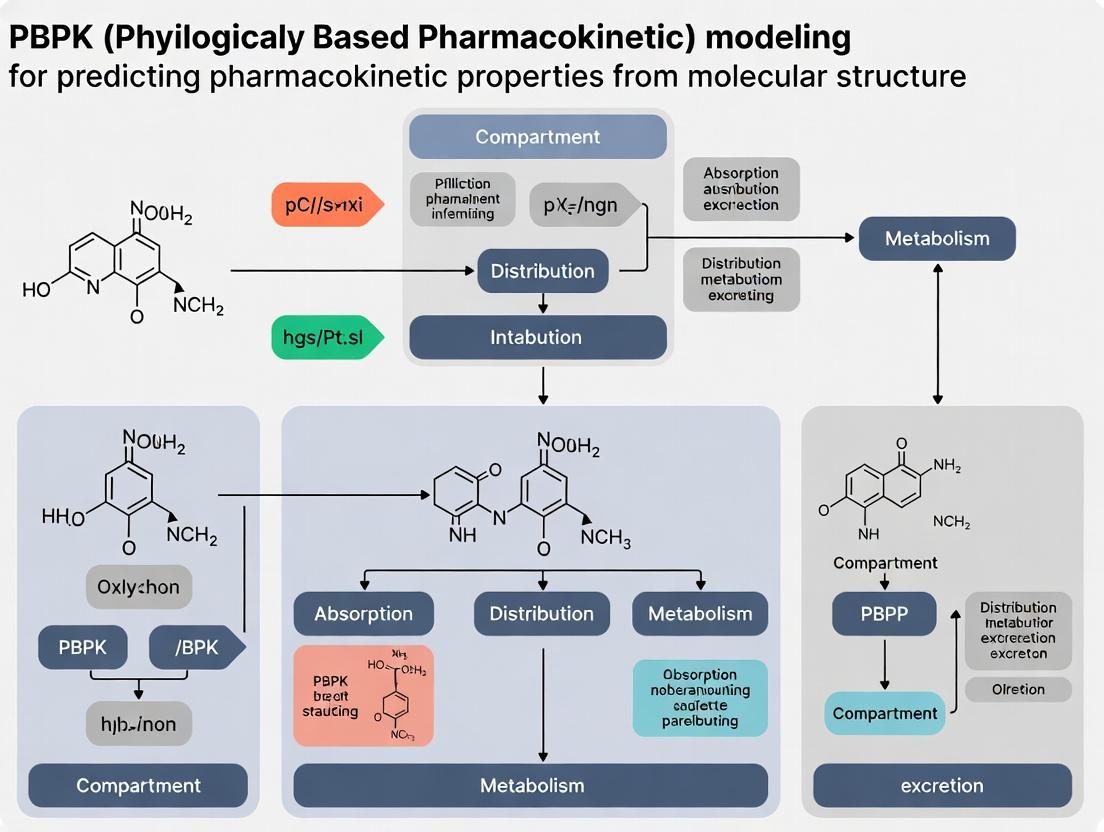
This article provides a comprehensive guide for drug development professionals on the application of Physiologically-Based Pharmacokinetic (PBPK) modeling for predicting pharmacokinetic (PK) properties directly from molecular structure.
From Molecule to Man: How PBPK Modeling Predicts Drug Pharmacokinetics from Chemical Structure
Abstract
This article provides a comprehensive guide for drug development professionals on the application of Physiologically-Based Pharmacokinetic (PBPK) modeling for predicting pharmacokinetic (PK) properties directly from molecular structure. We explore the foundational principles of integrating in silico predictions of physicochemical properties (e.g., logP, pKa, solubility) and metabolic parameters into mechanistic PBPK frameworks. The content details the methodological workflow for building and applying these structure-informed models, addresses common challenges in parameter optimization and model reliability, and critically evaluates validation strategies against clinical data. Finally, we compare structure-informed PBPK with traditional QSAR approaches, highlighting its advantages for first-in-human dose prediction, drug-drug interaction risk assessment, and supporting regulatory submissions in the era of model-informed drug development.
The Science of Prediction: Bridging Chemical Structure and Human Physiology
Core Principles & Quantitative Parameters
Physiologically Based Pharmacokinetic (PBPK) modeling is a mathematical, mechanistic framework that integrates compound-specific physicochemical and biochemical data with species-specific physiological and anatomical information to predict ADME. This approach is central to a thesis focused on predicting pharmacokinetic properties directly from molecular structure.
Table 1: Essential Physiological Inputs for a Human PBPK Model
| Organ/Tissue | Volume (L/kg BW) | Blood Flow Rate (Q) (L/h/kg BW) | Tissue Composition (Key for Distribution) |
|---|---|---|---|
| Adipose | 0.214 | 0.36 | High lipid, low water |
| Bone | 0.085 | 0.17 | High extra-cellular space |
| Brain | 0.02 | 1.12 | Tight junctions (BBB), medium lipid |
| Gut | 0.046 | 1.26 | Enterocyte mass for metabolism |
| Heart | 0.0047 | 0.51 | Well-perfused muscle |
| Kidneys | 0.009 | 0.74 | Filtration, secretion, reabsorption |
| Liver | 0.026 | 0.95 | Portal vein (0.75) + Hepatic artery (0.20) |
| Lungs | 0.017 | 1.0 | Receives total cardiac output |
| Muscle | 0.34 | 0.77 | Large volume, slow perfusion |
| Skin | 0.037 | 0.43 | Barrier for transdermal absorption |
| Plasma | 0.043 | - (Circulating) | Protein binding (e.g., Albumin, AAG) |
Note: BW = Body Weight. Values are standard 70kg human reference. Sources: Rodgers & Rowland 2006; Willmann et al., 2005.
Table 2: Key Compound-Specific Inputs and Their Structural Determinants
| Parameter | Symbol | Typical Range | Primary Structural/In Silico Prediction Method |
|---|---|---|---|
| Lipophilicity | Log P/D | -2 to 6 | Chromatographic (HPLC), atomic contribution (CLOGP) |
| Acid/Base Dissociation Constant | pKa | 0-14 | Potentiometric titration, computational (MARVIN) |
| Solubility (at pH) | S | µg/mL to mg/mL | Kinetic (µSOL) / Thermodynamic, QSPR models |
| Permeability (Caco-2/MDCK) | Papp | 1-100 (x10⁻⁶ cm/s) | In vitro assay, Rule-of-5, computational models |
| Fraction Unbound in Plasma | fu | 0.001-1.0 | Equilibrium dialysis, QSAR based on lipophilicity & charge |
| Michaelis Constant (Metabolism) | Km | µM-mM | In vitro enzyme kinetics (rCYP, hepatocytes) |
| Maximum Reaction Velocity | Vmax | pmol/min/pmol CYP | In vitro enzyme kinetics, scaling via ISEF |
| Renal Clearance | CLr | 0-120 mL/min | In vitro transporter assays (OAT, OCT, MATE), physicochemical rules |
Application Notes: From Structure to PBPK Prediction
Application Note 1: Predicting Tissue Partitioning. The tissue:plasma partition coefficient (Kp) is critical for volume of distribution (Vd). Mechanistic methods like the Poulin and Theil (Rodgers and Rowland) method use compound lipophilicity (Log P), pKa, and tissue composition data (Table 1) to predict Kp values directly from structure, superseding empirical regression models. This forms a core chapter of the thesis, linking molecular descriptors to physiological distribution.
Application Note 2: IVIVE for First-in-Human Dose. The paradigm of In Vitro to In Vivo Extrapolation (IVIVE) underpins modern PBPK. Intrinsic clearance (CLint) from human liver microsomes or hepatocytes is scaled to hepatic clearance (CLh) using physiological scaling factors (e.g., 120 million hepatocytes/g liver, 25.7 g liver/kg BW). When combined with a full PBPK model, this allows prediction of human pharmacokinetics from in vitro data derived from synthesized compounds.
Application Note 3: Formulation & Absorption Prediction. For poorly soluble candidates (BCS Class II/IV), PBPK absorption models integrate structural parameters (solubility, permeability) with gastrointestinal physiology (pH, transit times, bile salt levels) and formulation properties (particle size, dissolution rate) to simulate plasma profiles. This guides salt form selection and formulation strategy early in development.
Experimental Protocols for Core PBPK Input Generation
Protocol 1: Determination of Metabolic Stability (CLint)
Objective: To obtain the intrinsic clearance (CLint) of a test compound from human liver microsomes for IVIVE. Materials: See "Scientist's Toolkit" below. Method:
- Prepare incubation mix: 0.1 M phosphate buffer (pH 7.4), 1 mM NADPH, 0.5 mg/mL HLM, and test compound (1 µM, from 10 mM DMSO stock; keep final DMSO <0.1%).
- Pre-incubate HLM and compound in buffer at 37°C for 5 min. Initiate reaction by adding NADPH.
- Aliquot 50 µL of reaction mixture at t = 0, 5, 15, 30, 45, 60 minutes into a stop solution (200 µL acetonitrile with internal standard).
- Centrifuge at 4000g for 15 min to precipitate protein. Analyze supernatant via LC-MS/MS.
- Plot natural log of peak area ratio (compound/IS) vs. time. Slope = -k (first-order depletion rate constant).
- Calculate CLint (µL/min/mg protein) = (k * Incubation Volume) / (mg protein in incubation).
- Scale to in vivo hepatic CLint using physiological scaling factors.
Protocol 2: Determination of Permeability (Papp) via Caco-2 Assay
Objective: To measure apparent permeability for prediction of human fractional absorption (Fa). Method:
- Culture Caco-2 cells on semi-permeable inserts (e.g., 12-well Transwell) for 21-25 days until transepithelial electrical resistance (TEER) >300 Ω·cm².
- Prepare transport buffer (HBSS-HEPES, pH 7.4).
- A-B Direction: Add test compound (e.g., 10 µM) to apical chamber. Sample from basolateral chamber at t=0, 30, 60, 90, 120 min, replacing with fresh buffer.
- B-A Direction: Add compound to basolateral chamber. Sample from apical chamber.
- Analyze samples via LC-MS/MS.
- Calculate Papp (cm/s) = (dQ/dt) / (A * C0), where dQ/dt is transport rate, A is membrane area, C0 is initial donor concentration.
- Include high-permeability (e.g., Metoprolol) and low-permeability (e.g., Atenolol) controls. Efflux ratio = Papp(B-A)/Papp(A-B).
Visualization of Concepts
PBPK Modeling Workflow for Structure-Based Prediction
Title: Workflow for Structure-Based PBPK Modeling
IVIVE & Hepatic Clearance Pathway
Title: IVIVE for Hepatic Clearance Prediction
The Scientist's Toolkit: Key Research Reagent Solutions
| Reagent/Kit | Supplier Examples | Function in PBPK Input Generation |
|---|---|---|
| Pooled Human Liver Microsomes (HLM) | Corning, XenoTech, Thermo Fisher | Source of CYP enzymes for measuring metabolic CLint via IVIVE. |
| Cryopreserved Human Hepatocytes | BioIVT, Lonza | Gold-standard in vitro system for hepatic CLint and transporter studies. |
| Caco-2 Cell Line | ATCC, Sigma-Aldrich | Model intestinal epithelium for measuring permeability (Papp). |
| HTS Transwell Plates | Corning | Permeable supports for cell-based absorption and transport assays. |
| Rapid Equilibrium Dialysis (RED) Device | Thermo Fisher | High-throughput measurement of plasma protein binding (fu). |
| µSOL Solubility Assay Platform | Pion Inc. | Measures kinetic solubility in bio-relevant media (FaSSIF, FeSSIF). |
| NADPH Regenerating System | Promega, Corning | Provides constant NADPH for oxidative metabolic reactions in HLM assays. |
| LC-MS/MS System (e.g., Triple Quad) | Sciex, Agilent, Waters | Quantification of drug concentrations in in vitro and in vivo samples. |
| GastroPlus/Simcyp Simulator | Certara, Simulations Plus | Commercial PBPK software platforms for model building and simulation. |
| MARVIN/pKa Prediction Software | ChemAxon | Calculates pKa and logP from molecular structure for distribution modeling. |
Physiologically Based Pharmacokinetic (PBPK) modeling is a cornerstone of modern drug development, enabling the in silico prediction of a compound's absorption, distribution, metabolism, and excretion (ADME) fate. The predictive power of these models is fundamentally dependent on the quality of the input parameters. This application note establishes the critical role of four key molecular descriptors—LogP, pKa, Molecular Weight (MW), and Solubility—as the primary determinants of a compound's physicochemical character. These descriptors serve as the essential interface between molecular structure and the mechanistic parameters (e.g., permeabilities, partition coefficients, dissolution rates) required for robust PBPK modeling. Mastery of their measurement and interpretation is therefore foundational to any thesis or research program aiming to predict pharmacokinetic properties from structure.
Core Descriptors: Definitions and Impact on PK
| Descriptor | Definition | Primary PK Impact | Ideal Range (Oral Drugs) | Quantitative Influence |
|---|---|---|---|---|
| LogP (Partition Coefficient) | Logarithm of the ratio of a compound's concentration in octanol to its concentration in water at equilibrium. Measures lipophilicity. | Absorption & Distribution: Governs passive transcellular permeability and tissue partitioning. High LogP can lead to high volume of distribution (Vd) but also increased metabolic clearance. | 1 - 5 | LogP > 5: High risk of poor solubility, high metabolic clearance. LogP < 0: Poor membrane permeability. |
| pKa (Acid Dissociation Constant) | pH at which 50% of the molecule is ionized. Defines the charge state of ionizable groups. | Absorption & Distribution: Dictates the fraction of unionized drug across physiological pH gradients (e.g., GI tract, plasma). Governs pH-dependent solubility and permeability. | For acids: pKa 3-5; For bases: pKa 7-9 | Rule of thumb: For optimal passive absorption, the major species at intestinal pH (6.5) should be unionized. |
| Molecular Weight (MW) | Sum of atomic weights of all atoms in a molecule. | Absorption & Elimination: Impacts passive diffusion (larger molecules diffuse slower). Critical for rules like Lipinski's Rule of 5. Influences biliary excretion potential. | < 500 Da | MW > 500 Da: Decreased passive permeability, increased likelihood of active transport involvement. |
| Aqueous Solubility | Maximum concentration of a compound dissolved in water under equilibrium conditions. | Absorption: The rate and extent of dissolution in the GI tract, often the limiting factor for bioavailability of low-solubility compounds. | > 10 µg/mL (for dose > 1 mg/kg) | Low solubility (< 10 µg/mL) often necessitates formulation strategies (e.g., amorphous solid dispersions, lipids). |
Experimental Protocols
Protocol 1: Determination of LogD (pH-Dependent LogP) via Shake-Flask Method
Objective: To measure the apparent partition coefficient (LogD) of an ionizable compound at physiologically relevant pH (e.g., 7.4). Materials: Test compound, n-octanol, phosphate buffer (pH 7.4), HPLC vials, vortex mixer, centrifuge, HPLC system with UV detector. Procedure:
- Saturation: Pre-saturate octanol with buffer and buffer with octanol by mixing equal volumes overnight. Separate phases before use.
- Partitioning: Dissolve the compound in the pre-saturated phase of choice (typically buffer) to a known concentration (≤ 0.01M). Combine 1.5 mL of this solution with 1.5 mL of the opposite pre-saturated phase in a HPLC vial.
- Equilibration: Cap the vial and vortex for 10 minutes. Centrifuge at 3000 rpm for 15 minutes to achieve complete phase separation.
- Analysis: Carefully sample from each phase. Dilute the octanol phase with a water-miscible solvent (e.g., methanol) as needed. Analyze drug concentration in both phases using a validated HPLC-UV method.
- Calculation: LogDpH7.4 = Log10([Drug]octanol / [Drug]buffer).
Protocol 2: Determination of pKa by Potentiometric Titration
Objective: To determine the acid dissociation constant(s) of a compound using an automated titrator. Materials: Test compound, GLpKa instrument (or equivalent), 0.5 M KCl (for ionic strength adjustment), 0.1 M HCl, 0.1 M KOH, degassed water. Procedure:
- Preparation: Dissolve 0.5-1 mg of compound in 20 mL of 0.5 M KCl solution in the titration cell. Maintain constant temperature (25°C).
- Acidification: Titrate the solution with 0.1 M HCl to pH ~2.5 to fully protonate the molecule.
- Back-Titration: Titrate the acidified solution with standardized 0.1 M KOH while recording pH after each incremental addition.
- Analysis: The software calculates pKa values from the titration curve using the modified Henderson-Hasselbalch equation. Multiple inflection points indicate multiple ionizable groups.
Protocol 3: Thermodynamic Solubility Measurement (Powder Dissolution)
Objective: To determine the equilibrium solubility of a crystalline compound in a relevant aqueous buffer (e.g., FaSSIF, pH 6.5). Materials: Excess crystalline compound (pre-characterized polymorph), biorelevant buffer, magnetic stirrer, temperature-controlled bath (37°C), 0.22 µm syringe filters, LC-MS. Procedure:
- Setup: Add a known, excessive amount of solid compound to a vial containing 5-10 mL of pre-warmed (37°C) buffer.
- Equilibration: Stir the suspension at a constant rate (e.g., 300 rpm) in a temperature-controlled environment for 24 hours (or until equilibrium is confirmed by sequential sampling).
- Sampling: At equilibrium, withdraw an aliquot and immediately filter through a pre-warmed syringe filter to separate undissolved solid.
- Analysis: Dilute the filtrate appropriately and quantify the dissolved drug concentration using a validated LC-MS method. Report solubility in µg/mL or µM.
Visualization of Descriptor Interplay in PBPK Workflow
Title: From Structure to PK Fate via Descriptors and PBPK Parameters
The Scientist's Toolkit: Essential Research Reagents & Materials
| Item | Function in Descriptor/PK Research |
|---|---|
| Biorelevant Media (FaSSIF/FeSSIF) | Simulates intestinal fluids for physiologically relevant solubility and dissolution measurements. |
| PAMPA (Parallel Artificial Membrane Permeability Assay) Plates | High-throughput tool for predicting passive transcellular permeability based on LogP/D. |
| Caco-2 Cell Line | Human colon adenocarcinoma cells forming differentiated monolayers; gold standard for predicting intestinal absorption (active + passive). |
| Human Liver Microsomes (HLM) / Hepatocytes | Essential in vitro systems for measuring metabolic stability and clearance, parameters influenced by lipophilicity (LogP). |
| Automated Titrator (e.g., GLpKa) | Enables accurate, high-throughput determination of pKa values via potentiometric or spectrophotometric methods. |
| LC-MS/MS System | Critical for sensitive and specific quantification of drug concentrations in complex matrices (e.g., from solubility, partitioning, permeability assays). |
| n-Octanol (HPLC Grade) | Standard non-polar phase for LogP/LogD measurements via the shake-flask method. |
| pH-Meter with Micro Electrode | For precise pH adjustment of buffers used in pKa, solubility, and LogD assays. |
| Simcyp or GastroPlus Software | Industry-standard PBPK modeling platforms that directly utilize LogP, pKa, MW, and solubility data to simulate PK profiles. |
Within the framework of developing a robust Physiologically-Based Pharmacokinetic (PBPK) modeling thesis, accurate prediction of Absorption, Distribution, Metabolism, and Excretion (ADME) parameters from molecular structure is paramount. This application note details the in silico methodologies—Quantitative Structure-Activity Relationship (QSAR), Machine Learning (ML), and Quantum Chemistry (QC)—that serve as the foundational engines for generating reliable input parameters for PBPK models. These tools enable the a priori prediction of pharmacokinetic properties, streamlining early drug discovery.
Application Notes & Protocols
QSAR-Based ADME Prediction
Application Note: 2D and 3D-QSAR models correlate calculated molecular descriptors with experimental ADME endpoints (e.g., logP, permeability). They are fast and interpretable, ideal for high-throughput screening within a homologous series.
- Key Descriptors: LogP (lipophilicity), polar surface area (TPSA), molecular weight (MW), hydrogen bond donors/acceptors (HBD/HBA).
- Limitation: Predictive power is confined to the chemical space of the training set.
Protocol 2.1.1: Building a 2D-QSAR Model for Human Intestinal Absorption (HIA)
- Data Curation: Compile a dataset of ≥200 molecules with reliable experimental %HIA values from literature/databases (e.g., ChEMBL).
- Descriptor Calculation: Use tools like RDKit, PaDEL-Descriptor, or MOE to compute 200+ 2D molecular descriptors for each compound.
- Data Preprocessing: Remove constant/near-constant descriptors. Handle missing data. Normalize or standardize remaining descriptors.
- Model Building: Split data (80:20) into training and test sets. Apply feature selection (e.g., Genetic Algorithm, stepwise regression) on the training set to reduce dimensionality. Develop a multivariate linear regression (MLR) or Partial Least Squares (PLS) model.
- Validation: Validate using internal cross-validation (e.g., 5-fold CV) and external test set. Report Q² (cross-validated R²) and R²_pred for test set.
- Interpretation: Analyze model coefficients to identify key structural features promoting or hindering absorption.
Machine Learning-Based ADME Prediction
Application Note: ML algorithms (e.g., Random Forest, Gradient Boosting, Deep Neural Networks) handle complex, non-linear relationships in high-dimensional data. They are superior for integrative predictions across diverse chemical spaces.
- Advantage: Can integrate diverse data types (descriptors, fingerprints, images) to predict complex endpoints like CYP450 inhibition or clearance.
Protocol 2.2.1: Developing a Random Forest Model for CYP3A4 Inhibition
- Dataset: Obtain a binary classification dataset (inhibitor/non-inhibitor) for CYP3A4 from PubChem BioAssay (AID 1851) or other sources.
- Fingerprint Generation: Encode molecules using extended-connectivity fingerprints (ECFP4) as model input features.
- Class Balancing: If classes are imbalanced, apply SMOTE (Synthetic Minority Over-sampling Technique) on the training set only.
- Model Training: Use scikit-learn or similar. Train a Random Forest classifier on the training set. Optimize hyperparameters (nestimators, maxdepth) via grid search with cross-validation.
- Evaluation: Assess model on the held-out test set using metrics: Accuracy, Precision, Recall, F1-score, and AUC-ROC.
- Deployment: Save the trained model (e.g., using joblib) for integration into PBPK modeling workflows.
Quantum Chemistry-Based ADME Prediction
Application Note: QC methods (e.g., Density Functional Theory - DFT) compute electronic structure properties from first principles, offering high accuracy for specific parameters like pKa, redox potentials, and reaction barriers for metabolism.
- Use Case: Accurate prediction of regioselectivity in Phase I metabolism (e.g., site of oxidation by CYPs) via transition state modeling.
- Limitation: Computationally expensive; applied to smaller, focused compound sets.
Protocol 2.3.1: Calculating pKa Using DFT for Ionizable Compounds
- System Preparation: Generate 3D geometries for the protonated and deprotonated forms of the molecule. Use conformer search (e.g., OMEGA, RDKit) to identify lowest-energy conformer for each state.
- Geometry Optimization: Perform DFT geometry optimization (e.g., using Gaussian, ORCA, or PySCF) with a solvent model (e.g., IEFPCM for water) and a functional/basis set like B3LYP/6-31+G(d).
- Frequency Calculation: Run a frequency calculation on optimized geometries to confirm a true minimum (no imaginary frequencies) and obtain thermodynamic corrections.
- Energy Calculation: Perform a higher-level single-point energy calculation on the optimized geometries (e.g., M06-2X/def2-TZVP with SMD solvation).
- pKa Calculation: Calculate the free energy difference (ΔG) for deprotonation in solution. Convert ΔG to pKa using the thermodynamic cycle and a reference acid with known experimental pKa. Apply appropriate linear regression correction if necessary.
Table 1: Comparison of In Silico ADME Prediction Tools
| Tool Category | Typical Input | Key Outputs | Speed | Interpretability | Best For |
|---|---|---|---|---|---|
| 2D/3D QSAR | Molecular Descriptors (logP, TPSA) | Regression/Classification Models | Very Fast | High | Homologous series, HTS filtering |
| Machine Learning | Fingerprints, Descriptors, Graphs | Classification, Regression Models | Fast to Medium | Medium to Low | Diverse chemical space, complex endpoints |
| Quantum Chemistry | 3D Molecular Geometry | Electronic Properties, Reaction Energies | Very Slow | High (Mechanistic) | Precise property prediction, metabolism simulation |
Table 2: Representative Performance Metrics for ML Models on ADME Endpoints (Recent Benchmark Studies)
| ADME Endpoint | Dataset Size | Best Model Type | Reported Metric (Test Set) | Key Features Used |
|---|---|---|---|---|
| Human Hepatic Clearance | ~1,100 compounds | Gradient Boosting (XGBoost) | MAE = 0.22 log(mL/min/kg) | ECFP6, RDKit Descriptors |
| Caco-2 Permeability | ~500 compounds | Graph Neural Network (GNN) | Accuracy = 88% | Molecular Graph |
| hERG Inhibition | ~5,400 compounds | Deep Neural Network (DNN) | AUC-ROC = 0.89 | Molecular fingerprints & descriptors |
| Bioavailability | ~600 compounds | Random Forest | R² = 0.67 | 2D/3D descriptors, logD |
Visualizations
Title: Tool Workflow for PBPK-Relevant ADME Prediction
Title: ADME Prediction Integration into PBPK Modeling
The Scientist's Toolkit: Research Reagent Solutions
Table 3: Essential Software & Computational Tools for In Silico ADME Prediction
| Tool/Resource | Category | Primary Function in ADME Prediction | Example/Provider |
|---|---|---|---|
| Descriptor Calculation | QSAR/ML | Computes physicochemical & topological descriptors from structure. | RDKit, MOE, PaDEL-Descriptor |
| Molecular Fingerprinting | ML | Encodes molecular structure into a bit vector for ML model input. | RDKit (ECFP, MACCS), Chemistry Development Kit (CDK) |
| Quantum Chemistry Suite | QC | Performs ab initio and DFT calculations for electronic properties. | Gaussian, ORCA, PySCF, GAMESS |
| Cheminformatics Platform | General | Integrated environment for modeling, visualization, and data analysis. | Schrödinger Suite, OpenEye Toolkits |
| Machine Learning Library | ML | Provides algorithms for building, training, and validating predictive models. | scikit-learn, TensorFlow, PyTorch, XGBoost |
| ADME Database | Data Source | Curated experimental data for model training and validation. | ChEMBL, PubChem BioAssay, ADMETlab Database |
| PBPK Software | Integration Platform | Integrates predicted ADME parameters for whole-body PK simulation. | Simcyp Simulator, PK-Sim, GastroPlus |
Within the broader thesis on predicting pharmacokinetic (PK) properties from molecular structure, this document details the application of Physiologically Based Pharmacokinetic (PBPK) modeling. A PBPK model mathematically transposes drug-specific physicochemical and biochemical parameters onto a physiological framework of interconnected compartments representing organs and tissues. This structure enables a mechanistic, bottom-up prediction of absorption, distribution, metabolism, and excretion (ADME), bridging in silico predictions and in vitro data to anticipated in vivo outcomes.
Core PBPK Model Structure and Compartmentalization
The standard whole-body PBPK model structure organizes the body into compartments corresponding to key organs, linked by the arterial and venous blood circulation. Each compartment is characterized by its physiological volume, blood flow rate, and tissue composition.
Table 1: Standard Physiological Parameters for a 70 kg Human Male (Reference Values)
| Compartment | Volume (L) | % Body Weight | Blood Flow (L/h) | % Cardiac Output |
|---|---|---|---|---|
| Adipose | 14.5 | 20.7% | 2.4 | 5.0% |
| Bone | 10.5 | 15.0% | 2.4 | 5.0% |
| Brain | 1.45 | 2.1% | 14.4 | 12.0% |
| Gut (Tissue) | 1.75 | 2.5% | 19.2 | 16.0% |
| Heart | 0.33 | 0.5% | 7.2 | 6.0% |
| Kidney | 0.31 | 0.4% | 43.2 | 36.0% |
| Liver | 1.80 | 2.6% | 24.0* | 20.0%* |
| Lung | 0.50 | 0.7% | 120.0 | 100% |
| Muscle | 29.0 | 41.4% | 14.4 | 12.0% |
| Skin | 3.70 | 5.3% | 7.2 | 6.0% |
| Arterial Blood | 1.75 | 2.5% | - | - |
| Venous Blood | 4.90 | 7.0% | - | - |
*Liver receives dual supply: Hepatic Artery (~6 L/h) + Portal Vein (from Gut, ~19.2 L/h).
Diagram Title: Whole-Body PBPK Model Blood Flow Structure
Linking Predicted Parameters to Physiological Compartments
Key drug-specific parameters, often predicted from chemical structure, are assigned to relevant physiological compartments to define the drug's disposition.
Table 2: Key Drug Parameters and Their Physiological Compartment Linkages
| Predicted Parameter | Definition | Primary Linking Compartment(s) | Governs Process |
|---|---|---|---|
| Log P / Log D | Lipophilicity | All Tissues (via Kp) | Tissue Distribution |
| pKa | Ionization constant | Gut, Kidney | Permeability, Reabsorption |
| Fu (Fraction unbound) | Plasma protein binding | Blood, All Tissues | Free drug availability |
| CLint (in vitro) | Intrinsic metabolic clearance | Liver (Hepatocytes) | Metabolism |
| Permeability (Papp, Caco-2) | Membrane permeability | Gut Lumen, BBB, Renal Tubule | Absorption, Distribution |
| Solubility & Dissolution Rate | Absorption limiting factors | Gut Lumen | Oral Absorption |
Protocol: Predicting Tissue:Plasma Partition Coefficients (Kp)
Objective: To estimate the steady-state drug concentration ratio between a tissue and plasma, a critical parameter for distribution volume.
Methodology (Rodgers & Rowland Method):
- Input Prediction: Predict Log P and pKa using software (e.g., ChemAxon, ACD/Labs). Identify if the drug is neutral, monoprotic acid/base, or ampholyte.
- Calculate Fraction Unbound in Plasma (fup): Use empirical equations or in silico models correlating structure to plasma protein binding.
- Calculate Fraction Unbound in Tissue (fut): Apply tissue-composition-based equations (Rodgers & Rowland, 2005). For muscle as an example:
- For neutral drugs:
Kp = (0.012 + 0.064 * LogP + 0.0026 * fu_p^-1) / fu_p - For monoprotic bases: Incorporates extracellular and intracellular pH, phospholipid, and protein binding.
- For neutral drugs:
- Iterate for All Tissues: Repeat calculation using tissue-specific composition data (water, lipid, protein content).
- Validate/Refine: Compare predicted volume of distribution (Vss = Σ(Kpi * Vi)) to in vivo data if available.
The Scientist's Toolkit: Research Reagent Solutions
Table 3: Essential Tools for Developing and Validating PBPK Models
| Item / Solution | Function in PBPK Research |
|---|---|
| In Silico Prediction Software (e.g., GastroPlus, Simcyp, PK-Sim, ADMET Predictor) | Integrates QSAR models to predict physicochemical/ADME parameters and provides platform for PBPK model construction and simulation. |
| Tissue Composition Database | Provides essential physiological data (water, lipid, phospholipid, protein content) for calculating tissue partition coefficients. |
| Primary Human Hepatocytes | In vitro system for measuring intrinsic metabolic clearance (CLint), enzyme kinetics, and assessing drug-drug interactions. |
| Caco-2 Cell Line | Standard in vitro model for predicting human intestinal permeability and active transport. |
| Human Liver Microsomes/S9 Fraction | Used for high-throughput determination of metabolic stability and reaction phenotyping. |
| Plasma Protein Binding Assay Kits (e.g., Equilibrium Dialysis, Ultracentrifugation) | To experimentally determine fraction unbound in plasma (fup), a critical input parameter. |
| Biorelevant Dissolution Media (FaSSGF, FaSSIF, FeSSIF) | Simulates gastrointestinal fluid composition to measure dissolution rate, informing the oral absorption model. |
| Clinical PK Database (e.g., PK/DB) | Repository of in vivo human PK data for model verification and refinement. |
Protocol: Implementing a Minimal PBPK (mPBPK) Model for Monoclonal Antibodies
Objective: To construct a simplified PBPK model for large molecules focusing on convective transport, lymphatic flow, and target-mediated drug disposition (TMDD).
Diagram Title: mPBPK Model for Large Therapeutics
Methodology:
- Define Model Structure: Use a 2- or 3-compartment mPBPK model with plasma, rapidly equilibrating, and slowly equilibrating tissue groups.
- Parameterize Lymphatic Flow: Set lymph flow from tissue compartments as a fraction of plasma flow (e.g., 0.2-0.3%).
- Incorporate TMDD (if applicable):
- Predict target expression (Rtot) in tissues from literature.
- Obtain in vitro binding affinity (KD) to calculate association/dissociation rates (kon, koff).
- Include internalization and degradation rate (kint) for the drug-target complex.
- Include FcRn Recycling: Add an endogenous IgG competition model and FcRn-mediated recycling parameters in vascular endothelium to predict half-life extension.
- Sensitivity Analysis: Perform analysis to identify parameters (e.g., endosomal clearance, lymph flow) with greatest impact on exposure (AUC) and half-life.
The PBPK model structure provides a quantitative, physiology-grounded scaffold onto which drug-specific parameters, increasingly predicted from molecular structure, can be integrated. The detailed application notes and protocols herein enable researchers to systematically link in silico and in vitro predictions to compartments representing organs and tissues, advancing the thesis of mechanistically predicting human pharmacokinetics from first principles.
The Critical Role of Systems Biology Data (e.g., Tissue Composition, Enzyme Abundance) in Structural Predictions
Application Notes
Integrating quantitative systems biology data into physiologically based pharmacokinetic (PBPK) models transforms structural predictions from theoretical exercises into biologically realistic simulations. This integration is critical for translating molecular structure into accurate forecasts of absorption, distribution, metabolism, and excretion (ADME) properties.
Key Integrative Applications:
- From Protein Structure to Hepatic Clearance: The three-dimensional structure of a drug candidate, predicted via homology modeling or molecular dynamics, informs its potential interaction with metabolic enzymes like CYP450s. However, a precise clearance prediction requires scaling this intrinsic interaction by the abundance of the specific enzyme (e.g., CYP3A4) in the human liver, and further by the liver tissue mass and blood flow. Systems biology data provides these critical scaling factors.
- Tissue Distribution Predictions: Structural properties (logP, pKa, molecular weight) predict a compound's partitioning into neutral phospholipid bilayers. Accurate prediction of volume of distribution ((V_d)) requires integrating these with the compositional data of tissues—specifically, the fractional volumes of intracellular water, extracellular water, neutral lipids, and phospholipids in each organ. This allows structural predictions to be contextualized within human physiology.
- Transporter Substrate Identification: In silico models can flag a molecular structure as a potential substrate for efflux transporters like P-gp. Predicting the in vivo impact of this interaction requires data on the localized expression and abundance of P-gp at biological barriers (e.g., intestinal enterocytes, blood-brain barrier endothelial cells).
Impact: The confluence of structural prediction and systems data reduces uncertainty in early drug development, enabling virtual screenings that prioritize molecules with a higher probability of favorable human PK, de-risking candidate selection, and informing first-in-human dose calculations.
Data Tables
Table 1: Representative Human Tissue Composition for Distribution Modeling
| Tissue | Total Water (%) | Extracellular Water (%) | Intracellular Water (%) | Neutral Lipid (%) | Phospholipid (%) | Protein (%) | Reference |
|---|---|---|---|---|---|---|---|
| Liver | 71.0 | 21.3 | 49.7 | 5.0 | 2.7 | 21.3 | (Berezhkovskiy, 2004) |
| Muscle | 76.0 | 12.0 | 64.0 | 2.0 | 1.0 | 21.0 | (Rodgers & Rowland, 2006) |
| Adipose | 20.0 | 12.0 | 8.0 | 79.0 | 0.5 | 0.5 | (Rodgers & Rowland, 2007) |
| Brain | 78.0 | 20.0 | 58.0 | 6.0 | 5.0 | 11.0 | (Björkman, 2002) |
Table 2: Median Absolute Abundance of Major CYP Enzymes in Human Liver Microsomes (pmol/mg protein)
| Enzyme | Median Abundance (pmol/mg) | Variability (CV%) | Primary Reaction | Key Structural Alert |
|---|---|---|---|---|
| CYP3A4 | 98 | 40% | N-dealkylation, Hydroxylation | Large lipophilic molecules |
| CYP2D6 | 9 | 30% | Hydroxylation (basic N) | Basic amine, 5-7 Å from site of metabolism |
| CYP2C9 | 68 | 40% | Hydroxylation (aromatic) | Anionic/acidic substrates |
| CYP1A2 | 38 | 50% | N-demethylation, Hydroxylation | Planar polyaromatic structures |
| Source: Published quantitative proteomics datasets (e.g., Wang et al., J Proteome Res, 2021). |
Experimental Protocols
Protocol 1: LC-MS/MS-based Absolute Quantification of Drug-Metabolizing Enzymes in Human Tissue Slices
Objective: To generate enzyme abundance data for scaling in vitro intrinsic clearance to organ clearance in PBPK models.
Materials: See Scientist's Toolkit.
Procedure:
- Tissue Preparation: Snap-frozen human liver or other tissue is cryosectioned (10-20 μm thickness). A section is homogenized in ice-cold isotonic buffer.
- Membrane Isolation: The homogenate is subjected to differential centrifugation (9,000 x g, 20 min; then 100,000 x g, 60 min) to isolate the microsomal pellet. Protein concentration is determined (Bradford assay).
- Protein Digestion: 50 μg of microsomal protein is solubilized, reduced (DTT), alkylated (iodoacetamide), and digested with trypsin (1:25 w/w) overnight at 37°C.
- LC-MS/MS with Stable Isotope-labeled Standards: Digested peptides are spiked with known concentrations of synthetic, heavy isotope-labeled (SIS) peptide standards unique to each target enzyme (e.g., for CYP3A4, CYP2D6).
- Quantitative Analysis: Samples are analyzed by nanoflow or microflow LC-MS/MS in scheduled multiple reaction monitoring (MRM) mode. The peak area ratio (light endogenous peptide / heavy SIS peptide) is calculated.
- Data Calculation: Abundance is calculated from the ratio and the known amount of SIS peptide, corrected for protein input, and expressed as pmol per mg total microsomal protein.
Protocol 2: Determination of Tissue-to-Plasma Partition Coefficients (Kp) Using In Vitro Data and Compositional-Based Prediction
Objective: To predict the steady-state tissue-to-plasma partition coefficient (Kp) for a new chemical entity using its structure-derived properties and systems biology tissue composition data.
Materials: See Scientist's Toolkit.
Procedure:
- Input Parameter Measurement: Determine key compound-specific properties: logP (octanol/water), pKa, and fraction unbound in plasma ((f_u)). These can be measured experimentally or predicted from structure using validated QSAR models.
- Select Tissue Composition Model: Adopt a mechanistic tissue composition model (e.g., Rodgers & Rowland, Poulin & Theil).
- Calculate Sub-partition Coefficients: For each tissue (from Table 1), calculate the drug's affinity for the tissue's sub-compartments:
- (K{ew}) (extracellular water) = (fu) / (f{u,ew}) (assume (f{u,ew}) = 1).
- (K{iw}) (intracellular water) = (fu) / (f{u,iw}).
- (K{nl}) (neutral lipid) = (P) (octanol:water partition coefficient).
- (K_{pl}) (phospholipid) = function of logP and compound charge.
- Compute Overall Kp: Apply the mass-balance equation: (Kp = \frac{(V{ew} \cdot K{ew}) + (V{iw} \cdot K{iw}) + (V{nl} \cdot K{nl}) + (V{pl} \cdot K{pl})}{V{total tissue water}} + \frac{(V{protein} \cdot fu)}{V{total tissue water}}) where (V{xx}) are the fractional volumes from Table 1.
- PBPK Model Integration: Input the calculated organ-specific Kp values into the distribution compartments of the whole-body PBPK model.
Visualization Diagrams
Diagram 1: Data Integration for PBPK-Based Structural Predictions
Diagram 2: From Structure to Organ Clearance Prediction
The Scientist's Toolkit
Table 3: Key Research Reagent Solutions for Quantitative Proteomics (Enzyme Abundance)
| Item | Function/Description | Example Vendor/Product |
|---|---|---|
| Heavy Isotope-labeled Peptide Standards (SIS) | Synthetic peptides with stable isotopes (13C, 15N) used as internal standards for absolute quantification by LC-MS/MS. Critical for accuracy. | JPT Peptide Technologies, Sigma-Aldrich (SureQuant kits) |
| Trypsin, Mass Spectrometry Grade | Protease for specific digestion of proteins into peptides for LC-MS/MS analysis. High purity prevents non-specific cleavage. | Promega (Sequencing Grade), Thermo Fisher Scientific |
| LC-MS/MS System with MRM Capability | Triple quadrupole mass spectrometer coupled to nano- or microflow HPLC. The workhorse for targeted, quantitative proteomics. | Sciex (QTRAP systems), Agilent (6495/6460), Waters (Xevo TQ) |
| Tissue Homogenization Buffer | Isotonic, pH-stable buffer (e.g., containing sucrose) to maintain organelle integrity during tissue processing. | Prepare in-lab (0.25M sucrose, 10mM HEPES) or commercial (e.g., from Millipore) |
| Microsome Isolation Reagents | Reagents for differential centrifugation, including ultracentrifuge and appropriate rotors/tubes. | Beckman Coulter (Optima series centrifuges) |
Table 4: Key Resources for Tissue Composition & PBPK Modeling
| Item | Function/Description | Example Source |
|---|---|---|
| Mechanistic Tissue Composition Model | Mathematical framework (e.g., Rodgers & Rowland, Poulin & Theil) to calculate Kp from drug properties and tissue composition. | Published literature (J Pharm Sci, Pharm Res) |
| Physiological Database | Curated dataset of human physiological parameters (organ weights, blood flows, tissue compositions). | PK-Sim Ontology, ICRP Publications |
| PBPK Modeling Software | Platform to integrate systems data, structural predictions, and in vitro inputs into a whole-body model. | GastroPlus, Simcyp Simulator, PK-Sim, MATLAB/Simbiology |
| QSAR Prediction Software | In silico tools to predict key ADME properties (logP, pKa, metabolic lability) directly from molecular structure. | ADMET Predictor (Simulations Plus), StarDrop, Schrodinger QikProp |
Building the Model: A Step-by-Step Guide to Structure-Informed PBPK
Application Notes
Within the paradigm of Physiologically Based Pharmacokinetic (PBPK) modeling, the initial generation of high-quality, structure-derived input parameters is the critical first step for in silico prediction of pharmacokinetic (PK) properties. This protocol details the process of translating a Simplified Molecular Input Line Entry System (SMILES) string—a textual representation of a compound's structure—into a set of predicted Absorption, Distribution, Metabolism, and Excretion (ADME) parameters suitable for PBPK model instantiation. The reliability of downstream PBPK simulations is fundamentally contingent upon the accuracy of these in silico predictions, which serve as the primary input when experimental data is unavailable in early-stage research.
The workflow integrates open-source cheminformatics toolkits with state-of-the-art quantitative structure-property relationship (QSPR) models. Key predicted parameters include lipophilicity (Log P), acid dissociation constant (pKa), solubility, plasma protein binding, and metabolic clearance via major cytochrome P450 (CYP) isoforms. This standardized, automated approach ensures reproducibility and efficiency, enabling researchers to rapidly profile novel chemical entities.
Experimental Protocols
Protocol 1: Molecular Standardization and Descriptor Calculation
Objective: To generate a standardized, three-dimensional molecular structure and calculate physiochemical descriptors from a SMILES string.
Materials & Software:
- RDKit (Python API): Open-source cheminformatics library for molecular manipulation.
- Open Babel (Command-line tool): For file format conversion and force field optimization.
- Python 3.8+ environment with scientific stack (NumPy, Pandas).
Procedure:
- SMILES Parsing and Sanitization:
- Input the canonical or isomeric SMILES string into a Python script using the
rdkit.Chemmodule. - Use
Chem.MolFromSmiles()to parse the string. EmployChem.SanitizeMol()to check valency and clean the molecular representation. - Generate a canonical SMILES output using
Chem.MolToSmiles()to ensure a unique, standardized identifier.
- Input the canonical or isomeric SMILES string into a Python script using the
3D Geometry Generation and Optimization:
- Use
rdkit.Chem.AllChem.EmbedMolecule()to generate an initial 3D conformation based on distance geometry. - Optimize the molecular geometry using the MMFF94 force field via
rdkit.Chem.AllChem.MMFFOptimizeMolecule()(for organic molecules) or UFF for organometallics. Perform a minimum of 500 iterations or until convergence.
- Use
Molecular Descriptor Calculation:
- Utilize the
rdkit.Chem.Descriptorsmodule to calculate 1D and 2D descriptors. - Compute key properties: Molecular Weight (MW), Number of Hydrogen Bond Donors/Acceptors (
NumHDonors,NumHAcceptors), Topological Polar Surface Area (TPSA) usingrdkit.Chem.rdMolDescriptors.CalcTPSA(), and rotatable bond count.
- Utilize the
Protocol 2:In SilicoADME Parameter Prediction using QSPR Models
Objective: To predict critical ADME parameters using pre-trained machine learning models.
Materials & Software:
- Mordred Descriptor Calculator: For comprehensive 2D/3D molecular descriptor generation.
- scikit-learn: Machine learning library for loading and applying pre-trained models.
- Open-Source ADME Models: Utilize models from repositories like
opentoxor those published in conjunction with recent literature (e.g., SwissADME, ADMETlab2.0 algorithms).
Procedure:
- Extended Descriptor Generation:
- From the standardized RDKit molecule object, compute a comprehensive set of ~1800 descriptors using the Mordred descriptor calculator (
mordred.MordredCalculator). Handle any calculation errors to produce a complete feature vector.
- From the standardized RDKit molecule object, compute a comprehensive set of ~1800 descriptors using the Mordred descriptor calculator (
Model Application for Key Parameters:
- Log P (Lipophilicity): Apply a consensus model or a specific QSPR model (e.g., XGBoost-based) trained on the PHYSPROP database. Input the Mordred descriptor vector.
- pKa Prediction: Use a dedicated tool such as
pka_dbfrom the RDKit ecosystem or a graph-neural network model. Separate models are typically applied for acidic and basic ionizable groups. - Intrinsic Clearance (CLint): Apply isoform-specific (e.g., CYP3A4, CYP2D6) regression or classification models. Recent models often use Morgan fingerprints (ECFP4) as input features. Predictions are often log-transformed values (µL/min/mg protein).
- Human Intestinal Absorption (HIA) & Plasma Protein Binding (PPB): Utilize binary classification (High/Low) or regression models available in open-source ADME suites.
Result Aggregation:
- Compile all predictions into a structured dictionary or DataFrame, noting the model name and version for traceability.
Data Presentation
Table 1: Core Predicted ADME Parameters for PBPK Input
| Parameter | Symbol | Predicted Value | Units | Model/Method Used | Relevance to PBPK |
|---|---|---|---|---|---|
| Lipophilicity | Log D7.4 | 2.1 | - | Consensus QSPR (XGBoost) | Tissue partitioning, volume of distribution. |
| Acid Dissoc. Constant | pKa (basic) | 8.5 | - | JChem pKa Calculator | Ionization state, membrane permeability. |
| Solubility (pH 7.4) | Sw | 12.5 | µg/mL | General Solubility Equation (GSE) | Oral absorption, dissolution rate. |
| Human Intestinal Absorption | HIA | High (94%) | % | Binary Classifier (RF) | Fraction absorbed (Fa). |
| Plasma Protein Binding | PPB | 88 | % | SwissADME Model | Free fraction (fu) for clearance. |
| CYP3A4 CLint | CLint,3A4 | 15.2 | µL/min/mg | Gradient Boosting Regressor | Hepatic metabolic clearance. |
| CYP2D6 Inhibitor | IC50 | >30 | µM | Classification Model | Risk of drug-drug interactions. |
| Topological Polar SA | TPSA | 75.8 | Ų | RDKit Calculated | Passive diffusion, blood-brain barrier. |
Mandatory Visualization
Diagram 1: Workflow from SMILES to PBPK Input Parameters
Diagram 2: Relationship of Predicted Parameters to PBPK Processes
The Scientist's Toolkit
Table 2: Essential Research Reagent Solutions & Software Tools
| Item | Category | Function in Protocol |
|---|---|---|
| RDKit | Software Library | Core open-source toolkit for cheminformatics. Handles SMILES parsing, molecular standardization, 2D descriptor calculation, and fingerprint generation. |
| Mordred Descriptor Calculator | Software Library | Extends descriptor calculation beyond RDKit basics, generating a comprehensive set of >1800 2D/3D molecular descriptors for QSPR model input. |
| Open Babel | Software Tool | Used for advanced file format conversion and molecular energy minimization when specific force fields not in RDKit are required. |
| scikit-learn / XGBoost | Software Library | Provides the framework for loading, applying, and sometimes retraining pre-trained machine learning models for property prediction. |
| Jupyter Notebook / Python Script | Software Environment | Provides an interactive or scripted computational environment to chain all steps into a reproducible pipeline. |
| Pre-trained QSPR Models | Data/Model | Curated machine learning models (e.g., for LogP, pKa, CLint) from public repositories or published literature. These are the predictive engines. |
| Standardized Molecular Database | Reference Data | Databases like ChEMBL or PHYSPROP provide experimental data for model training and validation, ensuring prediction relevance. |
Within the broader thesis on PBPK modeling for predicting pharmacokinetic properties from chemical structure, the assembly phase is critical. This step involves the systematic integration of in silico, in vitro, and in vivo predictions into established PBPK software platforms to construct and qualify a predictive model. This Application Note details the protocols and considerations for this integration.
Quantitative Data Inputs for Model Assembly
The following table summarizes the core quantitative data, typically predicted from structure or measured in vitro, required for initial model assembly in PBPK software.
Table 1: Essential Quantitative Inputs for PBPK Model Assembly
| Parameter Category | Specific Parameters | Typical Source | Software Input Location |
|---|---|---|---|
| Compound Physicochemistry | Log P, pKa, Solubility (pH-dependent), Molecular Weight | In silico prediction (e.g., ADMET Predictor, MarvinSuite) | Compound Properties / Chemistry File |
| Binding & Partitioning | Fraction Unbound in Plasma (fup), Blood-to-Plasma Ratio, Tissue-to-Plasma Partition Coefficients (Kp) | In vitro assay; Predicted via mechanistic models (e.g., Poulin & Theil, Berezhkovskiy) | Compound Properties / Distribution Module |
| Absorption (Gut) | Permeability (Peff, Caco-2), Dissolution Profile, Particle Size, Solubility in Biorelevant Media | In vitro assay; In silico prediction for permeability | Absorption Model (ACAT, ADAM) |
| Metabolism | Michaelis-Menten Constants (Km, Vmax) for specific enzymes, CLint,met | Recombinant enzyme or hepatocyte assay; Relative Activity Factor scaling | Enzyme Kinetics / Metabolism Module |
| Transport | Transport Kinetics (Km, Jmax) for key transporters (e.g., P-gp, OATP1B1, BCRP) | Transfected cell line assay (e.g., MDCK, HEK) | Transporter Kinetics Module |
| Excretion | Renal Clearance (CLr), Biliary Clearance | In vitro hepatocyte/bile duct assay; In vivo preclinical data | Renal / Biliary Clearance Module |
Experimental Protocols for Key Input Assays
Protocol 3.1: Determination of Hepatic Intrinsic Clearance (CLint) using Human Hepatocytes
- Objective: To obtain in vitro metabolic stability data for predicting in vivo hepatic metabolic clearance.
- Materials: Cryopreserved human hepatocytes (pooled), Williams' E medium, test compound, analytical standard, liquid chromatography-tandem mass spectrometry (LC-MS/MS) system.
- Procedure:
- Thaw cryopreserved hepatocytes and assess viability (trypan blue exclusion; >80% required).
- Incubate hepatocyte suspension (0.5-1.0 million cells/mL) with test compound (1 µM) at 37°C under 5% CO2.
- At time points (0, 5, 15, 30, 60, 90 min), remove aliquots and quench with acetonitrile containing internal standard.
- Centrifuge samples, analyze supernatant via LC-MS/MS to determine parent compound depletion.
- Fit the natural logarithm of percent remaining vs. time to a first-order decay model. CLint, vitro = (k * incubation volume) / (number of cells), where k is the slope.
- Scale to whole liver using physiological scaling factors (e.g., 120 million cells per gram liver, 25.7 g liver/kg body weight for human).
Protocol 3.2: Determination of Fraction Unbound in Plasma (fup) via Rapid Equilibrium Dialysis (RED)
- Objective: To measure the unbound fraction of a drug in plasma, critical for defining free drug concentration.
- Materials: RED device, human plasma, phosphate-buffered saline (PBS, pH 7.4), test compound, LC-MS/MS.
- Procedure:
- Spike the test compound into plasma to a relevant concentration (e.g., 1-10 µM).
- Load plasma sample into one chamber of the RED insert and PBS into the opposing chamber.
- Seal the device and incubate at 37°C for 4-6 hours with gentle agitation to reach equilibrium.
- Post-incubation, aliquot samples from both plasma and buffer chambers.
- Process samples (matrix matching is critical: add buffer to plasma aliquots and vice versa) and analyze via LC-MS/MS.
- Calculate fup = [Drug]buffer / [Drug]plasma.
Visualization: Workflow for PBPK Model Assembly and Integration
Diagram Title: PBPK Model Assembly and Refinement Workflow
The Scientist's Toolkit: Research Reagent Solutions
Table 2: Essential Materials for PBPK Input Generation
| Item / Reagent | Supplier Examples | Function in Model Assembly |
|---|---|---|
| Cryopreserved Human Hepatocytes (Pooled) | BioIVT, Lonza, Corning | Gold-standard cell system for predicting metabolic clearance and metabolite identification. |
| Transporter-Transfected Cell Lines (MDCK-II, HEK293) | Solvo Biotechnology, GenoMembrane | Used in uptake/efflux assays to quantify transporter kinetics (Km, Jmax). |
| Rapid Equilibrium Dialysis (RED) Device | Thermo Fisher Scientific | High-throughput method for determining plasma protein binding (fup). |
| Simcyp Simulator V21+ | Certara | Industry-standard PBPK software with built-in populations, enzymes, and trial simulators. |
| GastroPlus 9.8+ | Simulations Plus | Advanced PBPK platform with strong focus on absorption modeling and mechanistic dissolution. |
| ADMET Predictor 10.3+ | Simulations Plus | In silico tool for predicting physicochemical, absorption, and distribution parameters from structure. |
| LC-MS/MS System (e.g., SCIEX Triple Quad, Agilent 6470) | SCIEX, Agilent Technologies | Essential analytical platform for quantifying drug concentrations in in vitro and in vivo samples. |
| Biorelevant Dissolution Media (FaSSIF, FeSSIF) | Biorelevant.com | Simulates intestinal fluids for more predictive in vitro dissolution testing. |
Application Note 1: PBPK-Guided First-in-Human Dose Selection
Within a PBPK thesis framework, the transition from preclinical data to a safe and efficacious first-in-human (FIH) dose is a critical step. PBPK modeling integrates physicochemical properties, in vitro ADME data, and physiological system parameters to predict human pharmacokinetics, reducing uncertainty in FIH trials.
Protocol 1.1: PBPK Workflow for FIH Dose Prediction
- Data Compilation: Input compound-specific parameters (molecular weight, logP, pKa, solubility, permeability) and in vitro data (microsomal/hepatocyte clearance, plasma protein binding, blood-to-plasma ratio, Caco-2 permeability).
- Model Building: Use a PBPK software platform (e.g., Simcyp Simulator, GastroPlus, PK-Sim) to construct a preclinical (rat, dog) model. Validate the model by simulating preclinical PK studies and comparing predicted vs. observed plasma concentration-time profiles.
- Allometric Scaling & IVIVE: Scale organ volumes and blood flows to human physiology. Apply In Vitro-In Vivo Extrapolation (IVIVE) to translate in vitro clearance to human hepatic/renal clearance.
- Sensitivity Analysis: Identify key parameters (e.g., fu, CLint, Km) with the greatest impact on AUC and Cmax predictions.
- Dose Simulation: Simulate a range of potential doses in a virtual human population (e.g., Sim-NEurCaucasian population, n=100). Determine the predicted human exposure (AUC, Cmax).
- Safety Margin Calculation: Calculate the exposure multiples between the predicted human exposure at the proposed FIH dose and the No Observed Adverse Effect Level (NOAEL) exposure from pivotal toxicology studies.
Table 1: Key Input Parameters and Data Sources for FIH PBPK Model
| Parameter Category | Specific Parameter | Typical In Vitro Assay | Role in PBPK Model |
|---|---|---|---|
| Physicochemical | Molecular Weight, LogP, pKa, Solubility | Thermodynamic solubility assay | Governs dissolution, partitioning, and absorption. |
| Binding | Fraction Unbound in Plasma (fu) | Equilibrium dialysis or ultrafiltration | Determines free drug concentration for clearance and tissue distribution. |
| Metabolism | Intrinsic Clearance (CLint) | Human liver microsomes or hepatocytes | IVIVE to predict hepatic metabolic clearance. |
| Transport | Apparent Permeability (Papp) | Caco-2 or MDCK assay | Informs intestinal absorption and potential transporter effects. |
| Distribution | Blood-to-Plasma Ratio (B:P) | Incubation and measurement in blood vs. plasma | Corrects concentration from plasma to blood for clearance organs. |
Diagram Title: PBPK Model Workflow for FIH Dose Prediction
The Scientist's Toolkit: PBPK for FIH
| Item | Function in FIH PBPK |
|---|---|
| PBPK Software Platform | Provides physiological framework, population libraries, and algorithms for IVIVE and simulation. |
| Human Liver Microsomes/Hepatocytes | In vitro system for measuring metabolic stability and estimating intrinsic clearance (CLint). |
| Caco-2 Cell Monolayers | In vitro model of human intestinal permeability, identifying absorption-limited compounds. |
| Equilibrium Dialyzer | Apparatus for accurate determination of fraction unbound in plasma (fu). |
| Virtual Population Database | Contains demographic, physiological, and genetic variability for realistic human simulations. |
Application Note 2: PBPK-Informed Formulation Strategy
PBPK models elucidate the complex interplay between API properties, formulation performance, and gastrointestinal physiology. This enables a mechanistic approach to formulation development, predicting the impact of formulation on absorption and guiding the design of enabling formulations (e.g., for BCS Class II/IV compounds).
Protocol 2.1: Simulating Formulation Performance
- Define API & Physiology: Input API-specific parameters (particle size distribution, solubility-pH profile) and select appropriate gastrointestinal physiological models (e.g., Simcyp's ACAT model).
- Select Formulation Model: Choose a dissolution model (e.g., first-order, Johnson, Weibull) or a more complex model like the compartmental absorption and transit model with advanced dissolution.
- Parameterize Formulation: Calibrate the formulation model using in vitro dissolution data (e.g., USP apparatus) for the prototype formulation.
- Virtual Bio-study: Simulate the pharmacokinetic profile of the formulation in a virtual population under fasted and fed states.
- Iterative Optimization: Modify formulation parameters (e.g., particle size, excipient levels) in silico to achieve target in vivo dissolution and absorption profiles. Prioritize prototypes for in vivo testing.
Table 2: PBPK Modeling Inputs for Common Oral Formulation Strategies
| Formulation Strategy | Key PBPK Model Parameters | Primary Goal |
|---|---|---|
| Immediate Release (IR) | Dissolution rate constant (kdiss), particle size. | Predict typical absorption profile, food effects. |
| Amorphous Solid Dispersion | Supersaturation ratio, precipitation time (Tprecip), re-dissolution rate. | Model nonlinear absorption due to supersaturation & precipitation. |
| Lipid-Based Formulation | Lipid digestion rate, drug solubilization in colloidal phases, precipitation risk. | Predict enhanced absorption for lipophilic compounds. |
| Controlled Release | Release rate constant (zero-order, erosion-based), colon absorption parameters. | Simulate sustained plasma concentrations and colonic absorption. |
Diagram Title: PBPK Formulation Development Cycle
Application Note 3: PBPK for Establishing Bioequivalence Waivers
PBPK modeling can support Biopharmaceutics Classification System (BCS)-based biowaivers and, more broadly, provide evidence for bioequivalence (BE) assessments under regulatory frameworks like FDA's ANDA and EMA's guideline. It is particularly valuable for evaluating BE under conditions where clinical trials are challenging (e.g., modified-release products, drugs with high variability, or in specific populations).
Protocol 3.1: PBPK-Based Bioequivalence Assessment
- Reference Product Characterization: Develop and validate a PBPK model for the reference listed drug (RLD) using its known physicochemical properties, formulation characteristics, and clinical PK data.
- Generic/Test Product Modeling: Develop a model for the test product, incorporating its specific in vitro characteristics (e.g., dissolution profile).
- Virtual BE Study: Conduct virtual crossover trials in a representative population (including relevant genetic polymorphisms, e.g., CYP2D6), simulating both fasted and fed states as required. The virtual population size (n) should be statistically justified.
- Statistical Analysis: Calculate the geometric mean ratio (GMR) and 90% confidence intervals (CIs) for AUC0-t, AUC0-∞, and Cmax from the virtual trial results.
- BE Conclusion: The products are considered virtually bioequivalent if the 90% CIs for the ratios of the geometric means fall within the standard BE range of 80.00% to 125.00%.
Table 3: Scenario Analysis for Virtual BE using PBPK
| Scenario | PBPK Application | Key Model Focus |
|---|---|---|
| BCS Class I Waiver | Demonstrate rapid and similar dissolution, predict GI absorption not rate-limited by dissolution. | Gastric emptying, intestinal permeability, and transit. |
| Weakly Basic Drug (pH-dependent solubility) | Predict BE in fed vs. fasted states despite dissolution differences. | GI pH model, food effect on physiology, dissolution-pH profile. |
| Prodrug | Evaluate BE of parent drug despite potential differences in prodrug conversion. | Incorporation of gut-wall/liver conversion kinetics. |
| Modified Release Product | Justify BE despite not meeting BCS criteria for IR products. | Robust modeling of release mechanism and colonic absorption. |
Diagram Title: PBPK Bioequivalence Assessment Pathway
Application Notes
Physiologically-based pharmacokinetic (PBPK) modeling is a critical tool for predicting drug disposition in special populations, bridging the gap between structural drug properties and clinical pharmacokinetics. Within the thesis context of predicting PK from molecular structure, these models integrate in vitro and in silico data on a compound's physicochemical properties (e.g., logP, pKa, molecular weight) and metabolic pathways with population-specific physiological parameters.
Pediatric Population
PBPK models account for ontogeny—the maturation of enzyme activity, organ size, blood flows, and glomerular filtration rate from neonates to adolescents. This allows for first-in-pediatric dose prediction and trial design optimization, minimizing ethical concerns and safety risks.
Hepatic and Renal Impairment
These models simulate the impact of reduced metabolic enzyme activity (hepatic) or glomerular filtration rate (renal) by adjusting relevant system parameters. They are used to support dosage recommendations for drug labels without requiring extensive clinical studies in these vulnerable patients.
Pharmacogenomics (PGx)
PBPK models incorporate genetic polymorphisms (e.g., CYP2D6, CYP2C19 phenotypes) as changes in enzyme abundance or activity. This enables the prediction of exposure differences between poor, intermediate, extensive, and ultrarapid metabolizers, guiding genotype-specific dosing.
Key Data Tables
Table 1: Representative Physiological Parameters for Special Populations in PBPK
| Population / Age Group | Hepatic CYP3A4 Activity (% of Adult) | GFR (mL/min/1.73m²) | Liver Volume (% of Adult) | Blood Flow (Cardiac Output, L/min) |
|---|---|---|---|---|
| Preterm Neonate | <5% | 10-20 | ~50% | 0.5-0.8 |
| 1-Year-Old | ~50% | 60-80 | ~80% | 1.2-1.5 |
| 5-Year-Old | ~100% | 90-110 | ~90% | 3.0-3.5 |
| Adult (Healthy) | 100% (Reference) | 90-120 | 100% (Reference) | 5.0-6.0 |
| Moderate Hepatic Impairment | 30-50% | (Unchanged) | Variable | (Unchanged) |
| Severe Renal Impairment | (Unchanged) | <30 | (Unchanged) | (Unchanged) |
Table 2: Impact of Selected Pharmacogenomic Polymorphisms on Drug Exposure
| Gene / Polymorphism | Phenotype | Example Drug(s) | Typical AUC Change vs. Extensive Metabolizer |
|---|---|---|---|
| CYP2D6 | Poor Metabolizer | Desipramine | Increase: 150-300% |
| CYP2D6 | Ultrarapid Metabolizer | Codeine | Decrease: 50-80% (of active metabolite) |
| CYP2C19 | Poor Metabolizer | Omeprazole | Increase: 300-500% |
| TPMT | Intermediate Activity | Mercaptopurine | Increase: 2-4 fold (risk of myelotoxicity) |
| UGT1A1*28 | Reduced Activity | Irinotecan | Increase: 20-80% (of SN-38) |
Experimental Protocols
Protocol 1: In Vitro-to-In Vivo Extrapolation (IVIVE) for PBPK Model Initialization
Objective: To generate compound-specific input parameters for a PBPK model from structural and in vitro data. Materials: See "The Scientist's Toolkit" below. Procedure:
- Determine Physicochemical Properties: Calculate or experimentally measure LogP, pKa, molecular weight, and solubility using appropriate analytical methods.
- Plasma Protein Binding Assay: Using human plasma, determine the fraction unbound (fu) via equilibrium dialysis or ultrafiltration.
- Metabolic Stability Assay: Incubate the drug (1 µM) with human liver microsomes (0.5 mg/mL) or hepatocytes (1 million cells/mL) in appropriate buffer. Take time points (0, 5, 15, 30, 45, 60 min). Terminate reaction with acetonitrile. Analyze by LC-MS/MS to determine intrinsic clearance (CLint).
- Reaction Phenotyping: Using specific chemical inhibitors or recombinant CYP enzymes, identify the primary enzymes involved in metabolism.
- Transport Assay (if applicable): Using transfected cell lines (e.g., Caco-2, MDCK, HEK293), assess permeability and identify involvement of specific transporters (e.g., P-gp, BCRP).
- Data Integration: Use mathematical IVIVE (e.g., well-stirred liver model) to scale in vitro CLint to in vivo hepatic clearance. Input these parameters into the PBPK software platform.
Protocol 2: PBPK Model Qualification for a Special Population
Objective: To qualify a developed PBPK model for reliable simulation in a target special population (e.g., pediatric). Procedure:
- Base Model Development: Develop and validate a PBPK model for healthy adults using clinical PK data from Phase I studies.
- Population Parameterization: Integrate population-specific physiological parameters (e.g., from literature or dedicated databases) into the model. For pediatric models, apply established ontogeny functions for enzymes and organ maturation.
- Sensitivity Analysis: Perform a local or global sensitivity analysis to identify the system and drug parameters that most significantly impact the predicted PK metrics (AUC, Cmax).
- External Validation: Simulate the special population PK using the qualified adult model and the new physiological parameters. Compare predictions against observed clinical PK data from the special population that was not used for model development.
- Acceptance Criteria: The model is considered qualified if the predicted/observed ratios for AUC and Cmax fall within the 0.8-1.25 (or a predefined two-fold) range for most (>90%) of the compared data points.
Diagrams
The Scientist's Toolkit: Essential Research Reagents & Materials
| Item | Function in PBPK-Related Experiments |
|---|---|
| Human Liver Microsomes (Pooled & Individual) | In vitro system containing cytochrome P450 enzymes and other drug-metabolizing enzymes for metabolic stability and reaction phenotyping assays. |
| Cryopreserved Human Hepatocytes | More physiologically relevant cell-based system for studying metabolism, transporter effects, and enzyme induction. |
| Recombinant CYP Enzymes | Individual human CYP isoforms expressed in insect or mammalian cells, used for reaction phenotyping to identify specific metabolic pathways. |
| Transfected Cell Lines (e.g., MDCK-II, HEK293) | Engineered to overexpress specific human transporters (P-gp, BCRP, OATP1B1, etc.) for assessing drug permeability and transporter-mediated flux. |
| Equilibrium Dialysis Device | Gold-standard method for determining plasma protein binding (fraction unbound) of a drug candidate. |
| LC-MS/MS System | Essential analytical instrument for quantifying drug and metabolite concentrations in in vitro assays and biological samples with high sensitivity and specificity. |
| PBPK Software Platform (e.g., GastroPlus, Simcyp, PK-Sim) | Commercial or open-source software that provides the physiological framework and algorithms to build, simulate, and validate PBPK models. |
| Physiological & Ontogeny Databases | Curated databases (e.g., ILSI, Johnson-Pediatric) providing system parameters for special populations, crucial for model parameterization. |
This application note details computational protocols for predicting food effects and drug-drug interactions (DDIs) directly from chemical structure. This work is framed within a broader thesis on advancing in silico Physiologically-Based Pharmacokinetic (PBPK) modeling, which aims to predict comprehensive pharmacokinetic (PK) profiles from minimal input, primarily molecular structure. The ability to forecast these complex clinical outcomes early in development using in silico tools is critical for de-risking drug candidates and optimizing clinical trial design.
Key Predictive Endpoints & Data
The primary endpoints predicted from chemical structure are inhibition/induction potentials for DDIs and solubility/permeability changes for food effects. These are quantified as follows:
Table 1: Key Quantitative Endpoints for Prediction from Structure
| Endpoint | Typical Assay/Parameter | Predictive Goal | Critical Threshold |
|---|---|---|---|
| CYP450 Inhibition | IC₅₀ (μM) for CYP3A4, 2D6, 2C9, etc. | Classify as strong/moderate/weak inhibitor | Strong Inhibitor: IC₅₀ < 1 μM |
| CYP450 Induction | Fold increase in mRNA (e.g., in Fa2N-4 cells) | Predict clinical induction (AUC decrease) | Emax > 2-fold baseline |
| Transporter Inhibition | IC₅₀ (μM) for P-gp, OATP1B1, BCRP, etc. | Assess potential for DDIs at transporters | Typically IC₅₀ < 10 μM |
| Apparent Permeability | Papp (x10⁻⁶ cm/s) in Caco-2 or MDCK | Predict absorption (fasted vs. fed) | Low: < 1.0; High: > 10 |
| pH-Dependent Solubility | Solubility (mg/mL) at pH 1.2 vs. pH 6.8 | Predict positive food effect for low-solubility drugs | Significant increase at fed-state pH |
Experimental Protocols forIn VitroValidation
These protocols generate data for training and validating structure-based models.
Protocol 3.1: High-Throughput CYP450 Inhibition Screening (Fluorogenic Assay)
- Objective: Determine IC₅₀ values for major CYP isoforms.
- Materials: Recombinant CYP enzyme (e.g., Baculosomes), fluorogenic probe substrate (e.g., 7-benzyloxy-4-trifluoromethylcoumarin for CYP3A4), NADPH regeneration system, phosphate buffer (pH 7.4), test compound (10 mM DMSO stock).
- Procedure:
- Prepare test compound in 11-point serial dilution (typically 0.001-100 μM) in assay buffer in a 96-well plate.
- Add enzyme and probe substrate to wells. Pre-incubate for 5 min at 37°C.
- Initiate reaction by adding NADPH regenerating system.
- Incubate for 30-60 min at 37°C.
- Stop reaction with stop solution (e.g., acetonitrile with NaOH).
- Measure fluorescence (ex/em appropriate to probe metabolite).
- Calculate % inhibition relative to vehicle control and fit dose-response curve to determine IC₅₀.
Protocol 3.2: Caco-2 Permeability Assay for Absorption Prediction
- Objective: Measure apparent permeability (Papp) to assess absorption potential.
- Materials: Caco-2 cell monolayers (21-25 days post-seeding on transwell inserts), HBSS-HEPES transport buffer (pH 7.4), test compound (100 μM), lucifer yellow (integrity marker), LC-MS/MS system.
- Procedure:
- Wash cell monolayers with pre-warmed buffer.
- Add test compound to donor compartment (apical for A→B, basolateral for B→A). Include lucifer yellow in apical chamber.
- Incubate on orbital shaker at 37°C. Sample from receiver compartment at 30, 60, 90, and 120 min.
- Analyze samples for test compound (LC-MS/MS) and lucifer yellow (fluorometry) to confirm monolayer integrity.
- Calculate Papp using the formula: Papp = (dQ/dt) / (A * C₀), where dQ/dt is flux rate, A is membrane area, and C₀ is initial donor concentration.
0In SilicoPrediction Workflow from Structure
The core methodology involves a multi-tiered computational pipeline.
Diagram Title: In Silico Prediction Workflow for PBPK Inputs
The Scientist's Toolkit: Key Research Reagent Solutions
Table 2: Essential Materials for In Vitro DDI & Food Effect Assays
| Reagent / Material | Provider Examples | Function in Protocol |
|---|---|---|
| P450-Glo Assay Kits | Promega | Luminescent CYP450 inhibition/induction screening using proprietary proluciferin probes. |
| Transporter-Expressing Vesicles | GenoMembrane, Solvo Biotechnology | Membrane vesicles overexpressing single transporters (e.g., P-gp, BCRP) for uptake/inhibition assays. |
| Caco-2 Cell Line | ATCC, ECACC | Gold-standard intestinal epithelial cell line for predicting drug permeability and absorption. |
| Fa2N-4 Immortalized Hepatocytes | Thermo Fisher Scientific | Cryopreserved human hepatocyte line for robust assessment of CYP450 enzyme induction. |
| Simcyp Simulator (V21+) | Certara | Industry-standard PBPK platform for integrating in vitro and in silico data to simulate clinical DDIs and food effects. |
| GastroPlus ADMET Predictor | Simulations Plus | Software for predicting physicochemical, absorption, and metabolic properties directly from structure. |
Pathway Diagram: DDI Mechanism via CYP3A4 Inhibition
Diagram Title: Mechanism of CYP3A4-Mediated Drug-Drug Interaction
Overcoming Pitfalls: Refining and Calibrating Your Predictive PBPK Model
Application Notes on Uncertainty in PBPK Modeling
Within the thesis on predicting pharmacokinetic properties from structure using Physiologically Based Pharmacokinetic (PBPK) modeling, uncertainty is inherent. This document details major sources and provides protocols for their quantification.
Chemical-Specific Input Parameter Uncertainty
This relates to the drug's inherent properties, often estimated from in silico or in vitro assays before human data is available.
Table 1: Key Chemical Parameters and Associated Variability
| Parameter | Typical Source | CV% Range | Primary Uncertainty Driver |
|---|---|---|---|
| logP | In silico prediction | 10-25% | Algorithm training set, protonation state |
| pKa | In silico prediction | 5-15% | Solvent system, temperature |
| Intrinsic Clearance (CLint) | Hepatocyte/microsome assay | 30-50% | Donor variability, incubation conditions |
| Solubility | Kinetic/thermodynamic assay | 20-40% | Buffer composition, solid form |
| Permeability (Papp) | Caco-2/MDCK assay | 15-30% | Cell passage number, lab protocol |
| Plasma Protein Binding (fu) | Equilibrium dialysis | 10-20% | Donor health status, temperature |
System-Dependent Parameter Uncertainty
Variability in the physiological parameters of the virtual population.
Table 2: Key System Parameters and Inter-individual Variability (IIV)
| Physiological Parameter | Mean Value (Adult) | Typical IIV (CV%) | Impact on PK |
|---|---|---|---|
| Liver Volume | 1.5 L | 20-30% | High for hepatically cleared drugs |
| Hepatic Blood Flow | 90 L/hr | 20-35% | High for high-extraction drugs |
| GFR | 7.5 L/hr | 20-40% | Critical for renally cleared drugs |
| Intestinal Transit Time | 3-4 hrs | 30-50% | Key for dissolution-/absorption-limited drugs |
| Plasma Protein (Albumin) Conc. | 45 g/L | 10-25% | Influences free drug concentration |
Detailed Experimental Protocols
Protocol 1: Quantifying Uncertainty inIn VitroClearance Assays
Objective: To determine intrinsic clearance (CLint) in human liver microsomes (HLM) with confidence intervals.
Materials:
- Test compound (10 mM stock in DMSO)
- Pooled human liver microsomes (0.5 mg/mL final)
- NADPH-regenerating system
- 0.1 M Phosphate buffer, pH 7.4
- LC-MS/MS system for quantification
Procedure:
- Prepare incubation mix: 0.1 M phosphate buffer, 1 mM NADP+, 10 mM glucose-6-phosphate, 1 U/mL G6PDH, 5 mM MgCl2.
- Add HLM to a final protein concentration of 0.5 mg/mL. Pre-incubate for 5 min at 37°C.
- Initiate reaction by adding test compound (final concentration 1 µM, DMSO ≤0.1%).
- Aliquot 50 µL at times: 0, 5, 10, 20, 30, 45 minutes into acetonitrile containing internal standard to stop reaction.
- Centrifuge samples (3000g, 10 min), analyze supernatant via LC-MS/MS.
- Plot Ln(% parent remaining) vs. time. Slope (k) = -CLint * [Microsomal Protein].
- Perform assay in triplicate across three separate runs (n=9). Calculate mean CLint and 95% confidence interval.
- Uncertainty Propagation: Use the standard error of the mean CLint as input for Monte Carlo simulation in the PBPK model.
Protocol 2: Assessing Impact of Formulation & Solubility Uncertainty
Objective: To measure kinetic solubility and its variability under biorelevant conditions.
Materials:
- Test compound (powder)
- Fasted State Simulated Intestinal Fluid (FaSSIF, pH 6.5)
- Fed State Simulated Intestinal Fluid (FeSSIF, pH 5.0)
- Shaking incubator (37°C)
- 0.2 µm syringe filter
- HPLC-UV or LC-MS
Procedure:
- Prepare a 10 mM stock of the compound in DMSO.
- Spike stock into pre-warmed (37°C) FaSSIF and FeSSIF to a target concentration of 500 µM (final DMSO ≤1%).
- Shake at 37°C (100 rpm). Sample at 10, 30, 60, 90, and 120 minutes.
- Filter samples immediately (0.2 µm). Dilute and quantify concentration by HPLC-UV (λmax) against a standard curve.
- Record the plateau concentration as kinetic solubility.
- Repeat experiment in six replicates (n=6) for each medium. Report mean ± SD.
- Model Integration: Use the distribution of solubility values to define a parameter range in the PBPK model's dissolution module.
Diagrams
PBPK Prediction Chain and Uncertainty Sources
Protocol: From Assay to Prediction with Uncertainty
The Scientist's Toolkit: Key Research Reagent Solutions
Table 3: Essential Materials for Parameterization and Uncertainty Analysis
| Item | Function in PBPK Context | Key Consideration for Uncertainty |
|---|---|---|
| Pooled Human Liver Microsomes (HLM) | In vitro determination of metabolic CLint. | Donor pool size & demographics impact variability. Use pools from ≥50 donors. |
| Cryopreserved Human Hepatocytes | Gold standard for hepatic CLint & inhibition. | Batch-to-batch viability and metabolic activity vary. Requires qualification. |
| Caco-2 Cell Line | Prediction of intestinal permeability (Papp). | Passage number critically affects transporter expression. Use low passage (<30). |
| Biorelevant Media (FaSSIF/FeSSIF) | Simulates intestinal fluid for solubility/dissolution testing. | Precise bile salt/lecithin concentration is crucial for reproducibility. |
| Equilibrium Dialysis Device | Measurement of plasma protein binding (fu). | Membrane integrity and equilibrium time minimize measurement error. |
| LC-MS/MS System | Quantification of drug concentrations in in vitro & in vivo samples. | Calibration curve range and quality controls define assay precision. |
| Monte Carlo Simulation Software (e.g., R, Simcyp, GastroPlus) | Propagates input parameter variability to PK output uncertainty. | Number of virtual subjects (iterations) must be sufficient for stability (≥1000). |
| Phospholipid Vesicle Partitioning Assay Kit | Predicts tissue partition coefficients (Kp). | Vesicle composition must mimic target tissue membranes. |
Within the broader thesis on the application of Physiologically-Based Pharmacokinetic (PBPK) modeling for predicting pharmacokinetic (PK) properties from molecular structure, sensitivity analysis (SA) emerges as a critical methodological component. It is the systematic process of quantifying how variations and uncertainties in model input parameters propagate to influence PK outcome metrics, such as AUC, Cmax, and clearance. For researchers and drug development professionals, executing robust SA is essential for establishing model credibility, identifying critical knowledge gaps, and guiding resource allocation in experimental research.
Key Concepts and Methodologies
Sensitivity analysis in PBPK modeling is broadly categorized into local and global methods.
- Local Sensitivity Analysis (LSA): Assesses the effect of a small perturbation of one input parameter at a time around a nominal value, while holding all others constant. The output is typically a normalized sensitivity coefficient (NSC).
- Global Sensitivity Analysis (GSA): Evaluates the effect of varying all input parameters simultaneously over their entire plausible ranges. It accounts for interactions between parameters and is more computationally demanding. Common methods include Morris screening and variance-based methods (e.g., Sobol indices).
Table 1: Comparison of Sensitivity Analysis Methods in PBPK
| Method | Type | Key Output Metric | Pros | Cons | Best For |
|---|---|---|---|---|---|
| One-at-a-Time (OAT) | Local | Sensitivity Coefficient (SC) | Simple, intuitive, low computational cost. | Misses parameter interactions, only explores local space. | Initial, rapid screening of parameters. |
| Normalized SC (NSC) | Local | Unitless Normalized Coefficient | Allows direct comparison between parameters of different units. | Same as OAT; depends on chosen perturbation size. | Ranking parameter influence on a specific PK metric. |
| Morris Method | Global | Mean (μ) and Standard Deviation (σ) of elementary effects | Efficient screening, captures some interaction effects. | Provides qualitative ranking; not fully quantitative. | Identifying the few most influential parameters from a large set. |
| Sobol Indices | Global | First-order & Total-order indices | Quantifies individual and interactive contributions to output variance. | Computationally very expensive. | Final, rigorous quantification of influence for critical subsystems. |
Table 2: Example Sensitivity Ranking for a Model Oral Drug
| Input Parameter | Nominal Value | Plausible Range | Sobol Total-Order Index (for AUC) | Rank |
|---|---|---|---|---|
| Fraction Unbound in Plasma (fu) | 0.05 | 0.025 - 0.10 | 0.62 | 1 |
| Intrinsic Clearance (CLint) | 15 μL/min/mg | 7.5 - 30 | 0.58 | 2 |
| Effective Permeability (Peff) | 5.0 x 10⁻⁴ cm/s | 2.5 - 10 x 10⁻⁴ | 0.21 | 3 |
| Log P | 3.5 | 2.5 - 4.5 | 0.15 | 4 |
| Blood-to-Plasma Ratio (B:P) | 1.2 | 0.8 - 1.6 | 0.04 | 5 |
Note: Example data illustrates typical high-impact parameters for hepatic extraction ratio drugs.
Experimental Protocols
Protocol 1: Local Sensitivity Analysis Using Normalized Sensitivity Coefficients
Objective: To rank the linear, local influence of key input parameters on the model-predicted AUC₀–₂₄h.
Materials: Established PBPK model (e.g., in GastroPlus, Simcyp Simulator, or MATLAB/Python), compound data file.
Procedure:
- Define Baseline: Run the PBPK simulation with all input parameters at their nominal (baseline) values. Record the baseline AUC (AUC_baseline).
- Select Parameters & Perturbation: Create a list of
Nparameters to test (e.g., fu, CLint, Peff, solubility). Define a perturbation factor (e.g.,k = 1.01for a 1% increase). - Iterative Perturbation: For each parameter
iin the list: a. Set parameterito its perturbed value:Value_i_perturbed = Nominal_Value_i * k. Keep all other parameters at baseline. b. Run the simulation and record the new AUC (AUCperturbedi). c. Calculate the Normalized Sensitivity Coefficient (NSC):NSC_i = [(AUC_perturbed_i - AUC_baseline) / AUC_baseline] / [(Value_i_perturbed - Nominal_Value_i) / Nominal_Value_i]d. Reset parameterito its nominal value. - Analysis: Rank the absolute values of
NSC_i. Parameters with higher |NSC| have a greater proportional influence on AUC for the defined perturbation.
Protocol 2: Global Sensitivity Screening Using the Morris Method
Objective: To efficiently identify the most influential parameters, including interactions, across their defined physiological ranges.
Materials: PBPK model, parameter ranges (min/max), statistical software (R, Python with SALib library).
Procedure:
- Parameter Space Definition: For each of
kinput parameters, define a plausible minimum and maximum value based on experimental data or literature. - Trajectory Design: Use the Morris sampling algorithm to generate
rtrajectories (typically 50-100) in thek-dimensional parameter space. Each trajectory is a series ofk+1model runs where one parameter is changed per step. - Model Execution: Run the PBPK model for each input set generated, recording the target output (e.g., Cmax).
- Calculate Elementary Effects: For each parameter
iin each trajectory, compute the elementary effect:EE_i = [ f(x₁,..., xᵢ+Δ,..., xₖ) - f(x) ] / ΔwhereΔis a predetermined step size change in the normalized parameter space. - Compute μ and σ: For each parameter
i, calculate the mean (μ) of the absolute elementary effects (a measure of overall influence) and the standard deviation (σ) of the elementary effects (a measure of interaction or nonlinearity). - Visual Screening: Create a μ* vs. σ plot (where μ* is the mean of the absolute EE). Parameters in the top-right quadrant (high μ*, high σ) are highly influential and interactive.
Visualizations
SA Workflow in PBPK-Based Drug Discovery
Parameter Influence on Key PK Metrics
The Scientist's Toolkit
Table 3: Essential Research Reagent Solutions for PBPK Sensitivity Analysis
| Item / Solution | Function in Sensitivity Analysis Context |
|---|---|
| PBPK Software Platform (e.g., Simcyp Simulator, GastroPlus, PK-Sim) | Provides the core simulation engine with built-in SA tools, human population libraries, and systems data. Essential for executing the protocols. |
Programming Environment (e.g., R with sensobol/SALib, Python with SALib, MATLAB) |
Enables custom scripting for advanced GSA, automated batch processing of simulations, and creation of tailored visualizations. |
| High-Performance Computing (HPC) Cluster or Cloud Computing Credits | GSA (especially Sobol) requires thousands of model runs. HPC resources are often necessary to complete analyses in a feasible timeframe. |
| Curated Compound Database (e.g., PK-DB, DrugBank) | Provides reliable reference data for parameter range justification and model validation against similar compounds. |
| Parameter Range Justification Document | A critical living document detailing the experimental (in vitro, in silico) or literature source for the minimum/maximum value of each analyzed parameter. |
| Visualization & Reporting Tool (e.g., ggplot2, Matplotlib, Spotfire, Tableau) | Creates clear, publication-ready plots (e.g., tornado plots, scatter plots, μ*σ plots) to communicate SA results effectively to project teams. |
Integrating rigorous sensitivity analysis into the PBPK modeling workflow is indispensable for structure-based PK prediction. It transforms a complex model from a black-box predictor into a powerful tool for strategic decision-making. By pinpointing the input parameters—often specific molecular properties like fu and CLint—that most significantly impact PK outcomes, SA provides a direct, quantitative link back to medicinal chemistry design. It instructs chemists on which structural motifs to modify and guides biologists and DMPK scientists on which experiments will be most valuable for reducing uncertainty, thereby de-risking and accelerating the drug development pipeline.
Within a thesis focused on using Physiologically-Based Pharmacokinetic (PBPK) modeling to predict pharmacokinetic properties from chemical structure, the calibration of initial models is a critical step. Before clinical data is available, researchers must rely on limited in vitro and preclinical in vivo data. This document outlines application notes and protocols for effectively using this sparse data to calibrate PBPK models, thereby improving the reliability of early predictions for drug development decisions.
When to Use Limited Data for Calibration: Decision Framework
Limited data should be used for model calibration when moving from a purely in silico prediction to a model informed by initial experimental evidence. Key scenarios include:
- Prior to First-in-Human (FIH) Studies: To inform starting dose selection and trial design.
- After Obtaining Key In Vitro ADME Parameters: When fundamental parameters (e.g., intrinsic clearance, permeability, plasma protein binding) are measured.
- When Preclinical PK Data is Available from One Species: To scale and predict human PK.
- For Sensitive "Bottom-Up" Predictions: When the compound is new and no analogous clinical data exists.
Table 1: Decision Matrix for Calibration Strategy Based on Data Availability
| Data Available | Primary Calibration Goal | Recommended Calibration Method | Expected Outcome |
|---|---|---|---|
| Minimal (e.g., LogP, pKa, in silico predictions) | Establish a qualitative PK profile | None; use as pure in silico prediction | Low-confidence PK trend |
| Basic In Vitro (e.g., Clint, fu, Caco-2 Permeability) | Refine clearance and absorption estimates | Fix in vitro parameters; optimize system-specific scalars (e.g., ISEF, Kp scaling) | Semi-quantitative prediction of AUC and Cmax |
| Single-Species In Vivo PK (Rat) | Verify system model and scale to human | Sequential optimization: calibrate system parameters (e.g., tissue partition coefficients) to rat data, then scale for human prediction. | Quantitative prediction for human PK parameters within 2-3 fold |
| Multi-Species In Vivo PK (Rat & Dog) | Robust validation of system model and scaling | Global optimization across species; verify allometric scaling assumptions. | High-confidence human PK prediction for FIH |
Detailed Protocols for Key Experiments
Protocol 1: Determination of KeyIn VitroADME Parameters for PBPK Input
Objective: To generate essential in vitro data for initial PBPK model parameterization. Materials: See "Scientist's Toolkit" (Section 6). Workflow:
- Microsomal Stability Assay: Incubate test compound (1 µM) with pooled human liver microsomes (0.5 mg/mL) in NADPH-regenerating system at 37°C. Take aliquots at 0, 5, 15, 30, and 60 minutes.
- Analytical Quantification: Use LC-MS/MS to determine parent compound depletion. Calculate intrinsic clearance (Clint) from the slope of the natural logarithm of percent remaining vs. time.
- Plasma Protein Binding: Use rapid equilibrium dialysis (RED). Add compound to plasma side, buffer to the other. Incubate at 37°C for 4-6 hours. Quantify compound in both chambers. Calculate fraction unbound (fu) = [Buffer]/[Plasma].
- Permeability Assessment: Using Caco-2 cell monolayers (21-25 days post-seeding), apply compound to donor chamber (apical for A-B, basolateral for B-A). Sample from receiver chamber at 30, 60, and 120 minutes. Calculate apparent permeability (Papp). Determine efflux ratio (Papp(B-A)/Papp(A-B)). Data Integration: Input Clint, fu, and Papp (or derived effective human permeability) directly into PBPK software.
Protocol 2: Leveraging Single-Species PK for Model Calibration
Objective: To calibrate a PBPK model using rat IV and oral PK data before human prediction. Preclinical Data: Rat plasma concentration-time profiles after IV bolus (1 mg/kg) and oral gavage (10 mg/kg). Calibration Methodology:
- Build Base Rat Model: Populate model with in vitro data from Protocol 1 (using rat-specific tissue volumes and blood flows). Use established methods (e.g., Rodgers & Rowland) for predicting tissue-to-plasma partition coefficients (Kp).
- Sensitivity Analysis: Perform local sensitivity analysis on the IV profile to identify 2-3 most influential parameters (typically hepatic clearance scalar, Kp scalars for lean tissues).
- Sequential Calibration: a. IV Data Calibration: Optimize the hepatic clearance scalar (and optionally a fu adjustment factor) to match the observed IV clearance and terminal half-life. Use a weighted least squares algorithm. b. Oral Data Calibration: With calibrated clearance, optimize the first-order absorption rate constant (ka) and effective permeability to match the oral profile's Cmax and Tmax.
- Scale to Human: Transfer the calibrated compound parameters (e.g., intrinsic clearance, permeability) to a human physiology model. Use the human equivalent of the in vitro system scalars (e.g., ISEF) optimized in the rat. Predict human PK profile.
Diagram: PBPK Calibration Workflow with Limited Data
Title: PBPK Calibration Using Sparse Data Flowchart
Strategies for Effective Calibration with Sparse Data
- Prioritize Parameters: Calibrate only system-specific scalar factors (e.g., ISEF for clearance, scalar for permeability) rather than direct in vitro measurements, preserving mechanistic integrity.
- Sequential Over Global: Calibrate to IV data first (informing clearance and distribution), then to oral data (informing absorption). This reduces parameter identifiability issues.
- Leverage Allometry: Use the calibrated rat model to verify the allometric exponent for clearance before scaling to human. An exponent near 0.75 increases confidence.
- Uncertainty Quantification: Use a Monte Carlo approach to propagate uncertainty from the in vitro data and the calibration process through to the human PK prediction, providing a prediction interval.
Table 2: Common Calibration Parameters and Their Typical Adjustment Ranges
| Parameter to Calibrate | Typical Physiological Range (Scale Factor) | When to Adjust | Impact on Prediction |
|---|---|---|---|
| Inter-System Extrapolation Factor (ISEF) | 0.1 – 10 | When in vitro clearance under/overpredicts observed in vivo clearance | Directly scales hepatic metabolic clearance |
| Permeability Scalar | 0.5 – 5 | When predicted absorption rate (ka) deviates from observed Tmax | Alters rate of intestinal absorption |
| Tissue Partition (Kp) Scalar | 0.3 – 3 | When predicted volume of distribution (Vss) is inaccurate | Modifies extent of tissue distribution |
| Fraction Unbound (fu) Adjustment | 0.5 – 2 (of measured value) | Suspected assay inaccuracy or non-specific binding | Alters free drug concentration, affecting clearance & distribution |
The Scientist's Toolkit: Research Reagent Solutions
| Item | Function in Calibration Context |
|---|---|
| Pooled Human Liver Microsomes (HLM) | Source of cytochrome P450 enzymes for measuring intrinsic metabolic clearance (Clint). |
| Caco-2 Cell Line | Model of human intestinal permeability for predicting absorption rate and potential efflux. |
| Rapid Equilibrium Dialysis (RED) Device | High-throughput method for accurate determination of plasma protein binding (fu). |
| LC-MS/MS System | Gold-standard analytical platform for quantifying drug concentrations in in vitro and in vivo samples. |
| PBPK Software Platform (e.g., GastroPlus, Simcyp, PK-Sim) | Integrated environment for building models, importing data, performing sensitivity analysis, and executing calibration/optimization. |
| Optimization Algorithm Suite | Tools (e.g., Nelder-Mead, Levenberg-Marquardt) within PBPK software to adjust model parameters to fit observed data. |
Within the paradigm of Physiologically-Based Pharmacokinetic (PBPK) modeling for predicting PK properties from chemical structure, a central challenge is the accurate in vitro to in vivo extrapolation (IVIVE) of clearance mechanisms. This document provides detailed application notes and protocols for characterizing drugs subject to complex metabolism involving parallel enzymatic pathways and transporter-mediated processes, which are critical for building robust PBPK models.
Application Notes: Key Concepts & Data Integration
Quantitative Assessment of Clearance Pathways
For a drug candidate, the fractional contribution of each clearance pathway (fm) must be quantified to predict drug-drug interaction (DDI) potential and inter-individual variability. The following table summarizes data from a hypothetical compound, "XY123," illustrating multi-pathway clearance.
Table 1: Fractional Contribution (fm) of Major Clearance Pathways for Compound XY123
| Clearance Pathway | Primary Enzyme/Transporter | Fractional Contribution (fm) | Key Probe Inhibitor |
|---|---|---|---|
| Oxidative Metabolism | CYP3A4 | 0.45 | Ketoconazole |
| Conjugative Metabolism | UGT1A1 | 0.25 | Atazanavir |
| Renal Secretion | OAT1/OAT3 | 0.20 | Probenecid |
| Biliary Efflux | BCRP/MDR1 | 0.10 | Elacridar/Ko143 |
Assessing Transporter-Enzyme Interplay
Hepatocyte and organoid models reveal interplay where uptake (e.g., OATP1B1) increases intracellular concentration for metabolism (e.g., CYP2C8), and efflux (e.g., P-gp) modulates access to enzymes. The following workflow is critical for PBPK input.
Table 2: Experimental Systems for Characterizing Interplay
| System | Application | Key Measured Output | PBPK Model Parameter |
|---|---|---|---|
| Sandwich-cultured human hepatocytes (SCHH) | Intrinsic biliary clearance (Clbiliary) | Biliary Excretion Index (BEI) | Biliary clearance, Kp |
| Transfected cell lines (overexpressing single transporter) | Uptake/Efflux kinetics | Km, Vmax, IC~50~ | Transporter Vmax, Km |
| Vesicular transport assays (membrane vesicles) | ATP-dependent efflux | ATP/AMP-dependent uptake ratio | Active transport rate |
| Co-culture systems (hepatocytes + endothelial cells) | Vectorial transport simulation | Basolateral-to-apical flux | Integrated clearance |
Detailed Experimental Protocols
Protocol 2.1: Determination of Fractional Contributions Using Chemical Inhibition in Human Liver Microsomes (HLM)
Objective: To quantify the fm of specific CYP450 isoforms to total oxidative metabolism. Reagents: Pooled HLM (50 donor pool), 1 mM NADPH, 0.1 M phosphate buffer (pH 7.4), test compound (XY123), selective chemical inhibitors (e.g., 1 µM Ketoconazole for CYP3A4, 10 µM Quinidine for CYP2D6), quenching solution (80% ACN with internal standard). Procedure:
- Prepare incubation mixtures (final volume 100 µL): 0.1 mg/mL HLM, 1 µM XY123, and inhibitor or vehicle in phosphate buffer. Pre-incubate at 37°C for 5 min.
- Initiate reaction by adding NADPH (final 1 mM). Incubate for 10 minutes (within linear range for metabolite formation).
- Terminate reaction with 100 µL ice-cold quenching solution.
- Vortex, centrifuge (3000xg, 15 min, 4°C), and analyze supernatant via LC-MS/MS for parent compound depletion.
- Calculate residual activity: % Activity = (Depletion rate with inhibitor / Depletion rate with vehicle) * 100.
- Calculate fm~CYP~: fm~CYP~ = 1 - (% Activity / 100). Include a non-specific inhibitor (1 mM ABT) to define non-CYP contribution.
Protocol 2.2: Vesicular Transport Assay for Efflux Transporter (e.g., BCRP) Characterization
Objective: To measure ATP-dependent transport kinetics (Km, Vmax) of XY123 by BCRP. Reagents: BCRP-transfected membrane vesicles (e.g., from Sf9 cells), control vesicles, 10 mM ATP or AMP in transport buffer (40 mM MOPS-Tris, 70 mM KCl, 7.5 mM MgCl~2~, pH 7.0), 0.1% BSA, quenching buffer (ice-cold wash buffer). Procedure:
- Thaw vesicles on ice. Pre-warm ATP/AMP solutions to 37°C.
- In a 96-well plate, mix vesicles (20 µg protein/well) with varying concentrations of XY123 (e.g., 1-100 µM) in transport buffer with 0.1% BSA.
- Start reaction by adding ATP or AMP solution (final 5 mM). Incubate at 37°C for 3 min.
- Stop by adding 200 µL ice-cold wash buffer and immediately filter through a pre-wetted glass fiber filter plate (GF/B).
- Wash filter 5x with ice-cold wash buffer.
- Lyse vesicles with 200 µL lysis buffer (80% MeOH), shake, and analyze filtrate via LC-MS/MS for accumulated substrate.
- Calculate ATP-dependent uptake: ATP-dep. Uptake = (Uptake~ATP~ - Uptake~AMP~). Fit data to Michaelis-Menten model to derive Km and Vmax.
Protocol 2.3: Assessing Transporter-Enzyme Interplay in SCHH
Objective: To determine the biliary excretion index (BEI) and intrinsic biliary clearance. Reagents: Sandwich-cultured human hepatocytes (7-day culture), standard and Ca2+-free HBSS, test compound (XY123), reference compounds (e.g., Taurocholate, Metformin). Procedure:
- Pre-warm standard HBSS (+Ca2+) and Ca2+-free HBSS to 37°C.
- For Standard Condition (+Ca2+): Wash SCHH 3x with standard HBSS. Incubate with 1 µM XY123 in standard HBSS for 10 min. Collect media. Wash cells 3x with ice-cold standard HBSS.
- For Ca2+-free Condition (Disrupts tight junctions): Wash SCHH 3x with Ca2+-free HBSS. Incubate with 1 µM XY123 in Ca2+-free HBSS for 10 min. Collect media. Wash cells 3x with ice-cold Ca2+-free HBSS.
- Lyse cells with 70% MeOH. Analyze media and cell lysates for XY123 concentration via LC-MS/MS.
- Calculate: Accumulation in cells+bile (B+C)+Ca2+ = Lysate concentration (+Ca2+). Accumulation in cells only (C)-Ca2+ = Lysate concentration (Ca2+-free).
- Calculate BEI (%) = [(B+C)+Ca2+ - (C)-Ca2+] / (B+C)+Ca2+ * 100.
- Calculate intrinsic biliary clearance: Cl~biliary,int~ = (BEI/100) * Uptake Clearance.
Diagrams for Workflows and Relationships
Title: Hepatic Disposition Pathways for Complex Molecules
Title: Fractional Contribution (fm) Assay Workflow
The Scientist's Toolkit: Research Reagent Solutions
Table 3: Essential Materials for Complex Metabolism & Transporter Studies
| Item / Reagent | Supplier Examples | Function in Research |
|---|---|---|
| Pooled Human Liver Microsomes (HLM) | Corning, XenoTech, BioIVT | Source of multiple CYP and UGT enzymes for reaction phenotyping and intrinsic clearance assays. |
| Transfected Cell Lines (Overexpressing) | Solvo Biotechnology, GenoMembrane | Systems for isolating the function of a single uptake (e.g., OATP1B1) or efflux (e.g., P-gp) transporter. |
| Sandwich-Cultured Human Hepatocytes (SCHH) | BioIVT, Lonza, LifeNet Health | Physiologically relevant model for studying integrated hepatic metabolism, biliary excretion, and transporter-enzyme interplay. |
| Membrane Vesicles (BCRP, MDR1, etc.) | Solvo Biotechnology, GenoMembrane | Tool for directly studying ATP-dependent efflux transport kinetics in an isolated system. |
| Selective Chemical Inhibitors (e.g., Ketoconazole, Elacridar) | Sigma-Aldrich, Tocris | Used in reaction phenotyping to selectively inhibit specific enzymes or transporters and determine fm values. |
| LC-MS/MS System | Sciex, Agilent, Waters, Thermo Fisher | Essential analytical platform for quantifying low levels of parent drug and metabolites in complex biological matrices. |
| NADPH Regenerating System | Promega, Corning | Provides a constant supply of NADPH cofactor for oxidative metabolism reactions in microsomal or cellular assays. |
Best Practices for Ensuring Model Robustness and Scientific Credibility
Within a thesis focused on predicting pharmacokinetic (PK) properties from molecular structure using Physiologically-Based Pharmacokinetic (PBPK) modeling, ensuring model robustness and credibility is paramount. This transition from in silico structure-derived parameters (e.g., logP, pKa, metabolic clearance predictions) to a full physiological model introduces multiple layers of uncertainty. These Application Notes provide protocols to systematically assess, validate, and document PBPK models to establish confidence in their predictions for research and decision-making.
Foundational Principles for Credible PBPK Modeling
- Transparency: Complete documentation of all model assumptions, structural decisions, and data sources.
- Verification: Ensuring the computational model is implemented correctly (i.e., "solving the equations right").
- Validation: Assessing the model's ability to describe and predict independent, real-world data (i.e., "solving the right equations").
- Uncertainty & Sensitivity Quantification: Systematically evaluating the impact of parameter variability and model assumptions on outputs.
Application Notes & Protocols
Protocol 3.1: Comprehensive Model Verification Workflow
Objective: To verify the technical correctness of the implemented PBPK model structure and equations.
Methodology:
- Unit Checking: Confirm mass/volume balance and dimensional consistency of all differential equations.
- Mass Balance Audit: Run simulations and verify that the total mass of drug administered is accounted for in the sum of all compartments (tissues, plasma, excreted) at all time points. Cumulative loss (e.g., via metabolism, excretion) must equal administered dose minus remaining mass in the body.
- Limit Testing: Simulate extreme parameter values (e.g., blood flow = 0, tissue permeability infinitely high) and confirm model behavior aligns with theoretical expectations.
- Comparison to Analytical Solutions: For simplified model configurations (e.g., well-stirred tank), compare numerical output to known analytical solutions.
Protocol 3.2: Stepwise Validation and Qualification
Objective: To establish the predictive performance of the model across a tiered hierarchy of complexity.
Methodology:
- Component/In Vitro-In Vivo Extrapolation (IVIVE) Qualification: Validate sub-models using independent data.
- Example: Compare predicted hepatic clearance (from human liver microsome or hepatocyte data scaled via IVIVE) to observed in vivo plasma clearance for a set of training compounds.
- Systems/Model Calibration (If Required): Using a minimal set of in vivo PK data (e.g., intravenous dose), refine uncertain system-specific parameters (e.g., tissue partition coefficients using a Poulin & Rodgers method).
- Internal Validation: Predict PK profiles for the same compound under different conditions (e.g., different doses, routes) not used in calibration. Use established goodness-of-fit criteria.
- External/Prospective Validation: Predict PK for a new chemical entity (NCE) based solely on its in vitro and in silico (structure-derived) properties before in vivo data is available. Compare predictions to subsequent clinical data.
Table 1: Quantitative Criteria for Model Validation
| Validation Tier | Key Metrics | Common Acceptance Criteria |
|---|---|---|
| IVIVE Qualification | Fold-error (Predicted/Observed Clearance) | ≥70% of predictions within 2-fold error. |
| Internal Validation | AUC ratio (Pred/Obs), Cmax ratio, Visual fit | AUC & Cmax ratios within 1.25-fold; profiles within 95% CI of observed data. |
| External Validation | Average Fold Error (AFE), Absolute AFE (AAFE) | AAFE ≤ 2.0; No systematic bias (AFE ~1.0). |
Protocol 3.3: Global Sensitivity Analysis (GSA)
Objective: To identify parameters with the greatest influence on key model outputs (AUC, Cmax, Tmax) to guide research and quantify uncertainty.
Methodology:
- Define Input Distributions: Assign plausible ranges (e.g., ± SD, CV%) to all uncertain parameters (e.g., Blood:Plasma ratio, fu, CLint, tissue permeability).
- Sampling: Use Latin Hypercube Sampling (LHS) or Sobol sequences to generate ~10,000 parameter sets across the multidimensional space.
- Model Execution: Run the PBPK model for each parameter set.
- Analysis: Calculate sensitivity indices (e.g., Sobol indices) to rank the contribution of each parameter's variance to the variance of each output.
Table 2: Example GSA Output for a Hypothetical Oral Drug
| PK Output | Top 3 Sensitive Parameters | Sobol Index (Total Effect) |
|---|---|---|
| AUC | Fraction Absorbed (Fa) | 0.52 |
| Hepatic CLint | 0.31 | |
| Plasma Protein Binding (fu) | 0.12 | |
| Cmax | Absorption Rate Constant (ka) | 0.61 |
| Fa | 0.22 | |
| Volume of Distribution (Vd) | 0.08 |
Protocol 3.4: Virtual Population (VPop) Simulation
Objective: To assess inter-individual variability and simulate population PK by accounting for physiological and biochemical diversity.
Methodology:
- Define Covariate Distributions: Source age, weight, height, organ volumes, blood flows, and enzyme abundances (e.g., from NHANES, literature).
- Generate Virtual Subjects: Create a cohort (n=1000) where physiological parameters are correlated appropriately.
- Propagate Parameter Uncertainty: For each virtual subject, sample biochemical parameters (e.g., fu, CLint) from their distributions, potentially conditioned on genotype.
- Simulate and Analyze: Run the PBPK model for each subject. Analyze the distribution of outputs (e.g., 5th-95th percentile range) and compare to observed population PK data.
The Scientist's Toolkit: Research Reagent Solutions
Table 3: Essential Materials for PBPK Model Development & Validation
| Item / Reagent | Function in PBPK Context |
|---|---|
| Human Liver Microsomes (HLM) | In vitro system to determine intrinsic metabolic clearance (CLint) for IVIVE. |
| Cryopreserved Human Hepatocytes | More physiologically complete system for CLint and transporter-mediated clearance assessment. |
| Plasma Protein Binding Assay | Determines fraction unbound in plasma (fu), critical for scaling tissue distribution and clearance. |
| Caco-2 / MDCK Cell Lines | Assess passive/active intestinal permeability for predicting absorption. |
| Recombinant CYP Enzymes | Identify specific cytochrome P450 isoforms involved in metabolism for polymorphism modeling. |
| Chemical Structure Software | (e.g., ChemDraw, OpenBabel) Generate SMILES strings, calculate logP, pKa, etc., for QSAR input. |
| QSAR/QSPR Prediction Platforms | (e.g., ADMET Predictor, StarDrop) Predict in silico ADME parameters from molecular structure. |
Visualization of Key Workflows
PBPK Model Development and Credibility Pathway
Global Sensitivity Analysis Workflow
Proving Predictive Power: Validation Strategies and Benchmarking Against Established Methods
Within the broader thesis on the application of Physiologically-Based Pharmacokinetic (PBPK) modeling for predicting pharmacokinetic (PK) properties from molecular structure, the ultimate validation step resides in the rigorous comparison of model predictions against high-quality clinical PK data. This "gold standard" validation is critical for establishing model credibility, informing drug development decisions, and supporting regulatory submissions.
Core Application Notes: Principles of Clinical Validation for PBPK Models
2.1 Objective: To assess the predictive performance of a PBPK model by comparing its simulated PK profiles and parameters against observed data from clinical studies.
2.2 Success Criteria: A model is generally considered validated if key PK parameters (e.g., AUC, C~max~, t~1/2~) fall within a pre-defined acceptance range (commonly a two-fold error range) of the observed clinical data for the population of interest.
2.3 Key Considerations:
- Model Purpose: Validation strategy depends on the model's intended use (e.g., first-in-human dose prediction, drug-drug interaction risk assessment, special population dosing).
- Data Quality: The reliability of validation is directly tied to the quality, completeness, and relevance of the clinical data used for comparison.
- Variability: Models must account for and be compared against both central tendency (mean/median) and variability (standard deviation/range) in clinical data.
Experimental Protocols for Validation
Protocol 1: Systematic Clinical Data Curation and Reconciliation
Objective: To gather, quality-check, and standardize clinical PK data for use as a comparator.
- Source Identification: Identify relevant clinical studies via databases (e.g., ClinicalTrials.gov, published literature, internal reports).
- Data Extraction: Systematically extract PK parameters (AUC~0-inf~, AUC~0-t~, C~max~, T~max~, t~1/2~, CL/F, V~d~/F) and concentration-time profiles. Record study design details (dose, regimen, population demographics, co-medications).
- Reconciliation: Normalize units. Annotate data with study-specific conditions critical for simulation setup.
Protocol 2: PBPK Model Execution for Clinical Scenario Simulation
Objective: To configure and run the PBPK model to simulate the exact conditions of the clinical study.
- Population Configuration: In the PBPK software (e.g., GastroPlus, Simcyp, PK-Sim), define a virtual population matching the clinical trial demographics (age, weight, sex, genotype prevalence).
- Dosing Regimen Setup: Input the exact clinical dose, formulation, and route of administration.
- System Parameters: Ensure physiological parameters (organ weights, blood flows, enzyme abundances) align with the target population.
- Compound Parameters: Use the in vitro-derived or in silico-predicted compound parameters (e.g., logP, pKa, intrinsic clearance, fraction unbound, permeability) that were developed in earlier thesis chapters.
- Simulation Run: Execute the simulation (N ≥ the clinical study size) to generate predicted concentration-time profiles and PK parameters.
Protocol 3: Quantitative Prediction-Verification Analysis
Objective: To quantitatively compare simulated and observed data.
- Visual Predictive Check (VPC): Plot observed clinical concentration-time data overlaid with the simulated prediction interval (e.g., 5th, 50th, and 95th percentiles of simulations). Assess if observed data falls appropriately within the simulated intervals.
- PK Parameter Comparison: Calculate the ratio of predicted to observed (P/O ratio) for key PK metrics (AUC, C~max~).
- Statistical Metrics: Compute the geometric mean fold error (GMFE). A GMFE ≤ 2.0 for AUC and C~max~ is often used as a benchmark for adequate prediction.
- Formula: GMFE = 10^(Σ|log10(P/O)| / n^)
Data Presentation
Table 1: Example Validation Output for a Hypothetical Drug X
| PK Parameter | Observed Mean (CV%) | Predicted Mean (CV%) | Predicted/Observed Ratio | Acceptance Met (2-fold)? |
|---|---|---|---|---|
| AUC~0-inf~ (ng·h/mL) | 1200 (25%) | 1100 (30%) | 0.92 | Yes |
| C~max~ (ng/mL) | 85 (20%) | 105 (28%) | 1.24 | Yes |
| T~max~ (h) | 2.0 [1.0-4.0]* | 1.8 [1.0-3.5]* | - | - |
| t~1/2~ (h) | 12.5 (15%) | 14.1 (22%) | 1.13 | Yes |
*Median [range] reported for T~max~.
Table 2: Summary of Key Research Reagent Solutions & Materials
| Item / Reagent | Function in PBPK Validation |
|---|---|
| PBPK Software Platform | Provides the physiological framework and algorithms to simulate ADME processes (e.g., Simcyp). |
| Clinical PK Dataset | Serves as the gold standard benchmark for evaluating model prediction accuracy. |
| Chemical Structure File | Source for initial in silico prediction of physicochemical properties (e.g., .mol, .sdf). |
| In Vitro Assay Data | Provides essential inputs for model parameterization (e.g., microsomal CL~int~, plasma f~u~). |
| Statistical Software (R, Python) | Used for data analysis, calculation of validation metrics (GMFE), and generation of VPC plots. |
Visualizations
Diagram Title: PBPK Model Clinical Validation Workflow
Diagram Title: The Central Role of Clinical Validation in PBPK Research
Within the broader thesis on the application of Physiologically-Based Pharmacokinetic (PBPK) modeling for predicting pharmacokinetic (PK) properties directly from molecular structure, rigorous quantitative assessment is paramount. The predictive performance of these structure-informed models must be systematically evaluated to ensure reliability in drug development decisions. Two cornerstone methodologies for this evaluation are Fold-Error (FE) metrics, which provide a quantitative summary of bias and precision, and Visual Predictive Checks (VPCs), which offer a graphical, holistic view of model performance against observed data. These tools are essential for model qualification, verification, and regulatory submission support.
Fold-Error metrics are calculated to assess the average magnitude of error between model predictions (e.g., PK parameters like AUC, C~max~, clearance) and observed values (from in vitro assays or in vivo studies). They are typically presented as Geometric Mean Fold Error (GMFE).
Calculation Protocol:
- For each paired observation (O~i~) and prediction (P~i~), calculate the Fold-Error (FE~i~).
- If O~i~ ≥ P~i~: FE~i~ = O~i~ / P~i~
- If O~i~ < P~i~: FE~i~ = P~i~ / O~i~
- This ensures FE~i~ is always ≥ 1.
- Calculate the Geometric Mean Fold Error (GMFE) across N comparisons:
- GMFE = 10^Σ(log~10~(FE~i~)) / N^
- The acceptance criterion for a validated PBPK model is often a GMFE ≤ 2.0 (i.e., predictions are within a 2-fold range of observations).
Example Data Table: Assessment of Predicted vs. Observed Human Clearance Table 1: GMFE calculation for a PBPK model built from structure-derived parameters.
| Compound ID | Observed CL (L/h) | Predicted CL (L/h) | Fold-Error (FE) | log~10~(FE) |
|---|---|---|---|---|
| Cmpd A | 12.5 | 8.2 | 1.52 | 0.182 |
| Cmpd B | 85.0 | 120.3 | 1.42 | 0.152 |
| Cmpd C | 5.2 | 11.1 | 2.13 | 0.329 |
| Cmpd D | 22.7 | 18.9 | 1.20 | 0.079 |
| Geometric Mean (GMFE) | 1.52 | (Σ=0.742)/4 |
Interpretation: The GMFE of 1.52 indicates that, on average, predictions for this dataset are within 1.52-fold of observed values, meeting the common ≤2.0 criterion.
Visual Predictive Checks (VPCs): Graphical Assessment
A VPC is a diagnostic plot that compares model simulations with observed data across the independent variable (typically time). It visually assesses whether the central tendency and variability of the observed data are adequately captured by the model.
Experimental Protocol for VPC Generation:
- Model Finalization: Use the final estimated PBPK model parameters.
- Simulation: Simulate the PK profile (e.g., plasma concentration vs. time) a large number of times (e.g., 1000) using the same study design (doses, sampling times, population) as the original observed data.
- Percentile Calculation: For each time point in the simulations, calculate the predicted median (50th percentile) and prediction intervals (e.g., 5th and 95th percentiles). These form the model prediction "cloud."
- Overlay Observed Data: Plot the observed data percentiles (median, 5th, 95th) on the same graph.
- Visual Comparison: Assess if the observed data percentiles generally fall within the corresponding simulated prediction intervals. Good agreement indicates the model reliably reproduces both the central trend and the population variability.
The Scientist's Toolkit: Research Reagent Solutions
Table 2: Key resources for PBPK model development and quantitative assessment.
| Item | Function in PBPK/Assessment |
|---|---|
| In silico QSAR Tools (e.g., ADMET Predictor, StarDrop) | Predict fundamental physicochemical (logP, pKa) and PK parameters (intestinal permeability, metabolic clearance) directly from chemical structure for model input. |
| Specialized PBPK Software (e.g., GastroPlus, Simcyp Simulator, PK-Sim) | Platforms to build, simulate, and optimize PBPK models. They contain built-in human physiology, library of compounds, and tools for automatic VPC/FE analysis. |
| Curated In Vitro Assay Data | High-quality experimental data (e.g., hepatocyte intrinsic clearance, plasma protein binding) for model calibration and as observed data for FE calculation. |
| Clinical PK Database (e.g., PK-DB, literature) | Source of observed in vivo human PK parameters and concentration-time profiles used as the gold standard for final model validation via FE and VPC. |
Scripting Environment (e.g., R with ggplot2, xpose, Python) |
For custom calculation of FE metrics, generation of publication-quality VPCs, and automated batch analysis of multiple model compounds. |
Integrated Assessment Workflow Diagram
Diagram Title: Workflow for PBPK model validation using VPC and FE metrics.
VPC Interpretation Logic Diagram
Diagram Title: Decision logic for interpreting a Visual Predictive Check (VPC) plot.
Within the broader thesis on Physiologically Based Pharmacokinetic (PBPK) modeling for predicting pharmacokinetic properties from molecular structure, this analysis contrasts three primary methodologies. Structure-informed PBPK integrates in vitro and in silico structural data to mechanistically simulate ADME processes. Traditional allometric scaling extrapolates pharmacokinetic parameters across species based on body size. Quantitative Structure-Activity Relationship (QSAR) models correlate molecular descriptors with specific PK endpoints using statistical methods. The evolution towards structure-informed PBPK represents a paradigm shift towards more predictive, mechanism-based approaches in early drug development.
Core Methodologies & Comparative Data
Table 1: Foundational Principles & Data Requirements Comparison
| Aspect | Structure-Informed PBPK | Traditional Allometric Scaling | QSAR Models |
|---|---|---|---|
| Theoretical Basis | Mechanistic, biology-driven (blood flows, tissue composition, biochemical reactions) | Empirical, based on power law (Y = aW^b) | Empirical, statistical correlation between structure and activity/property |
| Primary Input Data | API-specific: logP, pKa, solubility, permeability, metabolic clearance (in vitro); System-specific: organ weights/flows, enzyme abundances | PK parameters (e.g., Clearance, Volume) from at least one species (often rat, dog, monkey) | Molecular descriptors (e.g., topological, electronic, geometrical) & measured PK/PD endpoints for training set |
| Species Translation | Direct incorporation of species-specific physiology and biochemistry | Allometric equation (often with fixed exponent or brain weight correction) | Not inherently interspecies; requires species-specific models |
| Temporal Resolution | Provides full concentration-time profiles in plasma and tissues | Typically predicts only steady-state parameters (CL, Vd, t₁/₂) | Predicts single endpoints (e.g., %F, CL) |
| Regulatory Acceptance | High for DDI and pediatric extrapolation; growing for first-in-human | Standard for human dose projection from animal PK | Accepted for early screening and read-across, not for definitive human PK prediction |
Table 2: Quantitative Performance Metrics (Representative Data from Recent Literature)
| Model Type | Typical Application | Prediction Accuracy (Fold-Error ± SD) | Key Advantage | Key Limitation |
|---|---|---|---|---|
| Structure-Informed PBPK | Human IV PK prediction (pre-first-in-human) | AUC: 1.5 ± 0.8-fold CL: 1.7 ± 0.9-fold | Simulates non-linear processes & DDIs; incorporates inter-individual variability | High resource requirement; dependent on quality of input parameters |
| Allometric Scaling | Human clearance prediction from preclinical species | CL: 2.0 ± 1.5-fold (simple) 1.6 ± 1.2-fold (with fu correction) | Simple, fast, requires only in vivo PK data | Poor for compounds with significant biliary excretion or active transport |
| 2D/3D-QSAR | Predicting intrinsic metabolic clearance | CLint: 1.8 ± 1.4-fold | Very high throughput; low cost; guides structural optimization | Limited extrapolation capability; "black box" interpretation |
Experimental Protocols
Protocol 1: Developing a Structure-Informed PBPK Model for a New Chemical Entity (NCE)
Objective: To build and qualify a PBPK model using primarily in vitro and in silico structural inputs to predict human pharmacokinetics. Materials: Test compound, relevant biological matrices (plasma, microsomes, hepatocytes), Caco-2 or MDCK cells, assay buffers, LC-MS/MS system, PBPK software (e.g., GastroPlus, Simcyp, PK-Sim). Procedure:
- API Characterization: Determine key physicochemical properties: LogP (shake-flask or chromatographic method), pKa (potentiometric titration), thermodynamic solubility (pH-gradient shake-flask), chemical stability.
- In Vitro ADME Assays:
- Permeability: Perform Caco-2 assay. Culture cells on transwell inserts for 21 days. Apply compound apically and basolaterally. Sample at multiple time points up to 2 hours. Calculate apparent permeability (Papp).
- Plasma Protein Binding: Use rapid equilibrium dialysis (RED). Incolate compound with plasma at 37°C for 4-6 hours. Quantify free fraction (fu) using LC-MS/MS.
- Metabolic Stability: Incubate compound (1 µM) with human liver microsomes (HLM) or hepatocytes. Sample at 0, 5, 15, 30, 45, 60 mins. Determine intrinsic clearance (CLint) from depletion curve.
- Reaction Phenotyping: Use chemical inhibitors (e.g., furafylline for CYP1A2) or recombinant CYPs to identify major metabolizing enzymes.
- Transporter Assays: Conduct uptake/efflux studies in overexpressed cell lines (e.g., HEK-OATP1B1) to assess transporter kinetics (Km, Vmax).
- In Silico Inputs: Use QSAR tools to predict tissue:plasma partition coefficients (e.g., Rodgers & Rowland method) and unbound fraction in tissues.
- Model Building: Input all collected parameters into PBPK platform. Select appropriate "Systems" (e.g., Simcyp "Healthy Volunteer" population).
- Model Verification: If available, compare model-simulated profiles with in vivo preclinical PK data (rat, dog) to verify/refine parameters (e.g., scaling factors).
- Human PK Prediction: Execute a virtual trial (n≥10) simulating the intended clinical route and dose. Output plasma concentration-time profiles and key PK parameters (AUC, Cmax, t₁/₂).
Protocol 2: Performing Allometric Scaling for Human Clearance Prediction
Objective: To extrapolate human clearance using PK data from at least three preclinical species. Materials: Historical or newly generated plasma concentration-time data from rat, dog, and monkey following IV administration. Procedure:
- Data Collection: Obtain clearance (CL) values for the compound from rat, dog, and monkey. Ensure doses are within linear PK range.
- Log-Log Transformation: Plot the logarithm of clearance (log CL) against the logarithm of body weight (log W) for each species.
- Power Law Fitting: Apply the allometric equation CL = aW^b. Perform linear regression on the log-transformed data: log(CL) = log(a) + b * log(W).
- Exponent (b) Analysis: The slope of the regression line is the allometric exponent 'b'. Observe its value.
- If b ≈ 0.75, apply Simple Allometric Scaling (SAS): Use the fitted equation directly to predict human CL at average human body weight (e.g., 70 kg).
- If b falls outside 0.55-0.90, apply a correction method.
- Correction Methods (if needed):
- Rule of Exponents: If b > 0.90, use brain weight (BRW) correction: CLpred = (a * W^b) * (BRWhuman / BRWanimal).
- Product of fu & CL: Apply the "Two-Step Method": CLhuman = (a * W^b) * (fuhuman / fuanimal), where fu is the unbound fraction in plasma.
- Prediction: Calculate the human CL value and its 95% prediction interval.
Protocol 3: Building a QSAR Model for Metabolic Clearance Prediction
Objective: To develop a statistical model correlating molecular descriptors with in vitro intrinsic metabolic clearance (CLint). Materials: A curated dataset of 50+ diverse compounds with measured CLint values (e.g., from HLM assays). Software: Molecular modeling suite (e.g., Schrodinger, MOE), statistical package (e.g., R, Python with scikit-learn). Procedure:
- Data Curation & Preparation: Compile structures (SMILES format) and corresponding log(CLint) values. Divide data randomly into training set (70-80%) and test set (20-30%).
- Descriptor Calculation: For each compound, compute a wide range of 2D and 3D molecular descriptors (e.g., molecular weight, topological indices, partial charges, surface areas, etc.). This can generate 500+ descriptors.
- Descriptor Reduction & Selection: Pre-process data: remove constant/near-constant descriptors, scale remaining descriptors. Use feature selection techniques (e.g., Genetic Algorithm, Stepwise Regression) to identify a subset (~5-15) of descriptors most relevant to CLint.
- Model Development: Apply machine learning algorithms to the training set using selected descriptors.
- Common Algorithms: Multiple Linear Regression (MLR), Partial Least Squares (PLS), Support Vector Machine (SVM), Random Forest (RF).
- Model Validation:
- Internal Validation: Use cross-validation (e.g., 5-fold) on the training set to avoid overfitting. Report Q² (cross-validated R²).
- External Validation: Apply the final model to the held-out test set. Report R²_pred, root mean square error (RMSE), and mean absolute error (MAE).
- Application: Use the validated model to predict CLint for novel compounds in the same chemical space. Convert predicted CLint to hepatic clearance using appropriate liver models (e.g., well-stirred model).
Visualizations
Title: Structure-Informed PBPK Model Workflow
Title: Allometric vs QSAR Prediction Flow
The Scientist's Toolkit
Table 3: Key Research Reagent Solutions for Structure-Informed PBPK
| Reagent/Kit/Material | Primary Function | Application in Protocol |
|---|---|---|
| Human Liver Microsomes (HLM) / Hepatocytes | Source of metabolic enzymes (CYPs, UGTs) for determining intrinsic clearance (CLint) and reaction phenotyping. | Metabolic stability assays, enzyme kinetic studies (Km, Vmax). |
| Caco-2 Cell Line | Model of human intestinal permeability; expresses relevant transporters (P-gp, BCRP). | Determination of apparent permeability (Papp) and efflux ratio to inform oral absorption. |
| Rapid Equilibrium Dialysis (RED) Device | Physically separates protein-bound from unbound drug using a semi-permeable membrane. | Measurement of plasma protein binding (fu) and tissue binding. |
| Transfected Cell Lines (e.g., HEK293-OATP1B1) | Overexpress a single human transporter protein for specific interaction studies. | Characterization of transporter-mediated uptake/efflux kinetics. |
| PBPK Software Platform (e.g., Simcyp Simulator) | Integrates compound data with physiological databases to perform mechanistic PK simulations. | Building, verifying, and simulating the PBPK model for predictions. |
| Molecular Modeling Suite (e.g., Schrodinger Suite) | Calculates physicochemical descriptors, performs QSAR, and predicts properties (logP, pKa). | Generating in silico inputs for tissue affinity and solubility. |
| LC-MS/MS System | Highly sensitive and specific quantitative analysis of drug concentrations in complex matrices. | Quantifying compound levels in all in vitro assay samples and in vivo plasma samples. |
Within the broader thesis on PBPK modeling for predicting pharmacokinetic properties from molecular structure, this application note addresses the critical regulatory framework. The transition from in silico research predictions to regulatory submissions necessitates strict adherence to established guidelines from the European Medicines Agency (EMA) and the U.S. Food and Drug Administration (FDA). This document outlines current requirements and provides protocols for generating compliant submission packages.
A live search conducted on April 4, 2024, confirms the following key regulatory documents as current and relevant.
Table 1: Core Regulatory Guidances on PBPK Modeling
| Agency | Document Title | Reference Code | Issue Date | Key Focus Areas |
|---|---|---|---|---|
| EMA | Guideline on the reporting of physiologically based pharmacokinetic (PBPK) modelling and simulation | EMA/CHMP/458101/2016 | Dec 2018 (effective Jul 2019) | Full model reporting, verification, validation, contextual use. |
| FDA | Physiologically Based Pharmacokinetic Analyses — Format and Content Guidance for Industry | FDA Draft Guidance | Sep 2018 (Draft) | Submission content, model validation, analysis reporting. |
| FDA | Clinical Drug Interaction Studies — Cytochrome P450 Enzyme- and Transporter-Mediated Drug Interactions Guidance for Industry | FDA Final Guidance | Jan 2020 | Application of PBPK for DDI assessment. |
| EMA | Questions and answers on the qualification of PBPK modelling and simulation | EMA/CHMP/SAWP/592211/2021 | May 2023 | Qualification advice, model credibility. |
| FDA & EMA | Joint M&S Qualification Opinion for CYP2D6 Model (example) | EMA/CHMP/SAWP/592211/2021 | May 2023 | Illustrates collaborative review. |
Table 2: Quantitative Criteria and Acceptance Considerations
| Aspect | EMA Guideline Emphasis | FDA Draft Guidance Emphasis |
|---|---|---|
| Model Purpose | Must be clearly defined (e.g., DDI, pediatrics, formulation). | Must be explicitly stated; acceptance linked to proposed context of use. |
| Software & Code | Name, version, platform. Access to code/model file may be requested. | Name, version, settings. Recommends submitting executable model files. |
| Input Parameters | Justified values (literature, in vitro, in vivo). Provide variability/uncertainty. | Comprehensive tabulation of system- and drug-specific parameters with sources. |
| Verification | Confirm model executes as intended. | Confirm correct implementation of model equations. |
| Validation | "Top-down" (compare with observed data) and "Bottom-up" (predict in vivo from in vitro). | Internal (development data) and External (unused clinical data) validation. |
| Sensitivity Analysis | Recommended to identify critical parameters. | Expected to assess robustness of predictions. |
| Predictive Performance | Assessment plots (observed vs. predicted), geometric mean fold error (GMFE). | Use of standard metrics (e.g., AUC ratio, prediction error). |
| Reporting | Complete, transparent, and standardized. | "Study Report" format with methods, results, and interpretation. |
Experimental Protocols for Regulatory-Grade PBPK Model Development
Protocol 1: Development and Verification of a Structure-Informed PBPK Model
Objective: To construct a PBPK model for a new chemical entity (NCE) integrating in silico and in vitro data for regulatory submission.
Materials:
- Software: Certified PBPK platform (e.g., GastroPlus, Simcyp Simulator, PK-Sim).
- Input Data: (See "Scientist's Toolkit" below).
Methodology:
- Define Context of Use (CoU): Explicitly state the regulatory question (e.g., "Predict CYP3A4-mediated DDI potential").
- Acquire System Parameters: Select appropriate population (e.g., healthy volunteers, virtual population).
- Obtain Drug-Specific Parameters: a. Use in silico QSAR tools to predict logP, pKa, blood-to-plasma ratio from molecular structure. b. Determine in vitro parameters: Clint (microsomes/hepatocytes), FaSSIF solubility, Caco-2 permeability, plasma protein binding. c. Conduct in vitro reaction phenotyping and transporter assays if required by CoU.
- Model Building: Enter parameters into PBPK software. Select appropriate absorption, distribution, metabolism, and excretion (ADME) sub-models.
- Model Verification ("Is the model built right?"): a. Check mass balance. b. Confirm unit consistency. c. Perform a simulation with extreme parameters to ensure logical behavior. d. Compare simple IV dose simulation to classical PK equations.
Protocol 2: Internal and External Validation for Submission
Objective: To establish the predictive performance and credibility of the PBPK model.
Methodology:
- Internal Validation (Use all available data):
a. Simulate all clinical studies used during model development (e.g., SAD, MAD).
b. Generate observed vs. predicted plots for PK metrics (Cmax, AUC).
c. Calculate the Geometric Mean Fold Error (GMFE). Target GMFE ≤ 2.0 (≤ 1.25 for DDI).
GMFE = 10^(Σ|log10(Predicted/Observed)| / n)d. Qualitatively evaluate the shape of concentration-time profiles. - External Validation (Prospective prediction): a. If a clinical study not used in development is available, lock the model. b. Predict the outcome prior to unblinding the study data. c. Compare predictions with the observed results using the same metrics as in 1.c.
- Sensitivity Analysis (Local): a. Vary each key input parameter (e.g., Clint, Fu) by a physiologically plausible range (e.g., ± 2-fold). b. Run simulations and record the effect on key output metrics (AUC, Cmax). c. Rank parameters by their influence (sensitivity).
Visualization of Regulatory PBPK Workflow
PBPK Submission Workflow from CoU to Agency
The Scientist's Toolkit: Essential Reagents & Materials
Table 3: Key Research Reagent Solutions for Structure-Informed PBPK Inputs
| Item / Reagent | Function in PBPK Modeling | Typical Source / Assay |
|---|---|---|
| Human Liver Microsomes (HLM) | To measure in vitro intrinsic clearance (Clint) for metabolic scaling. | Commercially available pooled HLM from donors. |
| Recombinant CYP Enzymes | For reaction phenotyping to identify contribution of specific CYPs to metabolism. | Individual CYP isoforms (rCYP1A2, 2D6, 3A4, etc.). |
| Caco-2 Cell Line | To measure apparent permeability (Papp) for predicting human intestinal absorption. | ATCC or ECACC certified cell line. |
| FaSSIF/FeSSIF Media | Biorelevant media to measure solubility under simulated intestinal conditions. | Biorelevant media powder/kit. |
| Human Plasma | To determine fraction unbound in plasma (Fu) via equilibrium dialysis or ultrafiltration. | Pooled, gender-specific, or disease-state plasma. |
| HEK293 Cells Overexpressing Transporters | To assess potential for transporter-mediated uptake/efflux (e.g., OATP1B1, P-gp). | Commercially available transfected cell systems. |
| QSAR/Predictive Software | To estimate physicochemical properties (logP, pKa, solubility) from molecular structure. | Tools like ADMET Predictor, Marvin Suite, MoKa. |
| Certified PBPK Platform | Integrated software to build, simulate, and validate the PBPK model. | GastroPlus, Simcyp Simulator, PK-Sim. |
Application Notes
The integration of Physiologically-Based Pharmacokinetic (PBPK) modeling with Artificial Intelligence/Machine Learning (AI/ML) and Quantitative Systems Pharmacology (QSP) represents a paradigm shift in predictive pharmacokinetics. This convergence addresses key limitations in traditional PBPK modeling for predicting PK properties from chemical structure alone, enhancing the model's predictive power, scalability, and biological granularity.
1. AI/ML-Enhanced Parameterization: A primary application is the use of AI/ML (e.g., Graph Neural Networks, Bayesian Neural Networks) to predict hard-to-measure, critical input parameters for PBPK models directly from molecular structure. This includes tissue:plasma partition coefficients (Kp), intrinsic clearance, and membrane permeability, moving beyond simplistic in vitro-in vivo extrapolation (IVIVE).
2. QSP-Informed Disease Context: QSP models provide a mechanistic, systems-level understanding of disease pathophysiology and drug pharmacodynamics. Embedding a QSP component within a PBPK framework allows for the prediction of PK in specific disease populations (e.g., liver fibrosis, cancer) where physiology and target expression deviate from healthy states, crucial for predicting first-in-human doses and patient stratification.
3. Hybrid AI-PBPK-QSP for Discovery: The combined platform enables virtual screening of novel chemical entities. AI predicts PK parameters from structure, which are fed into a PBPK model to simulate plasma and tissue exposure. These exposure profiles are then input into a QSP model of the disease network to predict efficacy and safety endpoints, creating a closed-loop for optimizing molecular design.
Protocols
Protocol 1: AI/ML Prediction of Tissue:Plasma Partition Coefficients (Kp) for PBPK
Objective: To generate accurate, molecule-specific tissue partition coefficients using a trained Graph Convolutional Network (GCN).
Materials:
- Dataset: A curated database of experimentally measured Kp values (e.g., from literature or in-house studies) for multiple tissues (adipose, muscle, liver, brain, etc.) linked to SMILES strings.
- Software: Python environment with libraries: DeepChem, RDKit, TensorFlow/PyTorch, PyPBK.
- Hardware: GPU-enabled workstation (e.g., NVIDIA V100/A100) for model training.
Procedure:
- Data Preprocessing: Standardize SMILES strings. Log-transform experimental Kp values. Split data into training (70%), validation (15%), and test (15%) sets using stratified sampling to ensure chemical space coverage.
- Model Architecture: Implement a GCN with three message-passing layers to learn molecular graph features, followed by global pooling and fully connected layers for multi-task output (one per tissue).
- Training: Train the model using Mean Squared Error (MSE) loss and the Adam optimizer. Employ early stopping based on validation loss.
- Validation & Integration: Predict Kp values for the held-out test set. Compare predictions to experimental values using statistical metrics (see Table 1). Integrate the trained model as a module within PBPK software (e.g., GastroPlus, PK-Sim) via an API to generate inputs for new compounds.
Protocol 2: Integrating a QSP Immune-Cancer Module into a PBPK Platform for Oncology
Objective: To simulate tumor pharmacokinetics and pharmacodynamics of an immuno-oncology antibody.
Materials:
- PBPK Platform: A whole-body PBPK model for monoclonal antibodies (e.g., including FcRn recycling, lymph flow, tumor vascularization).
- QSP Module: A published ODE-based model of tumor-immune cell interactions (T-cells, macrophages), PD-1/PD-L1 dynamics, and tumor growth.
- Linker: A custom script to map PBPK-simulated tumor interstitial antibody concentration to the QSP model's drug input.
Procedure:
- PBPK Model Development: Develop or adapt a mechanistic mAb PBPK model. Parameterize the tumor compartment using data on vascular surface area, porosity, and interstitial pressure.
- QSP Model Alignment: Simplify or adapt the chosen QSP model to ensure the timescales and key state variables (e.g., tumor volume, T-cell count) are compatible with the PBPK simulation timeframe.
- Coupling: At each simulation time step, pass the PBPK-calculated free antibody concentration in the tumor interstitial space to the QSP module as the driving force for target engagement (PD-1 blockade).
- Simulation & Analysis: Run coupled simulations for varying doses. Output includes both standard PK curves (plasma concentration) and PD endpoints (tumor size over time, immune cell activation). Perform virtual population simulations by varying PBPK (e.g., tumor size) and QSP (e.g., baseline PD-L1 expression) parameters simultaneously.
Data Tables
Table 1: Performance Metrics of AI Models for Predicting PBPK Parameters from Molecular Structure
| Parameter Predicted | AI Model Type | Dataset Size (n) | Test Set R² | Test Set Mean Absolute Error (MAE) | Key Molecular Descriptors Used |
|---|---|---|---|---|---|
| Liver Intrinsic Clearance | Random Forest | 12,500 | 0.78 | 0.32 log units | Molecular weight, #Rotatable bonds, HBD, PSA, ECFP6 fingerprints |
| Brain:Plasma Partition (Kp,brain) | Graph Neural Network | 8,200 | 0.85 | 0.18 log units | Molecular graph (atoms, bonds) |
| Fraction Unbound in Plasma (fu) | Support Vector Machine | 18,000 | 0.82 | 0.08 | logP, pKa, #Acidic/basic groups, plasma protein binding alerts |
| Human Volume of Distribution (Vss) | Gradient Boosting (XGBoost) | 6,800 | 0.75 | 0.25 L/kg | Predicted tissue Kp values (from separate AI model), logD, fu |
Table 2: Comparison of Simulation Outputs: Traditional PBPK vs. AI/QSP-Enhanced PBPK
| Simulation Aspect | Traditional PBPK Model | AI/QSP-Enhanced PBPK Model |
|---|---|---|
| Input Parameter Source | In vitro assays, allometric scaling, literature averages. | AI-predicted from structure; QSP-informed disease physiology. |
| Disease Population PK | Adjusts organ volumes/flows based on literature pathophysiological changes. | Explicitly models disease mechanisms (e.g., tumor growth, cytokine impact on CYP enzymes). |
| Primary Output | Plasma & tissue concentration-time profiles. | Concentration-time profiles + Biomarker dynamics (e.g., target occupancy, cell proliferation). |
| Typical Use Case | Drug-drug interaction risk assessment, dose adjustment in renal impairment. | First-in-human dose prediction for novel modalities, combination therapy optimization, identifying responsive subpopulations. |
| Virtual Trial Power | Limited to PK variability from demographics. | Includes variability from disease progression and target network heterogeneity. |
Visualizations
Title: AI-PBPK-QSP Integrated Workflow
Title: QSP PD-1 Blockade & Tumor Killing Pathway
The Scientist's Toolkit: Research Reagent Solutions
| Item | Function in Convergent Modeling |
|---|---|
| Curated Public PK/PD Databases (e.g., ChEMBL, PK-DB) | Provides essential experimental data (e.g., clearance, Vss, IC50) for training and validating AI/ML models and systems models. |
| Chemical Structure Standardization Software (e.g., RDKit, OpenBabel) | Converts diverse chemical representations (SMILES, InChI) into standardized formats for consistent AI/ML feature generation. |
| PBPK Software with API/Plugin Support (e.g., PK-Sim, GastroPlus) | Provides the core PBPK engine and allows for custom integration of external AI prediction modules or QSP model components. |
| Differential Equation Solver Libraries (e.g., SUNDIALS CVODE, SciPy integrate) | The computational backbone for simulating the complex, coupled ordinary differential equations (ODEs) that define QSP and PBPK models. |
| Modeling & Simulation Middleware (e.g., pharmML, MOSAIC Toolbox) | Enables standardized encoding, sharing, and integration of different model types (PBPK, QSP) within a single workflow. |
| Virtual Population Generators (e.g., virtual patients with disease physiology) | Creates cohorts of simulated patients with correlated physiological and genomic parameters to run virtual clinical trials using the integrated model. |
Conclusion
Structure-informed PBPK modeling represents a paradigm shift in early drug development, transforming chemical structure into a quantitative forecast of human pharmacokinetics. By synthesizing the foundational science, methodological workflows, troubleshooting tactics, and rigorous validation standards outlined, researchers can harness this powerful tool to de-risk candidate selection, optimize clinical trial design, and reduce reliance on animal studies. The future lies in the tighter integration of advanced AI-driven property prediction with more refined physiological frameworks, moving towards truly predictive digital twins for individual patients. This evolution promises to accelerate the development of safer, more effective therapies and solidify model-informed drug development as a cornerstone of modern pharmaceutical research and regulatory science.