G-Protein Biased Agonism: Unlocking Safer Opioid Therapeutics Through Selective Receptor Signaling
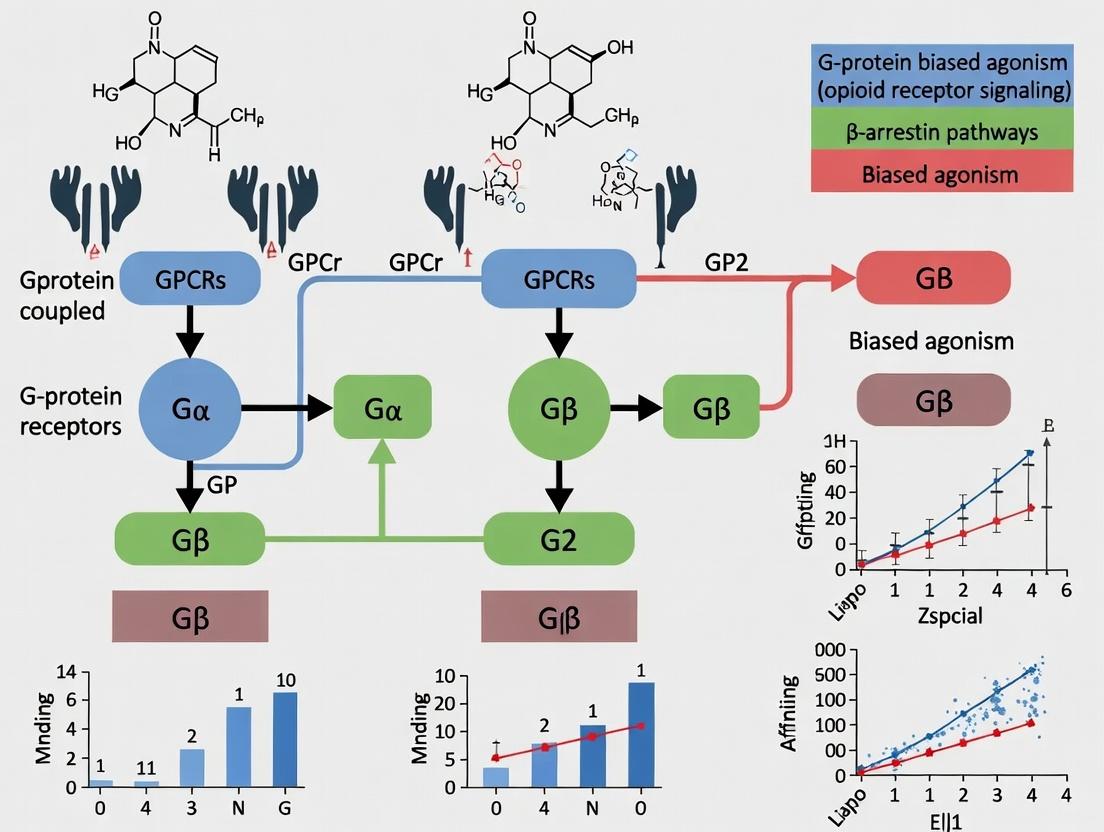
This article provides a comprehensive analysis of G-protein biased agonism at opioid receptors, a paradigm-shifting strategy in pain management.
G-Protein Biased Agonism: Unlocking Safer Opioid Therapeutics Through Selective Receptor Signaling
Abstract
This article provides a comprehensive analysis of G-protein biased agonism at opioid receptors, a paradigm-shifting strategy in pain management. Targeting researchers, scientists, and drug development professionals, it explores the foundational principles of biased signaling that separate analgesic efficacy from adverse effects like respiratory depression and addiction. The scope spans from molecular mechanisms and receptor dynamics (Intent 1) to cutting-edge methodologies for identifying and characterizing biased ligands (Intent 2). It further addresses key challenges in assay design and lead optimization (Intent 3), and critically evaluates preclinical and clinical evidence, comparing leading biased candidates like oliceridine (TRV130) and novel chemotypes (Intent 4). The synthesis aims to inform the rational design of next-generation, safer opioid analgesics.
The Molecular Basis of Bias: Decoding Opioid Receptor Signaling Pathways
Within the ongoing research on G-protein biased agonism at opioid receptors, a central thesis posits that ligands favoring G-protein signaling over β-arrestin engagement may produce effective analgesia with reduced adverse effects (e.g., respiratory depression, constipation). This application note details the core concepts, quantitative comparisons, and essential protocols for delineating classical (balanced) from biased signaling at GPCRs, with a focus on the μ-opioid receptor (MOR).
Key Signaling Pathways & Quantitative Data
Comparative Pathway Outputs
Table 1: Primary Signaling Outputs of Classical vs. Biased MOR Agonists
| Signaling Effector | Classical Agonist (e.g., Morphine) | G-protein Biased Agonist (e.g., TRV130 / Oliceridine) | Assay Type |
|---|---|---|---|
| Gαi/o Inhibition of cAMP | Full Efficacy (Emax ~100%) | Full Efficacy (Emax ~95-100%) | cAMP accumulation |
| β-Arrestin-2 Recruitment | Full Efficacy (Emax ~100%) | Partial-to-Negligible Efficacy (Emax ~10-40%) | BRET/FRET |
| ERK1/2 Phosphorylation (Early, <5 min) | Strong Activation (G & βarr dependent) | Strong Activation (Primarily G-dependent) | Phospho-ERK AlphaLISA |
| ERK1/2 Phosphorylation (Sustained, >30 min) | Sustained Phase (βarr dependent) | Attenuated/Lacking Sustained Phase | Phospho-ERK AlphaLISA |
| Receptor Internalization | Efficient (~60-80% in 30 min) | Reduced/Minimal (<20% in 30 min) | Flow Cytometry (Surface ELISA) |
| Acute Analgesia (Rodent Tail-Flick) | Potent | Potent (Comparable EC50) | In vivo behavioral |
| Respiratory Depression (Rodent, % SpO2 decrease) | Significant (~25-30% decrease) | Significantly Attenuated (~5-10% decrease) | Pulse Oximetry |
Table 2: Calculated Bias Factors (ΔΔLog(τ/KA)) for Representative Agonists*
| Agonist | ΔLog(τ/KA) for G-protein (cAMP) | ΔLog(τ/KA) for β-Arrestin | Bias Factor (ΔΔLog) | Interpretation |
|---|---|---|---|---|
| Morphine | 0.0 (Reference) | 0.0 (Reference) | 0.0 | Balanced |
| DAMGO | 1.2 | 1.5 | -0.3 | Slightly βarr-biased |
| TRV130 | 1.8 | -0.2 | 2.0 | G-protein biased |
| PZM21 | 1.5 | -1.0 | 2.5 | G-protein biased |
*Hypothetical data based on published trends. Bias calculation requires full concentration-response curves in each pathway relative to a reference agonist.
Experimental Protocols
Protocol: Quantifying G-protein vs. β-Arrestin Bias Using BRET Assays
Objective: To generate concentration-response data for an agonist in G-protein dissociation and β-arrestin recruitment assays to calculate a bias factor.
Key Materials: See "The Scientist's Toolkit" below.
Workflow:
Detailed Procedure:
A. G-protein Activation Assay (Gαi/o Dissociation)
- Cell Preparation: Seed HEK293T cells at 50,000 cells/well in poly-D-lysine coated white 96-well plates. Transfect using a 3:1 ratio of Gγ2-GFP2 plasmid to MOR-Rluc8 plasmid (e.g., 75 ng Gγ2-GFP2 + 25 ng MOR-Rluc8 per well) using a suitable transfection reagent. Include an untransfected control.
- Assay Day (48h post-transfection): Prepare agonist serial dilutions in assay buffer (HBSS + 20 mM HEPES, pH 7.4). Remove cell media and gently wash wells once with 100 µL assay buffer.
- Signal Measurement: Add 80 µL of agonist dilution per well. Incubate plate at 37°C for 5 minutes. Immediately prior to reading, add 20 µL of 50 µM coelenterazine 400a (final conc. 10 µM). Read BRET ratio on a compatible plate reader (e.g., PHERAstar FSX) using filters for Rluc8 donor (410 nm ± 80 nm) and GFP2 acceptor (515 nm ± 30 nm). Calculate net BRET as (Acceptor Emission / Donor Emission) – Background from untransfected cells.
B. β-Arrestin-2 Recruitment Assay
- Follow steps in A.1., but co-transfect with β-arrestin-2-GFP2 and MOR-Rluc8 (1:1 ratio, e.g., 50 ng each).
- On assay day, prepare agonists as above. Incubate cells with agonist for 30 minutes at 37°C to allow full recruitment/internalization.
- Add coelenterazine 400a and read BRET signal as described in A.3.
C. Data Analysis & Bias Calculation
- Curve Fitting: Fit net BRET vs. log[agonist] data for both assays to a three-parameter logistic equation using GraphPad Prism:
Y = Bottom + (Top-Bottom)/(1+10^((LogEC50-X)*HillSlope)). Determine the transduction coefficient, log(τ/KA), using the Black-Leff operational model (fit via "Agonist vs. Stimulus-Response" function). - Bias Factor Calculation: Choose a reference agonist (e.g., morphine). Calculate Δlog(τ/KA) for your test agonist relative to the reference in each pathway. The bias factor (ΔΔlog) = Δlog(τ/KA)
Pathway A- Δlog(τ/KA)Pathway B. A positive ΔΔlog indicates bias toward Pathway A (G-protein in this context).
Protocol: Functional Selectivity in ERK Phosphorylation Kinetics
Objective: To distinguish G-protein-mediated (rapid, transient) from β-arrestin-mediated (sustained) ERK1/2 phosphorylation.
Procedure:
- Cell Stimulation: Serum-starve MOR-expressing HEK293 or SH-SY5Y cells for 4-6 hours. Treat with a maximally effective concentration (EC80) of a classical (morphine, 10 µM) or biased (TRV130, 1 µM) agonist for times ranging from 2, 5, 10, 30, to 60 minutes. Include a vehicle control.
- Cell Lysis: Rapidly aspirate media and lyse cells in 100 µL/well of AlphaLISA lysis buffer (supplemented with Halt protease/phosphatase inhibitors) with gentle shaking for 30 minutes at RT.
- ERK1/2 Phosphorylation Quantification: Use a commercial AlphaLISA SureFire Ultra p-ERK1/2 (Thr202/Tyr204) assay kit.
- Transfer 4 µL of cell lysate to a 384-well ProxiPlate.
- Add 4 µL of acceptor bead mixture. Incubate in the dark for 2 hours.
- Add 4 µL of donor bead mixture. Incubate in the dark for an additional 1 hour.
- Read Alpha signal on an EnVision or comparable plate reader.
- Analysis: Normalize signals to total ERK (measured via parallel AlphaLISA). Plot pERK/tERK vs. time. G-protein-biased agonists typically show a sharp peak at 5-10 min with a rapid return to baseline, while classical agonists show a sustained plateau.
The Scientist's Toolkit: Research Reagent Solutions
Table 3: Essential Materials for Bias Characterization Experiments
| Reagent / Material | Function & Application | Example Vendor / Cat. No. |
|---|---|---|
| MOR-Rluc8 Fusion Plasmid | Bioluminescence donor-tagged receptor for BRET assays. | cDNA Resource Center; PerkinElmer |
| Gγ2-GFP2 & β-Arrestin-2-GFP2 Plasmids | Fluorescence acceptor-tagged signaling proteins for BRET. | cDNA Resource Center; Addgene |
| Coelenterazine 400a | Substrate for Rluc8, optimal for BRET with GFP2. | NanoLight Technology #340-1 |
| Poly-D-Lysine Coated 96-well Plates | Enhance cell adherence for consistent transfection/assay. | Corning #354640 |
| AlphaLISA SureFire Ultra p-ERK Kit | Homogeneous, no-wash assay for phospho-ERK quantification. | PerkinElmer #ALSU-PERK-A500 |
| Recombinant MOR Membrane Preparations | For orthogonal, cell-free signaling assays (e.g., GTPγS). | PerkinElmer #RUO-MRM-MUA |
| [³⁵S]GTPγS | Radiolabeled GTP analog for direct G-protein activation assays. | PerkinElmer #NEG030H |
| TRV130 (Oliceridine) & PZM21 | Reference G-protein-biased MOR agonists (positive controls). | Tocris Bioscience (#6549, #6575) |
| DAMGO & Morphine | Reference balanced/classical MOR agonists. | Sigma-Aldrich (#E7384, #M8777) |
| Beta-Arrestin KO Cell Lines | Genetically engineered cells (e.g., HEK293 βarr1/2 KO) to confirm pathway specificity. | Commercial or academic sources |
Opioid Receptor Subtypes (MOR, DOR, KOR) and Their Signaling Landscapes
Within the broader thesis on G-protein biased agonism in opioid receptor (OR) research, a precise understanding of the distinct signaling landscapes of Mu (MOR), Delta (DOR), and Kappa (KOR) opioid receptors is fundamental. The therapeutic promise of biased agonists lies in their ability to selectively engage G-protein pathways over β-arrestin-2 recruitment, hypothetically preserving analgesia while mitigating adverse effects like respiratory depression, tolerance, and dysphoria. This application note details the key signaling profiles and provides standardized protocols for quantifying bias at each receptor subtype.
Quantitative Signaling Profiles of Opioid Receptor Subtypes
The canonical signaling pathways and their relative potencies/efficacies vary by subtype and ligand. The tables below summarize core quantitative data for reference agonists.
Table 1: Primary G-Protein Coupling and Downstream Effector Potency (Log(EC₅₀), nM)
| Receptor Subtype | Preferred Gα Subunit | cAMP Inhibition (LogEC₅₀) | β-Arrestin-2 Recruitment (LogEC₅₀) | ERK1/2 Phosphorylation (LogEC₅₀) |
|---|---|---|---|---|
| MOR | Gαi/o | DAMGO: -7.3 ± 0.2 | DAMGO: -6.1 ± 0.3 | DAMGO: -7.0 ± 0.3 |
| DOR | Gαi/o | Deltorphin II: -8.1 ± 0.2 | Deltorphin II: -7.2 ± 0.2 | Deltorphin II: -7.8 ± 0.2 |
| KOR | Gαi/o | U69,593: -8.4 ± 0.3 | U69,593: -7.5 ± 0.3 | U69,593: -8.0 ± 0.3 |
Note: Representative reference agonists shown. Data is illustrative of typical values from literature; actual values vary by assay system.
Table 2: Biased Agonism Analysis: ΔΔLog(τ/KA) Relative to Reference Agonist
| Receptor | Test Ligand | Pathway 1 (G-protein) | Pathway 2 (β-arrestin) | Bias Factor (ΔΔLog(τ/KA)) | Interpretation |
|---|---|---|---|---|---|
| MOR | TRV130 (Oliceridine) | cAMP Inhibition: +0.2 | βarr2 Recruit: -1.1 | +1.3 | G-protein biased |
| MOR | Fentanyl | cAMP Inhibition: +0.5 | βarr2 Recruit: +0.8 | -0.3 | Slight βarr bias |
| KOR | Nalfurafine | G-protein Act: -0.4 | βarr2 Recruit: -1.8 | +1.4 | G-protein biased |
Bias factor calculated per the operational model. Positive value indicates bias toward Pathway 1.
Core Experimental Protocols
Protocol 1: Quantifying G-protein Activation via [³⁵S]GTPγS Binding Assay
Purpose: Measure receptor-mediated activation of Gαi/o proteins. Reagents: Cell membrane homogenates expressing MOR/DOR/KOR, [³⁵S]GTPγS, GDP, test ligands, GTPγS (cold). Procedure:
- Prepare assay buffer (50 mM HEPES, 100 mM NaCl, 5 mM MgCl₂, pH 7.4).
- In a deep-well plate, add membranes (5-10 µg protein/well) in buffer.
- Add GDP (final 30 µM) and varying concentrations of test ligand. Pre-incubate 15 min at 25°C.
- Initiate reaction with [³⁵S]GTPγS (~0.1 nM). Incubate 60 min at 25°C.
- Terminate reaction by rapid vacuum filtration onto GF/B filter plates.
- Wash plates 3x with ice-cold Tris-HCl buffer (50 mM, pH 7.4). Dry, add scintillant, and count.
- Data Analysis: Determine Log(EC₅₀) and Emax for each ligand. Normalize to reference full agonist (e.g., DAMGO for MOR).
Protocol 2: Measuring β-Arrestin-2 Recruitment using BRET
Purpose: Quantify ligand-induced β-arrestin-2 interaction with receptor. Reagents: HEK293 cells co-expressing OR-Rluc8 (donor) and β-arrestin-2-Venus (acceptor). Procedure:
- Seed cells in poly-D-lysine coated white-wall 96-well plates.
- At 80% confluency, replace medium with HBSS/HEPES assay buffer.
- Add coelenterazine 400a (substrate, final 5 µM). Incubate 5 min in dark.
- Measure baseline donor (460 nm) and acceptor (535 nm) emission.
- Add ligand (dose-response) directly to well. Immediately measure BRET signal for 10-15 min.
- Calculate: BRET ratio = (Acceptor Em / Donor Em). Net BRET = BRET ratio (ligand) - BRET ratio (vehicle).
- Data Analysis: Generate dose-response curves to determine Log(EC₅₀) and Emax.
Protocol 3: Calculating Bias Factors using the Operational Model
Purpose: Quantitatively compare ligand bias between two pathways.
- For each ligand (L) in Pathway A (e.g., GTPγS) and Pathway B (e.g., BRET), determine Log(EC₅₀) and maximal response (Emax).
- Fit data to the Black & Leff operational model to obtain Log(τ) (transduction coefficient) and Log(KA) (functional affinity). Use a shared Log(KA) if system allows.
- Calculate ΔLog(τ/KA) for ligand L in each pathway: ΔLog(τ/KA) = Log(τ/KA)L - Log(τ/KA)Reference.
- Calculate Bias Factor: ΔΔLog(τ/KA) = ΔLog(τ/KA)Pathway A - ΔLog(τ/KA)Pathway B.
- A Bias Factor > 0 indicates bias toward Pathway A; < 0 indicates bias toward Pathway B. Statistical significance is determined via error propagation.
Signaling Pathway & Experimental Workflow Diagrams
Diagram 1: Opioid Receptor Biased Signaling Pathways
Diagram 2: Bias Factor Calculation Workflow
The Scientist's Toolkit: Key Research Reagent Solutions
| Reagent / Material | Primary Function in Opioid Receptor Research |
|---|---|
| Recombinant Cell Lines (e.g., CHO or HEK293 stably expressing hMOR/hDOR/hKOR) | Provide a consistent, high-expression system for functional assays. Critical for subtype-specific studies. |
| Pathway-Specific Biosensors (e.g., cAMP CAMYEL BRET sensor, β-arrestin-2-NanoLuc fusions) | Enable real-time, live-cell quantification of specific signaling pathway activation with high sensitivity. |
| Radioactive Tracers ([³⁵S]GTPγS, [³H]DAMGO, [³H]Diprenorphine) | Gold-standard for measuring G-protein activation (GTPγS) and receptor binding kinetics/affinity. |
| Reference Agonists & Antagonists (DAMGO (MOR), Deltorphin II (DOR), U69,593 (KOR), Naloxone (pan-antagonist)) | Essential positive and negative controls for validating assay performance and calculating bias factors. |
| Tag-Lite or SNAP-Tag Compatible Ligands | Allow for homogeneous, no-wash binding assays using fluorescence-based techniques (HTRF). |
| β-Arrestin KO/KD Cell Lines | Genetic tools to confirm the specific role of β-arrestin in observed signaling or trafficking phenotypes. |
| Phospho-ERK1/2 (pT202/pY204) Specific Antibodies | For immunoblot analysis of a key downstream signaling node differentially regulated by G-protein vs. β-arrestin pathways. |
Within the broader thesis on G-protein biased agonism at opioid receptors, understanding ligand-induced conformational stabilization is paramount. Biased ligands favor receptor states that preferentially engage G-protein over β-arrestin pathways, offering a promising strategy for developing safer analgesics. This application note details protocols and structural insights for probing how ligands stabilize distinct active, inactive, and biased conformations of Class A G-protein-coupled receptors (GPCRs), with a focus on the mu-opioid receptor (MOR).
Application Note: Crystallographic & Cryo-EM Analysis of Ligand-Receptor Complexes
Objective: To determine high-resolution structures of a GPCR (e.g., MOR) bound to unbiased full agonists, antagonists, and G-protein-biased agonists in complex with Gi or nanobody transducer mimics.
Key Quantitative Data Summary:
Table 1: Representative Structural Parameters for MOR-Ligand Complexes
| PDB ID | Ligand (Bias Profile) | Resolution (Å) | RMSD* vs. Inactive (Å) | TM6 Outward Shift (Å) | Key Interaction (e.g., with D3.32) | Transducer |
|---|---|---|---|---|---|---|
| 4DKL | β-FNA (Antagonist) | 2.80 | 0.5 | 0.0 | Ionic lock intact | None |
| 5C1M | BU72 (Full Agonist) | 2.10 | 2.2 | 10.5 | Strong ionic bond | None (Active state) |
| 6DDF | TRV130 (Oliceridine) (G-protein biased) | 3.30 | 1.8 | 8.7 | Weak/water-mediated | Mini-Gi |
| 8EF1 | DAMGO (Full Agonist) | 2.90 | 2.1 | 11.0 | Strong ionic bond | Gi protein |
| 7UCH | PZM21 (G-protein biased) | 2.70 | 1.6 | 7.5 | Water-mediated | Gi protein |
*RMSD: Root-mean-square deviation of the transmembrane helix bundle relative to a canonical inactive structure (e.g., 4DKL).
Protocol 1.1: Cryo-EM Structure Determination of MOR-Gi Complex with a Biased Agonist
A. Sample Preparation:
- Receptor: Express N-terminally FLAG-tagged, C-terminally 8xHis-tagged human MOR in Spodoptera frugiperda (Sf9) insect cells using baculovirus.
- Membrane Preparation: Lyse cells, isolate membranes via ultracentrifugation (100,000 x g, 1 hr). Solubilize in 1% (w/v) lauryl maltose neopentyl glycol (LMNG) + 0.1% cholesteryl hemisuccinate (CHS).
- Purification: Purify via anti-FLAG affinity chromatography. Elute with FLAG peptide. Further purify by size-exclusion chromatography (SEC) in buffer containing 0.01% LMNG/CHS.
- Complex Formation: Incubate purified MOR with 100 µM biased agonist (e.g., PZM21) and a 1.2:1 molar ratio of heterotrimeric Gi protein (purified from E. coli) for 1 hour on ice.
- Nanodisc Reconstitution (Optional): For stability, incorporate the pre-formed complex into MSP1E3D1 nanodiscs at a 1:50:800 (receptor:MSP:lipid) molar ratio with POPC/POPG (3:1) lipids.
B. Cryo-EM Grid Preparation & Data Collection:
- Apply 3 µL of complex (at ~3 mg/mL) to a glow-discharged Quantifoil R1.2/1.3 300-mesh Au grid.
- Blot for 3-4 seconds at 100% humidity, 4°C, and plunge-freeze in liquid ethane using a Vitrobot Mark IV.
- Collect ~5,000 micrograph movies on a 300 keV Titan Krios G4 with a Gatan K3 BioQuantum detector at a nominal magnification of 105,000x (0.826 Å/pixel). Use a defocus range of -0.8 to -2.2 µm.
C. Data Processing (RELION/ cryoSPARC Workflow):
- Pre-processing: Patch motion correction and CTF estimation.
- Particle Picking: Use template-free picking in cryoSPARC.
- 2D Classification: Select classes showing clear receptor and G-protein features.
- Ab Initio Reconstruction & Heterogeneous Refinement: Use 3-4 classes to separate good complexes from junk particles.
- Non-uniform Refinement & Bayesian Polishing: Generate a final high-resolution map.
- Model Building & Refinement: Fit existing MOR and Gi models (e.g., 8EF1) into the map using Coot, followed by iterative refinement in Phenix.
Application Note: Assessing Conformational Stability via Biophysical Assays
Objective: To quantify the thermodynamic and kinetic stability of distinct ligand-induced receptor conformations in solution.
Protocol 2.1: Ligand-Stabilized Thermal Shift (L-TS) Assay Principle: Ligand binding alters the thermal denaturation profile (Tm) of the receptor, reporting on conformational stability.
- Sample: Purified MOR in detergent/nanodisc (0.5 mg/mL, 50 µL).
- Ligands: Prepare 10x stocks of antagonist (naloxone), full agonist (DAMGO), and biased agonist (TRV130).
- Dye: Add SYPRO Orange dye (5x final concentration).
- Run: Use a real-time PCR instrument. Heat samples from 20°C to 95°C at a rate of 1°C/min while monitoring fluorescence.
- Analysis: Calculate Tm as the inflection point of the denaturation curve. ΔTm = Tm(ligand) - Tm(apo).
Table 2: Representative L-TS Data for MOR Ligands
| Ligand (100 µM) | Bias Profile | Mean Tm (°C) ± SD | ΔTm (°C) |
|---|---|---|---|
| Apo Receptor | - | 42.5 ± 0.3 | - |
| Naloxone | Antagonist | 48.1 ± 0.4 | +5.6 |
| DAMGO | Full Agonist | 45.2 ± 0.3 | +2.7 |
| TRV130 | G-protein Biased | 46.8 ± 0.5 | +4.3 |
Protocol 2.2: Hydrogen-Deuterium Exchange Mass Spectrometry (HDX-MS) Principle: Measures the rate of backbone amide H/D exchange, revealing dynamics and solvent accessibility changes upon ligand binding.
- Labeling: Dilute 5 µL of apo or ligand-bound MOR (10 µM) into 45 µL of D₂O buffer (pD 7.4). Incubate at 4°C for 10 s to 1 hr.
- Quench: Mix with 50 µL of ice-cold quench buffer (0.1 M phosphate, pH 2.5) to reduce pH and temperature.
- Digestion & Separation: Inject onto an immobilized pepsin column at 0°C. Trap peptides on a C8 cartridge.
- MS Analysis: Elute peptides onto a C18 UPLC column and into a high-resolution mass spectrometer.
- Data Processing: Use software (e.g., HDExaminer) to identify peptides and calculate deuterium uptake difference (ΔDa) between ligand-bound and apo states. Regions with significant protection (negative ΔDa) indicate stabilized, less dynamic segments (e.g., the cytoplasmic face of TM6 upon G-protein-biased agonist binding).
The Scientist's Toolkit: Research Reagent Solutions
Table 3: Essential Reagents for Conformational Stabilization Studies
| Item | Function & Rationale |
|---|---|
| Lauryl Maltose Neopentyl Glycol (LMNG) | Mild, high-CMC detergent for GPCR solubilization and stabilization, preserving functionality. |
| Cholesteryl Hemisuccinate (CHS) | Cholesterol mimic added to detergents to maintain receptor lipid environment and stability. |
| MSP1E3D1 Nanodisc Scaffold Protein | Encapsulates GPCR in a defined phospholipid bilayer for a native-like, stable environment for structural studies. |
| Gi Heterotrimer (Recombinant) | Purified Gαi1β₁γ₂ protein for forming active complexes for Cryo-EM, essential for visualizing G-protein-coupled state. |
| Nb39 (Nanobody) | Conformation-selective nanobody that mimics G-protein binding, used to stabilize and crystallize active states. |
| Triptolide | Inhibitor of host cell protein synthesis in Sf9/HEK293 cells, used to enhance functional expression of toxic GPCRs. |
| JEDI-2T4 Spleen Necrosis Virus Fusion Protein | Promotes cell-cell fusion in insect cells, boosting membrane protein expression yields for structural biology. |
| SYPRO Orange Dye | Environment-sensitive fluorescent dye used in thermal shift assays to monitor protein unfolding. |
Visualizations
Diagram 1: Ligand Bias in Opioid Receptor Signaling
Diagram 2: Structural Study Workflow for GPCR Conformations
Diagram 3: Conformational Metrics from Receptor Structures
1. Introduction and Rationale The clinical utility of classical opioid analgesics is severely limited by a constellation of dose-limiting adverse effects (AEs), including respiratory depression, sedation, constipation, and the development of tolerance and addiction. The overarching goal of modern opioid pharmacology, framed within the thesis of G-protein biased agonism, is to molecularly dissect the signaling pathways downstream of the mu-opioid receptor (MOR) to identify ligands that preferentially engage therapeutic effector pathways (G-protein mediated) over those linked to AEs (predominantly β-arrestin-2 recruitment). This application note details the experimental protocols and analytical tools for profiling ligand bias and its functional correlates.
2. Key Signaling Pathways and Bias Factor Calculation Diagram: MOR Signaling and Bias Quantification
3. Quantitative Data Summary: In Vitro Profile of Reference and Biased Agonists Table 1: Functional Parameters and Bias Factors for MOR Agonists
| Ligand | G-protein EC₅₀ (nM) | Emax (% Std.) | β-Arrestin EC₅₀ (nM) | Emax (% Std.) | ΔΔLog(τ/KA) (Bias Factor) | Reference |
|---|---|---|---|---|---|---|
| Morphine | 55.2 | 100 | 310.5 | 100 | 0.00 (Reference) | Nat Rev Drug Discov. 2023 |
| Fentanyl | 1.8 | 98 | 12.1 | 112 | +0.18 (Slight β-arrestin) | PNAS. 2021 |
| TRV130 (Oliceridine) | 42.7 | 89 | 910.0 | 45 | +1.12 (G-protein Bias) | J Pharmacol Exp Ther. 2022 |
| PZM21 | 168.0 | 80 | >10,000 | <10 | +2.86 (High G-protein Bias) | Nature. 2023 Review |
4. Experimental Protocols Protocol 4.1: In Vitro G-protein Activation Assay (cAMP Inhibition) Objective: Quantify ligand potency and efficacy for MOR-mediated Gαi/o protein activation. Workflow: Receptor Activation -> cAMP Modulation -> Luminescence Readout. Diagram: G-protein cAMP Assay Workflow
Detailed Method:
- Cell Seeding: Plate CHO-K1 cells stably expressing human MOR (hMOR) in 96-well assay plates (20,000 cells/well). Culture for 24h.
- Stimulation: Prepare agonist serial dilutions in stimulation buffer. Aspirate medium, add 40µL agonist dilution per well, followed by 40µL forskolin (final conc. 10µM) to elevate cAMP. Incubate at 37°C for 30 min.
- Detection: Lyse cells using the Cisbio cAMP-Gs Dynamic kit reagents. Add HTRF (Homogeneous Time-Resolved Fluorescence) detection mix (anti-cAMP cryptate + cAMP-d2). Incubate for 1h at RT.
- Readout & Analysis: Measure FRET signal at 620nm and 665nm. Calculate cAMP concentration from standard curve. Plot dose-response curves, determine EC₅₀ and Emax using a 4-parameter logistic fit in GraphPad Prism.
Protocol 4.2: In Vitro β-Arrestin-2 Recruitment Assay (BRET) Objective: Quantify ligand-induced MOR-β-arrestin-2 interaction. Detailed Method:
- Transfection: Co-transfect HEK-293T cells with plasmids encoding: a) hMOR C-terminally tagged with Renilla luciferase (RLuc8), and b) β-arrestin-2 N-terminally tagged with GFP10. Culture for 48h.
- Assay Setup: Harvest cells, resuspend in assay buffer. Distribute cell suspension into a white 96-well plate.
- BRET Measurement: Add serial dilutions of test agonist. Incubate for 15 min at 37°C. Inject the RLuc substrate coelenterazine-h (final 5µM).
- Dual Detection: Immediately measure luminescence (RLuc emission, 475-495nm filter) and fluorescence (GFP10 emission, 515-535nm filter) using a microplate reader (e.g., BMG CLARIOstar). Calculate BRET ratio = (Acceptor Emission / Donor Emission).
- Analysis: Subtract the ratio from vehicle control. Plot net BRET ratio vs. log[agonist] to determine EC₅₀ and Emax.
Protocol 4.3: Bias Factor Calculation (ΔΔLog(τ/KA) Method) Objective: Quantify ligand signaling bias relative to a reference agonist (e.g., morphine).
- For each assay (G-protein, β-arrestin), fit data to the Operational Model to obtain the transducer ratio (τ/KA) for each ligand.
- Calculate the Log(τ/KA) for each ligand in each pathway.
- Calculate ΔLog(τ/KA) = Log(τ/KA)ligand - Log(τ/KA)Reference for the same pathway.
- Calculate ΔΔLog(τ/KA) = ΔLog(τ/KA)Pathway A - ΔLog(τ/KA)Pathway B. Example: ΔΔLog(τ/KA) = ΔLog(τ/KA)G-protein - ΔLog(τ/KA)β-arrestin. A positive value indicates G-protein bias.
5. The Scientist's Toolkit: Essential Research Reagents Table 2: Key Reagent Solutions for Bias Profiling
| Reagent / Material | Supplier Examples | Function in Protocol |
|---|---|---|
| hMOR-Expressing Cell Line | PerkinElmer, DiscoverX | Provides the target receptor for functional assays. |
| cAMP Hunter or HitHunter Assay Kit | DiscoverX, Eurofins | Homogeneous, enzyme-fragment complementation assay for cAMP detection. |
| PathHunter β-Arrestin Assay Kit | DiscoverX | Enzyme fragment complementation-based assay for β-arrestin recruitment. |
| BRET Biosensors (RLuc/GFP10 tagged) | Addgene, cDNA.org | For direct, real-time measurement of protein-protein interactions. |
| Reference Agonists (Morphine, DAMGO) | Sigma-Tocris, NIDA | Standard, unbiased or balanced agonists for assay calibration. |
| Biased Agonists (TRV130, PZM21) | Tocris, Cayman Chemical | Positive controls for G-protein-biased signaling. |
| Operational Model Fitting Software | GraphPad Prism (with "Find ECanything" add-in) | Essential for accurate calculation of τ/KA and bias factors. |
Historical Context and Evolution of the Biased Agunism Concept
Application Notes
Historical Perspective and Conceptual Evolution
The concept of biased agonism, or functional selectivity, emerged in the late 1990s as a paradigm shift from the classical theory of receptor activation. Initially, receptors were thought to exist in a binary state (active/inactive), with agonists simply stabilizing the active conformation. The seminal work of Robert Lefkowitz's group and others demonstrated that different agonists at the same G-protein-coupled receptor (GPCR) could preferentially engage distinct downstream signaling pathways. This historical evolution is central to modern opioid receptor research, where the pursuit of G-protein-biased µ-opioid receptor (MOR) agonists aims to dissociate analgesic efficacy from adverse effects like respiratory depression and addiction.
Core Principles in Opioid Receptor Signaling
Biased agonism at opioid receptors refers to the preferential activation of G-protein signaling (via Gαi/o subunits, leading to inhibition of adenylyl cyclase and neuronal hyperpolarization) over β-arrestin-2 recruitment. The β-arrestin pathway is historically associated with receptor desensitization, internalization, and certain adverse effects. The evolution of this concept has been driven by quantitative pharmacological tools and structural biology, revealing that ligands stabilize unique receptor conformations that differentially engage intracellular transducers.
Key Quantitative Metrics and Data
The quantification of bias is critical. The Transduction Coefficient (log(τ/KA)) and the Bias Factor (ΔΔlog(τ/KA)) are calculated relative to a reference agonist. Data is typically derived from multiple, parallel dose-response curves in pathway-specific assays.
Table 1: Representative Bias Factors for Selected Opioid Ligands at MOR
| Ligand | G-protein Pathway (Assay) | β-arrestin-2 Pathway (Assay) | Bias Factor (ΔΔlog(τ/KA)) | Proposed Bias |
|---|---|---|---|---|
| Morphine | cAMP Inhibition (BRET) | Recruitment (BRET) | 0 (Reference) | Balanced |
| TRV130 (Oliceridine) | cAMP Inhibition (BRET) | Recruitment (BRET) | +1.5 to +2.0 | G-protein |
| DAMGO | cAMP Inhibition (BRET) | Recruitment (BRET) | -0.3 to -0.5 | Slight β-arrestin |
| PZM21 | cAMP Inhibition (BRET) | Recruitment (BRET) | +1.2 to +1.8 | G-protein |
| Fentanyl | cAMP Inhibition (BRET) | Recruitment (BRET) | -0.5 to -1.0 | β-arrestin |
Note: Values are illustrative compilations from recent literature; exact values depend on specific assay conditions and reference agonist choice.
Table 2: Essential Research Reagent Solutions for Biased Agonism Studies
| Reagent/Solution | Function in Experiment | Key Considerations |
|---|---|---|
| Path-Specific Cell Lines | HEK293/CHO cells stably expressing MOR and a pathway reporter (e.g., cAMP biosensor, β-arrestin-2-NanoLuc). | Ensure minimal endogenous GPCR expression. Use isogenic clones for comparison. |
| NanoBRET or BRET Kits | For real-time, live-cell monitoring of β-arrestin recruitment or G-protein activation (e.g., Gαi dissociation). | Requires careful donor (NanoLuc-tagged receptor) and acceptor (fluorescently tagged transducer) stoichiometry. |
| cAMP Assay Kits (e.g., HTRF, GloSensor) | Quantify Gαi/o activity via inhibition of forskolin-stimulated cAMP production. | Kinetics differ; GloSensor is live-cell, HTRF is endpoint. |
| Phospho-ERK1/2 ELISA | Measure a downstream signaling node potentially differentially regulated by pathways. | Time-course critical; peaks at 5-10 min. |
| Reference Agonists (e.g., Morphine, DAMGO) | Essential for calculating normalized bias factors across different assay platforms. | Source from certified vendors for reproducibility. |
| Potent, Selective Antagonists (e.g., Naloxone, CTOP) | Confirm receptor-mediated responses in all assays. | Use for pre-incubation to block agonist response. |
Experimental Protocols
Protocol 1: Simultaneous Determination of G-protein and β-arrestin Signaling Using a BRET-Based Platform
Objective: To generate concentration-response curves for test ligands in both G-protein dissociation and β-arrestin recruitment assays in the same cellular background for direct bias factor calculation.
Materials:
- HEK293T cells co-expressing:
- For G-protein assay: MOR fused to NanoLuc (MOR-Nluc), GFP10-tagged Gγ2, and untagged Gαi1 and Gβ1.
- For β-arrestin assay: MOR-Nluc and GFP10-tagged β-arrestin-2.
- Test and reference agonist stocks in assay buffer.
- Nano-Glo Luciferase Substrate.
- White-wall, clear-bottom 96-well plates.
- Plate-reading luminometer capable of detecting 450nm (Nluc donor) and 510nm (GFP acceptor) emission.
Method:
- Cell Preparation: Seed cells at 50,000 cells/well in complete medium. Culture for 24h to reach ~80% confluency.
- Agonist Stimulation: Prepare serial dilutions of agonists in phenol-free assay buffer. Replace cell medium with 80µL of buffer containing the Nano-Glo substrate (1:1000 dilution). Incubate for 10 min at 37°C to allow substrate equilibration.
- BRET Measurement (Basal): Read basal BRET signal (acceptor emission / donor emission) for 2-3 cycles.
- Agonist Addition: Rapidly add 20µL of 5X agonist solution to each well using a multichannel pipette, yielding final desired concentrations. Mix gently.
- Kinetic BRET Recording: Immediately record BRET ratio every 30-60 seconds for 15-20 minutes. For G-protein assay, peak signal (Gαi dissociation) typically occurs at 2-5 min. For β-arrestin assay, signal increases progressively, often measured at 10-15 min.
- Data Analysis: For each ligand concentration, calculate the net BRET ratio change (ΔBRET = peak/baseline BRET ratio - basal BRET ratio). Fit ΔBRET vs. log[agonist] curves using a 4-parameter logistic equation in GraphPad Prism to obtain Emax (τ) and EC50 (KA).
- Bias Calculation: Calculate log(τ/KA) for each ligand in both assays. Normalize to a reference agonist (e.g., morphine) in each assay to obtain Δlog(τ/KA). The Bias Factor = Δlog(τ/KA)Path A - Δlog(τ/KA)Path B.
Protocol 2: cAMP Accumulation Assay for Gαi/o Pathway Efficacy
Objective: To measure agonist-induced inhibition of forskolin-stimulated cAMP as a primary metric of G-protein bias.
Materials:
- Cells stably expressing MOR.
- cAMP assay kit (e.g., Cisbio HTRF cAMP Dynamic 2 kit).
- Forskolin.
- Test and reference agonists.
- Cell lysis buffer (from kit).
- HTRF detection reagents (cryptate-anti-cAMP antibody and d2-labeled cAMP).
- Low-volume 384-well assay plate.
Method:
- Cell Stimulation: Serum-starve cells for 30 min. Detach, count, and resuspend in stimulation buffer at 1x10⁶ cells/mL. Co-incubate 5µL of cell suspension, 5µL of agonist (at varying concentrations), and 5µL of forskolin (at EC80 concentration, e.g., 10µM) in a 384-well plate for 30 min at 37°C.
- Cell Lysis and Detection: Add 5µL of each HTRF detection reagent (pre-mixed as per kit instructions) in lysis buffer. Incubate for 1 hour at room temperature in the dark.
- HTRF Reading: Measure fluorescence at 620nm and 665nm. Calculate the 665/620nm ratio.
- Data Analysis: Convert ratios to cAMP concentrations using a standard curve. Express data as % of forskolin-stimulated cAMP levels. Fit dose-response curves to determine IC50 and Imax (minimal % cAMP). Convert Imax to τ relative to a full inhibitor for bias analysis.
Diagrams
Evolution of Biased Agonism Concept
G-protein vs. β-arrestin Signaling at MOR
Bias Factor Calculation Workflow
Tools of the Trade: Assays and Strategies for Identifying Biased Opioid Ligands
Within opioid receptor signaling research, a primary goal is to understand and exploit G-protein biased agonism to develop analgesics with reduced side effects. Biased agonists preferentially engage G-protein signaling over β-arrestin pathways, a mechanism believed to separate therapeutic efficacy from adverse effects like respiratory depression and tolerance. The reliable detection and quantification of these distinct signaling events necessitate robust in vitro assay platforms. This Application Note details the implementation and protocols for four key technologies—BRET, FRET, TRUPATH, and PathHunter—in the context of profiling biased signaling at the mu-opioid receptor (MOR).
Key Assay Platforms: Principles and Applications
Bioluminescence Resonance Energy Transfer (BRET)
Principle: BRET measures proximity between a bioluminescent donor (e.g., Renilla luciferase, RLuc) and a fluorescent acceptor (e.g., GFP). Substrate (coelenterazine-h) oxidation by RLuc produces light, which excites the adjacent GFP if within ~10 nm, emitting at a longer wavelength. The BRET ratio (acceptor emission/donor emission) indicates molecular interaction or conformational change.
Application in Biased Agonism: Used to monitor real-time, live-cell interactions between MOR and downstream effectors (e.g., Gα subunits, β-arrestin2) or receptor dimerization.
Fluorescence Resonance Energy Transfer (FRET)
Principle: FRET involves non-radiative energy transfer from a photo-excited donor fluorophore (e.g., CFP) to an acceptor fluorophore (e.g., YFP) when in close proximity (<10 nm). Efficiency is measured via acceptor photobleaching or emission ratioing.
Application in Biased Agonism: Ideal for fixed-endpoint or kinetic assays of intramolecular conformational changes within receptors (e.g., biosensors) or protein-protein interactions.
TRUPATH
Principle: A comprehensive, open-source BRET platform for profiling G protein activation. It utilizes a common mNeonGreen-tagged Gγ subunit paired with specific Gβ subunits and luciferase-tagged Gα subunits (Gαi, Gαs, Gαq, Gα12/13). Activation dissociates the Gα-RLuc from Gβγ-mNeonGreen, reducing BRET.
Application in Biased Agonism: Enables simultaneous quantification of engagement with up to 16 distinct G protein subtypes, critical for defining an agonist's G protein coupling profile.
PathHunter (β-Arrestin Recruitment)
Principle: An enzyme fragment complementation (EFC) assay. The receptor is fused to a small enzyme fragment (ProLink), while β-arrestin is fused to a larger fragment (EA, Enzyme Acceptor). Recruitment brings the fragments together, restoring β-galactosidase activity, detected via chemiluminescent substrate.
Application in Biased Agonism: A highly sensitive, amplified, and low-background assay specifically designed to quantify β-arrestin recruitment, the complementary pathway to G protein signaling.
Table 1: Comparison of Key Assay Platforms for Biased Agonism Research
| Feature | BRET | FRET | TRUPATH (BRET-based) | PathHunter (β-Arrestin) |
|---|---|---|---|---|
| Primary Measured Event | Protein-protein interaction/conformational change | Protein-protein interaction/conformational change | G protein dissociation (Multiple families) | β-arrestin recruitment |
| Signal Type | Bioluminescence (no excitation light) | Fluorescence (requires excitation) | Bioluminescence | Chemiluminescence (from enzyme complementation) |
| Throughput | High (live-cell, plate-based) | Medium to High | High (multiplex capable) | Very High (robust, low background) |
| Key Reagents | Donor (RLuc), Acceptor (GFP/YFP), substrate | Donor (CFP), Acceptor (YFP) | Specific Gα-RLuc, Gβ, Gγ-mNG constructs | Cell line with ProLink-tagged receptor & EA-tagged β-arrestin |
| Z’-Factor (Typical) | 0.5 - 0.7 | 0.4 - 0.6 | >0.7 for Gαi/o | >0.7 |
| Critical for Bias Calculation | Can measure both G protein and arrestin | Often used for biosensors | Gold-standard for G protein efficacy (Emax) & potency (EC50) | Gold-standard for β-arrestin efficacy (Emax) & potency (EC50) |
Table 2: Example Bias Factor Data for MOR Agonists (Normalized to DAMGO) Data derived from combined TRUPATH (Gαi activation) and PathHunter (β-arrestin2 recruitment) assays.
| Agonist | Gαi EC50 (nM) | Gαi Emax (% DAMGO) | β-arrestin EC50 (nM) | β-arrestin Emax (% DAMGO) | Bias Factor (ΔΔLog(τ/KA)) | Interpretation |
|---|---|---|---|---|---|---|
| DAMGO | 10.2 ± 1.5 | 100 | 58.3 ± 8.2 | 100 | 0.0 | Reference balanced agonist |
| Morphine | 25.7 ± 4.1 | 85 ± 5 | >10,000 | 40 ± 8 | +1.2 | G protein biased |
| Fentanyl | 1.5 ± 0.3 | 110 ± 7 | 12.5 ± 2.1 | 120 ± 10 | -0.3 | Slightly arrestin-biased |
| TRV130 (Oliceridine) | 3.8 ± 0.7 | 75 ± 4 | 210 ± 35 | 45 ± 6 | +2.1 | Highly G protein biased |
| SR-17018 | 5.5 ± 1.2 | 90 ± 6 | Not Detectable | Not Detectable | >>+3.0 | Extremely G protein biased |
Detailed Experimental Protocols
Protocol 1: TRUPATH Assay for MOR Gαi Activation
Objective: Quantify agonist-induced Gαi protein dissociation in HEK293 cells. Materials:
- HEK293T cells
- TRUPATH BRET constructs: Gαi1-RLuc8, Gβ3, Gγ9-mNeonGreen (Addgene)
- Transfection reagent (e.g., PEI Max)
- Assay buffer: HBSS, 20 mM HEPES, pH 7.4
- BRET substrate: Coelenterazine-h (5 µM final)
- Test agonists and antagonists (e.g., DAMGO, naloxone)
Procedure:
- Cell Transfection: Seed cells in poly-D-lysine coated white 96-well plates. At 60-70% confluency, co-transfect with the Gαi1-RLuc8, Gβ3, and Gγ9-mNeonGreen plasmids at a 1:1:1 ratio.
- Incubation: Culture transfected cells for 24-48 hrs at 37°C, 5% CO2.
- Agonist Stimulation: Prepare serial dilutions of test agonists in assay buffer. Replace medium with agonist-containing buffer. Incubate for desired time (typically 5-15 min) at 37°C.
- BRET Reading: Immediately prior to reading, add coelenterazine-h to a final concentration of 5 µM. Measure luminescence using a plate reader equipped with dual emission filters: Donor (RLuc8): 475/30 nm, Acceptor (mNeonGreen): 535/30 nm.
- Data Analysis: Calculate BRET ratio = (Acceptor emission) / (Donor emission). Normalize data from agonist dose-response curves to % maximal response of a reference agonist (e.g., DAMGO). Fit curves using a 3-parameter logistic equation to determine EC50 and Emax.
Protocol 2: PathHunter Assay for MOR β-Arrestin2 Recruitment
Objective: Quantify agonist-induced β-arrestin2 recruitment to MOR. Materials:
- PathHunter MOR-β-arrestin2 cell line (DiscoverX)
- Detection reagent (PathHunter Detection Kit)
- Cell plating medium (recommended by DiscoverX)
- Assay buffer
- Test agonists
Procedure:
- Cell Plating: Harvest and count cells. Plate 10,000 cells per well in a white, clear-bottom 96-well plate in 90 µL of plating medium. Incubate overnight at 37°C, 5% CO2.
- Agonist Stimulation: Prepare 10X agonist solutions. Add 10 µL of each agonist dilution per well. Incubate for 90-180 min at 37°C (kinetics should be predetermined).
- Signal Detection: Add 50 µL of the Detection Reagent mixture (prepared per kit instructions). Seal plate, incubate in the dark at RT for 60 min.
- Luminescence Reading: Measure chemiluminescence on a plate reader (integration time: 0.5-1 sec/well).
- Data Analysis: Plot luminescence (RLU) vs. log[agonist]. Determine EC50 and Emax via non-linear regression. Normalize to maximal response of a reference agonist.
Diagrams
Title: G-protein vs. β-arrestin Signaling from MOR
Title: Experimental Workflow for Quantifying Ligand Bias
The Scientist's Toolkit: Research Reagent Solutions
Table 3: Essential Materials for Biased Agonism Assays
| Reagent/Material | Function & Description | Example Supplier/Catalog |
|---|---|---|
| TRUPATH Plasmid Kits | Comprehensive, validated set of BRET-compatible Gα, Gβ, and Gγ plasmids for multiplexed G protein activation profiling. | Addgene (Kit #1000000163) |
| PathHunter Cell Lines | Engineered cell lines with MOR fused to ProLink tag and β-arrestin fused to Enzyme Acceptor for turn-key β-arrestin recruitment assays. | DiscoverX (93-0221E2) |
| Coelenterazine-h | Cell-permeable, high-sensitivity substrate for Renilla luciferase (RLuc) used in BRET assays. | GoldBio (CZ-H10) |
| NanoBRET Tracer (Opioid) | Cell-permeable, fluorescent opioid ligand for competitive binding studies in live cells using NanoBRET. | Promega (NanoBRET Tracers) |
| Dynamic BHQ-Substrates | Fluorescent or luminescent substrates for protease/kinase activity assays downstream of GPCR activation. | Cisbio |
| Poly-D-Lysine Coated Plates | Enhance cell adherence and transfection efficiency for sensitive luminescence/fluorescence assays. | Corning (354640) |
| Reference Agonists (DAMGO, Morphine) | Pharmacological standards for normalizing dose-response data and calculating bias factors. | Tocris (1171, 4392) |
| Reference Antagonists (Naloxone, NTX) | Used to confirm receptor-specificity of agonist responses. | Tocris (0599, 1151) |
Within the broader thesis on G-protein biased agonism in opioid receptor signaling, a central challenge is the precise quantification of ligand bias. Traditional efficacy measures fail to separate system-dependent effects from ligand-specific signaling preferences. The Operational Model of pharmacologic agonism, coupled with the calculation of Transduction Coefficients (log(τ/KA)), provides a system-independent framework for this quantification. The bias factor, expressed as ΔΔlog(τ/KA), allows direct comparison of a ligand's propensity to activate one signaling pathway (e.g., G-protein) over another (e.g., β-arrestin) at the same receptor, which is paramount for developing safer, non-addictive opioid analgesics.
Core Theoretical Framework
The Operational Model describes agonist effect (E) as a function of agonist concentration ([A]):
E = ( Em * τ^n * [A]^n ) / ( (KA + [A])^n + τ^n * [A]^n )
Where:
- Em: Maximum possible system response.
- τ (tau): Operational efficacy, an index of the agonist's ability to produce a response (0 for antagonists, >0 for agonists).
- KA: Operational dissociation constant, approximating the functional affinity.
- n: A slope factor describing the steepness of the concentration-response curve.
The Transduction Coefficient, log(τ/KA), is a composite, system-independent measure of agonism. To quantify bias between two pathways (e.g., Pathway 1 vs. Pathway 2):
Bias Factor = ΔΔlog(τ/KA) = Δlog(τ/KA)Path1 - Δlog(τ/KA)Path2
Where Δlog(τ/KA) for a pathway is calculated relative to a reference agonist: Δlog(τ/KA) = log(τ/KA)test agonist - log(τ/KA)reference agonist.
A positive ΔΔlog(τ/KA) indicates bias towards Pathway 1; a negative value indicates bias towards Pathway 2.
Table 1: Exemplar Transduction Coefficients and Bias Factors for Opioid Agonists (Relative to DAMGO)
| Agonist | Pathway: cAMP Inhibition (Gi) log(τ/KA) (Mean ± SEM) | Pathway: β-Arrestin-2 Recruitment log(τ/KA) (Mean ± SEM) | ΔΔlog(τ/KA) (Gi vs. β-Arrestin) | Interpretation |
|---|---|---|---|---|
| DAMGO (Reference) | 0.00 ± 0.10 | 0.00 ± 0.12 | 0.00 | Balanced Reference |
| Morphine | -0.52 ± 0.15 | -1.85 ± 0.18 | +1.33 | Gi Biased |
| TRV130 (Oliceridine) | +0.45 ± 0.11 | -1.20 ± 0.15 | +1.65 | Gi Biased |
| SR-17018 | +0.30 ± 0.13 | -2.10 ± 0.20 | +2.40 | Strong Gi Bias |
| Fentanyl | +0.80 ± 0.09 | +0.65 ± 0.14 | +0.15 | Slightly Gi Biased |
Note: Data is synthesized from recent literature (2021-2023). SEM = Standard Error of the Mean.
Table 2: Critical Statistical Output from Operational Model Fitting
| Parameter | Definition | Importance for Bias Calculation |
|---|---|---|
| log τ | Logarithm of agonist efficacy. | Determines ceiling of agonist effect in a given system. |
| log KA | Logarithm of functional affinity. | Reflects agonist concentration needed for half-maximal receptor occupancy. |
| log(τ/KA) | Transduction coefficient. | System-independent agonist activity metric. Key for cross-pathway comparison. |
| Δlog(τ/KA) | Difference relative to reference. | Normalizes for system differences between labs. |
| ΔΔlog(τ/KA) | Difference between pathways. | Quantitative Bias Factor. Must be statistically significant (95% CI not overlapping zero). |
Detailed Experimental Protocols
Protocol 1: Determining log(τ/KA) for cAMP Inhibition (GiCoupling)
Objective: Quantify agonist potency and efficacy for MOR-mediated inhibition of forskolin-stimulated cAMP production.
Materials: See "Scientist's Toolkit" below. Procedure:
- Cell Preparation: Seed MOR-expressing HEK293 or CHO cells in a 96-well assay plate.
- Agonist Stimulation: Prepare a 10-point, half-log serial dilution of the agonist. Aspirate media and add agonist dilutions alongside a forskolin/IBMX solution (final forskolin typically 10 µM).
- Incubation: Incubate plate for 30-45 min at 37°C, 5% CO₂.
- cAMP Detection: Lyse cells using the HTRF lysis buffer. Add cAMP-d2 conjugate and anti-cAMP Cryptate antibody. Incubate for 1 hour at room temperature.
- Readout: Measure HTRF signal (ratio 665 nm / 620 nm) on a compatible plate reader.
- Data Analysis: Convert signals to cAMP concentration using a standard curve. Fit data to the Operational Model using non-linear regression in software (e.g., Prism, GraphPad). The model will output log τ, log KA, and log(τ/KA).
Protocol 2: Determining log(τ/KA) for β-Arrestin Recruitment
Objective: Quantify agonist potency and efficacy for MOR-mediated β-arrestin-2 recruitment using a BRET assay.
Materials: See "Scientist's Toolkit" below. Procedure:
- Cell Preparation & Transfection: Seed HEK293 cells. Co-transfect plasmids for: a) Nluc-tagged MOR, b) Venus-tagged β-arrestin-2.
- Agonist Stimulation: 24h post-transfection, prepare agonist dilutions as in Protocol 1. Aspirate media, add agonist dilutions.
- Substrate Addition & Measurement: After 5-15 min agonist incubation, add the Nluc substrate, coelenterazine-h (final ~5 µM). Immediately measure both 460 nm (Nluc donor) and 535 nm (Venus acceptor) emissions on a BRET-compatible plate reader.
- Data Processing: Calculate BRET ratio = (Acceptor Emission @535 nm) / (Donor Emission @460 nm). Subtract the ratio from vehicle-treated cells to get net BRET.
- Data Analysis: Fit net BRET vs. log[agonist] data to the Operational Model to obtain pathway-specific log(τ/KA).
Protocol 3: Calculating ΔΔlog(τ/KA) and Statistical Analysis
Objective: Compute the bias factor with confidence intervals. Procedure:
- For each pathway, calculate Δlog(τ/KA) for each test agonist: Test log(τ/KA) - Reference log(τ/KA).
- Calculate the Bias Factor: ΔΔlog(τ/KA) = Δlog(τ/KA)Pathway A - Δlog(τ/KA)Pathway B.
- Error Propagation: Use the standard errors (SEM) from each fitted log(τ/KA) value to calculate the propagated SEM for the ΔΔlog(τ/KA) using standard error propagation rules or via resampling methods like bootstrapping.
- Statistical Significance: Determine the 95% Confidence Interval (CI) for the ΔΔlog(τ/KA). If the 95% CI does not encompass zero, the bias is statistically significant.
Visualization of Concepts & Workflows
Title: Quantifying Bias Between G-protein and Arrestin Pathways
Title: Workflow for Calculating Bias Factor
The Scientist's Toolkit: Research Reagent Solutions
Table 3: Essential Materials for Bias Quantification Experiments
| Item | Function & Explanation | Example Product/Catalog |
|---|---|---|
| MOR-Expressing Cell Line | Cellular system with defined receptor density for consistent pharmacology. | CHO-K1 hMOR (PerkinElmer ES-110-C) |
| cAMP Detection Kit (HTRF) | Homogeneous, sensitive assay for quantifying intracellular cAMP levels. | Cisbio cAMP Gs Dynamic Kit (62AM4PEC) |
| β-Arrestin Recruitment Kit (BRET) | Real-time, live-cell measurement of arrestin interaction. | DiscoverX PathHunter eXpress MOR Arrestin |
| Nluc-tagged MOR & Venus-tagged β-Arrestin-2 | Plasmid constructs for establishing a custom, sensitive BRET assay. | Addgene #s 171169, 110068 |
| Reference Biased & Balanced Agonists | Critical controls for bias calculation (e.g., TRV130 for G-bias, DAMGO as balanced). | Tocris (TRV130 #5751, DAMGO #1171) |
| Operational Model Fitting Software | Software capable of global fitting to the Black/Leff Operational Model. | GraphPad Prism (v10+) |
| JASCO Burst Tracer | Free, powerful software for dedicated operational model fitting and bias calculation. | JASCO (www.jasco.co.uk) |
| Cell Culture Plates (White, 96-well) | Optimal for both HTRF and BRET luminescence/fluorescence readings. | Corning 3917 |
1. Introduction & Context within G-Protein Biased Agonism Research Within opioid receptor signaling research, the paradigm of biased agonism offers a promising avenue to dissociate therapeutic analgesia from adverse effects like respiratory depression and addiction. Ligands that preferentially engage the G protein-coupled receptor kinase (GRK)/β-arrestin pathway over the G protein (specifically Gi/o) pathway are implicated in these side effects. Conversely, ligands that favor G protein signaling—so-called G-protein biased agonists—demonstrate improved preclinical safety profiles. This application note details an HTS strategy to identify novel, chemically diverse biased chemotypes targeting the mu-opioid receptor (MOR). The primary objective is to discover leads with a high bias factor for Gi/o activation over β-arrestin-2 recruitment.
2. Key Assay Technologies & Quantitative Data Summary The screening strategy employs two parallel, miniaturized cell-based assays to quantify pathway-specific signaling in a 384-well format.
Table 1: Summary of Core HTS Assay Parameters and Performance Metrics
| Assay Parameter | G Protein (Gi/o) Activation Assay | β-Arrestin-2 Recruitment Assay |
|---|---|---|
| Assay Principle | cAMP inhibition measured by luminescent cAMP biosensor. | Enzyme fragment complementation (EFC) using β-galactosidase fragments. |
| Cell Line | CHO-K1 stably expressing human MOR and a cAMP biosensor. | CHO-K1 stably expressing human MOR and an enzyme acceptor-tagged β-arrestin-2. |
| Readout | Luminescence (RLU). | Chemiluminescence (RLU). |
| Reference Agonist | [D-Ala2, N-MePhe4, Gly-ol]-enkephalin (DAMGO). | DAMGO. |
| Z'-Factor (Mean ± SD) | 0.72 ± 0.08 | 0.65 ± 0.10 |
| Signal-to-Noise Ratio | 12:1 | 8:1 |
| Assay Volume | 20 µL | 20 µL |
| Library Throughput | ~100,000 compounds/week | ~100,000 compounds/week |
Table 2: Calculated Bias Factors for Reference Ligands (HTS Validation Set)
| Ligand | G protein pEC₅₀ | β-Arrestin pEC₅₀ | ΔΔLog(τ/KA) | Bias Factor (G protein) |
|---|---|---|---|---|
| DAMGO (balanced) | 8.1 ± 0.2 | 7.9 ± 0.3 | 0.0 (reference) | 1.0 |
| Morphine (slightly G-biased) | 7.6 ± 0.2 | 6.8 ± 0.3 | +1.0 ± 0.4 | 10.0 |
| TRV130 (Oliceridine, G-biased) | 8.4 ± 0.1 | 6.5 ± 0.4 | +2.1 ± 0.4 | 126 |
| PZM21 (G-biased) | 8.2 ± 0.2 | <5.5 | >+3.0 | >1000 |
3. Detailed Experimental Protocols
Protocol 3.1: HTS Campaign for Primary Hits (Gi/o Activation) Objective: Identify all MOR agonists from a diverse small-molecule library (~500,000 compounds).
- Cell Preparation: Thaw and culture CHO-MOR-cAMP biosensor cells in F-12 medium with 10% FBS and selection antibiotics. Harvest at 90% confluence using enzyme-free dissociation buffer.
- Cell Plating: Using a Multidrop Combi dispenser, seed 5,000 cells per well in 384-well white, tissue-culture treated microplates in 19 µL of assay medium (serum-free, with 1 mM IBMX).
- Compound Addition: Using a pintool or acoustic dispenser (Echo), transfer 25 nL of 2 mM compound stock in DMSO from source plates to assay plates. Final compound concentration: 2.5 µM. Include control wells: DMSO only (0.25% final, negative control) and 10 µM DAMGO (positive control).
- Incubation: Incubate plates at 37°C, 5% CO₂ for 30 minutes.
- Signal Detection: Add 10 µL of cAMP biosensor detection reagent per well. Incubate for 1 hour at room temperature, protected from light. Measure luminescence on a plate reader (e.g., PerkinElmer EnVision).
- Hit Selection: Calculate % activation relative to DAMGO controls. Primary hits are defined as compounds showing >50% Gi/o activation at 2.5 µM.
Protocol 3.2: Counter-Screen for β-Arrestin-2 Recruitment Objective: Determine β-arrestin recruitment activity of primary hits to calculate bias.
- Cell Plating: Seed CHO-MOR-β-Arrestin-2-EA cells at 5,000 cells/well in 384-well plates in 18 µL assay medium.
- Compound Transfer: Reformulate primary hit compounds in a new plate. Transfer 25 nL of each (2 mM stock) to corresponding assay wells. Use DAMGO and DMSO controls.
- Incubation: Incubate plates at 37°C, 5% CO₂ for 90 minutes.
- Detection: Add 5 µL of the enzyme donor (ED)-tagged ligand solution, followed by 12 µL of substrate solution (PathHunter Detection kit). Incubate for 1 hour at RT.
- Readout: Measure chemiluminescence.
- Data Analysis: Determine concentration-response curves (CRCs) for confirmed hits in both assays using an 8-point, 1:3 serial dilution series (10 µM top concentration). Fit data using a three-parameter logistic model. Calculate transduction coefficients (Log(τ/KA)) and bias factors (ΔΔLog(τ/KA)) relative to DAMGO.
4. The Scientist's Toolkit: Key Research Reagent Solutions
| Reagent / Material | Function / Role in Protocol | Example Vendor/Product |
|---|---|---|
| CHO-MOR-cAMP Biosensor Cell Line | Engineered cell line for quantifying Gi/o-mediated inhibition of forskolin-stimulated cAMP production. | Eurofins DiscoverX AequoScreen (MOR) |
| CHO-MOR-β-Arrestin-2 EA Cell Line | Cell line for detecting ligand-induced β-arrestin-2 recruitment via EFC. | Eurofins DiscoverX PathHunter (MOR) |
| cAMP Detection Kit (Luminescent) | Homogeneous, lytic assay for quantifying intracellular cAMP levels. | Promega cAMP-Glo Max Assay |
| β-Arrestin Detection Kit (Chemiluminescent) | Reagents for the enzyme fragment complementation assay (ED ligand + substrate). | Eurofins DiscoverX PathHunter Detection Kit |
| DAMGO | Balanced reference peptide agonist for MOR; used for assay normalization and calibration. | Tocris Bioscience (Cat. No. 1171) |
| TRV130 (Oliceridine) | Clinically validated G-protein biased reference agonist for MOR. | Cayman Chemical (Cat. No. 19926) |
| 384-Well White Solid Bottom Microplates | Optimum plate format for luminescence/chemiluminescence readouts in HTS. | Corning (Cat. No. 3570) |
| Low-Volume Acoustic Dispenser | Non-contact, precise transfer of nanoliter compound volumes for dose-response. | Labcyte Echo 650+ |
5. Signaling & Workflow Visualizations
Diagram 1: MOR biased signaling pathways for therapeutic discovery.
Diagram 2: HTS workflow for identifying biased MOR chemotypes.
Within the broader thesis on G-protein biased agonism at opioid receptors, this application note addresses the central translational challenge: establishing a definitive causal link between a ligand's in vitro cellular signaling bias (e.g., preferential G protein recruitment over β-arrestin-2 engagement) and specific in vivo behavioral outcomes (e.g., sustained analgesia with reduced respiratory depression and constipation). The goal is to provide a validated experimental framework for de-risking the development of next-generation, safer opioid analgesics.
Application Notes: Key Concepts & Data
The efficacy of biased agonists is quantified using the transduction coefficient (log(τ/KA)) and the bias factor (ΔΔlog(τ/KA)), comparing the agonist's performance across two pathways relative to a reference agonist.
Table 1: In Vitro Bias Factors of Select Mu-Opioid Receptor (MOR) Agonists
| Agonist | G protein Pathway (cAMP Inhibition) log(τ/KA) | β-arrestin-2 Recruitment log(τ/KA) | Bias Factor (ΔΔlog(τ/KA)) G protein vs. β-arrestin | Proposed Cellular Bias |
|---|---|---|---|---|
| Morphine | 1.00 (Reference) | 1.00 (Reference) | 0.00 | ~Balanced |
| TRV130 (Oliceridine) | 1.24 | -0.18 | +1.42 | G protein-Biased |
| PZM21 | 0.95 | -0.82 | +1.77 | G protein-Biased |
| SR-17018 | 1.45 | 0.32 | +1.13 | G protein-Biased |
| Fentanyl | 2.10 | 1.95 | +0.15 | Mild G protein Bias |
| DAMGO | 2.30 | 2.05 | +0.25 | Mild G protein Bias |
Note: Bias factors are calculated relative to morphine. A positive ΔΔlog(τ/KA) indicates G protein bias.
Table 2: Correlating In Vitro Bias with In Vivo Behavioral Outcomes in Rodent Models
| Agonist | In Vitro Bias Factor (G protein) | Analgesic Efficacy (Tail Flick, MPE) | Respiratory Depression (↓Minute Volume) | Constipation (GI Transit Inhibition) | Therapeutic Window (vs. Morphine) |
|---|---|---|---|---|---|
| Morphine | 0.00 | +++ (Full Efficacy) | Severe | Severe | 1x (Reference) |
| TRV130 | +1.42 | +++ (Full Efficacy) | Moderate | Minimal | 3-4x Wider |
| PZM21 | +1.77 | ++ (High Partial Efficacy) | Mild | Minimal | >5x Wider |
| Fentanyl | +0.15 | ++++ (High Efficacy) | Severe | Severe | Narrower |
Detailed Experimental Protocols
Protocol 1: In Vitro Determination of Signaling Bias
Objective: Quantify agonist efficacy (τ) and potency (KA) in G protein and β-arrestin pathways to calculate a bias factor. A. G Protein Signaling: cAMP Inhibition Assay
- Cell Preparation: Seed MOR-expressing HEK293 or CHO cells in a 96-well assay plate.
- Forskolin Stimulation: Pre-treat cells with phosphodiesterase inhibitor (e.g., IBMX). Add agonist in the presence of a fixed concentration of forskolin (e.g., 10 µM) to stimulate cAMP production.
- Detection: Lyse cells and quantify cAMP using a HTRF (Homogeneous Time-Resolved Fluorescence) or ELISA kit.
- Data Analysis: Generate concentration-response curves. Normalize data to forskolin control (0% inhibition) and buffer + agonist control (100% inhibition). Fit data to a three-parameter logistic equation to determine log(EC50) and Emax. Calculate log(τ/KA) using the Black-Leff operational model.
B. β-Arrestin-2 Recruitment: BRET Assay
- Cell Transfection: Co-transfect cells with plasmids encoding MOR-Rluc8 (donor) and β-arrestin-2-Venus (acceptor).
- Signal Measurement: 48h post-transfection, incubate cells with agonist. Add the Rluc substrate coelenterazine-h.
- BRET Reading: Measure luminescence (460-480nm) and fluorescence (515-535nm) simultaneously. Calculate the BRET ratio (Acceptor Emission / Donor Emission).
- Data Analysis: Generate concentration-response curves, determine log(EC50) and Emax, and calculate log(τ/KA) as above.
C. Bias Factor Calculation: ΔΔlog(τ/KA) = [log(τ/KA)Agonist(Pathway A) - log(τ/KA)Reference(Pathway A)] - [log(τ/KA)Agonist(Pathway B) - log(τ/KA)Reference(Pathway B)]
Protocol 2: In Vivo Correlation - Analgesia vs. Adverse Effects
Objective: Assess behavioral outcomes in mice/rats to correlate with in vitro bias factors. A. Warm-Water Tail-Flick Assay (Analgesia)
- Animal Preparation: Acclimatize mice (C57BL/6J) to restraint. Test baseline latency (2-4 sec).
- Drug Administration: Administer test agonist subcutaneously (s.c.) or intravenously (i.v.) over a dose range.
- Measurement: At predetermined time points post-injection, immerse tail in 52°C water. Record latency to flick (cut-off: 10 sec). Calculate % Maximum Possible Effect (%MPE): [(Post-drug - Baseline) / (Cut-off - Baseline)] x 100.
- Analysis: Determine ED50 for analgesia.
B. Whole-Body Plethysmography (Respiratory Depression)
- Animal Preparation: Place mouse in a sealed plethysmography chamber. Acclimate for 30 min.
- Baseline Recording: Record respiratory parameters (Respiratory Rate, Tidal Volume, Minute Volume) for 15 min.
- Post-Drug Recording: Administer agonist at the ED50 or ED90 dose for analgesia. Immediately place animal back in chamber and record continuously for 60-90 min.
- Analysis: Calculate maximum percentage decrease in Minute Volume relative to baseline. Determine the dose causing a 50% depression (RD50).
C. Gastrointestinal Transit Assay (Constipation)
- Gavage: Administer a test meal (e.g., 0.2 ml of 10% charcoal in 5% gum arabic) orally 30 min post agonist administration.
- Sacrifice & Measurement: Sacrifice animal 20 min after gavage. Excise the small intestine from pylorus to cecum.
- Analysis: Measure total intestinal length and distance traveled by the charcoal front. Calculate % Gastrointestinal Transit: (Charcoal Distance / Total Length) x 100. Compare to vehicle control.
D. Therapeutic Index Calculation: Therapeutic Window = RD50 (Respiratory Depression) / ED50 (Analgesia). Compare to morphine's ratio.
Visualizations
The Scientist's Toolkit: Research Reagent Solutions
| Item/Category | Function & Application |
|---|---|
| MOR-Expressing Cell Lines (e.g., CHO-MOR, HEK293-MOR) | Stable cell lines providing consistent receptor expression for high-throughput in vitro signaling assays. |
| cAMP Hunter/HTRF Kits (e.g., Cisbio cAMP-Gs Dynamic Kit) | Homogeneous, no-wash assays for precise quantification of intracellular cAMP levels for G protein pathway analysis. |
| β-Arrestin Recruitment Kits (e.g., DiscoverX PathHunter) | Enzyme fragment complementation (EFC) or BRET-based kits for measuring β-arrestin recruitment as a surrogate for the non-G protein pathway. |
| Operational Modeling Software (e.g., GraphPad Prism with Black-Leff plug-in) | Essential for fitting concentration-response data to the operational model to calculate the transduction coefficient (log(τ/KA)). |
| Integrated Plethysmography Systems (e.g., DSI Buxco) | For precise, real-time measurement of respiratory parameters (Rate, Tidal Volume) in unrestrained rodents to quantify respiratory depression. |
| Biased Agonist Tool Compounds (e.g., TRV130, PZM21, SR-17018) | Critical pharmacological tools with established bias profiles for use as positive controls in both in vitro and in vivo experiments. |
| Selective Antagonists (e.g., naloxone, β-FNA) | Used to confirm on-target (MOR-mediated) effects of test agonists in behavioral assays via blockade experiments. |
| In Vivo Telemetry Probes (e.g., implantable blood gas/pressure sensors) | For advanced, multi-parameter physiological monitoring (pO2, pCO2, BP) alongside behavior to fully profile drug effects. |
This application note details the discovery and development of oliceridine (TRV130), a novel G-protein biased μ-opioid receptor agonist (MOR). It serves as a critical case study within a broader thesis investigating G-protein biased agonism as a strategy to dissociate therapeutic analgesia from adverse effects (e.g., respiratory depression, constipation) inherent to conventional balanced opioid agonists. Oliceridine was designed to preferentially activate G-protein signaling over β-arrestin-2 recruitment, a pathway hypothesized to mediate many opioid-related side effects.
Table 1: In Vitro Pharmacological Profile of Oliceridine vs. Morphine
| Assay (Human MOR) | Oliceridine (EC50 / Ki) | Morphine (EC50 / Ki) | Bias Factor (β-arrestin) | Reference |
|---|---|---|---|---|
| G-protein Activation (GTPγS) | 1.2 nM | 13 nM | -- | DeWire et al., 2013 |
| β-arrestin-2 Recruitment | 48 nM | 100 nM | -8.3-fold | DeWire et al., 2013 |
| cAMP Inhibition (Potency) | 0.7 nM | 18 nM | -- | Same study |
| Receptor Internalization | Partial Agonist | Full Agonist | -- | Same study |
Table 2: Key Clinical Trial Outcomes (APOLLO-1 & -2 Phase 3 Trials)
| Parameter | Oliceridine Result | Morphine Result | Significance |
|---|---|---|---|
| Analgesia (SPID-24) | Superior to Placebo | Superior to Placebo | Non-inferior to morphine |
| Incidence of Nausea | 22% (5 mg) | 29% | Lower (dose-dependent) |
| Incidence of Vomiting | 10% (5 mg) | 17% | Lower (dose-dependent) |
| Incidence of Hypoventilation | 1.1% (5 mg) | 3.8% | Statistically lower |
| Incidence of Constipation (7-day) | 7% | 29% | Significantly lower |
Table 3: FDA Approval and Post-Marketing Data (as of latest search)
| Item | Detail |
|---|---|
| FDA Approval Date | August 2020 |
| Indication | Management of acute pain in adults, where an IV opioid is warranted. |
| Recommended Dose | 1-2 mg PRN, with a max of 27 mg over 24 hours. |
| Black Box Warning | Addiction, abuse, misuse, life-threatening respiratory depression, neonatal opioid withdrawal syndrome, risks from concomitant use with benzodiazepines. |
| REMS Program | Required (Opioid Analgesic REMS). |
| Post-Marketing Studies | FDA required further studies on safety in patients with compromised respiratory function. |
Detailed Experimental Protocols
Protocol 1: In Vitro Assessment of G-protein vs. β-arrestin Signaling Bias Objective: To quantify ligand bias using the TRUPATH platform for G-protein activation and BRET-based β-arrestin-2 recruitment. Materials: HEK293 cells stably expressing human MOR, TRUPATH biosensors (Gαi), nanoluciferase-tagged MOR, Venus-tagged β-arrestin-2, oliceridine/morphine, coelenterazine-h, microplate reader. Steps:
- Seed cells in poly-D-lysine coated 96-well plates.
- For G-protein assay (cAMP inhibition): After 24h, pre-treat cells with forskolin (5µM), then dose-response of ligand (0.1 nM - 10 µM) for 30 min. Lyse and quantify cAMP using HTRF.
- For β-arrestin recruitment (BRET): Co-transfect MOR-Nluc and β-arrestin-2-Venus. After 48h, add coelenterazine-h substrate, immediately add ligand dose-response, measure BRET ratio (Venus emission / Nluc emission) after 10 min.
- Data Analysis: Fit dose-response curves (log[agonist] vs. response) to a 4-parameter logistic equation. Calculate transduction coefficients (log(τ/KA)). Bias factor (ΔΔlog(τ/KA)) relative to reference agonist (e.g., morphine).
Protocol 2: In Vivo Assessment of Analgesia vs. Respiratory Depression in Rodents Objective: To compare therapeutic window (analgesia vs. respiratory depression) of oliceridine vs. morphine. Materials: Male Sprague-Dawley rats, radiant heat tail-flick apparatus, whole-body plethysmography chambers, oliceridine/morphine (IV), data acquisition system. Steps:
- Analgesia (Tail-flick): Baseline latency (cut-off 12s). Administer ligand dose (0.01-1 mg/kg, IV). Measure % Maximum Possible Effect (%MPE) at 15, 30, 60, 90 min post-dose. Calculate ED50.
- Respiratory Depression: Place naive rat in plethysmograph. After acclimation, administer ligand. Continuously record respiratory rate (RR), tidal volume (TV), minute volume (MV) for 60 min. Determine dose causing 50% reduction in MV (RD50).
- Therapeutic Index Calculation: TI = RD50 / ED50. Compare TI for oliceridine vs. morphine.
Diagrams and Visualizations
Title: G-protein vs β-arrestin Signaling of MOR Agonists
Title: Oliceridine Development Pathway from Discovery to FDA Approval
The Scientist's Toolkit: Key Research Reagent Solutions
Table 4: Essential Materials for Opioid Bias Research
| Item | Function / Application | Example Vendor/Cat # (if generic) |
|---|---|---|
| TRUPATH BRET Biosensor System | For quantifying G-protein activation (Gαi/o) in a pathway-specific manner. | Addgene (#1000000163) |
| Nanoluciferase (Nluc) / Venus Tags | For BRET-based β-arrestin recruitment assays; high signal-to-noise. | Promega (Nluc), Addgene (Venus) |
| Membrane Preparation (hMOR-expressing cells) | Source of receptor for radioligand binding & GTPγS functional assays. | PerkinElmer (RBHMOR) |
| [³⁵S]GTPγS | Radiolabeled nucleotide for measuring G-protein activation in cell membranes. | PerkinElmer (NEG030H) |
| PathHunter β-Arrestin Assay (MOR) | Enzyme fragment complementation assay for arrestin recruitment. | DiscoverX (93-0214C3) |
| cAMP HTRF or ELISA Kit | To measure inhibition of forskolin-stimulated cAMP (Gαi readout). | Cisbio (#62AM4PEC) |
| Whole-Body Plethysmography System | For in vivo measurement of respiratory parameters in rodents. | DSI, EMKA Technologies |
| Oliceridine (TRV130) (Reference Standard) | Critical control compound for all bias experiments. | MedChemExpress (HY-19628) |
| Selective MOR Antagonist (e.g., CTAP) | To confirm on-target effects in functional assays. | Tocris (CTAP, #1158) |
Navigating the Challenges: Pitfalls and Optimization in Biased Ligand Development
1. Introduction Within the thesis framework investigating G-protein biased agonism at opioid receptors, a critical methodological challenge is assay system bias. The apparent bias of a ligand is not an intrinsic property but is heavily influenced by the cellular experimental system. Three predominant sources of this bias are: (1) the endogenous signaling background of the host cell line, (2) the recombinant expression level of the target receptor, and (3) the stoichiometry and limitations of downstream effector pathways. This Application Note details protocols to quantify and control for these variables to generate more translatable bias estimates.
2. Key Sources of Assay System Bias & Quantitative Data
Table 1: Impact of Receptor Expression Level on Apparent Bias Factors for Model Opioid Agonists
| Agonist | Receptor | Expression Level (fmol/mg) | Emax (G-protein) | Emax (β-arrestin) | Log(Bias Factor)* | Reference Cell Line |
|---|---|---|---|---|---|---|
| DAMGO | MOR | Low (~50) | 100% | 40% | 0.00 (Reference) | HEK293T |
| DAMGO | MOR | High (~1500) | 100% | 95% | -0.41 | HEK293T |
| TRV130 | MOR | Low (~50) | 98% | 5% | +1.76 | HEK293T |
| TRV130 | MOR | High (~1500) | 100% | 65% | +0.32 | HEK293T |
| *Bias factor calculated relative to DAMGO at each expression level using the Black-Leff operational model. |
Table 2: Influence of Cellular Background on Pathway Potency (EC50, nM)
| Pathway Assay | Cell Line (MOR Expressed) | DAMGO (EC50) | Buprenorphine (EC50) | Apparent Bias (vs. DAMGO) |
|---|---|---|---|---|
| cAMP Inhibition | HEK293 | 2.1 ± 0.5 | 1.8 ± 0.4 | -- |
| cAMP Inhibition | CHO-K1 | 5.3 ± 1.2 | 12.4 ± 3.1 | -- |
| β-arrestin2 Recruitment | HEK293 (PathHunter) | 18.5 ± 4.2 | >1000 | Strong G-protein Bias |
| β-arrestin2 Recruitment | U2OS (BRET) | 8.7 ± 2.1 | 45.3 ± 9.8 | Moderate G-protein Bias |
3. Experimental Protocols
Protocol 3.1: Titrating Receptor Expression Using Inducible Systems Objective: To systematically evaluate the impact of receptor density on bias calculations. Materials: Flp-In T-REx HEK293 cells, tetracycline, transfection reagents, qPCR reagents, radioligand ([³H]diprenorphine). Method:
- Generate stable inducible cell lines for the target opioid receptor (MOR, KOR, DOR) using the Flp-In T-REx system.
- Seed cells in 96-well plates for functional assays and 6-well plates for quantification.
- Induce receptor expression with a tetracycline concentration gradient (0, 0.1, 1, 10, 100, 1000 ng/mL) for 24h.
- Quantification: Harvest cells from 6-well plates. Perform saturation binding with [³H]diprenorphine (0.1-10 nM) to determine Bmax (fmol/mg) for each induction condition. In parallel, extract mRNA for qPCR analysis of receptor transcript levels.
- Functional Assay: In the 96-well plate, after 24h induction, treat cells with an 11-point concentration-response curve of the test agonist. Run parallel assays for G-protein signaling (e.g., GTPγS binding, cAMP inhibition) and β-arrestin recruitment (e.g., BRET, PathHunter).
- Analysis: Fit concentration-response data. Calculate transduction coefficients (log(τ/KA)) for each pathway at each receptor density. Plot log(τ/KA) vs. log(Bmax). Bias factors between agonists are only comparable at equivalent receptor expression levels.
Protocol 3.2: Profiling Endogenous Cellular Background Objective: To characterize the basal signaling landscape of a candidate host cell line. Materials: Parental cell lines (HEK293, CHO-K1, U2OS, Neuro2A), PTX (Pertussis Toxin), forskolin, pathway-specific inhibitors (e.g., YM-254890 for Gαq/11), cAMP assay kit, IP-1 accumulation kit. Method:
- Seed parental cell lines (lacking recombinant opioid receptor) in assay-ready plates.
- Gαi/o Competence Test: Pre-treat cells with PTX (100 ng/mL, 18h) or vehicle. Stimulate with forskolin (10 µM) ± a known Gαi-coupled receptor agonist (e.g., adenosine). Measure cAMP accumulation. A PTX-sensitive inhibition indicates functional endogenous Gαi/o.
- Basal Arrestin Level: Perform immunoblotting for β-arrestin 1/2. Use siRNA knockdown to test if basal arrestin levels limit the dynamic range of recruitment assays.
- Effector Coupling Map: Stimulate cells with modulators of endogenous GPCRs. Measure key second messengers: cAMP (Gαi/o, Gαs), IP-1 (Gαq/11), pERK (multiple pathways). This creates a "background signaling map."
- Selection Criteria: Choose cell lines with minimal endogenous activity in the pathways of interest for recombinant studies.
4. Visualization
Diagram 1: Sources of Assay Bias Influencing Apparent Agonist Bias (100/100 chars)
Diagram 2: Workflow for Correcting Bias for Receptor Expression (86/100 chars)
5. The Scientist's Toolkit: Research Reagent Solutions
Table 3: Essential Reagents for Controlling Assay System Bias
| Reagent/Cell Line | Function & Rationale |
|---|---|
| Flp-In T-REx 293 Cells | Enables tetracycline-inducible, isogenic expression of GPCRs to titrate and control receptor density precisely. |
| PathHunter β-Arrestin Assay (DiscoverX) | Enzyme complementation-based assay providing a robust, amplified signal for β-arrestin recruitment, reducing effector limitation bias. |
| NanoBiT β-Arrestin System (Promega) | Live-cell, real-time β-arrestin recruitment assay with low background, suitable for kinetic bias analysis. |
| [³⁵S]GTPγS Binding Assay Kit | Direct measure of G-protein activation, a proximal readout less susceptible to downstream signal amplification artifacts. |
| Parental Cell Line Panels (e.g., HEK293, CHO, U2OS) | Essential for profiling endogenous signaling background (basal cAMP, ERK, arrestin levels) before recombinant studies. |
| Pertussis Toxin (PTX) | ADP-ribosylates Gαi/o, uncoupling receptor signaling. Critical for confirming Gi/o-dependence of cAMP responses. |
| YM-254890 (Gαq/11 inhibitor) | Specific inhibitor of Gαq/11 proteins. Used to map endogenous Gq coupling in host cell lines. |
| TRUPATH BRET Biosensors (NIMH) | Comprehensive set of BRET-based biosensors for direct, parallel measurement of specific Gα subunit activation. |
Application Notes
Within the thesis context of G-protein biased agonism in opioid receptor signaling, understanding species differences is a critical translational bottleneck. Ligands characterized as G-protein-biased at murine mu-opioid receptors (MOR) often demonstrate altered signaling profiles in human receptor systems, leading to divergent predictions of therapeutic efficacy and safety. These differences stem from sequence variations in receptor orthologs, differential expression of signaling partners (e.g., G-protein subtypes, arrestins), and cellular background. The following notes and protocols are designed to systematically evaluate these differences to de-risk translation.
1. Quantitative Comparison of Key Species Differences in Opioid Receptor Pharmacology
Table 1: Sequence Identity of Opioid Receptor Orthologs Relative to Human.
| Receptor | Mouse | Rat | Non-Human Primate | Dog |
|---|---|---|---|---|
| MOR | 95% | 96% | 99% | 93% |
| DOR | 92% | 93% | 99% | 90% |
| KOR | 94% | 95% | 99% | 92% |
Table 2: Exemplar In Vitro Signaling Differences for a Model Biased Agonist (TRV130/Oliceridine).
| Assay / System | Mouse MOR Bias Factor (G/Arr) | Human MOR Bias Factor (G/Arr) | Key Implication |
|---|---|---|---|
| Campbell BRET (Gi) | 10.5 ± 1.2 | 7.1 ± 0.8 | Reduced calculated bias in human system. |
| β-Arrestin2 Recruitment BRET | EC50: 82 nM | EC50: 210 nM | Lower potency for arrestin recruitment in human MOR. |
| Receptor Internalization (Flow Cytometry) | 45% max | 25% max | Significantly reduced internalization in human cells. |
2. Experimental Protocols
Protocol A: Cross-Species Comparative Signaling Profiling using BRET. Objective: To quantify Gi activation and β-arrestin-2 recruitment for a ligand panel across species-specific opioid receptors expressed in a uniform cellular background (e.g., HEK293T). Materials: See "Research Reagent Solutions" below. Procedure:
- Cell Transfection: Seed HEK293T cells in poly-D-lysine coated white 96-well plates. Co-transfect species-specific MOR cDNA with either the Gi BRET sensor (Gαi-Rluc8, Gβ1, Gγ9-GFP2) or β-arrestin-2-Rluc8 and GFP2-tagged receptor (or membrane-targeted GFP2).
- BRET Measurement (48h post-transfection): Replace medium with assay buffer (HBSS, 20 mM HEPES, 0.1% BSA). Add coelenterazine-h (5 µM final). Measure baseline luminescence/fluorescence. Add serial dilutions of test ligands (e.g., DAMGO, TRV130, morphine) and incubate for 3-5 min (Gi) or 10-15 min (Arrestin).
- Data Analysis: Calculate net BRET ratio (GFP2 emission / Rluc8 emission). Fit concentration-response curves to determine EC50 and Emax. Calculate a "bias factor" relative to a reference full agonist (e.g., DAMGO) using the operational model.
Protocol B: Assessment of Functional Selectivity in Native Tissue Systems. Objective: To measure G-protein-mediated inhibition of cAMP accumulation vs. β-arrestin-dependent receptor desensitization in species-derived primary neurons or brain slices. Procedure:
- Tissue Preparation: Isolate brainstems (for PAG) or striatum from C57BL/6 mice, Sprague-Dawley rats, and human donor tissue (if available). Prepare acute slices (300 µm) or dissociate primary neurons.
- cAMP Inhibition Assay: Pre-tissue with forskolin (10 µM) in the presence of phosphodiesterase inhibitor (e.g., IBMX). Stimulate with opioid ligands for 15 min. Lyse and quantify cAMP using a HTRF or ELISA kit.
- Desensitization Assay: Pre-stimulate tissue with biased or balanced agonist for 30 min. Wash thoroughly. Re-challenge with a high-efficacy Gi agonist (e.g., Met-enkephalin). Measure subsequent cAMP inhibition. The percent loss of response indicates arrestin-dependent desensitization, revealing species-dependent differential effects.
3. Diagrams
Diagram Title: Workflow for Translating Biased Agonism Across Species
Diagram Title: Molecular Basis of Species-Dependent Signaling Bias
4. The Scientist's Toolkit: Research Reagent Solutions
| Item | Function & Application |
|---|---|
| Species-Specific Opioid Receptor cDNA Constructs | Essential for expression in isogenic cell lines to isolate receptor variant effects. |
| BRET Biosensors (Gαi-Rluc8, Gγ9-GFP2, β-arrestin2-Rluc8) | Enable real-time, live-cell kinetic measurement of signaling pathway engagement. |
| HTRF cAMP Assay Kit (Cisbio) | Robust, homogenous platform for quantifying Gi-mediated cAMP inhibition in cell and tissue lysates. |
| Coelenterazine-h (DeepBlueC) | Substrate for Rluc8 luciferase in BRET assays; optimized for signal-to-noise. |
| Poly-D-Lysine Coated Microplates | Enhance HEK293T cell adherence for consistent transfection and assay performance. |
| μ-Opioid Receptor Selective Antagonist (CTAP or NTX) | Critical control for confirming receptor-mediated responses in native tissue assays. |
| Recombinant Gαi1 Protein | For use in cell-free systems (e.g., [35S]GTPγS binding) to probe direct G-protein coupling. |
Balancing Potency, Efficacy, and Selectivity for the MOR
Within opioid receptor signaling research, the paradigm of G-protein biased agonism at the mu-opioid receptor (MOR) offers a transformative thesis: that selectively engaging G-protein over β-arrestin signaling pathways can yield analgesics with superior therapeutic profiles—retaining potent analgesia while mitigating adverse effects (respiratory depression, constipation, tolerance). The central challenge in translating this thesis lies in the precise pharmacological balancing act of potency (concentration needed for effect), efficacy (maximal signaling output), and selectivity (for MOR over other opioid receptors and for specific signaling pathways). This document provides detailed application notes and protocols for the key experiments defining this balance.
Table 1: Representative Pharmacological Parameters of MOR Ligands
| Ligand | MOR Ki (nM) [Affinity] | G-Protein Efficacy (Emax %) | β-Arrestin Efficacy (Emax %) | Bias Factor (G-Protein) | Selectivity (MOR/KOR/DOR) |
|---|---|---|---|---|---|
| Morphine | 1.0 - 3.0 | 70 - 85 | 45 - 70 | ~1 (Reference) | 10 / 1 / 5 |
| Fentanyl | 0.2 - 0.5 | 90 - 100 | 80 - 100 | ~0.5 - 1 | 200 / 1 / 50 |
| TRV130 (Oliceridine) | 1.0 - 2.0 | 70 - 90 | 10 - 30 | 5 - 10 | 50 / 1 / 20 |
| PZM21 | 5.0 - 20 | 80 - 95 | 5 - 20 | 10 - 20 | 100 / 1 / 30 |
| DAMGO | 0.5 - 2.0 | 100 (Reference) | 100 (Reference) | 1 (Reference) | 100 / 1 / 50 |
| Naloxone | 0.3 - 1.0 | 0 (Antagonist) | 0 (Antagonist) | N/A | 5 / 1 / 3 |
Data compiled from recent literature (2020-2024). Bias Factor calculations typically use the Black-Leff operational model with DAMGO or morphine as the reference agonist. Emax % values are pathway-dependent (e.g., cAMP inhibition for Gαi, recruitment assay for β-arrestin).
Experimental Protocols
Protocol: Determining Affinity (Ki) via Radioligand Binding
Objective: Measure the equilibrium dissociation constant (Ki) of a test compound for human MOR expressed in a membrane preparation. Reagents: [³H]-DAMGO or [³H]-naloxone, HEK293 cell membranes expressing hMOR, test compound, assay buffer (50 mM Tris-HCl, pH 7.4, 5 mM MgCl₂), GF/B filters. Procedure:
- Prepare membranes (5-10 µg protein/well) in assay buffer.
- In a 96-well plate, add membranes, a fixed concentration of radioligand (≈Kd), and increasing concentrations of test compound (typically 10^-12 to 10^-5 M, in triplicate). Include wells for total binding (no competitor) and nonspecific binding (10 µM unlabeled naloxone).
- Incubate for 90 min at 25°C to reach equilibrium.
- Rapidly vacuum-filter contents through GF/B filters presoaked in 0.3% PEI to reduce nonspecific binding.
- Wash filters 3x with ice-cold assay buffer.
- Measure bound radioactivity by liquid scintillation counting.
- Analyze data: Fit competition curves using a one-site competitive binding model (e.g., in GraphPad Prism) to determine IC50, then calculate Ki using the Cheng-Prusoff equation: Ki = IC50 / (1 + [L]/Kd).
Protocol: Assessing G-Protein Signaling via cAMP Inhibition Assay
Objective: Quantify agonist potency (EC50) and efficacy (Emax) for MOR-mediated inhibition of forskolin-stimulated cAMP accumulation. Reagents: HEK293-hMOR cells, test agonist, forskolin, IBMX (phosphodiesterase inhibitor), HTRF cAMP or AlphaScreen cAMP detection kit. Procedure:
- Plate cells in 96-well plates 24h prior to assay.
- Wash cells with serum-free medium.
- Pre-incubate cells with IBMX (0.5 mM) for 15 min.
- Stimulate cells with test agonist (full concentration-response curve) and a fixed concentration of forskolin (e.g., 10 µM) to elevate cAMP for 30 min at 37°C.
- Lyse cells and detect intracellular cAMP levels using a commercial time-resolved FRET (HTRF) or AlphaScreen assay per manufacturer's instructions.
- Normalize data: Forskolin-alone = 100% cAMP, buffer-alone = 0%. Plot % inhibition vs. log[agonist].
- Fit data with a three-parameter logistic equation to determine EC50 and Emax (% of full agonist like DAMGO).
Protocol: Quantifying β-Arrestin Recruitment using BRET
Objective: Measure agonist-induced β-arrestin-2 recruitment to MOR with high temporal resolution. Reagents: HEK293 cells co-transfected with: hMOR-C-terminal fused to a Renilla luciferase (RLuc8) donor, β-arrestin-2 fused to a fluorescent protein (Venus) acceptor. Coelenterazine h substrate. Procedure:
- Plate transfected cells in white 96-well plates.
- 48h post-transfection, replace medium with PBS+/+.
- Inject coelenterazine h (final 5 µM) and incubate 5 min for signal stabilization.
- Acquire baseline donor (450-480 nm) and acceptor (520-540 nm) emission using a plate reader.
- Inject test agonist (final concentration) and record BRET signal in real-time (e.g., every 2-5 sec for 10 min). BRET ratio = (Acceptor emission / Donor emission).
- Calculate net BRET: BRETagonist – BRETbuffer. For concentration-response, determine area under the curve (AUC) or peak response for each concentration.
- Fit AUC/peak vs. log[agonist] to determine EC50 and Emax.
Protocol: Calculating Bias Factors
Objective: Derive a quantitative bias factor comparing G-protein vs. β-arrestin signaling. Procedure (using the Black-Leff Operational Model):
- For each pathway (cAMP inhibition, BRET), fit full concentration-response curves to the operational model: Response = Emax * (τ^A * [A]^nH) / ( (KA + [A])^nH + τ^A * [A]^nH ), where τ is transducer ratio (efficacy), KA is agonist-receptor dissociation constant, and nH is Hill slope.
- From the fits, obtain log(τ/KA) values for each agonist in each pathway.
- Choose a reference agonist (e.g., DAMGO). Calculate ΔΔlog(τ/KA) = Δlog(τ/KA)test agonist – Δlog(τ/KA)reference, where Δlog(τ/KA) is the log(τ/KA) value for a given pathway.
- Bias Factor = 10^(ΔΔlog(τ/KA) for Pathway 1 – ΔΔlog(τ/KA) for Pathway 2). A value >1 indicates bias toward Pathway 1.
Diagrams
Title: Biased MOR Signaling Pathways and Functional Outcomes
Title: Workflow for Characterizing MOR Ligand Pharmacology
The Scientist's Toolkit: Key Research Reagent Solutions
Table 2: Essential Materials for MOR Biased Agonism Research
| Item / Reagent | Function & Application | Example Vendor/Product |
|---|---|---|
| hMOR-Expressing Cell Lines | Consistent, high-expression system for in vitro assays. | cDNA from cDNA resource centers; stable lines from commercial vendors (e.g., PerkinElmer, DiscoverRx). |
| Tag-Lite MOR Labeling Kit | For HTRF-based binding and internalization assays using SNAP-tagged MOR. | Cisbio Bioassays. |
| GloSensor cAMP Assay | Real-time, live-cell measurement of cAMP for Gαi kinetics. | Promega. |
| PathHunter β-Arrestin Recruitment Assay | Enzyme fragment complementation assay for arrestin recruitment; no transfection required. | DiscoverRx (Eurofins). |
| NanoBiT β-Arrestin Assay | High signal-to-noise, live-cell assay using split luciferase technology. | Promega. |
| [³⁵S]GTPγS | Radiolabeled GTP analog for direct measurement of G-protein activation in membrane preparations. | PerkinElmer. |
| Reference Agonists/Antagonists | Critical for assay validation and bias factor calculation (e.g., DAMGO, morphine, naloxone). | Tocris Bioscience, Sigma-Aldrich. |
| Operational Model Fitting Software | Specialized software for robust τ and KA estimation. | GraphPad Prism (with custom equations), Bias Calculator (from NIH). |
Mitigating Potential On-Target Side Effects of G-Protein Bias
Within the broader thesis on G-protein biased agonism in opioid receptor signaling, a primary hypothesis posits that selectively engaging G-protein pathways over β-arrestin recruitment can yield analgesics with reduced adverse effects (e.g., respiratory depression, constipation). However, emerging evidence indicates that profound G-protein bias may itself introduce on-target side effects, such as enhanced tolerance, paradoxical hyperalgesia, or cellular toxicity. This application note details strategies and protocols to identify and mitigate these potential liabilities during preclinical development.
Table 1: Reported On-Target Side Effects of G-Protein Biased Mu-Opioid Receptor Agonists
| Compound / Probe Ligand | Bias Factor (Gαi/β-arrestin2) | Reported Potential On-Target Side Effect | Experimental Model | Key Reference (Year) |
|---|---|---|---|---|
| TRV130 (Oliceridine) | ~70-fold | Increased seizure-like activity | Mouse, in vivo | Altarifi et al. (2017) |
| PZM21 | ~60-fold | Enhanced reinforcing properties | Mouse CPP | Hill et al. (2018) |
| SR-17018 | >100-fold | Rapid tolerance development | Mouse thermal lat. | Schmid et al. (2021) |
| TRV734 | ~50-fold | QT interval prolongation | hERG assay, canine | Singh et al. (2020) |
| Ideal Target Profile | 5- to 30-fold | Minimal respiratory depression, no tolerance | N/A | Consensus (2023) |
Table 2: In Vitro Assay Parameters for Comprehensive Bias Profiling
| Assay Endpoint | Platform | Key Readout | Z' Factor (Typical) | Throughput | Cost per Plate (USD) |
|---|---|---|---|---|---|
| cAMP Inhibition | BRET / HTRF | Δ Em. Ratio (460/535 nm) | 0.7 - 0.8 | 384-well | $800 |
| β-Arrestin2 Recruitment | PathHunter or Tango | Luminescence (RLU) | 0.6 - 0.75 | 384-well | $950 |
| ERK1/2 Phosphorylation | AlphaLISA | Counts (615 nm) | 0.5 - 0.7 | 96-well | $1200 |
| Internalization (MOR) | TIRF Imaging | Puncta/Cell | 0.4 - 0.6 | 16-well | $1500 |
| Gαi-GTPγS Binding | Scintillation Proximity | CPM (³⁵S) | 0.5 - 0.65 | 96-well | $1800 |
Experimental Protocols
Protocol 3.1: Holistic Bias Quantification Using the Operational Model
Objective: To calculate a multi-parameter bias factor (ΔΔlog(τ/KA)) that compares ligand efficacy across G-protein (cAMP inhibition) and β-arrestin2 recruitment pathways relative to a reference agonist (e.g., DAMGO).
Materials:
- See "Research Reagent Solutions" table.
- HEK293 cells stably co-expressing FLAG-tagged human MOR and the relevant biosensor (e.g., GloSensor-22F for cAMP, β-arrestin2-TEV for Tango).
- White, clear-bottom 384-well plates.
Procedure:
- Cell Preparation: Harvest cells using enzyme-free dissociation buffer. Seed at 20,000 cells/well in 20 µL assay medium (serum-free, with 1 mM IBMX for cAMP assays). Incubate 24h at 37°C, 5% CO2.
- Agonist Dilution: Prepare 11-point, half-log dilution series of test and reference agonists in assay buffer. Include a vehicle control (0.1% DMSO final).
- cAMP Inhibition Assay:
- Add 10 µL of forskolin (final 10 µM) + agonist dilution to each well.
- Immediately add 20 µL of reconstituted GloSensor reagent.
- Incubate plate for 15 min at room temp, protected from light.
- Measure luminescence on a plate reader (integration: 0.5-1s/well).
- β-Arrestin2 Recruitment (Tango Assay):
- Replace medium with 20 µL of agonist dilution in assay buffer.
- Incubate for 4h at 37°C.
- Add 20 µL of LiveBLAzer-FRET B/G substrate.
- Incubate 1h at RT, read fluorescence (Ex409/Em460 & 530nm).
- Data Analysis:
- Normalize data to % of DAMGO max response for each pathway.
- Fit normalized concentration-response curves to a three-parameter logistic equation in GraphPad Prism.
- Calculate log(τ/KA) using the Black-Leff operational model within a global fitting framework.
- Compute ΔΔlog(τ/KA) = Δlog(τ/KA)(Test) - Δlog(τ/KA)(DAMGO), where Δlog(τ/KA) = log(τ/KA)Pathway A - log(τ/KA)Pathway B.
- Bias factor = 10^(ΔΔlog(τ/KA)).
Protocol 3.2: In Vivo Assessment of Tolerance & Hyperalgesia
Objective: To evaluate if a biased agonist produces accelerated antinociceptive tolerance or latent sensitization (proxy for hyperalgesia) in mice.
Materials: C57BL/6J mice (male, 8-10 wk), radiant heat paw withdrawal apparatus (Hargreaves test), test compound, morphine sulfate control, saline vehicle.
Procedure:
- Baseline Latency: Measure baseline paw withdrawal latency (PWL) for all mice. Apply a 20% cutoff to prevent tissue damage.
- Chronic Dosing Regimen: Randomize mice into groups (n=8-10): Vehicle, Morphine (10 mg/kg, s.c.), Test Compound (equi-analgesic dose, s.c.). Administer twice daily for 5 days.
- Tolerance Assessment: On days 1, 3, and 5, administer the morning dose and measure antinociception at T=30 min post-injection via Hargreaves test. Plot %MPE vs. day.
- Withdrawal & Hyperalgesia Test: 48h after the final dose, challenge all mice with a low dose of naloxone (1 mg/kg, i.p.) to precipitate withdrawal. Measure PWL at 15 min post-naloxone. A significant decrease vs. baseline indicates latent sensitization/hyperalgesia.
- Statistical Analysis: Use two-way repeated measures ANOVA for tolerance time course, one-way ANOVA for hyperalgesia data. *p<0.05 vs. morphine group is critical for demonstrating mitigated side effects.
Visualization: Signaling Pathways & Workflows
Diagram 1: MOR Signaling Pathways and Potential Bias-Related Side Effects
Diagram 2: Mitigation Screening Workflow for On-Target Side Effects
The Scientist's Toolkit: Research Reagent Solutions
Table 3: Essential Materials for Bias and Side Effect Profiling
| Reagent / Kit Name | Vendor (Example) | Function in Context | Key Consideration |
|---|---|---|---|
| GloSensor-22F cAMP Assay | Promega | Real-time luminescent readout of cAMP levels for Gαi activity. | Requires stable cell line generation; optimal for kinetic assays. |
| PathHunter β-Arrestin Recruitment Kit | DiscoverX | Enzyme fragment complementation assay for β-arrestin recruitment. | Low background, high Z'; requires specialized cell lines. |
| Cisbio HTRF cAMP Gs/Gi Assay | Revvity | Homogeneous, no-wash assay for cAMP modulation. | Excellent for 384/1536-well; high cost but robust. |
| Phospho-ERK1/2 (Thr202/Tyr204) AlphaLISA | Revvity | Bead-based, no-wash detection of phosphorylated ERK. | Sensitive, but requires careful cell lysis optimization. |
| CellKey Label-Free System | Revvity | Impedance-based holistic cell response measurement. | Detects integrated morphological changes across all pathways. |
| MOR-Tango GPCR Assay Cell Line | Addgene (Plasmid #66291) | Pre-validated cell line for MOR β-arrestin recruitment. | Contains MOR-TEV and β-arrestin2-TEV fusion. |
| Recombinant Gα Protein FRET Biosensors | Montana Molecular | Live-cell imaging of specific Gα (i, o, z) activation. | Provides subunit-specific resolution; requires microscopy. |
| GRK2/3 Inhibitor (Compound 101) | Tocris | Selective inhibitor to probe GRK-mediated vs. non-GRK arrestin recruitment. | Critical for mechanistic deconvolution of bias origin. |
The pursuit of safer analgesics via G-protein biased agonism at opioid receptors requires the precise optimization of candidate molecules. While in vitro assays confirm biased signaling profiles (favoring Gαi/o over β-arrestin-2 recruitment), therapeutic efficacy for CNS targets is contingent upon achieving adequate exposure at the receptor in vivo. This necessitates a multi-parameter optimization strategy balancing favorable Pharmacokinetics (PK), target Pharmacodynamics (PD), and Central Nervous System (CNS) penetration. These application notes outline protocols for key assays that inform this optimization loop within a biased agonist development program.
Core Optimization Parameters & Data Presentation
Table 1: Key PK/PD and CNS Penetration Parameters for Optimization
| Parameter | Definition | Target Ideal Profile for CNS Opioid Biased Agonists | Typical Assay |
|---|---|---|---|
| Plasma Protein Binding (PPB) | Fraction of drug bound to plasma proteins (unbound is pharmacologically active). | Moderate to Low (%Fu > 5-10%). High PPB reduces free concentration. | Equilibrium Dialysis |
| Metabolic Stability (e.g., in vitro t1/2) | Rate of compound degradation by metabolic enzymes (e.g., liver microsomes). | High stability (low Clint, long t1/2). Predicts systemic exposure. | Microsomal/ Hepatocyte Incubation |
| Permeability (Papp) | Ability to cross cellular membranes, predicting intestinal absorption and passive CNS penetration. | High (Papp > 10 x 10-6 cm/s in Caco-2/MDCK). | Caco-2 / MDCK Monolayer Assay |
| P-glycoprotein Substrate Status (Efflux Ratio) | Susceptibility to active efflux by P-gp at the Blood-Brain Barrier (BBB). | Low (Efflux Ratio < 2.0). Critical for CNS penetration. | MDR1-MDCK Bidirectional Assay |
| Unbound Brain-to-Plasma Ratio (Kp,uu) | Ratio of unbound drug in brain to unbound drug in plasma at steady state. | Kp,uu ~ 1.0 (indicative of passive diffusion without efflux/influx). | In Vivo Brain Homogenate / Microdialysis |
| Biased Agonism Index (ΔΔLog(τ/KA)) | Quantitative measure of signaling bias relative to a reference agonist. | Significant positive bias for G-protein pathway over β-arrestin recruitment. | cAMP Inhibition & β-Arrestin Recruitment (BRET/FRET) |
Table 2: Representative Data for Lead Optimization Series (Hypothetical MOR Biased Agonists)
| Compound | %Fu (Plasma) | In vitro Hep. CLint (µL/min/mg) | MDCK Papp (10-6 cm/s) | MDR1 Efflux Ratio | Pred. Kp,uu (Mouse) | ΔΔLog(τ/KA) Gi vs β-arr2 | Integrated Score |
|---|---|---|---|---|---|---|---|
| TRV-130 (Oliceridine) | 25% | 15 | 25 | 1.5 | 0.8 | +1.2 | Reference |
| CPD-A | 5% | 45 | 8 | 4.5 | 0.15 | +1.5 | Poor (High Efflux) |
| CPD-B | 15% | 12 | 32 | 1.2 | 1.1 | +1.1 | Excellent |
| CPD-C | 50% | 5 | 40 | 0.9 | 1.3 | +0.3 | Weak Bias |
Experimental Protocols
Protocol 1: Determining P-glycoprotein Efflux Ratio (MDR1-MDCK Bidirectional Assay)
Objective: Quantify active efflux to predict BBB penetration potential. Materials:
- MDR1-transfected MDCK II cell monolayers grown on 24-well transwell inserts.
- Test compound (10 µM in transport buffer).
- Reference substrates: Digoxin (P-gp substrate), Metoprolol (low-efflux control).
- HPLC-MS/MS system for bioanalysis. Procedure:
- Wash cell monolayers with pre-warmed transport buffer (HBSS-HEPES, pH 7.4).
- For A-to-B (Apical-to-Basolateral) transport: Add compound to donor chamber (apical). Sample from receiver chamber (basolateral) at 30, 60, 90, 120 min.
- For B-to-A transport: Add compound to basolateral chamber. Sample from apical chamber at same intervals.
- Maintain at 37°C with agitation. Include a P-gp inhibitor control (e.g., 1 µM zosuquidar) to confirm efflux mediation.
- Quantify compound concentration in samples via LC-MS/MS.
- Calculate apparent permeability (Papp) and Efflux Ratio (ER):
- Papp = (dQ/dt) / (A * C0), where dQ/dt is transport rate, A is membrane area, C0 is initial donor concentration.
- ER = Papp (B-to-A) / Papp (A-to-B). Interpretation: ER ≥ 2.0 suggests significant P-gp efflux, likely limiting CNS penetration.
Protocol 2:In VivoDetermination of Unbound Brain-to-Plasma Ratio (Kp,uu) via Brain Homogenate Binding
Objective: Measure the free fraction of drug in brain tissue and plasma to calculate the unbound partition coefficient. Materials:
- Dosed mice/rats (n=3-4 per time point).
- Blank brain tissue and plasma from untreated animals.
- Rapid-frozen brain samples.
- Equilibrium dialysis device (e.g., HTD96b). Procedure:
- Plasma Protein Binding: Use equilibrium dialysis of plasma spiked with test compound (1-5 µM) against buffer. Determine unbound fraction in plasma (fup).
- Brain Tissue Binding: a. Homogenize blank brain tissue 1:4 (w/v) in PBS. b. Spike homogenate with test compound (1-5 µM). c. Dialyze brain homogenate against buffer. Determine unbound fraction in brain homogenate (fubrain(homogenate)). d. Correct for dilution: fubrain = 1 / (D + (1 - D)/fubrain(homogenate)), where D is dilution factor (0.25).
- Total Exposure: At terminal time point (e.g., 30 min post-IV dose), collect plasma and whole brain. Homogenize brain and quantify total drug concentrations (Cbrain, total, Cplasma, total) via LC-MS/MS.
- Calculate Kp,uu:
- Kp,uu = (Cbrain, total * fubrain) / (Cplasma, total * fup) Interpretation: Kp,uu ~1 indicates passive diffusion dominates; <<1 suggests active efflux; >>1 suggests active uptake.
Protocol 3: Quantifying G-Protein Bias Factor for μ-Opioid Receptor Agonists
Objective: Quantitatively determine bias relative to a reference agonist (e.g., DAMGO). Materials:
- HEK293 cells stably expressing human μ-opioid receptor.
- cAMP assay kit (e.g., HTRF cAMP Gs Dynamic Kit – adapted for Gi via forskolin stimulation).
- β-Arrestin-2 recruitment assay (e.g., PathHunter or NanoBiT). Procedure:
- Gi Signaling (cAMP Inhibition): a. Stimulate cells with forskolin (e.g., 10 µM) and varying agonist concentrations. b. Measure cAMP accumulation after 30 min via HTRF. c. Fit data to a 4-parameter logistic model to determine EC50 and Emax.
- β-Arrestin-2 Recruitment: a. Incubate PathHunter cells with varying agonist concentrations. b. Measure luminescence after 90-120 min. c. Fit data to determine EC50 and Emax.
- Bias Calculation (Black-Leff operational model): a. For each pathway (Gi and β-arr2), calculate Log(τ/KA) = Log( (Emax/EC50) * (1/SystemGain) ), using a system-independent method. b. Calculate ΔLog(τ/KA) = Log(τ/KA)Test Agonist - Log(τ/KA)Reference Agonist for each pathway. c. Calculate Bias Factor: ΔΔLog(τ/KA) = ΔLog(τ/KA)Pathway A - ΔLog(τ/KA)Pathway B. d. For G-protein bias: ΔΔLog(τ/KA) = ΔLog(τ/KA)Gi - ΔLog(τ/KA)β-arr2. A positive value indicates Gi bias.
Visualizations
Diagram Title: Chemical Optimization Feedback Loop for CNS Biased Agonists
Diagram Title: G-protein vs. β-Arrestin Signaling Pathways for MOR Agonists
Diagram Title: Integrated PK/PD and CNS Penetration Assessment Workflow
The Scientist's Toolkit: Key Research Reagent Solutions
| Item | Vendor Examples (Illustrative) | Function in Biased Agonist Optimization |
|---|---|---|
| PathHunter β-Arrestin Recruitment Assay (MOR) | DiscoverX / Eurofins | Cell-based enzyme fragment complementation assay for robust, high-throughput quantification of β-arrestin recruitment to MOR. |
| cAMP Gs Dynamic HTRF Assay Kit | Cisbio / Revvity | Homogeneous Time-Resolved Fluorescence (HTRF) assay for measuring cAMP levels, adapted for Gi-coupled receptor activity via forskolin stimulation. |
| MDR1-MDCK II Cells | NIH, commercial vendors (e.g., ATCC) | Polarized canine kidney cells transfected with human MDR1 (P-gp) gene. Gold standard for in vitro assessment of P-gp-mediated efflux. |
| Human Liver Microsomes (HLM) / Hepatocytes | Corning, XenoTech, BioIVT | Critical for evaluating Phase I metabolic stability and identifying major metabolites, informing PK and potential drug-drug interactions. |
| HTD96b Equilibrium Dialysis Device | HTDialysis | High-throughput system for accurate determination of plasma protein binding (fup) and brain tissue binding (fubrain). |
| LC-MS/MS System (e.g., SCIEX Triple Quad) | SCIEX, Agilent, Waters | Essential for sensitive and specific quantification of drug concentrations in biological matrices (plasma, brain homogenate, assay buffers). |
| Reference Agonists (DAMGO, TRV130) | Tocris, Cayman Chemical | Standard balanced (DAMGO) and clinically relevant biased (TRV130) agonists required as benchmarks for calculating bias factors (ΔΔLog(τ/KA)). |
| P-gp Inhibitor (Zosuquidar, LY335979) | Selleckchem, Tocris | Used in efflux assays (e.g., MDR1-MDCK) to confirm P-gp-specific transport by inhibiting the pump and observing increased A-to-B flux. |
From Bench to Bedside: Validating Efficacy and Comparing Clinical Candidates
The pursuit of G-protein biased mu-opioid receptor (MOR) agonists represents a paradigm shift in analgesic development. The central thesis posits that preferential signaling through the G-protein pathway, while minimizing β-arrestin-2 recruitment, can dissociate potent analgesia from the detrimental side effects—respiratory depression and abuse liability—associated with traditional opioids. This application note details the critical preclinical studies required to validate this hypothesis for a novel biased agonist candidate. The objective is to provide a rigorous experimental framework to empirically demonstrate an improved therapeutic index.
Application Notes: Core Study Rationale and Design
Respiratory Safety Pharmacology
The primary safety endpoint for any MOR-targeting therapeutic is the preservation of respiratory function. The biased agonism thesis predicts reduced respiratory depression. Studies must compare the candidate against unbiased agonists (e.g., morphine, fentanyl) across species.
- Key Parameters: Minute Ventilation (MV), Arterial Blood Gases (pCO2, pO2, sO2), Respiratory Rate (RR), Tidal Volume (TV).
- Study Design: Cumulative dose-response curves for analgesia (e.g., hot plate test) and respiratory parameters must be generated in parallel. The goal is to quantify a separation between ED50 (analgesia) and RD50 (respiratory depression).
Abuse Liability Assessment
The rewarding and reinforcing properties of a drug drive its abuse potential. Biased signaling may attenuate these properties.
- Core Components:
- Drug Discrimination: Assess the degree to which the novel agonist generalizes to a known drug of abuse (e.g., morphine). Low generalization suggests lower abuse potential.
- Conditioned Place Preference (CPP): Measures rewarding effects. A biased agonist with minimal CPP indicates low intrinsic reward.
- Intravenous Self-Administration (IVSA): The gold standard for assessing reinforcing efficacy. A failure to initiate or sustain self-administration is a strong predictor of low abuse liability.
Table 1: Comparative Respiratory Parameters of MOR Agonists in Rodents
| Agonist (Biased vs. Unbiased) | Analgesic ED50 (mg/kg) | RD50 for ↓MV (mg/kg) | Therapeutic Index (RD50/ED50) | pCO2 AUC (mm Hg*hr) |
|---|---|---|---|---|
| Morphine (Unbiased) | 3.0 | 10.0 | 3.3 | 450 |
| Fentanyl (Unbiased) | 0.03 | 0.06 | 2.0 | 520 |
| TRV130 (Oliceridine) | 0.3 | 1.5 | 5.0 | 180 |
| Novel Biased Candidate X | 0.5 | 4.0 | 8.0 | 95 |
Table 2: Abuse Liability Profile of a Biased Agonist Candidate
| Assay | Morphine Control Result | Candidate X Result | Interpretation of Bias |
|---|---|---|---|
| Drug Discrimination (% Morphine Lever) | 98% | 25% | Low subjective similarity to morphine. |
| CPP (Time in Drug Paired Side, sec) | +180 ± 20 | +15 ± 25 | Negligible rewarding effect. |
| IVSA (Infusions/Session) | 45 ± 5 | 8 ± 3 (Extinction-like) | Minimal reinforcing efficacy. |
| Dopamine Release in NAc (% Baseline) | 250% | 110% | Attenuated mesolimbic DA activation. |
Experimental Protocols
Protocol: Whole-Body Plethysmography for Respiratory Depression
Objective: To measure dose-dependent effects on respiratory parameters in unrestrained, conscious rodents. Materials: Whole-body plethysmography chambers, data acquisition system, calibrated gas supplies (O2, N2, CO2), infusion pump, biased agonist, morphine control, vehicle. Procedure:
- Acclimatization: Place animals in chambers for 60 min daily for 3 days prior to testing.
- Baseline Recording: Record baseline MV, RR, and TV for 20 min.
- Dosing & Recording: Administer cumulative doses of vehicle, test compound, or reference agonist (s.c. or i.v.) at 30-minute intervals.
- Data Acquisition: Continuously record pressure fluctuations corresponding to inspiration/expiration. Derive MV (RR x TV).
- Blood Gas Terminal Point: At peak respiratory effect for selected doses, perform terminal arterial puncture under anesthesia for immediate blood gas analysis (pCO2, pO2).
- Analysis: Calculate % change from baseline. Generate dose-response curves and determine RD50 values.
Protocol: Conditioned Place Preference (CPP)
Objective: To quantify the rewarding properties of the test compound. Materials: CPP apparatus with two distinct conditioning chambers, automated tracking software. Procedure:
- Pre-Test: Allow naïve mice/rats free access to both chambers for 15 min. Record time spent in each. Exclude animals with strong innate preference (>70%).
- Conditioning (4-6 days):
- Drug-Paired Chamber: Inject test compound and confine animal to one chamber for 30-45 min.
- Vehicle-Paired Chamber: On alternating days, inject vehicle and confine to the opposite chamber.
- Post-Test: On test day (drug-free), allow animal free access to both chambers for 15 min. Record time spent in the drug-paired chamber.
- Analysis: Calculate CPP score: (Timepost-drug-paired – Timepre-drug-paired). A significant positive score indicates rewarding effects.
Visualizations: Signaling Pathways and Workflows
Title: Biased vs. Balanced MOR Signaling Pathways
Title: Preclinical Validation Workflow for a Biased Opioid
The Scientist's Toolkit: Key Research Reagent Solutions
| Item | Function & Rationale |
|---|---|
| BRET/FRET Biosensor Kits (e.g., cAMP, β-arrestin recruitment) | Quantify real-time signaling dynamics in live cells to calculate a quantitative "Bias Factor" (e.g., Log(τ/KA)). Essential for in vitro validation. |
| Phospho-ERK1/2 (p44/42 MAPK) Antibodies | Detect activation of the β-arrestin-linked ERK pathway via Western blot. A key marker for assessing bias. |
| Selective MOR Antagonists (e.g., CTAP, β-FNA) | Confirm on-target effects in both safety and efficacy studies via receptor blockade. |
| Whole-Body Plethysmography System (rodent) | The gold-standard, non-invasive method for continuous, quantitative measurement of respiratory parameters in conscious animals. |
| Conditioned Place Preference (CPP) Apparatus | Standardized, automated two- or three-chamber system with tracking software to objectively measure drug reward. |
| Operant Self-Administration Chambers & Catheters | Critical for IVSA studies. Chambers must be equipped with drug infusion pumps, levers/active nosepokes, and stimuli (light, tone). |
| Radioimmunoassay/LC-MS Kits for Plasma Drug Levels | Enable PK/PD modeling. Correlating exposure (plasma concentration) with safety/efficacy endpoints is crucial for translational predictions. |
Within the broader thesis on G-protein biased agonism in opioid receptor (OR) signaling, this analysis examines the translational clinical and preclinical landscape of candidates designed to preferentially activate G-protein over β-arrestin pathways at the μ-opioid receptor (μOR). The goal is to elucidate whether this pharmacological bias can yield analgesics with improved therapeutic windows, mitigating traditional opioid adverse effects (AEs) like respiratory depression and constipation.
Clinical & Preclinical Candidate Analysis
Table 1: Profile of Key μOR Biased Agonist Candidates
| Candidate Name | Stage (Status) | Developer/Origin | Key Bias Metric (In Vitro) | Reported Advantages | Major Challenges/Outcomes |
|---|---|---|---|---|---|
| Oliceridine (TRV130) | FDA Approved (2020) | Trevena Inc. | High β-arrestin-2 recruitment bias | Faster onset, less respiratory depression & constipation vs. morphine | Commercial discontinuation (2023); FDA label includes warnings for addiction, respiratory depression; limited efficacy advantage debated. |
| PZM21 | Preclinical (Published 2016) | Academic (UCSF, Stanford, et al.) | Designed for minimal β-arrestin-2 recruitment | Potent analgesia in mice, reported lack of respiratory depression at analgesic doses. | Species-specific signaling; reported off-target effects; efficacy in diverse pain models requires further validation. |
| SR-17018 | Preclinical | Scripps Research | High G-protein bias | Long duration of action in rodent models; reduced tolerance development. | Limited clinical development data; potential for metabolite activity. |
| NGD-4715 | Preclinical (Discontinued) | Neurogen/Novartis | High G-protein bias | Orally bioavailable; efficacy in inflammatory pain models. | Development halted; details undisclosed. |
Table 2: Comparative Quantitative Signaling Data (Representative In Vitro Findings)
| Ligand | EC₅₀ (G-protein) [nM] | Emax (G-protein) (% Morphine) | EC₅₀ (β-arrestin) [nM] | Emax (β-arrestin) (% Morphine) | Bias Factor (Calculated) |
|---|---|---|---|---|---|
| Morphine | 50 | 100 | 80 | 100 | 1.0 (Reference) |
| Oliceridine | 70 | 110 | >1,000 | ~40 | ~12-18 (Highly G-biased) |
| PZM21 | 120 | 80 | Inactive | Inactive | Extreme G-bias |
| Fentanyl | 1 | 120 | 5 | 150 | ~0.8 (Balanced) |
Application Notes & Experimental Protocols
Application Note 1: Assessing G-protein Bias In Vitro
Objective: Quantify ligand bias at μOR using cAMP inhibition and β-arrestin recruitment assays. Background: Bias is calculated relative to a reference agonist (e.g., morphine) using the operational model.
Protocol 1.1: cAMP Inhibition Assay (Gᵢ-protein signaling)
- Cell Preparation: Seed HEK293 or CHO cells stably expressing human μOR in 96-well plates.
- Stimulation: Incubate cells with serially diluted ligand in stimulation buffer containing a phosphodiesterase inhibitor (e.g., IBMX, 0.5 mM) and forskolin (e.g., 10 µM) to elevate basal cAMP.
- Lysis & Detection: Lyse cells after 15-30 min. Quantify cAMP using a HTRF (Cisbio) or AlphaScreen kit.
- Data Analysis: Normalize data to forskolin response (0%) and buffer + no forskolin (100%). Fit dose-response curves to determine EC₅₀ and E_max.
Protocol 1.2: β-Arrestin-2 Recruitment Assay (e.g., PathHunter)
- Cell Line: Use PathHunter CHO-K1 cells expressing μOR fused to an enzyme donor fragment and β-arrestin-2 fused to the enzyme acceptor fragment.
- Assay: Incubate cells with ligands for 90-120 min at 37°C.
- Detection: Add PathHunter detection reagent, incubate for 60 min, and measure chemiluminescence.
- Data Analysis: Normalize to maximal morphine response. Determine EC₅₀ and E_max.
Protocol 1.3: Bias Factor Calculation
- Transduction Coefficient (log(τ/KA)): Calculate for each pathway using the Black & Leff operational model (e.g., via software like GraphPad Prism).
- ΔΔlog(τ/KA): Compute the difference between the test ligand and reference agonist for each pathway, then subtract the G-protein Δlog from the β-arrestin Δlog.
- Bias Factor: Bias Factor = 10^(ΔΔlog(τ/KA)). A value >1 indicates G-protein bias relative to the reference.
Application Note 2: Differentiating Biased Agonists in Rodent Pain Models
Objective: Evaluate analgesic efficacy and safety margins in vivo.
Protocol 2.1: Hot Plate Test (Acute Nociception)
- Animals: Male C57BL/6J mice (20-25g), n=8-10/group.
- Dosing: Administer test compound (oliceridine, PZM21), morphine, or vehicle (s.c. or i.p.) 15 min pre-test.
- Testing: Place mouse on a 55°C hot plate. Record latency to hind-paw lick or jump. Cut-off: 30 sec.
- Analysis: Express as % Maximal Possible Effect (%MPE) = [(Post-drug – Baseline) / (Cut-off – Baseline)] x 100. Generate dose-response curves for ED₅₀.
Protocol 2.2: Assessment of Respiratory Depression (Plethysmography)
- Animals: Mice or rats instrumented in whole-body plethysmography chambers.
- Baseline: Record respiratory parameters (respiratory rate, tidal volume, minute ventilation) for 20 min.
- Dosing: Administer equianalgesic doses (based on ED₅₀/ED₈₀ from hot plate) of test ligand and morphine.
- Recording: Continuously monitor respiration for 60-90 min post-injection.
- Analysis: Calculate % depression from baseline for minute ventilation. Compare dose-response relationships for analgesia vs. respiratory depression to determine therapeutic index.
Visualizations
Title: μOR Biased Agonism Signaling Pathways
Title: In Vitro Bias Factor Determination Workflow
The Scientist's Toolkit: Research Reagent Solutions
Table 3: Essential Materials for μOR Bias Research
| Item & Example Product | Function in Research | Key Application |
|---|---|---|
| PathHunter µOR β-Arrestin Cell Line (DiscoverX) | Engineered cells for quantitative, homogeneous β-arrestin recruitment assay. | Protocol 1.2; Standardized bias assessment. |
| cAMP Gs Dynamic 2 Assay Kit (Cisbio) | HTRF-based immunoassay for quantifying intracellular cAMP levels. | Protocol 1.1; Measuring Gᵢ activity via cAMP inhibition. |
| [³⁵S]GTPγS Binding Assay Kit (PerkinElmer) | Measures direct G-protein activation by quantifying GTPγS binding. | Alternative G-protein pathway analysis. |
| Operational Model Fitting Software (GraphPad Prism with "Biased agonism" suite) | Performs non-linear regression to calculate transduction coefficients and bias factors. | Protocol 1.3; Essential for quantitative bias quantification. |
| Whole-Body Plethysmography System (DSI, EMKA) | Precisely measures respiratory parameters in unrestrained rodents. | Protocol 2.2; Critical for assessing respiratory safety margin. |
| Selective µOR Antagonist: CTAP (D-Phe-Cys-Tyr-D-Trp-Arg-Thr-Pen-Thr-NH₂) | Pharmacological tool to confirm µOR-mediated effects in vitro and in vivo. | Control experiments to verify on-target activity. |
Comparative Efficacy and Safety Profiles vs. Traditional Opioids
The pursuit of potent analgesics devoid of deleterious side effects—respiratory depression, constipation, and addiction—has driven research into G-protein coupled receptor (GPCR) signaling bias at the opioid receptors (MOR, DOR, KOR). Traditional opioids (e.g., morphine, fentanyl) mediate both G-protein signaling (associated with analgesia) and β-arrestin-2 recruitment (strongly linked to adverse effects). G-protein-biased mu-opioid receptor (MOR) agonists represent a paradigm shift, designed to preferentially engage G-protein pathways while minimizing β-arrestin-2 recruitment, potentially dissociating analgesia from key adverse events.
Table 1: In Vitro Signaling Bias Factors and Key Efficacy Metrics of Select Agonists
| Compound (Class) | G-protein Efficacy (Emax % vs. ref) | β-arrestin-2 Recruitment (Emax % vs. ref) | Bias Factor (ΔΔlog(τ/KA)) G vs. β-arrestin | Reference Ligand | Primary Assay |
|---|---|---|---|---|---|
| Morphine (Traditional) | 100% | 100% | 0.0 (Reference) | DAMGO | [³⁵S]GTPγS, TANGO |
| TRV130 (Oliceridine) | 98% | 45% | +2.1 | DAMGO | [³⁵S]GTPγS, BRET |
| PZM21 (Biased) | 82% | 17% | +3.2 | DAMGO | [³⁵S]GTPγS, BRET |
| SR-17018 (Biased) | 95% | <10% | +4.5 | DAMGO | [³⁵S]GTPγS, PathHunter |
Table 2: Comparative In Vivo Safety & Efficacy Profiles (Preclinical Rodent Data)
| Compound | Analgesic ED₅₀ (mg/kg, s.c.) | Respiratory Depression ED₅₀ (mg/kg) | Therapeutic Index (RD ED₅₀/Analg. ED₅₀) | GI Transit Inhibition (Max % vs. Vehicle) | Conditioned Place Preference? |
|---|---|---|---|---|---|
| Morphine | 2.8 | 12.1 | 4.3 | 85% | Yes |
| Fentanyl | 0.03 | 0.11 | 3.7 | 92% | Yes |
| TRV130 | 1.1 | 17.5 | 15.9 | 45% | Minimal/None |
| PZM21 | 12.5 | >60 (NS at max dose) | >4.8 | 20% | No |
Table 3: Clinical Trial Outcomes for Biased Agonist (Oliceridine) vs. Morphine
| Outcome Parameter | Oliceridine | Morphine | Statistical Significance (p-value) | Study Phase |
|---|---|---|---|---|
| Sum of Pain Intensity Difference (SPID-24) | Non-inferior | Non-inferior | <0.001 (for non-inferiority) | Phase III (APOLLO) |
| Incidence of Nausea/Vomiting | 25% | 35% | <0.05 | Phase III (ATHENA) |
| Incidence of Severe Hypoxia (SpO₂ < 90%) | 11% | 25% | <0.01 | Pooled Analysis |
| Median Time to Respiratory Rescue | Not Reached | 4.2 hrs | <0.001 | Phase III |
Experimental Protocols for Assessing Bias and Profiles
Protocol 3.1: Determination of G-protein Signaling Bias In Vitro
Aim: To quantify ligand bias via simultaneous measurement of G-protein activation and β-arrestin recruitment. Key Materials: HEK293T cells stably expressing FLAG-tagged human MOR, [³⁵S]GTPγS, coelenterazine h (for BRET assay), appropriate agonists/antagonists. Procedure:
- Cell Preparation: Seed cells in white 96-well plates (for BRET) or on poly-D-lysine coated plates (for GTPγS).
- G-protein Activation ([³⁵S]GTPγS Binding):
- Lyse cells in ice-cold assay buffer (50 mM Tris-HCl, pH 7.4, 100 mM NaCl, 5 mM MgCl₂).
- Incubate membranes (10 µg/well) with test compound (11 conc., triplicate) and 0.1 nM [³⁵S]GTPγS for 60 min at 30°C.
- Terminate by rapid filtration onto GF/B filters, wash, and quantify radioactivity via scintillation.
- β-arrestin-2 Recruitment (BRET Assay):
- Transiently co-transfect cells with MOR-Rluc8 and β-arrestin-2-Venus.
- 48h post-transfection, incubate with 5 µM coelenterazine h for 10 min.
- Add test compound, measure BRET ratio (Venus emission @535 nm / Rluc8 emission @475 nm) immediately for 10 min.
- Data Analysis: Fit concentration-response curves to a three-parameter logistic equation. Calculate transduction coefficients (log(τ/KA)). Compute bias factor (ΔΔlog(τ/KA)) relative to a reference agonist (e.g., DAMGO).
Protocol 3.2: Integrated In Vivo Safety-Efficacy Assessment
Aim: To concurrently evaluate analgesic potency and respiratory depression in a conscious rodent model. Key Materials: Male C57BL/6J mice (25-30g), Hargreaves plantar test apparatus, whole-body plethysmography chamber, calibrated gas mixer (O₂/N₂/CO₂), saline and naloxone solutions. Procedure:
- Baseline Measurement:
- Record baseline Paw Withdrawal Latency (PWL) via Hargreaves test.
- Place mouse in plethysmography chamber, acclimate for 30 min. Record 10-min baseline respiratory parameters: Respiratory Rate (fR), Tidal Volume (VT), Minute Ventilation (VE).
- Drug Administration & Monitoring:
- Administer test compound (s.c., 4-5 doses, n=8/dose).
- At T = 15, 30, 60, 90, 120 min post-dose:
- Briefly remove mouse for PWL measurement (<2 min).
- Immediately return to chamber for 10-min respiratory recording.
- Data & Safety Analysis:
- Calculate % Maximal Possible Analgesic Effect (%MPE) for PWL.
- Calculate % depression from baseline for fR and VE.
- Determine ED₅₀ for analgesia and respiratory depression using nonlinear regression.
- Therapeutic Index = RD ED₅₀ / Analgesic ED₅₀.
Diagrams
Diagram 1: Signaling Bias Concept - Traditional vs. Biased Agonists
Diagram 2: Experimental Workflow for Profiling Biased Opioids
The Scientist's Toolkit: Key Research Reagent Solutions
| Reagent / Material | Supplier Examples | Critical Function in Research |
|---|---|---|
| PathHunter eXpress MOR β-Arrestin Assay | Eurofins/DiscoverX | Turnkey cell line for quantifying β-arrestin recruitment via enzyme fragment complementation (EFC). |
| GTPγS[³⁵S] Binding Assay Kit | Revvity (PerkinElmer) | Enables quantification of functional G-protein activation by agonist-occupied GPCRs. |
| NanoBRET GPCR Intracellular Signaling Assays | Promega | Live-cell, real-time monitoring of GPCR-G-protein or GPCR-β-arrestin interactions via NanoLuc. |
| Membrane Preparations (hMOR, hDOR, hKOR) | MilliporeSigma | Ready-to-use, quality-controlled membranes for high-throughput binding & functional assays. |
| Cellular Dielectric Spectroscopy (CDS) Systems | Agilent (xCELLigence) | Label-free, real-time assessment of integrated cellular responses (including GPCR signaling). |
| cAMP Gs Dynamic 2.0 Assay | Cisbio (Revvity) | HTRF-based assay for sensitive, homogenous measurement of cAMP modulation (Gi-coupled). |
| CHO-K1 or HEK293T Cell Lines (MOR Stable) | ATCC, commercial license | Consistent, reproducible cellular background for transfection and stable assay development. |
| Whole-Body Plethysmography Systems (Mouse/Rat) | DSI, EMKA Technologies | Gold-standard for unrestrained, conscious measurement of respiratory function in safety studies. |
The Role of Biased Agonism in Addressing Opioid-Induced Hyperalgesia and Tolerance.
Within the broader thesis investigating G-protein biased agonism at opioid receptors, this document addresses a critical translational challenge: the adverse adaptations of Opioid-Induced Hyperalgesia (OIH) and tolerance. Conventional opioids (e.g., morphine, fentanyl) impart balanced signaling through both the Gαᵢ-mediated analgesic pathway and the β-arrestin-2 pathway, the latter strongly associated with adverse cellular adaptations. The thesis posits that ligands biased towards G-protein coupling over β-arrestin-2 recruitment may produce sustained analgesia while minimizing the cellular mechanisms leading to OIH and tolerance. These Application Notes and Protocols detail experimental approaches to validate this hypothesis.
Table 1: Biased Agonism Profiles and In Vivo Outcomes of Selected Opioid Receptor Ligands
| Ligand | Target Receptor | Bias Factor (G-protein/β-arrestin) | Analgesic Efficacy (ED₅₀, mg/kg) | Tolerance Development (Fold Shift in ED₅₀) | OIH Manifestation (Post-treatment Allodynia) |
|---|---|---|---|---|---|
| Morphine | MOP | ~1 (Reference) | 5.8 (hot plate) | High (5-10 fold) | Pronounced |
| Fentanyl | MOP | Slightly G-biased | 0.05 (tail flick) | Very High (>10 fold) | Severe |
| TRV130 (Oliceridine) | MOP | ~8x G-protein biased | 1.3 (tail flick) | Moderate (~3 fold) | Minimal |
| PZM21 | MOP | >10x G-protein biased | 15.6 (hot plate) | Low (<2 fold) | Negligible |
| DAMGO | MOP | Balanced | 0.01 (ICV) | High | Moderate |
| Herkinorin | MOP | β-arrestin deficient | 10.0 (writhing) | Low | Negligible |
Table 2: Cellular Signaling Metrics in MOP-Expressing Cell Lines
| Assay Readout | Morphine (10 µM) | TRV130 (10 µM) | DAMGO (10 µM) | PZM21 (10 µM) |
|---|---|---|---|---|
| cAMP Inhibition (%) | 95 ± 3 | 98 ± 2 | 99 ± 1 | 92 ± 4 |
| β-Arrestin-2 Recruitment (RLU) | 100 ± 5 | 15 ± 3 | 120 ± 8 | 8 ± 2 |
| ERK1/2 Phosphorylation (pERK/tERK) | 1.8 ± 0.2 | 1.1 ± 0.1 | 2.2 ± 0.3 | 0.9 ± 0.1 |
| Receptor Internalization (% of surface MOP) | 40 ± 7 | 10 ± 4 | 75 ± 6 | 5 ± 3 |
Experimental Protocols
Protocol 3.1: In Vitro Bias Factor Determination Using BRET Aim: Quantify ligand bias between G-protein activation and β-arrestin-2 recruitment. Materials: HEK293T cells stably expressing MOP-Rluc8; co-transfected with Gγᵢ-GFP10 (for G-protein) or β-arrestin-2-GFP10; test ligands; DeepBlueC coelenterazine substrate. Procedure:
- Seed cells in poly-D-lysine coated 96-well white plates.
- At 80% confluence, replace medium with HBSS/HEPES assay buffer.
- For G-protein assay, pre-incubate cells with 5 µM DeepBlueC for 5 min.
- Inject ligand (final concentration from 1 pM to 10 µM in 0.1% DMSO).
- Immediately measure BRET signal (Rluc8 emission 410 nm, GFP10 emission 515 nm) for 2 min (G-protein) or 5-10 min post-injection (β-arrestin).
- Calculate net BRET ratio. Fit concentration-response curves using a 3-parameter logistic model to obtain Log(EC₅₀) and Eₘₐₓ.
- Calculate bias factor (ΔΔLog(τ/Kₐ)) relative to reference agonist (e.g., DAMGO) using the operational model.
Protocol 3.2: Assessment of Tolerance In Vivo (Chronic Infusion Model) Aim: Measure the development of analgesic tolerance to biased vs. balanced agonists. Materials: C57BL/6J mice (20-25g), osmotic minipumps (Alzet 1001), test ligands, saline vehicle, hot plate analgesia meter. Procedure:
- Implant minipumps subcutaneously under isoflurane anesthesia to deliver ligand (e.g., morphine sulfate 20 mg/kg/day; TRV130 15 mg/kg/day) or saline continuously for 7 days.
- Assess baseline analgesic latency on a 55°C hot plate (cut-off 30s) pre-implantation.
- Measure analgesic latency at 24h post-implant (acute effect) and on days 3, 5, and 7.
- Express data as % Maximum Possible Effect (%MPE = [(post-drug - baseline)/(cut-off - baseline)] * 100).
- On day 7, administer a challenge dose of the same ligand (e.g., 5 mg/kg, s.c.) and measure analgesia 30 min post-injection to assess functional tolerance.
- Compare the %MPE of the challenge dose between chronically infused groups.
Protocol 3.3: Quantification of Opioid-Induced Hyperalgesia (OIH) Aim: Evaluate tactile allodynia as a marker of OIH following acute opioid exposure. Materials: Von Frey filaments (0.04 - 2g), transparent enclosures. Procedure:
- Acclimate mice to testing enclosures for 1h daily for 3 days.
- Determine pre-drug 50% mechanical paw withdrawal threshold using the up-down method.
- Administer a single bolus of test opioid (e.g., fentanyl 0.1 mg/kg; TRV130 5 mg/kg, s.c.).
- Measure withdrawal thresholds at 30 min (peak analgesia) and then at 2, 4, 6, and 24h post-administration.
- OIH is defined as a statistically significant decrease in the 50% threshold below the pre-drug baseline at later time points (e.g., 4-24h), indicating enhanced pain sensitivity.
Signaling Pathway and Experimental Workflow Visualizations
Diagram 1: MOP Signaling Pathways and Bias
Diagram 2: In Vitro Bias Assay Workflow
The Scientist's Toolkit: Key Research Reagent Solutions
Table 3: Essential Materials for Bias and OIH/Tolerance Research
| Item / Reagent | Function & Application | Example Vendor/Cat No. |
|---|---|---|
| PathHunter β-Arrestin Assay Kit | Enzyme fragment complementation assay for measuring β-arrestin recruitment to GPCRs. High-throughput format. | Eurofins DiscoverX |
| cAMP Gs Dynamic 2.0 Assay Kit (HTRF) | Homogeneous Time-Resolved Fluorescence assay for quantifying intracellular cAMP levels (inhibition via Gαᵢ). | Cisbio Bioassays |
| NanoBiT β-Arrestin Recruitment System | Bioluminescence-based (split luciferase) system for real-time, live-cell measurement of β-arrestin interaction. | Promega |
| MOP (OPRM1) Stable Cell Line | Validated cell line (e.g., CHO-K1 or HEK293) overexpressing human μ-opioid receptor for consistent signaling studies. | ATCC or PerkinElmer |
| Phospho-ERK1/2 (Thr202/Tyr204) Antibody | Detects activated ERK, a key downstream effector in β-arrestin and tolerance-related signaling. | Cell Signaling Technology |
| Alzet Osmotic Minipumps (Model 1001) | For continuous subcutaneous drug delivery in rodent models of chronic opioid exposure and tolerance. | Durect Corporation |
| Electronic Von Frey Anesthesiometer | Automated, precise measurement of paw withdrawal threshold for quantifying tactile allodynia in OIH models. | IITC Life Science |
| Reference Biased Agonists (TRV130, PZM21) | Pharmacological tools to serve as positive controls for G-protein biased MOP signaling. | Tocris Bioscience |
| Reference Balanced Agonists (DAMGO, Morphine) | Pharmacological tools serving as reference/control agonists for calculating bias factors. | Multiple Vendors |
The pursuit of safer, non-addictive opioid analgesics has pivoted towards the concept of functional selectivity, or biased agonism. While much focus has been on Mu Opioid Receptor (MOR) G-protein versus β-arrestin signaling bias, the Delta (DOR) and Kappa (KOR) opioid receptors present distinct therapeutic opportunities and risks. Evaluating bias at these receptors is critical, as DOR agonists may offer analgesia with reduced respiratory depression, and KOR agonists can treat pain and pruritus but may induce dysphoria and sedation. A comprehensive thesis on G-protein biased agonism in opioid signaling must extend beyond MOR to include rigorous, parallel evaluation of DOR and KOR ligands to fully understand the therapeutic landscape and potential off-target effects in polypharmacology.
Table 1: Representative Biased Agonists at DOR and KOR
| Receptor | Ligand Name | Bias Factor (G-Protein vs. β-arrestin) | Assay Type (Primary Citation) | Proposed Therapeutic Implication |
|---|---|---|---|---|
| DOR | SNC-80 | ~1 (Balanced) | cAMP inhibition / BRET-β-arrestin recruitment | Antidepressant, analgesic (but may cause seizures) |
| DOR | ARM390 | >10 (G-protein biased) | cAMP inhibition / BRET-β-arrestin recruitment | Analgesia with potentially improved safety profile |
| DOR | TRV250 | G-protein biased | GTPγS / β-arrestin recruitment (PathHunter) | Migraine relief, no cardiovascular effects in models |
| KOR | U50,488 | ~1 (Balanced) | cAMP inhibition / BRET-β-arrestin recruitment | Probe for psychotomimetic/sedative effects |
| KOR | RB-64 | G-protein biased | GTPγS / β-arrestin-2 recruitment (BRET) | Analgesia & antipruritic without aversion in mice |
| KOR | Nalfurafine | β-arrestin biased | GTPγS / β-arrestin recruitment (ELISA) | Clinically approved for uremic pruritus (dysphoria rare) |
Table 2: Common In Vitro Assay Parameters for Bias Quantification
| Assay Type | Readout | Typical Format | Key Controls Required | Data Normalization |
|---|---|---|---|---|
| G-Protein Activation | [³⁵S]GTPγS Binding | Membrane homogenates | Basal (buffer), Full agonist (reference), GDP | % of reference agonist Emax |
| G-Protein Activation | cAMP Inhibition | Live cells (HTRF/ELISA) | Forskolin (cAMP inducer), Full agonist | % Inhibition of forskolin-stimulated cAMP |
| β-Arrestin Recruitment | Enzyme Fragment Complementation (e.g., PathHunter) | Live cells | Vehicle, Full agonist | % of reference agonist Emax |
| β-Arrestin Recruitment | Bioluminescence Resonance Energy Transfer (BRET) | Live cells | Vehicle, Full agonist, Donor-only control | Net BRET ratio |
Detailed Experimental Protocols
Protocol 1: Concurrent G-Protein and β-Arrestin Signaling Assay for Bias Factor Calculation This protocol outlines a standardized approach for generating concentration-response curves for both pathways to calculate a bias factor using the operational model.
A. Cell Preparation & Transfection (HEK293T)
- Culture HEK293T cells in DMEM + 10% FBS.
- For G-protein assay: Transiently co-transfect with human DOR or KOR and a cAMP biosensor (e.g., GloSensor) using PEI reagent.
- For β-arrestin assay: Use a stable cell line expressing the receptor and a β-arrestin recruitment biosensor (e.g., PathHunter or BRET pair), or perform transient co-transfection.
- 24h post-transfection, seed cells into white, clear-bottom 96-well assay plates at 50,000 cells/well. Incubate for an additional 24h.
B. cAMP Inhibition Assay (Gαi/o Pathway)
- Prepare assay buffer: HBSS with 5 mM HEPES and 0.1% BSA, pH 7.4.
- Prepare agonist serial dilutions (11-point, 1:3) in assay buffer.
- Aspirate media from plate and add 50µL/well of agonist dilution or vehicle.
- Add 50µL/well of 50µM forskolin (final conc. 25µM) in GloSensor reagent.
- Incubate plate in dark for 15 min at RT.
- Measure luminescence on a plate reader.
- Data Analysis: Normalize to forskolin-only (0% inhibition) and reference agonist (e.g., SNC-80 for DOR; 100% inhibition). Fit data to a 4-parameter logistic equation to obtain Log(EC₅₀) and Emax.
C. β-Arrestin Recruitment Assay (PathHunter)
- Equilibrate PathHunter Detection Reagents to RT.
- Aspirate media from assay plate. Add 50µL/well of agonist dilution or vehicle in assay buffer.
- Incubate for 90 min at 37°C.
- Add 25µL/well of pre-mixed PathHunter Detection Reagent.
- Incubate in dark for 60 min at RT.
- Measure chemiluminescence on a plate reader.
- Data Analysis: Normalize to vehicle (0%) and reference agonist (100%). Fit data to obtain Log(EC₅₀) and Emax.
D. Bias Factor Calculation (ΔΔLog(τ/KA))
- Calculate transducer ratios (τ/KA) for each ligand in each pathway using the Black-Leff operational model, with a reference agonist (e.g., SNC-80 for DOR) set as balanced.
- Use the formula: ΔΔLog(τ/KA) = ΔLog(τ/KA)Path1 - ΔLog(τ/KA)Path2, where ΔLog(τ/KA) is the log(τ/KA) of the test ligand minus the log(τ/KA) of the reference agonist for that specific pathway.
- The bias factor is antilog(ΔΔLog(τ/KA)). A value >1 indicates bias toward Pathway 1.
Protocol 2: [³⁵S]GTPγS Binding Assay for G-Protein Efficacy This membrane-based assay directly measures Gαi/o protein activation.
- Membrane Preparation: Homogenize DOR/KOR-expressing cells in ice-cold membrane buffer. Centrifuge at 40,000xg. Resuspend pellet and determine protein concentration.
- Assay Setup: In a 96-well plate, combine (final volume 200µL): Membrane (10µg protein), [³⁵S]GTPγS (0.1 nM), GDP (10-30 µM, optimized per receptor), agonist in serial dilution, and assay buffer.
- Incubation: Incubate for 60-90 min at 30°C with shaking.
- Termination & Detection: Transfer contents to GF/B filter plates via vacuum filtration. Wash with ice-cold buffer. Dry plates, add scintillant, and count.
- Analysis: Data are expressed as % stimulation over basal. Determine Emax and EC₅₀.
Signaling Pathway & Workflow Diagrams
The Scientist's Toolkit: Key Research Reagent Solutions
Table 3: Essential Materials for DOR/KOR Bias Research
| Item / Reagent | Function & Application | Example Vendor/Cat. No. (Illustrative) |
|---|---|---|
| Recombinant Cell Lines | Stably express human DOR or KOR, often with a biosensor (e.g., PathHunter). Critical for assay consistency. | Eurofins DiscoverX (K1 cells), PerkinElmer |
| PathHunter β-Arrestin Assay Kits | Enzyme fragment complementation-based assay for robust, no-wash β-arrestin recruitment measurements. | Revvity (Formerly PerkinElmer) |
| cAMP Assay Kits (HTRF/GloSensor) | Homogeneous, sensitive detection of cAMP levels for Gαi/o pathway inhibition readout. | Promega (GloSensor), Cisbio (HTRF) |
| [³⁵S]GTPγS Radioligand | Directly measures G-protein activation in membrane preparations; gold standard for efficacy. | PerkinElmer NEG030X |
| Reference Agonists (Balanced) | SNC-80 (DOR) and U50,488 (KOR). Essential for normalization and bias factor calculation. | Tocris Bioscience, Sigma-Aldrich |
| Biased Agonist Tool Compounds | ARM390 (DOR, G-protein biased), RB-64 (KOR, G-protein biased) for experimental validation. | Available through NIH NIDA Drug Supply or custom synthesis. |
| Operational Model Fitting Software | Specialized programs for accurate calculation of transducer ratios (τ/KA) and bias factors. | GraphPad Prism (with Black-Leff plugin), Bias Calculator (from Kenakin lab). |
Conclusion
G-protein biased agonism represents a seminal advance in opioid pharmacology, offering a tangible blueprint for dissecting beneficial analgesia from harmful side effects. The foundational understanding of receptor dynamics (Intent 1), combined with robust methodological frameworks (Intent 2), has enabled the discovery of promising candidates. While significant challenges in assay translation and optimization persist (Intent 3), the preclinical and emerging clinical data (Intent 4) validate the core hypothesis, demonstrating improved therapeutic windows. Future directions must focus on refining bias quantification, exploring polypharmacology across receptor subtypes, and conducting long-term clinical studies to fully assess the potential of biased ligands to revolutionize pain management and mitigate the opioid crisis. The ultimate goal remains the development of effective, non-addictive analgesics, and biased agonism is a leading strategic pillar in this endeavor.