Mastering Drug Response: A Practical Guide to E_max and EC50 in Modern Pharmacodynamics
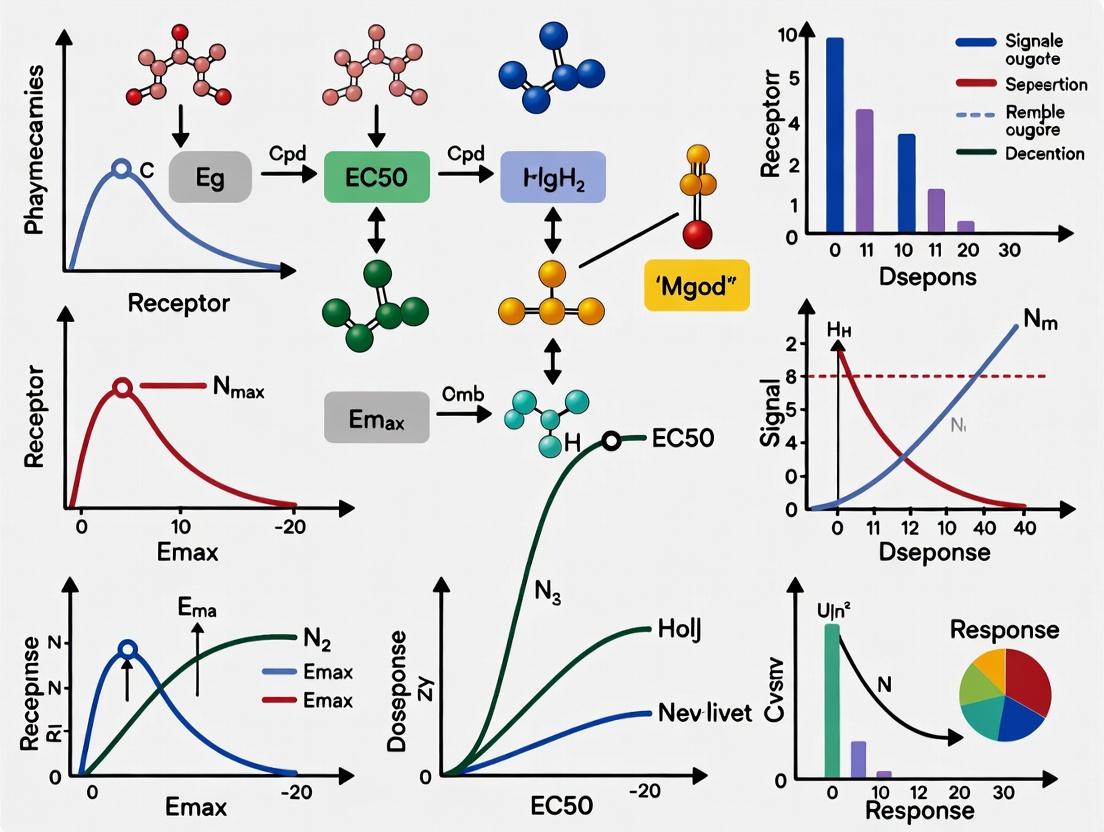
This comprehensive guide provides researchers, scientists, and drug development professionals with an in-depth exploration of E_max (maximum effect) and EC50 (half-maximal effective concentration)—the twin pillars of dose-response analysis.
Mastering Drug Response: A Practical Guide to E_max and EC50 in Modern Pharmacodynamics
Abstract
This comprehensive guide provides researchers, scientists, and drug development professionals with an in-depth exploration of E_max (maximum effect) and EC50 (half-maximal effective concentration)—the twin pillars of dose-response analysis. The article covers foundational concepts, modern experimental methodologies, and computational models for deriving these parameters. It addresses common analytical pitfalls, troubleshooting strategies for complex biological systems, and advanced applications in drug discovery. Through comparative analysis and validation frameworks, it highlights how these key metrics inform efficacy, potency, and therapeutic index predictions, bridging in vitro pharmacology to in vivo outcomes and clinical trial design.
What Are E_max and EC50? Defining the Pillars of Dose-Response Relationships
Pharmacodynamics (PD) describes the biochemical and physiological effects of drugs and their mechanisms of action. The quantitative relationship between drug concentration at the site of action and the magnitude of the biological effect is most commonly described by the Emax model. This framework, centered on two key parameters—Emax (maximum achievable effect) and EC50 (concentration producing 50% of Emax)—provides the foundational language for characterizing drug potency and efficacy in therapeutic research and development.
The Emax Model: Mathematical and Conceptual Framework
The basic Emax model, also known as the Hill-Langmuir equation, is expressed as: E = (Emax × C^γ) / (EC50^γ + C^γ) Where:
- E = Observed effect at concentration C
- Emax = Maximum possible effect (efficacy)
- EC50 = Drug concentration producing 50% of Emax (potency)
- C = Drug concentration at the effect site
- γ = Hill coefficient (describes steepness of the curve)
This sigmoidal relationship forms the basis for quantifying drug action.
The following table summarizes the core PD parameters and their significance.
Table 1: Core Pharmacodynamic Parameters and Their Interpretation
| Parameter | Symbol | Definition | Interpretation in Drug Development |
|---|---|---|---|
| Maximum Effect | Emax | The ceiling of the pharmacologic response. | Intrinsic efficacy; determines the therapeutic potential. |
| Half-Maximal Effective Concentration | EC50 | The concentration that produces 50% of Emax. | Measure of potency; key for dosing range prediction. |
| Hill Coefficient | γ (Gamma) | Describes the steepness of the concentration-effect curve. | Indicates cooperative binding (γ >1) or heterogeneity (γ <1). |
| Baseline Effect | E0 | The measured effect in the absence of drug. | Required for models where effect = E0 + drug-induced effect. |
| Inhibitory EC50 | IC50 | Concentration producing 50% of maximum inhibition. | Standard for antagonist/ inhibitor potency characterization. |
Experimental Determination of Emax and EC50: Core Methodologies
Accurate determination of PD parameters requires controlled in vitro and ex vivo assays.
Protocol 1: In Vitro Functional Assay for an Agonist (e.g., GPCR Activation)
This protocol details the measurement of intracellular cAMP accumulation in response to a drug.
1. Cell Preparation:
- Seed cells expressing the target receptor (e.g., HEK293-GPCR) in a 96-well plate at 30,000 cells/well. Culture for 24 hours. 2. Drug Stimulation:
- Prepare a 10-point, half-log serial dilution of the test agonist in assay buffer.
- Aspirate culture medium and add 80 µL of drug dilution per well. Include a vehicle control (0% effect) and a reference full agonist control (for 100% effect normalization).
- Incubate at 37°C for 30 minutes. 3. cAMP Detection (Homogeneous Time-Resolved Fluorescence - HTRF):
- Add 20 µL of lysis buffer containing HTRF anti-cAMP cryptate and d2-labeled cAMP.
- Incubate for 1 hour at room temperature, protected from light.
- Measure fluorescence resonance energy transfer (FRET) at 620 nm and 665 nm on a compatible plate reader. 4. Data Analysis:
- Calculate the 665 nm/620 nm ratio for each well.
- Convert ratios to cAMP concentration using a standard curve.
- Normalize data: %Effect = [(cAMPsample - cAMPvehicle) / (cAMPmaxagonist - cAMP_vehicle)] × 100.
- Fit normalized %Effect vs. log[drug] data to the four-parameter logistic (Emax) model using nonlinear regression software (e.g., GraphPad Prism).
Protocol 2: Ex Vivo Tissue Bath Preparation for Efficacy/Potency
This classic method measures direct physiological response, such as vascular or smooth muscle contraction.
1. Tissue Isolation and Mounting:
- Isolate the target tissue (e.g., rat aortic ring, guinea pig ileum) in oxygenated (95% O2/5% CO2) physiological salt solution (Krebs-Henseleit).
- Carefully mount the tissue between a fixed hook and an isometric force transducer in a temperature-controlled (37°C) organ bath.
- Apply a resting tension of 1-2 g and equilibrate for 60 minutes, with frequent buffer changes. 2. Cumulative Concentration-Response Curve:
- After equilibration, obtain a control response to a known agonist (e.g., 80 mM KCl for aorta) to standardize tissue viability.
- Wash tissue and re-equilibrate.
- Add the test drug cumulatively, increasing the bath concentration in approximately half-log increments (e.g., 1 nM, 3 nM, 10 nM...).
- Allow the response to reach a stable plateau before adding the next concentration. 3. Data Acquisition and Analysis:
- Record isometric tension continuously via a data acquisition system.
- Measure the peak response at each concentration.
- Normalize responses as % of the maximal response elicited by the test drug itself or a standard full agonist.
- Plot %Effect vs. log[concentration] and fit to the Emax model to derive EC50 and Emax.
Visualizing Signaling Pathways and Experimental Workflows
Figure 1: Core Pharmacodynamic Pathway from Drug Binding to Biological Effect
Figure 2: Workflow for an In Vitro Concentration-Response Assay
Figure 3: The Sigmoidal Concentration-Effect Relationship
The Scientist's Toolkit: Key Research Reagent Solutions
Table 2: Essential Materials for Pharmacodynamic Experiments
| Reagent / Material | Primary Function & Application |
|---|---|
| Cell Lines with Recombinant Target Expression (e.g., CHO, HEK293) | Provide a consistent, high-expression system for in vitro target-specific functional assays. |
| Tag-lite or HTRF cAMP/Gi/o/IP1 Assay Kits (Cisbio) | Homogeneous, non-radioactive kits for quantitative measurement of key second messengers (cAMP, IP1) in GPCR signaling. |
| β-Arrestin Recruitment Assays (e.g., PathHunter, Tango) | Detect ligand-induced β-arrestin recruitment, critical for profiling biased agonism and internalization. |
| FLIPR Calcium 6 Assay Kits (Molecular Devices) | Optimized no-wash, fluorescent dyes for high-throughput measurement of intracellular calcium flux (Gq-coupled GPCRs). |
| Phospho-Specific Antibodies & ELISA Kits (e.g., CST, R&D Systems) | Quantify phosphorylation states of downstream kinases (pERK, pAkt) as a measure of pathway activation. |
| Organ Bath System with Force Transducers (e.g., ADInstruments, DMT) | For ex vivo measurement of isotonic/isometric tension in isolated tissue preparations. |
| GraphPad Prism or Equivalent Software | Industry-standard for nonlinear regression curve fitting to derive EC50, Emax, and other PD parameters. |
| Physiological Salt Solutions (Krebs-Henseleit, Tyrode's) | Maintain physiological ion balance, pH, and oxygenation for ex vivo tissue viability. |
The precise characterization of the drug concentration-effect relationship through the Emax model and its core parameters (Emax, EC50) remains the cornerstone of rational pharmacodynamics. The rigorous application of standardized in vitro and ex vivo protocols, supported by specialized reagent toolkits and clear data visualization, enables the accurate quantification of drug efficacy and potency. This framework is indispensable for informing lead optimization, predicting clinical dosing, and ultimately translating pharmacological insights into effective and safe therapeutics.
Within pharmacodynamics (PD), the dose-response relationship is fundamentally characterized by two parameters: Emax (maximum efficacy) and EC50 (potency). This whitepaper provides an in-depth technical analysis of E_max, the asymptotically maximal effect a drug can produce, regardless of dose. It details its derivation, experimental determination, and critical role in differentiating therapeutic agents within the context of modern drug development.
The Hill-Langmuir equation (often called the Emax model) describes the relationship between drug concentration and effect: E = E0 + (Emax × C^γ) / (EC50^γ + C^γ)
Where:
- E: Observed effect at concentration C
- E_0: Baseline effect in the absence of drug
- E_max: Maximum achievable effect attributable to the drug
- EC50: Concentration producing 50% of Emax
- γ: Hill coefficient (steepness of the curve)
Emax represents the intrinsic activity of a drug at its target. It is a system-dependent parameter, determined by both the drug's ability to activate the receptor and the signaling capacity ("receptor reserve") of the tissue. A full agonist achieves the system's maximal response (high Emax), a partial agonist has a lower Emax, and an antagonist has an Emax of zero.
Table 1: Theoretical PD Parameters for Different Agonist Classes
| Agonist Class | E_max (Relative to Full Agonist) | EC_50 (Relative Potency) | Clinical Implication |
|---|---|---|---|
| Full Agonist | 100% | Variable | Can produce maximal therapeutic effect; may also cause maximal adverse effects. |
| Partial Agonist | 30-80% | Often higher than full agonist | May act as a functional antagonist in the presence of a full agonist; can provide a ceiling effect for safety. |
| Inverse Agonist | <0% (reduces baseline) | Variable | Suppresses constitutive receptor activity; useful in diseases with pathological receptor activation. |
Table 2: Example Experimental Data from a Functional cAMP Assay
| Compound | Class | Fitted E_max (% Stimulation) | Fitted EC_50 (nM) | 95% CI for E_max |
|---|---|---|---|---|
| Isoproterenol | Full β2-agonist | 100.0 | 1.2 | [98.5, 101.5] |
| Salmeterol | Partial β2-agonist | 87.5 | 0.8 | [85.1, 89.9] |
| Formoterol | Full β2-agonist | 99.1 | 0.5 | [97.3, 100.9] |
| Vehicle | Control | 0.0 | N/A | N/A |
Experimental Protocol: Determining E_maxIn Vitro
Objective: To determine the Emax and EC50 of a test compound in a recombinant cell system expressing a target GPCR.
Materials: See "The Scientist's Toolkit" below.
Methodology:
- Cell Preparation: Seed HEK293 cells stably expressing the human target receptor into a 384-well microplate at 10,000 cells/well. Culture for 24 hours.
- Compound Serial Dilution: Prepare an 11-point, half-log serial dilution of the test agonist and reference controls in assay buffer. Include a vehicle control (0% effect) and a reference full agonist control (100% effect).
- Stimulation: Remove cell culture medium and add 20 µL of compound dilution per well. Incubate at 37°C, 5% CO₂ for 30 minutes.
- Detection (cAMP Example): Lyse cells and detect intracellular cAMP levels using a Homogeneous Time-Resolved Fluorescence (HTRF) assay kit. Add 20 µL each of cAMP-d2 conjugate and anti-cAMP cryptate antibody. Incubate for 1 hour at room temperature.
- Readout: Measure fluorescence resonance energy transfer (FRET) at 620 nm and 665 nm on a plate reader. The 665/620 nm ratio is inversely proportional to cAMP concentration.
- Data Analysis:
- Convert raw ratios to % of control response:
% Effect = [(Sample - Veh) / (Max Control - Veh)] * 100. - Fit the log(concentration) vs. response data to a four-parameter logistic (4PL) model (the Emax model) using non-linear regression software (e.g., GraphPad Prism).
- The fitted top plateau of the curve is the Emax. The concentration at the midpoint between baseline and Emax is the EC50.
- Convert raw ratios to % of control response:
Signaling Pathways and Experimental Logic
The Scientist's Toolkit: Key Research Reagents
Table 3: Essential Materials for E_max Determination via Functional Assay
| Reagent / Material | Function & Rationale |
|---|---|
| Recombinant Cell Line | Engineered to express the target receptor at a consistent, physiologically relevant level. Critical for reproducible E_max assessment. |
| Reference Agonists | Pharmacologically characterized full and partial agonists. Essential for calibrating the system's maximum response (100% E_max) and validating assay performance. |
| Cell-Based Assay Kit (e.g., cAMP HTRF) | Provides optimized lysis buffers, detection antibodies, and FRET-compatible tracers for quantitative, homogeneous measurement of a key second messenger. |
| 384-Well Microplates | Standard format for high-throughput concentration-response profiling, minimizing reagent use and enabling statistical robustness. |
| Automated Liquid Handler | Ensures precision and reproducibility during serial compound dilution and plate replication, a key factor in accurate curve fitting. |
| Non-Linear Regression Software (e.g., GraphPad Prism) | Specialized for fitting dose-response data to the 4-parameter logistic model, providing accurate estimates of Emax and EC50 with confidence intervals. |
In pharmacodynamics (PD) research, the relationship between drug concentration and its pharmacological effect is foundational. This relationship is most frequently modeled using the Emax model, where the effect plateaus at a maximum (Emax) as concentration increases. Central to this model is the EC50 (Half-Maximal Effective Concentration), the concentration of a drug that produces 50% of its maximal effect. It is the primary quantitative measure of a drug's potency—the lower the EC50, the higher the potency. This whitepaper provides an in-depth technical guide to EC50 within the framework of Emax/EC50 modeling, detailing its definition, experimental determination, and critical role in drug development.
Core Pharmacodynamic Concepts: Emax and EC50
The sigmoidal Emax model (also called the Hill-Langmuir equation) is described by:
[ E = E0 + \frac{(E{max} - E0) \times [C]^n}{EC{50}^n + [C]^n} ]
Where:
- E = Observed effect at concentration [C]
- E₀ = Baseline effect in the absence of drug
- Emax = Maximum possible effect attributable to the drug
- [C] = Drug concentration
- EC50 = Concentration producing 50% of Emax
- n = Hill coefficient (slope factor; describes steepness of the curve)
Interpretation: The EC50 is not a measure of efficacy (that is Emax), but of potency. It indicates the concentration at which the drug-receptor system is half-saturated under equilibrium conditions, reflecting the drug's binding affinity (for agonists) and functional efficiency.
Experimental Determination of EC50: Standardized Protocols
Accurate EC50 determination requires robust in vitro concentration-response experiments.
Generic Cell-Based Functional Assay for an Agonist
Objective: To determine the EC50 of a novel agonist (Compound X) via intracellular calcium mobilization in a recombinant cell line. Key Reagents & Materials:
- Recombinant Cell Line: Stably expressing the target GPCR.
- Test Agonist (Compound X): Serial dilutions prepared in assay buffer.
- Reference Agonist: A known full agonist for the target (positive control).
- Fluorescent Calcium-Sensitive Dye (e.g., Fluo-4 AM): Loaded into cells to report receptor activation.
- Microplate Reader (or FLIPR): For real-time, high-throughput fluorescence measurement.
- 96- or 384-well Microplates: Cell culture-treated, black-walled, clear-bottom.
Protocol:
- Cell Preparation: Seed cells in microplates and culture for 24 hours to achieve ~90% confluence.
- Dye Loading: Wash cells and incubate with dye-loading solution for 1 hour at 37°C.
- Compound Preparation: Prepare a 10-point, half-log serial dilution of Compound X and the reference agonist (e.g., 10⁻¹¹ M to 10⁻⁵ M) in assay buffer. Include a vehicle-only control (0% effect) and a saturating concentration of reference agonist (100% effect).
- Signal Acquisition: Place plate in reader. Establish a baseline read for 10 seconds, then automatically add compound dilutions. Record fluorescence (ex/em ~494/516 nm) for 2-3 minutes.
- Data Processing: For each well, calculate the peak fluorescence signal (RFU) minus baseline.
- Curve Fitting: Normalize response of Compound X wells as a percentage of the reference agonist's maximal response. Fit normalized data to the sigmoidal Emax model using non-linear regression software (e.g., GraphPad Prism, SigmaPlot).
Data Output and Analysis
The primary outputs are the fitted Emax (efficacy) and EC50 (potency). Data from a typical experiment comparing two agonists is summarized below.
Table 1: Comparative Agonist Potency and Efficacy from a Functional Assay
| Compound | Emax (% Ref. Agonist) | EC50 (nM) | 95% CI for EC50 (nM) | Hill Slope (n) |
|---|---|---|---|---|
| Reference Agonist | 100.0 | 5.2 | (4.1 - 6.5) | 1.1 |
| Compound X | 98.5 | 1.3 | (0.9 - 1.8) | 1.0 |
| Compound Y (Partial Agonist) | 72.4 | 22.7 | (18.5 - 27.9) | 0.9 |
The Scientist's Toolkit: Essential Research Reagents & Materials
Table 2: Key Reagent Solutions for EC50 Determination Assays
| Item | Function in EC50 Assays | Typical Example |
|---|---|---|
| Recombinant Cell Line | Provides a consistent, high-expression system for the target receptor, ensuring a robust signal-to-noise ratio. | HEK293T cells stably expressing human β₂-adrenergic receptor. |
| Fluorescent/Chemiluminescent Probe | Translates the biological event (e.g., receptor activation, second messenger production) into a quantifiable optical signal. | cAMP-Glo Assay, Ca²⁺ dyes (Fluo-4), Reporter gene assays (Luciferase). |
| Reference Agonist/Antagonist | Serves as an internal control for assay performance and for normalizing the efficacy (Emax) of test compounds. | Isoproterenol (for β-AR), ATP (for P2Y receptors). |
| Cell Culture-Compatible Microplates | The physical platform for high-throughput testing of multiple compound concentrations in parallel. | 384-well, black-walled, clear-bottom, tissue-culture treated plates. |
| Non-Linear Regression Software | Essential for fitting the concentration-response data to the sigmoidal Emax model to derive accurate EC50 and Emax values. | GraphPad Prism, R (drc package), SigmaPlot. |
Critical Pathways and Workflows: Visualizing the Concepts
Pharmacodynamic Concentration-Response Relationship
Experimental Workflow for EC50 Determination
Simplified GPCR Signaling Pathway in a Functional Assay
Interpretation and Applications in Drug Development
The EC50 is pivotal for:
- Lead Optimization: Ranking compounds during SAR (Structure-Activity Relationship) studies.
- Selectivity Index: Comparing EC50 at the primary target versus related targets (e.g., receptor subtypes) to assess selectivity.
- In Vitro to In Vivo Translation: Used alongside PK data to predict therapeutic doses and safety margins.
- Defining Biologic System Properties: Changes in EC50 under different experimental conditions (e.g., presence of an irreversible antagonist) can reveal system parameters like receptor reserve.
Crucial Distinction: EC50 is distinct from IC50 (half-maximal inhibitory concentration), which measures potency for an inhibitor. Furthermore, EC50 is a system-dependent parameter; it can vary with assay type, cell line, and receptor expression level. Therefore, it is a comparative measure most meaningful when determined under identical experimental conditions. Within the thesis of Emax/EC50 modeling, understanding this interplay is essential for translating in vitro potency to in vivo effect and ultimately informing rational drug development decisions.
Within the pharmacodynamic (PD) analysis of drug action, two parameters are fundamental: Emax, the maximum possible effect of the drug, and EC₅₀, the drug concentration that produces half of Emax. These parameters are not independent descriptors; they are intrinsically linked through a mathematical formalism—the Hill Equation. This whitepaper posits that the Hill Equation is the essential quantitative scaffold that unifies E_max and EC₅₀, transforming raw concentration-response data into a robust, interpretable model of drug-receptor interaction and downstream signaling efficacy. Understanding this framework is critical for researchers and drug development professionals in accurately characterizing drug potency, efficacy, and mechanism of action.
The Hill Equation: Core Formalism and Interpretation
The standard form of the Hill Equation (also called the Hill-Langmuir equation) for pharmacodynamic response is:
E = (E_max × [C]ⁿ) / (EC₅₀ⁿ + [C]ⁿ)
Where:
- E is the observed effect at concentration [C].
- [C] is the drug concentration.
- E_max is the maximum achievable effect (asymptote).
- EC₅₀ is the concentration producing 50% of E_max.
- n is the Hill coefficient (or slope factor).
This sigmoidal equation defines the relationship where EC₅₀ is the concentration at the inflection point of the curve, and E_max is the upper plateau. The Hill coefficient n provides critical mechanistic insight:
- n ≈ 1: Suggests a simple bimolecular interaction (one drug molecule binding one receptor).
- n > 1: Implies positive cooperativity, where binding of one molecule facilitates subsequent binding.
- n < 1: Suggests negative cooperativity or receptor heterogeneity.
Table 1: Pharmacodynamic Parameters Derived from Hill Equation Analysis for Representative Drug Classes
| Drug Class / Example | E_max (% of Baseline or Absolute) | EC₅₀ (nM) | Hill Coefficient (n) | Biological System | Reference (Year) |
|---|---|---|---|---|---|
| β2-Adrenoceptor Agonist (Albuterol) | 100% Bronchodilation | 5.2 | 1.1 | Human airway smooth muscle | (2022) |
| Opioid Analgesic (Fentanyl) | 100% Analgesia (Tail-flick) | 0.8 | 1.4 | Mouse brain homogenate | (2023) |
| Kinase Inhibitor (EGFRi, 3rd Gen) | 95% p-EGFR Inhibition | 12.7 | 0.9 | NSCLC cell line (in vitro) | (2021) |
| mAb Antagonist (TNF-α inhibitor) | 90% TNF-α Neutralization | 0.05 | 1.8 | Human whole blood assay | (2023) |
| Positive Allosteric Modulator (mGluR5) | 65% Potentiation of Glutamate Response | 110.0 | 2.2 | Recombinant cell assay | (2022) |
Table 2: Impact of Hill Coefficient (n) on Effective Concentration Ranges
| Hill Coefficient (n) | Concentration for 10% Effect (EC₁₀) | Concentration for 90% Effect (EC₉₀) | EC₉₀/EC₁₀ Ratio | Implication for Therapeutic Window |
|---|---|---|---|---|
| 0.7 | ~0.02 × EC₅₀ | ~60 × EC₅₀ | ~3000 | Very shallow slope, broad concentration range for full effect. |
| 1.0 | 0.11 × EC₅₀ | 9.0 × EC₅₀ | 81 | Standard hyperbolic curve. |
| 1.5 | 0.25 × EC₅₀ | 4.0 × EC₅₀ | 16 | Steeper transition. |
| 2.0 | 0.33 × EC₅₀ | 3.0 × EC₅₀ | 9 | Very steep, switch-like behavior. |
Experimental Protocols for Parameter Determination
Protocol 1: In Vitro Concentration-Response Curve (CRC) in Cell-Based Assays
Objective: To determine E_max, EC₅₀, and n for a drug inhibiting a phosphorylated protein target. Key Reagents: Target cell line, drug compound (serial dilutions), detection antibodies (phospho-specific & total protein), cell lysis buffer, luminescent substrate. Methodology:
- Cell Plating & Treatment: Plate cells in 96-well plates. After adherence, treat with 8-12 concentrations of the drug (e.g., from 10 pM to 100 µM, serial 1:3 or 1:10 dilutions) in triplicate. Include vehicle (0% effect) and a maximal inhibitor control (100% effect).
- Stimulation & Lysis: Stimulate cells with relevant ligand if required. Lyse cells after defined exposure time.
- Detection: Use ELISA or AlphaLISA/MSD immunoassay to quantify phosphorylated and total target protein.
- Data Normalization: Calculate % Inhibition = 100 × [1 - (SignalDrug - MinControl)/(MaxControl - MinControl)].
- Curve Fitting: Fit normalized data to the Hill Equation using nonlinear regression software (e.g., GraphPad Prism, R). The model directly outputs fitted estimates of E_max, EC₅₀, and n with confidence intervals.
Protocol 2: Ex Vivo Functional Agonist Assay
Objective: To determine E_max, EC₅₀, and n for a receptor agonist in a physiologically relevant tissue. Key Reagents: Isolated tissue (e.g., vascular ring, ileum), organ bath, physiological buffer, drug (agonist) stock solutions, reference agonist, force transducer. Methodology:
- Tissue Preparation: Mount tissue in an organ bath with oxygenated buffer. Rest under optimal tension.
- CRC Construction: Cumulative or non-cumulative additions of agonist are made. Tissue response (e.g., contraction force) is recorded after each addition.
- Data Processing: Responses are normalized to a maximal reference agonist (e.g., 100% E_max) or tissue weight.
- Analysis: Fit the response vs. log(concentration) data to the Hill Equation. E_max represents the tissue's intrinsic responsiveness (efficacy), EC₅₀ its sensitivity (potency).
Visualizing the Framework and Pathways
Diagram 1: PD Data to Hill Model Workflow
Diagram 2: Impact of Hill Coefficient on Curve Shape
The Scientist's Toolkit: Research Reagent Solutions
Table 3: Essential Reagents for Hill Equation-Based PD Analysis
| Item / Solution | Function in Experiment | Key Considerations |
|---|---|---|
| Compound Library (Serially Diluted) | Provides the range of [C] to construct the concentration-response curve. | Use DMSO stocks; ensure final solvent concentration is consistent and non-perturbing (<0.1-1%). |
| Cell-Based PD Assay Kits (e.g., HTRF, AlphaLISA) | Quantify downstream biomarkers (pERK, cAMP, Ca²⁺, etc.) in a homogenous format. | Enables high-throughput, plate-based CRC generation with excellent signal-to-noise. |
| Recombinant Cell Lines (Overexpressing Target GPCR/Ion Channel) | Provide a consistent, high-signal system for agonist/antagonist profiling. | Essential for determining compound efficacy (E_max) relative to a standard agonist. |
| Reference Agonists & Antagonists (Full, Partial, Inverse) | Serve as positive/negative controls to define 100% and 0% effect for data normalization. | Critical for accurate determination of intrinsic activity (E_max) of test compounds. |
Nonlinear Regression Software (e.g., GraphPad Prism, R drc package) |
Performs iterative curve fitting of data to the Hill Equation model. | Must provide estimates with 95% CIs, test for differences between curves (F-test), and handle constraints (e.g., fix E_max=100). |
| Organ Bath / Myograph System | For ex vivo tissue pharmacology to measure functional responses (contraction/relaxation). | Provides physiologically relevant E_max and EC₅₀ in native tissue context. |
Within pharmacodynamics research, the relationship between drug concentration and pharmacological effect is fundamentally described by the sigmoidal dose-response curve. This model is anchored by two critical parameters: Emax, the maximum achievable effect, and EC50, the concentration producing 50% of Emax. These parameters are not merely descriptive; they provide deep insight into drug efficacy, potency, and mechanism of action, forming the quantitative backbone of modern drug development.
Decoding the Sigmoidal Plot: Parameters and Interpretation
The classic sigmoidal curve is described by the four-parameter Hill equation: Effect = E₀ + (Emax × [C]ʰ) / (EC₅₀ʰ + [C]ʰ)
Where:
- E₀: Baseline effect in absence of drug.
- Emax: Maximum possible effect attributable to the drug.
- [C]: Drug concentration.
- EC₅₀: Concentration producing half-maximal effect.
- h: Hill coefficient, describing steepness of the curve.
Table 1: Key Parameters Derived from a Sigmoidal Dose-Response Curve
| Parameter | Symbol | Interpretation | Pharmacodynamic Relevance |
|---|---|---|---|
| Maximum Effect | Emax | Upper asymptote of the curve | Intrinsic efficacy of the drug; defines the therapeutic ceiling. |
| Half-Maximal Effective Concentration | EC50 | X-axis value at 50% of Emax | Potency; lower EC50 indicates greater potency. |
| Hill Coefficient | h | Steepness of the central linear phase | Indicates cooperativity in receptor binding or signaling. A value >1 suggests positive cooperation. |
| Dynamic Range | (Log Scale) | Span between ~10% and ~90% Emax | Defines the concentration window over which the effect is regulatable. |
Experimental Protocols for Generating Dose-Response Data
Protocol 1: In Vitro Cell-Based Functional Assay (e.g., cAMP Accumulation for a GPCR)
- Cell Preparation: Seed cells expressing the target receptor into multi-well plates. Culture for 24-48 hours to reach appropriate confluence.
- Serum Starvation: Incubate cells in serum-free medium for 2-4 hours to reduce basal signaling activity.
- Drug Treatment: Prepare a serial dilution (typically 10+ concentrations, ½-log or log steps) of the agonist. Aspirate medium from cells and add drug dilutions. Include vehicle (control) and a reference full agonist (for Emax determination).
- Signal Detection: Incubate for a predetermined time (e.g., 30 min). Lyse cells and quantify intracellular cAMP using a HTRF (Homogeneous Time-Resolved Fluorescence) or ELISA kit.
- Data Normalization: Express data as % of the response to the reference full agonist. Fit normalized data to the 4-parameter logistic equation using nonlinear regression software (e.g., GraphPad Prism).
Protocol 2: Ex Vivo Tissue Bath Experiment (e.g., Isolated Vessel Contraction)
- Tissue Isolation: Mount an isolated arterial ring in an organ bath containing oxygenated (95% O2/5% CO2) physiological salt solution at 37°C.
- Force Transduction: Connect the tissue to an isometric force transducer. Apply a resting tension and equilibrate for 60-90 minutes.
- Viability Test: Challenge tissue with a high-potassium solution to confirm tissue viability and maximal contractile capacity.
- Cumulative Dosing: After washout and re-equilibration, add increasing concentrations of the agonist cumulatively (each addition increases bath concentration by ~0.5 log units). Allow the response to each dose to plateau before adding the next.
- Data Acquisition: Record force development. Normalize responses as a percentage of the maximal contraction induced by the agonist. Plot against log[agonist] to generate the sigmoidal curve.
Signaling Pathway Visualization
Title: Core Pharmacodynamic Signaling Cascade from Drug to Effect
Data Analysis & Curve Fitting Workflow
Title: Dose-Response Data Analysis Pipeline
The Scientist's Toolkit: Essential Research Reagent Solutions
Table 2: Key Reagents and Materials for Dose-Response Experiments
| Item | Function & Application |
|---|---|
| Reference Agonist/Antagonist | A well-characterized compound with high affinity for the target, used to define system Emax (agonist) or validate receptor specificity (antagonist). |
| Cell Line with Stable Target Expression | Engineered mammalian (e.g., HEK293, CHO) cells providing a consistent, high-expression system for in vitro screening. |
| HTRF or AlphaLISA Detection Kit | Homogeneous, no-wash assays for quantifying second messengers (cAMP, IP1, Ca2+) or phosphorylated proteins with high throughput and sensitivity. |
| Fluorescent or Luminescent Viability Assay | (e.g., MTT, CellTiter-Glo). Used to rule out cytotoxic effects at high test concentrations that could confound efficacy data. |
| Non-Linear Regression Software | (e.g., GraphPad Prism, R). Essential for robust curve fitting, parameter estimation, and statistical comparison of Emax/EC50 values. |
| Physiological Salt Solution (PSS) | Oxygenated buffer for ex vivo tissue experiments, maintaining ionic composition, pH, and osmotic pressure to preserve tissue viability. |
Within pharmacodynamics, understanding drug action requires disentangling the dual concepts of intrinsic activity and potency. Emax (maximal effect) quantifies the intrinsic activity or efficacy of a drug—its ability to produce a response once bound. EC50 (half-maximal effective concentration) measures potency—the concentration needed to produce 50% of that maximal effect. A high-potency drug (low EC50) can have low intrinsic activity (low Emax), and vice versa. This whitepaper, framed within a broader thesis on Emax and EC50 in pharmacodynamics, details the distinct physiological and molecular stories these parameters reveal, providing technical guidance for their experimental determination and interpretation in drug development.
Conceptual Foundations
Defining the Parameters
- E_max (Intrinsic Activity/Efficacy): The maximum possible response a drug can elicit, regardless of dose. It reflects the "ceiling" of drug effect and is governed by the drug's ability to activate the receptor and the system's signal amplification capacity.
- EC50 (Potency): The concentration of a drug that produces 50% of its maximal effect (E_max). It is a composite measure of affinity (binding) and efficacy. A lower EC50 indicates higher potency.
The Receptor Theory Basis
The operational model of pharmacology provides the framework. Ligand-receptor binding initiates a transduction pathway, where the efficiency of coupling determines the observed E_max and EC50.
Title: Ligand-Receptor-Response Transduction Pathway
Quantitative Data Comparison
The following tables illustrate the dissociation between E_max (intrinsic activity) and EC50 (potency) using hypothetical and literature-derived data.
Table 1: Theoretical Drug Profiles in a Standard Assay
| Drug | Class | E_max (% of Reference Agonist) | EC50 (nM) | Interpretation |
|---|---|---|---|---|
| Drug A | Full Agonist | 100% | 10 | High efficacy, high potency. |
| Drug B | Full Agonist | 100% | 0.1 | High efficacy, very high potency. |
| Drug C | Partial Agonist | 60% | 1 | Moderate efficacy, very high potency. |
| Drug D | Partial Agonist | 60% | 100 | Moderate efficacy, low potency. |
| Drug E | Antagonist | 0% | N/A (K_i = 2 nM) | Zero efficacy; potency measured as binding affinity (K_i). |
Table 2: Example Clinical Pharmacology Data
| Drug & Target | Therapeutic Area | Reported E_max (Effect) | Reported EC50 / IC50 | Key Implication |
|---|---|---|---|---|
| Buprenorphine (μ-opioid receptor) | Pain Management | ~50% of full agonist response | ~1-3 nM (high affinity) | Ceiling effect on analgesia & respiration due to partial agonism (E_max), despite high potency. |
| Aripiprazole (D2 receptor) | Psychiatry | ~30% of dopamine response | Low nM range | Functional selectivity; acts as a stabilizer due to its low intrinsic activity, not low potency. |
| High-Biologic mAb (Target Saturation) | Immunology | 100% target occupancy & inhibition | Very low (pM-nM) | Potency drives dosing frequency; high potency allows low, infrequent dosing to maintain E_max. |
Experimental Protocols for Determination
Functional Dose-Response Assay (Gold Standard)
Objective: To generate a concentration-response curve for calculation of E_max and EC50. Protocol Summary:
- Cell System Preparation: Use a cell line expressing the recombinant receptor of interest with a functional readout (e.g., cAMP accumulation, calcium flux, beta-arrestin recruitment).
- Ligand Stimulation: Seed cells in 96- or 384-well plates. The next day, stimulate with a serial dilution (e.g., 11-point, half-log increments) of the test compound. Include a full reference agonist and vehicle control.
- Response Measurement: At a predetermined optimal time, measure the functional signal using a plate reader (e.g., fluorescence for Ca²⁺, luminescence for cAMP).
- Data Analysis: Normalize response data to the reference agonist maximum (100%) and vehicle baseline (0%). Fit normalized data to a four-parameter logistic (4PL) Hill equation using software (GraphPad Prism, R):
Response = Bottom + (Top - Bottom) / (1 + 10^((LogEC50 - Log[Ligand]) * HillSlope))Here, E_max is the "Top" parameter, and EC50 is derived from the LogEC50 parameter.
Title: Functional Dose-Response Assay Workflow
Radioligand Binding Assay (Affinity Component)
Objective: To determine receptor binding affinity (Kd/Ki), which primarily influences EC50. Protocol Summary:
- Membrane Preparation: Isolate cell membranes from receptor-expressing tissue or cells.
- Competition Binding: Incubate a fixed concentration of a radiolabeled ligand (e.g., [³H]-ligand) with the membrane preparation and increasing concentrations of the unlabeled test compound.
- Separation & Quantification: Separate bound from free radioligand via filtration. Measure bound radioactivity by scintillation counting.
- Data Analysis: Fit data to a one-site competition model to determine the IC50. Convert to inhibition constant (Ki) using the Cheng-Prusoff equation. This Ki reflects binding potency, a major component of functional EC50.
The Scientist's Toolkit: Key Research Reagent Solutions
Table 3: Essential Materials for Emax/EC50 Studies
| Reagent / Material | Function in Experiment | Key Considerations |
|---|---|---|
| Stable Recombinant Cell Line (e.g., CHO, HEK293) | Provides a consistent, high-expression system for the target receptor. | Ensure proper G-protein/transducer coupling; monitor passage number for stability. |
| Reference Full Agonist | Serves as the benchmark for defining 100% E_max in functional assays. | Select a well-characterized, high-efficacy ligand for the target. |
| Tag-lite or similar HTRF kits | Enable label-free, homogeneous measurement of GPCR activation (cAMP, IP1, β-arrestin). | Ideal for high-throughput screening; reduces assay artifacts. |
| Fluorescent Dyes (Ca²⁺ indicators, e.g., Fluo-4) | Measure rapid, Gq-mediated intracellular calcium mobilization as a functional response. | Requires a flex station or FLIPR for kinetic reads. |
| cAMP GloSensor or CAMYEL BRET biosensor | Highly dynamic, real-time measurement of Gs or Gi-mediated cAMP changes. | Excellent signal-to-noise for partial agonist characterization. |
| Radioactive Ligands (e.g., [³H], [¹²⁵I]) | High-sensitivity detection for direct binding studies to determine affinity (Kd/Ki). | Requires licensing and specialized safety protocols for handling and disposal. |
| GraphPad Prism / R (drc package) | Industry-standard software for nonlinear curve fitting of dose-response data to derive E_max and EC50. | Ensure appropriate model selection and constraints for reliable parameter estimation. |
Interpretative Context and Strategic Implications
The critical distinction informs all phases of drug development:
- Lead Optimization: Medicinal chemistry can often alter EC50 (potency) independently of E_max (intrinsic activity). The goal is to optimize both for the desired therapeutic profile.
- Therapeutic Window: A partial agonist (lower E_max) may inherently have a safer profile than a full agonist, even if potency is similar, due to a ceiling effect.
- Biomarker Interpretation: Target engagement (reflected by potency/EC50) does not guarantee desired functional outcome (governed by E_max). Both parameters must be monitored in Phase I/II trials.
- Translational Prediction: Accurate projection of human efficacious dose relies more on EC50 and receptor occupancy models, while the therapeutic ceiling is set by the drug's E_max.
Emax and EC50 are orthogonal, non-redundant pillars of pharmacodynamic analysis. Emax reveals the quality of the drug's effect—its ultimate ability to modulate a biological system. EC50 reveals the quantity of drug needed to achieve that effect—its efficiency. Confusing potency for efficacy can lead to flawed drug candidate selection and unexpected clinical outcomes. A rigorous, model-based approach that separately quantifies and interprets both parameters is therefore indispensable for rational pharmacology and successful drug development.
This whiteprames the historical evolution of receptor theory within the core thesis of modern pharmacodynamics (PD), where the quantitation of drug effect (Emax) and potency (EC50) is paramount. A.J. Clark's foundational work provided the conceptual framework for drug-receptor interaction, which has been mathematically formalized and experimentally refined into the quantitative models essential for contemporary drug development.
Clark's Occupancy Theory: The Foundational Postulate
A.J. Clark, in the 1920s-1930s, proposed that the intensity of a drug's effect is directly proportional to the number of receptors occupied. He modeled this as a simple bimolecular reaction:
[Drug] + [Receptor] <-> [Drug-Receptor Complex] -> Effect
While revolutionary, Clark's model assumed a linear relationship between occupancy and effect, a single receptor type, and no constitutive activity. It could not explain phenomena like partial agonists or inverse agonists. The model implicitly contained the seeds of Emax (maximum effect at full occupancy) and EC50 (the drug concentration producing 50% occupancy).
Table 1: Core Postulates of Clark's Theory vs. Modern Understanding
| Concept | Clark's Postulate | Modern Quantitative Refinement |
|---|---|---|
| Relationship | Effect ∝ Occupancy | Effect = f(Occupancy) via Transduction Functions |
| Maximum Effect (Emax) | Implied at 100% occupancy | System-dependent maximal tissue response |
| Potency (EC50) | Concentration for 50% occupancy | Concentration for 50% of Emax (incorporates efficacy) |
| Efficacy | Not formally defined | Intrinsic ability to activate receptor (Stephenson, 1956) |
| Receptor Reserve | Not accounted for | Explained high efficacy agonists producing Emax at low occupancy |
The Evolution to Modern Quantitative Models
The Hill-Langmuir equation translated Clark's occupancy into a formal quantitative relationship. Stephenson's efficacy (e) and Furchgott's intrinsic activity (α) introduced the critical separation of affinity and efficacy. These concepts culminated in the Operational Model of Agonism by Black and Leff (1983), which fully decouples affinity (KA) from efficacy (τ) to predict the concentration-effect curve.
The fundamental PD equation for a simple agonist is the Hill Equation:
E = (Emax * [C]^n) / (EC50^n + [C]^n)
Where E is effect, [C] is drug concentration, Emax is maximal effect, EC50 is half-maximal effective concentration, and n is the Hill slope.
Table 2: Key Parameters in Quantitative Pharmacodynamics
| Parameter | Symbol | Definition | Experimental Determinant |
|---|---|---|---|
| Maximal Effect | Emax | Maximum possible system response | Measured plateau of conc.-effect curve |
| Potency | EC50 | Concentration producing 50% of Emax | Calculated from curve fitting (e.g., non-linear regression) |
| Hill Coefficient | n | Steepness of the concentration-effect curve | Curve fit; indicates cooperativity |
| Efficacy | τ (tau) | Agonist's ability to activate receptor | Derived via Operational Model fitting (τ = [R]/KE) |
| Affinity | pKA / KA | Negative log of equilibrium dissociation constant | Radioligand binding or functional "null" methods |
Experimental Protocols for Determining Emax and EC50
Protocol 1: Functional Agonist Concentration-Response Curve (CRC) in Isolated Tissue
Objective: Determine agonist Emax, EC50, and hill slope in a biological preparation.
- Tissue Preparation: Mount isolated tissue (e.g., guinea pig ileum, rat aorta) in an organ bath containing oxygenated physiological buffer (e.g., Krebs-Henseleit) at 37°C.
- Equilibration: Allow tissue to equilibrate under resting tension for 60-90 min with buffer changes every 15 min.
- Calibration: Apply a reference agonist at a sub-maximal concentration repeatedly until consistent responses are obtained.
- Cumulative CRC: Add increasing concentrations of the test agonist cumulatively (typically half-log increments). Allow effect to reach a steady state at each concentration before adding the next.
- Washout & Recovery: Thoroughly wash tissue and re-equilibrate. Repeat CRC for reproducibility or test another agonist.
- Data Analysis: Normalize responses to the maximum effect of a standard full agonist (e.g., 100%). Fit normalized data to the Hill equation using non-linear regression software (e.g., GraphPad Prism) to derive Emax (as % of standard), EC50, and hill slope (n).
Protocol 2: Radioligand Binding for Affinity (KD) Determination
Objective: Measure the affinity of a ligand for its receptor independently of functional efficacy.
- Membrane Preparation: Homogenize target tissue or cultured cells expressing the receptor of interest. Centrifuge to isolate a crude membrane fraction.
- Saturation Binding: Incubate a fixed amount of membrane protein with increasing concentrations of radiolabeled ligand (e.g., [³H]-ligand). Include parallel tubes with a high concentration of unlabeled competitor to define non-specific binding.
- Separation & Quantification: Terminate incubation by rapid filtration through glass fiber filters to separate bound from free radioligand. Measure bound radioactivity by scintillation counting.
- Data Analysis: Subtract non-specific from total binding to obtain specific binding. Fit specific binding data to a one-site saturation binding model:
B = (Bmax * [L]) / (KD + [L]), where B is bound ligand, Bmax is total receptor density, [L] is free ligand concentration, and KD is the equilibrium dissociation constant.
Visualization of Concepts and Pathways
Title: Evolution from Clark's Theory to Modern PD Models
Title: Experimental Workflow for Agonist CRC
Title: Operational Model of Agonist Action
The Scientist's Toolkit: Key Research Reagent Solutions
Table 3: Essential Reagents for Quantitative PD Experiments
| Item / Reagent | Function in Experiment | Key Consideration |
|---|---|---|
| Physiological Salt Solution (e.g., Krebs, Kreb's-Henseleit, Ringer's) | Maintains tissue viability, ionic balance, and pH in organ baths. | Must be oxygenated (95% O2/5% CO2) and warmed to 37°C. |
| Selective Agonists & Antagonists (Reference Compounds) | Define receptor-specific responses and validate experimental system. | High purity and well-characterized potency (e.g., from Tocris, Sigma). |
| Radiolabeled Ligands (e.g., [³H]-, [¹²⁵I]-) | Quantify receptor affinity (KD) and density (Bmax) in binding assays. | Require specific activity and radiochemical purity validation. |
| Cell Membranes Expressing Recombinant Receptor | Provide a consistent, high-density source of target for binding/functional assays. | Source (e.g., PerkinElmer, Eurofins) should specify receptor density. |
| Scintillation Cocktail & Vials | Detect beta radiation from tritiated ligands in binding assays. | Must be compatible with filter material and solvent. |
| Non-Linear Regression Software (e.g., GraphPad Prism, R) | Fit concentration-response and binding data to derive PD parameters (Emax, EC50, KD, n). | Requires appropriate model selection and weighting criteria. |
| Phosphodiesterase Inhibitors (e.g., IBMX) | Prevent cyclic nucleotide degradation in assays measuring cAMP/cGMP. | Critical for measuring cumulative second messenger response. |
| Protease/Phosphatase Inhibitor Cocktails | Preserve receptor and signaling protein integrity during membrane prep. | Broad-spectrum cocktails are often used (e.g., from Roche, Thermo). |
How to Measure and Apply E_max & EC50: From Bench to Data Analysis
Within the framework of pharmacodynamics research, the accurate determination of the maximum effect (Emax) and the half-maximal effective concentration (EC50) is fundamental for characterizing drug potency and efficacy. Robust in vitro and ex vivo assays form the cornerstone of this characterization. This guide details the experimental design principles and protocols essential for generating reliable, reproducible data for Emax/EC50 analysis.
Core Assay Principles for Emax/EC50 Determination
Quantitative pharmacological parameters are derived from concentration-response curves. The following table summarizes key assay types and their typical readouts:
Table 1: Common Assay Formats for Pharmacodynamic Analysis
| Assay Type | Primary Readout | Typical System | Key Parameter Output |
|---|---|---|---|
| Cell-Based Viability/Proliferation | Luminescence (ATP), Absorbance | Cancer cell lines | IC50 (Inhibitory), EC50 (Stimulatory) |
| GPCR Functional (cAMP Accumulation) | Luminescence, Fluorescence | Engineered cell lines | EC50 (Agonist), IC50 (Antagonist) |
| Ion Channel Flux (FLIPR) | Fluorescence intensity | Cells expressing target channel | EC50 (Activator), IC50 (Blocker) |
| Enzyme Activity | Absorbance, Fluorescence | Recombinant enzyme | IC50, Ki (Inhibition constant) |
| Ex Vivo Tissue Bath | Isometric force transduction | Isolated vessels, ileum | EC50, Emax (Intrinsic Activity) |
Detailed Experimental Protocols
Protocol 1: In Vitro Dose-Response for a Kinase Inhibitor (IC50 Determination)
Objective: To determine the IC50 of a novel kinase inhibitor on cell proliferation. Materials: Target cancer cell line, inhibitor compound (10 mM stock in DMSO), cell culture media, 96-well white plates, CellTiter-Glo reagent, plate reader.
- Cell Seeding: Seed cells at optimal density (e.g., 2,000-5,000 cells/well) in 90 µL media. Incubate for 24 hrs (37°C, 5% CO2).
- Compound Dilution & Addition: Prepare a 10-point, 1:3 serial dilution of the inhibitor in media. Add 10 µL of each dilution to triplicate wells. Include vehicle (DMSO) control (0% inhibition) and a cytotoxic positive control (100% inhibition). Final DMSO concentration ≤0.1%.
- Incubation: Incubate plate for 72 hours.
- Viability Assay: Equilibrate plate to room temperature. Add 50 µL of CellTiter-Glo reagent per well. Shake for 2 mins, incubate for 10 mins, record luminescence.
- Data Analysis: Normalize data: % Inhibition = 100 * [1 - (Lumsample - Lumpositivectrl)/(Lumvehiclectrl - Lumpositive_ctrl)]. Fit normalized data to a 4-parameter logistic (4PL) model:
Y = Bottom + (Top-Bottom)/(1+10^((LogIC50-X)*HillSlope)). Extract IC50.
Protocol 2: Ex Vivo Isolated Organ Bath for Agonist Potency (EC50/Emax)
Objective: To determine the EC50 and Emax of a receptor agonist on isolated vascular tissue. Materials: Krebs-Henseleit buffer, isolated rodent aortic ring, tissue bath, force transducer, data acquisition system, agonist stock solutions.
- Tissue Preparation: Isolate aorta, clean adherent fat, cut into 2-3 mm rings. Mount rings between two hooks in a 10 mL organ bath containing oxygenated (95% O2/5% CO2) Krebs buffer at 37°C.
- Equilibration & Pre-contraction: Apply 1 g resting tension. Equilibrate for 60 mins, changing buffer every 15 mins. Validate tissue viability by contracting with 60 mM KCl; wash until baseline recovered.
- Cumulative Concentration-Response: Add agonist cumulatively (e.g., half-log increments). Allow response to plateau at each concentration before adding the next. Continue until no further increase in tension (Emax).
- Data Analysis: Normalize tension to % of maximal response to the reference agonist (e.g., 100% Emax). Plot response against log[agonist]. Fit data to the 4PL model:
Y = Bottom + (Top-Bottom)/(1+10^((LogEC50-X)*HillSlope)). Emax = Top (as % of reference). EC50 derived from the fit.
The Scientist's Toolkit: Essential Research Reagent Solutions
Table 2: Key Reagents and Materials for Robust Assays
| Reagent/Material | Function & Importance |
|---|---|
| High-Fidelity Recombinant Cells | Genetically engineered cell lines (e.g., CHO, HEK293) with stable, consistent expression of the human target. Reduces variability in Emax/EC50. |
| Validated Chemical/Compound Libraries | High-purity, structurally diverse compounds with known QC. Essential for accurate concentration-response relationships. |
| Luminescence/Fluorescence Detection Kits | Homogeneous, "add-and-read" assays (e.g., HTRF, AlphaLISA, GloSensor). Provide sensitive, dynamic range suitable for 4PL fitting. |
| Pathway-Specific Reporter Assays | Cells with response elements (CRE, SRE, NF-κB) driving luciferase. Allow functional Emax/EC50 measurement for complex pathways. |
| Physiologically Relevant Assay Media | Serum-free, phenol-red free media optimized for specific assays. Minimizes interference and non-specific binding. |
| 3D Culture/Scaffold Systems | Matrigel, spheroid plates. Provide more physiologically relevant microenvironments for ex vivo-like in vitro data. |
| Quality-Controlled Ex Vivo Tissue | Tissues from reputable biorepositories with stringent viability and ethical sourcing standards. Critical for translational relevance. |
Visualizing Core Concepts
Diagram 1: Concentration-Response Curve Analysis
Diagram 2: GPCR Signaling Assay Workflow
Diagram 3: Ex Vivo Tissue Bath Experimental Setup
Data Acquisition Best Practices for Concentration-Response Curves
Within pharmacodynamics research, the accurate determination of the maximum effect (Emax) and the half-maximal effective concentration (EC50) is foundational. These parameters are derived from concentration-response curves (CRCs), the quality of which is entirely dependent on rigorous data acquisition practices. This guide details the essential best practices for generating reliable, reproducible CRC data.
Experimental Design & Plate Layout
A robust experimental design minimizes variability and controls for systematic error. Randomized and balanced plate layouts are critical.
Table 1: Example Randomized 96-Well Plate Layout for an 8-Point CRC
| Well | Content | Concentration (Log M) | Purpose |
|---|---|---|---|
| A1-H1 | Compound (Test 1) | -11.0 | High Conc. |
| A2-H2 | Compound (Test 1) | -11.5 | |
| A3-H3 | Compound (Test 1) | -12.0 | |
| A4-H4 | Compound (Test 1) | -12.5 | |
| A5-H5 | Compound (Test 1) | -13.0 | |
| A6-H6 | Compound (Test 1) | -13.5 | |
| A7-H7 | Compound (Test 1) | -14.0 | Low Conc. |
| A8-H8 | Vehicle | 0 | Basal Control |
| A9-H9 | Reference Agonist | Max | System Control |
| A10-H10 | Vehicle | 0 | Basal Control (Edge) |
| A11-H11 | Background | 0 | No Cells/Reagent |
| A12-H12 | Background | 0 | No Cells/Reagent |
Core Protocols for Key Assay Formats
Protocol A: Functional GPCR Assay (cAMP Accumulation)
Objective: To determine EC50 for a Gs-coupled receptor agonist.
- Cell Preparation: Seed adherent cells (e.g., HEK293 expressing target GPCR) in assay plates at 20,000 cells/well. Culture for 24h.
- Compound Dilution: Prepare a 1:3 serial dilution of agonist in assay buffer (e.g., HBSS with 0.1% BSA, 0.5 mM IBMX) spanning a ≥1000-fold concentration range above/below expected EC50.
- Stimulation: Aspirate media; add 50 µL/well of compound or vehicle. Incubate for 30 min at 37°C, 5% CO2.
- Detection: Add 50 µL/well of homogeneous time-resolved fluorescence (HTRF) cAMP detection reagents (e.g., CisBio kit). Incubate for 1h at RT.
- Readout: Measure fluorescence emission at 620 nm and 665 nm on a plate reader. Calculate the 665/620 nm ratio.
- Data Processing: Convert ratios to [cAMP] using a standard curve. Normalize response as % of maximal reference agonist effect.
Protocol B: Cell Viability/Proliferation Assay (MTT)
Objective: To determine IC50 for a cytotoxic compound.
- Cell & Compound Prep: Seed cells in growth medium. After 24h, add serially diluted compound (typically 1:2 dilutions over 4-5 logs).
- Incubation: Incubate plates for 72h at 37°C, 5% CO2.
- MTT Addition: Add MTT reagent (0.5 mg/mL final concentration). Incubate for 2-4h.
- Solubilization: Carefully remove medium, add DMSO (100 µL/well) to solubilize formazan crystals.
- Readout: Measure absorbance at 570 nm with a reference at 650 nm.
- Data Processing: Normalize data: % Viability = (Abssample - Absblank) / (Absvehicle - Absblank) * 100.
Data Normalization & Curve Fitting
Responses must be normalized to appropriate controls to calculate Emax and EC50.
- For Agonists: Normalize to a maximal system control (Reference Agonist) and basal control (Vehicle).
Response (%) = (Y - Basal) / (Max_Ref - Basal) * 100. - For Antagonists/Inhibitors: Normalize to vehicle control (100%) and a minimal effect control (e.g., 0% viability). Fit data to a 4-parameter logistic (4PL) model:
Y = Bottom + (Top - Bottom) / (1 + 10^((LogEC50 - X) * HillSlope))WhereTop= Emax (theoretical maximum),Bottom= baseline,X= log(concentration), andHillSlope= slope factor.
Table 2: Key Curve-Fitting Parameters & Acceptance Criteria
| Parameter | Description | Typical Acceptance Criteria |
|---|---|---|
| Top (Emax) | Plateau of the curve | Should align with system control; CV < 20% for replicates. |
| Bottom | Baseline response | Should align with vehicle/basal control. |
| LogEC50/IC50 | Midpoint potency | Must lie within the tested concentration range. |
| Hill Slope | Steepness of the curve | Should be ~±1 for simple bimolecular interaction. Significant deviation may indicate cooperativity or assay artifact. |
| R² | Goodness of fit | >0.95 for a reliable curve. |
| 95% CI of EC50 | Confidence interval of potency | Should not span more than 2 log units for a precise estimate. |
Signaling Pathway & Workflow Diagrams
CRC Experimental Workflow
GPCR-cAMP-PKA Signaling Pathway
The Scientist's Toolkit: Research Reagent Solutions
Table 3: Essential Reagents for CRC Assays
| Item | Function & Critical Consideration |
|---|---|
| Cell Line with Target Expression | Genetically engineered (stable/transient) to express the receptor or target of interest. Ensure consistent expression level/passage number. |
| Reference Agonist/Inhibitor | Well-characterized, high-potency compound to define system maximum (Emax) and validate assay performance. |
| Vehicle (e.g., DMSO) | Must be standardized (typically ≤0.1-1% final). A vehicle control column is mandatory on every plate. |
| Assay Buffer with PDE Inhibitor | e.g., Hanks' Balanced Salt Solution (HBSS) with IBMX or RO-20-1724 to prevent cAMP degradation in functional assays. |
| Detection Kit (e.g., HTRF, AlphaLISA) | Homogeneous, validated kit for measuring second messengers (cAMP, IP1, Ca2+) or phosphorylation states. |
| Viability Assay Reagent (e.g., MTT) | Tetrazolium dye reduced by metabolically active cells to a colored formazan product. |
| Positive Control Cytotoxic Agent | e.g., Staurosporine for viability assays, to define 0% viability baseline. |
| 384/96-Well Microplates | Tissue-culture treated, optically clear plates suitable for the detection modality (e.g., white plates for luminescence). |
| Automated Liquid Handler | For precise serial dilution and compound transfer to minimize volumetric error and ensure reproducibility. |
| Software for Curve Fitting | e.g., GraphPad Prism, R (drc package), for robust nonlinear regression analysis of 4PL model. |
Within pharmacodynamics (PD) research, quantifying the relationship between drug concentration and biological effect is fundamental. The Emax model, describing a saturable response, is a cornerstone for analyzing efficacy and potency. This whitepaper provides an in-depth guide to nonlinear regression analysis for estimating the key parameters of this model—Emax (maximum effect) and EC50 (concentration producing 50% of Emax)—framed within a thesis on advancing PD research in drug development.
The PharmacodynamicEmaxModel
The standard sigmoidal Emax model is described by the equation: E = E₀ + (Emax × C^γ) / (EC50^γ + C^γ) Where:
- E: Observed effect
- E₀: Baseline effect (no drug)
- Emax: Maximum possible drug-induced effect
- C: Drug concentration
- EC50: Concentration at half-maximal effect (potency)
- γ: Hill (or slope) factor, describing steepness
Accurate estimation of Emax and EC50 via nonlinear regression is critical for predicting dose-response, comparing drug candidates, and informing clinical trial design.
Core Principles of Nonlinear Regression
Nonlinear regression fits a model equation to data by iteratively adjusting parameters to minimize the difference between observed and predicted values, typically measured by the Residual Sum of Squares (RSS). Unlike linear regression, no direct analytical solution exists, requiring iterative numerical algorithms (e.g., Levenberg-Marquardt, Gauss-Newton).
Key Statistical Outputs:
- Parameter Estimates: Best-fit values for Emax, EC50, etc.
- Confidence Intervals: Precision of the estimates.
- R-squared/Adjusted R-squared: Goodness-of-fit.
- Standard Error of Parameters: Uncertainty in estimates.
Experimental Protocol forEmax/EC50Determination (Example: In Vitro Agonist Assay)
A typical protocol for generating concentration-response data is outlined below.
1. Cell-Based Functional Assay (e.g., cAMP Accumulation)
- Objective: To determine the potency (EC50) and efficacy (Emax) of a novel β2-adrenergic receptor agonist.
- Materials: See "Research Reagent Solutions" table.
- Procedure:
- Seed cells expressing the target receptor into 96-well plates and culture for 24h.
- Prepare a serial dilution of the test agonist (e.g., 11 concentrations, half-log increments from 1 pM to 10 μM).
- Aspirate culture medium and add assay buffer containing a phosphodiesterase inhibitor.
- Add agonist dilutions to triplicate wells. Include a vehicle control (E₀) and a reference full agonist (for comparison).
- Incubate for 30 minutes at 37°C to allow cAMP accumulation.
- Lyse cells and quantify cAMP using a HTRF or ELISA kit per manufacturer's instructions.
- Measure luminescence/fluorescence and interpolate values from a cAMP standard curve.
- Data Analysis: Normalize response as % of reference agonist's maximum. Fit normalized data to the sigmoidal Emax model using nonlinear regression software.
Table 1: Representative Nonlinear Regression Output for Agonist Candidates
| Agonist | Estimated Emax (% Ref.) | 95% CI for Emax | Estimated EC50 (nM) | 95% CI for EC50 | R² (Goodness-of-fit) |
|---|---|---|---|---|---|
| Reference | 100.0 | (98.2, 101.8) | 1.05 | (0.92, 1.19) | 0.997 |
| Compound A | 102.5 | (99.8, 105.2) | 0.33 | (0.28, 0.39) | 0.995 |
| Compound B | 75.6 | (72.1, 79.1) | 5.21 | (4.35, 6.25) | 0.989 |
| Compound C (Partial) | 42.3 | (39.5, 45.1) | 12.47 | (9.88, 15.74) | 0.983 |
Table 2: Common Nonlinear Regression Algorithms
| Algorithm | Key Principle | Best For | Convergence Speed |
|---|---|---|---|
| Levenberg-Marquardt | Adaptive blend of gradient descent & Gauss-Newton | General-purpose, robust | Fast (near optimum) |
| Gauss-Newton | Approximation using Taylor series | Well-behaved data, good initial estimates | Very Fast (if it converges) |
| Nelder-Mead Simplex | Direct search (non-derivative) | Noisy data, poor initial estimates | Slow but reliable |
The Scientist's Toolkit: Research Reagent Solutions
Table 3: Essential Materials for Emax/EC50 Experiments
| Item | Function/Description | Example Vendor/Catalog |
|---|---|---|
| Recombinant Cell Line | Stably expresses the human target receptor of interest. | ATCC, Eurofins DiscoverX |
| CAMP HTRF Assay Kit | Homogeneous, non-radioactive method for quantifying intracellular cAMP. | Cisbio #62AM4PEJ |
| Phosphodiesterase (PDE) Inhibitor | Prevents degradation of cAMP, enhancing signal. | IBMX (3-isobutyl-1-methylxanthine) |
| Reference Agonist | Well-characterized full agonist for system validation and response normalization. | e.g., Isoprenaline for β2-AR |
| Microplate Reader | Detects HTRF (665 nm/620 nm) or luminescence/fluorescence signals. | BMG Labtech PHERAstar |
| Nonlinear Regression Software | Performs iterative curve fitting and parameter estimation. | GraphPad Prism, SAS, R (nls function) |
Methodological Workflow and Pathway Diagrams
Title: Nonlinear Regression Analysis Workflow for PD
Title: cAMP Signaling Pathway for Emax Model
Pharmacodynamic (PD) analysis is central to understanding the relationship between drug concentration and its pharmacological effect. The sigmoidal Emax model, defined by the equation Effect = E₀ + (E_max × [C]^γ) / (EC₅₀^γ + [C]^γ), is a cornerstone for quantifying drug potency (EC50) and efficacy (Emax). Here, E₀ is the baseline effect, [C] is the drug concentration, and γ (Hill slope) describes the steepness of the curve. This whitepaper provides a technical guide for conducting robust PD analyses using three pivotal software tools: GraphPad Prism, R, and Python.
Core PD Analysis Workflows: A Comparative Framework
The following table summarizes the primary capabilities, strengths, and applications of each tool for Emax/EC50 modeling.
Table 1: Software Tool Comparison for PD Analysis
| Feature | GraphPad Prism | R | Python |
|---|---|---|---|
| Primary Use Case | Interactive, point-and-click analysis for rapid prototyping and routine fitting. | Statistical depth, custom modeling, and reproducible research pipelines. | Integration into large-scale, automated data science and machine learning workflows. |
| Key PD Packages/Libraries | Built-in "Nonlinear regression (curve fit)" with Sigmoidal dose-response models. | drc, nlme, nlmrt, tidyverse (for data wrangling). |
scipy.optimize, curve_fit, numpy, pandas, statsmodels. |
| Model Flexibility | Pre-defined models (3- or 4-parameter log-logistic). Limited customization. | High flexibility; user can define any custom function or use extensive library of pre-built models. | Very high flexibility; full control over model definition, fitting algorithms, and error structures. |
| Data Visualization | Integrated, publication-quality graphs with direct link to data and fit. | Highly customizable via ggplot2 and plotly, but requires coding. |
Highly customizable via matplotlib, seaborn, and plotly. |
| Reproducibility & Automation | Low. Manual steps; Macros offer limited automation. | High. Entire analysis can be scripted for full reproducibility. | Very High. Integrates with version control and pipeline tools (e.g., Jupyter, Airflow). |
| Statistical Output | Comprehensive table of parameters, standard errors, confidence intervals, and goodness-of-fit. | Extensive inference, model comparison (AIC, ANOVA), and bootstrapping for confidence intervals. | Basic inference from curve_fit; advanced stats require additional coding or libraries. |
| Learning Curve | Gentle. Accessible to biologists and chemists. | Steep. Requires programming and statistical knowledge. | Moderate to Steep. Requires programming; syntax may be easier than R for beginners. |
| Best For | Standard analysis, quick plots, and scientists preferring a GUI. | Complex, non-standard models, robust statistical inference, and reproducible reports (R Markdown). | Building PD models into larger analytical ecosystems, AI/ML projects, and production systems. |
Experimental Protocols for PD Analysis
A standard protocol for generating data suitable for Emax/EC50 analysis is outlined below.
Protocol: In Vitro Concentration-Response Assay for a Target Receptor
Objective: To determine the potency (EC50) and maximal response (Emax) of a novel agonist (Compound X) on cellular cAMP accumulation.
Materials: See "The Scientist's Toolkit" below. Procedure:
- Cell Preparation: Plate HEK-293 cells expressing the human target GPCR in a 96-well plate at 20,000 cells/well. Culture for 24 hours.
- Compound Dilution: Prepare a 10 mM stock of Compound X in DMSO. Perform a 1:3 serial dilution in assay buffer to create 10 concentrations, plus a vehicle (DMSO) control. Final DMSO concentration should be ≤0.1%.
- Stimulation: Remove culture medium. Add 90 µL of stimulation buffer containing a phosphodiesterase inhibitor (e.g., IBMX) to each well. Add 10 µL of each compound dilution or vehicle to respective wells (n=6 replicates per concentration). Incubate at 37°C for 30 minutes.
- Cell Lysis & Detection: Lyse cells according to the cAMP detection kit manufacturer's instructions (e.g., HTRF, AlphaScreen). Measure cAMP levels using a compatible plate reader.
- Data Normalization: Calculate mean raw signal for replicates. Normalize responses as percentage of control: % Effect = 100 × ( [cAMP]_{compound} - [cAMP]_{Vehicle} ) / ( [cAMP]_{Max Control} - [cAMP]_{Vehicle} ), where Max Control is a known full agonist at a saturating concentration.
- Analysis: Fit normalized mean % Effect vs. log10(Concentration) data to a 4-parameter logistic (4PL) model in GraphPad Prism, R, or Python to estimate Emax, EC50, and Hill Slope.
Implementation Guide for Emax/EC50 Modeling
GraphPad Prism
- Data Entry: Enter X (concentration) and Y (response) data into an XY data table.
- Nonlinear Regression: Navigate to Analyze > Nonlinear regression (curve fit).
- Model Selection: From the "Dose-response - Stimulation" group, select "log(agonist) vs. response -- Variable slope (four parameters)". This corresponds to the 4PL model: Y = Bottom + (Top-Bottom) / (1 + 10^((LogEC50 - X) * HillSlope)).
- Constraints & Initials: Typically, leave parameters unconstrained. Prism's automatic initial estimates are usually sufficient.
- Output: Results include best-fit values for Top (Emax), Bottom (E0), LogEC50, and Hill Slope, their standard errors and 95% CIs, and graphs.
R withdrcPackage
Python withscipyandnumpy
Visualization of Workflows and Pathways
Diagram 1: PD Analysis Software Decision Workflow (Max Width: 760px)
Diagram 2: GPCR Signaling to cAMP Pathway (Max Width: 760px)
The Scientist's Toolkit
Table 2: Essential Reagents and Materials for In Vitro PD Assays
| Item | Function/Description |
|---|---|
| Cell Line (Engineered) | Recombinant cell line (e.g., HEK-293, CHO) stably expressing the target receptor. Provides a consistent biological system. |
| Test Compound(s) | The drug molecules under investigation. Must be of high purity, solubilized appropriately (e.g., DMSO stock), and serially diluted. |
| Reference Agonist/Antagonist | A well-characterized control compound to define system maximum (Emax) and validate assay performance. |
| cAMP Detection Kit (HTRF/AlphaScreen/ELISA) | Homogeneous assay kit for quantitative, high-throughput measurement of intracellular cAMP levels. |
| Phosphodiesterase (PDE) Inhibitor (e.g., IBMX, Rolipram) | Prevents degradation of generated cAMP, amplifying and stabilizing the signal for detection. |
| Cell Culture Plates (96-/384-well) | Microplates for high-throughput cell-based assays. Optically clear for absorbance/fluorescence detection. |
| Multimode Plate Reader | Instrument capable of detecting the signal output from the chosen cAMP assay (e.g., fluorescence, luminescence). |
| Data Analysis Software | GraphPad Prism, R, or Python environment as detailed in this guide for modeling and calculating PD parameters. |
Within the established pharmacodynamic framework defined by the Emax model, efficacy (Emax) and potency (EC50) are foundational parameters for characterizing agonist action. However, drug discovery frequently targets the inhibition or modulation of pathological signaling, requiring sophisticated extensions of these core principles. This whitepaper details the application of quantitative models to antagonists, allosteric modulators, and inverse agonists, moving beyond simple agonism.
Quantitative Models for Antagonists
Antagonists are classified by their mechanism and the surmountability of their effect by the agonist.
Competitive Antagonism
A competitive antagonist binds reversibly to the orthosteric site, directly competing with the agonist. It causes a parallel rightward shift of the agonist dose-response curve with no reduction in the maximal response (Emax). The dose-ratio is defined by the Gaddum/Schild equation:
Dose Ratio = 1 + ([B] / KB)
Where [B] is the antagonist concentration and KB is its equilibrium dissociation constant. The Schild plot is the gold-standard analysis.
Irreversible / Non-Competitive Antagonism
An irreversible antagonist binds covalently or with very high affinity, reducing the population of functional receptors. This decreases the apparent Emax of the agonist, with possible changes in EC50.
Operational Model of Agonism (with receptor depletion):
Inverse Agonism
In systems with constitutive receptor activity, inverse agonists suppress basal signaling, producing a negative Emax. Their effect is quantified relative to the constitutive activity level.
Models for Allosteric Modulators
Allosteric modulators bind at a site distinct from the orthosteric site, altering receptor conformation and affecting agonist binding and/or efficacy.
Allosteric Ternary Complex Model:
- α: Cooperativity factor for binding (α > 1 = enhanced affinity; α < 1 = reduced affinity).
- β: Cooperativity factor for efficacy (β ≠ 1 alters agonist efficacy).
A Positive Allosteric Modulator (PAM) has α > 1 and/or β > 1, potentially increasing Emax and/or left-shifting the EC50. A Negative Allosteric Modulator (NAM) has α < 1 and/or β < 1, decreasing Emax and/or right-shifting the EC50.
Experimental Protocols & Data Analysis
Protocol 1: Schild Analysis for Competitive Antagonists
Objective: Determine antagonist pA2 (-logKB) and confirm competitive mechanism. Method:
- Generate a control agonist concentration-response curve (CRC).
- Pre-incubate system with a fixed concentration of antagonist [B].
- Generate agonist CRC in the presence of [B].
- Repeat with 2-3 higher antagonist concentrations.
- Fit individual CRCs to a logistic (Emax) model:
E = E0 + (Emax - E0) / (1 + 10^((logEC50 - log[A])*HillSlope)). - Calculate Dose Ratio (DR) = EC50(antagonist present) / EC50(control).
- Plot log(DR - 1) vs. log[B] (Schild plot). Fit to linear regression: slope should not differ from unity. The x-intercept is pA2.
Table 1: Schild Analysis Data Example (Hypothetical β-Adrenoceptor Antagonist)
| [Antagonist] (M) | Agonist EC50 (Control=1e-7 M) | Dose Ratio (DR) | log[B] | log(DR-1) |
|---|---|---|---|---|
| 0 (Control) | 1.0 x 10⁻⁷ | 1.0 | - | - |
| 1.0 x 10⁻⁸ | 2.0 x 10⁻⁷ | 2.0 | -8.0 | 0.00 |
| 3.0 x 10⁻⁸ | 4.0 x 10⁻⁷ | 4.0 | -7.52 | 0.48 |
| 1.0 x 10⁻⁷ | 1.1 x 10⁻⁶ | 11.0 | -7.00 | 1.00 |
Schild regression: Slope = 1.02, pA2 = 7.96 (KB = 1.1 x 10⁻⁸ M)
Protocol 2: Characterizing Allosteric Modulators
Objective: Estimate modulator affinity (KB) and cooperativity factors (α, β). Method:
- Perform full agonist CRC in absence of modulator (control).
- Perform agonist CRCs in presence of multiple fixed concentrations of modulator.
- Globally fit the complete dataset to the allosteric operational model using non-linear regression.
- Parameters to fit: logKA (agonist), logKB (modulator), logτ (efficacy), α, β, and system Emax.
Table 2: Global Fit Parameters for a Model PAM
| Parameter | Estimate | 95% CI | Interpretation |
|---|---|---|---|
| logKA | -6.3 | [-6.5, -6.1] | Agonist affinity (KA = 5.0 x 10⁻⁷ M) |
| logKB | -7.0 | [-7.3, -6.8] | PAM affinity (KB = 1.0 x 10⁻⁷ M) |
| α | 3.2 | [2.5, 4.1] | ~3-fold increase in agonist affinity |
| β | 2.5 | [1.8, 3.4] | ~2.5-fold increase in agonist efficacy |
| logτ | 0.5 | [0.3, 0.7] | Agonist transducer ratio |
The Scientist's Toolkit: Key Research Reagents & Solutions
| Item/Reagent | Function/Application in PD Assays |
|---|---|
| Cell Line with Constitutive Activity | Essential for quantifying inverse agonism (e.g., engineered GPFR cell line with high basal cAMP or Ca²⁺). |
| Labeled Orthosteric Radioligand (e.g., [³H]-NMS) | Used in binding assays to directly measure antagonist/modulator affinity (KD, Ki) and cooperativity (α). |
| FLIPR or Hamamatsu FDSS/μCell Systems | Kinetic plate readers for high-throughput functional assays (Ca²⁺ flux, membrane potential) to generate CRC data. |
| cAMP GloSensor or NanoBIT Technology | Real-time, live-cell biosensors for measuring GPFR/cAMP pathway modulation with high temporal resolution. |
| β-Arrestin Recruitment Assays (e.g., PathHunter, Tango) | Detect biased signaling and measure efficacy (τ) for agonists/modulators in a G-protein-independent pathway. |
| Irreversible Alkylating Agent (e.g., Phenoxybenzamine) | Tool compound to experimentally reduce receptor density ([Rtot]) for studying irreversible antagonism. |
| Reference Agonist/Antagonist | Well-characterized standard (e.g., Isoprenaline/Propranolol for β-ARs) for system validation and comparator studies. |
| Non-linear Regression Software (e.g., GraphPad Prism, R) | Mandatory for fitting complex models (Schild, allosteric, operational) to experimental data. |
Within pharmacodynamics, the concentration-effect relationship is fundamental for quantifying drug action. The parameters Emax (maximum effect) and EC50 (half-maximal effective concentration) are critical for characterizing agonist efficacy and potency, respectively. This case study details the experimental and computational methodology for determining these parameters for a novel G protein-coupled receptor (GPCR) agonist, providing a technical blueprint for rigorous pharmacodynamic analysis in early drug development.
Key Experimental Protocols
2.1. Cell-Based Functional Assay (cAMP Accumulation) For a GPCR coupled to Gαs or Gαi, intracellular cAMP levels serve as a proximal readout of receptor activity.
- Cell Line: Recombinant HEK293 cells stably expressing the human target GPCR.
- Key Reagent: cAMP-Glo Max Assay (Promega). A bioluminescent assay that quantifies cAMP by competitively inhibiting a cAMP-dependent protein kinase, impacting luciferase output.
- Protocol Summary:
- Seed cells in white, clear-bottom 96-well plates at 40,000 cells/well. Culture overnight.
- Prepare a 10-point, half-log serial dilution of the novel agonist (e.g., from 10 µM to 1 pM) in assay buffer. Include a reference agonist and vehicle control.
- Aspirate culture medium and add stimulation buffer containing phosphodiesterase inhibitor (e.g., IBMX, 0.5 mM) to prevent cAMP degradation.
- Add agonist dilutions to cells and incubate for 30 minutes at 37°C.
- Lyse cells and apply cAMP-Glo detection reagents according to manufacturer instructions.
- Measure luminescence using a plate reader.
2.2. Calcium Mobilization Assay (FLIPR) For GPCRs coupled to Gαq, which activates phospholipase C-beta (PLCβ), leading to IP3-mediated calcium release.
- Cell Line: Recombinant CHO-K1 cells expressing the target GPCR.
- Key Reagent: Fluo-4 AM or Calcium 6 dye (Molecular Devices), a calcium-sensitive fluorescent dye.
- Protocol Summary:
- Seed cells in black-walled, clear-bottom 96- or 384-well plates.
- Load cells with dye loading buffer containing Fluo-4 AM (2 µM) and probenecid (2.5 mM) for 1 hour at 37°C.
- Replace dye buffer with assay buffer.
- Using a Fluorescent Imaging Plate Reader (FLIPR or FLIPR Tetra), simultaneously add agonist dilutions and record fluorescence (λex ~485 nm, λem ~525 nm) in real-time.
- Analyze the peak fluorescence response for each concentration.
Data Analysis & Parameter Fitting
Raw luminescence or fluorescence values are converted to percent response relative to the defined maximum (often a reference full agonist or a saturating concentration of the novel agonist).
- Data Normalization:
Response (%) = [(Signal_agonist - Signal_baseline) / (Signal_max - Signal_baseline)] * 100 - Nonlinear Regression: The normalized concentration-response data is fitted to a four-parameter logistic (4-PL) model (Hill equation):
E = E_baseline + (E_max - E_baseline) / (1 + 10^((logEC50 - log[A]) * n_H))whereEis the observed effect,[A]is agonist concentration,n_His the Hill slope.
Table 1: Example Fitted Parameters for Novel Agonist "X" vs. Reference Agonist
| Agonist | Assay | E_max (% Ref. Response) | EC50 (nM) | 95% CI for EC50 (nM) | Hill Slope (n_H) | R² |
|---|---|---|---|---|---|---|
| Novel Agonist X | cAMP Accumulation | 98 ± 3 | 10.2 | [8.5, 12.3] | 1.1 ± 0.1 | 0.995 |
| Reference Agonist | cAMP Accumulation | 100 (defined) | 3.1 | [2.4, 4.0] | 1.0 ± 0.1 | 0.998 |
| Novel Agonist X | Calcium Flux (FLIPR) | 75 ± 4 | 25.6 | [20.1, 32.7] | 1.3 ± 0.2 | 0.987 |
Visualizing Signaling Pathways & Workflow
The Scientist's Toolkit: Key Research Reagent Solutions
Table 2: Essential Materials for GPCR Agonist Profiling
| Item | Example Product/Catalog | Primary Function |
|---|---|---|
| Recombinant Cell Line | HEK293-GPCR (stable clone) | Provides a consistent, high-expression system for the human target receptor. |
| Functional Assay Kit | cAMP-Glo Max (Promega) | Homogeneous, luminescent kit for sensitive, plate-based cAMP quantification. |
| Calcium-Sensitive Dye | Fluo-4 AM (Thermo Fisher) | Cell-permeable dye that fluoresces upon binding intracellular calcium. |
| Plate Reader | FLIPR Tetra (MD) | Enables kinetic measurement of fast calcium flux responses across a microplate. |
| Microplates | Corning 96-well white plate | Optically optimized plates for luminescence/fluorescence assays with low background. |
| Reference Agonist | (e.g., Isoproterenol for β-AR) | A well-characterized full agonist used to define the system's maximum response (Emax). |
| Data Analysis Software | GraphPad Prism v10 | Industry-standard for nonlinear regression fitting of concentration-response curves. |
| Inverse Agonist / Antagonist | Target-specific compound | Used in control experiments to confirm assay specificity and define baseline signal. |
Within modern pharmacodynamics research, the efficacy and safety of a drug candidate are fundamentally characterized by its concentration-response relationship. The Emax model, defined by the maximal effect (Emax) and the concentration producing 50% of that maximal effect (EC50), provides the quantitative bedrock for predicting therapeutic outcomes. The Therapeutic Index (TI), traditionally calculated as TD50/ED50 (or LD50/ED50 in preclinical studies), and the related Safety Margin (SM), which compares exposures at adverse effect levels versus therapeutic effect levels, are critical metrics derived from these parameters. This guide details the advanced experimental and computational methodologies used to estimate these indices, translating in vitro and in vivo parameters into clinical safety predictions.
Core Quantitative Parameters: Definitions and Relationships
Table 1: Key Pharmacodynamic and Toxicodynamic Parameters
| Parameter | Symbol | Definition | Typical Estimation Method |
|---|---|---|---|
| Maximal Efficacy | Emax | The maximum possible effect achievable by the drug. | In vitro functional assay; In vivo dose-response. |
| Potency | EC50 | Concentration/Dose producing 50% of Emax for the therapeutic effect. | Nonlinear regression of concentration-response data. |
| Toxic Potency | TC50 or TD50 | Concentration/Dose producing 50% of maximal toxic/adverse effect. | In vivo toxicology studies; In vitro cytotoxicity panels. |
| Therapeutic Index | TI | Ratio of Toxic vs. Therapeutic Dose (TD50/ED50). Higher values indicate greater safety width. | Calculated from separate efficacy and toxicity dose-response curves. |
| Safety Margin | SM | Ratio of exposure (e.g., AUC, Cmax) at a toxic dose level (e.g., NOAEL) to exposure at therapeutically effective dose. | Derived from PK/PD modeling integrating exposure data. |
| Hill Slope | n | Steepness of the concentration-response curve. Impacts the sharpness of the transition from ineffective to effective/toxic. | Fitted during nonlinear regression of the Emax model. |
Table 2: Comparative Therapeutic Index Ranges Across Drug Classes
| Drug Class | Typical Preclinical TI (Range) | Key Safety Endpoint Measured (For TD50) | Notes |
|---|---|---|---|
| Oncology Chemotherapeutics | 1 - 10 | Body weight loss (>10%), myelosuppression, organ toxicity. | Narrow TI accepted due to severe indication; dosing at or near MTD. |
| CNS Drugs (e.g., SSRIs) | 10 - 100 | Behavioral changes (e.g., sedation, seizures), cardiovascular effects. | SM for specific side effects (e.g., serotonin syndrome) may be narrower. |
| Antihypertensives (e.g., ACEi) | 50 - 1000 | Hypotension, renal function markers, electrolyte disturbances. | Generally wide TI; safety often limited by mechanism-based effects. |
| Broad-Spectrum Antibiotics | >100 | Cytotoxicity in mammalian cells, in vivo general toxicity (e.g., GI). | High selective toxicity between prokaryotic and eukaryotic cells. |
Experimental Protocols for Parameter Estimation
Protocol 3.1:In VitroEfficacy (EC50/Emax) Determination
Objective: To establish concentration-response for primary pharmacological activity.
- Cell System: Use a recombinant cell line expressing the human target receptor/enzyme or a primary cell-based assay with disease-relevant phenotype.
- Stimulation: Plate cells in 96- or 384-well format. After serum starvation, treat with 8-12 concentrations of the test compound (typically a 1:3 or 1:4 serial dilution in triplicate). Include a positive control (reference agonist/inhibitor) and vehicle control.
- Endpoint Measurement: At a predetermined time point, measure a relevant endpoint (e.g., cAMP accumulation, phosphorylation state via ELISA/Western, calcium flux, cell viability for cytostatic drugs).
- Data Analysis: Normalize data to positive and vehicle control responses. Fit data to a four-parameter logistic (4PL) model:
Effect = Emin + (Emax - Emin) / (1 + (EC50 / [C])^n). Report Emax, EC50, and Hill coefficient (n) with confidence intervals.
Protocol 3.2:In VitroSafety Panel (TC50 Estimation)
Objective: To identify off-target toxicity and estimate cytotoxic potency.
- Cell Lines: Utilize ≥2 cell types: a standard line (e.g., HEK293, HepG2) and a relevant primary cell type (e.g., cardiomyocytes, hepatocytes).
- Multiplexed Assay: Treat cells as in Protocol 3.1. Measure multiple endpoints after 24-72h:
- Viability: ATP content (CellTiter-Glo).
- Cytotoxicity: Lactate dehydrogenase (LDH) release.
- Apoptosis: Caspase-3/7 activation.
- Mitochondrial Stress: JC-1 dye for membrane potential.
- Data Analysis: Calculate % inhibition/effect relative to vehicle. Generate TC50 values for each endpoint. A >30-fold separation between in vitro TC50 (safety) and EC50 (efficacy) suggests a promising initial in vitro window.
Protocol 3.3:In VivoTI Determination in Rodents
Objective: To establish in vivo dose-response for efficacy and a key toxicity.
- Study Design: Two parallel, staggered studies in disease/mechanism-relevant animal models.
- Efficacy Arm:
- Animals are randomized into vehicle, 4-5 dose groups of test compound (n=8-10/group).
- Dose based on preliminary PK to achieve a range of exposures.
- Administer compound (PO, SC, etc.) over study duration (e.g., 7-14 days).
- Measure primary efficacy biomarker or functional readout at baseline and endpoint.
- Toxicology Arm:
- Healthy rodents randomized similarly but to higher dose ranges (up to MTD).
- Dosing for 7-14 days with intensive monitoring: clinical signs, body weight, food consumption.
- Terminal blood collection for clinical chemistry (ALT, AST, Creatinine, etc.) and hematology.
- Full gross necropsy and histopathology on key organs.
- PK/PD Integration: Take sparse plasma samples in both studies to determine exposure (AUC, Cmax). Link exposure to effect (efficacy and toxicity) to build PK/PD models.
- Calculation: Determine ED50 (dose for 50% of maximal efficacy) and TD50 (dose causing a clinically significant adverse event, e.g., 10% body weight loss or ALT doubling). TI = TD50/ED50. Calculate SM as (AUC at NOAEL) / (AUC at ED90).
Predictive Modeling and Pathway Visualization
The transition from in vitro parameters to in vivo and human predictions requires mechanistic understanding of the pathways governing efficacy and toxicity.
Diagram 1: From Drug Exposure to Efficacy, Toxicity, and Safety Indices (86 chars)
Diagram 2: Integrated Workflow for Preclinical TI/SM Estimation (73 chars)
The Scientist's Toolkit: Essential Research Reagent Solutions
Table 3: Key Reagents and Assays for TI/SM Research
| Item/Category | Example Product/Kit | Primary Function in TI Research |
|---|---|---|
| Cell-Based Viability/Cytotoxicity | CellTiter-Glo 2.0 (Promega), CyQUANT LDH (Thermo) | Measures ATP (viability) or LDH release (cytotoxicity) for in vitro TC50 determination. |
| High-Content Screening (HCS) Kits | Thermo Fisher HCS kits (DNA damage, mitochondrial health) | Multiplexed, imaging-based assessment of multiple toxicity pathways in single cells. |
| Ion Channel Assay Kits | FluxOR Potassium Channel Kit (Invitrogen), hERG Binding Assay | Critical for assessing pro-arrhythmia risk (a key off-target toxicity) early in discovery. |
| Metabolite & Biomarker Detection | Cisbio cAMP/Gi kits, MSD Phospho/Total Protein assays | Quantifies target engagement and downstream pathway modulation for precise EC50 estimation. |
| Cryopreserved Hepatocytes | Human Hepatocytes (BioIVT, Lonza) | Gold standard for in vitro metabolism, drug-drug interaction, and hepatotoxicity studies. |
| Primary Cardiomyocytes | iCell Cardiomyocytes (Fujifilm CDI) | Assess functional and structural cardiotoxicity in a relevant human cell system. |
| Automated Patch Clamp System | SyncroPatch (Nanion), Patchliner (Sophion) | High-throughput, definitive electrophysiology for ion channel safety pharmacology (e.g., hERG). |
| Multiplexed Cytokine/Chemokine Panel | Luminex xMAP Technology, MSD U-PLEX | Evaluates immune-mediated or inflammatory adverse drug reactions in vitro and ex vivo. |
| In Vivo Formulation Vehicles | Pharmacolve (Liquidia), Captisol (Ligand) | Enables safe administration of high doses in toxicology studies to reach MTD and define TD50. |
| PK/PD Modeling Software | Phoenix WinNonlin (Certara), PKSolver (Freeware) | Industry-standard and accessible tools for non-compartmental PK and curve fitting to derive PD parameters. |
Estimating a reliable Therapeutic Index and Safety Margin is not a single experiment but an integrative process that layers in vitro potency and selectivity data, in vivo efficacy and toxicity dose-responses, and comprehensive PK/PD analysis. The Emax and EC50 parameters serve as the foundational currency, allowing comparison across vastly different biological scales. By employing the standardized protocols, predictive modeling, and specialized tools outlined herein, researchers can more accurately translate early parameters into clinically relevant predictions of safety and efficacy, de-risking the progression of drug candidates into human trials.
Solving Common Problems: Pitfalls, Challenges, and Advanced Curve Interpretation
In pharmacodynamics (PD), particularly when modeling concentration-effect relationships using the Emax model, the accurate estimation of parameters like Emax (maximum effect) and EC50 (concentration producing 50% of Emax) is critical for informed decision-making in drug development. Poor curve fits yield unreliable parameter estimates, leading to flawed predictions of efficacy, potency, and dosing regimens. This guide details systematic methods to identify, diagnose, and remediate such failures.
Core Statistical Red Flags and Diagnostics
Quantitative diagnostics are the first line of defense against accepting unreliable parameter estimates. The following table summarizes key metrics and their critical thresholds.
Table 1: Quantitative Diagnostics for Emax Model Fits
| Diagnostic Metric | Calculation/Description | Acceptable Range | Red Flag Indication |
|---|---|---|---|
| Coefficient of Determination (R²) | 1 - (SSresidual / SStotal). | >0.90 for precise assays. | <0.80 suggests model explains little variance. |
| 95% Confidence Interval (CI) Width | Range of plausible parameter values. | EC50 CI within one order of magnitude. | EC50 CI spans >2 log units; includes zero or extreme values. |
| Standard Error (SE) / Estimate Ratio | SE(Parameter) / Parameter Estimate. | <0.3 (30%) for EC50 and Emax. | >0.5 (50%) indicates high estimate uncertainty. |
| Residual Patterns | Systematic deviations in plot of residuals vs. concentration. | Random scatter around zero. | "U-shaped" or "inverted U" pattern (suggests wrong model). |
| Akaike Information Criterion (AIC) | Relative model quality, lower is better. | Compare to alternative models (e.g., sigmoid vs. simple Emax). | ΔAIC < -2 vs. simpler model; overparameterization likely. |
Experimental Protocols for Robust PD Data
Unreliable fits often stem from poor experimental design. Adhering to rigorous protocols is essential.
Protocol 1: Concentration-Response Curve Generation for an In Vitro Target Engagement Assay
- Cell/Enzyme Preparation: Use a consistent, validated biological system (e.g., stably transfected cell line, purified kinase).
- Compound Serial Dilution: Prepare the test compound in 11-point, 1:3 or 1:10 serial dilutions in assay buffer, spanning a range at least 2 logs above and below the anticipated EC50. Include a vehicle (DMSO) control and a positive control (reference compound).
- Dosing and Incubation: Add compound dilutions to the assay plate in triplicate. Incubate under defined conditions (time, temperature, CO₂) to reach equilibrium.
- Signal Measurement: Quantify response using a validated method (e.g., fluorescence, luminescence, TR-FRET). Ensure the signal is stable and within the detector's linear range.
- Data Normalization: For each plate, normalize raw data:
% Response = 100 * (Signal - Vehicle_Mean) / (Positive_Control_Mean - Vehicle_Mean).
Protocol 2: Assessing Parameter Estimate Reliability via Bootstrapping
- Initial Fit: Fit the normalized data to a standard 4-parameter logistic (4PL) model:
E = E_min + (E_max - E_min) / (1 + 10^((LogEC50 - x) * HillSlope)). - Residual Resampling: Generate 1000-5000 bootstrap datasets by randomly sampling (with replacement) the residuals from the initial fit and adding them to the predicted values.
- Refit and Store: Fit the 4PL model to each bootstrap dataset. Store the estimated parameters (Emax, EC50, Hill Slope) for each successful fit.
- Generate Confidence Intervals: Determine the 2.5th and 97.5th percentiles of the bootstrap distribution for each parameter. Report these as the 95% CI.
- Flag Assessment: If the bootstrap EC50 CI width exceeds 1.5 log units, the estimate is unreliable. Investigate experimental design or model suitability.
Visualizing Critical Pathways and Workflows
Title: Core Pharmacodynamic Signaling Pathway
Title: Workflow for PD Curve Analysis and Reliability Check
The Scientist's Toolkit: Essential Research Reagents and Materials
Table 2: Key Reagent Solutions for Robust PD Assays
| Item | Function in PD Research | Critical for Reliable Fits Because... |
|---|---|---|
| Validated Cell Line | Stably expresses the target of interest with consistent, physiologically relevant coupling to the measured response. | Minimizes biological noise and ensures the observed effect is target-mediated, reducing scatter in concentration-response data. |
| Reference Agonist/Antagonist | A well-characterized compound with known potency (EC50/IC50) for the target. | Serves as a positive control to validate assay performance plate-to-plate and to benchmark test compound estimates. |
| High-Quality Compound Dilution Series | Test compound prepared in precise, wide-range (e.g., 10^-12 to 10^-5 M) serial dilutions with controlled vehicle concentration. | Ensures data adequately defines the baseline, linear rise, and plateau of the curve, which is essential for fitting Emax and EC50. |
| Stable & Sensitive Detection Reagent | Luminescent, fluorescent, or colorimetric substrate/assay kit with high signal-to-noise ratio. | Increases the dynamic range of the measured response, making it easier to distinguish between effect levels near EC50 and Emax. |
| Automated Liquid Handler | For accurate, reproducible serial dilutions and compound transfer to assay plates. | Reduces technical variability and pipetting error, a major source of noise that widens parameter confidence intervals. |
| Statistical Software with Bootstrapping | Non-parametric resampling tool (e.g., in GraphPad Prism, R nls/drc packages). |
Directly quantifies uncertainty in parameter estimates (EC50, Emax) without assuming a normal distribution of errors. |
Dealing with Partial Agonists and Systems with Limited Receptor Reserve
This technical guide elaborates on a critical corollary to the fundamental pharmacodynamic principles of Emax (maximal effect) and EC50 (potency). The classical occupancy-response model assumes a receptor reserve—a surplus of receptors such that a maximal system response can be elicited by activating only a fraction of the total receptor pool. However, this reserve is not universal. In systems with limited or no receptor reserve, the intrinsic efficacy (ε) of an agonist becomes the dominant determinant of observed Emax. Partial agonists, characterized by low intrinsic efficacy, present a unique challenge in such systems, as they cannot produce the full system response even at 100% receptor occupancy. This guide details the experimental paradigms and analytical frameworks required to accurately characterize these agents.
Core Concepts and Quantitative Framework
Key Definitions and Relationships
Intrinsic Efficacy (ε): A dimensionless property of the drug-receptor complex describing its ability, once formed, to activate the downstream signaling machinery and produce a response. It is independent of receptor density ([R_T]).
Operational Model of Agonism: The model linking agonist concentration ([A]), receptor occupancy, and tissue response (E) is defined as:
[ E = \frac{Em \cdot \tau^n \cdot [A]^n}{(EC{50} + [A])^n + \tau^n \cdot [A]^n} ]
Where:
- (E_m) is the maximum possible system response.
- (n) is a slope factor.
- (\tau) (tau) is the transducer ratio, defined as ([RT]/KE). (KE) is the concentration of agonist-receptor complexes required for half-maximal response and is inversely related to intrinsic efficacy ((\tau = ε \cdot [RT])).
Implication for Limited Receptor Reserve: In systems where ([RT]) is low, (\tau) for even a full agonist may be small. For a partial agonist (low ε), (\tau) becomes critically small, limiting the observed Emax. The observed EC50 also shifts away from the true binding affinity (KA), approaching (K_A / (1+\tau)).
Table 1: Impact of Receptor Density and Intrinsic Efficacy on Agonist Parameters
| Agonist Type | Intrinsic Efficacy (ε) | System Receptor Density ([R_T]) | Transducer Ratio (τ) | Observed Emax (as % of System Max) | Observed EC50 vs. K_A |
|---|---|---|---|---|---|
| Full Agonist | High | High (Adequate Reserve) | >>1 | ~100% | EC50 << K_A |
| Full Agonist | High | Low (Limited Reserve) | ~1-3 | <100% (May appear partial) | EC50 ≈ K_A / (1+τ) |
| Partial Agonist | Low | High (Adequate Reserve) | >1 | Intermediate (e.g., 60%) | EC50 << K_A |
| Partial Agonist | Low | Low (Limited Reserve) | <<1 | Very Low (e.g., 20%) | EC50 ≈ K_A |
Table 2: Common Experimental Systems with Inherently Limited Receptor Reserve
| System Type | Typical Preparation | Reason for Limited Reserve | Implication for Testing |
|---|---|---|---|
| Recombinant Systems | Low receptor expression cell lines | Deliberately low [R_T] transfections | Allows isolation of efficacy effects. |
| Native Tissue Systems | Mature, terminally differentiated tissues (e.g., neuronal) | Low endogenous receptor expression. | Partial agonists may show very weak efficacy. |
| Pathological Models | Disease models involving receptor downregulation | Reduced [R_T] due to disease process. | Drug response may be attenuated vs. healthy tissue. |
Experimental Protocols
Protocol 1: Determining Transducer Ratio (τ) and Operational Efficacy
Objective: To quantify the transducer ratio (τ) and observed Emax for an agonist in a given preparation, allowing comparison of intrinsic efficacy across systems.
Methodology:
- Tissue/Cell Preparation: Use a cloned cell line stably expressing the receptor of interest.
- Concentration-Response Curves (CRCs): Generate full CRCs for a known full reference agonist and the test partial agonist(s). Measure functional response (e.g., cAMP accumulation, calcium flux, contractile force).
- Irreversible Receptor Inactivation (Alkylation): Treat tissue/cells with an irreversible antagonist (e.g., phenoxybenzamine for α-adrenoceptors, EEDQ for GPCRs) at a concentration/time sufficient to inactivate a known fraction (>80%) of receptors.
- Post-Alkylation CRCs: Re-generate CRCs for the reference and test agonists in the alkylated preparation.
- Data Analysis: Fit the operational model to the data from both the naïve and alkylated states. The shift in the CRC of the full reference agonist is used to estimate the degree of receptor inactivation and the system's original τ value. The data for the partial agonist are then fit globally to estimate its τ and K_A relative to the reference.
Protocol 2: Assessing System Receptor Reserve via Irreversible Antagonism
Objective: To diagnose the presence or absence of a significant receptor reserve for a given agonist in a native tissue system.
Methodology:
- Control CRC: Generate a complete CRC for the agonist under study in an isolated tissue bath or cellular assay.
- Equilibration with Irreversible Antagonist: Expose the tissue/cells to a single concentration of an irreversible, non-competitive antagonist. Wash thoroughly to remove unbound antagonist.
- Post-Treatment CRC: Re-generate the CRC for the agonist in the same preparation.
- Interpretation:
- Significant Reserve: The post-treatment CRC shows a parallel rightward shift with no reduction in observed Emax.
- Limited/No Reserve: The post-treatment CRC shows a depression of the observed Emax (a non-parallel shift). The greater the Emax depression, the smaller the initial receptor reserve.
Signaling Pathway and Experimental Workflow
The Scientist's Toolkit
Table 3: Essential Research Reagents and Materials
| Item | Function/Application | Key Consideration for Limited Reserve Studies |
|---|---|---|
| Recombinant Cell Lines (e.g., CHO, HEK293) | Engineered to express specific receptor densities. | Critical for controlled experiments. Use low-expression clones to mimic limited reserve. |
| Irreversible Antagonists (e.g., Phenoxybenzamine, EEDQ, Alkylating Mustards) | Permanently inactivate a population of receptors to probe reserve. | Concentration and exposure time must be optimized to avoid complete ablation of response. |
| Reference Full Agonist | A well-characterized agonist known to produce the system's maximum response (Em). | Necessary for normalizing responses and determining system maximum in each preparation. |
| Radioligand for Binding Assays (e.g., [³H]-antagonist) | Quantifies total receptor density ([RT]) and binding affinity (Kd). | Essential for correlating functional data (τ) with absolute [R_T] values. |
| Operational Modeling Software (e.g., GraphPad Prism with specific add-ons, custom R/Python scripts) | Fits functional response data to the operational model of agonism. | Must be capable of global fitting and parameter sharing (e.g., fitting τ and K_A simultaneously across datasets). |
Accurate characterization of partial agonists demands an explicit consideration of the receptor reserve in the test system. The operational model, coupled with targeted experimental protocols like irreversible receptor inactivation, provides a robust framework to disentangle the contributions of binding affinity (K_A) and intrinsic efficacy (ε) to the observed Emax and EC50. In drug discovery, this understanding is paramount for predicting compound behavior in therapeutically relevant but often receptor-sparse native tissues, thereby de-risking the translation from in vitro assays to in vivo efficacy.
Within the fundamental pharmacodynamic framework defined by the Hill-Langmuir equation, the Hill coefficient (nH) is a critical parameter that quantifies the steepness of the dose-response curve. This whitepaper examines nH in the context of the broader Emax/EC50 model, detailing its biochemical implications, experimental determination, and consequences for drug efficacy, safety, and therapeutic index prediction in pharmaceutical development.
The sigmoidal dose-response relationship is canonically described by the Hill equation: [ E = E{0} + \frac{(E{max} - E{0}) \times [D]^{nH}}{EC{50}^{nH} + [D]^{n_H}} ] Where E is the observed effect, E0 is the baseline effect, Emax is the maximum possible effect, EC50 is the drug concentration producing 50% of Emax, [D] is the drug concentration, and nH is the Hill coefficient. While Emax and EC50 define the curve's vertical and horizontal positions, nH defines its slope, fundamentally influencing the interpretation of drug potency and the dynamic range of effect.
Biochemical and Mechanistic Interpretation ofnH
The nH is not merely a curve-fitting parameter; it provides insight into the underlying drug-receptor interaction dynamics.
| nH Value | Curve Shape | Mechanistic Implication | Typical Biological Context |
|---|---|---|---|
| ~1.0 | Standard Hyperbolic | Simple bimolecular binding with no cooperativity. | Most G-protein-coupled receptor (GPCR) agonists/antagonists. |
| >1.0 (Steep) | Steep Sigmoidal | Positive cooperative binding, multimeric receptor interactions, or signal amplification steps. | Ion channel modulators (e.g., allosteric GABAA modulators), receptor tyrosine kinase inhibitors, transcription-mediated responses. |
| <1.0 (Shallow) | Shallow, Hyperbolic | Negative cooperativity, receptor heterogeneity, presence of spare receptors, or feedback loops. | Partial agonists, systems with significant receptor reserve, complex in vivo pathways with homeostatic compensation. |
Experimental Protocols for DeterminingnH
Accurate estimation of nH requires rigorous experimental design and data analysis.
In VitroFunctional Assay Protocol
Objective: To generate a concentration-effect curve for nH calculation. Methodology:
- Cell/ Tissue Preparation: Use a clonal cell line expressing the target receptor of interest to minimize receptor heterogeneity.
- Dose-Response Setup: Prepare at least 8-10 drug concentrations, spaced logarithmically (e.g., half-log increments), covering the range from negligible to maximal effect.
- Response Measurement: Quantify a functional endpoint (e.g., cAMP accumulation, calcium flux, cell proliferation) with high temporal resolution and signal-to-noise ratio.
- Data Normalization: Normalize responses from each experiment as a percentage of the maximum response elicited by a reference full agonist.
- Non-Linear Regression Fitting: Fit the normalized data to the Hill equation using software (e.g., GraphPad Prism). The fitted parameters are Emax, EC50, and nH.
- Statistical Evaluation: Report the 95% confidence interval for nH. A value is significantly different from 1 if the confidence interval does not include 1.
Radioligand Binding Assay for Cooperativity
Objective: To distinguish between binding cooperativity and signal amplification. Methodology:
- Membrane Preparation: Prepare cell membranes containing the target receptor.
- Saturation Binding: Incubate membranes with increasing concentrations of a radiolabeled ligand, with and without a high concentration of unlabeled competitor to define non-specific binding.
- Analysis: Plot specific binding vs. ligand concentration. Fit data to both a one-site (hyperbolic) and a two-site (sigmoidal) model. A significantly better fit to a sigmoidal model with nH ≠ 1 indicates cooperative binding at the receptor level.
Impact on Drug Development and Therapeutic Index
The value of nH has direct, practical implications for drug dosing and safety.
| Development Phase | Implication of Steep Curve (nH >> 1) | Implication of Shallow Curve (nH << 1) |
|---|---|---|
| Preclinical Efficacy | Narrow window between threshold and maximal effect. Small dose increases can lead to abrupt onset of full efficacy or toxicity. | Graded response over a wide concentration range. Easier to titrate to a submaximal, desired effect level. |
| Clinical Dosing | High risk of overdose; requires careful titration. Therapeutic window may be narrow. Fixed-dose regimens may be unsafe. | More forgiving dosing regimen. Wider therapeutic window often predicted. |
| Safety Pharmacology | A steep curve for an adverse effect suggests a high risk of a sudden, all-or-nothing toxic response. | Adverse effects may manifest gradually, allowing for intervention before severe toxicity. |
Table: Quantitative Impact of nH on Effective Concentration Range
| Parameter | nH = 0.7 | nH = 1.0 | nH = 2.0 |
|---|---|---|---|
| Concentration for 20% Effect (EC20) | 0.11 x EC50 | 0.25 x EC50 | 0.50 x EC50 |
| Concentration for 80% Effect (EC80) | 5.81 x EC50 | 4.00 x EC50 | 2.00 x EC50 |
| Dynamic Range (EC80/EC20) | ~53-fold | 16-fold | 4-fold |
Visualizing Signaling Pathways and Analysis Workflow
Title: Drug-Receptor Binding and Hill Equation Relationship
Title: Workflow for Hill Coefficient Determination
The Scientist's Toolkit: Key Research Reagent Solutions
| Item / Reagent | Function in nH Analysis | Key Consideration |
|---|---|---|
| Clonal Cell Lines (e.g., CHO, HEK293) | Provide a homogeneous population of target receptors, reducing variability in cooperativity arising from receptor subtypes. | Ensure stable, high-expression clone; validate receptor phenotype regularly. |
| Fluorescent/Chemiluminescent Assay Kits (e.g., Ca²⁺ flux, cAMP, ERK phosphorylation) | Enable high-throughput, real-time measurement of functional response for robust concentration-effect curves. | Choose assay with dynamic range sufficient to capture baseline and Emax clearly. |
| Reference Agonists/Antagonists (Full & Partial) | Essential for data normalization and defining system-specific Emax. Critical for interpreting shallow curves from partial agonism. | Use well-characterized, high-purity compounds. |
| Non-Linear Regression Software (e.g., GraphPad Prism, R) | Perform robust fitting of data to the Hill equation, providing estimates and confidence intervals for nH, EC50, and Emax. | Always visually inspect fit and residual plots; use appropriate weighting (e.g., 1/Y²). |
| Allosteric Modulator Tool Compounds | Useful probes to experimentally manipulate binding cooperativity (nH) without changing orthosteric site affinity. | Distinguish between binding vs. signaling cooperativity. |
The Hill coefficient (nH) is a fundamental pharmacodynamic parameter that moves beyond the simple Emax/EC50 paradigm to reveal the cooperativity and efficiency of the transduction system. Correct experimental determination and interpretation of nH—whether indicating a shallow or steep dose-response relationship—are imperative for predicting in vivo drug behavior, optimizing dosing regimens, and accurately assessing the therapeutic index, thereby de-risking the drug development pipeline.
Within classical pharmacodynamic (PD) modeling, the Emax model is foundational, describing the relationship between drug concentration and effect via the parameters Emax (maximal achievable effect) and EC50 (concentration producing 50% of Emax). A critical, often unexamined, assumption is that the observed plateau in a concentration-effect curve represents the true maximal system capacity. This article, framed within a broader thesis on Emax and EC50 interpretation, argues that observed "saturation" frequently reflects signal transduction pathway saturation—a ceiling effect—rather than the true biological limit of the downstream response. Distinguishing between these scenarios is paramount for accurate drug characterization and development.
The Core Concept: Pathway Saturation vs. System Capacity
A ceiling effect occurs when an upstream signaling component becomes rate-limiting, preventing the full system capacity from being expressed, even with infinite agonist concentration. The observed Emax is therefore an artifact of the experimental system, not a true biological maximum.
Key Implications:
- Underestimation of Therapeutic Potential: A drug may be erroneously deprioritized.
- Misleading Potency Estimates: EC50 can be shifted if the pathway saturates non-linearly.
- Faulty Mechanism Inference: Assumptions about receptor reserve or efficacy are compromised.
Quantitative Evidence and Data
Recent studies highlight the prevalence of ceiling effects. The table below summarizes key findings.
Table 1: Experimental Evidence of Signal Saturation Ceiling Effects
| Study System | Measured Observed Emax | True System Capacity (When Measured) | Saturating Component Identified | Impact on Apparent EC50 |
|---|---|---|---|---|
| GPCR-cAMP in HEK293 (2023) | 100% cAMP increase (Forskolin-ref) | 450% increase (via direct adenylate cyclase stimulation) | G-protein α-subunit availability | 3.2-fold increase vs. true EC50 |
| p-ERK via RTK (2022) | 65% of max phospho-protein signal | 100% (via constitutive pathway activation) | Adaptor protein (Grb2) sequestration | Negligible shift |
| IL-6/JAK/STAT (2024) | 70% STAT3 nuclear translocation | 95% translocation (with chaperone overexpression) | Cytoplasmic STAT3 pool limiting | 1.8-fold increase vs. true EC50 |
| CAR-T Cell Cytotoxicity (2023) | 40% target lysis (in vitro) | 85% lysis (with mitochondrial booster) | T-cell metabolic capacity | Not reported |
Detailed Experimental Protocols
To diagnose a ceiling effect, a two-tier experimental approach is recommended.
Protocol 1: Bypassing the Suspected Saturated Node Objective: To determine if stimulating downstream of the putative saturated node yields a greater maximal effect. Methodology:
- Agonist Concentration-Response Curve: Treat the cellular system with a full range of the target agonist. Measure the proximal pathway output (e.g., cAMP, phosphorylation).
- Direct Activator Challenge: In parallel, treat cells with a direct, non-receptor-mediated activator of a downstream component (e.g., Forskolin for adenylate cyclase, PMA for PKC).
- Comparison: Plot both curves. If the direct activator produces a significantly greater maximal effect, a ceiling effect at or upstream of the bypass point is confirmed.
Protocol 2: Component Titration via Overexpression Objective: To identify the specific saturating component by relieving its limitation. Methodology:
- Hypothesis Generation: Based on pathway knowledge, select candidate limiting proteins (e.g., specific G-proteins, kinases, adaptors).
- Transfection: Create cell lines transiently or stably overexpressing the candidate component.
- Concentration-Response Re-assessment: Generate a new agonist concentration-response curve in the overexpression model vs. wild-type control.
- Analysis: A significant increase in observed Emax (without left-shifting the baseline) identifies that component as a source of signal saturation.
Visualizing Signaling Pathways and Ceiling Effects
The following diagrams, created using DOT language, illustrate the conceptual and experimental workflow.
Diagram 1: A generic signaling pathway with a saturating amplifier node.
Diagram 2: A diagnostic workflow for investigating potential ceiling effects.
The Scientist's Toolkit: Research Reagent Solutions
Table 2: Essential Reagents for Ceiling Effect Research
| Reagent / Material | Function / Utility | Example Application |
|---|---|---|
| Pathway-Specific Direct Activators | Bypass upstream receptors to probe downstream capacity. | Forskolin (adenylate cyclase), PMA (PKC), BPDE (ERK stress pathway). |
| cAMP/Phospho-Protein HTRF/ELISA Kits | Quantify proximal signaling output with high dynamic range. | Measuring cAMP or p-ERK levels in concentration-response experiments. |
| Fluorescent Protein-Tagged cDNA Constructs | Overexpress candidate limiting proteins for titration experiments. | GFP-tagged Gαs, HA-tagged STAT3 for transfection and detection. |
| Potent, Full Agonists (Reference) | Ensure receptor-level saturation is achievable. | Used to define the upper bound of receptor-mediated response. |
| Metabolic Boosters (e.g., Oligomycin) | Modulate cellular energy capacity to test metabolic limits. | Assessing if cytotoxicity plateaus are due to energy exhaustion. |
| Kinase/Phosphatase Inhibitors | Modulate signal flux to identify sensitive (saturating) nodes. | Using a phosphatase inhibitor to see if p-protein Emax increases. |
Optimizing Assay Range and Precision to Improve Parameter Confidence Intervals
In pharmacodynamics (PD), the concentration-effect relationship for many drugs is described by the sigmoidal Emax model, defined by the equation:
[ E = E0 + \frac{(E{max} \times C^\gamma)}{(EC_{50}^\gamma + C^\gamma)} ]
Where E is the observed effect, E0 is the baseline effect, Emax is the maximum possible effect, C is the drug concentration, EC50 is the concentration producing 50% of Emax, and γ is the Hill coefficient. Accurate estimation of Emax and EC50 is critical for predicting efficacious and safe doses in drug development. The confidence intervals (CIs) around these parameters dictate decision-making risk. Narrow, precise CIs are paramount. This guide details how strategic optimization of the experimental assay's range and precision is the foundational step to achieving robust parameter estimates.
The Impact of Assay Range and Precision on Parameter Confidence
Assay performance directly dictates the quality of the concentration-response curve fit. An inadequate range or poor precision inflates parameter uncertainty.
- Assay Range: The span of measurable responses must adequately define the lower asymptote (baseline, E0), the upper asymptote (Emax), and the transitional region around the EC50. A range that is too narrow will lead to highly correlated and uncertain estimates of Emax and EC50.
- Assay Precision: This encompasses both accuracy (lack of systematic bias) and precision (low random error, often quantified as coefficient of variation, CV%). High intra- and inter-assay variability obscures the true sigmoidal relationship, widening CIs.
Table 1: Simulated Impact of Assay Range and Precision on EC50 Confidence Interval Width
| Assay Configuration | Theoretical EC50 (nM) | Estimated EC50 (nM) | 95% CI Width (nM) | Key Limitation |
|---|---|---|---|---|
| Optimal Range, High Precision | 10.0 | 10.2 | 1.5 (9.5 - 11.0) | Gold Standard |
| Narrow Range (0.1-100 nM), High Precision | 10.0 | 12.5 | 15.0 (5.0 - 20.0) | Fails to define Emax asymptote |
| Optimal Range, Low Precision (CV=20%) | 10.0 | 8.0 | 12.0 (2.0 - 14.0) | High scatter obscures curve shape |
| Narrow Range, Low Precision | 10.0 | Unreliable | Not estimable | Poor parameter identifiability |
Core Experimental Protocols for Optimization
Protocol 3.1: Determining Functional Assay Range
- Objective: To empirically establish the minimum and maximum attainable response levels in your specific experimental system.
- Method:
- Stimulus Titration: For an agonist assay, test a reference agonist over a concentration range spanning at least 8-12 log orders (e.g., 1 fM to 100 µM). Include a vehicle control.
- Inhibition/Blockade: For an antagonist or inhibitor assay, test a reference compound against a fixed EC80 concentration of agonist.
- System Controls: Include defined positive control (maximal system response, e.g., supra-maximal agonist) and negative control (basal system activity, e.g., vehicle + antagonist).
- Analysis: Plot raw response vs. log(concentration). The functional range is the difference between the mean of the positive control plateau and the mean of the negative control plateau. Ensure the fitted curve plateaus clearly at both ends.
Protocol 3.2: Quantifying Assay Precision (Validation)
- Objective: To statistically characterize assay variability at key levels of the response curve.
- Method (Intra- & Inter-Assay Validation):
- Sample Design: Prepare a minimum of three quality control (QC) samples representing key dynamic range levels: Low (near EC20), Mid (near EC50), and High (near EC80).
- Replication: Analyze each QC sample in n ≥ 6 replicates within a single run (intra-assay precision) and across N ≥ 3 independent runs on different days (inter-assay precision).
- Calculation: For each QC level, calculate the mean, standard deviation (SD), and CV% ( (SD/mean) * 100 ). Acceptance criteria for robust PD assays are often CV% < 15%, and certainly < 20% at the Mid and High QCs.
- Signal-to-Noise Ratio (SNR): Calculate as (MeanHigh QC - MeanLow QC) / SDLow QC. Target SNR > 10.
The Scientist's Toolkit: Key Research Reagent Solutions
Table 2: Essential Materials for Robust Concentration-Response Assays
| Item | Function & Rationale for Optimization |
|---|---|
| Reference Agonist/Antagonist | High-purity, well-characterized compound with known potency. Critical for daily assay validation and benchmarking assay range/performance. |
| Cell Line with Stable Receptor Expression | Consistent, homogeneous expression system minimizes biological noise, improving precision. Enables titration of expression level to match assay dynamic range. |
| Validated Detection Probe (e.g., fluorescent dye, antibody) | High specificity and brightness improves SNR. Must be titrated to avoid signal saturation (which truncates range) or insufficient sensitivity. |
| Microplate Reader with Dynamic Range Detection | Instrument must have a sufficient linear detection range to capture the full biological response without software-mediated clipping of high or low signals. |
| Liquid Handling Automation | Automated serial dilutions and dispensation drastically reduce operational error in compound preparation, a major source of concentration inaccuracy. |
| Data Analysis Software (e.g., GraphPad Prism) | Software capable of nonlinear regression with robust weighting algorithms and accurate calculation of parameter confidence intervals via bootstrapping or model-based methods. |
Visualizing the Optimization Workflow and PD Model
Title: Assay Optimization Workflow for Precise PD
Title: Emax Model Parameters and Assay Influence
Within pharmacodynamics research, the half-maximal effective concentration (EC50) and maximal effect (Emax) are fundamental parameters for quantifying drug potency and efficacy. A critical, yet often underappreciated, challenge arises when comparing these parameters across different experimental systems. This whitepaper, framed within the broader thesis of Emax and EC50 interpretation, examines the system-dependent shifts in EC50 values observed between native tissue preparations and immortalized cell line models. Understanding the biological and methodological origins of these discrepancies is essential for accurate data extrapolation in drug discovery and development.
Core Mechanisms Driving System-Dependent Shifts
The divergence in EC50 values between tissues and cell lines stems from multifaceted biological and experimental factors.
- Receptor Density and Coupling Efficiency: Tissues possess native, often heterogeneous, receptor expression levels and stoichiometric relationships with downstream signaling components (G-proteins, effectors, arrestins). Cell lines, particularly those overexpressing a target receptor, can exhibit massively elevated receptor levels (Bmax), which can artificially lower the EC50 (increased apparent potency) due to receptor reserve (spare receptors).
- Signal Amplification and Pathway Integrity: Intact tissues maintain the full, physiologically relevant signaling circuitry and compartmentalization. Cell lines may have altered or truncated pathways due to immortalization, leading to biased signaling or loss of modulatory inputs.
- Microenvironment and Architecture: The three-dimensional tissue architecture, extracellular matrix composition, and presence of supporting cell types (e.g., neurons, fibroblasts) create a microenvironment that influences drug access, local concentration, and cellular response—factors absent in monolayer cell cultures.
- Experimental Conditions: Buffer composition, temperature, assay endpoints (e.g., calcium flux vs. contraction), and data normalization methods (e.g., to a standard agonist) differ significantly between tissue bath organ contractions and plate-based cell assays, directly impacting calculated EC50.
Quantitative Data Comparison
The following tables summarize empirical evidence of system-dependent EC50 shifts for representative drug targets.
Table 1: Comparative EC50 Values for G Protein-Coupled Receptor (GPCR) Agonists
| Drug (Target Receptor) | Tissue System (EC50, nM) | Cell Line System (EC50, nM) | Fold Difference | Key Contributing Factor |
|---|---|---|---|---|
| Carbachol (M3 mAChR) | 110 (Guinea pig ileum) | 0.8 (CHO-K1, overexpressed) | ~138x | High receptor overexpression |
| Norepinephrine (β1-AR) | 250 (Rat atria) | 4.5 (HEK293, overexpressed) | ~56x | Receptor reserve & coupling |
| Serotonin (5-HT2A) | 15 (Rat aorta) | 1.2 (HEK293, overexpressed) | ~13x | Altered G-protein milieu |
| Endothelin-1 (ET_A) | 0.5 (Human bronchus) | 25 (A7r5 smooth muscle) | ~0.02x | Native tissue complexity vs. endogenous cell line |
Table 2: Comparative EC50 Values for Ion Channel Modulators
| Drug (Target) | Tissue System (EC50) | Cell Line System (EC50) | Fold Difference | Key Contributing Factor |
|---|---|---|---|---|
| Nifedipine (L-type Ca2+) | 50 nM (Rat ventricular myocytes) | 180 nM (HEK293, CaV1.2) | ~0.28x | Accessory subunit composition |
| Pregabalin (α2δ-1 subunit) | ~3 µM (Rat nerve injury model) | >100 µM (CHO cells, voltage clamp) | >0.03x | Requirement for intact neuronal trafficking |
Detailed Experimental Protocols
Protocol for Determining EC50 in Isolated Tissue Bath
This protocol is standard for measuring agonist potency in vascular or smooth muscle preparations.
A. Tissue Preparation:
- Sacrifice the animal via approved humane method (e.g., CO2 inhalation followed by cervical dislocation).
- Rapidly dissect the target tissue (e.g., thoracic aorta, ileum) and place in oxygenated (95% O2/5% CO2) physiological salt solution (PSS: e.g., Krebs-Henseleit buffer, 37°C).
- Carefully remove connective tissue and fat. For vascular rings, cut into 2-3 mm segments, avoiding endothelial damage if required.
- Mount each tissue ring or strip between two hooks in a water-jacketed organ bath containing 10 mL of oxygenated PSS at 37°C.
- Connect one hook to a force transducer and the other to a fixed mount. Apply a pre-determined optimal resting tension (e.g., 1 g for rat aorta).
B. Equilibration and Viability Check:
- Allow tissue to equilibrate for 60-90 min, washing with fresh PSS every 15-20 min.
- Test tissue viability and maximum contractile capacity by applying a high concentration of a known agonist (e.g., 60 mM KCl). Repeat until consistent responses are obtained.
C. Concentration-Response Curve (CRC) Generation:
- Following washout and return to baseline tension, add a single concentration of the test agonist.
- Record the developed tension until a stable plateau is reached.
- Wash the tissue thoroughly, allowing full relaxation and a 15-20 min recovery period.
- Apply the next, higher concentration of the agonist cumulatively or in a non-cumulative manner (preferred for desensitizing agonists).
- Repeat steps 1-4 to generate a full CRC (typically 6-8 concentrations).
D. Data Analysis:
- Normalize the tension from each concentration as a percentage of the maximum response (Emax) elicited by that agonist in that tissue.
- Fit the normalized data to a sigmoidal (logistic) equation using nonlinear regression software (e.g., GraphPad Prism):
Response = Bottom + (Top-Bottom) / (1 + 10^((LogEC50 - X) * HillSlope)). - The EC50 is the concentration (X) at the curve's inflection point (halfway between Bottom and Top).
Protocol for Determining EC50 in a Cell-Based FLIPR Assay
This protocol measures intracellular calcium flux ([Ca2+]i) as a rapid, high-throughput endpoint for GPCR agonists.
A. Cell Culture and Seeding:
- Culture adherent cells (e.g., HEK293 stably expressing the target GPCR) in appropriate growth medium.
- Detach cells using a non-enzymatic buffer or mild trypsin/EDTA.
- Resuspend cells in assay-complete medium (without phenol red) and seed into black-walled, clear-bottom 96- or 384-well microplates at a density optimized for confluency (~30,000 cells/well for 96-well).
- Incubate plates overnight (16-24 h) at 37°C, 5% CO2.
B. Dye Loading:
- Prepare a 1x loading solution of a fluorescent calcium-sensitive dye (e.g., Fluo-4 AM, Calbryte 520) in Hanks' Balanced Salt Solution (HBSS) with 20 mM HEPES.
- Remove cell culture medium from the assay plate and add the dye loading solution (100 µL/well for 96-well).
- Incubate for 45-60 min at 37°C, 5% CO2, protected from light.
- Replace the dye solution with 100 µL/well of fresh HBSS/HEPES buffer.
C. FLIPR Run and CRC Generation:
- Prepare agonist serial dilutions in HBSS/HEPES in a separate compound plate.
- Program the FLIPR or similar fluorescence imager plate reader: record baseline fluorescence for 10-20 sec, then automatically add agonist from the compound plate (typically 25-50 µL volume).
- Record fluorescence (excitation ~488 nm, emission ~525 nm) for 2-5 minutes post-addition to capture the peak response.
- Run the assay plate, testing each agonist concentration in triplicate or quadruplicate wells.
D. Data Analysis:
- For each well, calculate ΔF/F0 or the peak fluorescence intensity minus the baseline.
- Average replicates for each concentration. Normalize data as a percentage of the response to a maximal effective concentration of a standard reference agonist.
- Fit the normalized CRC to a sigmoidal dose-response equation to determine the EC50.
Visualizations
Decision Flow for EC50 Discrepancy Investigation
Mechanistic Basis for EC50 Shifts Between Systems
The Scientist's Toolkit: Research Reagent Solutions
| Item/Category | Example Product/Specification | Primary Function in EC50 Determination |
|---|---|---|
| Physiological Salt Solutions | Krebs-Henseleit Buffer, HBSS (with Ca2+/Mg2+) | Maintains ionic balance, pH, and physiological function of ex vivo tissues or cells during assay. |
| Force Transducers | Radnoti Myograph, ADInstruments force transducers | Precisely measures isometric tension development in isolated tissue bath experiments. |
| Fluorescent Calcium Indicators | Fluo-4 AM (cell-permeant), Cal-520 AM | Binds free intracellular calcium; fluorescence increase upon agonist-induced Ca2+ release serves as the assay readout. |
| GPCR-Expressing Cell Lines | CHO-K1, HEK293T (stable or transient transfection) | Provides a homogeneous, scalable system for high-throughput screening of compound activity at the target receptor. |
| Signal Detection Instrument | FLIPR Tetra (Molecular Devices), FlexStation | Integrates fluidics and optics for simultaneous, real-time kinetic measurement of fluorescence in 96-/384-well plates. |
| Data Analysis Software | GraphPad Prism, SoftMax Pro | Performs nonlinear regression analysis of concentration-response data to calculate EC50, Emax, and Hill slope. |
| Reference Agonists/Antagonists | Carbachol (muscarinic), Isoprenaline (β-AR), specific peptide agonists | Used as positive controls and for data normalization, ensuring assay validity and inter-experiment comparison. |
| Organ Bath System | Radnoti Tissue Bath System, DMT Myograph | Provides temperature-controlled, oxygenated chambers for maintaining viable tissue preparations during prolonged experiments. |
The Black-Leff Operational Model of Agonism is a pivotal advancement in quantitative pharmacodynamics, providing a formal framework to dissect the relationship between drug concentration and pharmacological effect beyond the classical Emax and EC50 parameters. Within the thesis context of Emax (maximal system response) and EC50 (concentration producing 50% of Emax), the Operational Model addresses a critical limitation: classical models implicitly assume that the observed EC50 equals the agonist's dissociation constant (KA) for receptor binding, which is often invalid in functional assays due to signal amplification (e.g., receptor reserve). The model decouples agonist affinity (1/KA) from a new parameter, transducer ratio (τ), which quantifies the system's coupling efficiency between receptor occupancy and functional response. This allows the true affinity of full and partial agonists to be estimated from functional data, refining our understanding of efficacy and potency.
Theoretical Foundation and Core Equation
Model Derivation and Parameters
The model posits that the observed effect (E) results from the hyperbolic transduction of the concentration of agonist-receptor complexes. The fundamental equation is:
E/Em = (τ * [A])^n / ( (KA + [A])^n + (τ * [A])^n )
Where:
- E: Observed effect.
- Em: Maximum possible system response (same as classical Emax).
- [A]: Agonist concentration.
- KA: Equilibrium dissociation constant for the agonist-receptor complex (measure of affinity).
- τ (tau): Transducer ratio. Defined as the total receptor concentration ([Rt]) divided by the concentration of receptors required to produce half of Em (KE). τ = [Rt] / KE. It quantifies the efficiency of signal transduction.
- n: A slope factor (Hill coefficient) for the transduction function, often assumed to be 1 for simplicity.
Relationship toEmaxandEC50
In the classical E/Em = [A]^n / (EC50^n + [A]^n) model, EC50 is an empirical, composite parameter. The Operational Model reveals its constituents:
- For a full agonist (high τ), the observed EC50 ≈ KA / τ. Thus, EC50 is much smaller than KA in systems with high receptor reserve (large τ).
- For a partial agonist (low τ), as τ approaches 0, the observed EC50 ≈ KA.
- The observed maximal response for a partial agonist is Emax_partial = (τ / (τ + 1)) * Em.
Table 1: Impact of Transducer Ratio (τ) on Observed Agonist Parameters (Simulated Data, n=1)
| Agonist Type | True KA (nM) | τ Value | Observed EC50 (nM) | Observed Emax (% of System Em) | Receptor Reserve |
|---|---|---|---|---|---|
| Full Agonist 1 | 1000 | 100 | 9.9 | ~100% | High |
| Full Agonist 2 | 10 | 10 | 0.91 | ~100% | Moderate |
| Partial Agonist | 100 | 1 | 50.0 | 50% | Low/Negligible |
| Very Weak Partial | 50 | 0.1 | 45.5 | 9.1% | Negligible |
Table 2: Key Parameter Estimates from Published Studies Using the Operational Model
| Agonist | Receptor System | KA Estimate (nM) | τ Estimate | Experimental Method | Reference (Example) |
|---|---|---|---|---|---|
| Isoprenaline | β2-Adrenoceptor (cAMP) | 80 - 200 | 10 - 50 | BRET-based cAMP assay | Black et al., 1985 |
| N-Methylscopolamine | Muscarinic M3 (Ca²⁺) | 0.8 | 0.3 | Fluorometric imaging | ~ |
| Oxotremorine | Muscarinic M2 (GIRK) | 10,000 | 30 | Electrophysiology | ~ |
Experimental Protocols for Application
Protocol: DeterminingKAand τ via Full Concentration-Response Curves
Objective: To estimate the operational model parameters (KA, τ, Em) for an agonist in a given signaling pathway. Materials: See "The Scientist's Toolkit" below. Procedure:
- Cell Preparation: Plate recombinant cells expressing the receptor of interest at a consistent density.
- Agonist Dilution: Prepare a 10-point, half-log serial dilution of the test agonist in assay buffer.
- Stimulation: Aspirate media from cells and add agonist dilutions. Include a vehicle control (0%) and a reference full agonist at saturating concentration (100%).
- Response Measurement: Incubate for the predetermined optimal time and measure the functional output (e.g., luminescence, fluorescence, radioactivity).
- Data Analysis: a. Normalize response data to the Em defined by the reference full agonist. b. Fit normalized, mean response data to the Operational Model equation using nonlinear regression (e.g., in GraphPad Prism, "Operational model of agonism" equation). c. Constrain Em to 100% and n to 1 (or fit as a shared parameter across datasets). d. The fit outputs estimates for logKA and logτ.
Protocol: Assessing Ligand Bias (ΔΔlog(τ/KA) Analysis)
Objective: To determine if an agonist preferentially activates one signaling pathway over another (biased agonism). Procedure:
- For a single agonist, perform Protocol 4.1 in two distinct downstream pathways (e.g., Pathway A: G protein cAMP; Pathway B: β-arrestin recruitment).
- For each pathway, calculate log(τ/KA). This is a measure of transduction efficiency.
- Compare the agonist to a reference balanced agonist (e.g., endogenous ligand) in the same pathways.
- Calculate Δlog(τ/KA) for each pathway (Agonist - Reference).
- Compute ΔΔlog(τ/KA) = Δlog(τ/KA)PathwayA - Δlog(τ/KA)PathwayB. A value significantly different from zero indicates bias.
Signaling and Experimental Workflow Diagrams
Title: Operational Model: Agonist Binding to Effect Cascade
Title: Experimental Workflow for Operational Model Analysis
The Scientist's Toolkit: Key Research Reagent Solutions
Table 3: Essential Materials for Operational Model Experiments
| Item / Reagent | Function / Explanation | Example Vendor/Product |
|---|---|---|
| Recombinant Cell Line | Stably expresses the receptor of interest at a consistent, physiologically relevant level. Critical for defining [Rt]. | ATCC, Thermo Fisher (Flp-In T-REx) |
| Pathway-Specific Assay Kit | Quantifies a specific downstream signal (cAMP, Ca²⁺, β-arrestin, ERK phosphorylation). Must have wide dynamic range. | Promega (GloSensor cAMP), Cisbio (IP-One), DiscoverX (PathHunter) |
| Reference Full Agonist | A ligand known to produce the system maximum (Em). Used for data normalization. | Often the endogenous ligand (e.g., Isoprenaline for β2-AR). |
| Vehicle Control | Solvent for agonist dissolution (e.g., DMSO, water). Defines baseline (0%) response. | Sigma-Aldrich (DMSO, ultra-pure) |
| Nonlinear Regression Software | Fits concentration-response data to the complex Operational Model equation. | GraphPad Prism, R (drc package) |
| Cell Culture Plates (384-well) | Format for high-throughput generation of concentration-response curves. | Corning, Greiner Bio-One |
Benchmarking and Translational Relevance: Validating E_max & EC50 Across Models
Within the core thesis of Emax and EC50 in pharmacodynamics research, a fundamental challenge is translating the potency of a drug from a controlled in vitro system (EC50) to its effective dose in a complex living organism (ED50). This whitepaper serves as a technical guide to the principles, methodologies, and challenges inherent in correlating these two critical parameters, which is essential for predicting human dosing, understanding efficacy, and de-risking drug development.
Foundational Definitions
- EC50 (Half-Maximal Effective Concentration): The concentration of a drug that produces 50% of its maximal response (in vitro or in an isolated system). It is a direct measure of potency.
- ED50 (Half-Maximal Effective Dose): The dose of a drug that produces 50% of its maximal therapeutic effect in vivo. It is influenced by potency (EC50), Pharmacokinetics (PK): Absorption, Distribution, Metabolism, Excretion (ADME), and system complexity.
- Emax (Maximal Efficacy): The maximum possible effect a drug can produce, regardless of dose. A critical bridge, as the in vitro Emax must be recapitulated in vivo for a correlation to be meaningful.
Core Principles and Mathematical Frameworks
The relationship between in vitro EC50 and in vivo ED50 is not direct but can be modeled by incorporating PK/PD (Pharmacokinetic/Pharmacodynamic) principles. The fundamental equation linking free drug concentration at the site of action (C) to effect (E) is the Hill-Langmuir Equation:
E = (Emax * C^γ) / (EC50^γ + C^γ)
Where γ is the Hill coefficient. In vivo, C is not the administered dose but the time-dependent free concentration at the target, governed by PK.
Key Determinants of the EC50-ED50 Gap:
- Protein Binding: Only the free, unbound drug is pharmacologically active. Differences in protein binding between in vitro media and plasma must be corrected.
- Target Engagement & Distribution: The drug must reach the target site (e.g., brain, tumor) at sufficient concentration, facing barriers like membranes and efflux pumps.
- Metabolic Conversion: Prodrug activation or active drug inactivation.
- Physiological Feedback & System Resilience: Compensatory pathways in vivo that are absent in vitro.
Experimental Protocols for Correlation
Protocol 1: Determining Target-SpecificIn VitroEC50
Objective: To measure the functional potency of a compound against its intended target in a controlled system. Methodology:
- Cell System: Use a recombinant cell line expressing the human target of interest with a reporter system (e.g., cAMP, calcium flux, luciferase).
- Dose-Response: Seed cells in 384-well plates. Treat with 10-point, 1:3 serial dilutions of the test compound in triplicate. Include positive control (full agonist) and negative control (vehicle).
- Incubation & Readout: Incubate for a physiologically relevant time (e.g., 30 min - 2 hrs). Measure signal using a plate reader (luminescence, fluorescence, absorbance).
- Data Analysis: Normalize data to % of control response. Fit normalized data to a 4-parameter logistic (4PL) model to calculate EC50 and Emax.
Protocol 2: MeasuringIn VivoED50 in a Rodent Efficacy Model
Objective: To determine the dose producing 50% of maximal therapeutic effect in a disease-relevant animal model. Methodology:
- Animal Model: Establish a validated model (e.g., xenograft for oncology, inflammatory challenge for immunology). Randomize animals into groups (n=8-10).
- Dosing: Administer the compound at 4-5 different doses (e.g., spanning expected active range) and a vehicle control via the intended clinical route (PO, IV, SC).
- Pharmacodynamic (PD) Biomarker Measurement: At a predetermined optimal time post-dose, collect relevant tissue/blood. Quantify the direct target modulation (e.g., phosphorylation inhibition, receptor occupancy) or a downstream biomarker.
- Data Analysis: Express biomarker data as % inhibition or % of maximal effect. Fit the dose-response data to a 4PL model to estimate ED50 and in vivo Emax.
Protocol 3: Integrating PK to Predict ED50 from EC50
Objective: To use measured pharmacokinetics to estimate the dose required to achieve EC50-like exposure in vivo. Methodology:
- In Vivo PK Study: Administer a single dose of compound to rodents (n=3). Collect serial plasma samples over 24 hours. Determine free (unbound) plasma concentration (Cu) using techniques like equilibrium dialysis.
- PK Parameter Calculation: Non-compartmental analysis to derive AUC (Area Under the Curve), Cmax, and clearance.
- Correlation Attempt:
- Simple Prediction: Estimate dose = (EC50 * Vd * τ) / F, where Vd is volume of distribution, τ is dosing interval, and F is bioavailability. This often fails due to tissue distribution.
- Target Site PK: Use microdialysis or tissue homogenization to measure free drug concentration at the target site over time. Correlate this with the PD effect to establish an in vivo potency (EC50in vivo).
Data Presentation
Table 1: Case Study - Correlating In Vitro and In Vivo Potency for a Hypothetical Kinase Inhibitor (Compound X)
| Parameter | In Vitro (Enzyme Assay) | In Vitro (Cell Assay) | In Vivo (Mouse PK/PD) | Notes / Correction Factor |
|---|---|---|---|---|
| EC50 / ED50 | 0.3 nM | 5.2 nM | 12 mg/kg (PO, QD) | 4.3x shift cell vs. enzyme; ~10,000x shift for dose. |
| Emax | 100% Inhibition | 95% Inhibition | 92% Target Inhibition (in tumor) | Good translation of intrinsic efficacy. |
| Key PK Parameter | N/A | N/A | Free Cavg = 8.2 nM (at 12 mg/kg) | Free C~avg~ at ED50 is ~1.6x Cell EC50. |
| Plasma Protein Binding | N/A | 10% FBS (est. ~90% free) | Mouse: 98.5% bound (1.5% free) | Major Discrepancy: Must use free drug concentrations. |
| Corrected Free EC50 | 0.03 nM | 0.52 nM | 0.12 nM (from free C~avg~) | Correlation improves significantly using free concentrations. |
Table 2: The Scientist's Toolkit: Essential Reagents & Materials
| Item | Function / Explanation |
|---|---|
| Recombinant Cell Lines | Engineered to express the human drug target with a sensitive, quantifiable reporter (e.g., luciferase, GFP). Essential for target-specific in vitro potency (EC50) measurement. |
| PD Biomarker Assay Kits | Validated ELISA, MSD, or Luminex-based kits to quantify target modulation (e.g., phospho-protein levels) from in vivo tissue lysates or blood samples. |
| Equilibrium Dialysis Device | Gold-standard method for determining plasma protein binding fraction, critical for calculating free (active) drug concentration. |
| Stable Isotope-Labeled Internal Standards | For LC-MS/MS analysis. Essential for accurate, sensitive, and specific quantification of drug concentrations in complex biological matrices (plasma, tissue). |
| Validated Animal Disease Model | A preclinical model (e.g., CDX/PDX for oncology, CIA for arthritis) that reliably recapitulates key aspects of the human disease and its response to therapy. |
Visualizations
From In Vitro Potency to In Vivo Dose
Experimental Workflow for EC50-ED50 Correlation
Within the broader thesis on Emax and EC50 in pharmacodynamics, the comparative analysis of these parameters across a series of drug candidates represents a critical step in lead optimization. This whitepaper serves as a technical guide for researchers, detailing the experimental and computational approaches for robustly determining and interpreting the maximal effect (Emax) and the half-maximal effective concentration (EC50). These parameters, derived from concentration-response curves, are fundamental for quantifying intrinsic activity and potency, enabling informed decisions in drug development pipelines.
Theoretical Foundations of E_max and EC50
Pharmacodynamic (PD) relationships are often described by the Hill-Langmuir equation, adapted to functional response: E = (Emax × [C]^nH) / (EC50^nH + [C]^nH) Where:
- E is the observed effect at concentration [C].
- E_max is the maximum possible effect of the drug.
- EC50 is the concentration producing 50% of E_max.
- n_H is the Hill coefficient, describing curve steepness.
Comparative Interpretation:
- Emax: Indicates efficacy (intrinsic activity). A full agonist has an Emax equivalent to the system's maximum response; a partial agonist has a lower E_max.
- EC50: Indicates potency. A lower EC50 signifies higher potency (less drug needed to achieve half-maximal effect).
- Therapeutic Index: While not directly derived from this curve, comparative EC50 analysis against toxicity (IC50) curves informs early safety margins.
Experimental Protocols for Parameter Determination
Accurate determination requires meticulous experimental design. Below are standard protocols for common assay systems.
In Vitro Functional Assay (e.g., Calcium Flux in GPCR Signaling)
Objective: To generate concentration-response data for candidates A-F in a cell-based system.
Detailed Protocol:
- Cell Preparation: Seed engineered cells (e.g., HEK293 stably expressing target GPCR and Gα_q/16 or aequorin) in poly-D-lysine coated 96- or 384-well assay plates at 20,000 cells/well. Culture for 24 hours.
- Dye Loading: Wash cells with HBSS buffer. Incubate with a calcium-sensitive fluorescent dye (e.g., Fluo-4 AM, 2 µM) in HBSS with probenecid (2.5 mM) for 60 minutes at 37°C, 5% CO2.
- Compound Dilution: Prepare 10-point, 1:3 serial dilutions of each drug candidate in assay buffer from a 10 mM stock in DMSO. Maintain final DMSO concentration ≤0.1%.
- Signal Acquisition: Using a fluorescence plate reader (FLIPR) or equivalent, establish a 10-second baseline read. Automatically add compound dilutions. Record fluorescence (excitation 494 nm, emission 516 nm) for 90-120 seconds.
- Data Processing: For each well, calculate the peak fluorescence signal (RFU) minus the baseline average. Normalize responses relative to a defined maximal agonist control (100%) and vehicle control (0%).
- Curve Fitting: Fit normalized, mean data from n≥3 independent experiments to a four-parameter logistic (4PL) model using nonlinear regression software (e.g., GraphPad Prism):
Response = Bottom + (Top - Bottom) / (1 + 10^((LogEC50 - Log[Compound]) * Hillslope))Here, Top is E_max.
Radioligand Binding Assay for Affinity (K_i)
Objective: To determine inhibitory constant (K_i) as a correlate of potency for competitive agonists/antagonists. Protocol:
- Membrane Preparation: Homogenize tissue or cells expressing the target receptor. Centrifuge to isolate crude membrane fractions.
- Saturation Binding: Incubate membranes with increasing concentrations of radioligand (e.g., [³H]-NMS for muscarinic receptors) to determine receptor density (Bmax) and ligand affinity (Kd).
- Competition Binding: Incubate a fixed concentration of radioligand (~K_d) with membranes and increasing concentrations of each drug candidate. Incubate to equilibrium (determined empirically, e.g., 60 min at 25°C).
- Separation & Detection: Rapidly filter membranes through GF/B filters to separate bound from free radioligand. Wash, dry filters, and measure bound radioactivity by scintillation counting.
- Data Analysis: Fit competition data to a one-site competition model to determine the half-maximal inhibitory concentration (IC50). Calculate Ki using the Cheng-Prusoff equation: Ki = IC50 / (1 + [L]/K_d).
Comparative Data Presentation
Table 1: Comparative Pharmacodynamic Parameters for Drug Candidates A-F in a Calcium Mobilization Assay
| Candidate | E_max (% Control Agonist) | EC50 (nM) | 95% CI for EC50 (nM) | Hill Slope | n (Independent Expts) |
|---|---|---|---|---|---|
| Reference Agonist | 100 ± 3.5 | 10.2 | [8.9 - 11.7] | 1.1 ± 0.1 | 6 |
| Candidate A | 102 ± 4.1 | 15.5 | [13.1 - 18.3] | 1.0 ± 0.1 | 5 |
| Candidate B | 78 ± 2.8* | 2.1* | [1.7 - 2.6] | 0.9 ± 0.1 | 5 |
| Candidate C | 45 ± 3.2* | 120.4* | [95.6 - 151.7] | 1.2 ± 0.2 | 4 |
| Candidate D (Antag.) | 5 ± 1.0* | N/A | N/A | N/A | 4 |
| Candidate E | 95 ± 3.0 | 55.7 | [47.2 - 65.7] | 1.1 ± 0.1 | 4 |
| Candidate F | 101 ± 4.5 | 11.8 | [9.8 - 14.2] | 1.0 ± 0.1 | 5 |
Data are mean ± SEM. * denotes significant difference from Reference Agonist (E_max: one-way ANOVA; LogEC50: extra sum-of-squares F test, p<0.05). Antag. = Antagonist; K_i from binding = 0.8 nM.
Table 2: Binding Affinity (K_i) from Competition Radioligand Assay
| Candidate | Target K_i (nM) | Selectivity Ratio vs. Related Off-Target |
|---|---|---|
| Candidate A | 12.1 | 15-fold |
| Candidate B | 1.8 | 120-fold |
| Candidate C | 105.0 | 2-fold |
| Candidate D | 0.8 | >1000-fold |
| Candidate E | 40.5 | 45-fold |
| Candidate F | 9.9 | 90-fold |
Visualizing Pathways and Workflows
The Scientist's Toolkit: Key Research Reagents & Materials
Table 3: Essential Reagents for Functional E_max/EC50 Assays
| Item | Function & Specification |
|---|---|
| Cell Line | Engineered to express the target of interest (e.g., GPCR, ion channel) with a coupled reporter system (e.g., Gq/calcium, cAMP BRET). |
| Fluorescent Dye (Fluo-4 AM) | Cell-permeant, calcium-sensitive dye. Upon binding Ca²⁺, fluorescence increases >100-fold, enabling kinetic readouts. |
| Assay Buffer (HBSS/HEPES) | Physiological salt solution (Hanks' Balanced Salt Solution) buffered with HEPES for stable pH outside a CO2 incubator. |
| Reference Agonist | A well-characterized, high-efficacy agonist for the target, used to define the 100% system response for normalization. |
| Reference Antagonist | A high-affinity antagonist (e.g., atropine for mAChRs) for control experiments to confirm target-mediated response. |
| Dimethyl Sulfoxide (DMSO) | Universal solvent for compound stocks. Final concentration must be controlled (<0.1% v/v) to avoid cytotoxicity. |
| Automated Liquid Handler | For precise, high-throughput serial dilutions and compound transfers to assay plates, ensuring reproducibility. |
| Flexible Imaging Plate Reader (FLIPR) | Instrument capable of simultaneous fluidic addition and kinetic fluorescence reading across a 96/384-well plate. |
| Analysis Software (GraphPad Prism) | Industry-standard for nonlinear regression fitting of concentration-response data to derive E_max, EC50, and statistics. |
In modern drug discovery, the pharmacodynamic parameters Emax (maximum effect) and EC50 (concentration producing 50% of Emax) are fundamental for quantifying compound efficacy and potency. Within a broader thesis on target validation, Emax serves as a critical metric for confirming on-target engagement and pathway efficacy. A compound achieving a high Emax in a proximal, pathway-specific assay suggests that the target is fully engaged and that modulating it can produce a maximal biological response. Conversely, a low Emax may indicate insufficient pathway modulation, off-target effects, or redundant biological pathways, raising questions about the target's therapeutic validity. This guide details the experimental strategies for utilizing Emax analysis to validate drug targets.
Core Principles: Emax as a Validation Gatekeeper
Emax represents the intrinsic efficacy of a compound-receptor complex. In target validation:
- High Emax: Indicates that engaging the target can drive a complete, therapeutically relevant response. It suggests the target is a "bottleneck" in the pathway.
- Low Emax (Efficacy Plateau): Suggests the target may not be the sole regulator of the output, hinting at pathway redundancy or feedback mechanisms that limit maximal effect.
EC50 provides the potency context but does not, by itself, inform on the completeness of pathway engagement. A compound can be potent (low EC50) yet have low intrinsic efficacy (low Emax).
Table 1: Interpreting Emax in Target Validation
| Observed Emax (Relative to Control) | Pharmacodynamic Implication | Target Validation Hypothesis |
|---|---|---|
| ≥90% (High) | Full receptor occupancy drives maximal pathway activation/inhibition. | Target is a key, non-redundant node. High confidence in its therapeutic relevance. |
| 40-80% (Partial) | Partial agonist/antagonist effect or incomplete pathway modulation. | Target may be one of several regulators. Therapeutic effect may be limited or context-dependent. |
| <40% (Low) | Minimal system output change despite target engagement. | High risk of redundancy or inadequate pathway connection. Target may not be viable as a monotherapy. |
Experimental Design & Protocols for Emax-Driven Validation
A tiered approach from proximal to distal assays is essential.
Proximal Assay: Direct Target Engagement & Phospho-Signaling
Objective: To establish a direct concentration-response relationship between drug binding and the immediate, target-specific biochemical event (e.g., phosphorylation).
Protocol: Phospho-Kinase Assay (e.g., pERK/ pAKT) via ELISA/MSD
- Cell Stimulation: Seed target-expressing cells in 96-well plates. Serum-starve for 4-6 hours.
- Compound Treatment: Treat with 10-point, half-log serial dilutions of the test compound (e.g., 10 µM to 0.1 nM) for a defined, short period (e.g., 15-30 min) to capture immediate signaling.
- Cell Lysis: Lyse cells using a validated lysis buffer (containing phosphatase/protease inhibitors).
- Detection: Use a validated sandwich ELISA (e.g., Meso Scale Discovery [MSD] phospho-protein assay) following manufacturer's protocol.
- Data Analysis: Normalize signals to vehicle (0%) and a maximal stimulator (100%). Fit data to a 4-parameter logistic (4PL) model:
Y = Bottom + (Top-Bottom)/(1+10^((LogEC50-X)*HillSlope)). The fitted "Top" parameter is the Emax for this proximal node.
Mid-Tier Assay: Functional Cellular Response
Objective: To measure a downstream functional cellular outcome (e.g., proliferation, apoptosis, gene reporter activity).
Protocol: Cell Viability/Proliferation (CTG) Assay
- Cell Plating: Plate cells at optimal density in 384-well plates.
- Compound Treatment: Treat with an 11-point, 3-fold serial dilution of compound for 72-96 hours.
- Viability Readout: Add CellTiter-Glo (Promega) reagent, incubate, and measure luminescence.
- Data Analysis: Normalize to vehicle (0% inhibition) and a control compound causing 100% death (100% inhibition). Fit to a 4PL model. The Emax here defines the maximum achievable effect on cell viability via target engagement.
Distal Assay: Phenotypic or Disease-Relevant Output
Objective: To correlate target engagement with a complex, disease-relevant phenotype.
Protocol: 3D Tumor Spheroid Growth Inhibition
- Spheroid Formation: Generate uniform spheroids using ultra-low attachment plates.
- Compound Treatment: Transfer spheroids to assay plates and treat with compound for 7-14 days, refreshing media/drug every 3-4 days.
- Imaging & Analysis: Image spheroids using bright-field microscopy. Quantify area/volume.
- Data Analysis: Fit dose-response curves to determine Emax for phenotypic suppression. Compare to proximal assay Emax.
Table 2: Key Assay Tier Comparative Data
| Assay Tier | Readout Example | Typical EC50 Range | Expected Emax Correlation | Validation Role |
|---|---|---|---|---|
| Proximal | Target Phosphorylation (pPROTEIN) | Low nM | Reference (100%) | Confirms direct, on-target activity. |
| Mid-Tier | Cellular Viability (CTG) | nM - µM | Should approach proximal Emax if pathway is causal. | Links target engagement to functional outcome. |
| Distal | Spheroid Volume, Gene Signature | µM | May be lower due to microenvironment factors. | Confirms relevance in a complex system. |
Pathway Visualization and Workflow
Diagram 1: Emax Validation Workflow in Target Assessment
Diagram 2: Emax as a Diagnostic for Pathway Bottleneck
The Scientist's Toolkit: Key Research Reagent Solutions
Table 3: Essential Reagents for Emax Validation Experiments
| Reagent / Solution | Supplier Examples | Critical Function in Emax Studies |
|---|---|---|
| Phospho-Specific Antibodies (Validated) | Cell Signaling Tech, CST; Abcam | Detect proximal phosphorylation events with high specificity for 4PL curve fitting. |
| Meso Scale Discovery (MSD) Assay Kits | Meso Scale Diagnostics | Provide sensitive, dynamic range multiplexing for phospho-proteins and biomarkers. |
| CellTiter-Glo 3D | Promega | Measure viability in 2D & 3D cultures robustly for mid-tier Emax determination. |
| Ultra-Low Attachment (ULA) Plates | Corning, Greiner Bio-One | Enable consistent 3D spheroid formation for distal phenotypic assays. |
| Recombinant Target Protein | Sino Biological, R&D Systems | Used in biochemical assays to confirm direct binding and rule out off-target effects. |
| Potent Control Agonist/Antagonist | Tocris, MedChemExpress | Serves as a reference standard for system maximum (100%) in Emax normalization. |
| 4PL Curve Fitting Software | GraphPad Prism, Dotmatics | Essential for accurate calculation of Emax, EC50, and Hill Slope from dose-response data. |
Data Integration & Decision Framework
The final validation requires integrating Emax across tiers. A strong candidate demonstrates:
- High, congruent Emax in proximal and mid-tier assays, confirming a direct, causal link.
- Emax in distal assays that is predictable from earlier tiers, accounting for pharmacokinetic barriers.
- A significant delta between the Emax of a tool compound and a negative control (e.g., siRNA knockdown vs. scramble), confirming the observed effect is target-mediated.
Discrepancies, such as high proximal Emax but low phenotypic Emax, necessitate investigation into pathway escape mechanisms, feedback loops, or microenvironmental factors. In conclusion, systematic Emax analysis across a cascade of biological complexity provides a powerful, quantitative framework for de-risking therapeutic targets and advancing the most promising candidates.
This whitepaper explores the formidable challenges in scaling pharmacodynamic (PD) parameters, specifically the maximal effect (Emax) and the half-maximal effective concentration (EC50), from preclinical species to humans. These parameters are foundational to the Emax model, a cornerstone of quantitative pharmacology described by the equation: Effect = (Emax × [Drug]) / (EC50 + [Drug]). Accurate translation of Emax and EC50 is critical for predicting human efficacious doses, therapeutic windows, and clinical trial success. Failures in this translation contribute significantly to the high attrition rates in drug development.
Core Challenges in Scaling Emax and EC50
The transition from animal models to humans is not a simple linear extrapolation based on body weight or surface area. Key challenges include:
- Receptor Density and Coupling Efficiency: Differences in target expression (Bmax) and the efficiency of signal transduction pathways between species directly impact Emax.
- Functional Reserve & Homeostatic Control: The physiological capacity of a system to respond to a stimulus and the strength of counter-regulatory mechanisms vary, affecting both Emax and the observed potency.
- Endogenous Agonist Tone: The baseline activity of the system being modulated can differ, altering the apparent EC50.
- Plasma Protein Binding: Species-specific differences in free drug fraction due to protein binding alter the unbound concentration driving the effect, impacting the apparent EC50.
- Metabolite Activity: The formation of active or inhibitory metabolites not present in preclinical species can drastically change the effective PD profile in humans.
Key Experimental Protocols for Parameter Estimation
Ex VivoTarget Engagement and Biomarker Assay
Purpose: To establish a direct concentration-effect relationship for the target of interest. Protocol:
- Blood samples are collected from dosed animals or human volunteers at multiple time points.
- Plasma is separated for PK analysis (total and free drug concentration).
- Target cells (e.g., peripheral blood mononuclear cells - PBMCs) are isolated.
- A cellular assay (e.g., phosphorylation ELISA, receptor occupancy by flow cytometry, or enzyme activity assay) is performed to measure the immediate pharmacological effect (Biomarker B).
- Biomarker response (B) is plotted against plasma drug concentration (C) and fitted to the Emax model: B = (Bmax × C) / (EC50 + C) to derive in vivo EC50.
In VivoPharmacodynamic Response Study
Purpose: To link target engagement to a physiological or disease-relevant outcome. Protocol:
- Animal disease models or early-phase human trials are dosed with escalating drug levels.
- A clinically translatable PD endpoint is measured (e.g., glucose lowering, pain threshold, tumor volume reduction).
- The PD effect (E) is plotted against the corresponding drug concentration (often at trough or steady-state).
- Data is fitted to the Emax model: E = (Emax × C) / (EC50 + C) to derive the system-level EC50 and Emax.
- Time-course data may require linking to a PK model via an effect compartment (PK/PD modeling).
Quantitative Data on Scaling Discrepancies
Table 1: Documented Cases of EC50 and Emax Translation Challenges
| Drug Class / Target | Preclinical Species | Human | Observed Discrepancy (Human vs. Preclinical) | Primary Attributing Factor |
|---|---|---|---|---|
| GPR40 Agonist (TAK-875) | Rat (in vivo glucose lowering) | Human (Phase III) | EC50 (unbound) ~6x higher in humans; Efficacy less than predicted. | Differences in receptor coupling efficiency & functional reserve in pancreatic β-cells. |
| BACE1 Inhibitor (Lanabecestat) | Mouse, Dog (CSF Aβ reduction) | Human (CSF Aβ reduction) | EC50 (total) similar, but maximal Aβ reduction (Emax) lower in humans. | Higher CNS expression of BACE1 and substrate (APP) in humans, requiring greater inhibition. |
| NK1 Receptor Antagonist (Aprepitant) | Ferret, Dog (emesis model) | Human (delayed chemotherapy-induced nausea/vomiting) | EC50 for receptor occupancy consistent, but Emax for clinical effect required near 100% occupancy. | High endogenous Substance P tone in human disease state. |
| PDE5 Inhibitor (Sildenafil) | In vitro rabbit corpus cavernosum | Human in vivo | In vitro EC50 ~100-fold lower than clinical effective concentration. | High functional reserve in human tissue; system non-linearity. |
Visualizing Scaling Concepts and Workflows
Title: The Species Translation Challenge Workflow
Title: Integrated PK/PD Model for EC50/Emax Estimation
The Scientist's Toolkit: Essential Research Reagent Solutions
Table 2: Key Reagents for Translational PD Research
| Research Reagent / Solution | Primary Function in Translation Studies |
|---|---|
| Species-Specific Target Protein & Cell Lines | Recombinant proteins or engineered cell lines expressing the human or animal target variant for in vitro potency (EC50) and efficacy (Emax) comparison. |
| Phospho-Specific Antibodies & ELISA Kits | To measure target engagement biomarkers (e.g., kinase phosphorylation) in PBMCs or tissue lysates across species, linking PK to PD. |
| Ligand Binding Assay Kits (e.g., SPA, TR-FRET) | To determine receptor occupancy ex vivo and quantify differences in target expression (Bmax) between species. |
| Meso Scale Discovery (MSD) or Luminex Assays | Multiplexed quantification of multiple pathway biomarkers or cytokines from limited sample volumes (critical for rodent and clinical samples). |
| Stable Isotope-Labeled Internal Standards | For absolute quantification of drug and metabolite concentrations in complex matrices (plasma, tissue) via LC-MS/MS, enabling accurate free fraction determination. |
| Humanized Mouse Models | Mice engrafted with human cells or expressing human targets/genes to bridge the species gap in functional PD studies before clinical trials. |
| PBMC Isolation Kits | Standardized isolation of immune cells from blood across species for ex vivo stimulation assays to measure immunomodulatory drug effects. |
| Plasma Protein Binding Assay Kits (e.g., RED device) | To measure species-specific free drug fraction (fu), a critical correction factor for comparing unbound EC50. |
Within the pharmacodynamic (PD) framework of drug development, the relationship between drug exposure (concentration) and effect is fundamental. The Emax model, a cornerstone of this framework, postulates that drug effect increases in a hyperbolic manner with concentration, approaching a maximum plateau (Emax). The EC50, the concentration producing 50% of Emax, quantifies drug potency. This whitepaper details how the experimental characterization of these parameters directly informs rational, efficient, and safe dose selection for early-phase clinical trials, transitioning from preclinical evidence to human proof-of-concept.
Core Pharmacodynamic Theory and Quantitative Parameters
The sigmoidal Emax model is described by the equation: E = E₀ + (Emax × Cᴺ) / (EC50ᴺ + Cᴺ) Where:
- E = Observed effect
- E₀ = Baseline effect (no drug)
- Emax = Maximum achievable effect
- C = Drug concentration at effect site
- EC50 = Concentration producing 50% of Emax (potency)
- N = Hill coefficient (steepness of curve)
Table 1: Key PD Parameters and Their Clinical Translation
| Parameter | Definition | Impact on Dose Selection | Typical Source (Preclinical) |
|---|---|---|---|
| Emax | Maximum possible pharmacological effect | Defines the therapeutic ceiling; doses beyond Emax offer no benefit and increase toxicity risk. | In vitro efficacy assays (e.g., reporter gene, enzyme inhibition). In vivo dose-response in disease models. |
| EC50 | Potency; concentration for 50% of Emax | Determines the minimum target exposure for efficacy. Informs starting dose and escalation steps. | Same as Emax. Often derived from the same concentration-response curve. |
| Therapeutic Index (TI) | Ratio of Toxic EC50 (or TD50) to Efficacy EC50 | Wider TI allows for more aggressive dose escalation. Narrow TI necessitates cautious steps and therapeutic drug monitoring. | In vivo toxicology studies (NOAEL, LOAEL) compared to efficacy EC50. |
| Hill Slope (N) | Steepness of concentration-response curve | A steeper slope indicates a narrow range between sub-therapeutic and maximal effects, requiring precise dosing. | Curve fitting of in vitro or in vivo PD data. |
Experimental Protocols for Parameter Estimation
In VitroConcentration-Response Assay (Core Protocol)
This protocol establishes the foundational Emax and EC50.
Objective: To quantify compound potency (EC50) and maximal effect (Emax) in a controlled cellular system. Materials: See "Scientist's Toolkit" below. Method:
- Cell Preparation: Plate relevant cells (primary, engineered cell line) in 96- or 384-well plates at optimal density.
- Compound Dilution: Prepare a serial dilution (e.g., 1:3 or 1:10) of the test compound across a range (e.g., 0.1 nM to 100 µM) in assay buffer. Use DMSO concentrations normalized across wells (typically ≤0.1%).
- Dosing & Incubation: Apply compound dilutions to cells. Include vehicle (DMSO) control (0% effect) and a positive control (reference agonist or inhibitor for 100% effect). Incubate per target biology (e.g., 1h for kinase inhibition, 24h for gene modulation).
- Effect Measurement: Quantify effect using a relevant readout (e.g., luminescence for reporter gene, fluorescence for calcium flux, absorbance for viability).
- Data Analysis: Normalize data: % Effect = [(Observed - Vehicle) / (Positive Control - Vehicle)] * 100. Fit normalized data to the sigmoidal Emax model using nonlinear regression (e.g., GraphPad Prism) to derive Emax, EC50, and Hill coefficient.
In VivoPharmacodynamic Study (Translational Protocol)
Objective: To confirm in vitro PD parameters in a live animal model and establish PK/PD relationship. Method:
- Animal Dosing: Administer escalating doses of compound (e.g., 3-5 dose levels + vehicle) to groups of disease-model animals (n=5-8).
- PK Sampling: Collect serial blood samples over time to determine plasma concentration-time profiles (AUC, Cmax) for each dose.
- PD Endpoint Measurement: Measure a biomarker or functional endpoint relevant to the MOA (e.g., target occupancy via PET, phosphorylation status via pELISA, tumor volume) at baseline and key timepoints post-dose.
- PK/PD Modeling: Link plasma/tissue concentration (PK) with observed effect (PD) using direct-effect or indirect-response models. Fit data to estimate in vivo EC50 and Emax. This model is critical for predicting human dose-response.
Visualizing Pathways and Workflows
Title: From Drug Binding to Clinical Effect
Title: PK/PD Modeling Informs Clinical Trial Design
The Scientist's Toolkit: Key Research Reagent Solutions
Table 2: Essential Materials for Emax/EC50 Characterization
| Item | Function & Relevance |
|---|---|
| Recombinant Cell Lines (e.g., Reporter Gene, Overexpression) | Engineered to provide a consistent, amplifiable signal upon target modulation, essential for generating robust in vitro concentration-response data. |
| Biochemical Assay Kits (e.g., Kinase Activity, cAMP) | Provide optimized reagents to directly measure the functional output of a target enzyme, allowing precise EC50 determination for enzyme inhibitors/activators. |
| Phospho-Specific Antibodies (pAbs) | Critical for measuring target engagement and downstream pathway modulation in cell-based (ELISA, Western) and tissue-based (IHC) assays, linking concentration to proximal PD effect. |
| Stable Isotope-Labeled Internal Standards | Essential for accurate quantification of drug concentrations (LC-MS/MS) in PK/PD studies, ensuring reliable PK data for model input. |
| Specialized Animal Diets (e.g., Doxycycline chow for inducible models) | Enable controlled gene expression or disease induction in in vivo PD models, ensuring consistent disease pathophysiology for dose-response assessment. |
The evaluation of drug efficacy in clinical development hinges on the robust linkage between pharmacodynamic (PD) responses and meaningful clinical outcomes. Within the central thesis of understanding concentration-effect relationships, the Emax model provides a fundamental framework. The two critical PD parameters are:
- Emax: The maximum possible effect achievable by the drug (efficacy).
- EC50: The concentration of the drug that produces 50% of the Emax (potency).
A valid biomarker provides a quantifiable measure of a biological or pathogenic process, while a surrogate endpoint is a biomarker expected to predict clinical benefit. The path from drug exposure to clinical outcome, mediated through PD biomarkers, is conceptualized in the following pathway.
Diagram 1: Pathway from Drug Exposure to Clinical Outcome (79 chars)
The table below summarizes quantitative data linking PD parameters for established biomarkers to clinical outcomes across therapeutic areas.
| Therapeutic Area | Drug Class / Example | Biomarker / Surrogate Endpoint | Typical PD Parameters (Emax, EC50) Link | Validated Clinical Outcome |
|---|---|---|---|---|
| Cardiology | HMG-CoA Reductase Inhibitors (Statins) | LDL-C Reduction | Emax: ~60% reduction from baselineEC50: Compound-specific (nM range) | Reduction in Major Adverse Cardiac Events (MACE) |
| Diabetes | SGLT2 Inhibitors | HbA1c Reduction | Emax: ~0.7-1.2% absolute decreaseEC50: Linked to urinary glucose excretion | Reduction in Cardiovascular Death/Hospitalization for Heart Failure |
| Oncology | Immune Checkpoint Inhibitors (Anti-PD-1) | Tumor PD-L1 Expression (%) | Emax: Objective Response Rate (ORR)EC50: Not a simple concentration-driven model | Improvement in Overall Survival (OS) & Progression-Free Survival (PFS) |
| Virology | Direct-Acting Antivirals (HCV) | HCV RNA Viral Load | Emax: Rapid reduction to undetectable levelsEC50: pM to nM potency | Sustained Virologic Response (SVR) - considered a cure |
| Neurology | Anti-Amyloid Monoclonals (Alzheimer's) | Amyloid-β Plaque Reduction (PET) | Emax: Near-complete plaque clearanceEC50: Complex, relates to brain exposure | Slowing of Clinical Decline (CDR-SB, iADRS) |
Table 1: Quantitative Linkage of PD Biomarkers to Clinical Outcomes.
Experimental Protocol: Establishing an Exposure-Biomarker-Outcome Link
A standard multi-phase protocol for validating a biomarker as a surrogate endpoint.
Phase A: Preclinical & Early Clinical PD Modeling
- In vitro/In vivo PD Assay: Establish concentration-effect relationship for the candidate biomarker.
- Emax/EC50 Estimation: Fit dose-response data using a sigmoidal Emax model: Effect = (Emax × C^γ) / (EC50^γ + C^γ), where C is concentration and γ is the Hill coefficient.
- Biomarker Assay Validation: Establish assay precision, accuracy, sensitivity, and dynamic range per FDA/EMA Bioanalytical Method Validation guidelines.
Phase B: Clinical Correlative Study
- Study Design: Randomized, controlled trial with serial biomarker and PK sampling.
- PK/PD Sampling: Collect plasma for drug concentration (PK) and biomarker quantification (e.g., serum protein, imaging data, transcriptomic signature) at baseline and multiple timepoints post-dose.
- Population PK/PD Analysis: Use non-linear mixed-effects modeling (NONMEM) to estimate population Emax and EC50, accounting for inter-individual variability.
- Correlation Analysis: Statistically correlate the magnitude of biomarker change (driven by estimated PD parameters) with early clinical activity signals.
Phase C: Surrogate Endpoint Validation
- Meta-Analysis: Pool data from multiple late-stage clinical trials.
- Association Analysis: Demonstrate a strong, consistent association between the biomarker level/change and the definitive clinical outcome (e.g., using Prentice criteria or proportion of treatment effect explained).
- Clinical Utility Assessment: Confirm that treatment effects on the surrogate fully capture the net treatment effect on the clinical outcome.
Research Reagent Solutions Toolkit
Essential materials and reagents for conducting biomarker and PD research.
| Item / Category | Function & Explanation |
|---|---|
| Ligand Binding Assay Kits (e.g., ELISA, MSD) | Quantify soluble protein biomarkers (cytokines, receptors) in serum/plasma with high sensitivity and specificity. |
| Validated Phospho-Specific Antibodies | Detect activation states of signaling pathway proteins (e.g., p-ERK, p-AKT) in cell lysates or tissue via Western blot/IHC. |
| Recombinant Target Proteins | Serve as positive controls, standards for assay calibration, and tools for in vitro binding studies (SPR, ITC). |
| Stable Cell Lines (Overexpressing target) | Provide consistent, reproducible systems for in vitro potency (EC50) and efficacy (Emax) determination. |
| Multiplex Immunoassay Platforms (e.g., Luminex, Olink) | Enable simultaneous measurement of dozens of biomarkers from a small sample volume for exploratory profiling. |
| Digital PCR & NGS Kits | For absolute quantification of genetic biomarkers (e.g., viral load, minimal residual disease, gene expression signatures). |
| PET Radiotracers for Molecular Imaging | Enable non-invasive quantification of target engagement or disease pathology (e.g., amyloid plaques, tumor metabolism). |
Signaling Pathway Visualization: Example in Oncology
The following diagram illustrates a simplified signaling pathway where a targeted therapy inhibits a kinase, leading to measurable downstream biomarker changes and a potential clinical effect.
Diagram 2: Targeted Therapy Pathway to Biomarkers and Outcome (92 chars)
Within the broader thesis on Emax and EC50 in pharmacodynamics, this guide addresses the critical integration of these core PD parameters into pharmacokinetic/pharmacodynamic (PK/PD) models for predictive simulation. The Emax model, defined by its two fundamental parameters—Emax (maximum achievable effect) and EC50 (drug concentration producing 50% of E_max)—provides the foundational bridge between a drug's time-varying concentration (PK) and its observed pharmacological effect (PD). The accurate quantification and subsequent integration of these parameters into full PK/PD frameworks is paramount for predicting efficacy and safety across populations, optimizing dosing regimens, and de-risking clinical development.
Core Concepts: The E_max Model and Parameter Interpretation
The basic Hill-type E_max model is mathematically represented as:
[ E = E0 + \frac{E{max} \cdot C^\gamma}{EC_{50}^\gamma + C^\gamma} ]
Where:
- E: Observed effect at concentration C.
- E0: Baseline effect (placebo effect).
- Emax: Maximum drug-induced effect above baseline.
- EC50: Concentration at which 50% of Emax is achieved. A measure of potency.
- C: Drug concentration at the effect site.
- γ (Gamma): Hill coefficient, describing the steepness of the concentration-effect curve.
These parameters are derived from in vitro (e.g., receptor binding, cell-based assays) and in vivo studies. Their accurate estimation is the first critical step for meaningful predictive simulation.
Table 1: Interpretation of E_max Model Parameters
| Parameter | Pharmacodynamic Interpretation | Influence on Simulation & Prediction |
|---|---|---|
| EC50 | Potency. Lower EC50 indicates higher potency (less drug needed for effect). | Determines the concentration threshold for observable effect. Critical for predicting dose-response and therapeutic window. |
| Emax | Efficacy. Maximum possible pharmacological response the drug can elicit. | Defines the upper limit of the drug's effect. Simulations cannot predict effects exceeding this ceiling. |
| E0 | Baseline effect (often set to 0). Accounts for system homeostasis or placebo response. | Essential for accurately modeling the net drug effect, especially in clinical trial simulations. |
| γ (Gamma) | Steepness/Sensitivity. Describes cooperativity in response. γ > 1 indicates a steeper curve. | Impacts the predictability of the effect around EC50. A very steep curve (high γ) suggests a narrow concentration range for dose titration. |
Experimental Protocols for Deriving E_max and EC50
In VitroCell-Based Assay (e.g., cAMP Accumulation for a GPCR Agonist)
Objective: To quantify agonist potency (EC50) and intrinsic efficacy (Emax) in a controlled cellular system.
Detailed Protocol:
- Cell Preparation: Seed recombinant cells expressing the target receptor into a 96-well assay plate. Culture until ~90% confluency.
- Stimulation: Prepare serial dilutions of the test agonist in assay buffer. Aspirate media from cells and add agonist solutions, including a vehicle control (E0) and a reference full agonist, for a defined time (e.g., 30 min at 37°C).
- Detection: Lyse cells using a commercial cAMP detection lysis buffer. Transfer lysate to a detection plate.
- Measurement: Use a competitive immunoassay (e.g., HTRF, AlphaScreen) or enzymatic assay according to manufacturer instructions. Incubate with anti-cAMP antibody and detection reagent.
- Data Analysis: Measure fluorescence/ luminescence. Convert raw signals to cAMP concentration using a standard curve. Plot normalized response (% of reference agonist max) vs. log[Agonist]. Fit data to the 4-parameter logistic (E_max) equation using nonlinear regression software (e.g., GraphPad Prism).
Table 2: Key Research Reagent Solutions for In Vitro E_max/EC50 Assay
| Reagent / Material | Function in the Protocol |
|---|---|
| Recombinant Cell Line | Expresses the human target receptor at a consistent, physiologically relevant level. |
| cAMP Assay Kit (HTRF/AlphaScreen) | Homogeneous, sensitive detection system for quantifying intracellular cAMP levels. |
| Reference Full Agonist | Serves as a system control to define the system's maximum possible response (system Emax). |
| Cell Culture Plates (96-well) | Platform for high-throughput cell-based testing. |
| Nonlinear Regression Software (Prism, Phoenix) | Essential for robust fitting of concentration-response data to the E_max model. |
In VivoPharmacodynamic Study (Rodent Analgesia Model)
Objective: To estimate in vivo EC50 and Emax for an analgesic effect, linking plasma concentration to effect.
Detailed Protocol:
- Animal Model: Use rodents (e.g., rats) in an accepted pain model (e.g., carrageenan-induced hyperalgesia).
- Dosing & Sampling: Administer the test compound at 3-5 different doses (IV bolus or infusion). Include a vehicle control group.
- PK/PD Serial Sampling: At multiple pre-defined time points post-dose (e.g., 5, 15, 30, 60, 120, 240 min):
- Collect a small blood sample for PK analysis (plasma drug concentration via LC-MS/MS).
- Immediately measure the PD endpoint (e.g., paw withdrawal latency using a plantar analgesiameter).
- Data Analysis:
- Construct PK profiles for each dose.
- Construct a concentration-effect plot by pairing each PD measurement with its corresponding concurrent plasma concentration.
- Fit the pooled concentration-effect data directly to the E_max model (with or without an effect compartment if a hysteresis loop is observed) using population PK/PD modeling software (e.g., NONMEM, Monolix).
Integration into PK/PD Models and Predictive Simulation
The derived E_max and EC50 become the PD component of an integrated model. The simplest is the Direct Effect PK/PD Model.
Diagram Title: Structure of a Direct Effect PK/PD Model
For effects delayed relative to plasma concentrations (hysteresis), an Indirect Response Model or Effect Compartment Model is used to account for the temporal disconnect.
Diagram Title: Effect Compartment Model for Hysteresis
Predictive Simulation Workflow:
- Model Building: Develop a population PK model.
- PD Integration: Link the PK model to the E_max model using the estimated in vivo EC50 and Emax. This creates the final PK/PD model.
- Validation: Evaluate model performance using diagnostic plots and visual predictive checks.
- Simulation: Use the validated model to simulate:
- Effect-time profiles for novel dosing regimens.
- Probability of target attainment across a virtual population.
- Optimal dose-finding for Phase II/III trials.
Table 3: Impact of E_max/EC50 Parameter Uncertainty on Simulation Outcomes
| Parameter Variability | Impact on Predictive Simulation | Mitigation Strategy |
|---|---|---|
| High Uncertainty in EC50 | Poor prediction of the minimally effective dose and the steep part of the dose-response curve. Can lead to under- or over-dosing in simulations. | Use informative priors from in vitro data; design studies to densely sample the expected EC50 region. |
| High Uncertainty in Emax | Inability to accurately predict the ceiling of clinical response. Simulations may overestimate possible efficacy. | Include a positive control (reference drug) in study design to define system maximum. |
| Inter-individual Variability (IIV) in EC50/Emax | Simulated population responses will be overly narrow, failing to predict true variability in patient response. | Quantify IIV using population modeling and incorporate covariates (e.g., weight, renal function) to explain variability. |
The integration of robustly estimated E_max and EC50 parameters into PK/PD models transforms these models from descriptive tools into powerful engines for predictive simulation. This integration, framed within the broader thesis of understanding drug-receptor interaction dynamics, is fundamental to modern model-informed drug development (MIDD). It enables the virtual testing of scenarios, optimizing trial designs, and ultimately delivering safer and more effective dosing strategies to patients with greater efficiency. The fidelity of these predictions is directly contingent on the rigor employed in the initial experimental derivation and subsequent modeling of these core pharmacodynamic parameters.
Conclusion
E_max and EC50 are more than just numbers from a curve fit; they are fundamental quantitative descriptors that anchor pharmacodynamic reasoning from early discovery through clinical development. A deep, practical understanding of these parameters—their accurate derivation, nuanced interpretation, and translational limitations—is critical for making informed decisions about drug efficacy, safety, and optimal dosing. Future directions emphasize the integration of these classical parameters into complex, multi-scale systems pharmacology models and AI-driven drug discovery platforms. As therapeutic modalities expand (e.g., PROTACs, gene therapies), the conceptual frameworks of maximal response and potency will continue to evolve, requiring researchers to adapt these core principles to novel mechanisms of action. Mastery of E_max and EC50 analysis remains an indispensable skill for driving rational, efficient, and successful drug development programs.