Mending Broken Hearts: The German Quest to Revolutionize Cardiovascular Medicine
How Germany's collaborative research ecosystem is pioneering breakthrough treatments for heart disease
Introduction: The Relentless Beat of a Health Crisis
Cardiovascular disease remains the world's leading cause of death, claiming an estimated 17.9 million lives each year according to the World Health Organization. Behind this staggering statistic lie countless stories of individuals grappling with heart attacks, heart failure, and various circulatory disorders that rob them of their vitality and longevity.
In Germany alone, cardiovascular diseases represent the most prevalent severe chronic condition in society, with coronary heart disease, myocardial infarction, and heart failure ranking among the most frequent causes of mortality 5 .
Through a unique collaborative model that bridges fundamental science with clinical application, German researchers are transforming how we understand, treat, and potentially cure devastating cardiovascular conditions.
The German Cardiovascular Research Landscape: A Symphony of Collaboration
At the heart of Germany's advances in cardiovascular medicine lies the German Centre for Cardiovascular Research (DZHK), a nationwide network established in 2011 as an initiative of the German Ministry of Education and Research. The DZHK represents a strategic response to the overwhelming burden of cardiovascular disease, uniting 31 partner institutions across 7 partner sites, including 14 university hospitals, universities, and centers of the Helmholtz Association, Leibniz, and Max Planck Institutes 1 5 .
Translational Research Model
A bidirectional pipeline where discoveries at the laboratory bench directly inform clinical practice, while observations from patient care generate new research questions.
Funding Structure
90% of resources from the federal government and 10% from the states where its partner institutions are located 5 .
DZHK Therapeutic Focus Areas
The Heart Patch: A Groundbreaking Approach to Mending Broken Hearts
Among the most remarkable innovations to emerge from Germany's collaborative research environment is the development of an implantable "heart patch" designed to repair damaged cardiac tissue. Spearheaded by Professor Wolfram-Hubertus Zimmermann and his interdisciplinary team, this technology represents more than 30 years of dedicated research from concept to clinical application 9 .
The heart patch, formally known as Engineered Heart Muscle (EHM), is a lab-grown cardiac tissue created from induced pluripotent stem cell-derived heart cells embedded in a collagen hydrogel.
Experimental Methodology
Stem Cell Sourcing
Researchers obtained induced pluripotent stem cells (iPSCs) from rhesus macaques at the German Primate Center.
Tissue Engineering
The team directed differentiation of iPSCs into cardiomyocytes, mixed with collagen hydrogel to create 3D beating heart tissue.
Surgical Implantation
Heart failure models in rhesus macaques received surgical implantation of engineered heart patches.
Immune Suppression & Assessment
Animals received immune-suppressing medications and were monitored using advanced imaging techniques.
Remarkable Results and Implications
The results of this comprehensive preclinical investigation demonstrated that the implanted heart patches, consisting of up to 200 million cells, led to significant improvement in heart function through what scientists call re-muscularization—the actual formation of new heart muscle tissue 9 .
| Parameter Measured | Before Implantation | After Implantation | Significance |
|---|---|---|---|
| Heart Pumping Function | Severely impaired | Significant improvement | Demonstrates functional recovery |
| Tissue Remuscularization | Damaged heart muscle | New muscle tissue formation | Shows structural repair capability |
| Arrhythmia Incidence | Closely monitored | No dangerous side effects | Confirms safety profile |
| Tumor Formation | None | None observed | Addresses key safety concern |
BioVAT-HF-DZHK20 Clinical Trial Progress
The Scientist's Toolkit: Essential Research Reagents and Materials
The development of the heart patch, along with other advances in cardiovascular research, relies on a sophisticated array of research reagents and materials. These tools enable scientists to model diseases, create innovative solutions, and test therapeutic interventions.
| Reagent/Material | Function in Research | Example from Heart Patch Study |
|---|---|---|
| Induced Pluripotent Stem Cells (iPSCs) | Serve as starting material for generating heart cells; can differentiate into any cell type | Sourced from rhesus macaques for preclinical testing; allow creation of patient-specific tissues |
| Collagen Hydrogel | Provides three-dimensional scaffold for cells to form functional tissue; mimics natural extracellular matrix | Used as structural base for engineering heart muscle patches |
| Immunosuppressants | Prevent rejection of implanted cells or tissues; crucial for allogeneic transplants | Administered to primate models and human patients to support graft survival |
| Growth Factors | Direct stem cell differentiation into specific cell types; promote tissue development | Used in protocol to transform iPSCs into beating heart muscle cells |
| Genetic Sequencing Tools | Enable quality control of cell lines; confirm absence of mutations | Ensured safety of stem cell-derived cardiomyocytes before implantation |
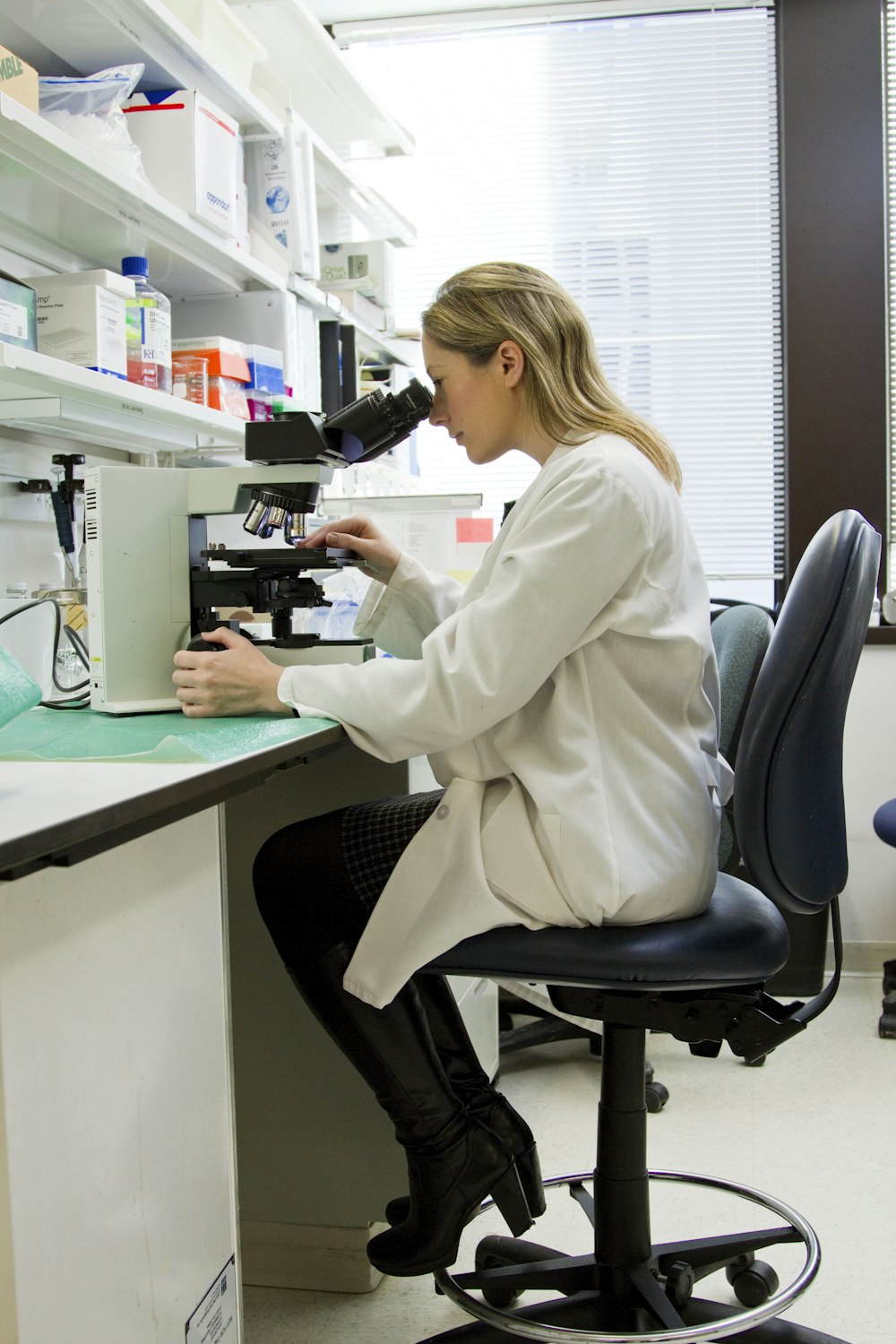
Laboratory Innovation
German laboratories employ cutting-edge techniques including CRISPR gene editing, 3D bioprinting, and advanced imaging to accelerate cardiovascular discoveries.
Advanced Imaging
State-of-the-art imaging technologies allow researchers to visualize cellular processes and tissue integration in real time without invasive procedures.
The Future of Cardiovascular Medicine in Germany
As Germany continues to build on its impressive cardiovascular research foundation, several developments promise to accelerate progress. The country maintains a robust pipeline of talent through specialized graduate programs and benefits from regular knowledge exchange at prestigious conferences.
Talent Development
Specialized programs like the Master of Cardiovascular Science at the University of Göttingen train international students in all aspects of cardiovascular science 8 .
AI Integration
Artificial intelligence algorithms enhance diagnostic precision by analyzing vast amounts of imaging and clinical data with unprecedented accuracy 4 .
Personalized Medicine
Leveraging advances in genetics and bioengineering to develop tailored interventions for specific patient subgroups.
Research Focus Areas
- Personalized prevention strategies
- Novel diagnostic tools
- Digital health applications
- AI-powered wearables
- Minimally invasive procedures
- Molecular targeted therapies
Conclusion: A Nation's Commitment to Heart Health
Germany's comprehensive, collaborative approach to cardiovascular research exemplifies how a coordinated national strategy can accelerate medical progress. From the development of implantable heart patches that actively repair damaged tissue to the identification of novel molecular targets for some of cardiology's most perplexing conditions, German scientists are reshaping what's possible in cardiovascular medicine.
The story of German cardiovascular research is ultimately one of persistence, collaboration, and innovation—a testament to what can be achieved when brilliant minds across institutions work toward a common goal.
Looking Ahead
For the millions worldwide living with cardiovascular disease, these advances offer more than just scientific novelty—they represent hope for longer, healthier lives. As this research continues to evolve, Germany remains firmly committed to its mission of mending broken hearts, one breakthrough at a time.