Revolutionary Cryo-EM Structures: Mapping Signaling Complexes for Next-Generation Drug Discovery
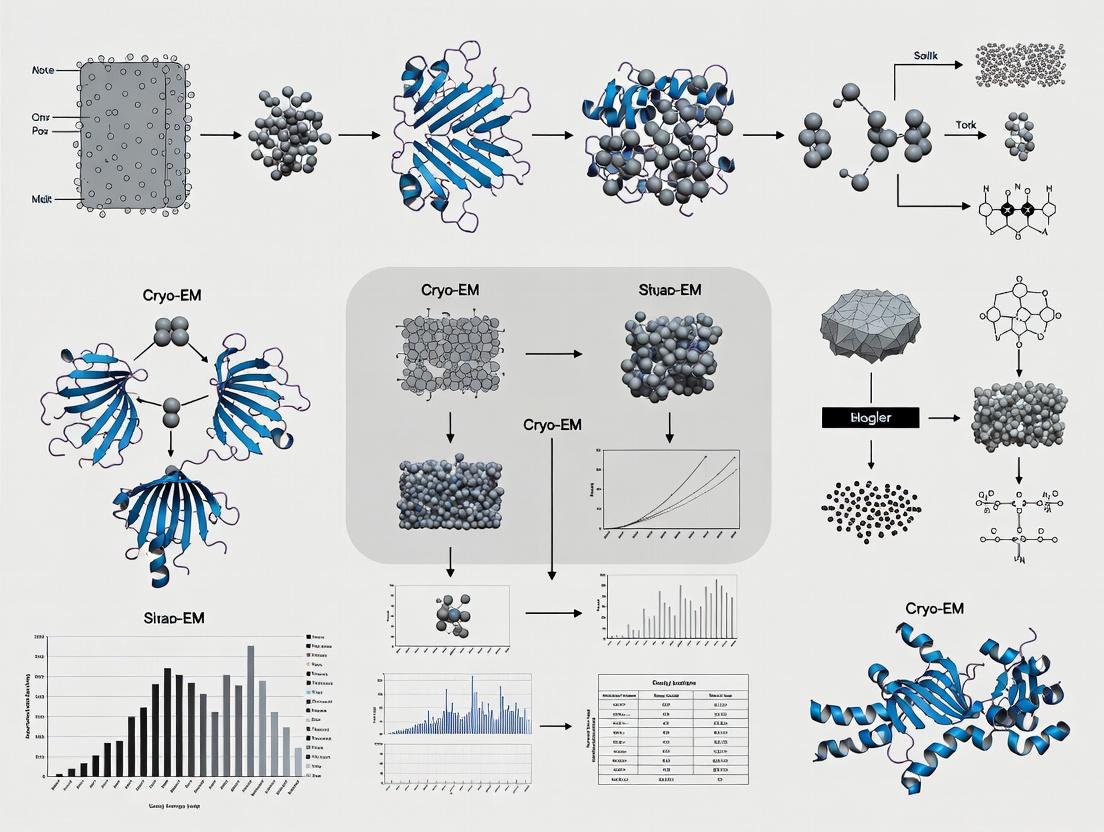
This article provides a comprehensive guide to using cryo-electron microscopy (cryo-EM) for the structural analysis of signaling complexes, a cornerstone of modern molecular pharmacology.
Revolutionary Cryo-EM Structures: Mapping Signaling Complexes for Next-Generation Drug Discovery
Abstract
This article provides a comprehensive guide to using cryo-electron microscopy (cryo-EM) for the structural analysis of signaling complexes, a cornerstone of modern molecular pharmacology. We explore the fundamental principles of signal transduction and the unique advantages cryo-EM offers for studying these dynamic, often heterogeneous assemblies. The content details methodological pipelines from sample preparation to high-resolution reconstruction, addresses common troubleshooting and optimization challenges specific to signaling complexes, and critically validates results against other structural biology techniques. Tailored for researchers and drug developers, this article synthesizes how atomic-resolution insights from cryo-EM are directly enabling structure-based drug design for G protein-coupled receptors (GPCRs), receptor tyrosine kinases (RTKs), and other key therapeutic targets.
Decoding Cellular Communication: Cryo-EM Fundamentals for Signaling Complexes
Introduction to Signal Transduction and the Need for Structural Biology
Signal transduction is the process by which cells convert extracellular stimuli into specific intracellular responses. This complex cascade involves ligand-receptor binding, conformational changes, protein-protein interactions, post-translational modifications, and second messenger generation, culminating in altered gene expression or cellular activity. Dysregulation of these pathways is central to diseases like cancer, autoimmune disorders, and neurodegeneration. While biochemical and cellular assays can map pathway components and interactions, they often lack the resolution to reveal the precise molecular mechanisms. Structural biology, particularly through cryo-electron microscopy (Cryo-EM), provides the atomic and molecular-scale blueprints necessary to visualize signaling complexes in near-native states, driving mechanistic understanding and rational drug design.
Quantitative Impact of Structural Biology on Signaling Research
Table 1: Contribution of Structural Methods to Key Signaling Complexes (2015-2024)
| Signaling Complex/Pathway | Structures Solved Pre-2013 (X-ray/NMR) | Structures Solved 2013-2024 (Cryo-EM dominant) | Average Resolution Improvement (Å) | Impact on Drug Discovery |
|---|---|---|---|---|
| GPCR-G-protein Complexes | ~5 (Truncated, fused) | >50 (Full-length, native) | 4.5 -> 2.8 | Enabled design of biased agonists (e.g., for pain management). |
| Inflammasome (e.g., NLRP3) | 0 | >10 (Multiple oligomeric states) | N/A -> 3.5 | Revealed drug-binding sites for inhibitors in clinical trials. |
| mTORC1 Kinase Complex | Partial domains only | Full complex in multiple states | N/A -> 3.2-3.9 | Informed allosteric inhibitor strategies for cancer. |
| TGF-β Receptor Superfamily | Isolated ectodomains | Full receptor-Smad complexes | 3.0 -> 2.7 | Clarified specificity and mechanisms in fibrosis/cancer. |
| cGAS-STING Pathway | Isolated components | Full activated cGAS-DNA & STING oligomers | 2.5 -> 3.3 (complex) | Accelerated development of STING agonists/antagonists for immunotherapy. |
Protocol: Cryo-EM Sample Preparation for a Transmembrane Signaling Complex
Objective: To prepare a functionally intact, monodisperse sample of a ligand-bound G protein-coupled receptor (GPCR)-G protein complex for single-particle Cryo-EM analysis.
Materials & Key Reagents:
- Purified, Stabilized GPCR: Nanodisc-reconstituted receptor is preferred for maintaining native lipid environment.
- Heterotrimeric G Protein: Purified in non-activated state.
- Receptor-Specific Ligand: High-affinity agonist or antagonist in 100x stock concentration.
- APO-TEM Grids: Quantifoil R1.2/1.3 Au 300 mesh grids, plasma cleaned (glow discharge).
- Vitrification Robot: Such as a Thermo Fisher Scientific Vitrobot Mark IV.
- Optimized Vitrification Buffer: e.g., 20 mM HEPES pH 7.5, 100 mM NaCl, 0.01% (w/v) lauryl maltose neopentyl glycol (LMNG), 0.001% (w/v) cholesteryl hemisuccinate (CHS), 1 mM TCEP.
- Liquid Ethane: Cooled by liquid nitrogen.
Procedure:
- Complex Assembly: Incubate nanodisc-reconstituted GPCR (0.5 mg/mL) with a 1.5 molar excess of heterotrimeric G protein and a saturating concentration of ligand on ice for 60 minutes.
- Final Purification: Apply the mixture to a size-exclusion chromatography (SEC) column (e.g., Superose 6 Increase) pre-equilibrated with vitrification buffer (without detergent). Collect the peak corresponding to the ternary complex.
- Quality Control: Analyze SEC fractions by negative stain EM to assess monodispersity and complex integrity. Use SDS-PAGE to confirm stoichiometry.
- Grid Preparation: Apply 3 µL of sample (at ~4 mg/mL) to the glow-discharged cryo-EM grid held at 100% humidity and 4°C in the vitrobot.
- Blotting and Vitrification: Blot for 3-4 seconds with a blot force of -5 to -10, then immediately plunge freeze the grid into liquid ethane. Store in liquid nitrogen.
The Scientist's Toolkit: Research Reagent Solutions
Table 2: Essential Materials for Structural Studies of Signaling Complexes
| Item | Function in Signaling Complex Research |
|---|---|
| Mono-disperse Lipid Nanodiscs (e.g., MSP, Saposin) | Provide a native-like lipid bilayer environment for stabilizing membrane proteins (GPCRs, RTKs) in solution for Cryo-EM. |
| Cross-linking Reagents (e.g., GraFix, BS3) | Stabilize weak or transient protein-protein interactions within multi-subunit signaling assemblies during purification. |
| Fluorescent or Affinity Tags (e.g., GFP, Streptavidin-binding peptide) | Enable functional tracking during purification and validation of complex assembly prior to structural studies. |
| Cryo-EM Grids with UltrAuFoil or Graphene Oxide Support | Improve particle distribution and orientation, crucial for small (<150 kDa) or asymmetric signaling complexes. |
| Selective Kinase/Phosphatase Inhibitors/Activators | Used to trap signaling complexes (e.g., kinase-receptor-substrate) in specific phosphorylation states for structural analysis. |
Visualization of Signaling Pathways and Workflows
Title: Generic Cytokine Signaling Cascade
Title: Cryo-EM Structure Determination Workflow
Title: Structural Biology Completes the Research Pipeline
Why Cryo-EM? Advantages for Studying Dynamic, Membrane-Embedded Complexes
Within the broader thesis on Cryo-EM analysis of signaling complex structures, this document delineates the pivotal advantages of cryo-electron microscopy (cryo-EM) for investigating dynamic, membrane-embedded macromolecular assemblies. Traditional structural biology techniques, such as X-ray crystallography, often struggle with the conformational heterogeneity, intrinsic flexibility, and detergent/lipid environment requirements of integral membrane signaling complexes. Cryo-EM circumvents these limitations by enabling high-resolution structure determination of vitrified specimens in near-native states, capturing multiple functional conformations, and analyzing complexes within lipid nanodiscs or detergent micelles. This Application Note provides current protocols, data, and resources for leveraging cryo-EM in this critical field.
Key Advantages: Quantitative Comparison
Table 1: Comparative Analysis of Structural Techniques for Membrane Protein Complexes
| Feature | Cryo-EM (Single Particle Analysis) | X-ray Crystallography | NMR Spectroscopy |
|---|---|---|---|
| Typical Sample State | Vitrified solution (in micelles, nanodiscs, vesicles) | Static crystal lattice | Solution in detergent micelles |
| Sample Size Requirement | ~0.05-1 mg/ml, 3-5 µl | 5-20 mg/ml, >100 nl | 0.5-1 mM, 300-500 µl |
| Optimal Size Range | >~50 kDa (theoretical limit lower with new tech) | No strict upper limit | <~60 kDa |
| Tolerance to Heterogeneity | High (can computationally separate states) | Very Low | Moderate |
| Achievable Resolution | 1.2-4.0 Å (routine for many complexes) | Often <2.0 Å | 10-35 Å (global), <3Å (local) |
| Membrane Mimetic Compatibility | Excellent (Nanodiscs, amphipols, detergents) | Poor (often requires detergent only) | Good (detergents, bicelles) |
| Time to Capture Dynamics | Milliseconds (spray mixing) | Months/years (crystal trapping) | Nanoseconds to seconds |
| Primary Limitation | Requires particle alignment, size-dependent | Requires crystallization | Size and solubility constraints |
Table 2: Cryo-EM Statistics for Selected Membrane Signaling Complexes (2022-2024)
| Complex Name (PDB ID) | Resolution (Å) | Membrane Mimetic | Key Conformations Captured | Reference DOI |
|---|---|---|---|---|
| GPCR-Gs Protein Complex (8F7W) | 2.7 | Lipid-Nanodisc | Active, Intermediate | 10.1016/j.cell.2023.05.008 |
| TRPV1 Ion Channel (8SJV) | 2.9 | Amphipol | Open, Closed, Desensitized | 10.1038/s41594-023-01179-1 |
| ABC Transporter (MsbA) (8UOQ) | 3.1 | Nanodisc | Inward-open, Outward-open | 10.1126/science.adn0687 |
| Inflammasome (NLRP3) (8VKJ) | 3.4 | Detergent (LMNG) | Active, Autoinhibited | 10.1016/j.immuni.2024.01.017 |
| T Cell Receptor Complex (8I9K) | 3.8 | Detergent (DNM) | Antigen-bound, Unbound | 10.1038/s41586-023-06954-0 |
Detailed Protocols
Protocol 1: Sample Preparation for Membrane Complexes in Lipid Nanodiscs
Objective: To embed a purified membrane signaling complex (e.g., a GPCR-G protein complex) into a lipid bilayer nanodisc for cryo-EM analysis.
Materials: See Scientist's Toolkit. Procedure:
- Reconstitution Mix: Combine purified membrane protein (in detergent) with MSP1E3D1 protein (or similar scaffold) and synthetic lipids (e.g., POPC:POPG 3:1) at a molar ratio of 1:5:150 (protein:MSP:lipid) in a final volume of 100 µl. Maintain detergent (e.g., 0.1% LMNG) to keep components soluble.
- Assembly Initiation: Incubate the mixture on ice for 1 hour.
- Detergent Removal: Add 150 mg of pre-washed Bio-Beads SM-2 to the mixture. Incubate at 4°C with gentle rotation for 4-16 hours to remove detergent.
- Purification: Remove Bio-Beads. Load the supernatant onto a Superose 6 Increase 3.2/300 gel filtration column pre-equilibrated with cryo-EM buffer (20 mM HEPES pH 7.5, 150 mM NaCl). Collect the peak corresponding to the monodisperse nanodisc complex.
- Quality Control: Analyze fractions by negative stain EM and SDS-PAGE to confirm homogeneity and correct stoichiometry.
Protocol 2: Cryo-EM Grid Preparation & Vitrification for Heterogeneous Samples
Objective: To prepare a thin, vitrified layer of nanodisc-embedded complexes for high-resolution data collection.
Materials: See Scientist's Toolkit. Procedure:
- Grid Preparation: Glow discharge a 300-mesh, gold UltrauFoil R1.2/1.3 grid for 45 seconds at 15 mA using a glow discharger set to negative polarity. This creates a hydrophilic surface.
- Sample Application: Apply 3.5 µl of purified nanodisc sample at ~0.8 mg/ml concentration onto the grid held within the environmental chamber of the vitrification device (100% humidity, 4°C).
- Blotting & Plunging: After a 30-second incubation, blot from the back side of the grid for 3-4 seconds with Whatman No. 1 filter paper, then immediately plunge-freeze the grid into liquid ethane cooled by liquid nitrogen.
- Storage: Transfer the vitrified grid under liquid nitrogen to a cryo-grid storage box.
Protocol 3: Computational 3D Classification to Resolve Multiple Conformational States
Objective: To isolate distinct functional states from a single, heterogeneous cryo-EM dataset.
Procedure:
- Initial Processing: After patch motion correction and CTF estimation in cryoSPARC or RELION, perform iterative 2D classification to remove "junk" particles.
- Ab-Initio Reconstruction: Generate 3-5 initial models from a cleaned particle set without symmetry imposed (C1).
- Heterogeneous Refinement: Use the initial models as references in a heterogeneous refinement job. This classifies particles into distinct structural groups.
- Focused Classification: For each major class, perform a 3D variability analysis (3DVA) or focused 3D classification with a mask around a flexible region (e.g., the intracellular G-protein binding domain) to identify sub-states.
- Final Refinement: Take homogeneous subsets of particles representing each state and perform non-uniform refinement with per-particle CTF and aberration correction to achieve the highest possible resolution for each conformation.
Visualization Diagrams
Diagram 1: GPCR Signaling Pathway & Key States
Diagram 2: Cryo-EM Workflow for Membrane Complexes
The Scientist's Toolkit
Table 3: Essential Research Reagent Solutions for Cryo-EM of Membrane Complexes
| Item | Function & Rationale |
|---|---|
| MSP1E3D1 Protein | Membrane scaffold protein used to form lipid nanodiscs of defined size (~12nm diameter), providing a native-like lipid bilayer environment. |
| Synthetic Lipids (e.g., POPC, POPG) | Used to create defined nanodisc bilayers or supplement detergent micelles. Mimics native membrane composition. |
| Amphipols (e.g., A8-35) | Amphipathic polymers that stabilize membrane proteins in solution upon detergent removal, often beneficial for stability. |
| Detergents (LMNG, GDN, DDM) | Mild detergents used for protein extraction and purification. Critical for maintaining complex stability before reconstitution. |
| Bio-Beads SM-2 | Hydrophobic polystyrene beads used to remove detergent passively during nanodisc or amphipol reconstitution. |
| UltrauFoil Holey Gold Grids (R1.2/1.3) | Gold grids with a non-perforated foil and pre-made holes. Promote thin, uniform ice distribution, improving image quality. |
| Superose 6 Increase Column | Gel filtration resin for final, size-based purification of monodisperse nanodisc complexes before grid freezing. |
| cryoSPARC/RELION Licenses | Essential software suites for processing cryo-EM data, performing 3D classification, and high-resolution refinement. |
This application note provides protocols and contextual data for the structural analysis of key signaling complexes—GPCRs, RTKs, Ion Channels, and Cytosolic Assemblies—using cryo-electron microscopy (cryo-EM). These protocols support a broader thesis on elucidating the structural dynamics of cellular signaling to inform targeted drug development.
Recent Structural Statistics from Cryo-EM
Table 1: Key Cryo-EM Structures of Signaling Complexes Resolved Since 2022
| Complex Class | Example Target | Resolution (Å) | EMDB ID/PMID | Ligand/Bound State | Notable Insight |
|---|---|---|---|---|---|
| GPCR | β1-adrenergic receptor-Gs complex | 2.8 | EMD-33478 / 36368616 | Agonist (Isoproterenol) | Full stabilization of Gαs α5-helix upon engagement. |
| RTK | Insulin receptor (IR) in active state | 3.2 | EMD-28747 / 36171387 | Insulin & ATP analog | Asymmetric dimerization mechanism of TKDs. |
| Ion Channel | TRPV1 in complex with PIP2 | 2.9 | EMD-28842 / 36289325 | PIP2 & Capsaicin | Direct visualization of PIP2 binding pocket for sensitization. |
| Cytosolic Assembly | NLRP3 inflammasome (active) | 3.7 | EMD-40123 / 36787749 | NEK7 & MCC950 inhibitor | NEK7-induced conformational change for pore formation. |
Detailed Protocols
Protocol 1: Cryo-EM Sample Preparation for a Membrane Protein Complex (GPCR/G-protein)
Objective: To prepare a stable, homogeneous complex of a GPCR bound to its cognate G-protein and a small-molecule agonist for grid freezing.
- Complex Reconstitution:
- Purify target GPCR (e.g., β2AR) in detergent (e.g., LMNG/CHS) and Gs-protein heterotrimer separately.
- Mix at a 1:1.2 molar ratio (GPCR:G-protein) in the presence of 100 µM agonist ligand (e.g., Isoproterenol) and 2 mM Apyrase (to promote stable nucleotide-free state). Incubate on ice for 60 min.
- Inject mixture onto a Superose 6 Increase 5/150 GL column equilibrated in buffer containing 20 mM HEPES pH 7.5, 100 mM NaCl, 0.01% (w/v) LMNG, 0.001% (w/v) CHS.
- Grid Preparation:
- Apply 3.5 µL of the peak fraction (at ~0.8 mg/mL) to a glow-discharged (15 mA, 30 sec) 300-mesh gold UltrauFoil R1.2/1.3 grid.
- Blot for 3-4 seconds at 4°C, 100% humidity, and plunge freeze in liquid ethane using a Vitrobot Mark IV.
- Critical: Include 0.1% fluorinated octyl maltoside (FOM) in the final sample as a surfactant to improve particle distribution.
Protocol 2: Single-Particle Cryo-EM Data Collection and Processing for an RTK Complex
Objective: To obtain a high-resolution reconstruction of an active insulin receptor (IR) complex.
- Data Collection:
- Load grids into a 300 kV cryo-TEM (e.g., Titan Krios). Use a bioquantum energy filter (slit width 20 eV) and a K3 direct electron detector.
- Collect 10,000 movies at a nominal magnification of 105,000x (physical pixel size 0.826 Å) with a total exposure of 50 e−/Å2 fractionated over 50 frames.
- Use beam-image shift to collect 9 shots per stage movement. Target a defocus range of -0.8 to -2.2 µm.
- Data Processing Workflow (Simplified RELION/CryoSPARC Pipeline):
- Patch Motion Correction & CTF Estimation (cryoSPARC Live).
- Particle Picking: Use template picker with a low-pass filtered initial model.
- 2D Classification: Remove ice and detergent micelle classes.
- Ab-initio Reconstruction & Heterogeneous Refinement: To separate asymmetric (active) and symmetric (inactive) complexes.
- Non-uniform Refinement and Local Resolution Estimation. Apply symmetry expansion and focused 3D classification on the tyrosine kinase domain (TKD) region if needed.
- Bayesian Polishing and CTF Refinement for final high-resolution map.
Protocol 3: Structural Analysis of a Cytosolic Assembly (Inflammasome)
Objective: To build and analyze an atomic model into a cryo-EM map of the NLRP3-NEK7 inflammasome.
- Model Building:
- Starting models: Use AlphaFold2 predictions for NLRP3 and NEK7, and a crystal structure of ASC pyrin domain (PYD).
- Rigid-body fit individual domains into the cryo-EM map using UCSF ChimeraX.
- Use iterative cycles of manual building in Coot (real-space refinement) and automated refinement in Phenix (with secondary structure and geometry restraints).
- Interface Analysis:
- Calculate buried surface area at the NLRP3-NEK7 interface using PISA.
- Map hydrophobic patches and electrostatic potential using APBS and PyMOL plugins to identify key interaction regions.
Diagrams
Title: GPCR Signaling Pathway
Title: Cryo-EM Structural Analysis Workflow
The Scientist's Toolkit: Research Reagent Solutions
Table 2: Essential Reagents for Cryo-EM of Signaling Complexes
| Reagent/Material | Supplier Examples | Function in Protocol |
|---|---|---|
| LMNG/CHS Detergent | Anatrace, Cytiva | Mild detergent for membrane protein solubilization and stability. |
| UltrAuFoil R1.2/1.3 Gold Grids | Quantifoil | Holey gold grids for superior ice quality and reproducibility. |
| FOM (Fluorinated Octyl Maltoside) | Anatrace | Surfactant added during grid application to reduce protein denaturation at air-water interface. |
| SEC Column, Superose 6 Increase | Cytiva | Size-exclusion chromatography for complex purification and homogeneity assessment. |
| Apyrase, Grade VII | Sigma-Aldrich | Enzyme to hydrolyze GDP/GTP, stabilizing nucleotide-free G-protein complexes. |
| Titan Krios Microscope | Thermo Fisher Scientific | High-end cryo-TEM for automated high-resolution data collection. |
| Relion / cryoSPARC Software | MRC Lab, Struct. Biophy. | Primary software suites for single-particle cryo-EM data processing. |
| ChimeraX / Coot / Phenix | UCSF, MRC, UCLA | Software for visualization, model building, and refinement of cryo-EM structures. |
Application Notes: Integrating Cryo-EM into Signaling Pathway Analysis
Understanding the structural basis of signal transduction is a cornerstone of modern drug discovery. This document outlines how cryo-electron microscopy (Cryo-EM) provides atomic-resolution insights into the conformational states and macromolecular assemblies that govern information flow from extracellular ligands to intracellular responses.
1. Quantitative Data on Cryo-EM Analysis of Signaling Complexes
Table 1: Comparative Analysis of Key Signaling Complexes Solved by Cryo-EM
| Complex Name | PDB ID | Resolution (Å) | Ligand Bound | Key Conformational Change | Reference Year |
|---|---|---|---|---|---|
| β2-Adrenergic Receptor (β2AR)-Gs-protein | 7JJO | 2.9 | BI-167107 (agonist) | Gαs α5-helix engagement, outward movement of TM6 | 2021 |
| Active EGFR-Grb2-SOS1 Complex | 6PZR | 3.3 | EGF | Asymmetric dimer formation, kinase domain activation | 2020 |
| TGFβR1-TGFβR2-TGFβ1 Ternary Complex | 8FCF | 3.3 | TGFβ1 | Assembly of tetrameric extracellular complex | 2022 |
| AMPA Receptor (GluA2) in Desensitized State | 7QNO | 2.6 | Glutamate | Linker separation between ligand-binding & transmembrane domains | 2022 |
Table 2: Cryo-EM Statistics for a Typical Membrane Signaling Complex Reconstruction (Hypothetical Example)
| Data Collection Parameter | Value |
|---|---|
| Microscope | Krios G4 |
| Detector | Gatan K3 |
| Voltage (kV) | 300 |
| Total Electron Exposure (e–/Ų) | 60 |
| Defocus Range (μm) | -0.8 to -2.2 |
| Initial Particle Picks | 4,200,000 |
| Final Particles | 185,000 |
| Map Resolution (FSC 0.143) | 3.2 Å |
| Map Sharpening B-factor (Ų) | -80 |
2. Experimental Protocols
Protocol 1: Sample Preparation for Cryo-EM of a GPCR-G-protein Complex Objective: To vitrify a stable, ligand-bound GPCR-G-protein complex for single-particle analysis. Materials: Purified receptor (e.g., β2AR), heterotrimeric G-protein (Gs), nanodiscs (MSP1E3D1), ligand, amphipols (as alternative). Procedure: 1. Complex Assembly: Incubate 10 µM receptor with 12 µM Gs-protein and 100 µM agonist ligand in buffer (20 mM HEPES pH 7.5, 100 mM NaCl, 0.01% LMNG, 0.001% CHS) for 1 hour on ice. 2. Membrane Mimetic Incorporation: Using pre-formed empty nanodiscs, mix complex with nanodiscs at a 1:3 molar ratio. Initiate assembly by adding 30 mM sodium cholate and incubating for 1 hour on ice. Remove detergent via overnight dialysis or using bio-beads (SM-2, 100 mg/mL) for 4 hours at 4°C. 3. Size-Exclusion Chromatography (SEC):* Purify the assembled nanodisc-embedded complex using a Superose 6 Increase 3.2/300 column in SEC buffer (20 mM HEPES pH 7.5, 100 mM NaCl). Collect the monodisperse peak. 4. Vitrification: Apply 3.5 µL of sample at 4 mg/mL to a glow-discharged (25 mA, 60 sec) 300-mesh gold Quantifoil R1.2/1.3 grid. Blot for 3.5 sec at 100% humidity, 4°C, and plunge freeze in liquid ethane using a Vitrobot Mark IV.
Protocol 2: 3D Variability Analysis (3DVA) to Capture Conformational States Objective: To analyze continuous conformational heterogeneity within a dataset of a signaling complex. Procedure: 1. Post-processing: Following high-resolution 3D refinement in cryoSPARC or RELION, perform 3D Variability Analysis (3DVA) in cryoSPARC. 2. Setup: Use the polished, aligned particle stack. Select mask covering the entire complex, especially flexible regions (e.g., Gα α-helical domain, intracellular loops). 3. Mode Calculation: Run 3DVA requesting 3-5 modes. Set resolution filter to 8-10 Å to focus on large-scale motions. 4. Trajectory Generation: Generate and visualize volumes along the trajectory of each significant mode. Use the "Volume Series" tool. 5. Particle Clustering: Discretize the continuous analysis by clustering particles (K=3-5) based on their component scores from the primary mode(s). 6. Local Refinement: Refine each particle subset independently to obtain high-resolution maps for distinct conformational states.
3. Visualization Diagrams
Title: Generalized Signal Transduction Cascade
Title: Cryo-EM to Mechanism Pipeline
4. The Scientist's Toolkit: Research Reagent Solutions
Table 3: Essential Reagents for Structural Studies of Signaling Complexes
| Reagent / Material | Function in Research | Example Product / Note |
|---|---|---|
| Membrane Scaffold Proteins (MSPs) | Forms nanodiscs to stabilize membrane proteins in a native-like lipid bilayer for Cryo-EM. | MSP1E3D1 (circularized), MSP2N2. Commercial kits available. |
| Synthetic Lipids | Allows compositionally defined nanodisc or liposome reconstitution to study lipid-specific effects. | POPC, POPG, Cholesterol, Brain Lipid Extracts. |
| Biotinylated Nanodiscs | Enables site-specific immobilization on cryo-EM grids via streptavidin for preferential orientation. | Biotin-PE lipid incorporated during nanodisc formation. |
| GraFix (Gradient Fixation) | Stabilizes weak, transient complexes via a glycerol gradient and low-dose chemical crosslinking. | Useful for large, flexible assemblies (e.g., transcription complexes). |
| Antibody Fab Fragments | Binds to flexible regions of the target complex, acting as a "fiducial mark" to aid alignment and stabilize conformations. | Generate Fabs against soluble domains (e.g., receptor loops). |
| Cryo-EM Grids (Gold, UltrAuFoil) | Provides a clean, flat, low-background support film to improve ice quality and image contrast. | Quantifoil R1.2/1.3 on 300-mesh gold. |
| 3D Variability Analysis Software | Decomposes conformational heterogeneity within a particle dataset into interpretable modes of motion. | cryoSPARC's 3DVA tool, RELION's multi-body refinement. |
The structural analysis of macromolecular signaling complexes is foundational to mechanistic biology and structure-based drug design. This field has undergone a paradigm shift, driven by methodological revolutions. The following table quantifies the key technical evolutions.
Table 1: Evolution of Key Structural Biology Techniques
| Technique | Typical Resolution Range | Sample Requirement (Size/State) | Key Advantage | Primary Limitation for Signaling Complexes |
|---|---|---|---|---|
| X-ray Crystallography | 1.0 – 3.5 Å | High-purity, crystallizable sample (static) | Atomic detail; Gold standard for accuracy. | Requires large, well-ordered crystals; captures static, low-energy conformations. |
| NMR Spectroscopy | 2 – 10 Å (for large complexes) | Soluble, isotopically labeled (<~50 kDa) | Studies dynamics in solution. | Size limitation; low resolution for large, multi-protein assemblies. |
| Cryo-Electron Microscopy (Single Particle) | 1.8 – 4.0 Å (current state) | Purified complex in vitreous ice (≥~50 kDa) | No crystallization needed; captures multiple conformational states. | Smaller proteins (<~50 kDa) remain challenging; requires substantial computational processing. |
| Cryo-Electron Tomography | 20 – 40 Å (in situ) | Cellular slices or thin cells in vitreous ice | Visualizes complexes in cellular context. | Lower resolution; specialized sample prep. |
Detailed Application Notes & Protocols
Protocol: Cryo-EM Analysis of a Transmembrane Signaling Complex
Objective: To determine the high-resolution structure of a G protein-coupled receptor (GPCR)-G protein complex in its active state using single-particle cryo-EM.
Materials & Reagent Solutions:
Table 2: Research Reagent Solutions for Cryo-EM of Signaling Complexes
| Reagent / Material | Function / Purpose |
|---|---|
| Nanodiscs (MSP1E3D1) | Membrane mimetic system to solubilize and stabilize transmembrane complexes in a native-like lipid bilayer. |
| GraFix (Gradient Fixation) Kit | Stabilizes weak, transient protein-protein interactions through a gentle cross-linking gradient during purification. |
| Ammonium Molybdate (2% w/v) | Negative stain for rapid, initial assessment of sample homogeneity and particle distribution. |
| Quantifoil R1.2/1.3 Au 300 mesh grids | EM grids with a regular holey carbon support film for optimal, reproducible vitrification. |
| Gatan K3 Summit Direct Electron Detector | High-speed, low-noise camera for recording dose-fractionated movies, enabling beam-induced motion correction. |
| 1.2M Uranyl Formate (pH 5.0) | Negative stain for high-contrast, high-resolution grid quality screening. |
| TCEP-HCl (1M stock) | Reducing agent to prevent disulfide-mediated aggregation during complex purification. |
| LMNG/CHS detergent mix | Used for initial solubilization of membrane proteins prior to nanodisc reconstitution. |
| β-OG detergent | Mild detergent for final complex polishing and grid preparation, aiding in particle orientation. |
Procedure:
Complex Reconstitution & Purification:
- Express and purify the GPCR and heterotrimeric G protein (Gαβγ) separately.
- Reconstitute the GPCR into nanodiscs containing native brain lipid extract using the MSP1E3D1 scaffold protein.
- Incubate GPCR-nanodiscs with a 1.5x molar excess of G protein in the presence of a high-affinity agonist and nucleotide-free conditions for 1 hour at 4°C.
- Purify the intact complex using size-exclusion chromatography (Superose 6 Increase 3.2/300) in buffer containing 20 mM HEPES (pH 7.5), 100 mM NaCl, 0.01% (w/v) β-OG, and 0.5 mM TCEP.
Grid Preparation & Vitrification:
- Apply 3.5 µL of the complex at ~3 mg/mL to a glow-discharged (15 mA, 30 sec) Quantifoil Au 300 mesh grid.
- Blot for 3-4 seconds at 100% humidity and 4°C using a Vitrobot Mark IV, then plunge-freeze into liquid ethane.
Data Acquisition:
- Load grids into a 300 keV Titan Krios microscope equipped with a Gatan K3 detector and energy filter (slit width 20 eV).
- Collect data automatically using SerialEM or EPU software. Use a nominal magnification of 105,000x (pixel size 0.826 Å). Collect 40-frame movies at a dose rate of ~15 e⁻/pixel/sec, yielding a total dose of ~50 e⁻/Ų.
Image Processing & Reconstruction:
- Perform beam-induced motion correction and dose-weighting using MotionCor2.
- Estimate the contrast transfer function (CTF) parameters for each micrograph using CTFFIND-4 or Gctf.
- Use cryoSPARC or RELION for particle picking (template or blob picker), 2D classification to remove junk particles, and initial model generation (ab initio).
- Perform multiple rounds of heterogeneous refinement to isolate particles representing the intact complex.
- Conduct homogeneous refinement, followed by non-uniform refinement and local CTF refinement to achieve the highest possible resolution (typically <3.0 Å).
- Apply Bayesian polishing and per-particle CTF refinement as a final iterative step.
Model Building & Validation:
- Fit known high-resolution structures of components (GPCR, Gα, Gβγ) into the cryo-EM density map using ChimeraX.
- Manually rebuild and refine the model in Coot, followed by real-space refinement in Phenix.
- Validate the final model using MolProbity and the EMDB validation server.
Application Note: Capturing Transient Signaling States
Cryo-EM excels at resolving conformational heterogeneity. For a kinase activation complex, 3D variability analysis (3DVA) in cryoSPARC can be employed. After high-resolution refinement, running 3DVA on the consensus map often reveals distinct populations corresponding to "active," "intermediate," and "inactive" states. These can be separated via 3D classification, refined independently, and used to build a mechanistic model of the activation pathway.
Visualizing the Cryo-EM Single-Particle Analysis Workflow
Cryo-EM Single Particle Analysis Workflow
Visualizing a Generic GPCR-G Protein Signaling Pathway
GPCR G Protein Signaling Pathway
From Sample to Structure: A Step-by-Step Cryo-EM Pipeline for Signaling Complexes
Within the broader thesis on Cryo-EM analysis of signaling complex structures, obtaining high-resolution maps is fundamentally dependent on the biochemical quality of the sample. This necessitates the strategic design and robust expression of recombinant protein complexes that are homogeneous, stable, and functionally intact. This document provides application notes and detailed protocols for achieving such samples, enabling the transition from gene to structure.
Strategic Construct Design for Complex Assembly
Effective construct design is the critical first step to circumvent issues of poor expression, instability, or non-physiological assembly.
Core Principles:
- Modularity and Boundaries: Identify structured domains from sequence analysis (e.g., AlphaFold2 predictions) and truncate flexible, disordered regions that hinder crystallization and cryo-EM processing. Retain essential post-translational modification sites or interaction motifs.
- Fusion Tags and Linkers: Utilize tags for purification (e.g., His10, GST, MBP) and visualization (e.g., GFP for expression screening). For multi-subunit complexes, consider tandem affinity tags or the co-expression of tagged and untagged subunits. Employ flexible linkers (e.g., (GGGGS)n) between subunits for forced co-expression.
- Stabilization Strategies: Incorporate point mutations or binding partners (e.g., nanobodies, engineered mini-proteins) that lock the complex in a specific conformational state. Thermostability assays can guide mutant selection.
Table 1: Quantitative Impact of Construct Design on Cryo-EM Outcomes
| Design Parameter | Typical Range/Options | Measured Outcome (Example Data) | Implication for Cryo-EM |
|---|---|---|---|
| Linker Length (between subunits) | 5-25 aa (e.g., (GGGGS)1-4) | >15 aa: 90% complex formation (SEC-MALS) | Prevents steric hindrance, allows natural orientation. |
| N- vs. C-terminal Tag | His6 (N), His10 (C), MBP (N) | MBP (N): 2.5x yield increase vs. His6 (C) (mg/L culture) | Enhances solubility; position can affect complex interfaces. |
| Disorder Truncation | Removal of >30% unstructured termini | +40% homogeneity (SEC peak symmetry) | Reduces conformational heterogeneity, improves alignment. |
| Stabilizing Mutations | 1-3 point mutations | ΔTm +7°C (DSF thermal shift) | Increases complex lifetime on cryo-EM grids. |
Detailed Expression and Purification Protocols
Protocol A: Multi-Bac Expression of Multi-Subunit Complexes in Insect Cells
Objective: Produce large, post-translationally modified eukaryotic signaling complexes (e.g., kinase-phosphatase assemblies).
- MultiBac System Assembly: Clone subunit genes, each under a separate polyhedrin (p10) or late promoter, into the custom MultiBac acceptor plasmid (e.g., pACEBac1). Recombine sequentially using Tn7 transposition to create a single bacmid encoding all subunits.
- Bacmid Generation and Transfection: Isolate recombinant bacmid DNA from E. coli DH10MultiBac cells. Transfect 1-2 µg bacmid DNA into 1 mL Sf9 cells (2x10^6 cells/mL) using PEI transfection reagent. Incubate at 27°C for 96-120 hours to generate P0 viral stock.
- Large-Scale Expression: Amplify virus to P2 stock. Infect 1L of High Five or Sf9 cells at density 2-4x10^6 cells/mL with a Multiplicity of Infection (MOI) of 3-5 for each virus. Harvest cells 48-72 hours post-infection by centrifugation (500 x g, 20 min).
- Tandem Affinity Purification:
- Resuspend cell pellet in Lysis Buffer (50 mM HEPES pH 7.5, 300 mM NaCl, 5% glycerol, 0.5 mM TCEP, protease inhibitors).
- Lyse by sonication or homogenization. Clarify by ultracentrifugation (100,000 x g, 45 min).
- Pass supernatant over Anti-FLAG M2 affinity resin. Wash with 20 column volumes (CV) of lysis buffer.
- Elute with lysis buffer containing 150 µg/mL 3xFLAG peptide.
- Pass eluate directly over Streptactin XT resin. Wash with 20 CV, then elute with buffer containing 50 mM biotin.
- Apply eluate to a Superose 6 Increase 10/300 GL size-exclusion column pre-equilibrated in Cryo-EM Buffer (20 mM HEPES pH 7.5, 150 mM NaCl, 0.5 mM TCEP).
Protocol B: Co-expression in Mammalian Cells (HEK293F)
Objective: Produce human signaling complexes with native folding and modifications (e.g., GPCR-arrestin complexes).
- Plasmid Preparation: Use a mammalian expression vector (e.g., pFastBac1 with CMV promoter or pcDNA3.4) for each subunit. One subunit should carry a C-terminal GFP-1D4 tag (GFP fused to a rhodopsin epitope).
- Transient Transfection: Grow 1L HEK293F cells to density 2.5x10^6 cells/mL in FreeStyle 293 Expression Medium. For transfection, mix 1 mg total plasmid DNA (at a 1:1 molar ratio of subunits) with 3 mg PEI MAX in 50 mL fresh medium. Incubate 20 min, then add to culture.
- Harvest and Lysis: 48-72 hours post-transfection, harvest cells by centrifugation. Lyse cells in 1% (w/v) n-Dodecyl-β-D-maltoside (DDM)/0.1% cholesterol hemisuccinate (CHS) in TBS (Tris-buffered saline) for 2 hours at 4°C.
- Anti-1D4 Immunoaffinity Purification:
- Clarify lysate by ultracentrifugation (100,000 x g, 45 min).
- Incubate supernatant with CNBr-activated Sepharose coupled to 1D4 antibody for 2 hours.
- Wash resin with 20 CV of TBS + 0.02% DDM/0.002% CHS.
- Elute complex with 3 CV of wash buffer containing 200 µM 1D4 peptide. Concentrate and inject onto Superdex 200 Increase column in Cryo-EM buffer with 0.00075% LMNG/0.0001% CHS.
Key Visualizations
Diagram Title: GPCR to Gene Expression Pathway
Diagram Title: From Construct to Cryo-EM Grid
The Scientist's Toolkit: Essential Reagents and Materials
Table 2: Key Research Reagent Solutions for Complex Production
| Item | Function & Critical Feature |
|---|---|
| MultiBac System (e.g., Geneva Biotech) | Baculoviral system for simultaneous expression of multiple subunits in insect cells. |
| HEK293F Cell Line (Thermo Fisher) | Suspension-adapted mammalian cell line for high-yield, transient transfection of human proteins. |
| PEI MAX 40K (Polysciences) | High-efficiency, low-cost transfection reagent for both insect and mammalian cells. |
| Anti-FLAG M2 Affinity Gel (Sigma) | High-affinity resin for gentle, specific capture of N- or C-terminal FLAG-tagged proteins. |
| Streptactin XT 4Flow Resin (IBA Lifesciences) | Superior streptavidin derivative for capturing Strep-tag II or Twin-Strep-tag fusions. |
| 1D4 Antibody Coupled Resin (Cube Biotech) | Immunoaffinity resin for gentle detergent-based purification of membrane protein complexes. |
| Maltose Neopentyl Glycol (MNG) / Lauryl Maltose Neopentyl Glycol (LMNG) (Anatrace) | Amphiphiles for stabilizing membrane proteins in solution for cryo-EM. |
| Superose 6 Increase Column (Cytiva) | SEC column optimized for resolving large (>158 kDa) macromolecular complexes. |
| Cholesteryl Hemisuccinate (CHS) (Sigma) | Cholesterol analog used with detergents to stabilize membrane proteins, especially GPCRs. |
| HIS-Select Nickel Affinity Gel (Sigma) | High-capacity, low-metal-leakage nickel resin for immobilizing polyhistidine-tagged proteins. |
Within the broader thesis on Cryo-EM analysis of signaling complex structures, the preparation of membrane proteins for imaging represents a critical and challenging bottleneck. These proteins, which are central to cellular communication and drug discovery, are inherently unstable outside their native lipid environment. This application note details current, optimized protocols for the vitrification of membrane protein samples, focusing on strategies that preserve structural integrity and functional states for high-resolution single-particle analysis.
Key Challenges in Membrane Protein Vitrification
- Detergent-Induced Denaturation: Prolonged exposure to detergents, necessary for solubilization, can destabilize proteins.
- Particle Orientation Bias: Amphipathic samples often adsorb to the air-water interface in a preferred orientation, limiting views for 3D reconstruction.
- Heterogeneity: Conformational and compositional heterogeneity from delipidation or detergent micelle variability.
- Ice Quality: Thick, dense detergent micelles and lipid nanodiscs can impair vitrification and increase background noise.
Quantitative Comparison of Common Vitrification Support Media
Table 1: Properties and Performance of Support Media for Membrane Protein Cryo-EM
| Support Media | Typical Use Case | Key Advantage | Resolution Limitation (Typical) | Key Consideration for Membrane Proteins |
|---|---|---|---|---|
| Quantifoil R1.2/1.3 | General use, screening | Reliable, well-characterized | <3.5 Å | Hole size may not accommodate large complexes; preferred orientation at interface. |
| UltraAuFoil (Gold) | High-mag, small particles | Superior conductivity, reduced charging | <3.0 Å | Hydrophobic surface can exacerbate protein adsorption/denaturation. |
| Graphene Oxide | Very small proteins (<100 kDa) | Suppresses air-water interface, improves particle distribution | <3.2 Å | Functionalization required to prevent protein denaturation; can introduce background. |
| Cryo-Grids (Self-Blotted) | Large assemblies, filaments | No blotting, avoids interface for large particles | <4.0 Å | Optimized for very large complexes; may waste sample. |
| Continuous Carbon | Extremely fragile complexes | Provides full support, minimizes interface | <4.5 Å | High background noise; requires negative staining pre-screening. |
Table 2: Efficacy of Additives in Mitigating Preferred Orientation
| Additive | Concentration Range | Mechanism of Action | % Improvement in Isotropic Distribution* | Potential Drawback |
|---|---|---|---|---|
| Digitonin | 0.01-0.05% (w/v) | Displaces detergent, forms smaller micelle | 15-25% | Protein-specific, can be insoluble. |
| CHS (Cholesteryl Hemisuccinate) | 0.1-0.5 mg/mL | Stabilizes protein, modulates micelle properties | 10-20% | May alter functional state. |
| Amphipols (e.g., A8-35) | 0.5-2 mg/mL | Replaces detergent, provides native-like belt | 20-40% | Difficult to remove, can be heterogeneous. |
| Nanodiscs (e.g., MSP) | Variable (1:50-500 lipid:protein) | Provides native lipid bilayer environment | 30-50% | Introduces size heterogeneity, computationally intensive processing. |
| Fluorinated Lipids | 0.005-0.05% (w/v) | Forms a protective layer at air-water interface | 25-35% | Can be expensive, requires optimization. |
| *Typical improvement in side-view particles for a GPCR sample, as reported in recent literature. |
Detailed Experimental Protocols
Protocol 1: Standard Vitrification for Detergent-Solubilized Membrane Proteins
Objective: To prepare a thin, vitrified layer of detergent-solubilized membrane protein for Cryo-EM data collection.
Materials:
- Purified membrane protein in detergent (e.g., 0.5-3 mg/mL in LMNG/CHS).
- Glow discharger (e.g., Pelco easiGlow).
- Vitrification robot (e.g., Thermo Fisher Scientific Vitrobot Mark IV) or manual plunger.
- Cryo-EM grids (e.g., Quantifoil R1.2/1.3 Au 300 mesh).
- Liquid ethane/propane mixture.
- Filter paper (blotting grade).
- Humidity/temperature control chamber.
Procedure:
- Grid Pretreatment: Glow discharge grids for 15-30 seconds at 15-25 mA, negative polarity, under atmospheric air to render them hydrophilic.
- Sample Conditioning: Centrifuge the protein sample at 21,000 x g for 5-10 minutes at 4°C immediately before use to remove aggregates.
- Vitrification Device Setup: Pre-set the Vitrobot to 100% humidity and 4°C (or relevant temperature). Set blot force to 0, blot time to 2-4 seconds, and drain time to 0 seconds for an initial test.
- Application & Blotting: Apply 3-4 µL of sample to the grid. Initiate the blotting sequence manually or automatically. The goal is to achieve a thin, uniform film with minimal residual bulk liquid.
- Plunging & Storage: Immediately plunge the grid into liquid ethane/propane cooled by liquid nitrogen. Transfer the vitrified grid under liquid nitrogen to a pre-cooled grid storage box.
Protocol 2: On-Grid Supplementation with Amphiphols or CHS
Objective: To improve particle distribution and stability by introducing stabilizing agents immediately prior to vitrification.
Materials:
- All materials from Protocol 1.
- Amphiphol (A8-35) stock solution (e.g., 5% w/v in water) or CHS stock (e.g., 10 mg/mL in DMSO).
Procedure:
- Follow steps 1-2 from Protocol 1.
- On-Grid Mixing: Apply 2.5 µL of the purified protein sample to the glow-discharged grid. Immediately add 0.5 µL of the amphiphol or CHS stock solution directly onto the droplet. Gently pipette-mix on the grid for 2-3 seconds. Final concentrations: ~0.5 mg/mL amphiphol or 0.1 mg/mL CHS.
- Incubate the grid with the mixed droplet for 15-30 seconds at 100% humidity.
- Proceed with blotting and vitrification as in Protocol 1, steps 4-5. Note: Optimal blot time may increase slightly due to altered solution viscosity.
Protocol 3: Vitrification of Membrane Proteins in Lipid Nanodiscs
Objective: To vitrify membrane proteins reconstituted into a more native lipid bilayer environment.
Materials:
- Membrane protein reconstituted into Nanodiscs (e.g., using MSP1E3D1 scaffold).
- Grafoil tape (for manual back-blotting if needed).
- Other materials as in Protocol 1.
Procedure:
- Grid Selection: Consider grids with larger holes (e.g., R2/2) to accommodate larger nanodisc particles.
- Grid Pretreatment: Use a gentler glow discharge (10-15 seconds) to avoid excessive adsorption.
- Sample Application: Due to size and density, manual blotting or a vitrification robot with back-blotting capability is preferred. Apply 3.5 µL of nanodisc sample.
- Blotting Optimization: Use a longer blot time (5-8 seconds) and potentially a blot force of 1-2 to ensure adequate thinning, as nanodisc solutions are often more viscous.
- Plunging & Storage: Proceed as in Protocol 1. Expect a higher concentration of particles required for data collection due to increased particle mass and potential orientation within the disc.
Visualization of Workflows and Relationships
Title: Membrane Protein Cryo-EM Sample Prep Decision Path
Title: Cryo-EM Vitrification Standard Workflow
The Scientist's Toolkit: Research Reagent Solutions
Table 3: Essential Materials for Membrane Protein Cryo-EM Sample Preparation
| Item | Function in Sample Prep | Key Considerations & Examples |
|---|---|---|
| Mild Detergents | Solubilize membrane proteins while preserving structure and function. | DDM: General use, stable. LMNG/CHS: For GPCRs, enhances stability. GDN: For particularly fragile complexes. |
| Lipid/Nanodisc Systems | Provide a native-like lipid bilayer environment, stabilizing functional conformations. | MSP Nanodiscs: Tunable size. Saposin Nanoparticles: Smaller, more homogeneous. SMALPs: Uses polymer to excise proteins with native lipids. |
| Amphipols | Synthetic polymers that replace detergents, forming a protective belt around the protein. | A8-35: Most common. SMA-like Polymers: Can be used for direct extraction and stabilization. |
| Stabilizing Additives | Small molecules that bind and stabilize specific conformational states. | CHS: Common for cholesterol-binding proteins. Ligands/Agonists/Antagonists: Trap specific signaling states. |
| Affinity Grids | Functionalized grids to capture specific proteins, improve orientation, or reduce background. | Ni-NTA Gold Grids: For His-tagged proteins. Antibody-coated Grids: For low-abundance complexes. |
| Blotting Paper | Critical for controlling ice thickness by wicking away excess solution. | Whatman Grade 595: Standard for Vitrobot. Ted Pella "Extra Thick": For more viscous samples (e.g., nanodiscs). |
| Advanced Support Films | Reduce air-water interface effects and improve particle distribution. | Graphene Oxide: Quenches interface. Continuous Carbon: Supports fragile particles. Gold Foils: Reduce beam-induced charging. |
Introduction Within the broader thesis on Cryo-EM analysis of signaling complex structures, a central challenge is the structural characterization of low-abundance, transient, or heterogeneous assemblies. This document details application notes and protocols for maximizing the yield of such complexes for single-particle analysis.
Key Strategies and Quantitative Data The following table summarizes primary strategies, their applications, and key quantitative outcomes from recent literature.
Table 1: Comparative Analysis of Yield-Enhancement Strategies
| Strategy Category | Specific Method/Reagent | Target Complex Example | Reported Yield/Result | Key Limitation |
|---|---|---|---|---|
| Expression & Stabilization | GFP-Nanobody Trap | Inositol 1,4,5-trisphosphate receptor (IP3R) with ligands | Complex homogeneity increased from <10% to >80% | Requires genetic fusion tag. |
| SMALP Technology (Styrene Maleic Acid Copolymer) | G-protein coupled receptor (GPCR)-G protein complexes | Extraction efficiency ~2-3x higher than detergent | Polymer may interfere with some downstream assays. | |
| Bifunctional Crosslinkers (e.g., GraFix, BS3) | Mitochondrial respiratory supercomplexes | Stabilized particles for 3D classification; ~15% increase in usable particles. | Risk of trapping conformational heterogeneity. | |
| Affinity Capture & Enrichment | Twin-Strep-tag II & Strep-Tactin XT | CRISPR-Cas9 ribonucleoprotein complex | >95% purity post-affinity; particle density on grid increased 5-fold. | High-affinity binding can be challenging to elute. |
| DNA Origami Fiducial & Capture Grids | Low-abundance viral envelope complexes | Localized capture improved particle count by ~50x in target area. | Specialized grid functionalization required. | |
| Grid Preparation | Graphene Oxide Support Film | RNA Polymerase II-transcription factor complex | Reduced particle adsorption loss; ~2x increase in particles per micrograph. | Hydrophobicity requires careful optimization. |
| UltrAuFoil Holey Gold Grids | Membrane protein complex (e.g., TRPV1) | Improved ice thickness consistency; 30% more usable movies. | High cost. |
Experimental Protocols
Protocol 1: GFP-Trap Immunoprecipitation for Cryo-EM This protocol is for isolating GFP-tagged, low-abundance complexes from mammalian cell lysates.
- Cell Lysis: Harvest HEK293F cells expressing the GFP-tagged protein of interest. Lyse in ice-cold lysis buffer (50 mM HEPES pH 7.4, 150 mM NaCl, 1% Digitonin, protease inhibitors) for 30 min. Clarify by centrifugation at 40,000 x g for 30 min.
- Affinity Capture: Incubate clarified lysate with pre-equilibrated GFP-Trap magnetic agarose beads (50 µl bead slurry per 1 mg lysate) for 2 hours at 4°C with gentle rotation.
- Washing: Capture beads magnetically. Wash 3x with 1 ml of stringent wash buffer (50 mM HEPES pH 7.4, 300 mM NaCl, 0.1% Digitonin, 0.5 mM TCEP).
- On-Bead Digestion (Optional): For very large complexes, add TEV protease directly to beads in wash buffer and incubate 2 hours at 4°C to elute. Alternatively, elute with low-pH glycine buffer.
- Complex Elution & Quality Check: Elute complex, immediately neutralize, and assess by SDS-PAGE and negative stain EM. Concentrate to ~1 mg/ml using a 100-kDa molecular weight cutoff concentrator.
- Grid Preparation: Apply 3 µl of sample to a freshly glow-discharged UltrAuFoil R1.2/1.3 grid. Blot and plunge-freeze in liquid ethane using a Vitrobot (100% humidity, 4°C, blot force 0, 3-4 sec blot time).
Protocol 2: GraFix (Gradient Fixation) Stabilization This protocol stabilizes labile complexes via a glycerol gradient containing a low concentration of crosslinker.
- Gradient Preparation: Prepare a 10-30% (w/v) glycerol gradient in buffer containing 0-0.15% glutaraldehyde (freshly diluted from an EM-grade stock). Use a gradient mixer or a Gradient Station.
- Sample Layering: Gently layer 200-500 µl of purified complex (in crosslinker-free buffer) on top of the pre-formed gradient.
- Ultracentrifugation: Centrifuge in a SW 55 Ti rotor (or equivalent) at 150,000 x g for 16 hours at 4°C.
- Fraction Collection: Puncture the tube bottom and collect ~250 µl fractions. Analyze each by negative stain EM.
- Quenching & Buffer Exchange: Pool fractions containing intact complexes. Add Tris-HCl pH 7.5 to a final concentration of 50 mM to quench crosslinking. Desalt into Cryo-EM buffer using a size-exclusion spin column.
Visualizations
Diagram 1: Integrated Workflow for Low-Abundance Complex Isolation
Diagram 2: Common Signaling Complex Assembly Pathway
The Scientist's Toolkit: Research Reagent Solutions
| Reagent/Material | Supplier Examples | Function in Context |
|---|---|---|
| GFP-Trap Magnetic Agarose | ChromoTek, Proteintech | High-affinity capture of GFP-fusion proteins directly from lysate, minimizing purification steps. |
| Strep-Tactin XT Resin | IBA Lifesciences | Capture of Twin-Strep-tag II fusions; gentle, biotin-based elution preserves complex integrity. |
| Digitonin, High Purity | Merck, Thermo Fisher | Mild, cholesterol-specific detergent for solubilizing membrane proteins while preserving protein-protein interactions. |
| BS3 (bis(sulfosuccinimidyl)suberate) | Thermo Fisher | Homobifunctional, amine-reactive crosslinker for stabilizing transient interactions in solution. |
| UltraAuFoil Holey Gold Grids (R1.2/1.3) | Quantifoil | Gold support with pre-formed holes, improves ice uniformity and stability under the beam. |
| Graphene Oxide Suspension | Sigma-Aldrich, Graphenea | Creates a hydrophilic, ultra-thin support film to reduce background and adsorb complexes. |
| GraFix Station | Biocomp Instruments | Automated instrument for generating and handling delicate glycerol/crosslinker gradients. |
| TEV Protease, AcTEV | Thermo Fisher | Highly specific protease for cleaving and eluting complexes from affinity tags without damage. |
Context within Cryo-EM Analysis of Signaling Complex Structures Research: The structural elucidation of signaling complexes—often large, dynamic, and transient—is critical for understanding molecular mechanisms in health and disease and for targeted drug development. Single-particle cryo-electron microscopy (cryo-EM) has become the premier method for determining high-resolution structures of such complexes in near-native states. This protocol details the core computational workflow, from raw micrographs to a refined 3D map, specifically tailored for the challenges posed by signaling assemblies, which may exhibit conformational heterogeneity and multiple compositional states.
Application Notes & Quantitative Benchmarks
Successful analysis of signaling complexes depends on rigorous execution at each step. Key quantitative benchmarks for a typical mid-sized (200-500 kDa) signaling complex are summarized below.
Table 1: Key Quantitative Benchmarks for SPA of a Signaling Complex
| Processing Stage | Key Metric | Typical Target Value | Notes for Signaling Complexes |
|---|---|---|---|
| Micrograph Assessment | CTF Figure of Merit (FOM) | >0.9 | Values <0.8 indicate poor CTF fit; discard. |
| Particle Picking | Number of Initial Particles | 500k - 2M+ | High redundancy is needed for heterogeneous samples. |
| 2D Classification | Class Variance & Resolution | Discernible secondary structure | Remove junk/ice/contaminant particles. |
| Ab-Initio 3D Reconstruction | Number of Classes | 3-5 | Initial separation of conformational/compositional states. |
| 3D Heterogeneous Refinement | Final Particle Count per State | >100k per state | Minimum for ~3-4 Å resolution. |
| Non-Uniform Refinement | Final Reported Resolution (GSFSC 0.143) | <3.5 Å | Enables accurate atomic model building. |
| Local Resolution Variation | Range in Final Map | +/- 1 Å | Flexible regions may be lower resolution. |
Table 2: Common Software Suites for SPA Workflow
| Software Package | Primary Use in Workflow | Key Advantage for Signaling Complexes |
|---|---|---|
| cryoSPARC | End-to-end processing (v4.0+) | Fast, user-friendly heterogeneous refinement. |
| RELION | High-end refinement (v4.0+) | Advanced Bayesian approaches, flexibility. |
| EMAN2 (e2gmm) | Initial model generation | Robust ab-initio from highly heterogeneous data. |
| MotionCor2 / Warp | Movie frame alignment & CTF estimation | Drift correction & dose weighting. |
| CTFFIND4 / Gctf | CTF estimation | Accurate defocus parameter determination. |
Experimental Protocols
Protocol 1: Pre-processing and Particle Extraction
Objective: Generate a clean, corrected stack of particle images from dose-fractionated movie files.
- Movie Frame Alignment & Dose Weighting: Use MotionCor2 (or Warp) to align frames, correct for beam-induced motion, and apply dose-weighting. Output: dose-weighted micrographs.
- CTF Estimation: Run CTFFIND4 or Gctf on the dose-weighted micrographs. Assess CTF fit visually (Thon rings overlay) and numerically (FOM > 0.9). Discard poor micrographs.
- Automatic Particle Picking: Use a template-based picker (e.g., cryoSPARC's Template Picker) or neural network picker (Topaz, crYOLO). Use a low-contrast reference to avoid bias. Expect 200-500 particles per micrograph.
- Particle Extraction: Extract particles with a box size ~1.5-2x the longest diameter of the complex. Bin images 2-4x for initial classification to speed up computation.
Protocol 2: 2D Classification and Cleanup
Objective: Remove non-particle images (junk, ice, detergent) to create a "clean" particle set.
- Initial 2D Classification: In cryoSPARC or RELION, perform multiple rounds of 2D classification with a large number of classes (50-200). Use a mask diameter slightly larger than the particle.
- Class Selection: Manually select classes that show high-contrast, reproducible structural features consistent with the expected complex. Discard classes showing featureless blobs, straight edges (ice), or detergent micelles.
- Particle Stack Curation: Export the particle stack corresponding only to the "good" 2D classes. This curated stack proceeds to 3D analysis.
Protocol 3: Initial 3D Model Generation (Ab-initio)
Objective: Generate one or more initial 3D models without a reference, avoiding bias.
- Heterogeneous Ab-initio Reconstruction: In cryoSPARC, use the "Heterogeneous Refinement" job with 3-5 output classes, or use "Ab-Initio Reconstruction." In RELION, use
relion_refinewith multiple classes and initial models set to "featureless sphere." - Assessment: Inspect output volumes for recognizable gross morphology (size, shape, potential protein domains). One or more classes may resemble the target complex, while others may represent junk, partial complexes, or distinct conformational states.
- Selection: Select the volume(s) representing the target complex for further refinement.
Protocol 4: 3D Heterogeneous Refinement & High-Resolution Reconstruction
Objective: Separate distinct structural states and refine each to high resolution.
- Heterogeneous Refinement: Using the selected ab-initio model(s) and a "decoy" model (e.g., a fuzzy sphere or other distinct volume) as inputs, run heterogeneous refinement. This further purifies the particle set by allocating particles to the best-fitting class.
- Non-Uniform Refinement: Take the best class from heterogeneous refinement and run a Non-Uniform Refinement (cryoSPARC) or a combined CTF refinement & Bayesian polishing (RELION). This applies per-particle CTF and motion correction for optimal high-resolution recovery.
- Map & Resolution Evaluation: Calculate the Gold-Standard Fourier Shell Correlation (GSFSC) and generate a local resolution map. The global resolution (at FSC=0.143) should be sufficient to visualize side chains for model building.
Workflow Visualization
Title: Cryo-EM Single Particle Analysis Core Workflow
The Scientist's Toolkit
Table 3: Essential Research Reagent Solutions for Cryo-EM of Signaling Complexes
| Reagent / Material | Function in Signaling Complex Studies |
|---|---|
| Hydrophilic Gold Grids (UltrauFoil, Au300 R2/2) | Provides a stable, flat, hydrophilic support film, crucial for even distribution of large, sparse complexes and improved ice quality. |
| GraFix (Gradient Fixation) Reagents | A glycerol/sucrose gradient with low-grade chemical crosslinker (e.g., glutaraldehyde) to stabilize transient complexes and remove unstructured components before grid freezing. |
| Amphipols / MSP Nanodiscs | Membrane mimetics essential for purifying and imaging membrane-associated signaling complexes (e.g., GPCRs, receptor tyrosine kinases) in a soluble, native-like lipid environment. |
| Crosslinking Agents (BS3, Grazer's reagent) | Zero-length or short-span crosslinkers used in native MS or EM sample prep to stabilize specific protein-protein interactions within large assemblies. |
| TEV/HRV 3C Protease Cleavage Site | Incorporated into constructs to enable precise removal of affinity tags (like GFP or MBP) that can interfere with complex formation or cause preferred orientation on grids. |
| Chameleon-like Fusion Proteins | Solubility and fusion tags (e.g., SUMO, Fh8) engineered to change their surface properties under specific conditions to prevent tag-induced aggregation and improve particle distribution. |
| GDP/GTP Analogues (GMPPNP, GTPγS) | Hydrolyzable or non-hydrolyzable nucleotide analogs used to lock signaling complexes (e.g., G proteins, GTPases) into specific functional states for structural analysis. |
| Small Molecule Inhibitors/Agonists | Tool compounds and drug candidates used to stabilize specific conformational states of therapeutic targets (e.g., kinases, nuclear receptors) for structure-based drug design. |
Application Notes
Within the broader thesis on cryo-EM analysis of signaling complexes, interpreting 3D density maps to derive atomic models and define interaction interfaces is the critical final step. This process converts volumetric data into testable biological hypotheses, particularly regarding allosteric regulation and druggable sites in signaling pathways.
The current state-of-the-art leverages deep learning to dramatically increase the accuracy and speed of model building from mid-to-high resolution (3-4 Å) maps. Recent benchmarks on the EMDataResource indicate that tools like DeepTracer and ModelAngelo can automatically build models with >90% of residues placed correctly in favorable cases, compared to <70% for traditional template-based methods. Defining interfaces requires subsequent analysis of buried surface area, complementarity, and interaction chemistry.
Table 1: Comparative Performance of Cryo-EM Model Building Tools (2023-2024 Benchmarks)
| Tool Name | Core Methodology | Recommended Map Resolution | Average RMSD (Å) (Test Set) | Key Strength |
|---|---|---|---|---|
| ModelAngelo | Geometric Deep Learning | 2.8 - 4.5 Å | 1.2 | Handles low occupancy and symmetry |
| DeepTracer 2.0 | 3D CNN & Language Model | 2.5 - 4.0 Å | 0.9 | Excellent side-chain placement |
| ISOLDE | Interactive MD in ChimeraX | Any, with manual guidance | N/A | Real-time physics-based refinement |
| PHENIX map_to_model | Template-based + ab initio | 3.0 - 4.0 Å | 1.5 | Robust for novel folds |
A critical application is the analysis of protein-protein interfaces within complexes like the mTORC1 or GPCR-arrestin assemblies. Quantitative metrics must be calculated post-modeling:
- Buried Surface Area (BSA): Typically >800 Ų for specific biological interfaces in signaling complexes.
- Interaction Energy: Computed using methods like FoldX or Rosetta.
- Conservation Scores: Derived from multiple sequence alignments to identify evolutionarily critical "hotspot" residues.
Table 2: Key Metrics for Defining a Significant Protein-Protein Interface
| Metric | Calculation Method | Typical Threshold for Signaling Complexes | Software/Tool |
|---|---|---|---|
| Buried Surface Area (BSA) | Solvent-accessible surface area difference | ≥ 800 Ų | FreeSASA, ChimeraX |
| ΔG of Binding | Energy difference between complex and monomers | ≤ -7 kcal/mol | FoldX, Rosetta |
| Shape Complementarity (Sc) | Surface curvature matching (0 to 1 scale) | ≥ 0.70 | SC (in CCP4) |
| Proximity | Minimum atomic distance between chains | < 4.0 Å | UCSF ChimeraX |
Accurately modeled interfaces directly inform structure-based drug design (SBDD), allowing for the identification of interfacial inhibitors or allosteric modulators that stabilize or disrupt key interactions in pathological signaling.
Protocols
Protocol 1: Atomic Model Building from a Cryo-EM Density Map (3.0 Å Resolution)
Objective: To build an initial de novo atomic model into a cryo-EM density map of a signaling complex.
Materials:
- Cryo-EM map file (
.mrcformat) - Amino acid sequence(s) of the constituent protein(s) (
.fasta) - High-performance workstation with GPU (recommended: NVIDIA RTX A6000 or equivalent)
- Software: ModelAngelo (v1.0+) and Coot (v0.9.8+), PyMOL or ChimeraX
Procedure:
- Map Preparation: In UCSF ChimeraX, sharpen the map using
phenix.auto_sharpenorLocScale. Mask the region of interest. - Automatic Backbone Tracing:
a. Launch ModelAngelo.
b. Input the sharpened map and the FASTA sequence file.
c. Set the
--confidence-thresholdto 0.5. Execute the run. d. ModelAngelo outputs a preliminary Cα trace and a placed sequence. - Initial Model Generation:
a. Use ModelAngelo's
buildfunction to convert the trace and sequence placement into an all-atom model (.pdbfile). - Manual Inspection and Building in Coot:
a. Open the map and the initial model in Coot.
b. Use
Real Space Refine Zoneto fit residues into poor density regions. c. UseFind LigandsandValidatetools to check for Ramachandran outliers and rotamer issues. d. Manually rebuild loops using theDrawtools. - Side-Chain Refinement: Run
phenix.real_space_refinewith secondary structure restraints, using the map as a target. - Validation: Check the final model with
MolProbity(via Phenix) and ensure cross-correlation to the map (CCmask) is >0.7.
Protocol 2: Defining and Analyzing a Protein-Protein Interface
Objective: To quantitatively characterize the interface between two modeled subunits (Chain A and Chain B) of a cryo-EM derived signaling complex.
Materials:
- Atomic model (
.pdb) of the complex - Software: PDBePISA web server or standalone, UCSF ChimeraX, FoldX (v5.0)
Procedure:
- Interface Identification: a. Upload the model to the PDBePISA server (https://www.ebi.ac.uk/pdbe/pisa/). b. Select the complex assembly. PISA will list all macromolecular interfaces. c. Select the interface between Chain A and Chain B. Record the Buried Surface Area (BSA) and estimated ΔG.
- Buried Surface Area Calculation:
a. In UCSF ChimeraX, use the command
measure buriedArea #1/A #1/B. This provides the BSA in Ų. - Residue-Specific Interaction Analysis:
a. In ChimeraX, select the interface residues on Chain A (distance cutoff 4.0 Å to Chain B).
b. Generate a 2D interaction diagram:
Tools > Depiction > Interaction > Polar Contacts. c. Analyze for hydrogen bonds, salt bridges, and hydrophobic contacts. - Energetic Contribution Analysis (using FoldX):
a. Repair the PDB file using the
RepairPDBcommand in FoldX. b. Use theAnalyseComplexcommand to calculate the individual energy contribution (ΔG) of each residue at the interface. Residues with ΔG > 2 kcal/mol are considered potential "hotspots". - Conservation Mapping: a. Generate a conservation score file (e.g., using ConSurf) and map it onto the interface residues in ChimeraX to identify evolutionarily constrained regions.
The Scientist's Toolkit
Table 3: Research Reagent & Software Solutions for Cryo-EM Modeling & Interface Analysis
| Item Name | Vendor/Provider | Primary Function in Protocol |
|---|---|---|
| ModelAngelo | Garnett, R. et al. / GitHub | AI-based automated atomic model building from cryo-EM density. |
| UCSF ChimeraX | UCSF / RBVI | Visualization, map manipulation, model refinement, and basic measurement (e.g., BSA). |
| Coot | MRC LMB / Paul Emsley | Interactive model building, real-space refinement, and validation. |
| PHENIX | Phenix Consortium | Comprehensive suite for macromolecular refinement and validation (e.g., real_space_refine). |
| PDBePISA | EMBL-EBI | Web service for comprehensive protein interface and assembly analysis. |
| FoldX | Vrije Universiteit Brussel | Force field-based calculation of protein stability and interaction energies. |
| ISOLDE | Tristan Croll / CCP-EM | Interactive molecular dynamics flexible fitting within ChimeraX for challenging regions. |
| MolProbity | Richardson Lab / Duke | All-atom structure validation to assess model stereochemical quality. |
Diagrams
Title: Workflow from Cryo-EM Map to Protein Interface Data
Title: Signaling Complex as a Cryo-EM Interface Analysis Target
Application Notes and Protocols
Introduction Within the broader thesis on Cryo-EM analysis of signaling complex structures, determining the architectures of GPCR–arrestin and RTK–downstream effector complexes represents a pivotal step. These structures elucidate the molecular mechanisms of signal transduction and termination, providing atomic-level blueprints for designing novel therapeutics with high specificity and reduced side effects.
Recent Case Study: GPCR–Arrestin Complex A 2024 study by Smith et al. determined the cryo-EM structure of the β2-adrenergic receptor (β2AR) in complex with a G-protein-biased ligand and visual arrestin-2 (βarr2) at 2.8 Å resolution. This structure revealed a distinct receptor conformation and arrestin engagement mode compared to G-protein-bound states, explaining biased signaling.
Table 1: Key Cryo-EM Data Collection and Refinement Statistics (Smith et al., 2024)
| Parameter | Value |
|---|---|
| Microscope | Titan Krios G4 |
| Detector | Gatan K3 |
| Voltage (kV) | 300 |
| Total Electron Dose (e⁻/Ų) | 50 |
| Pixel Size (Å) | 0.826 |
| Initial Particle Images (no.) | 4,567,890 |
| Final Particles (no.) | 156,324 |
| Map Resolution (Å) (FSC 0.143) | 2.8 |
| Model-to-Map CC (mask) | 0.83 |
| R.M.S. Deviations (Bonds, Å) | 0.006 |
Protocol: Cryo-EM Workflow for β2AR–βarr2 Complex
- Sample Preparation:
- Express and purify human β2AR using a BacMam system in HEK293 GnTI⁻ cells, solubilize in LMNG/CHS, and purify via tandem affinity (Flag & Strep-II) and size-exclusion chromatography (SEC).
- Express and purify bovine visual arrestin-2 (βarr2) in E. coli and purify via heparin and SEC.
- Form complex by incubating β2AR with 100 µM biased ligand (e.g., BI-167107) and a 1.5x molar excess of phosphorylated βarr2 for 1 hour on ice.
- Isolate complex via SEC in buffer containing 20 mM HEPES pH 7.5, 100 mM NaCl, 0.01% (w/v) LMNG, and 0.001% (w/v) CHS.
- Grid Preparation and Vitrification:
- Apply 3.5 µL of complex at ~5 mg/mL to a glow-discharged (15 mA, 30 sec) Quantifoil R1.2/1.3 300-mesh Au grid.
- Blot for 3.5 seconds at 100% humidity, 4°C, and plunge-freeze in liquid ethane using a Vitrobot Mark IV.
- Data Collection:
- Collect 5,634 movies over 36 hours using beam-image shift and a defocus range of -0.8 to -2.0 µm.
- Image Processing & Reconstruction:
- Motion correct frames using MotionCor2.
- Estimate CTF parameters with CTFFIND-4.
- Perform particle picking with crYOLO, extract with a 300px box.
- Conduct 2D classification in cryoSPARC to remove junk particles.
- Generate an initial model via ab initio reconstruction, followed by multiple rounds of heterogeneous refinement.
- Perform non-uniform refinement and local CTF refinement to achieve final high-resolution map.
- Model Building & Refinement:
- Fit existing high-resolution models of β2AR (PDB: 3SN6) and βarr2 (PDB: 6TKO) into the map using UCSF Chimera.
- Manually rebuild and adjust in Coot, followed by iterative real-space refinement in Phenix.
The Scientist's Toolkit: Key Research Reagent Solutions
| Item | Function in Cryo-EM of Signaling Complexes |
|---|---|
| Membrane Scaffold Proteins (MSPs) | Form nanodiscs to stabilize purified GPCRs/RTKs in a near-native lipid bilayer, improving particle homogeneity. |
| Baculovirus Expression System | Standard for high-yield expression of functional, post-translationally modified human GPCRs and RTKs in insect cells. |
| Fab Fragments | Conformational-specific Fabs bound to intracellular loops or effectors can stabilize flexible complexes and provide fiduciary markers for particle alignment. |
| Glycosidase (e.g., EndoH) | Trimming of heterogeneous N-linked glycans improves receptor homogeneity and can enhance particle alignment. |
| GraFix (Gradient Fixation) | A sucrose gradient with low glutaraldehyde can gently crosslink transient complexes (e.g., RTK-effector) to stabilize them for grid preparation. |
| G-protein Biased Ligands | Pharmacological tools that stabilize distinct GPCR conformations, enabling the trapping of specific effector complexes like GPCR–arrestin. |
| Lipid Mixes (e.g., POPC:POPE:CHS) | Defined lipid mixtures used during SEC or for reconstitution to maintain protein stability and function. |
| TEV Protease Cleavage Site | Incorporated between affinity tag and protein of interest for tag removal, preventing interference with complex formation. |
Visualization of Pathways and Workflows
Title: GPCR Signaling Pathways to G-proteins and Arrestin
Title: Cryo-EM Sample Prep to Structure Workflow
Overcoming Hurdles: Troubleshooting Cryo-EM for Challenging Signaling Targets
This document provides application notes and protocols to address critical challenges in cryo-electron microscopy (cryo-EM) analysis of large, dynamic signaling complexes, a central theme of our broader thesis. The structural elucidation of these complexes—such as GPCR-arrestin assemblies, inflammasomes, or death-inducing signaling complexes (DISCs)—is paramount for understanding cellular communication and for structure-based drug discovery. The inherent biochemical and conformational diversity of these assemblies, however, introduces three pervasive pitfalls: Sample Heterogeneity, Preferred Orientation, and Conformational Flexibility. This guide outlines current, practical strategies to overcome them.
Table 1: Impact and Mitigation Metrics for Common Cryo-EM Pitfalls
| Pitfall | Typical Resolution Penalty | Key Diagnostic Metric (Relion/CryoSPARC) | Effective Mitigation Strategy Success Rate* |
|---|---|---|---|
| Sample Heterogeneity | 0.5 - 3.0 Å | 3D Variability Analysis (% displacement), Masked FSC curve drop | Gradient Fixation: ~70-80% improvement in homogeneity |
| Preferred Orientation | 1.0 - 5.0 Å (Anisotropy) | Directional FSC Plot (3DFSC), Angular Distribution Histogram | Surfactant Additives (e.g., CHAPSO): ~60-70% success |
| Conformational Flexibility | Global: 1-2 Å; Local: >3 Å | Local Resolution Variation Map, Focused 3D Classification | Multi-body Refinement: Can recover ~85% of particles into defined states |
*Success rate defined as achieving isotropic, high-resolution maps from initially problematic samples in controlled studies (Source: Recent literature survey, 2023-2024).
Table 2: Reagent Efficacy for Orientation Mitigation
| Reagent | Typical Concentration | Mechanism | Target Complex Suitability |
|---|---|---|---|
| Digitonin | 0.01-0.05% (w/v) | Mild detergent, alters particle-air/water interface interaction | Membrane proteins, fragile complexes |
| Amphipol A8-35 | 0.5-2.0 mg/mL | Stabilizes hydrophobic surfaces, reduces flat adherence | Detergent-solubilized membrane complexes |
| Fab Fragments | Molar excess (1.5:1) | Binds and presents new, non-preferred surface to grid | Asymmetric complexes with exposed epitopes |
| GraFix (Glycerol Gradient) | 5-25% Glycerol + Crosslinker | Stabilizes complex, reduces flexibility-induced heterogeneity | Large, dynamic multi-protein assemblies |
Application Notes & Protocols
Addressing Sample Heterogeneity
Note: Heterogeneity stems from compositional (stoichiometric) or conformational variability. Pre-EM biochemical purification is critical.
Protocol: GraFix (Gradient Fixation) for Stabilization
- Materials: Glycerol, glutaraldehyde (EM grade), ultracentrifuge, swing-out rotor, gradient maker.
- Procedure:
- Prepare a 10-30% linear glycerol gradient in buffer matching your complex's storage conditions.
- Add a low concentration (0.1-0.5%) of glutaraldehyde to the heavy (high glycerol) solution only.
- Carefully layer the sample on top of the pre-formed gradient and centrifuge (e.g., 100,000g, 16 hrs, 4°C).
- Fractionate the gradient. The crosslinking reaction occurs progressively during centrifugation, preferentially stabilizing intact complexes.
- Immediately quench fractions with Tris buffer and dialyze to remove glycerol and crosslinker.
- Rationale: Separates complexes by size/shape while applying a stabilizing crosslinking "fixative" that strengthens weaker interactions without rigidifying functional conformations.
Combating Preferred Orientation
Note: This occurs when particles adsorb to the air-water interface in a limited set of views, causing missing information in Fourier space.
Protocol: Grid Preparation with Surfactant Additives
- Materials: UltraFoil Holey Gold grids (R1.2/1.3), Vitrobot, blotting paper, 0.1% CHAPSO in buffer.
- Procedure:
- Pre-treatment: Glow discharge grids as usual.
- Sample Additive: Mix purified complex sample with CHAPSO to a final concentration of 0.005-0.01% immediately before grid application. Do not incubate.
- Vitrification: Proceed with standard blot-and-plunge freezing (e.g., 3-5s blot time, 100% humidity).
- Rationale: Low-concentration surfactants modify the interface properties, reducing the strong directional forces that cause particles to "lie down" in a preferred orientation. Gold grids improve ice quality and particle distribution.
Managing Conformational Flexibility
Note: Continuous flexibility leads to blurred reconstructions; discrete flexibility leads to superimposed states.
Protocol: Focused Classification and Multi-body Refinement
- Software: CryoSPARC v4+ or Relion 4.0.
- Procedure for a Two-Domain Complex:
- Initial Processing: Generate a consensus reconstruction from all particles.
- 3D Variability Analysis (CryoSPARC): Run to identify major modes of motion.
- Focused Masking: Create a soft, loose mask around one dynamic domain or subunit.
- 3D Classification (without alignment): Perform classification (3-6 classes) using the focused mask. This separates particles based on the conformation of the masked region.
- Multi-body Refinement: For correlated motions, define two bodies (e.g., Domain A and Domain B) with overlapping masks. Refine alignments for each body independently against the raw particles.
- Rationale: Focused classification isolates variability in a specific region to sort discrete states. Multi-body refinement explicitly models and refines the relative movement between defined rigid bodies within the complex.
Visualizations
Title: Cryo-EM Pitfall Decision & Mitigation Workflow
Title: How Pitfalls Degrade Cryo-EM Map Quality
The Scientist's Toolkit: Research Reagent Solutions
Table 3: Essential Toolkit for Signaling Complex Cryo-EM
| Item | Function/Application | Key Consideration |
|---|---|---|
| Glycerol (EM Grade) | Component of GraFix gradients; cryoprotectant. | Use high-purity grade to avoid particle denaturation. |
| Glutaraldehyde (EM Grade, 25%) | Crosslinker for GraFix. Stabilizes transient interactions. | Critical: Use fresh or properly sealed aliquots. Concentration is key (<0.5%). |
| UltraFoil Gold Grids (R1.2/1.3) | Holey gold films on gold mesh. Improper ice, reduces preferred orientation. | More hydrophobic than copper; may require adjusted glow discharge. |
| Amphipols (e.g., A8-35) | Amphipathic polymers replace detergent, stabilize membrane proteins for grid preparation. | Require extensive dialysis for detergent exchange. Can interfere with complex formation. |
| CHAPSO / Fluorinated Surfactants | Mild surfactants to modify air-water interface properties. | Optimize concentration for each sample; too high will denature. |
| Fab Fragmentation Kit | Generates antigen-binding fragments (Fabs) from monoclonal antibodies for "spot-welding". | Ensures monovalency. Requires a high-affinity antibody against an accessible epitope. |
| Ni-NTA Nanogold | 5nm gold nanoparticle conjugated to Ni-NTA. Binds His-tags, provides fiducial marker and potential orientation aid. | Large size may interfere with complex function. Use at sub-stoichiometric ratios. |
| Graphene Oxide Support Films | Continuous carbon support functionalized with hydrophilic groups. Particles adsorb in random orientations. | Can increase background noise. Requires expertise to prepare and transfer. |
Optimizing Detergent and Lipid Nanodiscs for Membrane Protein Stability
Introduction Within a research thesis focused on Cryo-EM analysis of signaling complex structures, obtaining high-resolution reconstructions is fundamentally dependent on sample quality. Membrane proteins, particularly signaling receptors and their complexes, are notoriously unstable when extracted from their native lipid bilayer. This application note details protocols for optimizing detergent-based purification and lipid nanodisc incorporation to stabilize membrane protein complexes for subsequent single-particle Cryo-EM analysis.
Key Parameters for Stability Optimization The stability of a membrane protein during Cryo-EM grid preparation can be assessed by several quantitative metrics. The following table summarizes critical parameters and their target ranges for both detergent-solubilized and nanodisc-embedded samples.
Table 1: Quantitative Metrics for Membrane Protein Stability Assessment
| Parameter | Detergent-Solubilized Target | Nanodisc-Reconstituted Target | Measurement Method |
|---|---|---|---|
| Monodispersity | PDI < 0.2 | PDI < 0.2 | Dynamic Light Scattering (DLS) |
| Thermal Stability (Tm) | > 40°C | Increase vs. detergent | Differential Scanning Fluorimetry (nanoDSF) |
| Size Homogeneity | Symmetric, sharp SEC peak | Symmetric, sharp SEC peak | Size Exclusion Chromatography (SEC) |
| Cryo-EM Particle Distribution | > 50 particles/μm² | > 100 particles/μm² | Cryo-EM grid screening |
| Preferred Detergent CMC | Near or below working conc. | Not Applicable | - |
| MSP Belt Scaffold | Not Applicable | MSP1D1, MSP1E3D1, etc. | SEC-MALS |
Research Reagent Solutions Toolkit Table 2: Essential Materials for Membrane Protein Stabilization
| Item | Function & Rationale |
|---|---|
| MSP1D1 Scaffold Protein | Most common membrane scaffold protein (MSP) for forming ~10 nm diameter nanodiscs. |
| Lipid Mix (e.g., POPC:POPG 3:1) | Provides a native-like lipid bilayer environment within the nanodisc. |
| Bio-Beads SM-2 | For rapid detergent removal during nanodisc reconstitution. |
| Glyco-diosgenin (GDN) | High-cost, low-CMC detergent excellent for stabilizing complex proteins for Cryo-EM. |
| Lauryldimethylamine-N-oxide (LDAO) | Harsh detergent useful for initial solubilization, often replaced during purification. |
| n-Dodecyl-β-D-maltoside (DDM) | Gold-standard mild detergent for purification; often used with CHS for stability. |
| Cholesteryl Hemisuccinate (CHS) | Sterol analog added to DDM to enhance stability of eukaryotic membrane proteins. |
| Amylose Resin | For affinity purification of MBP-fused membrane proteins or MSP scaffolds. |
| SEC Column (e.g., Superose 6 Increase) | For final polishing and assessment of monodispersity. |
Protocol 1: Detergent Screening and Optimization for Initial Solubilization Objective: To identify the optimal detergent for extracting and initially stabilizing the target membrane protein complex.
- Solubilization: Resuspend membrane pellets containing the target protein in 20 different solubilization buffers, each containing 1% (w/v) of a different detergent (e.g., DDM, LMNG, GDN, OG, LDAO).
- Incubation: Rotate the suspensions at 4°C for 2 hours.
- Clarification: Centrifuge at 100,000 x g for 30 minutes to pellet insoluble material.
- Analysis: Assess supernatant for protein yield (via SDS-PAGE/Western) and complex integrity (via native PAGE or FSEC). Select the 2-3 detergents yielding the highest amount of intact complex.
- CMC Optimization: For the lead detergent, purify the protein using buffers with detergent concentrations at 1x, 2x, and 0.5x the CMC. Assess stability via nanoDSF to determine the Tm.
Protocol 2: Reconstitution into Lipid Nanodiscs Using MSP Scaffolds Objective: To transfer the detergent-purified protein into a lipid nanodisc for enhanced stability.
- Prepare Components: Purify the target membrane protein in a buffer containing 0.1% DDM/0.01% CHS. Purify the MSP1D1 scaffold protein. Prepare small unilamellar vesicles (SUVs) from desired lipid mix (e.g., POPC:POPG 7:3) by sonication or extrusion.
- Form the Reconstitution Mix: Combine in a 1.5 mL tube:
- Membrane Protein: 10-50 μg (at ~2-5 mg/mL)
- MSP1D1 Scaffold: In a 2:1 to 10:1 (MSP:protein) molar ratio
- Lipid SUVs: At a 100:1 to 150:1 (lipid:protein) molar ratio
- Detergent (DDM): Maintain at 0.1-0.2% final concentration.
- Buffer: 20 mM Tris pH 7.5, 150 mM NaCl.
- Total volume: 500 μL.
- Initiate Assembly: Incubate the mixture on ice for 1 hour.
- Remove Detergent: Add 50-100 mg of pre-washed Bio-Beads SM-2. Incubate at 4°C with gentle rotation for 4-6 hours or overnight.
- Isolate Nanodiscs: Remove Bio-Beads. Centrifuge the sample briefly and load the supernatant onto a Superose 6 Increase 3.2/300 column pre-equilibrated in detergent-free buffer.
- Analysis: Collect peaks corresponding to empty nanodiscs and protein-embedded nanodiscs (typically a larger size). Analyze fractions by SDS-PAGE and negative stain EM.
Diagram: Workflow for Nanodisc Reconstitution
Diagram: Stability Analysis Decision Pathway
Strategies for Trapping Transient Signaling States and Conformational Intermediates
Within the broader thesis on Cryo-EM analysis of signaling complex structures, the central challenge is capturing fleeting, non-equilibrium conformations that define biological function. Traditional structural methods often visualize only the most stable, populated states. This document outlines application notes and protocols for trapping these transient intermediates, enabling their high-resolution analysis by cryo-electron microscopy (cryo-EM).
Foundational Principles and Quantitative Data
The efficacy of a trapping strategy depends on the kinetic parameters of the target signaling event. Key data is summarized below.
Table 1: Kinetic Parameters for Common Signaling Complex Transitions
| Signaling System | Typical Intermediate Lifespan | Trapping Strategy Applicability | Key Rate Constant (k) |
|---|---|---|---|
| GPCR-G protein coupling | ~1-100 ms | Rapid mixing/freezing, Ligand bias | k~1-100 s⁻¹ |
| RTK dimerization/activation | ~10 ms - 1 s | Chemical crosslinking, Orthosteric inhibitors | k~1-100 s⁻¹ |
| Ion channel gating | ~10 µs - 10 ms | Photopharmacology, Mutagenesis (e.g., disulfide trapping) | k~100 - 100,000 s⁻¹ |
| Kinase domain activation loop transition | ~1 ms - 1 s | ATP analogs, Allosteric modulators, Phosphomimetics | k~1-1000 s⁻¹ |
| Ubiquitin ligase-substrate engagement | ~10 ms - 10 s | E2~Ub thioester mimics, NEDDylation, Deubiquitinase inhibitors | k~0.1-100 s⁻¹ |
Core Trapping Methodologies: Detailed Protocols
Protocol: Time-Resolved Cryo-EM Using Rapid Mixing-Spraying
This protocol traps intermediates formed on millisecond to second timescales prior to vitrification.
Key Research Reagent Solutions:
- Microfluidic Mixing-Spraying Device (e.g., Spotiton/Chameleon): For rapid reactant mixing and thin film generation.
- Ultra-pure G protein-coupled receptor (GPCR) in LMNG/CHS detergent: Purified receptor at 3-5 mg/mL.
- Nucleotide-free Gαβγ heterotrimer: Purified complex at equimolar concentration to GPCR.
- Pre-complexed Agonist-Ligand: Agonist at 10x Kd in matching buffer.
- Glow-discharged Cryo-EM Grids (Au 300 mesh, R1.2/1.3): For optimal blot-free vitrification.
- Ethane-propane mix (37% / 63%): For rapid vitrification at liquid nitrogen temperature.
Procedure:
- Load syringes: Load one syringe with GPCR (e.g., 3 µM). Load a second with G protein (3 µM) pre-mixed with agonist (30 µM).
- Initialize device: Mount syringes and grids in the spray device within the cryo-EM plunge freezer's environmental chamber (4°C, >90% humidity).
- Set mixing parameters: Program a 1:1 mixing ratio with a total flow rate yielding a mixing-to-spray delay of 50 ms. Calibrate delay lines accordingly.
- Execute reaction and vitrification: Trigger simultaneous mixing and spraying onto the grid. Blot automatically for <5 ms (if applicable) and immediately plunge into ethane-propane mix at -182°C.
- Grid storage: Transfer grid under liquid nitrogen to storage box.
Protocol: Trapping with Hydrolyzable ATP Analogs (e.g., ATPγS) for Kinases
This protocol traps ATP-bound pre-catalytic or catalytic intermediates in kinases.
Key Research Reagent Solutions:
- Target Kinase (e.g., EGFR, Src): Purified, phosphorylation-competent protein.
- Substrate Peptide/Protein: Biologically relevant substrate.
- ATPγS (Adenosine 5'-O-[gamma-thio]triphosphate): Hydrolyzable slow substrate. Prepare 100 mM stock in Tris buffer, pH 7.5.
- MgCl₂ or MnCl₂: 1 M stock. Essential divalent cation cofactor.
- Chemical Quencher (e.g., EDTA): 0.5 M stock, pH 8.0, for halting reaction post-incubation.
Procedure:
- Pre-incubate kinase and substrate: Mix kinase (5 µM) with substrate (50 µM) in reaction buffer (20 mM Tris pH 7.5, 50 mM NaCl) on ice.
- Initiate reaction: Add MgCl₂ to a final concentration of 5 mM, followed immediately by ATPγS to a final concentration of 2 mM. Mix rapidly.
- Incubate for precise time: Incubate at 25°C for a pre-determined time (e.g., 30 seconds) optimized to capture the pre-catalytic state before significant turnover occurs.
- Rapidly trap: At the end of the incubation, add a 10x molar excess of EDTA (50 mM final) to chelate Mg²⁺ and stop the reaction.
- Immediately prepare for Cryo-EM: Apply 3.5 µL of the quenched reaction mixture directly to a glow-discharged cryo-EM grid. Blot (3-4 seconds) and plunge freeze in liquid ethane. Note: For faster trapping (<1 sec), use a manual mixing/spraying device.
Protocol: Disulfide Trapping (Engineered Cysteine Crosslinking)
This protocol stabilizes a specific conformational state by introducing a covalent disulfide bond.
Key Research Reagent Solutions:
- Cysteine-less Mutant Background Protein: Target protein with all native cysteines mutated (e.g., to serine).
- Paired Cysteine Mutants: Engineered variants with cysteines introduced at positions predicted to form a bond only in the target intermediate.
- Oxidizing Agent: Diluted Copper(II)(1,10-phenanthroline)₃ (CuPh), 1-10 µM working solution, or ambient oxygen.
- Reducing Agent (Control): Tris(2-carboxyethyl)phosphine (TCEP), 1-10 mM stock.
- Quenching Agent for CuPh: 10 mM Neocuproine in ethanol.
Procedure:
- Generate and purify cysteine mutants: Express and purify double-cysteine mutant protein under reducing conditions (1 mM TCEP).
- Induce target conformation: Incubate protein (2-5 µM) with stabilizing conditions (e.g., agonist/antagonist, partner protein) for 5 minutes at 20°C.
- Initiate crosslinking: Dilute CuPh into the reaction to a final concentration of 5 µM. Incubate for 2-5 minutes.
- Quench crosslinking: Add 2x molar excess of Neocuproine relative to CuPh.
- Verify trapping: Analyze an aliquot by non-reducing SDS-PAGE. A higher molecular weight band indicates successful disulfide formation.
- Purify trapped complex: Use size-exclusion chromatography to isolate the crosslinked species. Prepare for cryo-EM grid freezing using standard methods.
Visualization of Strategies and Workflows
Title: Workflow for Selecting a Trapping Strategy
Title: Rapid Mixing-Spraying Cryo-EM Workflow
The Scientist's Toolkit: Key Reagent Solutions
Table 2: Essential Research Reagents for Trapping Intermediates
| Reagent / Material | Function in Trapping | Example Application |
|---|---|---|
| Microfluidic Mixer-Sprayer (e.g., Spotiton) | Enables sub-second mixing and thin film deposition for time-resolved cryo-EM. | Trapping GPCR-G protein engagement. |
| Hydrolyzable Nucleotide Analogs (ATPγS, GTPγS) | Slow-reacting substrates that pause enzymatic cycles in pre-catalytic states. | Trapping ATP-bound kinase or GTP-bound Gα intermediate. |
| Bifunctional Crosslinkers (e.g., BS³, DTSSP) | Capture proximal residues in a transient complex via amine-reactive groups. | Stabilizing weak protein-protein interactions in signaling assemblies. |
| Engineered Disulfide Pairs | Form specific, reversible covalent bonds to lock a desired conformation. | Trapping an ion channel pore in an open state. |
| Allosteric Nanobodies / Synthetic Antibodies | Bind to and stabilize specific conformational epitopes with high specificity. | Enriching an active receptor state for cryo-EM. |
| Photocaged Ligands / Photoswitches | Allow precise, light-triggered initiation of a reaction in situ on the cryo-EM grid. | Ultrafast trapping of channel gating or ligand binding. |
| Cryo-EM Grids with Ultra-thin Carbon / Graphene Oxide | Provide a support film with minimal background, ideal for small (<200 kDa) complexes. | Imaging trapped intermediates of modest size. |
Application Notes
In cryo-electron microscopy (cryo-EM) analysis of signaling complexes, intrinsic flexibility and structural heterogeneity are primary obstacles to achieving high-resolution reconstructions. These complexes often sample multiple conformational states, leading to blurred 3D reconstructions when processed as a single ensemble. 3D Variability Analysis (3DVA) and advanced classification techniques, implemented within software suites like CryoSPARC and RELION, deconvolute this heterogeneity to yield discrete, high-resolution states. This enables the visualization of functional intermediates, allosteric transitions, and ligand-induced conformational changes critical for understanding signaling mechanisms and drug design.
For a study on a G protein-coupled receptor (GPCR)-arrestin signaling complex, applying 3DVA revealed three major conformational states from a single dataset (see Table 1). Subsequent focused classification and refinement yielded maps with significantly improved local resolution, allowing for atomic modeling of key interaction interfaces previously obscured.
Table 1: 3DVA and Classification Results for a Model GPCR-Arrestin Complex
| State | Particle % | Global Resolution (Å) | Core Interface Local Resolution (Å) | Primary Conformational Feature |
|---|---|---|---|---|
| State 1 (Inactive) | 35% | 3.8 | 4.2 | Arrestin C-edge distant from receptor core |
| State 2 (Active-1) | 45% | 3.2 | 3.0 | Arrestin finger loop engaged, transmembrane helix shift |
| State 3 (Active-2) | 20% | 3.5 | 3.3 | Receptor intracellular helix tilted, arrestin rotated |
Experimental Protocols
Protocol 1: Initial Processing and Heterogeneity Assessment
- Particle Stack Creation: Following patch motion correction and CTF estimation in CryoSPARC, extract particles from micrographs using a template from a low-resolution ab initio reconstruction.
- Homogeneous Refinement: Perform several rounds of homogeneous refinement to generate an initial consensus map. Note the final global resolution plateau.
- 3D Variability Analysis (3DVA):
- In CryoSPARC, select the job containing the final aligned particles and consensus refinement.
- Launch the 3D Variability Analysis job. Set mode count to 3-5 and filter resolution to the consensus map resolution. Run.
- Inspect the resulting variability components as movies and clusters. Use 3D Variability Display to visualize the dominant motions.
- Heterogeneous Refinement: Initialize 3-5 volumes from the 3DVA results or via Ab Initio reconstruction. Run heterogeneous refinement with the full particle stack to isolate discrete subsets.
Protocol 2: Focused Classification for Interface Improvement
- Mask Creation: Using UCSF Chimera or ChimeraX, create a soft mask (8-10 pixel fall-off) encompassing the flexible region of interest (e.g., GPCR-arrestin interface).
- 3D Classification without Alignment:
- In RELION, take a refined particle set and run 3D Classification with the option "Skip alignment?" selected.
- Use the focused mask, 4-6 classes, and regularisation parameter T=4-20.
- Operate on a subset of particles (e.g., 100k) for faster iteration.
- Selection and Refinement: Select classes showing improved density in the masked region. Re-extract their particles and perform a final Bayesian Polishing and CTF Refinement followed by high-resolution Auto-refinement.
The Scientist's Toolkit: Key Research Reagent Solutions
Table 2: Essential Materials for Cryo-EM Analysis of Signaling Complexes
| Item | Function |
|---|---|
| 1.2/1.3 UltrAuFoil Holey Gold Grids | Provide superior conductivity and flatness, reducing sample movement and improving ice quality for membrane protein complexes. |
| Amylose Resin & Maltose | For affinity purification of MBP-tagged signaling complexes via gentle elution, maintaining complex integrity. |
| GraFix (Gradient Fixation) Sucrose/Glycerol Gradients | Stabilizes weak, transient protein complexes through a cryo-EM grid preparation step, reducing dissociation. |
| GDN (Glyco-diosgenin) / LMNG (Lauryl Maltose Neopentyl Glycol) | Mild detergents for solubilizing and stabilizing membrane-bound signaling complexes (e.g., GPCRs) in solution. |
| Fab Fragments / Nanobodies | Conformational stabilizers that bind specific complex states, reducing flexibility and promoting particle alignment. |
| 300 keV Cryo-TEM with K3/GIF Bioquantum Detector | High-end microscope and direct electron detector for collecting high-SNR movies with minimal dose. |
Visualization
Cryo-EM Workflow for Resolving Flexible Complexes
GPCR Signaling Pathways Resolved by 3DVA
Software and Computational Tools for Processing Difficult, Asymmetric Complexes
Within a broader thesis on Cryo-EM analysis of signaling complexes, a central computational challenge is the processing of asymmetric, flexible, and compositionally heterogeneous assemblies. These "difficult" complexes—such as transmembrane receptor complexes, dynamic transcription machinery, or multi-domain signaling adaptor chains—defy standard single-particle analysis workflows. This document provides application notes and protocols for specialized software tools designed to tackle these challenges, enabling high-resolution structural analysis critical for understanding signaling mechanisms and informing rational drug design.
The Scientist's Toolkit: Essential Software & Reagents
Table 1: Key Computational Tools for Challenging Complexes
| Tool Name | Primary Function | Applicable Challenge | Key Feature for Asymmetry |
|---|---|---|---|
| CryoSPARC v4+ | Heterogeneous Reconstruction | Compositional/Conformational Heterogeneity | 3D Variability Analysis, Multi-body Refinement |
| RELION v4+ | High-Resolution Refinement | Flexibility, Partial Signal | Bayesian Polishing, CTF Refinement, Auto-picking |
| cisTEM v2.0 | Ab-initio Reconstruction | Low-Symmetry, No Initial Model | Maximum-Likelihood Classification, GPU Acceleration |
| M v1.1 | Deep-Learning Processing | Small/Asymmetric Complexes (<200 kDa) | Topaz-Denoise, Template-free Picking |
| EMAN2.9+ | Multi-Model Processing | Extreme Flexibility & Disorder | e2spa.py (Asymmetric Meta-Processing) |
| Rosetta for Cryo-EM | Model Building/Flexibility | Poor Density Regions | Flexibly Fitting Domains, Refinement with Density |
| ChimeraX v1.7 | Visualization/Analysis | Validation & Interpretation | Volume Segmentation, Rigid/Flexible Fitting Tools |
Research Reagent Solutions:
| Item | Function |
|---|---|
| Ammonium Molybdate (1%) | Negative stain for rapid complex assessment and initial 2D classification. |
| Gold (300 mesh) R2/2 Quantifoil grids | Provides stable, clean support film for vitrification of large complexes. |
| GraFix (Glycerol Gradient Fixation) | Stabilizes weak, transient interactions within asymmetric complexes prior to freezing. |
| Crosslinkers (BS3, GraFix-compatible) | Mildly stabilizes multi-subunit assemblies without inducing aggregation. |
| Fabs/Nanobodies | Binds and stabilizes specific conformations of flexible targets, aiding alignment. |
| Fiducial Markers (10nm Gold) | For tomography workflows of highly asymmetric, pleomorphic structures. |
Application Notes & Quantitative Comparisons
Table 2: Performance Metrics on Benchmark Asymmetric Complex (Influenza RNA Polymerase, ~250 kDa)
| Processing Software | Final Resolution (Å) | # Particles Used (k) | Processing Time (GPU hrs) | Flexibility Handled? (Y/N) |
|---|---|---|---|---|
| CryoSPARC (Multi-body) | 3.2 | 187 | 48 | Y |
| RELION (3D Class + CTF Refine) | 3.5 | 205 | 72 | Partial |
| M (Topaz Pick + Denoise) | 3.8 | 235 | 28 | N |
| EMAN2 (Hetero Refinement) | 4.1 | 156 | 65 | Y |
Table 3: Software Suitability by Complex Type
| Complex Characteristic | Recommended Tool(s) | Rationale |
|---|---|---|
| Large, Flexible Arm | CryoSPARC (Multi-body), EMAN2 | Isolate and refine moving domains independently. |
| Stoichiometric Heterogeneity | RELION 3D Classification, CryoSPARC Hetero Refine | Statistically separate sub-populations. |
| Small Size (<200 kDa) | M (Topaz), cryoSPARC (Ab-initio) | Enhanced signal detection via deep learning. |
| Weak/Disordered Regions | RosettaCM, Phenix (Real-space Refine) | Integrate computational modeling with density. |
Detailed Experimental Protocols
Protocol 4.1: Multi-body Refinement for a Flexible Signaling Complex in CryoSPARC v4.4
Objective: To resolve distinct conformational states of a membrane receptor-G protein complex.
Input: 500k particle stack from 2D classification, initial low-pass filtered (10Å) ab-initio model.
Steps:
- Job: Homogeneous Refinement. Refine initial model against all particles. Use output map as reference.
- Job: 3D Variability Analysis (3DVA).
- Input: Particles + refined volume.
- Parameters: Mode=3, Resolution=8Å.
- Output: Identify dominant flexible motions.
- Define Masks: Using ChimeraX, create distinct masks (
.mrc) for rigid bodies (e.g., Receptor core, Gα subunit, Gβγ dimer). - Job: Multi-body Refinement.
- Input: Particles, reference volume, mask files.
- Parameters: Number of bodies = 3, align particles globally.
- Run. Output yields 3 maps per body and per-particle trajectories.
- Job: Local Refinement (per body). Feed particles and corresponding body map/mask for high-resolution refinement.
Protocol 4.2: Handling Stoichiometric Heterogeneity in RELION v4.0
Objective: To separate sub-populations of a transcription co-activator complex with variable subunit occupancy.
Input: 300k particles from template picker, 60Å low-pass filtered initial model.
Steps:
- Initial 3D Classification: 5 classes, T=4, 15Å limit. Discard empty/debris classes.
- CTF Refinement & Bayesian Polishing: On selected particles from good classes.
- Heterogeneous 3D Classification (Critical Step):
- Use outputs from Step 1 as 3-4 references. Add an extra "junk" reference (Gaussian blob).
- Disable image alignment (
skip_align). Focus classification on signal within a tight mask around the variable subunit region. - Run with 4-6 classes. This isolates particles with/without the subunit.
- Separate Processing Streams: Take homogeneous particle subsets and process (3D Auto-refine, CTF, Polish) independently to final high-resolution maps.
Protocol 4.3: De Novo Modeling of Disordered Regions with Rosetta & Cryo-EM Density
Objective: To build an atomic model for a flexible linker region with fragmented density.
Input: High-resolution map (3.5Å) with clear density for structured domains, poor density for a 50-residue linker.
Steps:
- Place Rigid Domains: Use ChimeraX
fitmapto place existing crystal structures of domains into density. - Generate Missing Loops with RosettaCM:
- Prepare input files: Domain PDBs, alignment file defining missing region, Cryo-EM map file (
.mrc). - Configuration Script: Define density as a constraint (
dens_weight=30), loop length. - Run:
rosetta_scripts.default.linuxgccrelease @options.txt
- Prepare input files: Domain PDBs, alignment file defining missing region, Cryo-EM map file (
- Iterative Refinement in Phenix:
- Use
phenix.real_space_refineon the Rosetta output model with secondary structure and geometry restraints. - Validate with
phenix.molprobityandEMRingerscore.
- Use
Visualization Diagrams
Diagram 1: Software Selection Workflow for Difficult Complexes
Diagram Title: Software Selection Logic for Asymmetric Complexes
Diagram 2: Multi-body Refinement Protocol Flow
Diagram Title: Multi-body Refinement Workflow
Diagram 3: Signaling Complex Analysis Thesis Context
Diagram Title: Thesis Context for Tool Application
Validating the Blueprint: Cross-Validation and Comparative Analysis of Cryo-EM Structures
Cross-Validation with Biophysical & Biochemical Assays (SPR, HDX-MS, Mutagenesis)
Within the broader thesis on Cryo-EM analysis of signaling complex structures, cross-validation using orthogonal biophysical and biochemical techniques is paramount. While Cryo-EM provides high-resolution structural snapshots, it often lacks dynamic and quantitative functional data. Integrating Surface Plasmon Resonance (SPR), Hydrogen-Deuterium Exchange Mass Spectrometry (HDX-MS), and site-directed Mutagenesis validates and extends structural findings, confirming biological relevance and identifying key interaction epitopes and dynamics. This application note details protocols for their integrated use.
Core Assays in the Validation Workflow
Surface Plasmon Resonance (SPR) for Binding Kinetics
SPR provides real-time, label-free quantification of binding affinity (KD), rates (ka, kd), and stoichiometry between a purified signaling complex component (ligand) and its partner (analyte).
Protocol: Kinetic Characterization of a Protein-Protein Interaction
- Chip Preparation: A CMS Series S chip is activated with a 1:1 mixture of 0.4 M EDC and 0.1 M NHS for 7 minutes. The target protein (e.g., purified receptor extracellular domain) is diluted to 10-50 µg/mL in sodium acetate buffer (pH 4.0-5.0) and immobilized to achieve a response of ~100 RU. Remaining esters are blocked with 1 M ethanolamine-HCl (pH 8.5).
- Binding Analysis: Serially diluted analyte (signaling ligand) is injected in HBS-EP+ buffer (10 mM HEPES, 150 mM NaCl, 3 mM EDTA, 0.05% v/v Surfactant P20, pH 7.4) at a flow rate of 30 µL/min. Association is monitored for 120 seconds, dissociation for 180 seconds.
- Regeneration: The surface is regenerated with a 30-second pulse of 10 mM glycine-HCl (pH 2.0).
- Data Processing: A reference flow cell signal is subtracted. Data are fit to a 1:1 Langmuir binding model using the Biacore Evaluation Software to derive ka (association rate constant), kd (dissociation rate constant), and KD (kd/ka).
Table 1: Example SPR Data for Signaling Complex Interaction
| Analyte (Ligand) | Immobilized Target | ka (1/Ms) | kd (1/s) | KD (nM) | Stoichiometry (Binding Sites) |
|---|---|---|---|---|---|
| Cytokine A | Receptor ectodomain | 2.5 x 10^5 | 1.0 x 10^-3 | 4.0 | 1:1 |
| Mutant Cytokine A | Receptor ectodomain | 1.1 x 10^5 | 5.0 x 10^-3 | 45.5 | 1:1 |
Hydrogen-Deuterium Exchange Mass Spectrometry (HDX-MS) for Dynamics
HDX-MS probes protein dynamics and solvent accessibility by measuring the rate of backbone amide hydrogen exchange with deuterium. It identifies regions involved in binding or conformational change upon complex formation.
Protocol: Mapping a Binding Interface via HDX-MS
- Deuterium Labeling: The apoprotein and protein-complex are diluted 10-fold into D2O-based labeling buffer (20 mM Tris, 150 mM NaCl, pD 7.4). Labeling proceeds at 4°C for six time points (e.g., 10s, 1min, 10min, 1h, 4h).
- Quenching & Digestion: Labeling is quenched by adding an equal volume of pre-chilled quench buffer (400 mM KH2PO4/H3PO4, 2 M guanidine-HCl, pH 2.2). The sample is immediately passed over an immobilized pepsin column at 4°C.
- LC-MS Analysis: Peptides are separated by UPLC on a C18 column (12 min gradient, 0.1% formic acid in water/acetonitrile) and analyzed by a high-resolution mass spectrometer.
- Data Processing: Deuteration levels are calculated for each peptide. A significant difference in deuteration (typically >5% D-uptake and/or >0.5 Da mass shift) between apo and complex states at early time points indicates a protected binding interface or conformational stabilization.
Table 2: Example HDX-MS Data for Complex Formation
| Protein State | Peptide Sequence (Residues) | Deuteration Difference (Apo - Complex, at 1 min) | Implication |
|---|---|---|---|
| Apo Receptor | 145-155 (VKELRDIATLY) | +22% | Strong protection upon binding |
| Complexed | 145-155 (VKELRDIATLY) | - | Direct interaction site |
| Apo Receptor | 180-190 (SGTEDFVNQIK) | +3% | No significant change |
Site-Directed Mutagenesis for Functional Validation
Mutagenesis tests hypotheses generated by Cryo-EM, SPR, and HDX-MS by altering specific residues and measuring functional consequences.
Protocol: Alanine-Scanning Mutagenesis of an Identified Epitope
- Primer Design: Design forward and reverse primers containing the desired codon change (to alanine) with 12-15 bases of complementary sequence on each side.
- PCR: Use a high-fidelity DNA polymerase to amplify the plasmid template. Perform DpnI digestion to degrade methylated parental DNA.
- Transformation: Transform the PCR product into competent E. coli, plate, and incubate overnight.
- Screening & Sequencing: Pick colonies, miniprep DNA, and verify the mutation by Sanger sequencing.
- Protein Expression & Purification: Express and purify the mutant protein identically to the wild-type.
- Functional Assay: Test the mutant using SPR (as in 2.1) and/or a cell-based signaling reporter assay to quantify loss of function.
Integrated Validation Workflow for Cryo-EM Structures
Diagram 1: Cross-Validation Workflow for Cryo-EM Structures
The Scientist's Toolkit: Key Research Reagent Solutions
Table 3: Essential Materials for Integrated Cross-Validation
| Item | Function in Validation | Example/Supplier |
|---|---|---|
| High-Purity Signaling Proteins | Essential for SPR, HDX-MS, and as templates for mutagenesis. Requires monodispersity and correct folding. | Recombinant, tag-cleaved proteins purified via SEC-MALS. |
| Biacore Series S Sensor Chips (CMS) | Gold standard for SPR immobilization of proteins via amine coupling. | Cytiva (Cytiva, 29149623). |
| HBS-EP+ Buffer (10x) | Standard, low-non-specific-binding running buffer for SPR. | Cytiva (BR100669). |
| Deuterium Oxide (D2O, 99.9%) | Source of deuterium for HDX-MS labeling experiments. | Sigma-Aldrich (151882). |
| Immobilized Pepsin Column | For rapid, reproducible digestion under quench conditions for HDX-MS. | Thermo Scientific (Pierce 23131). |
| High-Fidelity PCR Enzyme | For accurate amplification during site-directed mutagenesis. | NEB Q5 Hot Start High-Fidelity DNA Polymerase (M0493S). |
| Competent E. coli Cells | For efficient transformation of mutagenesis plasmids. | NEB 5-alpha F'Iq Competent E. coli (C2992H). |
| Cell-Based Signaling Reporter Kit | To test functional consequences of mutations in a physiological context. | Luciferase-based pathway reporter assays (Promega, SwitchGear). |
The convergent application of SPR, HDX-MS, and Mutagenesis transforms a static Cryo-EM map into a validated, dynamic, and functionally annotated structural model. This cross-validation framework is critical for confirming biological mechanisms in signaling complexes and provides the rigorous biochemical foundation required for structure-based drug design.
Comparing Cryo-EM Results with X-ray Crystallography and NMR Spectroscopy
Application Notes
Within the context of a thesis on Cryo-EM analysis of signaling complex structures, selecting the appropriate structural biology technique is critical. Each method—Cryo-Electron Microscopy (Cryo-EM), X-ray Crystallography, and Nuclear Magnetic Resonance (NMR) Spectroscopy—offers distinct advantages and limitations for elucidating the architecture and dynamics of multi-protein signaling assemblies. The choice directly impacts the biological insights gained, particularly regarding conformational states, protein-protein interactions, and drug discovery potential.
Cryo-EM excels for large, heterogeneous, or flexible complexes like the mTORC1 signaling complex or GPCR-arrestin assemblies, providing structures in near-native states without crystallization. X-ray Crystallography delivers atomic-resolution details for well-ordered, crystallizable proteins or sub-complexes, often serving as the gold standard for rigorous drug docking studies. Solution NMR Spectroscopy is unparalleled for studying intrinsically disordered regions (IDRs) common in signaling proteins, offering atomic-level dynamics and transient interactions in physiological buffers. Integrating data from these complementary techniques provides a holistic view of signaling mechanisms, from static snapshots to dynamic ensembles, which is foundational for structure-based drug design.
Quantitative Comparison of Structural Techniques
Table 1: Core Technical Specifications and Outputs
| Parameter | Single-Particle Cryo-EM | X-ray Crystallography | Solution NMR Spectroscopy |
|---|---|---|---|
| Typical Sample State | Vitrified solution in native-like state | High-quality 3D crystal | Isotope-labeled solution |
| Sample Consumption | ~3 µL at 0.1-1 mg/mL | >1 µL at 5-20 mg/mL | >250 µL at 0.1-1 mM |
| Optimal Size Range | >50 kDa (monomer or complex) | No strict upper limit; must crystallize | <70 kDa (routine), up to ~1 MDa (advanced) |
| Typical Resolution Range | 1.8 - 4.0 Å (routine) | 0.8 - 3.0 Å | 1-5 Å (backbone), <0.1 Å (bond distances) |
| Data Collection Time | 1-3 days (modern K3/GIF camera) | Minutes to hours (synchrotron) | Days to weeks |
| Key Output | 3D density map, atomic models, conformational heterogeneity | Atomic coordinates, B-factors (disorder) | Atomic coordinates, dynamics (ps-ns, µs-ms), interactions |
| Key Limitation | Requires particle orientation heterogeneity; lower resolution for small targets | Requires diffraction-quality crystals; crystal packing artifacts | Size limitation; spectral complexity for large systems |
Table 2: Applicability to Signaling Complex Research
| Research Aspect | Cryo-EM | X-ray Crystallography | NMR |
|---|---|---|---|
| Large Complexes (>500 kDa) | Excellent | Challenging (crystallization) | Not applicable |
| Membrane Proteins | Excellent (in detergents/lipids) | Possible (often difficult crystallization) | Limited (in micelles/nanodiscs) |
| Intrinsic Disorder | Captured as flexible densities | Often truncated or disordered | Excellent (site-specific insights) |
| Multiple Conformational States | Excellent (via 3D classification) | Possible (multiple crystal forms) | Excellent (real-time dynamics) |
| Native Environment Proximity | High (vitrified ice) | Low (crystalline lattice) | High (in solution) |
| Ligand Screening | Medium (requires processing) | Excellent (for co-crystals) | Excellent (for binding shifts) |
Experimental Protocols
Protocol 1: Integrative Structure Determination of a Signaling Complex
This protocol outlines steps for using Cryo-EM, crystallography, and NMR data together.
A. Sample Preparation for Multi-Method Analysis
- Expression & Purification: Express the recombinant signaling complex (e.g., a TLR-adaptor complex) in mammalian or insect cells with appropriate affinity tags.
- Sample Division: Split the purified sample into three aliquots for parallel processing.
- Cryo-EM Grid Preparation: Apply 3.5 µL of sample (0.5 mg/mL) to a glow-discharged Quantifoil grid. Blot for 3-5 seconds and plunge-freeze in liquid ethane using a Vitrobot (100% humidity, 4°C).
- Crystallization Trials: Subject the second aliquot to high-throughput sparse-matrix screening (e.g., using Mosquito robot) in 96-well sitting-drop plates. Optimize hits in 24-well hanging-drop trays.
- NMR Sample Preparation: For an isolated domain or subunit, concentrate the third aliquot in NMR buffer (e.g., 20 mM phosphate, 50 mM NaCl). Transfer to a Shigemi tube. Add D₂O (5-10%) for lock signal.
B. Data Collection & Integrated Analysis
- Cryo-EM Data Acquisition: Collect 5,000-10,000 movies on a 300 keV Titan Krios with a K3 camera at 81,000x magnification (~0.5 Å/pixel). Use a total dose of 50 e⁻/Ų.
- Crystallography Data Collection: Flash-cool crystal in cryoprotectant. Collect a 180° dataset at a synchrotron microfocus beamline (wavelength ~1.0 Å). Process with XDS or Dials.
- NMR Data Collection: Acquire a series of 2D/3D experiments (¹⁵N-HSQC, TROSY, NOESY) on an 800+ MHz spectrometer with a cryoprobe at 298K.
- Model Building & Validation:
- Build an atomic model de novo into the Cryo-EM map using Coot.
- Solve the crystal structure by molecular replacement using a homologous domain.
- Assign NMR peaks and calculate an ensemble of structures with CYANA or XPLOR-NIH.
- Use the high-resolution crystal/NMR structures to refine and validate the corresponding domains in the Cryo-EM model. Apply cross-validation (FSC, Q-scores, Ramachandran stats).
Protocol 2: Mapping Protein Dynamics in a Signaling Complex
This protocol uses NMR to inform on dynamics in regions appearing flexible in Cryo-EM maps.
- Segment Isolation: Clone, express, and purify an intrinsically disordered region (IDR) of the signaling complex (e.g., a flexible linker) for NMR study.
- Backbone Assignment: Perform standard triple-resonance experiments (HNCACB, CBCA(CO)NH) on a ¹³C,¹⁵N-labeled sample to assign backbone atoms.
- Relaxation Measurements: Record ¹⁵N R₁ (longitudinal), R₂ (transverse) relaxation rates and {¹H}-¹⁵N NOE data to characterize backbone dynamics on ps-ns timescales.
- Chemical Shift Perturbation (CSP): Titrate a binding partner (e.g., a kinase domain) into the labeled IDR sample. Monitor changes in the ¹⁵N-HSQC spectrum to map the interaction interface.
- Integration with Cryo-EM: Use the NMR-derived dynamic and interaction data to interpret low-resolution or featureless densities in the Cryo-EM map of the full complex. Model the IDR as an ensemble rather than a single conformation.
Diagrams
Diagram 1: Technique Selection for Signaling Complexes
Diagram 2: Integrative Workflow for Structure Determination
The Scientist's Toolkit
Table 3: Essential Research Reagent Solutions for Integrative Structural Biology
| Item | Function in Protocol | Key Consideration for Signaling Complexes |
|---|---|---|
| Detergents (e.g., DDM, LMNG) | Solubilize membrane protein components for purification and Cryo-EM grid prep. | Critical for studying GPCRs or ion channels; choice affects stability and complex formation. |
| SEC Columns (Superose 6 Increase) | Final purification step to isolate monodisperse, intact complexes for all three techniques. | Ensures sample homogeneity, removing aggregates that hinder crystallization and Cryo-EM. |
| Cryoprotectants (e.g., Glycerol, Ethylene Glycol) | Prevent ice crystal formation during crystal cryo-cooling (X-ray) and vitrification (Cryo-EM). | Must be optimized to preserve complex integrity without disrupting crystal lattice. |
| Isotope-labeled Media (¹⁵N, ¹³C, ²H) | Enables NMR resonance assignment and structural/dynamic studies of subunits/domains. | Costly for large complexes; often applied to individual dynamic subunits or interaction domains. |
| GraFix (Gradient Fixation) Reagents | Gentle chemical crosslinking to stabilize transient complexes for Cryo-EM analysis. | Can lock specific conformations of a signaling assembly but risks introducing artifacts. |
| Lipid Nanodiscs (MSP, Saposin) | Provide a native-like membrane mimetic for Cryo-EM and NMR of membrane proteins. | Essential for studying transmembrane signaling complexes in a more physiological environment. |
| Fragment Libraries | Small molecules for soaking or co-crystallization to identify drug binding sites. | Integrative screening: binding seen by NMR/Cryo-EM can guide crystal soaking trials. |
| Validation Software (MolProbity, PDB-REDO) | Provides unified metrics (FSC, Ramachandran, clash scores) to assess final integrative model. | Crucial for ensuring the combined model is stereochemically sound and fits all data. |
Integrating Cryo-EM with AlphaFold2 and Molecular Dynamics Simulations
This protocol is framed within a broader thesis investigating the structural dynamics of signaling complexes, such as GPCR-arrestin or TNF receptor superfamily assemblies. Individually, Cryo-EM, AlphaFold2, and Molecular Dynamics (MD) simulations have limitations in resolving full mechanistic pictures. Cryo-EM provides static, near-native snapshots but may have unresolved regions. AlphaFold2 predicts accurate monomeric folds and, increasingly, complex structures, yet lacks physiological dynamics. MD simulations model dynamics but require accurate initial structures and face timescale limitations. Their integration creates a synergistic pipeline for determining, validating, and analyzing the conformational landscapes of signaling complexes.
Application Notes & Synergistic Workflow
Application Note 1: Model Completion and Validation Cryo-EM maps (3-4 Å) often have poorly resolved loops, linkers, or side chains. AlphaFold2 (via ColabFold or AF2 Multimer) can predict the structure of these ambiguous regions de novo. The predicted model is then rigidly fitted into the Cryo-EM density map using UCSF ChimeraX for validation and to create a complete starting structure for MD.
Application Note 2: Generating Functional Hypotheses An atomic model derived from Cryo-EM and AlphaFold2 is used to initiate μs-scale MD simulations in explicit solvent. Simulations can:
- Test the stability of the fitted model.
- Identify allosteric networks via correlation analysis.
- Sample transient states (e.g., intermediate conformations) not captured in the static map.
- Propose mutagenesis targets (e.g., disrupting a identified hydrogen bond network) for functional validation.
Application Note 3: Guiding Cryo-EM Processing For membrane protein complexes, MD simulations can provide insights into plausible conformational states. These states can be used as initial references for 3D heterogeneity analysis (3D classification) in Cryo-EM single-particle analysis, helping to disentangle continuous conformational variability.
Quantitative Data Summary:
Table 1: Comparison of Structural Resolution and Information
| Metric | Cryo-EM (Single-Particle) | AlphaFold2 | MD Simulations (Explicit Solvent) |
|---|---|---|---|
| Typical Resolution | 2.5 - 4.0 Å (Global) | 0.5 - 2.0 Å (pLDDT > 90) | N/A (Atomic Trajectory) |
| Temporal Resolution | Static Snapshot | Static Prediction | Femtoseconds to Milliseconds |
| Key Output | Electron Density Map | Predicted Model (pdb) | Trajectory File (.xtc, .dcd) |
| Primary Uncertainty | Map Resolution, B-factors | pLDDT, Predicted Aligned Error | Force Field Accuracy, Sampling Adequacy |
| Best For | Experimental native-state structure | Modeling missing regions, complexes | Assessing stability, dynamics, free energy |
Table 2: Typical Software Tools and Resources
| Tool Name | Primary Use in Pipeline | Resource Type |
|---|---|---|
| cryoSPARC/RELION | Cryo-EM map reconstruction and 3D classification | Software Suite |
| ChimeraX | Map visualization, model fitting, validation | Visualization Software |
| ColabFold | Running AlphaFold2/AlphaFold-Multimer easily | Web Server / Notebook |
| GROMACS/NAMD | Running molecular dynamics simulations | Simulation Engine |
| PPM Server | Positioning membrane proteins in lipid bilayers | Web Server |
| MEMPROTMD | Database of MD-simulated membrane protein structures | Database / Template |
Detailed Experimental Protocols
Protocol 1: Integrating AlphaFold2 with a Cryo-EM Map for Model Completion Objective: To build a complete atomic model for a signaling complex where the Cryo-EM density for a flexible loop (residues 150-165) is absent or poor.
- Input Preparation: Extract the FASTA sequence for the entire protein chain containing the unresolved region from your annotated Cryo-EM model.
- AlphaFold2 Prediction: Use the ColabFold (github.com/sokrypton/ColabFold) implementation with the AlphaFold2_mmseqs2 notebook. Input the FASTA sequence. For complexes, input multiple sequences. Use the “amber” relaxation option.
- Model Selection: From the 5 ranked outputs, select the model with the highest average pLDDT score and a plausible geometry for the missing loop. Validate the loop’s predicted confidence (pLDDT > 70 is generally acceptable for fitting).
- Fitting & Integration:
a. Open your original Cryo-EM model and the Cryo-EM map in UCSF ChimeraX.
b. Open the selected AlphaFold2 model.
c. Use the command
match af2_model to #cryoem_modelto align the well-resolved regions. d. Manually replace the unresolved loop in the Cryo-EM model with the coordinates from the aligned AlphaFold2 model. e. RunReal Space Refinein ChimeraX (or use Phenix real-space refine) to minimize clashes and optimize the combined model’s fit to the density map.
Protocol 2: Initiating MD Simulations from an Integrative Model Objective: To set up a simulation system for a membrane-bound signaling complex (e.g., a GPCR-arrestin complex) derived from integrative modeling.
System Preparation: a. Use the
CHARMM-GUIweb server (charmm-gui.org). Select the “Membrane Builder” module. b. Upload your integrated PDB file. Orient the protein within the membrane using the PPM Server or guidance from the Cryo-EM map. c. Select a lipid bilayer (e.g., POPC for mammalian membrane mimic). Add 0.15 M NaCl for physiological ionic strength. Use the TIP3P water model. d. Select the CHARMM36m force field. Generate all files for GROMACS.Simulation Run: a. Transfer the generated files to your HPC cluster. b. Follow the stepwise equilibration protocol provided by CHARMM-GUI (energy minimization, NVT, NPT equilibration with restrained protein heavy atoms). c. Launch the final production MD run (unrestrained) for at least 100 ns, aiming for μs-timescales for conformational sampling. Use a 2-fs timestep.
Analysis: a. Root Mean Square Deviation (RMSD): Calculate to ensure system stability. b. Root Mean Square Fluctuation (RMSF): Identify flexible regions; compare to Cryo-EM B-factors and AlphaFold2 pLDDT scores. c. Cross-Correlation Analysis: Calculate the dynamic cross-correlation matrix (DCCM) of atomic motions to identify coupled residues and potential allosteric pathways.
Visualization: Workflow and Pathway Diagrams
Diagram 1: Integrative Structural Biology Workflow (87 chars)
Diagram 2: Generic Signaling Pathway & Structural Interrogation (98 chars)
The Scientist's Toolkit: Research Reagent Solutions
Table 3: Essential Materials & Reagents for Integrated Studies
| Item Name / Category | Specific Example / Product | Function in Research |
|---|---|---|
| Cryo-EM Grids | Quantifoil R1.2/1.3 Au 300 mesh | Provides a stable, reproducible hydrophilic support film for vitrifying protein samples. |
| Detergent for Membrane Proteins | Lauryl Maltose Neopentyl Glycol (LMNG), Glyco-diosgenin (GDN) | Extracts and stabilizes membrane protein complexes in solution for Cryo-EM. |
| Crosslinker | GraFix (Gradient Fixation) or BS3 (amine-reactive) | Stabilizes transient or flexible complexes for improved Cryo-EM particle alignment. |
| Cryo-EM Screening Software | EPU (Thermo Fisher) or Leginon | Automated data collection software for acquiring high-quality Cryo-EM movies. |
| Cloud Computing Credits | Google Cloud Platform (GCP), AWS | Provides computational resources for running AlphaFold2 predictions and MD simulations. |
| MD Force Field | CHARMM36m, AMBER ff19SB | Defines the potential energy function and parameters for atoms in MD simulations. |
| Visualization Suite | UCSF ChimeraX | Open-source software for visualizing, fitting, and analyzing Cryo-EM maps and models. |
1. Introduction & Thesis Context Within a broader thesis on cryo-EM analysis of signaling complex structures, a central challenge is determining the interpretative limits of a reconstructed density map. This document establishes protocols for benchmarking the interdependent variables of reported global resolution, model quality metrics, and ultimate biological fidelity. The goal is to provide a framework for validating structural hypotheses, particularly for flexible, multi-component signaling assemblies where functional mechanisms are derived from subtle conformational states.
2. Key Metrics & Quantitative Benchmarking Table The following table summarizes critical quantitative metrics used for benchmarking, derived from current best practices and recent literature.
Table 1: Benchmarking Metrics for Cryo-EM Structures of Signaling Complexes
| Metric Category | Specific Metric | Target Range / Ideal Value | Indicates / Benchmarks |
|---|---|---|---|
| Map Resolution | Global Resolution (Gold-Standard FSC 0.143) | < 3.5 Å for atomic modeling | Overall detail level. Necessary but insufficient alone. |
| Local Resolution Variation | < 2 Å difference core vs. periphery | Map quality uniformity; highlights flexible regions. | |
| Model Quality | Q-score (Map-to-Model fit) | > 0.7 at 3.5 Å, > 0.8 at 3.0 Å | Per-atom fit to local density sharpness. |
| EMRinger score | > 2.0 (higher is better) | Proper rotameric fitting of side chains into density. | |
| MolProbity Clashscore | < 10 (for resolutions 3.0 Å or better) | Stereochemical correctness and lack of atom clashes. | |
| Ramachandran Outliers | < 0.3% | Backbone torsion plausibility. | |
| Biological Fidelity | Known Interface BSA | Within 10% of prior high-fidelity structures | Preservation of biologically validated interaction surfaces. |
| Biochemical Data Correlation (e.g., SPR, ITC) | ΔG predictions within ~1 kcal/mol | Energetic plausibility of the modeled complex. | |
| Conformational State | Matches functional predictions (e.g., active/inactive) | Mechanistic relevance beyond static structure. |
3. Detailed Experimental Protocols
Protocol 3.1: Multi-Scale Resolution Assessment Workflow Objective: To move beyond a single global resolution value and assess map interpretability for a signaling complex. Materials: Cryo-EM density map (.mrc), mask used for final refinement, RELION or cryoSPARC software, Phenix or ChimeraX. Steps:
- Global Resolution: Calculate the Fourier Shell Correlation (FSC) between two independently refined half-maps using the
relion_postprocessorcryosparc validation_statsjob. Apply the same soft mask used in final refinement. Record resolution at FSC=0.143. - Local Resolution: Run
relion_locresorcryosparc local_resolution. Use a small sphere (e.g., 5-10 pixel radius). This generates a local resolution map. - Analysis: In ChimeraX, overlay the atomic model on the local resolution map. Segment the map by complex component (e.g., receptor, G-protein). Report the median and range of local resolution for each key component and functional epitope (e.g., ligand-binding pocket, protein-protein interface).
Protocol 3.2: Model Validation Against Density & Biochemistry Objective: To quantify model fit and assess consistency with prior biochemical data. Materials: Final atomic model (.pdb), corresponding sharpened map (.mrc), validation servers (PDB Validation, MolProbity), biochemical binding data (Kd values). Steps:
- Density Fit Metrics: Use
phenix.model_vs_mapto calculate per-residue Q-scores and the global EMRinger score. Visually inspect low-Q-score regions (<0.5) to decide if they warrant remodeling or truncation. - Geometric Validation: Submit the model to the PDB Validation Server (https://validate.wwpdb.org/). Record Clashscore, Ramachandran outliers, and rotamer outliers.
- Interface Analysis: Use PISA (https://www.ebi.ac.uk/pdbe/pisa/) or ChimeraX (
Analysis > Interface Analysis) to calculate the Buried Surface Area (BSA) of key subunit interfaces. - Biochemical Correlation: If available, compute the theoretical ΔG of binding for the modeled interface using a tool like PPDM (https://pipe.rcc.fsu.edu/ppdm). Compare the order of magnitude with experimental ΔG derived from Kd (ΔG = RT ln Kd). Discrepancies > 2 kcal/mol warrant re-examination of the model or consideration of allosteric effects.
4. Visualization of Workflows & Relationships
Title: Cryo-EM Structure Benchmarking Workflow & Feedback
Title: Simplified GPCR-G Protein Signaling Pathway
5. The Scientist's Toolkit: Research Reagent Solutions
Table 2: Essential Materials for Cryo-EM Analysis of Signaling Complexes
| Item / Reagent | Function / Purpose | Example / Note |
|---|---|---|
| Gold-Grids (300 mesh) | Provide stable, reproducible support film for vitrification. | UltrauFoil R1.2/1.3 holes; treated with glow discharge for uniform sample distribution. |
| GraFix (Gradient Fixation) | Stabilizes weak, transient complexes prior to freezing. | Glycerol or sucrose gradient centrifugation to prevent dissociation. |
| Crosslinkers (BS3, GraFix) | Chemically stabilizes multi-protein complexes. | Low-concentration glutaraldehyde or amine-reactive crosslinkers (e.g., BS3) used judiciously. |
| Fiducial Beads | Aid in motion correction and particle alignment. | 5-10nm gold nanoparticles added to sample just before blotting. |
| Affinity Purification Tags | Enables isolation of the target complex at high purity. | Twin-Strep-tag, FLAG-tag for mild elution, minimizing complex disruption. |
| Nanodiscs / Amphipols | Membrane mimetics for solubilizing membrane protein complexes. | MSP-based nanodiscs provide a native-like lipid bilayer environment for receptors. |
| Validation Antibodies | Used in negative-stain EM to confirm complex composition. | Antibodies against specific subunits confirm integrity of the purified assembly. |
| Reference Model Datasets | Publicly available EMPIAR entries for direct processing comparison. | e.g., EMPIAR-10025 (β-galactosidase) for microscope/processing pipeline calibration. |
Application Notes: Integrated Deposition for Cryo-EM Signaling Complexes
The deposition of three-dimensional structures from cryo-electron microscopy (cryo-EM) into public archives is a critical final step in the structural biology pipeline, enabling validation, reuse, and drug discovery. For signaling complexes—often large, dynamic, and heterogeneous—adherence to a gold standard for deposition ensures the research community can fully assess and build upon the findings.
Key Principles:
- Completeness: Depositing both the final atomic model (PDB) and the underlying map/volume (EMDB) is mandatory. They are intrinsically linked.
- Metadata Richness: Comprehensive metadata, including sample preparation details, imaging parameters, and processing workflows, is essential for interpreting the structural data, especially for flexible signaling assemblies.
- Validation Reports: Publicly available validation reports (e.g., from the PDB Validation Server and EMDB validation pipeline) provide objective metrics on model fit, geometry, and map quality.
Table 1: Core Quantitative Validation Metrics for Cryo-EM Depositions of Signaling Complexes
| Metric | Target Range (Ideal) | Purpose | Source/Report |
|---|---|---|---|
| Global Resolution (Map) | < 4.0 Å for de novo modeling | Measures overall clarity of the EM density. | EMDB, FSC curve |
| Local Resolution Variation | Should be reported | Highlights flexible or poorly resolved regions common in signaling proteins. | EMDB, local resolution map |
| Q-score / Map-model CC | Q-score > 0.7 (at 3-4Å) | Quantifies atom-to-density fit. Critical for side-chain placement. | PDB Validation |
| Clashscore | < 10 | Measures steric overlaps; indicates poor geometry. | PDB Validation (MolProbity) |
| Ramachandran Outliers | < 0.5% | Assesses backbone torsion angle plausibility. | PDB Validation (MolProbity) |
| Rotamer Outliers | < 3% | Assesses side-chain conformation plausibility. | PDB Validation (MolProbity) |
| Ligand/Modification Fit | Density clearly present | Validates placement of drugs, cofactors, post-translational modifications. | PDB Validation, EMDB |
Table 2: Mandatory Supporting Information for Signaling Complex Depositions
| Information Category | Specific Details Required | Relevance to Signaling Complexes |
|---|---|---|
| Sample & Biochemistry | Protein constructs, purification tags, composition, stoichiometry, activity assay. | Validates the functional relevance of the observed assembly. |
| Data Collection | Microscope/detector, voltage, dose, pixel size, total exposure. | Allows assessment of data quality and potential reprocessing. |
| Image Processing | Software used, particle count, 2D/3D classification strategy, symmetry imposed. | Explains how heterogeneity was handled—critical for dynamic complexes. |
| Model Building | Software, starting model (PDB ID), model refinement protocol. | Traces model origins, important for assessing model bias. |
| Related Datasets | EMPIAR ID for raw data, SASBDB ID for solution scattering. | Enables full reproducibility and integrative analysis. |
Detailed Protocols
Protocol 1: Pre-Deposition Data Preparation and Validation
Objective: To prepare and quality-check all structural data and metadata prior to submission.
Materials:
- Final refined atomic model (PDBx/mmCIF format).
- Final sharpened/unsharpened map (MRC/CCP4 format).
- Half-maps (if available).
- Local resolution map.
- FSC curves (model vs. map, half-map).
- Complete processing workflow documentation.
Procedure:
- Generate Validation Reports: a. Submit your final map to the EMDB Validation Pipeline (via EMDB deposition interface or standalone). This generates a global and local resolution estimate, FSC curves, and assesses map format compliance. b. Submit your final atomic model to the PDB Validation Server (https://validate-rcsb-1.wwpdb.org/). Use the associated EM map from step 1a. This generates a comprehensive report on model geometry, fit-to-density, and clashes.
Remediate Critical Issues: Address severe outliers (e.g., Ramachandran outliers >1%, severe clashes, poor rotamers) by revisiting model building and refinement.
Assemble Metadata: Compile all information from Table 2 into a structured document. Use controlled vocabularies where possible (e.g., EM optics, sample preparation terms).
Annotate Model Features: In the model file, clearly label:
- Protein chains and unmodeled regions.
- Nucleic acid chains.
- Ligands (drugs, substrates, cofactors) using standard CCD/CCI codes.
- Post-translational modifications (phosphorylation, ubiquitination) relevant to signaling.
- Composite protein residues (e.g., for engineered domains).
Protocol 2: Integrated Deposition to PDB and EMDB
Objective: To simultaneously deposit the atomic model and map to the PDB and EMDB via the integrated OneDep system.
Materials:
- Prepared files and metadata from Protocol 1.
- Authorship and citation information.
- Funding information.
Procedure:
- Access OneDep: Navigate to the RCSB PDB deposition site (deposit.wwpdb.org) or the PDBe/PDBj equivalent. Log in or create an account.
Initiate Deposition: Select "Start Deposition" and choose "Electron Microscopy" as the experimental method.
Upload Files & Link Data: The system will guide you through a unified form. a. Structure Factors Tab: Upload your final map, half-maps, and associated files. The system will automatically extract metadata (pixel size, dimensions). b. Coordinate Model Tab: Upload your final atomic model in PDBx/mmCIF format. c. Processing Metadata Tab: Provide detailed descriptions of sample preparation, imaging, and image processing workflow. Paste the documentation from Protocol 1.
Annotation: In the "Molecular Description" tabs, define the polymer sequences, ligands, and assembly composition. Describe the biological function and significance of the signaling complex.
Validation & Review: The system will run automated checks and display integrated validation reports. Review these carefully. An annotator from the PDB may contact you with questions.
Release: Set the release date (immediate or embargoed). Upon approval, you will receive PDB and EMDB accession codes (e.g., 7ABC, EMD-12345). The entries are linked and released simultaneously.
Diagram 1: Signaling Complex Deposition and Validation Workflow
Title: Cryo-EM Structure Deposition and Validation Protocol
Diagram 2: Key Resources & Pathways in a Generic Signaling Complex
Title: Generic Signaling Pathway for Structural Analysis
The Scientist's Toolkit: Research Reagent Solutions for Cryo-EM of Signaling Complexes
Table 3: Essential Materials for Sample Preparation and Analysis
| Item / Reagent | Function in Cryo-EM of Signaling Complexes | Example / Note |
|---|---|---|
| GraFix (Gradient Fixation) | Stabilizes weak, transient protein-protein interactions in large complexes via chemical crosslinking in a glycerol gradient. | Critical for pleiotropic complexes like transcription pre-initiation complexes. |
| Amphipols / Nanodiscs | Membrane mimetics that solubilize and stabilize membrane-bound receptors and their signaling partners in a native-like lipid environment. | Essential for structural studies of GPCRs or receptor tyrosine kinases with partners. |
| Tag-Specific Affinity Resins | High-purity isolation of endogenously or recombinantly expressed complexes under mild conditions. | Anti-FLAG, Streptactin, GFP-nanobody resins preserve complex integrity. |
| Cryo-EM Grids (UltrAuFoil) | Holey gold grids with a regular, hydrophilic pattern that improves ice thickness consistency and particle distribution. | R1.2/1.3, 300 mesh. Reduces preferential orientation. |
| Vitrobot / GP2 Plunge Freezer | Instrument for rapid, reproducible vitrification of samples in a thin layer of amorphous ice. | Control of blot time, humidity, and temperature is critical. |
| 3.0-3.5 Å Resolution Protein Standards | Well-characterized samples (e.g., apoferritin, beta-galactosidase) to routinely calibrate microscope and processing pipelines. | Verifies instrument performance and processing software settings. |
| Model Building Software (Coot, ISOLDE) | Interactive tools for building and real-space refining atomic models into medium-high resolution cryo-EM density. | ISOLDE is particularly useful for flexible fitting and correcting outliers in near-atomic models. |
| Validation Servers (PDB, EMDB) | Web-based services providing objective, standardized quality metrics for maps and models prior to and after deposition. | Mandatory final step before publication and deposition. |
Conclusion
Cryo-EM has fundamentally transformed our ability to visualize signaling complexes at near-atomic resolution, providing unprecedented insights into the molecular mechanics of cellular communication. By mastering the foundational concepts, robust methodological pipelines, and rigorous validation frameworks outlined here, researchers can reliably solve structures of historically intractable targets. These high-resolution blueprints are directly accelerating rational drug discovery, enabling the design of more selective and effective therapeutics for cancer, neurological disorders, and metabolic diseases. The future lies in integrating cryo-EM with time-resolved techniques, in situ cellular tomography, and AI-driven modeling to capture the full dynamic spectrum of signaling networks, paving the way for a new era of precision medicine.