SMAD Transcription Factors: The Central Signaling Hub of the TGF-β Pathway in Health and Disease
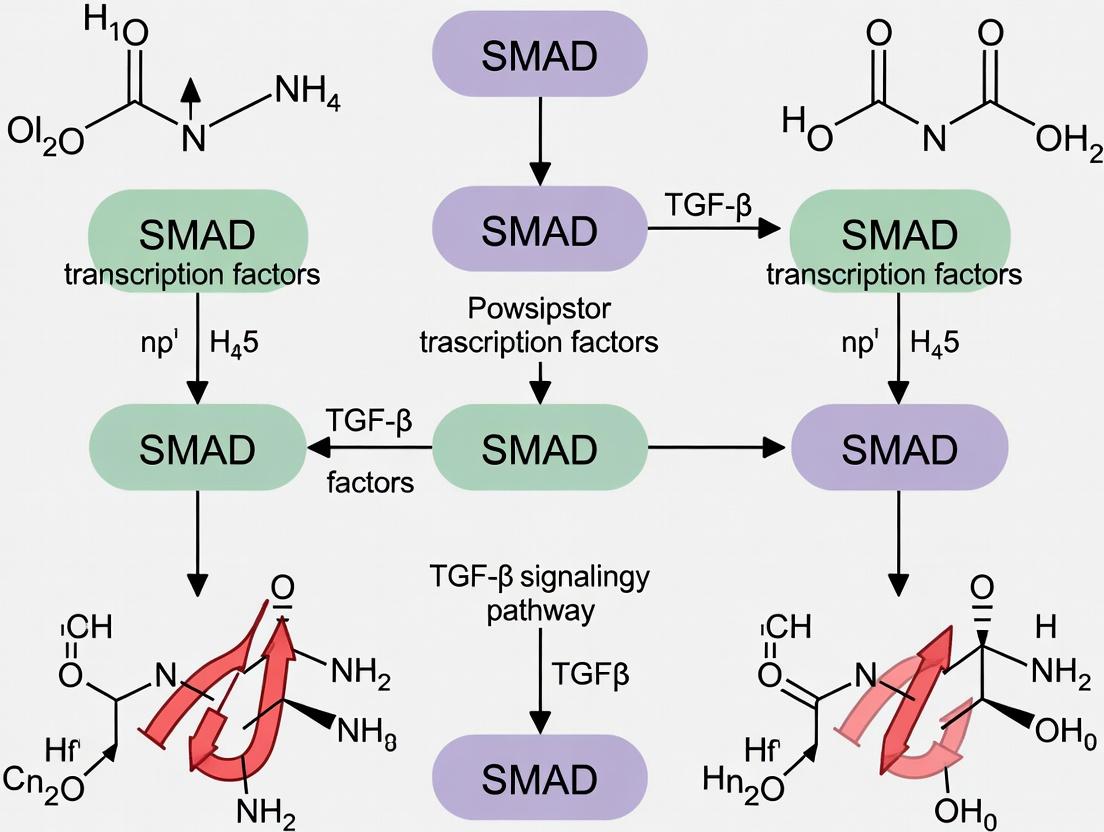
This comprehensive review explores the critical role of SMAD transcription factors as the primary intracellular effectors of the TGF-β signaling superfamily.
SMAD Transcription Factors: The Central Signaling Hub of the TGF-β Pathway in Health and Disease
Abstract
This comprehensive review explores the critical role of SMAD transcription factors as the primary intracellular effectors of the TGF-β signaling superfamily. Targeting researchers, scientists, and drug development professionals, the article provides foundational knowledge on SMAD structure, classification, and activation mechanisms. It details current methodologies for studying SMAD function, common experimental challenges with optimization strategies, and advanced validation techniques for pathway interrogation. By synthesizing current research, the article highlights SMADs as pivotal therapeutic targets in fibrosis, cancer, and immune disorders, and outlines future directions for clinical translation.
Decoding SMAD Proteins: Structure, Classification, and the Core TGF-β Signaling Cascade
The Transforming Growth Factor-β (TGF-β) superfamily is a large group of structurally related, secreted cytokines that exert pleiotropic effects across diverse biological systems, including embryogenesis, tissue homeostasis, immune regulation, and disease pathogenesis. Within this framework, SMAD transcription factors serve as the central intracellular signaling effectors and mediators of transcriptional responses. This guide, situated within a broader thesis on SMAD proteins in TGF-β signaling research, provides a technical examination of the superfamily, its mechanisms, and its complex roles, with an emphasis on the experimental paradigms used to dissect SMAD-dependent pathways.
Classification and Ligand-Receptor Architecture
The TGF-β superfamily is subdivided into two major branches based on the SMAD proteins they activate:
- TGF-β/Activin/Nodal Branch: Signals through Receptor-regulated SMADs (R-SMADs: SMAD2/3).
- Bone Morphogenetic Protein (BMP)/Growth and Differentiation Factor (GDF) Branch: Signals through R-SMADs (SMAD1/5/8/9).
All ligands signal through a heteromeric complex of type I and type II serine/threonine kinase receptors. The canonical signaling cascade is initiated when a dimeric ligand brings these receptors together, allowing the constitutively active type II receptor to phosphorylate and activate the type I receptor.
Table 1: Major Subfamilies of the TGF-β Superfamily, Key Ligands, and Primary Functions
| Subfamily | Prototypical Ligands | Primary Receptor Complex | Key Biological Roles |
|---|---|---|---|
| TGF-β | TGF-β1, TGF-β2, TGF-β3 | TβRII / ALK5 (TβRI) | Immune suppression, extracellular matrix production, epithelial-mesenchymal transition (EMT), fibrosis. |
| Activin/Nodal | Activin A, Nodal | ActRIIA/B / ALK4 (Activin), ALK7 (Nodal) | Embryonic patterning, mesoderm induction, left-right asymmetry, folliculogenesis. |
| BMP | BMP-2, BMP-4, BMP-7 | BMPRII / ALK2, ALK3, ALK6 | Bone and cartilage formation, embryonic dorsoventral patterning, angiogenesis. |
| GDF | GDF-5, GDF-11, Myostatin (GDF-8) | ActRIIB / ALK4, ALK5 (GDF-11), ALK3/6 (GDF-5) | Joint development, neural patterning, muscle growth regulation. |
| Anti-Müllerian Hormone | AMH | AMHRII / ALK2, ALK3 | Regression of Müllerian ducts in male sexual differentiation. |
Quantitative Data on Expression and Signaling
Table 2: Quantitative Metrics of TGF-β Superfamily Components in Human Tissues and Disease
| Component | Expression Level (Normal Tissue) | Alteration in Disease (Example) | Key Interacting Protein (Kd) |
|---|---|---|---|
| TGF-β1 | High in platelets, bone; Moderate in immune cells. | Upregulated in fibrosis, most carcinomas. | Latency-Associated Peptide (LAP) - Irreversible non-covalent. |
| BMP-2 | Low in most adult tissues; high during bone repair. | Downregulated in pulmonary arterial hypertension. | BMPR-IA (ALK3): ~1-10 nM. |
| SMAD4 | Ubiquitous nuclear/cytoplasmic. | Homozygous deletion in ~50% of pancreatic adenocarcinomas. | SMAD2/3: Kd ~100-200 nM for complex. |
| SMAD7 (I-SMAD) | Induced by TGF-β signaling (negative feedback). | Overexpression correlates with resistance to TGF-β-mediated growth arrest in cancer. | TβRI: Competes with R-SMADs. |
Core Experimental Protocols in SMAD/TGF-β Research
Protocol: Luciferase Reporter Assay for SMAD Transcriptional Activity
Purpose: To quantify the transcriptional output of canonical TGF-β/BMP-SMAD signaling. Principle: Cells are transfected with a plasmid containing a firefly luciferase gene under the control of a SMAD-responsive promoter (e.g., CAGA box for SMAD2/3, BRE for SMAD1/5/8). Ligand stimulation activates SMADs, which transactivate the promoter, producing luciferase. Detailed Method:
- Seed Cells: Plate HEK293T or other relevant cell lines in 24-well plates.
- Transfect: At 60-70% confluence, co-transfect using a suitable reagent (e.g., PEI, Lipofectamine 3000):
- 400 ng SMAD-responsive luciferase reporter plasmid.
- 40 ng Renilla luciferase control plasmid (pRL-TK or pRL-CMV) for normalization.
- Optional: 100-200 ng of expression plasmids for receptors, SMADs, or inhibitors.
- Stimulate: 24-48h post-transfection, serum-starve cells for 4-6h. Treat with recombinant ligand (e.g., 5 ng/mL TGF-β1, 50 ng/mL BMP-2) or vehicle control for 12-16h.
- Lysate Preparation: Aspirate medium, wash with PBS, add 100 µL Passive Lysis Buffer (Promega). Rock for 15 min at RT.
- Measurement: Transfer lysate to a tube or plate. Use a dual-luciferase assay system. Inject Luciferase Assay Reagent II, read firefly luminescence (F). Then inject Stop & Glo Reagent, read Renilla luminescence (R).
- Analysis: Calculate normalized activity as F/R. Plot fold-change relative to unstimulated control.
Protocol: Immunoprecipitation and Western Blot for SMAD Phosphorylation
Purpose: To detect ligand-induced, receptor-mediated phosphorylation of R-SMADs. Detailed Method:
- Cell Treatment and Lysis: Serum-starve cells (e.g., HaCaT, NMuMG) for 4h. Treat with ligand for 30-90 min. Place on ice, wash with cold PBS. Lyse in RIPA buffer (50 mM Tris-HCl pH 8.0, 150 mM NaCl, 1% NP-40, 0.5% sodium deoxycholate, 0.1% SDS) supplemented with phosphatase inhibitors (1 mM Na3VO4, 10 mM NaF) and protease inhibitors.
- Immunoprecipitation (IP): Clear lysate by centrifugation. Incubate 500 µg total protein with 1-2 µg anti-SMAD2/3 or anti-SMAD1/5/9 antibody overnight at 4°C with rotation. Add 20 µL Protein A/G agarose beads for 2h. Pellet beads, wash 3x with lysis buffer.
- Western Blot: Elute proteins in 2X Laemmli buffer by boiling. Separate by SDS-PAGE (8-10% gel). Transfer to PVDF membrane.
- Detection: Block membrane with 5% BSA in TBST. Probe with primary antibodies:
- Phospho-Specific: Anti-pSMAD2 (Ser465/467) or anti-pSMAD1/5/9 (Ser463/465) (1:1000 in 5% BSA/TBST), overnight at 4°C.
- Total Protein: After stripping, reprobe with anti-total-SMAD2/3 or anti-total-SMAD1/5/9 (1:2000). Use HRP-conjugated secondary antibodies and chemiluminescent substrate for imaging.
The Scientist's Toolkit: Key Research Reagent Solutions
Table 3: Essential Reagents for TGF-β/SMAD Pathway Research
| Reagent Category | Specific Example | Function & Application |
|---|---|---|
| Recombinant Ligands | Human TGF-β1 (Carrier-free), BMP-2 (rhBMP-2) | To activate specific signaling branches in cell culture or in vivo models. |
| Small Molecule Inhibitors | SB431542 (ALK4/5/7 inhibitor), LDN-193189 (ALK2/3 inhibitor), SIS3 (SMAD3-specific inhibitor) | To selectively block type I receptor kinase activity or specific R-SMAD function. |
| Phospho-Specific Antibodies | Anti-pSMAD2 (Ser465/467), Anti-pSMAD1/5/9 (Ser463/465) | To detect pathway activation via Western blot, immunofluorescence, or flow cytometry. |
| Luciferase Reporters | pGL3-(CAGA)12-luc (for SMAD2/3), pGL3-BRE-luc (for SMAD1/5/8) | To measure transcriptional activity in reporter assays. |
| SMAD Expression Constructs | FLAG-tagged SMAD4, constitutively active ALK5 (T204D), dominant-negative SMAD3 (D407E) | To overexpress, inhibit, or tag pathway components for functional studies. |
| Proteasome Inhibitor | MG-132 | To stabilize proteins like I-SMADs or other short-lived regulators during IP or activity assays. |
Within the broader research on TGF-β signaling, SMAD transcription factors serve as the central intracellular signal transducers. This whitepaper provides an in-depth technical guide to the core SMAD family, categorized into Receptor-regulated (R-SMADs), Common-mediator (Co-SMAD), and Inhibitory (I-SMADs), detailing their structure, function, and regulation in canonical signaling pathways.
Core SMAD Classification and Structure
SMAD proteins share conserved N-terminal MH1 (Mad Homology 1) and C-terminal MH2 domains, connected by a variable linker region. Their classification is defined by function within the TGF-β/BMP signaling cascade.
Table 1: Classification and Primary Functions of SMAD Proteins
| SMAD Type | Members | Primary Ligand/Receptor Pathway | Core Function |
|---|---|---|---|
| R-SMADs | SMAD1, SMAD2, SMAD3, SMAD5, SMAD8/9 | TGF-β/Activin/Nodal (SMAD2/3); BMP/GDF (SMAD1/5/8) | Direct substrates of TGF-β family receptor kinases; become phosphorylated at C-terminal SSXS motif. |
| Co-SMAD | SMAD4 | All TGF-β family pathways | Forms a complex with phosphorylated R-SMADs; essential for nuclear translocation and transcriptional regulation. |
| I-SMADs | SMAD6, SMAD7 | All TGF-β family pathways | Act as negative feedback regulators; compete for receptor binding or SMAD4 interaction. |
Table 2: Quantitative Data on Human SMAD Proteins
| SMAD Protein | Amino Acids | Gene Locus | Phosphorylation Site (R-SMADs) | Common Interacting Partners |
|---|---|---|---|---|
| SMAD1 | 465 | 4q31.21 | Ser463, Ser465 | SMAD4, FOXO1, RUNX1 |
| SMAD2 | 467 | 18q21.1 | Ser465, Ser467 | SMAD4, FOXO3, SP1 |
| SMAD3 | 425 | 15q22.33 | Ser423, Ser425 | SMAD4, CREB-binding protein, β-catenin |
| SMAD4 | 552 | 18q21.1 | N/A | All R-SMADs, ATF2, c-MYC |
| SMAD6 | 496 | 15q22.31 | N/A | BMP type I receptor, SMURF1 |
| SMAD7 | 426 | 18q21.1 | N/A | TGF-β type I receptor, SMURF2, PP1c |
Canonical TGF-β/BMP Signaling Pathway
Canonical SMAD Signaling Cascade
Experimental Protocols for SMAD Analysis
Protocol: Detection of R-SMAD Phosphorylation (Western Blot)
Objective: Assess pathway activation by measuring phosphorylation of R-SMADs (e.g., SMAD2/3 or SMAD1/5/8). Methodology:
- Cell Stimulation & Lysis: Treat cells with ligand (e.g., 5 ng/mL TGF-β1 for 60 min). Lyse in RIPA buffer containing phosphatase and protease inhibitors.
- Immunoprecipitation (Optional): For low-abundance SMADs, immunoprecipitate using anti-SMAD antibody conjugated to agarose beads.
- Electrophoresis & Transfer: Separate 30-50 µg total protein via 10% SDS-PAGE. Transfer to PVDF membrane.
- Immunoblotting:
- Block membrane with 5% BSA/TBST for 1 hour.
- Incubate with primary antibodies (4°C, overnight):
- Anti-phospho-SMAD2 (Ser465/467) or anti-phospho-SMAD1/5/9 (Ser463/465).
- Anti-total-SMAD2/3 or anti-total-SMAD1/5/9 (loading control).
- Wash and incubate with HRP-conjugated secondary antibody (room temp, 1 hour).
- Detection: Use enhanced chemiluminescence (ECL) substrate and image with a chemiluminescence detector. Quantify band intensity relative to total protein.
Protocol: SMAD4/R-SMAD Co-Immunoprecipitation (Co-IP)
Objective: Confirm functional complex formation between R-SMADs and SMAD4. Methodology:
- Cell Preparation: Stimulate cells as in 3.1. Use lysis buffer (20 mM Tris-HCl pH 7.5, 150 mM NaCl, 1% Triton X-100, with inhibitors).
- Pre-clear & Immunoprecipitation: Pre-clear lysate with protein A/G beads. Incubate 500 µg lysate with 2 µg anti-SMAD4 antibody (or control IgG) overnight at 4°C. Add beads for 2 hours.
- Wash & Elution: Wash beads 3x with lysis buffer. Elute proteins in 2X Laemmli buffer at 95°C for 5 min.
- Analysis: Run eluate on SDS-PAGE. Immunoblot for associated R-SMADs (e.g., anti-SMAD2/3) and SMAD4.
Protocol: SMAD Transcriptional Activity Reporter Assay (Luciferase)
Objective: Quantify functional output of SMAD-dependent transcription. Methodology:
- Transfection: Seed cells in 24-well plates. Co-transfect with:
- SMAD-responsive reporter plasmid (e.g., CAGA12-luc for TGF-β, BRE-luc for BMP).
- Renilla luciferase plasmid for normalization.
- Optional: SMAD expression vectors or siRNAs.
- Stimulation: 24h post-transfection, stimulate with ligand for 16-24 hours.
- Lysis & Measurement: Lyse cells with passive lysis buffer. Measure firefly and Renilla luciferase activity using a dual-luciferase assay kit.
- Analysis: Calculate firefly/Renilla ratio. Express as fold-change over unstimulated control.
The Scientist's Toolkit: Key Research Reagents
Table 3: Essential Reagents for SMAD Pathway Research
| Reagent / Material | Function / Application | Example Catalog # |
|---|---|---|
| Recombinant Human TGF-β1 | Ligand for activating TGF-β/SMAD2/3 pathway. Used in stimulation experiments. | PeproTech 100-21 |
| Phospho-Specific SMAD Antibodies | Detect activated, phosphorylated R-SMADs via Western blot or immunofluorescence. | Cell Signaling #8828 (p-SMAD2) |
| SMAD4 siRNA Pool | Knockdown SMAD4 to study Co-SMAD-dependent processes and verify specificity. | Dharmacon L-003902-00 |
| SMAD Responsive Luciferase Reporter | Measure transcriptional activity downstream of SMAD complexes. | Promega E847A (CAGA-luc) |
| Proteasome Inhibitor (MG-132) | Prevents degradation of ubiquitinated SMADs, useful in stabilization studies. | Sigma-Aldrich C2211 |
| TGF-β Type I Receptor Kinase Inhibitor (SB-431542) | Selective inhibitor to block R-SMAD phosphorylation and confirm receptor dependence. | Tocris 1614 |
| Recombinant SMAD7 Protein | Directly introduce I-SMAD to study negative regulation in cell-based assays. | R&D Systems 7206-SM |
Regulatory Mechanisms and I-SMAD Function
I-SMADs (SMAD6/7) provide critical negative feedback. Their induction is a key regulatory node.
I-SMAD Mediated Negative Feedback Loop
Within the canonical TGF-β signaling pathway, Receptor-Specific SMADs (R-SMADs: SMAD2/3 for TGF-β/Activin/Nodal; SMAD1/5/8 for BMP) are the central intracellular transducers. Their activation cycle and transcriptional function are dictated by the precise structural and functional interplay of three conserved domains: the N-terminal MAD Homology 1 (MH1) domain, the C-terminal MAD Homology 2 (MH2) domain, and the intervening, less conserved Linker region. This whitepaper provides an in-depth technical analysis of these domains, framing their roles within the broader thesis that SMAD proteins act as molecular switches and hubs, integrating signals through post-translational modifications and protein-protein interactions to dictate specific transcriptional outcomes.
Domain-by-Domain Structural and Functional Analysis
The MH1 Domain: DNA Recognition and Regulation
The MH1 domain (~130 amino acids) is responsible for sequence-specific DNA binding to SMAD Binding Elements (SBEs, 5-GTCT-3 or its reverse complement 5-AGAC-3) or GC-rich sequences for BMP R-SMADs. Its structure is a compact bundle of α-helices and β-strands.
- Core Function: Direct binding to DNA major groove via a conserved β-hairpin loop.
- Key Regulatory Feature: In R-SMADs, the MH1 domain auto-inhibits the MH2 domain in the basal state. Phosphorylation of the C-terminal SxS motif releases this inhibition.
- SMAD4 MH1: Lacks DNA binding auto-inhibition and contributes to cooperative DNA binding in the heterotrimeric complex.
The Linker Region: A Signaling Integration Hub
The Linker region is proline-rich and the least conserved domain, serving as a central platform for regulatory crosstalk.
- Phosphorylation: Contains multiple phosphorylation sites for kinases such as MAPK, CDK, and GSK-3β. These modifications typically inhibit nuclear accumulation (e.g., MAPK phosphorylation) or promote degradation (e.g., GSK-3β priming followed by phosphorylation of a phosphodegron).
- Polyubiquitination: Site for regulatory ubiquitination by E3 ligases like SMURF1/2, NEDD4L, and APC/C, controlling SMAD stability and turnover.
The MH2 Domain: Oligomerization, Co-factor Binding, and Activation
The MH2 domain (~200 amino acids) is a conserved, globular α-helical sandwich structure that drives oligomerization and protein-protein interactions.
- Trimerization: Forms homo- or heterotrimers upon R-SMAD C-terminal SxS phosphorylation by activated TGF-β/BMP receptors. The trimer interface is a central feature.
- SMAD4 Binding: The R-SMAD MH2 domain interacts with the SMAD4 MH2 domain to form the active heterotrimeric complex.
- Co-factor Recruitment: The surface of the MH2 domain binds a vast array of transcriptional co-activators (e.g., p300/CBP) and co-repressors (e.g., SKI, SNON).
- Nuclear Import/Export: Contains nucleocytoplasmic shuttling signals that interact with nuclear pore components.
Table 1: Key Structural and Functional Parameters of SMAD Domains
| Domain | Approx. Size (aa) | Primary Function | Key Regulatory Modifications | Binding Partners |
|---|---|---|---|---|
| MH1 | 130-140 | DNA binding; Auto-inhibition (R-SMADs) | --- | DNA, Importins, Specific Transcription Factors |
| Linker | 50-200 (variable) | Signal integration; Subcellular localization | Ser/Thr phosphorylation (MAPK, CDK, GSK-3β), Polyubiquitination | E3 Ubiquitin Ligases (e.g., SMURFs), PIN1 |
| MH2 | ~200 | Oligomerization, Co-factor Recruitment, Nuclear Shuttling | C-terminal SxS phosphorylation (Receptor), Ubiquitination | Receptor Kinases, SMAD4, p300/CBP, SKI/SNON |
Table 2: Common SMAD Linker Phosphorylation Sites and Functional Consequences (Human SMAD2/3)
| Kinase | Phosphorylation Site (SMAD3) | Functional Consequence | Signaling Context |
|---|---|---|---|
| MAPK/ERK | Ser-204, Ser-208 | Inhibits nuclear accumulation, Promotes cytoplasmic retention | Oncogenic Ras/MAPK signaling |
| CDK2/4 | Thr-8, Thr-178 | Inhibits transcriptional activity, Links cell cycle to TGF-β response | Cell cycle progression |
| GSK-3β | Ser-204 (primed) | Targets SMAD3 for degradation via β-Trcp E3 ligase | Wnt/GSK-3β signaling crosstalk |
Detailed Experimental Protocols
Protocol: Co-Immunoprecipitation (Co-IP) to Assess SMAD Oligomerization
Objective: To detect the formation of R-SMAD/SMAD4 heterotrimeric complexes upon TGF-β stimulation.
Methodology:
- Cell Culture & Stimulation: Seed HEK293T or HaCaT cells in 10-cm dishes. At 80-90% confluency, stimulate with recombinant human TGF-β1 (2-5 ng/mL) for 45-60 minutes. Include an unstimulated control.
- Cell Lysis: Rinse cells with ice-cold PBS and lyse in 1 mL of Nonidet P-40 (NP-40) Lysis Buffer (50 mM Tris-HCl pH 8.0, 150 mM NaCl, 1% NP-40) supplemented with protease and phosphatase inhibitors. Incubate on ice for 20 min, then centrifuge at 16,000 × g for 15 min at 4°C.
- Pre-clearing: Incubate the supernatant with 20 µL of Protein A/G Sepharose beads for 30 min at 4°C. Centrifuge and collect the supernatant.
- Immunoprecipitation: Incubate the lysate with 1-2 µg of anti-SMAD2/3 or anti-phospho-SMAD2/3 antibody overnight at 4°C with gentle rotation. Add 30 µL of pre-washed Protein A/G beads and incubate for 2-4 hours.
- Washing: Pellet beads and wash 4x with 1 mL of ice-cold lysis buffer.
- Elution & Analysis: Elute proteins by boiling beads in 2X Laemmli sample buffer for 5 min. Resolve by SDS-PAGE and perform Western blotting using antibodies against SMAD4 and the immunoprecipitated SMAD.
Protocol: Electrophoretic Mobility Shift Assay (EMSA) for MH1-DNA Binding
Objective: To demonstrate the sequence-specific DNA binding activity of purified SMAD MH1 domain.
Methodology:
- Protein Purification: Express and purify recombinant GST- or His-tagged SMAD MH1 domain from E. coli.
- Probe Preparation: Design and anneal complementary oligonucleotides containing a canonical SBE (5
-AGCCAGACAAAAAGCC-3). Label the sense strand with [γ-³²P] ATP using T4 Polynucleotide Kinase. Purify the labeled probe using a microspin column. - Binding Reaction: In a 20 µL reaction, combine: 1x Binding Buffer (10 mM Tris pH 7.5, 50 mM KCl, 1 mM DTT, 5% Glycerol, 0.05% NP-40, 100 µg/mL BSA), 1 µg of poly(dI-dC) as nonspecific competitor, 10 fmol of labeled probe, and 50-200 ng of purified MH1 protein. For competition assays, include a 100-fold molar excess of unlabeled wild-type or mutant probe. Incubate for 20-30 min at room temperature.
- Gel Electrophoresis: Load reactions onto a pre-run 6% non-denaturing polyacrylamide gel in 0.5x TBE buffer. Run at 100V for 1-2 hours at 4°C.
- Detection: Dry the gel and expose it to a phosphorimager screen or X-ray film overnight. A shifted band indicates protein-DNA complex formation.
Pathway and Workflow Visualizations
Title: Canonical SMAD Activation and Nuclear Translocation Pathway
Title: Linker Phosphorylation Integrates Crosstalk Signals
The Scientist's Toolkit: Key Research Reagent Solutions
Table 3: Essential Reagents for SMAD Structural and Functional Studies
| Reagent / Material | Supplier Examples | Function in Research |
|---|---|---|
| Recombinant TGF-β1 / BMP-2/4 | R&D Systems, PeproTech | Ligand for specific, controlled activation of SMAD pathways in cell-based assays. |
| Phospho-Specific SMAD Antibodies (pS465/467-SMAD2, pS423/425-SMAD3) | Cell Signaling Technology, Abcam | Gold-standard detection of activated, receptor-phosphorylated R-SMADs by Western blot or IF. |
| SMAD2/3/4 and Co-factor Antibodies | Santa Cruz Biotechnology, BD Biosciences | Immunoprecipitation, Western blotting, and ChIP analysis of total protein levels and complexes. |
| Constitutively Active / Dominant-Negative TGF-β Type I Receptor (ALK5) Constructs | Addgene | To genetically activate or inhibit the upstream pathway independently of ligand. |
| SMAD-Responsive Luciferase Reporters (CAGA12-Luc, BRE-Luc) | Promega, Custom synthesis | Quantification of pathway transcriptional activity in high-throughput or validation assays. |
| MG-132 (Proteasome Inhibitor) | Sigma-Aldrich, Cayman Chemical | To stabilize SMAD proteins and study ubiquitin-mediated degradation, particularly of Linker-phosphorylated forms. |
| Recombinant SMAD MH1/MH2 Domain Proteins | Abcam, Sino Biological (or in-house purification) | For in vitro studies including EMSA, crystallization, and interaction assays. |
| Specific Kinase Inhibitors (U0126 for MEK, SB203580 for p38, CHIR99021 for GSK-3β) | Tocris, Selleckchem | To dissect the role of specific Linker-modifying kinases in SMAD regulation. |
This technical guide details the canonical TGF-β/SMAD signaling pathway, a critical axis regulating cellular processes including proliferation, differentiation, and apoptosis. Within the broader thesis of SMAD transcription factors in TGF-β research, this pathway represents the primary, linear signaling cascade that transduces extracellular ligand binding into specific gene expression programs, serving as the foundation for understanding pathological dysregulation and therapeutic targeting.
Receptor Activation and R-SMAD Phosphorylation
The pathway initiates when a TGF-β superfamily ligand (e.g., TGF-β, BMP, Activin) binds to a specific pair of transmembrane serine/threonine kinase receptors (Type II and Type I). The constitutively active Type II receptor phosphorylates the Type I receptor, activating its kinase domain. The activated Type I receptor then phosphorylates receptor-regulated SMADs (R-SMADs: SMAD1/5/9 for BMP; SMAD2/3 for TGF-β/Activin) at a C-terminal SSXS motif.
Table 1: Key Receptor Complexes and Corresponding R-SMADs
| Ligand Class | Type II Receptor | Type I Receptor | Primary R-SMADs |
|---|---|---|---|
| TGF-β | TβRII | ALK5 (TβRI) | SMAD2, SMAD3 |
| BMP | BMPRII, ActRIIA/B | ALK1/2/3/6 | SMAD1, SMAD5, SMAD9 |
| Activin/Nodal | ActRIIA/B | ALK4, ALK7 | SMAD2, SMAD3 |
Experimental Protocol: Immunoprecipitation & Western Blot for Receptor Activation
- Cell Stimulation: Serum-starve cells (e.g., HEK293T, HaCaT) for 12-16 hours. Stimulate with recombinant human TGF-β1 (e.g., 5 ng/mL) for 0, 15, 30, 60 minutes.
- Cell Lysis: Lyse cells in RIPA buffer supplemented with protease and phosphatase inhibitors.
- Immunoprecipitation (IP): Incubate 500 µg total protein with 2 µg anti-TβRI antibody overnight at 4°C. Add Protein A/G beads for 2 hours.
- Analysis: Wash beads, elute proteins in Laemmli buffer. Separate by SDS-PAGE, transfer to PVDF membrane.
- Detection: Probe membrane with anti-phospho-Ser/Thr antibody or antibody specific for phosphorylated TβRI. Strip and re-probe for total TβRI as loading control.
SMAD Complex Formation and Nuclear Translocation
Phosphorylated R-SMADs undergo a conformational change, dissociate from the receptor, and form a trimeric complex with the common-mediator SMAD4 (Co-SMAD). This heterotrimeric complex accumulates in the nucleus via direct interaction with nucleoporins, a process regulated by continuous nuclear import and export signals.
Table 2: SMAD Complex Stoichiometry and Translocation Kinetics
| Complex Component | Number of Molecules per Complex | Typical Nuclear Accumulation Peak (Post-TGF-β Stimulation) |
|---|---|---|
| Phospho-SMAD2/3 | 2 | 45-60 minutes |
| SMAD4 | 1 | 45-60 minutes |
Experimental Protocol: Co-Immunoprecipitation of SMAD Complexes
- Transfection & Stimulation: Transfect cells with plasmids encoding Flag-tagged SMAD3 and HA-tagged SMAD4. After 24h, stimulate with TGF-β1 (5 ng/mL, 1 hour).
- Nuclear Extraction: Use a commercial nuclear extraction kit. Confirm purity by Western blot for nuclear (Lamin B1) and cytoplasmic (GAPDH) markers.
- IP from Nuclear Lysate: Perform IP from 200 µg nuclear extract using anti-Flag M2 affinity gel.
- Analysis: Wash, elute, and run Western blot. Probe with anti-HA antibody to detect co-precipitated SMAD4, then with anti-Flag for SMAD3.
Pathway Visualization
Diagram 1: Canonical TGF-Beta SMAD Pathway (75 chars)
The Scientist's Toolkit: Key Research Reagent Solutions
Table 3: Essential Reagents for SMAD Pathway Research
| Reagent | Example Catalog #/Source | Function & Application |
|---|---|---|
| Recombinant Human TGF-β1 | PeproTech #100-21 | Potent ligand for specific activation of TGF-β receptor complexes. Used in stimulation experiments. |
| Phospho-Specific Antibodies (p-SMAD2, p-SMAD3) | Cell Signaling Tech #8828, #9520 | Detect activated, receptor-phosphorylated R-SMADs. Critical for pathway readout. |
| SMAD4 siRNA/SHRNA | Santa Cruz Biotech sc-29476 | Knocks down SMAD4 expression to validate dependence of transcriptional responses on canonical signaling. |
| SBE-luciferase Reporter Plasmid (CAGA12-luc) | Addgene #117152 | Contains SMAD Binding Elements (SBE). Measures functional SMAD complex transcriptional activity. |
| TGF-β Type I Receptor Kinase Inhibitor (SB-431542) | Tocris #1614 | Selective ALK4/5/7 inhibitor. Negative control to confirm specificity of observed SMAD activation. |
| Nuclear Extraction Kit | Thermo Fisher #78833 | Fractionates cell lysates to isolate nuclear proteins for analyzing SMAD complex translocation. |
| Co-IP Grade Antibodies (Anti-Flag, Anti-HA) | Sigma F3165, Roche 11867423001 | High-affinity antibodies for immunoprecipitating tagged SMAD proteins to study complex formation. |
SMAD transcription factors are the central effectors of the Transforming Growth Factor-β (TGF-β) superfamily signaling pathways, which regulate diverse cellular processes including proliferation, differentiation, apoptosis, and migration. The canonical pathway involves ligand-induced receptor activation, leading to the phosphorylation of Receptor-regulated SMADs (R-SMADs: Smad1/5/8 for BMP; Smad2/3 for TGF-β/Activin/Nodal). These then complex with the common mediator Smad4, translocate to the nucleus, and participate in gene regulation. The specificity and outcome of this transcriptional response are not dictated by SMADs alone but are critically determined by their dynamic interactions with DNA and a vast repertoire of coactivators and corepressors. This whitepaper provides a technical dissection of SMAD DNA-binding mechanisms and the coregulator complexes that govern transcriptional activation or repression, a pivotal area for understanding disease pathogenesis and developing targeted therapeutics.
SMAD DNA-Binding Mechanism
SMADs bind DNA weakly and with low specificity as monomers. High-affinity, sequence-specific binding is achieved by the trimeric complex of two R-SMADs and one Smad4. The primary DNA contact is made via an 11-residue β-hairpin loop in the MH1 domain.
Key DNA Sequence Elements:
- Smad Binding Element (SBE): The minimal consensus is 5´-GTCT-3´ or its reverse complement 5´-AGAC-3´, recognized predominantly by Smad3 and Smad4.
- GC-Rich Sequences: Smad2/Smad3 complexes often bind cooperatively with other transcription factors (e.g., FOXH1, FAST) at composite elements, where SMADs contact adjacent GC-rich sequences.
- CAGA Box: A variant sequence (5´-CAGA-3´) found in some TGF-β-responsive promoters.
Structural Basis: The trimeric SMAD complex binds DNA in a nucleosome-like configuration, with the DNA wrapping around the protein assembly. Phosphorylation of the R-SMAD linker region can modulate DNA binding affinity and partner selection.
Table 1: SMAD DNA-Binding Characteristics
| SMAD Type | Preferred DNA Element | Binding Affinity (Kd, approximate) | Key Structural Feature | Dependency |
|---|---|---|---|---|
| Smad3 (Monomer) | GTCT / AGAC | ~1-10 µM (weak) | MH1 domain β-hairpin | Low specificity |
| Smad3/Smad4 Trimer | GTCTAGAC (SBE pair) | ~10-100 nM (high) | Trimeric interface stabilizes contact | High specificity, cooperative |
| Smad2 | Indirect, via cofactors | N/A (poor direct binder) | MH1 domain blocked by insert | Requires DNA-binding partner (e.g., FOXH1) |
| Smad1/5 (BMP) | GCCG or GRCG | ~10-100 nM | Similar β-hairpin, different sequence preference | BMP-responsive element |
Coactivators in SMAD-Mediated Transcription
Coactivators are recruited by phosphorylated R-SMADs to facilitate chromatin remodeling, histone modification, and recruitment of the basal transcriptional machinery.
Major Classes and Examples:
- Histone Acetyltransferases (HATs): p300 and CBP are the quintessential SMAD coactivators. They acetylate histones (H3, H4) to open chromatin and also acetylate SMADs themselves to enhance transcriptional activity and stability.
- Chromatin Remodeling Complexes: SWI/SNF complexes use ATP to slide or evict nucleosomes, exposing promoter regions.
- Mediator Complex: Acts as a bridge between SMAD complexes and RNA Polymerase II.
- Transcriptional Coactivators: ARC105 (Med15) interacts with Smad2/3 and Smad4 to stabilize the transcription pre-initiation complex.
Corepressors in SMAD-Mediated Transcription
Corepressors inhibit transcription by recruiting histone deacetylases (HDACs), promoting chromatin compaction, or interfering with activator recruitment.
Major Classes and Examples:
- Histone Deacetylases (HDACs): HDAC1, HDAC2 are often recruited by corepressors like TGIF, Ski, and SnoN to deacetylate histones, leading to repressed chromatin states.
- Proto-oncoproteins Ski/SnoN: Bind stably to Smad4 and R-SMADs, blocking coactivator (p300) interaction and recruiting HDAC complexes. TGF-β signaling leads to Ski/SnoN degradation, relieving repression.
- TGIF (Homeodomain Protein): Recruits HDACs and competes with coactivators for binding to activated Smad2.
- E2F4/p107 Complex: In concert with Smad3, represses MYC transcription in response to TGF-β-induced cytostasis.
Table 2: Key SMAD Coactivators and Corepressors
| Coregulator | Type | Interacting SMADs | Primary Function | Outcome on Transcription |
|---|---|---|---|---|
| p300 / CBP | Coactivator | R-SMADs, Smad4 | Histone acetylation, SMAD acetylation, scaffold | Activation |
| SWI/SNF (BRG1) | Coactivator | Smad2, Smad3, Smad4 | ATP-dependent chromatin remodeling | Activation |
| ARC105 (Med15) | Coactivator | Smad2, Smad4 | Mediator subunit; bridges to Pol II | Activation |
| Ski / SnoN | Corepressor | R-SMADs, Smad4 | Blocks p300 binding, recruits HDACs | Repression |
| TGIF | Corepressor | Smad2 | Recruits HDACs, competes with p300 | Repression |
| HDAC1 / HDAC2 | Corepressor | Via Ski, TGIF, etc. | Histone deacetylation | Repression |
Experimental Protocols for Key Assays
Protocol 1: Chromatin Immunoprecipitation (ChIP) for SMAD-DNA Binding Purpose: To detect in vivo binding of SMAD proteins to specific genomic loci. Procedure:
- Crosslinking: Treat cells with 1% formaldehyde for 10 min at room temp to fix protein-DNA complexes.
- Cell Lysis & Chromatin Shearing: Lyse cells and sonicate chromatin to ~200-1000 bp fragments.
- Immunoprecipitation: Incubate chromatin lysate with antibody specific to target SMAD (e.g., anti-Smad2/3) or control IgG overnight at 4°C. Use protein A/G beads to capture immune complexes.
- Washing & Elution: Wash beads sequentially with low salt, high salt, LiCl, and TE buffers. Elute complexes with 1% SDS, 0.1M NaHCO3.
- Reverse Crosslinks & DNA Purification: Heat eluate at 65°C overnight with 200mM NaCl. Treat with Proteinase K, then purify DNA using phenol-chloroform or spin columns.
- Analysis: Quantify target DNA sequences by qPCR using primers flanking the putative SBE.
Protocol 2: Co-immunoprecipitation (Co-IP) for SMAD-Coregulator Interactions Purpose: To validate physical interaction between SMADs and coactivators/corepressors. Procedure:
- Cell Lysis: Lyse cells in NP-40 or RIPA buffer (with protease/phosphatase inhibitors) for 30 min on ice.
- Pre-clear: Incubate lysate with control IgG and beads for 1 hr to reduce non-specific binding.
- Immunoprecipitation: Incubate pre-cleared lysate with antibody against your target (e.g., anti-Smad4) or control antibody overnight at 4°C.
- Bead Capture: Add protein A/G agarose beads for 2-4 hrs.
- Washing: Wash beads 3-5x with lysis buffer.
- Elution & Analysis: Elute proteins in 2X Laemmli buffer by boiling. Analyze by Western blot for co-precipitating partners (e.g., probe for p300 or Ski).
Protocol 3: Luciferase Reporter Assay for SMAD Transcriptional Activity Purpose: To functionally assess SMAD-dependent transcriptional activation/repression. Procedure:
- Reporter Construct: Transfect cells with a plasmid containing multiple SBEs (e.g., (CAGA)12) or a specific promoter driving firefly luciferase expression.
- Stimulation & Control: Treat cells with TGF-β ligand (e.g., 5 ng/mL for 16-24 hrs). Co-transfect a Renilla luciferase plasmid under a constitutive promoter for normalization.
- Lysis & Measurement: Lyse cells in passive lysis buffer. Measure firefly and Renilla luciferase activities sequentially using a dual-luciferase assay kit.
- Analysis: Calculate the ratio of firefly to Renilla luminescence. Compare ratios between stimulated/unstimulated or transfected/control cells.
Visualizing SMAD Regulatory Pathways
Diagram 1: SMAD Signaling & Coregulator Recruitment Pathway
Diagram 2: Chromatin Immunoprecipitation (ChIP) Workflow
The Scientist's Toolkit: Research Reagent Solutions
Table 3: Essential Reagents for SMAD-DNA & Coregulator Research
| Reagent / Material | Function / Application | Example Product / Target |
|---|---|---|
| Phospho-Specific Antibodies | Detect activated (phosphorylated) R-SMADs in WB, IF, IP. | Anti-phospho-Smad2 (Ser465/467)/Smad3 (Ser423/425) |
| SMAD ChIP-Grade Antibodies | High-affinity antibodies validated for chromatin immunoprecipitation. | Anti-Smad4 (ChIP grade), Anti-Smad2/3. |
| Recombinant TGF-β Ligands | Pathway stimulation; dose-response studies. | Recombinant Human TGF-β1, BMP-4. |
| SMAD Reporter Constructs | Measure transcriptional activity in luciferase assays. | (CAGA)12-luc, pGL3-BRE-luc (BMP). |
| HDAC / HAT Inhibitors | Probe the role of histone acetylation in SMAD responses. | Trichostatin A (HDACi), C646 (p300 HATi). |
| Proteasome Inhibitors | Stabilize corepressors like Ski/SnoN for detection. | MG-132. |
| Coactivator/Corepressor Expression Plasmids | Overexpress or deplete factors to study function. | pCMV-p300, pCMV-Ski, shRNA vectors. |
| Nuclear Extraction Kits | Isolate nuclear fractions for SMAD translocation assays. | Commercial nuclear/cytoplasmic fractionation kits. |
Cross-Talk with Non-Canonical Pathways (MAPK, PI3K) and Other Signaling Networks
Within the canonical SMAD-dependent framework of TGF-β signaling, the functional output is critically modulated by extensive cross-talk with non-canonical pathways, primarily MAPK and PI3K-AKT networks. This interaction forms a complex signaling web that dictates cellular responses ranging from growth arrest and apoptosis to epithelial-mesenchymal transition (EMT) and immune modulation. For researchers focused on SMAD transcription factors, understanding these interactions is paramount, as they explain context-dependent outcomes and therapeutic resistance in diseases like cancer and fibrosis. This whitepaper provides a technical dissection of these cross-talk mechanisms, supported by current data and methodologies.
Mechanisms of Cross-Talk Between TGF-β/SMAD and MAPK Pathways
The MAPK pathways (ERK, JNK, p38) engage in bidirectional communication with TGF-β signaling. Cross-talk occurs at multiple levels: ligand-independent activation of SMADs by MAPKs, regulation of SMAD transcriptional activity, and modulation of TGF-β receptor stability.
- ERK Cross-Talk: Growth factor-activated ERK can phosphorylate the linker region of R-SMADs (e.g., SMAD2/3), often leading to inhibition of nuclear translocation and promoting SMAD degradation. Conversely, TGF-β can activate ERK via TRAF6-mediated TAK1 activation or through She-Grb2-SOS-Ras signaling.
- p38 and JNK Cross-Talk: TGF-β activates p38 and JNK primarily via TAK1, which phosphorylates MKK3/6 and MKK4/7, respectively. These kinases can then phosphorylate SMAD linker regions, but with outcomes distinct from ERK, frequently enhancing SMAD transcriptional activity and promoting apoptosis or EMT.
Key Experimental Readouts: Phospho-specific antibodies for linker-phosphorylated SMADs (e.g., pSer245/250/255 in SMAD3) and co-immunoprecipitation of TAK1-TβRI complexes are standard.
Integration with the PI3K-AKT-mTOR Axis
The PI3K-AKT pathway is a major survival signal that intersects with TGF-β signaling to override pro-apoptotic outcomes and promote cell growth and EMT.
- AKT-Mediated SMAD Inhibition: AKT directly phosphorylates SMAD3 on Ser203 and Ser207 (linker region), sequestering it in the cytoplasm. It also stabilizes the transcriptional repressor Snail, which cooperates with SMADs to repress epithelial genes.
- mTORC1 Activation: TGF-β can activate mTORC1 through PI3K-AKT-dependent and independent (via TSC2 inhibition) mechanisms, coupling growth-inhibitory signals to anabolic processes.
- Feedback Loops: SMADs can transcriptionally upregulate receptors like PDGFR and IGF-1R, which in turn activate PI3K-AKT, creating a feed-forward loop that sustains EMT.
Key Experimental Readouts: Monitoring phosphorylation of AKT (Ser473), S6K (Thr389), and 4E-BP1 (Thr37/46) in response to TGF-β, alongside SMAD3 linker phosphorylation mutants.
Quantitative Analysis of Pathway Cross-Talk
Table 1: Quantifiable Effects of Pathway Inhibition on SMAD3-Mediated Transcriptional Output
| Perturbation (Inhibitor) | Target Pathway | Luciferase Reporter (CAGA12) Activity (% of TGF-β only) | SMAD3 Nuclear/Cytoplasmic Ratio | EMT Marker (E-cadherin) Expression |
|---|---|---|---|---|
| TGF-β (5 ng/ml, 24h) | - | 100% | 3.5 ± 0.4 | 40% ↓ |
| + U0126 (10 µM) | ERK1/2 | 145% ± 12%* | 5.1 ± 0.6* | 25% ↓ |
| + SB203580 (10 µM) | p38 MAPK | 62% ± 8%* | 2.1 ± 0.3* | 15% ↓ |
| + LY294002 (20 µM) | PI3K | 110% ± 10% | 3.8 ± 0.5 | 70% ↓* |
| + MK-2206 (1 µM) | AKT | 155% ± 15%* | 4.8 ± 0.7* | 75% ↓* |
Data is representative and compiled from recent studies (2022-2024). Values are mean ± SD; * denotes statistically significant change (p<0.05) vs. TGF-β only control.
Table 2: Common Phospho-Sites in SMAD3 Induced by Non-Canonical Pathways
| Phospho-Site (SMAD3) | Inducing Kinase | Functional Consequence | Detection Antibody (Example) |
|---|---|---|---|
| Ser208 (Linker) | ERK1/2 | Inhibits nuclear accumulation, targets for degradation | Phospho-SMAD3 (Ser208) (Cell Signaling #52903) |
| Ser213 (Linker) | ERK1/2, CDK | Inhibits nuclear accumulation | Available as custom service |
| Thr179 (Linker) | p38 MAPK | Enhances transcriptional activity | Phospho-SMAD3 (Thr179) (Abcam ab254407) |
| Ser203/207 (Linker) | AKT | Cytoplasmic sequestration, inhibits DNA binding | Mutational analysis required |
Detailed Experimental Protocols
Protocol 4.1: Co-Immunoprecipitation of TAK1-TβRI Complex
Purpose: To demonstrate physical interaction between TGF-β receptor I (TβRI) and the MAPKKK TAK1 upon TGF-β stimulation.
- Cell Lysis: Culture HEK293T or MCF-7 cells in 10-cm dishes. Stimulate with 5 ng/ml TGF-β1 for 15-30 min. Lyse cells in 1 ml NP-40 lysis buffer (50 mM Tris-HCl pH 7.4, 150 mM NaCl, 1% NP-40, supplemented with protease and phosphatase inhibitors) on ice for 20 min.
- Pre-clear & Immunoprecipitation: Centrifuge lysates (13,000 rpm, 15 min, 4°C). Pre-clear supernatant with 20 µl Protein A/G agarose beads for 30 min. Incubate 500 µg of pre-cleared lysate with 2 µg of anti-TAK1 antibody (e.g., Cell Signaling #4505) overnight at 4°C with rotation.
- Bead Capture: Add 30 µl Protein A/G agarose beads and incubate for 2 hours at 4°C.
- Wash & Elution: Wash beads 4x with ice-cold lysis buffer. Elute proteins by boiling in 40 µl 2X Laemmli sample buffer for 5 min.
- Analysis: Resolve proteins by SDS-PAGE, transfer to PVDF membrane, and immunoblot for TβRI (e.g., Cell Signaling #3712) and TAK1.
Protocol 4.2: Assessment of SMAD3 Linker Phosphorylation via Phos-tag Gel Electrophoresis
Purpose: To separate and visualize differentially phosphorylated SMAD3 species induced by MAPK cross-talk.
- Sample Preparation: Lyse TGF-β and/or kinase inhibitor-treated cells in RIPA buffer with inhibitors.
- Gel Preparation: Prepare a 10% SDS-polyacrylamide gel containing 50 µM Phos-tag acrylamide (e.g., Fujifilm Wako AAL-107) and 100 µM MnCl2.
- Electrophoresis: Load 30-50 µg of total protein per lane. Run gel at 80V for ~3 hours in standard Tris-Glycine-SDS buffer. Note: Phos-tag gels run slower.
- Mn2+ Removal & Transfer: Soak gel in transfer buffer containing 1 mM EDTA for 10 min, then in fresh transfer buffer without EDTA for 10 min. Transfer to membrane.
- Immunoblotting: Probe with anti-SMAD3 antibody (e.g., Cell Signaling #9523). Shifted bands represent phosphorylated species.
Pathway & Workflow Visualizations
TGF-β Signaling & Major Non-Canonical Crosstalk Hubs
Workflow: Co-IP & Phos-tag Analysis of SMAD Crosstalk
The Scientist's Toolkit: Research Reagent Solutions
Table 3: Essential Reagents for Studying TGF-β Pathway Cross-Talk
| Reagent | Supplier (Example) | Catalog # | Function in Cross-Talk Studies |
|---|---|---|---|
| Recombinant Human TGF-β1 | PeproTech | 100-21 | Primary ligand to activate canonical and non-canonical pathways. |
| TAK1 Inhibitor (5Z-7-Oxozeaenol) | Tocris Bioscience | 3604 | Selectively inhibits TAK1, blocking MAPK (p38/JNK) activation by TGF-β. |
| MEK1/2 Inhibitor (U0126) | Cell Signaling Technology | 9903 | Inhibits ERK pathway to study its inhibitory effect on SMAD signaling. |
| PI3K Inhibitor (LY294002) | Cayman Chemical | 70920 | Broad PI3K inhibitor to dissect PI3K-AKT-mediated SMAD regulation. |
| Phospho-SMAD3 (Ser208) Antibody | Cell Signaling Technology | 52903S | Key reagent to detect ERK-mediated inhibitory linker phosphorylation. |
| TAK1 Antibody (for IP) | Cell Signaling Technology | 4505S | For immunoprecipitating the TAK1 complex to study receptor interaction. |
| Phos-tag Acrylamide | Fujifilm Wako | AAL-107 | Critical for separating SMAD isoforms with different linker phosphorylation states. |
| SMAD3 (C67H9) Rabbit mAb | Cell Signaling Technology | 9523S | Total SMAD3 detection, works well in Phos-tag gels and standard WB. |
| CAGA12-Luc Reporter Plasmid | Addgene | Plasmid #117249 | SMAD3/4-specific luciferase reporter to quantify transcriptional output. |
| Active AKT1 (Recombinant) | MilliporeSigma | SRP0226 | In vitro kinase assay component to phosphorylate SMAD3 linker region. |
Tools & Techniques: Cutting-Edge Methods for Analyzing SMAD Signaling in Research and Therapy
SMAD proteins are the canonical intracellular effectors of the Transforming Growth Factor-β (TGF-β) superfamily signaling pathway. Upon ligand binding to serine/threonine kinase receptors, Receptor-SMADs (R-SMADs: SMAD1/5/9 for BMP; SMAD2/3 for TGF-β/Activin/Nodal) are phosphorylated. They then form a complex with the Common-mediator SMAD (Co-SMAD: SMAD4) and translocate to the nucleus to regulate target gene transcription. This guide details three core assays for studying SMAD activity: Luciferase Reporter Assays for transcriptional output, Immunofluorescence for subcellular localization, and Co-Immunoprecipitation (Co-IP) for analyzing SMAD complex formation.
Luciferase Reporter Assay for SMAD Transcriptional Activity
This functional assay quantifies SMAD-dependent transcriptional activation using synthetic promoter elements fused to a luciferase gene.
Detailed Protocol:
- Cell Seeding & Transfection: Seed cells (e.g., HEK293T, HaCaT) in 24-well plates. At 60-80% confluency, co-transfect with:
- Reporter Plasmid: A construct containing multiple SMAD Binding Elements (SBEs, CAGAC sequences) or a specific responsive promoter (e.g., from PAI-1 or BRE for BMP) driving firefly luciferase expression (e.g., pGL4.48[luc2P/SBE/Hygro]).
- Control Plasmid: A Renilla luciferase plasmid (e.g., pRL-SV40 or pRL-TK) for normalization of transfection efficiency.
- (Optional) Expression Plasmid: Plasmids for constitutively active receptors, wild-type/mutant SMADs, or inhibitory SMADs (SMAD6/7).
- Stimulation: 24 hours post-transfection, stimulate cells with relevant ligand (e.g., TGF-β1 at 2-5 ng/mL, BMP-4 at 10-50 ng/mL) or vehicle control in low-serum medium for 6-24 hours.
- Lysate Preparation: Aspirate medium, wash with PBS, and lyse cells with 1X Passive Lysis Buffer. Rock plates for 15 minutes.
- Dual-Luciferase Measurement: Transfer lysate to a tube or assay plate. Inject Luciferase Assay Reagent II and measure firefly luminescence. Subsequently, inject Stop & Glo Reagent to quench firefly signal and measure Renilla luminescence.
- Data Analysis: Calculate the ratio of Firefly to Renilla luminescence for each well. Normalize the stimulated/experimental ratios to the unstimulated/control condition.
Table 1: Common Luciferase Reporters for SMAD Activity
| Reporter Name | Responsive Element | Primary Pathway Targeted | Typical Fold Induction (TGF-β/BMP) |
|---|---|---|---|
| (CAGA)12-Luc / pGL4.SBE | 12 tandem repeats of CAGAC | TGF-β / SMAD2/3 | 5- to 15-fold |
| pGL4.48[luc2P/SBE/Hygro] | 12 x CAGAC | TGF-β / SMAD2/3 | 8- to 20-fold |
| ARE-Luc (from PAI-1 promoter) | Natural SMAD-responsive promoter | TGF-β / SMAD3 | 3- to 10-fold |
| BRE-Luc (BMP Responsive Element) | GC-rich element from Id1 promoter | BMP / SMAD1/5/9 | 10- to 50-fold |
| (GC-rich)9-Luc | 9 tandem repeats of GCCG | BMP / SMAD1/5 | 8- to 30-fold |
Diagram: SMAD Luciferase Reporter Assay Workflow
Immunofluorescence (IF) for SMAD Localization
IF visualizes the ligand-induced nucleocytoplasmic shuttling of R-SMADs, a hallmark of pathway activation.
Detailed Protocol:
- Cell Seeding & Stimulation: Seed cells on sterile glass coverslips in a 12- or 24-well plate. After serum-starvation, stimulate with ligand (e.g., TGF-β1, 2-5 ng/mL, 30-90 mins) or inhibitor (e.g., SB431542, 10 µM).
- Fixation: Aspirate medium and fix cells with 4% paraformaldehyde (PFA) in PBS for 15 minutes at room temperature (RT).
- Permeabilization & Blocking: Permeabilize cells with 0.1-0.5% Triton X-100 in PBS for 10 minutes. Block non-specific sites with 1-5% BSA or normal serum in PBS for 1 hour at RT.
- Primary Antibody Incubation: Incubate coverslips with primary antibody diluted in blocking buffer in a humidified chamber. Key targets:
- Phospho-SMAD2 (pS465/467) / SMAD3 (pS423/425): Indicates activated R-SMADs.
- Total SMAD2/3 or SMAD1/5/9: For localization of all R-SMADs.
- SMAD4: To visualize Co-SMAD translocation.
- Incubate overnight at 4°C or 1-2 hours at RT.
- Secondary Antibody & Counterstain: Wash and incubate with fluorophore-conjugated secondary antibody (e.g., Alexa Fluor 488, 594) for 1 hour at RT in the dark. Include DAPI (1 µg/mL) for nuclear staining.
- Mounting & Imaging: Mount coverslips onto slides using antifade mounting medium. Acquire images using a fluorescence or confocal microscope.
Table 2: Key Immunofluorescence Results Interpretation
| Staining Pattern (p-SMAD/SMAD) | DAPI Co-localization | Interpretation |
|---|---|---|
| Strong nuclear signal | High | Active TGF-β/BMP signaling; SMADs are phosphorylated and translocated. |
| Predominantly cytoplasmic | Low | Basal/inactive pathway state, or presence of signaling inhibitors. |
| Equal distribution nuclear/cytoplasmic | Moderate | Intermediate or sustained signaling phase. |
Diagram: SMAD Nucleocytoplasmic Shuttling by IF
Co-Immunoprecipitation (Co-IP) for SMAD Complex Analysis
Co-IP identifies physical interactions between SMADs and other proteins (e.g., SMAD2-SMAD4, SMAD-transcription factor complexes).
Detailed Protocol:
- Cell Treatment & Lysis: Stimulate cells (e.g., 10 cm dish) with ligand for optimal time (e.g., 1-2h for TGF-β). Wash with cold PBS and lyse in Non-Denaturing Lysis Buffer (e.g., 1% NP-40 or Triton X-100, 150 mM NaCl, 50 mM Tris pH 8.0, plus fresh protease and phosphatase inhibitors). Keep samples at 4°C.
- Pre-clearing & Antibody Capture: Clarify lysate by centrifugation. Incubate supernatant with Protein A/G agarose beads for 30 min to pre-clear. Transfer supernatant to a new tube. Add primary antibody (e.g., anti-SMAD2/3 for endogenous, or anti-FLAG if using tagged SMAD4) and incubate with rotation for 2-4 hours at 4°C.
- Bead Incubation: Add washed Protein A/G beads and incubate for 1-2 hours to capture antibody-protein complexes.
- Washing & Elution: Pellet beads and wash 3-5 times with cold lysis buffer. Elute bound proteins by boiling in 2X Laemmli SDS sample buffer for 5-10 minutes.
- Analysis: Resolve eluted proteins (Immunoprecipitate) and corresponding whole cell lysate (Input) by SDS-PAGE. Analyze by Western Blot for proteins of interest (e.g., probe for SMAD4 in a SMAD2/3 IP, or for phosphorylated serine in IPs).
Table 3: Expected Co-IP Results Under Different Conditions
| Condition (Lysate from TGF-β treated cells) | Antibody for IP | WB Probe (for associated protein) | Expected Result |
|---|---|---|---|
| Wild-Type Cells | SMAD2/3 | SMAD4 | Strong co-IP signal post-stimulation. |
| SMAD4-KO Cells | SMAD2/3 | SMAD4 | Absent co-IP signal. |
| Cells + Receptor Inhibitor | SMAD2/3 | p-SMAD2/3 | Weak/absent p-SMAD co-IP. |
| (Control) | Normal IgG | Any SMAD | No specific co-IP signal. |
The Scientist's Toolkit: Key Reagent Solutions
| Reagent / Material | Function in SMAD Assays |
|---|---|
| pGL4.48[luc2P/SBE/Hygro] | Firefly luciferase reporter plasmid for quantifying SMAD2/3-dependent transcription. |
| BRE-Luc Reporter | Firefly luciferase reporter plasmid for quantifying BMP-specific SMAD1/5/9 activity. |
| pRL-TK (Renilla Luc.) | Control reporter for normalizing transfection and lysis efficiency in dual-luc assays. |
| Recombinant TGF-β1 / BMP-4 | High-purity ligands to specifically activate their respective SMAD pathways. |
| Phospho-SMAD2 (Ser465/467) Antibody | Primary antibody for detecting activated SMAD2 via IF or Western Blot. |
| SMAD4 Antibody (for Co-IP) | For immunoprecipitating or detecting the common-mediator SMAD in complex assays. |
| Protein A/G PLUS Agarose | Beads for capturing antibody-protein complexes during Co-IP. |
| Protease & Phosphatase Inhibitor Cocktail | Essential additive to lysis buffers to preserve SMAD protein integrity and phosphorylation state. |
| SB431542 (ALK4/5/7 Inhibitor) | Small molecule inhibitor to block TGF-β/Activin-induced SMAD2/3 phosphorylation. |
| Dorsomorphin (ALK2/3/6 Inhibitor) | Small molecule inhibitor to block BMP-induced SMAD1/5/9 phosphorylation. |
Transforming Growth Factor-beta (TGF-β) signaling is a fundamental pathway regulating cell proliferation, differentiation, apoptosis, and migration. The core of this pathway revolves around the SMAD family of transcription factors. Receptor-regulated SMADs (R-SMADs: SMAD1, 2, 3, 5, 8/9) are phosphorylated by activated TGF-β receptor kinases. They then complex with the common-mediator SMAD4 and translocate to the nucleus to regulate gene expression. Inhibitory SMADs (I-SMADs: SMAD6 and SMAD7) provide negative feedback. Precise manipulation of SMAD protein function is therefore critical for dissecting TGF-β signaling mechanisms and for therapeutic intervention in diseases such as cancer, fibrosis, and autoimmune disorders.
Table 1: Comparison of Core Genetic Manipulation Techniques for SMAD Research
| Feature | CRISPR/Cas9 Knockout | siRNA Knockdown | Dominant-Negative (DN) Construct |
|---|---|---|---|
| Target | Genomic DNA | mRNA | Protein-Protein/DNA Interaction |
| Mechanism | DSB → NHEJ/MMEJ → Frameshift Indel | RISC-mediated mRNA cleavage/degradation | Competitive inhibition of wild-type protein function |
| Effect on SMAD | Complete, permanent protein ablation | Transient, partial reduction in protein levels | Inhibition of specific function (e.g., DNA binding, complex formation) |
| Onset | Slow (requires cell division & turnover) | Fast (24-72 hrs) | Fast (24-48 hrs post-transfection) |
| Duration | Permanent/Stable | Transient (5-7 days) | Transient or Stable (if integrated) |
| Off-Target Risk | Moderate (guide-dependent) | High (seed sequence homology) | Low (specific mutant design) |
| Key Application in SMAD Research | Generation of null cell lines for pathway analysis; in vivo models. | Acute, reversible studies of SMAD requirement; screening. | Dissecting specific functional domains; blocking specific SMAD complexes. |
| Common Readouts | Western blot (null confirmation), RNA-seq, ChIP-seq for SMAD binding. | qRT-PCR, Western blot (50-80% reduction), reporter assays. | Reporter assays (e.g., CAGA-luc), Co-IP, localization studies. |
Experimental Protocols for SMAD Manipulation
Protocol: CRISPR/Cas9 Knockout ofSMAD4in a Cell Line
Objective: Generate a clonal SMAD4 null cell line to study TGF-β pathway dependence.
- gRNA Design: Design two gRNAs targeting early exons of the SMAD4 gene (e.g., exon 2). Use tools like CRISPick or CHOPCHOP. Example sequences: gRNA1: 5'-GACATCGCCTACTCCGCCGG-3'; gRNA2: 5'-GGTCGCCGCCCGCACCGCGG-3'.
- Vector Delivery: Clone gRNAs into a Cas9-expressing plasmid (e.g., lentiCRISPRv2). Produce lentivirus or use direct plasmid transfection (e.g., Lipofectamine 3000).
- Selection & Cloning: 48h post-transduction/transfection, apply appropriate antibiotic (e.g., Puromycin, 1-5 µg/mL) for 5-7 days. Subsequently, single-cell clone by limiting dilution in 96-well plates.
- Screening:
- Genomic PCR & Sequencing: PCR amplify the targeted genomic region from clonal populations. Submit for Sanger sequencing. Analyze chromatograms for frameshift indels using TIDE or ICE analysis.
- Western Blot Validation: Lyse clonal cells and perform Western blot using anti-SMAD4 antibody (e.g., Santa Cruz sc-7966). Confirm complete loss of protein.
- Functional Validation: Treat parental and SMAD4 KO clones with TGF-β1 (2-5 ng/mL, 1h). Analyze loss of phosphorylated SMAD2/3 nuclear translocation by immunofluorescence or loss of canonical TGF-β target gene induction (e.g., PAI-1, p21) via qRT-PCR.
Protocol: siRNA-Mediated Knockdown ofSMAD3
Objective: Transiently deplete SMAD3 to assess its role in a specific transcriptional response.
- siRNA Selection: Use a pool of 3-4 validated siRNAs targeting SMAD3 (e.g., ON-TARGETplus from Horizon Discovery). Include a non-targeting siRNA (siNT) control.
- Reverse Transfection: In a 6-well plate, dilute 5 µL of 20 µM siRNA stock in 250 µL Opti-MEM. Add 7.5 µL of RNAiMAX transfection reagent. Incubate 20 min. Seed 2.5 x 10^5 cells in 2.5 mL complete medium. Gently mix.
- Incubation: Culture cells for 48-72 hours.
- Efficiency Validation:
- mRNA Level: Extract total RNA, synthesize cDNA, perform qRT-PCR with SMAD3-specific primers. Normalize to GAPDH. Expect 70-90% reduction.
- Protein Level: Perform Western blot with anti-SMAD3 antibody. Assess knockdown relative to siNT and loading control (e.g., β-Actin).
- Phenotypic Assay: Stimulate cells with TGF-β1 (2 ng/mL) for desired time point. Analyze downstream effects: SMAD2/3 phosphorylation (Western), reporter activity (CAGA-luc), or expression of SMAD3-specific vs. SMAD2-specific target genes.
Protocol: Expression of a Dominant-Negative SMAD2 (SMAD2-DN)
Objective: Inhibit transcriptional activity of endogenous R-SMADs.
- Construct Design: Clone a cDNA encoding a C-terminally truncated SMAD2 (lacking the SSXS phosphorylation motif) into an expression vector (e.g., pcDNA3.1 with FLAG tag). Common construct: SMAD2(1-467).
- Transfection: Transfect 1-2 µg of plasmid DNA (or empty vector control) into cells in a 6-well plate using a suitable transfection reagent (e.g., Polyethylenimine, PEI).
- Validation of Expression: 24-48h post-transfection, verify protein expression by Western blot using an anti-FLAG antibody or an N-terminal SMAD2 antibody.
- Functional Assay: Co-transfect with a TGF-β-responsive luciferase reporter (e.g., (CAGA)12-MLP-luc). 24h later, treat with TGF-β1. Measure luciferase activity. SMAD2-DN should significantly inhibit reporter induction compared to empty vector control.
- Mechanistic Analysis: Perform co-immunoprecipitation to confirm that SMAD2-DN still binds to SMAD4 but fails to be released from the receptor.
Visualizing Pathways and Workflows
Title: Canonical TGF-β/SMAD Signaling Pathway
Title: CRISPR/Cas9 Knockout Generation Workflow
Title: Temporal & Efficacy Comparison of Techniques
The Scientist's Toolkit: Essential Research Reagents
Table 2: Key Reagents for SMAD Genetic Manipulation Research
| Reagent Category | Specific Example/Product | Function in SMAD Research |
|---|---|---|
| CRISPR/Cas9 Systems | lentiCRISPRv2 vector, Alt-R S.p. Cas9 Nuclease V3 | Delivery of Cas9 and gRNA for stable knockout generation. |
| Validated siRNAs | ON-TARGETplus Human SMAD3 siRNA-SMARTpool | Ensure specific, potent knockdown with minimal off-target effects. |
| Expression Vectors | pcDNA3.1(+), pLVX-IRES-Puro | Cloning and expression of dominant-negative SMAD constructs. |
| Cytokines | Recombinant Human TGF-β1 (PeproTech) | Pathway activation for functional validation assays. |
| Antibodies (WB) | Anti-SMAD2/3 (Cell Signaling #8685), Anti-SMAD4 (Santa Cruz sc-7966), Anti-Phospho-SMAD2 (Cell Signaling #18338) | Validation of protein knockout, knockdown, and pathway activity. |
| Reporter Assays | CAGA-luciferase reporter plasmid (e.g., pGL4.48) | Measure canonical TGF-β/SMAD transcriptional output. |
| Transfection Reagents | Lipofectamine 3000 (plasmid), RNAiMAX (siRNA), PEI Max | Efficient delivery of nucleic acids into various cell types. |
| Cell Lines | HEK293T (transfection), HaCaT (keratinocyte model), MDA-MB-231 (cancer model) | Commonly used models for TGF-β/SMAD pathway studies. |
| Selection Agents | Puromycin, Geneticin (G418) | Selection of stably transfected/transduced cell populations. |
| qRT-PCR Primers | Validated primers for SMAD3, SMAD4, PAI-1 (SERPINE1), p21 (CDKN1A) | Quantify mRNA levels for knockdown validation and target gene analysis. |
Within the broader landscape of TGF-β signaling research, a central thesis posits that SMAD transcription factors (TFs) are the primary orchestrators of context-specific cellular responses, mediating both tumor-suppressive and pro-oncogenic outcomes. Deciphering the complete repertoire of SMAD-dependent gene programs is therefore critical for understanding developmental biology, fibrosis, cancer progression, and immune regulation. Traditional candidate-gene approaches are insufficient to capture the complexity and dynamics of these programs. This technical guide details how modern multi-omics approaches—specifically transcriptomics and proteomics—are employed to map SMAD-dependent gene networks comprehensively, offering researchers robust methodologies to test and expand upon this central thesis.
Transcriptomic Approaches to Profile SMAD-Driven Transcription
Transcriptomics provides a global view of gene expression changes downstream of SMAD activation.
Bulk RNA-Sequencing (RNA-Seq)
Protocol: To define SMAD-dependent transcriptional outputs, researchers typically stimulate cells with TGF-β ligand (e.g., 5-10 ng/mL for 1-24 hours) or inhibit the pathway, often in conjunction with genetic perturbation of SMAD4.
- Cell Treatment & Lysis: Treat experimental vs. control cells. Harvest cells in TRIzol or a similar RNA-stabilizing lysis buffer.
- RNA Extraction & QC: Isolate total RNA using column-based kits. Assess RNA integrity (RIN > 8.0 recommended).
- Library Preparation: Use poly-A selection or ribodepletion to enrich for mRNA. Generate sequencing libraries with strand-specific protocols.
- Sequencing & Analysis: Sequence on a platform like Illumina NovaSeq (30-40 million paired-end reads per sample). Align reads to a reference genome (e.g., STAR aligner), quantify gene-level counts (featureCounts), and perform differential expression analysis (DESeq2, edgeR). SMAD-dependent genes are identified by significant expression changes abolished upon SMAD4 knockout.
Key Data Output: A list of differentially expressed genes (DEGs) with adjusted p-values and log2 fold changes.
Single-Cell/Nucleus RNA-Seq (sc/snRNA-Seq)
Protocol: This method resolves cellular heterogeneity in SMAD responses.
- Single-Cell Suspension: Prepare a viable single-cell or nucleus suspension from tissue or cultured cells.
- Platform-Based Processing: Use droplet-based (10x Genomics) or plate-based (Smart-seq2) systems to barcode and reverse-transcribe RNA from individual cells.
- Library Prep & Sequencing: Generate sequencing libraries and sequence to appropriate depth.
- Bioinformatics Analysis: Process data with Cell Ranger, then analyze in R/Python (Seurat, Scanpy) for clustering, visualization, and differential expression within specific cell clusters responding to TGF-β/SMAD signaling.
Proteomic Approaches to Capture SMAD-Mediated Functional Outcomes
Proteomics complements transcriptomics by quantifying the functional effectors—proteins—and their post-translational modifications.
Mass Spectrometry-Based Quantitative Proteomics
Protocol: To measure changes in the proteome and phosphoproteome upon SMAD activation.
- Sample Preparation: Stimulate cells with TGF-β. Lyse cells in a denaturing buffer. Digest proteins into peptides using trypsin.
- Peptide Labeling (for multiplexing): Use TMT or SILAC labeling to pool samples for simultaneous analysis.
- Phosphopeptide Enrichment: For phosphoproteomics, enrich phosphorylated peptides using TiO2 or Fe-IMAC columns.
- LC-MS/MS Analysis: Fractionate peptides by liquid chromatography and analyze by tandem mass spectrometry (e.g., Orbitrap Eclipse).
- Data Analysis: Identify and quantify proteins/phosphosites using software (MaxQuant, FragPipe). Statistically analyze changes (Limma-Voom). Phosphosite dynamics indicate direct kinase activity downstream of SMADs.
Interaction Proteomics: Identifying SMAD Complexes
Protocol: Affinity Purification Mass Spectrometry (AP-MS) to map SMAD protein interactomes.
- Bait Expression: Express tagged SMAD protein (e.g., GFP-SMAD2/3/4) in cells.
- Affinity Purification: Lyse cells under mild conditions. Immunoprecipitate the bait protein using GFP-trap or similar beads.
- On-Bead Digestion: Wash beads stringently, then digest bound proteins directly on beads.
- LC-MS/MS & Analysis: Identify co-purifying proteins by MS. Use control purifications (empty tag) to define specific SMAD interactors (SAINTexpress, CRAPome).
Integrated Data Analysis and Validation
Integrating transcriptomic and proteomic datasets is crucial. Tools like Joint-NMF or MOFA+ can identify co-regulated modules. Key SMAD target genes (e.g., SNAI1, CDKN1A, PMEPA1) from omics data require validation via:
- Chromatin Immunoprecipitation Sequencing (ChIP-Seq): Confirms direct SMAD binding at genomic loci.
- Functional Assays: CRISPRi knockdown or reporter assays to establish causality.
Table 1: Example Omics Data from a Model Study: TGF-β Treatment in Epithelial Cells
| Omics Layer | Analytical Method | Time Point | Significant Hits (FDR < 0.05) | Key Upregulated Genes/Proteins | Key Downregulated Genes/Proteins |
|---|---|---|---|---|---|
| Transcriptome | Bulk RNA-Seq | 4 hours | 1,250 DEGs | SNAI1, CTGF, SERPINE1 | ID1, MYC |
| Proteome | TMT-MS | 24 hours | 420 DEPs | PAI-1 (SERPINE1), Fibronectin | |
| Phosphoproteome | TiO2-MS | 1 hour | 1,150 phosphosites | p-SMAD2 (C-term), p-ERK | |
| Interactome | AP-MS (SMAD4) | Steady State | 35 high-confidence interactors | FOXH1, SKI, EP300 |
Table 2: Essential Research Reagent Solutions
| Reagent/Material | Supplier Examples | Function in SMAD Omics Research |
|---|---|---|
| Recombinant Human TGF-β1 | PeproTech, R&D Systems | The canonical ligand to activate canonical SMAD signaling pathways. |
| SMAD4 siRNA/sgRNA | Dharmacon, Synthego | For loss-of-function studies to define SMAD-dependent events. |
| Phospho-SMAD2 (Ser465/467) Antibody | Cell Signaling Technology #8828 | Validation of pathway activation via Western Blot or immunofluorescence. |
| Ribo-Zero Gold rRNA Removal Kit | Illumina | For ribodepletion in total RNA-Seq, crucial for non-polyA transcripts. |
| TMTpro 16plex Label Reagent Set | Thermo Fisher Scientific | Enables multiplexed quantitative proteomics of up to 16 conditions. |
| GFP-Trap Magnetic Agarose | ChromoTek | For high-affinity immunoprecipitation of GFP-tagged SMAD proteins in AP-MS. |
| TRIzol Reagent | Thermo Fisher Scientific | For simultaneous isolation of RNA, DNA, and proteins from same sample. |
| DESeq2 R Package | Bioconductor | Primary tool for statistical analysis of differential expression from RNA-seq count data. |
| MaxQuant Software Suite | Max Planck Institute | Industry-standard platform for MS-based proteomics data processing. |
Visualizations
Title: Canonical TGF-β/SMAD Signaling Pathway
Title: Integrated Omics Workflow for SMAD Programs
Within the broader thesis on SMAD transcription factors in TGF-β signaling research, in vivo models, particularly transgenic mice, are indispensable for elucidating the complex, context-dependent roles of SMADs in physiology and disease. This guide provides a technical overview of current models and methodologies for investigating SMAD function from whole organisms to molecular mechanisms, reflecting the latest advances in the field.
Core SMAD Signaling Pathways in Physiology
The canonical TGF-β/SMAD pathway is the primary mediator of cellular responses. Ligand binding to serine/threonine kinase receptors leads to R-SMAD (SMAD1/5/8 for BMP; SMAD2/3 for TGF-β/Activin/Nodal) phosphorylation, complex formation with Co-SMAD (SMAD4), nuclear translocation, and transcriptional regulation of target genes. I-SMADs (SMAD6/7) provide negative feedback.
Diagram 1: Canonical TGF-β/BMP SMAD Signaling Pathway (89 chars)
Key Transgenic Mouse Models for SMAD Research
The following table summarizes essential genetically engineered mouse models for studying gain-of-function (GOF) and loss-of-function (LOF) of specific SMADs.
Table 1: Essential Mouse Models for SMAD Functional Studies
| SMAD Protein | Model Type | Common Model Name/Strategy | Key Phenotype & Pathological Insight | Primary Citation/Reference |
|---|---|---|---|---|
| SMAD2 | Conditional Knockout (CKO) | Smad2fl/fl with tissue-specific Cre (e.g., Alb-Cre, Villin-Cre) | Embryonic lethal if global KO. Hepatic/intestinal deletion leads to inflammatory lesions, hyperplasia, and carcinogenesis. | [Pickup et al., Gastroenterology (2016)] |
| SMAD3 | Global Knockout | Smad3-/- (Exon 8 deletion) | Viable, but develops chronic infection, immune dysregulation, and colorectal cancer at 4-6 months. | [Zhu et al., Cell (1998)] |
| SMAD4 | Conditional Heterozygous/Homozygous KO | Smad4fl/fl (Exon 8 floxed) | Pancreatic (PDAC) and intestinal tumor initiation and progression (co-deleted with Apc or Kras). | [Bardeesy et al., Nature (2006); Cancer Cell (2006)] |
| SMAD1/5 | Conditional Double KO | Smad1fl/fl;Smad5fl/fl with osteoblast-specific Cre (e.g., Osx1-Cre) | Severe osteogenesis imperfecta, defective bone formation. Essential for BMP signaling in development. | [Zhang et al., Dev Cell (2013)] |
| SMAD7 | Transgenic Overexpression | Tg(Smad7) under universal (CAG) or tissue-specific promoters | Attenuates TGF-β signaling, protective in fibrosis models (kidney, liver), but can exacerbate inflammation. | [Nakao et al., Nat Med (1999)] |
Disease Models: Protocol for Inducing and Analyzing SMAD-Mediated Pathology
Protocol: Chemically-Induced Colitis-Associated Cancer (CAC) inSmad3-/-Mice
This model leverages SMAD3's tumor-suppressive role in the intestine.
Materials:
- Azoxymethane (AOM): A colon-specific carcinogen (single IP injection, 10 mg/kg).
- Dextran Sodium Sulfate (DSS): A colitogenic agent added to drinking water (2-3% w/v, cycles of 7 days).
- Smad3-/- mice (8-10 week-old, male, on C57BL/6 background).
- Wild-type (WT) C57BL/6 mice as controls.
Method:
- Day 0: Inject all mice intraperitoneally with AOM (10 mg/kg in saline). Control group receives saline only.
- Day 7: Begin first cycle of DSS treatment. Provide 2% (w/v) DSS in autoclaved drinking water ad libitum for 7 days.
- Day 14-28: Switch to regular water for a 14-day recovery period.
- Day 29: Begin a second 7-day cycle of 2% DSS.
- Sacrifice and Analysis (Day 100-120):
- Macroscopic: Count and measure colonic tumor number, size, and location.
- Histology: Fix colon in 10% formalin, paraffin-embed, section (5 µm), H&E stain for tumor grading (low/high-grade dysplasia, carcinoma).
- SMAD Signaling Analysis: Perform immunohistochemistry (IHC) on adjacent sections for pSMAD3 (CST #9520, 1:200), SMAD4 (Santa Cruz sc-7966, 1:100), and Ki-67 (proliferation marker).
- Cytokine Profiling: Isolate RNA from colonic mucosa for qRT-PCR analysis of TGF-β target genes (Serpine1, Ctgf) and inflammatory cytokines (Il-6, Tnf-α).
Expected Outcome: Smad3-/- mice develop significantly more and larger tumors with higher-grade dysplasia compared to WT, accompanied by elevated inflammation and dysregulated TGF-β target gene expression despite the absence of SMAD3.
Protocol: Assessing Cardiac Hypertrophy/Fibrosis viaSmad4Conditional KO
This model examines SMAD4's role as a central integrator in cardiac stress response.
Method:
- Model Generation: Cross Smad4fl/fl mice with Myh6-Cre or αMHC-MerCreMer (tamoxifen-inducible) mice to generate cardiomyocyte-specific KO (cSmad4-/-).
- Disease Induction - Transverse Aortic Constriction (TAC): At 10 weeks, subject cSmad4-/- and control (Smad4fl/fl without Cre) mice to TAC surgery to induce pressure overload.
- Echocardiography: At weeks 0, 2, 4, and 8 post-TAC, perform M-mode echocardiography to measure left ventricular (LV) wall thickness, internal diameter, and ejection fraction.
- Terminal Analysis (Week 8):
- Hemodynamics: Measure LV systolic pressure via catheterization.
- Tissue Collection: Harvest hearts. Weigh LV + septum for hypertrophy index (heart weight/body weight, HW/BW).
- Fibrosis Quantification: Section heart and stain with Picrosirius Red (PSR). Use polarized light microscopy or color thresholding in ImageJ to quantify % fibrotic area in the LV.
- Pathway Analysis: Perform Western blot on LV lysates for pSMAD2/3, total SMAD2/3, SMAD4, and markers of hypertrophy (ANP, β-MHC) and fibrosis (Collagen I, α-SMA).
Expected Outcome: cSmad4-/- mice show attenuated pathological hypertrophy and fibrosis post-TAC compared to controls, with reduced expression of fibrotic markers, demonstrating SMAD4's critical role in mediating maladaptive cardiac remodeling.
The Scientist's Toolkit: Research Reagent Solutions
Table 2: Essential Reagents for SMAD Mouse Model Research
| Reagent/Resource | Provider Examples | Function & Application |
|---|---|---|
| Conditional Smad Allele Mice (floxed) | Jackson Laboratory (JAX), MMRRC, EMMA | Foundation for tissue-specific knockout studies. Key strains: Smad2tm1.1Cxd (JAX: 012445), Smad3tm1Par (JAX: 007788), Smad4tm2.1Cxd (JAX: 017459). |
| Tissue-Specific Cre Recombinase Mice | JAX, KOMP | Enables precise spatial and temporal deletion. Common lines: Villin-Cre (gut), Alb-Cre (liver), Col1a2-CreER (fibroblasts). |
| Phospho-Specific SMAD Antibodies (IHC/WB) | Cell Signaling Technology (CST) | Detect activated SMADs. pSMAD2 (Ser465/467, CST #3108), pSMAD3 (Ser423/425, CST #9520), pSMAD1/5/9 (Ser463/465, CST #13820). |
| SMAD4 (B8) Antibody | Santa Cruz Biotechnology (sc-7966) | Widely used monoclonal antibody for IHC and WB to confirm SMAD4 nuclear localization or loss. |
| Total SMAD Antibodies | CST, Abcam, BD Biosciences | Essential loading controls and for detecting expression changes. |
| AOM (Azoxymethane) | Sigma-Aldrich (A5486) | Chemical carcinogen for initiating colorectal tumors in CAC models. |
| DSS (Dextran Sulfate Sodium) | MP Biomedicals (02160110-CF) | Induces epithelial damage and colitis, promoting tumor development in AOM/DSS models. |
| Tamoxifen | Sigma-Aldrich (T5648) | Induces CreER activity for temporal control of gene deletion in inducible models. Prepare in corn oil. |
| TGF-β1 (Recombinant, murine) | R&D Systems (7666-MB) | Used for ex vivo or in vivo stimulation to test pathway responsiveness in tissues/cells from mutant mice. |
Advanced Models & Workflow: From Genotype to Molecular Phenotype
The experimental workflow integrates genetic manipulation, phenotypic characterization, and molecular analysis to define SMAD function.
Diagram 2: SMAD Mouse Model Experimental Workflow (64 chars)
Data Integration and Translational Insights
Quantitative data from phenotypic analyses must be integrated to understand SMAD's role. The table below summarizes typical outcomes from key disease models.
Table 3: Quantitative Phenotypic Outcomes in Selected SMAD Mouse Models
| Disease Model | Genotype | Key Quantitative Metric | Typical Result (vs. Control) | Implication for SMAD Function |
|---|---|---|---|---|
| Colitis-Associated Cancer | Smad3-/- | Tumor Multiplicity (Number) | 12.5 ± 3.2 vs. 4.1 ± 1.5 (WT) | SMAD3 is a potent tumor suppressor in inflammation-driven colon cancer. |
| Cardiac Pressure Overload (TAC) | cSmad4-/- | LV Fibrosis Area (%) | 8.2% ± 1.5% vs. 18.5% ± 2.8% (Control) | SMAD4 is required for pro-fibrotic TGF-β response in cardiomyocytes. |
| Pancreatic Ductal Adenocarcinoma (PDAC) | Pdx1-Cre;KrasG12D;Smad4fl/+ | Median Survival (Days) | 180 vs. 350 (KrasG12D only) | Haploinsufficiency of SMAD4 accelerates oncogenic Kras-driven PDAC. |
| Skin Carcinogenesis (DMBA/TPA) | K5-Smad7 Tg | Papillomas per Mouse (Week 15) | 2.1 ± 0.7 vs. 10.3 ± 1.9 (WT) | SMAD7 overexpression inhibits TGF-β tumor-promoting effects in early skin cancer. |
Transgenic mouse models provide an irreplaceable platform for dissecting the nuanced, tissue-specific functions of SMAD proteins in health and disease. The integration of sophisticated genetic tools with robust disease induction protocols and detailed molecular phenotyping, as outlined in this guide, continues to drive discovery within TGF-β/SMAD research, informing the development of novel therapeutic strategies targeting this pivotal pathway.
SMAD proteins are the central intracellular transducers of Transforming Growth Factor-β (TGF-β) superfamily signals. The broader thesis in TGF-β research posits that this pathway is a master regulator of cellular homeostasis, governing processes like proliferation, differentiation, apoptosis, and immune surveillance. Its dual role—tumor-suppressive in early stages and tumor-promotive in advanced disease, and pro-fibrotic in tissue repair—makes it a complex but compelling therapeutic target. Targeting downstream SMADs offers a strategy to modulate specific pathway outputs while potentially avoiding the pleiotropic effects of targeting the ligand or receptors directly.
Core SMAD Biology and Signaling Pathways
SMADs are classified into three groups: Receptor-regulated (R-SMADs: SMAD1, 2, 3, 5, 8/9), Common-mediator (Co-SMAD: SMAD4), and Inhibitory (I-SMADs: SMAD6, 7). In canonical TGF-β/Activin signaling, ligand binding induces type II and type I receptor kinase assembly. The type I receptor phosphorylates R-SMADs (SMAD2/3), which form complexes with SMAD4. These complexes translocate to the nucleus to regulate gene transcription.
Canonical TGF-β/SMAD Signaling Pathway
SMADs as Therapeutic Targets: Rationale in Fibrosis and Cancer
In fibrosis, sustained TGF-β/SMAD2/3 signaling drives myofibroblast activation and excessive extracellular matrix deposition. In cancer, the pathway context shifts: SMAD4 is often lost or mutated (e.g., pancreatic, colorectal), promoting malignancy, while phosphorylated SMAD2/3 can support epithelial-to-mesenchymal transition (EMT), metastasis, and immunosuppression in later stages. Targeting specific SMADs or their interactions aims to tip the balance back toward normalization.
Table 1: Key SMAD Alterations in Disease
| Disease Area | SMAD Protein | Molecular Alteration/ Role | Therapeutic Implication |
|---|---|---|---|
| Cancer | SMAD4 | Frequent homozygous deletion/mutation in pancreatic (∼50%) and colorectal cancers. Loss disrupts tumor-suppressive signaling. | Restore function via gene therapy or stabilize remaining protein; synthetic lethality. |
| Cancer | SMAD2/3 (p-SMAD) | Overactive phosphorylation drives EMT, metastasis, and immune evasion in advanced carcinomas. | Inhibit phosphorylation, nuclear translocation, or transcriptional activity. |
| Fibrosis | SMAD2/3 (p-SMAD) | Sustained activation in fibroblasts/myofibroblasts in lung, liver, kidney, and cardiac fibrosis. | Direct inhibition of SMAD3 or disruption of SMAD2/3-cofactor interactions. |
| Fibrosis/Cancer | SMAD7 | Downregulation in fibrosis allows signaling; upregulation in some cancers can promote inflammation. | In fibrosis: induce SMAD7 expression. In cancer: context-dependent targeting. |
Current Drug Development Strategies and Quantitative Data
Strategies range from small molecules and peptides to oligonucleotides and protein-based therapies, targeting different nodes of SMAD activity.
Table 2: Current SMAD-Targeting Therapeutic Strategies in Development
| Strategy | Target/Mechanism | Example Agent(s) | Development Stage | Key Quantitative Findings (Recent Preclinical/Clinical) |
|---|---|---|---|---|
| Small Molecule Inhibitors | Block SMAD2/3 phosphorylation via receptor kinase inhibition. | Galunisertib (LY2157299), Vactosertib (TEW-7197) | Phase II (Cancer/Fibrosis) | Galunisertib + Gemcitabine in Pancreatic Cancer: mOS 8.9 mo vs 7.1 mo (placebo+Gem). Vactosertib reduced p-SMAD2 in tumor biopsies by >50% in a Phase I trial. |
| Antisense Oligonucleotides (ASOs) | Knockdown of SMAD3 mRNA to reduce protein expression. | ISIS 560131, others | Preclinical/Discovery | In murine renal fibrosis model: ∼70% reduction in SMAD3 mRNA, ∼60% reduction in collagen deposition vs control ASO. |
| Peptide/Protein Inhibitors | Disrupt SMAD-protein interactions (e.g., SMAD2/3-SMAD4, SMAD-DNA binding). | Trx-SARA, SMI16 | Preclinical | Trx-SARA peptide inhibited SMAD2/3-SMAD4 complex in vitro (IC₅₀ ∼ 5 µM). Reduced metastasis in mouse breast cancer model by ∼65%. |
| Stabilizers/Activators | Restore SMAD4 function or induce I-SMAD (SMAD7) expression. | SMAD4 gene therapy, Berberine (induces SMAD7) | Early-stage Research | Adenoviral SMAD4 delivery in SMAD4-null pancreatic cell lines restored TGF-β growth-inhibitory response by 80%. |
| PROTACs | Targeted degradation of SMAD proteins via ubiquitin-proteasome system. | SMAD3-directed PROTACs | Discovery | A recently reported SMAD3-PROTAC achieved >90% SMAD3 degradation in hepatic stellate cells within 24h, abrogating TGF-β-induced fibrogenic responses. |
Detailed Experimental Protocols for Key Assays
Protocol 5.1: Assessing SMAD2/3 Phosphorylation by Western Blot
Objective: To evaluate the efficacy of a kinase inhibitor (e.g., Galunisertib) on TGF-β-induced SMAD2/3 phosphorylation.
- Cell Treatment: Seed cells (e.g., HepG2 or primary fibroblasts) in 6-well plates. At 70% confluence, serum-starve for 24h. Pre-treat with varying concentrations of the inhibitor (0.1-10 µM) or DMSO vehicle for 1h. Stimulate with recombinant human TGF-β1 (2-5 ng/mL) for 30-60 min.
- Lysis: Aspirate media, wash with cold PBS. Lyse cells in RIPA buffer supplemented with phosphatase and protease inhibitors on ice for 15 min. Scrape and centrifuge at 14,000g for 15 min at 4°C.
- Immunoblotting: Determine protein concentration (BCA assay). Load 20-30 µg protein per lane on a 4-12% Bis-Tris gel. Transfer to PVDF membrane. Block with 5% BSA in TBST for 1h.
- Antibody Incubation: Incubate overnight at 4°C with primary antibodies: anti-phospho-SMAD2 (Ser465/467)/SMAD3 (Ser423/425) (1:1000) and anti-total-SMAD2/3 (1:2000). Wash, then incubate with HRP-conjugated secondary antibody (1:5000) for 1h at RT.
- Detection: Develop using enhanced chemiluminescence (ECL) substrate. Quantify band intensity using ImageJ software. Normalize p-SMAD2/3 levels to total SMAD2/3 and then to the untreated control.
Protocol 5.2: SMAD4-SMAD2/3 Co-Immunoprecipitation (Co-IP) Assay
Objective: To test if a peptide inhibitor disrupts the formation of the active SMAD complex.
- Transfection and Treatment: Transfect HEK293T cells with plasmids expressing FLAG-tagged SMAD4 and HA-tagged SMAD3. 24h post-transfection, treat cells with the candidate inhibitor (e.g., 10 µM Trx-SARA peptide) or control for 2h, then stimulate with TGF-β1 (5 ng/mL) for 1h.
- Cell Lysis for Co-IP: Lyse cells in mild NP-40 lysis buffer (with inhibitors). Keep samples at 4°C.
- Immunoprecipitation: Pre-clear lysate with protein A/G beads for 30 min. Incubate 500 µg of lysate with anti-FLAG M2 antibody-conjugated beads overnight at 4°C with gentle rotation.
- Washing and Elution: Wash beads 5x with cold lysis buffer. Elute bound proteins with 2X Laemmli buffer containing 5% β-mercaptoethanol by heating at 95°C for 5 min.
- Analysis: Analyze the eluate (IP fraction) and input lysate by Western blot. Probe with anti-HA antibody to detect co-precipitated SMAD3 and anti-FLAG to confirm SMAD4 pull-down. Reduced HA signal in the IP indicates disruption of the complex.
Protocol 5.3: In Vivo Efficacy in a Fibrosis Model (Mouse, CCl4-induced Liver Fibrosis)
Objective: To evaluate the anti-fibrotic efficacy of a SMAD3 ASO.
- Model Induction & Dosing: Induce liver fibrosis in C57BL/6 mice by intraperitoneal (i.p.) injection of CCl4 (1 mL/kg, in olive oil) twice weekly for 6 weeks. Administer the SMAD3 ASO or scrambled control ASO (25 mg/kg) via subcutaneous injection twice weekly, starting from week 2.
- Tissue Collection: 48h after the final dose, euthanize mice. Harvest liver tissues. Weigh and divide: one piece in 10% formalin for histology, another snap-frozen in liquid N₂ for molecular analysis.
- Histological Analysis: Paraffin-embed fixed tissue, section (5 µm), and stain with Hematoxylin & Eosin (H&E) and Sirius Red for collagen. Use digital pathology to quantify the Sirius Red-positive area (%).
- Molecular Analysis: Extract RNA/protein from frozen tissue. Perform qRT-PCR for fibrotic markers (Col1a1, Acta2) and SMAD3. Perform Western blot for p-SMAD3, total SMAD3, and α-SMA.
- Statistical Analysis: Compare ASO-treated vs. control groups using unpaired t-test or ANOVA (n≥5). p < 0.05 is significant.
The Scientist's Toolkit: Key Research Reagent Solutions
Table 3: Essential Reagents for SMAD-Targeted Research
| Reagent Category | Specific Example(s) | Function & Application |
|---|---|---|
| Recombinant Proteins | Human TGF-β1, TGF-β3; Recombinant SMAD proteins (e.g., SMAD4, Phospho-SMAD2). | Pathway activation (cell stimulation), in vitro binding assays, structural studies, assay standards. |
| Chemical Inhibitors | Galunisertib (LY2157299), SB-431542, SIS3 (SMAD3-specific inhibitor). | Tool compounds to inhibit ALK5/TβRI kinase activity or specific SMAD function in mechanistic and validation studies. |
| Antibodies | Anti-phospho-SMAD2 (Ser465/467)/SMAD3 (Ser423/425); Anti-SMAD4; Anti-SMAD7. | Detection of pathway activation (WB, IHC, IF), protein localization, and quantification. |
| Cell Lines | SMAD4-isogenic pairs (e.g., SW480 SMAD4-/- vs. SMAD4+); Activated hepatic stellate cells (LX-2). | Models to study SMAD4-dependent vs. independent functions or cell-type specific fibrogenic responses. |
| Plasmids & Viral Vectors | CMV-driven SMAD expression vectors (WT, mutant); SMAD-responsive reporter (CAGA-luc, SBE-luc); shRNA/SMAD7 adenovirus. | Gain/loss-of-function studies, pathway activity reporter assays, and gene therapy proof-of-concept. |
| Animal Models | Smad3 knockout mice; SMAD4 conditional knockout mice; Bleomycin-induced lung or CCl₄-induced liver fibrosis models. | In vivo validation of target biology and therapeutic efficacy in genetically defined or disease-relevant contexts. |
SMAD-Targeting Strategies, Targets, and Outcomes
Targeting SMADs represents a sophisticated approach to modulating the pivotal TGF-β pathway with potential for improved specificity. Current strategies, from clinical-stage kinase inhibitors to preclinical complex disruptors and degraders, reflect a maturing drug discovery landscape. The central challenge remains achieving cell- and context-selectivity to intervene in pathological signaling (fibrosis, metastasis) while sparing the pathway's homeostatic roles. Future directions will likely involve combination therapies (e.g., SMAD inhibitors with immunotherapies), advanced delivery systems for oligonucleotides and peptides, and patient stratification based on SMAD pathway mutational status or activation signatures. Continued research into SMAD biology, including non-canonical functions and nuclear cofactor interactions, will unveil new therapeutic vulnerabilities.
Within the canonical TGF-β signaling pathway, receptor-mediated phosphorylation of receptor-regulated SMADs (R-SMADs: SMAD1/5/9 for BMP; SMAD2/3 for TGF-β/Activin/Nodal) is the central activating event. These phosphorylated R-SMADs form complexes with SMAD4, translocate to the nucleus, and regulate gene transcription. The specific phosphorylation status of the C-terminal SXS motif of R-SMADs serves as a direct, quantitative readout of pathway activation. Consequently, measuring phospho-SMAD (pSMAD) levels has emerged as a critical strategy for assessing TGF-β pathway activity in both research and clinical contexts, offering significant biomarker potential for disease diagnosis, prognosis, and monitoring therapeutic response.
Canonical TGF-β Signaling Pathway to pSMAD
The pathway leading to pSMAD generation is a tightly regulated cascade. The following diagram illustrates the core sequence.
Title: Canonical TGF-β Pathway Leading to pSMAD Formation
Methodologies for pSMAD Measurement
Accurate quantification of pSMAD levels requires specific techniques tailored to sample type and required sensitivity.
Immunoblotting (Western Blot)
The gold-standard for semi-quantitative analysis in preclinical samples (cell lysates, tissue homogenates).
- Protocol: Samples are lysed in RIPA buffer supplemented with phosphatase and protease inhibitors. Equal protein amounts (20-40 µg) are separated by SDS-PAGE (8-12% gels), transferred to PVDF membranes, blocked (5% BSA/TBST), and probed sequentially with primary antibodies (anti-pSMAD2/3, then total SMAD2/3 or loading control). Detection uses HRP-conjugated secondary antibodies and chemiluminescent substrate. Densitometric analysis of bands provides a pSMAD/total SMAD ratio.
- Key Considerations: Phosphatase inhibition is critical. Normalization to total SMAD corrects for protein abundance changes.
Immunohistochemistry (IHC) / Immunofluorescence (IF)
Spatially resolved detection in formalin-fixed, paraffin-embedded (FFPE) or frozen tissue sections.
- Protocol (IHC): Tissue sections are deparaffinized, rehydrated, and subjected to heat-induced antigen retrieval (citrate buffer, pH 6.0). Endogenous peroxidases are blocked, followed by serum blocking. Incubation with anti-pSMAD2/3 antibody is performed overnight at 4°C. Detection uses a biotin-streptavidin-HRP system and DAB chromogen, followed by counterstaining. Staining intensity and percentage of positive nuclei are scored semi-quantitatively (H-score) or via digital pathology.
- Key Considerations: Rigorous validation of antibody specificity for phospho-epitope in IHC is required. Nuclear localization confirms specific signal.
Enzyme-Linked Immunosorbent Assay (ELISA)
Quantitative measurement in cell lysates, serum, or plasma.
- Protocol: Commercial sandwich ELISA kits are recommended. Briefly, a capture antibody (anti-SMAD2/3) coats the plate. Samples and standards are added, allowing pSMAD and total SMAD to bind. Detection uses a phospho-specific detection antibody, followed by an HRP-conjugated secondary antibody and colorimetric substrate. A parallel well setup with a pan-SMAD detection antibody allows calculation of the phosphorylation ratio.
- Key Considerations: Ideal for higher-throughput analysis. Matrix effects in serum must be evaluated.
Meso Scale Discovery (MSD) / Electrochemiluminescence
Offers higher sensitivity and dynamic range than traditional ELISA.
- Protocol: Similar sandwich immunoassay principle on MSD multi-spot plates. Detection uses SULFO-TAG labels that emit light upon electrochemical stimulation. Readout is on an MSD instrument.
- Key Considerations: Lower sample volume required and ability to multiplex with other phospho-targets.
Table 1: Performance Characteristics of pSMAD Detection Methods
| Method | Sample Type | Sensitivity | Throughput | Key Output | Primary Application |
|---|---|---|---|---|---|
| Immunoblot | Cell/Tissue Lysate | Moderate (ng) | Low | pSMAD/total SMAD ratio | Preclinical mechanism studies |
| IHC/IF | FFPE/Frozen Tissue | High (cellular) | Low | Spatial localization, H-score | Clinical pathology, biomarker validation |
| ELISA | Lysate, Serum, Plasma | Moderate-High (pg/mL) | Medium | Absolute concentration or ratio | Biomarker screening, translational studies |
| MSD/ECL | Lysate, Serum, Plasma | Very High (fg-pg/mL) | High | Absolute concentration or ratio | High-sensitivity translational/clinical studies |
Table 2: Representative pSMAD Level Changes in Pathological Contexts
| Disease/Context | Sample Type | Observed pSMAD Change | Implication |
|---|---|---|---|
| Fibrosis (Liver/Lung) | FFPE Tissue | ↑ pSMAD2/3 in nuclei of fibroblasts/myofibroblasts | Active TGF-β-driven fibrogenesis |
| Cancer (e.g., CRC, PC) | FFPE Tissue | ↑ pSMAD2/3 in tumor stroma; ↓ in some tumor cells | Stromal activation; pathway suppression in tumors |
| TGF-β Inhibitor Trial | Pre/Post-treatment Biopsy | ↓ pSMAD2/3 signal post-treatment | Proof of target engagement |
| Marfan Syndrome (Aorta) | Tissue Lysate | ↑ pSMAD2/3 | Dysregulated TGF-β signaling |
Experimental Workflow for Biomarker Analysis
A typical translational workflow for validating pSMAD as a biomarker integrates preclinical and clinical analysis.
Title: Translational Workflow for pSMAD Biomarker Development
The Scientist's Toolkit: Key Research Reagent Solutions
Table 3: Essential Reagents for pSMAD Analysis
| Reagent Category | Specific Example | Function & Critical Note |
|---|---|---|
| Phospho-Specific Antibodies | Anti-pSMAD2 (Ser465/467), pSMAD3 (Ser423/425) | Detects activated R-SMADs. Must be validated for application (WB vs. IHC). |
| Total SMAD Antibodies | Anti-SMAD2/3, SMAD4 | Loading control & normalization; confirms total protein levels. |
| Phosphatase Inhibitors | Sodium Fluoride, Beta-Glycerophosphate, Sodium Orthovanadate | Preserves phospho-epitopes in lysis buffers. Essential. |
| ELISA/MSD Kits | Phospho-SMAD2/3 Sandwich ELISA Kit | Provides standardized, quantitative assay for translational work. |
| Antigen Retrieval Buffers | Citrate Buffer (pH 6.0), Tris-EDTA (pH 9.0) | Unmasks phospho-epitopes in FFPE tissue for IHC. Optimization required. |
| Positive Control Lysates | TGF-β1-treated Cell Lysate (e.g., HaCaT, A549) | Mandatory positive control for WB/ELISA to confirm assay functionality. |
Overcoming Hurdles: Solutions for Common Challenges in SMAD Pathway Research
Troubleshooting Weak or Inconsistent SMAD Phosphorylation Signals
Within the broader thesis on SMAD transcription factors in TGF-β signaling research, consistent detection of SMAD phosphorylation (primarily pSMAD2/3 and pSMAD1/5/9) remains a critical yet challenging benchmark. This in-depth technical guide addresses the common and often elusive technical pitfalls leading to weak or inconsistent pSMAD signals, providing researchers and drug development professionals with a systematic framework for troubleshooting.
Table 1: Common Causes and Diagnostic Indicators for Weak pSMAD Signals
| Category | Specific Issue | Typical Diagnostic Result | Quantitative Impact (Signal Reduction) |
|---|---|---|---|
| Biological | Low TGF-β/BMP Ligand Activity | Poor pathway activation in positive control | ≥ 70% |
| Biological | High Phosphatase Activity (e.g., PPM1A) | Rapid signal decay post-stimulation | 50-90% over 30 min |
| Sample Prep | Incomplete Lysis/Protease Degradation | High background, smeared bands, low total protein | Variable, up to 100% |
| Sample Prep | Improper Phosphatase Inhibition | Inconsistent signal between replicates | 60-95% |
| Sample Prep | Over-phosphorylation/Receptor Internalization | Signal peak missed | 100% (if timed incorrectly) |
| Immunodetection | Antibody Sensitivity/Specificity | No signal even with strong positive control | 100% |
| Immunodetection | Transfer Efficiency (Western Blot) | Poor Ponceau S staining, strong high MW bands only | Variable |
| Immunodetection | Blocking/Detection Issues | High background masking specific band | N/A |
Table 2: Optimal Experimental Conditions for pSMAD Detection
| Parameter | Recommended Condition | Rationale |
|---|---|---|
| Stimulation | TGF-β: 2-5 ng/mL, 30-60 min; BMP: 10-50 ng/mL, 30-90 min | Saturates receptors without inducing negative feedback. |
| Inhibitor Cocktail | Sodium Fluoride (10-50 mM), β-Glycerophosphate (10 mM), Sodium Orthovanadate (1 mM) | Broad-spectrum phosphatase inhibition. |
| Lysis Buffer | RIPA or similar, with fresh inhibitors, ice-cold | Complete and rapid disruption, preserves modifications. |
| Gel Percentage | 10-12% SDS-PAGE | Optimal resolution for SMAD2/3 (~52-60 kDa) and SMAD1/5/9 (~52-60 kDa). |
| Transfer Method | Wet transfer, low current (200-300 mA) for 60-90 min. | Prevents overheating and ensures complete transfer of SMADs. |
| Primary Antibody Incubation | 4°C overnight in 5% BSA/TBST | Maximizes antibody binding and specificity. |
Detailed Experimental Protocols
Protocol 1: Optimized Cell Stimulation and Lysis for pSMAD2/3
Objective: To capture maximal, consistent pSMAD2/3 signal.
- Seed cells in complete medium to reach 70-80% confluence at time of assay.
- Serum-starve cells for 4-16 hours prior to stimulation (reduces basal activity).
- Prepare fresh ligand: Dilute TGF-β1 in sterile PBS containing 0.1% BSA.
- Stimulate: Aspirate medium, add pre-warmed ligand solution (2-5 ng/mL TGF-β1 in serum-free medium). Incubate at 37°C for precisely 30 minutes.
- Rapid Lysis:
- Aspirate ligand medium immediately.
- Place culture dish on ice. Wash once with ice-cold PBS.
- Add ice-cold lysis buffer (RIPA + fresh 1x phosphatase/protease inhibitors) directly to cells.
- Scrape cells, transfer lysate to a pre-chilled microcentrifuge tube.
- Vortex 10 sec, incubate on ice for 15 min, vortexing intermittently.
- Centrifuge at 14,000 x g for 15 min at 4°C.
- Transfer supernatant to a new pre-chilled tube. Determine protein concentration immediately or store at -80°C.
Protocol 2: Western Blot Transfer Efficiency Validation
Objective: To ensure complete transfer of SMAD proteins.
- Electrophoresis: Run samples on a standard 10% SDS-PAGE gel alongside a pre-stained protein ladder.
- Post-Run Check: Note the position of the colored ladder bands (SMADs will be between ~35 and 55 kDa markers).
- Wet Transfer Setup:
- Pre-chill transfer buffer at 4°C.
- Assemble sandwich: cathode → sponge → filter paper → gel → 0.2 µm PVDF membrane (pre-activated in 100% methanol) → filter paper → sponge → anode.
- Remove all air bubbles by rolling.
- Transfer: Perform in a cold room or with an ice pack. Use constant current: 200-300 mA for 90 minutes.
- Validation: After transfer:
- Stain the membrane with Ponceau S for 2 min. Destain with water.
- Check: Strong, even staining should be visible at the SMAD molecular weight range.
- Document the Ponceau S stain image.
- Destain completely with TBST before blocking.
Signaling Pathways and Workflow Visualization
Title: Canonical TGF-β/SMAD Signaling Pathway
Title: pSMAD Signal Troubleshooting Workflow
The Scientist's Toolkit: Research Reagent Solutions
Table 3: Essential Reagents for Robust pSMAD Detection
| Reagent/Material | Specific Function | Critical Notes |
|---|---|---|
| Recombinant Human TGF-β1 | Primary ligand to activate the canonical pathway. | Use carrier protein (e.g., 0.1% BSA) for dilution; avoid freeze-thaw cycles. |
| Phosphatase Inhibitor Cocktail (e.g., PhosSTOP) | Broad-spectrum inhibition of serine/threonine/tyrosine phosphatases. | Must be added fresh to lysis buffer. Sodium orthovanadate is key for tyrosine-like phosphatases. |
| Protease Inhibitor Cocktail (e.g., cOmplete) | Prevents degradation of SMAD proteins by cellular proteases. | Add fresh to lysis buffer. |
| Phospho-Specific Primary Antibodies (e.g., anti-pSMAD2 Ser465/467) | Specifically recognizes the phosphorylated epitope. | Validate specificity using siRNA knockdown or ligand stimulation time course. Prefer monoclonal for consistency. |
| Total SMAD Antibodies (e.g., anti-SMAD2/3) | Loading control to confirm equal protein and specificity of phospho-signal. | Run on a parallel gel or strip/reprobe the same membrane. |
| 0.2 µm PVDF Membrane | High protein-binding capacity essential for retaining low-abundance phospho-proteins. | Activate with 100% methanol prior to use. Superior to nitrocellulose for pSMADs. |
| Phosphatase-Substrate Positive Control Lysate (e.g., TGF-β-treated A549 cell lysate) | Unambiguous positive control for antibody and assay performance. | Commercially available. Run on every blot. |
Optimizing SMAD Nuclear Translocation Assays and Avoiding Localization Artefacts
Within the broader study of TGF-β signaling, accurate assessment of SMAD transcription factor nucleocytoplasmic shuttling is a cornerstone for understanding pathway activation, crosstalk, and therapeutic modulation. This guide details optimized methodologies and critical controls to ensure assay fidelity.
Table 1: Factors Affecting SMAD Localization Assay Outcomes
| Factor | Sub-Optimal Condition | Artefactual Readout | Optimized Condition | Rationale |
|---|---|---|---|---|
| Fixation | 4% PFA, >20 min @RT | Artificial cytoplasmic retention/perinuclear aggregates | 4% PFA, 10 min @ 4°C | Rapid fixation preserves native localization; cold slows kinetics. |
| Permeabilization | 0.5% Triton X-100, 15 min | Leaching of nuclear SMADs; disrupted nuclear envelope. | 0.1% Digitonin, 5 min @ 4°C or 0.25% Saponin | Selective plasma membrane permeabilization preserves nuclear integrity. |
| Cell Confluence | >95% confluence | Confluence-induced activation & nuclear translocation. | 60-70% confluence | Minimizes baseline pathway activation from cell-cell contact. |
| Serum Starvation | <6 hours | High baseline pSMAD. | 12-18 hours | Adequately reduces basal serum-driven TGF-β/BMP activity. |
| Inhibitor Controls | None | Cannot distinguish direct vs. indirect effects. | Co-treatment with TGF-β RI Kinase Inhibitor (e.g., SB431542) | Confirms on-target, pathway-specific translocation. |
| Fixation-to-Image Interval | Storage >48h | Fluorophore quenching, increased autofluorescence. | Image within 24h of staining | Preserves signal-to-noise ratio. |
Table 2: Key Validation Controls for SMAD Translocation Assays
| Control Type | Purpose | Expected Result for Valid Assay |
|---|---|---|
| Unstimulated | Baseline nucleocytoplasmic distribution. | Predominantly cytoplasmic for R-SMADs. |
| TGF-β/BMP Stimulated (Positive) | Induce maximal nuclear translocation. | Robust nuclear accumulation within 30-60 min. |
| Kinase Inhibitor + Ligand | Specificity of response. | Blockade of ligand-induced nuclear translocation. |
| Nuclear Marker (e.g., DAPI, Lamin B1) | Define nuclear boundary. | Clear nuclear co-localization with stimulated SMAD. |
| Export Inhibition (Leptomycin B) | Validate shuttling competency. | Increased nuclear accumulation, even without ligand. |
Detailed Experimental Protocols
Protocol 1: Optimized Immunofluorescence for Endogenous SMAD2/3
- Cell Preparation: Plate cells on glass coverslips to reach 60-70% confluence. Serum starve (0.1-0.5% FBS) for 16 hours.
- Stimulation: Treat with TGF-β1 (2-5 ng/mL) for 45-60 minutes. Include controls: vehicle and SB431542 (10 µM, pre-treated 1h).
- Fixation: Aspirate medium. Rinse once with ice-cold PBS. Fix with freshly prepared 4% PFA in PBS for 10 minutes at 4°C.
- Permeabilization: Rinse 3x with PBS. Permeabilize with 0.1% Digitonin in PBS for 5 minutes at 4°C.
- Blocking & Staining: Block with 3% BSA/0.05% Tween-20 in PBS for 1h. Incubate with primary antibody (anti-SMAD2/3, anti-pSMAD2/3) in blocking buffer overnight at 4°C.
- Imaging: After secondary staining, mount with anti-fade medium. Acquire images on a confocal microscope using identical settings across conditions. Quantify using nuclear/cytoplasmic intensity ratios (e.g., with ImageJ).
Protocol 2: Live-Cell Imaging of SMAD Translocation (GFP-SMAD)
- Transfection: Transfect cells with a validated, low-expression GFP-SMAD3 construct using a gentle method (e.g., PEI). Use a mutant (non-phosphorylatable) GFP-SMAD3 as a negative control.
- Environment: Use a stage-top incubator maintaining 37°C, 5% CO₂, and humidity. Use phenol-red free medium.
- Acquisition: Serum starve cells directly in the imaging chamber. Define multiple fields. Acquire a baseline (t=0), then add TGF-β1 directly to the chamber. Capture images every 5-10 minutes for 2-3 hours.
- Analysis: Track mean fluorescence intensity in nuclear vs. cytoplasmic ROIs over time. Normalize to baseline fluorescence.
Pathway and Workflow Diagrams
Title: Canonical TGF-β/SMAD Nucleocytoplasmic Shuttling Pathway
Title: Optimized SMAD Translocation Assay Workflow
The Scientist's Toolkit: Research Reagent Solutions
Table 3: Essential Reagents for SMAD Translocation Studies
| Item | Function & Critical Consideration |
|---|---|
| Recombinant TGF-β1 (Human) | High-purity ligand for specific pathway activation. Aliquot to avoid freeze-thaw degradation. |
| TGF-β Type I Receptor Kinase Inhibitor (SB431542) | Negative control to confirm on-target SMAD phosphorylation/translocation. |
| Digitonin | Selective plasma membrane permeabilizer; preserves nuclear envelope integrity vs. Triton X-100. |
| Anti-pSMAD2 (Ser465/467) / pSMAD3 (Ser423/425) Antibody | Gold-standard for detecting activated, nuclear-translocating R-SMADs. Validate specificity. |
| Nuclear Marker (e.g., Anti-Lamin A/C, DAPI) | Essential for defining nuclear boundary for quantitative analysis. |
| Validated GFP-SMAD Fusion Construct | For live-cell imaging. Use low-expression vectors to avoid overexpression artefacts. |
| Leptomycin B | CRM1-mediated export inhibitor; positive control to force nuclear accumulation. |
| Anti-fade Mounting Medium (with DAPI) | Preserves fluorescence signal and provides nuclear counterstain for fixed cells. |
This whitepaper addresses a critical specificity challenge within the broader thesis on SMAD transcription factors in TGF-β signaling research. The TGF-β superfamily, comprising over 30 ligands including TGF-βs, BMPs, Activins, Nodals, and GDFs, signals through a limited set of type I and type II serine/threonine kinase receptors and downstream SMAD proteins. The central paradox is how pleiotropic ligands achieve specific cellular responses using overlapping signaling components. This guide provides a technical framework for experimentally distinguishing between ligands and their associated SMAD pathways, a prerequisite for targeted therapeutic intervention.
Ligand-Receptor Complexes and Canonical SMAD Pathways
The canonical pathway involves ligand-induced assembly of type II and type I receptors, leading to phosphorylation of receptor-regulated SMADs (R-SMADs). R-SMADs then form complexes with the common mediator SMAD4, translocate to the nucleus, and regulate gene expression. Specificity is primarily dictated by which R-SMADs are activated.
Table 1: Primary TGF-β Family Ligand Subgroups, Their Receptors, and R-SMADs
| Ligand Subfamily | Key Members | Type I Receptors | Type II Receptors | Primary R-SMADs | Inhibitory SMADs |
|---|---|---|---|---|---|
| TGF-β | TGF-β1, β2, β3 | ALK5 (TβRI), ALK1 (in endothelium) | TβRII | SMAD2, SMAD3 | SMAD6, SMAD7 |
| BMP | BMP2, BMP4, BMP7 | ALK2, ALK3 (BMPR-IA), ALK6 (BMPR-IB) | BMPRII, ActRIIA, ActRIIB | SMAD1, SMAD5, SMAD8 (SMAD9) | SMAD6, SMAD7 |
| Activin/Nodal | Activin A, B, Nodal | ALK4, ALK7 | ActRIIA, ActRIIB | SMAD2, SMAD3 | SMAD7 |
| GDF | GDF5, GDF11, GDF15 (MIC-1) | Varies (e.g., ALK3/6 for GDF5) | Varies (e.g., BMPRII for GDF5) | Varies (SMAD2/3 or SMAD1/5/8) | SMAD6, SMAD7 |
Diagram 1: TGF-β Superfamily Canonical SMAD Signaling Pathway (96 chars)
Quantitative Signaling Profiles
Recent phosphoproteomic and transcriptional profiling studies have quantified signaling outputs.
Table 2: Quantitative Signaling Dynamics for Key Ligands (Representative Data)
| Ligand (10 ng/mL) | p-SMAD2/3 Peak (min) | p-SMAD1/5/8 Peak (min) | Half-Life of Nuclear SMAD4 Complex (min) | Characteristic Target Genes (Fold Change) |
|---|---|---|---|---|
| TGF-β1 | 30-45 (High) | Not detected | ~90-120 | PAI-1 (>50x), SMAD7 (>20x) |
| BMP4 | Not detected | 15-30 (High) | ~60-90 | ID1 (>30x), ID3 (>25x) |
| Activin A | 20-30 (Mod-High) | Not detected | ~60 | FST (>40x), INHBA (>15x) |
| GDF11 | 60 (Low-Mod) | Not detected | ~120 | Lefty2 (>10x), SMAD7 (>8x) |
Core Experimental Protocols for Distinction
Protocol: Phospho-SMAD-Specific Western Blotting to Identify Activated Pathway
Objective: Distinguish between TGF-β/Activin (SMAD2/3) and BMP (SMAD1/5/8) pathway activation.
Reagents & Materials:
- Serum-free cell culture medium.
- Recombinant human ligands (TGF-β1, Activin A, BMP4).
- Lysis Buffer: RIPA buffer supplemented with PhosSTOP phosphatase and cOmplete protease inhibitors.
- Primary Antibodies: Phospho-SMAD2 (Ser465/467)/SMAD3 (Ser423/425), Phospho-SMAD1/5/9 (Ser463/465), total SMAD2/3, total SMAD1/5/9, β-actin.
- HRP-conjugated secondary antibodies.
- Enhanced Chemiluminescence (ECL) substrate.
Procedure:
- Cell Stimulation: Serum-starve appropriate cell line (e.g., HEK293, HaCaT) for 16-24 hours. Treat with ligands (typically 2-10 ng/mL) for time points (e.g., 15, 30, 60, 120 min). Include a vehicle control.
- Cell Lysis: Aspirate medium, wash with cold PBS. Lyse cells in ice-cold lysis buffer (100-200 µL per well of 6-well plate) for 15 min on ice. Scrape and clarify by centrifugation (14,000 x g, 15 min, 4°C).
- Immunoblotting: Determine protein concentration. Load 20-30 µg protein per lane on 4-12% Bis-Tris gels. Transfer to PVDF membrane. Block with 5% BSA in TBST for 1 hour.
- Antibody Incubation: Incubate with primary antibodies diluted in blocking buffer (1:1000) overnight at 4°C. Wash (3 x 5 min TBST). Incubate with HRP-secondary antibodies (1:5000) for 1 hour at RT. Wash.
- Detection: Apply ECL substrate and image. Strip and re-probe for total SMADs and loading control.
Interpretation: TGF-β1 and Activin A will induce phosphorylation of SMAD2/3 but not SMAD1/5/9. BMP4 will induce phosphorylation of SMAD1/5/9.
Protocol: SMAD Translocation Assay by Immunofluorescence
Objective: Visualize and quantify nuclear translocation of pathway-specific R-SMADs.
Reagents & Materials:
- Cell culture coverslips.
- 4% Paraformaldehyde (PFA) fixative.
- Permeabilization buffer (0.1% Triton X-100 in PBS).
- Blocking buffer (5% normal goat serum, 0.1% Tween-20 in PBS).
- Primary antibodies: anti-SMAD2/3 or anti-SMAD1/5/8.
- Fluorophore-conjugated secondary antibodies (e.g., Alexa Fluor 488).
- Nuclear stain (DAPI or Hoechst).
- Mounting medium.
- Confocal or fluorescence microscope.
Procedure:
- Cell Preparation: Plate cells on coverslips in 12- or 24-well plates. Grow to 60-70% confluence, serum-starve.
- Stimulation & Fixation: Stimulate with ligands for 30-60 min. Aspirate medium, wash with PBS, and fix with 4% PFA for 15 min at RT.
- Permeabilization and Blocking: Permeabilize with 0.1% Triton X-100 for 10 min. Wash. Block with blocking buffer for 1 hour.
- Staining: Incubate with primary antibody (1:200-500 in blocking buffer) overnight at 4°C. Wash 3x with PBS. Incubate with secondary antibody (1:1000) and DAPI (1:5000) for 1 hour at RT in the dark. Wash.
- Mounting and Imaging: Mount coverslips on slides. Image using a 60x or 63x oil objective. Quantify nuclear-to-cytoplasmic fluorescence intensity ratio using ImageJ software.
Interpretation: TGF-β/Activin stimulation leads to nuclear accumulation of SMAD2/3; BMP stimulation leads to nuclear accumulation of SMAD1/5/8.
Diagram 2: Experimental Strategy for Ligand-SMAD Pathway Distinction (99 chars)
Protocol: SMAD-Specific Luciferase Reporter Gene Assay
Objective: Functionally assess activation of specific SMAD pathways using promoter-driven luciferase reporters.
Reagents & Materials:
- Reporter plasmids: (CAGA)12-luc (SMAD3/4 responsive), BRE-luc (SMAD1/5 responsive), ARE-luc (SMAD2 responsive).
- Control Renilla luciferase plasmid (e.g., pRL-TK or pRL-CMV).
- Transfection reagent (e.g., lipofectamine, PEI).
- Dual-Luciferase Reporter Assay System.
- Luminometer.
Procedure:
- Cell Transfection: Plate cells in 24-well plates. At 60-80% confluence, co-transfect with 400 ng of firefly reporter plasmid and 40 ng of Renilla control plasmid per well using appropriate transfection reagent. Incubate for 24 hours.
- Stimulation: Serum-starve cells for 4-6 hours. Stimulate with ligands for 16-24 hours.
- Lysis and Measurement: Aspirate medium, wash with PBS. Add 100 µL of 1X Passive Lysis Buffer per well. Rock for 15 min. Transfer lysate to a tube or plate.
- Luciferase Assay: Program luminometer for a 2-second pre-measurement delay, followed by a 10-second measurement period for each reporter. For each sample, first add 50 µL of Luciferase Assay Reagent II to 20 µL lysate, measure firefly luminescence. Then add 50 µL of Stop & Glo Reagent, measure Renilla luminescence.
- Analysis: Normalize firefly luciferase activity to Renilla activity for each well. Express results as fold induction relative to vehicle control.
Interpretation: TGF-β1 strongly activates (CAGA)12-luc and ARE-luc. BMP4 specifically activates BRE-luc.
The Scientist's Toolkit: Essential Research Reagents
Table 3: Key Research Reagent Solutions for Ligand-SMAD Specificity Studies
| Reagent Category | Specific Examples | Function & Application in Specificity Studies |
|---|---|---|
| Recombinant Ligands | TGF-β1, BMP4, Activin A, GDF11 | Used as precise stimuli to activate specific receptor combinations; essential for positive controls and dose-response studies. |
| Pathway-Specific Inhibitors | SB-431542 (ALK4/5/7 inhibitor), Dorsomorphin (ALK2/3/6 inhibitor), LDN-193189 (ALK2/3 inhibitor) | Pharmacological tools to block specific type I receptor kinases, confirming the receptor origin of a SMAD signal. |
| Phospho-Specific Antibodies | Anti-pSMAD2 (S465/467), Anti-pSMAD1/5/9 (S463/465) | Critical for detecting and quantifying pathway-specific R-SMAD activation via Western blot or immunofluorescence. |
| SMAD Reporter Plasmids | (CAGA)12-MLP-luc, BRE-luc, ARE-luc | Provide a functional readout of transcriptional activity driven by SMAD3/4 or SMAD1/5/4 complexes. |
| siRNA/shRNA Libraries | SMARTpools targeting SMAD2, SMAD3, SMAD4, SMAD1, SMAD5 | Used for loss-of-function studies to determine the contribution of individual SMADs to a ligand's response. |
| Ligand Trap Proteins | Fc-fused extracellular domains (e.g., BMPRII-Fc, ActRIIB-Fc) | Used to sequester specific ligands in culture medium, confirming ligand identity and autocrine/paracrine signaling. |
Managing the Complexity of SMAD Cross-Talk and Context-Dependent Responses
Within the broader thesis of SMAD transcription factors as central mediators of TGF-β signaling, the paramount challenge is no longer mapping linear pathways but rather managing their profound complexity. SMAD proteins (R-SMADs: SMAD1/5/9 for BMP, SMAD2/3 for TGF-β/Activin/Nodal; Co-SMAD: SMAD4; I-SMADs: SMAD6/7) do not operate in isolation. They engage in extensive cross-talk with other signaling cascades (e.g., MAPK, PI3K/AKT, Wnt, Hippo, JAK/STAT), and their transcriptional output is exquisitely context-dependent, determined by cell type, microenvironment, and pathophysiological state. This guide provides a technical framework for dissecting this interplay, emphasizing current methodologies and quantitative analysis.
Quantitative Landscape of SMAD Cross-Talk
Recent studies quantify the dynamics of SMAD interactions with parallel pathways. Key data are summarized below.
Table 1: Quantified Modulatory Effects of Cross-Talking Pathways on SMAD Activity
| Interacting Pathway | Modulation Point | Measured Effect | Experimental System | Reference (Example) |
|---|---|---|---|---|
| ERK/MAPK | Direct phosphorylation of linker region of R-SMADs (e.g., SMAD2/3) | Reduces nuclear accumulation by up to 60-70%; promotes proteasomal degradation. | MCF-10A epithelial cells, HEK293T | Yadav et al., 2023 |
| PI3K/AKT | Phosphorylation of SMAD3 at T179 | Inhibits SMAD3-SMAD4 complex formation; reduces transcriptional activity of specific gene sets by ~40%. | Pancreatic cancer cell lines | Zhang et al., 2022 |
| Wnt/β-Catenin | Complex formation between β-catenin and SMAD4 | Synergistic activation of shared targets (e.g., AXIN2); up to 8-fold increase in reporter activity vs. single pathway. | Colorectal organoids | Fender et al., 2024 |
| Hippo (YAP/TAZ) | Co-occupancy of enhancers with SMAD2/3 | Context-dependent: In mesenchymal cells, co-activation of growth genes; in epithelia, competitive binding at certain loci. | Lung fibroblast vs. epithelial lines | Pobbati & Hong, 2023 |
| JAK/STAT | STAT3-SMAD3 complex formation | Sustains SMAD3 nuclear localization in fibrosis; amplifies COL1A1 expression 5-fold. | Primary hepatic stellate cells | Ogawa et al., 2023 |
Core Experimental Protocols for Deconvolution
Protocol 3.1: Mapping SMAD-Protein Interactomes Under Pathway Crosstalk
- Objective: Identify context-specific SMAD interactors upon co-stimulation.
- Methodology:
- Cell Treatment: Serum-starve cells (e.g., HaCaT keratinocytes) for 24h. Pre-treat for 1h with a modulator (e.g., EGF 50 ng/mL for ERK activation or CHIR99021 3 µM for Wnt activation), followed by co-stimulation with TGF-β1 (2 ng/mL) for 45 min.
- Lysis & Immunoprecipitation (IP): Lyse cells in mild NP-40 lysis buffer supplemented with phosphatase and protease inhibitors. Use magnetic beads conjugated to anti-SMAD2/3 or anti-SMAD4 antibody. Use isotype IgG as control.
- Sample Processing: Wash beads stringently. Elute bound proteins and digest with trypsin.
- Mass Spectrometry (MS): Analyze via LC-MS/MS (Q Exactive HF). Label-free quantification (LFQ) or TMT labeling.
- Bioinformatics: Use MaxQuant for identification. Define significant interactors (Fold change >2, p-value <0.01 vs. control IP and unstimulated SMAD IP).
Protocol 3.2: Single-Cell RNA-Seq for Context-Dependent Transcriptional Output
- Objective: Profile heterogeneous SMAD-driven responses in a mixed cell population.
- Methodology:
- Model System: Use a complex in vitro model (e.g., primary tumor dissociated cells, co-culture system).
- Stimulation: Treat with TGF-β ligand ± pathway inhibitor (e.g., Trametinib 100 nM for MEK inhibition).
- Library Preparation: At 6h and 24h post-stimulation, dissociate cells. Use 10x Genomics Chromium Next GEM Single Cell 3' v3.1 kit. Target 10,000 cells per condition.
- Sequencing & Alignment: Sequence on Illumina NovaSeq (target: 50,000 reads/cell). Align to reference genome (e.g., GRCh38) using Cell Ranger.
- Analysis: Process with Seurat v5. Cluster cells and annotate using known markers. Calculate a "SMAD response signature score" (e.g., mean expression of SERPINE1, CTGF, SMAD7) per cell. Compare scores across clusters and conditions.
Protocol 3.3: Live-Cell Imaging of SMAD Nucleocytoplasmic Shuttling Dynamics
- Objective: Quantify real-time SMAD translocation kinetics under cross-talk.
- Methodology:
- Cell Engineering: Stably express SMAD3 (or SMAD2)-EGFP fusion protein in a reporter cell line (e.g., NMuMG).
- Image Acquisition: Use confocal live-cell imaging system with environmental control (37°C, 5% CO2). Acquire images every 5 minutes for 4 hours.
- Stimulation Paradigm: At time = 30 min, add ligand (TGF-β1). At time = 90 min, add small molecule inhibitor (e.g., AKT inhibitor MK-2206 1 µM).
- Quantification: Use ImageJ/Fiji with TrackMate plugin. Calculate nuclear-to-cytoplasmic (N:C) fluorescence intensity ratio for >100 cells per condition over time. Derive parameters: time to peak N:C ratio, maximum amplitude, decay constant.
Visualizing Signaling Networks and Workflows
Diagram 1: SMAD Crosstalk Network Map
Diagram 2: SMAD Interactome Mapping Workflow
The Scientist's Toolkit: Key Research Reagents
Table 2: Essential Reagents for SMAD Cross-Talk Research
| Reagent Category & Name | Specific Example (Supplier) | Function in Experimental Design |
|---|---|---|
| Recombinant Ligands | Human TGF-β1 (PeproTech), Human BMP-4 (R&D Systems) | Precisely activate specific SMAD pathways at defined concentrations. |
| Pathway Modulators (Inhibitors/Activators) | Trametinib (MEK1/2 inhibitor, Selleckchem), CHIR99021 (GSK3 inhibitor, Tocris), Recombinant Human EGF (PeproTech) | Selectively activate or inhibit cross-talking pathways to dissect their input on SMAD signaling. |
| Phospho-Specific Antibodies | p-SMAD2 (Ser465/467)/SMAD3 (Ser423/425) (Cell Signaling, #8828), p-SMAD1/5 (Ser463/465) (CST, #9516) | Readout of canonical R-SMAD activation via immunoblot or immunofluorescence. |
| Proximity Ligation Assay (PLA) Kits | Duolink PLA (Sigma-Aldrich) | Detect and visualize endogenous protein-protein complexes (e.g., SMAD4-β-catenin) in situ with high specificity. |
| SMAD-Responsive Reporter Constructs | CAGA12-Luc (TGF-β/SMAD3), BRE-Luc (BMP/SMAD1/5), SBE4-Luc (pan-SMAD) | Quantify pathway-specific transcriptional activity in luciferase assays. |
| Tagged SMAD Expression Vectors | pCMV5-SMAD3-EGFP, pCMV-FLAG-SMAD4 (Addgene) | For overexpression, live-cell imaging, and IP-MS experiments. |
| siRNA/shRNA Libraries | SMAD4-specific ON-TARGETplus siRNA (Horizon), kinome-wide siRNA library (Ambion) | For systematic loss-of-function studies to identify modulators of SMAD responses. |
| Single-Cell RNA-Seq Kits | 10x Genomics Chromium Single Cell 3' Kit | Profile transcriptome-wide, context-dependent responses at single-cell resolution. |
Best Practices for Handling and Stimulating Cells with TGF-β and Related Cytokines
Understanding the precise mechanisms of TGF-β signal transduction is central to dissecting the role of SMAD transcription factors in development, homeostasis, and disease. This guide details the foundational techniques for experimentally manipulating this pathway, providing the methodological rigor required to generate reproducible and interpretable data on SMAD activation, nucleocytoplasmic shuttling, and transcriptional regulation.
TGF-β Superfamily Signaling: Core Pathways
Canonical (SMAD-Dependent) Signaling
Ligands (e.g., TGF-β, Activin, BMP) bind to specific Type II/Type I serine/threonine kinase receptor complexes. The activated Type I receptor phosphorylates receptor-regulated SMADs (R-SMADs: Smad2/3 for TGF-β/Activin; Smad1/5/8 for BMP). These form complexes with Co-SMAD (Smad4), translocate to the nucleus, and regulate target gene expression with transcriptional cofactors.
Non-Canonical (SMAD-Independent) Signaling
Activated receptors can also initiate other pathways, including MAPK (ERK, JNK, p38), PI3K/AKT, and Rho GTPase cascades, which modulate or integrate with SMAD signaling.
Diagram 1: TGF-β Superfamily Signaling Pathways
Table 1: Common TGF-β Superfamily Cytokines in SMAD Research
| Cytokine | Primary Receptor Complex (Type I/II) | R-SMADs Activated | Typical Working Concentration Range | Key Functional Roles in SMAD Context |
|---|---|---|---|---|
| TGF-β1 | ALK5/TβRII | Smad2/3 | 0.1 - 10 ng/mL | Canonical Smad2/3 phosphorylation, epithelial-mesenchymal transition (EMT) induction, cell cycle arrest. |
| Activin A | ALK4/ActRIIB | Smad2/3 | 1 - 50 ng/mL | Potent Smad2/3 activation, often used to study FSMAD2 C-terminal phosphorylation kinetics. |
| BMP-2 | ALK3/BMPRII | Smad1/5/8 | 10 - 100 ng/mL | Induction of osteoblast differentiation via Smad1/5/8; useful for studying BMP-SMAD vs TGF-β-SMAD specificity. |
| BMP-4 | ALK3/BMPRII | Smad1/5/8 | 5 - 50 ng/mL | Similar to BMP-2; key in developmental SMAD signaling studies. |
| BMP-7 | ALK2/ActRII | Smad1/5/8 | 10 - 100 ng/mL | Can signal via ALK2; used in studies of context-dependent SMAD signaling. |
| GDF-11 | ALK5/ActRIIB | Smad2/3 | 5 - 50 ng/mL | Smad2/3 activation with distinct context-specific outcomes vs. TGF-β1. |
Table 2: Key Inhibitors for Mechanistic SMAD Studies
| Inhibitor Name | Target | Typical Concentration | Use Case in SMAD Research |
|---|---|---|---|
| SB-431542 | ALK4/5/7 (TGF-β/Activin Type I Receptors) | 1 - 10 µM | Specific blockade of TGF-β/Activin-induced Smad2/3 phosphorylation. Validates pathway specificity. |
| Dorsomorphin | ALK2/3/6 (BMP Type I Receptors) | 1 - 10 µM | Inhibition of BMP-induced Smad1/5/8 phosphorylation. |
| LY2109761 | ALK5/TβRII kinase | 0.1 - 1 µM | Dual kinase inhibitor; blocks TGF-β signaling upstream of Smad2/3. |
| SIS3 | Smad3-specific | 1 - 10 µM | Selectively inhibits Smad3 phosphorylation and complex formation. Distinguishes Smad2 vs. Smad3 roles. |
Detailed Experimental Protocols
Protocol: Stimulation and Lysis for Phospho-SMAD Immunoblotting
Objective: To capture the transient phosphorylation of R-SMADs for canonical pathway activation assessment.
Materials:
- Serum-starved adherent cells (e.g., HEK293, HaCaT, MCF10A).
- Recombinant human TGF-β1 (or other cytokine), reconstituted per manufacturer.
- Cell culture medium without serum (starvation medium).
- Ice-cold 1X PBS.
- Lysis Buffer: RIPA buffer supplemented with 1x Halt Protease & Phosphatase Inhibitor Cocktail.
- Cell scrapers, pre-chilled microcentrifuge tubes.
Method:
- Serum Starvation: Culture cells to 70-80% confluence. Replace growth medium with serum-free medium for 12-24 hours to quiesce cells and reduce basal signaling.
- Stimulation:
- Pre-warm cytokine to 37°C. Prepare dilutions in serum-free medium.
- Remove serum-free medium from cells.
- Add cytokine-containing medium for the desired time (e.g., 0, 15, 30, 60, 120 min). For a robust time course, include time points from 15 min to 24 hours.
- For the "0 min" control, add serum-free medium without cytokine.
- Lysis:
- At the endpoint, immediately aspirate medium.
- Place culture dish on ice. Rinse cells quickly with 5 mL of ice-cold PBS.
- Aspirate PBS completely.
- Add ice-cold lysis buffer (e.g., 300 µL for a 6-well dish).
- Scrape cells thoroughly and transfer lysate to a pre-chilled microcentrifuge tube.
- Vortex for 10 seconds, then incubate on ice for 15 minutes with occasional vortexing.
- Centrifuge at 16,000 x g for 15 minutes at 4°C.
- Transfer supernatant (cleared lysate) to a new pre-chilled tube. Determine protein concentration.
- Proceed to SDS-PAGE and immunoblotting for pSmad2/3 (Ser465/467) or pSmad1/5/9 (Ser463/465), total SMADs, and loading control (e.g., β-actin).
Diagram 2: Phospho-SMAD Analysis Workflow
Protocol: SMAD Nuclear Translocation Assay (Immunofluorescence)
Objective: To visualize the canonical endpoint of SMAD activation: nuclear accumulation of R-SMAD/Co-SMAD complexes.
Materials:
- Cells grown on sterile glass coverslips in a multi-well plate.
- 4% Paraformaldehyde (PFA) in PBS.
- Permeabilization/Blocking Buffer: PBS with 0.1% Triton X-100 and 5% normal serum (e.g., goat serum).
- Primary Antibodies: Anti-Smad2/3 (for TGF-β) or Anti-Smad1/5/8 (for BMP), Anti-Smad4.
- Fluorescent dye-conjugated secondary antibodies.
- DAPI (4',6-diamidino-2-phenylindole) for nuclear staining.
- Mounting medium.
Method:
- Stimulation: Serum-starve cells as in Protocol 3.1. Stimulate with cytokine (e.g., TGF-β1 at 2 ng/mL) for 30-90 min. Include an unstimulated control.
- Fixation: Aspirate medium. Fix cells with 4% PFA for 15 min at room temperature (RT).
- Permeabilization & Blocking: Wash 3x with PBS. Incubate with Permeabilization/Blocking Buffer for 60 min at RT.
- Primary Antibody: Incubate with anti-SMAD antibody diluted in blocking buffer overnight at 4°C in a humidified chamber.
- Secondary Antibody: Wash 3x with PBS. Incubate with fluorescent secondary antibody (and DAPI at 1:5000) for 1 hour at RT in the dark.
- Mounting & Imaging: Wash 3x with PBS. Mount coverslip onto a slide using mounting medium. Seal with nail polish. Image using a fluorescence microscope with appropriate filter sets. Quantify nuclear/cytoplasmic fluorescence intensity ratio using image analysis software (e.g., ImageJ).
The Scientist's Toolkit: Research Reagent Solutions
Table 3: Essential Reagents for TGF-β/SMAD Experiments
| Reagent Category | Specific Example(s) | Function & Critical Notes |
|---|---|---|
| Recombinant Cytokines | Human TGF-β1, Activin A, BMP-2, BMP-4 (Carrier-free, >95% purity). | High-purity, endotoxin-free protein is essential to avoid non-specific signaling. Always prepare fresh dilutions from a stable stock (e.g., 4°C for 1 month, -80°C long-term). |
| Pathway Inhibitors | SB-431542 (ALK4/5/7), Dorsomorphin (ALK2/3/6), SIS3 (Smad3-specific). | Critical for establishing signaling specificity. Use a pre-treatment period (30-60 min) before cytokine addition. Verify cytotoxicity at working concentrations. |
| Phospho-Specific Antibodies | Anti-pSmad2 (Ser465/467), Anti-pSmad3 (Ser423/425), Anti-pSmad1/5/9 (Ser463/465). | Key readout for pathway activation. Must be validated for specificity via inhibitor pretreatment and/or siRNA knockdown. |
| SMAD Complex Antibodies | Anti-Smad2/3 (total), Anti-Smad4, Anti-Smad1. | Used to monitor total protein levels, localization (IF), and complex formation (co-IP). |
| Luciferase Reporter Plasmids | (CAGA)12-Luc (Smad3/4-responsive), BRE-Luc (BMP-Smad-responsive), SBE-Luc (generic Smad-binding element). | Functional readout of SMAD-dependent transcriptional activity. Co-transfect with Renilla luciferase for normalization. |
| Cell Lines | HepG2 (high TGF-β response), C2C12 (BMP-induced differentiation), HaCaT (EMT studies), Mv1Lu (Mink Lung, sensitive to TGF-β growth arrest). | Choose based on biological question and known SMAD expression/response profile. |
| Protease/Phosphatase Inhibitors | EDTA-free Protease Inhibitor Cocktail, Sodium Fluoride, Beta-Glycerophosphate, Sodium Orthovanadate. | CRITICAL for preserving SMAD phosphorylation states during cell lysis. Must be added fresh to lysis buffer. |
Validating Antibody Specificity for SMAD Detection and Phospho-SMAD Analysis
Understanding the precise role of SMAD transcription factors is foundational to any thesis investigating the TGF-β signaling pathway. This pathway governs critical cellular processes, including proliferation, differentiation, and apoptosis. Dysregulation is implicated in fibrosis, cancer, and autoimmune diseases. The core event—ligand-induced phosphorylation of receptor-regulated SMADs (R-SMADs: SMAD1/5/9 for BMP; SMAD2/3 for TGF-β/Activin/Nodal)—triggers their nuclear translocation and transcriptional activity. Therefore, research fidelity depends entirely on the ability to accurately detect total SMAD protein levels and, more critically, their phosphorylation status. This guide details rigorous strategies for validating antibody specificity, a non-negotiable prerequisite for generating reliable data in SMAD research.
The Criticality of Antibody Validation in SMAD Research
Non-specific or cross-reactive antibodies generate false-positive signals, leading to erroneous conclusions about pathway activation. Common pitfalls include antibodies that cannot distinguish between SMAD2 and SMAD3, detect non-phosphorylated epitopes on phospho-specific antibodies, or cross-react with other phosphorylated proteins. Robust validation is a multi-faceted process, moving beyond manufacturer claims.
Core Validation Strategies: Methodologies and Protocols
Genetic Knockdown/Knockout (Gold Standard)
- Principle: Use siRNA, shRNA, or CRISPR-Cas9 to deplete the target protein. A specific antibody signal should diminish proportionally.
- Experimental Protocol for SMAD3:
- Cell Culture: Plate HEK293T or relevant cell line (e.g., HepG2 for TGF-β signaling).
- Transfection: Transfect with SMAD3-specific siRNA pool (e.g., 20-50 nM) or a non-targeting control siRNA using a suitable transfection reagent.
- Stimulation: 48-72 hours post-transfection, stimulate cells with TGF-β (e.g., 5 ng/mL for 60 minutes) to induce phosphorylation.
- Lysis & Analysis: Harvest cells in RIPA buffer containing phosphatase and protease inhibitors. Perform Western blot.
- Expected Outcome: Signal for total SMAD3 and phospho-SMAD3 (pSMAD3) should be drastically reduced in the siRNA-SMAD3 sample versus control, while SMAD2 signals remain unchanged.
Peptide Blocking/Competition Assay
- Principle: Pre-incubate the antibody with its immunizing peptide (antigen). The peptide should block the antibody's binding site, abolishing the signal.
- Experimental Protocol for a pSMAD2 Antibody:
- Prepare Lysate: Generate a positive control lysate from TGF-β-stimulated cells.
- Antibody Incubation: Split the antibody dilution into two aliquots. To one, add a 5-10 fold molar excess of the phospho-peptide corresponding to the epitope (e.g., phosphorylated C-terminal SXS motif). To the other, add a control non-phosphorylated peptide or PBS.
- Incubation: Incubate at 4°C for 1-2 hours with gentle agitation.
- Western Blot: Proceed with standard Western blot using the pre-incubated antibodies.
- Expected Outcome: The signal should be present only in the blot probed with the antibody pre-incubated with control peptide, not with the specific phospho-peptide.
Overexpression and Mutational Analysis
- Principle: Overexpress wild-type (WT) and mutant (e.g., phosphorylation site Serine-to-Alanine) forms of the target SMAD. A phospho-specific antibody should detect only the WT upon pathway stimulation.
- Experimental Protocol:
- Constructs: Generate plasmids for HA- or FLAG-tagged SMAD2 WT and SMAD2 S465/467A (phospho-dead mutant).
- Transfection: Transfect cells with each construct.
- Stimulation: Stimulate with TGF-β to activate the pathway.
- Analysis: Perform Western blot with anti-pSMAD2, anti-total SMAD2, and anti-tag antibodies.
- Expected Outcome: pSMAD2 antibody detects signal only in WT SMAD2-transfected, TGF-β-stimulated cells, not in the mutant-transfected cells.
Essential Controls for Phospho-SMAD Western Blots
| Control Type | Purpose | Example for TGF-β Pathway |
|---|---|---|
| Stimulation Control | Confirm pathway can be activated. | Treat cells with TGF-β ligand (5 ng/mL, 45-90 min). |
| Inhibition Control | Confirm signal specificity to the target kinase. | Pre-treat with TGF-β receptor kinase inhibitor (e.g., SB431542, 10 µM, 1 hr). |
| Time Course | Capture dynamic phosphorylation. | Harvest cells at 0, 15, 30, 60, 120 min post-TGF-β. |
| Loading Control | Normalize for total protein. | Probe for housekeeping proteins (e.g., GAPDH, β-Actin, Vinculin). |
| Total Protein Control | Distinguish between phosphorylation change and total protein change. | Re-probe membrane with antibody for total SMAD2/3. |
Key Research Reagent Solutions
| Reagent / Material | Primary Function in SMAD Analysis |
|---|---|
| Phosphatase Inhibitor Cocktails | Preserve labile phosphorylation states on R-SMADs during cell lysis. |
| TGF-β/BMP Ligands (Recombinant) | Defined agonists to specifically activate the ALK4/5/7 (TGF-β) or ALK1/2/3/6 (BMP) receptor pathways. |
| Small Molecule Kinase Inhibitors | SB431542 (ALK4/5/7 inhibitor) and LDN193189 (ALK2/3 inhibitor) provide critical negative controls. |
| SMAD-specific siRNAs/shRNAs | Essential tools for genetic depletion validation of antibody specificity. |
| Phospho-specific & Total SMAD Antibodies | Validated primary antibodies from reputable suppliers are the core detection tools. |
| Phospho-peptides (Immunizing) | Required for performing peptide competition assays to confirm antibody epitope specificity. |
| Expression Vectors (WT/Mutant SMADs) | For overexpression validation and functional rescue experiments. |
Canonical TGF-β Signaling Pathway
Title: TGF-β Signaling to SMAD2/3 Phosphorylation
Antibody Validation Workflow
Title: Antibody Specificity Validation Decision Workflow
| Validation Method | Key Quantitative Readout | Acceptable Result (Example for pSMAD3) | Typical Experimental Duration |
|---|---|---|---|
| Genetic Knockdown | Signal intensity vs. control | >70% reduction in pSMAD3 band density in siRNA-SMAD3 samples vs. siRNA-CTRL. | 3-5 days |
| Peptide Blocking | Signal intensity (+/- peptide) | >90% reduction in signal when antibody pre-incubated with specific phospho-peptide. | 1-2 days |
| Overexpression (WT vs. Mutant) | Signal presence/absence | pSMAD3 signal detected only in WT SMAD3, not in S423/425A mutant, upon TGF-β stimulation. | 2-3 days |
| Pharmacological Inhibition | Signal intensity (+/- inhibitor) | >80% reduction in pSMAD3 signal with SB431542 pre-treatment vs. DMSO control. | 1 day |
Validation, Context, and Comparison: Ensuring Robust SMAD Findings in Complex Systems
In the study of TGF-β signaling, SMAD transcription factors (R-SMADs: SMAD1/5/8 for BMP, SMAD2/3 for TGF-β/Activin/Nodal; Co-SMAD: SMAD4; I-SMADs: SMAD6/7) are central mediators of cellular responses, including proliferation, differentiation, and apoptosis. Validating their precise function and the specificity of experimental tools (e.g., CRISPR knockouts, inhibitory drugs, siRNAs) is paramount. This guide details the gold-standard validation paradigm: combining genetic rescue experiments with orthogonal functional assays to establish definitive causal relationships and avoid artifacts, a critical framework for high-impact research and drug development targeting this pathway.
The Validation Paradigm: Rationale and Logic
The core logic flow of the validation strategy is defined below.
Diagram 1: Validation logic flow for SMAD studies (98 chars)
Core Methodology I: Genetic Rescue Experiments
Genetic rescue is the definitive experiment to prove that a observed phenotype is due to the loss of a specific SMAD protein and not an off-target effect.
Detailed Protocol: SMAD4 Rescue in a CRISPR/Cas9 Knockout Model
A. Generation of SMAD4-KO Cell Line:
- Design gRNAs: Target early exons of SMAD4. Use two gRNAs for a complete exon excision to minimize NHEJ repair artifacts.
- Transfect/Transduce: Deliver CRISPR/Cas9 and gRNA ribonucleoprotein (RNP) complexes via nucleofection for primary cells or lentiviral transduction for stable lines.
- Select and Clone: Apply appropriate selection (e.g., puromycin) for 72 hours. Single-cell clone by limiting dilution in 96-well plates. Expand clones for 2-3 weeks.
- Validate Knockout: Screen clones via:
- Western Blot: Probe with anti-SMAD4 antibody (Cell Signaling Tech #38454). Use β-actin loading control.
- Genomic PCR & Sanger Sequencing: Amplify target region. Sequence to confirm indel mutations.
- Functional Deficit Test: Stimulate with TGF-β1 (2 ng/mL, 1 hr) and assess loss of phospho-SMAD2 nuclear translocation via immunofluorescence.
B. Design and Cloning of Rescue Construct:
- Vector: Use a lentiviral expression vector with a constitutive (e.g., EF1α) or inducible (Tet-On) promoter and a fluorescent (e.g., GFP) or antibiotic (e.g., blasticidin) selection marker.
- Insert: Clone the full-length human SMAD4 cDNA. It is critical to use a cDNA sequence with silent mutations in the gRNA target site (at least 3-5 mutations within the seed region) to prevent Cas9 cleavage of the rescue construct.
- Control Constructs: Generate mutant SMAD4 (e.g., DNA-binding deficient R100T, or Co-SMAD interaction deficient) for specificity.
C. Reconstitution and Validation:
- Produce Lentivirus: Package in HEK293T cells using 2nd/3rd generation systems.
- Transduce SMAD4-KO Clone: Transduce at low MOI (<5) to avoid multi-copy integration.
- Select and Enrich: Apply appropriate antibiotic (e.g., blasticidin 5 µg/mL) for 7 days or FACS-sort based on fluorescent marker.
- Validate Rescue: Confirm SMAD4 protein re-expression (Western blot). Test functional recovery via TGF-β-induced transcriptional luciferase reporter assay (CAGA12-luc or SBE-luc) and target gene expression (qPCR for PAI-1, p21).
Key Reagents and Materials: Research Toolkit
Table 1: Essential Reagents for SMAD Genetic Rescue Experiments
| Reagent/Category | Example Product (Supplier) | Function in Experiment |
|---|---|---|
| CRISPR gRNAs | Alt-R CRISPR-Cas9 sgRNA (IDT) | Targets SMAD gene locus for knockout. |
| Cas9 Nuclease | Alt-R S.p. Cas9 Nuclease V3 (IDT) | Executes genomic cleavage. |
| Antibody: SMAD4 | Anti-SMAD4 [EP618Y] (Abcam) | Validates protein knockout/rescue via WB/IF. |
| Antibody: pSMAD2 | Phospho-SMAD2 (Ser465/467) (Cell Sig #3108) | Assays pathway activity and functional deficit. |
| Lentiviral Vector | pLV-EF1a-MCS-IRES-Puro (VectorBuilder) | Backbone for rescue construct expression. |
| SMAD4 cDNA | SMAD4 (NM_005359) Human cDNA (Addgene) | Template for rescue construct. |
| Luciferase Reporter | CAGA12-luciferase plasmid (Promega) | Quantifies TGF-β/SMAD transcriptional output. |
| Cytokine | Recombinant Human TGF-β1 (PeproTech) | Pathway ligand for functional stimulation. |
| Selection Agent | Blasticidin S HCl (Thermo Fisher) | Selects for stable rescue cell population. |
Core Methodology II: Orthogonal Functional Assays
Orthogonal assays measure the same biological outcome (SMAD function) through an independent methodological principle, confirming the phenotype's robustness.
Key Assays for TGF-β/SMAD Pathway
A. Transcriptional Output Assay (Luciferase Reporter):
- Method: Co-transfect SMAD-responsive reporter (SBE4-luc for BMP; CAGA12-luc for TGF-β) with a control Renilla luciferase plasmid (e.g., pRL-TK). After 24h, stimulate with ligand (TGF-β1, BMP4) for 16-24h. Lyse cells and measure firefly/Renilla luminescence. Calculate fold induction over unstimulated control.
B. Endogenous Target Gene Quantification (RT-qPCR):
- Method: Extract total RNA (TRIzol) from treated cells. Perform reverse transcription. Run qPCR for canonical SMAD target genes (PAI-1/SERPINE1 for TGF-β; ID1 for BMP). Use ΔΔCt method normalized to housekeeping genes (GAPDH, HPRT1).
C. Protein Localization & Phosphorylation (Immunofluorescence/Flow Cytometry):
- Method: Fix cells, permeabilize, and stain with anti-pSMAD2/3 or anti-pSMAD1/5/8 antibodies. Use DAPI for nuclei. Quantify nuclear/cytoplasmic fluorescence ratio by confocal microscopy or use phospho-specific flow cytometry.
Integrating Rescue with Orthogonal Assays: A Workflow
The following diagram illustrates the integrated experimental workflow.
Diagram 2: Integrated rescue and orthogonal assay workflow (97 chars)
Data Presentation and Interpretation
Table 2: Expected Quantitative Outcomes from a SMAD3 Genetic Rescue Experiment
| Cell Line | TGF-β Stimulation | pSMAD3 IF\n(Nuclear Intensity) | CAGA-Luc Activity\n(Fold vs Unstim) | PAI-1 mRNA\n(ΔΔCt vs WT Unstim) | Phenotype\n(e.g., Growth Arrest) |
|---|---|---|---|---|---|
| Wild-Type (WT) | - | 10 ± 2 | 1.0 ± 0.2 | 1.0 ± 0.3 | No |
| Wild-Type (WT) | + | 85 ± 10 | 12.5 ± 1.8 | 15.2 ± 2.1 | Yes |
| SMAD3-KO | - | 8 ± 3 | 0.9 ± 0.3 | 0.8 ± 0.2 | No |
| SMAD3-KO | + | 15 ± 4 | 1.2 ± 0.4 | 1.5 ± 0.5 | No |
| SMAD3-KO + Rescue | - | 12 ± 3 | 1.1 ± 0.3 | 1.1 ± 0.3 | No |
| SMAD3-KO + Rescue | + | 78 ± 12 | 10.8 ± 2.0 | 13.8 ± 2.4 | Yes |
| SMAD3-KO + Mutant Rescue | + | 20 ± 5 | 1.5 ± 0.5 | 2.0 ± 0.6 | No |
Interpretation: The KO line shows a loss of SMAD3 signaling and phenotype. Full restoration of signal and phenotype only in the wild-type rescued line confirms specificity. The mutant rescue (negative control) fails to restore function, reinforcing the conclusion.
Pathway Context and Therapeutic Relevance
The canonical TGF-β signaling pathway involving SMADs is summarized below, highlighting targets for perturbation and validation.
Diagram 3: TGF-β/SMAD pathway & validation targets (99 chars)
This gold-standard validation framework is essential for preclinical drug development, where inhibitors targeting TGF-β receptors or SMAD complexes require unequivocal proof of on-target mechanism. Genetic rescue in relevant disease models (e.g., fibrosis, cancer) coupled with orthogonal biochemical and transcriptomic assays forms the bedrock of credible target validation, ensuring that therapeutic strategies are built upon a foundation of rigorous, reproducible science.
Within the canonical TGF-β signaling cascade, receptor-SMADs (R-SMADs) are the primary intracellular transducers, with SMAD2 and SMAD3 occupying a central and complex position. This analysis is framed by the overarching thesis that the functional duality of SMAD2 and SMAD3—their intricate interplay of redundancy and specificity—is a fundamental determinant of TGF-β's diverse and often context-dependent biological outcomes, ranging from cell cycle arrest and apoptosis to epithelial-mesenchymal transition (EMT) and immune regulation. Deciphering their distinct gene regulatory portfolios is therefore critical for understanding pathophysiology and developing targeted therapeutics.
Structural and Functional Basis for Overlap and Distinction
SMAD2 and SMAD3 share high sequence homology (~92% in MH1 and MH2 domains) but are distinguished by key structural differences. Most notably, SMAD2 possesses an extra exon encoding a 30-amino acid insert in its MH1 domain that sterically hinders direct DNA binding. SMAD3 binds DNA directly via its MH1 domain to GC-rich Smad Binding Elements (SBEs, 5'-GTCT-3' or 5'-CAGA-3'). In contrast, SMAD2 primarily relies on interaction with other DNA-binding co-factors (e.g., FOXH1, E2F4/5, Mixer) for chromatin recruitment.
Quantitative Analysis of Genomic Binding and Transcriptional Output
Recent ChIP-seq and RNA-seq studies reveal a pattern of co-occupancy and unique binding events. The following table summarizes key quantitative findings from integrated genomic analyses.
Table 1: Comparative Genomic Binding and Regulatory Profiles of SMAD2 and SMAD3
| Parameter | SMAD2 | SMAD3 | Experimental System & Reference |
|---|---|---|---|
| Total Peak Count | ~8,000 - 12,000 | ~15,000 - 25,000 | HaCaT keratinocytes, TGF-β 1h (NCBI GEO) |
| Co-bound Peaks | 60-70% of SMAD2 peaks overlap SMAD3 | 30-40% of SMAD3 peaks overlap SMAD2 | MCF10A mammary epithelial cells (GSE24290) |
| Unique Binding Peaks | 30-40% | 60-70% | MCF10A mammary epithelial cells (GSE24290) |
| De Novo Motif Enrichment in Unique Peaks | FOX, E2F, OCT motifs | Classic SBE (CAGA) motif | Primary hepatocytes (PMID: 33188038) |
| Correlation with TGF-β Responsive Genes | Strong for co-bound peaks; unique peaks often regulate a distinct subset. | Stronger overall correlation; unique binding drives a large, specific program. | RNA-seq after siRNA knockdown, multiple cell lines |
| Typical Assayed Functional Readout | EMT, apoptosis, left-right axis specification. | Cell cycle arrest (p21/CIP1 induction), fibrosis, matrix production. | Luciferase reporter assays, qPCR of target genes |
Detailed Experimental Protocols for Key Assays
Protocol 4.1: Chromatin Immunoprecipitation Sequencing (ChIP-seq) for SMAD2/3 Objective: To map genome-wide binding sites of SMAD2 and SMAD3 in response to TGF-β.
- Crosslinking & Lysis: Treat ~10^7 cells with TGF-β (2-5 ng/mL, 45-90 min). Add 1% formaldehyde for 10 min at RT. Quench with 125mM glycine. Harvest cells, lyse in SDS lysis buffer.
- Chromatin Shearing: Sonicate lysate to yield DNA fragments of 200-500 bp. Verify fragment size by agarose gel electrophoresis.
- Immunoprecipitation: Clear chromatin with protein A/G beads. Incubate supernatant overnight at 4°C with specific antibodies: Anti-SMAD2 (clone D43B4), Anti-SMAD3 (clone C67H9), or IgG control. Capture immune complexes with beads.
- Wash, Elution, Reverse Crosslink: Wash beads stringently. Elute chromatin. Reverse crosslinks overnight at 65°C.
- DNA Purification & Library Prep: Treat with RNase A and Proteinase K. Purify DNA. Prepare sequencing library using a kit (e.g., Illumina TruSeq). Sequence on an appropriate platform (e.g., NextSeq 500).
Protocol 4.2: siRNA Knockdown followed by RT-qPCR Objective: To assess the specific contribution of SMAD2 or SMAD3 to target gene expression.
- Reverse Transfection: Seed cells in 24-well plates. Transfect with 25-50 nM of ON-TARGETplus SMARTpool siRNA targeting SMAD2, SMAD3, or a non-targeting control using DharmaFECT 1 reagent.
- Incubation & Stimulation: Incubate for 48-72 hours. Serum-starve cells for 4-6 hours, then stimulate with TGF-β (2 ng/mL) or vehicle for 4-24 hours.
- RNA Isolation & cDNA Synthesis: Isolate total RNA using a column-based kit (e.g., RNeasy). Quantify RNA. Synthesize cDNA using a High-Capacity cDNA Reverse Transcription kit.
- Quantitative PCR: Perform qPCR in triplicate using SYBR Green Master Mix and gene-specific primers (e.g., P21/CDKN1A for SMAD3-preference; SNAI1 for shared/context-dependent regulation; GAPDH for normalization). Analyze data via the ΔΔCt method.
Visualization of Signaling and Regulatory Logic
Title: SMAD2 & SMAD3 Pathways in TGF-β Gene Regulation
Title: Genomic Analysis Workflow for SMAD2/3
The Scientist's Toolkit: Key Research Reagent Solutions
Table 2: Essential Reagents for SMAD2/3 Functional Studies
| Reagent / Material | Supplier Examples | Critical Function in Research |
|---|---|---|
| Recombinant Human TGF-β1 | PeproTech, R&D Systems | The definitive ligand to activate the canonical SMAD2/3 pathway. |
| Phospho-Specific Antibodies (p-SMAD2 Ser465/467, p-SMAD3 Ser423/425) | Cell Signaling Technology (#3108, #9520) | Gold-standard for detecting pathway activation via Western Blot/IF. |
| ChIP-Grade Antibodies (SMAD2, SMAD3) | Cell Signaling Technology, Abcam | Essential for chromatin immunoprecipitation experiments to map binding sites. |
| ON-TARGETplus siRNA SMARTpools (SMAD2, SMAD3) | Horizon Discovery | Pre-designed, pooled siRNAs for specific and effective gene knockdown. |
| CAGA-Luciferase Reporter Plasmid | Addgene (Plasmid #11792) | A standard, SMAD3/SBE-responsive reporter for functional pathway readout. |
| ARE-Luciferase Reporter Plasmid (FoxH1-dependent) | Various | Used to assess SMAD2-specific, co-factor dependent transcriptional activity. |
| SMAD3 Inhibitor (SIS3) | Tocris, Sigma-Aldldrich | A selective chemical inhibitor of SMAD3 phosphorylation, used for functional dissection. |
| TGF-β Receptor Kinase Inhibitors (SB431542, LY2157299) | Tocris, Selleckchem | Small molecules blocking receptor activity, serving as negative controls. |
The transforming growth factor-beta (TGF-β) superfamily signaling cascade is a fundamental regulatory pathway governing cell proliferation, differentiation, apoptosis, and immune responses. At the heart of its canonical signaling lie the SMAD transcription factors, which are classified as receptor-regulated (R-SMADs: SMAD1/2/3/5/8), common-mediator (Co-SMAD: SMAD4), and inhibitory (I-SMADs: SMAD6/7). SMAD4 has long been considered the central orchestrator, essential for the formation of transcriptional complexes and the transduction of signals from the cell membrane to the nucleus. However, emerging research within the broader thesis of SMAD function reveals a more nuanced and complex picture. A significant body of evidence now delineates distinct SMAD4-dependent and SMAD4-independent signaling branches, each with unique mechanisms, kinetic profiles, and functional outcomes. This whitepaper provides an in-depth technical analysis of these two signaling paradigms, framing them within the evolving understanding of SMAD transcription factor biology and its implications for development, homeostasis, and disease, particularly cancer and fibrosis.
Core Signaling Mechanisms
SMAD4-Dependent (Canonical) Signaling
Upon ligand binding (e.g., TGF-β, BMP), type I and type II serine/threonine kinase receptors form a complex, leading to the phosphorylation of specific R-SMADs (SMAD2/3 for TGF-β/Activin/Nodal; SMAD1/5/8 for BMP/GDF). Phosphorylated R-SMADs then form a trimeric complex with SMAD4. This complex translocates into the nucleus, where it associates with various DNA-binding co-factors (e.g., FOXH1, FAST, MIXL1 for Activin/Nodal; RUNX, GATA for BMP) and transcriptional co-activators (e.g., p300/CBP) or co-repressors to regulate the expression of target genes.
Key Functional Outcomes: Cell cycle arrest (via p15INK4b, p21CIP1), apoptosis, epithelial-to-mesenchymal transition (EMT), differentiation, and homeostasis.
SMAD4-Independent (Non-Canonical) Signaling
In the absence of SMAD4, TGF-β signaling can proceed via alternative pathways. Phosphorylated R-SMADs (primarily SMAD2/3) can enter the nucleus and exert transcriptional activity without forming a stable complex with SMAD4. Furthermore, TGF-β receptors can directly activate other signaling cascades.
Primary Mechanisms:
- Direct R-SMAD Transcriptional Activity: Phospho-SMAD2/3 can bind DNA with low affinity independently, but can achieve specific gene regulation by partnering with lineage-determining transcription factors or other context-specific co-factors.
- MAPK Pathway Activation: TGF-β receptors can activate ERK, JNK, and p38 MAPK pathways via intermediaries like TRAF6, TAK1, or ShcA, influencing cell survival, migration, and differentiation.
- PI3K-AKT-mTOR Pathway: Receptor-mediated activation of this pathway promotes cell survival, growth, and metabolic reprogramming.
- Rho-like GTPase Signaling: Regulation of cytoskeletal dynamics and cell motility.
Key Functional Outcomes: Sustained cell migration and invasion, partial/context-dependent EMT, metabolic adaptation, cell survival under stress, and immune modulation.
Diagram 1: TGF-β Signaling Pathways Overview
Quantitative Data Comparison
Table 1: Comparative Analysis of SMAD4-Dependent vs. Independent Signaling
| Parameter | SMAD4-Dependent Signaling | SMAD4-Independent Signaling |
|---|---|---|
| Key Transducing Molecules | SMAD2/3-SMAD4 complex, SMAD1/5/8-SMAD4 complex | p-SMAD2/3 alone, MAPKs (ERK, p38, JNK), PI3K/AKT, TRAF6/TAK1 |
| Transcriptional Complex | Stable R-SMAD/SMAD4 heterotrimer with co-factors (e.g., p300/CBP) | p-SMAD2/3 with lineage-specific TFs or low-affinity DNA binding |
| Typical Signaling Kinetics | Fast nuclear translocation (30-60 min), transient | Often sustained or delayed activation (hours) |
| Major Gene Targets | CDKN1A (p21), CDKN2B (p15), SERPINE1 (PAI-1), SNAI1 | MMP2, MMP9, IL11, AXIN2, FN1 (subset) |
| Primary Cellular Outcomes | Cytostasis, apoptosis, full EMT, differentiation | Migration, invasion, survival, partial EMT, metabolic changes |
| Role in Development | Essential for early embryogenesis, germ layer specification | Fine-tuning, later-stage patterning, cell migration |
| Role in Cancer | Tumor-suppressive early on | Tumor-promoting (invasion, metastasis, therapy resistance) in advanced stages |
| Assay Readouts | SMAD2/3 C-terminal phosphorylation, nuclear SMAD4 co-localization, PAI-1 luciferase reporter | SMAD2/3 linker phosphorylation, phospho-ERK/p38, MMP activity assays |
Experimental Protocols for Delineating Pathways
Protocol: Distinguishing Signaling via SMAD4 Knockout/Knockdown
Objective: To determine if a specific TGF-β response is SMAD4-dependent. Key Materials: See The Scientist's Toolkit below. Method:
- Cell Model Generation: Use CRISPR-Cas9 to generate an isogenic SMAD4 knockout (KO) line or employ siRNA/shRNA for transient knockdown in a relevant cell line (e.g., pancreatic cancer, epithelial cell).
- Stimulation: Treat wild-type (WT) and SMAD4-null cells with TGF-β ligand (e.g., 2-5 ng/mL TGF-β1) for varying time points (0, 30, 60, 120 min, 6, 24 h).
- Analysis:
- Western Blot: Probe for canonical (C-terminal p-SMAD2/3) and non-canonical (linker region p-SMAD2/3, p-ERK, p-p38) pathway markers. Loss of canonical target induction (e.g., p21) with retained non-canonical responses in KO cells indicates SMAD4-independence.
- qRT-PCR: Measure expression of hallmark genes: CDKN1A (SMAD4-dependent) vs. MMP2/IL11 (often independent).
- Immunofluorescence: Assess nuclear localization of p-SMAD2/3. Diffuse or altered nuclear localization may persist in KO cells for independent signaling.
- Validation: Rescue experiments by re-expressing WT SMAD4 in KO cells should restore lost canonical responses.
Protocol: R-SMAD Chromatin Immunoprecipitation Sequencing (ChIP-seq)
Objective: To identify genome-wide DNA binding sites of R-SMADs in the presence and absence of SMAD4. Method:
- Crosslinking & Preparation: Treat WT and SMAD4 KO cells with TGF-β for 1-2 hours. Crosslink with 1% formaldehyde for 10 min. Quench with glycine, harvest cells, and lyse.
- Chromatin Shearing: Sonicate chromatin to an average fragment size of 200-500 bp.
- Immunoprecipitation: Incubate sheared chromatin with antibodies specific for SMAD2/3 (not phospho-specific, to capture all bound species) or a control IgG. Use protein A/G magnetic beads for pull-down.
- Washing & Elution: Wash beads stringently (e.g., low salt, high salt, LiCl, TE buffers). Reverse crosslinks and purify DNA.
- Sequencing & Analysis: Prepare libraries for high-throughput sequencing. Align reads to the reference genome. Call peaks in WT and KO samples. Compare peaks: SMAD4-dependent binding sites will be lost in KO, while SMAD4-independent sites will remain. Motif analysis will reveal different partner transcription factors.
Diagram 2: ChIP-seq Experimental Workflow
Protocol: Functional Invasion/Migration Assay
Objective: To assess if TGF-β-induced invasive capacity is SMAD4-independent, a common phenotype in metastasis. Method (Transwell Invasion Assay):
- Chamber Coating: Reconstitute Basement Membrane Extract (BME) on ice. Add a thin layer (e.g., 50 µL) to the top of a transwell insert (8 µm pore) and let it polymerize at 37°C for 1-2 hours.
- Cell Preparation: Serum-starve WT and SMAD4 KO cells overnight. Harvest, count, and resuspend in serum-free medium at 0.5-1 x 10^6 cells/mL.
- Assay Setup: Add 0.5 mL of complete medium (chemoattractant) to the lower chamber. Seed 0.2-0.5 mL of cell suspension into the upper chamber. Add TGF-β (5 ng/mL) or vehicle to both chambers.
- Incubation: Incubate for 24-48 hours at 37°C.
- Quantification: Gently remove non-invaded cells from the top membrane with a cotton swab. Fix cells on the bottom membrane with 4% PFA, stain with 0.1% crystal violet, and destain. Capture images under a microscope and count cells in multiple fields. Compare invasion fold-change (TGF-β vs. control) between WT and KO cells. A retained or enhanced invasive response in KO cells confirms SMAD4-independent signaling.
The Scientist's Toolkit: Key Research Reagent Solutions
Table 2: Essential Reagents for Investigating SMAD4-Dependent/Independent Signaling
| Reagent Category | Specific Example(s) | Function & Application |
|---|---|---|
| SMAD4-Null Cell Models | SMAD4-/- SW480 (colon cancer), SMAD4-/- BxPC-3 (pancreatic cancer), CRISPR-engineered epithelial lines. | Isogenic background to dissect SMAD4-specific functions. |
| Ligands & Inhibitors | Recombinant human TGF-β1/2/3, BMP-2/4/7; SB-431542 (TGF-β RI inhibitor), DMH1 (BMP RI inhibitor), U0126 (MEK/ERK inhibitor), SB203580 (p38 inhibitor). | To selectively activate or inhibit specific pathway branches. |
| Critical Antibodies | Phospho-SMAD2 (Ser465/467)/SMAD3 (Ser423/425) (canonical), Phospho-SMAD2/3 (Thr8) (linker, non-canonical), Total SMAD2/3, SMAD4, Phospho-ERK1/2 (Thr202/Tyr204), Phospho-p38. | Western blot, immunofluorescence to map pathway activation. |
| Reporter Constructs | CAGA12-Luc or (SBE)4-Luc (SMAD3/4-dependent), ARE-Luc (Activin/Nodal response), pGL3-TI-Luc (SMAD2-dependent, SMAD4-independent reporter). | Luciferase assays to quantify transcriptional activity of specific pathways. |
| ChIP-Grade Antibodies | Anti-SMAD2/3 (ChIP-seq validated), Anti-SMAD4, Anti-H3K27ac (active enhancer control). | For chromatin immunoprecipitation to map genomic binding sites. |
| qRT-PCR Assays | TaqMan or SYBR Green assays for CDKN1A (p21), SERPINE1 (PAI-1), MMP2, IL11, FN1, GAPDH (housekeeping). | Quantify gene expression changes with high sensitivity. |
| Functional Assay Kits | Cultrex BME, Corning BioCoat Matrigel Invasion Chambers, CytoSelect 24-Well Cell Invasion Assay. | Standardized systems for measuring cell migration and invasion. |
Within the broader thesis on SMAD transcription factors in TGF-β signaling research, Inhibitory SMADs (I-SMADs), specifically SMAD6 and SMAD7, represent critical negative regulators. They function as integral components of feedback loops that precisely modulate the duration, intensity, and specificity of TGF-β superfamily signaling, encompassing TGF-β, BMP, and Activin/Nodal pathways. Their dysregulation is implicated in fibrotic diseases, cancer, and vascular disorders, making them attractive targets for therapeutic intervention.
Comparative Mechanisms of Action: SMAD6 vs. SMAD7
SMAD6 and SMAD7, while both inhibitory, exhibit distinct mechanistic preferences and pathway specificities.
SMAD7: Broad-Spectrum Antagonist
SMAD7 primarily inhibits TGF-β/Activin (Type I Nodal) and BMP pathways. Its mechanisms are multifaceted:
- Receptor Competition: Binds stably to activated TGF-β/Activin type I receptors (ALK4, ALK5, ALK7) and BMP type I receptors (ALK2, ALK3, ALK6), preventing the recruitment, phosphorylation, and activation of Receptor-SMADs (R-SMADs: SMAD2/3 or SMAD1/5/8).
- Receptor Degradation: Recruits E3 ubiquitin ligases, such as SMURF1, SMURF2, or NEDD4L, to the receptor complex, targeting it for proteasomal and/or lysosomal degradation.
- Transcription Interference: Can be recruited to SMAD-responsive gene promoters, where it interacts with transcriptional co-repressors and histone deacetylases (HDACs) to suppress gene expression.
SMAD6: Preferential BMP Antagonist
SMAD6 shows a stronger preference for inhibiting the BMP pathway. Its mechanisms include:
- Competitive Inhibition of R-SMADs: Binds to activated BMP type I receptors, competing with SMAD1/5/8 for receptor docking.
- Formation of Inactive Complexes: Acts as a "pseudo" R-SMAD, forming a stable complex with activated SMAD1. This SMAD6-SMAD1 complex prevents the formation of the active SMAD1-SMAD4 heterotrimer required for nuclear translocation.
- Transcriptional Repression: Similar to SMAD7, can repress transcription at target gene promoters.
Table 1: Comparative Mechanisms of SMAD6 and SMAD7
| Feature | SMAD7 | SMAD6 |
|---|---|---|
| Primary Pathway Target | Broad (TGF-β/Activin & BMP) | Preferential (BMP) |
| Key Mechanism 1 | Receptor competition & blockade | R-SMAD competition & complex formation |
| Key Mechanism 2 | Ubiquitin-mediated receptor degradation | Inhibition of R-SMAD/Co-SMAD complex formation |
| E3 Ligase Partner | SMURF1/2, NEDD4L | SMURF1 (less prominent) |
| Transcriptional Role | Co-repressor recruitment | Co-repressor recruitment |
Feedback Regulation Loops
A hallmark of I-SMADs is their induction by active TGF-β/BMP signaling, creating an intrinsic negative feedback loop.
- Induction: Activated SMAD complexes translocate to the nucleus and induce the transcription of the SMAD7 and SMAD6 genes.
- Action: Newly synthesized SMAD6/7 proteins migrate to the cytoplasm to attenuate ongoing signaling.
- Termination: This feedback ensures signal termination, preventing overstimulation and maintaining cellular homeostasis. The kinetics and strength of this feedback are context-dependent and can be modulated by other signaling pathways (e.g., IFN-γ, TNF-α, which can independently induce SMAD7).
Diagram 1: I-SMAD Feedback Loop in TGF-β/BMP Signaling
Key Experimental Methodologies
Assessing I-SMAD-Receptor Interaction (Co-Immunoprecipitation)
Protocol:
- Transfection: Co-transfect HEK293T cells with plasmids encoding tagged forms of the Type I receptor (e.g., FLAG-ALK5) and HA-SMAD7 (or SMAD6).
- Stimulation & Lysis: Stimulate cells with ligand (e.g., TGF-β1, 5 ng/mL, 30 min). Lyse cells in NP-40 or RIPA buffer supplemented with protease/phosphatase inhibitors.
- Immunoprecipitation: Incubate cell lysates with anti-FLAG M2 affinity gel for 2-4 hours at 4°C.
- Washing: Wash beads 3-5 times with cold lysis buffer.
- Elution & Analysis: Elute proteins with 2X Laemmli buffer. Analyze by SDS-PAGE and immunoblotting using anti-HA (for I-SMAD) and anti-FLAG (for receptor) antibodies.
Measuring I-SMAD-Mediated Receptor Degradation (Cycloheximide Chase)
Protocol:
- Transfection: Transfect cells with SMAD7/SMAD6 and receptor expression plasmids.
- Protein Synthesis Block: Treat cells with cycloheximide (CHX, 50-100 µg/mL) to inhibit new protein synthesis.
- Time Course: Harvest cell lysates at time points (e.g., 0, 1, 2, 4, 6 hours) post-CHX addition.
- Quantification: Perform immunoblotting for the receptor and a loading control (e.g., β-actin). Quantify band intensity. Plot receptor protein levels relative to time zero to determine half-life.
Table 2: Quantitative Data on SMAD7-Mediated Receptor Turnover
| Receptor | Condition | Half-life (Hours) | Experimental System | Reference (Example) |
|---|---|---|---|---|
| ALK5 (TβRI) | Control (Vector) | ~4.0 | HEK293T | (Ebisawa et al., 2001) |
| ALK5 (TβRI) | + SMAD7 | ~1.5 | HEK293T | (Ebisawa et al., 2001) |
| ALK3 (BMPR-IA) | Control (Vector) | >6.0 | C2C12 | (Murakami et al., 2003) |
| ALK3 (BMPR-IA) | + SMAD7/SMURF1 | ~2.0 | C2C12 | (Murakami et al., 2003) |
Luciferase Reporter Assay for Functional Inhibition
Protocol:
- Plating & Transfection: Plate cells in 24-well plates. Co-transfect with:
- A pathway-specific reporter (e.g., CAGA12-luc for TGF-β, BRE-luc for BMP).
- Expression plasmids for I-SMADs (titrated amounts).
- A Renilla luciferase plasmid (e.g., pRL-TK) for normalization.
- Stimulation: 24h post-transfection, stimulate with ligand or vehicle control for 16-24 hours.
- Lysis & Measurement: Lyse cells and measure Firefly and Renilla luciferase activity using a dual-luciferase assay kit.
- Analysis: Normalize Firefly luciferase activity to Renilla. Express data as fold-induction relative to unstimulated control or % inhibition of ligand-induced activity.
Diagram 2: Luciferase Assay for I-SMAD Function
The Scientist's Toolkit: Essential Research Reagents
Table 3: Key Research Reagent Solutions
| Reagent/Category | Specific Example(s) | Function & Application |
|---|---|---|
| Expression Plasmids | pCMV5-FLAG-SMAD7, pcDNA3-HA-SMAD6 | Overexpression of tagged I-SMADs for interaction, localization, and functional studies. |
| Reporter Constructs | pGL3-CAGA12-luc (TGF-β), pGL3-BRE-luc (BMP) | Readout for pathway activity and I-SMAD inhibitory potency. |
| Cell Lines | HEK293T (high transfection), HaCaT (keratinocyte), MCF10A (mammary) | Model systems for pathway manipulation and functional assays. |
| Recombinant Ligands | Human TGF-β1, BMP2/4/7, Activin A | Pathway-specific stimulation. |
| Inhibitors | SB431542 (ALK4/5/7 inhibitor), LDN193189 (ALK2/3 inhibitor) | Pharmacological control of pathway activity. |
| Antibodies (I-SMAD) | Anti-SMAD7 (rabbit mAb D8B6, CST), Anti-SMAD6 (rabbit polyclonal, Proteintech) | Detection of endogenous protein by WB, IHC, IP. |
| Antibodies (Tags) | Anti-FLAG M2 (Sigma), Anti-HA (clone 16B12, BioLegend) | Detection of epitope-tagged proteins. |
| Ubiquitination Tools | His-Ubiquitin plasmid, MG132 (proteasome inhibitor) | Investigating I-SMAD-mediated receptor ubiquitination and degradation. |
| siRNA/shRNA | SMAD7-specific siRNA pools (Dharmacon), Lentiviral shSMAD6 | Knockdown of endogenous I-SMAD expression for loss-of-function studies. |
| CRISPR/Cas9 Kits | SMAD6/7 KO kits (e.g., Synthego, Horizon) | Generation of stable knockout cell lines. |
Within the broader thesis on SMAD transcription factors in TGF-β superfamily signaling, a fundamental principle is pathway-specificity. This guide provides an in-depth comparison of the two primary branches: the TGF-β/Activin/Nodal pathway, which signals through SMAD2/3, and the Bone Morphogenetic Protein (BMP) pathway, which signals through SMAD1/5/8. Understanding their distinct ligand-receptor complexes, regulatory mechanisms, and transcriptional outputs is critical for targeted therapeutic intervention in cancer, fibrosis, and developmental disorders.
Ligand-Receptor Complex Architecture
The initial and primary determinant of pathway specificity is the selective assembly of Type I and Type II serine/threonine kinase receptors by distinct ligand subfamilies.
Diagram Title: Ligand-Receptor Complex Assembly for SMAD2/3 vs. SMAD1/5/8 Pathways
Table 1: Core Ligand-Receptor Components and Specificity
| Pathway | Ligand Subfamily | Type II Receptors | Type I Receptors (ALKs) | R-SMADs |
|---|---|---|---|---|
| TGF-β/Activin/Nodal | TGF-β1-3, Activin A/B, Nodal | TβRII, ActRIIA, ActRIIB | ALK4, ALK5, ALK7 | SMAD2, SMAD3 |
| BMP | BMP2/4, BMP5-8, GDF5-7, AMH | BMPRII, ActRIIA, ActRIIB | ALK1, ALK2, ALK3, ALK6 | SMAD1, SMAD5, SMAD8/9 |
Signal Transduction and R-SMAD Activation
Upon ligand-induced receptor complex formation, Type II receptors phosphorylate and activate Type I receptors. The activated Type I receptor then specifically phosphorylates the C-terminal SSXS motif of pathway-restricted R-SMADs.
Protocol 3.1: Assessing R-SMAD Phosphorylation via Western Blot
- Purpose: To detect and differentiate pathway-specific activation.
- Method:
- Cell Stimulation: Serum-starve cells (e.g., HEK293, HaCaT) for 12-24h. Treat with ligand (e.g., 5 ng/mL TGF-β1 for SMAD2/3; 50 ng/mL BMP4 for SMAD1/5/8) for 15-60 minutes. Include a kinase inhibitor control (e.g., 10 μM SB431542 for ALK4/5/7; 1 μM LDN193189 for ALK2/3).
- Lysis: Harvest cells in RIPA buffer with phosphatase and protease inhibitors.
- Electrophoresis & Transfer: Load 20-40 μg protein per lane on 4-12% Bis-Tris gradient gel. Transfer to PVDF membrane.
- Immunoblotting:
- Probe with primary antibodies: pSMAD2 (Ser465/467), pSMAD3 (Ser423/425), pSMAD1/5/9 (Ser463/465). Use total SMAD2/3 and SMAD1 as loading controls.
- Use HRP-conjugated secondary antibodies and chemiluminescent detection.
- Key Analysis: Increased phospho-SMAD signal relative to total SMAD indicates pathway activation.
Diagram Title: R-SMAD Phosphorylation and SMAD4 Complex Formation
Nuclear Translocation and Transcriptional Specificity
The activated R-SMAD/SMAD4 complexes accumulate in the nucleus and govern distinct gene expression programs by cooperating with different DNA-binding co-factors and chromatin modifiers.
Table 2: Transcriptional Co-factors and Target Genes
| Feature | TGF-β/Activin/Nodal (pSMAD2/3-SMAD4) | BMP (pSMAD1/5/8-SMAD4) |
|---|---|---|
| Primary Co-factors | FOXH1 (Fast-1), SMAD2/3-specific DNA-binding partners. | RUNX, GATA, DLX family members. |
| Consensus DNA Sequence (SMAD Binding Element - SBE) | AGAC or GTCT. SMAD3 binds directly. SMAD2 requires co-factor. | GCCG or CGG CGC-rich sequences. |
| Canonical Target Genes | SNAI1, SERPINE1 (PAI-1), CTGF, SMAD7. | ID1, ID2, ID3, DLX5, SMAD6. |
| Primary Biological Roles | Cytostasis, Epithelial-Mesenchymal Transition (EMT), Fibrosis. | Osteoblast differentiation, Chondrogenesis, Mesoderm patterning. |
Protocol 4.1: Chromatin Immunoprecipitation (ChIP) for Pathway-Specific SMAD Recruitment
- Purpose: To map the binding of specific R-SMAD complexes to genomic loci.
- Method:
- Crosslinking & Sonication: Stimulate cells, fix with 1% formaldehyde. Quench with glycine. Lyse cells and sonicate chromatin to 200-500 bp fragments.
- Immunoprecipitation: Incubate chromatin with antibody against pSMAD2/3 or pSMAD1/5/8, or control IgG. Use Protein A/G beads to capture complexes.
- Washing & Elution: Wash beads stringently. Reverse crosslinks and purify DNA.
- Analysis: Analyze enriched DNA by qPCR at known regulatory regions (e.g., SERPINE1 promoter for SMAD2/3; ID1 promoter for SMAD1/5/8) or by next-generation sequencing (ChIP-seq).
Negative Feedback Regulation
Both pathways are tightly controlled by inhibitory SMADs (I-SMADs), which exhibit pathway preference.
Diagram Title: Inhibitory SMAD-Mediated Negative Feedback Loop
Table 3: Mechanisms of I-SMAD-Mediated Inhibition
| I-SMAD | Pathway Preference | Mechanisms of Action |
|---|---|---|
| SMAD7 | TGF-β/Activin > BMP | 1. Binds to activated Type I receptors, blocking R-SMAD access.2. Recruits E3 ubiquitin ligases (e.g., SMURF1/2) for receptor degradation.3. Interferes with R-SMAD/SMAD4 complex formation. |
| SMAD6 | BMP > TGF-β | 1. Competes with R-SMAD1/5/8 for receptor binding.2. Forms an inhibitory complex with SMAD4, sequestering it.3. Recruits protein phosphatase 1 to dephosphorylate receptors. |
The Scientist's Toolkit: Key Research Reagent Solutions
Table 4: Essential Reagents for Pathway-Specific TGF-β/BMP Research
| Reagent Category | Specific Example(s) | Function & Application |
|---|---|---|
| Recombinant Ligands | TGF-β1, Activin A, Nodal; BMP2, BMP4, BMP7. | To specifically activate the target pathway in cell culture or in vivo models. |
| Small Molecule Inhibitors | ALK4/5/7 Inhibitor: SB431542, A83-01.ALK1/2/3/6 Inhibitor: LDN193189, Dorsomorphin. | To selectively block Type I receptor kinase activity and establish pathway dependence. |
| Phospho-Specific Antibodies | pSMAD2 (Ser465/467), pSMAD3 (Ser423/425), pSMAD1/5/9 (Ser463/465). | Key readouts for pathway activation in Western blot, immunofluorescence, and flow cytometry. |
| Lentiviral shRNA/sgRNA Libraries | shRNAs targeting SMAD2, SMAD3, SMAD4; SMAD1, SMAD5, SMAD8; SMAD6, SMAD7. | For loss-of-function studies to determine the role of specific SMADs in cellular responses. |
| Luciferase Reporter Constructs | CAGA-Luc (SMAD3/4-responsive).BRE-Luc (SMAD1/5/8-responsive, ID1 promoter). | To quantify pathway-specific transcriptional activity in a high-throughput manner. |
| Proteasome Inhibitors | MG132, Bortezomib. | To stabilize proteins like I-SMADs or receptors, used in studies of protein turnover and ubiquitination. |
Within the broader thesis on SMAD transcription factors in TGF-β signaling research, this whitepaper examines the core principle that SMAD activity is not a uniform, linear output of ligand-receptor engagement. Instead, it is sculpted by a complex tissue and disease-specific microenvironment. This context-dependency dictates final transcriptional programs, influencing development, homeostasis, and pathogenesis. Understanding these nuances is critical for developing effective, targeted therapies.
Core Mechanisms of Contextual Regulation
The canonical TGF-β/SMAD pathway initiates with ligand binding to serine/threonine kinase receptors, leading to R-SMAD (SMAD2/3) phosphorylation, complex formation with Co-SMAD (SMAD4), nuclear translocation, and gene regulation. Contextual factors modulate every step.
Key Regulatory Nodes and Quantitative Data
Table 1: Tissue-Specific Expression Modulators of SMAD Activity
| Modulator Class | Example Protein | High-Expression Tissue/Cell Type | Reported Effect on SMAD Activity (Quantitative Change) | Primary Mechanism |
|---|---|---|---|---|
| Inhibitory SMADs | SMAD7 | Intestinal epithelium, Activated immune cells | >80% reduction in p-SMAD2/3 nuclear accumulation in colitis models | Targets receptors for degradation; Recruits phosphatases. |
| Transcriptional Co-regulators | SKI/SNON | Neural crest, Melanoma | 60-70% repression of SMAD3-driven reporter gene activity | Binds SMAD4, recruits histone deacetylase complexes. |
| Ubiquitin Ligases | SMURF2 | Osteoblasts, Vascular smooth muscle | ~3-fold increase in TGFBR1 turnover rate | Poly-ubiquitinates receptors and R-SMADs. |
| Phosphatases | PPM1A | Ubiquitous, stress-induced | Complete dephosphorylation of p-SMAD2/3 in vitro in <30 mins | Direct nuclear phosphatase for R-SMADs. |
| Anchor Proteins | SARA (ZFYVE9) | Early endosomes, Epithelial cells | 2-3 fold increase in SMAD2 phosphorylation efficiency | Recruits SMAD2/3 to activated receptors. |
Table 2: Disease-Associated Alterations in SMAD Context
| Disease Context | Alteration | Consequence for SMAD Activity | Potential Therapeutic Target |
|---|---|---|---|
| Pancreatic Cancer | SMAD4 gene deletion (~55% of cases) | Loss of canonical SMAD4-mediated transcription; Shift to non-canonical TGF-β pathways promoting invasion. | TGFBR1 kinase inhibitors (e.g., Galunisertib). |
| Fibrosis (Liver/Lung) | Elevated integrin αvβ6/β8 expression on epithelial cells. | Local activation of latent TGF-β, driving chronic p-SMAD2/3 in fibroblasts (↑300% in IPF). | αvβ6/β8 blocking antibodies (e.g., PLN-74809). |
| Hereditary Hemorrhagic Telangiectasia (HHT) | Loss-of-function mutations in ENG (Endoglin) or ACVRL1. | Dysregulated BMP-SMAD1/5/9 signaling in endothelial cells, causing arteriovenous malformations. | Modulating BMP9/10 ligand levels. |
| Marfan Syndrome | Dysregulated TGF-β activation due to Fibrillin-1 mutations. | Paradoxical increase in nuclear p-SMAD2 in aortic media. | Angiotensin II receptor blockers (Losartan) to reduce TGF-β activity. |
Experimental Protocols for Assessing Context
Protocol: Proximity Ligation Assay (PLA) for Tissue-Specific SMAD Complex Analysis
Objective: To visualize and quantify endogenous protein-protein interactions (e.g., p-SMAD2/3-SMAD4 complexes) in situ within fixed tissue sections. Materials:
- Formalin-fixed, paraffin-embedded (FFPE) tissue sections.
- Primary antibodies from different host species (e.g., mouse anti-p-SMAD2/3, rabbit anti-SMAD4).
- Duolink PLA kit (Sigma-Aldrich, containing PLUS and MINUS probes, ligation, amplification reagents).
- Epitope retrieval buffer (e.g., citrate-based), blocking solution.
- Fluorescence microscope with quantitative image analysis software. Procedure:
- Perform standard deparaffinization, rehydration, and heat-induced epitope retrieval on tissue sections.
- Block with recommended serum-containing buffer for 1h at RT.
- Incubate with primary antibody pair overnight at 4°C in a humidified chamber.
- Wash and incubate with species-specific PLA probes (PLUS and MINUS) for 1h at 37°C.
- Perform ligation (30 min, 37°C) followed by amplification (100 min, 37°C) as per kit instructions.
- Mount with Duolink in situ mounting medium with DAPI.
- Image and analyze. Each discrete fluorescent spot represents a single protein-protein interaction event.
Protocol: Chromatin Immunoprecipitation Sequencing (ChIP-seq) for SMAD Cistrome Mapping
Objective: To identify genome-wide binding sites of a specific SMAD in a given cellular context (e.g., cancer vs. normal cell line). Materials:
- ~10^7 cells per immunoprecipitation (IP), crosslinked with 1% formaldehyde.
- Specific, ChIP-validated antibody (e.g., for SMAD3).
- Protein A/G magnetic beads, sonicator (for chromatin shearing to 200-500 bp).
- DNA purification kit, reagents for library preparation and next-generation sequencing.
- Bioinformatics pipeline (e.g., Bowtie2 for alignment, MACS2 for peak calling). Procedure:
- Crosslink cells, quench with glycine, harvest, and lyse.
- Sonicate lysate to shear chromatin. Verify fragment size by gel electrophoresis.
- Pre-clear lysate with beads, then incubate aliquots with target antibody or isotype control overnight at 4°C.
- Capture immune complexes with beads, followed by sequential low- and high-salt washes.
- Reverse crosslinks (65°C overnight), treat with RNase and proteinase K.
- Purify DNA. Quantify and assess enrichment at a known binding site via qPCR.
- Prepare sequencing library from enriched DNA and perform high-throughput sequencing.
- Analyze data to identify context-specific SMAD binding loci.
The Scientist's Toolkit
Table 3: Research Reagent Solutions for SMAD Context Studies
| Item | Function & Application | Example Product / Identifier |
|---|---|---|
| Phospho-Specific SMAD Antibodies | Detect activated (phosphorylated) R-SMADS via WB, IHC, IF. Essential for pathway readout. | Cell Signaling Tech #8828 (p-SMAD2 Ser465/467). |
| SMAD Response Element (SRE) Reporter | Luciferase construct to measure canonical transcriptional activity in live cells. | Cignal SMAD Reporter (Qiagen). |
| TGF-β Ligand Isoform Panels | To test isoform-specific (TGF-β1, -β2, -β3) responses which vary by tissue context. | Recombinant Human TGF-β isoforms (R&D Systems). |
| Small Molecule TGFBR1 Kinase Inhibitors | Chemical probes to acutely inhibit canonical signaling (e.g., SB-431542). | Tocris #1614 (SB-431542). |
| SMAD4 shRNA/siRNA | Knockdown SMAD4 to dissect canonical vs. non-canonical outputs. | TRCN0000010837 (MISSION shRNA, Sigma). |
| In Situ PLA Kits | Detect endogenous protein complexes in tissue context, as described in Protocol 3.1. | Duolink In Situ Detection Reagents (Sigma). |
| TGF-β/BMP Pathway PCR Array | Profile expression of 84 pathway-related genes to define contextual gene signatures. | RT² Profiler PCR Array (Qiagen, PAHS-035Z). |
Pathway and Workflow Visualizations
Conclusion
SMAD transcription factors are not merely passive signal transducers but dynamic integrators and decision-makers within the TGF-β pathway, governing cell fate in development, homeostasis, and disease. Mastery of their foundational biology, coupled with robust methodological and validation frameworks, is essential for accurate research and successful therapeutic targeting. Future directions must move beyond viewing SMADs as a monolithic unit, instead focusing on isoform-specific functions, post-translational modifications, and the precise molecular context that dictates pro-tumorigenic vs. tumor-suppressive outcomes. The continued development of SMAD-specific modulators, including protein degraders and context-sensitive inhibitors, holds immense promise for treating fibrosis, metastatic cancer, and immune dysregulation, cementing the SMAD pathway as a cornerstone of translational molecular medicine.