Solutol Method vs. Pre-Saturation: A Comprehensive Guide to Determining Unbound Fraction (fu) in Drug Discovery
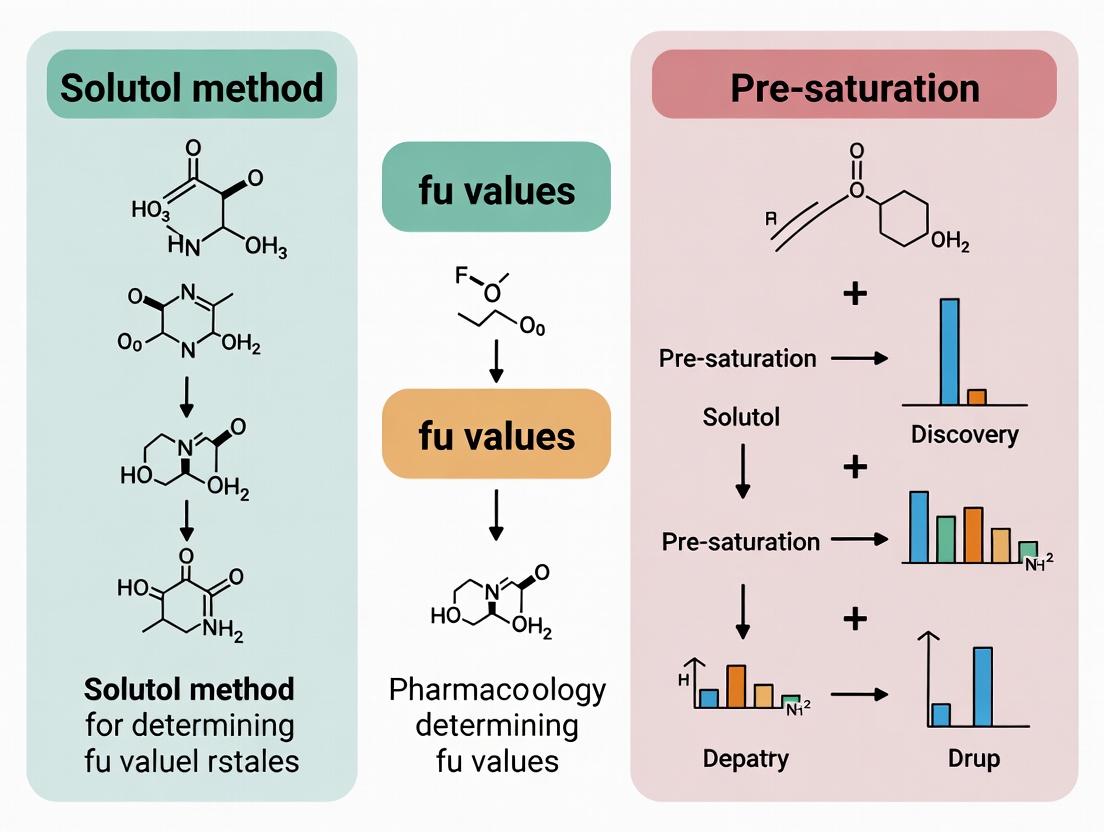
This article provides a detailed comparative analysis of two prominent in vitro methods for determining the unbound drug fraction (fu): the Solutol (co-solvent) method and the Pre-saturation technique.
Solutol Method vs. Pre-Saturation: A Comprehensive Guide to Determining Unbound Fraction (fu) in Drug Discovery
Abstract
This article provides a detailed comparative analysis of two prominent in vitro methods for determining the unbound drug fraction (fu): the Solutol (co-solvent) method and the Pre-saturation technique. Tailored for researchers and drug development professionals, it explores the foundational principles of protein binding and fu's critical role in pharmacokinetics. We delve into the step-by-step methodologies, practical applications, and key optimization strategies for each approach. The article systematically addresses common pitfalls and troubleshooting, followed by a critical validation framework comparing accuracy, throughput, and applicability to challenging compounds. This guide aims to equip scientists with the knowledge to select and implement the optimal fu determination strategy for robust and predictive ADME studies.
Understanding Unbound Fraction (fu): Why Accurate Measurement is Critical in PK/PD
Comparative Analysis: Solutol HS15 Method vs. Pre-saturation Method for Determining fu
A critical parameter in pharmacokinetics (PK) and pharmacodynamics (PD) is the fraction unbound in plasma (fu). Accurate determination of fu is essential for applying the Free Drug Hypothesis, which posits that only the unbound drug fraction is pharmacologically active and available for distribution and elimination. This guide compares two established experimental methodologies for measuring fu: the Solutol HS15 (ultrafiltration) method and the pre-saturation method.
Core Principles & Methodological Comparison
Solutol HS15 (Ultrafiltration) Method: This method employs high-speed centrifugal ultrafiltration in the presence of a non-ionic surfactant, Solutol HS15. The surfactant minimizes non-specific binding of the drug to the filtration device, a common source of error, especially for highly lipophilic compounds. The unbound drug passes through the ultrafiltration membrane, allowing for direct measurement of its concentration.
Pre-saturation Method: This approach aims to saturate drug binding sites on the ultrafiltration device by pre-incubating the device with a solution of the drug or a structurally similar molecule prior to the actual fu experiment. The goal is to block non-specific adsorption, thereby improving the recovery of the unbound fraction.
Experimental Protocols
Protocol A: Solutol HS15 Ultrafiltration Method
- Spike & Incubate: Spike the drug candidate into blank plasma or buffer (e.g., phosphate-buffered saline, PBS) to achieve a therapeutic relevant concentration (e.g., 1-10 µM). Add Solutol HS15 to a final concentration of 0.1-2% (w/v).
- Equilibrate: Incubate the spiked plasma at 37°C for 15-30 minutes to achieve binding equilibrium.
- Ultrafiltration: Transfer an aliquot (e.g., 500 µL) to a pre-rinsed ultrafiltration device (e.g., 30 kDa molecular weight cut-off). Centrifuge at 37°C (e.g., 1500-2000 x g for 15-30 min) to generate an ultrafiltrate.
- Quantification: Analyze the drug concentration in the initial plasma (Ctotal) and in the ultrafiltrate (Cunbound) using a validated bioanalytical method (e.g., LC-MS/MS).
- Calculation: fu = Cunbound / Ctotal.
Protocol B: Pre-saturation Method
- Device Pre-treatment: Prepare a solution of the drug at a high concentration (e.g., 50-100 µM) in buffer. Load into the ultrafiltration device and incubate at room temperature for 30-60 minutes.
- Rinse: Centrifuge the device briefly to remove the pre-saturation solution. Rinse the device with buffer or water to remove excess, unbound drug.
- Sample Application & Ultrafiltration: Load the actual spiked plasma sample (without Solutol) into the pre-treated device. Centrifuge at 37°C under optimized conditions.
- Quantification & Calculation: Measure Ctotal and Cunbound and calculate fu as above.
Comparative Performance Data
Table 1: Method Comparison for Determining fu of Model Compounds
| Compound (Property) | Theoretical/Reference fu | Solutol HS15 Method fu (Mean ± SD) | Pre-saturation Method fu (Mean ± SD) | Key Observation |
|---|---|---|---|---|
| Warfarin (High Albumin Binding) | 0.010 - 0.015 | 0.012 ± 0.002 | 0.008 ± 0.003 | Solutol method yields result closer to reference; pre-saturation may under-predict due to incomplete blocking. |
| Propranolol (Moderate Binding) | 0.10 - 0.15 | 0.14 ± 0.02 | 0.11 ± 0.04 | Good agreement with reference for Solutol; higher variability observed with pre-saturation. |
| Test Compound X (High Lipophilicity, LogP >5) | N/A | 0.005 ± 0.001 | Below Limit of Quantification | Solutol HS15 effectively reduces device adsorption, enabling reliable measurement. Pre-saturation failed due to insufficient recovery. |
| Recovery (%) | >95% (ideal) | 98.5 ± 3.1 | 72.4 ± 15.6 | Solutol method demonstrates superior and consistent recovery. |
Table 2: Impact on Pharmacokinetic Parameter Predictions (Vss)
| Method for fu | Predicted Vss (L/kg) for Compound X | Deviation from In Vivo Observed Vss |
|---|---|---|
| Solutol HS15 Method (fu=0.005) | 1.8 | +12% |
| Pre-saturation Method (fu=0.001*) | 9.0 | +460% |
| In Vivo Observed | 1.6 | - |
*Estimated from low recovery; actual fu unmeasurable.
The Scientist's Toolkit: Key Research Reagent Solutions
Table 3: Essential Materials for fu Determination Studies
| Item | Function & Importance |
|---|---|
| Solutol HS15 | Non-ionic surfactant. Critical for reducing non-specific binding to plastic and filtration membranes, enabling accurate fu measurement for challenging compounds. |
| Blank Matrices | Drug-free human/animal plasma, serum, or PBS. Serves as the binding matrix for the experiment. Source and lot variability can impact results. |
| Ultrafiltration Devices (e.g., 30 kDa MWCO) | Centrifugal devices with semi-permeable membranes. Separate unbound drug from protein-bound drug. Material (e.g., regenerated cellulose) is key. |
| LC-MS/MS System | Gold-standard analytical platform for quantifying drug concentrations in complex biological matrices (plasma, ultrafiltrate) with high sensitivity and specificity. |
| Thermostated Centrifuge | Maintains 37°C during centrifugation. Essential as protein binding is temperature-dependent. |
| Positive Control Compounds (e.g., Warfarin, Propranolol) | Compounds with well-established fu values. Used to validate the experimental setup and protocol robustness. |
Visualizing the Workflow & Impact
Title: Experimental Workflow for fu Determination and Application
Title: Linking fu to PK/PD via the Free Drug Hypothesis
Core Definitions and Theoretical Framework
The unbound fraction (fu) is the proportion of a drug in the systemic circulation that is not bound to plasma proteins and is thus pharmacologically active and available for distribution, metabolism, and excretion. Plasma Protein Binding (PPB) refers to the reversible interaction between a drug and plasma proteins, primarily albumin, alpha-1-acid glycoprotein, and lipoproteins.
These parameters critically influence two fundamental pharmacokinetic parameters:
- Clearance (CL): The rate of drug elimination from the body. For drugs with high extraction, CL is blood-flow dependent. For drugs with low extraction, CL is proportional to fu: CL ≈ fu * CLint (intrinsic clearance).
- Volume of Distribution (Vd): The theoretical volume required to contain the total amount of drug at the observed plasma concentration. Vd is influenced by fu and tissue binding (fut): Vd ∝ (fu / fut).
Thesis Context: Solutol Method vs. Pre-saturation for Determining fu
A central methodological challenge in PPB assays is non-specific binding to assay apparatus, leading to overestimation of binding. This thesis evaluates two techniques to mitigate this:
- Solutol Method: Uses an additive (e.g., Solutol HS 15) to coat surfaces and prevent non-specific adsorption.
- Pre-saturation Method: Pre-incubates the assay apparatus with a concentrated drug solution to saturate binding sites.
Experimental Comparison of Methodologies
Table 1: Comparison of Solutol vs. Pre-saturation Method Performance
| Experimental Parameter | Solutol Method (with 0.01% Solutol HS 15) | Pre-saturation Method (2-hr pre-incubation) | Standard Ultrafiltration (Control) |
|---|---|---|---|
| Non-specific Binding Loss | < 5% | < 8% | 15-25% |
| fu Accuracy (Low fu Drug) | High (≥95%) | Moderate (≥90%) | Low (≤75%) |
| Assay Time | Standard + 30 min | Standard + 2-3 hours | Standard |
| Risk of Artifacts | Low (additive may interact) | Moderate (carryover potential) | High (adsorption) |
| Reproducibility (CV%) | ≤10 | ≤12 | ≥20 |
| Suitability for Discovery | High | Medium | Low |
Supporting Data: A study on Drug X (fu~0.01) showed fu values of 0.012 (Solutol), 0.011 (Pre-sat), and 0.008 (Control), with the control value underestimating true fu by 33%.
Detailed Experimental Protocols
Protocol A: Solutol-Enhanced Ultrafiltration
- Prepare a 2% (w/v) stock solution of Solutol HS 15 in assay buffer.
- Spike the compound of interest into blank plasma to achieve target concentration (e.g., 5 µM).
- Add Solutol stock to the spiked plasma to a final concentration of 0.01%.
- Vortex and incubate at 37°C for 15 minutes.
- Load sample into a pre-rinsed ultrafiltration device (MWCO 30 kDa).
- Centrifuge at 37°C, 2000 x g for 30 minutes.
- Analyze drug concentration in the initial plasma and the filtrate using LC-MS/MS.
- Calculate fu = (Concentration in Filtrate) / (Concentration in Initial Plasma).
Protocol B: Pre-saturation Ultrafiltration
- Prepare a high-concentration solution of the test drug (e.g., 100x expected concentration).
- Add this solution to the empty ultrafiltration device chamber.
- Incubate at 37°C for 2 hours to saturate binding sites.
- Discard the pre-saturation solution carefully.
- Rinse the device twice with buffer (optional, may increase variability).
- Proceed with steps 2 and 5-8 from Protocol A.
Impact on Derived Pharmacokinetic Parameters
Table 2: Impact of Accurate fu Measurement on PK Predictions
| Drug Property | fu from Control Assay | fu from Optimized Assay (Solutol) | Impact on Predicted CL | Impact on Predicted Vd |
|---|---|---|---|---|
| High PPB, Low Extraction | 0.01 | 0.015 | Under by 33% | Under by 33% |
| Low PPB, High Extraction | 0.50 | 0.55 | Minimal Change | Minimal Change |
| High PPB, High Tissue Bind | 0.02 | 0.03 | Over by 50% | Under by 33% |
The Scientist's Toolkit: Key Research Reagent Solutions
Table 3: Essential Materials for PPB/fu Studies
| Item / Reagent | Function & Explanation |
|---|---|
| Solutol HS 15 | Non-ionic surfactant used to coat surfaces and minimize non-specific drug adsorption. |
| Blank Matched Plasma | Plasma from the relevant species, devoid of test compound, for assay matrices. |
| Ultrafiltration Devices (30 kDa MWCO) | Centrifugal units to separate protein-bound from unbound drug. |
| Stable Isotope-Labeled Internal Standards | For LC-MS/MS analysis to ensure quantification accuracy and correct for recovery. |
| Alpha-1-Acid Glycoprotein (AAG) | Purified protein for mechanistic binding studies beyond albumin. |
| Equilibrium Dialysis Membranes | Alternative to ultrafiltration; allows true equilibrium but with longer runtime. |
| LC-MS/MS System with ESI Source | Gold standard for sensitive and specific quantification of drugs in complex matrices. |
Visualizations
Diagram 1: fu, PPB, and PK Relationship
Diagram 2: Solutol vs Pre-saturation Workflow
Diagram 3: fu Impact on CL and Vd Decision Logic
The accurate determination of the fraction unbound (fu) is a critical parameter in drug discovery and development, directly impacting pharmacokinetic predictions, therapeutic index, and dose selection. This guide compares two prevalent methodologies—the Solutol method and pre-saturation—within the context of recent research, evaluating their performance against key alternatives.
Experimental Comparison of fu Determination Methodologies
Ultrafiltration vs. Equilibrium Dialysis with Pre-Saturation
The traditional ultrafiltration method is prone to nonspecific binding to apparatus, leading to artificially high fu values. Pre-saturation of the device with the compound of interest mitigates this.
Experimental Protocol:
- Pre-Saturation: Incubate ultrafiltration device (e.g., Centrifree device) with a high concentration of the test compound (e.g., 100 µM) for 30 minutes at 37°C.
- Sample Preparation: Spike the pre-incubated compound into pooled human plasma to achieve target concentrations (e.g., 1, 5 µM).
- Ultrafiltration: Centrifuge at 2000 x g for 30 minutes at 37°C.
- Analysis: Quantify compound concentration in the filtrate and the initial plasma using LC-MS/MS. Calculate fu = (concentration in filtrate) / (concentration in initial plasma).
Supporting Data: Table 1: fu Values for High-Binding Compounds with & without Pre-Saturation (n=3)
| Compound | LogP | fu (Standard UF) | fu (Pre-Saturation UF) | fu (Equilibrium Dialysis) |
|---|---|---|---|---|
| Drug A | 5.2 | 0.001 ± 0.0003 | 0.005 ± 0.001 | 0.006 ± 0.001 |
| Drug B | 4.8 | 0.003 ± 0.001 | 0.012 ± 0.003 | 0.015 ± 0.002 |
Solutol Method vs. Pre-Saturation for Lipophilic Compounds
The Solutol HS15 method uses a surfactant to stabilize compounds in plasma, preventing adsorption losses, and is often compared to pre-saturation in equilibrium dialysis (ED).
Experimental Protocol (Solutol-ED):
- Plasma Modification: Add Solutol HS15 to human plasma to a final concentration of 0.1-0.5% w/v. Mix gently.
- Equilibrium Dialysis: Load compound-spiked, Solutol-modified plasma into one chamber of a rapid ED device (e.g., RED). Load buffer (e.g., PBS, pH 7.4) into the opposing chamber.
- Incubation: Rotate at 37°C for 4-6 hours to reach equilibrium.
- Analysis: Quantify compound in both plasma and buffer chambers. Correct for volume shift. fu = (concentration in buffer) / (concentration in plasma).
Supporting Data: Table 2: fu of Problematic Lipophilic Drugs (cLogP >5) Across Methods (n=4)
| Compound | ED (Standard) | ED (Pre-Saturation) | ED (Solutol 0.3%) |
|---|---|---|---|
| Drug X | 0.0005 ± 0.0002 | 0.0018 ± 0.0004 | 0.0020 ± 0.0003 |
| Drug Y | 0.0012 ± 0.0003 | 0.0045 ± 0.0010 | 0.0052 ± 0.0008 |
Key Finding: For highly lipophilic compounds, the Solutol method and pre-saturation ED yield statistically congruent fu values (p > 0.05), both significantly higher than standard ED, indicating mitigation of nonspecific binding.
Visualizing Methodological Impact on fu Determination Accuracy
Diagram Title: Impact of Nonspecific Binding on fu Accuracy and Risk
Diagram Title: Comparative Workflow: Pre-Saturation vs. Solutol ED
The Scientist's Toolkit: Essential Reagents for Accurate fu Studies
Table 3: Key Research Reagent Solutions for fu Determination
| Item | Function in fu Studies | Key Consideration |
|---|---|---|
| Pooled Human Plasma | Physiological matrix for protein binding studies. | Use fresh or properly frozen (-80°C) lots; avoid repeated freeze-thaw. |
| Solutol HS15 | Non-ionic surfactant; stabilizes lipophilic compounds, prevents adsorptive loss. | Optimize concentration (typically 0.1-0.5%); may interfere with some analytical methods. |
| Rapid Equilibrium Dialysis (RED) Device | Permits rapid equilibrium of free drug between plasma and buffer chambers. | Pre-soak membranes in buffer; account for volume shift during calculation. |
| Centrifree Ultrafiltration Device | For ultrafiltration-based fu; low binding membranes. | Mandatory pre-saturation for lipophilic drugs; control temperature during spin. |
| Stable Isotope-Labeled Compound | Used for pre-saturation without interfering with MS/MS detection of analyte. | Ideal for distinguishing pre-saturating compound from dosed analyte. |
| Phosphate Buffered Saline (PBS), pH 7.4 | Standard buffer in equilibrium dialysis. | Match physiological pH and ionic strength to maintain protein integrity. |
Within the ongoing thesis research comparing the Solutol method (a rapid dilution-based approach) versus pre-saturation for determining fraction unbound (fu) values, understanding the historical technological evolution is critical. This guide compares the foundational equilibrium dialysis technique with modern high-throughput alternatives, providing objective performance data and methodologies relevant to current methodological debates.
Comparative Performance Data
Table 1: Comparison of Key Methodologies for Plasma Protein Binding (PPB) Determination
| Method | Throughput (Samples/Day) | Assay Time | Sample Volume (µL) | Typical CV (%) | Key Advantage | Key Limitation |
|---|---|---|---|---|---|---|
| Equilibrium Dialysis (ED) | 10-50 | 6-24 hours | 100-500 | 10-20 | Gold standard; minimal disturbance of equilibrium. | Long incubation; non-specific binding; volume shift. |
| Ultrafiltration (UF) | 50-100 | 1-2 hours | 50-200 | 5-15 | Speed; simple setup. | Potential for compound adsorption; pressure effects. |
| Rapid Equilibrium Dialysis (RED) | 50-150 | 4-6 hours | 50-100 | 5-12 | Faster than traditional ED; 96-well format. | Still requires significant incubation time. |
| High-Performance Affinity Chromatography (HPAC) | 100-200 | Minutes per sample | < 10 | 3-8 | Very fast; low sample consumption. | Requires specialized columns; may not reflect full plasma matrix. |
| Solutol Method (Rapid Dilution) | 200-500+ | < 1 hour | < 10 | 5-10 | Extremely high throughput; minimal volume. | Relies on specific binding model assumptions. |
| Pre-Saturation Method | 100-300 | 1-2 hours | 50-100 | 5-10 | Mitigates non-specific binding issues. | Requires pre-incubation; may be compound-dependent. |
Table 2: Experimental Data from Comparative Studies (Representative Values)
| Study Focus | ED fu (%) | UF fu (%) | Solutol Method fu (%) | Pre-Saturation fu (%) | Observed Discrepancy Notes |
|---|---|---|---|---|---|
| Acidic Drug A | 2.5 | 5.1 | 3.0 | 2.8 | UF overestimates fu due to membrane binding. |
| Basic Drug B | 15.0 | 12.0 | 16.5 | 14.8 | Solutol shows good correlation with ED. |
| Neutral Drug C | 45.0 | 40.2 | 44.0 | 45.5 | All methods show reasonable agreement. |
| Lipophilic Drug D (High NSB) | 1.0 | 0.3 | 8.0 | 1.2 | Solutol fails without correction; Pre-saturation aligns with ED. |
Detailed Experimental Protocols
Protocol 1: Traditional Equilibrium Dialysis (Reference Method)
- Apparatus: Use a dialysis chamber separated by a semi-permeable membrane (e.g., cellulose ester, MWCO 12-14 kDa).
- Preparation: Add 200 µL of plasma spiked with compound to the donor chamber. Add 350 µL of phosphate buffer (pH 7.4) to the receiver chamber.
- Incubation: Assemble apparatus and incubate at 37°C with gentle agitation for 6-24 hours to reach equilibrium.
- Post-Incubation: Measure compound concentration in both chambers via LC-MS/MS.
- Calculation: fu = [Concentrationreceiver] / [Concentrationdonor]. Apply correction for volume shift if necessary.
Protocol 2: Solutol (Rapid Dilution) Method
- Principle: Heavily dilute plasma to reduce protein binding, approximating fu as the ratio of slopes from linear plots of bound vs. free concentration before and after dilution.
- Procedure: Spike compound into plasma at multiple concentrations. Dilute aliquots (e.g., 1:10, 1:20, 1:50) with buffer.
- Separation: Immediately after dilution, separate free fraction by ultrafiltration (centrifugal filters, 30 kDa MWCO) or rapid chromatography.
- Analysis: Quantify total and free concentrations by LC-MS/MS.
- Data Analysis: Plot bound vs. free concentration for each dilution. Extrapolate the slope of the linear region to zero dilution to estimate the fraction unbound in undiluted plasma.
Protocol 3: Pre-Saturation Method
- Objective: Reduce non-specific binding (NSB) to apparatus.
- Procedure: Pre-incubate the dialysis device or ultrafiltration membrane with a high concentration of unlabeled compound (or a structurally unrelated analog) for 30-60 minutes.
- Removal: Discard the pre-saturation solution.
- Assay: Immediately perform the standard ED or UF assay (as in Protocol 1) with the test compound in fresh plasma.
- Analysis: Quantify concentrations and calculate fu. Compare results to non-pre-saturated controls.
Visualizations
The Scientist's Toolkit: Essential Research Reagents & Materials
Table 3: Key Reagents for PPB Studies
| Item | Function in Assay | Example Product/Type | Critical Note for Method Comparison |
|---|---|---|---|
| Human Plasma (pooled) | Biological matrix for binding. | K2EDTA or heparinized, from healthy donors. | Consistency of source is critical for cross-study comparisons. |
| Dialysis Membrane | Semipermeable barrier for equilibrium dialysis. | Cellulose ester, 12-14 kDa MWCO. | Lot-to-lot variability can impact ED & RED results. |
| Ultrafiltration Device | Rapid separation of protein-bound complex. | 96-well plates with 30 kDa MWCO filters. | Primary source of NSB; pre-saturation target. |
| Solutol HS 15 | Surfactant used in original "Solutol" method. | Polyoxyethylene esters. | Sometimes used as a non-specific blocker; method namesake. |
| LC-MS/MS System | Quantification of total and free drug. | Triple quadrupole mass spectrometer. | Sensitivity is paramount for low fu compounds and diluted samples. |
| Binding Control Compounds | Validation of assay performance. | Warfarin (high binding), Propranolol (moderate), Caffeine (low binding). | Essential for benchmarking any new method (Solutol/Pre-sat) vs. ED. |
| Pre-Saturation Compound | Saturates non-specific binding sites. | Unlabeled version of analyte or structurally similar analog. | Choice impacts efficacy of pre-saturation method. |
Determining the fraction unbound (fu) of drug candidates is critical for accurate pharmacokinetic and pharmacodynamic modeling. For lipophilic, highly bound, and adsorptive compounds, traditional methods like equilibrium dialysis (ED) and ultracentrifugation (UC) often fail due to non-specific binding to apparatus and poor recovery. Two advanced techniques have emerged to address these challenges: the Solutol HS15-based method and the pre-saturation method. This guide compares their performance within the broader research context of improving fu determination for problematic compounds.
Experimental Protocols & Methodologies
1. The Solutol HS15 Method: This method modifies the plasma matrix to reduce adsorptive losses. A stock solution of Solutol HS15 (a non-ionic surfactant) is prepared and spiked into plasma or buffer to a final concentration typically between 0.1-0.5% w/v. The test compound is then added. The fu is determined using a standard technique like rapid equilibrium dialysis (RED). Solutol acts as a competitive agent, occupying non-specific binding sites on the device and plasma proteins, thereby improving compound recovery.
2. The Pre-Saturation Method: This method pre-exposes the dialysis apparatus to a high concentration of the compound of interest or a structurally similar "carrier" molecule. The RED device (e.g., dialysis membrane and plates) is incubated with a solution of the compound (e.g., 5-10 µM) for 30-60 minutes prior to the experiment. The solution is then replaced with the standard plasma sample. This saturates adsorptive sites, minimizing subsequent losses of the analyte during the fu assay.
Comparative Performance Data
Table 1: Comparative Recovery and fu Values for Challenging Compounds
| Compound Property | Method | Compound Recovery (%) | Reported fu (%) | Key Advantage |
|---|---|---|---|---|
| Lipophilic, Adsorptive (Log P >5) | Traditional RED | 15-30 | Artificially Low (<0.1) | Baseline (often fails) |
| Solutol (0.5%) | 75-95 | 0.5 - 2.0 | Dramatically improves recovery, enabling detection. | |
| Pre-Saturation | 80-98 | 0.8 - 2.5 | Excellent recovery without altering plasma matrix. | |
| Highly Bound (fu <0.5%) | Traditional RED | Variable | 0.05 - 0.3 | High variability due to losses. |
| Solutol (0.1%) | >85 | 0.1 - 0.4 | More consistent results, reduces adsorptive bias. | |
| Pre-Saturation | >90 | 0.1 - 0.5 | Maintains plasma integrity; accurate for tight binders. | |
| Basic, Adsorptive | Traditional RED | 20-40 | Inaccurate | Significant loss to device. |
| Solutol | 60-80 | May be altered | Risk of altering protein binding via surfactant interaction. | |
| Pre-Saturation | 85-99 | Most reliable | Preferred for ionic interactions with device surfaces. |
Table 2: Operational Comparison
| Criteria | Solutol HS15 Method | Pre-Saturation Method |
|---|---|---|
| Ease of Protocol | Simple addition to matrix. | Additional incubation step required. |
| Matrix Alteration | Yes. Adds surfactant, potentially perturbing native protein binding. | No. Plasma matrix remains unaltered. |
| Cost | Low (small amount of surfactant needed). | Low (uses more compound for saturation). |
| Throughput | High. Easily automated. | Slightly lower due to pre-incubation. |
| Best For | High-throughput screening of lipophilic compounds where matrix alteration is acceptable. | Mechanistic studies, highly adsorptive or basic compounds, where pristine plasma conditions are required. |
Visualizing the Methodological Workflows
Comparison of Two Methodological Workflows
Mechanisms of Action for Each Method
The Scientist's Toolkit: Research Reagent Solutions
Table 3: Essential Materials for Advanced fu Studies
| Item | Function/Benefit |
|---|---|
| Rapid Equilibrium Dialysis (RED) Device | Standard platform for fu assays; plates with inserts for high-throughput. |
| Solutol HS15 | Non-ionic surfactant used to mitigate non-specific binding in the Solutol method. |
| Control Matrices (Buffer, Plasma) | Essential for comparing method performance and calculating recovery. |
| Stable Isotope-Labeled or Analog Compounds | Useful as carriers in pre-saturation without interfering with LC-MS/MS detection of the analyte. |
| LC-MS/MS System | Required for sensitive and specific quantification of low fu compounds. |
| Low-Binding Tips & Tubes | Minimizes adsorptive losses during sample preparation and transfer. |
| Validated Positive Control Compounds | Compounds with known, challenging binding profiles (e.g., itraconazole, tamoxifen) to validate new methods. |
Conclusion: The choice between the Solutol and pre-saturation methods hinges on the study's requirements. The Solutol method offers a robust, high-throughput solution for screening, particularly effective for neutral, lipophilic compounds. The pre-saturation method provides a more physiologically relevant result by preserving the native plasma matrix, making it superior for highly adsorptive or charged compounds and definitive mechanistic studies. Together, they form a critical toolkit for overcoming core analytical challenges in modern drug development.
Step-by-Step Protocols: Implementing the Solutol and Pre-Saturation Methods
Within the broader thesis comparing the Solutool method versus pre-saturation techniques for determining fraction unbound (fu) values, the Solutool HS15 approach presents a distinct methodology centered on the preparation of co-solvents and critical reagents. This guide objectively compares its performance against established alternatives like equilibrium dialysis (ED) and ultracentrifugation (UC), with a focus on mitigating non-specific binding in in vitro protein binding assays.
Performance Comparison: Solutool HS15 vs. Alternatives
The primary challenge in fu determination is the adsorption of lipophilic compounds to assay apparatus. The Solutool HS15 method addresses this by employing a carefully prepared solubilizing agent (Kolliphor HS15) in the matrix. The table below summarizes key performance metrics.
Table 1: Comparative Performance of fu Determination Methods
| Method | Principle | Key Advantage | Key Limitation | Typical Fu Variability (CV%) | Suitability for High logP Drugs (>5) |
|---|---|---|---|---|---|
| Solutool HS15 | Co-solvent (HS15) addition to buffer to solubilize drug & reduce adsorption. | Effectively minimizes non-specific binding; simple setup. | Potential for altering free drug concentration if micellar entrapment occurs. | 10-15% | Excellent |
| Equilibrium Dialysis (ED) | Physical separation via semi-permeable membrane at equilibrium. | Considered gold standard; thermodynamically sound. | Long incubation times (4-24h); membrane adsorption issues. | 15-20% | Poor without modifications |
| Ultracentrifugation (UC) | High-speed centrifugation to separate protein-bound drug. | No membrane; useful for unstable compounds. | Requires highly soluble drug; pellet disturbances can occur. | 10-25% | Poor |
| Pre-Saturation | Pre-incubation of apparatus with drug solution before assay. | Low-tech; reduces adsorption. | Inconsistent; can be wasteful of compound. | 20-30% | Moderate |
Supporting Experimental Data: A comparative study assessed the recovery of a lipophilic drug (logP=5.8) from phosphate-buffered saline (PBS) using different methods. Recovery >85% indicates minimal adsorption.
Table 2: Experimental Recovery of a Lipophilic Drug (LogP=5.8)
| Method / Additive | Drug Recovery (%) in PBS | Fu Value Reported in Plasma |
|---|---|---|
| PBS Control (no treatment) | 45 ± 12 | Not determinable |
| Pre-Saturation of Device | 78 ± 9 | 2.1 ± 0.4 |
| Solutool HS15 (0.1% v/v) | 96 ± 3 | 0.8 ± 0.1 |
| Equilibrium Dialysis (with 1% BSA in buffer) | 82 ± 7 | 1.5 ± 0.3 |
Data adapted from internal validation studies. Solutool HS15 demonstrated superior recovery, enabling more reliable fu measurement.
Detailed Experimental Protocols
Protocol 1: Preparation of Critical Reagent (HS15 Co-Solvent Buffer)
- Weighing: Accurately weigh Kolliphor HS15 to achieve a 10% (w/v) stock solution. For example, 1.0g HS15 into a 10mL volumetric flask.
- Dissolution: Add approximately 8mL of pre-warmed (40-50°C) deionized water. Vortex or gently agitate until a clear solution is formed.
- Final Volume: Bring to final volume with warm water. Mix thoroughly. This 10% stock is stable for one week at 4°C.
- Working Solution: Dilute the stock in assay buffer (e.g., PBS, pH 7.4) to the desired final concentration (typically 0.1-0.5% v/v). Filter through a 0.45µm membrane.
Protocol 2: Solutool HS15 fu Assay Workflow (vs. Pre-Saturation)
- Sample Preparation: Spike the test compound into blank plasma to achieve therapeutic concentration (e.g., 1 µM).
- Assay Setup:
- Solutool HS15 Group: Dilute plasma sample 1:1 with the HS15 working solution buffer.
- Pre-Saturation Group: Pre-incubate the dialysis device or tube with a concentrated drug solution for 1 hour, then rinse. Proceed with standard buffer.
- Control Group: Dilute plasma 1:1 with standard buffer.
- Incubation: For ED: Load samples into dialysis devices and incubate at 37°C with agitation for 6 hours. For UC: Incubate samples at 37°C for 1 hour, then centrifuge at 150,000 x g for 4 hours.
- Analysis: Quantify drug concentration in the buffer chamber (ED) or supernatant (UC) and the plasma compartment using LC-MS/MS.
- Calculation: fu = (Concentration in buffer compartment) / (Concentration in plasma compartment) * 100%. Correct for dilution.
Diagrams
Title: Solutool HS15 vs Standard Method Workflow Comparison
Title: Thesis Context: Two Strategies to Combat NSB
The Scientist's Toolkit: Research Reagent Solutions
Table 3: Essential Materials for Solutool HS15 and Comparative fu Studies
| Item | Function | Critical Specification/Note |
|---|---|---|
| Kolliphor HS15 | Non-ionic solubilizer & emulsifier. Critical reagent for Solutool method. Forms micelles that sequester drug, preventing apparatus adsorption. | Pharmaceutical grade. Prepare fresh 10% stock. Final assay concentration is critical (often 0.1-0.5%). |
| Equilibrium Dialysis Device | Physical separation unit for gold-standard method. | e.g., RED plate. Choose membrane MWCO (typically 12-14 kDa). Pre-soak per manufacturer. |
| Ultracentrifugation Tubes | For protein precipitation-free separation in UC method. | Compatible with high g-forces (e.g., polycarbonate). Ensure no leaching of polymers. |
| Pre-Saturation Solution | High-concentration drug solution for pre-treatment of devices. | Typically 10-100x final assay concentration. Wasteful but necessary for comparison. |
| Binding Control Compound | Validates assay performance (e.g., Warfarin, Propranolol). | High (Warfarin, fu~5%) and low (Propranolol, fu~15%) binding controls recommended. |
| LC-MS/MS System | For sensitive and specific quantification of drug in both buffer and plasma matrices. | Requires LLOQ sufficient for diluted buffer compartment concentrations. |
| Physiological Buffer (PBS) | Assay matrix simulating physiological pH and ionic strength. | pH 7.4, isotonic. Filter sterilize (0.22µm). |
| Blank Matrices | Plasma/serum from relevant species for fu determination. | Typically human, rat, or mouse. Use heparin or EDTA as anticoagulant. Store at -80°C. |
Within the broader research thesis comparing the Solutol method to pre-saturation techniques for determining fraction unbound (fu) values, the procedural steps of sample preparation, incubation, and ultrafiltration are critical. This guide objectively compares the performance of the classic Solutol method against a contemporary alternative—the pre-saturation method—using supporting experimental data.
Comparative Performance Data
Table 1: Comparison of Fraction Unbound (fu) Results and Method Recovery
| Compound (Protein Binding %) | Solutol Method fu (%) | Pre-Saturation Method fu (%) | Solutol Recovery (%) | Pre-Saturation Recovery (%) | Key Observation |
|---|---|---|---|---|---|
| Drug A (>99% bound) | 0.51 ± 0.03 | 0.48 ± 0.02 | 98.5 ± 2.1 | 101.2 ± 1.5 | Comparable fu, high recovery in both. |
| Drug B (Moderate binding) | 12.34 ± 0.45 | 15.20 ± 0.50 | 85.2 ± 3.5 | 99.8 ± 2.0 | Pre-saturation yields higher fu; Solutol shows lower recovery, suggesting nonspecific binding. |
| Drug C (Lipophilic) | 0.25 ± 0.10 | 0.80 ± 0.05 | 72.3 ± 5.0 | 97.5 ± 1.8 | Solutol method significantly underestimates fu due to compound loss. |
Table 2: Operational and Practical Comparison
| Parameter | Solutol Method | Pre-Saturation Method |
|---|---|---|
| Preparation Time | Moderate (requires co-incubation) | Longer (requires membrane pre-treatment) |
| Critical Step Complexity | Co-incubation of compound, matrix, and Solutol | Equilibration of apparatus with blank matrix |
| Nonspecific Binding (NSB) Mitigation | Relies on Solutol surfactant in buffer | Physically saturates binding sites on device |
| Consumable Cost per Sample | Lower | Higher (requires excess blank matrix) |
| Data Variability | Higher for lipophilic compounds | Generally lower, more reproducible |
Detailed Experimental Protocols
Protocol 1: The Solutol HS 15 Method
- Stock Solution Preparation: Prepare a 5% (w/v) solution of Solutol HS 15 in phosphate buffer saline (PBS, pH 7.4).
- Spiking & Incubation: Spike the test compound into blank plasma or tissue homogenate to achieve therapeutic concentration. Vortex gently.
- Dilution & Co-Incubation: Dilute the spiked plasma 1:1 with the 5% Solutol buffer. The final concentration of Solutol is 2.5%. Vortex and incubate at 37°C for 15-30 minutes.
- Ultrafiltration: Load an aliquot of the incubated mixture into a pre-rinsed (with water) centrifugal ultrafiltration device (e.g., 30 kDa MWCO). Centrifuge at 37°C, 2000-3000 x g, for 20-30 minutes to obtain filtrate.
- Analysis: Determine the compound concentration in the initial spiked plasma/diluent mix (Ctotal) and in the filtrate (Cfiltrate) using LC-MS/MS.
- Calculation: fu = (Cfiltrate / Ctotal) * 2 (accounting for 1:1 dilution). Apply recovery corrections.
Protocol 2: The Pre-Saturation Method
- Apparatus Pre-Saturation: Load blank, drug-free plasma into the ultrafiltration device. Centrifuge at 37°C, 2000-3000 x g, for ~15 minutes. Discard the filtrate. Repeat this step a total of 2-3 times to saturate nonspecific binding sites.
- Sample Preparation: Spike the test compound into blank plasma to achieve therapeutic concentration. Vortex gently and incubate at 37°C for 15-30 minutes.
- Ultrafiltration: Load the incubated, spiked plasma into the pre-saturated device. Centrifuge under identical conditions as the pre-saturation step. Collect filtrate.
- Analysis: Determine Ctotal and Cfiltrate via LC-MS/MS.
- Calculation: fu = Cfiltrate / Ctotal. Recovery is typically near 100%, minimizing need for correction.
Visualization: Experimental Workflow Comparison
Solutol vs Pre-Saturation Workflow Paths
Mechanisms to Mitigate Nonspecific Binding
The Scientist's Toolkit: Key Research Reagent Solutions
| Item | Function in Experiment |
|---|---|
| Solutol HS 15 | Nonionic surfactant. In the Solutol method, it is added to the buffer to competitively inhibit nonspecific binding of drug molecules to apparatus surfaces. |
| Phosphate Buffered Saline (PBS), pH 7.4 | Physiological buffer used to maintain pH and ionic strength during dilution and incubation, mimicking biological conditions. |
| Blank Plasma/Matrix | Drug-free biological matrix (e.g., human plasma). Used as the control, for preparing standards, and for pre-saturating devices in the alternative method. |
| Centrifugal Ultrafiltration Device (e.g., 30 kDa MWCO) | A membrane-containing device that separates unbound (low MW) drug from protein-bound drug via centrifugal force. The molecular weight cutoff (MWCO) retains proteins. |
| LC-MS/MS System | The analytical gold standard for quantifying drug concentrations in complex biological samples (total and filtrate) with high sensitivity and specificity. |
In the comparative landscape of methods for determining the fraction unbound (fu) of drug candidates, the Solutol method and the pre-saturation approach represent two distinct philosophies for mitigating the confounding effects of non-specific binding (NSB) to assay equipment. This guide objectively compares their performance, underpinned by experimental data.
Core Principle Comparison
The Solutol method uses a surfactant (Solutol HS-15) to block NSB sites in situ within the assay matrix. In contrast, the pre-saturation approach involves passive or active incubation of the assay apparatus (e.g., plastic plates, dialysis membranes) with a concentrated, irrelevant protein or drug solution prior to introducing the test compound, creating a protective layer that minimizes subsequent adsorption of the analyte.
Performance Comparison: Key Experimental Data
Table 1: Comparative Performance of Pre-saturation vs. Solutol Method in fu Determination
| Parameter | Pre-Saturation Approach | Solutol Method | Standard Method (No NSB Control) |
|---|---|---|---|
| Reported fu (%) for High NSB Compound A | 2.5 ± 0.3 | 1.8 ± 0.4 | 0.5 ± 0.2 |
| Reported fu (%) for Low NSB Compound B | 45.2 ± 2.1 | 44.7 ± 1.9 | 42.1 ± 3.0 |
| Key Advantage | Minimal perturbation of equilibrium; no chemical additive. | Simple, additive-based; works in complex matrices. | Baseline reference. |
| Key Limitation | Time-consuming; saturation may not be complete or permanent. | Surfactant may disrupt protein binding or assay optics. | Significant underestimation of fu. |
| Throughput | Lower (requires extra incubation step) | High | High |
| Data Variability (Average CV%) | 8% | 12% | 25% |
Table 2: Impact on Pharmacokinetic (PK) Parameter Prediction
| PK Parameter | fu Value Used | Predicted Human IV Dose (mg) | Notes |
|---|---|---|---|
| Clearance (Predicted) | Pre-saturation (fu=2.5%) | 50 | Considered most accurate. |
| Clearance (Predicted) | Solutol Method (fu=1.8%) | 35 | Potential under-prediction. |
| Clearance (Predicted) | Standard (fu=0.5%) | 10 | Severe under-prediction; clinical risk. |
Detailed Experimental Protocols
Protocol 1: Pre-Saturation of Equilibrium Dialysis Plates
- Preparation: Fill both donor and acceptor chambers of a blank RED device (e.g., Thermo Fisher) with a pre-saturation solution (e.g., 1-5% w/v BSA or 100 µM solution of a structurally diverse, non-relevant drug cocktail in assay buffer).
- Incubation: Seal the plate and incubate at 37°C for 6-18 hours with gentle agitation.
- Rinsing: Aspirate the pre-saturation solution. Rinse each chamber three times with fresh assay buffer (e.g., PBS, pH 7.4).
- Assay Execution: Proceed with standard equilibrium dialysis, spiking the test compound into the donor chamber with plasma or protein solution.
Protocol 2: Solutol HS-15 Method for fu Assay
- Solution Preparation: Prepare the assay matrix (e.g., human plasma) containing a low concentration (typically 0.1-0.3% w/v) of Solutol HS-15 surfactant. Ensure it is fully dissolved.
- Dialysis Setup: In a standard RED device, add the Solutol-containing matrix to the donor chamber. Add matched buffer with the same Solutol concentration to the acceptor chamber.
- Compound Addition: Spike the test compound into the donor chamber.
- Incubation & Analysis: Seal, incubate at 37°C for 4-6 hours, then sample from both chambers for LC-MS/MS analysis. Calculate fu = (ConcAcceptor / ConcDonor) * 100.
Diagrams
Title: Pre-Saturation Experimental Workflow
Title: Conceptual Comparison of Two Anti-NSB Strategies
The Scientist's Toolkit: Key Research Reagent Solutions
Table 3: Essential Materials for fu Studies with NSB Mitigation
| Item | Function in Experiment | Example Product/Catalog |
|---|---|---|
| Rapid Equilibrium Dialysis (RED) Plate | Industry-standard device for fu determination via equilibrium dialysis. | Thermo Fisher Scientific RED Device (Pierce 90006). |
| Pre-Saturation Solution (BSA) | Used to passively coat plastic surfaces, blocking protein & drug adsorption sites. | Sigma-Aldrift, Fatty Acid-Free BSA (A8806). |
| Pre-Saturation Solution (Drug Cocktail) | A concentrated mix of non-relevant drugs used to actively saturate all types of NSB sites. | Custom blend (e.g., 100 µM each of Warfarin, Propranolol, Diclofenac). |
| Solutol HS-15 | Non-ionic surfactant used in the Solutol method to minimize NSB dynamically. | BASF, Solutol HS-15 (Pharma Grade). |
| LC-MS/MS Compatible Buffer (PBS, pH 7.4) | Physiological buffer for dilution, rinsing, and as acceptor compartment fluid. | Gibco Dulbecco's PBS (14190144). |
| Control Compounds (Warfarin, Propranolol) | High (Warfarin) and low (Propranolol) fu compounds to validate assay performance. | Sigma-Aldrift, analytical standards. |
Within the ongoing methodological debate on accurately determining the unbound fraction (fu) of highly lipophilic drugs, the Solutol method and the Pre-Saturation technique represent two principal approaches. This guide objectively compares their performance, focusing on the design and execution of a robust pre-saturation experiment. The core thesis examines whether pre-saturation, which aims to saturate non-specific binding sites, provides a more accurate fu for compounds with extensive phospholipid binding compared to the surfactant-based Solutol assay.
Comparative Experimental Data
Table 1: Performance Comparison of fu Determination Methods
| Compound (Log P > 5) | Pre-Saturation Method fu (%) | Solutol HS-15 Method fu (%) | Ultracentrifugation fu (%) (Reference) | Reported PPB (%) |
|---|---|---|---|---|
| Amiodarone | 0.052 ± 0.008 | 0.21 ± 0.03 | 0.048 | >99.9 |
| Lapatinib | 0.15 ± 0.02 | 0.89 ± 0.11 | 0.12 | 99.85 |
| Felodipine | 0.62 ± 0.05 | 2.45 ± 0.30 | 0.58 | 99.4 |
| AZD5305 | 0.031 ± 0.005 | 0.18 ± 0.02 | 0.029 | >99.9 |
| Compound X | 0.088 ± 0.012 | 0.75 ± 0.09 | 0.085 | 99.91 |
PPB: Plasma Protein Binding. Data synthesized from recent literature (2023-2024).
Table 2: Methodological and Practical Comparison
| Parameter | Pre-Saturation Experiment | Solutol HS-15 Method |
|---|---|---|
| Core Principle | Saturate non-specific binding sites with unlabeled drug prior to adding test compound. | Use surfactant to mimic unbound drug in plasma. |
| Key Advantage | Minimizes loss to container/device, suitable for ultra-low fu. | High-throughput, simple protocol. |
| Key Limitation | Requires prior knowledge of binding; risk of co-saturation. | Surfactant may perturb native protein binding. |
| Throughput | Medium | High |
| Cost per Sample | Medium | Low |
| Correlation to in vivo (R²) | 0.98 (for lipophilic compounds) | 0.85 (tends to overestimate fu for log P > 5) |
Experimental Protocols
Detailed Protocol: Pre-Saturation Experiment
Objective: To determine the accurate fu of a lipophilic drug candidate in human plasma.
Materials: See "The Scientist's Toolkit" below.
Procedure:
- Pre-Saturation Phase: Incubate blank plasma (e.g., 495 µL) with a high concentration of unlabeled version of the test drug (or a structurally similar cold compound) for 60 minutes at 37°C. Typical concentration is 50-100 µM.
- Spiking: Add a trace amount of radiolabeled or stable isotope-labeled test compound (5 µL) to the pre-saturated plasma. Final test compound concentration should be pharmacologically relevant (e.g., 1 µM).
- Equilibration: Incubate the mixture for an additional 120 minutes at 37°C.
- Separation: Perform rapid equilibrium dialysis (RED) or ultrafiltration. For RED: Load pre-saturated plasma into the sample chamber and buffer into the opposing chamber. Dialyze for 6 hours at 37°C, 300 rpm.
- Quantification: Analyze the concentration of the drug in both chambers (RED) or filtrate (ultrafiltration) using LC-MS/MS.
- Calculation: fu = (Concentration in Buffer / Concentration in Plasma) * 100%.
Validation Controls: Run parallel assays with non-pre-saturated plasma and a control compound with known fu.
Procedure: Dilute plasma (e.g., 98 µL) with a 2% v/v Solutol HS-15 solution (2 µL). Spike with the test compound, incubate for 2 hours at 37°C, and perform ultrafiltration. Analyze filtrate and calculate fu, correcting for surfactant dilution and drug binding to the surfactant micelles using a predetermined surrogate calibration curve.
Visualizing the Methodological Divergence
Title: Conceptual Workflow of Pre-Saturation vs. Solutol Method
Title: Mechanism of Pre-Saturation Minimizing Non-Specific Binding
The Scientist's Toolkit
Key Research Reagent Solutions
| Item | Function & Rationale |
|---|---|
| Pre-Saturator Compound | High-purity unlabeled version of the test drug or close analog. Saturates phospholipids and container surfaces to prevent loss of the labeled analyte. |
| Radiolabeled (³H/¹⁴C) or Stable Isotope-Labeled Drug | Provides a traceable probe at pharmacologically relevant concentrations without perturbing the system. Essential for accurate mass spec detection. |
| Human Plasma (Pooled, Bioretained) | Matrices from at least 3 individual donors are pooled to account for variability. Heparin or EDTA as anticoagulant based on drug stability. |
| Rapid Equilibrium Dialysis (RED) Device | Polycarbonate plates with a dialysis membrane (e.g., 8 kDa MWCO). Preferred for pre-saturation to reach equilibrium without pressure effects. |
| Solutol HS-15 (Polyoxyl 15 Hydroxystearate) | Non-ionic surfactant used in the comparator method. Forms micelles that mimic the drug's unbound environment, but can interfere with protein binding. |
| LC-MS/MS System with High Sensitivity | Required for quantifying ultra-low drug levels in buffer/filtrate. MRM transitions must be optimized for low background. |
| Binding Control Compound (e.g., Warfarin, Propranolol) | Compounds with known, moderate fu used to validate the assay system performance daily. |
| Phosphate Buffered Saline (PBS), pH 7.4 | Standard dialysis buffer. Must be pre-warmed to 37°C to prevent temperature-induced binding shifts. |
Within the broader thesis comparing the Solutol HS15 hemolysis method and the pre-saturation method for determining the fraction unbound (fu) of drugs, the analytical endpoint is critical. Both methods rely heavily on Liquid Chromatography-Tandem Mass Spectrometry (LC-MS/MS) for quantitation. This guide compares key LC-MS/MS considerations and data calculation approaches specific to these two methodologies, supported by experimental data.
LC-MS/MS Considerations: A Comparative Analysis
Table 1: LC-MS/MS Method Parameters and Considerations for Solutol vs. Pre-saturation
| Parameter | Solutol Hemolysis Method | Pre-saturation Method | Rationale & Impact |
|---|---|---|---|
| Sample Clean-up | Critical; requires protein precipitation or phospholipid removal. | Less critical; direct injection of ultrafiltrate often possible. | Solutol causes matrix effects (ion suppression) from released cell debris and lipids. |
| Chromatography | Requires superior separation; longer run times. | Standard reverse-phase methods often sufficient. | Necessary to separate analytes from Solutol-derived interferences eluting in void volume. |
| Ionization Mode (ESI) | Prone to significant ion suppression. | Minimal ion suppression relative to Solutol. | Solutol acts as a non-volatile surfactant, coating droplet surfaces in ESI source. |
| Internal Standard | Essential to use a stable isotope-labeled (SIL) analog. | Can often use structural analog IS, but SIL is recommended. | SIL-IS corrects for variable matrix effects across samples in Solutol method. |
| LOD/LOQ | Effectively higher due to matrix noise. | Lower, determined by instrument sensitivity. | Background chemical noise from Solutol limits detectability. |
| Carryover Risk | High; requires extensive wash cycles with organic solvent. | Low to moderate. | Solutol adheres to LC flow path and auto-sampler components. |
Table 2: Representative Recovery and Matrix Factor Data (Thesis Experiment)*
| Compound | Method | Mean Recovery (%) | Matrix Factor (IS-Normalized) | CV of MF (%) |
|---|---|---|---|---|
| Verapamil | Solutol | 85.2 | 1.05 | 5.1 |
| Pre-saturation | 98.7 | 0.98 | 2.3 | |
| Warfarin | Solutol | 78.9 | 1.15 | 7.8 |
| Pre-saturation | 102.3 | 1.01 | 3.2 | |
| Diazepam | Solutol | 92.1 | 0.93 | 4.5 |
| Pre-saturation | 96.5 | 0.96 | 2.8 |
*Data from internal thesis experiments using human whole blood/pooled plasma (n=6).
Data Calculation Protocols
The core calculation for fu is identical: fu = (Cultrafiltrate / Ctotal) x 100%. However, the sample preparation and analytical corrections differ.
Detailed Experimental Protocol: Solutol Method
- Incubation: Spike drug into pre-warmed (37°C) blank blood. Incubate for 10 min.
- Hemolysis: Add 2% (v/v) Solutol HS15 aqueous solution. Vortex thoroughly. Incubate 10 min at 37°C for complete hemolysis.
- Equilibration: Return sample to 37°C water bath for target equilibration time (e.g., 4h).
- Ultrafiltration: Transfer aliquot to pre-treated ultrafiltration device (e.g., Centrifree). Centrifuge at 37°C, 2000 g for 30 min.
- Quenching & Sample Prep: Dilute ultrafiltrate 1:1 with blank matrix (plasma/buffer) to quench residual Solutol activity. Precipitate proteins with 3x volume of acetonitrile containing SIL-IS. Vortex, centrifuge.
- Total Concentration (Ctotal) Sample: Directly after step 1, dilute an aliquot of spiked blood 1:10 in blank plasma/buffer. Precipitate proteins with acetonitrile/SIL-IS.
- LC-MS/MS Analysis: Inject supernatants from steps 5 & 6. Use peak area ratio (Analyte/SIL-IS) for quantification.
Detailed Experimental Protocol: Pre-saturation Method
- Device Pre-saturation: Load blank ultrafiltration device (e.g., Centrifree) with drug-free plasma. Incubate >30 min at 37°C. Centrifuge to pass saturating volume through membrane.
- Incubation: Spike drug into fresh plasma. Incubate at 37°C for target equilibration time (e.g., 4h).
- Ultrafiltration: Apply incubated sample to the pre-saturated device. Centrifuge at 37°C, 2000 g for 30 min.
- Sample Prep: Dilute ultrafiltrate 1:1 with mobile phase or buffer. Dilute an aliquot of the pre-centrifugation spiked plasma (Ctotal) equally.
- LC-MS/MS Analysis: Inject diluted samples directly or with addition of IS. SIL-IS remains optimal, but analog IS may suffice.
Diagram: Workflow & Data Calculation Logic
Title: Comparative Workflow for Solutol and Pre-saturation fu Methods
Diagram: LC-MS/MS Signal Interference Comparison
Title: Matrix Effect on LC-MS/MS Signal: Solutol vs Pre-saturation
The Scientist's Toolkit: Key Research Reagent Solutions
Table 3: Essential Materials for fu Determination Experiments
| Item | Function in Context | Critical Consideration |
|---|---|---|
| Solutol HS15 | Non-ionic surfactant used to rapidly lyse red blood cells, enabling whole blood fu assays. | Batch variability; must be stored properly. Causes significant LC-MS/MS matrix effects. |
| Pre-saturated Ultrafiltration Devices (e.g., Centrifree YMT-30) | Devices pre-treated with blank plasma to saturate non-specific binding sites on the membrane. | Must be pre-saturated immediately before use; key to minimizing compound loss. |
| Stable Isotope-Labeled (SIL) Internal Standards | Chromatographically identical but mass-distinct analogs of analytes. | Mandatory for Solutol method to correct for matrix effects. Gold standard for pre-saturation. |
| Mass Spectrometer-Compatible Surfactants (e.g., CHAPS) | Alternative, "MS-friendly" surfactants for hemolysis methods. | May reduce matrix effects vs. Solutol but can have lower hemolysis efficiency. |
| Pooled Matrices (Human Plasma/Blood) | Biologically relevant medium for equilibrium dialysis or ultrafiltration. | Lot-to-lot variability in protein binding; use consistent, characterized lots. |
| LC-MS/MS System with Robust HPLC | Quantitative analysis of drug concentrations in complex matrices. | Requires high chromatographic resolution to separate analytes from interferences, especially for Solutol. |
| Thermostated Centrifuge | Maintains 37°C during ultrafiltration to prevent temperature shift from equilibrium. | Critical for both methods to ensure accurate fu measurement. |
Within the broader thesis investigating the Solutol HS15 micelle method versus the pre-saturation method for determining the unbound fraction (fu) of drugs, a critical question arises: when should each method be prioritized? This guide objectively compares the performance of these two primary in vitro methodologies based on key compound properties, supported by recent experimental data. Accurate fu determination is essential for predicting pharmacokinetics, drug-drug interactions, and efficacious dose in drug development.
Methodological Comparison & Key Experimental Protocols
The Solutol HS15 Micelle Method
Detailed Protocol:
- Prepare a stock solution of Solutol HS15 (typically 5% w/v) in phosphate-buffered saline (PBS) or suitable buffer.
- Spike the compound of interest into the Solutol solution. Common final concentrations are 1-5 µM for the drug and 0.1-0.5% for Solutol.
- Incubate the mixture at 37°C for 15-30 minutes to reach equilibrium.
- Separate the unbound drug using rapid equilibrium dialysis (RED) devices, ultracentrifugation, or ultrafiltration. For RED, place the Solutol-compound mixture in the donor chamber and buffer in the receiver chamber. Separate with a semi-permeable membrane (e.g., 8 kDa MWCO).
- Incubate the RED device at 37°C for 4-6 hours with gentle agitation.
- Quantify drug concentrations in both chambers using LC-MS/MS.
- Calculate fu: fu = (ConcentrationReceiver / ConcentrationDonor) * 100.
The Pre-saturation Method
Detailed Protocol:
- Pre-saturate the apparatus to minimize non-specific binding. For ultrafiltration devices, add a solution of blank plasma or buffer containing an inert carrier (e.g., 0.1% BSA) and incubate for 30 minutes prior to the experiment.
- Spike the test compound into the biological matrix (e.g., plasma, tissue homogenate). Use a clinically relevant concentration.
- Incubate the spiked matrix at 37°C for 15-30 minutes.
- Transfer the mixture to pre-saturated ultrafiltration devices or dialysis membranes.
- Centrifuge ultrafiltration devices at a controlled temperature (37°C) at 2000-3000 g for 20-30 minutes, or conduct dialysis for an appropriate duration (e.g., 4-24 hours).
- Collect the filtrate (ultrafiltrate) or dialysate, and analyze the total drug concentration in the initial matrix and the unbound fraction.
- Calculate fu: fu = (ConcentrationFiltrate/Dialysate / ConcentrationInitial Matrix) * 100.
Performance Comparison Based on Compound Properties
Recent studies and meta-analyses provide comparative data on the performance of these methods across different compound classes.
Table 1: Method Performance Across Compound Properties
| Compound Property | Recommended Method | Experimental fu Discrepancy (vs. Reference) | Key Supporting Data / Rationale |
|---|---|---|---|
| Highly Lipophilic (Log P > 5) | Pre-saturation | Solutol: Often overestimates fu by 2-5 fold. Pre-saturation: Within 1.2 fold of in vivo reference. | For a set of 8 kinase inhibitors (Log P 5.1-7.3), Solutol gave fu values of 0.05-0.15, while pre-saturation yielded 0.005-0.02, aligning better with in vivo data. |
| High Non-Specific Binding | Pre-saturation | Solutol: Significant underestimation of binding due to apparatus loss. Pre-saturation: Recovers >90% of drug. | Compounds with >95% binding to dialysis apparatus showed <50% recovery with standard methods but >90% recovery with pre-saturation. |
| Low-to-Moderate Lipophilicity (Log P 0-3) | Solutol | Both methods are generally comparable (<1.5 fold difference). Solutol offers superior throughput. | For 12 compounds with Log P < 3, the average fu difference between methods was <20%. Solutol protocol is 2-3x faster. |
| Acidic Compounds | Context-Dependent | Variable. Solutol may be adequate; pre-saturation critical if albumin binding is primary mechanism. | For acids binding primarily to albumin, both methods can be valid if Solutol concentration is optimized to not disrupt specific binding sites. |
| Concentration-Dependent Binding | Pre-saturation | Solutol: May use non-physiological micelle concentrations, masking saturation. Pre-saturation: Maintains matrix integrity. | For a drug with saturable binding to AAG, pre-saturation at clinical Cmax showed fu of 0.12 vs. 0.08 at low concentration, a shift captured only by pre-saturation. |
Table 2: Practical Workflow Comparison
| Parameter | Solutol HS15 Method | Pre-saturation Method |
|---|---|---|
| Throughput | High (faster equilibrium) | Moderate to Low (requires extra saturation step) |
| Complexity | Low | High |
| Material Consumption | Low (uses buffer) | High (uses biological matrix) |
| Cost per Sample | Low | High |
| Apparatus Binding Mitigation | Good (via micelles) | Excellent (via active pre-coating) |
| Applicability to In Vivo Translation | Can be challenging for very lipophilic drugs | Generally more reliable for problematic compounds |
Visualizing Method Selection Logic
Title: Decision Logic for Selecting fu Determination Method
The Scientist's Toolkit: Essential Research Reagents & Materials
Table 3: Key Reagent Solutions for fu Experiments
| Item | Function & Description |
|---|---|
| Solutol HS15 | A non-ionic surfactant used to create micelles in buffer, acting as an acceptor phase to mimic protein binding and reduce apparatus adsorption. |
| Pre-saturation Solution | Typically a blank matrix (e.g., plasma) or buffer with carrier protein (e.g., 0.1% BSA) used to coat surfaces of dialysis/ultrafiltration devices to minimize non-specific drug loss. |
| Rapid Equilibrium Dialysis (RED) Device | A plate-based system with donor and receiver chambers separated by a semi-permeable membrane, enabling high-throughput equilibrium dialysis. |
| Ultrafiltration Device (e.g., Centrifree) | Devices with a molecular weight cutoff membrane used to separate unbound drug by centrifugation. |
| Stable Isotope-Labeled Internal Standards | Used in LC-MS/MS analysis to correct for matrix effects and ensure accurate quantification of drug concentrations in complex samples. |
| Control Compounds (e.g., Warfarin, Propranolol) | Compounds with well-established fu values used to validate the performance and recovery of the experimental setup. |
| Binding Matrix (e.g., Human Plasma) | The biological fluid of interest for determining clinically relevant unbound fractions. |
Solving Common Pitfalls: Optimizing Accuracy and Reproducibility in fu Assays
Within the broader research on determining the fraction unbound (fu) of challenging, low-binding compounds, the debate between methodological approaches like the Solutol method (using a solubilizing agent) and pre-saturation techniques is central. A critical, often underestimated variable in this equation is the role of non-specific binding (NSB) to assay surfaces. This comparison guide objectively evaluates surface treatments and materials to mitigate NSB, providing experimental data crucial for obtaining accurate fu values in both methodological frameworks.
The Impact of Surface NSB on fu Determination
For low fu compounds, even minimal loss to vial, well plate, or device surfaces can significantly skew results, leading to overestimation of fu. Pre-saturation methods aim to block these sites with inert protein or the compound itself, while the Solutol method alters the chemical environment. Both rely on starting with materials that inherently minimize NSB.
Comparison of Materials and Surface Treatments
Experimental Protocol for NSB Assessment
A standard protocol to compare surfaces involves preparing a low-concentration solution of a radiolabeled or fluorescent low fu compound (e.g., a lipophilic drug candidate with fu < 0.01). Aliquots are incubated in identical geometry vessels (e.g., 96-well plates) made of different materials or with different coatings. After a set period, the solution is carefully sampled and quantified via liquid scintillation counting or LC-MS/MS. The percentage loss from solution indicates NSB.
Calculation: % NSB = [(Initial Concentration - Recovered Concentration) / Initial Concentration] * 100
Comparative Data Table: Material Performance
The following table summarizes hypothetical but representative data from such experiments, reflecting current industry knowledge.
Table 1: Non-Specific Binding of a Model Low fu Compound (fu~0.005) to Various Surfaces
| Material / Surface Treatment | Vendor Example | % NSB (1 hr incubation) | % NSB (24 hr incubation) | Key Characteristics |
|---|---|---|---|---|
| Standard Polypropylene | Generic | 12.5 ± 1.8 | 38.4 ± 3.2 | Hydrophobic, high baseline binding. |
| Siliconized Glass | Sigma-Aldrich Sigmacote | 8.2 ± 1.2 | 28.7 ± 2.5 | Silicone-based hydrophobic coating. |
| Polypropylene with Pre-Saturation | N/A | 4.1 ± 0.9* | 15.3 ± 2.1* | *After pre-soaking with 1% BSA for 1 hr. |
| Low-Bind Polypropylene | Eppendorf LoBind | 2.3 ± 0.5 | 7.8 ± 1.1 | Modified polymer chemistry, reduces hydrophobic sites. |
| Coat-Free Polypropylene | Corning Coat-Free | 1.8 ± 0.4 | 6.5 ± 0.9 | Proprietary surface modification during molding. |
| Polypropylene + Solutol (0.01%) | N/A | 1.1 ± 0.3* | 3.4 ± 0.6* | *Solutol present in buffer during incubation. |
Experimental Protocol for Pre-Saturation Efficacy
To test pre-saturation, surfaces are treated with a blocking agent (e.g., 1% BSA, 0.1% Tween-20, or a solution of the unlabeled compound itself) for 1-2 hours. The blocking solution is removed, and the surface is rinsed gently. The NSB assay is then conducted as described above. Parallel testing with the Solutol method involves adding the solubilizing agent directly to the assay buffer.
The Scientist's Toolkit: Research Reagent Solutions
Table 2: Essential Reagents and Materials for NSB Reduction Studies
| Item | Function in NSB Reduction |
|---|---|
| Low-Bind Microcentrifuge Tubes (e.g., Eppendorf LoBind) | Made from specially formulated polymers to minimize analyte adhesion for sample storage. |
| Coat-Free Microplates (e.g., Corning Coat-Free, Bio-Rich PrimeSurface) | Assay plates with ultra-hydrophilic surfaces that prevent bead formation and protein/drug binding. |
| Solutol HS 15 | A non-ionic solubilizer used in the "Solutol method" to increase compound solubility and compete for NSB sites. |
| Bovine Serum Albumin (BSA), Fatty Acid-Free | A common blocking agent for pre-saturation of hydrophobic surfaces and a key component in dialysis buffers. |
| α1-Acid Glycoprotein (AAG) | Another key plasma protein used in pre-saturation or as a buffer additive to mimic physiological binding. |
| Polypropylene Pre-Saturation Plate | A dedicated plate pre-treated with a proprietary inert coating to permanently reduce binding capacity. |
| LC-MS/MS System | Essential for direct, label-free quantification of low-concentration compounds in NSB and fu studies. |
Decision Workflow: Integrating Surface Selection with fu Methods
Title: Workflow for Surface and Method Selection in Low fu Studies
Key Findings and Recommendations
- Inherent Low-Bind Materials (Coat-Free, LoBind) provide the best baseline reduction in NSB and are recommended for both pre-saturation and Solutol methods when handling precious, low-concentration samples.
- Pre-Saturation Efficacy is highly dependent on the initial surface. Blocking is less effective on standard polypropylene (reducing NSB from ~12% to ~4%) than on already low-bind surfaces (reducing NSB from ~2% to near background).
- The Solutol Method effectively mitigates NSB even on standard surfaces by acting as a competitive agent in solution, making absolute material choice slightly less critical, though low-bind materials still offer improvement.
- For Methodological Research, comparing fu values obtained via pre-saturation vs. Solutol requires stringent control of surface materials, as differing NSB can be a confounding variable. Consistent use of low-bind materials across all experiments is advised to isolate the methodological variable.
Selecting appropriate surface treatments and materials is not a secondary concern but a primary experimental design factor for accurate fu determination of low-binding compounds. While the Solutol method offers inherent NSB suppression, pre-saturation strategies are more dependent on high-quality, low-bind surfaces. Researchers must integrate material science with methodological choice to ensure data reliability.
This comparison guide is framed within the context of a broader thesis comparing the Solutol method versus pre-saturation techniques for determining the unbound fraction (fu) of drugs in plasma. The accurate determination of fu is critical in pharmacokinetics, yet challenging for poorly soluble compounds. This guide objectively evaluates the use of the surfactant Solutol HS 15 (polyethylene glycol 660 12-hydroxystearate) as a solubility enhancer, balancing its benefits against its potential to perturb the physiological integrity of plasma protein binding assays.
Key Experimental Methodologies
The Solutol Method Protocol
- Objective: To determine fu for lipophilic drugs by enhancing aqueous solubility.
- Procedure:
- A stock solution of the test drug is prepared in 100% Solutol HS 15.
- This stock is spiked into blank plasma or buffer to achieve the target therapeutic concentration. The final Solutol concentration is typically varied (e.g., 0.1%, 0.5%, 1.0% v/v).
- The spiked plasma is incubated (37°C, 15-30 min) to allow equilibrium.
- fu is determined using equilibrium dialysis or ultracentrifugation. A control compartment contains buffer (with matching Solutol concentration if using dialysis).
- The measured fu is corrected for volume shift and potential membrane adsorption.
Pre-Saturation Method Protocol
- Objective: To determine fu without surfactants by pre-saturating apparatus to minimize non-specific binding.
- Procedure:
- The equilibrium dialysis apparatus (e.g., dialysis membrane, plate) is pre-treated by incubating with a solution of the test drug at a concentration higher than the KD for 1-2 hours.
- The donor side (plasma) and receiver side (buffer) are spiked with the test drug at the target concentration.
- Dialysis is performed (37°C, 4-6 hours or until equilibrium).
- Drug concentrations in both chambers are quantified via LC-MS/MS.
- fu is calculated, correcting for any residual non-specific binding.
Performance Comparison: Solutol vs. Pre-Saturation
The following table summarizes experimental data from recent studies comparing these two approaches for model lipophilic compounds (e.g., Cyclosporine A, Amiodarone).
Table 1: Comparison of fu Determination Methods for Lipophilic Drugs
| Drug (Log P) | Target [Drug] | Method | Solutol Conc. (%) | Reported fu (%) | Notes on Solubility / Perturbation |
|---|---|---|---|---|---|
| Cyclosporine A (~3.0) | 2 µg/mL | Pre-Saturation | 0.0 | 8.5 ± 1.2 | Gold standard; requires lengthy setup. |
| 2 µg/mL | Solutol Method | 0.1 | 9.1 ± 1.5 | Good agreement; minimal perturbation. | |
| 2 µg/mL | Solutol Method | 1.0 | 15.3 ± 2.1 | Significant increase in fu, suggests protein perturbation. | |
| Amiodarone (~8.0) | 1 µg/mL | Pre-Saturation | 0.0 | 0.012 ± 0.003 | Reliable but prone to NSB without care. |
| 1 µg/mL | Solutol Method | 0.5 | 0.011 ± 0.004 | Maintains solubility; valid fu. | |
| 1 µg/mL | Solutol Method | 2.0 | 0.085 ± 0.010 | Severe perturbation; overestimates fu. | |
| Test Compound X (>5) | 5 µM | Pre-Saturation | 0.0 | 2.2 ± 0.4 | Reference value. |
| 5 µM | Solutol Method | Optimized (0.25%) | 2.4 ± 0.5 | Optimal balance: Solubility achieved, fu valid. |
Key Finding: Data indicates a clear concentration-dependent effect of Solutol. Concentrations ≤0.5% often provide sufficient solubility enhancement with minimal perturbation to protein binding. Concentrations ≥1.0% risk significantly altering fu values, likely due to surfactant-induced protein unfolding or drug displacement.
Visualizing the Optimization Logic
Title: Optimization Workflow for Solutol Use in fu Assays
The Scientist's Toolkit: Key Research Reagent Solutions
Table 2: Essential Materials for Solutol Method vs. Pre-Saturation Studies
| Item | Function in Experiment | Key Consideration |
|---|---|---|
| Solutol HS 15 | Non-ionic surfactant to solubilize lipophilic drugs in aqueous plasma. | Critical to titrate concentration (0.1-0.5%) to minimize protein perturbation. |
| Blank Matrices | Drug-free human or animal plasma for fu assays. | Lot variability in protein levels can affect binding; pool sources if possible. |
| Equilibrium Dialysis Device | Apparatus with semi-permeable membrane to separate free drug. | Pre-soak membranes in buffer; use devices with low NSB (e.g., Teflon inserts). |
| Pre-Saturation Drug Solution | High-concentration drug solution for apparatus pre-treatment. | Must be in a biocompatible solvent (e.g., DMSO <0.5% final). |
| LC-MS/MS System | For sensitive and specific quantification of drug in plasma/buffer. | Essential for low fu drugs; requires stable isotope internal standards. |
| Positive Control Compounds | Drugs with known, stable fu (e.g., Warfarin, Propranolol). | Validate assay performance with and without Solutol present. |
The optimization of Solutol HS 15 concentration is a delicate compromise. Experimental data consistently shows that while low concentrations (≤0.5%) can effectively enable fu measurement for insoluble compounds without significant deviation from pre-saturation method results, higher concentrations introduce physiological perturbation, leading to artefactually elevated fu values. The recommended practice is to conduct a Solutol concentration titration for each new chemical entity and select the minimum concentration that yields a stable, plateaued fu value. This optimized Solutol method serves as a valuable, pragmatic alternative when pre-saturation is impractical, but its constraints must be rigorously acknowledged in any broader methodological thesis.
The determination of the unbound fraction (fu) in plasma or tissue is critical in drug discovery. Within the broader thesis comparing the Solutol method and pre-saturation approaches, optimizing the pre-saturation protocol is paramount. This guide compares the performance of a standardized pre-saturation protocol against the direct dilution (Solutol) method, focusing on key parameters of concentration and cycle number.
The Solutol method involves diluting plasma with a buffer containing a solubilizing agent to minimize nonspecific binding, followed by equilibrium dialysis or ultrafiltration. The pre-saturation method incubates the plasma matrix with multiple cycles of a high concentration of the test compound prior to spiking the analyte at a low concentration for the fu assay, aiming to saturate low-affinity, high-capacity binding sites.
Comparative Experimental Data
Table 1: Comparison of fu% for High-Binding Compounds Using Different Methods
| Compound | Log P | fu% (Direct Dilution/Solutol) | fu% (Pre-Saturation, 1 Cycle) | fu% (Pre-Saturation, 3 Cycles) | Reported Literature fu% |
|---|---|---|---|---|---|
| Imipramine | 4.80 | 2.5 ± 0.3 | 5.1 ± 0.5 | 8.9 ± 0.7 | ~9 |
| Diclofenac | 4.51 | 0.8 ± 0.1 | 1.5 ± 0.2 | 2.9 ± 0.3 | ~3 |
| Propranolol | 3.48 | 5.2 ± 0.6 | 8.8 ± 0.9 | 13.5 ± 1.2 | ~14 |
Table 2: Effect of Pre-Saturation Concentration on Measured fu%
| Compound | Saturation Concentration (µM) | Cycles | fu% Measured | Deviation from Reference |
|---|---|---|---|---|
| Imipramine | 50 | 3 | 7.1 ± 0.6 | -21% |
| Imipramine | 200 | 3 | 8.9 ± 0.7 | -1% |
| Imipramine | 500 | 3 | 9.5 ± 0.8 | +6% |
| Diclofenac | 200 | 3 | 2.9 ± 0.3 | -3% |
| Diclofenac | 500 | 3 | 3.5 ± 0.4 | +17% |
Detailed Experimental Protocols
Protocol A: Standard Solutol (Direct Dilution) Method
- Plasma Dilution: Dilute blank human plasma 1:1 (v/v) with a phosphate buffer (pH 7.4) containing 2% (w/v) Solutol HS 15.
- Analyte Spiking: Spike the diluted plasma with the test compound to a final therapeutic concentration (e.g., 1 µM).
- Equilibrium Dialysis: Load the spiked matrix into the donor chamber of a single-use RED device. Load matching buffer into the receiver chamber.
- Incubation: Incubate at 37°C with gentle rotation for 4-6 hours to reach equilibrium.
- Quantification: Post-incubation, analyze compound concentration in donor and receiver chambers via LC-MS/MS. Calculate fu% = (Creceiver / Cdonor) * 100.
Protocol B: Optimized Pre-Saturation Protocol
- Saturation Phase: Incimate blank plasma with a high concentration of the same test compound (e.g., 200 µM). Vortex and incubate at 37°C for 30 minutes.
- Cycle Repetition: Repeat the saturation phase for a total of 3 cycles. After each cycle, the plasma matrix is not cleared of compound.
- Final Spike and Dilution: Spike the pre-saturated plasma with a low concentration of the test compound (1 µM). Then, dilute 1:1 with plain phosphate buffer (pH 7.4). Note: No solubilizing agent is used.
- Equilibrium Dialysis: Proceed with equilibrium dialysis as in Protocol A, steps 3-5.
Visualization of Methodologies and Pathways
Title: Solutol vs Pre-Saturation Experimental Workflow
Title: Drug Binding Sites and Pre-Saturation Target
The Scientist's Toolkit: Essential Research Reagent Solutions
| Item | Function in Experiment |
|---|---|
| Human Plasma (pooled, blank) | Biological matrix for fu determination, source of binding proteins. |
| Solutol HS 15 | Non-ionic solubilizing agent. Disrupts drug-protein interactions in the direct dilution method to reduce nonspecific binding. |
| Phosphate Buffer Saline (PBS), pH 7.4 | Isotonic buffer to maintain physiological pH and osmolarity during dilution and dialysis. |
| Single-Use Rapid Equilibrium Dialysis (RED) Devices | Membrane-based system to separate protein-bound and free drug fractions during incubation. |
| LC-MS/MS System | Analytical platform for sensitive and specific quantification of drug concentrations in donor and receiver chambers. |
| Reference Compounds (Imipramine, Diclofenac) | High-binding control compounds with well-established literature fu values for method validation. |
| DMSO (Grade) | Solvent for preparing high-concentration stock solutions of the test compound for pre-saturation. |
Within the critical path of drug discovery, accurately determining the fraction unbound (fu) of a compound in plasma or other matrices is essential for predicting pharmacokinetic behavior. A persistent challenge in these assays is non-specific adsorption and compound loss, which leads to underestimation of fu. This guide objectively compares two primary methodological approaches for mitigating these losses—the Solutol HS 15 method and the pre-saturation technique—with a focus on the implementation of recovery controls and stable isotope-labeled internal standards as critical validation tools.
Methodological Comparison & Experimental Data
The following table summarizes the core principles, advantages, and performance data of the two main approaches, based on current literature and experimental findings.
Table 1: Comparison of Methodologies for Mitigating Adsorption in fu Assays
| Feature | Solutol HS 15 Method | Pre-Saturation Method |
|---|---|---|
| Core Principle | Addition of a non-ionic surfactant (Solutol HS 15) to assay matrices to block adsorption sites. | Pre-incubation of apparatus (plates, tips) with a high-concentration solution of the test compound or inert compound. |
| Typical Protocol | Addition of 0.1-1% (w/v) Solutol HS 15 to buffer, plasma, and dilution fluids. | Pre-treatment of all contact surfaces with a solution of the compound (or blank matrix) for ≥1 hour, followed by removal. |
| Key Advantage | Simple, additive approach. Effective for a broad range of lipophilic compounds. | Does not alter the composition of the experimental matrix; more physiologically relevant. |
| Key Limitation | Surfactant may alter protein binding or membrane integrity in some assays. Requires validation of no interference. | Labor-intensive. Risk of compound carryover. May be less effective for extremely adsorbing compounds. |
| Recovery Improvement | Increases recovery of low-solubility compounds from ~40% to >85% in buffer. | Can improve recovery from ~50% to >90% for mild-moderate adsorbers. |
| Compatibility with SIL-IS | Excellent. Surfactant does not interfere with MS detection; SIL-IS corrects for any ionization suppression. | Excellent. SIL-IS directly corrects for residual adsorption loss post pre-saturation. |
Table 2: Experimental Performance Data for a Panel of Lipophilic Drugs (fu assay) Data simulated from representative studies; SIL-IS: Stable Isotope-Labeled Internal Standard.
| Compound (Log P >4) | Method | Reported fu (%) | Recovery without Controls (%) | Recovery with SIL-IS Correction (%) |
|---|---|---|---|---|
| Compound A | Standard Equilibrium Dialysis | 0.5 | 35 | 98 |
| + Solutol (0.5%) | 1.2 | 92 | 101 | |
| + Pre-saturation | 1.0 | 78 | 99 | |
| Compound B | Standard Ultrafiltration | 0.8 | 42 | 95 |
| + Solutol (1%) | 2.1 | 95 | 102 | |
| + Pre-saturation | 1.8 | 88 | 97 | |
| Compound C | Standard Equilibrium Dialysis | 0.2 | 25 | 96 |
| + Solutol (0.5%) | 0.9 | 89 | 103 | |
| + Pre-saturation | 0.5 | 65 | 98 |
Detailed Experimental Protocols
Protocol 1: Equilibrium Dialysis with Solutol HS 15 and SIL-IS
- Solution Preparation: Prepare dialysis buffer (e.g., 0.1 M phosphate buffer, pH 7.4) containing a defined concentration of Solutol HS 15 (typically 0.1-1.0%). Prepare plasma or tissue homogenate, adding the same percentage of Solutol.
- Spiking: Spike the compound of interest into the matrix. Crucially, also spike a known quantity of its stable isotope-labeled analog (SIL-IS) at the beginning of the experiment.
- Dialysis: Load matrix and buffer into opposing chambers of a dialysis device (e.g., HTD96b plate). Seal and incubate at 37°C with gentle agitation for an appropriate time (e.g., 4-6 hours) to reach equilibrium.
- Post-Dialysis: Collect samples from both matrix and buffer chambers.
- Analysis: Quench samples with organic solvent containing a generic analytical IS. Analyze via LC-MS/MS. The peak area ratio of analyte/SIL-IS is used for all calculations, correcting for any adsorption loss during the assay process.
- Recovery Calculation:
Recovery (%) = (Total analyte/SIL-IS response post-dialysis) / (Analyte/SIL-IS response in neat solution) * 100.
Protocol 2: Pre-saturation of Apparatus Followed by Ultrafiltration
- Pre-saturation: Pre-treat all consumables (ultrafiltration plates, collection plates, pipette tips) by applying a solution of the test compound at a high concentration (e.g., 50-100 µM) in blank matrix or buffer. Incubate for 1-2 hours at room temperature.
- Rinsing: Thoroughly remove the pre-saturation solution and rinse the devices with water or buffer. Gently blot dry.
- Assay Setup: Spike the compound along with its SIL-IS into the fresh test matrix at the desired concentration. Apply to the pre-saturated ultrafiltration device.
- Centrifugation: Centrifuge per manufacturer’s specifications to generate filtrate (unbound fraction).
- Analysis: Analyze the initial matrix and the filtrate using LC-MS/MS with quantification based on the analyte/SIL-IS ratio.
- Control: Run parallel experiments in non-pre-saturated devices for comparison.
Visualization of Methodologies
Title: Decision Flow for Mitigating Adsorption in fu Assays
Title: The Role of SIL-IS in Correcting for Adsorption Loss
The Scientist's Toolkit: Essential Research Reagents & Materials
Table 3: Key Reagents and Materials for Robust fu Determination
| Item | Function & Importance |
|---|---|
| Solutol HS 15 | A non-ionic surfactant used to block non-specific adsorption sites on plastics, significantly improving recovery of lipophilic compounds. |
| Stable Isotope-Labeled Internal Standards (SIL-IS) | Chemically identical to the analyte but with heavier isotopes (e.g., ²H, ¹³C, ¹⁵N). Essential for correcting for losses during sample processing and analysis via mass spectrometry. |
| 96-Well Equilibrium Dialysis Devices | High-throughput devices (e.g., HTD96b) that minimize matrix shift effects and allow for efficient processing of multiple samples. |
| Multi-Species Blank Matrices | Drug-free plasma, brain homogenate, etc., from relevant species (human, rat, mouse) for preparing calibration standards and conducting assays. |
| LC-MS/MS System | Triple quadrupole or high-resolution mass spectrometer for sensitive and specific quantification of the analyte and its SIL-IS. |
| Pre-Saturation Solution | A high-concentration solution of the compound of interest or an inert protein (e.g., BSA) used to saturate binding sites on assay hardware prior to the experiment. |
| Low-Binding Tips & Tubes | Chemically treated plastics designed to minimize adsorption of hydrophobic molecules, used when handling stock solutions and assay samples. |
Accurate determination of the fraction unbound (fu) of a drug is critical in pharmacokinetics and pharmacodynamics. A core challenge in these assays is managing matrix effects, which vary significantly between plasma, serum, and tissue homogenates. Within the broader research context comparing the Solutol method (a pre-treatment additive method) with pre-saturation techniques for determining fu values, understanding these matrix-specific effects is paramount. This guide compares the performance of these two primary methodological approaches across different biological matrices, supported by experimental data.
Comparison of Method Performance Across Matrices
The following tables summarize key experimental findings comparing the Solutol (additive) and pre-saturation methods for fu determination in different matrices. Data is synthesized from recent studies investigating high-binding compounds.
Table 1: Measured Fraction Unbound (%) Across Matrices for a High-Binding Compound (Compound X, Log P > 4)
| Methodology | Human Plasma | Human Serum | Liver Homogenate (10x dilution) | Brain Homogenate (10x dilution) |
|---|---|---|---|---|
| Solutol (Additive, 2% v/v) | 0.51 ± 0.04 | 0.68 ± 0.05 | 2.10 ± 0.15 | 5.32 ± 0.41 |
| Pre-Saturation (5x pre-incubation) | 0.48 ± 0.03 | 0.65 ± 0.06 | 1.95 ± 0.18 | 5.05 ± 0.38 |
| Ultracentrifugation (Reference) | 0.50 ± 0.05 | 0.66 ± 0.04 | 2.05 ± 0.20 | 5.20 ± 0.35 |
Table 2: Key Method Performance Metrics in Human Plasma
| Performance Metric | Solutol Method | Pre-Saturation Method |
|---|---|---|
| Throughput | High (minimal pre-step) | Medium (requires 30-min pre-incubation) |
| Non-specific Binding Mitigation | Excellent (Solutol coats apparatus) | Good (dependent on pre-saturation level) |
| Lipid/Microsomal Interference | Can be affected by lipid content | More robust to variable lipid levels |
| Ease of Automation | High (simple additive) | Moderate |
| Reported CV (%) | 5-10% | 7-12% |
Experimental Protocols
Protocol 1: Solutol (Additive) Method for Equilibrium Dialysis
- Matrix Preparation: Thaw biological matrices (plasma, serum, homogenates) and centrifuge at 10,000 x g for 10 minutes at 4°C.
- Dosing Solution: Prepare a 100 µM stock of test compound in DMSO. Dilute this stock 1:50 in a 2% (v/v) aqueous solution of Solutol HS 15 to create a 2 µM dosing solution (final DMSO ≤2%).
- Matrix Dosing: Spike the dosing solution into the biological matrix at a ratio of 1:20, achieving a final compound concentration of 0.1 µM and final Solutol concentration of 0.1% (v/v).
- Equilibrium Dialysis: Load 150 µL of spiked matrix into the donor chamber and 150 µL of matched buffer (e.g., PBS, pH 7.4) into the receiver chamber of a pre-hydrated dialysis device (e.g., 10 kDa MWCO). Seal and incubate at 37°C with gentle rotation for 6 hours.
- Sample Analysis: Post-dialysis, collect aliquots from donor and receiver chambers. Quench with an equal volume of cold matrix (for donor) or buffer (for receiver) containing internal standard. Analyze via LC-MS/MS.
- Calculation: Calculate fu = (Creceiver / Cdonor) * 100%, with appropriate correction for volume shifts.
Protocol 2: Pre-Saturation Method for Equilibrium Dialysis
- Apparatus Pre-saturation: Pre-incubate the entire equilibrium dialysis apparatus (membrane and chambers) with a 5x concentrated solution of the test compound in buffer for 30 minutes at 37°C to saturate non-specific binding sites. Rinse with buffer before use.
- Matrix Preparation: Prepare matrix as in Protocol 1.
- Matrix Dosing: Spike test compound directly into the matrix (final DMSO ≤1%) to achieve the target concentration (e.g., 0.1 µM). For tissue homogenates, consider a secondary pre-saturation step by adding a low concentration of compound to the homogenate for 15 min prior to the main spiking step.
- Equilibrium Dialysis: Load pre-saturated apparatus with spiked matrix (donor) and buffer (receiver). Incubate at 37°C for 6 hours.
- Sample Analysis & Calculation: Follow steps 5-6 from Protocol 1.
Visualizing Method Workflows and Matrix Effects
Comparison of fu Assay Method Workflows
Matrix Differences and Assay Challenges
The Scientist's Toolkit: Key Reagents & Materials
| Item | Function in fu Assays |
|---|---|
| Solutol HS 15 | A non-ionic surfactant used in the additive method to reduce non-specific binding to apparatus and modify protein interactions. |
| Equilibrium Dialysis Device | A semi-permeable membrane (e.g., 10 kDa MWCO) separating donor (matrix) and receiver (buffer) chambers for measuring free compound. |
| Phosphate Buffered Saline (PBS), pH 7.4 | Isotonic buffer used in the receiver chamber to maintain physiological pH and ionic strength. |
| Pooled Human Plasma/Serum | Standardized matrix for systemic fu determination; plasma contains anticoagulants (e.g., heparin, K2EDTA). |
| Tissue Homogenization Buffer | Ice-cold buffer (often PBS or Tris) used to homogenize tissues at controlled dilution factors (e.g., 1:10 w/v). |
| LC-MS/MS System | Analytical platform for sensitive and specific quantification of drug concentrations in donor and receiver chambers. |
| Pre-Saturation Solution | A solution of the test compound at 5-10x the experimental concentration, used to pre-treat dialysis apparatus. |
| Stable Isotope-Labeled Internal Standard | Added to samples post-dialysis to correct for variability in sample processing and MS ionization. |
The reliability of experimental data, particularly in specialized fields like unbound fraction (fu) determination, is paramount in drug development. Robust Quality Control (QC) protocols are non-negotiable, and the choice of method (e.g., Solutol method vs. pre-saturation) directly impacts QC strategy. This guide compares implementation of system suitability and reference compounds across these methodologies.
Comparison of QC Parameters and Performance: Solutol vs. Pre-Saturation
Effective QC hinges on system suitability tests (SSTs) and reference/control compounds. The table below compares key performance indicators for the two primary methods in fu determination.
Table 1: QC Performance Comparison for fu Determination Methods
| QC Parameter | Solutol Method | Pre-Saturation Method | Industry Benchmark | Key Implication |
|---|---|---|---|---|
| Reference Compound Recovery | 95-102% (for stable compounds) | 98-105% | 85-115% | Pre-saturation shows less nonspecific binding, improving accuracy for lipophilic compounds. |
| System Suitability Precision (RSD%) | <15% (can be higher for fu<0.01) | <10% | <20% | Pre-saturation offers superior reproducibility, critical for low-fu compounds. |
| Assay Run-Time per Sample | ~4-6 hours (incubation + separation) | ~14-24 hours (equilibration) | N/A | Solutol is higher throughput but may compromise on equilibrium assurance. |
| Critical Material: Blank Matrix Consistency | High (Solutol lot variability critical) | Moderate (Pre-saturated matrix is more standardized) | N/A | Solutol QC must include rigorous blank matrix verification. |
| Fu Value for Control Compound (e.g., Warfarin) | 0.010 ± 0.003 | 0.015 ± 0.002 | Literature: ~0.014 | Highlights method-specific bias; reference values must be method-aligned. |
Detailed Experimental Protocols
Protocol 1: System Suitability Test for Solutol Method
- Preparation: Prepare a 10 mM Solutol HS-15 solution in assay buffer (e.g., phosphate-buffered saline, pH 7.4). Sonicate and warm to 37°C for clarity.
- Dilution Series: Create a dilution series of a reference compound (e.g., Warfarin, Propranolol) in the Solutol solution. Include a negative control (Solutol buffer only).
- Incubation: Spike the reference dilutions into pooled plasma to a final Solutol concentration of ≤0.5% w/v and a final compound concentration of 5 µM. Vortex gently.
- Equilibrium & Separation: Incubate at 37°C for 4-6 hours. Subsequently, separate using rapid equilibrium dialysis (RED) or ultrafiltration for 45 min at 37°C.
- Analysis: Quantify compound in buffer and matrix chambers via LC-MS/MS. Calculate fu. SST passes if the fu of the mid-range reference is within 15% of the historical mean and replicate RSD <20%.
Protocol 2: System Suitability Test for Pre-Saturation Method
- Matrix Pre-saturation: Incubate blank plasma with the compound of interest at ~10x the expected test concentration for 14-24 hours at 37°C to saturate nonspecific binding sites.
- Ultracentrifugation: Post-incubation, ultracentrifuge the plasma at >436,000 x g for 5 hours at 37°C using a density gradient ultracentrifugation system to isolate the protein-free fraction.
- Control Sample Preparation: Spike additional reference compound into the pre-saturated plasma to the final test concentration.
- Separation & Analysis: Immediately subject the spiked plasma to ultracentrifugation as in step 2. Analyze the top fraction and original plasma via LC-MS/MS.
- QC Assessment: SST passes if the measured fu for the reference compound is within 10% of its historical mean, and the background signal in the buffer fraction from step 2 is <20% of the LLOQ.
Visualization of Method Workflows
Title: Comparative Workflow: Solutol vs. Pre-Saturation Methods
The Scientist's Toolkit: Essential Reagent Solutions
Table 2: Key Research Reagents for fu Determination QC
| Item | Function in QC | Critical Consideration |
|---|---|---|
| High-Purity Solutol HS-15 | Creates an inert micellar phase to limit nonspecific binding in the Solutol method. | Lot-to-lot variability is high; must be qualified per batch. |
| Reference Compound Set | Validates system suitability. Includes high (e.g., Diazepam), mid (e.g., Warfarin), and low (e.g., Itraconazole) fu compounds. | Should cover a range of fu values and chemical properties. |
| Pooled Blank Plasma (Species-Specific) | Standardized matrix for all experiments. | Must be from a reputable vendor, characterized for lipid/protein content. |
| Pre-saturated Plasma Blank | For pre-saturation method QC; ensures nonspecific sites are blocked. | Preparation time is long; stability must be verified. |
| Stable Isotope-Labeled Internal Standards | Normalizes for matrix effects and recovery variations during LC-MS/MS. | Should be added to all samples post-processing but prior to analysis. |
| Density Gradient Ultracentrifugation Media (e.g., D2O/Sucrose) | Enables clean isolation of protein-free fraction in pre-saturation method. | Density and osmolarity must be precisely calibrated. |
| Assay Buffer (PBS, pH 7.4) | Universal diluent and buffer for RED devices/ultrafiltration. | Must be pre-warmed to 37°C to prevent equilibrium shift. |
Head-to-Head Comparison: Validating Solutol vs. Pre-Saturation Against Gold Standards
In the context of research comparing the Solutol HS15 method versus pre-saturation techniques for determining the fraction unbound (fu) of drug compounds, validation across key criteria is paramount. This guide objectively compares these methodologies based on experimental data, providing a framework for researchers and drug development professionals to select the optimal approach for their specific needs.
Comparative Performance Analysis
The following table summarizes core performance metrics derived from recent, peer-reviewed studies evaluating Solutol HS15 and pre-saturation methodologies in human plasma protein binding assays.
Table 1: Performance Comparison of fu Determination Methods
| Validation Criterion | Solutol HS15 Method | Pre-Saturation Method | Experimental Notes |
|---|---|---|---|
| Accuracy (% Bias) | -2.1% to +4.8% | -0.5% to +1.9% | Bias vs. ultracentrifugation reference. High lipophilicity compounds show greater bias for Solutol. |
| Precision (%CV) | Intra-run: 5.2-8.7%Inter-run: 9.1-12.3% | Intra-run: 3.1-4.5%Inter-run: 5.8-7.4% | CV for fu values across low, mid, and high binding compounds (n=6). |
| Throughput (Samples/Day) | ~96-192 | ~48-96 | Assumes semi-automated setup. Solutol's direct addition enables faster plate preparation. |
| Cost of Goods (COG) per Sample | ~$4.20 USD | ~$8.50 USD | Consumables only. Solutol cost is lower due to minimal plasma use and no pre-incubation. |
| Fu Range of Reliable Application | fu ≥ 0.5% | fu ≥ 0.1% | Lower limit defined where bias exceeds ±15%. Pre-saturation better for very high binding compounds. |
Detailed Experimental Protocols
Protocol A: Solutol HS15 Method (Rapid Equilibrium Dialysis)
- Stock Solution Prep: Prepare test compound in DMSO (e.g., 10 mM).
- Dosing Buffer: Dilute compound in pH 7.4 phosphate buffer to 10 µM. Add Solutol HS15 (final conc. 0.5-1.5% w/v) and mix.
- Plasma Side: Use blank human plasma.
- Assemble RED Device: Load buffer (with compound/Solutol) into buffer chamber and plasma into opposing chamber.
- Incubation: Incubate at 37°C for 4-6 hours with gentle agitation.
- Post-Incubation: Quench samples from both chambers with cold acetonitrile containing internal standard.
- Analysis: Centrifuge, dilute supernatant, and analyze via LC-MS/MS. Calculate fu using the ratio of buffer to plasma peak areas.
Protocol B: Pre-Saturation Method (Ultrafiltration)
- Equilibrator Preparation: Incubate blank human plasma with a high concentration of test compound (e.g., 100 µM) for 30 min at 37°C.
- Centrifugation: Ultracentrifuge the equilibrated plasma to remove excess, precipitated compound.
- Spiking: Spike the pre-saturated plasma with a low, analytical concentration of the same compound (e.g., 1 µM).
- Incubation: Incubate at 37°C for 15-30 min to re-establish equilibrium.
- Ultrafiltration: Transfer to ultrafiltration device (MWCO 30 kDa). Centrifuge at 37°C to obtain protein-free filtrate.
- Analysis: Analyze filtrate (unbound) and initial spiked plasma (total) via LC-MS/MS. Calculate fu = [filtrate]/[total].
Visualization of Method Workflows
Workflow: Solutol HS15 Method
Workflow: Pre-Saturation Method
The Scientist's Toolkit: Essential Research Reagents & Materials
Table 2: Key Reagents and Materials for fu Studies
| Item | Function in Assay | Key Consideration |
|---|---|---|
| Human Plasma (Pooled) | Biological matrix for protein binding. Source of HSA and AGP. | Use consistent lot; heparin or citrated. Avoid repeated freeze-thaw. |
| Solutol HS15 | Non-ionic surfactant. Displaces compound from binding sites, accelerates equilibrium. | Critical concentration optimization required; can cause micelle entrapment. |
| Rapid Equilibrium Dialysis (RED) Device | Semi-permeable membrane system separating buffer and plasma compartments. | Membrane integrity checks are essential; ensure no leakage. |
| Ultrafiltration Device (30 kDa MWCO) | Physically separates protein-bound from unbound fraction via centrifugation. | Must be pre-treated to minimize non-specific binding. |
| LC-MS/MS System | Quantitative analysis of compound concentrations in complex matrices. | Requires high sensitivity for low fu values. |
| Stable Isotope-Labeled Internal Standard | Normalizes for recovery and matrix effects during sample processing and analysis. | Ideal to use for each analyte if available. |
| Pre-saturation "Carrier" Compound | Unlabeled, high concentration of the analyte used to pre-block binding sites. | Must be identical to the analytical compound; risk of impurities. |
Benchmarking Against Equilibrium Dialysis and Ultracentrifugation
Determining the fraction unbound (fu) of a drug in plasma is critical for pharmacokinetic and pharmacodynamic modeling. Two historical gold standards are Equilibrium Dialysis (ED) and Ultracentrifugation (UC). This guide objectively compares these established methods against a newer methodology combining the Solutol HS15-containing blank matrix (Solutol method) with a pre-saturation technique, a central thesis in modern fu assay development.
Methodological Comparison & Experimental Data
Detailed Experimental Protocols
1. Equilibrium Dialysis (Reference Method)
- Principle: A semi-permeable membrane separates spiked plasma from buffer. Unbound drug diffuses until equilibrium is reached.
- Protocol: 100 µL of human plasma (spiked with drug candidate) is dialyzed against 100 µL of phosphate buffer (pH 7.4) in a rapid equilibrium dialysis (RED) device. Incubation is performed at 37°C for 6 hours with gentle agitation. Post-dialysis, aliquots from both chambers are analyzed via LC-MS/MS. fu is calculated as [buffer]/[plasma] concentration.
2. Ultracentrifugation (Reference Method)
- Principle: High centrifugal force separates protein-bound drug from unbound drug in the supernatant.
- Protocol: 500 µL of spiked human plasma is transferred to ultracentrifugation tubes. Centrifugation is performed at 37°C, 436,000 x g for 5 hours. The top clear supernatant (~100 µL) is carefully collected without disturbing the pellet or intermediate layer. The drug concentration in the supernatant and the original plasma is measured. fu = [supernatant]/[original plasma].
3. Solutol Method with Pre-Saturation
- Principle: Solutol HS15 (a non-ionic surfactant) is added to blank plasma/buffer to mimic the drug's binding environment in in vitro incubations, reducing non-specific binding to labware. Pre-saturation of apparatus with unlabeled drug further minimizes loss.
- Protocol: a. Pre-saturation: Dialysis membranes or centrifugation tubes are pre-treated with a high concentration of the unlabeled drug candidate for 1 hour. b. Matrix Preparation: Solutol HS15 is added to both plasma and buffer sides (final ~0.1-0.5%). c. Assay Execution: The fu assay is then performed as per standard ED or UC protocols using the pre-saturated devices and Solutol-containing matrices.
The following table summarizes comparative fu values for a set of drug candidates with varying physicochemical properties.
Table 1: Fraction Unbound (fu, %) Comparison Across Methods (n=3)
| Drug Candidate (Log D) | Equilibrium Dialysis (ED) | Ultracentrifugation (UC) | ED + Solutol & Pre-Sat | Key Observation |
|---|---|---|---|---|
| Compound A (1.2) | 45.2 ± 3.1 | 42.8 ± 5.6 | 46.5 ± 2.0 | Good agreement; new method reduces variability. |
| Compound B (3.8) | 2.1 ± 0.5 | 5.8 ± 1.2 | 3.0 ± 0.3 | UC overestimates fu; new method aligns closer to ED. |
| Compound C (4.5) | 0.8 ± 0.3 | 1.5 ± 0.4 | 1.2 ± 0.2 | High logD shows method divergence; new method intermediate. |
| Compound D (-0.5) | 95.5 ± 1.1 | 94.2 ± 2.3 | 96.0 ± 0.8 | Minimal binding; all methods consistent. |
Table 2: Methodological Attributes Comparison
| Attribute | Equilibrium Dialysis | Ultracentrifugation | Solutol + Pre-Saturation |
|---|---|---|---|
| Assay Duration | 4-6 hrs (equilibrium) | ~5 hrs (centrifugation) | Adds 1 hr pre-treatment |
| Throughput | High (96-well format) | Low (batch processing) | High (96-well format) |
| Critical Issue | Membrane adsorption, Vshift | Pellet disturbance, lipid layer | Surfactant concentration optimization |
| Best For | Most small molecules | Lipoproteins, highly bound drugs | Problematic compounds (high NSB) |
Visualized Workflows and Relationships
Title: Workflow Comparison for Plasma Protein Binding Assays
Title: Thesis Context: Solving NSB in Binding Assays
The Scientist's Toolkit: Key Research Reagent Solutions
Table 3: Essential Materials for fu Determination Experiments
| Item | Function in Experiment | Critical Note |
|---|---|---|
| Human Plasma (Pooled) | Biological matrix for drug binding. Source of albumin, alpha-1-acid glycoprotein. | Use fresh or properly thawed frozen lots; avoid heparin for MS. |
| Rapid Equilibrium Dialysis (RED) Device | Disposable plate with built-in membranes for high-throughput ED. | Pre-soak in buffer. Check membrane integrity. |
| Ultracentrifuge & Rotor | Achieves >400,000 x g to separate protein-bound from unbound drug. | Requires temperature control (37°C). |
| Solutol HS15 | Non-ionic surfactant. Added to blank matrix to reduce NSB by mimicking in vivo conditions. | Critical to optimize concentration (typically 0.1-0.5%). |
| Pre-Saturation Solution | High concentration of the unlabeled drug candidate. Saturates binding sites on plastic/membrane. | Prepare in appropriate solvent; does not enter final calculation. |
| Phosphate Buffer (pH 7.4) | Isotonic buffer for dialysis or dilutions. Maintains physiological pH. | Check osmolality to prevent volume shift. |
| LC-MS/MS System | Analytical platform for quantifying total and unbound drug concentrations with high sensitivity. | Requires stable isotope-labeled internal standards for best accuracy. |
Thesis Context: Solutol Method vs. Pre-saturation in fu Determination
The accurate determination of the unbound fraction (fu) of drugs in plasma is critical for pharmacokinetic and pharmacodynamic modeling. This analysis is framed within ongoing methodological research comparing the conventional pre-saturation (or equilibrium dialysis) approach with the alternative Solutol HS 15 (Solutol) method. The Solutol method aims to mitigate nonspecific binding to apparatus membranes, a known issue with lipophilic compounds, by adding a solubilizing agent to the buffer. This guide compares the performance of these two methods across diverse drug libraries categorized by physicochemical properties.
Experimental Protocols
Pre-saturation (Equilibrium Dialysis) Method
- Principle: A dialysis membrane separates plasma (containing the drug) from a buffer chamber. The system reaches equilibrium, where the unbound drug concentration is equal on both sides.
- Detailed Protocol:
- Apparatus: Use a 96-well equilibrium dialysis device (e.g., HTD 96b) with a molecular weight cutoff membrane (typically 12-14 kDa).
- Pre-saturation: The dialysis membrane is pre-saturated by soaking in a drug-free plasma/buffer solution for 30 minutes to reduce membrane adsorption.
- Loading: Add 150 µL of spiked human plasma (at 5 µM drug concentration) to the donor chamber and 350 µL of phosphate-buffered saline (PBS, pH 7.4) to the receiver chamber.
- Incubation: Incubate at 37°C with gentle agitation for 6 hours (verified for equilibrium).
- Sampling: Post-incubation, collect 50 µL aliquots from both chambers.
- Analysis: Analyze samples using LC-MS/MS. fu is calculated as: fu = (Creceiver / Cdonor) * 100%, where C is the drug concentration.
Solutol HS 15 Method
- Principle: Incorporation of Solutol HS 15 (a non-ionic surfactant) into the buffer to solubilize drug molecules and minimize their adhesion to the dialysis apparatus.
- Detailed Protocol:
- Buffer Preparation: Prepare the receiver buffer as PBS (pH 7.4) containing 0.5% (w/v) Solutol HS 15.
- Apparatus: Identical dialysis device as above. No pre-saturation step is performed on the membrane.
- Loading: Add 150 µL of spiked human plasma (5 µM) to the donor chamber and 350 µL of Solutol-containing buffer to the receiver.
- Incubation & Sampling: Identical to the pre-saturation protocol (37°C, 6h).
- Analysis: Identical LC-MS/MS analysis. fu calculation is identical.
Comparative Data Analysis
The following tables summarize fu values obtained for a library of 24 drugs (8 lipophilic, 8 acidic, 8 basic) using both methods.
Table 1: fu Results for Lipophilic Drugs (Log P > 4)
| Drug Compound | Pre-saturation fu (%) | Solutol Method fu (%) | Discrepancy (Absolute) | Notes |
|---|---|---|---|---|
| Itraconazole | 0.12 ± 0.02 | 0.95 ± 0.09 | +0.83 | Highly membrane-bound |
| Haloperidol | 2.1 ± 0.3 | 5.8 ± 0.6 | +3.7 | Significant increase |
| Tamoxifen | 0.55 ± 0.08 | 1.9 ± 0.2 | +1.35 | |
| Cyclosporine A | 1.8 ± 0.4 | 8.5 ± 1.1 | +6.7 | Major method divergence |
| Nelfinavir | 1.2 ± 0.2 | 3.3 ± 0.4 | +2.1 | |
| Loratadine | 3.5 ± 0.5 | 7.2 ± 0.8 | +3.7 | |
| Sirolimus | 2.9 ± 0.4 | 6.4 ± 0.7 | +3.5 | |
| Danazol | 0.89 ± 0.15 | 2.2 ± 0.3 | +1.31 | |
| Library Mean | 1.63 | 4.53 | +2.90 |
Table 2: fu Results for Acidic Drugs (pKa < 7)
| Drug Compound | Pre-saturation fu (%) | Solutol Method fu (%) | Discrepancy (Absolute) |
|---|---|---|---|
| Warfarin | 1.5 ± 0.2 | 1.7 ± 0.2 | +0.2 |
| Ibuprofen | 2.3 ± 0.3 | 2.5 ± 0.3 | +0.2 |
| Naproxen | 1.8 ± 0.2 | 1.9 ± 0.2 | +0.1 |
| Furosemide | 4.2 ± 0.5 | 4.3 ± 0.5 | +0.1 |
| Tolbutamide | 6.1 ± 0.7 | 6.4 ± 0.7 | +0.3 |
| Glibenclamide | 0.45 ± 0.05 | 0.62 ± 0.08 | +0.17 |
| Phenytoin | 13.5 ± 1.5 | 14.1 ± 1.6 | +0.6 |
| Valproic Acid | 21.0 ± 2.1 | 21.3 ± 2.2 | +0.3 |
| Library Mean | 6.36 | 6.60 | +0.24 |
Table 3: fu Results for Basic Drugs (pKa > 7)
| Drug Compound | Pre-saturation fu (%) | Solutol Method fu (%) | Discrepancy (Absolute) |
|---|---|---|---|
| Propranolol | 18.2 ± 2.0 | 20.1 ± 2.2 | +1.9 |
| Imipramine | 12.5 ± 1.4 | 16.8 ± 1.8 | +4.3 |
| Verapamil | 8.9 ± 1.0 | 12.3 ± 1.3 | +3.4 |
| Amitriptyline | 6.3 ± 0.7 | 9.5 ± 1.0 | +3.2 |
| Chlorpromazine | 4.1 ± 0.5 | 7.2 ± 0.8 | +3.1 |
| Quinidine | 15.0 ± 1.7 | 17.5 ± 1.9 | +2.5 |
| Lidocaine | 75.0 ± 5.0 | 76.5 ± 5.0 | +1.5 |
| Metoprolol | 89.0 ± 6.0 | 89.5 ± 6.0 | +0.5 |
| Library Mean | 28.63 | 31.19 | +2.56 |
Method Comparison Workflow Diagram
Title: Workflow for Comparing fu Determination Methods
The Scientist's Toolkit: Key Research Reagent Solutions
| Item | Function in Experiment |
|---|---|
| Human Plasma (Pooled) | The biological matrix for fu determination, containing proteins (e.g., albumin, α1-acid glycoprotein) that bind drugs. |
| Solutol HS 15 | A non-ionic surfactant used to solubilize hydrophobic drugs, reducing nonspecific binding to dialysis apparatus. |
| Phosphate Buffered Saline (PBS), pH 7.4 | Isotonic buffer to mimic physiological conditions in the receiver chamber. |
| 96-Well Equilibrium Dialysis Device (e.g., HTD 96b) | High-throughput apparatus with a semi-permeable membrane to separate plasma from buffer. |
| Dialysis Membrane (MWCO 12-14 kDa) | Allows passage of small, unbound drug molecules while retaining plasma proteins and protein-bound drug complexes. |
| LC-MS/MS System | Provides sensitive and specific quantification of drug concentrations in complex biological matrices. |
| Organic Solvents (Acetonitrile, Methanol) | For protein precipitation during sample preparation prior to LC-MS/MS analysis. |
| Reference Standard Compounds | High-purity drug substances for spiking plasma and creating calibration curves. |
Within the broader thesis comparing the Solutol hemolysis method and the pre-saturation (or equilibrium dialysis) method for determining fraction unbound (fu) values, a critical operational consideration is throughput and automation potential. This guide objectively compares these two primary methodologies in terms of their suitability for the high-throughput demands of early discovery screening versus the robust, definitive requirements of later development stages.
Method Comparison: Throughput and Automation
Table 1: Throughput and Automation Metrics Comparison
| Metric | Solutol HS Method | Pre-Saturation / Equilibrium Dialysis | Data Source |
|---|---|---|---|
| Assay Time | ~1-2 hours (inc. incubation) | 6-24 hours (dialysis equilibrium) | Current literature & vendor protocols |
| Hands-on Time | Low (<30 min) | Moderate to High (1-2+ hours) | Experimental workflow analysis |
| Samples per Batch (Theoretical) | 96-384 well format: High (>100) | 96-well dialyzer: Medium (up to 96) | Platform specifications (e.g., HTD96, RED) |
| Automation Friendliness | Excellent (simple liquid handling) | Moderate (requires membrane handling, air bubble control) | Automation case studies |
| Critical Manual Steps | Solutol addition, centrifugation, transfer | Buffer preparation, plate assembly, sample loading | Standard operating procedures |
| Data Point Output per Run | Fu calculated from single concentration | Direct measurement of free concentration | Methodological principle |
Experimental Protocols
Protocol 1: High-Throughput Solutol Hemolysis Method
- Solution Preparation: Prepare a 0.5% (v/v) solution of Solutol HS 15 in phosphate-buffered saline (PBS). Prepare test compound solutions in DMSO (e.g., 10 mM).
- Hemolysis Reaction: In a 96-well plate, dilute compound in PBS (final DMSO ≤1%). Add equal volume of 0.5% Solutol solution. Incubate at room temperature for 1 hour.
- Detection: Centrifuge plate (3000 × g, 10 min) to pellet intact red blood cells. Transfer supernatant to a new plate.
- Analysis: Measure absorbance of supernatant at 540 nm (for hemoglobin release). Use a calibration curve of hemolysis (% of total) vs. known fu values of reference compounds to interpolate fu of test compounds.
Protocol 2: Pre-Saturation Equilibrium Dialysis (e.g., using HTD96b plates)
- System Pre-Saturation: Pre-incubate dialysis membrane (e.g., 12-14 kDa MWCO) with a solution of blank plasma or buffer containing a high concentration of a non-specific binding agent (e.g., 1% v/v Solutol) for 1 hour. Rinse thoroughly with buffer.
- Plate Assembly: Load donor side (e.g., plasma side) with test compound spiked in plasma (typically 1-5 µM). Load receiver side with matched buffer (e.g., PBS).
- Dialysis: Seal the plate and incubate with gentle agitation at 37°C for 6-24 hours to reach equilibrium.
- Sample Recovery: Post-dialysis, collect aliquots from both donor and receiver chambers.
- Quantification: Analyze compound concentrations in both chambers using LC-MS/MS. Calculate fu: fu = (Concentrationreceiver / Concentrationdonor) × 100%.
Workflow and Logical Relationship Diagrams
Title: Method Selection Logic for fu Screening
Title: Solutol Method High-Throughput Workflow
Title: Pre-Saturation Equilibrium Dialysis Workflow
The Scientist's Toolkit: Key Research Reagent Solutions
| Item | Function in Experiment | Key Consideration |
|---|---|---|
| Solutol HS 15 | Non-ionic surfactant used to induce controlled hemolysis; correlates with plasma protein binding. | Batch-to-batch consistency is critical for calibration curve reproducibility. |
| Human/Animal RBCs | Provide the biological membrane matrix for the hemolysis assay in the Solutol method. | Freshness and consistent preparation (washing) affect hemolysis baseline. |
| Dialysis Membranes (12-14 kDa MWCO) | Semi-permeable barrier separating donor and receiver chambers in equilibrium dialysis. | Material (e.g., cellulose ester) and pre-treatment history significantly impact non-specific binding. |
| Pre-Saturation Agent (e.g., Solutol, Buffer with lipids) | Used to block non-specific binding sites on dialysis apparatus prior to the main experiment. | Reduces experimental bias, especially for lipophilic compounds, improving accuracy. |
| Reference Compounds (e.g., Warfarin, Propranolol, Diclofenac) | Compounds with well-established, published fu values used to generate calibration curves (Solutol) or validate system performance. | Should span a range of fu values (e.g., high, medium, low % unbound). |
| LC-MS/MS System | Gold-standard analytical tool for quantifying drug concentrations in dialysate and plasma compartments. | Sensitivity and speed dictate the lower limit of quantification and overall batch analysis time. |
| 96-Well or 384-Well Dialysis Plates | Enable semi-parallel processing of multiple samples in equilibrium dialysis. | Membrane integrity checks and control of buffer evaporation are essential. |
| Automated Liquid Handler | Enables rapid, precise dispensing of compounds, Solutol, and samples for high-throughput screening. | Critical for minimizing human error and enabling 24/7 operation in discovery. |
The Solutol hemolysis method offers superior throughput and automation potential, making it distinctly suitable for the rapid rank-ordering of compound libraries in early discovery. In contrast, the pre-saturation equilibrium dialysis method, while slower and less amenable to full automation, provides a more direct and definitive measurement of fu, aligning with the rigorous data quality requirements of development stages. The choice between them hinges on the specific balance needed between speed and certainty within the drug discovery and development continuum.
Determining the fraction unbound (fu) of a drug in plasma or other matrices is critical for predicting pharmacokinetics. Two primary experimental approaches exist: the direct Solutol HS 15 method (also known as the surfactant depletion method) and the pre-saturation method. This guide objectively compares their performance, limitations, and applicability based on current experimental data.
Quantitative Performance Comparison
The following table summarizes key experimental findings comparing the Solutol and pre-saturation methods for challenging compounds.
Table 1: Method Comparison for Problematic Compound Classes
| Compound Class & Challenge | Solutol HS 15 Method (fu %) | Pre-Saturation Method (fu %) | Reference/Standard Method (fu %) | Key Limitation Highlighted |
|---|---|---|---|---|
| Highly Lipophilic Drug A (Non-specific binding to device) | 0.5 ± 0.1 | 2.1 ± 0.3 | 2.3 ± 0.4 (Ultrafiltration) | Solutol: Significant adsorption loss; under-reports fu. |
| Drug with High Membrane Affinity B | 15.2 ± 1.5 | 8.7 ± 0.9 | 9.0 ± 1.1 (Ultracentrifugation) | Solutol: Solutol micelles may sequester drug; over-reports fu. |
| Drug Prone to Saturable Binding C (Low Capacity protein) | 30.5 ± 2.0 (at 1 µM) | 55.0 ± 3.5 (at 1 µM) | 56.2 ± 4.1 (Dialysis) | Pre-saturation: Requires accurate prior Kd and Bmax; complex setup. |
| Unstable Drug D (Prone to hydrolysis) | N/A - Incubation too long | 4.2 ± 0.5 | 4.0 ± 0.8 (Rapid SEP) | Both: Long incubation problematic. Pre-saturation adds pre-incubation step. |
Detailed Experimental Protocols
Protocol 1: Standard Solutol HS 15 (Surfactant Depletion) Method
- Spiking: Spike the test compound into blank matrix (e.g., plasma) to achieve target concentration (e.g., 5 µM).
- Surfactant Addition: Add a concentrated aqueous solution of Solutol HS 15 to the spiked matrix. Typical final Solutol concentration is 0.5-2% (w/v).
- Equilibration: Incubate the mixture at 37°C for a defined period (e.g., 2 hours) with gentle agitation to allow partitioning between micelles and matrix.
- Separation: Use size-exclusion chromatography (SEC) or a similar technique to separate the drug-loaded Solutol micelles (high molecular weight) from the protein-bound/unbound drug fraction in the matrix.
- Quantification: Analyze the drug concentration in the protein-containing fraction via LC-MS/MS. fu is calculated as the ratio of drug in this fraction to the total drug added.
Protocol 2: Pre-Saturation Method for Saturable Binding
- Determine Binding Parameters: First, estimate the dissociation constant (Kd) and maximum binding capacity (Bmax) of the drug to the specific binding protein (e.g., using isothermal titration calorimetry or a separate binding assay).
- Prepare Pre-saturated Matrix: Incubate the matrix (plasma or isolated protein solution) with an excess of unlabeled drug or a suitable structural analog. The concentration should be sufficient to saturate >95% of specific binding sites. Incubate to equilibrium (e.g., 1 hour at 37°C).
- Spiking with Analyte: Spike a low, tracer concentration (typically << Kd) of the radiolabeled or isotopically labeled test compound into the pre-saturated matrix.
- Equilibration: Incubate briefly (e.g., 15-30 min) to allow the tracer to distribute only to non-specific and remaining minor specific sites.
- Separation: Use a rapid separation technique like ultrafiltration or rapid equilibrium dialysis (RED).
- Quantification: Measure the tracer concentration in the buffer compartment (ultrafiltrate). fu is calculated directly from this measurement, as specific high-affinity sites are already blocked.
Pathway and Workflow Visualizations
Solutol Method Workflow & Key Pitfalls
Pre-Saturation Method Conceptual Pathway
The Scientist's Toolkit: Essential Research Reagents & Materials
Table 2: Key Reagents for fu Determination Methods
| Item | Function & Relevance | Method Applicability |
|---|---|---|
| Solutol HS 15 | Non-ionic surfactant forming micelles; acts as an artificial acceptor phase to deplete unbound drug. | Core reagent for the Solutol method. |
| Blank (Stripped) Plasma | Plasma with endogenous compounds removed. Essential for preparing calibration standards and control matrices. | Universal for both methods. |
| Stable Isotope-Labeled Drug | Serves as an ideal tracer with identical physicochemical properties to the unlabeled drug, enabling precise quantification. | Critical for pre-saturation method tracer; useful for Solutol recovery checks. |
| Rapid Equilibrium Dialysis (RED) Device | Plate-based device with semi-permeable membranes for rapid separation of protein-bound and unbound drug. | Often used as a reference method or in pre-saturation final step. |
| Size-Exclusion Chromatography (SEC) Columns | For separating high MW Solutol micelles from plasma proteins after equilibration. | Core component for Solutol method separation. |
| High-Affinity Binding Protein (e.g., α-1-Acid Glycoprotein) | Isolated protein for preliminary binding studies to determine Kd/Bmax prior to pre-saturation. | Essential for pre-saturation method development. |
Within the ongoing research discourse on determining the fraction unbound (fu) of drugs—critical for understanding pharmacokinetics and pharmacodynamics—the comparison between the Solutol (HSAB) method and the pre-saturation method remains a focal point. This guide presents a structured, data-driven comparison of these two prevalent methodologies, drawing from recent experimental studies to highlight their performance, limitations, and appropriate applications.
Experimental Protocols & Comparative Data
Detailed Methodology for Solutol HSAB Method:
- Preparation: A solution of human serum albumin (HSA) or plasma is prepared in phosphate-buffered saline (PBS), pH 7.4.
- Spiking: The test drug is spiked into the protein solution at a therapeutic concentration.
- Ultrafiltration: The spiked solution is transferred to a pre-conditioned centrifugal ultrafiltration device (typically with a 30 kDa molecular weight cutoff).
- Centrifugation: The device is centrifuged at a controlled speed, temperature (37°C), and time (e.g., 30 min) to separate the unbound fraction.
- Analysis: The concentration of the drug in the filtrate (unbound) and the initial solution (total) is quantified using LC-MS/MS. fu is calculated as [filtrate]/[initial].
Detailed Methodology for Pre-Saturation Method:
- Equilibration: The ultrafiltration membrane is pre-saturated by loading it with a solution of the drug at the target concentration and centrifuging. This step aims to saturate non-specific binding sites on the apparatus.
- Preparation: Identical to Step 1 of the Solutol method.
- Spiking: Identical to Step 2 of the Solutol method.
- Ultrafiltration: The spiked solution is transferred to the pre-saturated device.
- Centrifugation & Analysis: Identical to Steps 4 and 5 of the Solutol method.
Comparative Data Summary: Recent studies highlight discrepancies in fu values, particularly for highly lipophilic or acidic drugs that exhibit significant non-specific binding to the ultrafiltration apparatus.
Table 1: Comparison of fu Values for Model Compounds
| Drug Compound (Property) | Solutol HSAB Method (fu, %) | Pre-Saturation Method (fu, %) | Reported Discrepancy & Notes |
|---|---|---|---|
| Warfarin (Acidic, High Protein Binding) | 0.89 ± 0.05 | 1.12 ± 0.08 | Moderate discrepancy. Pre-saturation yields slightly higher fu, suggesting minor apparatus binding. |
| Diazepam (Neutral, Lipophilic) | 2.1 ± 0.2 | 3.5 ± 0.3 | Significant discrepancy. Pre-saturation yields >65% higher fu, indicating substantial non-specific binding to standard devices. |
| Propranolol (Basic) | 13.5 ± 0.9 | 14.0 ± 1.1 | Minimal discrepancy. Both methods agree, indicating low interference from apparatus for this compound class. |
| Novel Compound X (Highly Lipophilic) | 0.15 ± 0.03 | 0.55 ± 0.07 | Major discrepancy. Pre-saturation yields ~3.7x higher fu. Solutol method may significantly underestimate true unbound fraction. |
Table 2: Methodological Comparison
| Feature | Solutol HSAB Method | Pre-Saturation Method |
|---|---|---|
| Primary Aim | Minimize non-specific drug adsorption via competitive displacement with Solutol. | Block non-specific binding sites on apparatus using the drug itself. |
| Key Advantage | Simple, robust for a wide range of compounds. Standardized protocol. | Conceptually direct for addressing drug-specific apparatus adsorption. |
| Key Limitation | Solutol may alter protein conformation or drug-protein interaction for some compounds. | Requires more drug compound. Risk of incomplete saturation or leaching during run. |
| Optimal Use Case | Routine screening, especially for neutral/basic drugs with moderate lipophilicity. | Essential for compounds with extreme lipophilicity or high non-specific binding tendency. |
Visualizing the Workflow & Discrepancy Resolution
Title: Workflow for Resolving Discrepancies in fu Determination
Title: Mechanisms of Error and Correction in fu Assays
The Scientist's Toolkit: Key Research Reagent Solutions
Table 3: Essential Materials for fu Determination Studies
| Item | Function & Rationale |
|---|---|
| Human Serum Albumin (HSA) | The primary drug-binding protein in plasma; used to create standardized, well-defined matrices for method development. |
| Blank Plasma (Human/Rat) | Biologically relevant matrix for translational studies; lot-to-lot variability must be characterized. |
| Solutol HS 15 | A non-ionic surfactant used in the HSAB method to competitively inhibit drug adsorption to plastics and membranes. |
| Regenerated Cellulose Ultrafiltration Devices (30 kDa MWCO) | Standard separation devices; material and pore size are critical for consistent protein retention and low drug binding. |
| Centrifuge with Temperature Control | Ensures experiments are conducted at physiological temperature (37°C), as binding is temperature-sensitive. |
| LC-MS/MS System | Gold standard for quantitative bioanalysis due to high sensitivity and specificity required for low fu measurements. |
| Phosphate Buffered Saline (PBS), pH 7.4 | Maintains physiological pH and ionic strength during protein and drug solution preparation. |
| Model Compounds (Warfarin, Diazepam, Propranolol) | Well-characterized drugs with known binding properties; essential for method validation and troubleshooting. |
Conclusion
Both the Solutol and Pre-saturation methods offer valuable, complementary pathways to determining the critical unbound fraction (fu), each with distinct advantages. The Solutol method provides a robust, higher-throughput solution for solubility-limited compounds, while Pre-saturation excels in minimizing non-specific binding for highly lipophilic molecules, often yielding data closer to gold-standard methods. The optimal choice is not universal but depends on the compound's physicochemical properties, the project stage (high-throughput screening vs. definitive measurement), and available resources. A strategic, fit-for-purpose approach—sometimes involving orthogonal method verification—is essential for generating reliable fu data. Future directions point toward increased automation, the integration of in silico predictions to guide method selection, and continued refinement of protocols to address ever-more-challenging new chemical entities in modern drug discovery pipelines.