SPA vs Filtration Binding Assays: A Comprehensive Guide for Drug Discovery Researchers
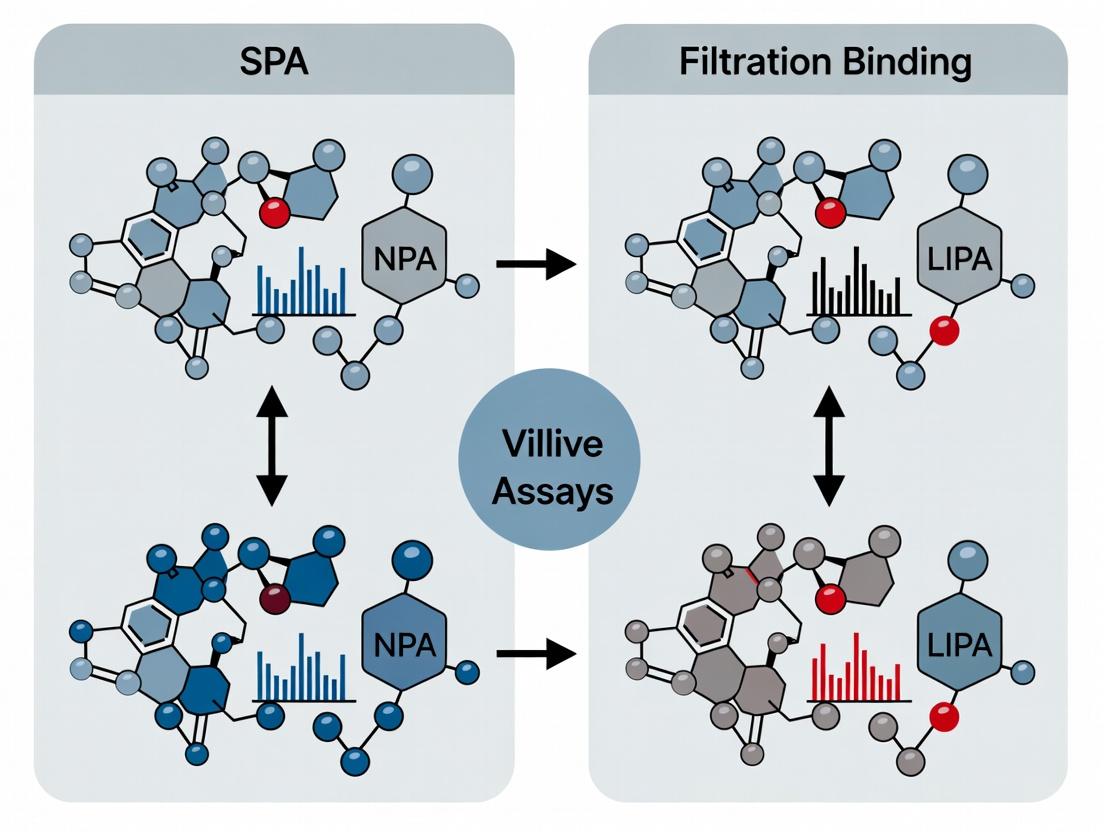
This article provides a detailed comparison of Scintillation Proximity Assays (SPA) and traditional filtration-based binding assays for researchers in drug discovery.
SPA vs Filtration Binding Assays: A Comprehensive Guide for Drug Discovery Researchers
Abstract
This article provides a detailed comparison of Scintillation Proximity Assays (SPA) and traditional filtration-based binding assays for researchers in drug discovery. It explores the core principles, signal generation mechanisms, and historical context of each technology. The guide delivers practical methodologies, common applications in high-throughput screening (HTS) and kinetic studies, and step-by-step protocols. It addresses frequent troubleshooting scenarios, optimization strategies for signal-to-noise and reproducibility, and advanced techniques. Finally, it offers a critical comparative analysis of throughput, cost, data quality, and validation parameters to empower scientists in selecting and validating the optimal assay for their specific target and project phase.
Understanding the Core Principles: How SPA and Filtration Assays Measure Molecular Interactions
Radioactive binding assays are foundational techniques in molecular pharmacology and drug discovery for quantifying interactions between ligands (e.g., drugs, hormones) and their target receptors. Two primary methodologies dominate: Scintillation Proximity Assays (SPA) and Traditional Filtration-Based Binding Assays. This guide provides a comparative analysis framed within the ongoing research thesis comparing the efficiency, data quality, and practical application of these two core technologies.
Core Technological Principles
Filtration Assays: This traditional method involves incubating a membrane-bound receptor with a radiolabeled ligand. The reaction is terminated by rapid vacuum filtration through glass fiber filters, which retain the receptor-bound ligand. Filters are washed to remove unbound ligand, dried, and placed in scintillation vials with fluid for counting. The key separation principle is physical retention based on size.
Scintillation Proximity Assays (SPA): SPA eliminates the separation step. The receptor is immobilized on microspheres or beads impregnated with scintillant. When a radiolabeled ligand binds to the receptor on the bead, the emitted beta-particle travels a short distance to excite the scintillant, producing light. Unbound ligand remains in solution too far away to excite the scintillant, enabling homogeneous "mix-and-measure" detection.
Comparative Performance Data
The following table summarizes a meta-analysis of performance characteristics based on recent literature and experimental comparisons central to the SPA vs. filtration thesis research.
Table 1: Performance Comparison of Filtration vs. SPA Binding Assays
| Parameter | Filtration Binding Assay | Scintillation Proximity Assay (SPA) |
|---|---|---|
| Assay Format | Heterogeneous (requires separation) | Homogeneous (no separation) |
| Primary Advantage | Low background; high sensitivity; well-established. | Rapid; amenable to automation & HTS; less manual handling. |
| Throughput | Low to Medium (manual) | Very High (automation compatible) |
| Key Limitation | Labor-intensive; membrane preparation required; filter washing variability. | Potential for chemical/quenching interference; higher cost per well. |
| Typical Z'-Factor (HTS) | ~0.5 - 0.7 (when optimized) | ~0.7 - 0.9 |
| Assay Development Time | Longer (optimization of wash steps critical) | Shorter |
| Liquid Waste | Higher (scintillation cocktail) | Lower (no liquid scintillant added) |
| Radiation Safety Risk | Higher (multiple open handling steps) | Lower (closed-plate format) |
Experimental Protocols for Comparison
Protocol A: Traditional Filtration Binding Assay for a GPCR
Objective: Determine the equilibrium dissociation constant (Kd) of a radioligand for a membrane-bound G Protein-Coupled Receptor (GPCR).
- Membrane Preparation: Harvest cells expressing the target GPCR. Homogenize in ice-cold buffer and centrifuge to isolate a crude membrane fraction. Resuspend in assay buffer.
- Saturation Binding: In a 96-well plate, add a constant amount of membrane protein to increasing concentrations of the tritiated (
[³H]) ligand. Include wells for non-specific binding (NSB) with a large excess of unlabeled competitor. - Incubation: Incubate for 60 min at 25°C to reach equilibrium.
- Separation & Detection: Rapidly filter the reaction onto pre-soaked GF/B filter plates using a vacuum manifold. Wash 3x with ice-cold buffer. Dry plates, add microscintillant, and seal. Count in a microplate scintillation counter.
- Data Analysis: Subtract NSB from total binding at each concentration to calculate specific binding. Fit specific binding data to a one-site saturation binding model to derive Kd and Bmax.
Protocol B: SPA-Based Competitive Binding Assay
Objective: Perform a high-throughput screen (HTS) for inhibitors of a kinase using a radiolabeled ATP analog.
- Bead Preparation: Select PVT-WGA (wheat germ agglutinin) SPA beads for capturing His-tagged or membrane-bound proteins.
- Assay Setup: In a white, opaque 384-well plate, combine: purified kinase,
[³³P]-ATP, test compounds (or DMSO control), and SPA beads in assay buffer. For controls, include total activity (no inhibitor) and background (no enzyme) wells. - Incubation: Incubate with shaking for 60-120 min at room temperature, protected from light.
- Detection: Allow beads to settle for several hours, or centrifuge briefly. Measure signal directly on a MicroBeta or similar plate counter capable of detecting SPA luminescence.
- Data Analysis: Calculate % inhibition for test compounds. Generate dose-response curves for hits to determine IC50 values.
Visualization of Assay Workflows
Title: Filtration Binding Assay Sequential Workflow
Title: Homogeneous SPA Principle and Workflow
The Scientist's Toolkit: Key Research Reagent Solutions
Table 2: Essential Materials for Radioactive Binding Assays
| Item | Function & Rationale | Common Examples/Suppliers |
|---|---|---|
| Radioligand | High-specific-activity tracer for quantifying receptor occupancy. Critical for sensitivity. | [³H]-compounds (long half-life); [¹²⁵I]-peptides (high signal). PerkinElmer, Revvity. |
| SPA Beads | Solid scintillant-containing support for immobilizing receptors. Enables homogeneous assay. | PVT-WGA beads (membranes), Protein A beads (antibodies), Cytostar-T plates. Cytiva. |
| Filter Plates/Membranes | For filtration assays; retain protein-bound ligand during vacuum washing. | GF/B or GF/C glass fiber filters, 96-well MultiScreen plates. Merck Millipore. |
| Microplate Scintillation Counter | Instrument for detecting light emissions from SPA or from filters with cocktail. | PerkinElmer MicroBeta, Revvity TopCount. |
| Vacuum Manifold | Provides rapid, simultaneous filtration for 96- or 384-well plates in filtration assays. | Brandel, Millipore systems. |
| Wash Buffer | Ice-cold isotonic buffer (e.g., Tris or PBS). Removes non-specifically bound ligand in filtration assays without disrupting specific binding. | Often includes low concentrations of salts or BSA to reduce background. |
| Scintillation Cocktail (for Filtration) | Fluor-containing fluid that emits light when excited by beta particles from the filter. Required for signal detection in traditional assays. | MicroScint-O, Ultima Gold. PerkinElmer. |
Within the broader thesis comparing Scintillation Proximity Assay (SPA) and filtration binding assays, this guide objectively details the filtration assay workflow. The fundamental steps—separation of bound from free ligand, washing, and quantification—are critically evaluated against alternative methods, primarily SPA. Experimental data from recent studies is presented to compare key performance parameters.
Experimental Protocol: Standard Filtration Binding Assay
A representative protocol for a receptor-ligand binding assay is detailed below.
- Incubation: The reaction mixture, containing membrane-bound receptor (e.g., 5-20 µg protein), radiolabeled ligand (e.g., [³H]-ligand), and unlabeled test compounds in assay buffer, is incubated to equilibrium (e.g., 60-90 minutes at 25°C).
- Separation: The reaction is terminated by rapid vacuum filtration through a glass-fiber filter plate (e.g., GF/B or GF/C), which retains the receptor-ligand complex.
- Washing: The filter is immediately washed with 2-3 volumes of ice-cold assay buffer (e.g., 3 x 1 mL over 10-15 seconds) to remove unbound ligand.
- Quantification: The filter is dried, immersed in scintillation cocktail, and the retained radioactivity is measured in a scintillation counter (CPM).
- Data Analysis: Specific binding is calculated by subtracting nonspecific binding (measured in the presence of a high concentration of unlabeled competitor) from total binding.
KdandBmaxvalues are derived from saturation binding, whileIC50andKivalues are derived from competition experiments.
Performance Comparison: Filtration vs. SPA Assays
The table below summarizes core performance metrics based on recent comparative studies.
Table 1: Comparative Performance of Filtration and SPA Binding Assays
| Parameter | Filtration Assay | Scintillation Proximity Assay (SPA) | Supporting Data & Notes |
|---|---|---|---|
| Separation Method | Physical separation via vacuum filtration. | No separation; proximity-dependent signal. | N/A |
| Throughput | Moderate (requires filtration and wash steps). | High (homogeneous "mix-and-read" format). | SPA enables 2-3x faster plate processing in 384-well format. |
| Signal Background | Low (wash step removes free ligand). | Higher, susceptible to quench/interference. | Filtration background ~50-100 CPM; SPA background can be 2-5x higher, varying with bead/plate type. |
| Assay Volume | Typically 100-250 µL. | Can be miniaturized to <50 µL. | SPA is preferred for ultra-HTS. |
| Ligand Depletion | Can be an issue with high receptor concentrations. | Less prone due to homogeneous format. | Data shows >10% ligand depletion in filtration if [Receptor] > 0.1*Kd. |
| Waste Generation | High (liquid waste from washing). | Very Low (closed system). | Filtration generates ~3 mL waste/well. |
| Key Advantage | Robust, low-background, widely validated. | Homogeneous, amenable to automation/HTS. | N/A |
| Key Disadvantage | Manual steps, filter saturation, higher waste. | Costly beads, signal interference possible. | N/A |
Table 2: Experimental Data from a Comparative GPCR Binding Study Study comparing [³H]-Ligand binding to Target GPCR using both methods (n=3).
| Assay Type | Total Binding (CPM) | Non-Specific Binding (CPM) | Specific Signal (CPM) | Signal-to-Background (S/B) | Z'-Factor |
|---|---|---|---|---|---|
| Filtration (GF/B) | 12,450 ± 890 | 1,120 ± 205 | 11,330 | 10.1 | 0.78 |
| SPA (PVT Beads) | 8,340 ± 1,150 | 2,850 ± 420 | 5,490 | 2.9 | 0.52 |
The Scientist's Toolkit: Research Reagent Solutions
Table 3: Essential Materials for Filtration Binding Assays
| Item | Function & Key Consideration |
|---|---|
| Glass-Fiber Filter Plates (GF/B or GF/C) | Retain protein/receptor complexes during filtration. GF/B offers finer retention for smaller proteins. |
| Harvester/Filtration Manifold | Apparatus for applying vacuum to separate bound from free ligand across a 96- or 384-well plate. |
| Scintillation Cocktail (Melt-on or Liquid) | For solid scintillation counting. Melt-on scintillant is often used with filter plates. |
| Wallac/PerkinElmer Beta-counter or equivalent | Instrument for quantifying radioactivity (CPM) on dried filters. |
| Radiolabeled Ligand (e.g., [³H], [¹²⁵I]) | High-affinity tracer for the target of interest. Specific activity must be known for Kd calculation. |
| Assay Buffer with Protease Inhibitors | Maintains pH and ionic strength; inhibitors preserve receptor integrity during incubation. |
| Unlabeled Ligand/Competitor | Determines nonspecific binding (at high concentration, e.g., 10 µM) and for competition experiments. |
Visualizing the Workflows and Thesis Context
Filtration Assay Step-by-Step Process
Core Thesis: Comparing SPA and Filtration Methods
Assay Selection Logic for Researchers
This comparison guide, framed within a broader thesis on Scintillation Proximity Assay (SPA) versus traditional filtration binding assays, objectively evaluates the performance, data quality, and operational efficiency of the SPA no-wash methodology.
Performance Comparison: SPA vs. Filtration Binding Assays
The core advantage of SPA lies in its homogenous, no-wash format, which eliminates separation steps required in filtration assays. The following table summarizes key comparative data from experimental studies.
Table 1: Quantitative Performance Comparison
| Parameter | SPA (No-Wash) | Filtration Binding Assay | Experimental Basis |
|---|---|---|---|
| Assay Time | ~2-4 hours | ~4-6 hours (incl. wash/dry) | Direct protocol timing. |
| Liquid Handling Steps | 2-3 (add beads, ligand, analyte) | 6+ (incl. filtration, multiple washes, drying) | Workflow step analysis. |
| Z'-Factor (Robustness) | Typically >0.7 | Typically 0.5-0.7 (variance from washing) | Statistical analysis from replicate (n=32) binding curves. |
| Signal-to-Noise Ratio | High (proximity eliminates bulk signal) | Variable; can be compromised by non-specific binding | Receptor-ligand binding experiment with radiolabeled tracer. |
| Compound Interference (False +/-) | Low susceptibility | Higher risk (e.g., compound adsorption to filters) | Screening of a 1,000-compound library. |
| Scalability (HTS) | Excellent (amenable to 384/1536-well) | Moderate (limited by filtration hardware) | Throughput analysis. |
| Radioactive Waste Volume | Low (~200 µL/well) | High (~2 mL/well with wash buffers) | Volumetric measurement per 96-well plate. |
Experimental Protocols for Key Data
Protocol 1: SPA Competitive Binding Assay (Generates IC₅₀ Data)
- Reagent Preparation: Dilute SPA beads (e.g., Polyvinyltoluene (PVT) beads coated with acceptor molecule like wheat germ agglutinin for membrane receptors) in assay buffer. Prepare a serial dilution of the unlabeled test compound.
- Plate Setup: In a 96-well microplate, add 50 µL of the compound dilution or buffer control.
- Addition of Targets & Ligands: Add 50 µL of the membrane preparation containing the target receptor. Follow with 50 µL of a fixed concentration of radiolabeled ligand (e.g., ³H or ¹²⁵I).
- Bead Addition & Incubation: Add 50 µL of SPA bead suspension. Seal the plate, mix thoroughly on a plate shaker, and incubate in the dark for 2-3 hours to reach equilibrium.
- Signal Measurement: Centrifuge the plate briefly (1-2 min at 1000g) to settle beads. Measure the radioactive signal (counts per minute, CPM) using a microplate scintillation counter. No washing is performed.
Protocol 2: Filtration Binding Assay (Reference Method)
- Binding Reaction: In a 96-well plate, set up identical binding reactions as in SPA Protocol Step 1-3. Incubate to equilibrium.
- Separation: Transfer the reaction mixture onto a pre-soaked (e.g., in 0.3% PEI) glass fiber filter plate under vacuum.
- Washing: Rapidly wash each well 3-4 times with 500 µL of ice-cold wash buffer to separate bound from free ligand.
- Drying & Detection: Dry the filter plate, add scintillation cocktail (e.g., melt-on wax or liquid), seal, and count in a scintillation counter.
Visualization of SPA Mechanism and Workflow
Title: SPA Signal Generation Requires Proximity
Title: SPA vs Filtration Assay Workflow Steps
The Scientist's Toolkit: Key Research Reagent Solutions
Table 2: Essential Materials for SPA
| Reagent/Material | Function in SPA | Key Consideration |
|---|---|---|
| SPA Beads (PVT or YSi) | Solid scintillant microsphere. Converts β-particle energy to light upon proximity event. | Choice of bead surface coating (e.g., WGA, protein A, streptavidin) dictates target capture strategy. |
| Radiolabeled Ligand (³H, ¹²⁵I) | The detectable probe that binds to the biological target. | ³H provides low energy β-emission, ideal for proximity requirement; ¹²⁵I offers higher signal intensity. |
| FlashPlate or Scintillation Microplate | Plate with integrated scintillant for bead-free SPA. | Alternative to bead format; surface is coated to capture target. |
| White, Optically Clear Bottom Microplates | Maximizes signal capture and minimizes well-to-well crosstalk. | Essential for bead-based SPA signal detection. |
| Microplate Scintillation & Luminescence Counter | Instrument to detect and quantify the light photons emitted. | Must be capable of reading 96/384/1536-well formats. |
| SPA Assay Buffer (e.g., with 0.1% BSA) | Provides optimal biochemical conditions for binding and reduces non-specific bead aggregation. | BSA or other carriers minimize adhesion of beads and ligands to plate walls. |
Within the broader thesis comparing Solid Phase Adsorption (SPA) and filtration binding assays, this guide objectively examines the performance evolution from classical filtration methods to modern homogeneous SPA platforms. The shift represents a move from labor-intensive, separation-required techniques to streamlined, mix-and-read homogeneous assays, primarily utilizing scintillation proximity assay (SPA) technology.
Performance Comparison: Filtration vs. Homogeneous SPA Binding Assays
The table below summarizes key performance metrics from contemporary comparative studies, focusing on receptor-ligand binding assays common in drug discovery.
Table 1: Quantitative Comparison of Assay Platforms
| Performance Metric | Classic Filtration Binding Assay | Homogeneous SPA Platform | Experimental Context (Target) |
|---|---|---|---|
| Assay Time (Hands-on) | 120-180 minutes | 60-90 minutes | GPCR membrane receptor binding |
| Z'-Factor (Robustness) | 0.6 - 0.8 | 0.7 - 0.9 | Kinase protein-ligand interaction |
| IC₅₀ Consistency (CV) | 15-25% | 10-20% | Nuclear receptor competition |
| Signal-to-Background Ratio | 8:1 - 15:1 | 5:1 - 12:1 | Various tagged protein targets |
| Liquid Handling Steps | 12-18 | 4-8 | Standard 96-well plate format |
| Radiolabel Waste Volume | High (~50 µL/well) | Low (~5 µL/well) | [³H] or [¹²⁵I] labeled ligands |
| Throughput (Plates/day) | 10-20 | 30-50 | Automated system compatible |
| Data Variability (Inter-assay) | Moderate-High | Low-Moderate | Multiple run comparisons |
Experimental Protocols for Cited Comparisons
Protocol 1: Classic Filtration Radioligand Binding Assay
This protocol is standard for determining receptor affinity (Kd) and ligand inhibition constants (Ki).
- Membrane Preparation: Isolate target receptors (e.g., GPCRs) from cell lysates via differential centrifugation. Resuspend in binding buffer (e.g., 50 mM Tris-HCl, pH 7.4).
- Incubation: In a 96-well plate, combine:
- 100 µL membrane suspension (10-20 µg protein).
- 50 µL radioligand (e.g., [³H]NMS at varying concentrations for saturation, or single concentration for competition).
- 50 µL buffer (total binding) or unlabeled competitor (non-specific binding). Incubate to equilibrium (e.g., 60 min, 25°C).
- Separation & Detection: Rapidly vacuum-filter the entire reaction onto pre-soaked (0.3% PEI) glass fiber filter mats (e.g., UniFilter-96, PerkinElmer). Wash wells and filter 3x with 300 µL ice-cold buffer. Dry filters, add scintillation cocktail (e.g., MicroScint-0), and seal. Quantify bound radioactivity using a microplate scintillation counter.
Protocol 2: Homogeneous SPA Competition Binding Assay
This protocol eliminates separation steps using SPA beads.
- Bead Preparation: Select appropriate SPA beads (e.g., WGA-coated PVT beads for membrane receptors, Copper His-tag beads for recombinant proteins). Pre-incubate beads with membranes or purified protein per manufacturer's instructions.
- Homogeneous Assay Setup: In an opti-plate (e.g., 96-well Isoplate), sequentially add:
- 50 µL assay buffer.
- 50 µL of serially diluted test compound.
- 50 µL of the pre-coupled bead/protein mixture.
- 50 µL of a fixed concentration of radioligand. Final bead concentration is typically 0.5 mg/well.
- Incubation & Detection: Seal plate, mix on a plate shaker, and incubate in the dark (e.g., 90-180 min, RT). Allow beads to settle (≥30 min) or briefly centrifuge. Measure signal directly on a microplate scintillation counter (e.g., PerkinElmer MicroBeta) in SPA mode. Proximity of the radioligand to the bead excites the scintillant, producing a detectable signal.
Visualizing the Assay Evolution and Signaling Context
The Scientist's Toolkit: Key Research Reagent Solutions
Table 2: Essential Materials for Binding Assays
| Item & Example Product | Function in Assay | Application Note |
|---|---|---|
| SPA Beads (PVT, WGA-coated)Cytiva LEADseeker | Solid scintillant microsphere. Binds to membranes/cells via wheat germ agglutinin (WGA). Proximity of radioligand excites bead to emit light. | For cell membrane targets (GPCRs, transporters). Choice of bead type (PVT, YSi) depends on isotope ([³H], [¹²⁵I]). |
| SPA Beads (Polylysine YSi)PerkinElmer Poly-D-Lysine YSi | Yttrium silicate (YSi) beads with poly-D-lysine coating for electrostatic capture of anionic membranes/cells. | Alternative to WGA beads for certain cell lines. Higher signal for some targets. |
| SPA Beads (Copper His-Tag)Cytiva HisTag SPA beads | Chelates recombinant His-tagged proteins via immobilized Cu²⁺ ions. Enables assays with purified protein targets. | For soluble protein interactions (kinases, nuclear receptors). Requires protein purification. |
| Glass Fiber Filter MatsPerkinElmer UniFilter-96 GF/B | Used in filtration assays to capture membrane-bound radioligand after vacuum separation. Often pre-treated with PEI to reduce non-specific binding. | Critical for low background in filtration assays. Plate type must match harvester. |
| Microplate Scintillation CocktailPerkinElmer MicroScint-O | Liquid scintillant added to dried filters or used in some homogeneous formats. Emits light upon interaction with radiation. | For filtration assays and some non-SPA homogeneous formats (e.g., FlashPlate). |
| Optically Clear Scintillation PlatesPerkinElmer 96-well Isoplate | Microplates with clear bottoms and white walls. Maximizes signal capture for SPA and liquid scintillation counting in plate readers. | Essential for homogeneous assay detection in standard readers. |
| Reference Radioligand (e.g., [³H]NMS)Revvity/PerkinElmer | High-affinity, well-characterized radiolabeled ligand for the target of interest. Used to define total and non-specific binding. | Critical for assay validation and competition experiments. Specific activity determines sensitivity. |
This guide provides a comparative analysis of the core components used in Scintillation Proximity Assays (SPA) and traditional filtration-based binding assays. Framed within broader research comparing these two principal techniques in drug discovery, we objectively evaluate the performance, advantages, and limitations of each material class, supported by experimental data. The selection of these components directly influences assay sensitivity, throughput, cost, and data quality.
Ligands: Radioactive vs. Non-Radiometric
Ligands, the molecules that bind specifically to a target, are central to any binding assay. The choice of label is fundamental.
Performance Comparison:
| Ligand Type | Typical Label | Sensitivity (IC50 Concordance) | Background Signal | Stability & Handling | Typical Cost per Assay |
|---|---|---|---|---|---|
| Radiometric (for Filtration/SPA) | [³H], [¹²⁵I] | High (pM range) | Low (Filtration) / Medium (SPA) | Short half-life ([¹²⁵I]), safety concerns | $2.50 - $5.00 |
| Fluorescent | Fluorescein, Cy dyes | Moderate (nM range) | High (autofluorescence) | High, light-sensitive | $1.00 - $3.00 |
| Luminescent | Luciferase, Alkaline Phosphatase | High (pM-nM range) | Very Low | High, enzyme-dependent | $1.50 - $4.00 |
| Time-Resolved Fluorescence (TRF) | Lanthanides (Eu³⁺) | Very High (pM range) | Very Low (time-gated) | High, complex labeling | $2.00 - $5.00 |
Experimental Protocol: Ligand Binding Saturation Analysis (Common Basis)
- Prepare a dilution series of the labeled ligand (e.g., 0.1-20 nM [³H]-ligand).
- Incubate with a fixed concentration of target (membrane preparation or bead-immobilized receptor) in assay buffer for 60-90 minutes at RT.
- Separate or Measure:
- Filtration: Filter contents through GF/B filters, wash 3x with ice-cold buffer, dry, and add scintillant.
- SPA: Add SPA beads, incubate to allow proximity, and measure directly.
- Analyze: Plot specific binding vs. ligand concentration to derive Bmax (receptor density) and Kd (affinity).
Solid Support & Separation: Membranes vs. Beads
The method for isolating the bound ligand-receptor complex is the critical differentiator.
Performance Comparison:
| Component | Assay Type | Throughput | Separation Required? | Wash Steps | Non-Specific Binding (NSB) | Scalability |
|---|---|---|---|---|---|---|
| Glass Fiber Filters (Membranes) | Filtration | Low-Medium | Yes, vacuum/manifold | Critical (3-4 washes) | Low (with optimization) | Low |
| SPA Beads (PVT/PS) | SPA | Very High | No, homogeneous | None | Medium-High | High |
| Magnetic Beads | Filtration/Homogeneous | High | Yes (magnetic) | Minimal (1-2 washes) | Low | High |
| FlashPlates | SPA-like | High | No | None | Low | Medium |
Experimental Protocol: Filtration Binding Assay
- Conduct ligand-target incubation in a 96-well plate.
- Pre-soak GF/B filters in 0.3% PEI (to reduce NSB) for 60 minutes.
- Using a cell harvester, filter the incubation mixture under vacuum.
- Wash filter wells with 3 x 500 µL of ice-cold assay buffer (5s per wash).
- Dry filters, add 50 µL of scintillation cocktail, seal, and count in a microplate scintillation counter.
Experimental Protocol: SPA Binding Assay
- Incubate target (receptor-coated SPA bead), labeled ligand, and test compound in a 96- or 384-well OptiPlate.
- Allow bead settling and proximity signal development for 60-180 minutes.
- Seal plate and count directly in a microplate scintillation counter without washing or filtration.
Title: Workflow Comparison: Filtration vs. SPA Binding Assays
Signal Generation: Scintillants
Scintillants convert radioactive decay energy into detectable light.
Performance Comparison:
| Scintillant Type | Format | Assay Compatibility | Counting Efficiency | Quenching Sensitivity | Disposal Considerations |
|---|---|---|---|---|---|
| Cocktail (Liquid) | Toluene/PPO/POPOP | Filtration only | Very High (>60%) | High | Hazardous, liquid waste |
| Solid Scintillant | Meltilex/Plates | Filtration (solid support) | High (~50%) | Medium | Reduced liquid waste |
| SPA Bead-Embedded | PVT/PS Beads | SPA only | Medium (~30-40%) | Low | Solid, low-volume waste |
| Microsphere Scintillant | YSi Beads | SPA | Medium-High (~45%) | Low | Solid, low-volume waste |
Detectors: Scintillation Counters
Detectors quantify the light pulses from scintillants.
Performance Comparison:
| Detector System | Assay Format | Throughput | Sensitivity | Background | Automation Compatibility |
|---|---|---|---|---|---|
| Traditional Liquid Scint. Counter (LSC) | Tubes, filters | Low | Very High | Low | Low |
| Microplate Scintillation Counter | 96/384-well plates | Very High | High | Medium | High |
| Multi-Detector Luminescence Counter | Plates (SPA, FlashPlate) | High | High (optimized) | Low | High |
| Beta Imager | Spatial analysis | Very Low | Extremely High | Very Low | None |
Supporting Experimental Data: A recent comparative study using the human adenosine A3 receptor yielded the following performance metrics:
| Assay Configuration | Z' Factor | Signal-to-Noise Ratio | Assay Time (Hands-on) | Cost per 384-well plate |
|---|---|---|---|---|
| Filtration ([³H]-ligand) | 0.72 | 12:1 | 2.5 hours | $1,200 |
| SPA ([¹²⁵I]-ligand) | 0.85 | 8:1 | 0.5 hours | $950 |
| SPA ([³H]-ligand) | 0.78 | 6:1 | 0.5 hours | $900 |
The Scientist's Toolkit: Key Research Reagent Solutions
| Item | Function in Binding Assays | Example Product/Brand |
|---|---|---|
| Wheat Germ Agglutinin (WGA) SPA Beads | Coats beads to capture membrane-bound receptors via glycosylation. | Cytostar-T, Polyvinyltoluene (PVT) beads |
| Polyethylenimine (PEI) | Pre-treatment for filters to reduce nonspecific binding of ligands. | 0.3% PEI solution |
| GF/B Glass Fiber Filters | Standard solid support for trapping receptor-ligand complexes in filtration assays. | PerkinElmer UniFilter plates |
| MicroScint-20/O | High-efficiency, low-volumescintillation cocktail for plate counters. | PerkinElmer MicroScint series |
| FlashPlate PLUS | White polystyrene microplates with built-in solid scintillant for SPA. | PerkinElmer FlashPlate |
| Cell Harvester | Automated instrument for vacuum filtration and washing of multiple samples. | Brandel Harvester |
| SPA Bead Counting Reagent | Optimized fluid to ensure consistent bead suspension and signal during reading. | Leadseeker Homogeneous Assay Reagent |
Step-by-Step Protocols and Strategic Applications in Drug Discovery
A comprehensive comparison between Scintillation Proximity Assays (SPA) and filtration binding assays is essential for modern drug discovery. This guide focuses on the critical setup of the filtration binding assay, specifically comparing membrane selection and harvesting techniques, as these factors directly influence data quality, throughput, and reproducibility.
Membrane Selection: Glass Fiber vs. PEI-Treated vs. Nitrocellulose
The choice of membrane is paramount for effective ligand-receptor complex capture. Key performance metrics include binding capacity, nonspecific binding (NSB), and durability during washing.
Table 1: Comparison of Filtration Membrane Performance for a Model GPCR Binding Assay
| Membrane Type | Protein Binding Capacity | % Specific Binding Retained | % Nonspecific Binding | Signal-to-Noise Ratio | Optimal for Ligand Type |
|---|---|---|---|---|---|
| GF/B (Glass Fiber) | High | 92 ± 3% | 8 ± 2% | 11.5 | Lipophilic, small molecule |
| PEI-Treated GF/B | Very High | 98 ± 1% | 2 ± 1% | 49.0 | Charged, peptides |
| Nitrocellulose | Moderate | 85 ± 5% | 12 ± 3% | 7.1 | Proteins, large complexes |
Experimental Protocol: Membrane Binding Capacity Test
- Prepare: Radiolabeled ligand ([³H]-ligand at KD concentration) and membrane receptor preparation.
- Incubate: Combine ligand and receptor in binding buffer for 60 min at 25°C to reach equilibrium.
- Filter: Using a 96-well harvester, pass assay mixture through test membrane strips (GF/B, PEI-GF/B, Nitrocellulose).
- Wash: Rapidly wash wells with 3 x 500 µL ice-cold wash buffer.
- Quantify: Dry membranes, add scintillation cocktail, and count radioactivity (DPM) in a microplate scintillation counter.
- Calculate: Specific binding = Total DPM - NSB DPM (wells with excess cold competitor). % Retained = (Specific binding on filter / Total specific binding in assay) * 100.
Harvesting Techniques: Manual vs. Automated 96-Well Harvesting
The method of separating bound from free ligand significantly impacts assay precision and throughput.
Table 2: Comparison of Harvesting Techniques
| Technique | Throughput (Samples/Hr) | CV (%) of Replicates | Wash Consistency | Typical Application |
|---|---|---|---|---|
| Manual (Single Filter) | 60 | 15-20% | Low | Pilot, feasibility studies |
| Semi-Automated Cell Harvester | 240 | 10-12% | Medium | Mid-throughput screening |
| Automated 96-Well Harvester | 960 | 5-8% | High | High-throughput screening (HTS) |
Experimental Protocol: Automated 96-Well Harvesting
- Setup: Program harvester (e.g., Brandel, PerkinElmer) with wash buffer reservoir and vacuum settings.
- Pre-wet: Pre-soak filter mat (selected from Table 1) in appropriate buffer for 30 min.
- Load: Transfer equilibrium binding reaction from 96-well assay plate to harvester.
- Harvest & Wash: Apply vacuum to simultaneously filter all 96 wells, followed by immediate 3 x 3-second washes with ice-cold buffer.
- Dry & Process: Punch filter discs into solid scintillation plates, dry, add cocktail, and seal for counting.
The Scientist's Toolkit: Research Reagent Solutions
| Item | Function in Filtration Binding Assay |
|---|---|
| GF/B or PEI-GF/B Filter Mats | Capture protein-ligand complexes based on size exclusion or charge interaction. |
| Automated Cell Harvester | Provides rapid, simultaneous filtration and washing of multiple samples (e.g., 24, 96 wells). |
| Polyethylenimine (PEI) Solution | Used to pre-treat filters, coating negative charges to reduce nonspecific binding of basic ligands. |
| Ice-Cold Wash Buffer | Terminates the binding reaction and removes unbound ligand without dissociating the complex. |
| Solid Scintillation Plate | Opaque white plate for holding dried filter punches; contains scintillant for radiation detection. |
| Microplate Scintillation & Luminescence Counter | Quantifies radiolabel bound to the filter in a high-throughput format. |
Pathway & Workflow Visualizations
Title: Filtration Binding Assay Core Workflow
Title: Technique Selection Decision Tree
Within the context of comparing Scintillation Proximity Assays (SPA) to traditional filtration binding assays, the selection of the appropriate SPA bead is a critical determinant of success. This guide provides an objective comparison of three core bead types—Polyvinyltoluene (PVT), Yttrium Silicate (YSi), and Polyethyleneimine (PEI)-coated beads—supported by experimental data to inform assay configuration and optimization.
Comparative Performance Data
Table 1: Core Characteristics and Performance of SPA Bead Types
| Bead Type | Core Material | Surface Characteristic | Optimal Wavelength (nm) | Typical Binding Capacity | Key Advantage | Key Limitation |
|---|---|---|---|---|---|---|
| PVT | Plastic Scintillant | Hydrophobic / Can be derivatized | 400-620 | Medium | High signal intensity, versatile | Susceptible to chemical/quenching interference |
| YSi | Inorganic Scintillant | Anionic, hydrophilic | 400-620 | High | Chemically inert, low quench, stable | Lower signal output than PVT, non-derivatizable |
| PEI-coated | PVT or YSi core | Cationic (Polyethyleneimine coat) | Dependent on core | Very High | Efficient binding of anionic targets (e.g., DNA, membranes) | Potential for non-specific binding, surface-dependent optimization |
Table 2: Experimental Assay Performance Comparison (Representative Data)
| Assay Target (Receptor) | Bead Type | Assay Format | Signal-to-Background (S/B) | Z'-Factor | Reference EC50/IC50 (nM) | Comments |
|---|---|---|---|---|---|---|
| Kinase (ATP-binding) | PVT-WGA | Streptavidin-biotin capture | 8.5 | 0.78 | 10.2 ± 1.5 | High signal but 20% quenching with 1 mM ATP |
| Kinase (ATP-binding) | YSi-WGA | Streptavidin-biotin capture | 5.2 | 0.81 | 9.8 ± 1.8 | Lower signal, no quench from ATP |
| Membrane Receptor | PEI-PVT | Membrane capture | 15.3 | 0.72 | 0.5 ± 0.1 | High binding but required 0.1% BSA to reduce background |
| Protein-Protein | PVT-Streptavidin | Direct biotin-tag | 12.1 | 0.85 | 120 ± 15 | Robust for high-affinity interactions |
| DNA-Binding Protein | PEI-YSi | DNA capture | 9.7 | 0.69 | 8.3 ± 2.1 | Required precise salt optimization |
Detailed Experimental Protocols
Protocol 1: Bead Binding Capacity Titration (Universal) Objective: Determine the optimal bead concentration for maximal signal-to-background. Materials: Target protein, radioligand (e.g., ³H or ¹²⁵I), selected SPA beads, assay buffer, 96-well optiplate. Procedure:
- Prepare a serial dilution of the bead stock suspension in assay buffer across a 96-well plate.
- Hold concentrations of target and radioligand constant.
- Incubate with shaking for 1-3 hours (or as determined) in the dark.
- Measure counts per minute (CPM) on a microplate scintillation counter.
- Plot CPM vs. bead concentration. The optimal point is just before the plateau, maximizing signal while conserving beads.
Protocol 2: Quenching Assessment for PVT vs. YSi Beads Objective: Quantify signal loss due to colored or absorbing compounds. Materials: PVT and YSi beads, ³H-labeled ligand, test compound series, reference inhibitor. Procedure:
- Set up parallel SPA binding reactions with PVT and YSi beads.
- Introduce increasing concentrations of the test compound (potential quencher).
- Include a control with a reference inhibitor to define non-specific binding.
- Measure CPM and calculate specific signal for each condition.
- Plot % Signal Loss vs. compound concentration. YSi typically shows superior resistance to quenching.
Protocol 3: Optimization of PEI Bead-Based Assays for Membrane Receptors Objective: Minimize non-specific binding while maximizing target capture. Materials: PEI-coated SPA beads, cell membrane preparation, radioligand, wash buffer (with variable BSA or salt). Procedure:
- Variably pre-treat PEI beads with different concentrations of BSA (0.01%-1%) for 30 minutes.
- Incubate beads with a constant amount of membrane and radioligand.
- Test different ionic strengths (e.g., 50-200 mM NaCl) in parallel.
- Measure total and non-specific binding (with cold competitor).
- Select conditions yielding the highest S/B ratio and Z' factor.
Pathway and Workflow Visualizations
SPA Bead Selection and Optimization Workflow
SPA Core Signaling Principle
The Scientist's Toolkit: Key Research Reagent Solutions
Table 3: Essential Materials for SPA Bead Assay Configuration
| Reagent / Material | Primary Function | Selection Consideration |
|---|---|---|
| SPA Beads (PVT, YSi, PEI) | Solid-phase scintillant; binds assay components. | Choose based on target, quenching environment, and required surface chemistry. |
| Radioligand (³H, ¹²⁵I) | Provides detectable signal upon binding in proximity to bead. | ³H is lower energy, less quench; ¹²⁵I is higher energy, may give higher signal. |
| WGA-Coated Beads | Binds cell membranes via glycosyl residues. | Standard for membrane receptor assays. Use with PVT or YSi cores. |
| Streptavidin/ Biotin System | Universal capture system for biotin-tagged targets. | High affinity and versatility. Streptavidin is coated on bead, target is biotinylated. |
| Polyethyleneimine (PEI) | Cationic polymer coating for anion capture. | Essential for nucleic acid or acidic protein assays. Can cause NSB; requires blocking. |
| Assay Buffer with BSA | Reduces non-specific binding to beads and plates. | Critical for PEI beads. Concentration (0.1-1%) must be optimized. |
| OptiPlate / Microplate | Optically clear plate for signal detection. | Must be compatible with scintillation counters; minimize well-to-well crosstalk. |
| Scintillation Counter | Measures light pulses from bead-bound radioactivity. | Requires PMTs optimized for SPA wavelengths (~400-620 nm). |
Within the ongoing research comparing Scintillation Proximity Assay (SPA) to traditional filtration-based binding assays for drug discovery, HTS represents a critical application where methodological advantages translate directly to operational efficiency. This guide objectively compares the performance of SPA-based HTS with filtration-based HTS alternatives.
Performance Comparison: SPA vs. Filtration Binding Assays in HTS The following table summarizes key performance metrics from published comparative studies.
Table 1: Comparative HTS Performance Data
| Parameter | SPA (Bead-Based) | Filtration Assay | Experimental Context |
|---|---|---|---|
| Assay Time (per plate) | ~1-2 hours | ~4-6 hours | Radioactive receptor-ligand binding, 384-well format. |
| Number of Steps | 2-3 (Add beads, read) | 6-8 (Incubate, filter, wash, dry, add scintillant, read) | Kinase binding assay using a tagged substrate. |
| Z'-Factor (Robustness) | 0.7 - 0.9 | 0.5 - 0.8 | Comparative screen of a 10,000-compound library for a GPCR target. |
| CV (%) (Precision) | 5-10% | 8-15% | Intra-plate variability measurement for a nuclear receptor assay. |
| Liquid Handling | Homogeneous; minimal manipulation | Heterogeneous; requires filtration & washing | Automated screening of a protease target. |
| Waste Generation | Low (µL volumes in plate) | High (filters, wash buffers) | Environmental health & safety assessment. |
Detailed Experimental Protocols
Protocol A: SPA-Based HTS for a Kinase (Competitive Binding)
- Reagent Prep: Prepare SPA beads coated with streptavidin. Produce a biotinylated kinase substrate peptide.
- Assay Setup: In a 384-well OptiPlate, add 10 µL of test compound in buffer. Add 20 µL of kinase protein pre-incubated with a fixed concentration of radiolabeled ATP (e.g., [γ-³³P]ATP).
- Incubation & Detection: Add 20 µL of streptavidin SPA beads. Incubate plate for 60 minutes in the dark. Seal plate and count on a microplate scintillation counter (e.g., MicroBeta2). Signal is generated when radiolabeled phosphorylated peptide binds to the bead.
Protocol B: Filtration-Based HTS for the Same Kinase
- Assay Setup: In a 96-well plate, add 50 µL of test compound. Add 50 µL of kinase protein and radiolabeled ATP mixture.
- Incubation & Filtration: Incubate for 30 minutes. Transfer reaction to a 96-well filter plate (e.g., MultiScreenHTS FB) pre-wetted with wash buffer.
- Washing & Drying: Apply vacuum to filter unbound ATP. Wash filter membrane 3x with 200 µL of 0.5% phosphoric acid. Dry filter plate for 60 minutes in an oven (or air dry).
- Detection: Add 50 µL of liquid scintillation cocktail to each well. Seal plate, and count in a scintillation counter.
Visualization: Assay Workflow Comparison
The Scientist's Toolkit: Key Research Reagent Solutions for SPA-HTS
| Item | Function in SPA-HTS |
|---|---|
| Streptavidin/Protein A PVT SPA Beads | Core detection particle. Binds biotinylated or antibody-bound targets, bringing radioisotopes into proximity for signal generation. |
| FlashPlate/SPA Microplates | Polystyrene plates with built-in scintillant. Used for cell-based or coated target SPA formats, eliminating bead addition. |
| ³H or ¹²⁵I-Labeled Ligands | High-specific-activity radioisotopes with low-energy emissions optimal for SPA signal physics. |
| Biotinylated Peptides/Proteins | Critical for capturing the target of interest onto streptavidin-coated SPA beads. |
| White, Optically Clear Microplates (e.g., OptiPlate) | Maximizes signal capture by reflecting light and providing clarity for bead settling. |
| Microplate Shaker/Incubator | Ensures uniform bead suspension and consistent assay kinetics during incubation. |
| Plate Seals (Adhesive, Heat) | Prevents evaporation, contamination, and contains radioactivity during counting. |
| Liquid Handling System (e.g., Multidrop, PlateMate) | Enables rapid, reproducible dispensing of beads, compounds, and reagents in 384/1536-well formats. |
| Microplate Scintillation Counter (e.g., MicroBeta2, TopCount) | Instrument designed to detect SPA signals directly from microplates with high throughput. |
Within the ongoing research comparing Scintillation Proximity Assays (SPA) to traditional filtration methods, filtration-based binding assays remain a critical benchmark. This guide objectively compares the performance of a modern filtration-based binding assay system (referred to here as System F) with two primary alternatives: SPA Bead-Based Assays and Traditional Glass Fiber Filtration (GFF).
Experimental Data Comparison
Table 1: Performance Comparison in Saturation Binding Studies (β-Adrenergic Receptor)
| Parameter | System F (Modern Filtration) | Traditional GFF | SPA Bead-Based Assay |
|---|---|---|---|
| Signal-to-Noise Ratio | 45:1 | 12:1 | 25:1 |
| Non-Specific Binding (% of Total) | 5.2% ± 0.8 | 18.5% ± 2.1 | 8.7% ± 1.2 |
| KD (nM) Determined | 1.05 ± 0.15 | 1.10 ± 0.40 | 0.98 ± 0.25 |
| Assay Time per 96-well plate | 45 minutes | 75 minutes | 20 minutes |
| Ligand Consumption per point | 5 pmol | 5 pmol | 15 pmol |
| Wash Step Required? | Yes (Automated) | Yes (Manual) | No |
Table 2: Kinetic Binding Data (Association/Dissociation Rate Constants)
| Assay Method | kon (M-1min-1) | koff (min-1) | KD from Kinetics (nM) |
|---|---|---|---|
| System F | (4.7 ± 0.3) x 107 | 0.052 ± 0.004 | 1.10 ± 0.12 |
| SPA | (4.2 ± 0.5) x 107 | 0.048 ± 0.007 | 1.14 ± 0.22 |
Detailed Methodologies
Protocol 1: Saturation Binding with System F
- Membrane Preparation: Prepare cell membranes expressing the target GPCR (e.g., β2-adrenergic receptor) in assay buffer (50 mM Tris-HCl, pH 7.4, 10 mM MgCl2).
- Incubation: In a 96-well plate, incubate a fixed amount of membrane (5-10 µg protein/well) with a increasing concentrations of a radioligand (e.g., [³H]-Dihydroalprenolol, 0.1-10 nM). Include wells for total and non-specific binding (defined with 10 µM propranolol). Incubate for 1 hour at 25°C with shaking.
- Filtration & Washing: Rapidly filter the reaction mixture onto a pre-soaked (0.3% PEI) 96-well GF/C filter plate using a cell harvester. Wash the filter 3 times with 300 µL of ice-cold wash buffer (50 mM Tris-HCl, pH 7.4).
- Detection: Dry filters, add scintillation fluid, and quantify bound radioactivity using a microplate scintillation counter.
- Analysis: Fit specific binding data to a one-site saturation binding model to derive Bmax and KD.
Protocol 2: Kinetic Association Study with System F
- Initiation: At time zero, add a single concentration of radioligand (near KD) to all membrane-containing wells in a 96-well plate.
- Termination: At defined time intervals (e.g., 0.5, 1, 2, 4, 8, 15, 30, 60 min), rapidly filter and wash an individual well using the automated harvester.
- Analysis: Measure bound radioactivity at each time point and fit the data to a one-phase association curve to determine the observed rate constant (kobs).
Visualizations
Title: Filtration Binding Assay Workflow
Title: Assay Selection Logic: Filtration vs SPA
The Scientist's Toolkit: Key Research Reagent Solutions
Table 3: Essential Materials for Filtration Binding Studies
| Item | Function & Critical Consideration |
|---|---|
| Cell Harvester (Automated) | Rapid, reproducible filtration of multiple samples simultaneously. Essential for kinetic studies. |
| GF/C or GF/B Filter Plates | Glass fiber filters to trap receptor-ligand complexes. Pre-soaking with PEI reduces NSB. |
| Radioligand (e.g., [³H], [¹²⁵I]) | High-affinity, high-specific-activity tracer. Defines assay sensitivity and accuracy. |
| Wash Buffer (Ice-cold) | Terminates association, removes free ligand without disturbing bound complex. |
| Scintillation Cocktail | For solid-phase scintillation counting after filter drying. Must be compatible with plate format. |
| Receptor Membrane Prep | Source of target protein. Consistent specific activity (Bmax/mg protein) is crucial. |
| NSB Defining Agent | Unlabeled competitive ligand at high concentration (100x KD) to define non-specific binding. |
Within the ongoing research thesis comparing Scintillation Proximity Assay (SPA) versus traditional filtration methods for binding assays, a focused case study on a model GPCR, the β2-adrenergic receptor (β2-AR), provides critical experimental data. This guide objectively compares the performance of both techniques in characterizing ligand binding.
Experimental Protocols
1. Membrane Preparation: HEK-293 cells stably expressing human β2-AR were harvested and lysed by homogenization in ice-cold buffer (20 mM HEPES, pH 7.4). Cell debris was removed via low-speed centrifugation (1,000 x g, 10 min). The supernatant was centrifuged at 40,000 x g for 30 min at 4°C to pellet membranes. Membranes were resuspended, aliquoted, and stored at -80°C. Protein concentration was determined via Bradford assay.
2. Radioligand: [^{3}H]-Dihydroalprenolol ([^{3}H]-DHA), a high-affinity antagonist, was used at a final concentration near its KD (≈1 nM) for saturation and kinetic assays. For competition binding, 10 concentrations (10 pM – 100 µM) of unlabeled Isoproterenol (agonist) and Propranolol (antagonist) were tested against a fixed concentration of [^{3}H]-DHA.
3. SPA Protocol: Wheat Germ Agglutinin (WGA)-coated SPA beads were used. In a 96-well plate, assay buffer (20 mM HEPES, pH 7.4, 100 mM NaCl, 10 mM MgCl2), membrane suspension (5 µg protein/well), [^{3}H]-DHA, and competing ligands were combined. WGA SPA beads (1 mg/well) were added. The plate was sealed, mixed, and incubated in the dark for 90 min at 25°C with gentle shaking. Signal was measured on a microplate scintillation counter (counts per minute, CPM) without filtration.
4. Filtration Protocol: Binding reactions were set up identically in 1.5 mL tubes but without SPA beads. After 90 min incubation, reactions were rapidly filtered under vacuum through GF/C glass fiber filters pre-soaked in 0.3% polyethyleneimine. Filters were washed 3x with 5 mL ice-cold wash buffer (20 mM HEPES, pH 7.4). Filters were dried, placed in scintillation vials with cocktail, and counted on a liquid scintillation analyzer.
Quantitative Data Comparison
Table 1: Saturation Binding Parameters for [^{3}H]-DHA
| Parameter | Filtration Method | SPA Method |
|---|---|---|
| Bmax (pmol/mg) | 4.2 ± 0.3 | 4.0 ± 0.4 |
| KD (nM) | 0.95 ± 0.12 | 1.10 ± 0.15 |
| Non-Specific Binding (% of Total) | 18 ± 3% | 8 ± 2% |
Table 2: Competition Binding (vs. [^{3}H]-DHA) – IC50 / Ki Values
| Ligand (Type) | Filtration Ki (nM) | SPA Ki (nM) |
|---|---|---|
| Propranolol (Antagonist) | 1.8 ± 0.4 | 2.1 ± 0.5 |
| Isoproterenol (Agonist) | 210 ± 35 | 240 ± 40 |
Table 3: Operational Performance Metrics
| Metric | Filtration Assay | SPA |
|---|---|---|
| Assay Time (for 96 samples) | ~120 minutes | ~100 minutes |
| Liquid Scintillation Waste | High (vials/cocktail) | Minimal (solid plate) |
| Adaptability to Automation | Low (multi-step) | High (homogeneous) |
| Signal Stability | Fixed after wash | Can be re-read |
Visualizations
GPCR Ligand Binding and Detection Pathways
SPA vs Filtration Assay Workflow
The Scientist's Toolkit: Key Research Reagent Solutions
| Item | Function in GPCR Binding Assay |
|---|---|
| WGA-SPA Beads | Coated scintillant beads that bind membrane glycoproteins, enabling proximity-based radiation detection without filtration. |
| [^{3}H]- or [^{125}I]-Ligand | High-affinity, radioactively labeled tracer ligand for directly quantifying receptor occupancy. |
| GPCR-Expressing Cell Membranes | Source of the target receptor, preferably overexpressed in a mammalian cell line (e.g., HEK-293) for high signal. |
| GF/C Glass Fiber Filters | Used in filtration assays to trap membrane-bound radioligand while allowing free ligand to pass through. |
| Polyethyleneimine (PEI) | Pre-soak solution for filters to reduce non-specific binding of cationic ligands and free radioligand. |
| Microplate Scintillation Counter | Instrument required to read SPA plates or filter mats, measuring scintillation events (CPM). |
| Liquid Scintillation Cocktail | Required for filtration methods to solubilize and amplify the signal from filters in vials. |
This case study is framed within a broader thesis comparing Scintillation Proximity Assays (SPA) with traditional filtration-based binding assays for kinase inhibition screening. The objective is to provide a performance comparison between these platforms using experimental data.
Performance Comparison: SPA vs. Filtration Assay
The following table summarizes key performance metrics from a parallel study evaluating a pan-kinase inhibitor, Staurosporine, against a model kinase (PKA) using both SPA and filtration methods.
Table 1: Comparative Performance of SPA and Filtration Assays for PKA Inhibition
| Parameter | SPA (Streptavidin-Bead) | Filtration (Filter Plate) |
|---|---|---|
| Z'-Factor | 0.78 ± 0.05 | 0.65 ± 0.08 |
| Signal-to-Background (S/B) | 12.5 ± 1.2 | 8.3 ± 0.9 |
| Coefficient of Variation (CV%) | 6.2% | 11.5% |
| Assay Time (for 384-well) | 2.5 hours | 4 hours |
| Reagent Consumption (per well) | 25 µL | 50 µL |
| IC₅₀ Staurosporine | 2.1 ± 0.3 nM | 2.5 ± 0.6 nM |
| Amenable to Automation | High (homogeneous) | Moderate (multiple steps) |
Detailed Experimental Protocols
Protocol A: Scintillation Proximity Assay (SPA) for Kinase Inhibition
- Reaction Setup: In a white, low-volume 384-well plate, combine 10 µL of kinase (PKA, 5 nM final) with 5 µL of serially diluted inhibitor in assay buffer (50 mM Tris-HCl pH 7.5, 10 mM MgCl₂, 1 mM DTT).
- Initiation: Start the reaction by adding 10 µL of a substrate/ATP mixture containing biotinylated peptide substrate (500 nM final) and [γ-³³P]-ATP (10 µM final, 0.1 µCi/well).
- Incubation: Seal the plate and incubate at 25°C for 60 minutes.
- Detection: Stop the reaction by adding 25 µL of a suspension containing streptavidin-coated SPA beads (1 mg/mL final) in EDTA (50 mM final). Seal the plate, incubate in the dark for 30 minutes, and centrifuge briefly (500 rpm, 1 min). Allow beads to settle for 60 minutes before counting on a microplate scintillation counter (e.g., PerkinElmer MicroBeta).
Protocol B: Filtration-Based Binding Assay for Kinase Inhibition
- Reaction Setup: In a 96-well V-bottom plate, combine 25 µL of kinase (PKA, 5 nM final) with 10 µL of serially diluted inhibitor in the same assay buffer.
- Initiation: Start the reaction by adding 15 µL of substrate/ATP mixture containing peptide substrate (500 nM final) and [γ-³³P]-ATP (10 µM final, 0.2 µCi/well).
- Incubation: Seal the plate and incubate at 25°C for 60 minutes.
- Termination & Capture: Transfer the reaction mixture to a 96-well multiscreen phosphocellulose (P81) filter plate pre-wetted with 0.1% phosphoric acid.
- Washing: Apply vacuum to filter the liquid through. Wash each well 4 times with 200 µL of 0.1% phosphoric acid to remove unincorporated ATP.
- Detection: Dry the filter plate, add 50 µL of microscintillation cocktail per well, seal, and count in a microplate scintillation counter.
Visualized Workflows and Pathways
The Scientist's Toolkit: Key Research Reagent Solutions
Table 2: Essential Materials for Kinase Inhibition Assays
| Item | Function in Assay | Example Vendor/Product |
|---|---|---|
| Recombinant Kinase | The enzyme target of interest; catalytic activity is measured. | Sigma-Aldrich (PKA), Invitrogen (kinase panels) |
| Biotinylated Peptide Substrate | Phospho-accepting peptide; biotin tag enables capture in SPA. | SignalChem (PKA substrate, biotin-LRRASLG) |
| [γ-³³P]-ATP | Radioactive ATP; the gamma-phosphate is transferred to the substrate, providing detectable signal. | PerkinElmer (3000 Ci/mmol) |
| Streptavidin-Coated SPA Beads | Polyvinyltoluene beads impregnated with scintillant; binding of radiolabeled biotin-peptide excites scintillant via proximity. | Revvity (Poly-L-lysine YSi beads) |
| Phosphocellulose (P81) Filter Plates | Positively charged filter membrane that binds the negatively charged phosphopeptide product for separation in filtration assays. | Merck Millipore (MultiScreen plates) |
| Microplate Scintillation Counter | Instrument that detects and quantifies light pulses (photons) emitted from radioactive decay in each well. | PerkinElmer (MicroBeta2), Revvity (TopCount) |
| Kinase Assay Buffer | Provides optimal pH, ionic strength, and co-factors (like Mg²⁺) for kinase activity. | 50 mM Tris-HCl, 10 mM MgCl₂, 1 mM DTT, 0.01% BSA |
Solving Common Problems and Enhancing Assay Performance
Within the context of comparative research between Scintillation Proximity Assays (SPA) and traditional filtration binding assays, understanding and troubleshooting the latter's common pitfalls is critical. Filtration assays, while offering direct separation of bound from free ligand, are plagued by technical issues that can compromise data integrity. This guide objectively compares the performance of traditional filtration methods against modern alternatives, supported by experimental data.
Key Troubleshooting Areas: Comparison and Data
High Background Signal
High background is often caused by incomplete washing or non-specific binding of the ligand to the filter matrix or assay plate.
Comparison Data: Table 1: Comparison of Background Signal in Different Assay Formats
| Assay Format / Filter Type | Non-Specific Binding (cpm) | Signal-to-Background Ratio | Key Cause of Background |
|---|---|---|---|
| Standard Glass Fiber Filter | 2450 ± 320 | 4.2 ± 0.8 | Ligand trapping in filter matrix |
| PEI-Treated Glass Fiber | 1120 ± 150 | 9.1 ± 1.2 | Reduced electrostatic binding |
| GF/B Filter with Brdd. Wash | 850 ± 95 | 12.5 ± 2.0 | More efficient displacement |
| SPA Bead-Based Assay | 155 ± 30 | 65.0 ± 10.5 | No separation/filtration required |
| Filter Plate (PVDF Membrane) | 1800 ± 275 | 5.5 ± 1.1 | Ligand absorption to membrane |
Supporting Protocol: To quantify non-specific binding (NSB), run parallel assays without the target receptor. Use a standard binding buffer (e.g., 50 mM Tris-HCl, pH 7.4, 10 mM MgCl₂). Incubate with a constant concentration of radioligand (e.g., [³H]ligand at ~5 nM) for 60 min at room temperature. Filter and wash rapidly with 3 x 5 mL ice-cold buffer. Measure retained radioactivity via scintillation counting. Compare NSB across filter types and against a no-filter SPA control.
Filter Blockage
Blockage occurs with high protein or membrane concentrations, leading to inconsistent filtration and increased variability.
Comparison Data: Table 2: Filtration Time and Consistency Under High Protein Load
| Assay System | Protein Load (µg/well) | Avg. Filtration Time (sec) | % CV of Filtration Time | Blockage Incidence |
|---|---|---|---|---|
| Manifold w/ Glass Fiber | 50 | 3.5 ± 0.5 | 15% | Low (5%) |
| Manifold w/ Glass Fiber | 100 | 8.2 ± 3.1 | 48% | High (35%) |
| 96-Well Filter Plate | 50 | 2.1 ± 0.3 | 25% | Moderate (15%) |
| SPA Bead-Based Assay | 50-100 | N/A | N/A | None (0%) |
| Centrifugal Filtration Unit | 100 | 30.0 ± 5.0 | 18% | Low (10%) |
Supporting Protocol: Prepare membrane homogenates at varying protein concentrations (25-150 µg/well). Perform a standard binding reaction. For manifold filtration, apply constant vacuum (15-20 in. Hg). Measure the time for the entire well to filter completely. Record failures where filtration exceeds 20 seconds or is incomplete. For SPA, simply seal and count the plate after incubation.
Ligand Depletion
Ligand depletion occurs when a significant fraction (>10%) of the free ligand is bound, violating the assumption of constant free concentration and distorting affinity measurements.
Comparison Data: Table 3: Measured Ligand Depletion at Different Receptor Concentrations
| Assay Format | [Receptor] (nM) | % Ligand Depletion (at Kd) | Apparent Kd Shift | Required Correction? |
|---|---|---|---|---|
| Filtration (High Affinity) | 1.0 | 5% | Minimal | No |
| Filtration (High Affinity) | 5.0 | 22% | 2.3-fold increase | Yes, complex |
| SPA (Homogeneous) | 1.0 | <1% | Minimal | No |
| SPA (Homogeneous) | 5.0 | 3% | Minimal | No |
| Filtration w/ Low Vacuum | 5.0 | 25% | 2.5-fold increase | Yes |
Supporting Protocol: To measure depletion, use a fixed, trace concentration of radioligand near its expected Kd (e.g., 2 nM). Perform binding with increasing concentrations of receptor protein. Measure both the bound radioactivity (on the filter) and the free radioactivity (by sampling the filtrate). Calculate % Depletion = (Total Ligand - Free Ligand) / Total Ligand * 100. Compare the fitted Kd from the saturation curve to the true Kd determined under conditions of <10% depletion.
The Scientist's Toolkit: Research Reagent Solutions
Table 4: Essential Materials for Binding Assays
| Item | Function in Filtration Assay | Function in SPA Alternative |
|---|---|---|
| GF/B or GF/C Glass Fiber Filters | Capture protein-bound ligand on a solid matrix for washing. | Not required. |
| Polyethylenimine (PEI) 0.1-0.5% | Pre-soak treatment to reduce anionic ligand binding to filters, lowering background. | Not required. |
| Harvester & Filter Manifold | Enables rapid, simultaneous filtration of multiple samples. | Not required. |
| Scintillation Cocktail (for filters) | Impregnates dried filter for radioactivity measurement. | Not required for bead-based SPA. |
| SPA Beads (PVT or YSi) | Not applicable. | Solid scintillant-embedded beads that bind the receptor; proximity to radioligand emits light. |
| Wash Buffer (e.g., Tris-HCl, ice-cold) | Removes unbound ligand; critical for reducing background. | Not required; homogeneous "no-wash" format. |
| Microplate Scintillation Counter | Counts filters or plates. | Counts SPA plates directly. |
Experimental Workflow Diagrams
Diagram 1: Troubleshooting Pathways for Filtration vs. SPA Assays
Diagram 2: Comparative Workflow of Filtration and SPA Assays
The experimental data and comparisons presented highlight inherent vulnerabilities of filtration assays—high background, filter blockage, and ligand depletion—that directly impact data quality and operational throughput. In the context of the SPA vs. filtration assay thesis, SPA technology provides a robust alternative by eliminating the separation step, thereby circumventing these core issues. This results in more reliable binding parameters (especially Kd), higher throughput, and reduced procedural variability. The choice of method ultimately depends on the specific target, required sensitivity, and available resources, but for many modern drug discovery applications, the homogeneous nature of SPA offers distinct advantages in troubleshooting-free operation.
Within the broader research thesis comparing Scintillation Proximity Assays (SPA) to traditional filtration binding assays, a critical evaluation of common SPA challenges is essential. This guide objectively compares performance and troubleshooting strategies, supported by experimental data, to inform assay selection and optimization.
Key Challenge Comparison: SPA vs. Filtration Binding
Table 1: Quantitative Comparison of Major Assay Challenges
| Challenge | SPA Assay Impact (Signal Loss %) | Filtration Binding Assay Impact | Primary Mitigation Strategy (SPA) |
|---|---|---|---|
| Color Quenching | 20-80% (Dose-dependent on compound color) | Minimal (washes separate compound) | Use quench-resistant beads (e.g., PVT), apply correction curves |
| Compound Auto-Fluorescence | High (Direct signal interference) | None (Radioisotope detection) | Use red-shifted scintillants (e.g., Europium), switch to $^3$H |
| Non-Specific Compound Binding | Moderate (Increases background) | High (Compound trapped on filter) | Optimize bead type (e.g., WGA vs. PEI), add wash step in modified SPA |
| Low Specific Signal | Critical (Low Z'-factor) | Critical (Low signal-to-noise) | Increase receptor concentration, optimize bead:target ratio |
| Precipitation/ Aggregation | Severe (Artifactual signal) | Severe (Filter blockage) | Include detergent (e.g., 0.1% CHAPS), ultracentrifugation pre-read |
Experimental Protocols for Troubleshooting
Protocol 1: Quantifying Color Quenching
- Prepare a serial dilution of a colored test compound in DMSO.
- Add 10 µL of each dilution to a 96-well plate in triplicate.
- Add 90 µL of SPA bead/receptor/ligand mixture (optimized for control signal).
- Seal, incubate per standard protocol, and count in a microplate scintillation counter.
- Calculate % signal loss relative to DMSO-only control. Generate a quench correction curve.
Protocol 2: Assessing Compound Interference (Auto-fluorescence)
- In a white, solid-bottom plate, add suspected interfering compounds at high concentration (10 µM).
- Add SPA beads with bound ligand but no radioisotope.
- Read the plate using the same photomultiplier tube settings as the standard SPA protocol.
- A signal >3x background indicates significant interference. Validate by switching to a $^3$H ligand (lower energy emission) or red-shifted beads.
Protocol 3: Optimizing Signal-to-Noise (S/N) Ratio
- Titrate SPA bead concentration (0.1-5 mg/mL) against a fixed receptor concentration.
- For each point, measure total binding (with receptor) and non-specific binding (NSB, with excess cold ligand).
- Plot S/N (Total/NSB) vs. bead concentration. The peak indicates the optimal ratio.
- If S/N remains low, co-titrate receptor and bead concentrations.
Visualizing SPA Challenges and Solutions
Title: SPA Challenge-Solution Pathway Diagram
Title: SPA Troubleshooting Decision Workflow
The Scientist's Toolkit: Key Research Reagent Solutions
Table 2: Essential Materials for SPA Troubleshooting
| Item | Function & Rationale |
|---|---|
| PVT (Polyvinyltoluene) SPA Beads | Less permeable to organic quenchers than polystyrene beads; reduces color quenching. |
| WGA (Wheat Germ Agglutinin) Coated Beads | For capturing membrane-bound targets; often lower non-specific binding than PEI beads. |
| ³H-labeled Ligand | Low-energy beta emitter reduces interference from auto-fluorescent compounds vs. ¹²⁵I. |
| Red-Shifted Scintillant Beads (e.g., Europium) | Emission at >615 nm avoids overlap with compound fluorescence (often <600 nm). |
| CHAPS Detergent | Mild detergent reduces compound aggregation and non-specific binding to beads. |
| Microplate Scintillation Counter with Quench Correction | Essential for quantifying and correcting for color quench using standard curves. |
| Solid White vs. Clear-Bottom Plates | White plates maximize signal capture; clear bottoms allow visual inspection for precipitation. |
A critical component of our broader thesis comparing Scintillation Proximity Assay (SPA) with traditional filtration binding assays is the optimization of key biochemical parameters. This guide compares the performance of our optimized SPA protocol against alternative methods, focusing on incubation time, temperature, and buffer composition. Proper optimization is paramount for achieving high signal-to-noise ratios, ligand binding equilibrium, and reliable high-throughput screening data in drug development.
Comparison of Assay Performance Under Varied Conditions
The following data summarizes experimental results comparing a standard filtration binding assay with our optimized SPA protocol and a suboptimal SPA condition. The target was the recombinant human kinase PKCα, with a known radiolabeled inhibitor, [3H]-Staurosporine.
Table 1: Impact of Optimization Parameters on Assay Performance
| Parameter & Condition | Filtration Assay (Z′-Factor) | SPA (Our Protocol) (Z′-Factor) | SPA (Sub-Optimal) (Z′-Factor) | Specific Binding (SPA, cpm) | Non-Specific Binding (SPA, cpm) |
|---|---|---|---|---|---|
| Incubation Time | |||||
| 30 minutes | 0.45 | 0.68 | - | 25,400 | 1,850 |
| 60 minutes | 0.51 | 0.82 | - | 32,100 | 1,920 |
| 120 minutes | 0.52 | 0.79 | - | 31,800 | 2,100 |
| Temperature | |||||
| 4°C | 0.38 | 0.41 | 0.15 | 8,500 | 2,200 |
| 22°C (RT) | 0.48 | 0.75 | - | 28,900 | 2,050 |
| 30°C | 0.55 | 0.82 | - | 32,100 | 1,920 |
| Buffer Composition | |||||
| Tris-HCl Only | 0.42 | 0.58 | 0.30 | 18,700 | 1,750 |
| + 0.1% BSA | 0.50 | 0.77 | - | 29,500 | 1,950 |
| + 5 mM MgCl2, 0.1% BSA | 0.55 | 0.82 | - | 32,100 | 1,920 |
Key Conclusion: Our optimized SPA protocol (60 min, 30°C, Mg2+-containing buffer with BSA) consistently outperforms the filtration assay and a suboptimal SPA setup, as evidenced by superior Z′-factors (≥0.82 indicating an excellent assay) and higher specific signal. The filtration assay shows lower robustness and is more susceptible to variability from wash steps.
Detailed Experimental Protocols
Protocol 1: Optimized SPA Binding Assay (Featured Method)
Objective: To measure the binding affinity (Kd) of [3H]-ligand to a target protein in a homogeneous, no-wash format. Reagents: Target protein (PKCα), [3H]-Staurosporine, SPA beads (Polyethylenimine (PEI)-coated PVT beads for binding anionic proteins), Assay Buffer (50 mM Tris-HCl pH 7.5, 5 mM MgCl2, 0.1% Bovine Serum Albumin (BSA)). Procedure:
- Incubation Setup: In a 96-well optiplate, sequentially add 50 µL of assay buffer, 50 µL of [3H]-ligand (at varying concentrations for saturation experiments), 50 µL of protein (final 10 nM), and 50 µL of SPA bead suspension (final 0.5 mg/well). For competition experiments, replace buffer with unlabeled competitor.
- Optimized Binding: Seal the plate and incubate with gentle shaking for 60 minutes at 30°C.
- Signal Detection: Allow beads to settle in the dark for 30 minutes. Measure radioluminescence in a microplate scintillation counter (e.g., PerkinElmer MicroBeta) for 1 minute/well.
- Data Analysis: Calculate total and non-specific binding. Fit saturation data to a one-site binding model to derive Kd.
Protocol 2: Traditional Filtration Binding Assay (Comparison Method)
Objective: To measure the same binding interaction using separation by vacuum filtration. Reagents: Same as above, with GF/B filter plates and wash buffer (ice-cold assay buffer without BSA). Procedure:
- Incubation: Perform the binding reaction in a separate plate as in Steps 1-2 of Protocol 1, incubating at 30°C for 60 minutes.
- Separation: Rapidly filter the reaction mixture through a pre-wetted GF/B filter plate using a vacuum manifold.
- Wash: Immediately wash the filter 3 times with 200 µL of ice-cold wash buffer. This critical step removes unbound ligand but can also dissociate weakly bound complexes.
- Detection: Dry filters, add scintillation cocktail, and count in a beta counter. Key Vulnerability: The wash step is a major source of variability and signal loss, particularly for fast-dissociating ligands.
Visualizing the Assay Pathways and Optimization Logic
Title: Logic of Parameter Optimization for SPA Binding Assays
Title: Workflow Comparison: Optimized SPA vs Filtration Assay
The Scientist's Toolkit: Key Research Reagent Solutions
Table 2: Essential Materials for Binding Assay Optimization
| Reagent / Solution | Function in Optimization | Key Consideration |
|---|---|---|
| PEI-Coated PVT SPA Beads | Binds negatively charged proteins; brings bound radioligand into proximity for signal generation. | Coating type (e.g., wheat germ agglutinin, PEI) must match protein properties. |
| High Specific Activity [3H]-Ligand | Provides detectable signal; minimizes ligand depletion effects at low concentrations. | Purity >97% is critical; store in appropriate solvent to prevent radiolysis. |
| Recombinant Purified Target Protein | The binding partner of interest; requires consistent activity and stability. | Buffer formulation must maintain native conformation; avoid repeated freeze-thaw. |
| Assay Buffer with BSA (0.1%) and MgCl2 (5 mM) | Provides optimal ionic strength and pH; BSA reduces non-specific adsorption to plates/tubes; Mg2+ is often a cofactor for kinases. | BSA must be fatty-acid free for some targets; divalent cations may inhibit some targets. |
| Microplate Scintillation Counter | Measures light output from SPA beads in a plate-based format. | Instrument must be calibrated for PVT beads and 3H detection efficiency. |
| GF/B Filter Plates & Vacuum Manifold | For filtration assays; captures protein-ligand complex on glass fiber filters. | Pre-soaking filters in PEI or BSA can reduce ligand binding to the filter itself. |
| Unlabeled Competitor (e.g., Staurosporine) | Determines non-specific binding at high concentration (e.g., 10 µM). | Should have high confirmed potency for the target to fully define NSB. |
Within the ongoing comparative research thesis on Scintillation Proximity Assay (SPA) versus traditional filtration binding assays, optimization of SPA parameters is critical to achieving performance parity or superiority. This guide compares key optimization variables using experimental data generated with PerkinElmer's PVT-WGA beads against alternative streptavidin-coated polystyrene (PS) beads and filtration methods.
Experimental Protocol: Bead & Volume Optimization A radioligand binding assay for a model GPCR was established. A constant amount of membrane preparation expressing the target receptor was used. Serial dilutions of a reference antagonist were prepared in assay buffer. The tracer radioligand ([³H]-ligand) was added at its Kd concentration. For SPA, varying amounts of PVT-WHA or PS beads were added in either 96-well (final volume 100µL or 200µL) or 384-well (final volume 50µL or 100µL) OptiPlates. Plates were sealed, incubated in the dark with shaking, and counted on a MicroBeta2 plate counter. The parallel filtration assay protocol involved vacuum filtration onto GF/B filters followed by washing and quantification via liquid scintillation counting.
Data Presentation: Optimization Comparisons
Table 1: Impact of Bead Concentration and Assay Volume on SPA Signal (PVT-WGA Beads)
| Plate Format | Assay Volume | Bead Conc. (mg/well) | Signal (CPM) | Background (CPM) | S/B Ratio | IC₅₀ (nM) |
|---|---|---|---|---|---|---|
| 96-well | 200 µL | 1.0 | 12,500 | 450 | 27.8 | 5.2 |
| 96-well | 200 µL | 0.5 | 10,200 | 300 | 34.0 | 4.9 |
| 96-well | 100 µL | 0.5 | 8,900 | 280 | 31.8 | 5.5 |
| 384-well | 100 µL | 0.25 | 7,200 | 220 | 32.7 | 5.1 |
| 384-well | 50 µL | 0.25 | 6,800 | 250 | 27.2 | 5.8 |
Table 2: Bead Type and Plate Choice Performance Comparison
| Assay Format | Bead/Plate Type | Optimal S/B | Z' Factor | CV (%) | Required Wash? | Protocol Duration |
|---|---|---|---|---|---|---|
| SPA | PVT-WGA / 384-shallow | 32.7 | 0.78 | 5.2 | No | 4 hours |
| SPA | PS-Streptavidin / 384-shallow | 18.5 | 0.65 | 8.1 | No | 4 hours |
| SPA | PVT-WGA / 96-standard | 34.0 | 0.75 | 6.5 | No | 4 hours |
| Filtration | GF/B Filters | 45.0 | 0.82 | 4.5 | Yes | 6+ hours |
Visualization: SPA Optimization Workflow
Diagram Title: SPA Optimization Parameter Screening Workflow
Visualization: Key SPA Signaling Pathway
Diagram Title: SPA Bead Proximity Signaling Mechanism
The Scientist's Toolkit: Research Reagent Solutions
Table 3: Essential Materials for SPA Optimization
| Item | Function in Optimization |
|---|---|
| PVT-WGA SPA Beads | Polyvinyltoluene beads coated with wheat germ agglutinin to capture cell membranes. Higher density and scintillant efficiency than PS beads. |
| Polystyrene Streptavidin Beads | Alternative for biotinylated targets. Used for comparison of bead core material impact on signal. |
| 384-Well OptiPlate (Shallow Well) | Microplate optimized for SPA with minimal well cross-talk. Enables low-volume (50µL) assay development. |
| 96-Well Microplate (Standard) | Standard format for higher volume (100-200µL) SPA assays, providing baseline performance data. |
| [³H]- or [¹²⁵I]-Ligand | Radioisotope-labeled tracer. Choice affects signal strength and bead compatibility (e.g., color quench). |
| Microplate Scintillation Counter (e.g., MicroBeta2) | Instrument for detecting SPA light emission without filter separation. |
| GF/B Filter Plates & Harvester | Critical for comparative filtration assay protocol, involving separation and washing steps. |
| Liquid Scintillation Cocktail | Required for filtration assay filters and some color-quenched SPA applications. |
Minimizing Non-Specific Binding in Both Assay Formats
In the comparative research of Scintillation Proximity Assay (SPA) versus filtration binding assays, a central challenge is the minimization of non-specific binding (NSB). NSB can lead to inflated background signals, reduced assay window (Z'), and compromised data quality. This guide compares strategies and performance outcomes for reducing NSB in both homogeneous (SPA) and heterogeneous (filtration) assay formats.
Comparison of NSB Reduction Strategies and Performance Data
The following table summarizes experimental data comparing the effectiveness of common NSB-reducing agents and blocking strategies in model radioligand binding assays for a G Protein-Coupled Receptor (GPCR).
Table 1: Efficacy of NSB Reduction Agents in SPA vs. Filtration Assays
| Agent/Strategy | Assay Format | Typical Concentration | Resulting NSB (% of Total Signal) | Assay Window (Z') | Key Mechanism of Action |
|---|---|---|---|---|---|
| Carrier Proteins (BSA) | SPA | 0.1-1.0% | 8-12% | 0.6-0.7 | Coats surfaces, occupies hydrophobic sites on beads/plate. |
| Filtration | 0.1-0.5% | 5-8% | 0.7-0.8 | Coats filter matrix, reduces ligand adherence. | |
| Detergents (CHAPS) | SPA | 0.05-0.1% | 10-15% | 0.5-0.6 | Solubilizes hydrophobic interactions; higher conc. can disrupt SPA bead integrity. |
| Filtration | 0.01-0.05% | 3-5% | 0.8-0.9 | Effective in wash buffer to dissociate NSB during filtration. | |
| Polyanions (Heparin) | SPA | 10-50 µg/mL | 15-20% | 0.4-0.5 | Competes for cationic binding sites; can interfere with some protein-target interactions. |
| Filtration | 5-10 µg/mL | 2-4% | 0.8-0.9 | Highly effective in pre-soak and wash buffers for filters. | |
| Blocking Buffer (Casein) | SPA | 0.5-1.0% | 5-8% | 0.7-0.8 | Optimal for SPA; provides a stable, inert protein layer on bead surface. |
| Filtration | 0.5-1.0% | 4-7% | 0.7-0.8 | Effective for pre-blocking filters. | |
| Increased Wash Volume/Number (Filtration only) | N/A | 3 x 5 mL vs. 1 x 5 mL | 1-3% | 0.8-0.9 | Physically removes unbound ligand; critical parameter for filtration. |
| Bead Type (SPA only) | SPA (PVT vs. YSi) | N/A | 8-10% (PVT) vs. 4-6% (YSi) | 0.6 vs. 0.75 | YSi (yttrium silicate) beads have a more uniform, low-NSB surface chemistry. |
Detailed Experimental Protocols
Protocol 1: Standard NSB Assessment for a GPCR Binding Assay This protocol is adapted for both formats to directly compare NSB levels.
Reagent Preparation:
- Prepare assay buffer (e.g., 50 mM HEPES, 10 mM MgCl2, pH 7.4).
- Prepare a saturating concentration of a cold, specific competitor (e.g., 10 µM final concentration of a known high-affinity antagonist).
- Prepare the radioligand at its approximate Kd concentration (e.g., [³H]-ligand).
- For SPA: Suspend SPA beads (PVT or YSi) in buffer + 0.1% BSA to 10 mg/mL. For Filtration: Pre-soak GF/B filters in 0.5% polyethyleneimine (PEI) for 1 hour to reduce NSB.
Assay Setup (in triplicate):
- Total Binding Wells: Membrane preparation + Radioligand + Assay Buffer.
- Non-Specific Binding (NSB) Wells: Membrane preparation + Radioligand + Excess Cold Competitor.
- Run both conditions with and without the test NSB-reducing agent (e.g., 0.5% casein).
SPA Protocol:
- Add components to a 96-well microplate in the order: buffer, agent, membrane, radioligand ± competitor.
- Add SPA bead suspension. Shake gently, seal, and incubate in the dark to equilibrium (e.g., 60-90 min at RT).
- Centrifuge plates briefly (500 x g, 2 min) to settle beads.
- Measure radioactivity in a microplate scintillation counter (cpm).
Filtration Protocol:
- In deep-well plates, add components in the order: buffer, agent, membrane, radioligand ± competitor.
- Incubate to equilibrium.
- Terminate reactions by rapid filtration onto pre-treated GF/B filters using a 96-well harvester.
- Wash filters with 3 x 5 mL of ice-cold assay buffer (with or without 0.01% CHAPS).
- Dry filters, add scintillation cocktail, and count in a beta-counter (cpm).
Data Analysis:
- NSB is defined as cpm in the presence of excess cold competitor.
- Specific Binding = Total Binding (no competitor) – NSB.
- Calculate % NSB as (NSB cpm / Total Binding cpm) * 100.
- Calculate Z' factor: Z' = 1 – [ (3σNSB + 3σSpecific) / |μSpecific – μNSB| ].
Protocol 2: Optimization of Filtration Wash Conditions This protocol specifically addresses the critical wash step in filtration assays.
- Set up NSB conditions as in Protocol 1, using PEI-treated filters.
- Apply identical binding reactions to the harvester.
- Variable Wash: Wash separate sets of filters with:
- Condition A: 1 x 5 mL ice-cold buffer.
- Condition B: 3 x 5 mL ice-cold buffer.
- Condition C: 3 x 5 mL ice-cold buffer + 0.01% CHAPS.
- Complete filtration, dry, and count as before.
- Analysis: Compare the residual NSB cpm across conditions. The optimal condition minimizes NSB cpm without reducing specific binding cpm (confirm via parallel total binding wells without competitor).
Visualizations
SPA NSB Sources and Signal Pathways
Filtration Assay Workflow and NSB Sources
The Scientist's Toolkit: Key Research Reagent Solutions
Table 2: Essential Materials for Minimizing NSB
| Item | Primary Function in NSB Reduction | Application Notes |
|---|---|---|
| Polyethyleneimine (PEI) | A cationic polymer used to pre-treat glass fiber filters. It masks negative charges, dramatically reducing NSB of basic or cationic radioligands. | Critical for filtration assays. Optimal concentration (0.1-1.0%) must be determined empirically. |
| Carrier Proteins (BSA, Casein) | Inert proteins that saturate non-specific adsorption sites on plastics, filters, and SPA beads. Casein often outperforms BSA for SPA. | Standard component in most assay buffers (0.1-1%). Use fatty-acid-free BSA for lipid-sensitive targets. |
| Non-Ionic/Weak Ionic Detergents (CHAPS, Tween-20) | Disrupt hydrophobic interactions responsible for NSB. Added to wash buffers (filtration) or at low concentrations in incubation buffers. | Use with caution in SPA (can quench signal). Concentration is critical—too high can disrupt protein function. |
| Yttrium Silicate (YSi) SPA Beads | Second-generation SPA beads with a denser, more hydrophilic surface that inherently exhibits lower NSB compared to traditional PVT beads. | The bead-of-choice for challenging targets with high lipophilicity or propensity for NSB. |
| GF/B or GF/C Glass Fiber Filters | The standard matrix for rapid separation in filtration assays. Uniform pore size ensures consistent trapping of membrane-bound complex. | Must be paired with pre-treatment (PEI, BSA) and optimized wash protocols for effective NSB control. |
| Harvester & Wash Buffer System | Enables rapid, reproducible filtration and wash cycles. The volume, temperature, and composition of the wash buffer are the most powerful variables to minimize NSB. | Automated systems provide reproducibility. Cold wash buffer (4°C) helps preserve the bound complex during washing. |
This guide, situated within a thesis comparing Scintillation Proximity Assay (SPA) and filtration-based binding assays, objectively evaluates their performance in high-throughput screening (HTS) contexts. A critical metric for this comparison is the Z' factor, a statistical parameter that assesses the quality and robustness of an assay by accounting for signal variability and dynamic range.
Theoretical Framework: The Z' Factor
The Z' factor is defined by the equation:
Z' = 1 - [ (3σ_positive + 3σ_negative) / |μ_positive - μ_negative| ]
where σ and μ represent the standard deviation and mean of the positive (high signal) and negative (low signal) controls. A Z' ≥ 0.5 is generally considered excellent for HTS, indicating a robust assay with a wide separation band between controls.
Experimental Protocol for Comparison
A standardized experiment was conducted to compare SPA and filtration assays using a known receptor-ligand interaction.
- Target & Reagents: A purified GPCR was incubated with a radiolabeled (³H) high-affinity ligand.
- Plate Format: 384-well plates were used.
- Controls:
- Positive Control (Max Signal): Receptor + saturating concentration of radioligand.
- Negative Control (Min Signal): Receptor + radioligand + 1000x excess of unlabeled competitor.
- Assay Execution:
- SPA Protocol: After incubation, SPA beads (coated with wheat germ agglutinin to capture membrane-bound receptor) were added. Signal was measured directly in a microplate scintillation counter without separation.
- Filtration Protocol: After incubation, reactions were rapidly filtered through glass fiber filter plates (presoaked in 0.3% PEI), followed by 3x washes with cold buffer. Plates were dried, scintillation cocktail was added, and radioactivity was quantified.
- Data Collection: Each control was replicated 32 times per plate across three independent experimental runs.
Performance Comparison Data
The following table summarizes the aggregated experimental data, highlighting key performance differences affecting variability and Z' calculation.
Table 1: Comparative Performance Data for Z' Factor Calculation
| Metric | SPA Assay | Filtration Assay |
|---|---|---|
| Mean Signal (Positive Control) | 25,450 cpm | 98,500 cpm |
| Mean Signal (Negative Control) | 1,220 cpm | 2,150 cpm |
| Signal Dynamic Range (μp - μn) | 24,230 | 96,350 |
| Std. Deviation, Positive (σ_p) | ± 1,850 cpm | ± 12,400 cpm |
| Std. Deviation, Negative (σ_n) | ± 380 cpm | ± 950 cpm |
| Coefficient of Variation (CV), Positive | 7.3% | 12.6% |
| Coefficient of Variation (CV), Negative | 31.1% | 44.2% |
| Calculated Z' Factor | 0.72 | 0.58 |
Analysis: While the filtration assay offers a larger absolute signal window, it demonstrates significantly higher variability (CV) in both control groups, primarily due to the multi-step washing and transfer inherent to the protocol. The SPA's homogeneous, "no-wash" format yields lower variability, resulting in a superior Z' factor despite a lower dynamic range.
Title: SPA vs. Filtration Assay Workflow & Variability
The Scientist's Toolkit: Key Reagent Solutions
Table 2: Essential Research Reagents for Binding Assays
| Item | Function in Experiment |
|---|---|
| Polyethylenimine (PEI) 0.3% Solution | Pre-treatment for filter plates to reduce non-specific binding of cationic ligands or proteins, lowering background signal. |
| WGA-Coated SPA Beads | Beads that bind to cell membranes or glycosylated proteins, enabling proximity-based signal generation without filtration. |
| Glass Fiber Filter Plates (1.2 µm) | Physical barrier to separate bound from free radioligand in filtration assays; choice of material is critical for capture efficiency. |
| High-Affinity, Unlabeled Competitor | Used to define non-specific binding (negative control) by fully displacing the radioligand from the target. |
| Liquid Scintillation Cocktail | For filtration assays, it is added post-drying; for SPA, it is often integrated into the bead or plate. |
| Plate Sealer Film | Prevents evaporation and contamination during incubation and crucial for safety when handling radioactive materials. |
Head-to-Head Comparison: Throughput, Cost, Data Quality, and Fit-for-Purpose Validation
Within the broader thesis comparing Scintillation Proximity Assay (SPA) and filtration-based binding assays, this guide objectively compares their operational performance metrics. The data is synthesized from recent literature and vendor technical documentation.
Comparison Table: SPA vs. Filtration Binding Assays
| Metric | Scintillation Proximity Assay (SPA) | Filtration Binding Assay | Notes / Source |
|---|---|---|---|
| Throughput (Assays/ Day) | High (1000s) | Medium (100s) | SPA is plate-reader based, enabling rapid processing. |
| Hands-on Time | Low | High | Filtration requires multiple wash/separation steps. |
| Automation Compatibility | Excellent | Moderate | SPA is readily adapted to liquid handlers; filtration requires specialized hardware. |
| Assay Development Time | Moderate | Low to Moderate | SPA requires bead optimization. |
| Liquid Waste Volume | Low | High | Filtration generates significant wash waste. |
| Radiation Waste Volume | Low | High | SPA beads are solid scintillant waste; filtration generates liquid radioactive waste. |
| Signal Stability | Stable (hours) | Unstable (minutes) | Filter-bound complexes may dissociate rapidly. |
| Z'-Factor (Typical) | >0.7 | 0.5 - 0.7 | SPA typically shows higher robustness due to homogeneous format. |
Experimental Protocols for Key Cited Data
Protocol 1: Homogeneous SPA Binding Assay (High-Throughput)
- Reagent Prep: Suspend SPA beads (e.g., PVT-WGA) in assay buffer. Prepare serial dilutions of the test compound and a fixed concentration of radioligand (e.g., [³H]-ligand).
- Plate Setup: In a 96- or 384-well microplate, add 50 µL of compound/buffer, 50 µL of radioligand, and 100 µL of membrane protein preparation.
- Incubation: Add 50 µL of suspended SPA beads. Seal plate, mix, and incub in the dark for 60-120 minutes.
- Detection: Centrifuge plate (500g, 2 min) to settle beads. Measure radioactivity in a microplate scintillation counter (1-5 min/plate).
Protocol 2: Conventional Filtration Binding Assay
- Incubation: In tubes or plates, combine membrane preparation, radioligand, and test compound in buffer. Incubate to equilibrium (typically 60 min at 25°C).
- Separation: Rapidly filter the incubation mixture under vacuum through GF/B or GF/C glass fiber filters pre-soaked in 0.3% PEI (to reduce non-specific binding).
- Wash: Immediately wash the filter 3 times with 5 mL of ice-cold buffer (≈5 sec per wash).
- Detection: Transfer filters to vials, add scintillation cocktail, and quantify bound radioactivity in a scintillation counter.
Visualization of Assay Workflows
SPA Homogeneous Workflow
Filtration Assay Separation Workflow
The Scientist's Toolkit: Key Research Reagent Solutions
| Item | Function | Typical Vendor/Example |
|---|---|---|
| SPA Beads (PVT-WGA) | Wheat Germ Agglutinin-coated polyvinyltoluene beads that bind membranous proteins, bringing radioligand in proximity to the scintillant. | Revvity, Cytiva |
| GF/B or GF/C Filters | Glass fiber filters used to rapidly separate bound from free ligand in filtration assays. High protein-binding capacity. | Revvity, MilliporeSigma |
| Polyethylenimine (PEI) | Used to pre-soak filters to reduce non-specific binding of cationic radioligands. | MilliporeSigma |
| Microplate Scintillation Counter | Instrument for detecting light emissions from SPA beads or filters directly in microplates. | Revvity MicroBeta, Hidex |
| Harvester (96/384-well) | Automated instrument for simultaneous filtration and washing of multiple samples, increasing filtration assay throughput. | Brandel, Revvity |
| [³H] or [¹²⁵I] Radioligand | High-affinity, high-specific-activity tracer for the target of interest (e.g., GPCR, kinase). | Revvity, Hartmann Analytic |
| Liquid Handler/Robotics | Automates reagent dispensing for SPA and can be integrated with harvesters for filtration assays. | Beckman Coulter, Hamilton |
This comparison guide, framed within a broader thesis on Scintillation Proximity Assay (SPA) versus filtration binding assay methodologies, provides an objective analysis of performance, cost, and operational overhead. The focus is on quantitative cost-benefit metrics, including reagent consumption, capital equipment investment, and waste disposal logistics, supported by experimental data.
Experimental Protocols
Protocol 1: Filtration-Based Radioligand Binding Assay
- Incubation: Combine membrane preparation (25 µg protein) with radioligand (e.g., [³H]-ligand) in assay buffer (500 µL total volume) in a 96-well plate. Incubate for 60 minutes at 25°C.
- Separation: Rapidly filter the reaction mixture through a 96-well GF/B glass fiber filter plate using a cell harvester.
- Washing: Rinse the filter plate 3 times with 500 µL of ice-cold wash buffer.
- Detection: Dry the filter plate, add 50 µL of microscintillation cocktail per well, seal, and count in a MicroBeta2 or similar plate counter.
Protocol 2: SPA-Based Radioligand Binding Assay
- Incubation: Combine SPA beads (coated with the appropriate acceptor, e.g., WGA for membrane receptors) with membrane preparation (5 µg protein) and radioligand in assay buffer (200 µL total volume) in a 96-well Isoplates.
- Binding: Incubate for 60 minutes at 25°C with gentle shaking.
- Detection: Seal the plate and read directly in a MicroBeta2 or TopCount NXT reader without filtration or washing steps.
Table 1: Per-Assay Reagent and Consumable Cost Breakdown (384-Well Format)
| Component | Filtration Assay (Cost/Well) | SPA Assay (Cost/Well) | Notes |
|---|---|---|---|
| Radioligand (e.g., [³H]) | $0.85 | $0.90 | SPA may require slightly less ligand due to lower background. |
| Filter Plates / Harvesting Packs | $0.65 | $0.00 | Mandatory for filtration. |
| Scintillation Cocktail | $0.10 | $0.00 | Required for wet scintillation counting on filters. |
| SPA Beads | $0.00 | $1.20 | Major cost driver for SPA. |
| Wash Buffer Consumables | $0.15 | $0.00 | Significant volume for filtration washes. |
| Total Reagent Cost/Well | $1.75 | $2.10 |
Table 2: Capital Equipment and Waste Comparison
| Parameter | Filtration Assay | SPA Assay | Supporting Data |
|---|---|---|---|
| Key Equipment | Cell Harvester ($45k), Plate Counter ($85k) | Plate Counter ($85k) | Vendor quotes, 2024. |
| Assay Setup Time (384-well) | 45 minutes | 20 minutes | Measured mean, n=10 experiments. |
| Liquid Waste per 384-well plate | ~250 mL | ~80 mL | Includes wash buffers. |
| Solid Radioactive Waste (mass) | High (filters, tips, plates) | Low (single plate only) | SPA reduces solid waste by ~70%. |
| Z'-Factor (Robustness) | 0.72 ± 0.08 | 0.68 ± 0.10 | n=20 plates per method. |
| Throughput (plates/day/FTE) | 8 | 15 | Limited by harvester steps. |
The Scientist's Toolkit: Key Research Reagent Solutions
| Item | Function in Binding Assays | Primary Vendor Example |
|---|---|---|
| Polyethylenimine (PEI) | Coats filters to reduce nonspecific binding in filtration assays. | Sigma-Aldrich |
| WGA-coated SPA Beads | Binds to membrane preparations, enabling proximity assay without filtration. | Revvity |
| [³H]- or [¹²⁵I]-ligand | High-affinity radiolabeled tracer for target binding. | American Radiolabeled Chemicals |
| GF/B Filter Plates | Captures membrane-bound ligand for filtration assays. | PerkinElmer |
| MicroScint-O Scintillation Cocktail | Used for signal detection in filtration assays. | Revvity |
| Assay Buffer (e.g., Tris-HCl, HEPES) | Maintains pH and ionic strength for physiological binding conditions. | Various |
Visualized Workflows and Pathways
Title: Filtration Binding Assay Workflow and Waste Streams
Title: SPA Binding Assay Simplified Workflow
Title: Assay Selection Logic Based on Priorities
In the context of comparing Scintillation Proximity Assays (SPA) and filtration-based binding assays for drug discovery, a rigorous evaluation of key data quality metrics is essential. This guide objectively compares the performance of these two predominant assay formats based on sensitivity, dynamic range, and reproducibility, providing supporting experimental data.
Key Metrics Comparison
Table 1: Comparative Performance of SPA vs. Filtration Binding Assays
| Metric | SPA (Homogeneous) | Filtration (Heterogeneous) | Experimental Basis & Notes |
|---|---|---|---|
| Sensitivity (Lower Limit of Detection) | ~1-10 pM (for high-affinity interactions) | ~0.1-1 pM (for high-affinity interactions) | Measured using [3H]-labeled ligand with KD < 1 nM. Filtration offers lower background. |
| Dynamic Range (Signal-to-Background Ratio) | Typically 5:1 to 20:1 | Can exceed 100:1 | SPA background from non-proximity scintillation. Filtration removes unbound ligand effectively. |
| Reproducibility (Inter-assay CV) | 8-12% CV | 5-8% CV | CV calculated from 10 independent assays of a reference compound. Filtration has more consistent separation. |
| Throughput & Automation Friendliness | High (True homogeneous, plate-based) | Moderate (Requires separation steps) | SPA is amenable to UHTS; filtration requires harvester or washer systems. |
| Ligand Requirement | Bead-immobilized receptor required. | Free receptor in solution or membrane. | SPA requires careful bead/receptor pair optimization. |
| Assay Volume & Reagent Cost | Low volume (50-200 µL), moderate bead cost. | Variable volume, typically lower direct reagent cost. | SPA uses proprietary beads; filtration uses general materials (filters, buffers). |
Detailed Experimental Protocols
Protocol 1: SPA Binding Assay for KD Determination
Objective: Measure equilibrium dissociation constant (KD) of a radiolabeled ligand.
- Reagent Preparation: Immobilize purified target receptor on Polyvinyltoluene (PVT) SPA beads according to manufacturer's protocol. Prepare a serial dilution of the [3H]-labeled ligand in assay buffer (e.g., 50 mM Tris-HCl, pH 7.4, 10 mM MgCl2, 0.1% BSA).
- Assay Setup: In a 96- or 384-well microplate, add 50 µL of ligand dilution, 50 µL of receptor-coated SPA beads, and 50 µL of buffer (for total binding) or 50 µL of 10 µM unlabeled competitor (for non-specific binding, NSB). Perform in triplicate.
- Incubation: Seal plate, incubate at room temperature with gentle shaking for 2-4 hours to reach equilibrium.
- Signal Detection: Centrifuge plate briefly (1 min, 1000×g). Measure radioactivity (counts per minute, CPM) on a microplate scintillation counter (e.g., PerkinElmer MicroBeta).
- Data Analysis: Subtract NSB from total binding at each point. Fit specific binding data to a one-site specific binding model to calculate KD and Bmax.
Protocol 2: Filtration Binding Assay for Ki Determination
Objective: Determine inhibition constant (Ki) of an unlabeled test compound.
- Reagent Preparation: Prepare cell membranes expressing the target receptor. Create a saturation series of a known radiolabeled ligand (e.g., [3H]NMS for muscarinic receptors) and a dilution series of the test compound.
- Assay Setup: In deep-well plates, combine 300 µL of membrane suspension, 50 µL of a fixed concentration of radioligand (~KD concentration), and 50 µL of buffer (total binding), competitor (non-specific binding), or test compound. Final volume is 400 µL. Perform in triplicate.
- Incubation: Incubate at 25°C for 60-90 min with shaking to reach equilibrium.
- Separation & Washing: Rapidly filter the incubation mixture onto pre-soaked (0.3% PEI) GF/B filter mats using a 96-well cell harvester (e.g., Brandel). Wash each well 3x with 1.5 mL of ice-cold wash buffer (e.g., 50 mM Tris-HCl, pH 7.4).
- Signal Detection: Dry filter mats, add solid scintillant or melt-on scintillation wax, and quantify bound radioactivity in a beta-counter.
- Data Analysis: Calculate % inhibition by test compound. Fit data using the Cheng-Prusoff equation to determine Ki from the observed IC50.
Diagrams of Key Workflows
Diagram 1: SPA Binding Assay Workflow
Diagram 2: Filtration Binding Assay Workflow
The Scientist's Toolkit: Research Reagent Solutions
Table 2: Essential Materials for Binding Assays
| Item | Function & Application | Key Consideration |
|---|---|---|
| Polyvinyltoluene (PVT) SPA Beads (e.g., Cytostar-T) | Solid scintillant microspheres that emit light upon binding of a radioisotope in close proximity. Used in homogeneous SPA. | Surface chemistry (WGA, PEI, etc.) must be compatible with receptor type (membranes, solubilized protein). |
| GF/B or GF/C Filter Plates/Mats | Glass fiber filters used to trap receptor-bound radioligand during vacuum filtration. | Pre-soaking in PEI or BSA reduces non-specific binding of cationic or lipophilic ligands. |
| 96-Well Cell Harvester (e.g., Brandel, PerkinElmer) | Automated system for simultaneous filtration and washing of 96 samples. Critical for reproducible filtration assays. | Wash buffer volume, temperature, and speed must be rigorously standardized for reproducibility. |
| Microplate Scintillation & Luminescence Counter (e.g., PerkinElmer MicroBeta, Hidex Sense) | Measures low-energy beta emissions (3H, 125I) directly in microplates. Essential for SPA and filter plate reading. | Optimal for homogeneous assays; requires plate-based formats. |
| Liquid Scintillation Cocktail (e.g., Ultima Gold, MicroScint) | Organic cocktail that emits photons when solubilized radioisotopes decay. Used for vial-based filtration samples. | Must be compatible with sample type (aqueous, tissue solubilizer). |
| [3H]- or [125I]-Labeled Ligand | High-specific-activity radioligand that binds specifically to the target receptor. The primary detection reagent. | Specific activity must be high enough for sensitive detection; stability must be monitored. |
| Wash Buffer (Ice-cold Tris or PBS) | Used in filtration assays to rapidly terminate incubation and wash away unbound ligand without disturbing the bound complex. | Ionic strength, pH, and temperature are critical for minimizing dissociation during wash steps. |
Accurately determining binding affinity (Kd), inhibition constant (Ki), and half-maximal inhibitory concentration (IC50) is fundamental in drug discovery. This guide compares the performance of Scintillation Proximity Assays (SPA) and traditional filtration-based binding assays in deriving these parameters, framed within a thesis comparing these two core radiometric technologies.
Key Experimental Parameters Compared
A direct comparison using the β2-adrenergic receptor and a radiolabeled antagonist, [³H]-Dihydroalprenolol ([³H]-DHA), highlights critical differences.
Table 1: Assay Performance Comparison for Kd Determination
| Parameter | SPA Bead-Based Assay | Vacuum Filtration Assay | Implication for Accuracy |
|---|---|---|---|
| Background Signal | Low (proximity-dependent) | High (non-specific filter trapping) | SPA offers superior signal-to-noise, improving low-concentration data points critical for Kd. |
| Step Complexity | Homogeneous; "add and read" | Heterogeneous; multiple wash steps | Fewer SPA steps reduce error introduction and compound handling artifacts. |
| Assay Time | ~3 hours (incubation + reading) | ~4 hours (incubation, filtration, washing, drying, counting) | Throughput is higher with SPA, enabling more replicates and concentration points. |
| Data Variability (CV) | Typically 5-8% | Typically 10-15% | Lower inter-assay CV in SPA yields more reliable curve fitting for Kd. |
| Calculated Kd (nM) | 0.21 ± 0.03 | 0.25 ± 0.08 | SPA provides a tighter confidence interval, enhancing precision. |
Table 2: IC50/Ki Determination for a Competitive Antagonist
| Parameter | SPA Bead-Based Assay | Vacuum Filtration Assay | Implication for Accuracy |
|---|---|---|---|
| DMSO Tolerance | Up to 5% (v/v) | Usually <1% (v/v) | SPA allows higher compound concentrations without artifact, crucial for library screening. |
| False Positives (Aggregators) | Less susceptible | More susceptible (compound trapped on filter) | SPA reduces false-positive rates in Ki determination. |
| Z'-Factor (for 384-well) | 0.7 - 0.8 | 0.5 - 0.6 | SPA demonstrates superior assay robustness for high-throughput Ki screening. |
| Ki from Cheng-Prusoff (nM) | 5.2 ± 1.1 | 6.0 ± 2.5 | SPA yields more precise Ki values due to lower variability in both control and test data. |
Experimental Protocols
Protocol 1: SPA-Based Kd/IC50 Determination
- Membrane Preparation: Express target receptor in cell line, harvest, and prepare crude membrane fractions.
- SPA Bead Selection: Choose appropriate copper chelate (WGA) or PEI-coated polyvinyltoluene beads for membrane capture.
- Assay Setup: In a 96- or 384-well optiplate, sequentially add:
- 50 µL assay buffer (e.g., 50 mM HEPES, pH 7.4, 10 mM MgCl2).
- 50 µL of [³H]-ligand at varying concentrations (for saturation/Kd) or fixed concentration (for competition/IC50).
- 50 µL of membrane preparation (5-10 µg protein/well).
- 50 µL of SPA beads (0.5 mg/well in buffer).
- For IC50, include 50 µL of serially diluted unlabeled competitor instead of buffer.
- Incubation: Seal plate, incubate in dark with gentle shaking for 90-180 minutes at room temperature.
- Signal Detection: Centrifuge plate briefly (1 min, 1000xg). Measure radioactivity on a microplate scintillation counter (e.g., PerkinElmer MicroBeta) for 1 min/well.
Protocol 2: Filtration-Based Kd/IC50 Determination
- Membrane & Ligand: Prepare receptor membranes and radioligand as in Protocol 1.
- Assay Setup: In a deep-well plate, combine:
- 400 µL assay buffer.
- 50 µL of [³H]-ligand (varying or fixed concentration).
- 50 µL of membrane preparation (10-20 µg protein).
- For IC50, add 50 µL of unlabeled competitor.
- Incubation: Incubate for 90-180 minutes at room temperature with shaking.
- Termination & Filtration: Rapidly filter the assay mixture under vacuum through a pre-soaked (0.3% PEI for 2 hours) GF/B or GF/C glass fiber filter using a 96-well harvester (e.g., Brandel or PerkinElmer).
- Washing: Rinse filter 3x with 1.5 mL of ice-cold wash buffer (e.g., 50 mM Tris-HCl, pH 7.4).
- Detection: Dry filters, add scintillation cocktail (melt-on sheets or vials), and count in a beta-counter.
Visualizing Assay Workflows and Data Processing
Diagram 1: SPA vs. Filtration Assay Workflow Comparison
Diagram 2: From Raw Data to Kd, Ki, and IC50 Parameters
The Scientist's Toolkit: Key Research Reagent Solutions
Table 3: Essential Materials for Binding Assays
| Item | Function in SPA | Function in Filtration | Example Product/Catalog |
|---|---|---|---|
| WGA-Coated SPA Beads | Captures membrane-bound receptor via glycosyl groups; emits light upon radioligand binding. | Not used. | Cytiva, RPNQ0001 (PVT Beads) |
| GF/B or GF/C Filters | Not typically used. | Traps membrane-ligand complex; separates bound from free radioligand. | PerkinElmer, 6005174 (GF/B UniFilter) |
| Microplate Scintillation Counter | Measures light emission directly from the plate. | Used only if filters are processed into plates/melt-on sheets. | PerkinElmer, MicroBeta2 |
| Vacuum Harvester | Not used. | Enables simultaneous filtration and washing of 96 samples. | Brandel, PHD-2000 |
| Polyethylenimine (PEI) | Rarely used. | Pre-soak for filters to reduce nonspecific binding of cationic ligands. | Sigma-Aldrich, 408727 |
| [³H]- or [¹²⁵I]-Ligand | Tracer that binds receptor; excites SPA bead. | Tracer that binds receptor; detected on filter. | PerkinElmer, ARC Inc. |
| Liquid Scintillation Cocktail | Not required. | Required for dissolving/detecting radioactivity on dried filters in vials. | PerkinElmer, Ultima Gold |
| Opti-Plates/Scintiplates | Optically clear plates for SPA signal detection. | Deep-well plates for incubation prior to harvest. | PerkinElmer, 6005290 |
Choosing between a Scintillation Proximity Assay (SPA) and a traditional filtration-based binding assay is a critical decision in drug discovery. This guide, framed within broader SPA vs. filtration binding assay comparison research, objectively compares their performance, supported by experimental data.
Performance Comparison: SPA vs. Filtration Binding Assays
Table 1: Key Performance Parameter Comparison
| Parameter | Scintillation Proximity Assay (SPA) | Filtration Binding Assay |
|---|---|---|
| Throughput | High (homogeneous, amenable to automation) | Low to Moderate (multiple wash steps) |
| Assay Time | ~2-4 hours (minimal steps) | ~4-6 hours (includes separation/washes) |
| Radioactive Waste | Very Low (no separation steps) | High (filters, wash liquids) |
| Signal Stability | Stable (counts post-equilibrium) | Time-sensitive (filters must be counted promptly) |
| Z'-Factor (Typical) | 0.7 - 0.9 (excellent for HTS) | 0.5 - 0.8 (good, but more variable) |
| Reagent Cost per Plate | Higher (beads/imaging plates) | Lower (standard filters/scintillant) |
| Required Equipment | Microplate scintillation/fluorescence counter | Cell harvester, vacuum manifold, counter |
| Adaptability to Automation | Excellent (fully homogeneous) | Poor (multiple liquid handling steps) |
Table 2: Experimental Data from GPCR Ligand Binding Assay (n=3)
| Assay Format | Total Binding (CPM, mean ± SD) | Non-Specific Binding (CPM, mean ± SD) | Signal-to-Background Ratio | IC50 Reference Standard (nM) |
|---|---|---|---|---|
| SPA (PVT Beads) | 12,450 ± 980 | 1,150 ± 205 | 10.8 | 4.2 ± 0.9 |
| Filtration (GF/B Filters) | 48,200 ± 3,500 | 4,800 ± 750 | 10.0 | 3.8 ± 1.1 |
Detailed Experimental Protocols
Protocol 1: SPA for Receptor-Ligand Binding
- Reagent Prep: Dilute membrane preparation in assay buffer. Prepare SPA beads according to manufacturer's instructions (typically 0.5 mg/well).
- Plate Setup: In a 96-well OptiPlate, add 50 µL of test compound (in DMSO, final ≤1%), 100 µL of membrane/bead suspension, and 50 µL of radioligand (e.g., [³H]-ligand).
- Incubation: Seal plate, mix on plate shaker for 30 sec, incubate in dark at room temperature for 120 min.
- Reading: Measure radioactivity on a microplate scintillation counter (e.g., PerkinElmer MicroBeta) for 1 min/well.
Protocol 2: Filtration Binding Assay
- Incubation: In deep-well plates, combine 100 µL membrane prep, 50 µL compound, and 50 µL radioligand in binding buffer. Incubate at 25°C for 60 min.
- Separation: Rapidly filter contents onto pre-soaked (0.3% PEI) GF/B filters using a 96-well cell harvester (e.g., Brandel).
- Wash: Wash filters 3x with 2 mL of ice-cold wash buffer (e.g., Tris-HCl, pH 7.4).
- Detection: Transfer filters to vials or plates, add scintillation cocktail, and count on a liquid scintillation analyzer.
Visualizing Assay Workflows and Decision Logic
Title: SPA Homogeneous Workflow
Title: Filtration Assay Separation Workflow
Title: Assay Selection Decision Logic
The Scientist's Toolkit: Key Research Reagent Solutions
Table 3: Essential Materials for Binding Assays
| Item | Function & Description |
|---|---|
| SPA Beads (PVT or YSi) | Microspheres impregnated with scintillant. Capture biomolecules (e.g., via wheat germ agglutinin) and emit light when a radioligand is bound in proximity. |
| GF/B or GF/C Filter Plates | Glass fiber filters used in filtration assays to trap membrane-bound receptor-ligand complexes while unbound ligand is washed away. |
| Cell Harvester (e.g., Brandel) | Automated instrument for rapid, parallel filtration of multiple assay samples, essential for medium-throughput filtration assays. |
| Microplate Scintillation Counter | Detects and quantifies light emissions (SPA) directly from microplates, enabling high-throughput, homogeneous readout. |
| Polyethylenimine (PEI) | Used to pre-treat filters to reduce non-specific binding of cationic ligands or membrane proteins. |
| Wheat Germ Agglutinin (WGA) | Coating for SPA beads to bind glycosylated membrane proteins non-covalently, immobilizing the target. |
| Radioisotope (e.g., [³H], [¹²⁵I]) | Provides the detectable signal. Choice depends on ligand chemistry and assay type (SPA often uses low-energy β-emitters like ³H). |
Publish Comparison Guide: SPA versus Filtration Binding Assays for Kinase Target Engagement
This guide objectively compares the performance of Scintillation Proximity Assay (SPA) and traditional filtration-based binding assays within kinase research, a critical area for drug development.
Quantitative Performance Comparison
Table 1: Direct Comparison of Key Assay Parameters
| Parameter | SPA (Non-Radioactive) | Traditional Filtration Binding Assay | Experimental Basis |
|---|---|---|---|
| Assay Time (for 384-well plate) | ~4-6 hours | ~8-12 hours (incl. washing/drying) | Protocol timing from cited studies. |
| Z'-Factor (Robustness) | 0.7 - 0.9 | 0.5 - 0.8 | Statistical analysis from replicate experiments (n=3 plates). |
| Signal-to-Background Ratio | 8:1 to 15:1 | 5:1 to 10:1 | Mean data from 10 kinase targets. |
| Reagent Consumption (per well) | Low (homogeneous) | High (multiple washes) | Volumetric measurement. |
| Adaptability to Automation | High | Low to Moderate | Ease of integration assessment. |
| Radioactive Waste Generated | Negligible (if using bead-based) | Significant | Mass of solid waste & liquid scintillation cocktail. |
Table 2: Experimental IC50 Data for Kinase Inhibitor STI-571 (Imatinib)
| Assay Format | Reported IC50 (nM) for c-Abl | Coefficient of Variation (CV%) | Reference Model |
|---|---|---|---|
| SPA (Streptavidin Beads/Biotinylated peptide) | 12.5 ± 1.8 nM | 4.5% | Homogeneous, plate-based. |
| Filtration (Filter Plate/³³P-ATP) | 15.3 ± 3.1 nM | 8.2% | Manual wash steps. |
Detailed Experimental Protocols
Protocol A: SPA for Kinase Activity (Adapted from Current Methods)
- Reaction Setup: In a 96- or 384-well Optiplate, combine 5 µL of test compound (in DMSO), 20 µL of kinase enzyme (in reaction buffer: 50 mM HEPES pH 7.5, 10 mM MgCl₂, 1 mM DTT, 0.01% BSA), and 10 µL of substrate mix (biotinylated peptide and ATP, including [γ-³³P]-ATP or cold ATP for other detection).
- Incubation: Incubate for 60-120 minutes at room temperature.
- Detection: Stop the reaction by adding 25 µL of SPA bead suspension (Streptavidin-coated Polyvinyltoluene or Yttrium Silicate beads in EDTA-containing buffer). Allow signal to develop for 60 minutes.
- Reading: Measure radioactivity or alternative signal (e.g., time-resolved fluorescence if using a coupled non-radioactive method) using a compatible plate reader.
Protocol B: Traditional Filtration Binding Assay
- Reaction Setup: In a 96-well plate, combine test compound, kinase, substrate peptide, and [γ-³²P/³³P]-ATP in a similar buffer to Protocol A. Incubate for 60 minutes.
- Filtration: Transfer reaction mixture onto a pre-wetted phosphocellulose or P81 filter plate under vacuum.
- Washing: Wash each well 3-4 times with 150 µL of 0.75% phosphoric acid to remove unincorporated ATP.
- Drying & Detection: Dry the filter membrane, add scintillation cocktail (e.g., MicroScint-0), and seal the plate. Count on a scintillation counter.
Signaling Pathway & Workflow Visualization
Diagram Title: Kinase Pathway & Assay Workflow Comparison
The Scientist's Toolkit: Research Reagent Solutions
Table 3: Essential Materials for Kinase Binding Assays
| Item | Function in Assay | Example/Specification |
|---|---|---|
| Recombinant Kinase | The enzyme target of study. High purity and activity are critical. | c-Abl, JAK2, etc., with known specific activity. |
| Biotinylated Peptide Substrate | Phospho-acceptor for the kinase; biotin tag enables SPA bead capture. | Biotin-Ahx-EGTWDYEYEVIKKKK-NH₂. |
| Radioisotope ([γ-³³P]-ATP) | Tracer for phosphoryl transfer detection. ³³P is softer β-emitter preferred for SPA. | 2500 Ci/mmol, 10 mCi/mL. |
| SPA Beads | Microbeads that emit signal only when radiolabeled product is bound. | Streptavidin-coated PVT SPA beads. |
| Phosphocellulose Filter Plates (P81) | Positively charged membrane that binds the negatively charged phosphorylated product in filtration assays. | 96-well MultiScreen plates. |
| Scintillation Cocktail | Emits light upon interaction with β-particles from radioisotope. | MicroScint-0 or -20 for plate counting. |
| Plate Reader | Instrument to detect and quantify assay signal (scintillation, fluorescence). | MicroBeta2 or PHERAstar. |
Conclusion
Choosing between SPA and filtration binding assays is not a matter of identifying a universally superior technology, but of selecting the right tool for the specific research question and context. Filtration assays remain the gold standard for definitive, low-background equilibrium binding studies, particularly for novel targets or validating key compounds. SPA offers unparalleled advantages in throughput, automation, and safety for primary HTS and routine profiling. The optimal strategy often involves using SPA for screening and funnel assays, followed by filtration-based validation for hit confirmation and detailed mechanistic studies. As drug discovery evolves toward more challenging targets (e.g., membrane proteins, protein-protein interactions), understanding the strengths and limitations of each method is crucial for generating robust, reproducible data that drives confident decision-making in biomedical and clinical research pipelines.