Ultimate Guide to RO Assay Whole Blood Sample Stability: Best Practices for Preclinical and Clinical Research
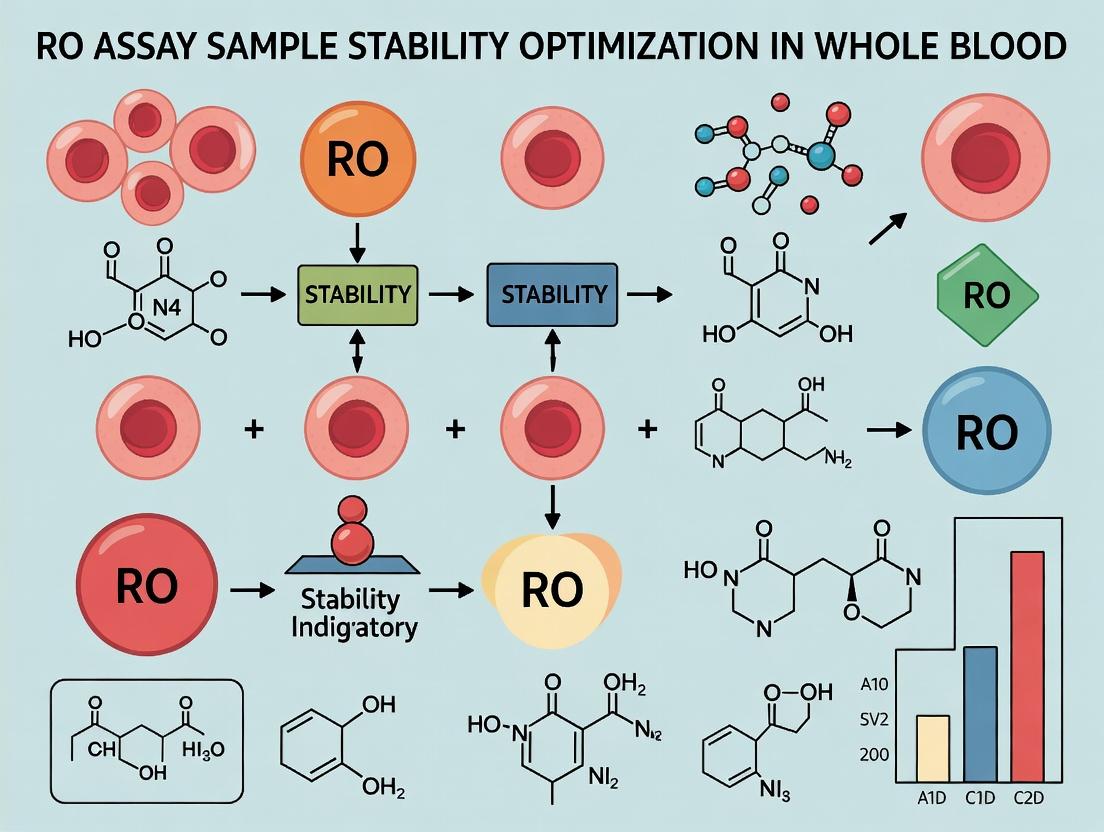
This comprehensive guide details essential strategies for optimizing receptor occupancy (RO) assay sample stability in whole blood, a critical factor for reliable pharmacokinetic and pharmacodynamic data in drug development.
Ultimate Guide to RO Assay Whole Blood Sample Stability: Best Practices for Preclinical and Clinical Research
Abstract
This comprehensive guide details essential strategies for optimizing receptor occupancy (RO) assay sample stability in whole blood, a critical factor for reliable pharmacokinetic and pharmacodynamic data in drug development. Covering foundational stability science, standardized methodological protocols, targeted troubleshooting, and robust validation approaches, it provides researchers and scientists with actionable knowledge to minimize pre-analytical variability, ensure data integrity, and accelerate therapeutic programs from bench to bedside.
The Critical Science of Whole Blood Stability: Why RO Assay Results Depend on Pre-Analytical Control
Defining Sample Stability in the Context of Receptor Occupancy Assays
This technical support center addresses key challenges in Receptor Occupancy (RO) assay sample stability, a critical factor in whole blood research for drug development. Stability directly impacts the accuracy of measuring the percentage of target receptors occupied by a therapeutic agent.
Troubleshooting Guides & FAQs
Q1: Our RO values decrease significantly when processing whole blood samples after 24 hours of storage at 4°C. What are the likely causes and solutions? A: This indicates instability of the receptor-antibody complex or receptor degradation. Key factors include:
- Cause: Internalization of the receptor-drug complex, enzymatic degradation, or shedding of the target receptor.
- Solution: Implement immediate fixation (e.g., with paraformaldehyde) after blood draw to "freeze" the RO state. Validate shorter hold times (e.g., <8 hours) for your specific target. Introduce protease inhibitors or store samples in stabilizing commercial blood collection tubes.
Q2: How does freeze-thaw cycling affect RO measurements in cryopreserved PBMCs derived from whole blood? A: Freeze-thaw cycles can cause substantial loss of receptor epitopes and increase non-specific binding.
- Recommendation: Avoid more than one freeze-thaw cycle. Use controlled-rate freezing and thaw samples rapidly in a 37°C water bath. Include a viability dye in your flow cytometry panel to gate out dead cells.
Q3: We observe high background fluorescence in our flow cytometry-based RO assay. How can we reduce it? A: High background often stems from non-specific binding of detection antibodies or Fc receptor interactions.
- Solution: Implement an Fc block step prior to staining. Titrate all antibodies to optimal concentrations. Include a fluorescence-minus-one (FMO) control for accurate gating. Ensure thorough erythrocyte lysis and washing steps.
Q4: What are the critical pre-analytical variables affecting sample stability for RO assays? A: The table below summarizes key variables and their impact:
| Variable | Impact on Stability | Recommended Mitigation |
|---|---|---|
| Time to Processing | RO signal decay over time; varies by target. | Establish stability window via experiment. Process within 6-8 hours if unfixed. |
| Storage Temperature | 4°C slows degradation. Room temp accelerates it. | Hold at 4°C if processing is delayed. For long-term, freeze stabilized cells. |
| Anticoagulant | EDTA, Heparin, or Citrate can differentially affect cell surface epitopes. | Validate the anticoagulant used in clinical trials. Use consistent type across study. |
| Fixation | Can stabilize the RO state but may mask epitopes. | Test fixation time/concentration; 1-2% PFA for 10-30 min is common starting point. |
Experimental Protocols
Protocol 1: Establishing a Sample Stability Time Course
Objective: To define the maximum allowable hold time for whole blood samples before RO signal degradation. Materials: See "Research Reagent Solutions" below. Method:
- Collect fresh human whole blood into appropriate anticoagulant.
- Spike with the therapeutic antibody at relevant concentrations.
- Incubate at 37°C for 60 minutes to achieve binding equilibrium.
- Aliquot samples and store under test conditions (e.g., RT or 4°C).
- At pre-defined time points (e.g., 0, 2, 6, 24, 48h), process samples: a. Lyse erythrocytes using ammonium chloride or commercial lysing buffer. b. Wash cells twice with FACS buffer (PBS + 2% FBS). c. Perform surface staining with anti-drug conjugate and phenotypic markers. d. Acquire data on a flow cytometer.
- Analyze Median Fluorescence Intensity (MFI) and % RO over time. The stability threshold is typically a >20% change from baseline (T=0h).
Protocol 2: Evaluating Fixation for RO Stabilization
Objective: To determine if fixation preserves the RO state for delayed analysis. Method:
- Follow steps 1-3 of Protocol 1.
- Immediately after incubation, add an equal volume of pre-warmed 2% Paraformaldehyde (PFA) in PBS to the whole blood. Mix gently. Final concentration = 1% PFA.
- Fix at room temperature for 15 minutes.
- Quench the fixation by adding glycine to a final concentration of 0.1M or with excess FACS buffer.
- Store fixed samples at 4°C. Process for staining at delayed time points (e.g., 24, 72, 168h).
- Compare RO values from fixed samples to unfixed controls processed immediately.
Diagrams
RO Assay Sample Processing Workflow
Fates of the Receptor-Occupancy Complex Post-Sampling
The Scientist's Toolkit: Research Reagent Solutions
| Item | Function in RO Assay Stability |
|---|---|
| Heparin/EDTA Tubes | Anticoagulants for blood collection; choice can affect cell surface epitope integrity. |
| Paraformaldehyde (PFA) | Cross-linking fixative used to stabilize the RO complex on the cell surface. |
| Fc Receptor Block | Reduces non-specific antibody binding, improving signal-to-noise ratio. |
| Cryopreservation Media | Contains DMSO and FBS to maintain cell viability during freeze-thaw for PBMCs. |
| Protease Inhibitor Cocktail | Can be added to whole blood to prevent enzymatic cleavage of target receptors. |
| Stabilizing Blood Tubes | Commercial tubes (e.g., Cyto-Chex) preserve cell surface antigens for extended periods. |
| Ammonium Chloride Lysing Buffer | Gently removes red blood cells with minimal impact on white blood cell surface markers. |
| Fluorochrome-conjugated Anti-Idiotype Antibody | Detection reagent specific to the therapeutic drug, enabling RO measurement. |
| Viability Dye (e.g., 7-AAD, PI) | Distinguishes live from dead cells; critical for accurate analysis post-thaw or long hold. |
Troubleshooting Guides & FAQs for RO Assay Sample Stability Optimization
Q1: Why do I observe a rapid decline in my target analyte signal in whole blood samples stored at room temperature? A: The primary cause is often enzymatic degradation. Plasma contains proteases (e.g., serine proteases, metalloproteases) and nucleases that remain active ex vivo. For labile analytes like peptides or phosphorylated proteins, this can lead to significant degradation within minutes to hours. Immediate processing or the use of broad-spectrum protease/phosphatase inhibitor cocktails is critical.
Q2: How can I differentiate between cellular uptake and enzymatic degradation of my compound in whole blood stability studies? A: Perform a comparative incubation experiment. Use three conditions: 1) Whole blood, 2) Plasma isolated immediately (centrifuged at 4°C with inhibitor), and 3) Plasma with added inhibitors. Measure analyte concentration over time. A faster decline in whole blood compared to inhibited plasma suggests significant cellular uptake or metabolism.
Q3: My assay shows high variability in samples from different donors. What are the key factors? A: Donor-dependent variability often stems from differences in:
- Baseline Oxidative Stress: Variable levels of reactive oxygen species (ROS) and antioxidant capacity (e.g., glutathione, catalase).
- Hematocrit: Affects viscosity, cellular content, and compound partitioning.
- Immune Cell Activation: Varying white blood cell counts and states can alter enzymatic and oxidative degradation pathways.
Q4: What is the most effective way to mitigate oxidative degradation in whole blood samples for my RO assay? A: Implement a combination strategy. Add antioxidants like ascorbic acid (1-5 mM) or Trolox (water-soluble vitamin E analog, 50-200 µM) at the point of collection. Also, consider chelating agents like EDTA (which also acts as an anticoagulant) to sequester metal ions that catalyze Fenton reactions. Work under inert atmosphere (e.g., N₂ blanket) if extreme sensitivity is required.
Q5: After implementing common inhibitors, I still see degradation. What are the less obvious pathways? A: Consider esterase activity (abundant in blood), which hydrolyzes ester and amide bonds in many drug-like compounds. Also, evaluate the role of exosomes and extracellular vesicles, which can harbor active enzymes and facilitate degradation in the supernatant.
Table 1: Half-Life (T½) of Model Compounds Under Different Stabilization Conditions
| Compound Class | No Stabilization (T½, min) | With Protease Inhibitors (T½, min) | With Protease + Antioxidant Cocktail (T½, min) | Primary Degradation Pathway |
|---|---|---|---|---|
| Phosphorylated Peptide | 8.2 ± 1.5 | 45.3 ± 6.7 | 48.1 ± 5.9 | Enzymatic (Phosphatases) |
| Unstable Small Molecule | 22.5 ± 4.1 | 25.8 ± 3.3 | 152.0 ± 18.4 | Oxidative Stress |
| Therapeutic Antibody | 1440 ± 120 | 1380 ± 110 | 1500 ± 135 | Cellular (Phagocytosis) |
| mRNA | < 2.0 | 2.5 ± 0.8 | 2.8 ± 0.7 | Enzymatic (RNases) |
Table 2: Impact of Pre-Analytical Variables on Key Biomarker Recovery (%)
| Variable | Immediate Process (4°C) | 1 Hour Room Temp | 1 Hour on Wet Ice | Recommended Mitigation |
|---|---|---|---|---|
| High Hematocrit (55%) | 100% (Reference) | 62% | 95% | Adjust for volume, use chilled stabilization buffer |
| Leukocytosis (High WBC) | 100% | 45% | 88% | Lyse/remove cells rapidly, use metabolic inhibitors |
| Hemolyzed Sample | 78% | 31% | 75% | Avoid mechanical stress, use gentle mixing |
Experimental Protocols
Protocol 1: Assessing Enzymatic vs. Oxidative Degradation Objective: To quantify the contribution of enzymatic and oxidative pathways to analyte loss. Materials: See Scientist's Toolkit below. Procedure:
- Collect fresh whole blood into three pre-chilled tubes: Tube A (EDTA only), Tube B (EDTA + protease inhibitor cocktail), Tube C (EDTA + protease inhibitor cocktail + 2 mM ascorbic acid/1 mM Trolox).
- Spike the target analyte into each tube to a known concentration.
- Aliquot samples immediately (T=0) and at intervals (e.g., 5, 15, 30, 60 min).
- For each time point, immediately centrifuge at 2000 x g for 10 minutes at 4°C to isolate plasma.
- Add a denaturing/stabilizing solution (e.g., containing SDS or acid) to the plasma aliquot to halt all activity.
- Analyze analyte concentration using your RO assay (e.g., LC-MS/MS, ELISA).
- Plot concentration vs. time. The improvement in half-life between conditions identifies the dominant pathway.
Protocol 2: Evaluating Cellular Contribution via Selective Lysis Objective: To determine if degradation occurs in plasma or requires cellular components. Materials: Hypotonic lysis buffer, isotonic control buffer. Procedure:
- Aliquot whole blood. Treat one aliquot with hypotonic lysis buffer to rupture nucleated cells and platelets. Treat a control with isotonic buffer.
- Centrifuge both to remove debris, resulting in "cell-lysed plasma" and "cell-intact plasma."
- Spike analyte into both plasma types and incubate at room temperature.
- Sample at intervals, denature, and assay.
- Faster degradation in cell-lysed plasma indicates release of intracellular degradative enzymes (e.g., cathepsins, nucleases).
Visualization: Pathways and Workflows
Enzymatic Degradation Pathway in Whole Blood
Optimal Pre-Analytical Workflow for Sample Stability
Oxidative Stress Cascade and Inhibition in Blood
The Scientist's Toolkit: Key Research Reagent Solutions
| Reagent / Material | Primary Function in Stability Optimization | Example Product / Concentration |
|---|---|---|
| Broad-Spectrum Protease Inhibitor Cocktail | Inhibits serine, cysteine, aspartic proteases, and aminopeptidases. Crucial for protein/peptide analytes. | e.g., Commercial tablets/EDTA-free solutions. Use per manufacturer's guide for blood. |
| Phosphatase Inhibitor Cocktail | Preserves phosphorylation states by inhibiting alkaline, acid, and tyrosine phosphatases. | Sodium fluoride (10-50 mM), Sodium orthovanadate (1 mM), β-glycerophosphate. |
| Antioxidants: Ascorbic Acid/Trolox | Aqueous-phase radical scavengers that neutralize ROS in plasma. | L-ascorbic acid (1-5 mM), Trolox (50-200 µM). Prepare fresh. |
| Metal Chelators: EDTA, DTPA | Bind transition metals (Fe²⁺, Cu⁺) to prevent catalytic generation of ROS via Fenton reaction. | K₂EDTA (1.5-2.2 mg/mL blood) as anticoagulant. DTPA for stronger chelation. |
| Esterase Inhibitors | Protect compounds containing ester or amide bonds from hydrolysis by plasma esterases. | Benzamidine (1-10 mM), NaF (can also inhibit some esterases). |
| RNase/DNase Inhibitors | Protect extracellular RNA/DNA from degradation by ubiquitous nucleases. | Recombinant RNase inhibitors (0.5-1 U/µL), DEPC-treated tubes/reagents. |
| Rapid Plasma Separation Tubes | Contain a gel barrier and stabilizers to quickly separate plasma from cells during centrifugation. | Must be validated for your specific analyte to avoid adsorption issues. |
| Pre-Chilled, Stabilizer-Coated Collection Tubes | Immediate inhibition of degradation upon blood draw by having inhibitors/antioxidants in the tube. | Critical for high-turnover or oxidation-prone analytes. |
Troubleshooting Guides & FAQs
Q1: During our RO assay, we observe significant analyte degradation in EDTA plasma compared to lithium heparin tubes after 4 hours at room temperature. What is the likely cause and how can we mitigate this? A: EDTA, while effective at chelating calcium, can inhibit certain metalloproteinases required for stabilizing some target analytes in whole blood, leading to faster degradation. This is particularly relevant for peptide biomarkers. Mitigation: 1) Validate the specific anticoagulant for your analyte early in method development. 2) Process EDTA tubes first and immediately after draw. 3) Consider implementing a proprietary protease inhibitor cocktail additive if switching anticoagulant is not feasible. 4) Chill samples immediately at 4°C if processing delay is anticipated.
Q2: Our stability data shows high variability for phosphorylated protein targets in citrate whole blood beyond 2 hours. What steps can we take to improve pre-centrifugation stability? A: Phosphoprotein stability is highly susceptible to time and temperature due to ongoing kinase/phosphatase activity. Protocol: Implement a "stabilization cocktail" additive at draw. A validated mix of phosphatase inhibitors (e.g., sodium fluoride, β-glycerophosphate) and kinase inhibitors (e.g., sodium orthovanadate, staurosporine) is required. Immediately mix the blood with the additive by gentle inversion 8-10 times. Place tubes in a pre-chilled 4°C rack or slurry immediately. Process within the validated 2-hour window, keeping all steps cold.
Q3: We need to ship whole blood samples for central RO testing. What are the critical parameters for maintaining core stability during logistics? A: The key is defining and strictly controlling the "cold chain" or "ambient" protocol. Guide: 1) Use insulated shipping containers validated for temperature maintenance. 2) Include continuous temperature loggers in every shipment. 3) Pre-condition coolant packs based on season and transit time. 4) For ambient shipments, use chemical stabilizer additives validated for your analyte and ensure the exterior temperature during transit does not exceed 25°C. 5) Always ship in the primary blood collection tube to minimize handling.
Q4: Our validation failed because analyte recovery dropped after 3 freeze-thaw cycles, despite being stable at -80°C long-term. What additives or handling changes can improve freeze-thaw stability? A: Repeated freezing and thawing can cause protein denaturation, aggregation, or exposure to repeated pH shifts. Solutions: 1) Aliquot samples into single-use volumes before initial freezing to avoid repeated thawing. 2) Add cryoprotectants like sucrose (0.25 M final concentration) or trehalose to the plasma/serum post-centrifugation. 3) Ensure rapid thawing in a 37°C water bath with gentle agitation, not at room temperature. 4) Avoid using EDTA for analytes sensitive to freeze-thaw if alternatives are viable.
Q5: How do we systematically choose between K2EDTA, Na Heparin, and Citrate for a novel biomarker RO assay? A: Conduct a structured anticoagulant screening experiment. Protocol: Draw blood from 6 donors into all three tube types. Process aliquots at T=0 (immediately), T=1h, T=4h, and T=24h at both 4°C and RT (n=3 per condition). Centrifuge under identical conditions. Measure analyte concentration and compare % recovery vs. T=0 for each condition. The anticoagulant with the highest recovery at the latest timepoint at your required storage temperature is the lead candidate. Include a protease inhibitor in a separate tube as an exploratory arm.
Table 1: Analyte Recovery (%) by Anticoagulant and Pre-Centrifugation Hold Condition
| Analyte Class | Anticoagulant | 0h, RT (Baseline) | 2h, RT | 4h, RT | 4h, 4°C | 24h, 4°C |
|---|---|---|---|---|---|---|
| Labile Peptide A | K2EDTA | 100% | 78% | 45% | 95% | 80% |
| Labile Peptide A | Li Heparin | 100% | 95% | 90% | 99% | 92% |
| Phosphoprotein B | Na Citrate | 100% | 65% | 30% | 98% | 90% |
| Phosphoprotein B | K2EDTA + PI* | 100% | 99% | 97% | 99% | 95% |
| Small Molecule C | K2EDTA | 100% | 100% | 100% | 100% | 100% |
| Small Molecule C | Li Heparin | 100% | 99% | 98% | 100% | 99% |
*PI = Protease/Phosphatase Inhibitor Cocktail
Table 2: Effect of Additives on Long-Term Storage Stability (-80°C)
| Additive | Final Conc. | Analyte Recovery After 12 Months | Max Freeze-Thaw Cycles Stable (≤15% loss) |
|---|---|---|---|
| None (Plain Serum) | N/A | 72% | 2 |
| 0.1% BSA | 1 mg/mL | 85% | 3 |
| 0.25 M Sucrose | 0.25 M | 95% | 5 |
| Commercial Stabilizer X | 5% v/v | 98% | >7 |
Experimental Protocols
Protocol 1: Pre-Analytical Stability Profiling for Anticoagulant Selection
- Materials: Venous blood from consented donors, validated collection tubes for each anticoagulant (K2EDTA, Li Heparin, Na Citrate), timer, temperature-monitored racks for RT (20-25°C) and 4°C, centrifuge, pipettes, aliquot tubes.
- Procedure: For each donor and tube type, fill tubes to nominal volume. Start timer upon completion of draw.
- Aliquoting: For each timepoint (e.g., 0h, 0.5h, 1h, 2h, 4h, 8h), gently invert the tube 5 times and immediately withdraw X mL of whole blood into a pre-labeled microcentrifuge tube.
- Processing: Centrifuge all aliquots at the same speed, time, and temperature (e.g., 1500xg, 10 min, 4°C) at the end of the experiment to ensure identical processing.
- Storage: Immediately transfer plasma to cryovials and freeze at -80°C.
- Analysis: Batch analyze all samples in a single run. Calculate % recovery relative to the earliest timepoint (typically 0h at 4°C).
Protocol 2: Validating a Cold Chain Shipment Protocol
- Materials: Stabilized whole blood or plasma samples, temperature data loggers, validated shipping container (e.g., expanded polystyrene box), appropriate coolant (frozen gel packs for 2-8°C, phase change material for specific temps), absorbent material.
- Procedure: Pre-condition coolant and container to the target temperature for 24h. Activate and initialize temperature logger.
- Packing: Place logger, samples (surrounded by absorbent material), and coolant in the container according to the validated configuration. Seal.
- Shipment & Monitoring: Ship via designated courier. Upon receipt, immediately download logger data to confirm temperature remained within the validated range (e.g., 2-8°C). Only process samples if the temperature excursion is ≤1 hour above 8°C or below 2°C.
- Stability Confirmation: Analyze shipped samples alongside non-shipped controls from the same pool.
Diagrams
The Scientist's Toolkit: Research Reagent Solutions
| Item | Function & Rationale |
|---|---|
| K2EDTA Tubes | Prevents coagulation by chelating calcium. Standard for hematology; can affect metal-dependent enzymes and is not ideal for all proteomic studies. |
| Lithium Heparin Tubes | Inhibits coagulation by activating antithrombin III. Often preferred for chemistry/immunoassays as it preserves more native state, but can interfere with PCR. |
| Na Citrate Tubes | Binds calcium reversibly. Used for coagulation tests. Lower concentration can be gentler on cells for some functional assays. |
| Protease Inhibitor Cocktail | Broad-spectrum blend (e.g., targeting serine, cysteine, aminopeptidases) added at draw to halt protein/peptide degradation immediately. |
| Phosphatase Inhibitor Cocktail | Mix (e.g., sodium fluoride, β-glycerophosphate) to preserve phosphorylated protein epitopes by inhibiting cellular phosphatases. |
| RNase Inhibitors | Added to whole blood for RNA stability studies to prevent degradation by ubiquitous RNases. |
| Cryoprotectants (Sucrose/Trehalose) | Added to plasma pre-freeze to form a glassy matrix, reducing ice crystal formation and stabilizing proteins during freeze-thaw cycles. |
| Temperature-Validated Shipment Kits | Insulated containers with specific coolant configurations, certified to maintain a defined temperature range for a set duration during transit. |
| Chemical Stabilizer Additives | Proprietary blends (e.g., Streck Cell-Free DNA BCT) that lyse cells and inhibit nucleases/enzymes, allowing ambient storage of certain analytes. |
Technical Support Center
Troubleshooting Guides
Guide 1: Addressing Signal Drift in Longitudinal Whole Blood RO Assays
- Problem: Quantified signal (e.g., MFI, RLU) shows a consistent upward or downward trend over assay runtime, independent of biological activity.
- Immediate Action:
- Verify reagent temperature equilibration to 22±2°C prior to use.
- Confirm plate reader is properly warmed up and calibrated per manufacturer schedule.
- Run a stability QC sample (lyophilized control) to distinguish assay drift from sample degradation.
- Root Cause Analysis: Common causes include reagent degradation, ambient temperature fluctuations, or microtiter plate evaporation. For whole blood, premature leukocyte activation during storage is a key contributor.
Guide 2: Investigating Unexpected False Negatives
- Problem: Known positive control or stimulated sample fails to generate expected response.
- Immediate Action:
- Check the integrity of co-stimulatory/blocking antibodies and detection reagents using a fresh standard.
- Confirm anticoagulant used in blood collection (e.g., Heparin vs. Citrate) is compatible with the target pathway (e.g., Ca²⁺-dependent signaling).
- Re-assay with a reduced whole blood hold time (<2 hours post-draw) to rule out ex vivo degradation.
- Root Cause Analysis: Often due to target receptor shedding, phosphatase/phosphate activity during prolonged pre-assay handling, or inhibitor carryover from collection tubes.
Guide 3: Diagnosing Loss of Dynamic Range
- Problem: Assay fails to distinguish between high and low analyte concentrations; dose-response curve is compressed.
- Immediate Action:
- Titrate the critical detection reagent (e.g., fluorescent antibody, substrate) to ensure it is not saturating or limiting.
- Assess the health of the blood sample via trypan blue exclusion on isolated PBMCs from an aliquot.
- Review sample dilution protocol to ensure it is within the linear range of the instrument.
- Root Cause Analysis: Can be caused by target saturation on high-affinity cells, loss of low-affinity cell populations due to instability, or matrix effects from hemolyzed samples.
Frequently Asked Questions (FAQs)
Q1: What is the maximum recommended hold time for whole blood prior to initiating an RO assay to minimize instability artifacts? A: Data varies by target. For most phosphorylated epitopes (p-STAT, p-ERK), aim for ≤4 hours at ambient temperature. For surface activation markers (CD69, CD25), ≤8 hours may be acceptable. See Table 1 for specific data. Always establish a lab-specific stability window.
Q2: How does the choice of anticoagulant impact RO readout stability? A: Critically. Heparin can non-specifically bind cytokines and growth factors. Citrate chelates calcium, affecting Ca²⁺-flux pathways. EDTA is a strong chelator that can inhibit metalloproteases but also disrupt cell adhesion. See Table 2 for a comparison.
Q3: Our positive control signal drifts between plates. How should we normalize data? A: Implement a dual-normalization strategy: 1) Intra-plate: Use the mean of replicate assay control samples (e.g., low/high cytokine stimulant). 2) Inter-plate: Use a stable, lyophilized control or reference sample on every plate. Report data as Fold-Change over unstimulated control (FC) or as a percentage of the plate-specific maximum response.
Q4: What are the critical storage conditions for conjugated detection antibodies to prevent increased background and false negatives? A: Store aliquots at -80°C in the dark long-term. Avoid repeated freeze-thaw cycles (>3). For working stocks, store at 4°C for up to two weeks in a protein-stabilizing buffer, not pure PBS.
Q5: Which signaling pathways are most susceptible to pre-analytical instability in whole blood? A: Rapid, transient phosphorylation events (e.g., p-AKT, p-S6) are highly susceptible. Cytokine-induced Jak-STAT signaling is also sensitive to prolonged hold times. Surface marker upregulation (e.g., CD40L on T-cells) can be lost due to shedding.
Table 1: Impact of Whole Blood Hold Time on Key RO Readouts
| Analyte (Assay) | 2-Hour Hold (% of Baseline) | 6-Hour Hold (% of Baseline) | 24-Hour Hold (% of Baseline) | Primary Instability Effect |
|---|---|---|---|---|
| p-STAT5 (Phosphoflow) | 98% | 75% | 20% | Signal Drift / False Negative |
| CD62P Expression (Flow) | 100% | 90% | 50% | Loss of Dynamic Range |
| NF-κB Activation (Reporter) | 99% | 85% | 10% | False Negative |
| IL-2 Secretion (MSD) | 100% | 95% | 80% | Signal Drift (Decrease) |
Table 2: Anticoagulant Effect on Assay Dynamic Range (Signal-to-Noise Ratio)
| Anticoagulant | GPCR Ca²⁺ Flux Assay | TLR Agonist Cytokine Release | Phospho-Epitope Detection (p-ERK) |
|---|---|---|---|
| Sodium Heparin | 8.5 | 15.2 | 12.1 |
| Citrate | 2.1* | 14.8 | 10.5 |
| EDTA | 1.0* | 9.5 | 8.2 |
| CTAD | 7.9 | 16.5 | 13.8 |
*Severe loss due to Ca²⁺ chelation.
Experimental Protocols
Protocol 1: Establishing a Stability Time-Course for Whole Blood Phosphoflow Assays
- Objective: Determine the acceptable ex vivo hold time for blood prior to fixation to preserve phospho-epitope signals.
- Materials: See "Scientist's Toolkit" below.
- Method:
- Draw whole blood into multiple tubes containing the intended anticoagulant (e.g., Na-Heparin).
- Immediately place tubes on a gentle rocker at room temperature (RT).
- At defined intervals (t=0, 1, 2, 4, 6, 8 hours), remove 100 µL of blood and add to a deep-well plate containing 100 µL of pre-warmed stimulation media (e.g., with/without cytokine).
- Incubate for the precise stimulation time (e.g., 15 min) at 37°C.
- Immediately add 1 mL of pre-warmed Phosflow Lyse/Fix Buffer. Mix and incubate 10 min at 37°C.
- Pellet, wash, and permeabilize with ice-cold methanol. Store at -80°C or stain immediately for flow cytometry.
Protocol 2: QC Protocol for Detecting Reagent-Driven Signal Drift
- Objective: Systematically identify if signal drift originates from biological samples or assay reagents.
- Method:
- Prepare a large aliquot of a stable control (e.g., frozen PBMCs, lyophilized cell lysate).
- Over the course of multiple assay runs, include this control in triplicate on every plate.
- Plot the mean signal (e.g., MFI, RLU) of this control versus the plate run order.
- A statistically significant trend (linear regression, p<0.05) indicates reagent or instrument drift. A flat line with high variance points to sample instability.
Visualizations
Title: How Pre-Analytical Factors Degrade RO Assay Data
Title: Optimal Workflow for Stable Whole Blood RO Assays
The Scientist's Toolkit: Research Reagent Solutions
| Item | Function in Stability Optimization |
|---|---|
| CTAD Tubes | Anticoagulant (Citrate/Theophylline/Adenosine/Dipyridamole) that inhibits platelet activation and preserves labile epitopes better than heparin or citrate alone. |
| Phosflow Lyse/Fix Buffer | Combined lyse/fixative that rapidly stabilizes intracellular phosphorylation states by crosslinking proteins and inactivating phosphatases. |
| Protein Transport Inhibitors | GolgiPlug (Brefeldin A) / GolgiStop (Monensin) arrest cytokine secretion, preventing loss to supernatant and enabling intracellular detection. |
| Lyophilized Control Cells/Lysate | Provides a stable, run-to-run reference material for normalizing signal drift and detecting reagent degradation. |
| MSD/U-PLEX Assay Plates | Multi-array electrochemiluminescence platforms offer wide dynamic range, reducing sample dilution needs and matrix effects from hemolysis. |
| Cryopreservation Media | Defined-serum free media containing DMSO for stable, long-term storage of PBMC controls from large donor batches. |
| Protease/Phosphatase Inhibitor Cocktails | Added immediately during cell lysis for downstream assays to prevent post-lysis degradation of analytes. |
Regulatory Expectations for Sample Stability Documentation in GLP/GCP Studies
Technical Support Center
Troubleshooting Guides & FAQs
Q1: Our stability results show significant degradation at the first time point. What are the most likely causes and how should we proceed?
A: This is a critical failure. Likely causes include:
- Pre-analytical Issues: Inconsistent blood draw technique, incorrect anticoagulant, or improper mixing.
- Processing Delays: Time between collection and processing exceeded the unknown stable period.
- Storage Conditions Error: Samples placed at incorrect temperature immediately after collection.
- Assay Sensitivity: The assay may be measuring an inherently labile analyte.
Investigation Protocol:
- Audit Trail Review: Immediately review all electronic and paper records for the affected runs. Check freezer/logbook temperatures and sample handling timestamps.
- Re-Analyze Backup Samples: If available, analyze backup aliquots from the same draw to confirm the result.
- Spiked Sample Test: Prepare fresh control matrix, spike with analyte, and process immediately under ideal, documented conditions. If stability is now observed, the issue is almost certainly pre-analytical.
- Documentation: Document the investigation, root cause analysis, and corrective actions in a deviation report. The stability protocol may need amendment with more immediate time points or modified procedures.
Q2: How do we define "stable" for a sample? Is a 15% loss acceptable?
A: Regulatory guidelines do not prescribe a fixed percentage. Stability is established relative to a freshly prepared control (time-zero). Acceptance criteria are study-specific and must be predefined in the protocol.
- Common Industry Benchmark: The sample is considered stable if the mean measured concentration remains within ±15% of the nominal concentration (or the time-zero mean) with appropriate precision (e.g., ±20% CV). This aligns with common bioanalytical method validation tolerances.
- Key Justification: The established stability must support the tolerances of the actual study samples' storage and handling conditions. The criteria should be scientifically justified and documented.
Q3: What is the minimum number of replicates and concentrations required for a GLP-compliant stability assessment?
A: While ICH and FDA guidance provide flexibility, standard practice is as follows:
| Stability Type | Minimum Concentrations | Replicates per Concentration | Key Rationale |
|---|---|---|---|
| Short-term/Bench-top | 2 (Low & High QC) | 3-6 | Covers range of assay and expected degradation. |
| Freeze-Thaw | 2 (Low & High QC) | 3-6 | Evaluates effect of typical processing cycles. |
| Long-term | 2 (Low & High QC) | 3-6 | Monitors integrity over planned storage duration. |
| Stock Solution | 1 (mid-range) | 3 | Assesses stability of prepared reagent. |
Detailed Protocol for Freeze-Thaw Stability:
- Prepare a large pool of low and high QC samples in the appropriate matrix (e.g., processed whole blood lysate).
- Aliquot into the number of vials needed for 3-5 cycles (e.g., 3 cycles x 2 concentrations x 3 replicates = 18 vials per concentration).
- Cycle 0: Analyze three aliquots immediately after preparation.
- Cycle 1: Freeze remaining aliquots at the study storage temperature (e.g., -80°C) for 24 hours. Thaw unassisted at room temperature. Once fully thawed, refreeze for 24 hours.
- Cycle 2: Repeat the thaw and refreeze process. After the second thaw, analyze three aliquots per concentration.
- Continue for the pre-defined number of cycles (typically 3-5).
- Compare mean results at each cycle to the nominal/time-zero mean against pre-set acceptance criteria.
Q4: How should we document unexpected stability failures in a regulatory study?
A: Transparency is paramount. Documentation must be included in the final study report.
- Describe the Failure: Clearly state the condition (e.g., "3rd freeze-thaw cycle at -20°C").
- Present All Data: Include all replicate data, means, standard deviations, and percent change in a table, even the failing data.
- Impact Assessment: Explicitly state the implications. Example: "Samples are stable for up to 2 freeze-thaw cycles. Study samples undergoing more than 2 cycles were not analyzed, and alternate samples were used."
- Reference the Deviation: Cross-reference the formal investigation report (DEV-XXX) that details root cause and corrective actions.
Table 1: Example Stability Data from a Hypothetical RO Assay Analyte in Whole Blood Lysate
| Stability Condition | Nominal Conc. (ng/mL) | Mean Back-calculated Conc. (ng/mL) | % of Nominal | SD | CV% | n | Within ±15%? |
|---|---|---|---|---|---|---|---|
| Bench-top, 4h at RT | 10.0 (LQC) | 9.5 | 95.0 | 0.6 | 6.3 | 6 | Yes |
| 200.0 (HQC) | 188.2 | 94.1 | 11.3 | 6.0 | 6 | Yes | |
| Freeze-Thaw (3 Cycles) | 10.0 (LQC) | 8.9 | 89.0 | 0.7 | 7.9 | 6 | Yes |
| 200.0 (HQC) | 172.0 | 86.0 | 12.0 | 7.0 | 6 | No | |
| Long-term, -80°C, 6mo | 10.0 (LQC) | 9.8 | 98.0 | 0.5 | 5.1 | 6 | Yes |
| 200.0 (HQC) | 205.0 | 102.5 | 12.5 | 6.1 | 6 | Yes |
Table 2: Regulatory Guidance Reference for Stability Documentation
| Guideline | Code/Section | Key Stability Documentation Requirement |
|---|---|---|
| ICH E6 (R2) - GCP | 8.3.20, 8.3.21 | Integrity of study samples must be preserved. Storage conditions and time of sample retention must be documented. |
| FDA Bioanalytical Method Validation | 2018 Guidance | Recommends stability experiments for analyte in matrix under all conditions from collection to analysis. Data must be reported. |
| OECD Principles of GLP | Sect. 2, 9 | All raw data, study plans, and final reports must be archived. Stability data is part of the method validation raw data. |
Experimental Workflow Diagram
Diagram Title: Sample Stability Validation Workflow for RO Assays
The Scientist's Toolkit: RO Assay Sample Stability Research
Table 3: Essential Research Reagent Solutions for Whole Blood Sample Stability Studies
| Item | Function in Stability Studies |
|---|---|
| Validated Anticoagulant Tubes (e.g., K2EDTA, Heparin) | Ensures consistent sample matrix at collection; choice can impact analyte stability. |
| Protein/Enzyme Stabilizer Cocktails | Inhibits proteolytic degradation of target RO analytes in whole blood/lysate. |
| Protease/Phosphatase Inhibitors (e.g., PMSF, Sodium Orthovanadate) | Critical for preserving phosphorylation states and protein integrity in signaling assays. |
| Matrix-Matched Calibrators & QC Materials | Provides accurate reference points for quantifying analyte loss over time. |
| Stable, Isotope-Labeled Internal Standard (for MS assays) | Corrects for variability during sample processing and analysis, improving stability assessment accuracy. |
| Controlled-Temperature Storage Equipment (e.g., -80°C Freezer) | Essential for maintaining defined long-term storage conditions; requires continuous monitoring. |
| Temperature Data Loggers | Provides documented evidence that storage conditions were maintained within specified ranges. |
Step-by-Step Protocols: Establishing Robust Whole Blood Handling for RO Assays
Technical Support Center
FAQs & Troubleshooting
Q1: Why is defining a pre-collection stability protocol critical for receptor occupancy (RO) assays in whole blood studies? A: RO measurements are highly time-sensitive as internalization, dissociation, and cellular degradation begin immediately post-collection. A pre-defined protocol ensures the measured occupancy reflects the in vivo state, not an artifact of ex vivo instability. Without it, pharmacokinetic and pharmacodynamic data can be unreliable.
Q2: What are the primary factors that affect the stability of RO assay targets in whole blood? A: Key factors include:
- Target Biology: Internalization rate, ligand dissociation constant (Kd), and receptor shedding.
- Temperature: Ambient vs. chilled processing.
- Time: Delay from draw to stabilization (e.g., RBC lysis, fixation, staining).
- Anticoagulant: Choice of EDTA, heparin, or citrate.
- Drug Interference: The therapeutic drug can continue to bind or dissociate ex vivo.
Q3: Our RO signal decays rapidly. How can we troubleshoot this? A: Follow this diagnostic path:
- Immediate Fixation Test: Aliquot and fix one sample immediately post-venipuncture. Compare to your standard protocol.
- Temperature Check: Ensure samples are held at the validated temperature (often 2-8°C) without freezing.
- Reagent Audit: Verify the stability of critical reagents like detection antibodies or conjugate.
- Protocol Review: Ensure no step (e.g., wash buffers, incubation times) deviates from the validated method.
Q4: How do we select the right stabilizing agent for our assay? A: Selection requires empirical testing. Common agents include:
- Sodium Azide: Inhibits internalization.
- Protease Inhibitors: Prevent enzymatic degradation.
- pH Stabilizers: Maintain physiological pH.
- Fixatives (e.g., PFA): Cross-link cell surface proteins. Caution: Fixation can alter epitopes.
Table 1: Comparison of Common Stabilization Approaches for RO Assays
| Stabilization Method | Typical Holding Time Before Processing | Key Advantage | Primary Limitation | Best For |
|---|---|---|---|---|
| Ambient Temp (18-25°C) | ≤ 4-6 hours | Simplicity, no chilling equipment needed. | Fastest degradation; least stable. | Very stable targets or proof-of-concept. |
| Refrigerated (2-8°C) | ≤ 24-48 hours | Slows metabolism & internalization significantly. | Requires cold chain; not all targets are stabilized. | Most common initial approach. |
| Immediate Fixation (e.g., 1-4% PFA) | Up to 7 days | Halts all biological processes; excellent stability. | May mask epitopes; requires permeabilization for intracellular markers. | High-throughput labs with batch analysis. |
| Commercial Stabilization Tubes | Up to 72+ hours | Standardized, often validated for specific cell types. | Costly; may not be optimized for your specific target. | Multi-center trials requiring long shipment. |
Experimental Protocols
Protocol 1: Defining Initial Stability Time Course Objective: To determine the maximum allowable time between blood draw and sample processing for a specific RO assay. Materials: See "Scientist's Toolkit" below. Method:
- Collect fresh whole blood from a donor (or patient) into appropriate anticoagulant tubes.
- Immediately aliquot into multiple pre-labeled tubes.
- Hold aliquots at the intended study temperature (e.g., 2-8°C or room temperature).
- Process and stain samples at defined time points (e.g., T=0, 2, 6, 24, 48 hours post-collection).
- Acquire data via flow cytometry. Calculate % RO for each time point.
- Acceptance Criterion: The latest time point where %RO remains within ±20% of the T=0 value is the stability threshold.
Protocol 2: Evaluating Stabilizing Additives Objective: To test chemical additives for improving ex vivo stability. Method:
- Prepare stock solutions of candidate stabilizers (e.g., sodium azide, protease inhibitor cocktail).
- Spike whole blood with stabilizers immediately after draw. Include a no-additive control.
- Hold samples at a challenging but relevant condition (e.g., room temperature for 24h).
- Process, stain, and acquire as per standard RO protocol.
- Compare the mean fluorescence intensity (MFI) shift and %RO between stabilized and control samples. Superior stabilizers maintain values closest to the T=0 control.
The Scientist's Toolkit: Key Research Reagent Solutions
| Item | Function in RO Assay Stability |
|---|---|
| EDTA or Heparin Blood Collection Tubes | Prevents coagulation. EDTA is often preferred for flow cytometry as it better preserves cell surface epitopes. |
| Fluorochrome-Conjugated Detection Antibody | Binds occupied or unoccupied target to quantify occupancy. Must be titrated and validated for stability. |
| Protein Transport Inhibitors (e.g., Brefeldin A) | Used if assessing downstream signaling; not typically for surface RO. |
| Flow Cytometry Staining Buffer (with Azide) | Contains sodium azide to inhibit internalization during the staining procedure. |
| Paraformaldehyde (PFA), 1-4% Solution | Cross-linking fixative to permanently stabilize the cell surface protein landscape at a specific time point. |
| Lysing/Fixation Commercial Kit (e.g., BD Lyse/Fix Buffer) | Simultaneously lyses RBCs and fixes WBCs, simplifying and standardizing the critical stabilization step. |
| Cryopreservation Media (e.g., with 10% DMSO) | For long-term storage of stabilized samples; requires validation that RO signal is preserved post-thaw. |
Visualizations
Title: RO Assay Stability Protocol Definition Workflow
Title: Key Ex Vivo Processes Leading to RO Signal Decay
Troubleshooting Guides & FAQs
Q1: Why does my RO assay result show unexpected degradation, and how can I link this to the blood collection tube used? A: RO assays measure reactive oxygen species, which are highly sensitive to pre-analytical variables. The wrong anticoagulant can introduce oxidative stress or fail to stabilize cellular components. For example, heparin can activate platelets and alter leukocyte function, while EDTA is a chelator that may inhibit metal-dependent oxidative processes. Ensure you are using the anticoagulant validated for your specific assay protocol. For RO stability studies, sodium heparin is often preferred for intracellular ROS measurement in leukocytes, while CPT tubes are used for rapid PBMC isolation to minimize ex vivo activation.
Q2: My whole blood sample clotted in a CPT tube before processing. What went wrong and how do I prevent it? A: Clotting in a Cell Preparation Tube (CPT) typically indicates incorrect mixing or delayed processing. CPT tubes contain sodium heparin and a gel barrier. Immediately after collection, invert the tube 8-10 times gently to mix the anticoagulant thoroughly. Do not shake vigorously. Process the tube within 2 hours of collection (or per manufacturer's protocol) for optimal PBMC yield and to prevent clotting. Ensure the tube is filled to the stated draw volume to maintain the correct blood-to-anticoagulant ratio.
Q3: What is the impact of underfilling a blood collection tube on my whole blood research, specifically for biomarker stability? A: Underfilling alters the critical blood-to-anticoagulant ratio. Excess anticoagulant can cause osmotic shrinkage of cells, affecting viability and downstream assays like flow cytometry. It can also dilute samples, leading to inaccurate biomarker concentrations. For plasma preparation, underfilled EDTA tubes can result in insufficient plasma yield and altered ion concentrations, impacting assay calibration.
Q4: For longitudinal RO assay studies, which tube type best preserves sample stability if there's a delay between collection and processing? A: For RO assays focused on leukocyte function, consider sodium heparin tubes stored upright at room temperature and processed within 4-6 hours. If longer delays are unavoidable, specialized tubes with preservatives (e.g., Cyto-Chex for cell surface markers) may be required, but these must be validated for your specific RO assay as they may interfere with the oxidative signal.
Data Tables
Table 1: Common Blood Collection Tubes for Whole Blood Research
| Tube Type (Anticoagulant/Additive) | Primary Use in Research | Key Considerations for RO Assay/Sample Stability | Typical Draw Volumes |
|---|---|---|---|
| K₂/K₃ EDTA | Hematology, flow cytometry, plasma preparation. | Excellent cellular morphology. Chelates divalent cations; may affect metal-dependent ROS pathways. | 3mL, 4mL, 6mL, 10mL |
| Sodium/Lithium Heparin | Clinical chemistry, intracellular ion measurement, some immune cell assays. | Can activate platelets; may inhibit some enzymatic assays. Suitable for some intracellular ROS studies. | 3mL, 4mL, 6mL, 10mL |
| Sodium Citrate | Coagulation studies, platelet function. | Mild anticoagulant; preserves platelets. Dilution effect (9:1 blood:citrate) must be accounted for. | 2.7mL, 4.5mL |
| Cell Preparation Tubes (CPT) with Sodium Heparin | Rapid isolation of PBMCs and plasma from whole blood. | Integral gel barrier and density fluid. Critical to maintain processing timelines (<2h) for optimal viability. | 8mL, 16mL |
| PAXgene Blood RNA/DNA Tubes | Stabilization of intracellular RNA/DNA profiles. | Contains preservatives that immediately lyse cells and stabilize nucleic acids. Not for live cell assays. | 2.5mL, 4mL |
Table 2: Impact of Fill Volume on Sample Integrity
| Fill Level | Consequences for Research Assays | Recommended Action |
|---|---|---|
| Correct Fill (±10%) | Maintains optimal blood-to-additive ratio. Ensures reliable results for hematological, molecular, and cellular assays. | Process per standard protocol. |
| Underfill (>10% below) | Cell shrinkage, plasma dilution, altered ion concentration, potential clotting in CPT tubes. | Do not use for quantitative studies. Note deviation if used for qualitative assays. |
| Overfill | Increased anticoagulant-to-blood ratio is less common but can cause inadequate mixing and microclots. | Ensure proper mixing. May affect cell viability assays. |
Experimental Protocols
Protocol 1: Assessing the Effect of Anticoagulant on ROS Signal in Whole Blood Leukocytes
Objective: To determine the optimal blood collection tube for measuring basal and stimulated intracellular ROS in a longitudinal stability study. Materials: Sodium Heparin tubes, K₂EDTA tubes, CPT tubes (sodium heparin), ROS detection dye (e.g., DCFDA/H2DCFDA), cell stimulant (e.g., PMA), flow cytometer. Methodology:
- Collection & Timing: Collect venous blood from a single donor into three different tube types. Invert each tube gently 8-10 times.
- Time-Point Processing: For each tube type, aliquot whole blood at T=0 (immediately), T=2h, T=6h, and T=24h. Store aliquots at room temperature, protected from light.
- Staining & Stimulation: For each aliquot: a. Dilute 100 µL whole blood with 900 µL pre-warmed PBS. b. Load with 10 µM DCFDA for 30 min at 37°C in the dark. c. For stimulated controls, add 100 ng/mL PMA after dye loading and incubate for an additional 15-30 min. d. Lyse RBCs using a commercial lysing buffer. e. Wash cells twice and resuspend in cold PBS for immediate acquisition.
- Analysis: Acquire on a flow cytometer. Gate on leukocyte populations (lymphocytes, monocytes, granulocytes). Compare the geometric mean fluorescence intensity (MFI) of the ROS signal across tube types and time points.
Protocol 2: Validating PBMC Yield and Viability from CPT Tubes for Functional Assays
Objective: To establish the maximum hold time for CPT-processed blood before PBMC functionality (e.g., ROS production) is compromised. Materials: CPT tubes (sodium heparin), centrifuge, sterile pipettes, PBS, cell culture medium, trypan blue, ROS assay kit. Methodology:
- Collection & Holding: Collect blood into multiple CPT tubes. Invert gently. Process one tube immediately (T=0). Hold remaining tubes at room temperature for T=2h, T=4h, T=8h before processing.
- PBMC Isolation: Centrifuge each CPT tube per manufacturer's instructions (e.g., 1800 g for 20-30 min at room temperature). Collect the mononuclear cell layer above the gel into a new tube. Wash cells twice with PBS.
- Viability & Count: Resuspend PBMC pellet in culture medium. Perform trypan blue exclusion counting to determine yield and viability (%).
- Functional RO Assay: Plate equal numbers of viable PBMCs in a microplate. Load with a cell-permeable ROS indicator (e.g., CellROX Green). Measure basal fluorescence, then stimulate and measure kinetic or endpoint fluorescence using a plate reader.
- Analysis: Correlate PBMC yield/viability and ROS response amplitude with pre-processing hold time.
Diagrams
Title: Factors Influencing RO Assay Results from Blood Collection
Title: CPT Tube Processing for Functional PBMC Assays
The Scientist's Toolkit: Research Reagent Solutions
| Item | Function in Blood-Based RO Assay Research |
|---|---|
| K₂EDTA Vacutainers | Prevents coagulation by chelating calcium. Standard for complete blood counts and often for flow cytometry immunophenotyping. May influence metal-dependent oxidative pathways. |
| Sodium Heparin Vacutainers | Prevents coagulation by activating antithrombin III. Preferred for many functional immune assays and intracellular signaling studies where calcium is needed. |
| Cell Preparation Tubes (CPT) | Integrated closed-system tube for simultaneous separation of PBMCs and plasma. Critical for minimizing activation during isolation for sensitive functional assays. |
| ROS Detection Probes (e.g., DCFDA, CellROX, DHE) | Cell-permeable dyes that become fluorescent upon oxidation. Allow quantification of intracellular ROS levels by flow cytometry or microscopy. |
| Lymphocyte Separation Medium (LSM) | Density gradient medium for manual isolation of PBMCs from whole blood, an alternative to CPT tubes. |
| Protein Kinase C Activator (e.g., PMA) | A potent stimulant used as a positive control to induce a robust oxidative burst in leukocytes for assay validation. |
| RNAlater or Similar Stabilizer | For studies correlating RO signals with transcriptomic profiles, this stabilizes RNA in cell pellets immediately after processing. |
| Cryopreservation Medium (with DMSO) | Allows long-term storage of isolated PBMCs for batch analysis in longitudinal RO assay studies. |
Technical Support Center
Troubleshooting Guides & FAQs
FAQ 1: Why is immediate and gentle inversion of blood collection tubes critical after draw?
- Issue: Inconsistent or low biomarker recovery in plasma/serum.
- Cause: Failure to properly mix blood with anticoagulant (e.g., EDTA, Citrate) or clot activator leads to partial coagulation, microclots, or inadequate preservation.
- Solution: Invert collection tube 8-10 times immediately after draw. Do not shake. This ensures homogeneous contact of the anticoagulant with the blood, preventing pre-analytical variability.
- Thesis Context: For RO assay stability, microclots can sequester analytes, leading to falsely low readings and compromising longitudinal study data integrity.
FAQ 2: What happens if the "cold chain" is broken before processing?
- Issue: Degradation of labile oxidative stress markers or metabolites.
- Cause: Enzymatic activity, continued cell metabolism, and oxidative processes continue at room temperature, altering analyte concentrations.
- Solution: Place tubes in a slurry of crushed ice and water (≥4°C) immediately after collection and inversion. Do not use wet ice alone, as contact is poor. Process within the recommended stability window (see Table 1).
- Thesis Context: RO assays often measure unstable species. Cooling slows metabolic activity, preserving the in vivo oxidative state until centrifugation.
FAQ 3: My sample processing is delayed. How do I prioritize tubes?
- Issue: Resource constraints lead to processing delays, risking sample degradation.
- Cause: Multiple samples arriving simultaneously or equipment failure.
- Solution: Prioritize based on analyte stability. See Table 1 for standard operating procedure (SOP). Always process plasma tubes (EDTA, Citrate) before serum tubes. Maintain cold storage during delay.
- Thesis Context: Adherence to a validated processing timeline is a non-negotiable variable in optimizing whole blood sample stability for RO assays.
FAQ 4: After centrifugation, I notice hemolysis in my plasma. What went wrong?
- Issue: Pink/red plasma, which can interfere with spectroscopic RO assays.
- Causes:
- Forceful Inversion/Shaking: Damages erythrocytes during mixing.
- Delayed or Inconsistent Cooling: Red cell membranes become fragile.
- Excessive Centrifugal Force: Cells are lysed during processing.
- Solution: Follow gentle inversion protocol. Ensure immediate and consistent cooling (4°C). Use a validated, calibrated centrifuge and adhere to recommended g-force/time (e.g., 2000 x g for 10-15 min at 4°C).
- Thesis Context: Hemoglobin released during hemolysis is a potent oxidant and can quench fluorescence, leading to significant interference in common RO assays like DCFH-DA or chemiluminescence probes.
Table 1: Stability of Common RO Assay Analytes in Whole Blood Under Different Post-Collection Conditions
| Analytic (Example) | Collection Tube | Optimal Temp. Post-Collection | Max Recommended Hold Time Before Processing | Key Degradation Risk |
|---|---|---|---|---|
| Glutathione (Reduced) | K2EDTA | 4°C (Crushed Ice Slurry) | 30 minutes | Rapid oxidation to GSSG |
| Malondialdehyde (MDA) | Heparin | 4°C (Crushed Ice Slurry) | 60 minutes | Further lipid peroxidation |
| Reactive Oxygen Species (via DCFH-DA) | K2EDTA | 4°C, in dark | 45 minutes | Probe autoxidation, cellular metabolism |
| Nitric Oxide Metabolites | Citrate | 4°C (Crushed Ice Slurry) | 90 minutes | Conversion between nitrate/nitrite |
| Myeloperoxidase Activity | K2EDTA | Room Temp | 120 minutes | Loss of enzymatic activity at 4°C |
Experimental Protocols
Protocol: Validating Post-Collection Stability for a Novel Oxidative Stress Marker Aim: To establish the maximum allowable time between blood draw and plasma separation for a novel labile biomarker in whole blood research. Methodology:
- Collection: Draw blood from 6 healthy donors into pre-chilled K2EDTA tubes.
- Inversion: Immediately invert each tube 10 times gently.
- Conditioning: Aliquot tubes into three conditioning groups: (A) Kept at 22°C, (B) Placed on wet ice, (C) Placed in crushed ice/water slurry (0-4°C).
- Time-Course Processing: From each group, process triplicate tubes at T=0 (immediately), 30, 60, 120, and 180 minutes post-collection.
- Processing: Centrifuge at 2000 x g for 15 minutes at 4°C. Aliquot plasma into cryovials and flash-freeze in liquid N2.
- Analysis: Analyze all aliquots in a single batch using the target RO assay. Express concentration as a percentage of the T=0 value for each donor/condition.
- Stability Threshold: The time point where mean recovery falls below 90% is defined as the maximum stable hold time.
Protocol: Comparing Inversion Methods on Clot Formation Aim: To assess the impact of inversion technique on microclot formation in serum separator tubes. Methodology:
- Collection: Draw blood from donors into serum tubes (with clot activator).
- Inversion Groups: (1) No inversion (control), (2) Gentle 180° inversion 5x, (3) Gentle 180° inversion 10x, (4) Vigorous shaking.
- Processing: After a 30-minute clot formation period at 22°C, centrifuge all tubes as per SOP.
- Assessment: Visually inspect serum for clarity and the clot for consistency. Quantify residual fibrinogen or use turbidimetry to assess clot quality.
- Thesis Link: Microclots can trap cytokines and signaling molecules, affecting downstream RO assay results linked to inflammatory pathways.
Visualizations
Diagram 1: Post-Collection Workflow for RO Assay Samples
Diagram 2: Key Degradation Pathways in Delayed Processing
The Scientist's Toolkit: Essential Research Reagent Solutions
| Item | Function in Post-Collection Phase |
|---|---|
| K2EDTA Tubes (Purple Top) | Preferred for most plasma-based RO assays. Chelates Ca2+ to prevent coagulation. Minimizes cellular component activation. |
| Crushed Ice & Water Slurry | Provides optimal thermal contact for rapid cooling of tubes to 0-4°C, halting metabolism more effectively than wet ice alone. |
| Pre-Chilled Centrifuge Buckets | Maintains samples at 4°C during transport to and during centrifugation, preventing temperature fluctuation. |
| Timer | Critical for standardizing hold times across all samples within a study to eliminate temporal variability. |
| Plasma Aliquot Tubes (Cryogenic) | Low-protein-binding, pre-labeled tubes for stable long-term storage of processed plasma aliquots to avoid freeze-thaw cycles. |
| Cryo Markers | Alcohol-resistant lab markers for clear tube labeling, ensuring sample traceability after immersion in ice/water baths. |
| Portable Cooler with Racks | Maintains tube vertical position and constant cold environment during transport from clinic to lab. |
Technical Support Center
Troubleshooting Guides & FAQs
Q1: My whole blood samples for RO assay show highly variable phosphorylation signals, even with rapid processing. What is the primary cause? A: The primary cause is likely rapid post-collection signaling and enzymatic degradation. Upon blood draw, cells experience temperature and stress changes, activating kinases, phosphatases, and proteases. Phospho-epitopes, critical for RO assays, can decay in minutes. The solution is immediate addition of a pre-formulated cell stabilizing cocktail containing broad-spectrum phosphatase and protease inhibitors at the point of collection.
Q2: How do I choose between a commercial stabilization cocktail and preparing my own inhibitor mix? A: Commercial cocktails (e.g., BD Cytofix/Cytoperm, ProteoGuard) offer standardized, validated formulations for consistent results, which is crucial for regulated drug development. In-house preparation allows customization for specific pathways but introduces variability. For RO assay sample stability optimization in whole blood, a commercial cocktail validated for phospho-flow cytometry is recommended for reproducibility.
Q3: My stabilized samples show poor cell viability or altered surface marker staining. What might be wrong? A: This indicates potential over-fixation or use of inappropriate inhibitor concentrations. Some cocktails contain mild fixatives. Ensure you are following the exact incubation times and temperatures specified in the protocol. Validate the cocktail with your specific antibody panel. See the protocol below for optimal steps.
Q4: Can I freeze stabilized whole blood for batch analysis of RO assays? A: Freezing stabilized whole blood is not generally recommended for phospho-protein analysis, as ice crystals disrupt cell morphology and signaling epitopes. The standard workflow is to stabilize, stain surface markers, fix, permeabilize, stain intracellular targets (phospho-proteins), and then acquire data immediately or fix further for short-term storage at 4°C.
Key Experimental Protocol: Stabilization of Whole Blood for Phospho-Flow Cytometry (RO Assay)
Objective: To preserve in vivo phosphorylation states in immune cells from whole blood for subsequent receptor occupancy (RO) analysis.
Materials:
- Syringe pre-loaded with stabilization cocktail (e.g., 100µM Na₃VO₄, 1x Protease Inhibitor Cocktail, 5mM EDTA in PBS).
- Blood collection tubes (K₂EDTA or Heparin).
- 37°C water bath or incubator.
- Stimulation agonists (e.g., Cytokines, PMA/Ionomycin) for positive controls (optional).
- Flow cytometry staining reagents.
Methodology:
- Collection & Immediate Stabilization: Draw blood directly into a syringe containing the pre-dispensed stabilization cocktail (1:10 cocktail:blood ratio) OR collect into a tube and invert gently with the cocktail within 2 minutes of draw.
- Incubation: Incubate the stabilized blood at 37°C for 15 minutes. This allows inhibitors to penetrate cells and halt enzymatic activity uniformly.
- Stimulation Control (Optional): If required for assay validation, aliquot stabilized blood and add stimulus (e.g., 10ng/mL IL-6) for a defined period (e.g., 10-15 min) before proceeding.
- Surface Staining: Transfer aliquots to staining tubes. Add surface antibody cocktails. Mix gently and incubate for 20-30 minutes in the dark at room temperature.
- Fixation & Permeabilization: Add a commercial fixative (e.g., 1.6% formaldehyde) for 10 min, then wash. Add ice-cold permeabilization buffer (methanol or detergent-based) and incubate for 30 minutes on ice.
- Intracellular Phospho-Staining: Wash thoroughly. Add antibodies against intracellular phospho-targets (e.g., pSTAT3, pERK). Incubate 30-60 min in the dark.
- Acquisition: Resuspend cells in wash buffer and acquire on a flow cytometer within 24 hours.
Table 1: Efficacy of Common Inhibitors in Whole Blood Stabilization
| Inhibitor Type | Target Enzymes | Common Reagents | Typical Working Concentration | Key Function in RO Assays |
|---|---|---|---|---|
| Phosphatase Inhibitor | Tyrosine & Ser/Thr Phosphatases | Sodium Orthovanadate (Na₃VO₄), Sodium Fluoride (NaF) | 0.1-1 mM (Na₃VO₄) | Preserves phosphorylation state of signaling proteins (e.g., pSTAT). |
| Protease Inhibitor | Serine, Cysteine, Metalloproteases | AEBSF, Leupeptin, PMSF, EDTA | 1x Complete Tablet | Prevents degradation of cell surface receptors and intracellular epitopes. |
| Chelating Agent | Metalloproteinases, Ca²⁺/Mg²⁺-dependent enzymes | EDTA, EGTA | 2-5 mM | Inhibits metalloproteases and reduces cell activation/aggregation. |
Table 2: Impact of Processing Delay on Phospho-Epitope Signal in Whole Blood (Representative Data)
| Processing Delay (min) | Stabilization Method | Mean Fluorescence Intensity (MFI) of pSTAT5 in Lymphocytes (% of Time 0) |
|---|---|---|
| 0 (Immediate Lysing) | Lysis Buffer with Inhibitors | 100% (Baseline) |
| 5 | None (Room Temp) | 45% ± 12% |
| 10 | None (Room Temp) | 22% ± 8% |
| 5 | Cocktail Added at Draw | 98% ± 5% |
| 30 | Cocktail Added at Draw | 95% ± 4% |
The Scientist's Toolkit: Research Reagent Solutions
| Item | Function in Experiment |
|---|---|
| Pre-Loaded Stabilization Syringe | Ensures instant mixing of blood with inhibitors at venipuncture, critical for time-zero capture. |
| Broad-Spectrum Phosphatase Inhibitor Cocktail | Blocks dephosphorylation of multiple protein types to "freeze" the cellular signaling state. |
| Protease Inhibitor Cocktail (EDTA-free) | Prevents protein degradation without interfering with metal-dependent staining steps. |
| Cross-Linking Fixative (e.g., Formaldehyde) | Creates covalent bonds between proteins, locking cellular structures and epitopes post-staining. |
| Permeabilization Buffer (Methanol-based) | Efficiently perforates the lipid bilayer to allow intracellular antibody access while preserving phospho-epitopes. |
| Fluorophore-Conjugated Phospho-Specific Antibodies | Enable quantitative detection of specific phosphorylation events via flow cytometry. |
Visualizations
Title: Whole Blood Processing Decision Impact on RO Assay
Title: Signaling Pathway Stabilization by Inhibitors
Troubleshooting Guides & FAQs
FAQ 1: Why did my whole blood RNA yield degrade significantly after 48 hours at ambient temperature, despite adding a stabilizer?
- Answer: RNA in whole blood is extremely labile due to ubiquitous RNases. While stabilizers (e.g., PAXgene, Tempus) inhibit RNase activity, they do not completely halt all biochemical and microbial processes. Prolonged ambient storage leads to gradual RNA degradation, especially in highly expressed genes. For RO assay stability, process samples or freeze at -80°C within 4-6 hours of collection even with stabilizer.
FAQ 2: My RO assay shows high inter-sample variability after long-term storage at -80°C. What could be the cause?
- Answer: Inconsistent freezing rates are a primary cause. Slow freezing leads to ice crystal formation, which can lyse cells and organelles, releasing enzymes that degrade targets. Ensure samples are aliquoted in thin-walled, uniform vials and frozen rapidly using an isopropanol bath or dedicated snap-freezer. Avoid overloading the -80°C freezer, which raises temperature.
FAQ 3: Is it necessary to move samples from -80°C to liquid nitrogen (LN2) for long-term storage, and what are the risks?
- Answer: For true long-term archival (>5 years) of irreplaceable samples for RO assays, LN2 (vapor phase, <-150°C) is recommended. The primary risk is sample loss or degradation during the transfer. Always thaw samples on ice, perform a quick refreeze protocol, and then transfer. Never place samples in liquid phase LN2 without vapor-phase-rated vials, as entrapped LN2 can explode upon retrieval.
FAQ 4: Can I perform multiple freeze-thaw cycles on my whole blood lysates for sequential RO analysis?
- Answer: Absolutely not. Each freeze-thaw cycle degrades RNA and compromises protein epitopes critical for RO assays. Always aliquot samples into single-use volumes prior to the initial freeze. Record the number of freeze-thaw cycles for every aliquot; discard after one thaw.
FAQ 5: My refrigerated (4°C) whole blood sample for flow cytometry analysis shows reduced viability after 72 hours. Is this expected?
- Answer: Yes. While 4°C slows metabolism, it does not stop it. Red blood cells begin to lyse, releasing reactive oxygen species, and leukocytes undergo apoptosis. For immune cell RO assays, process or stain and fix samples within 24-36 hours of blood draw for reliable results.
Data Presentation: Sample Stability Under Different Conditions
Table 1: Whole Blood Sample Stability for RNA-Based RO Assays
| Storage Condition | Max Recommended Duration | Key Risk Factors | Recommended Action for Optimal Stability |
|---|---|---|---|
| Ambient (15-25°C) | 4-6 hours (with stabilizer) | RNase activity, temperature fluctuations, bacterial growth | Add commercial RNA stabilizer and process or freeze within 4 hours. |
| Refrigerated (4°C) | 24-72 hours* | Slow RNA degradation, cell lysis, apoptosis | Use for short-term holds prior to PBMC isolation; not for long-term storage. |
| Frozen (-80°C) | 6 months - 2 years | Ice crystal damage, freezer temperature cycles, power failures | Use rapid freezing method. Aliquot to avoid freeze-thaw. Monitor freezer logs. |
| Liquid Nitrogen (LN2 Vapor Phase) | >5 years (archival) | Tube cracking, sample loss during transfer, improper vial type | Use only vapor-phase storage. Use validated cryogenic vials. Maintain inventory. |
Dependent on assay; *Highly variable based on freezing protocol and sample matrix.
Table 2: Impact of Storage on Key RO Assay Parameters (Representative Data)
| Analytical Parameter | Ambient (24h) vs. Fresh | -80°C (1yr) vs. Fresh | LN2 (5yr) vs. Fresh |
|---|---|---|---|
| RNA Integrity Number (RIN) | Severe Drop (≤4.0) | Moderate Drop (≥7.0 if snap-frozen) | Minimal Drop (≥8.0) |
| qPCR Ct Value Shift (GAPDH) | +5 to +8 cycles | +1 to +3 cycles | +0.5 to +1.5 cycles |
| Cell Surface Marker MFI (by Flow) | >50% Loss | 10-20% Loss (if fixed) | 5-10% Loss (if fixed) |
| Phospho-Episode Recovery | >80% Loss | 15-30% Loss | <10% Loss |
Experimental Protocols
Protocol 1: Rapid Freezing of Whole Blood Lysates for -80°C Storage Objective: To preserve RNA and labile protein epitopes for downstream RO assays.
- Lysis: Mix stabilized whole blood with an appropriate volume of lysis/binding buffer (e.g., from miRNA kit) in a nuclease-free tube.
- Aliquoting: Immediately aliquot the lysate into pre-chilled, thin-walled 0.5 mL PCR tubes. Volume per aliquot should be sufficient for a single RNA/protein extraction (e.g., 200 µL).
- Snap-Freezing: Place aliquots in a freezing rack suspended in an isopropanol bath pre-chilled to -80°C for 30 minutes. Alternatively, use a dedicated "snap-freezer" block.
- Long-Term Storage: After 1 hour, transfer the snap-frozen aliquots to a labeled box in a -80°C freezer. Record box location and date.
Protocol 2: Transfer of Archived Samples from -80°C to LN2 Vapor Phase Objective: To safely transition samples for indefinite long-term archival.
- Preparation: Equilibrate a validated dry shipper or vapor-phase LN2 freezer to below -150°C.
- Sample Retrieval: Quickly retrieve the box of aliquots from -80°C, placing it immediately on dry ice.
- Transfer: Working swiftly, transfer the required vials from the -80°C box to a pre-chilled rack/cane compatible with the LN2 system. Limit time out of deep freeze to < 3 minutes.
- Archiving: Lower the cane into the vapor phase of the LN2 storage unit. Immediately update the electronic inventory with the new coordinates and date of transfer.
Mandatory Visualizations
Title: Workflow for Whole Blood Sample Storage Path Selection
Title: How Storage Stressors Degrade Sample Quality for RO Assays
The Scientist's Toolkit: Research Reagent Solutions
Table 3: Essential Materials for RO Assay Sample Storage Optimization
| Item | Function in Stability Optimization |
|---|---|
| RNA/Protein Stabilization Tubes (e.g., PAXgene, Tempus) | Contains reagents that immediately lyse cells and inhibit RNases/nucleases, preserving the in vivo molecular profile at the moment of fixation. |
| Nuclease-Free Collection Tubes & Pipette Tips | Prevents introduction of external RNases/DNases that would artificially degrade samples during processing. |
| Cryogenic Vials (LN2 Vapor-Phase Rated) | Made from durable polypropylene resistant to cracking at ultra-low temperatures; prevents sample loss and contamination. |
| Isopropanol Freezing Bath or "Mr. Frosty" | Provides a controlled, -1°C/minute cooling rate for cells or lysates to minimize ice crystal damage during -80°C freezing. |
| Dry Ice Shipper | Enables safe, temporary transport or transfer of frozen samples between -80°C and LN2 archives without a significant temperature rise. |
| Portable -20°C/-80°C Freezer Data Loggers | Monitors and records temperature history during sample transport or storage, providing critical QC data for assay variability troubleshooting. |
| Hemocytometer or Automated Cell Counter | Allows accurate cell counting before aliquoting and freezing, ensuring consistent cell numbers per vial for downstream assay normalization. |
Solving Stability Challenges: A Troubleshooting Guide for Common RO Assay Pitfalls
Welcome to the technical support center for RO assay sample stability optimization in whole blood research. Below are troubleshooting guides and FAQs designed to help researchers diagnose and mitigate pre-analytical degradation.
FAQs & Troubleshooting Guides
Q1: How do I determine if my analyte degradation is time-dependent versus temperature-dependent? A: Conduct a controlled stability assessment. Prepare aliquots of whole blood spiked with your analyte. Store them under different conditions (e.g., room temperature (RT, ~22°C), refrigerated (4°C), and frozen (-80°C)). Sample and analyze them at multiple time points (e.g., 0, 1, 2, 4, 8, 24 hours). Compare degradation rates.
- Time-Dependent: Significant degradation occurs across all temperatures, and the rate may be consistent at a given temperature.
- Temperature-Dependent: Degradation rate sharply increases with higher storage temperatures. Refrigeration or freezing markedly slows the loss.
Q2: Our RO assay results show high variability between replicates when samples are processed after a 2-hour hold. What is the likely cause and how can we troubleshoot it? A: High variability in whole blood after a short hold often indicates the onset of time-dependent degradation driven by cellular metabolism or enzymatic activity. Troubleshooting steps:
- Immediate Stabilization: Add specific enzyme inhibitors (e.g., esterase inhibitors for prodrugs) or stabilizing reagents to the blood collection tube immediately upon draw.
- Rapid Processing: Centrifuge to isolate plasma or PBMCs at the earliest possible time point (e.g., within 15-30 minutes).
- Cold Chain: Place samples on wet ice or in a 4°C fridge immediately after draw if processing cannot be instant.
Q3: We observe acceptable stability at 4°C but significant loss at -80°C after freeze-thaw. What does this indicate? A: This is a classic sign of temperature-dependent degradation linked to the freeze-thaw process itself, not storage. The stress of ice crystal formation can lyse cells or denature proteins, releasing degradative enzymes or exposing the analyte. To confirm:
- Perform a freeze-thaw cycle experiment (see protocol below).
- Compare stability in plasma vs. whole blood; if worse in whole blood, cellular lysis is likely the contributor.
- Mitigate by flash-freezing in liquid nitrogen, using cryoprotectants, or aliquoting to avoid repeat freeze-thaw cycles.
Q4: What are the critical control samples for a robust stability study? A: Always include these controls:
- Time Zero Control: Processed immediately after draw/spike.
- Matrix Control: Blank whole blood without analyte to check for interferences.
- Processed Sample Stability: Assess stability in the isolated matrix (e.g., plasma) to separate whole blood-specific effects.
- Spiked Stability Sample: Known concentration spiked into the matrix.
Experimental Protocols
Protocol 1: Basic Time/Temperature Stability Assessment in Whole Blood Objective: To quantify analyte loss over time at relevant storage temperatures.
- Preparation: Spike the analyte of interest into fresh, healthy donor whole blood. Mix gently.
- Aliquoting: Immediately aliquot into pre-labeled polypropylene tubes.
- Storage: Place aliquots into three controlled environments: RT (22°C), 4°C, and -80°C.
- Sampling: Remove triplicate aliquots from each condition at pre-defined time points (e.g., 0, 1, 2, 4, 8, 24h). For frozen, include a 1-cycle thaw sample.
- Processing: Immediately centrifuge samples (e.g., 1500xg, 10 min, 4°C) to obtain plasma. Quench with acetonitrile or appropriate solvent.
- Analysis: Analyze via LC-MS/MS. Express results as % recovery relative to the T=0 control.
Protocol 2: Freeze-Thaw Cycle Stability Assessment Objective: To evaluate the impact of temperature cycling on analyte integrity.
- Prepare and aliquot spiked whole blood samples as above.
- Cycle 0: Process one set of aliquots immediately (Baseline).
- Freezing: Place remaining aliquots at -80°C for 24 hours.
- Thawing: Thaw one set of aliquots completely in a 37°C water bath (~10 min) or at RT.
- Refreezing: Return the thawed aliquots to -80°C for another 24 hours.
- Repeat steps 4 and 5 for 1, 2, and 3 total cycles.
- After the final thaw, process all samples and analyze. Report % recovery per cycle.
Data Presentation
Table 1: Example Stability Data for Hypothetical Drug 'X' in Whole Blood Values are mean % recovery ± SD (n=3).
| Condition | Time Point | Room Temp (22°C) | Refrigerated (4°C) | Frozen (-80°C) |
|---|---|---|---|---|
| Initial | 0 hour | 100.0 ± 2.5 | 100.0 ± 2.5 | 100.0 ± 2.5 |
| Short-Term | 2 hours | 78.3 ± 5.1 | 98.7 ± 3.0 | Not Tested |
| Medium-Term | 8 hours | 45.6 ± 8.9 | 95.1 ± 2.8 | Not Tested |
| Long-Term | 24 hours | <15% detected | 90.4 ± 4.1 | 99.0 ± 2.1 |
| Freeze-Thaw | 3 Cycles | Not Applicable | Not Applicable | 72.5 ± 6.4 |
Table 2: Key Research Reagent Solutions for Stability Optimization
| Reagent/Material | Primary Function in Stability Studies |
|---|---|
| Stabilizing Blood Collection Tubes | Contain enzyme inhibitors (e.g., NaF for glucose, esterase inhibitors) or cellular metabolism blockers to immediately halt degradation upon draw. |
| Cryoprotectants (e.g., DMSO) | Reduce ice crystal formation during freezing, protecting cell integrity and preventing analyte exposure to degradative enzymes from lysed cells. |
| Protease/Phosphatase Inhibitor Cocktails | Broad-spectrum inhibition of enzymatic degradation in plasma or cell lysates post-processing. |
| Antioxidants (e.g., Ascorbic Acid) | Prevent oxidation-sensitive analyte degradation. |
| LC-MS/MS Stable Isotope Internal Standard | Corrects for matrix effects and variability during sample preparation and analysis, crucial for accurate quantification in stability studies. |
Visualizations
Diagnostic Logic for Instability in Whole Blood Samples
Stability Assessment Experimental Workflow
Optimizing Anticoagulant Choice for Your Target and Cell Type
Troubleshooting Guides & FAQs
Q1: Why is my phospho-protein signal (e.g., p-ERK) degraded in my whole blood RO assay despite using an anticoagulant? A: Anticoagulants prevent clotting but do not inherently stabilize labile phospho-epitopes. Heparin can activate platelets, leading to pre-analysis signaling changes. For kinase targets, use direct inhibitors (e.g., NaF for phosphatases) in conjunction with the anticoagulant and process samples rapidly (<10 minutes). Ensure blood is mixed gently but thoroughly immediately after draw.
Q2: How do I choose between EDTA, Citrate, and Heparin for my immunophenotyping assay? A: The choice depends on your target cell type and surface marker.
- EDTA: Preferred for general immunophenotyping. Strong chelator minimizes cell clumping. Avoid if your marker is cation-dependent (e.g., some integrins).
- Citrate: Weaker chelation than EDTA. Better for functional assays or platelet studies where minimal activation is critical.
- Heparin: Can cause granulocyte and monocyte aggregation, affecting scatter profiles. May be suitable for lymphocyte-focused studies. Not recommended for intracellular calcium flux assays.
Q3: My cytokine release measurements are inconsistent from whole blood stimulations. Could the anticoagulant be a factor? A: Yes. Heparin can potentiate LPS-induced cytokine release (e.g., IL-6, TNF-α), leading to artificially high readings. For endotoxin stimulation assays, citrate or EDTA is generally preferred. Always match the anticoagulant to your stimulation agent in validation experiments.
Q4: We are developing a RO assay for a GPCR target on lymphocytes. Which anticoagulant stabilizes the receptor conformation best? A: For GPCR studies, non-activating anticoagulants are key. Citrate is often the best first choice as it minimizes cellular activation. Avoid heparin due to its potential to interact with cell surfaces and receptors. Include a receptor-specific antagonist/stabilizer in the blood collection tube if available.
Q5: How long can I hold collected whole blood before processing for RO analysis without significant degradation? A: Stability is target-specific. See Table 1 for generalized guidance. Always validate for your specific analyte.
Table 1: Anticoagulant Comparison for Common RO Assay Targets
| Anticoagulant | Mechanism | Best For | Avoid For | Key Consideration | Typical Stability Window* (Room Temp) |
|---|---|---|---|---|---|
| K2/K3 EDTA | Chelates Ca2+ | Immunophenotyping (surface markers), DNA/RNA analysis. | Ca2+-dependent assays, platelet function. | Can cause cell shrinkage over time. | 24-48h for most surface markers. |
| Sodium Citrate | Weak Ca2+ chelation | Platelet studies, coagulation factors, some phospho-protein targets. | Standard clinical chemistry panels. | Dilutes blood sample (1:9 ratio). | 4-6h for functional assays; up to 24h for some markers. |
| Lithium Heparin | Activates antithrombin III | Clinical chemistry, mononuclear cell isolation. | Phospho-protein assays, cytokine stimulation (LPS). | May activate cells and alter signaling. | <2h for sensitive signaling targets. |
| CTAD (Citrate, Theophylline, Adenosine, Dipyridamole) | Chelates Ca2+ + inhibits activation | Highly labile targets: cAMP, VWF, platelet activation markers. | - | Specialized tubes required. Costly. | Extends stability vs. citrate alone (e.g., VWF stable ~24h). |
| Paxgene | RNA stabilization + lysis | Gene expression profiling from whole blood. | Cellular protein or phospho-protein analysis. | Cells are lysed; no live cell analysis possible. | RNA stable for days at room temp. |
*Stability is highly dependent on target and cell type. This table provides a general reference. Immediate processing is always recommended.
Experimental Protocol: Validating Anticoagulant for a Novel Phospho-Kinase Target
Objective: To determine the optimal anticoagulant for stabilizing phosphorylation of Target X in CD3+ T cells from human whole blood.
Materials: See "Research Reagent Solutions" below. Method:
- Blood Collection & Allocation: Draw blood from a single healthy donor (under informed consent/IRB approval) using a multi-tube vacuum system. Collect into pre-filled tubes containing: A) K2EDTA, B) Sodium Citrate, C) Lithium Heparin, D) CTAD.
- Time-Course Stimulation & Stabilization: For each tube, immediately aliquot 1 mL of whole blood into pre-warmed (37°C) polypropylene tubes.
- Time Point 0 (Baseline): Add 100 µL of 10X protein stabilization cocktail (containing phosphatase/protease inhibitors) to one aliquot, mix, and place on ice.
- Stimulation: To remaining aliquots, add agonist or vehicle control. Incubate at 37°C.
- Post-Stimulation Time Points (e.g., 5, 15, 30 min): At each interval, remove an aliquot and add stabilization cocktail. Place on ice.
- Sample Processing: Within 30 minutes of stabilization, lyse RBCs using ammonium chloride solution. Centrifuge, wash cells with cold PBS, and lyse the pellet in RIPA buffer with fresh inhibitors.
- Analysis: Quantify phospho-Target X and total Target X by Western Blot or multiplex immunoassay (e.g., Luminex). Normalize p-Target X to total Target X and housekeeping protein.
- Data Interpretation: The anticoagulant that yields the highest signal-to-noise ratio (stimulated vs. basal) and shows least degradation over the 30-minute pre-processing hold time is optimal.
The Scientist's Toolkit: Research Reagent Solutions
| Item | Function in RO Assay Sample Stability |
|---|---|
| CTAD Tubes | Specialized vacuum tubes containing citrate and platelet activation inhibitors to preserve labile analytes. |
| Protein Phosphatase Inhibitor Cocktail | A blend of inhibitors (e.g., against serine/threonine and tyrosine phosphatases) added at draw to preserve phosphorylation state. |
| RBC Lysis Buffer (Ammonium-Chloride) | Gently removes red blood cells without activating or damaging white blood cells prior to lysis or culture. |
| Phospho-Specific Flow Cytometry Antibodies | Allow direct measurement of phospho-protein levels in specific immune cell subsets from stabilized whole blood. |
| Lymphoprep / Ficoll-Paque | Density gradient medium for isolating peripheral blood mononuclear cells (PBMCs) after whole blood stabilization. |
| Cellular Lysis Buffer (RIPA) | A robust lysis buffer for extracting total protein, including nuclear and membrane fractions, for downstream immunoblotting. |
| Protease Inhibitor Cocktail Tablets | Added to lysis buffers to prevent protein degradation by endogenous proteases during and after cell lysis. |
Visualizations
Title: Anticoagulant Selection Flow for RO Assays
Title: Anticoagulant Impact on GPCR Signal Integrity
Mitigating Effects of Hemolysis, Clotting, and Excessive Agitation
Troubleshooting Guides & FAQs
Q1: How does hemolysis interfere with my RO assay results? A: Hemolysis releases intracellular components like hemoglobin, lactate dehydrogenase (LDH), potassium, and proteases into plasma/serum. For RO assays, this causes significant interference:
- Spectral Interference: Hemoglobin absorbs strongly at 415nm, 540nm, and 570nm, which can overlap with chromogenic or fluorescent assay signals.
- Biochemical Interference: Released proteases can degrade target analytes or assay reagents. Adenylate kinase from red blood cells can artificially inflate ATP-dependent luminescence assays.
- Quenching: In fluorescence assays, hemoglobin can quench the fluorescent signal.
Q2: What are the primary causes of clotting in whole blood samples intended for plasma analysis, and how can I prevent it? A: Clotting occurs due to the activation of the coagulation cascade. Primary causes and preventions:
- Cause: Inadequate or improper mixing of blood with anticoagulant (e.g., EDTA, citrate, heparin) immediately after draw.
- Prevention: Invert collection tube gently 8-10 times immediately after fill. Do not shake.
- Cause: Delay in processing, allowing procoagulants to activate.
- Prevention: Process blood to plasma within 2 hours of draw (for most RO assays). Maintain stable temperature as per protocol.
- Cause: Using the wrong anticoagulant for your assay (e.g., heparin can inhibit PCR, EDTA chelates divalent cations).
- Prevention: Validate anticoagulant compatibility with your specific RO assay.
Q3: Can excessive agitation during transport or processing really affect my sample? A: Yes. Excessive agitation, vortexing, or vigorous shaking:
- Induces mechanical stress on red and white blood cells, leading to hemolysis and cell activation.
- Can cause platelet activation, releasing granules that alter the analyte profile in plasma.
- Generates heat and foam, which can denature proteins.
- Best Practice: Always use gentle inversion or low-speed end-over-end mixing. Avoid vortexing whole blood unless specifically required and validated.
Q4: What are the critical time and temperature thresholds for whole blood sample stability prior to processing for a generic RO assay? A: Stability is analyte-dependent, but general guidelines for many drug development PK/PD assays are:
Table 1: General Pre-Processing Stability Guidelines for Whole Blood
| Condition | Maximum Recommended Hold Time | Key Risk |
|---|---|---|
| Room Temperature (15-25°C) | 2 hours | Clotting, glycolysis, bacterial growth, analyte degradation. |
| Refrigerated (2-8°C) | 24 hours* | Reduced metabolism, but can induce hemolysis for some blood types. |
| Frozen (-20°C or -70°C) | Not recommended | Never freeze whole blood. Freezing causes complete hemolysis. |
*Refrigeration stability must be validated per analyte.
Q5: How do I visually assess and quantitatively measure the degree of hemolysis in my sample? A:
- Visual: Compare plasma/serum to a hemolysis index color scale. Pink to red indicates increasing hemolysis.
- Quantitative: Measure free hemoglobin spectrophotometrically.
- Centrifuge sample to obtain clear plasma.
- Dilute plasma 1:10 with saline or assay buffer.
- Measure absorbance at 414nm (Soret band peak), 540nm, and 570nm.
- Calculate hemoglobin concentration using the formula: Hb (g/L) = (2 x A540) + A570 or via a standard curve at 414nm.
Experimental Protocol: Assessing Agitation-Induced Hemolysis
Objective: To quantify the impact of different agitation methods on hemolysis in whole blood samples.
Materials:
- Freshly drawn human whole blood (anti-coagulated with K2EDTA).
- Standard laboratory tube rotator, vortex mixer, and platform rocker.
- Refrigerated centrifuge.
- Spectrophotometer or plate reader.
- Phosphate-buffered saline (PBS).
Methodology:
- Aliquot: Divide a well-mixed whole blood pool into five 2 mL aliquots in identical tubes.
- Treatment: Subject each aliquot to a different condition for 30 minutes:
- Tube 1 (Control): No agitation, kept static at room temp.
- Tube 2 (Gentle Rotation): End-over-end rotation at 10 rpm.
- Tube 3 (Vigorous Rotation): End-over-end rotation at 60 rpm.
- Tube 4 (Platform Rocking): Gentle rocking.
- Tube 5 (Vortex): 5-second vortex pulses every 5 minutes.
- Processing: Centrifuge all tubes at 1500 x g for 10 minutes at 4°C.
- Analysis: Carefully harvest the top 200µL of plasma. Dilute 1:10 in PBS. Measure absorbance at 414nm and 540nm. Calculate hemolysis index.
- Data Analysis: Plot hemolysis index (Hb concentration) vs. agitation condition. Perform statistical analysis (e.g., one-way ANOVA).
Visualizations
Title: Causes and Consequences of Hemolysis in RO Assays
Title: Optimal Whole Blood Processing Workflow for Plasma
The Scientist's Toolkit: Key Research Reagent Solutions
Table 2: Essential Materials for Whole Blood Sample Stability Optimization
| Item | Function & Rationale |
|---|---|
| K2EDTA Tubes | Preferred anticoagulant for many molecular assays. Chelates calcium to inhibit coagulation. Validated for most RO PK assays. |
| PST/SST Gel Tubes | Contain a gel barrier that separates serum/plasma from cells during centrifugation, stabilizing the sample post-spin. |
| Hemolysis Index Color Chart | Provides a rapid, visual semi-quantitative assessment of plasma hemoglobin to triage samples. |
| Stabilizing Cocktails | Proprietary or custom mixes of protease inhibitors, phosphatase inhibitors, and anticoagulants to preserve specific labile analytes. |
| Pre-chilled, Low-binding Microtubes | For plasma aliquoting. Minimizes adsorption of analytes to tube walls and slows degradation. |
| Validated Cold Chain Supplies | Specific coolers, freezing racks, and cryoboxes that ensure consistent, rapid cooling to preserve sample integrity. |
| Automated Liquid Handler | Enables rapid, consistent, and gentle aliquoting of plasma post-centrifugation, reducing processing variability. |
| Portable Centrifuge | For rapid processing of whole blood at the collection site (e.g., clinical site), minimizing pre-centrifugation delays. |
Adapting Protocols for High-Throughput or Multi-Site Clinical Studies
Technical Support Center
Troubleshooting Guides & FAQs
Q1: Our high-throughput RO assay shows declining signal in whole blood samples processed after 4 hours at room temperature. What is the likely cause and how can we mitigate this?
A: The decline is likely due to granulocyte activation and subsequent degradation of the target phosphorylated epitope. For multi-site studies, implement a standardized pre-analytical protocol:
- Immediate Stabilization: Add 2x lyse/fix buffer (e.g., BD Phosflow Lyse/Fix) directly into the collection tube within 10 minutes of draw. Invert to mix.
- Uniform Transport: Stabilized samples can be held at room temperature (18-25°C) for up to 72 hours before staining, enabling batch shipping to a central lab.
- Centralized Processing: Perform RBC lysis, permeabilization, and intracellular staining at the core lab using automated liquid handlers to minimize inter-operator variability.
Q2: We observe significant site-to-site variability in pSTAT levels in our multi-site trial. How can we harmonize results?
A: Variability often stems from differences in sample handling and instrument setup.
- Protocol Standardization: Provide all sites with identical, pre-aliquoted stabilization reagent kits and detailed SOPs with video demonstrations.
- Instrument QC: Implement a daily quality control (QC) using stabilized control cells (e.g., cryopreserved PBMCs stimulated with a known cytokine). All sites must run the QC sample, and the median fluorescence intensity (MFI) must fall within a pre-defined range (e.g., ±15% of the central lab's mean).
- Reference Standard: Include a lyophilized or fixed whole blood reference standard in each assay plate. Normalize all site data to this standard to correct for inter-assay drift.
Q3: What is the maximum hold time for stabilized whole blood for RO assays in high-throughput settings?
A: Based on recent studies, stability is protocol-dependent. Here is a summary of quantitative data:
Table 1: Stabilized Whole Blood Sample Stability for RO Assays
| Stabilization Method | Target (e.g., pSTAT5) | Hold Condition | Maximum Validated Hold Time | Key Performance Metric (Post-Hold) |
|---|---|---|---|---|
| Immediate Lyse/Fix | pSTAT5 | Room Temp | 72 hours | MFI within 10% of baseline (T=0hr) |
| Protease Inhibitor Cocktail | pERK1/2 | 4°C | 48 hours | MFI within 15% of baseline |
| RNA/DNA Stabilizer (PAXgene) | pSTAT3 | Room Temp | 5 days | Detectable signal, but ~20% MFI decay |
| No Stabilization (EDTA tube) | pSTAT5 | Room Temp | < 1 hour | Rapid signal loss (>50% by 2 hours) |
Q4: Our automated liquid handler is clogging during whole blood aspiration. How can we adapt the protocol?
A: This is common with high-viscosity samples.
- Use Larger Bore Tips: Switch to 200µl or 1ml tips with a larger internal diameter.
- Pre-Dilution Step: Program the handler to perform a 1:2 pre-dilution of whole blood with pre-warmed PBS or assay medium in a deep-well plate before aspirating for the main assay.
- Increased Wash Cycles: Implement an extra wash cycle with 0.5% PBS-BSA in the handler's protocol to prevent carryover clogging.
Experimental Protocol: Validating Whole Blood Stabilization for High-Throughput RO Analysis
Objective: To establish a standardized, high-throughput compatible protocol for stabilizing phosphorylated signaling proteins in whole blood for multi-site study shipment.
Materials:
- Fresh human whole blood (heparin or EDTA anticoagulant).
- 2X Lyse/Fix Buffer (Pre-aliquoted, 1mL/vial).
- 10X Permeabilization Buffer (e.g., BD Phosflow Perm III).
- Automated Liquid Handler (e.g., Hamilton STAR) with 200µl large-bore tips.
- 96-Deep Well Plate.
- Phospho-specific antibody cocktail (lyophilized, pre-plated).
- Flow cytometer with a high-throughput sampler (HTS).
Methodology:
- Stabilization: Within 10 minutes of blood draw, add 1mL of fresh whole blood directly to the 1mL pre-aliquoted 2X Lyse/Fix Buffer vial. Vortex immediately for 10 seconds. Hold at RT.
- High-Throughput Processing (Central Lab): a. Load stabilized samples onto the liquid handler deck. b. The handler transfers 500µL of stabilized lysate to a 96-deep well plate. c. Adds 1mL of 1X Permeabilization Buffer (diluted from 10X stock), mixes, and incubates (30 min, RT, in the dark). d. Washes cells 2x with 2mL of Stain Buffer (PBS-BSA) by centrifugation (programmed benchtop plate spinner). e. Resuspends pellet in 100µL Stain Buffer and adds lyophilized antibody cocktail. Incubates (60 min, RT, dark). f. Washes once, resuspends in 200µL PBS for acquisition.
- Acquisition: Load plate onto HTS. Acquire a minimum of 10,000 target cell events per sample using standardized instrument settings (PMT voltages determined daily by QC beads).
The Scientist's Toolkit: Key Research Reagent Solutions
Table 2: Essential Materials for High-Throughput RO Assay Stabilization
| Item | Function & Rationale |
|---|---|
| Pre-aliquoted Lyse/Fix Buffer | Ensures precise, consistent reagent volume across all study sites, eliminating a major source of pre-analytical variability. |
| Lyophilized Antibody Cocktails | Pre-plated in assay wells. Increases stability, reduces preparation error, and is ideal for automated liquid handling. |
| Cryopreserved Stimulated Control Cells | Provides a daily instrument and assay performance QC standard to harmonize data across sites and over time. |
| Fixed Whole Blood Reference Standard | A batch-prepared, homogenous sample included in every run for plate-to-plate and site-to-site data normalization. |
| Large-Bore Disposable Tips (200µL, 1mL) | Prevents clogging during automated aspiration of viscous whole blood lysates, ensuring assay robustness. |
Visualizations
Technical Support Center: Troubleshooting & FAQs
Q1: During a 24-hour whole blood RO assay for PD-1 receptor occupancy (RO), we observe a significant and variable decrease in measured RO between 6h and 24h time points for our anti-PD-1 therapeutic. What is the most likely cause and how can we mitigate it? A1: This is a classic stability issue often caused by ligand-induced receptor internalization and degradation, or target-mediated drug displacement (TMDD) in ex vivo whole blood. The therapeutic antibody bound to PD-1 can be internalized, making the epitope unavailable for detection by the flow cytometry detection reagent.
- Mitigation Protocol: Implement a cell surface stabilization step.
- Immediately after blood collection, add a crosslinking agent like Bis(sulfosuccinimidyl)suberate (BS3) to a final concentration of 1-2 mM.
- Incubate for 30 minutes at room temperature.
- Quench the reaction with 1M Tris-HCl (pH 7.5) to a final concentration of 50 mM for 15 minutes.
- Proceed with staining for RO. This crosslinks surface proteins, preventing internalization and stabilizing the RO measurement over time.
Q2: For cytokine receptors (e.g., IL-6R), RO measurements are highly sensitive to sample handling temperature. What is the optimal protocol to prevent artifactually low RO due to sample chilling? A2: Cytokine receptors can rapidly shed or undergo conformational changes upon blood cooling. Maintaining physiological temperature from collection to initial processing is critical.
- Stabilization Protocol:
- Pre-warm all collection tubes and reagents to 37°C.
- Draw blood directly into pre-warmed tubes and maintain at 37°C using a portable heat block or incubator.
- Process (e.g., add therapeutic spike) within 15 minutes of draw while keeping samples at 37°C.
- For ex vivo stability time courses, incubate aliquots in a temperature-controlled 37°C incubator, not a water bath which risks contamination.
- Only move samples to 4°C or room temperature after adding the stabilization/fixation reagent (e.g., BS3 or formaldehyde).
Q3: We see high background fluorescence in our CTLA-4 occupancy assay, obscuring the specific signal. How can we improve the signal-to-noise ratio? A3: High background is common with low-density targets like CTLA-4, often due to non-specific binding of detection antibodies or Fc receptor interactions.
- Troubleshooting Steps:
- Increase blocking: Use a more potent blocking buffer containing 10% normal serum (from the same species as the detection antibody) AND a commercial Fc receptor blocking solution for human samples (e.g., Human TruStain FcX).
- Titrate detection antibody: Excess detection antibody increases noise. Perform a rigorous titration on positive and negative control samples to find the optimal concentration.
- Implement a rigorous wash strategy: Perform three washes with cold PBS containing 0.5% BSA and 0.1% sodium azide, with a 5-minute incubation between washes.
Q4: What are the critical timepoints to assess for a comprehensive RO sample stability profile in whole blood? A4: A robust stability assessment should capture key pharmacokinetic and handling scenarios.
Table 1: Recommended Timepoints for Whole Blood RO Assay Stability Profiling
| Time Point | Purpose & Rationale |
|---|---|
| Baseline (0h) | Immediate processing after draw. Establishes the reference 100% value. |
| 1-2 Hours | Captures early instability, ligand-induced effects, and simulates short pre-processing delays. |
| 6-8 Hours | Assesses stability through a typical workday for batch processing. |
| 24 Hours | Critical for overnight shipping stability to central labs. |
| 48-72 Hours | Defines the outer limit of sample stability for extended holds. |
Q5: How do we validate that our stabilization protocol truly preserves the RO measurement and doesn't introduce artifacts? A5: Validation requires a multi-tiered approach comparing stabilized vs. non-stabilized samples.
- Experimental Validation Protocol:
- Spike a known concentration of therapeutic into fresh whole blood from healthy donors (n≥3).
- Split each sample into two arms: Arm A (Stabilized): Add BS3 crosslinker at T=0. Arm B (Control): No crosslinker.
- Incubate both arms at 37°C or the intended study temperature.
- Aliquot from each arm at T=0h, 6h, 24h, and 48h. Stain with a validated antibody panel including the target-specific detection reagent and a viability dye.
- Analyze by flow cytometry. Calculate %RO at each time point.
- Success Criteria: The stabilized arm (A) should show <15% change in calculated RO from T=0 to T=24h, while the control arm (B) will likely show a significant decrease, confirming stabilization efficacy.
Key Experimental Protocol: Whole Blood RO Assay with Stability Optimization
Title: Protocol for Stabilized Whole Blood RO Assay for Checkpoint Inhibitors. Purpose: To accurately measure receptor occupancy in whole blood over a 24-hour period, mitigating stability artifacts. Materials: See "The Scientist's Toolkit" below. Procedure:
- Blood Collection & Pre-treatment: Collect venous blood into pre-warmed sodium heparin tubes. Keep at 37°C.
- Therapeutic Spike: Add the therapeutic drug at clinically relevant concentrations to aliquots of whole blood. Include a no-drug control.
- Surface Stabilization (Critical Step): Immediately add BS3 crosslinker (1 mM final conc.) to the appropriate aliquots. Incubate 30 min at RT. Quench with 50 mM Tris-HCl.
- Stability Time Course: Place stabilized and non-stabilized aliquots into a 37°C incubator.
- Sample Harvesting: At each timepoint (0, 6, 24h), remove an aliquot and lyse red blood cells using ammonium-chloride-potassium (ACK) lysis buffer for 10 mins on ice.
- Staining: Wash cells, block Fc receptors, and stain with fluorochrome-conjugated detection antibody (against a non-competing epitope of the target) and lineage markers (CD3, CD4, CD8, CD14, CD19, etc.) for 30 mins in the dark at 4°C.
- Acquisition & Analysis: Wash, resuspend in PBS, and acquire on a flow cytometer. Gate on live, target-positive cells (e.g., CD3+ T cells for PD-1). Calculate %RO using the formula:
(1 - (MFI of drug-treated sample / MFI of no-drug control)) * 100.
The Scientist's Toolkit: Key Research Reagent Solutions
Table 2: Essential Materials for RO Assay Stability Optimization
| Item | Function & Rationale |
|---|---|
| BS3 (Bis(sulfosuccinimidyl)suberate) | Cell-impermeable, amine-reactive crosslinker. Stabilizes cell surface protein complexes, preventing internalization/shedding. |
| Human TruStain FcX (Fc Receptor Blocking Solution) | Blocks non-specific binding of detection antibodies to Fcγ receptors on immune cells, reducing background. |
| Pre-warmed Sodium Heparin Tubes | Anticoagulant that maintains cell viability and function better than EDTA for immunology assays. Pre-warming prevents chilling artifacts. |
| Viability Dye (e.g., Fixable Viability Stain 780) | Distinguishes live from dead cells during flow analysis. Dead cells cause non-specific binding. |
| Clone-Specific, Fluorochrome-Labeled Detection Antibodies | Antibodies targeting a unique, non-therapeutic epitope on the RO target. Must be titrated for optimal signal-to-noise. |
| Ammonium-Chloride-Potassium (ACK) Lysis Buffer | Gently lyses red blood cells without damaging leukocyte surface markers, critical for whole blood assays. |
Visualizations
Diagram Title: RO Assay Instability Causes & Fixes
Diagram Title: Validated RO Stability Workflow
Proving Stability: Validation Frameworks and Comparative Analysis of Stabilization Methods
Technical Support Center: Stability Study Troubleshooting & FAQs
Frequently Asked Questions
Q1: How do I define statistically justified acceptance criteria for my RO assay stability study in whole blood? A: Acceptance criteria should be based on the assay's known analytical variability and the required clinical decision limits. For a % change from baseline (T0), common criteria are ≤±15% bias from the nominal value, often aligned with FDA bioanalytical method validation guidance. The criteria must be tighter than the assay's total allowable error (TEa). Use a pre-study stability experiment to estimate the assay's standard deviation (SD) and set criteria as a multiple (e.g., 2x SD) that ensures clinical relevance.
Q2: My stability results show a significant trend (p<0.05) but the mean remains within acceptance limits. Is the sample considered stable? A: A statistically significant trend indicates systematic change over time. Even if within acceptance limits at tested timepoints, this trend predicts potential future failure. Stability should be declared only if (a) the 95% confidence interval for the slope includes zero, or (b) the upper bound of the prediction interval for a future timepoint (e.g., the next scheduled sample processing time) remains within acceptance criteria. Investigate root causes like analyte degradation or matrix effects.
Q3: What is the minimum number of donors/replicates required for a power of 80% in a stability study? A: This depends on the expected variability and the effect size you need to detect. Use a power analysis. For example, to detect a 10% mean shift with an estimated CV of 8%, you would need approximately 6-8 donors with duplicate analyses per timepoint. The table below provides example scenarios.
Table 1: Sample Size Scenarios for 80% Statistical Power (α=0.05)
| Target Detectable Mean Shift (%) | Assumed CV (%) | Required Donors (n) | Replicates per Donor/Timepoint |
|---|---|---|---|
| 15 | 5 | 3 | 2 |
| 15 | 10 | 6 | 2 |
| 10 | 8 | 8 | 2 |
| 10 | 15 | 18 | 2 |
Q4: How should I handle outlier data points in my stability analysis? A: Do not remove outliers arbitrarily. First, follow a predefined procedure in your protocol: 1) Check for analytical errors (pipetting, instrument malfunction). 2) Apply a statistical outlier test (e.g., Grubbs' test) only if the outlier is from a single donor at a single timepoint, not if a whole donor is an outlier across all timepoints. 3) If an outlier is justified for removal, perform the analysis both with and without the point and report both results. The primary conclusion should not rely solely on data exclusion.
Q5: My stability data at low temperatures (e.g., -80°C) is good, but room temperature stability fails. What should I optimize? A: This suggests chemical or enzymatic degradation is accelerated at higher temperatures. Optimization steps include: 1) Immediate Stabilization: Add enzyme inhibitors (e.g., protease, phosphatase) to collection tubes immediately upon draw. 2) Matrix Modification: Evaluate different anticoagulants (EDTA, heparin, citrate). 3) Physical Separation: Test the stability in plasma vs. whole blood if protocol allows for rapid centrifugation. 4) Light/Temperature Control: Ensure samples are shielded from light and held on pre-chilled blocks if not processed immediately.
Detailed Experimental Protocols
Protocol 1: Establishing a Fit-for-Purpose Stability Study Design Objective: To validate the stability of RO assay analyte(s) in whole blood under defined storage conditions.
- Donor Recruitment: Recruit a minimum of 6 healthy donors (considering potential drop-outs) representing a range of expected physiological matrices. Obtain informed consent.
- Sample Collection: Draw whole blood into pre-defined collection tubes (e.g., K2EDTA). Invert gently to mix.
- Spiking & Time Zero (T0) Baseline: For exogenous analytes, spike at low, mid, and high concentrations into whole blood. Immediately process a set of T0 aliquots (n=2 per donor per level) to establish baseline.
- Stability Timepoints: Aliquot remaining blood. Hold aliquots under test conditions (e.g., Room Temp, 2-8°C, frozen). Define timepoints based on expected handling windows (e.g., 0, 1, 2, 4, 8, 24 hours).
- Sample Processing & Analysis: At each timepoint, process samples identically (e.g., centrifuge, harvest plasma) and analyze using the validated RO assay. Maintain the analytical run order randomized across timepoints and donors to avoid batch bias.
- Data Analysis: Calculate % change from T0 for each donor/concentration. Perform linear regression of mean response vs. time. Assess if the 95% confidence interval for the slope is within ± criteria (e.g., ±1.5%/hour). Use ANOVA or similar to assess significance of time, donor, and interaction effects.
Protocol 2: Power Analysis for Study Design Objective: To determine the required sample size to detect a clinically relevant change with 80% power.
- Define Parameters:
- α (Significance Level): 0.05.
- Power (1-β): 0.80.
- Effect Size (Δ): The minimum mean change (%) you must detect (e.g., 10%).
- Standard Deviation (σ): Estimate from prior precision studies of the assay in the target matrix. If unknown, run a small pilot study (n≥3).
- Calculate Sample Size: Use the formula for a one-sample t-test as an approximation: n = ( (Z(1-α/2) + Z(1-β) ) * σ / Δ )², where Z are values from the standard normal distribution. For α=0.05 and β=0.20, Z(1-α/2)=1.96 and Z(1-β)=0.84.
- Example: To detect Δ=10% with σ=8%, n = ((1.96+0.84)*8/10)² ≈ 5.0. Round up to 6 donors.
- Adjust for Replicates: The above 'n' is the number of independent biological replicates (donors). Increasing technical replicates (e.g., duplicates) reduces analytical noise, effectively lowering σ. Use a mixed-model ANOVA for the final calculation if possible.
Visualizations
Stability Study Design and Decision Workflow
Example Stability Data Table with Confidence Intervals
The Scientist's Toolkit: Research Reagent Solutions
Table 2: Essential Materials for Whole Blood Stability Studies
| Item | Function & Rationale |
|---|---|
| Stabilized Blood Collection Tubes | Contain pre-measured anticoagulants (K2EDTA, Heparin) and often proprietary cocktails of enzyme inhibitors to immediately halt analyte degradation upon draw. |
| Protease/Phosphatase Inhibitor Cocktails | Added to tubes or immediately after collection to inhibit enzymatic degradation of protein/phosphoprotein RO analytes. |
| Temperature-Controlled Centrifuge | For reproducible plasma separation. Must maintain 2-8°C to prevent ex vivo degradation during processing. |
| Cryogenic Vials & Labels | For aliquot storage. Screw-top vials with O-rings prevent freeze-drying and sample loss at -80°C. |
| Controlled-Temperature Storage | Validated refrigerators (2-8°C), freezers (-20°C, -80°C), and cold rooms. Requires continuous temperature monitoring. |
| Analytical Internal Standards | Stable isotope-labeled (SIL) analogs of the analyte are crucial for LC-MS/MS assays to correct for matrix effects and recovery variability during sample processing. |
| Calibrators & Quality Controls in Matrix | Prepared in the same anticoagulated matrix as study samples to ensure accurate quantification and continuous method performance monitoring. |
Comparative Analysis of Commercial Whole Blood Stabilization Tubes vs. Lab-Prepared Additives
Technical Support Center: Troubleshooting Guides & FAQs
Frequently Asked Questions
Q1: We observed unexpected degradation of our target analyte in a commercial EDTA tube during a stability time-course for our RO assay. What could be the cause? A: Commercial EDTA tubes are designed for general hematology, not specialized analyte preservation. Degradation could be due to:
- Protease/Phosphatase Activity: Standard EDTA does not inhibit serine proteases or phosphatases crucial for many RO targets.
- Hemolysis: Improper mixing or tube manufacturing variance can cause hemolysis, releasing interfering intracellular enzymes.
- Tube Additive Variability: Between-lot differences in spray-dried additive concentration can affect stability.
- Recommendation: Validate the specific commercial tube lot for your analyte. Consider switching to a specialized commercial stabilization tube (e.g., containing protease/phosphatase inhibitors) or a validated lab-prepared additive cocktail.
Q2: Our lab-prepared inhibitor cocktail yields inconsistent cell viability results compared to commercial PAXgene tubes. How can we troubleshoot? A: Inconsistency often stems from preparation and handling variables.
- Check Inhibitor Solubility & Stability: Ensure all inhibitors are fully dissolved in the correct solvent (e.g., DMSO, water) and that the stock solution is fresh or properly aliquoted and stored.
- Verify pH & Osmolarity: A lab-prepared cocktail must match blood's physiological pH (~7.4) and osmolarity (~290 mOsm/kg) to maintain cell integrity. Use a pH meter and osmometer.
- Mixing Protocol: Inconsistent manual mixing after blood draw can cause variable inhibitor distribution. Implement a standardized, gentle inversion procedure.
- Recommendation: Perform a side-by-side comparison of your cocktail with a commercial tube using a viability marker (e.g., flow cytometry with Annexin V/PI) across multiple time points (0, 1, 2, 4 hours).
Q3: For phosphorylation (p-ERK/p-AKT) signaling studies, are specialized commercial cytology tubes truly superior to lab-made NaF/Oxalate tubes? A: For phospho-epitopes, specialized tubes (e.g., PreAnalytiX's Cyto-Chex) generally provide more robust and reproducible stabilization. Lab-made NaF/Oxalate inhibits glycolysis and some phosphatases but may not provide immediate, comprehensive kinase "freeze."
- Issue with Lab-Made NaF/Oxalate: Slow inhibition kinetics can allow post-draw signaling changes.
- Advantage of Specialized Tubes: They contain broad-spectrum phosphatase and kinase inhibitors for immediate fixation.
- Protocol: For direct comparison, split a blood draw, process in parallel, and perform Wes/Western analysis at T=0 (immediately after draw), 30min, and 2hrs at room temperature.
Q4: We are considering switching from BD Vacutainer CPT tubes to a lab-prepared Ficoll separation method for PBMC isolation in stability studies. What are the key considerations? A: The core trade-off is standardization vs. cost and flexibility.
- Commercial CPT Tubes: Provide standardized, closed-system processing minimizing sample variation and activation. Critical for longitudinal study consistency.
- Lab-Prepared Ficoll: Offers cost savings and flexibility in anticoagulant choice (e.g., custom inhibitor cocktails) but introduces more variables (tube type, technician technique, processing time).
- Troubleshooting Step: If switching, run a validation experiment measuring PBMC yield, viability (trypan blue), and baseline activation markers (CD69/CD25 via flow cytometry) from both methods across multiple donors.
Experimental Protocols for Key Comparative Analyses
Protocol 1: Direct Comparison of Analyte Stability Over Time Objective: Quantify degradation kinetics of target analyte (e.g., IL-6, pSTAT3) in different tube types. Materials: Commercial K2EDTA tube, Commercial stabilization tube (e.g., Streck Cell-Free DNA BCT), Lab-prepared cocktail tube (recipe validated), Blood from healthy donor (n≥3). Method:
- Draw blood via venipuncture using a butterfly needle and discard tube.
- Fill each test tube type (x4 per type) in the same order per manufacturer's fill volume.
- Invert tubes gently as per their instructions.
- Process baseline (T=0) tubes immediately: centrifuge, aliquot plasma/serum, freeze at -80°C.
- Hold remaining tubes at room temperature (simulating pre-processing delay).
- Process replicate tubes at T=1h, T=4h, T=24h.
- Quantify analyte using your validated RO assay (ELISA, MSD, etc.).
- Plot concentration vs. time. Calculate % recovery relative to T=0 for each tube type.
Protocol 2: Phosphoprotein Signaling Preservation Assay Objective: Assess ability to "freeze" a phospho-signaling event ex vivo. Materials: Commercial dipotassium EDTA tube, Commercial phospho-preservation tube (e.g., BD P100), Lab-prepared inhibitor cocktail (e.g., 1x Halt Phosphatase Inhibitor Cocktail in EDTA vial), PBS, Lysing buffer. Method:
- Draw blood into each tube type (in quadruplicate).
- For half the tubes, immediately add a stimulus (e.g., LPS for p38, PMA/Ionomycin for pERK) in vitro. The other half serve as unstimulated controls.
- Incubate all tubes at 37°C for 15 minutes.
- Immediately after incubation, transfer 100µL of blood to 1mL of pre-chilled PBS in a flow tube. Centrifuge.
- Lyse RBCs using ammonium chloride or commercial lysing buffer.
- Fix cells with 1.5% formaldehyde (10 min, RT), then permeabilize with cold 90% methanol.
- Stain with fluorescent antibodies against target phospho-protein (e.g., anti-pERK-Alexa Fluor 488) and a lineage marker (CD45).
- Analyze by flow cytometry. Report Median Fluorescence Intensity (MFI) of the phospho-signal in the target lymphocyte population.
Table 1: Quantitative Stability Performance of Tube Types for Select Analytes (% Recovery vs. T=0 Baseline)
| Tube Type / Analyte | IL-6 (4h, RT) | cTnI (24h, RT) | Cell-Free DNA (72h, RT) | p-AKT (1h, RT) |
|---|---|---|---|---|
| K3EDTA (Standard) | 78% ± 12% | 45% ± 25% | 320% ± 80% (due to lysis) | 30% ± 15% |
| Lab-Prepared Cocktail A | 92% ± 8% | 85% ± 10% | 110% ± 20% | 75% ± 18% |
| Commercial Stabilization BCT | 99% ± 5% | 98% ± 3% | 102% ± 5% | 95% ± 4% |
Data is illustrative, compiled from published studies on analyte stability. Values are mean % recovery ± SD.
Table 2: Cost & Workflow Comparison
| Parameter | Commercial General-Use Tubes (e.g., EDTA) | Commercial Specialized Tubes (e.g., Streck, PAXgene) | Lab-Prepared Additive Tubes |
|---|---|---|---|
| Cost per Tube | Low ($0.50 - $2) | High ($10 - $25) | Medium ($3 - $8) |
| Standardization | Very High (GMP) | Very High (GMP) | Low (In-House QC) |
| Preparation Time | None | None | High (Weighing, Validation) |
| Flexibility for Customization | None | Low | Very High |
| Best For | Routine, stable analytes; high-throughput screening. | Critical, labile analytes; multi-center trials. | Exploratory research; novel target validation. |
Visualizations
Title: Decision Workflow for Blood Stabilization Method Selection
Title: Major Degradation Pathways Affecting Whole Blood Analytes
The Scientist's Toolkit: Research Reagent Solutions
| Item & Example Product | Primary Function in Whole Blood Stabilization |
|---|---|
| Broad-Spectrum Protease Inhibitor Cocktail (e.g., Halt, cOmplete) | Inhibits serine, cysteine, aspartic, and aminopeptidases to prevent protein/peptide degradation. |
| Phosphatase Inhibitors (e.g., Sodium Fluoride, β-glycerophosphate, Sodium Orthovanadate) | "Freezes" phosphorylation states by inhibiting phosphatases (e.g., PP1, PP2A, tyrosine phosphatases). |
| RNase Inhibitors (e.g., RNAsin Plus) | Preserves RNA integrity for transcriptomic studies from whole blood or isolated PBMCs. |
| Aldehyde-Based Stabilizers (e.g., Formaldehyde) | Cross-links proteins and nucleic acids, permanently stabilizing cellular states (used in some commercial BCTs). |
| Dual-Action Anticoagulant/Inhibitor (e.g., Citrate/CTAD) | Chelates calcium (anticoagulant) and specifically inhibits platelet activation for reliable plasma analyte testing. |
| Density Gradient Medium (e.g., Ficoll-Paque) | Isolate viable PBMCs or mononuclear cells for functional assays following stabilization. |
| Specialized Cell Preservation Media (e.g., CryoStor) | For long-term cryopreservation of isolated cells after initial blood stabilization and processing. |
Technical Support Center: Troubleshooting & FAQs
FAQ: General Stability & Pre-Analytical Variables
Q1: Our whole blood phospho-protein RO assay signals are inconsistent across platforms. What are the most critical pre-analytical steps to control? A1: Immediate and consistent stabilization is paramount. For multi-platform studies, follow this protocol:
- Draw Blood: Collect directly into pre-warmed tubes containing a validated kinase/phosphatase inhibitor cocktail (e.g., Cytodelics Whole Blood Stabilizer, MSD PhosphoSTAT Stabilizer, or equivalent).
- Mix & Stabilize: Invert tubes 8-10 times and hold at 37°C for exactly 15 minutes. This step is critical for activating and capturing receptor occupancy (RO) states in situ.
- Processing: Lyse and fix cells immediately post-stabilization using the platform-specific lysis buffer. For delayed analysis, pellets can be stored at -80°C in methanol (for flow cytometry) or specific diluents (MSD/ELISA).
Q2: How long can stabilized whole blood samples be stored before analysis on each platform without signal degradation? A2: Stability is platform and analyte-dependent. Adhere to these empirically determined windows:
Table 1: Comparative Sample Stability Windows Post-Stabilization
| Platform | Recommended Storage State | Max Stability (-80°C) | Key Degradation Risk |
|---|---|---|---|
| Flow Cytometry | Methanol-fixed cell pellet | 24 months | Epitope masking, fluorophore quenching. |
| MSD (Meso Scale Discovery) | Lysate in MSD Diluent | 12 months | Phospho-epitope decay, protease activity. |
| ELISA | Lysate in Generic RIPA | 6 months | High background, analyte aggregation. |
Q3: We see high background in our MSD RO assays but not in flow cytometry. What could be the cause? A3: This typically indicates inadequate lysate clearing or non-specific binding.
- Troubleshooting Protocol: Centrifuge lysates at 16,000 x g for 12 minutes at 4°C immediately before assay. Transfer supernatant to a new tube, avoiding the pellet. If background persists, titrate the sample dilution (try 1:2 to 1:5) in the MSD Diluent to find the optimal signal-to-noise ratio.
FAQ: Platform-Specific Issues
Q4: In flow cytometry, our intracellular phospho-staining is dim after sample stabilization and methanol fixation. How can we improve signal intensity? A4: This often results from over-fixation or suboptimal permeabilization.
- Optimization Protocol:
- Fixation Time: Reduce methanol fixation time from overnight to 1 hour at -80°C.
- Permeabilization: Use a standardized permeabilization buffer (e.g., FoxP3/Transcription Factor Staining Buffer Set) and incubate for 45 minutes at room temperature.
- Antibody Titration: Re-titrate all phospho-specific antibodies on stabilized samples, as optimal concentrations may differ from standard cell line protocols.
Q5: For ELISA, our standard curve performance is good, but sample values fall outside the dynamic range. How should we proceed? A5: This suggests the need for sample pre-dilution or assay range adjustment.
- Protocol Adjustment: Perform a pilot "spike-and-recovery" experiment. Spike a known amount of recombinant analyte into your stabilized lysate matrix at 2-3 dilutions (e.g., 1:2, 1:5, 1:10). Calculate recovery (80-120% is ideal) to determine the optimal starting dilution for your samples that maintains analyte integrity and falls within the assay's range.
Q6: Our MSD assay shows poor replicate well-to-well precision (%CV >20%). What are the likely culprits? A6: This usually points to pipetting errors during the crucial lysate or detection antibody addition steps.
- Troubleshooting Guide:
- Equipment: Calibrate pipettes and use reverse pipetting technique for viscous lysates.
- Mixing: Ensure the detection antibody solution is mixed thoroughly before addition. Use a plate shaker set to 500-700 rpm for 2 minutes after adding all reagents.
- Bubbles: Before reading, gently tap the plate and use a fine-tip pipette to remove any bubbles in the wells.
The Scientist's Toolkit: Key Research Reagent Solutions
Table 2: Essential Materials for Cross-Platform RO Assay Stability Studies
| Item | Function | Critical Consideration |
|---|---|---|
| Whole Blood Stabilizer | Inhibits kinases/phosphatases to "freeze" in vivo phosphorylation states at draw. | Must be validated for your target epitopes; pre-warming is often required. |
| Protease Inhibitor Cocktail | Prevents protein degradation during and after lysis. | Add fresh to lysis buffer immediately before use. |
| Methanol (-20°C or -80°C) | Fixative for flow cytometry; permeabilizes membranes and preserves phospho-epitopes. | Use high-purity, molecular biology grade. Store fixed pellets at -80°C. |
| MSD Lysis Buffer | Platform-specific buffer for lysing stabilized blood for MSD/ELISA. | Contains surfactants and buffers compatible with electrochemiluminescence detection. |
| MSD/ELISA Diluent | Matrix for sample dilution and standard curve preparation. | Matches sample background to reduce non-specific binding. |
| Validated Paired Antibodies | Matched capture and detection antibodies for MSD/ELISA. | Phospho-specific antibodies require rigorous validation for stabilized lysates. |
| Flow Cytometry Permeabilization Buffer | Allows intracellular antibody access post-methanol fixation. | Commercial kits (e.g., BD Phosflow) offer optimized, reproducible results. |
Experimental Protocols
Protocol 1: Cross-Platform Whole Blood Stabilization & Processing Objective: Generate comparable lysates from a single stabilized blood draw for Flow Cytometry, MSD, and ELISA.
- Stabilization: Draw 10 mL of whole blood directly into a tube containing pre-warmed (37°C) stabilizer. Mix and incubate at 37°C for 15 min.
- Aliquoting: Aliquot 3 mL for flow cytometry. Aliquot remaining blood for MSD/ELISA.
- Flow Cytometry Processing:
- Lyse RBCs using 1X BD Lysing Buffer for 10 min at RT.
- Wash cells with PBS, fix in 1 mL ice-cold 90% Methanol. Store at -80°C.
- MSD/ELISA Processing:
- Lyse stabilized blood with 4X volume of MSD Lysis Buffer + fresh protease inhibitors for 30 min on ice.
- Centrifuge at 16,000 x g for 12 min at 4°C.
- Aliquot clarified supernatant. Store at -80°C.
Protocol 2: Spike-and-Recovery for Lysate Matrix Validation Objective: Determine the optimal sample dilution for MSD/ELISA.
- Prepare a dilution series of the recombinant analyte in the MSD/ELISA Diluent (standard curve).
- Prepare the same dilution series spiked into a pool of your stabilized, processed lysate (from a control donor).
- Run both sets on the same assay plate.
- Calculate % Recovery:
(Measured concentration in lysate matrix / Measured concentration in diluent) x 100. - Select the dilution where recovery is 80-120% for subsequent experiments.
Visualization: Workflow & Pathway Diagrams
Title: Cross-Platform RO Assay Workflow Comparison
Title: Key Signaling Nodes in RO Assay Stability
Correlating Sample Stability Data with In Vivo Pharmacodynamic Outcomes.
Technical Support Center
Frequently Asked Questions (FAQs) & Troubleshooting
Q1: Our ex vivo whole blood cytokine release (RO assay) data shows high donor-to-donor variability in cytokine levels after drug stimulation. How can we determine if this is due to genuine biological variation or sample stability issues pre-analysis? A: High variability can stem from inconsistent sample handling. First, verify your pre-analytical stability window.
- Troubleshooting Step: Conduct a controlled stability study. Aliquot a single donor's drug-stimulated whole blood sample and process aliquots at different time points (e.g., 0, 30, 60, 120 minutes) post-stimulation at room temperature (RT). Measure your key cytokines (e.g., IL-6, TNF-α).
- Interpretation: A significant upward or downward trend in cytokine levels over time at RT indicates instability. Genuine biological variation should be assessed using samples processed immediately at the T=0 time point.
Q2: We observed a poor correlation between the potency of our drug in stabilizing a target protein in preserved whole blood samples and its in vivo PD effect in animal models. What could be the cause? A: This disconnect often arises from differences in the sample matrix and stability endpoint.
- Troubleshooting Guide:
- Check Sample Anticoagulant: Different anticoagulants (e.g., Li-Heparin vs. K2EDTA vs. Citrate) can differentially affect cellular metabolism and drug activity. Ensure the anticoagulant used for ex vivo testing matches the one used for plasma collection in the in vivo study.
- Review Stability Marker: The protein you are measuring ex vivo may not be the primary PD biomarker in vivo. Re-evaluate the clinical relevance of your stability marker.
- Validate Sample Hold Conditions: In vivo samples are often processed and frozen rapidly. Ex vivo stability studies must mimic the exact conditions (hold temperature, time before plasma separation) of in vivo sample processing. Use the data from Table 1 to benchmark your conditions.
Q3: During stability testing, we need to centrifuge blood to collect plasma. What is the optimal centrifugation speed and time to minimize cell rupture and biomarker degradation? A: Standardized centrifugation is critical for reproducible plasma biomarker levels.
- Protocol: For general plasma separation from anticoagulated whole blood:
- Centrifuge at 1500 - 2000 x g for 10 - 15 minutes at 4°C (preferred) or RT.
- Immediately after centrifugation, carefully aliquot the plasma supernatant into pre-chilled tubes without disturbing the buffy coat.
- Snap-freeze aliquots on dry ice or in a -80°C freezer. Avoid repeated freeze-thaw cycles.
- Note: The exact protocol should be validated for your specific analyte, as some platelet-derived biomarkers may require different g-forces.
Experimental Protocols
Protocol 1: Determining Ex Vivo Whole Blood Sample Stability for Pharmacodynamic Biomarkers Objective: To establish the pre-analytical stability window of key PD biomarkers in drug-stimulated whole blood. Materials: See "Research Reagent Solutions" table. Method:
- Collect fresh human whole blood in appropriate anticoagulant (e.g., Li-Heparin).
- Immediately add the investigational drug or vehicle control and a stimulant (e.g., LPS for cytokine induction).
- Mix gently and incubate at 37°C, 5% CO₂ for the desired stimulation period (e.g., 4-24h).
- After stimulation, immediately place the sample on wet ice. This is Time Zero (T=0).
- Aliquot the sample into pre-chilled polypropylene tubes.
- Hold aliquots at either 4°C (refrigerated) or RT (simulating lab bench conditions).
- At predetermined time points (T=0, 1h, 2h, 4h, 8h, 24h), centrifuge an aliquot to harvest plasma (1500 x g, 10 min, 4°C).
- Analyze plasma immediately or freeze at -80°C for batch analysis using a validated immunoassay (e.g., MSD, Luminex, ELISA).
- Express biomarker concentration at each time point as a percentage of the T=0 concentration.
Protocol 2: Correlating Ex Vivo Stability with In Vivo PD Outcomes in a Murine Model Objective: To validate ex vivo stability data by linking it to in vivo pharmacokinetic (PK)/PD relationships. Method:
- In Vivo Dosing: Administer the drug at multiple dose levels to groups of mice (n=5-10). Collect blood via serial sampling or terminal cardiac puncture at multiple time points post-dose.
- Sample Processing: Immediately place in vivo blood samples on wet ice. Process to plasma within a strict, predefined time window (e.g., within 30 minutes) based on your ex vivo stability data. Freeze plasma at -80°C.
- Bioanalysis: Measure drug concentration (PK) and PD biomarker levels in the in vivo plasma samples.
- Ex Vivo Simulation: At study termination, collect fresh blood from naive mice. Spike with drug concentrations spanning the observed in vivo PK range. Process these ex vivo samples immediately (T=0 control) and after a delayed processing time (T=delayed) that mimics a potential stability breach.
- Data Correlation: Plot in vivo PD effect vs. PK concentration. Overlay the ex vivo biomarker stability data (from Step 4) to show how delayed processing would shift the apparent PK/PD relationship.
Data Presentation
Table 1: Example Stability of Cytokines in LPS-Stimulated Human Whole Blood Held at Room Temperature
| Biomarker | Initial Concentration (T=0, pg/mL) | % Remaining at 1h | % Remaining at 4h | % Remaining at 24h | Stability Threshold (Time to <15% loss) |
|---|---|---|---|---|---|
| IL-6 | 1250 ± 210 | 98% | 92% | 45% | ~8 hours |
| TNF-α | 850 ± 115 | 99% | 95% | 80% | >24 hours |
| IL-1β | 95 ± 25 | 95% | 75% | 20% | ~2 hours |
| IL-10 | 320 ± 45 | 97% | 88% | 60% | ~12 hours |
Table 2: Impact of Sample Processing Delay on Apparent Drug IC50 in an Ex Vivo RO Assay
| Processing Condition | Calculated IC50 (nM) for Target Stabilization | 95% Confidence Interval | Coefficient of Variation (%) |
|---|---|---|---|
| Immediate Processing (T=0, on ice) | 10.5 | 9.1 - 12.2 | 8% |
| 2-Hour Delay at RT | 15.8 | 13.0 - 19.5 | 12% |
| 4-Hour Delay at RT | 28.4 | 22.1 - 36.5 | 18% |
Visualizations
Title: Ex Vivo Whole Blood Sample Stability Testing Workflow
Title: Relationship Between Stability, PK, PD & Assay Results
The Scientist's Toolkit: Research Reagent Solutions
| Item | Function in Stability/RO Assay Research |
|---|---|
| Li-Heparin Blood Collection Tubes | Preferred anticoagulant for many immunology assays; preserves cell viability and function better than EDTA for stimulation studies. |
| LPS (Lipopolysaccharide) | Toll-like receptor 4 agonist; a standard stimulant to induce cytokine release (e.g., TNF-α, IL-6) in whole blood for RO assays. |
| Phosphatase/Protease Inhibitor Cocktails | Added immediately post-plasma separation to prevent degradation of phosphorylated proteins and sensitive biomarkers. |
| Multi-array Immunoassay Plates (e.g., MSD U-PLEX) | Enable simultaneous, sensitive quantification of multiple PD biomarkers from a small plasma volume, crucial for serial sampling. |
| Stabilizing Reagents (e.g., Cytokine Stabilizers) | Specialty additives that can be mixed with blood post-collection to delay degradation of labile biomarkers during extended holds. |
| Pre-chilled Polypropylene Tubes | Minimize biomarker adsorption to tube walls and reduce degradation during sample handling; polypropylene is preferred over polystyrene. |
| Controlled Rate Freezers | For standardized, gradual freezing of plasma aliquots to prevent cryoprecipitation and improve long-term storage stability. |
This technical support center provides troubleshooting guidance and FAQs for researchers optimizing Reactive Oxygen (RO) species assay sample stability in whole blood research.
Troubleshooting Guides & FAQs
Q1: Our RO assay results show high inter-sample variability in fresh whole blood. What are the critical pre-analytical factors? A: The primary factors are time-to-processing, temperature, and anticoagulant choice. Stability begins to degrade significantly after 30-60 minutes at room temperature (RT). Immediate placement on wet ice is standard. See Table 1 for benchmark data.
Q2: Which anticoagulant is most suitable for RO stability studies in drug development? A: Heparin (sodium/lithium) is most common for intracellular RO assays due to minimal cellular perturbation. However, for assays where platelet activation is a concern, citrate may be preferred. EDTA is generally not recommended as it can chelate metals required for some fluorescent probes. See Table 2.
Q3: Our lab is establishing a stability protocol. What are the industry-standard time points for benchmarking? A: Based on recent literature, a robust benchmarking protocol should analyze stability at T=0 (immediate processing), 30min, 1hr, 2hr, 4hr, and 24hr post-collection under controlled conditions (ice vs. RT). The 2-hour mark is often a critical benchmark for clinical trial sample integrity.
Q4: How do different RO probes (e.g., DCFDA, DHE) affect observed stability profiles? A: Probe chemistry dictates the stability readout. DCFDA (H2O2/Peroxynitrite-sensitive) often shows faster signal decay due to probe instability and glutathione efflux. Dihydroethidium (DHE, O2•- sensitive) may show more stable conversion products but requires HPLC confirmation. Always benchmark with your specific probe.
Q5: What is the gold-standard method for validating our in-house stability results against peer benchmarks? A: Use a "spike-and-recovery" experiment with a stable oxidant (e.g., tert-Butyl hydrogen peroxide, TBHP) in fresh whole blood across your time points. Compare the percent recovery decay to published studies using similar matrices. Concurrently, run a known stable sample (e.g., frozen PBMCs) as a process control.
Q6: We see an increase in RO signal over time in stored blood. Is this instability or an artifact? A: This is a documented instability artifact. Leukocyte activation during ex vivo storage (especially at RT) leads to increased RO production. Your benchmark should show a low and stable signal. An increasing signal indicates pre-analytical error. Implement strict cold chain and reduce time-to-analysis.
Data Presentation Tables
Table 1: Benchmark Stability of RO Signal in Heparinized Whole Blood on Ice
| Time Post-Phlebotomy | Mean Signal (% of T=0) | Coefficient of Variation (CV%) | Industry Standard Threshold (CV%) |
|---|---|---|---|
| T=0 (Baseline) | 100% | ≤15% | 20% |
| 30 minutes | 92% ± 8 | 17% | 20% |
| 1 hour | 85% ± 12 | 22%* | 20% |
| 2 hours | 70% ± 15 | 28%* | 20% |
| 4 hours | 50% ± 20 | 40%* | 20% |
*Exceeds threshold, indicating unacceptable instability for rigorous assays.
Table 2: Anticoagulant Comparison for Intracellular RO Assay Stability
| Anticoagulant | Mechanism | Key Advantage for RO Assays | Key Drawback for Stability | Recommended Max Hold Time (Ice) |
|---|---|---|---|---|
| Sodium Heparin | Inhibits clotting factors | Minimal cell activation; preserves granulocyte function. | Potential platelet clumping. | 2-4 hours |
| Lithium Heparin | Inhibits clotting factors | Similar to Na-Heparin; preferred for lithium-sensitive assays. | Similar to Na-Heparin. | 2-4 hours |
| Citrate | Chelates Ca2+ | Reduces platelet activation artifacts. | Alters intracellular calcium, may dampen RO bursts. | 1-2 hours |
| EDTA | Chelates Ca2+, Mg2+ | Strong anticoagulant. | Chelates metals critical for probe chemistry; alters cell membrane. | Not Recommended |
Experimental Protocols
Protocol 1: Benchmarking Sample Stability Over Time Objective: To quantify the degradation of RO assay signal in whole blood under defined storage conditions.
- Collection: Collect venous blood from healthy donors into pre-chilled heparin tubes.
- Aliquoting: Immediately aliquot blood into pre-chilled microtubes.
- Storage: Place aliquots on wet ice (0-4°C) or at RT (20-25°C) in the dark.
- Time Points: Process aliquots at T=0, 30min, 1h, 2h, 4h, 24h.
- Processing: Lyse RBCs using ammonium-chloride-potassium (ACK) buffer for 10 min on ice. Centrifuge, wash cells twice with cold PBS.
- Staining: Resuspend cells in PBS containing pre-optimized concentration of RO probe (e.g., 5µM DCFDA). Incubate 30 min at 37°C in the dark.
- Analysis: Analyze by flow cytometry immediately. Gate on live lymphocytes/granulocytes. Record Median Fluorescence Intensity (MFI).
- Analysis: Normalize all MFI values to T=0. Plot decay curve and calculate time to 20% CV.
Protocol 2: Spike-and-Recovery Validation Objective: To validate assay precision and detect matrix instability.
- Prepare: Split fresh whole blood into two equal pools.
- Spike: Add a known concentration of TBHP (e.g., 100µM final) to the test pool. Add equal volume of vehicle to the control pool.
- Store: Place both pools on ice.
- Process: At each benchmark time point (T=0, 1h, 2h, 4h), process an aliquot from both pools as per Protocol 1.
- Calculate: Recovery % = (MFI Test Pool - MFI Control Pool) / (Expected Signal Increase) * 100.
- Benchmark: Compare recovery decay to published data (e.g., >80% recovery at 2h is considered good).
Mandatory Visualizations
Title: Whole Blood RO Assay Stability Benchmarking Workflow
Title: Pathways Leading to RO Assay Instability Ex Vivo
The Scientist's Toolkit: Key Research Reagent Solutions
| Item | Function in Stability Benchmarking |
|---|---|
| Lithium/Sodium Heparin Tubes (Pre-chilled) | Preferred anticoagulant for intracellular RO assays; minimizes cell activation. |
| Ice Bath or Refrigerated Aliquotter | Maintains sample at 0-4°C during aliquoting to immediately halt metabolic activity. |
| Ammonium-Chloride-Potassium (ACK) Lysing Buffer | Gently and rapidly lyses RBCs with minimal effect on leukocyte RO levels. |
| Cell-permeant RO Probes (DCFDA, DHE) | Chemical sensors that become fluorescent upon oxidation by specific ROS. |
| tert-Butyl Hydroperoxide (TBHP) | Stable organic peroxide used for "spike-and-recovery" assay validation. |
| Flow Cytometer with Temperature Control | Essential for consistent, quantitative analysis; cooler maintains sample stability during run. |
| Protein Kinase C Inhibitor (e.g., Staurosporine) | Used in some protocols to inhibit ex vivo neutrophil activation during storage. |
| Cryopreserved PBMCs from Same Donor | Provides a stable control sample to distinguish assay drift from blood matrix instability. |
Conclusion
Optimizing whole blood sample stability is not a peripheral concern but a central pillar of robust and reproducible RO assay data generation. By integrating foundational knowledge of degradation pathways with standardized, meticulous pre-analytical protocols, researchers can significantly reduce variability. Proactive troubleshooting and a rigorous, fit-for-purpose validation framework are essential for translating findings from controlled lab environments to complex, multi-center clinical trials. Mastering these principles ensures that receptor occupancy data accurately reflects the in vivo biological state, thereby de-risking drug development decisions. Future directions point toward the adoption of universal stabilization chemistries, real-time stability monitoring sensors, and AI-driven models to predict sample integrity, further bridging the gap between preclinical research and clinical biomarker success.